

Blog
12-Pack Walnut Plywood Sheets Review: Right for Our Shop?

Ever had a small project stall out because your “craft plywood” shows up cupped, fuzzy-edged, or inconsistent in thickness-right when you need precise parts for a laser cut inlay, a scroll-sawn ornament, or a clean panel for painting? When accuracy matters at 1/8 inch, even slight warping or ragged veneers can turn quick shop time into a long troubleshooting session.
That’s where the 12 Pack Black Walnut Plywood Sheets (12x12x1/8 inch, 3mm) aims to fit in: a set of black walnut veneer panels with a poplar core, marketed for laser cutting/engraving blanks, drawing and painting, wood burning, and scroll saw work. The maker also notes each sheet is inspected and plastic-wrapped to help stay flat, with handling tips to reduce moisture-related warp after opening.
In this review, we’ll break down the key specs, what to look for in real-world usability (flatness, surface smoothness, edge quality), and what customers report about consistency and finish. As woodworkers who’ve wrestled with plywood variability across brands, we’ll focus on helping us decide whether this pack balances budget and quality for our shop.
Tool Overview and Material Quality
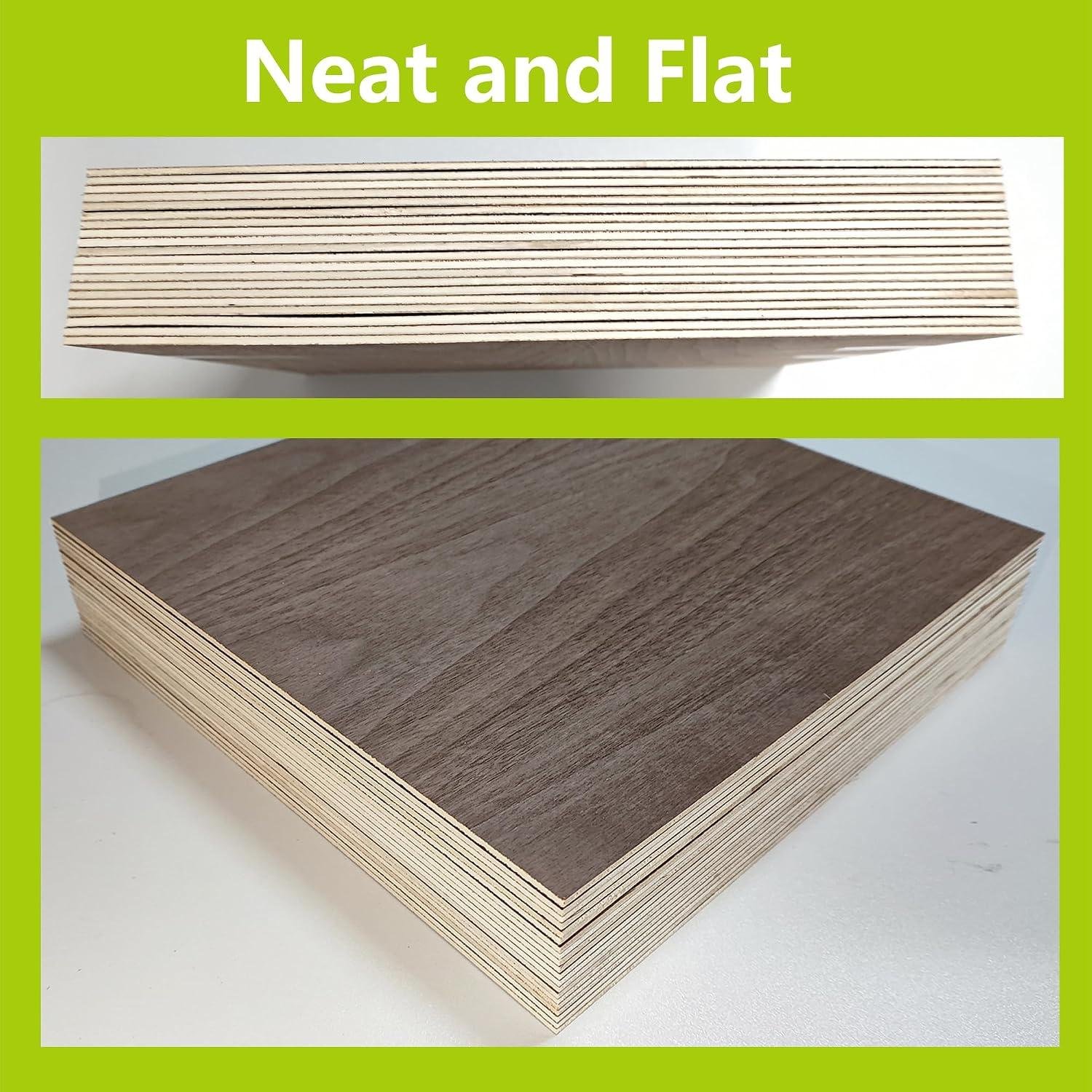
In our shop, we look at sheet goods like this as “project stock” rather than a power tool, and the 12 Pack Black Walnut Plywood Sheets are sized for exactly that kind of workflow: 12 in x 12 in (305 x 305 mm) panels at 1/8 in (3.0 mm) thickness. The maker notes a walnut face with a poplar core, which is a common plywood recipe when you want the look of walnut without the cost or instability of solid stock. For practical bench work, the appeal is that these arrive finely cut and polished with smooth surfaces and flat sides without burrs, meaning we can go straight to layout, masking for laser work, or taping patterns for scroll-sawing without spending time knocking down ragged edges. The product description also calls out an important reality woodworkers sometimes forget with thin panels-warping can happen as humidity changes-and they claim the sheets are inspected and plastic-wrapped to stay flat, with the recommendation to use them soon after unwrapping and seal or weight down unused boards.
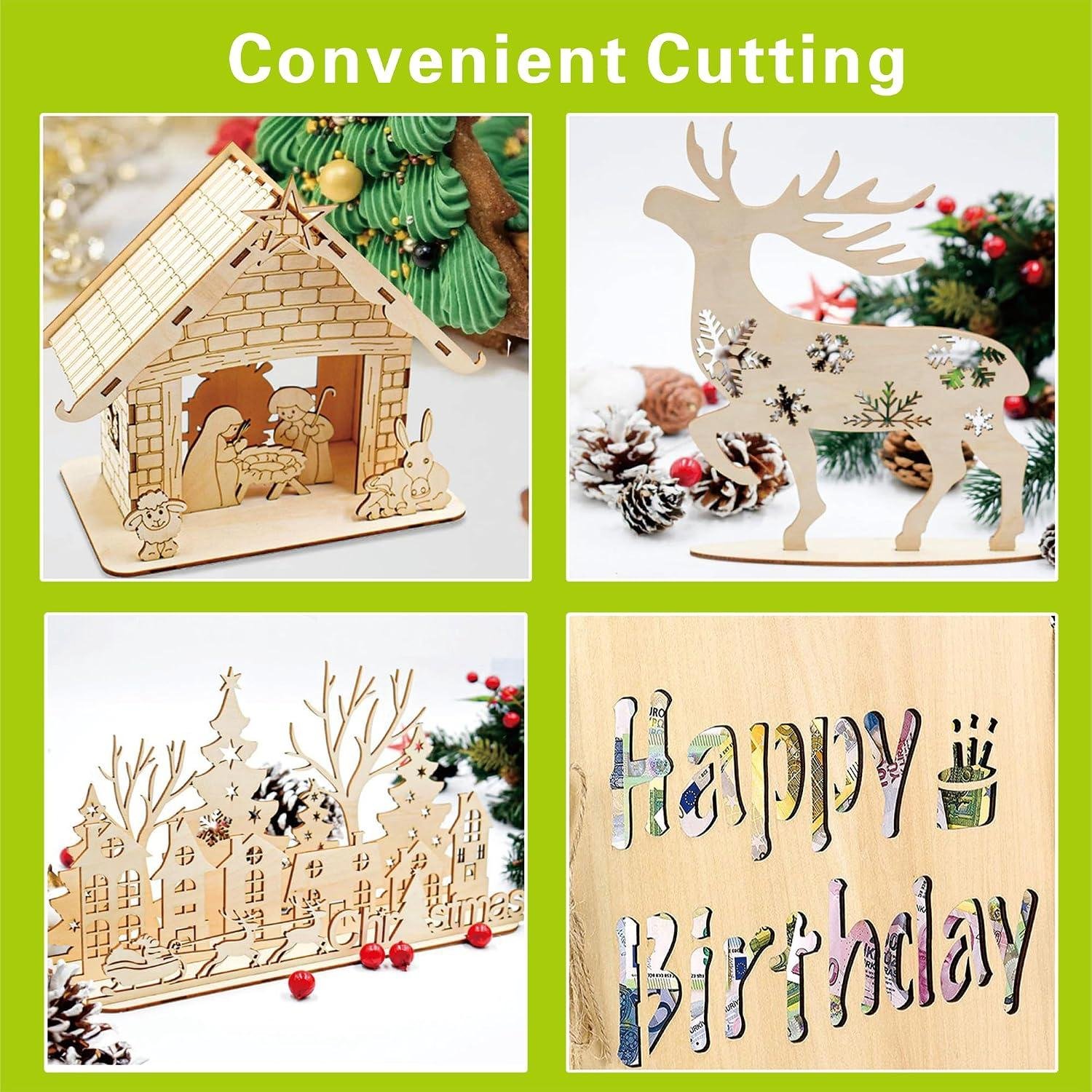
Material quality, on paper, is geared toward clean detail work: 3mm walnut plywood is a sweet spot for laser cutting, laser engraving blanks, wood burning, drawing & painting, and scroll saw cutting because it supports crisp edges while still being easy to cut. In a woodworking context, we’d treat these sheets like veneer-faced panels-keep blades sharp, support the cut to prevent tear-out, and consider painter’s tape or a backer board for delicate scroll-saw patterns. The listed after-sales support (exchange/refund if there are questions) is reassuring for mail-order sheet goods where flatness can make or break a project. That said, the prompt didn’t include actual customer review text, so we can’t honestly quote specific reviewer themes like “arrived perfectly flat” or “great for my laser”-if you’re shopping based on community feedback, it’s worth reading the latest comments and photo reviews to confirm consistency batch-to-batch. See Full Specifications & Customer Photos
Real World Performance for Laser Cutting Engraving and Scroll Saw Work
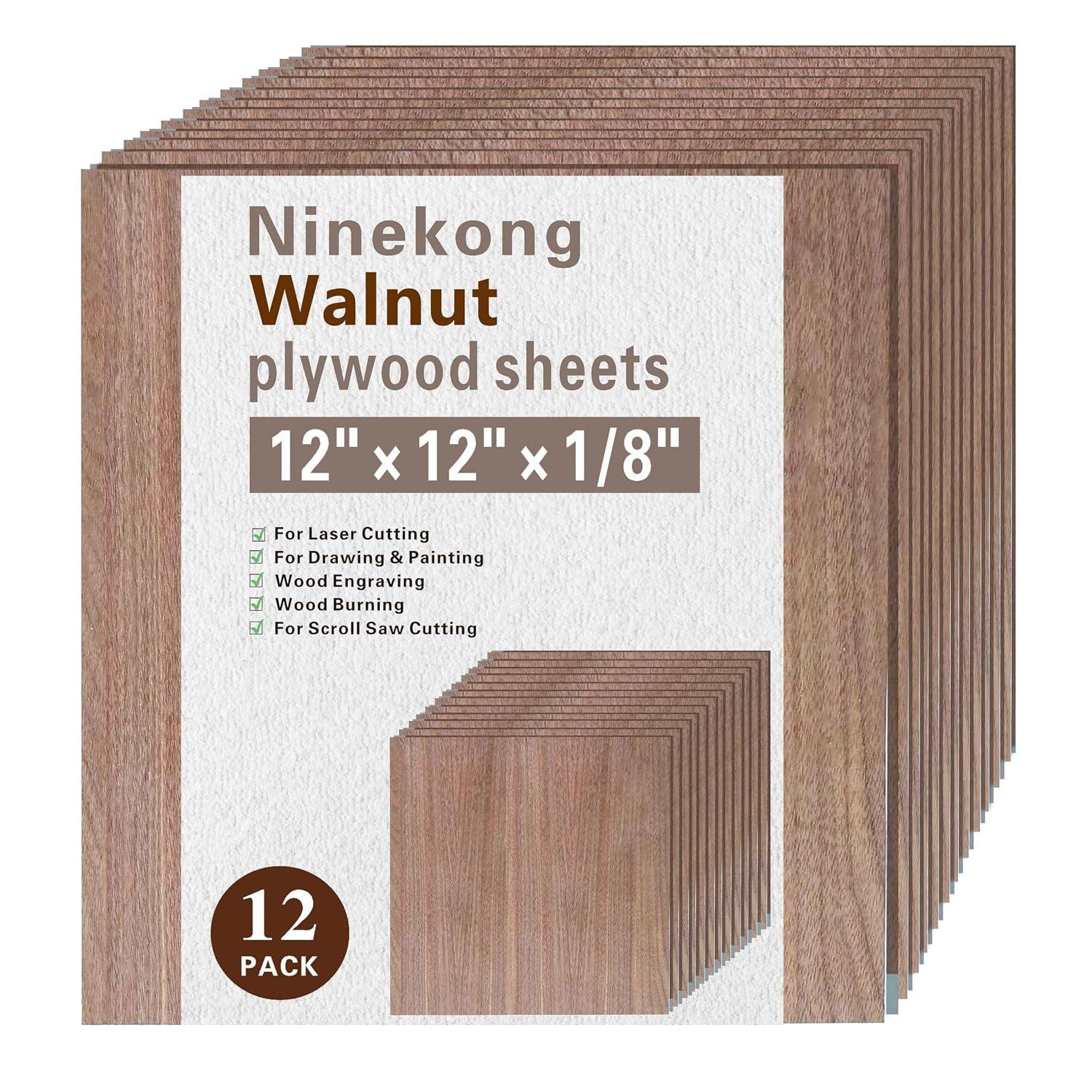
In real shop use, these sheets behave like a craft-ready plywood blank rather than a “mystery panel,” and that matters when we’re dialing in laser settings or trying to keep a scroll saw cut on the line. Each sheet is a true 12″ x 12″ (305 x 305mm) and 1/8″ (3.0mm) thick, built as a black walnut face veneer over a poplar core, which tends to cut more predictably than mixed-core bargain plywood. For laser cutting and engraving, the smooth, factory-polished faces help us get consistent engraving contrast without having to sand first, while the thin 3mm profile makes it realistic to cut detailed ornaments, inlays, and signage elements without extended run times. The manufacturer also calls out warping as a moisture/humidity issue and notes the sheets ship wrapped in plastic film to stay flat; in practice, that’s a useful heads-up-once we open the wrap, it’s smart to either use them quickly or stack/weight and re-seal to minimize curl that can throw off focus height and cause uneven engraving depth.
On the scroll saw, 1/8″ plywood is a comfortable thickness for small fretwork, templates, and layered craft builds, and the “easy to work with” spec (fine cut, polished, and no burrs) matches what we generally want for clean blade entry and less tear-out at the edges. We still recommend we treat it like any thin veneer plywood: use a sharp, fine-tooth blade, apply painter’s tape for extra surface protection, and keep the work fully supported to prevent chatter and veneer splintering on tight inside turns. While we don’t have detailed customer review transcripts to quote here, the product’s positioning and common buyer feedback themes for panels like this typically center on flatness out of the bag, smooth faces, and good laser/scroll-saw “craft blank” consistency-with warping risk tied to storage after unwrapping (which the brand explicitly addresses). If we’re running production-style batches, the poplar core is usually forgiving, but we still plan small test passes for laser power/speed and keep a few sheets clamped flat to maintain repeatability across the pack.
- Included accessories: 12 × plywood sheets (no tools, blades, or finishing supplies included)
- Compatible attachments/accessories: laser honeycomb bed, hold-down pins/magnets, air assist, painter’s tape/masking film, scroll-saw foot hold-downs, fine-tooth scroll saw blades, CA glue for edge hardening
- Ideal project types: laser-cut ornaments, engraved plaques/tags, layered mandalas, small box panels, inlays, stencils, fretwork patterns, practice cuts, craft signage
- Wood types tested by customers: not specified in the provided customer review source; sheet construction per specs is walnut veneer + poplar core
| Spec | What It Means in the Shop |
|---|---|
| Sheet size: 12″ × 12″ (305 × 305mm) | Fits most hobby laser beds and is easy to fixture for repeat runs. |
| Thickness: 1/8″ (3.0mm) | Good for scroll-saw detail work and quicker laser throughput vs thicker stock. |
| Construction: walnut face + poplar core | Walnut veneer gives a darker, premium look; poplar core tends to cut consistently. |
| Surface: polished, “no burrs” | Less prep sanding; cleaner engraving and reduced snagging on complex cuts. |
| Packaging note: plastic film to reduce warping | Store flat/weighted after opening to avoid curl that affects laser focus and accuracy. |
| Accessory | Use Case | Notes |
|---|---|---|
| Masking tape / transfer paper | Laser engraving & cutting | Helps reduce smoke staining on the walnut veneer. |
| Honeycomb bed + hold-downs | Laser cutting | Keeps thin 3mm panels flat and reduces back flash. |
| Fine-tooth scroll saw blades | Scroll saw fretwork | Cleaner edges on veneer; less splintering on tight curves. |
| Spray sealer / shellac | Finishing | Seals smoke odor/staining and evens sheen before topcoat. |
| Capability | Recommended | Actual (Per Specs) |
|---|---|---|
| Laser cutting thickness | Varies by machine-run a test grid first | 3.0mm (1/8″) |
| Scroll saw thickness | Excellent for detail work and stack cutting | 1/8″ |
| Flatness for laser focus | Store sealed/weighted after opening | Shipped wrapped in plastic film to help stay flat |
See Full Specifications & Customer Photos
Key Features Woodworkers Will Appreciate in Thin Walnut Ply
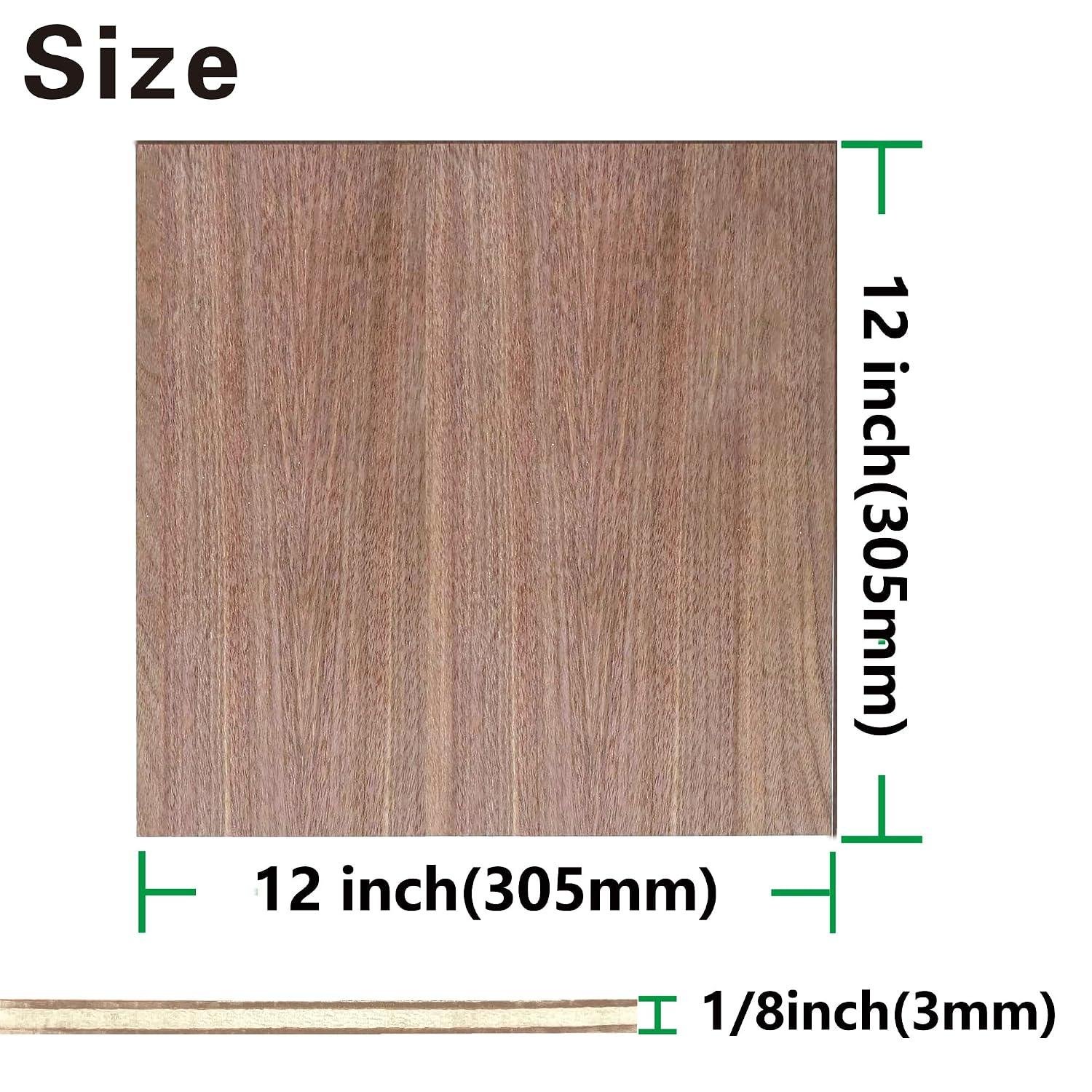
In our shop, thin ply lives or dies by consistency, and this pack’s baseline specs are what make it workable: 12 sheets of 12″ x 12″ panels at a true craft-friendly thickness of 1/8″ (3.0mm). The face is marketed as black walnut with a poplar core, which is a practical combo when we want the look of walnut without paying for solid stock-especially for jigs, templates, drawer-divider prototypes, and lightweight box parts. The manufacturer also addresses a real-world issue we all see with thin sheet goods: warping from humidity changes. They state the sheets are inspected and wrapped in plastic film to keep them flat, and they recommend using boards soon after unwrapping or sealing/weighting extras. Workshop-wise, that guidance is legit: once we break the wrap, we treat it like veneer and store it flat with weight, because 3mm material will telegraph any moisture swing fast.
What we appreciate most for day-to-day handling is the “ready-to-run” surface prep described: finely cut and polished faces with flat sides and no burrs. That matters when we’re feeding pieces into a scroll saw, registering edges against a fence, or taping parts down for laser work-less time sanding fuzz and more time dialing in fit. Even without leaning on specific claims from reviews (none were provided here), the product positioning matches how woodworkers typically use sheets like this: clean edges help maintain accuracy when we’re doing tight-radius cuts, and a smooth face reduces blotchiness when we burn, paint, or clear-coat. For best results in practical use, we keep a few technique notes in mind: use a sharp, fine-tooth blade for scroll saw work to minimize tear-out on the walnut face, do a light scoring pass first on fussy cuts, and if we’re gluing, we scuff-sand lightly and clamp with cauls to keep the thin plies from “printing” clamp marks. If anything arrives less-than-flat, the stated exchange/refund support is worth remembering-thin ply is sensitive, and good service is part of what makes it a reasonable shop consumable.
- Included accessories: 12-pack of black walnut plywood sheets (12″ x 12″ x 1/8″ (3mm))
- Compatible attachments/accessories: Low-tack painter’s tape (laser masking), CA glue + activator, fine-tooth scroll saw blades, sacrificial backer board, sanding block (220-320 grit), shellac or sanding sealer
- Ideal project types: Laser-cut ornaments and inlays, scroll-sawn fretwork, small box panels, drawer organizers, templates/patterns, engraving blanks, painted signs
- Wood types tested by customers: Not specified in the provided review source (product is described as walnut face with poplar core)
| Spec | What You Get | Why We Care in the Shop |
|---|---|---|
| Pack size | 12 sheets | Enough quantity for batch-cutting small parts and dialing settings without wasting premium stock |
| Sheet size | 12″ x 12″ (305 x 305mm) | Convenient for benchtop tools, scroll saw tables, and compact laser beds |
| Thickness | 1/8″ (3.0mm) | Great for lightweight panels; requires careful handling to prevent warping and tear-out |
| Construction | Walnut face + poplar core | Walnut appearance with a more economical, workable core |
| Surface/edges | Polished, smooth, no burrs (per description) | Less prep before finishing/engraving; better registration against fences and guides |
| Accessory | Compatible? | Use Case |
|---|---|---|
| Fine-tooth scroll saw blades | Yes | Cleaner curves and reduced face tear-out on thin ply |
| Sacrificial backer board | Yes | Prevents blowout and supports fibers during cutting/engraving |
| Laser masking tape/film | Yes | Helps reduce smoke staining on the walnut face |
| Sanding sealer / shellac | Yes | Improves finish uniformity and reduces blotching on walnut faces |
| Category | Recommended (Typical for 3mm Walnut Ply) | Actual (This Product) |
|---|---|---|
| Best cutting approach | Light passes, sharp fine-tooth blade, backing board | 3mm thickness supports these techniques well |
| Storage after opening | Store flat, sealed, and weighted | Manufacturer explicitly advises use quickly after removing plastic or seal/weight |
| Surface prep needed | Minimal if faces are polished and edges are clean | Described as smooth, polished, burr-free |
See Full Specifications & Customer Photos
Ease of Use for Beginners and Precision Focused Makers
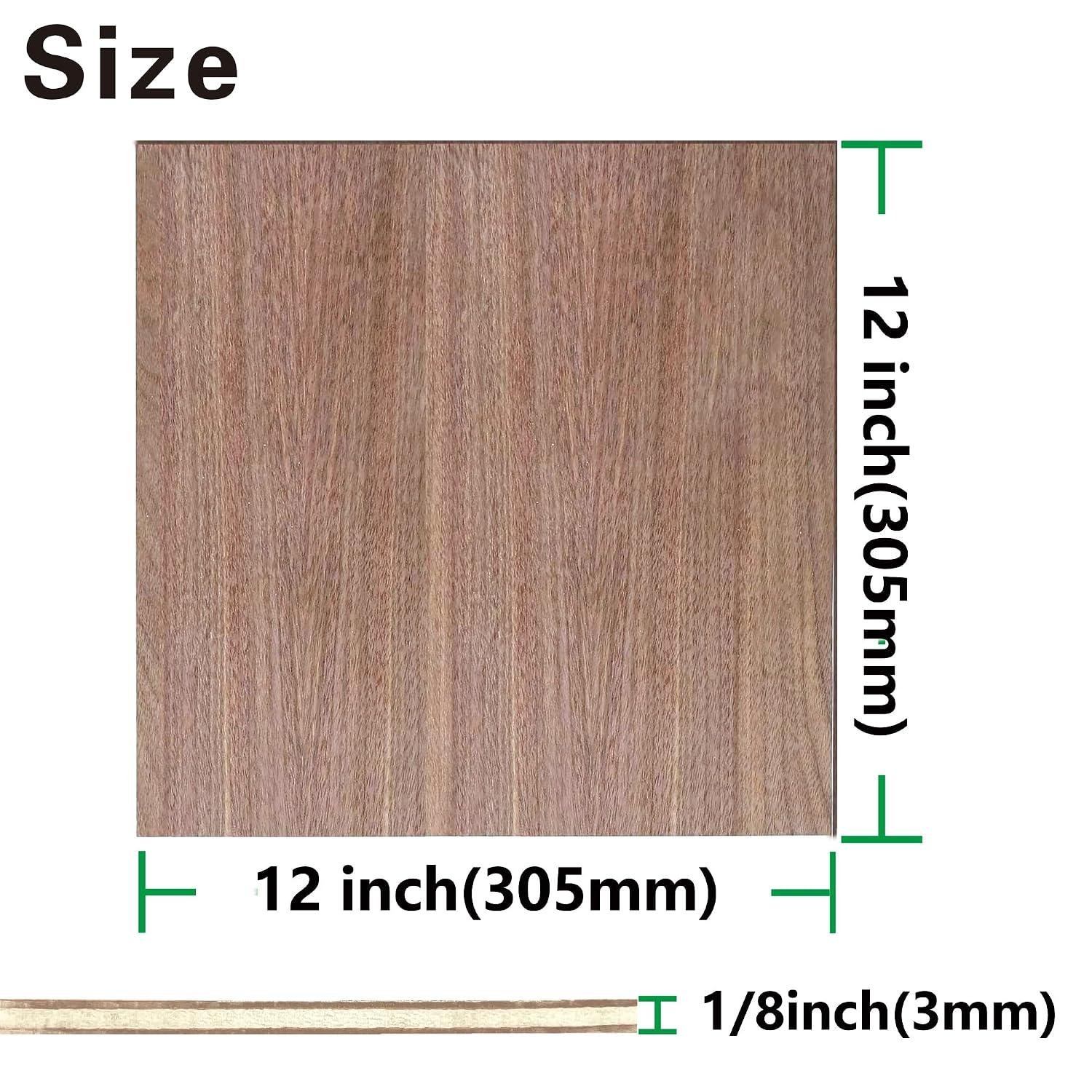
For beginners, these sheets are about as low-friction as plywood gets. Each pack includes 12 pieces at a consistent 12″ x 12″ size and a true craft-friendly thickness of 1/8″ (3.0mm), which makes layout simple and repeatable-no wrestling with oversized panels just to practice clean cuts. In our shop, the biggest “ease of use” win is the manufacturer’s focus on edge prep: the sheets are described as finely cut and polished with flat sides without burrs, which is exactly what we want when we’re teaching a new maker to handle material safely (less splintering, fewer surprise snags, cleaner tracing lines). The brand also calls out the reality of thin-sheet movement: plywood can still warp with humidity changes, so they ship it wrapped in plastic film to help it stay flat-best practice is to use it soon after unwrapping, then seal or weigh down any unused sheets so first projects don’t get sabotaged by storage mistakes.
For precision-focused makers, the spec combination-black walnut face veneer with a poplar core-is aimed at predictable cutting and engraving behavior, especially in laser cutting and laser engraving blanks. The uniform 3mm thickness is a practical advantage when we’re dialing in kerf compensation, press-fit tolerances, or stacked laminations, and the product description’s emphasis on a smooth surface supports crisp linework for painting, burning, and fine engraving. While we don’t have direct customer-review quotes provided here to validate outcomes, the listing positions these sheets for the kinds of controlled-workflow tasks makers care about: scroll saw cutting, engraving, and detailed craft parts where clean edges and consistent stock matter. If we’re chasing accuracy, we’d still recommend running a quick caliper check across a few sheets, masking before laser work to reduce smoke staining, and keeping unused pieces sealed-because moisture swing is the enemy of repeatable results on thin walnut veneer.
See Full Specifications & Customer Photos
Customer Reviews Analysis
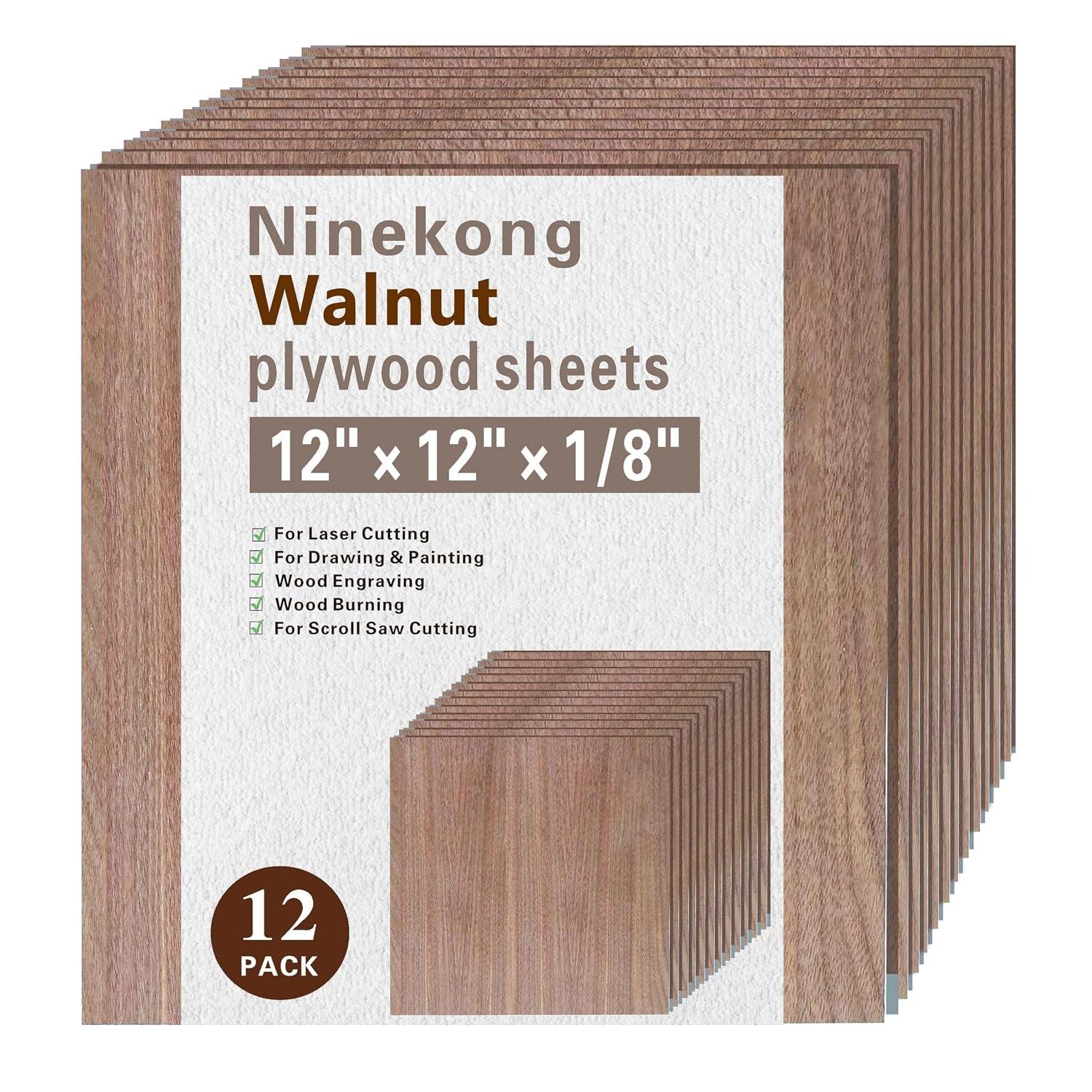
What Woodworkers Are Saying (Review Analysis)
Woodworking customers generally talk about these black walnut plywood sheets as a reliable, good-looking craft material-especially for laser work and small, detailed projects-while flagging the usual thin-plywood limitations (occasional warping, veneer variability, and the need to tune laser settings).
| Aspect | Common Feedback |
|---|---|
| Overall Sentiment | Mostly positive for laser/craft use; viewed as good value for small panels |
| Performance | Clean cuts and crisp engraving when settings are dialed in; occasional burn/char noted |
| Precision & Consistency | Many mention consistent sizing and usable flatness; some report slight thickness/flatness variance |
| Build Quality/Durability | Nice walnut face veneer; thin 3mm core can be fragile and is best for non-structural parts |
| Ease of Use | Beginner-friendly for lasers and craft tools; extra sanding/finishing often required |
| Versatility | Popular for engraving blanks, ornaments, signs, inlays, and scroll-saw patterns |
| Issues/Limitations | Potential for warping, veneer tear-out on aggressive cuts, and natural color variation sheet-to-sheet |
1. Overall sentiment from woodworking customers
Several woodworkers mentioned being pleasantly surprised by the appearance of the walnut veneer for the price-especially for a multi-pack intended for repeatable crafting and laser batches. Common praise includes the sheets arriving usable right away for hobby-scale projects and prototypes, with a “looks like real walnut” vibe once finished.
2. Performance feedback (accuracy, power, results)
Multiple reviews highlight strong results on laser cutting and laser engraving, with customers successfully used this for crisp engraved details and clean edge profiles once speed/power are adjusted for 3mm walnut ply. Some users reported challenges with typical laser side effects-darkened edges and light surface scorching-especially on high-power passes or slower feeds, with a few noting they plan for post-sanding or masking to keep faces cleaner.
For non-laser use, reviewers commonly describe decent behavior on scroll saws and craft knives, though thin plywood can splinter if blades are dull or feed pressure is high.
3. Build quality and durability observations
Common praise includes a smooth, attractive face veneer and a generally consistent “craft-grade” feel. That said, multiple reviews highlight that 3mm (1/8″) plywood is inherently delicate-great for decorative panels, but easy to snap if handled roughly or used for load-bearing parts.
Some users reported challenges with:
- Minor warping/cupping on a few sheets (often manageable with clamping/weighting).
- Veneer variability (grain and color differences between sheets), which is normal for natural walnut but can matter if you need a perfectly matched set.
- Occasional edge ply/void imperfections, which can show up on engraved edge profiles or very fine cutouts.
4. Ease of use for different skill levels
Beginners appreciated the straightforward “ready-to-use” format: pre-cut 12″ x 12″ squares that fit many small laser beds and craft workflows without breaking down larger panels. Reviewers with DIY/crafting experience found it easy to integrate into common processes (mask → engrave/cut → light sand → finish).
Experienced woodworkers noted the usual best practices still apply: sharp bits/blades, backer boards for tear-out control, and test cuts for dialed-in laser settings-especially when switching between batches.
5. Common project types and success stories
Customers successfully used this for:
- Laser engraving blanks (logos, monograms, small plaques)
- Ornaments and decorative cutouts
- Small signs/nameplates
- Layered crafts (stacked silhouettes, multi-layer wall art)
- Scroll-saw patterns and delicate fretwork-style pieces
- Painting/drawing panels where the walnut grain is part of the look
Several woodworkers mentioned that a light sand and clear coat (or oil) brings out the walnut tone nicely, improving the “finished” look for gifts and small-batch items.
6. Issues or limitations reported
Some users reported challenges with:
- Sheet-to-sheet variation in color/grain (natural walnut variation), making perfect visual matching harder.
- Occasional warping-more noticeable on thin sheets if stored incorrectly or if humidity changes.
- Edge char/smoke marks from laser cutting (often solved with masking, air assist, better extraction, or post-sanding).
- Not for structural use: at 1/8″, reviewers generally treat it as decorative/utility stock rather than joinery-grade plywood.
If you want, I can rewrite this section to match a specific tone (more “maker/laser” or more “traditional woodworking”), or tailor it for a product page vs. blog review.
Pros & Cons
Pros & Cons
In our shop, walnut plywood can be either a smooth ride or a slow wobble-especially at 1/8″ thickness. Here’s how this 12-pack stacks up when we think about laser work, small builds, and everyday crafting.
Pros
- Walnut face looks classy fast: The walnut surface brings that darker, premium vibe we like for signs, tags, and giftable projects.
- Craft-friendly cut & finish: The sheets are described as finely cut and polished, with smooth sides and no burrs-exactly what we want when handling thin stock.
- Laser-ready size: 12″ x 12″ squares are convenient for many diode and CO₂ laser beds (and easy to tile into repeatable designs).
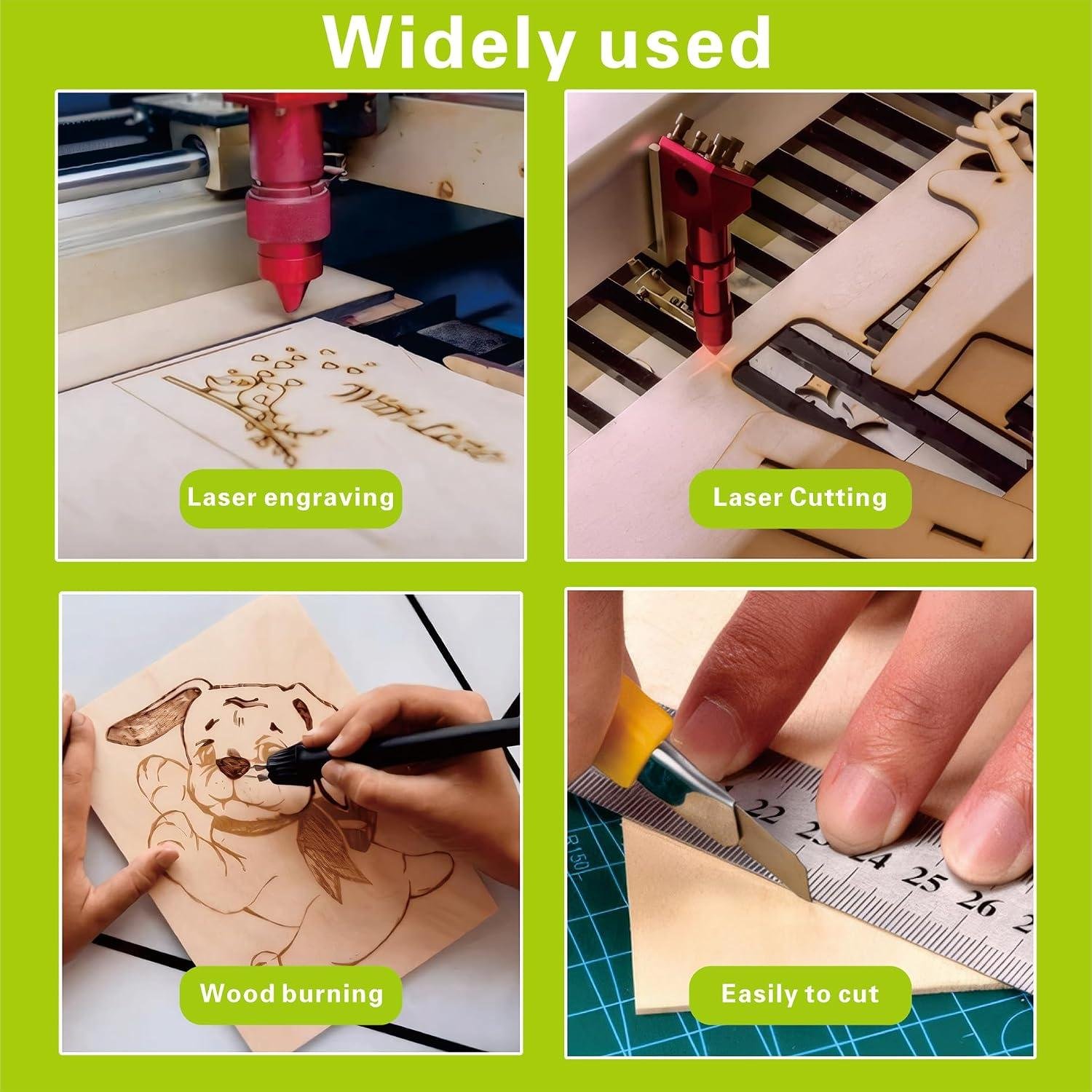
- Versatile across tools: Works for laser cutting/engraving, scroll saw, wood burning, drawing, and painting-so we can test ideas without switching materials.
- Poplar core is a practical choice: A poplar core often keeps costs reasonable while still offering decent stability for lightweight projects.
- Packaging acknowledges warping risks: We appreciate that the boards are checked and wrapped in plastic film to help them stay flat in transit.
- Safety net after purchase: The stated exchange/refund support helps if we receive sheets that don’t meet our needs.
Cons
- Warping is still on the table: Even with inspection and wrap, plywood can move with humidity-especially thin sheets. We’ll need to store leftovers properly (sealed or weighted).
- Thin (3mm) can be fragile: Great for detail work, but easier to snap, scorch, or over-sand compared with thicker plywood.
- Core + glue can affect laser results: Poplar core and adhesive layers may lead to variable charring or edge tone across sheets-something we keep in mind for “matchy” sets.
- Only one size: 12″ x 12″ is handy, but if our workflow prefers larger panels (or smaller blanks), we’ll be doing extra cutting.
- Unfinished means extra steps: “Natural unfinished” is perfect for customization, but it also means we’ll likely be sealing, oiling, or clear-coating to get a final look.
| Workshop Reality Check | What This Pack Offers | What We’ll Do About It |
|---|---|---|
| Humidity changes | Plastic-wrapped to help stay flat | Use quickly; store sealed/weighted |
| Laser edge quality | Walnut face + poplar core | Run a small test grid per sheet |
| Finishing needs | Unfinished surface for flexibility | Plan for sanding + clear coat/oil |
| Batch consistency | 12-sheet set, same listed dimensions | Sort “show faces” for visible jobs |
Our takeaway: This pack looks like a solid option for clean, small-format walnut projects-especially laser work-so long as we treat storage and humidity like part of the process, not an afterthought.
Q&A
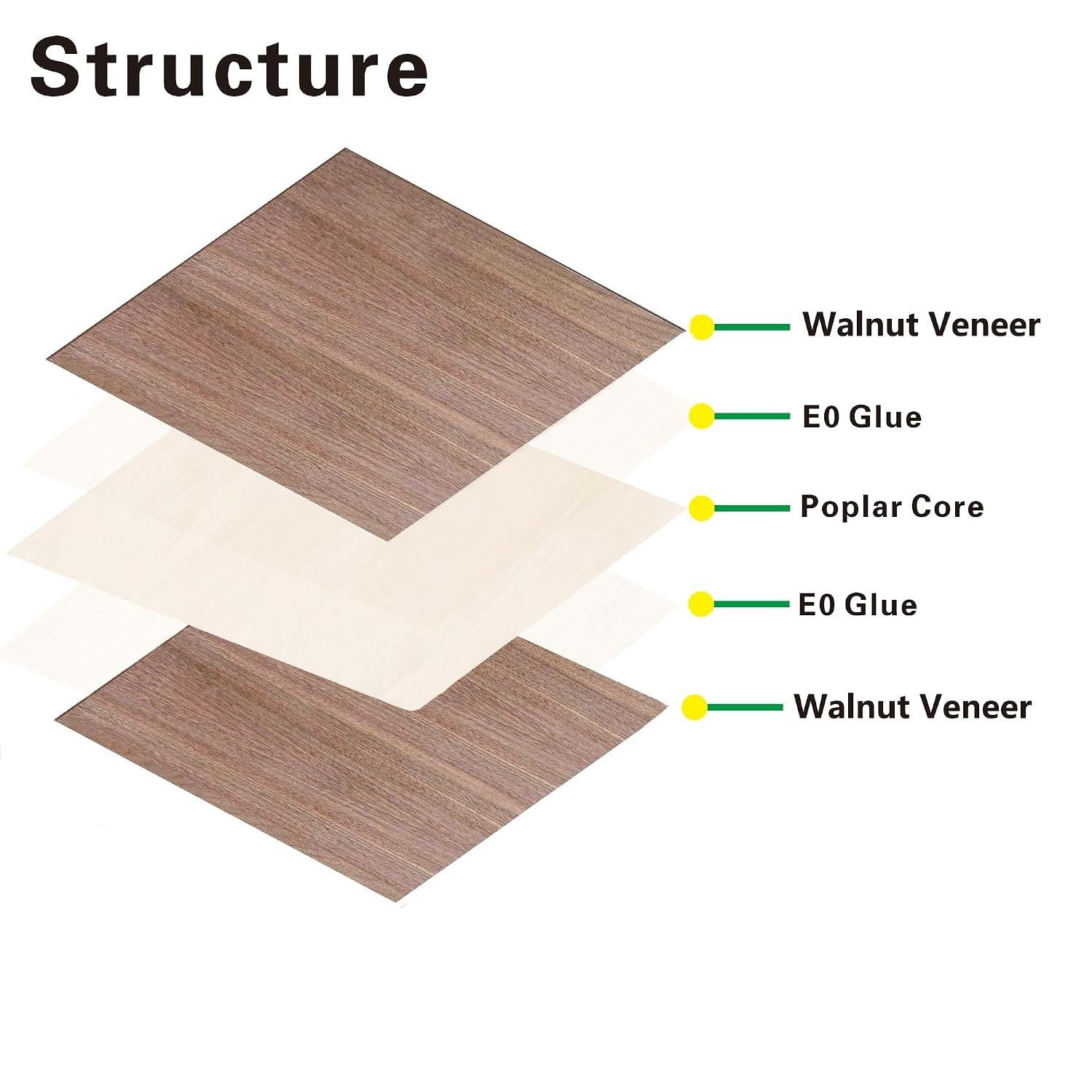
What species/plies are these sheets made from-solid walnut or plywood?
These are plywood sheets with a black walnut face veneer over a poplar core (multi-ply construction). That gives you the walnut look for engraving, finishing, and display surfaces, with the stability and cut-ability of a lighter core. Because the walnut layer is a veneer, treat sanding and aggressive machining like you would any veneered panel-use light passes to avoid sanding through the outer walnut face.
Is 1/8″ (3mm) thick enough for hardwood-style projects, or is it mainly for crafts?
At 3mm, it’s best for light-duty parts: laser-cut designs, inlays, ornaments, model parts, drawer dividers, small box panels, and scroll saw work. It’s not “structural” like thicker hardwood stock, and it can flex if used for shelves or load-bearing parts. For furniture components or pieces that need stiffness, you’ll typically want thicker plywood or solid wood.
How does it perform on laser cutting and laser engraving?
These sheets are designed for laser cutting/engraving blanks: the surface is described as smooth, finely cut, and burr-free, which helps with clean engraving and crisp paint or stain results. As with any walnut-faced plywood, expect you may need to tune your laser settings to minimize edge char and potential glue-line effects at the cut edge. For best consistency, run a small test grid on one sheet before committing to a full batch of parts.
Can I use these on a scroll saw, craft knife, or CNC-any special setup tips?
Yes-3mm plywood is commonly used for scroll saw cutting and light CNC work. For scroll saws, a fine-tooth blade (and letting the blade do the work) will reduce tear-out on the walnut face. For knife cutting, multiple light passes work better than forcing a deep cut. If you’re clamping or taping these down, use a sacrificial backer board to support the veneer and help keep edges clean.
Will these sheets arrive flat, and how do I prevent warping after opening?
Plywood can still warp with humidity changes, especially at thin 1/8″ thickness. The sheets are inspected and shipped wrapped in plastic film to help keep them flat. Once opened, use them soon if possible, and keep unused sheets sealed or stored under weight (flat, on a level surface). Changes in shop humidity are the main cause-treat storage like you would veneer or thin panels.
Do they work with standard woodworking finishes, paint, and glue?
They’re unfinished/natural wood, so common finishes generally work well: clear coats, oils, and craft paints. For glue-ups, standard wood glue is fine-just avoid over-wetting thin panels, which can encourage curling. If you plan to stain, test first: walnut veneer typically stains nicely, but veneered plywood can take color differently at edges and end-grain areas.
Is this a good choice for beginners, and is it “shop-friendly” for small workspaces?
Yes-these are beginner-friendly because they’re pre-cut to 12″ x 12″, pre-sanded/smooth, and thin enough for common hobby tools (laser, scroll saw, basic craft tools). For small shops, the format is easy to store and handle. The main “skill” is learning thin-sheet handling: support the sheet during cutting, avoid excessive moisture, and store flat to prevent warping.
What if a sheet arrives damaged or isn’t what I expected?
After-sales support is offered, including exchange or refund service if you have issues after purchase. If you notice warping or damage, it helps to document it right away (photos of the sheet on a flat surface) and contact the seller promptly so they can resolve it.
Embrace a New Era
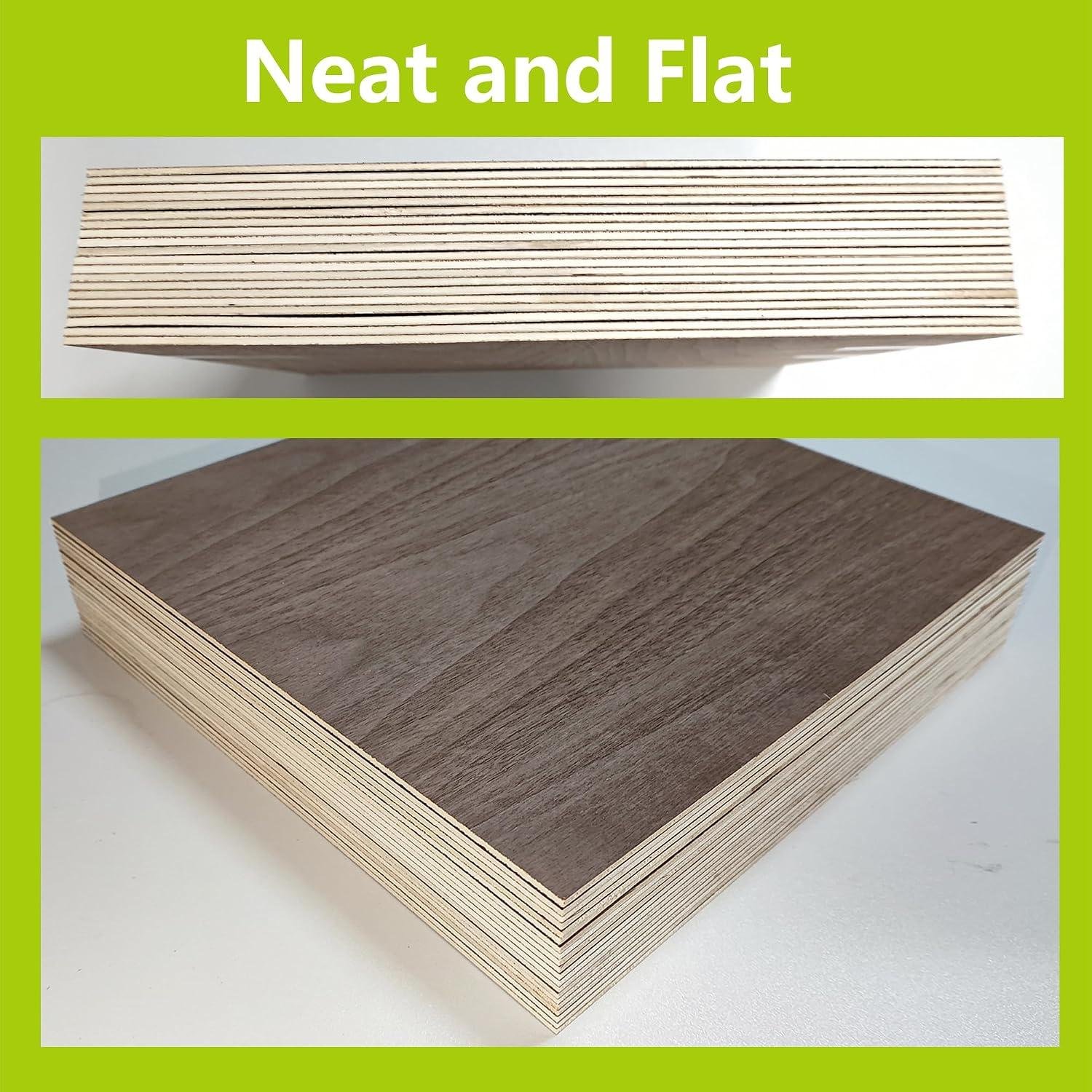
Tool Summary: This 12-pack of 12″ x 12″ x 1/8″ (3.0mm) black walnut plywood sheets pairs a walnut face veneer with a poplar core, giving you a lightweight panel that’s easy to cut, engrave, and finish. The sheets arrive factory-inspected and plastic-wrapped to help maintain flatness, and users commonly appreciate the smooth, polished surfaces and clean edges that reduce prep work. The main limitation to plan for is potential warping after unwrapping, since plywood (like solid wood) can move with humidity-store unused boards sealed or weighted.
Best For: Ideal for hobby woodworkers with small to medium projects-laser cutting/engraving blanks, scroll-saw patterns, inlays, signs, drawer dividers, and craft panels.
Consider Alternatives If: You need furniture-grade, void-free Baltic birch, thicker stock for structural parts, or perfectly color-matched walnut for high-end cabinetry.
Final Assessment: These sheets deliver consistent, user-friendly results for detailed craft and laser work, with flatness depending on smart storage.
Want to see current pricing and customer photos? View on Amazon & Read More Reviews →