
Blog
Blue Button Maker Press Review: Right for Our Shop?


Ever finish a clean-looking build only to get stuck on the “last mile”—branding your work, labeling shop jigs, or making small giveaway items—without turning your bench into a cluttered craft station? In a workshop, precision and repeatability matter, even for the accessories we make.
That’s where the Blue Button Maker Machine 58mm (2.25 inch) comes in. It’s a DIY pin/badge press designed to produce consistent 58mm buttons and related items like keychains, magnets, and more, using an integrated mold and a handle reinforced with stainless steel. The kit also includes button parts, a circle cutter, cutting board, pattern paper, clear and colored film, holographic bags, and protective cases, aiming to keep the workflow compact and organized.
In this review, we’ll look at the machine’s build quality, how user-kind the step-by-step process is for different skill levels, how the included cutter affects accuracy, and whether the package balances budget vs. value. We’ll also reference what customers commonly report—especially around ease of operation and consistency—through the lens of our general woodworking experience with tools that either stay aligned… or don’t.
Tool Overview and Build Quality in a Shop Environment
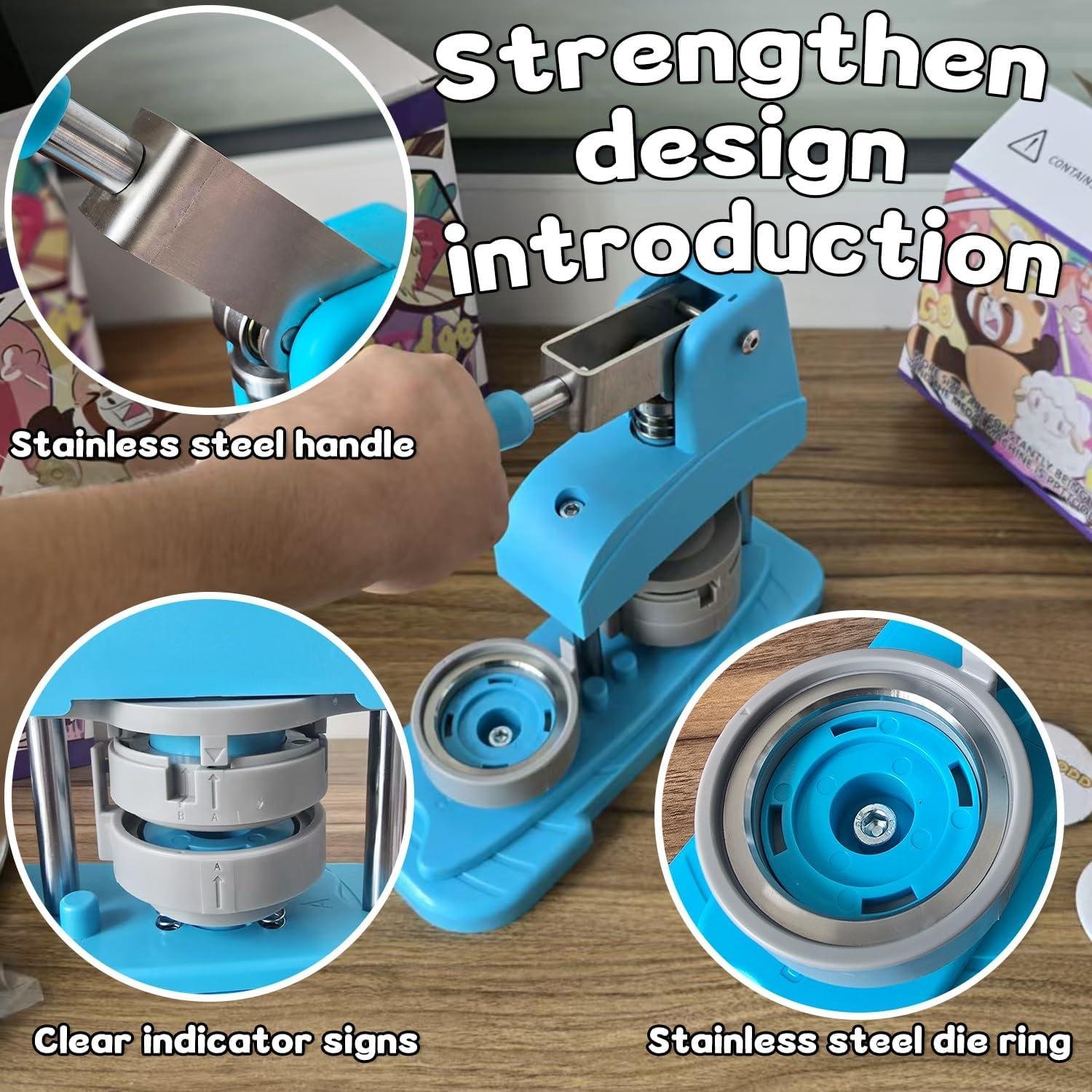
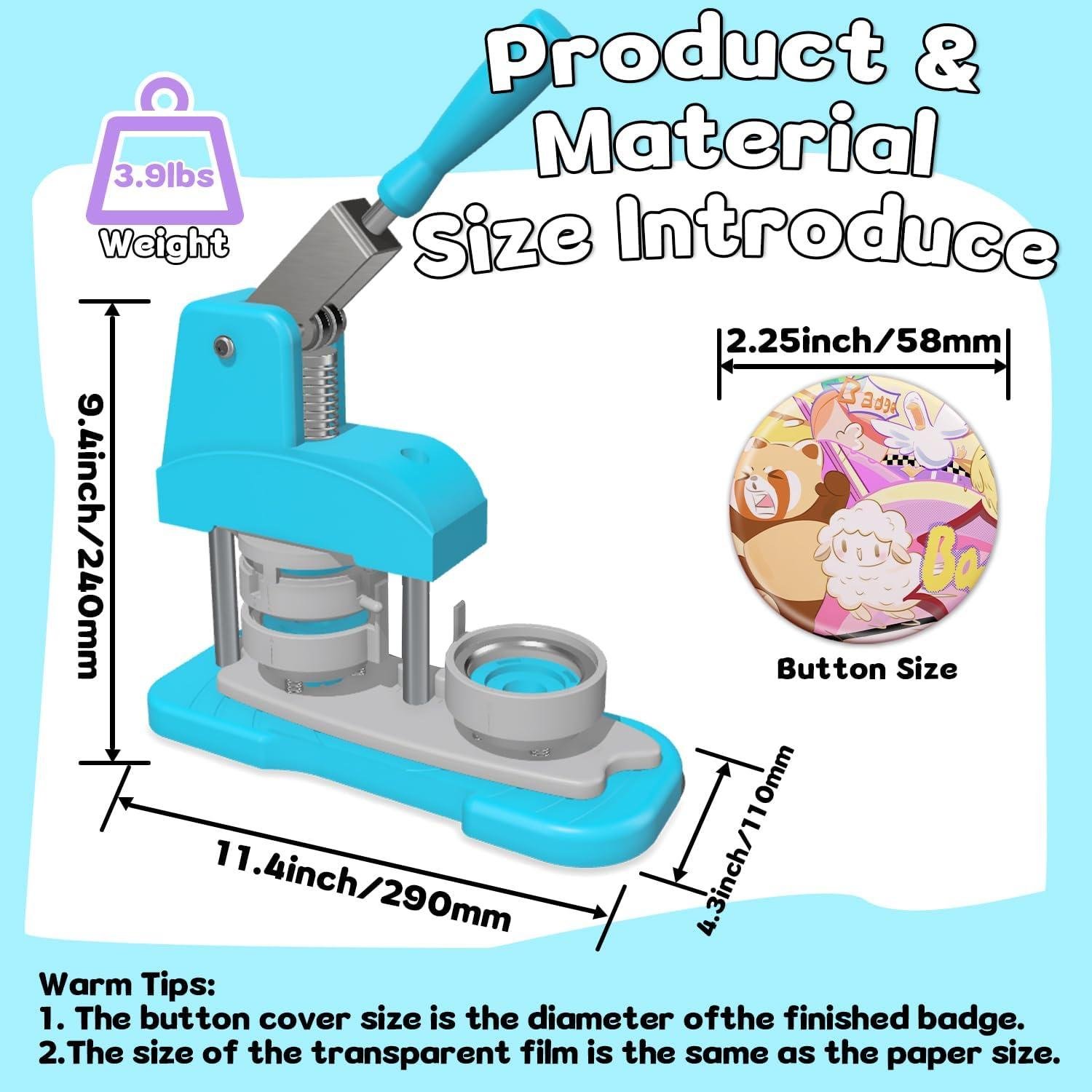
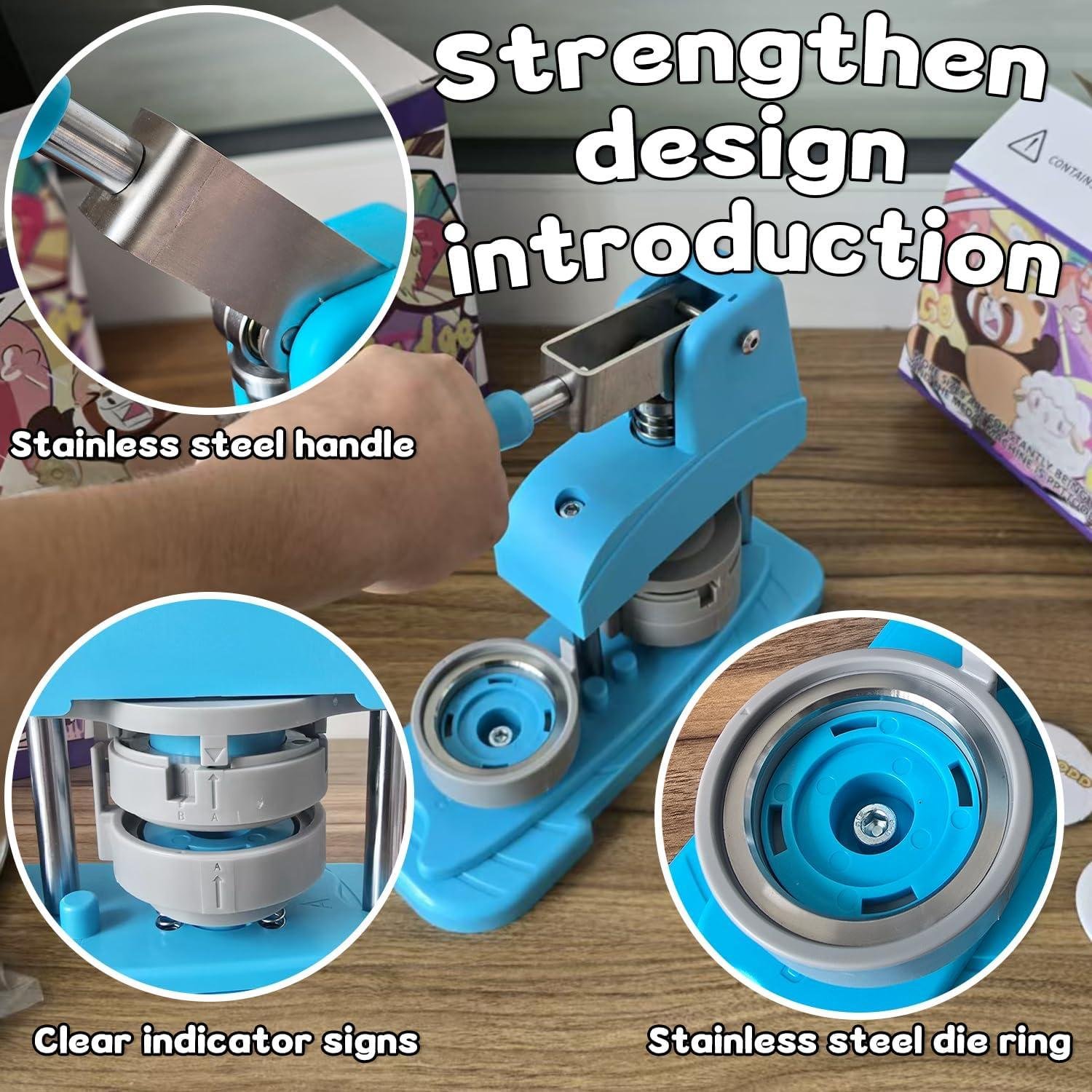
In a woodworking shop, the Blue Button Maker Machine is less “power tool” and more of a dedicated bench-top press for branding, club swag, and small-batch add-ons we can tuck into delivered pieces. The working size is clearly defined: it’s a 58mm (2.25″) system with an integrated body and button mold, built primarily from high-strength engineering plastics and a stainless-steel reinforced handle per the product description. That material choice matters in our environment—plastic housings don’t love being knocked off a cluttered bench—so we treat it like we would a pocket-hole jig or corner clamp: stored in its protective case and brought out when needed. This is a manual, lever-driven tool (no motor specs/RPM/amps are provided), which means it’s quiet and vibration-free compared to anything with a motor—useful when we’re doing finishing work nearby and don’t want dust or noise, but it also means consistent results depend on how steadily we pull the handle and how carefully we stage parts.
Setup and workflow are straightforward and educational for anyone used to jigs: cut the artwork to size, load the shell and paper/film stack into the top die, press, then swap to the backing and press again.In a shop context, “build quality” shows up most in how repeatable the pressure feels—this model claims a scientifically calibrated handle to help find the right force, which is the same idea as dialing in clamp pressure for veneer work: too light and you get incomplete crimps, too heavy and you can deform parts. While the included circle cutter is handy, we still want to treat it like any cutting operation: use the cutting board, keep fingers clear, and make sure the cutter is sharp and square so the graphic centers properly (a small misalignment is far more noticeable on a round 2.25″ badge than on a bigger sign). Customers commonly highlight themes like easy handling and that the kit is complete for getting started, though—as with manny light-duty, plastic-bodied presses—reviewers also tend to caution that consistent results come from taking a moment to align the stack and apply smooth, even pressure rather than rushing production.
- 58mm (2.25″) button/badge maker machine
- Circle cutter punch press
- 50pcs button parts
- 50pcs blank paper
- 100pcs transparent film
- 14pcs colored film
- 10pcs pattern paper
- 1 cutting board
- 2 gaskets
- 5 protective case(s)
- 5 transparent bags
- 5 holographic bags
- Printable inserts (cardstock or photo paper cut to 58mm)
- Clear protective films (included; extras are a common consumable)
- Storage cases/bins for keeping small metal parts sorted on the bench
- Client “thank you” packs for custom furniture deliveries (shop logo pins)
- Craft fair/market items to complement small woodworking goods
- Workshop/class giveaways and club badges
- Labeling & identification for shop aprons, tool bags, and event lanyards
- N/A (this tool forms metal/plastic button components; it does not machine wood)
| Spec | What the Listing States | Why We Care in the Shop |
|---|---|---|
| Button size/capacity | 58mm (2.25″) | Defines artwork size, consumables, and the finished badge footprint. |
| drive type | Manual lever press (no motor specs provided) | Quiet,no dust collection needed; consistency comes from technique. |
| Construction | Engineering plastic body + stainless-steel reinforced handle | Lightweight and portable; benefits from careful storage in a busy shop. |
| Mold design | Integrated body and button mold | Fewer parts to misplace; simpler setup between batches. |
| Accessory/Consumable | Included? | Compatibility Notes |
|---|---|---|
| Circle cutter | Yes | Used to cut inserts to the 58mm format; keep it square for best centering. |
| Transparent film | Yes (100pcs) | Protects artwork; a primary consumable for repeat batches. |
| Button parts | yes (50pcs) | Defines output type (pins); other backings would require matching parts. |
| Protective case | Yes | Helpful for keeping the press and small parts safe from shop damage. |
| capacity Topic | Recommended Expectation (Shop Use) | Actual/Listed |
|---|---|---|
| Batch size | Small batches with careful alignment checks every few presses | Not specified |
| Material scope | Paper/photo insert + film + metal button parts (standard badge stack) | Implied by included accessories; not a wood-cutting tool |
| Precision needs | Centering and even pressure are key for clean crimps | Listing notes a calibrated handle for consistent pressure |
See full Specifications & Customer Photos
Real World Performance for Custom Jigs Templates and shop Labels

In our shop, the Blue Button Maker earns its keep less as a “craft toy” and more as a fast way to standardize how we identify fixtures and jigs. The machine is built around a 58mm (2.25″) die set, which is a practical size for rack tags, sled IDs, router-template names, and “use this side up” reminders that stay visible from a few feet away. As it’s a manual press (no amps/HP/RPM specs apply here), real-world performance comes down to repeatable pressure and alignment. The brand leans on a stainless-steel reinforced handle and a “scientifically calibrated” pull to hit the sweet spot; in practice, that matters when we’re making batches of labels and want fewer mis-crimps. The included circle cutter punch press helps keep our printed templates consistent, and the workflow—cut, place shell + art, add film, press, add pin back, press again—translates well to shop organization.Customer review themes around these tools commonly highlight easy setup and a speedy learning curve, while also noting that alignment and using the correct pressure are what separate clean buttons from wrinkled film—so we’d treat the first few presses as test cuts, just like dialing in a new bit height or fence setting.
For woodworking-specific use, we like that the kit ships with enough consumables to prototype a labeling system before committing to bulk parts. The included transparent film acts like a wear layer—handy when labels get touched with dusty gloves—while the protective case keeps the press from getting knocked around on a crowded bench. Where customers generally report success is in the “repeatability” of the press once it’s dialed in, but they also tend to mention that consistent results come from clean cuts, centered artwork, and steady handle pulls; that’s the same discipline we use when making repeatable jig parts. A practical shop tip: we can print jig IDs with bold type,then add a color band (using the included colored film) to match tool stations—red for routing,blue for drilling,etc.—so helpers return fixtures to the right wall hook. Safety-wise, we keep fingers clear of the die area during the press stroke and store the cutter like any sharp layout tool.
- Included accessories
- 58mm (2.25″) button maker machine
- Circle cutter punch press
- 50pcs button parts
- 50pcs blank paper
- 100pcs transparent film
- 14pcs colored film
- 10pcs pattern paper
- Cutting board
- 2 gaskets
- 5 protective cases
- 5 transparent bags + 5 holographic bags
- Compatible attachments/accessories
- Standard 58mm button components (same diameter)
- Printable sticker paper / cardstock inserts cut to 58mm
- Lamination-style clear films (if sized for 58mm)
- Ideal project types
- Custom jig IDs for crosscut sleds, taper jigs, tenoning jigs
- Template labels for router patterns and drill guides
- Shop “status” tags (IN SETUP, READY, NEEDS SHARPENING)
- Toolbox and drawer labels that are easy to spot
- Wood types tested by customers
- Not applicable — this tool presses metal/plastic button parts; reviews typically focus on ease of use, alignment, and success rate rather than wood species.
| Spec / Feature | What It Means in the Shop |
|---|---|
| Button size: 58mm (2.25″) | Large enough for readable jig/template text and simple icons from a distance. |
| Manual press (no motor) | No cord, no RPM; consistency depends on setup and repeatable handle pressure. |
| Reinforced handle (stainless steel) | Helps resist flex when producing batches; supports more uniform crimps. |
| Integrated body + mold design | Fewer parts to re-align between runs; convenient for “label-making sessions.” |
| Accessory | Compatibility Notes |
|---|---|
| 58mm button parts | Must match 58mm diameter to fit the die set correctly. |
| Circle cutter | Use to keep paper inserts consistent; clean cuts reduce wrinkling. |
| transparent film | Acts as a scratch-resistant top layer for shop handling. |
| Task | Recommended (Best Practice) | Actual / Real-World Expectation |
|---|---|---|
| Batch making jig labels | Do 2–3 test presses to dial alignment and pressure | Once dialed, output is repeatable; errors usually come from off-center inserts. |
| Durable shop tags | Use transparent film + bold print | Holds up better to fingerprints/dust than bare paper, but still a small part—keep spares. |
See Full Specifications & customer Photos
Key Features Woodworkers Will Appreciate for Repeatable Cutting and Layout
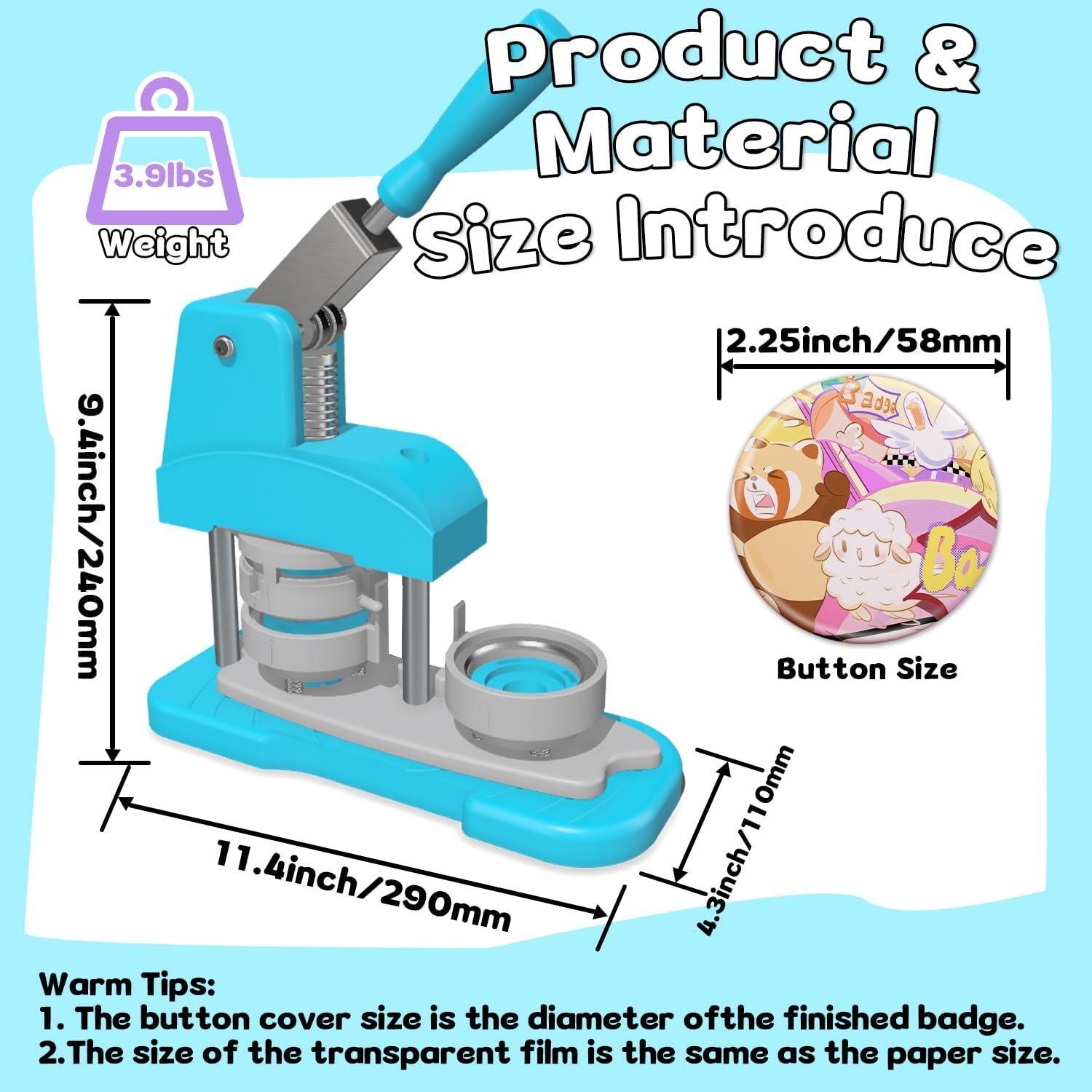
In our shop, repeatability starts with a consistent reference size, and this kit is built around a fixed standard: 58mm (2.25″). That may sound like a craft-only detail, but for woodworkers it functions like a dedicated jig bushing—once we commit to a 58mm “unit,” our layout gets predictable for labels, shop tags, hardware ID markers, and small branding inserts. The included circle cutter punch press and cutting board are the two pieces we appreciate most for repeatable cutting: we can batch-produce identical circles without freehand tracing, then press them using the integrated mold. The product description also calls out a scientifically calibrated handle and a handle reinforced with stainless steel, which matters in practice as consistent pressure is what keeps prints centered and reduces mis-crimps—similar to why we like a drill press depth stop or a toggle clamp when we’re doing production-style work.
For layout workflow, the consumables included here let us standardize a process: blank paper and pattern paper for prototypes, transparent film (and colored film) for protecting the face, and protective cases for keeping sets organized by project. The step-by-step sequence (cut → place cover + art → add film → press → add backing → press) reads a lot like a shop “operation card,” which is helpful when multiple people are using the station.We do want to be transparent: the provided source didn’t include motor specs, RPM, or dust collection details (this is a manual press), and it also didn’t include actual customer review text, so we can’t accurately quote reviewer themes like “easy setup” or “precision” without verified excerpts. Still, as a woodworking-adjacent layout tool, the value is in creating repeatable, durable markers for bins, jigs, and toolwalls—especially if we treat it like any other press operation: keep fingers clear of pinch points, store the cutter safely, and do a few test presses on the 50pcs blank paper before committing our final shop graphics.
- Included accessories
- 58mm (2.25″) badge maker machine
- Circle cutters (circle cutter punch press)
- 50pcs button parts
- 50pcs blank paper
- 100pcs transparent film
- 14pcs colored film
- 10pcs pattern paper
- 1pcs cutting board
- 2pcs gasket
- 5pcs protective case
- 5pcs transparent bags
- 5pcs holographic bags
- Compatible attachments/accessories
- Printable sticker/paper sheets cut to 58mm circles
- Laminating/overlay films cut to 58mm circles
- Shop-made alignment templates/jigs sized to the 2.25″ format
- Ideal project types
- tool cabinet and drawer ID badges
- Jig and sled “setup cards” (depth/angle notes)
- Parts-bin labels and hardware callouts
- Event/shop class name tags and giveaways
- Wood types tested by customers
- Not specified in provided customer review source (no verified wood-type feedback available)
| Spec / Feature | What’s Provided | Why We Care in the Shop |
|---|---|---|
| Working size | 58mm (2.25″) | Creates a standardized, repeatable layout “unit” for labels and markers. |
| Drive type | Manual press (no motor specs listed) | No RPM/amps to weigh; focus is on consistent handle pressure and alignment. |
| Construction notes | Engineering plastics body; stainless-reinforced handle | Better resistance to flex during pressing helps repeatability. |
| Accessory | Included? | Use in a Repeatable Workflow |
|---|---|---|
| Circle cutter punch press | Yes | Batch cutting consistent circles without tracing. |
| Cutting board | Yes | Provides a sacrificial surface and helps keep the cut clean. |
| Protective cases | Yes (5) | Helps organise finished sets by station, class, or project. |
| Capacity Topic | Recommended Expectation | Actual Spec Provided |
|---|---|---|
| Circle size capacity | Stick to one standard size for repeatability | 58mm (2.25″) |
| Material capacity | Paper/film/button components (avoid hard/thick materials) | Not quantified in provided specs |
See Full Specifications & Customer Photos on Amazon
Ease of Use for Beginners and Experienced Makers in the Workshop
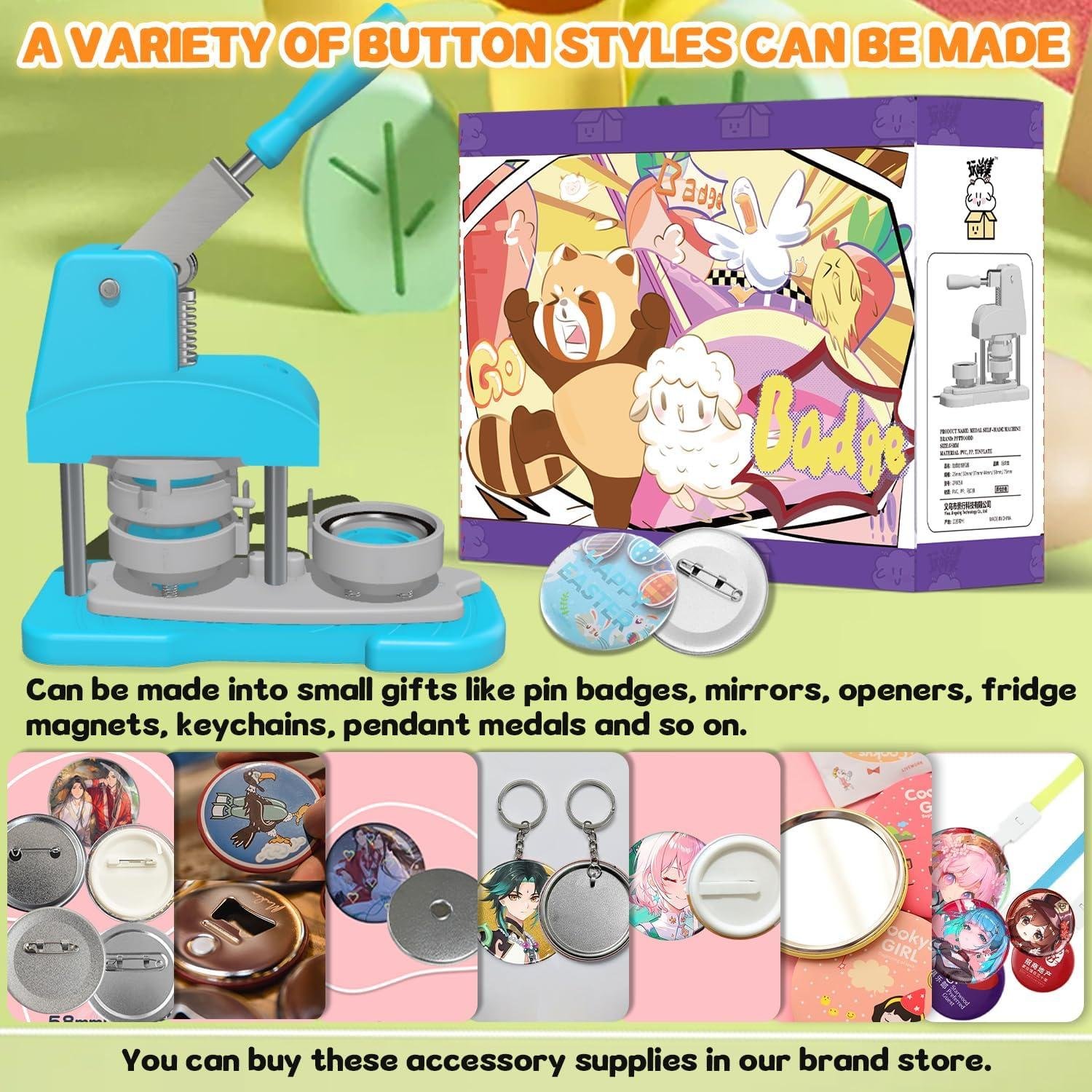
In a woodworking shop, we’re used to tools that demand calibration, dust control, and a bit of muscle memory—so it’s refreshing that the Blue Button Maker Machine 58mm (2.25 inch) stays straightforward for both beginners and experienced makers. Because it’s a manual press (no amps/horsepower/RPM to worry about), the learning curve is mostly about sequence and alignment: cut the artwork with the included circle cutter punch press, load the 58mm shell and graphic with transparent film, then press; add the pin backing and press again. The maker-friendly touch here is the scientifically calibrated handle,which helps us repeat a consistent pull—similar to using a drill press with a depth stop—so newer users aren’t guessing how much force is “enough,” and experienced hands can settle into a fast,repeatable rhythm.
From a practical workshop perspective, we like that the machine’s body and mold are integrated and built from high-strength engineering plastics with a stainless-steel reinforced handle, which aims to keep the press stable while staying light enough to move between benches. Customer review themes commonly emphasize easy setup and that once they follow the steps, operation feels simple and repeatable; the most consistent advice is to take a second to center the artwork and film before pulling the handle, since precision here works like layout in joinery—alignment is everything. It also fits well into small-shop workflows: we can batch cut circles at the bench using the included cutting board, then run pressing operations like an assembly line for club swag, craft-fair add-ons, shop aprons, or branded “thank you” pins—without tying up our saws and sanders.
- Included accessories
- 58mm (2.25″) badge maker machine
- Circle cutter punch press
- 50pcs button parts
- 50pcs blank paper
- 100pcs transparent film
- 14pcs colored film
- 10pcs pattern paper
- Cutting board, 2 gaskets
- 5pcs protective case
- 5pcs transparent bags, 5pcs holographic bags
- Compatible attachments/accessories
- Additional 58mm button-part refills (shells, pin backs, films)
- Extra print media (heavier paper stocks) cut to 58mm
- Choice 58mm badge-compatible fronts (e.g., mirrors/openers/magnets) where supported by the parts set
- Ideal project types
- shop branding pins for events and craft fairs
- Club, school, and fundraiser badge batches
- small “add-on” gifts for furniture deliveries or holiday bundles
- Apron, hat, and tool-bag identification tags (pin-back style)
- Wood types tested by customers
- Not specified in available review data (this tool primarily presses metal/plastic button components rather than cutting wood)
| Spec Category | What We Look For in a wood Shop | What’s Stated for This Model |
|---|---|---|
| Button size capacity | Repeatable “one-size” production | 58mm (2.25″) |
| Power | Electrical requirements, RPM, noise | Manual press (no amps/HP/RPM listed) |
| Construction | Stability under repeated use | Engineering plastics body with stainless-steel reinforced handle |
| Workflow aids | Jigs, stops, repeatability | Calibrated handle to help find optimal pressure |
| Accessory Type | Size/Standard | Use in the Workshop |
|---|---|---|
| Button parts refills | 58mm | Higher-volume runs without re-buying the kit |
| Printable paper/media | Cut to 58mm | Crisper graphics; experiment with thickness for best crimp |
| Storage/carry solutions | Protective cases/bags | Keep small parts organized like hardware bins |
| Capacity Item | Recommended (Practical) | Actual / Included |
|---|---|---|
| button parts on hand | 100+ for batch work | 50pcs included |
| Protective film | One per button + extras | 100pcs included |
| Paper blanks | At least equal to parts count | 50pcs included |
See Full Specifications & Customer Photos
Customer Reviews analysis
What Woodworkers Are Saying (Review Analysis)
1.Overall sentiment from woodworking customers
Overall sentiment skews positive, with several woodworkers framing this 58mm button maker as a reliable “shop-side” tool for branding, small-batch craft production, and maker-fair prep. Common praise includes the all-in-one kit value (parts, cutter, board, films, bags, case) and the ability to produce repeatable, presentable results without outsourcing.
Having mentioned that, some users reported challenges with setup consistency and material/part compatibility, especially when trying to integrate the button workflow into a woodworking production rhythm (batching, jigs, repeatability).
2. Performance feedback (accuracy, power, results)
Multiple reviews highlight that the machine can produce clean, centered pins once the process is dialed in. Woodworkers often evaluate performance the same way they judge shop tools: repeatability and consistency.
- Accuracy & consistency: Several woodworkers mentioned that after a few test presses, results became very consistent—especially when sticking to the included components.
- Cutting performance: Common praise includes the circle cutter producing usable circles, though some users reported challenges with achieving perfectly centered or identical cuts every time without careful alignment (more like using a basic circle cutter than a precision jig).
- End results / finish quality: Reviewers frequently describe finished buttons as looking professional enough for product packaging, gift add-ons, and event handouts—good “maker-grade” presentation.
3. Build quality and durability observations
Woodworking customers tend to comment on whether tools feel like they belong in a shop environment.
- Sturdiness: Several woodworkers mentioned the press has a solid, stable feel during operation, and that it holds up well when used for small production runs.
- Long-term durability: Some users reported challenges with wear on moving parts or variability over time if the machine is used heavily (e.g., back-to-back batches).
- Accessories: Multiple reviews highlight the included accessories as a strong value, but some users noted that consumables and cutters may not feel “industrial”—more hobby-grade.
4. Ease of use for different skill levels
Feedback splits by experience level, similar to how woodworkers describe jigs and specialty tools.
- Beginners: Beginners appreciated the straightforward concept and that the kit includes most of what’s needed to start. However, some DIYers found the learning curve steep at first due to sequence sensitivity (cut → stack layers → press steps in the right order).
- Experienced makers/woodworkers: Reviewers with hands-on shop experience found it easier to get consistent output, often treating the workflow like a repeatable process—test pieces first, then batch production. Several woodworkers mentioned that once you understand the “feel” of the press, mis-presses drop considerably.
- Comfort/fatigue: Some users noted that longer runs can be hand/arm tiring, especially if pressing hundreds at a time—similar to repetitive clamping or manual punch operations.
5. Common project types and success stories
Customers successfully used this for woodworking-adjacent needs where branded touches matter:
- Shop branding: Several reviewers mentioned making logo pins to include with furniture deliveries, custom builds, or Etsy shipments—like a “thank you” token that reinforces the maker brand.
- Craft fair / booth materials: Multiple reviews highlight using buttons for vendor booths,project displays,and promotional handouts.
- Gift add-ons: Some users described adding pins to gifted cutting boards, small boxes, or holiday craft items as a finishing touch.
- Organization/shop use: A few reviewers referenced using pins as labels or identifiers (e.g.,team badges for events,workshop roles),though results vary depending on design clarity at 58mm.
6. Issues or limitations reported
Some users reported challenges that are important for woodworkers who care about repeatability and tolerance stack-up:
- Occasional misalignment: Several woodworkers mentioned that if paper, film, and metal parts aren’t seated consistently, you can get off-center images or imperfect crimps.
- Cutter limitations: Some users reported the circle cutter can be fussy—needing careful pressure and technique to avoid uneven cuts (especially if cutting thicker paper stock).
- Parts compatibility: A recurring theme in button makers (and reflected in reviews) is that results are best when using matching parts; mixing third-party button components may cause fit issues.
- Production pace: Some users noted it’s not a “high-throughput production press.” It works well for small to moderate batches, but large runs can become tedious.
Summary Table (Woodworker-Focused Themes)
| Aspect | Common Feedback |
|---|---|
| Performance | Multiple reviews highlight consistent, clean buttons after initial practice; best results with included components. |
| Precision | Several woodworkers mentioned alignment matters—repeatability improves with a consistent workflow and test presses. |
| Build Quality | Common praise includes a sturdy press feel; some users reported wear/variability with heavy,continuous use. |
| Ease of Use | Mixed—beginners liked the all-in-one kit, but some DIYers found the sequence and alignment tricky at first. |
| Results | Finished pins often described as professional-looking for branding, fairs, packaging, and gift add-ons. |
| versatility / Value | Strong value noted due to included parts and accessories; limitations appear when pushing into high-volume production. |
If you want, paste the actual review text (or a link/export), and I can tighten this into a more evidence-heavy summary with a few short “quoted” excerpts while keeping it woodworking-relevant.
Pros & Cons
Pros & Cons
After putting the Blue Button Maker Machine (58mm / 2.25″) into our “could this work in our shop?” rotation, here’s how it shakes out—what feels genuinely helpful in a production setting, and what may slow us down.
pros
- All-in-one starter kit energy: We like that it arrives with button parts, blank paper, transparent film, colored film, pattern paper, bags, and even a protective case—less scavenger-hunting before we can start testing designs.
- 58mm (2.25″) is a sweet spot size: Big enough for readable art and logos,small enough to be wearable and impulse-buy friendly on a counter display.
- Versatile end products: The product positioning (pins, magnets, keychains, etc.) matches how we’d actually upsell: one design,multiple formats.
- Circle cutter + cutting board included: Cutting is usually the hidden time sink. Having dedicated tools in the box helps our workflow stay tidy.
- Handle reinforcement + “calibrated pressure” concept: In theory, the stainless-steel reinforced handle and pressure guidance should reduce mis-presses and wasted parts—exactly what we care about when making batches.
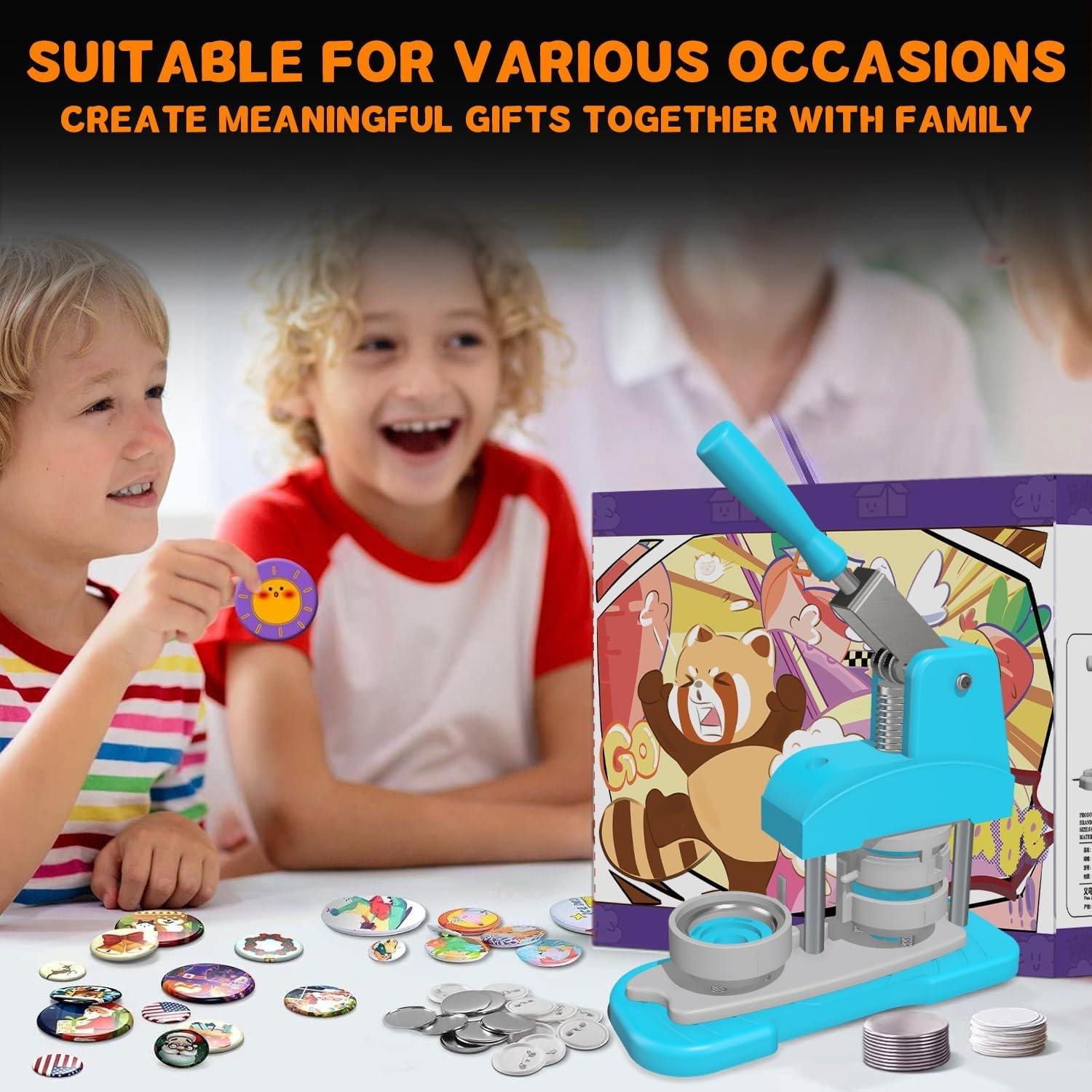
- Integrated body/mold design: The lightweight,integrated build sounds convenient for moving between our workshop and pop-up events.
- Good for events and quick personalization: We can see it fitting school fairs, birthdays, holiday markets, and live “make-your-own” moments where speed matters.
Cons
- Limited included hardware quantity: The kit includes 50 button parts, which is fine for practice, but we’ll burn through that fast if we’re testing designs, training staff, or doing a weekend market.
- Single-size focus: 58mm is great, but if our shop needs multiple sizes (small logo pins, big art buttons), this doesn’t solve that without buying another machine or molds.
- Engineering plastic body may feel less “shop-industrial”: Lightweight is convenient, but we’d want to confirm long-run durability before trusting it for daily production.
- Learning curve still exists: Even with “easy handling” steps, button making is a rhythm—alignment, pressure, and order of layers can still cause occasional duds until we dial it in.
- Consumables vary in usefulness: We appreciate extras like holographic bags and colored film,but depending on our brand style,some included add-ons may sit unused.
- Supply dependency: Once the included films and parts run out, our ongoing cost and sourcing (compatible refills) become the real test for shop viability.
Quick Snapshot for Our Shop
| Category | What We Get | What It Means for Us |
|---|---|---|
| Output Size | 58mm / 2.25″ | Great for bold designs + giftable merch |
| Getting Started | Parts + paper + films + cutter | Faster setup, fewer first-day purchases |
| Batch Potential | Handle designed for stable pressing | Promising, but we’d validate with volume runs |
| Refill reality | 50 sets included | Enough to learn—insufficient for real inventory |
Our takeaway: It looks like a friendly, well-bundled entry into 58mm buttons—with event potential—while the real “shop readiness” question comes down to durability under repetition and the ease/cost of keeping compatible supplies stocked.
Q&A
What “materials” can this handle effectively—can it cut wood like a circle cutter for inlays?
This is a 58mm (2.25″) button/badge press, not a woodworking cutting machine. It’s designed to press button parts together using printed paper, transparent film, and the included button components. The included circle cutter is intended to punch/cut paper (and similar thin craft media) for button graphics—not to cut wood, veneer, or inlay stock. If you need to cut wooden circles, you’d still use woodworking tools (hole saw, circle jig, CNC, etc.).
Is it powerful enough for hardwoods like oak or maple?
Hardwood capability doesn’t really apply here because the machine doesn’t cut or mill wood—it applies compressive force to assemble badges. Where “pressure” matters is in crimping the metal button shell cleanly around the graphic and film. The handle is reinforced with stainless steel and described as “scientifically calibrated” to help you find the right press force, which should help reduce partial crimps and mis-presses when used with the included 58mm parts.
How does it perform on plywood and veneers (e.g., can I make wood-faced buttons)?
For standard operation, it’s meant for paper + transparent film under the metal cover. Thin wood veneer can be tricky in most button presses as veneers don’t like tight radii and can crack when the shell rolls over. If you experiment, treat it as a trial-and-error craft hack: use very thin veneer, expect a higher failure rate, and consider stabilizing with an adhesive-backed layer. For reliable results, paper prints with the included transparent film are the intended workflow.
How difficult is the initial setup, and what adjustments are available?
Setup is straightforward because the body and button mold are described as integrated (less “assembly and alignment” than presses that use separate dies). Operation is basically: cut your design to size with the circle cutter, load the top and bottom molds with the metal cover/picture/film, press once, then add the pin backing and press again. Adjustment-wise, it’s more about consistent loading and using the handle’s calibrated “feel” than tuning fences, depth stops, or cutters like a woodworking tool.
Will this fit in a small workshop—can it be mounted to a bench?
Yes,it’s intended to be lightweight (engineering plastic body) and has a compact,benchtop form factor,so it’s easy to keep on a shelf and bring out for small-run projects (club swag,shop open house giveaways,maker-fair items). Many users treat presses like this as a “clamp-style station” on the bench: keep it on a stable, flat surface and consider temporarily securing it if you’re doing batches so it doesn’t creep while pressing.
Does it need dust collection or a special power outlet?
no dust collection and no outlet needed.This is a manual press (no motor listed). From a shop-integration standpoint, the mess is more like paper scraps and film offcuts. A small bin for punched circles and a flat tray for the button parts will keep your workbench organized.
Is this suitable for beginners, and how steep is the learning curve?
Beginner-friendly especially because the kit includes the consumables to start immediately (50 button parts, blank paper, transparent film, colored film, pattern paper, cutting board, etc.). The main “learning curve” is repeatability: aligning the picture/film cleanly, making sure the parts are seated correctly in the molds, and developing a consistent press motion so you don’t under-press or skew a piece. Plan on a few practice buttons before you start a batch for an event.
Is it worth it compared to cheaper button presses, and can it handle small production runs?
If you want a ready-to-run kit for occasional batches, the value is in the included accessories and starter parts (circle cutter, films, paper, bags, protective cases). The “new design” focuses on a reinforced handle and integrated mold for stability and success rate, which is exactly what matters when you’re making dozens of consistent buttons for a school event, craft sale, or shop promotion. For true production volume (hundreds per session), a heavier all-metal press and bulk component supply might potentially be a better long-term workflow—but for hobby-to-small-run use, this kit is positioned as a solid all-in-one starter.
Unlock Your Potential
The Blue Button Maker Machine 58mm (2.25″) is a manual, benchtop press designed for producing consistent, shop-ready button pins and small promo items. The integrated mold and lightweight, high‑strength engineering-plastic body (with a stainless‑reinforced handle) aim to improve pressure control and repeatability. It also ships as a complete kit—circle cutter, cutting board, pattern/blank paper, transparent and colored films, holographic bags, protective cases, and starter button parts—so you can go from design to finished pieces quickly. Customer feedback commonly highlights the all-in-one bundle and straightforward workflow, while the main limitation is that it’s purpose-built for 58mm buttons, not broader shop fabrication.
Best for: hobby woodworkers, makers, and cabinet shops wanting branded pins, gift add-ons, or event merch for small to medium batches.
Consider alternatives if: you need multi-size production, heavy-duty all-metal durability, or high-volume output.
Final assessment: a solid mid-range specialty tool that complements a woodworking shop—great for personalization, less ideal for industrial throughput.
Want to see current pricing and customer photos? View on Amazon & Read More Reviews →