
Blog
ROBOTIME Basswood Sheets Review: Right Laser for Us?


Ever line up a laser job or a tight template cut, only to realize the “flat” sheet you grabbed has a subtle bow that throws off focus, registration, and cut accuracy? In small shops like ours-where bench space is limited and wasted material hurts-consistency matters as much as creativity.
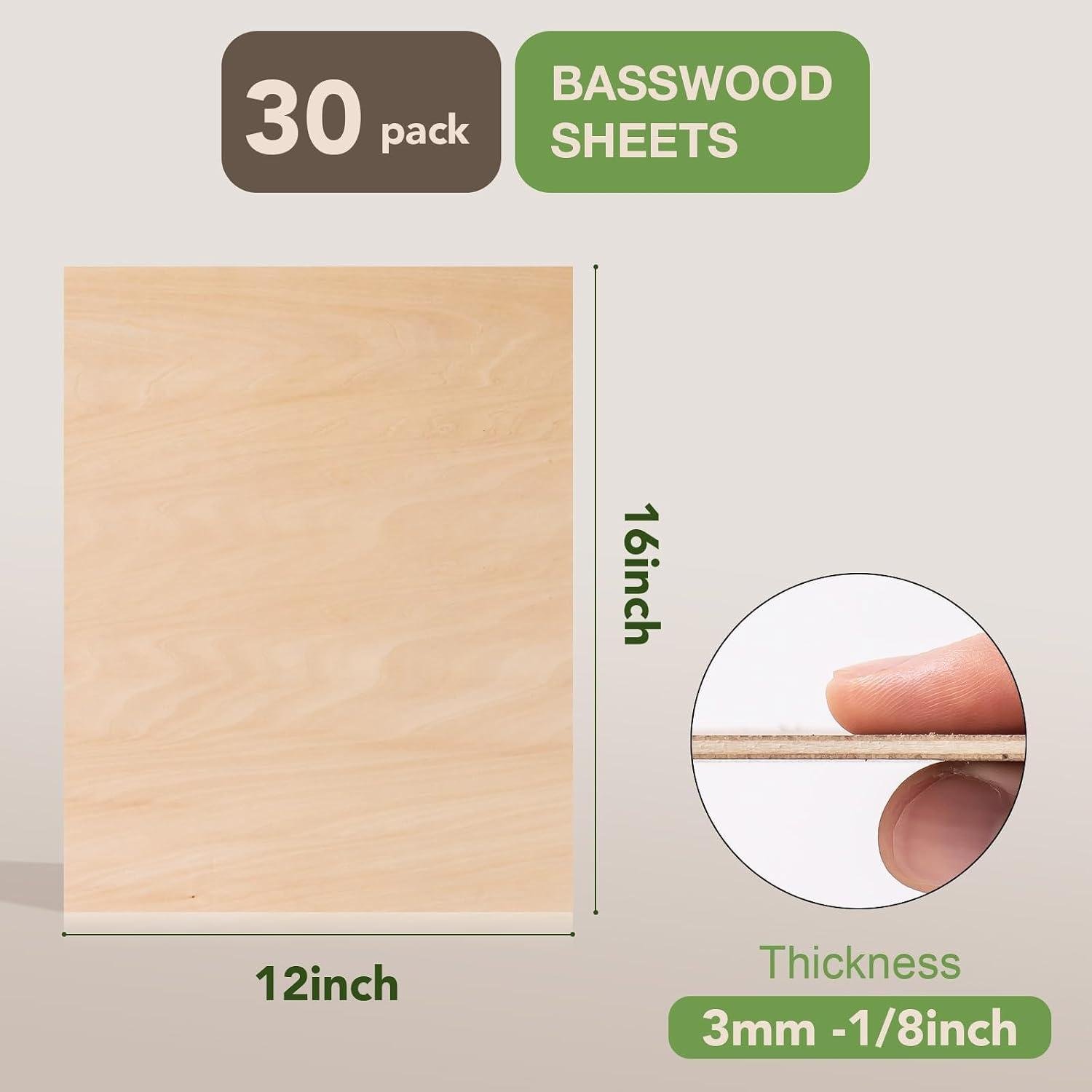
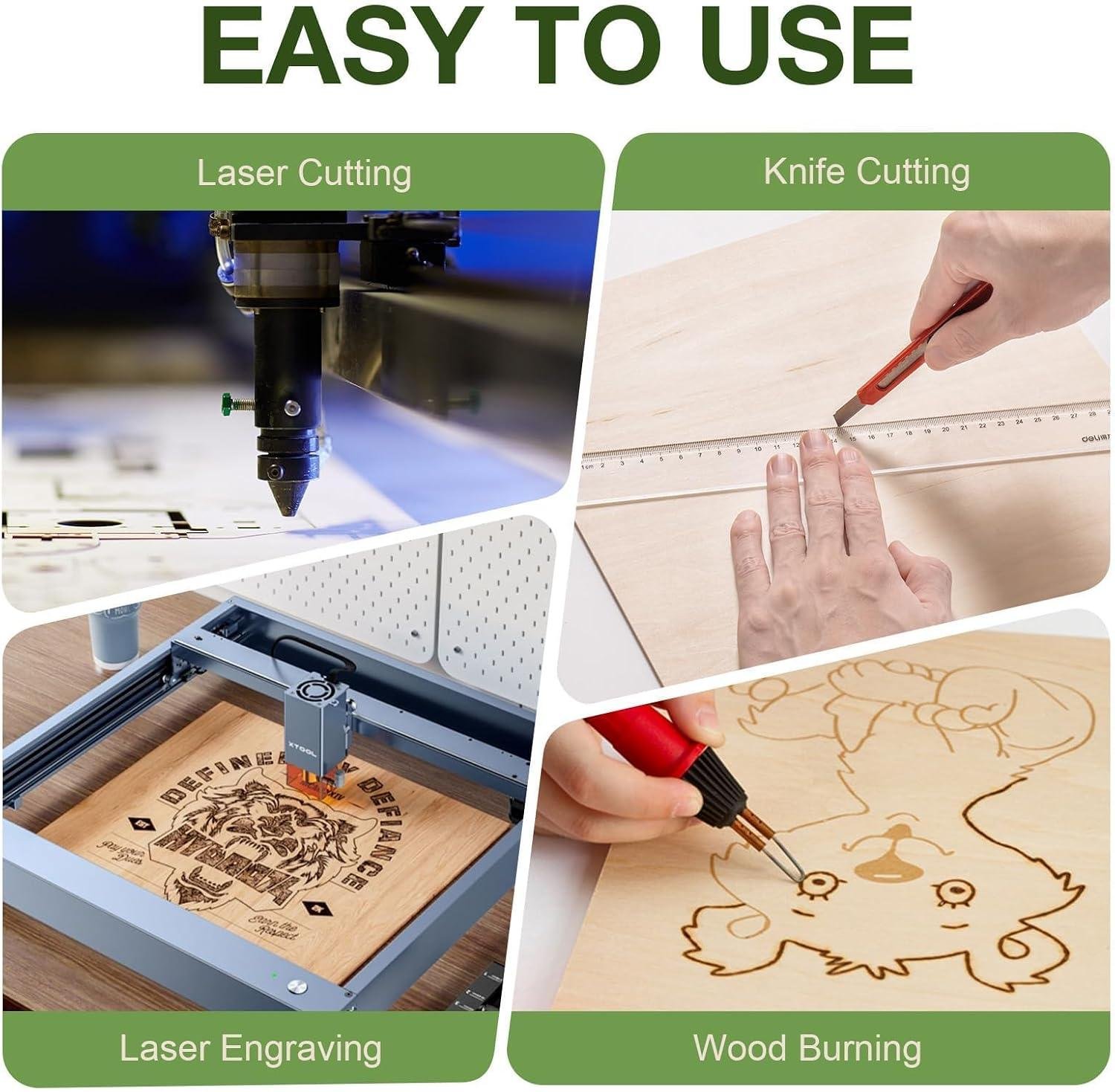
That’s where the ROBOTIME 30‑Pack Basswood Sheets comes in: a bundle of 30 all‑natural basswood panels sized 12″ x 16″ x 1/8″ (3mm), marketed as laser engraving and cutting blanks with a smooth, sturdy surface and a stated thickness tolerance around 0.2mm. They’re also pitched for rotary engraving, woodburning, UV‑LED printing, and even saw cutting for craft-scale builds.
In this review, we’ll look at the specs that impact real workshop results-flatness, surface quality, ease of processing, and value-plus what customers repeatedly report: many praise the clean surfaces for laser work, while others flag warping as a recurring issue (with ROBOTIME offering a simple flattening tip).
We‘ve spent years building everything from jigs to gift projects, so we’ll focus on practical decision points, not hype.
Tool Overview and First Impressions of These Basswood Laser Blanks
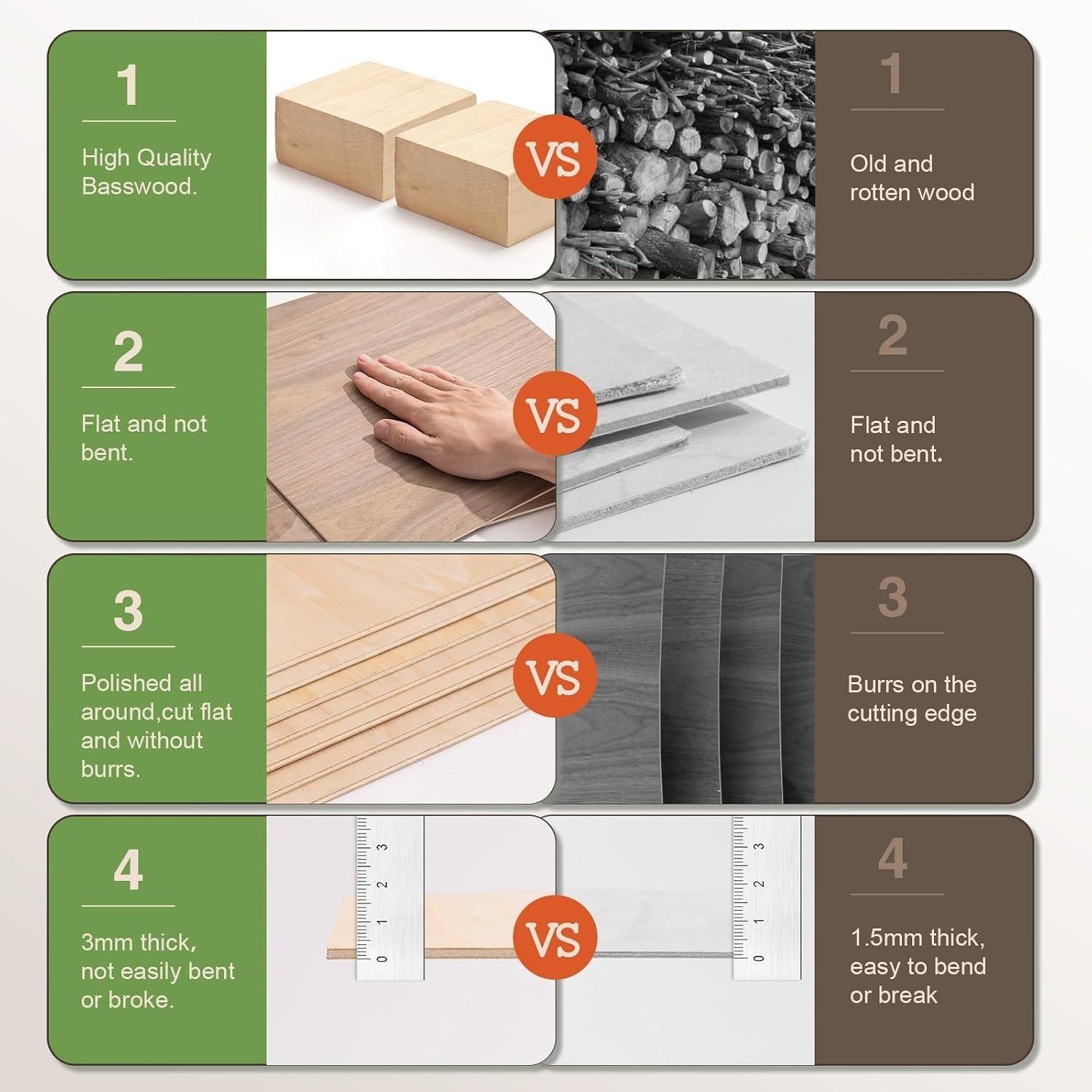
When we treat the ROBOTIME 30-pack basswood sheets like any other shop “tool,” the first thing we notice is that the specs are clearly aimed at repeatable laser work: 30 sheets of unfinished basswood, each at 12″ x 16″ and 1/8″ thick (3mm), with a stated ±0.2mm thickness tolerance. That size is practical in a small woodworking workflow-big enough for signage panels, jigs, and batches of ornaments, but still manageable on the bench for quick layout, taping, and sanding. The surface is marketed as smooth and “easy to process,” and that matches common basswood expectations for laser engraving: it’s usually consistent, light-colored, and forgiving when we’re dialing in settings. Multiple customer reviews echo that theme, calling it “great for laser work” and “excellent quality”, and one review specifically mentions success with a 40W laser-useful context if we’re trying to match material thickness to a typical hobby CO₂ machine.
Our first-impressions caveat is the same one that shows up repeatedly in the feedback: warping. Reviews range from “Warped, but otherwise good” to reports that “some are unusable due to not laying flat,” and a few mention returning sheets because the boards wouldn’t sit flat in the machine. In a practical shop setting, flatness matters as much as surface quality because a bowed sheet can throw off focus height, create inconsistent kerf/char, or even cause a head strike depending on your laser’s clearance. The manufacturer’s tip (lightly dampen both sides, lay flat, and weight down for several hours to a day) is a real-world fix we’d treat like milling etiquette-similar to sticker-and-weight acclimation-though it does add a prep step before production. For woodworkers new to laser blanks, we’d also remind ourselves that basswood is relatively soft and can dent when clamped; using painter’s tape, a spoilboard, or magnets/pins (depending on your bed) helps keep sheets stable without bruising the face.
- Included accessories:
- 30 unfinished basswood sheets
- Compatible attachments/accessories:
- Laser cutter/engraver beds (CO₂ or diode platforms sized for 12″ x 16″ stock)
- Rotary engraving/woodburning setups (as flat stock)
- UV-LED printing or toner heat transfer supplies (per product description)
- Hold-down aids: magnets, low-profile clamps, painter’s tape, honeycomb pins (machine-dependent)
- Ideal project types:
- Interior signage and shop labels
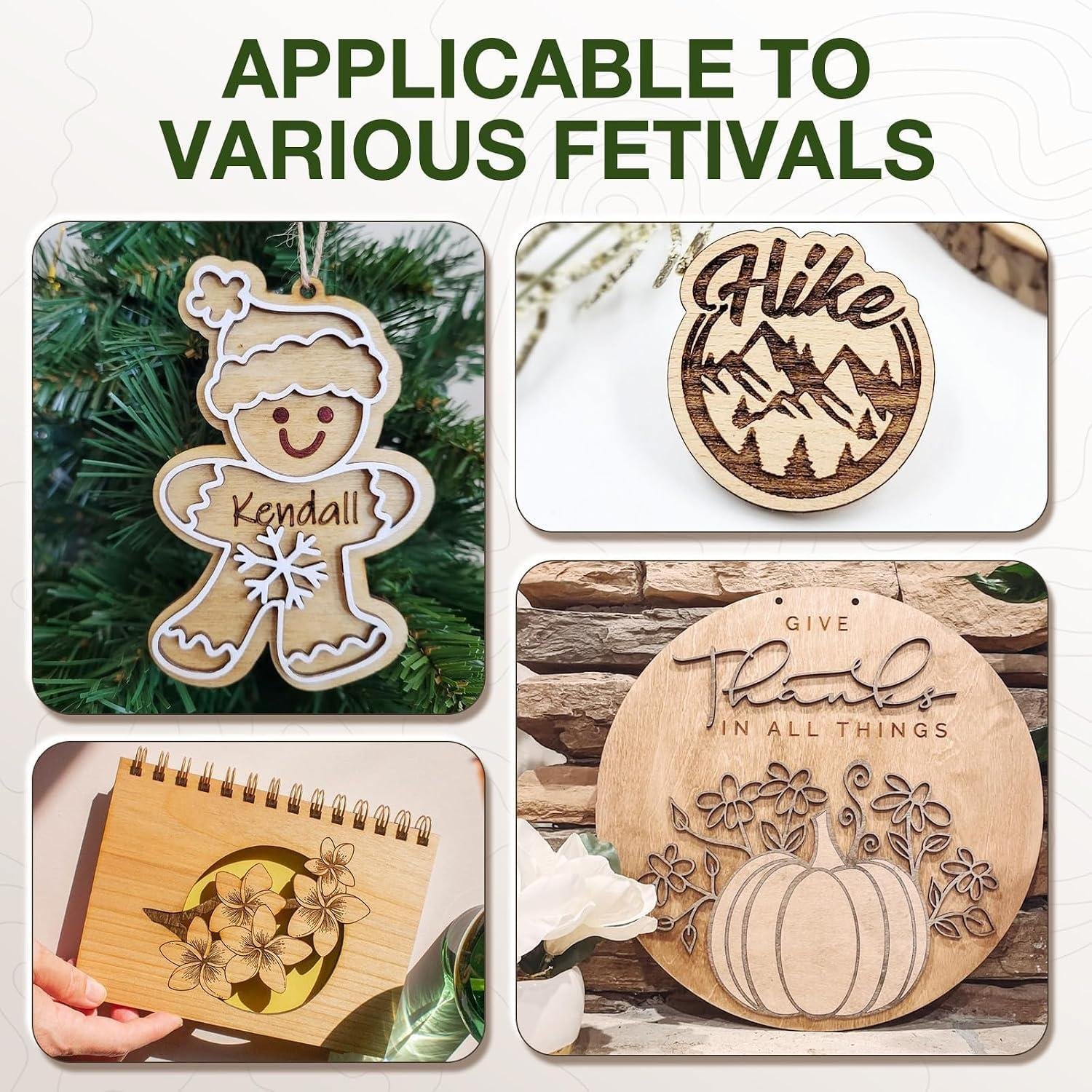
- Gift tags, ornaments, cake toppers
- Name badges and custom-cut shapes
- Prototype templates and small jigs (light-duty)
- Wood types tested by customers (from review themes):
- Basswood (this product; reviews reference laser engraving/cutting performance)
| Spec | ROBOTIME Basswood Laser Blanks | Why It Matters in the Shop |
|---|---|---|
| Sheet size | 12″ x 16″ (30 x 42cm) | Fits common small laser beds; efficient for batch nesting |
| Thickness | 1/8″ (3mm) | Common thickness for ornaments, tags, light signage |
| Thickness tolerance | ±0.2mm | Affects focus height and engraving consistency on tight-detail work |
| Pack quantity | 30 sheets | Good for production runs and repeatable settings once dialed in |
| Common review theme | Smooth surface / good for laser, but warping reported | Flatness impacts cut/engrave accuracy and machine safety |
| Accessory / Hold-Down Option | Compatibility | Use Case |
|---|---|---|
| Honeycomb bed pins | Machine-dependent | Helps keep slightly cupped sheets from lifting during cutting |
| Magnets (steel bed) | Steel-backed beds only | Fast, non-marring hold-down for thin stock |
| Painter’s tape | Universal | Light hold-down and reduced smoke staining around engraves |
| Low-profile clamps | Universal (space permitting) | Flattening warped corners without blocking the laser path |
| Capacity Consideration | Recommended in Practice | What Reviews Suggest Can Happen |
|---|---|---|
| Flatness for laser focus | Sheet lies fully flat on the bed | Warping may prevent proper lay-flat; some users report unusable sheets |
| Workflow readiness | Ready to cut/engrave after quick wipe-down | Some users report minimal cleaning needed; others need flattening time |
See Full Specifications & Customer Photos
Real World Performance for Laser Cutting Engraving and Scroll Saw Work
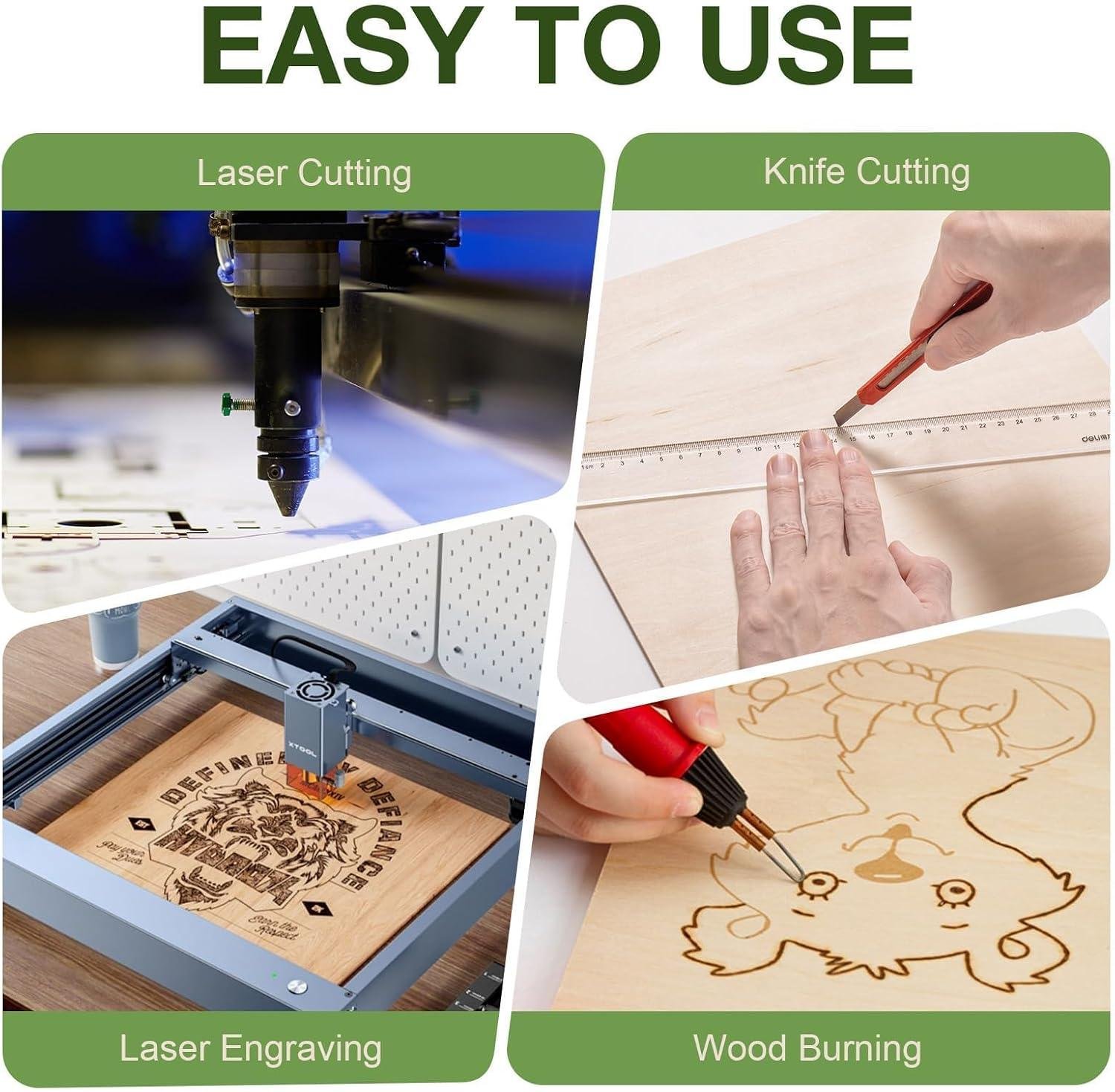
In real shop use, these ROBOTIME blanks behave like what we’d expect from a laser-friendly basswood panel: they’re light, consistent, and easy to process. Each sheet comes in at 12″ x 16″ and a nominal 1/8″ (3mm) thickness, with a stated 0.2mm thickness tolerance, which matters when we’re trying to keep kerf and engraving depth predictable across a batch. Customer feedback lines up with that-multiple reviews describe “excellent quality”, “smooth” faces, and minimal cleaning needed after cutting or engraving, and one reviewer specifically mentions they work well in a Glowforge Pro. Another notes the wood is great for a 40W laser, which is a helpful real-world reference point (even though our exact power/speed settings will always depend on the machine, air assist, and exhaust). As basswood, it tends to engrave with clear contrast and cuts without the resinous flare-ups we sometimes see in softer, pitchy woods-still, we’d keep good airflow and proper ventilation, and we’d expect light sanding or a quick wipe-down if there’s any smoke staining on the cut edges.
Where performance gets more “real world” is flatness: several customers report warping, with some saying boards were “incredibly warped” or won’t lay flat in the laser, and a few mentioning they had to return a bad batch or couldn’t use 7-8 sheets due to bowing. That matters for both laser work and scroll saw work-on a laser, an unflat sheet can push the focal distance out of range and cause uneven cut-through; on a scroll saw, it can rock on the table and make tight turns harder to control. The brand’s own fix is practical and worth knowing: lightly dampen both sides, lay flat, and weigh down for several hours to a day. In our workflow, we’d also store sheets stickered and weighted in the shop for acclimation before precision jobs, and we’d reserve any slightly warped panels for projects where clamping or masking-tape-and-CA fixturing can force them flat. For woodworkers who want dependable results, these sheets look best suited to laser engraving, laser cutting, and small scroll-saw patterns-as long as we’re prepared to sort for flatness and flatten a few when needed.
- Included accessories
- 30 basswood sheets
- Nominal thickness: 1/8″ (3mm)
- Sheet size: 12″ x 16″ (30 x 42cm)
- Compatible attachments/accessories
- Laser honeycomb bed and hold-down pins/magnets (to keep sheets flat)
- Air assist + exhaust setup (reduces scorching and smoke residue)
- Masking/painter’s tape masking (helps minimize surface smoke marks)
- Scroll saw: fine-tooth blades for clean detail work in 3mm stock
- Ideal project types
- Interior signage and name plates
- Ornaments, gift tags, cake toppers
- Custom-cut shapes, badges, small inlays, templates
- Wood types tested by customers
- Basswood (this product)
| Spec / Attribute | ROBOTIME Basswood Sheets | Why It Matters in the Shop |
|---|---|---|
| Sheet size | 12″ x 16″ | Common craft/laser blank size; efficient nesting for small parts |
| Thickness | 1/8″ (3mm) | Good for ornaments, tags, and scroll-saw fretwork without being too fragile |
| Thickness tolerance | 0.2mm | Affects laser focus, cut-through consistency, and engraving depth uniformity |
| Common review themes | Smooth faces, good for laser, but warping reported | Flatness is critical for lasers and helps keep scroll-saw work stable on the table |
| Accessory | Compatible? | Use Case |
|---|---|---|
| Honeycomb bed / pin bed | Yes | Supports thin stock and improves airflow under cuts |
| Hold-down magnets/pins | Yes | Helps manage warp so sheets stay in focus |
| Masking tape/paper mask | Yes | Reduces surface smoke staining; speeds cleanup |
| Fine-tooth scroll saw blades | Yes | Cleaner edges on tight curves in 3mm basswood |
| Capacity Topic | Recommended (Best Practice) | Actual (Based on Reviews/Specs) |
|---|---|---|
| Flatness for laser engraving | Sheet should lay fully flat across the bed | Many report flat, smooth sheets; several report warping that can hinder laser use |
| Cleanup after cutting | Light residue at most; mask if appearance is critical | Some reviewers note minimal cleaning needed |
See Full Specifications & Customer Photos
Key Features Woodworkers Will Appreciate Grain Consistency Flatness and Finish
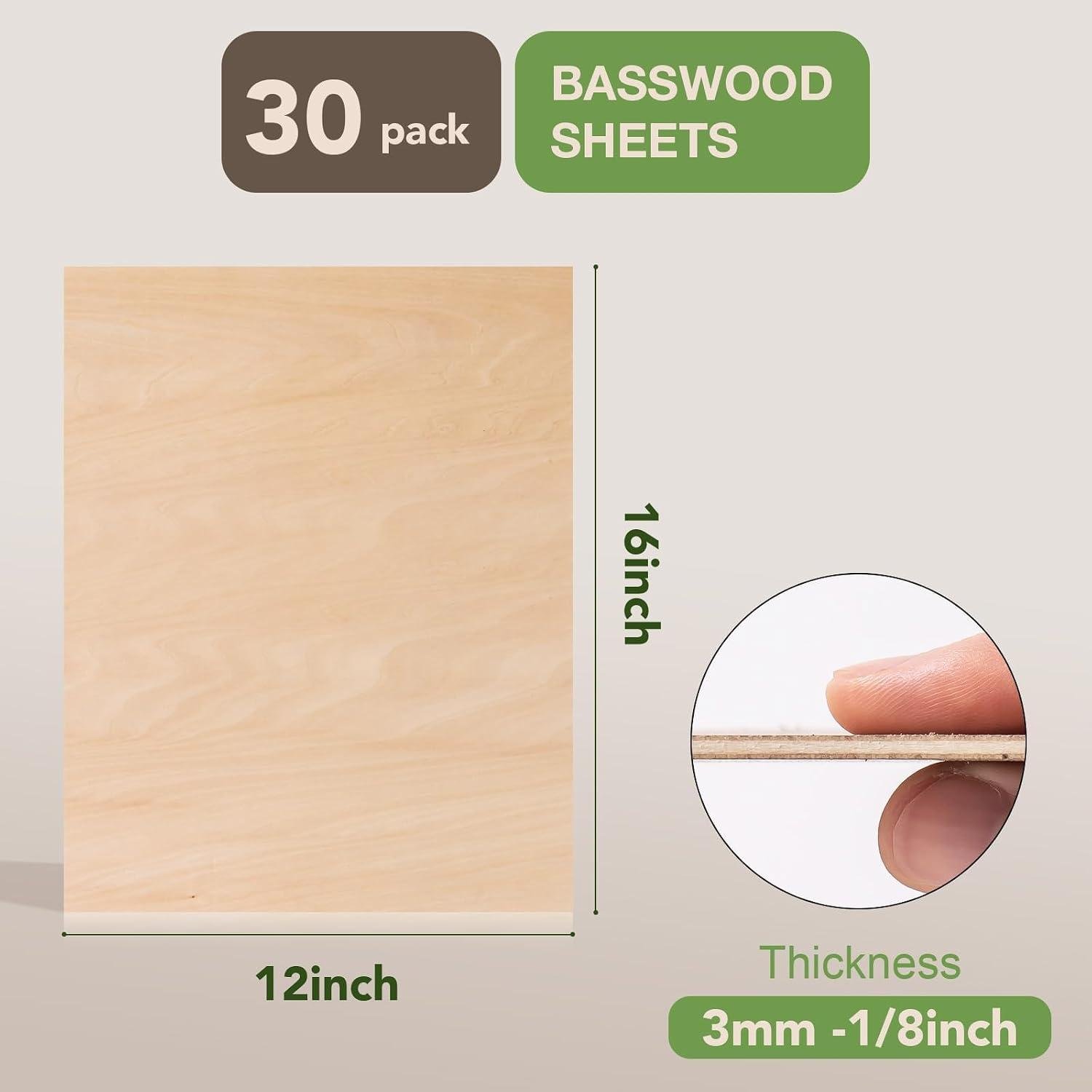
Grain consistency is the first thing we look at with basswood blanks, because predictable grain is what makes laser settings repeatable and keeps small parts from tearing out when we sand or carve. These ROBOTIME sheets come as a 30-pack of all-natural basswood at 1/8″ thickness (3mm), each measuring 12″ x 16″ (30 x 42cm), and the manufacturer notes a 0.2mm thickness tolerance-worth remembering if our work depends on tight-fit slots or layered glue-ups. Across customer feedback, the recurring theme is “excellent for laser engraving and cutting” and “few imperfections on the surfaces,” which lines up with what we want for workshop production: clean faces that don’t force us into extra prep before engraving, woodburning, or UV-LED printing. For educational context, basswood’s softer, even texture generally engraves with less contrast “surprise” than highly figured stock, but it also means we should use a backing board and light passes when routing or scroll-sawing delicate profiles to reduce fuzzing and crushed edges.
Flatness and finish matter just as much as grain when we’re feeding sheets through a laser bed or trying to get crisp depth-of-focus across a full panel. Here, reviews consistently praise the surface as smooth with minimal cleaning needed after cutting or engraving, but several customers also flag a real drawback: warping. Comments like “The wood is great except it is warped and won’t lay flat in the laser,” “some sheets were warped,” and even “so warped that I had to return it” show that batch variability can affect usability-especially for diode/CO2 laser work where a few millimeters of bow can change kerf quality and engraving sharpness. ROBOTIME suggests a practical fix we’d also use in the shop: dampen both sides lightly, press on a dead-flat surface, and weight it for several hours to a day. If we’re doing time-sensitive production, we’d plan for that conditioning step (or add hold-downs/magnets if our laser bed allows), and we’d reserve any persistently bowed sheets for smaller parts where we can cut around the problem areas.
- Included accessories: 30 basswood sheets (unfinished blanks)
- Compatible attachments/accessories: laser bed hold-down pins/magnets (machine-dependent), honeycomb bed, rotary engraving attachment (for suitable machines), masking tape/transfer paper for cleaner faces, flat cauls + weights for de-warping
- Ideal project types: interior signage, custom-cut shapes, gift tags, cake toppers, ornaments, name badges, layered laser art, stencils, test-cut calibration panels
- Wood types tested by customers: Basswood (as supplied); reviewers specifically mention success with laser cutting and engraving (including use on a Glowforge Pro)
| Spec | ROBOTIME Basswood Sheets (This Pack) | What It Means in the Shop |
|---|---|---|
| Sheet count | 30 pieces | Good for batching runs and dialing in laser settings without guarding every panel. |
| Sheet size | 12″ x 16″ (30 x 42cm) | Fits many hobby/pro laser beds; also convenient for scroll saw and template work. |
| Thickness | 1/8″ (3mm) | Common thickness for ornaments, tags, layered builds; easy to sand and finish. |
| Thickness tolerance | ±0.2mm (stated tolerance) | Account for variation in press-fit designs and multi-layer glue-ups. |
| Surface condition | Smooth, unfinished (per description + reviews) | Less prep before engraving/printing; still benefits from light scuff-sanding before clear coat. |
| Common concern | Warping reported by multiple reviewers | May require flattening steps or sorting sheets by flatness before critical work. |
| Accessory/Consumable | Compatible? | Why We’d Use It |
|---|---|---|
| Masking tape / paper transfer mask | Yes | Helps reduce smoke staining and cleanup after laser engraving/cutting. |
| Honeycomb laser bed | Yes | Improves airflow under the cut; can reduce backside scorching. |
| Hold-down magnets/pins (machine-dependent) | Often | Helps manage mild warp so focus stays consistent across the sheet. |
| Flat cauls + clamps/weights | Yes | Supports the recommended flattening method if boards arrive bowed. |
| Capacity Check | Recommended for Best Results | Actual (Based on Specs/Reviews) |
|---|---|---|
| Flatness for laser beds | Fully flat sheets for consistent focus | Mixed: many fine; multiple reviewers report warped sheets |
| Surface prep time | Minimal sanding/masking | Often minimal: reviewers note smooth surface and minimal cleaning |
| Thickness uniformity for press-fits | Very consistent across a batch | Tolerance stated at 0.2mm; plan for test cuts if fit is critical |
See Full Specifications & Customer Photos
Ease of Use for Beginners and Experienced Makers in the Shop and at the Laser
For beginners, these sheets are about as plug-and-play as raw wood gets: 1/8″ (3mm) basswood in a consistent 12″ x 16″ format means we can skip the home-center rip-and-crosscut routine and go straight to layout, masking, and test grids at the laser. In the shop, that same predictable sizing makes it easy to batch work-stacking with cauls for sanding, trimming to jigs, or taping down to a spoilboard without wrestling odd offcuts. Reviewers frequently describe them as “great for laser work” and “excellent for laser engraving and cutting,” and we also see the recurring point that surfaces have few imperfections and are smooth, which matters when we’re trying to avoid extra prep before engraving (raised grain and dents show up fast once we add burn). The manufacturer notes a thickness tolerance of 0.2mm, so we recommend beginners focus early on two practical habits: run a quick focus check across the sheet (corners and center) and keep a simple settings notebook, because even small thickness variation can change cut-through reliability on 3mm stock.
For experienced makers, the main ease-of-use story is workflow speed-30 sheets per pack in an unfinished, natural-grain basswood helps us standardize fixtures, kerf tests, and production runs for tags, ornaments, signage blanks, and prototype panels. That said, the one recurring friction point in customer feedback is warping: multiple reviewers mention boards arriving “incredibly warped” or not laying flat, and one notes 7 or 8 sheets were unusable on their laser cutter. In practice, warped stock isn’t just annoying-it can cause uneven focus, inconsistent engraving depth, and incomplete cuts near lifted corners. The brand’s fix is straightforward and shop-friendly: lightly dampen both sides, lay the sheet on a truly flat surface, and weight it down for several hours to a day. We’d add two laser-bench tactics that keep the process beginner-proof even when boards aren’t perfect: pin the perimeter with strong magnets/hold-downs if your bed supports it, or tape the sheet to a sacrificial carrier panel so it stays flat through the entire job-both approaches reduce misfires and make these sheets easier to run confidently at the laser.
See Full Specifications & Customer Photos
Customer Reviews Analysis
What Woodworkers Are Saying (Review Analysis)
1. Overall sentiment from woodworking customers
Overall sentiment trends positive, with common praise including the sheets being a convenient “ready-to-run” size for lasers and CNC-style craft work. Several woodworkers mentioned the pack quantity (30 sheets) as a strong value for frequent prototyping, batch engraving, and small production runs. That said, some users reported challenges with sheet-to-sheet consistency-usually framed as occasional imperfections rather than a dealbreaker.
2. Performance feedback (accuracy, power, results)
Multiple reviews highlight that these 3mm basswood sheets perform well for laser cutting and engraving, especially when users want predictable burn characteristics and clear engraved detail.
- Cut quality: Several woodworkers mentioned clean cuts at typical laser settings for 3mm basswood, with minimal tear-out compared to some hobby plywoods (since basswood is softer and uniform).
- Engraving results: Common praise includes good contrast on engravings and consistent marking depth when the material is uniform.
- Consistency/accuracy: Some users reported challenges with minor thickness variation or density differences across sheets-typically showing up as needing small tweaks to speed/power between sheets to keep cut-through consistent.
3. Build quality and durability observations
Reviews tend to focus on flatness, surface quality, and defects (since these are blanks rather than a tool).
- Flatness: Several woodworkers mentioned sheets arriving reasonably flat, which helps prevent focus issues and uneven engraving.
- Surface quality: Common praise includes a smooth surface suitable for engraving, staining, and painting. Many users note basswood sands quickly and evenly.
- Defects: Some users reported challenges with occasional warping, edge dings from shipping, or visible grain/patchy areas that can affect “presentation face” projects.
4. Ease of use for different skill levels
- Beginners appreciated that basswood is forgiving: it cuts easily, engraves cleanly, and sands without much fight-making it a friendly option for first-time laser users.
- Experienced woodworkers noted that while basswood is easy to process, the key is managing material variability (checking sheet flatness, doing quick test grids, and sorting sheets by appearance for “front-facing” projects).
- Some DIYers found that finishing can require experimentation because basswood can absorb stain unevenly unless you seal/condition first (a common basswood trait, not unique to this pack).
5. Common project types and success stories
Customers successfully used this for a wide range of laser-focused woodworking projects, especially where lightweight wood and clean engraving matter:
- Engraved signs, plaques, and name plates
- Ornaments, holiday décor, and gift tags
- Small craft builds like boxes, organizers, and templates/jigs
- Model parts and layered “stacked” laser art
- Personalized items (e.g., keychains, coasters, labels)
Several reviewers mentioned success with batch production, where having a 30-pack makes it easier to run multiple copies without constantly reordering.
6. Issues or limitations reported
Some users reported challenges with the following:
- Sheet-to-sheet variation: Occasional differences in density/thickness can mean re-tuning laser settings to avoid incomplete cuts or extra charring.
- Warping/handling marks: A few reviews mention minor warps or surface blemishes from shipping-important if you need perfectly flat stock for tight-tolerance assemblies.
- Basswood softness: While easy to cut, basswood dents more easily than harder woods-so finished pieces may need more care (or a protective topcoat).
- Staining/blotching: Some users noted basswood can blotch-using sanding sealer/conditioner is often necessary for an even stain finish.
Quick Summary Table
| Aspect | Common Feedback |
|---|---|
| Performance | Generally clean cuts/engraves; some sheets may need minor power/speed tweaks |
| Precision | Good detail on engraving when sheets are flat; occasional variability affects repeatability |
| Build Quality / Material Quality | Mostly smooth and usable; a few reports of warping or cosmetic blemishes |
| Ease of Use | Beginner-friendly material; finishing (especially staining) may require conditioning |
| Versatility | Works well for signs, ornaments, models, templates, and small craft builds |
| Value | 30-pack seen as cost-effective for testing, prototyping, and batch projects |
If you share the actual review text (or star-rating breakdown), I can tighten this into a more data-driven summary with a few brief quoted excerpts and clearer frequency wording (e.g., “about a third of reviewers…”).
Pros & Cons
Pros & Cons
When we think of basswood as “laser food,” we want three things: it should lie flat, cut clean, and engrave without turning our shop into a smoke-scented mystery novel. The ROBOTIME 30-pack gets a lot right-yet it also has one recurring plot twist.
Pros
- Made for lasers, not just “wood that happens to exist.” Customers frequently call these sheets excellent for laser cutting and engraving, and we appreciate materials that feel purpose-picked for the job.
- Large, project-friendly size (12″ x 16″). Big enough for signage, layered art, and batches of ornaments-without us playing puzzle-piece Tetris on smaller panels.
- Smooth surfaces with few imperfections (most of the time). Feedback highlights clean faces with minimal defects, which helps engravings look intentional instead of “rustic by accident.”
- Convenient 30-pack. For us, bulk matters: fewer reorders, more consistent project output, easier material planning.
- Versatile compatibility. The brand positions these for laser/rotary engraving, UV-LED printing, woodburning, and more-nice when we want one stack of blanks to serve multiple craft moods.
- Brand acknowledges warping and offers a fix. We don’t love that it’s necessary, but we do like that they provide flattening guidance instead of pretending the issue doesn’t exist.
Cons
- Warping is the headline complaint. Multiple reviewers report boards arriving “incredibly warped,” with some sheets unusable because they won’t lay flat in the laser-our least favorite surprise.
- Warping can mean wasted sheets (and time). Even if a dampen-and-weight method works, it adds a waiting period-annoying when we’re trying to finish orders, not babysit lumber.
- Batch variability. Reviews suggest some packs are great while others have a noticeable percentage of warped boards, which makes planning riskier.
- Thickness tolerance may matter for precision builds. The stated tolerance (about 0.2mm) is normal for wood, but if we’re designing tight press-fit joints, tiny differences can show up fast.
At-a-Glance: What We’d Use Them For
| Use Case | How These Sheets Fit | Our Watch-Out |
|---|---|---|
| Engraved name plates & badges | Smooth face helps details pop | Warping can blur focus if not clamped |
| Ornaments & gift tags | Easy to cut in batches from 12″ x 16″ | Check flatness before running a full sheet |
| Small signs / décor panels | Good size and clean look for simple signage | Flatten first if corners lift |
| Press-fit / tight tolerance builds | 3mm class thickness often works well | Tolerance variation may require test cuts |
Our takeaway: If we get a flat batch, these are the kind of basswood sheets that make laser work feel effortless. But since warping shows up repeatedly in customer feedback, we’d plan to inspect and flatten boards before committing a long run.
Q&A
What wood types can these blanks handle effectively?
These are basswood sheets (1/8″ / ~3mm), which is one of the easiest woods to engrave and cut cleanly. Basswood’s fine, consistent grain makes it a go-to for laser engraving, woodburning, rotary engraving, UV-LED printing, and toner heat transfer (all listed uses). If you’re used to plywood, basswood typically produces less “void surprise” and more uniform results because it’s solid wood rather than layered.
Is 1/8″ (3mm) basswood comparable to hardwoods like oak or maple?
No-basswood is a soft hardwood and is much easier to machine than dense species like oak or hard maple. That’s the advantage: it cuts/engraves faster and tends to char less at equivalent settings. If you’re specifically trying to match the look, dent-resistance, or outdoor durability of oak/maple, these won’t substitute-but for prototyping, signage, ornaments, tags, and detailed engraving, basswood is often the better-performing choice.
How do these perform compared to plywood and veneers for laser work?
Because these are solid basswood sheets (not plywood), you generally avoid plywood issues like internal glue lines, voids, and inconsistent cut-through. Many customers specifically mention they’re excellent for laser cutting and engraving and that the surfaces have few imperfections. If you rely on plywood for stiffness, note that 1/8″ solid wood can still move with humidity (see warping notes below), while Baltic birch-style plywood often stays flatter.
Can I run these in production, or are they mainly for hobby projects?
The pack includes 30 sheets at a consistent target size of 12″ x 16″ x 1/8″ with a listed thickness tolerance of 0.2mm, which is workable for batching repeat jobs. Several reviewers mention repeat orders and successful use on machines like a Glowforge Pro, which is a good sign for small-batch production. The main production limiter noted in reviews is warping: multiple customers report some sheets arriving too warped to lay flat, which can interrupt workflow unless you have a flattening process or hold-down method.
Do I need special setup or accessories to use these with my laser?
No special accessories are required beyond what you’d normally use for 3mm stock, but you’ll get better consistency with a few common add-ons: a honeycomb bed or standoffs to reduce back-burn, air assist to limit charring, and some sort of workholding (pins, magnets on a steel bed, tape tabs, or a vacuum table) to keep sheets flat. Thickness can vary slightly (tolerance up to 0.2mm), so if your laser is focus-sensitive, it’s worth doing a quick focus check per batch.
Warping: is it a real issue, and how do I fix it?
Yes-warping is the most common complaint in customer feedback, with several reports of sheets arriving “incredibly warped” or unusable because they wouldn’t lay flat. The product listing also acknowledges this can happen and suggests a practical fix: lightly dampen both sides (spray or wipe), place the sheet on a flat surface, then weigh it down for several hours to a day. In a laser workflow, many woodworkers also use hold-downs (magnets/pins) to keep mild warp from shifting focus or causing head strikes.
Is this beginner-friendly for someone new to lasers, engraving, or woodcraft?
Yes. Basswood is one of the most forgiving materials for learning because it engraves with good contrast and cuts without the glue/void variables of plywood. Reviews generally describe the sheets as smooth with minimal cleanup after cutting/engraving. The main beginner “gotcha” is keeping the sheet flat-if you get a warped batch, you may need to flatten or clamp it before you’ll get consistent results.
Is this a good value versus buying craft boards from a home improvement store?
For laser and engraving work, many customers prefer these over store-bought boards because you get a laser-friendly size (12″ x 16″), 30 sheets per pack, and reports of smoother surfaces with less prep than cutting down larger panels. The trade-off is variability from shipping and storage-specifically warping-so the value is best if you’re willing to flatten sheets when needed or can use a hold-down system in your machine.
Experience the Difference

The ROBOTIME 30‑Pack Basswood Sheets are 3mm (1/8″) laser blanks sized 12″ x 16″, offering 30 pieces of unfinished, natural basswood with a smooth surface and visible grain. They’re designed for laser cutting/engraving (CO2 or diode), rotary engraving, woodburning, UV‑LED printing, and basic saw work, with a stated thickness tolerance around 0.2mm. Customer feedback consistently praises the clean surfaces and solid results for engraving and cutting, while repeated complaints highlight warping-sometimes enough to prevent boards from lying flat in a laser bed.
Best for hobby woodworkers and makers producing small to medium projects like ornaments, tags, signage, toppers, and test cuts where consistency and easy processing matter.
Consider alternatives if your workflow demands perfectly flat stock for production runs, you can’t afford unusable sheets, or you need thicker hardwood-grade material.
Overall, it’s a solid value pack for laser-focused projects-great when flat, but inspect and plan for occasional warp.
Want to see current pricing and customer photos? View on Amazon & Read More Reviews →