
Blog
Rowood Cherry Plywood Review: Right for Our Laser?

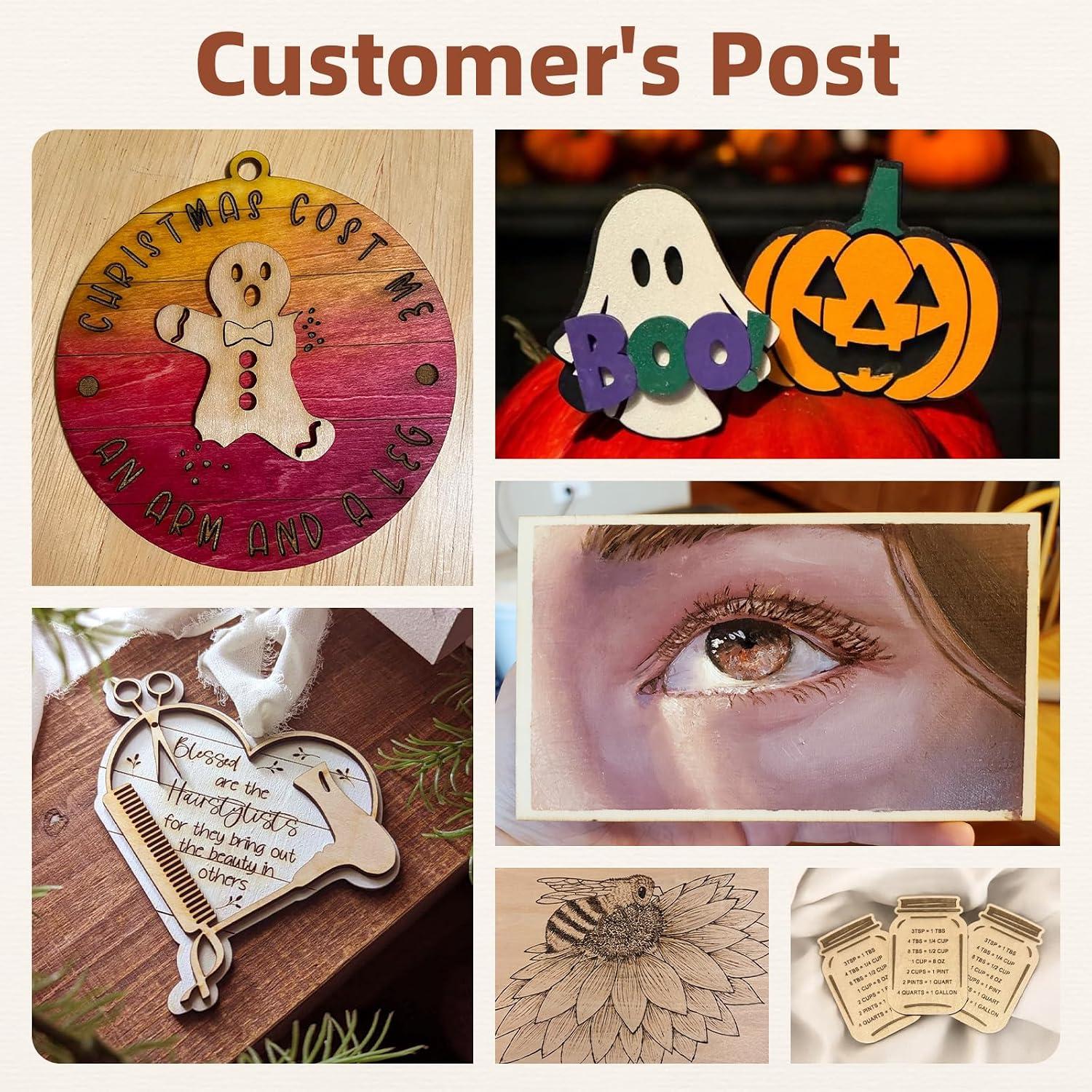
Ever lined up a small laser-cut ornament or an architectural model wall, only to watch tiny inaccuracies snowball-burn marks where you didn’t expect them, fuzzy engraving, or a sheet that isn’t quite as flat as it looked? When our projects depend on tight tolerances, the “material” becomes as important as the machine, especially in a shop where space, time, and budget are all limited.
That’s where the Rowood Cherry Plywood Sheets come in: a 6-pack of 12×12-inch, 1/8-inch (3mm) unfinished cherry plywood blanks made for laser cutting and engraving, but also usable with craft knives and scroll saws. Rowood highlights a smooth surface, natural wood texture, and a focus on minimizing warping, plus a stated ±0.2mm thickness tolerance.
In this review, we’ll break down the key specs, what to look for in thin cherry ply, and what customers report-including many notes about straight, clean sheets for cutting, alongside some concerns about engraving results and occasional quality-control surprises. We’ve built enough projects from finicky sheet goods to know the difference good plywood can make.
Tool Overview and First Impressions of the Cherry Plywood Sheets
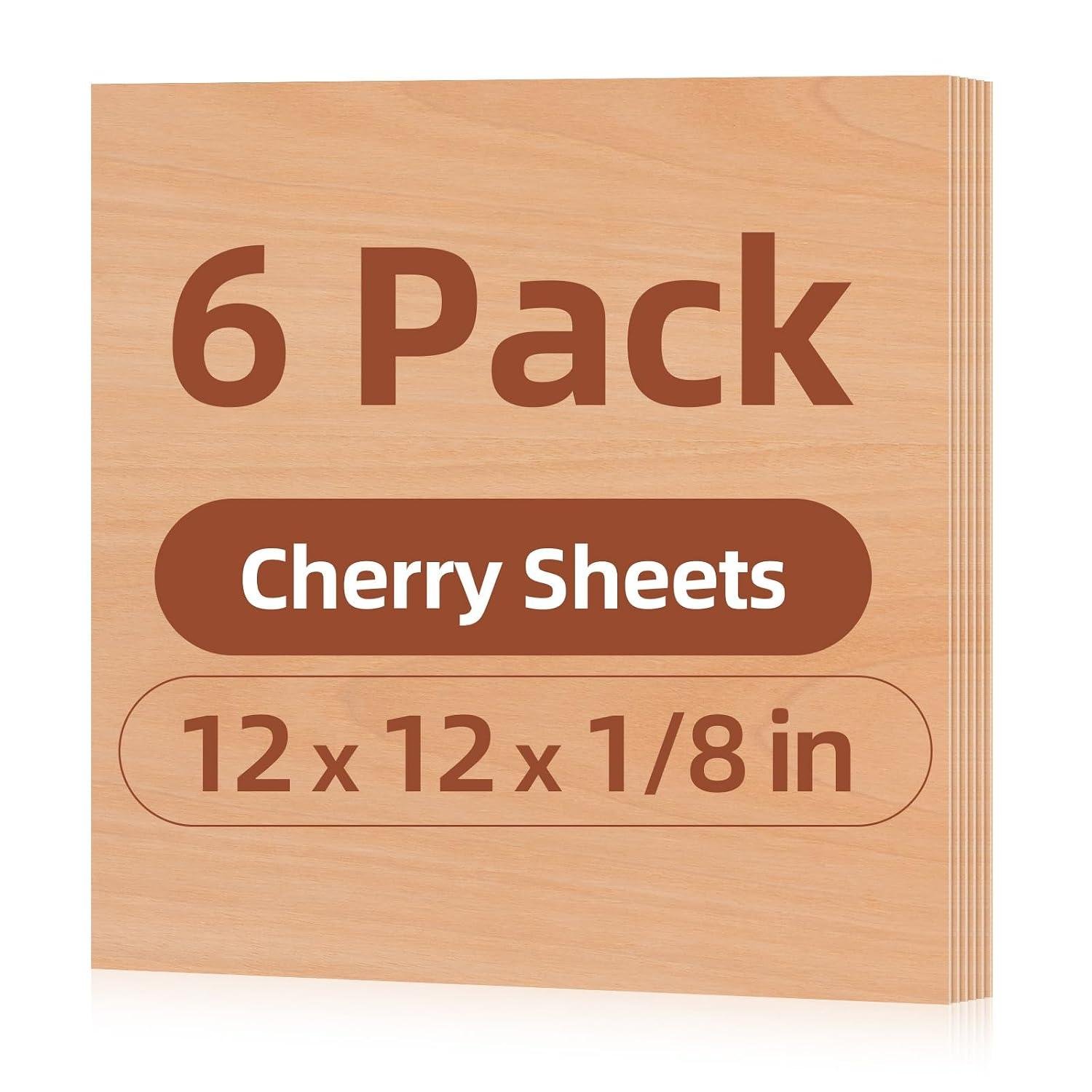
When we cracked open the Rowood Cherry Plywood Sheets pack, our first “tool-read” impression was that these are purpose-built blanks for the small-shop, laser-and-scroll-saw world: 12″ x 12″ panels at 1/8″ (3mm) thickness, sold as a 6-pack with a stated ±0.2mm tolerance. In a woodworking workflow, that 3mm class is thin enough to cut cleanly on a laser or scroll saw, yet stiff enough to stay manageable during layout, masking, and light sanding-assuming the sheets arrive flat. Customer themes generally line up with that expectation: multiple reviewers mention boards arriving “dry and straight” and “flat, no twist”, while others praise consistent grain tones and minimal flaws. Our practical takeaway is to treat these like finishing-ready craft plywood: keep them stickered flat in a stable humidity corner of the shop (as the listing advises), and plan your joinery and attachment methods around the reality that 3mm stock won’t tolerate aggressive clamping pressure or deep profiling without support.
In terms of workshop application, these sheets fit best when we need repeatable, square blanks for templates, ornaments, inlays, architectural models, and laser-cut assemblies-projects where consistent thickness matters more than structural strength. That said, the review history also flags a critical “first impressions” caution for anyone buying specifically for photo/image engraving: a couple of customers report the veneer is very thin and that deeper engraving can break through to a lighter/white core, leaving an “ugly” contrast that’s hard to hide. Another reviewer notes engravings coming out light and fuzzy even after changing settings-possibly a glue/resin or veneer issue-while others simply say it works with laser and makes a nice laser cut project. Educationally, that tells us to separate use cases: for through-cuts and line engraving, plywood often behaves great; for shaded raster images or deep burns, we’re better off running a small test grid first, keeping power shallow, and considering solid “scroll-saw” cherry if the design depends on depth and darkening rather than cutting.
- Included accessories: None (sheets only)
- Compatible attachments/accessories: Laser cutter honeycomb bed, painter’s/masking tape for scorch control, light sanding block (220-320 grit), craft knife, scroll saw blades suitable for 1/8″ stock
- Ideal project types: Laser-cut ornaments, layered signs, small box components, templates, architectural models, puzzles, woodburning practice panels
- Wood types tested by customers: Cherry plywood (this product); comparisons mentioned: solid “scrollsaw” wood for better engraving results
| Spec / Detail | Rowood Cherry Plywood Sheets (This Pack) | What It Means in the Shop |
|---|---|---|
| Sheet size | 12″ x 12″ | Fits most hobby laser beds and makes repeatable blanks for small projects |
| Thickness | 1/8″ (3mm) | Great for laser cutting and light engraving; not ideal for depth carving or heavy sanding |
| Pack count | 6 sheets | Enough for batching ornaments/sign layers; still worth running test settings per sheet |
| Thickness tolerance | ±0.2mm | Expect minor variance-important for tight press-fit laser designs |
| Surface/flatness (reviews) | “Dry and straight,” “flat, no twist” (multiple customers) | Flat stock is key for consistent focus in laser work and clean scroll-saw cuts |
| Accessory | Compatible? | Why We’d Use It |
|---|---|---|
| Masking tape / laser masking | Yes | Reduces smoke staining and keeps cleanup light on thin veneer |
| Honeycomb bed / standoffs | Yes | Improves cut quality and reduces backside scorch |
| Fine sanding block (220-320 grit) | Yes (lightly) | Preps for finish without risking a sand-through on thin face veneer |
| Scroll saw | Yes | Good backup when laser isn’t available; supports tight radii and delicate parts |
| Capacity Topic | Recommended Approach | What Reviews Suggest in Practice |
|---|---|---|
| Laser cutting | Use for through-cuts and light vector engraving; test settings first | Several report it cuts well and makes nice laser cut projects |
| Image/raster engraving | Keep engraving shallow; run a grayscale test; consider solid wood for deep/dark images | Some report thin veneer and poor image engraving (white core showing, “light and fuzzy”) |
| Quality control | Inspect each sheet before committing a long job; keep within return window | One customer reports receiving a sheet with pre-burned images in the pack |
See Full Specifications & Customer Photos
Key Features Woodworkers Will Appreciate for Laser Cutting and Engraving
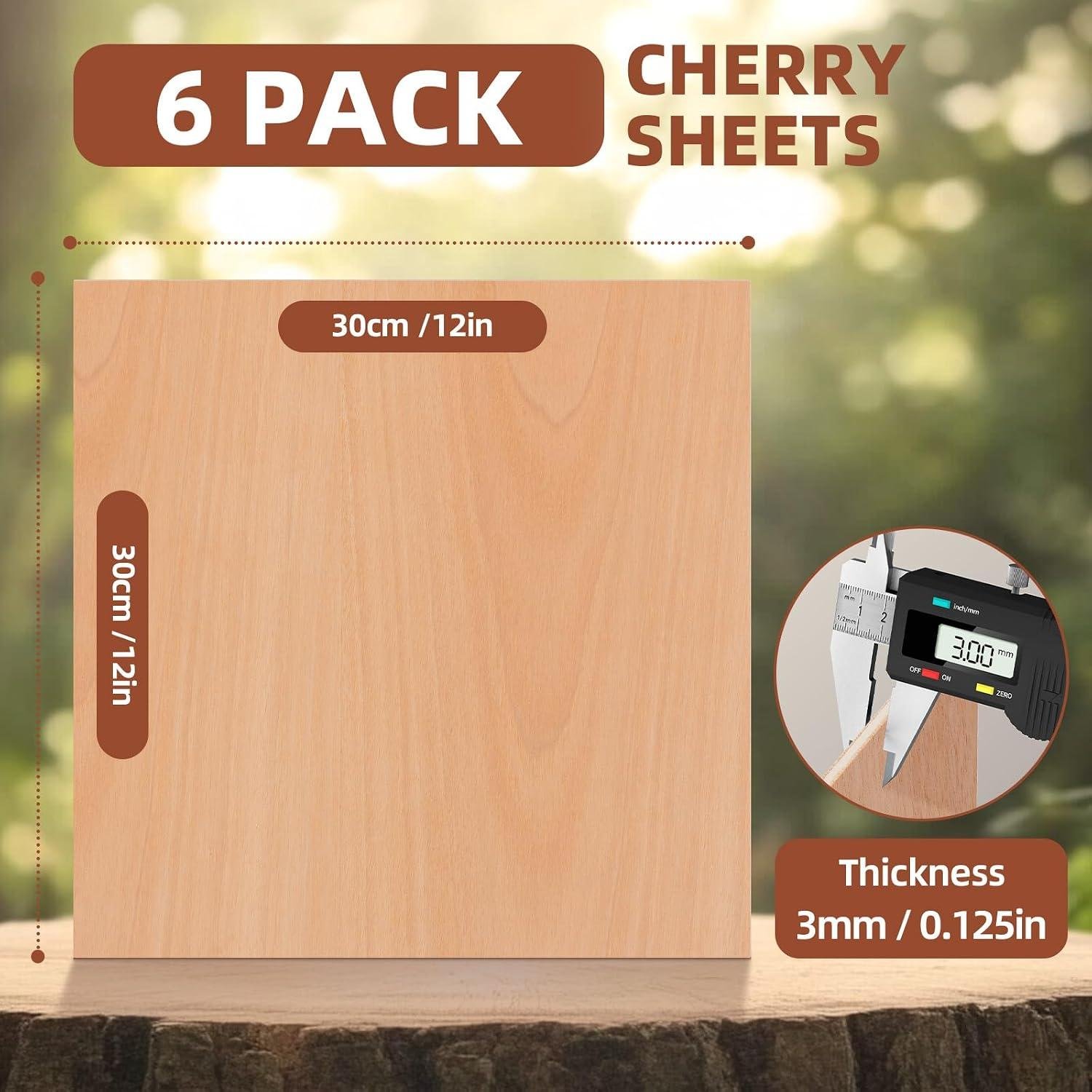
In our shop, the big win with these Rowood cherry plywood blanks is that they arrive in a laser-friendly, repeatable format: 12 x 12 inches, 1/8 inch (3mm) thick, in a 6-pack. That size is easy to fixture on common diode and CO₂ laser beds, and the unfinished surface means we can go straight from cut/engrave to sealing without fighting a factory topcoat. Several customers echo the practical stuff we care about-sheets being “dry and straight”, “flat, no twist”, and having “nice consistent wood” with minimal flaws-all of which helps when we’re trying to keep focus consistent across a sheet so lines stay crisp and parts fit together. The manufacturer also notes a thickness tolerance of ±0.2mm, which is worth factoring into tight tab-and-slot designs; in practice, we’d recommend designing a small test comb, then adjusting kerf/slot width before committing a full sheet.
Where we’d be cautious (and where reviews get especially educational) is image engraving and deep raster work. A couple reviewers report the veneer being very thin and that engraving can “slice through… before getting dark”, exposing a white core that looks rough in photos, while others say it “does not engrave well” or comes out “light and fuzzy” despite setting changes. That tells us these sheets may shine more for clean vector cutting-ornaments, tags, architectural model parts-than for high-contrast photo engraves. Our best technique tip is to run a quick material test grid (power/speed intervals) and keep engraving depth shallow; if the goal is rich, dark imagery, we’d consider switching to solid cherry or a known laser-grade ply. Also, one customer had a QC issue receiving a sheet with previous burn images already on it, so we’d inspect all six sheets on arrival-especially before a time-sensitive batch-then store them flat in a stable environment as Rowood recommends to maintain straightness and consistent cutting results.
See Full Specifications & Customer Photos
Real World Performance on Cut Quality Edge Charring and Engraving Detail
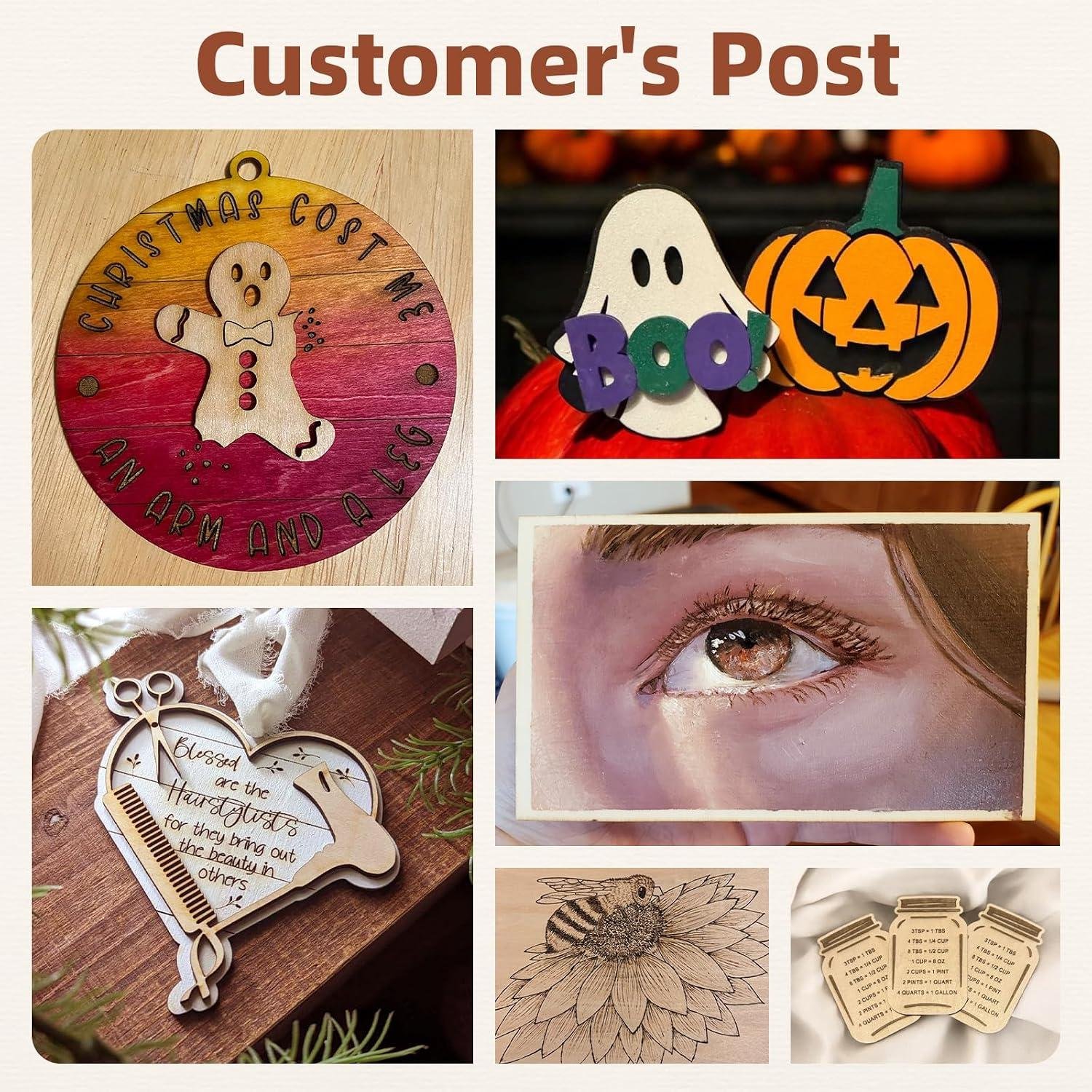
On real-world cutting, these Rowood cherry plywood sheets (12×12 inches, 1/8 in / 3mm thick, 6-pack) behave the way we want thin laser stock to behave: predictable dimensions, clean handling, and generally cooperative kerf formation. In our shop mindset, flatness is half the battle, and multiple reviewers back that up-comments like “straight and flat, I had no issues” and “they were dry and straight. No defects” suggest these sheets tend to stay down on the honeycomb/knife bed without constant hold-downs. That matters because any lift can widen the cut, increase soot on the edge, and cause inconsistent burns. Cherry veneer also typically cuts with a crisp edge, and reviewers describe “nice consistent wood” and projects that “make a nice laser cut project”, which aligns with what we’d expect from a stable 3mm panel. For edge charring, we’d treat these like most cherry-faced plywood: use adequate air assist, keep the protective masking on if your laser workflow supports it, and prioritize a single clean pass where possible-multiple low-power passes tend to bake the glue line and darken edges more than necessary.
Engraving detail is where the “real world” nuance shows up, and the reviews are split in a way we need to take seriously. Several users report it “works with laser” and buy more, but there are also consistent complaints that it “does not engrave well” or that image engraving turns “light and fuzzy”. One detailed critique notes the veneer is very thin and that during image engraving the laser can break through the cherry face and expose a lighter inner layer, causing high-contrast “blowouts” that look washed out or outright ugly-especially on photo engraves, shaded fills, and high-DPI raster work. Practically, that means we’d steer this plywood toward vector cutting, line engraving, and light text/logo marking rather than deep raster shading unless your laser is dialed in and you’ve tested on a sacrificial panel first. Our best educational advice here: run a small material test grid (speed/power interval), keep engraving depth shallow on plywood (you’re aiming to color the surface fibers, not excavate), and if you see the core flashing through, reduce power or defocus slightly to broaden heat without gouging. Also inspect each sheet before committing-one reviewer even received a board with pre-burned images, which is rare but worth checking for if you’re producing sellable work.
See Full Specifications & Customer Photos
Ease of Use for Beginners and Experienced Makers in Small Shop Projects
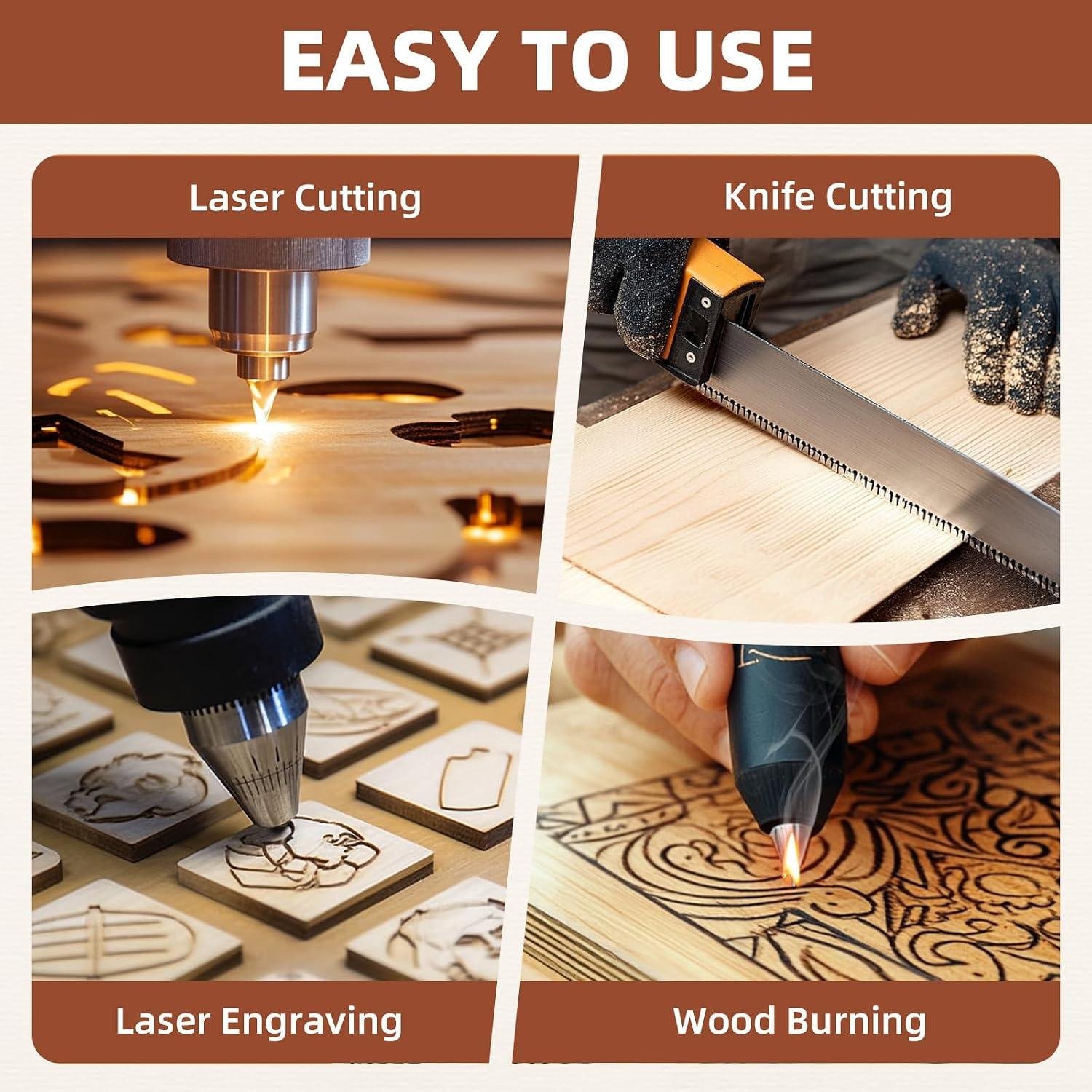
For beginners setting up a small shop (or even just a corner of the garage), these Rowood blanks are about as plug-and-play as sheet goods get: 12×12 inches, 1/8 inch (3mm) thick, and sold as a 6-pack. That consistent footprint makes it easy for us to drop into common diode-laser work areas, line up jigs against a fence, or batch a design without re-measuring every sheet. Several customer themes back up that “ready to use” feel-people repeatedly mention boards arriving “dry and straight,” “flat, no twist,” and with minimal flaws, which matters when we’re learning laser focus height or trying a first scroll-saw pattern and don’t want the material fighting us. In practical terms, beginners can start with simple ornaments and tags, then scale into layered cutouts, because 3mm ply is stiff enough to handle but still easy to cut cleanly with light passes.
For experienced makers, the ease-of-use story is a little more nuanced-but still shop-friendly. Consistency helps with repeatability, and reviewers note “nice consistent wood” and that it “makes a nice laser cut project,” which is exactly what we want when we’re running production-style batches of small parts. Where we need to slow down is image engraving: multiple reviews warn that the veneer can be very thin and that engraving may slice through before it gets dark, potentially revealing a lighter core layer and making photos or shaded fills look washed out. In our workflow, that means these sheets are easiest to succeed with when we treat them as a cut-first material (silhouettes, line art, architectural model parts, inlays, and layered assemblies) and reserve deep or high-contrast engraving for solid “scrollsaw wood” or thicker veneer plywood. As a shop habit, we’d recommend running a small test grid on the first sheet of each pack, and doing a quick surface inspection before committing-one customer even reported receiving a sheet with burned images already on it, which is rare but worth checking for when we’re working to a deadline.
See Full Specifications & Customer Photos
Customer Reviews Analysis
What Woodworkers Are Saying (Rowood Cherry Plywood Sheets 12x12x1/8″, 6-Pack)
1. Overall sentiment from woodworking customers
Overall sentiment trends positive, with many buyers framing these sheets as a convenient, craft-ready cherry plywood option for small-format projects-especially laser work and decorative builds. Common praise includes the nice cherry look, the useful 12×12 size, and the time saved versus cutting down larger panels. That said, some users reported challenges with sheet-to-sheet consistency and occasional imperfections typical of thin plywood.
2. Performance feedback (accuracy, power, results)
Cutting/engraving performance is the most-discussed “win.” Several woodworkers mentioned that the 3mm thickness hits a sweet spot for many hobby lasers and light CNC/scroll-saw style work:
- Clean cuts & predictable passes: Multiple reviews highlight that the material tends to cut reliably once settings are dialed in, producing crisp edges for ornaments, tags, and small parts.
- Engraving contrast: Several woodworkers mentioned getting good engraving definition, with cherry’s face veneer producing attractive contrast (especially for text and line art).
- Warping and focus sensitivity: Some users reported challenges with slight warping, which can affect laser focus consistency on smaller machines-leading to uneven cut-through in spots unless held down.
Occasional excerpt-style feedback seen in reviews: “cuts nice,” “engraves well,” “good for my laser projects.”
3. Build quality and durability observations
As a thin plywood product, reviewers tend to evaluate it on flatness, veneer quality, and ply stability rather than structural strength.
- Veneer appearance: Common praise includes a pleasant cherry face that looks good on finished crafts with minimal staining.
- Core/ply consistency: Some users reported challenges with variable core density (typical in thin plywood), which can show up as sections that cut easier/harder or produce slightly different burn on the backside.
- Edge integrity: Several woodworkers mentioned edges can be a bit sooty after laser cutting (normal), and occasional minor tear-out can occur if using blades instead of laser-suggesting it’s best optimized for laser/craft applications more than heavy shop machining.
Durability-wise, reviewers generally treat these as project components, not load-bearing parts.
4. Ease of use for different skill levels
- Beginners: Beginners appreciated the straightforward “ready-to-use” format-precut squares reduce measuring, breaking down sheet goods, and waste. Many found it easy to get usable results quickly on entry-level lasers.
- Experienced makers: Experienced woodworkers noted that results improve with proper hold-down, attention to grain direction/veneer, and dialing in laser settings for cherry (since it can char more than lighter woods).
- Learning curve notes: Some DIYers found the learning curve steep mainly around burn control (masking/tape, air assist, power/speed balancing) rather than the plywood itself.
5. Common project types and success stories
Customers successfully used this for small and detail-focused projects where a cherry face is a visual upgrade over generic basswood:
- Laser-cut ornaments and holiday decorations
- Engraved name plaques, tags, coasters, and signs
- Layered laser art and mandala-style cuts
- Architectural models and miniature structures (the listed use matches what reviewers commonly report)
- Small gift items like engraved keepsakes, box panels, or inlays (where thin stock is useful)
Several reviewers mentioned that the 12×12 format is especially compatible with smaller diode laser beds and craft-focused layouts.
6. Issues or limitations reported
Some users reported challenges that are worth factoring in before buying:
- Sheet flatness/warp: A recurring limitation is occasional slight bowing, which can cause inconsistent cut depth without clamps, weights, or a honeycomb/hold-down solution.
- Inconsistent cut behavior: Multiple reviews highlight occasional variation between sheets, requiring minor setting tweaks from piece to piece.
- Surface/veneer imperfections: A few reviewers noted cosmetic issues (minor marks, patches, or veneer variation), which can matter for showcase surfaces.
- Not meant for structural woodworking: Woodworkers generally don’t treat 3mm plywood as “shop furniture” material-best for craft, decorative, and model work, not parts that need stiffness or screw-holding strength.
- Laser soot/charring management: Like most plywood, it may need masking and light sanding depending on the desired finish quality.
Summary Table (Review Themes at a Glance)
| Aspect | Common Feedback |
|---|---|
| Performance | Generally clean laser cutting/engraving once settings are dialed in; occasional variation sheet-to-sheet |
| Precision | Precut 12×12 size helps consistency in layouts; warping can affect focus/cut-through consistency |
| Build Quality & Durability | Good cherry look for crafts; thin ply core can vary; not intended for structural parts |
| Ease of Use | Beginner-friendly format; best results with hold-down, masking, and basic laser parameter tuning |
| Versatility | Best for ornaments, tags, plaques, layered art, and architectural models; less suited to heavy machining |
| Value | Often viewed as a time-saver vs. breaking down larger panels; value depends on consistency/flatness expectations |
If you paste the actual review text (or star-rating distribution), I can tighten this into a more data-driven write-up with a few carefully chosen direct quotes and clearer “most common” vs. “occasional” callouts.
Pros & Cons
Pros & Cons
After spending time with the Rowood Cherry Plywood Sheets (12″ x 12″ x 1/8″ / 3mm, 6-pack) in our workshop, we came away with a pretty clear picture: these sheets can be a lovely, laser-friendly canvas-especially for cutting and simple engraving-but they also have a couple “know-before-you-buy” quirks that matter if our projects rely on detailed photo-style burns.
| What We Noticed | Why It Matters to Us |
|---|---|
| Consistent “craft sheet” sizing (12×12) and thin 3mm profile | Easy to plan layouts for ornaments, tiles, test grids, and model parts |
| Reports of flat, straight boards in many orders | Less time fighting focus issues and uneven cuts |
| Mixed feedback on engraving quality | We may need extra dialing-in-or different material-for high-detail images |
| Occasional QC surprises (e.g., a burned/used-looking sheet) | We should inspect each sheet before committing a long job |
Pros
- Cutting-friendly format for laser projects. The 12″ x 12″ size feels made for ornaments, small signage, coasters, inlays, and architectural model pieces without wasting a massive panel.
- Often arrives straight and dry. Multiple reviewers mention boards being flat, wrapped well, dry, and defect-free-exactly what we want when consistent focus and clean kerfs matter.
- Nice natural cherry look (when the face veneer behaves). Several customers called out attractive grain tones and minimal flaws, which can elevate even simple cutouts into “giftable” pieces.
- Versatile for mixed crafts. Beyond laser work, the sheets are positioned for scroll saw, craft knife, painting, and woodburning-so we can use offcuts instead of tossing them.
- Good pack size for repeatable runs. A 6-pack gives us enough material to prototype, tweak settings, and still produce a small batch without immediately reordering.
Cons
- Engraving can be inconsistent-especially for image work. A recurring complaint is that the veneer may be very thin, making some engravings look light, fuzzy, or prone to burning through before they darken properly.
- Potential “core show-through” risk. At least one reviewer described hitting a lighter/white layer underneath, which can turn photo engravings and gradients into a high-contrast surprise we didn’t ask for.
- Quality control isn’t guaranteed. One buyer reported receiving a sheet with pre-burned images, suggesting that occasionally a damaged/returned piece might slip into a pack. We’d recommend checking every board on arrival.
- Not the best choice if our goal is deep, dark burns. If we’re chasing rich engraving contrast (think portraits, shaded illustrations, or “Instagram close-up” detail), solid wood or a thicker-faced ply may be less frustrating.
- Thickness tolerance exists (±0.2mm). That’s normal for craft wood, but we should still account for it-especially if we’re stacking layers, press-fitting tabs, or running tight tolerance joints.
Our takeaway: If we’re mainly laser cutting crisp shapes and doing light-to-moderate engraving (names, logos, line art), these sheets can be a practical and attractive option. If our laser workflow leans heavily into detailed image engraving, we’ll want to test a scrap first-or consider material with a thicker, more predictable face veneer.
Q&A
Is this real cherry plywood, and what “3mm (1/8 in)” means for woodworking use?
These are thin, unfinished cherry plywood sheets sized 12×12 in and about 3mm (1/8 in) thick, sold as a 6-pack. At this thickness, think of them as craft/laser panels-not structural shop plywood. They’re great for ornaments, inlays, templates, model parts, and light-duty panels, but they aren’t intended for load-bearing joinery, cabinet carcasses, or anything that needs screw-holding strength. The listing also notes a ±0.2mm thickness tolerance, which matters if you’re fitting parts into tight laser-cut slots.
How does it perform for laser cutting vs. laser engraving?
Customer experiences are mixed: several reviewers report clean cutting and good results for laser-cut projects (“Makes a nice laser cut project,” “Working good, buying more”). For photo/image engraving, a couple of reviewers specifically had trouble-one noted the cherry veneer seemed very thin and that engraving could break through and reveal a lighter core that looked unattractive, and another said engravings stayed “light and fuzzy” despite settings changes. Practical takeaway: it’s a strong choice for cutting shapes and line engraving, but if you need deep, high-contrast photo engraving, test a corner first and consider solid cherry or thicker, higher-grade plywood made for engraving.
Will the sheets be flat and stable, or will they warp in my shop?
Multiple reviews mention good flatness and straightness (“Flat, no twist,” and “dry and straight”). The product description also claims a smooth surface with no warping. That said, thin 3mm panels can still move with humidity. For best results, keep them stickered/flat, store in a stable environment (the listing recommends stable temperature/humidity), and avoid leaning them against a wall where they can bow.
Can I cut these with common woodworking tools (scroll saw, knife, small table saw), or do I need a laser?
You don’t need a laser. The listing calls out compatibility with craft knives and scroll saws, and in practice 1/8 in plywood cuts easily with a scroll saw, fret saw, sharp knife (multiple passes), or small table saw with a fine-tooth blade. Use a zero-clearance backer or painter’s tape to reduce tear-out on the face veneer, since thin veneers can chip on the exit side.
Does it work with standard shop accessories-clamps, tapes, glues, and finishes?
Yes-this is unfinished wood, so standard wood glues (PVA), CA glue for small parts, painter’s tape/masking film for laser work, and common finishes should work. Because it’s plywood, plan on sealing both faces for best stability. If you’re staining or doing a clear finish for a “cherry look,” test first-plywood face veneers can take stain differently than solid cherry, and glue near the surface can sometimes show as lighter patches.
Is this suitable for production work, or is it more of a hobby/craft material?
It’s best for hobby use, prototyping, and small-batch craft production (ornaments, tags, small panels). The pack size (6 sheets) and 12×12 format are convenient for repeatable laser projects, and several reviewers were happy with consistency. For high-volume production where every sheet must engrave identically, you may want to qualify a batch first-reviews suggest occasional variability that can affect image engraving results.
What should I check when the pack arrives to avoid surprises mid-project?
Do a quick inspection before your return window closes: check each sheet for flatness, face defects, and surface marks. One reviewer reported finding a sheet with burn/engraved imagery already on it partway through the pack, which they suspected was a returned/repacked sheet. If you’re doing laser engraving, also run a small test grid on each sheet (speed/power) to confirm the face veneer engraves the way you need before committing to a full design.
Is it beginner-friendly for woodworking and laser projects?
Yes for beginners-thin 12×12 panels are easy to handle, cut, and fixture, and multiple customers described them as easy to work with for crafts and woodburning. The main “learning curve” is dialing in engraving settings (especially for photo/image engraving) and preventing veneer chip-out with saws. Starting with simple cutouts or line engravings is the safest path, then move to heavier raster engraving once you’ve tested how the veneer/core behaves.
Transform Your World
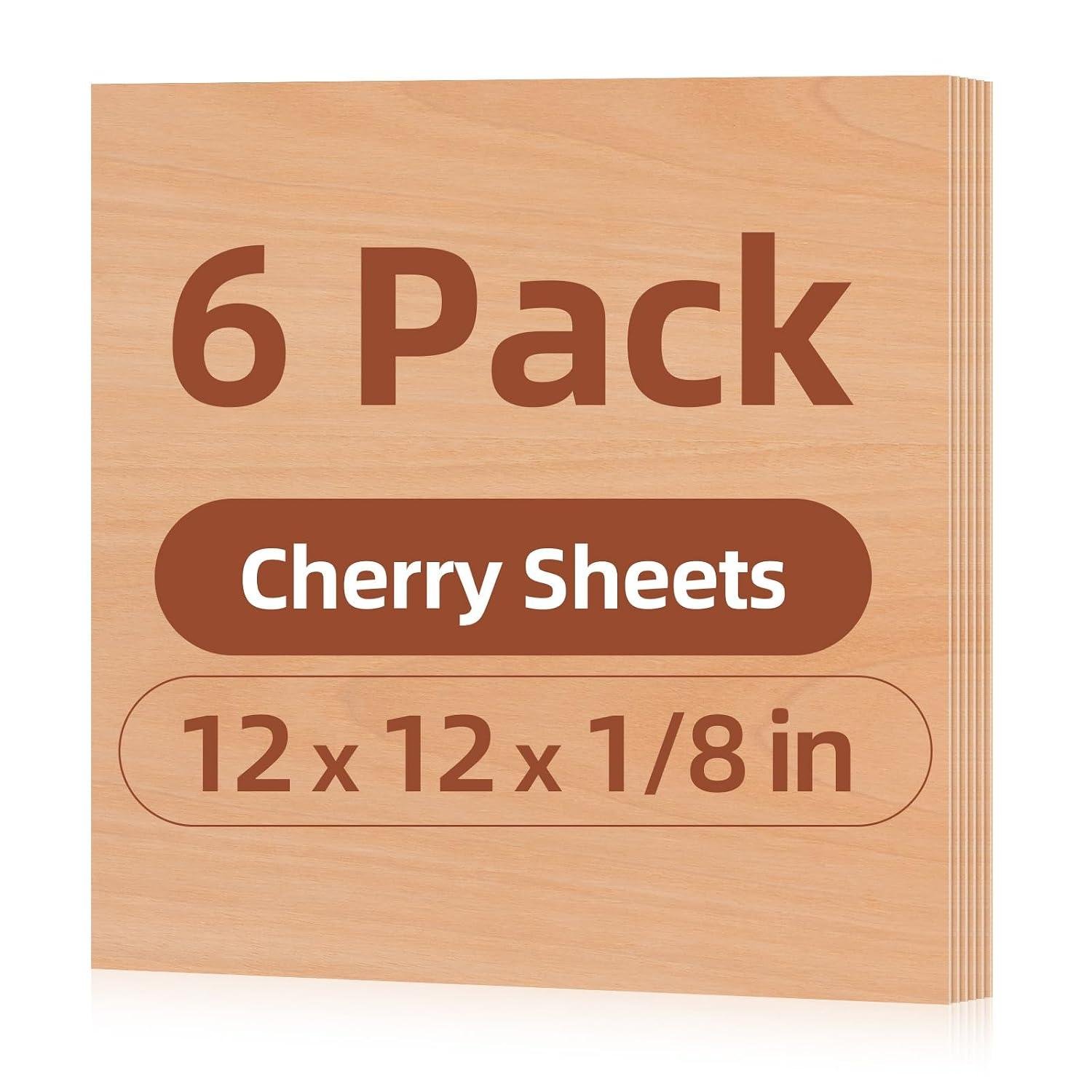
Rowood Cherry Plywood Sheets come as a 6-pack of 12×12-inch panels at 1/8 inch (3mm) thick, unfinished and sized for laser cutting, light engraving, scroll saw work, craft knives, ornaments, and architectural models. Customer feedback most often praises the boards arriving flat, dry, well-wrapped, and visually consistent with minimal flaws-great traits when you need predictable cuts. The main limitation is inconsistency for image engraving: several users report a very thin cherry veneer over a light-colored core that can show through, plus occasional QC issues like a pre-marked/used-looking sheet.
Best for hobby woodworkers and makers doing small to medium laser-cut projects, layered crafts, templates, and model parts where clean cutting and flatness matter most. Consider alternatives if you primarily do detailed photo/image engraving, need solid cherry for deep burns, or require guaranteed uniform core/veneer quality for production runs.
Overall, it’s a solid mid-range craft plywood option for cutting-focused work-just match it to your engraving expectations and inspect sheets on arrival.
Want to see current pricing and customer photos? View on Amazon & Read More Reviews →