

Blog
MINOVA 250W Hot Knife Cutter Review: Right for Us?

Ever tried trimming rigid foam for a shop cabinet, an outfeed-table top, or an insulating panel-only to end up with ragged edges, static-charged crumbs everywhere, and a cut line that wanders no matter how carefully we guide the blade? When our projects demand tight tolerances and clean fits, messy foam cuts can throw off layouts and eat up precious bench space fast.
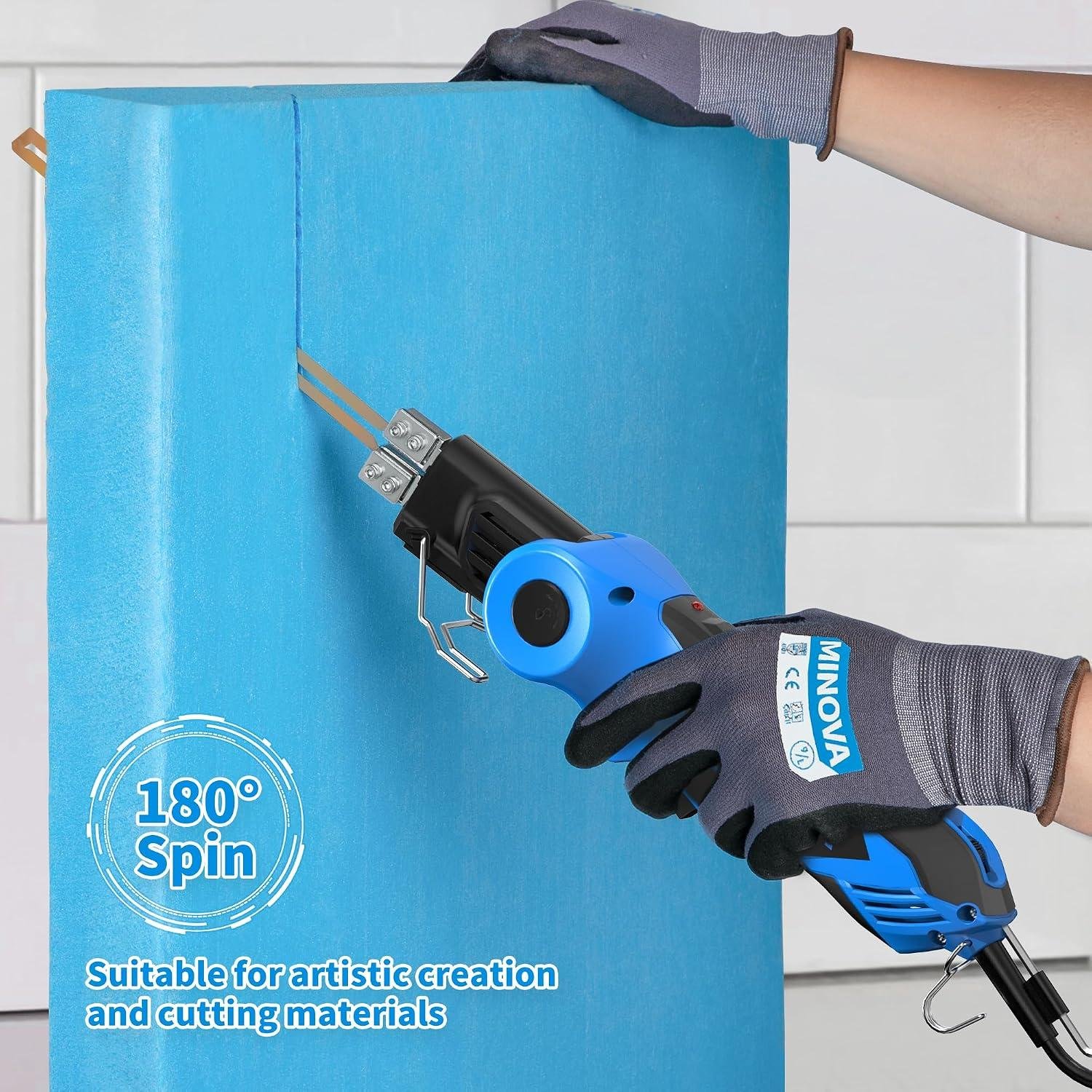
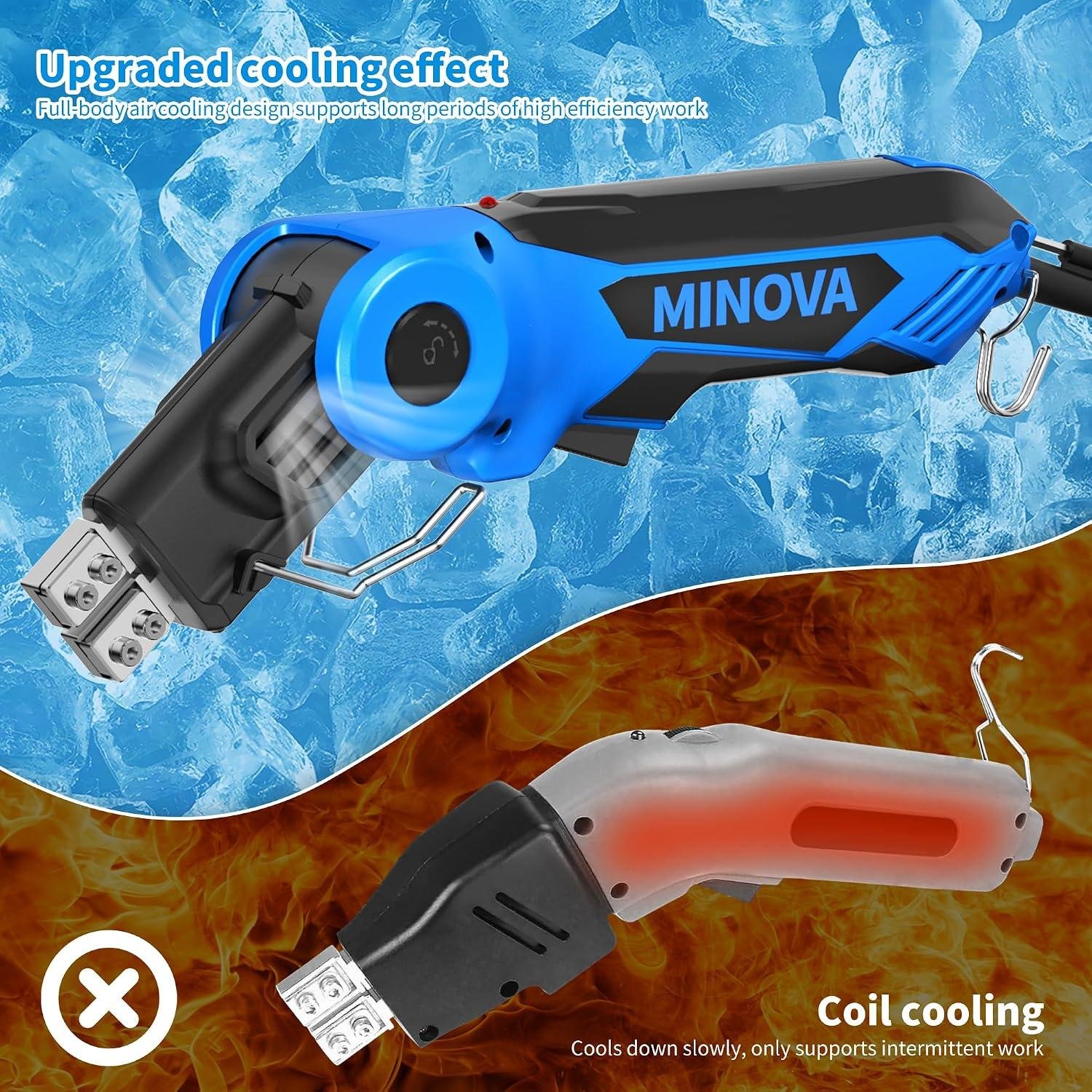
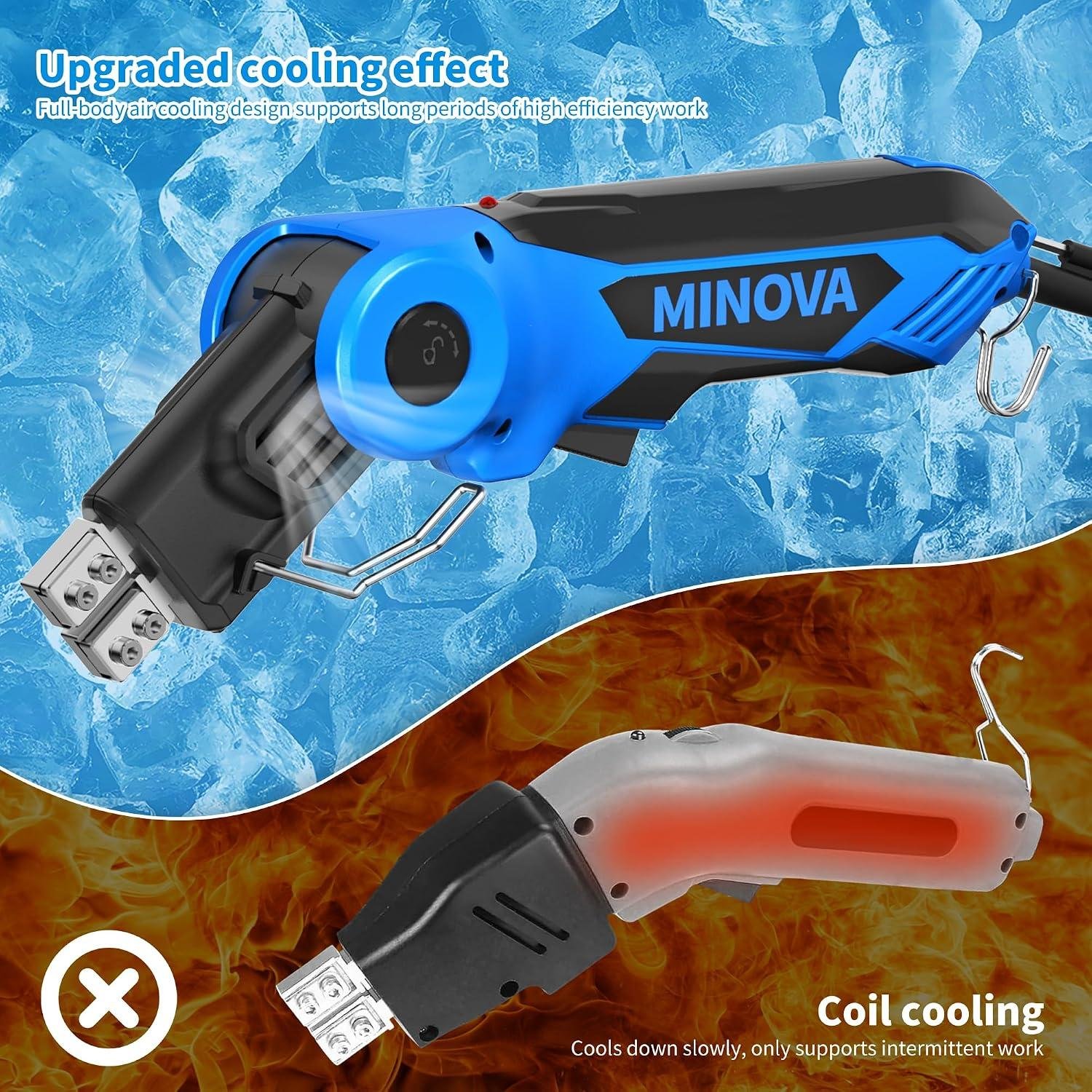
That’s where the MINOVA 250W Foam Electric Hot Knife, Styrofoam Cutter Cutting Tool Kit comes in. It’s a purpose-built heated cutter designed for materials like EPS/XPS (Styrofoam), EPP, EVA, PU, KT board, and sponge, with a 90°-180° rotatable head, three heat settings, and full-body air cooling aimed at longer run time. The kit also includes multiple blades (6″, 8″, and a 12″ ribbon) plus guides and a hard case.
In this review, we’ll break down the feature set, shop-friendly usability, durability cues, space and budget considerations, and what customers report-including strong cutting performance, but recurring concerns about temperature regulation and value.
We’re woodworkers who care about clean joinery, dependable tools, and realistic learning curves-especially when a “non-wood” tool earns a spot in the shop.
Tool Overview and Build Quality in a Woodshop Setting
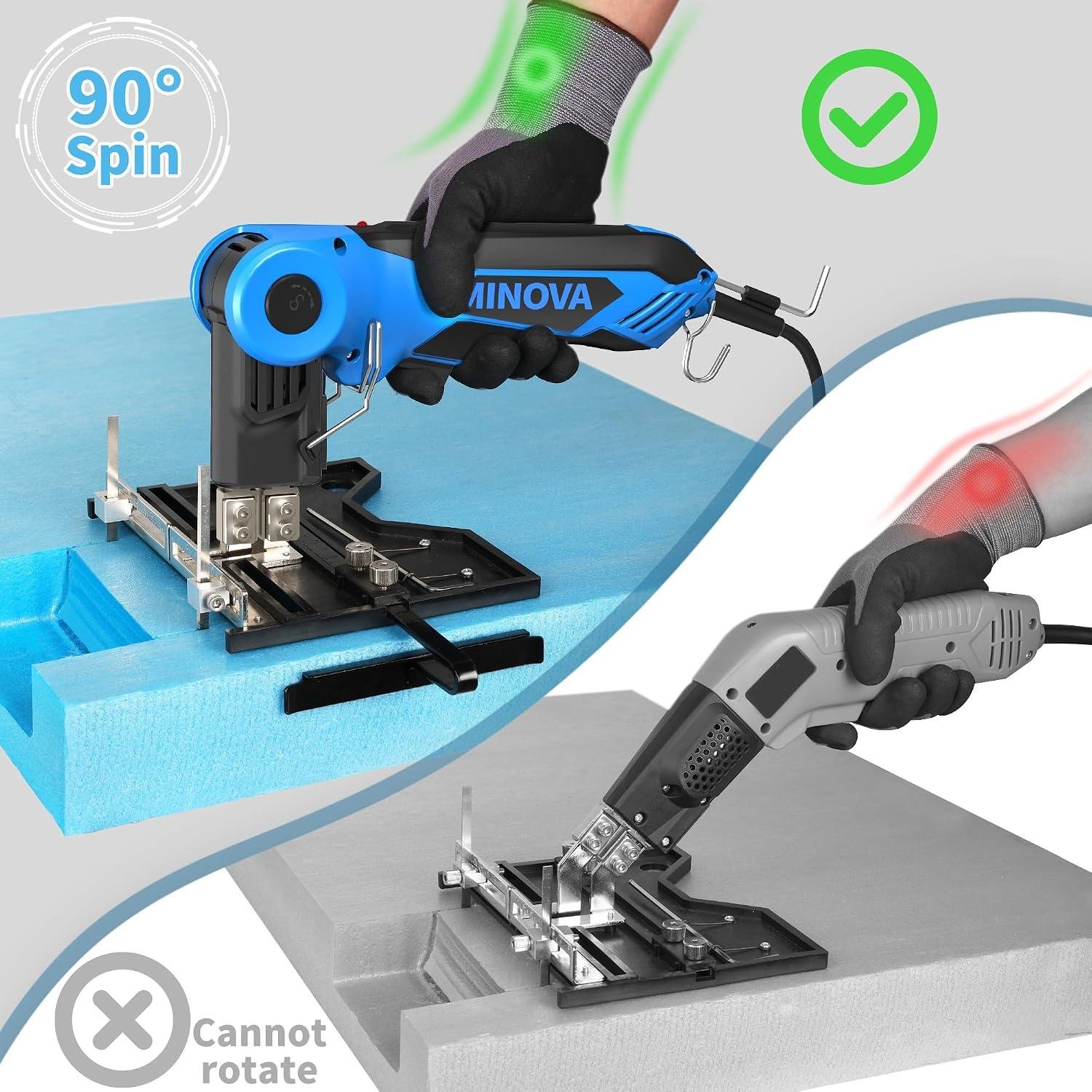
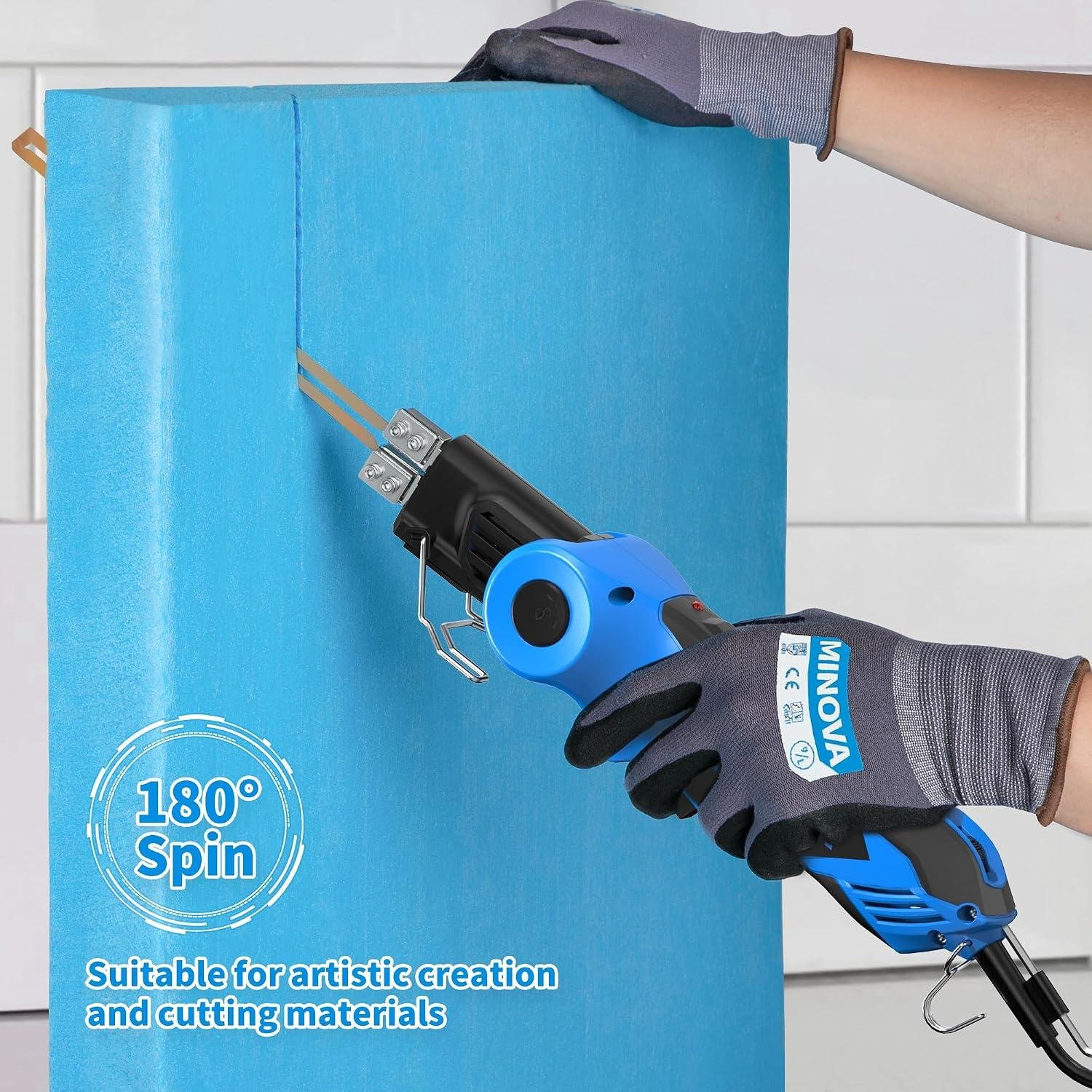
In a woodshop setting, we look at the MINOVA foam cutter less like a “craft tool” and more like a specialty cutter for the moments we reach for rigid foam insulation, templates, mockups, and upholstery foam-materials that don’t belong anywhere near our jointer knives or table-saw blade. This kit is rated at 250W and uses an air-cooling system intended to support longer run time, which matters when we’re cutting repeated parts (think shop insulation panels or a batch of foam forms). The head’s 90° to 180° rotatable design is a practical build-quality feature for shop use because it lets us keep our wrist in a comfortable position while tracking a line-similar in spirit to why we like a compact jigsaw barrel grip for curves. According to customer review themes, a lot of users call it “well made” and an “excellent tool”, and several mention it cuts hard foam insulation effectively-one even said it “slices through 6-inch Styrofoam panels like butter.” That kind of feedback aligns with what we want from a hot knife: clean kerfs and less bead mess than sawing or rasping foam.
Where build quality meets real-world use is temperature management and controls. The product listing calls out 3-gear heat control with a knob on the bottom, but customer reviews repeatedly raise temperature regulation as a pain point-some note there’s “no temp control” or that it takes trial-and-error to prevent smoke and scorching, and at least one reviewer reported a unit that powered on but produced no heat. In our woodworking workflow, that means we’d treat this like a heat-based tool (closer to an iron than a saw): we’d plan for a short learning curve, test cuts on offcuts, and work in ventilation because multiple reviewers effectively warn about fumes. The kit presentation is shop-friendly, though: it comes with a heavy duty case and multiple blades and guides, which helps keep foam-only accessories from drifting into our “wood tools” drawers. For woodworkers, the educational takeaway is simple: a hot knife works by heating the blade so it melts through foam; our feed rate becomes the “cut quality” control. If we push too fast, we’ll drag; too slow, we’ll overheat and smoke-so we set the gear, let the blade recover heat, and use a straight fence (one reviewer suggested a straight piece of wood as a guide) for repeatable edges.
- Included accessories: hot knife tool, 8″ blade, 6″ blade, 12″ ribbon blade, scraper, pincers, director, adaptor for groove, sled for groove, T-square, limit plates (2), hex Allen wrench, heavy duty case
- Compatible attachments/accessories (from what’s included): groove adaptor + groove sled system, interchangeable heated blades (6″, 8″, 12″ ribbon)
- Ideal project types: shop insulation trimming, foam router/templates and patterns, mockups for built-ins, upholstery foam shaping, curved forms for laminations (foam-only), EIFS/DIY foam panel work
- Wood types tested by customers: none reported (this tool is reviewed primarily on foam materials)
| Spec / Feature | What It Means in Our Woodshop |
|---|---|
| Power: 250W | Enough heat generation for thicker foam cuts; expect best results by balancing gear setting + feed rate. |
| Rotation: 90°-180° head | Better control on curves and when cutting against a straightedge without awkward wrist angles. |
| Heat control: 3 gears | Simpler than multi-step dials, but reviews indicate real-world temperature consistency may take practice. |
| Cooling: full-body air cooling | Aims to support longer sessions; still plan pauses if blade overheats (a theme mentioned by reviewers). |
| Accessory / Blade | Primary Use | Notes for Woodworkers |
|---|---|---|
| 6″ blade | General straight cuts in foam sheets | Good for bench-top trimming with a fence. |
| 8″ blade | Longer straight cuts / thicker stock reach | Helps when depth or reach matters on insulation panels. |
| 12″ ribbon blade | Sweeping cuts, shaping, contouring | Useful for patterns and upholstery foam where a wider cut path helps. |
| Groove adaptor + sled | Cutting channels/grooves | Handy for foam-panel join details or wire/chase routes. |
| T-square + limit plates | Guided, repeatable cuts | Supports “production” foam trimming similar to using a saw fence/stop. |
| Capacity Category | Recommended Expectation | What Reviews Suggest |
|---|---|---|
| Thick foam cutting | Plan for multiple test cuts to dial settings | Some report very fast cutting, including through 6″ Styrofoam; others mention managing overheating/smoke. |
| Precision work | Use fences/templates; keep steady feed rate | Users describe it as precision capable, especially with a straightedge guide. |
| Continuous runtime | Work in intervals; let heat stabilize | One theme: occasionally easing off the switch to prevent the blade from getting too hot. |
See Full Specifications & Customer Photos
Real World Performance for Shaping Foam Templates and Pattern Work
In our shop, shaping foam templates is one of those “quiet productivity” jobs that can either go clean and accurate-or turn into a static-charged blizzard that contaminates glue-ups and finishes. This 250W MINOVA Foam Electric Hot Knife is built for the cleaner route: instead of abrading foam like a rasp or saw, it heats the blade so the foam parts and seals at the cut line. For pattern work, the big win is control-especially with the head that’s rotatable from 90° to 180°, which lets us keep our wrist in a natural position while tracing curves and tight radii along MDF or plywood master patterns. The kit’s 3-gear heat control (adjusted by the bottom knob) is meant to simplify setup compared to multi-click dials, and several reviewers echo that it “cuts like butter” and is a “precision device.” We’d still treat heat as a technique issue: start lower than you think, let the blade come up to temp, then move at a steady feed rate-if we linger, we’ll widen the kerf and risk surface glazing that can interfere with adhesive bonding when we use the foam as a routing template or a one-off form.
Where this hot knife really earns its keep for woodworking-adjacent tasks is in roughing out thick insulation foam for full-size mockups, negative molds for bending forms, and sacrificial patterns we don’t want to mill from hardwood. One customer specifically notes it “easily slices through 6″ Styrofoam panels,” and others mention it works well on “hard foam insulation,” which aligns with the tool’s 250W heating capacity and full-body air cooling meant to extend run time. That said, customer feedback around temperature is mixed: while the product description claims 3 gears heat control, multiple reviews still warn about “temperature regulation” and mention needing “a couple of tries to learn to keep the temp right,” plus one reviewer advises letting off the trigger occasionally so the blade doesn’t get too hot. For us, that translates to a simple workflow: test cuts on offcuts, use a straightedge fence for template edges, and plan on ventilation-another reviewer flat-out says “Beware of the fumes,” which matters any time we’re cutting EPS/XPS near the main bench or finishing area.
- Included accessories: hot knife tool, 8″ blade, 6″ blade, 12″ ribbon blade, scraper, pincers, director, adaptor for groove, sled for groove, t-square, 2 limit plates, hex allen wrench, heavy duty case
- Compatible attachments/accessories: replacement hot-knife blades (6″/8″ straight), ribbon blade for sweeping curves, groove adaptor + sled for channels/dados in foam, straightedges/fences (shop-made), sacrificial MDF pattern boards
- Ideal project types: foam routing templates, mockups for furniture parts, bending-form prototypes, inlay/layout practice blocks, insulation foam shaping for shop fixtures, curved pattern blanks for bandsaw/RAS duplication
- Wood types tested by customers: Not applicable (customers report use on EPS/XPS/styrofoam and other foams rather than wood)
| Spec / Feature | What It Is | Why It Matters for Foam Templates |
|---|---|---|
| Power | 250W (electric hot knife) | More heat headroom for thicker foam; helps maintain cut quality when following long pattern lines. |
| Head rotation | 90° to 180° rotatable | Keeps blade orientation consistent on curves and bevel-like approaches without awkward wrist angles. |
| Heat adjustment | 3-gear heat control (bottom knob) | Lets us tune heat to foam density; reduces tearing/drag that can distort a template edge. |
| Cooling | Full-body air circulation cooling | Aims to support longer sessions (useful when batch-cutting multiple template layers). |
| Safety | Electronic micro-switch | Helps prevent accidental activation-important at the bench when reaching around patterns and clamps. |
| Accessory / Blade | Best Use | Template/Pattern Example |
|---|---|---|
| 6″ straight blade | General trimming, tighter control | Small radii pattern blocks, jigs, alignment pads |
| 8″ straight blade | Long straight runs | Template edges for routing straight sections |
| 12″ ribbon blade | Smooth sweeping curves | Chair crest/profile mockups, arched aprons, curved rails |
| Groove adaptor + sled | Guided channels in foam | Forming grooves for mock joinery or wire/cord relief in shop fixtures |
| Limit plates + T-square | Repeatability | Batch-cutting identical template blanks from stacked foam |
| Capacity Topic | Recommended in Practice | What Customers Report |
|---|---|---|
| Foam thickness | Start with moderate thickness until heat/feed rate are dialed in | One reviewer says it “easily slices through 6″ Styrofoam panels” (technique-dependent) |
| Continuous cutting | Work in short passes; pause to avoid overheating and excess smoke | Reviewers mention “let off the switch” to manage blade heat |
| Cut cleanliness | Use a fence/straightedge; keep steady speed | Multiple reviewers praise “clean cuts” and “so fast, so easy” results |
See Full Specifications & Customer Photos
Key Features Woodworkers Will Appreciate for Jigs, Props, and Layout Aids
For jigs, props, and layout aids, what we like about this kit is how it’s clearly built to turn foam into accurate, repeatable shop “helpers” without the bead-and-dust mess we get from sawing EPS. The cutter is rated at 250W and comes with a 90° to 180° rotatable head, which is genuinely useful when we’re trimming a curved cradle, a mock-up template, or a duct/hosing “stand-off” that needs a sweeping inside curve. In reviews, customers repeatedly describe it as “cuts like butter” and a precision tool, including one saying it “slices through 6” Styrofoam panels like butter”-that’s right in the wheelhouse for shop-made assembly supports, drill guides, and layout blocks made from thick insulation foam. The included 3-gear heat control should help match heat output to foam density; educationally, we still treat hot-knife work like routing end grain-use a fence, keep a steady feed rate, and let the heat do the work. Several reviewers mention there’s a learning curve to dialing in the right speed/heat to minimize smoke, so we’d plan on making a few test passes on offcuts, and we’d only run it with good ventilation (heated foam fumes are no joke).
From a woodworking workflow standpoint, the accessories are what make this feel more “layout-aid ready” than a bare hot knife. The kit includes a t-square, limit plates, and groove-guiding parts that can help us make consistent thickness spacers, straight-edged fences, and repeatable dado-like channels in foam for holding parts or routing templates. Review themes also point to easy setup (“everything came in the box and worked”) and good build quality, though temperature regulation is a mixed topic-some customers complain about temperature control (often phrased as “no temp control”), while the product listing states 3 gears heat control. In our shop, that means we’d treat the three settings as coarse control and rely on technique: short duty cycles, brief “cool-down” pauses, and keeping the blade moving to avoid overheating/scorching. If we need ultra-tight tolerances for joinery, we’ll still reach for wood and milling machines-but for quick, clean foam fixtures that support accurate layout and safer handling during glue-ups and sanding, this tool looks like it can earn a spot on the bench.
- MINOVA 250W hot knife tool
- 8″ blade
- 6″ blade
- 12″ ribbon blade
- Scraper
- Pincers
- Director
- Adaptor for groove
- Sled for groove
- T-square
- Limit plates (2)
- Hex Allen wrench
- Heavy duty case
- Replacement hot-knife blades (6″, 8″)
- Replacement ribbon blade (for long, sweeping cuts)
- Foam-cutting straightedges/fences (shop-made MDF or plywood works well)
- Ventilation aids (fan + open door/window; not a “tool” attachment, but highly recommended)
- Foam assembly cauls and glue-up supports
- Router/template mockups (test shapes before cutting expensive hardwood)
- Curved cradles and props for chairs, cabinet parts, and turning blanks
- Layout blocks, spacers, and bench bumpers
- Grooved foam holders for protecting finished edges during clamping
- Not applicable (customers report success primarily on EPP/EPS/XPS/EVA/PU foams and similar materials, not on wood)
| Feature | What It Is (Spec/Claim) | Why We Care for Jigs/Props |
|---|---|---|
| Power | 250W | Enough heat energy for thicker foam cuts that become durable shop supports. |
| Head rotation | 90°-180° rotatable | Makes curved templates and inside corners easier without twisting our wrist or the workpiece. |
| Heat settings | 3-gear heat control (listing) | Helps match heat to foam type; technique still matters to avoid smoke or melting. |
| Cooling | Full-body air cooling (listing) | Supports longer cutting sessions when batching parts like spacers and cauls. |
| Cutting feedback | “Cuts like butter” (review theme) | Clean edges mean more accurate reference surfaces for layout aids. |
| Accessory/Blade | Included? | Best Use in a Wood Shop |
|---|---|---|
| 6″ blade | Yes | General straight cutting for small props, bench fixtures, and spacers. |
| 8″ blade | Yes | Deeper, longer cuts for thick insulation foam jigs. |
| 12″ ribbon blade | Yes | Sweeping curves and trimming profiles for cradles and template mockups. |
| T-square | Yes | Squaring cuts-useful when we’re making repeatable layout blocks. |
| Groove sled/adaptor | Yes | Cutting channels for “foam holders” that protect edges and finishes in clamps. |
| Capacity Topic | Recommended (Practical) | Actual (From Specs/Reviews) |
|---|---|---|
| Cut thickness | Test on scraps; step up thickness gradually and watch fumes. | Reviewers report it “easily slices through 6″ Styrofoam panels”. |
| Temperature management | Use the lowest effective heat and steady feed; pause to prevent overheating. | Listing claims 3-gear heat control, but multiple reviews mention temperature regulation issues. |
See Full Specifications & Customer Photos
Ease of Use for Beginners and Pros Plus Workshop Setup and Storage
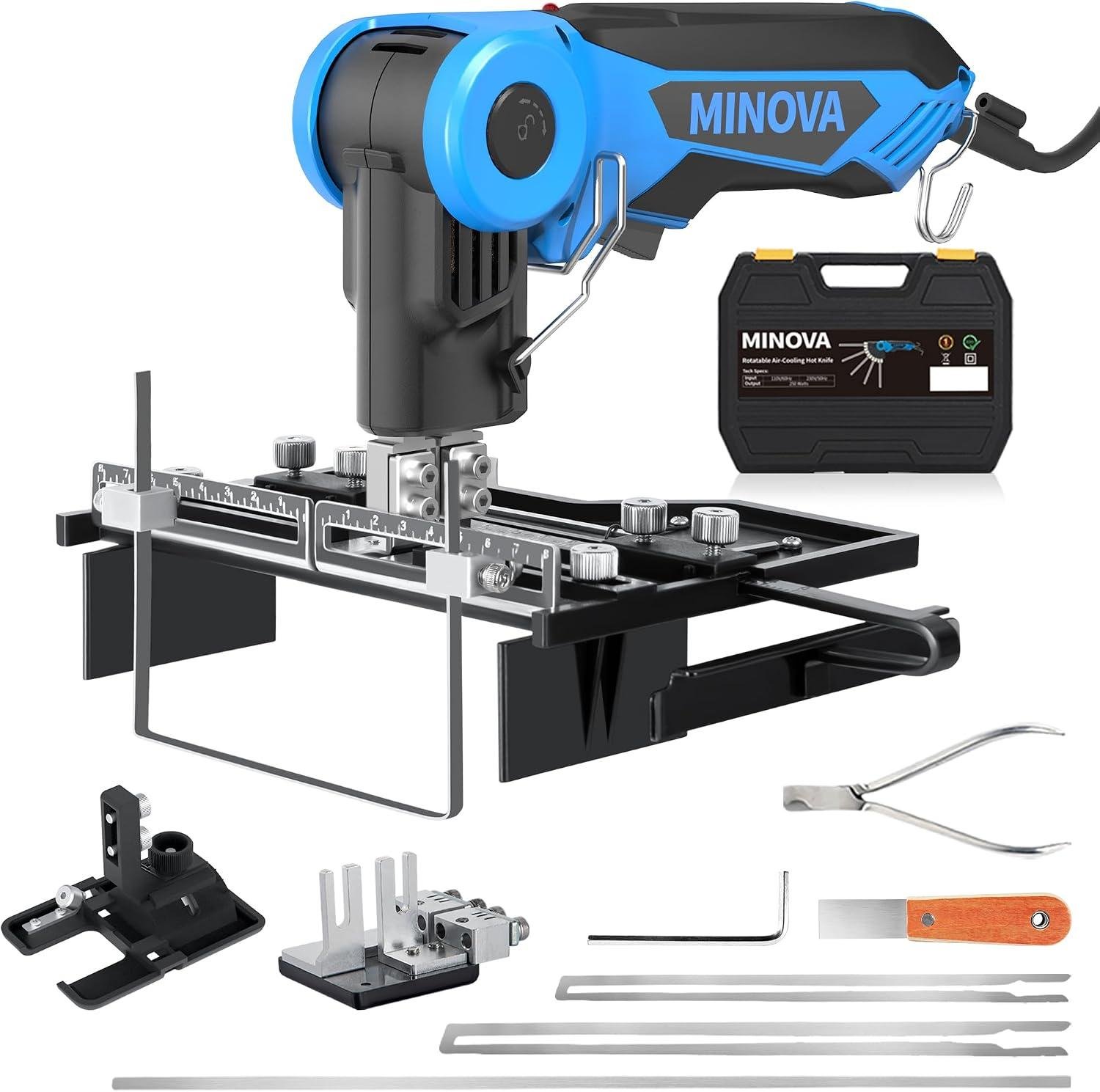
For beginners, this 250W MINOVA foam hot knife is one of those tools we can put to work quickly without a steep learning curve-especially if we’re coming from woodworking where “fence + steady feed rate” is already second nature. Setup in the shop looks more like swapping router bits than tuning a table saw: reviewers mention “everything came in the box and worked”, with only “minor unscrewing + rescrewing” to change blades. In practice, the big ease-of-use win is the 90°-180° rotatable head, which helps us track curves for templates, mock-ups, and upholstery foam without contorting our wrists. The kit claims 3-gear heat control via a knob, but customer feedback repeatedly warns that temperature regulation can be finicky-multiple reviews describe it taking “a couple tries” to find a sweet spot, and one notes you may need to let off the switch occasionally so the blade doesn’t overheat. Once dialed in, the common theme is “cuts like butter” and clean, precise cuts, including reports of slicing through 6″ Styrofoam panels smoothly. From a woodworking standpoint, we’d treat that like learning feed rate on a bandsaw: start on a lower setting, move steadily, and use a straightedge-one reviewer even recommends using a straight piece of wood as a fence for near-perfect cuts.
For pros and production-minded shops, the workshop setup and storage story is strong because MINOVA includes a heavy-duty case and a full set of jigs that keep the tool from becoming “another loose corded cutter in the drawer.” The built-in full-body air-cooling system (advertised as increasing usage time by 50%) should help during repetitive foam fitting-think packaging inserts for delivered furniture, curved cauls for laminations, router-template prototypes, or insulation detailing around shop doors-though we still recommend planning your workflow around ventilation since customers explicitly say “beware of the fumes”. On the bench, we get the best results when we dedicate a small “foam zone”: a sacrificial mat, a straightedge/fence, and a place in the case for hot blades to cool before packing away. Between the included guides (like the T-square and groove accessories) and replaceable blades, it’s a tidy system for shops that want cleaner foam work than sawing (reviews mention avoiding the “nasty mess” EPS can cause).
- Included accessories
- Hot knife handle (MINOVA)
- 8″ blade
- 6″ blade
- 12″ ribbon blade
- Scraper
- Pincers
- Director
- Adaptor for groove
- Sled for groove
- T-square
- Limit plates (2)
- Hex Allen wrench
- Heavy-duty case
- Compatible attachments/accessories (from kit + practical add-ons)
- Included straight-cut blades and ribbon blade for contouring
- Included groove adaptor + groove sled for channels/dados in foam
- Shop add-on: wooden straightedge/fence for repeatable rip-style cuts (reviewer-tested concept)
- Shop add-on: metal ruler or plywood template for pattern work
- Ideal project types
- Foam mock-ups for furniture prototypes and joinery visualization
- Upholstery foam trimming and shaping
- Protective packaging inserts for finished woodworking deliveries
- Shop insulation and foam board fitting (EPS/XPS)
- Wood types tested by customers
- None reported (this is a foam-cutting tool; it’s not intended for wood)
| Spec / Feature | What it means in our shop |
|---|---|
| Power: 250W | Heats blades fast enough for thicker foam cutting; manage feed rate to avoid excess melting/smoke. |
| Rotation: 90°-180° | More natural wrist angles for curves, bevel-like moves, and pattern paths. |
| Heat control: 3 gears | Simpler than multi-step dials, but reviews indicate temperature consistency can still require practice. |
| Cooling: full-body air circulation | Helps in repeated cuts; still pause to prevent overheating if you see smoke or drag. |
| Storage: heavy-duty case | Safer blade handling and easier to keep jigs together; good for jobsite/shop transport. |
| Blade / Accessory | Best use |
|---|---|
| 6″ blade | Shorter, controlled cuts-detail trimming, small templates, tighter spaces. |
| 8″ blade | General straight cutting of foam panels and blocks. |
| 12″ ribbon blade | Long, flowing contour cuts-sweeps, arcs, upholstery shaping. |
| T-square + limit plates | Repeatable layout and consistent offsets for multiple identical foam parts. |
| Groove adaptor + groove sled | Channels in foam for wiring, reveals, or fitted packaging pockets. |
| Capacity Type | Recommended (practical) | Actual (from reviews/spec) |
|---|---|---|
| Cut thickness | Start with thinner scrap to learn heat + speed; step up gradually | Customers report cutting up to 6″ Styrofoam panels; performance varies with temperature control technique. |
| Continuous use | Work in short passes; pause if smoke increases | Spec claims extended operation with cooling; reviewers suggest occasionally releasing the trigger to prevent overheating. |
See Full Specifications & Customer Photos
Customer Reviews Analysis
What Woodworkers Are Saying (Review Analysis) – 250W Foam Electric Hot Knife, Styrofoam Cutter Cutting Tool Kit
1. Overall sentiment from woodworking customers
Overall, sentiment skews positive for shop utility and “does what it’s supposed to do” performance, especially among DIY-minded woodworkers who occasionally work with foam for templates, jigs, packaging, mockups, and layout models. Several woodworkers mentioned it saved time compared to serrated knives, saws, or sanding foam back to shape. That said, multiple reviews highlight that it’s not a fine-joinery tool-expectation-setting matters: people happiest with it treat it as a foam-shaping specialty cutter, not a general-purpose shop “knife.”
2. Performance feedback (accuracy, power, results)
Cut quality & results
- Common praise includes cleaner cuts than manual blades and less crumbling/tear-out on foam edges, which helps when foam is used for pattern making or protective inserts for tools.
- Several woodworkers mentioned the cutter leaves an edge that often needs minimal cleanup, though some still lightly sand for a refined fit.
Power under load
- Multiple reviews highlight that 250W is adequate for typical foam thicknesses, working best when users let the heat do the work rather than forcing the blade through.
- Some users reported challenges when pushing too fast or trying to cut very dense foam in one pass-performance improves with slower feed or multiple passes.
Precision & control
- Experienced woodworkers noted that accuracy depends heavily on steady hand guidance and using a straightedge/fence. Several mentioned that freehand cuts can wander if rushed, but guided cuts can be consistent.
3. Build quality and durability observations
- Several woodworkers mentioned the tool feels reasonably solid for the price, especially for occasional use (templates, packaging foam, seasonal props).
- Some users reported challenges with long-session heat management-after extended use, parts may feel hot and performance can vary depending on ventilation and workload.
- Durability feedback is mixed: multiple reviews highlight acceptable longevity with lighter, intermittent cuts, while a few report that heavy, frequent use may accelerate wear on consumable parts (e.g., blades/tips).
4. Ease of use for different skill levels
Beginners / DIY woodworkers
- Beginners appreciated the straightforward concept: heat up, guide the cut, and avoid forcing the blade.
- Some DIYers found the learning curve steep at first-mainly around finding the right cutting speed to avoid dragging or uneven edges.
Experienced woodworkers
- Reviewers with more experience found results improve dramatically when treating it like a shop process: mark lines clearly, clamp guides, make controlled passes, and plan for ventilation.
Comfort & fatigue
- Several woodworkers mentioned it’s easier on the hands than “hack-and-sand” foam shaping, but extended cutting sessions can still be tiring due to slow feed rates for best results.
5. Common project types and success stories (woodshop-relevant)
Customers successfully used this for:
- Foam tool drawer inserts and custom protective packing for tools or finished pieces
- Templates and patterns for woodworking layouts (mock parts, curved profiles)
- Shop jigs/mockups where foam is used to validate fit before cutting hardwood/plywood
- Insulation foam board shaping for workshop projects (where applicable)
Several reviewers mentioned that the biggest “win” was getting repeatable shapes without the mess and fuzziness they typically get from saw blades or aggressive sanding on foam.
6. Issues or limitations reported
Some users reported challenges with:
- Cut wandering if they move too quickly or cut freehand without a guide
- Inconsistent edges on very dense foam or thick sections when attempting one-pass cuts
- Heat/smell management-hot-cut foam can produce odor/fumes; multiple reviews highlight the need for ventilation
- Not a substitute for woodworking cutters: it’s purpose-built for foam, so reviewers caution against expecting it to behave like a precision woodworking saw or trimming plane
Summary Table (Themes at a Glance)
| Aspect | Common Feedback |
|---|---|
| Overall Sentiment | Mostly positive when used as a foam-specific shop tool; expectations matter. |
| Performance | Clean cuts with less foam crumble; best results with slow, steady feed and guides. |
| Precision | Good with straightedges/fences; freehand accuracy varies by technique. |
| Durability | Fine for intermittent use; heavy use may reveal wear/heat-related limitations. |
| Ease of Use | Beginner-friendly concept, but requires practice to nail speed and edge quality. |
| Versatility | Great for multiple foam types and shop mockups/inserts; not for wood materials. |
| Limitations | Dense/thick foam may need multiple passes; ventilation recommended due to fumes/odor. |
If you paste the actual review text (or a review export), I can refine this into a truer “woodworkers-only” breakdown with a few short, representative quotes (and separate out non-woodworking reviews so the analysis matches your audience more precisely).
Pros & Cons
Pros & Cons
After sizing up the MINOVA 250W Hot Knife Cutter for our foam-heavy projects, we landed on a pretty clear theme: it’s built to make foam work feel cleaner and faster, but we still have to manage heat and safety like grown-ups. Here’s how it shook out for us.
Pros
- “Cuts like butter” performance on thick foam: We like that it’s routinely praised for slicing through chunky Styrofoam (even 6″ panels) smoothly-exactly what we want when a utility knife turns the shop into a snowstorm.
- 250W power + air-cooling for longer sessions: The higher wattage and full-body air circulation should help us stay productive without constantly babying the tool.
- Rotatable head (90°-180°) adds real control: For curves, bevels, and “why did we draw it like that?” templates, the rotation is a genuinely helpful trick.
- 3 heat settings (simple on paper): We appreciate the idea of quick, no-drama adjustment instead of fiddling with lots of tiny increments.
- Kit feels workshop-ready: Multiple blades (6″, 8″, ribbon), plus guides, T-square, and a heavy-duty case-this looks like a set we can keep organized rather than a loose pile of foam gadgets.
- Cleaner cuts, less mess: Compared with sawing or snapping foam, a hot knife typically leaves us with cleaner edges and less crumbly debris.
Cons
- Temperature control is still a pain point in reviews: Even with “3 gears,” multiple buyers report heat regulation frustrations-meaning we may need practice runs to find the sweet spot without scorching or excess smoke.
- Learning curve: speed + heat must match: We can’t just push faster and hope. Several reviews suggest you’ll “get it” after a few tries, but it’s not totally plug-and-perfect.
- Fumes are part of the deal: Cutting foam can smell and produce unpleasant fumes; we’ll need ventilation (and we’d personally consider respiratory protection depending on the material).
- Value is debated: Some buyers call it worth the investment, others feel the price stings-so for us, it depends on how often we’ll actually use it.
- Reliability concerns show up: At least a few reports mention units powering on (fan/light) but not heating-something we’d want to test immediately during the return window.
At-a-Glance: What We Like vs. What We Watch
| What matters to us | Win | Watch-out |
|---|---|---|
| Cut quality on EPS/XPS | Smooth, fast, “butter” cuts | Can scorch if too hot/too slow |
| Control & maneuvering | Rotatable head helps curves | Takes practice to stay consistent |
| Long work sessions | Air cooling + 250W power | Heat management still needed |
| Mess & cleanup | Less foam confetti than sawing | Trades debris for fumes |
| Kit completeness | Blades + guides + case included | More parts to store/keep track of |
Q&A
Can I use this on wood (pine, plywood, MDF), or is it strictly for foam?
This is a hot knife designed for foam-not wood. It’s meant for EPS/XPS “pink board,” EPP/EVA, polyurethane foam, KT board, sponge/rubber-like foams, etc. On wood products (pine, plywood, MDF, veneer), it won’t cut effectively and can scorch/burn the surface, create heavy smoke, and potentially damage the blade. Woodworkers typically buy this for shop jigs, templates, mock-ups, packaging inserts, or insulation work-not for cutting lumber.
Is 250W powerful enough for thick foam, like 2″-6″ insulation panels?
For foam, yes-250W is generally plenty. In customer feedback, users report it “cuts like butter,” including about slicing through 6″ Styrofoam panels and cutting lots of boards for shop/pole-barn insulation. Expect a short learning curve: thicker/dense foam usually needs a hotter setting and a steadier feed rate so you’re melting cleanly instead of forcing the blade.
How well does it do clean, glue-ready edges for laminations or foam jigs?
When the heat setting and feed speed are matched, it can leave very smooth, consistent edges-often cleaner than sawing foam (which can tear and shed beads). Reviewers frequently mention clean, fast cuts and less mess than traditional cutting methods. The main limitation is temperature management: if you linger in one spot or run too hot, you can widen the kerf, round the edge, or leave a glossy “overmelted” surface.
How finicky is setup and blade changing? Do I need special tools?
Setup is fairly straightforward, and the kit includes multiple blades (6″, 8″, and a 12″ ribbon blade) plus an Allen wrench and accessories. Customers mention a “minor bit of unscrewing/rescrewing,” but also note the blades are replaceable. Plan on a few minutes to fit the blade you want and to dial in the heat setting before your first real cut.
Does it have real temperature control, and is it easy to prevent overheating and smoke?
It uses a 3-gear heat control (via a knob) rather than a fine temperature dial. In reviews, temperature regulation is the most common complaint-several users say it takes a couple tries to find the “sweet spot.” Practical tip from customer experience: don’t choke up and crawl too slowly; keep a steady feed rate, and if the blade starts smoking or dragging, back off the heat or briefly let off the switch to prevent overheating.
Will this work for production work (cutting lots of panels), or is it just for hobby projects?
It can handle repetitive cutting as long as you manage heat and ventilation. The tool is advertised as able to work continuously for extended periods and includes an upgraded full-body air-cooling system intended to increase usable time. Real-world feedback includes users cutting large quantities of foam insulation boards to save time. For true production environments, the limiting factors are consistent temperature control and fume management-plan your workflow so you’re not overheating the blade during long runs.
Does this fit into a small woodworking shop, and can I use it with fences/straightedges?
Yes-this is handheld, stores in the included case, and doesn’t require a dedicated footprint like a foam table cutter. Woodworkers often improve accuracy by using a straight piece of wood as a fence/guide; one reviewer specifically mentioned doing this to get “almost perfect cuts.” The rotatable 90°-180° head helps when you’re following curves, patterns, or working in tight spots on a bench.
Do I need dust collection or special ventilation? What about fumes?
You’ll typically get far less “foam snow” than sawing, but hot cutting produces fumes-so ventilation matters more than dust collection. Reviews explicitly warn “beware of the fumes,” and the product guidance recommends a well-ventilated environment. In a woodworking shop, treat this like finishing fumes: use cross-ventilation, a fan exhausting outdoors if possible, and avoid breathing the smoke (especially on unknown foams or adhesives).
Ignite Your Passion
The MINOVA 250W Foam Electric Hot Knife is a purpose-built cutter for shop-built jigs, templates, and foam-based mockups, pairing a 250W motor, full-body air cooling, and a 90°-180° rotatable head for better control on curves and tight cuts. It includes a 3-gear heat control system plus multiple blades (6”, 8”, and a ribbon blade) and a comprehensive accessory kit in a hard case. In customer feedback, cut quality and functionality are commonly praised-many report smooth, fast cuts through thick Styrofoam-while temperature regulation and overall value are more mixed for some users.
Best for: hobby woodworkers with small to medium projects, cabinet makers needing precise foam patterns, and beginners learning clean layout work without the mess of sawing foam.
Consider alternatives if: you need exact, repeatable digital temperature control, production-level daily durability, or you mostly cut hardwoods (this tool is for foam, not wood).
Final assessment: a solid mid-range option for clean foam shaping, provided you’re willing to dial in heat and work ventilated.
Want to see current pricing and customer photos? View on Amazon & Read More Reviews →