

Blog
Whitmor 3-Cube Shelf Review: Right Storage for Us?

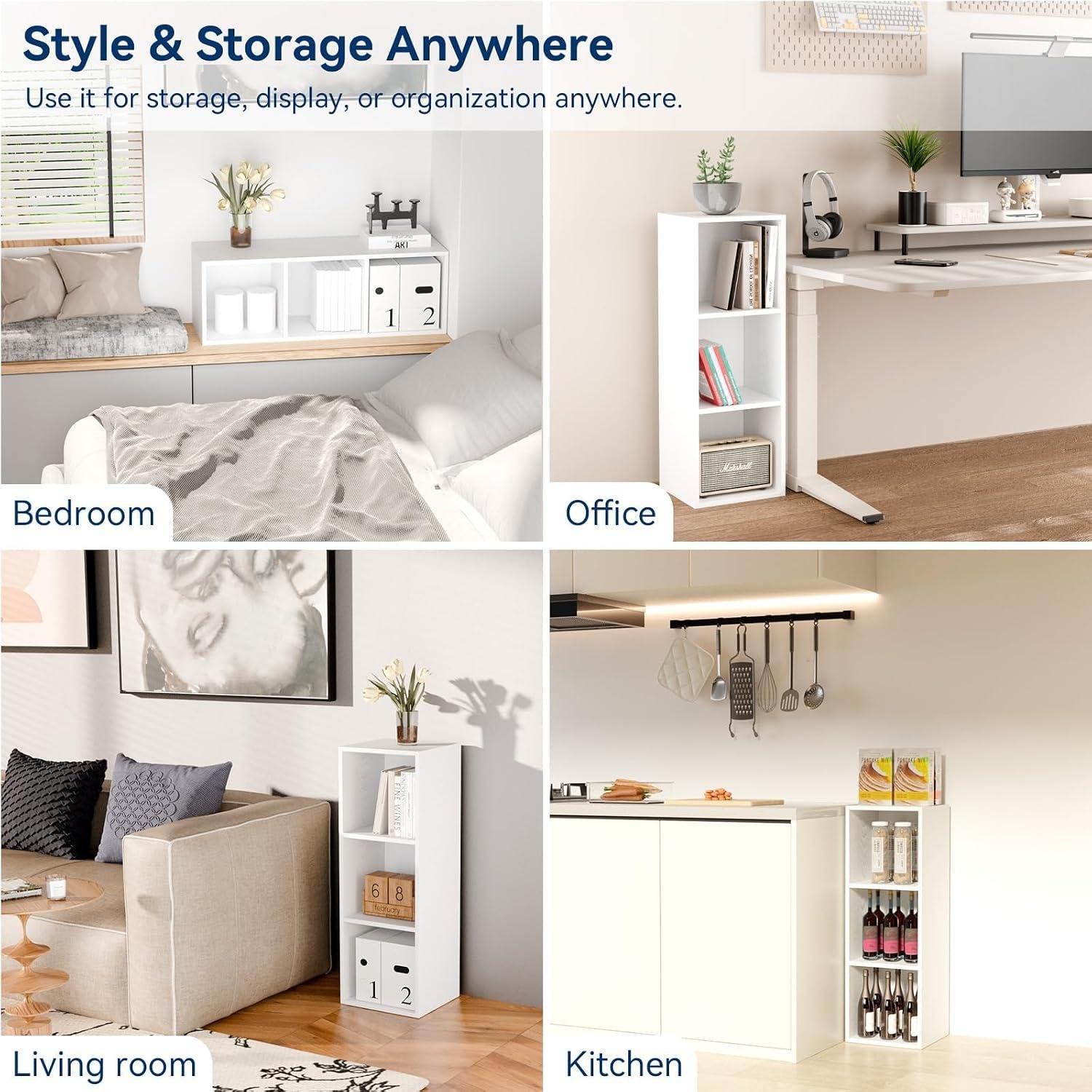
Ever start a glue-up or casework project only too lose time hunting for a square, a sharp chisel, or that one grit you swear you just had? in a small shop, clutter isn’t just annoying—it’s a precision problem, and it can turn clean cuts and careful layout into rushed, error-prone work.
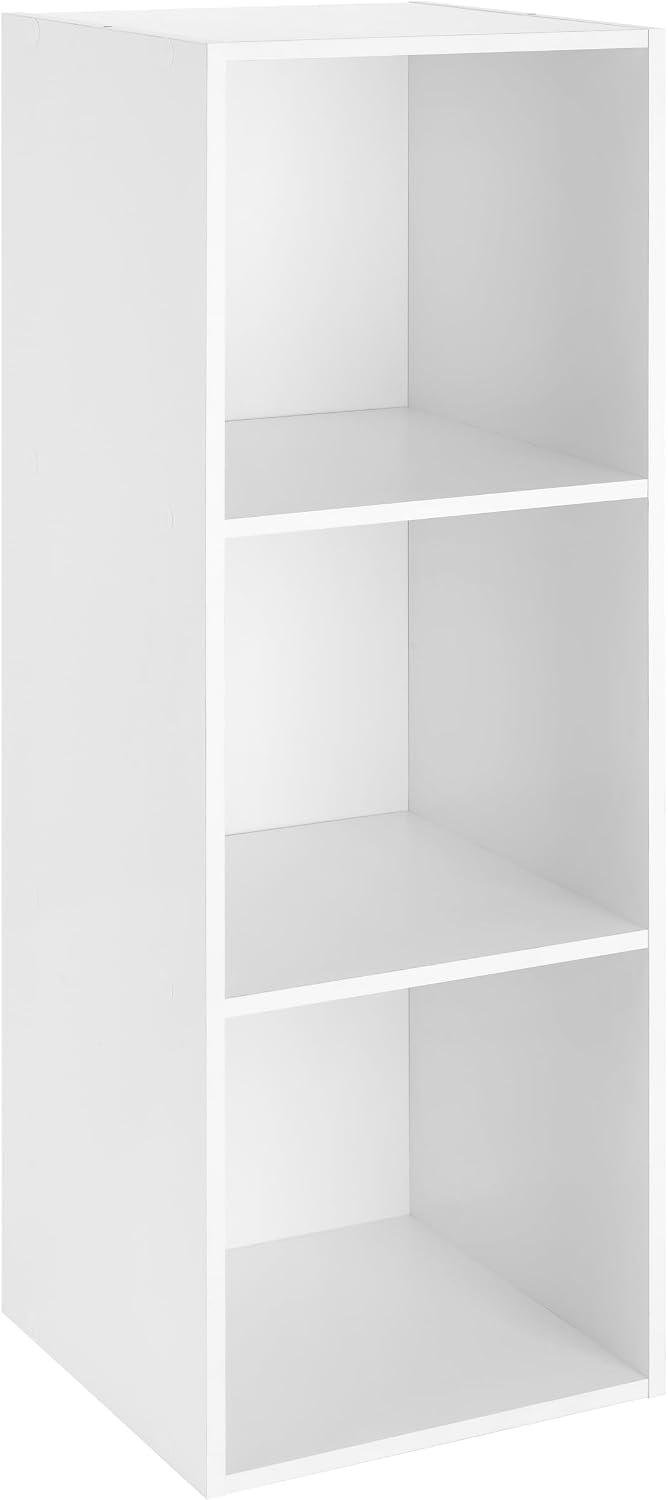
That’s were the Whitmor 3 Cube storage organizer comes in. It’s not a cutting tool, but it’s designed to support better woodworking habits by keeping essentials visible and reachable. This slim, stackable MDF cube shelf measures 12.2″ L x 11.7″ W x 35.6″ H,wiht three open cubes (each 11.2″ W x 11.2″ H x 11.7″ D) rated for up to 30 lbs per cube,plus six back panels for added stability and a water-resistant,wipe-clean surface.
In this review, we’ll look at build quality for the price, ease of assembly, space efficiency, and what customers commonly report about sturdiness and everyday use. From years of building shop storage and jigs, we know organization is often the cheapest “accuracy upgrade” we can make.
First Impressions and MDF Build Quality in the Shop
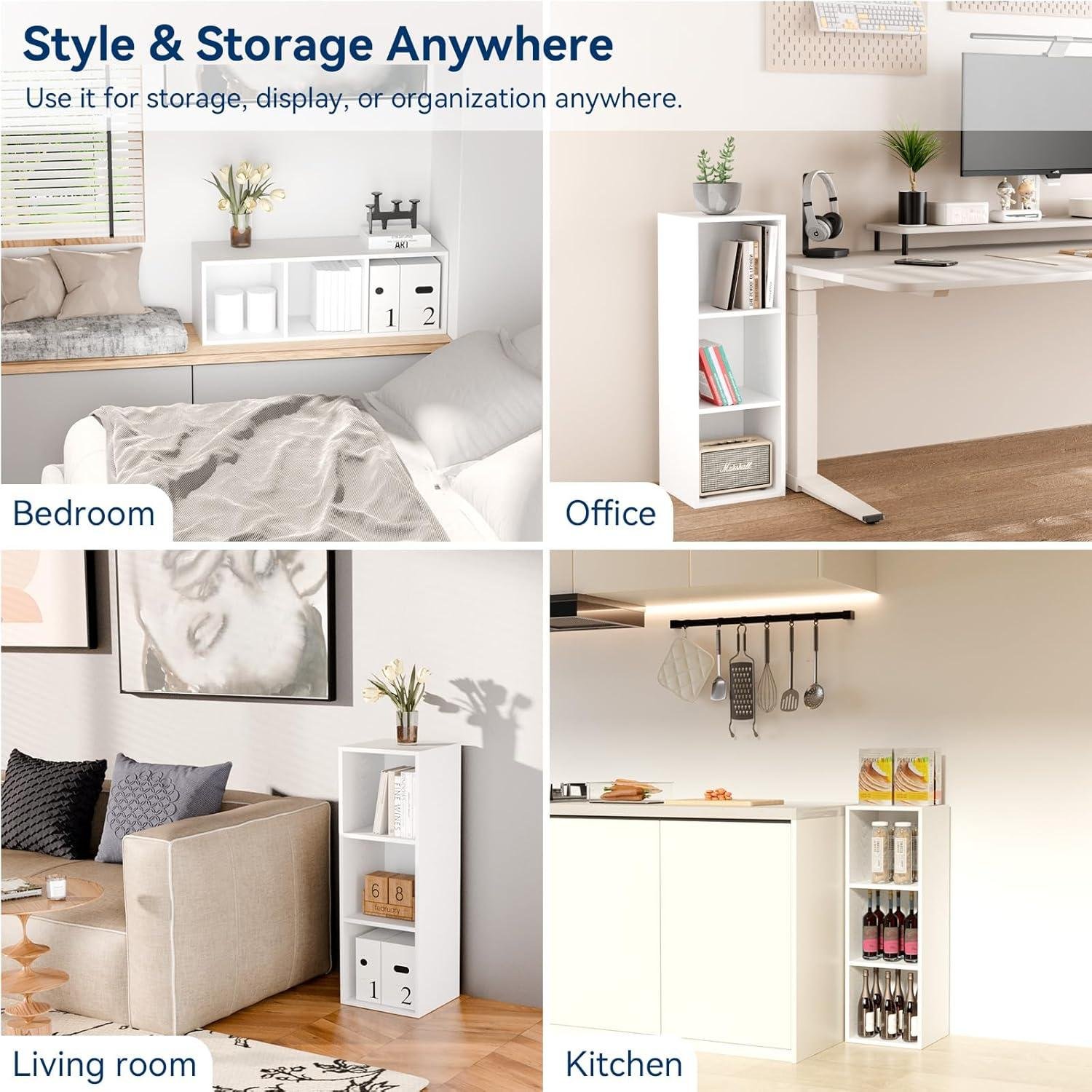
In the shop, our first impression of the Whitmor organizer is that it’s a compact, purpose-built “parts tower” more than a traditional bookshelf. The slim footprint—12.2″ L × 11.7″ W × 35.6″ H—tucks beside a bench or rolling cart without stealing aisle space, and the three open bays (each 11.2″ W × 11.2″ H × 11.7″ D) are sized well for quart finish cans, boxed fasteners, sanding discs, and small tool cases. We also like that the manufacturer rates each cube at up to 30 lb capacity; for woodworkers, that spec matters because hardware bins and glue bottles add up fast. The white finish reads “home décor,” but in a luminous shop it actually helps us see what’s inside at a glance—especially when we’re hunting for a specific grit or a hinge pack mid-assembly.
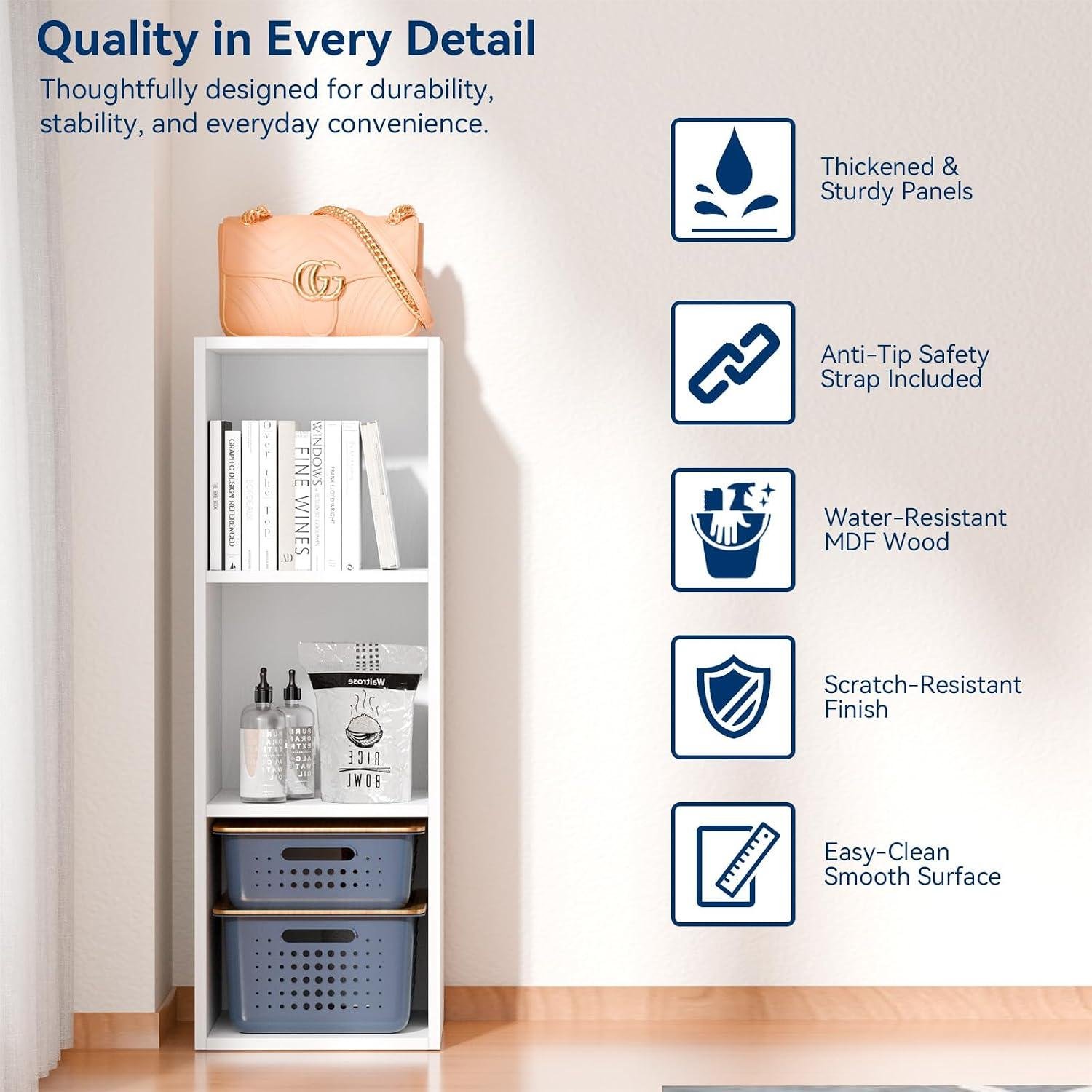
On MDF build quality, we treat this like we would any painted fiberboard cabinet: it’s square-stock storage, not a clamp rack. The panels are listed as MDF with a water-resistant, wipe-clean surface, which is helpful around glue-ups, but MDF edges and screw holes still deserve respect—pre-drilling and not over-driving fasteners reduces “mushrooming” and keeps joints tight. The included six back panels are an importent stabilizer in a shop setting; backing is what keeps a lightweight cube unit from racking when we slide boxes in and out one-handed.Customer-review themes commonly echo that it’s easy to assemble and looks clean,while some note MDF furniture can feel less “heirloom-sturdy” if it’s moved frequently—so we’d plan on placing it once,keeping loads within the 30 lb per cube rating,and (if you’re in a vibration-heavy corner near compressors) anchoring it to a wall stud for peace of mind.
See Full Specifications & Customer Photos
Key Features Woodworkers Will Appreciate for Organizing Tools and Offcuts

In a small shop, we don’t just need “storage”—we need a place where tools, jigs, and offcuts are visible and retrievable without dumping a whole bin onto the floor. The Whitmor organizer’s slim footprint (12.2″ L x 11.7″ W) and tall height (35.6″ H) makes sense beside a bench or near a miter station where wall space is already spoken for by clamps and French cleats. Each opening is a true cube at 11.2″ W × 11.2″ H × 11.7″ D, which is a practical size for stashing sanding blocks, combo squares, pocket-hole screws in small bins, or “keeper” shorts you’re saving for test cuts. We also like that it’s built from MDF with a water-resistant surface—not shop-proof by any means, but it does wipe clean when glue squeeze-out, filler dust, or finish drips happen. And with six back panels adding stability, it’s better suited to keeping smaller items from migrating out the back than many open-back cubes we’ve fought with in the past.
From what customers commonly emphasize,this unit is appreciated for easy assembly (frequently enough described as straightforward and not requiring specialized tools),which matters as we’d rather spend our time tuning a plane or tramming a fence than deciphering furniture hardware. For shop use, the realistic limiter is load: each cube is rated for up to 30 lbs, so we can confidently organize lighter-but-bulky items (random-orbit sander, nailers, small routers, boxes of fasteners), while we’d avoid parking cast-iron hand planes or large benchtop tools in one cube long-term. A helpful habit is to treat each cube like a “work cell”: one for abrasives (sorted by grit), one for measuring/marking, one for assembly consumables (tape, glue rollers, rags).That kind of zoning reduces tool-search time and lowers mistake rates—because grabbing the wrong grit or the wrong bit is a real accuracy and safety issue when we’re moving fast around spinning cutters and sharp edges. See Full Specifications & Customer Photos
real World Performance as a Stackable Cube Shelf for Small Workshop Storage

In our small shop, the Whitmor organizer behaves less like “room décor” and more like a skinny vertical parts bin. At 12.2″ L x 11.7″ W x 35.6″ H, it tucks into that dead zone beside the bench or near the door where a wider cabinet would steal workflow space. The open 3-cube layout makes it easy to grab a random-orbit sander, a box of fasteners, or a roll of blue tape without opening doors with dusty hands—handy when we’re mid-glue-up and trying not to touch everything. Each cube is listed at 11.2″ W x 11.2″ H x 11.7″ D, which is just enough depth for small tool cases and most 1-quart finishes, but not deep enough for bulky routers-in-hard-cases or a full-size framing nailer kit. The big practical spec for us is the load rating: 30 lbs per cube. In workshop terms, that’s fine for sandpaper, chisel rolls, layout tools, and hardware assortments—but we’d avoid stacking dense items (like multiple boxes of screws or metal clamps) in one cube because MDF shelves don’t like point loads and shock (think: dropping a tool in from bench height).
Assembly and day-to-day handling fit what we see in customer feedback: reviewers commonly praise easy assembly and that it “doesn’t require specialized tools”, and we agree that a #2 Phillips and a careful squaring check are all we’d plan on. (As woodworkers, we still recommend a quick “measure corner-to-corner” diagonal check before fully tightening, because any rack will telegraph into wobbles once it’s loaded.) Reviews also frequently mention the unit feeling sturdy for the price when the back panels are installed, which tracks with the included six back panels doing the real anti-rack work—skip them and a tall, narrow shelf like this can sway. The water-resistant surface is a plus for wiping off sanding dust and the occasional glue drip, but we’d treat it like painted MDF: keep standing liquids and solvent splashes away, and don’t drag cast-iron tool bases across it. For shop education value, we’ll add this: if we plan to stack multiple units, we’d set the bottom one on a flat platform and consider light anchoring or anti-tip measures—tall, narrow storage gets tippy once we start yanking tool boxes out one-handed.
- Included accessories: 3-cube MDF shelf components, six back panels, assembly hardware (per product description)
- Compatible attachments/accessories: small parts organizers, labeled bins, soft tool bags, lightweight baskets sized under 11.2″ W x 11.2″ H x 11.7″ D
- Ideal project types: small-shop organization, sanding station supplies, finishing-area consumables, hardware and layout-tool storage
- Wood types tested by customers: Not specified in reviews provided (this is a storage unit rather than a cutting tool)
| Spec | Whitmor 3 Cube Organizer | What It Means in a Small Workshop |
|---|---|---|
| overall size | 12.2″ L x 11.7″ W x 35.6″ H | Fits tight footprints; tall profile benefits from back panels/anti-tip habits |
| Cube interior (each) | 11.2″ W x 11.2″ H x 11.7″ D | Good for consumables and small tools; limited for bulky tool cases |
| Material | MDF with water-resistant surface | Wipes clean; avoid soaking and heavy point loads |
| Load rating | 30 lbs per cube | Fine for sandpaper/fasteners; not ideal for stacks of clamps or dense metal |
| Accessory Type | Example | Fit Guidance |
|---|---|---|
| Bins/Baskets | Small plastic bins, fabric cubes | Keep under 11.2″ W and 11.7″ D to slide easily |
| Parts Storage | Labeled screw/nail organizers | Distribute weight; don’t concentrate all heavy hardware in one cube |
| Tool Storage | Sander, drill, layout tools in pouches | Great for grab-and-go; avoid oversized hard cases |
| Storage Use | Recommended Capacity (Practical) | Rated Capacity (Spec) |
|---|---|---|
| Lightweight consumables (tape, gloves, sandpaper) | Near-full cube OK | 30 lbs per cube |
| Mixed tools (small drills, sanders, chargers) | Moderate load; spread items across cubes | 30 lbs per cube |
| Dense hardware (big screw assortments, metal jigs) | Half-load; avoid point loads and stacking too high | 30 lbs per cube |
See Full Specifications & Customer photos
Ease of Use for Beginners and Experienced Woodworkers in Assembly and placement
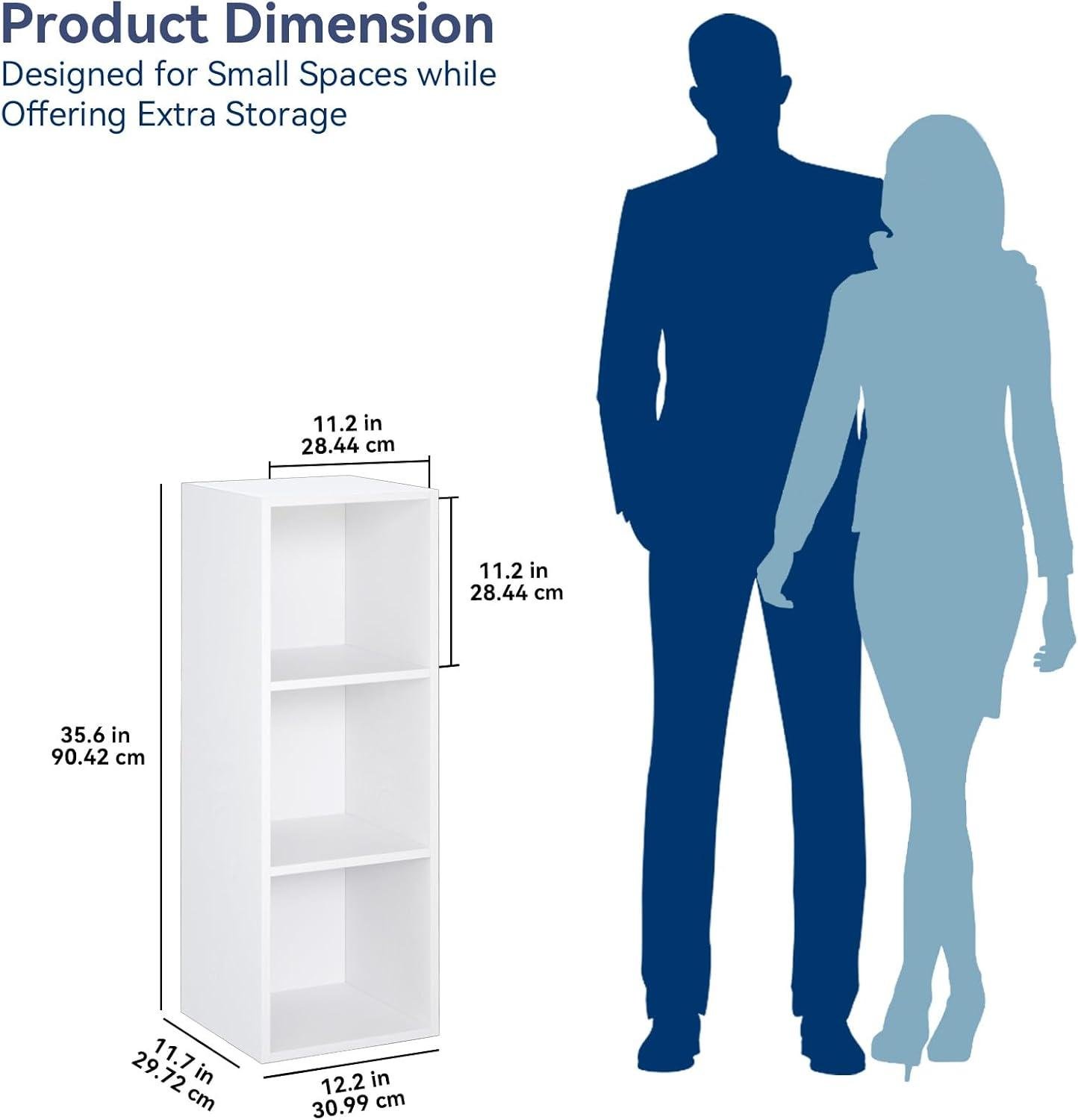
From a workshop outlook, the Whitmor 3 Cube Storage Organizer feels more like a “shop fixture” than fine furniture, and that’s a good thing for beginners. The parts are pre-sized MDF with a clean white finish, and the overall footprint—12.2″ L × 11.7″ W × 35.6″ H—is slim enough that we can assemble it right on a benchtop without needing clamps, a square, or any specialty jigs. Whitmor notes assembly is straightforward and “doesn’t require specialized tools,” and customer review themes commonly echo that it’s easy to put together and quick to get standing.For newer woodworkers, the main educational takeaway is MDF handling: it’s strong in compression but can strip if we over-torque fasteners, so we tighten by hand, stop as soon as joints seat, and avoid “cranking” like we might on plywood cabinetry.
For experienced woodworkers, placement and integration into a shop layout is where this unit earns its keep. Each cube is 11.2″ W × 11.2″ H × 11.7″ D with a stated capacity of up to 30 lbs per cube, which is useful for lightweight-to-medium storage like sanding discs, rattle cans, glue bottles, and small boxed hardware—while we keep dense items (nails by the bucket, routers, benchtop vises) elsewhere to stay within spec. The included six back panels add stability, and the stackable design gives us a modular path if we want to build a vertical wall of cubbies later; several reviewers highlight using it in tight spaces like dorms, offices, and entryways, which tracks with its narrow profile. In a shop, best practice is to place it on a flat surface, keep heavier items low for tip resistance, and—if we’re using it in a high-traffic aisle—consider anchoring to a wall stud for safety (especially since MDF cases can rack if they’re bumped repeatedly).
See Full Specifications & Customer Photos
Customer Reviews Analysis

What Woodworkers Are Saying (Review Analysis)
Note: This product is a pre-finished MDF cube organizer/bookshelf, not a woodworking power tool.So in reviews,“performance” tends to mean how square it assembles,how well it holds weight,and how it looks/feels in a shop or home setting—not cut quality or motor power.
| Aspect | Common Feedback |
|---|---|
| Overall Sentiment | Mostly positive for price and appearance; mixed when judged like “real furniture” |
| Performance / Results | Works well for light-to-moderate storage; best when kept within reasonable load limits |
| build Quality | MDF/laminate construction is viewed as adequate but not heirloom-grade; edges can be vulnerable |
| ease of assembly | Generally straightforward; alignment and cam/fastener steps can frustrate some DIYers |
| Best use Cases | small bookshelf, shop/office organizing, kid rooms, modular/stackable storage |
| Limitations | Not ideal for heavy loads, high-humidity spaces, or frequent moving without reinforcement |
1. Overall sentiment from woodworking customers
Several woodworkers and DIY-minded reviewers described this as a good-looking, budget-pleasant organizer that does what it’s supposed to—especially for small spaces. Common praise includes clean white finish, simple cube layout, and the ability to stack or fit into tight areas.
At the same time, multiple reviews highlight that expectations matter: judged as flat-pack MDF furniture, it’s solid value; judged as shop-built plywood cabinetry, it can feel lightweight.
2. Performance feedback (accuracy, power, results)
Since there’s no “tool performance,” reviewers talk about fit, squareness, and stability:
- Accuracy / alignment: Some users reported challenges with getting panels perfectly aligned during assembly (which affects how square the cubes end up). Reviewers who took time to assemble on a flat surface generally reported better results.
- Results / function: customers successfully used this for books, décor, small bins, and light shop supplies. Several mentions suggest it functions best as organized cubby storage, not as a heavy-duty shelving unit.
A common theme is that the organizer performs well within its intended weight range, but can feel less rigid when pushed beyond that.
3.Build quality and durability observations
Multiple reviews highlight the typical tradeoffs of MDF with a white laminate/painted finish:
- Panel strength: Several woodworkers mentioned MDF can be prone to damage if overtightened, dropped, or stressed at the fasteners.
- Edge durability: common praise includes a nice, clean look, while some users reported challenges with chipped corners/edges or finish wear—especially if it’s moved around often.
- Longevity: Reviewers generally imply it holds up fine as a stationary organizer, but may not tolerate repeated relocation or rough handling without loosening or cosmetic wear.
Woodworking-minded buyers often frame it as: “fine for what it costs,” but not something you’d expect to last like birch ply + dadoes.
4. Ease of use for diffrent skill levels
- Beginners / casual DIYers: Beginners appreciated the straightforward concept and standard flat-pack assembly style.
- more experienced woodworkers: Experienced woodworkers noted that careful steps—like dry-fitting, keeping it on a flat floor, and tightening evenly—make a noticeable difference in final rigidity and squareness.
- Common friction points: Some users reported challenges with hardware steps and panel orientation, where a single misstep can force partial disassembly. Patience and a second set of hands can help.
5. Common project types and success stories
Even though it’s a ready-made unit, reviewers describe using it as part of real organizing “projects,” such as:
- Small bookshelf duty in bedrooms, offices, or dorm-like spaces
- Craft room / sewing room storage (bins, materials)
- Garage or workshop overflow organization for light items (sandpaper packs, small boxes, finishes—typically not heavy tools)
- Room décor displays, where the clean white finish is a plus
Several reviewers mentioned it’s a convenient way to create a “built-in look” on a budget when paired with matching bins or stacked arrangements.
6. Issues or limitations reported
Some users reported challenges with the following:
- Not heavy-duty: Multiple reviews highlight limitations for heavy books, dense items, or tool storage, where MDF shelves can flex or the unit can feel less stable.
- Assembly sensitivity: If assembled slightly out of square, it may wobble or show uneven cube openings.
- Cosmetic damage risk: MDF/laminate surfaces can show chips, scuffs, or crushed corners, especially during shipping or moving.
- Moisture concerns: As with most MDF furniture, reviewers imply it’s not ideal for humid areas or anywhere it might get damp.
If you want, I can rewrite this section in a more “shop talk” tone (from the perspective of cabinetmakers/woodworkers) or tighten it to fit a specific word count for a product page.
Pros & Cons
Pros & Cons
| What We Liked | What We Didn’t |
|---|---|
| Three roomy cubes in a slim, vertical footprint | Only three compartments—heavy organizers may want more “sections” |
| Each cube holds up to 30 lbs (great for books and bulkier items) | MDF isn’t the same as solid wood if we’re chasing heirloom vibes |
| water-resistant surface wipes clean fast | White finish can show scuffs and dust more quickly in busy spaces |
| Open shelves make grab-and-go storage easy | Open design means clutter is on display unless we use baskets |
| Back panels add stability and help items feel “contained” | Back panels reduce the option to access items from both sides |
| Minimalist look works as décor and storage | Style is simple—if we want dramatic design, it’s more “quiet helper” than statement piece |
| Stackable concept lets us build upward over time | stacking adds planning—alignment and placement matter more for safety and looks |
| Assembly is straightforward and doesn’t require specialized tools | assembly still takes time, and getting everything perfectly square can require patience |
Pros
- Space-smart footprint: We get vertical storage (12.2″ L x 11.7″ W x 35.6″ H) that fits narrow spots like corners, hallways, and beside desks.
- Surprisingly capable cubes: Each 11.2″ W × 11.2″ H × 11.7″ D compartment feels ready for books, toys, shoes, folded clothes, or décor—without feeling cramped.
- Sturdy for everyday use: The MDF build plus back panels helps it feel more stable than many open-cube units we’ve tried.
- Easy to live with: The water-resistant surface means spills, fingerprints, and dust don’t turn into a project—just a quick wipe-down.
- Decor-friendly: The clean white finish and open cubes give us a place to display plants, frames, candles, or collectibles without visual chaos.
- Expandable mindset: The stackable design lets us start small and scale up later if our storage needs grow.
Cons
- Open shelves = open truth: If our stuff is messy, the shelf will be honest about it. We’ll likely want baskets or bins for a calmer look.
- Not solid wood: MDF is practical and common at this price point, but it won’t deliver the same premium feel (or long-term refinishing options) as real wood.
- Limited “sort zones”: Three cubes might be perfect for a small setup, but it can feel limiting for bigger households or high-clutter rooms.
- White can be high-maintenance: In high-traffic spots, we may notice scuffs, dust, or marks sooner than on darker finishes.
- Stacking takes intention: The stackable feature is a bonus, but it also means we’ll want to think about leveling, placement, and overall stability as we build upward.
Q&A
What “wood” is this actually made from—solid wood, plywood, or MDF?
This unit is made from MDF (engineered wood), not solid hardwood or plywood. MDF is flat and stable for painted furniture, but it doesn’t hold screws as strongly as hardwood and it’s easy to chip on edges if you over-tighten fasteners. The surface is listed as water-resistant and wipes clean, but it’s still best treated like MDF furniture (avoid soaking, standing water, and heavy impacts).
Is it strong enough for heavy woodworking books, hardware bins, or tool storage?
each cube is rated for up to 30 lbs. That’s generally fine for books, small parts organizers, or a few hand tools per cube—if you keep the load centered and don’t cantilever heavy items on the front edge. For tool storage, the limiting factors are MDF screw-holding strength and racking (side-to-side sway), so use the included back panels and consider anchoring it if you’ll load it with dense items like fasteners or metal tooling.
How arduous is assembly—do I need shop tools or just basic household tools?
It’s designed for straightforward assembly and doesn’t require specialized tools. A Phillips screwdriver (or low-torque driver) is typically all you’ll need. The biggest “woodworker tip” is to avoid over-driving screws into MDF—snug is enough. If you use a drill/driver, keep the clutch low to prevent stripping.
What adjustments or customization options do I have (shelves, spacing, doors, etc.)?
This is a fixed 3-cube layout: the cube openings are about 11.2″ W × 11.2″ H × 11.7″ D each, so it’s not an adjustable-shelf system. Woodworkers often customize these with cube bins, backer upgrades, or edge-banding/trim, but the internal dimensions are what they are. If you plan to add doors or drawers, keep in mind MDF edges may need pre-drilling and careful fastening.
Will it fit in a small shop, and can it be used vertically or horizontally?
It has a slim footprint (overall 12.2″ L × 11.7″ W × 35.6″ H), so it effectively works well in tight spaces like a small workshop corner, home office, or finishing area. It’s marketed as stackable, which is useful if you want a taller storage wall over time. If you reposition it (vertical vs. on its side), prioritize stability and load direction—use the back panels and consider wall anchoring for taller/stacked setups.
Do I need to anchor it, and can I mount it to a bench or wall like shop cabinetry?
If you’re using it in a shop surroundings—especially stacked or loaded with heavy items—anchoring is smart. MDF furniture can rack if pushed from the side, and tall narrow shelves are more tip-prone. Use wall anchoring when possible, and if you’re fastening it to a bench/backboard, pre-drill and use appropriate screws/washers to avoid blowing out MDF. The included back panels are important for stiffness, so don’t skip them.
How does it handle shop conditions like dust, humidity, and finish overspray?
The surface is described as water-resistant and easy to wipe clean, which helps with everyday mess. Still,MDF doesn’t like prolonged humidity or wet floors—swollen edges are the common failure mode. For a shop, keep it off damp concrete (use feet/shims), avoid direct water exposure, and don’t treat it like a spray booth wall unless you’re okay with the white finish catching overspray.
Is this a good value versus building a similar cubby from plywood?
If you want fast, clean storage with predictable dimensions, the value is convenience: pre-finished white MDF, quick assembly, and a known load rating (30 lbs per cube). if you need true shop-furniture durability—better screw holding, repairability, and the ability to hang jigs/clamps—building from 3/4″ plywood (with a nailed/glued back) will usually be stiffer and longer-lasting. This Whitmor unit fits best for light-to-moderate storage, office/utility organization, or a tidy “shop-adjacent” area rather than heavy-duty cabinetry.
Experience Innovation
The whitmor 3 Cube Storage Organizer isn’t a cutting tool,but it’s a practical shop helper built from water-resistant MDF with six back panels for stability. It stands 12.2″ L × 11.7″ W × 35.6″ H, with three open cubes (11.2″ W × 11.2″ H × 11.7″ D) rated to hold up to 30 lbs each. Customer feedback commonly highlights its clean, minimalist look, straightforward assembly (no specialized tools), and usefulness for small-space organization, while the main limitation is that MDF and a slim footprint aren’t meant for abusive, industrial-grade use.
best for hobby woodworkers with small to medium projects who need a vertical, stackable shelf for finishes, sanding supplies, jigs, books, and bins—especially beginners building better shop habits.
Consider alternatives if you store very heavy tools, want hardwood/plywood durability, or need a wider, tip-resistant base.
it’s a solid, budget-friendly storage piece for light-to-moderate shop organization—just match it to realistic loads and conditions.
Want to see current pricing and customer photos? View on Amazon & Read More Reviews →