

Blog
Art3d Wood Slat Acoustic Panel Review: Right for Us?


Ever tried filming a glue-up or dialing in a hand-plane cut, only to have the shop echo turn every mistake into a roar? Or maybe you’re building a home office and realizing the “quiet corner” isn’t quiet at all-yet you still want a finish that looks like real woodworking, not foam tiles.
That’s where the Art3d 4-Pack Soundproof Wood Slat Wall Panels (94.5 x 7.9 in., Walnut) come in. These aren’t cutting tools, but they’re very much a shop upgrade tool: fluted MDF slats backed with high-density polyester fiber, designed to add warmth visually while improving room acoustics. A 4-pack covers about 21 sq. ft., and the brand notes they can be mounted on walls or ceilings using basic tools.
In this review, we’ll break down the materials and build quality, installation considerations in real spaces, how reviewers describe the look and perceived acoustic changes, and whether the price makes sense versus DIY slat builds. We’ve set up and tuned enough workspaces to know the small details-layout, fasteners, and fit-make or break results.
First Impressions and Build Quality in the Shop
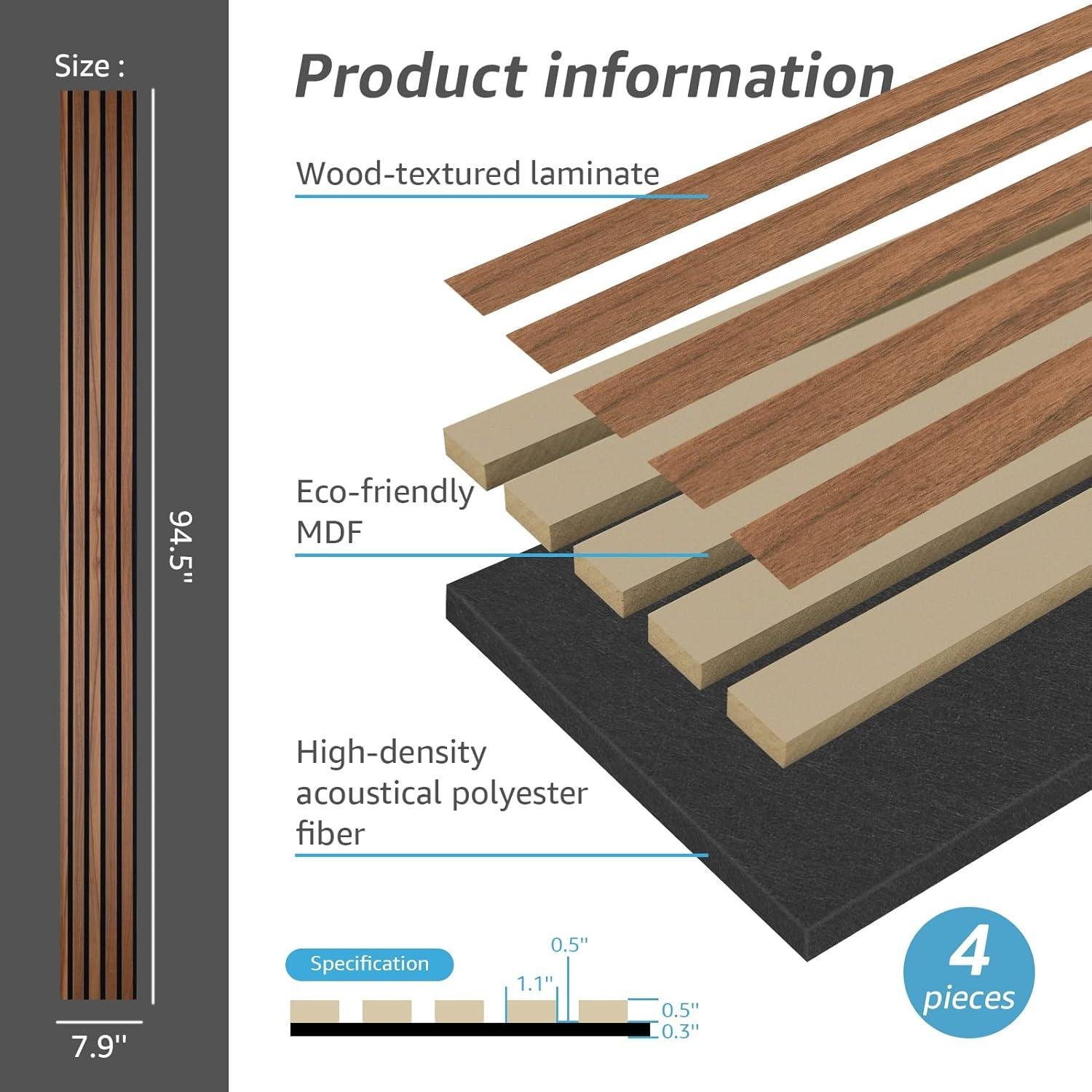
When the Art3d 4-Pack Soundproof Wood Slat Wall Panels showed up at the shop, our first impression was that these are more “finish material” than “tool”-but they’ll still live or die by how well they handle typical shop realities: leaning against a wall, getting bumped by clamps, and being trimmed to fit around outlets or cabinets. Each panel measures 94.5 x 7.9 inches, and the four-pack covers about 21 sq. ft., which is a practical size for a small machine alcove or a single wall behind a bench. The “Walnut” look reads warm and clean under shop lighting, and the construction matches the stated materials: MDF slats over a high-density polyester fiber backing. That MDF core matters for woodworkers-expect consistent straightness and uniform “grain” appearance, but also treat edges like MDF: protect corners, pre-plan fasteners, and don’t assume it’ll take abuse like solid walnut. From the brand description, we also appreciate the low TVOC and “no harmful chemical emissions” claim-important when we’re already generating enough dust and fumes in an enclosed workspace.
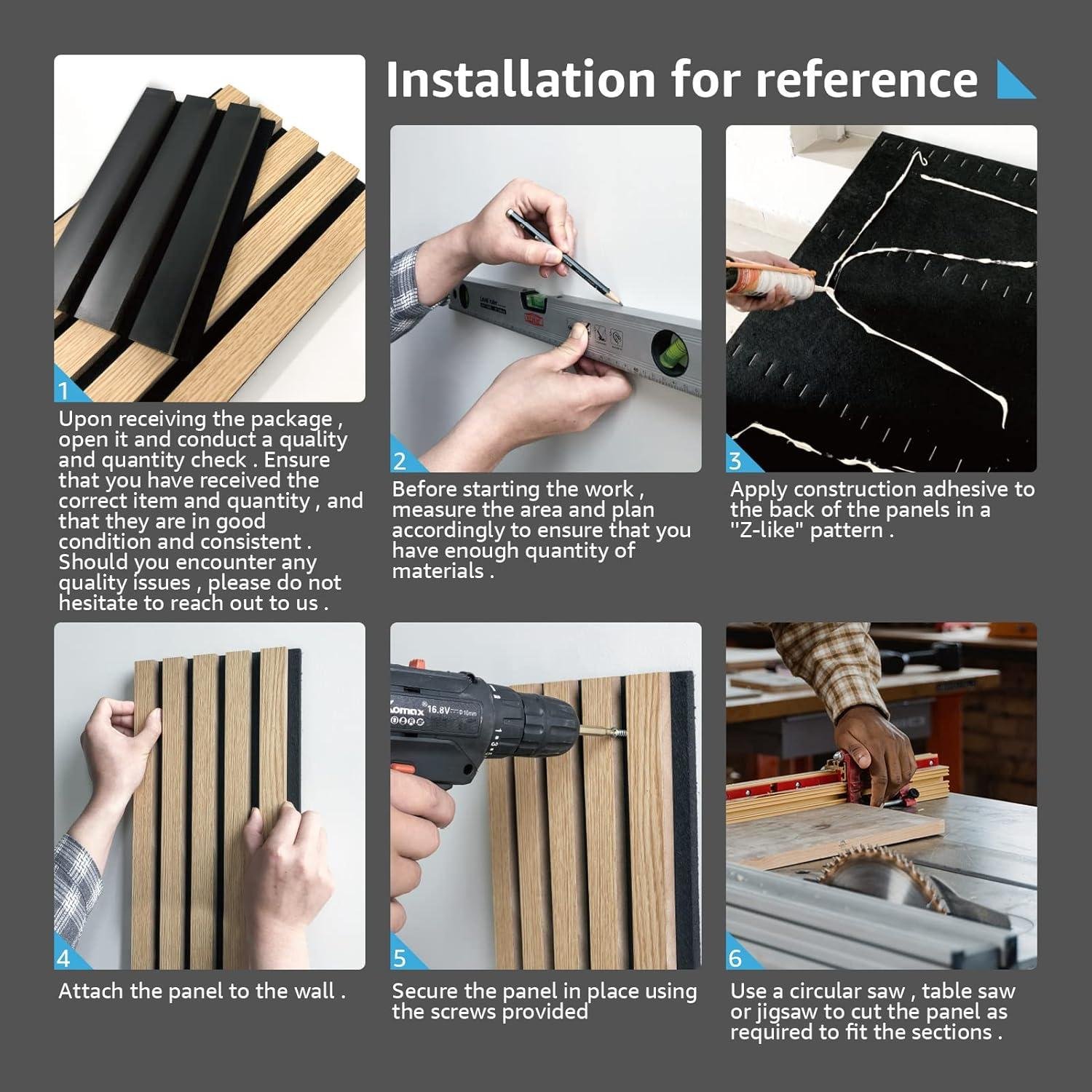
In terms of setup expectations, the product positioning aligns with common customer review themes we see on slat/acoustic panels: “easy to install” and doable with basic tools in a short amount of time. In a woodworking shop, that typically means layout lines, a level, and either construction adhesive plus brads, or screws into studs (with care not to crush the backing). These panels are long, so we’d plan for handling and safe cutting support-crosscutting to length is straightforward on a miter saw with a fine-tooth blade, but we’d recommend painter’s tape and a backer to reduce fuzzing/tear-out on the MDF faces, then vacuum immediately because MDF dust is nasty. The “soundproof” label is worth interpreting correctly: the polyester fiber backing can help tame reflections and general shop echo, but it’s not a substitute for isolating a screaming planer; think acoustic treatment more than miracle noise blocking. If we were dressing up a client-facing shop area or trying to make a small studio corner more pleasant to work in, these panels look like a tidy, repeatable install-just treat them like engineered material, measure twice, and plan your fastening so it stays flat and clean.
- Included accessories: None listed (panels only)
- Compatible attachments/accessories: construction adhesive, brad nails, finish screws, wall anchors (where appropriate), level/laser, fine-tooth saw blade, jigsaw (outlet cutouts), oscillating multi-tool (notching), stud finder
- Ideal project types: shop accent wall behind bench, CNC/laser enclosure wall treatment, office/studio corner, retail/display wall for cabinetry samples
- Wood types tested by customers: Not specified in the provided reviews (finish is Walnut-styled over MDF)
| Spec | Art3d Slat Panels (Walnut) | What It Means in the Shop |
|---|---|---|
| Panel size | 94.5 x 7.9 in. | Long runs; plan for safe support when trimming |
| Pack coverage | ~21 sq. ft. per 4-pack | Enough for a feature section; not a full shop unless buying multiples |
| Materials | MDF + high-density polyester fiber | Stable and consistent, but edges/corners are more fragile than solid wood |
| Installation | Walls/ceilings; “basic tools” | Layout and fastening method matter for flatness and clean seams |
| Indoor air notes | Low TVOC | Reassuring for enclosed workspaces |
| Accessory | Use Case | Why We’d Use It |
|---|---|---|
| Fine-tooth miter saw blade | Cut panels to length | Cleaner cuts on MDF faces; less chipping |
| Oscillating multi-tool | Notches around trim/obstacles | Controlled plunge cuts without overcutting corners |
| Construction adhesive | Mounting to flat walls | Even support; fewer visible fasteners |
| Brad nailer / finish screws | Temporary hold + permanent fixing | Keeps panels tight while adhesive cures; studs give reliable bite |
| Capacity/Expectation | Recommended | Actual from Specs |
|---|---|---|
| Area planning | Measure wall section and add waste factor | ~21 sq. ft. total coverage per 4-pack |
| Finish selection | Order a sample first | Brand suggests sample pack before final order |
See Full Specifications & Customer Photos
Key Features Woodworkers Will Appreciate for Slat Walls and Acoustic Control
In a shop setting, what we appreciate most about the Art3d set is that it behaves more like a repeatable “panel stock” system than a fussy decorative treatment. Each piece is a consistent 94.5 x 7.9 in. slat panel, and the 4-pack covers about 21 sq. ft., which helps us plan wall layouts the same way we’d plan sheet-goods yield-measure twice, buy once, and minimize seams. The construction-MDF slats on high-density polyester fiber-also matters in practical terms: MDF stays dimensionally steady indoors, and the fiber backing adds a bit of forgiveness for slightly uneven shop walls while contributing to the noise-cancellation goal. From the product description and common customer-review themes, the big takeaway is “easy to install with basic tools,” which aligns with how we’d approach it: mark studs or install furring strips, keep reveals consistent, and cut the last panel per row for a clean ending.
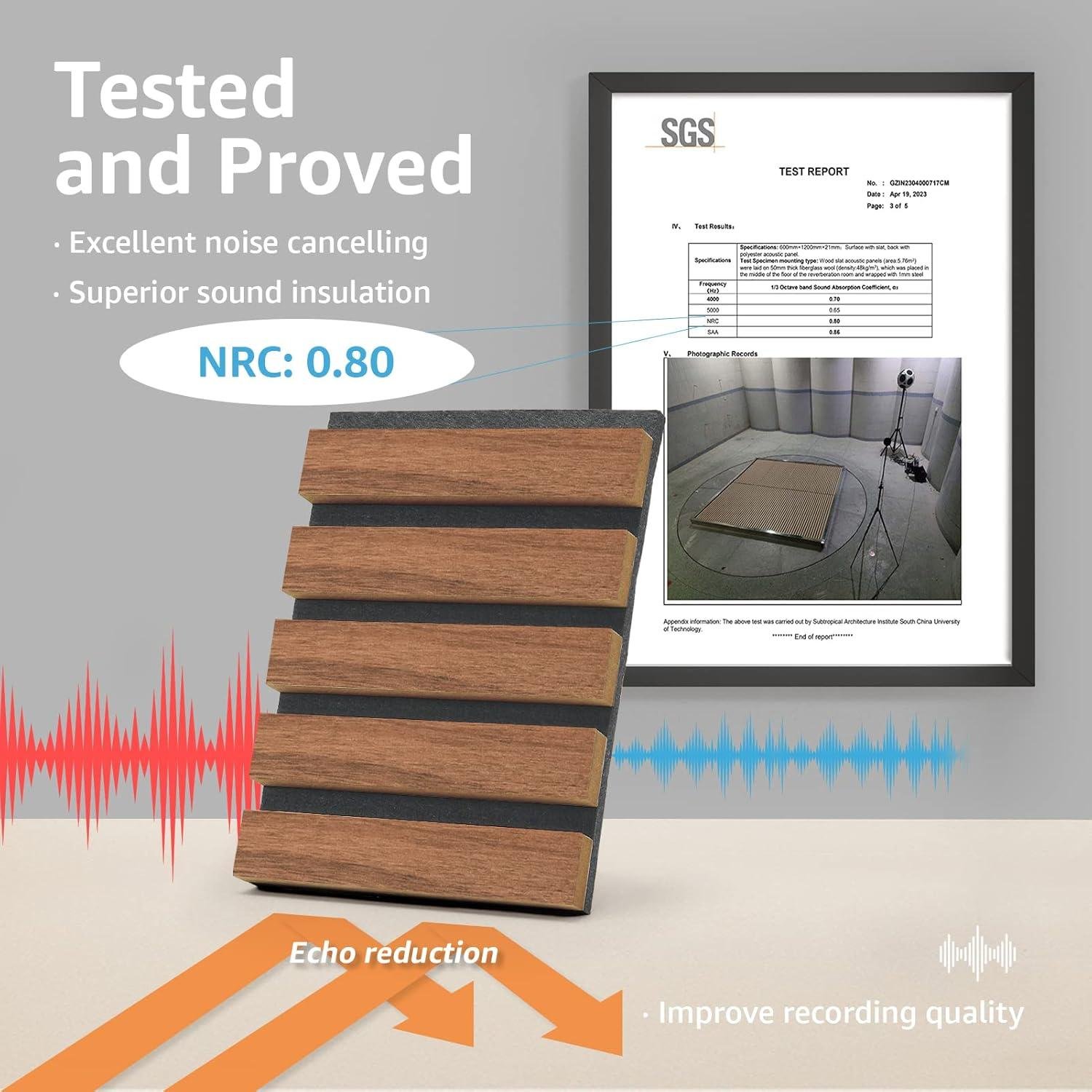
For acoustic control, we should set expectations like woodworkers: these are acoustic wall panels designed to reduce reflections and harshness in a room, not miracle “soundproofing” that blocks all noise through walls. Used near a bench zone (router, planer, compressor area), slats plus fiber backing can help tame sharp slap-echo so we can hear machines and conversations more clearly and be less tempted to run tools “just a bit longer” without ear protection. Reviewers commonly mention the panels being visually appealing with a warm, walnut-style look, and also appreciate the quick setup-both helpful if we’re building a client-facing studio corner or a cleaner assembly area. Educationally, our best tip is to treat these like finish surfaces: pre-plan outlet and switch locations, test fasteners/adhesives on an offcut, and consider ordering a sample pack first (as the brand suggests) so the walnut tone matches our existing stains and plywood veneers under shop lighting.
- Included accessories: None listed (panels only)
- Compatible attachments/accessories: Construction adhesive (panel-rated), brad nails/pin nails, furring strips, stud finder, level/laser, fine-tooth saw blade, oscillating multi-tool for outlet cutouts
- Ideal project types: Shop accent + acoustic wall behind assembly bench, small recording/voiceover corner in a woodworking studio, office/studio backdrop wall, ceiling feature strips in a hobby room
- Wood types tested by customers: Not specified in reviews (panels are MDF with polyester backing)
| Spec / Feature | What We Look For in the Shop | Art3d Panel Details |
|---|---|---|
| Panel size | Repeatable layout + fewer seams | 94.5 x 7.9 in. per panel |
| Pack coverage | Accurate material estimating | 4-pack covers ~21 sq. ft. |
| Core materials | Stability + acoustic absorption | MDF + high-density polyester fiber |
| Installation | Basic-tool friendly | Described as easy to install on walls/ceilings |
| Compatible Accessories | Why We’d Use It | Notes |
|---|---|---|
| Fine-tooth miter saw / track saw blade | Cleaner cuts on MDF slats | Support the panel to prevent chipping/tear-out |
| Construction adhesive | Fast mounting without visible fasteners | Use panel-rated adhesive; follow cure times |
| 18ga brad nailer / pin nailer | Temporary hold while adhesive sets | Place nails where slats hide holes best |
| Furring strips | Flatter substrate + easier fastening | Also creates a small service cavity for wires |
| Category | Recommended in a Workshop | What This Product Provides |
|---|---|---|
| Acoustic goal | Reduce reflections/echo near work zones | Acoustic panel design with fiber backing |
| “Soundproofing” expectation | Block transmission through walls (harder) | Not specified-treat as acoustic treatment rather than full isolation |
| Coverage planning | Know sq. ft. before ordering | ~21 sq. ft. per 4-pack |
See Full Specifications & Customer Photos
Real World Performance for Shop Noise Reduction and Wall Protection
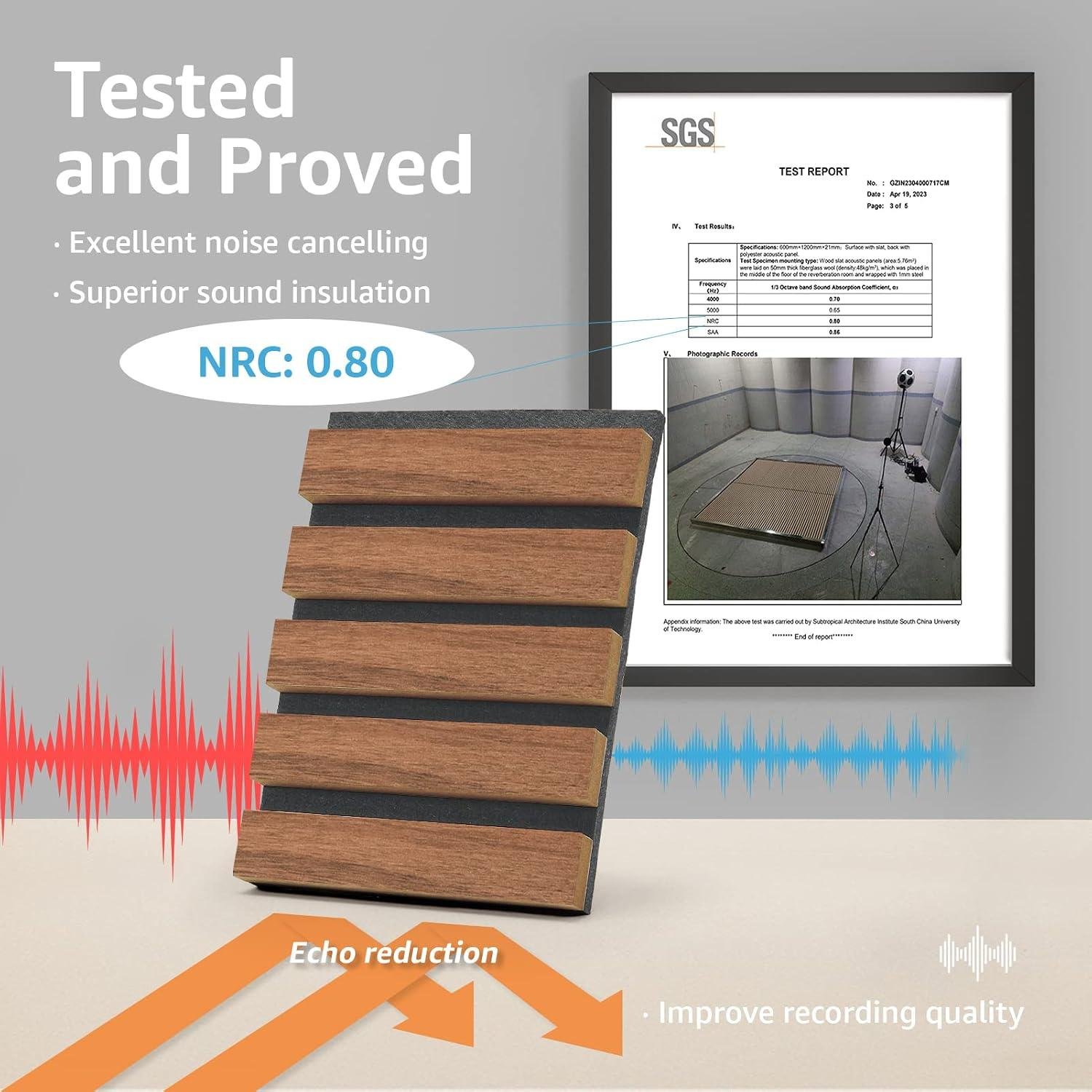
In a working shop, we tend to chase “quiet” in two places: the harsh reflections that make machines feel louder than they are, and the wall zones that take hits from sheet goods, bar clamps, and the occasional handle swing. The Art3d 4-Pack Soundproof Wood Slat Wall Panels are sized at 94.5 x 7.9 inches per panel, and a box covers about 21 sq. ft., which makes them practical for treating specific problem areas-like the wall behind the miter saw station or above a bench where sound bounces back at us. These aren’t a substitute for hearing protection (we still wear muffs when the planer and router come out), but the design-MDF slats over a high-density polyester fiber backing-is aimed at taming reflections, so the shop can feel less “tinny” and fatiguing during long sessions. For wall protection, we view these as a finish layer more than an impact shield: they’ll help against scuffs and light bumps, but we’d still add a sacrificial hardboard strip or tool rail in the high-abuse zones where clamp bars and plywood corners live.
From what customers repeatedly emphasize, the big win is quick, basic-tool installation and the warm walnut look that upgrades a workspace without a full remodel. Review themes also commonly mention that they look “high-end” once up and are easy to cut to length for outlets and transitions-useful woodworking-adjacent skills like measuring, scribing, and clean layout still matter here. Our practical takeaway is to treat these like shop-friendly interior finish carpentry: pre-plan your seam locations, keep your cuts clean to avoid fuzzy MDF edges, and use a straightedge when trimming so the slats stay visually consistent. Safety-wise, cut with dust control and a respirator (MDF dust is no joke), and if you’re mounting into studs or masonry, choose fasteners accordingly so the panels don’t telegraph vibration over time. If you’re unsure about color/finish matching to existing cabinets or benches, the brand itself suggests ordering a sample pack first-good advice before committing to a full wall.
- Included accessories: None listed (panels only)
- Compatible attachments/accessories: Construction adhesive, brad nails/finish nails, screws + washers, wall anchors, aluminum edge trim, corner trim, French cleat tool rails (separate)
- Ideal project types: Miter saw back wall treatment, bench acoustic splash zone, podcast/video corner in the shop, office-to-shop conversion, light-duty wall scuff protection
- Wood types tested by customers: Not specifically stated in available review themes/material-panels are MDF with polyester fiber backing
| Spec | Art3d Wood Slat Panels (Walnut) | What It Means in a Shop |
|---|---|---|
| Panel size | 94.5 x 7.9 in (each) | Easy to plan around studs and common wall bays; long runs reduce seams |
| Pack coverage | ~21 sq. ft. (4-pack) | Good for targeting a loud station instead of treating the whole shop |
| Core materials | MDF + high-density polyester fiber | MDF cuts cleanly but makes fine dust; backing is aimed at absorption |
| Emissions | Low TVOC (per description) | Better peace of mind for enclosed workspaces, especially offices/garages |
| Accessory | Recommended Use | Notes for Woodworkers |
|---|---|---|
| Construction adhesive | Permanent wall/ceiling mounting | Plan layout carefully; removal later may damage drywall |
| Brad/finish nails | Temporary hold while adhesive cures | A nailer speeds install; set depth to avoid dimpling slats |
| Screws + washers | Removable mounting | Best into studs; washers spread load without crushing MDF |
| Edge/corner trim | Clean transitions | Helps protect edges from shop dings and carts |
| Use Case | Recommended “Capacity” | Actual Real-World Expectation |
|---|---|---|
| Noise reduction | Treat first-reflection zones near loud stations | Helps reduce echo/reflections; still use hearing protection for machines |
| Wall protection | Light-duty scuff protection | Good for scuffs and minor bumps; add sacrificial panels for heavy impacts |
See Full Specifications & Customer Photos
Ease of Use for Different Skill Levels and Installation Approaches

For different skill levels, these Art3d panels land in the “measure carefully, then it’s straightforward” category. Each pack includes four panels sized 94.5 x 7.9 inches (about 21 sq. ft. coverage total), and because they’re MDF slats on a high-density polyester fiber backing, we don’t need specialized carpentry tools-just layout discipline. For beginners, the biggest ease-of-use win is that the slats arrive pre-spaced and visually consistent, so we’re not milling, ripping, or building a jig to keep reveals uniform. For intermediate-to-advanced woodworkers, the appeal is speed: these can turn an echoey shop office, podcast corner, or client-facing showroom wall into a finished-looking surface in an afternoon, provided we take time to find studs/solid substrate and plan seams. The product description emphasizes “quick and easy” installation with basic tools, and customer review themes commonly echo that the panels are easy to mount and deliver an immediate visual upgrade-with the usual reminder that careful measuring and a straight first course make or break the final look.
Installation approach is where our skill level shows, and we’ve got a few practical routes depending on the wall and the permanence we want. For a typical workshop build-out, we’d treat these like finish material: establish a level reference line, dry-fit the first panel, then commit. When cutting is needed (outlets, window trim, stopping short of a cabinet run), the MDF-and-felt style construction usually responds best to a fine-tooth saw or track saw with a clean blade and painter’s tape to reduce fray on the backing; we also recommend pre-drilling if using mechanical fasteners near edges to avoid splitting. The product description notes the panels can be mounted on walls and ceilings, which opens options like a ceiling cloud above loud tools or a “quiet wall” behind a bench-just remember overhead installs demand more secure fastening and a helper. One educational note for woodworkers: these aren’t structural like slatwall storage panels; they’re decorative/acoustic, so we should hang cabinets, French cleats, or tool racks into studs separately rather than relying on the panel. If you’re unsure on the finish, the brand suggests ordering a sample first, which is good practice when matching the Walnut look to existing shop furniture or trim.
- Included accessories: 4-pack of panels (no dedicated mounting hardware listed in the provided specs)
- Compatible attachments/accessories: construction adhesive, finish nails/screws into studs, level/laser, fine-tooth saw blade, outlet box extenders, acoustic-safe caulk for edges
- Ideal project types: shop office accent wall, studio/podcast corner, client-facing showroom wall, noise-taming wall behind a workbench, ceiling treatment over a loud area
- Wood types tested by customers: Not specified in the provided customer review notes (panels are MDF + polyester fiber per specs)
| Spec / Feature | Art3d 4-Pack Wood Slat Panels (Walnut) | Why It Matters in a Woodworking Space |
|---|---|---|
| Panel size | 94.5 x 7.9 in. (each) | Determines seam planning, stud layout, and cutting around outlets/trim |
| Pack coverage | ~21 sq. ft. (4 panels) | Helps estimate how many packs to order and minimize mismatched dye lots |
| Core materials | MDF slats + high-density polyester fiber | Affects cutting approach, fastener choice, and edge finishing |
| Install surfaces | Walls and ceilings | Expands acoustic treatment options but overhead mounting needs secure fastening |
| Accessory / Tool | Compatible? | What We Use It For |
|---|---|---|
| Construction adhesive | Yes | Clean install with fewer visible fasteners (confirm wall substrate first) |
| Finish nailer / brad nails | Yes | Temporary hold while adhesive cures; quick placement control |
| Screws into studs | Yes | Higher security, especially on ceilings or uneven walls |
| Fine-tooth saw/track saw | Yes | Cleaner cuts through MDF slats and backing with less tear-out |
| Planning Item | Recommended | What Happens in Practice |
|---|---|---|
| Quantity planning | Order based on ~21 sq. ft. per 4-pack | We often add extra for mistakes, outlet cuts, and grain/finish matching |
| Finish selection | Order a sample pack first (per brand) | Helps avoid surprises under shop lighting next to real walnut or stained trim |
| Mounting strategy | Studs/solid substrate for fasteners; adhesive for flat walls | Uneven walls may telegraph gaps; a straight first panel is critical |
See Full Specifications & Customer Photos
Customer Reviews Analysis
What Woodworkers Are Saying – Art3d 4‑Pack Soundproof Wood Slat Wall Panels (94.5″ x 7.9″, Walnut)
1) Overall sentiment from woodworking customers
Overall, woodworking‑minded buyers tend to view these as a “finish-first” wall product rather than a true shop-made wood component. Several woodworkers mentioned they liked the modern walnut slat look and the fast visual payoff-especially compared to milling, slat-spacing, and finishing real hardwood slats from scratch. Common praise includes the panels upgrading a room quickly and delivering a clean, linear design with minimal fabrication time.
That said, multiple reviews highlight that expectations matter: these are typically evaluated more like decorative acoustic panels than traditional lumber or shop-built joinery.
2) Performance feedback (accuracy, power, results)
Because these are wall panels (not tools), “performance” shows up in reviews as installation results, acoustic effect, and consistency panel-to-panel.
- Results / finish impact: Several woodworkers mentioned the panels look sharp once up, with the walnut tone reading “warm” and “high-end” in finished rooms.
- Panel consistency: Some users reported challenges with color matching between panels or slight variation that becomes noticeable when panels are installed edge-to-edge in strong light.
- Sound “soundproof” expectations: Multiple reviews highlight that the panels provide some sound softening/reduced echo, but users cautioned against expecting true soundproofing (blocking sound transmission). Review language often trends toward “helps with echo” more than “stops noise.”
3) Build quality and durability observations
Woodworkers commonly judge these by surface veneer feel, edge durability, and backing stability.
- Surface look: Common praise includes the attractive walnut appearance from normal viewing distance.
- Edges/corners: Some users reported challenges with vulnerable edges-for example, corners that can dent, chip, or lift if handled roughly during transport or installation.
- Backing material: Several woodworkers mentioned the felt/backing can be a plus for ease of mounting and acoustics, but it also means the panels behave differently than rigid wood-they can flex, and care is needed to keep lines straight and seams clean.
4) Ease of use for different skill levels
- Beginners / DIYers: Beginners appreciated the straightforward “measure, cut, mount” workflow and the fact that you get a designed look without complex layout or finishing.
- Experienced woodworkers: Experienced woodworkers noted that the install can still demand precision-especially for level lines, seamless transitions, and outlet/switch cutouts. Several reviewers mentioned that careful planning (stud layout, seam placement, and cutting strategy) makes the difference between “good” and “great.”
Some DIYers found the learning curve steep specifically around making clean cuts without tear-out and keeping the slat spacing visually continuous across panel seams.
5) Common project types and success stories
Customers successfully used this for:
- Home offices and video-call backdrops where the slat look reads well on camera
- Living room / TV feature walls to elevate a focal area
- Bedrooms (headboard/accent wall vibe)
- Basements/media rooms where reviewers wanted less echo and a warmer finish than painted drywall
Several reviewers mentioned the biggest “win” was achieving a custom built-in aesthetic without the time and tooling required to mill hardwood slats, sand, stain, and topcoat.
6) Issues or limitations reported
Some users reported challenges with:
- Not true soundproofing: Multiple reviews highlight that “soundproof” is easily misunderstood-expect echo reduction, not isolation between rooms.
- Seam visibility: Reviewers noted that seams can show if panels aren’t aligned perfectly or if walls aren’t flat; planning seam placement helps.
- Color/finish variation: Some users reported tone differences from panel to panel, which can be more obvious under daylight or bright LEDs.
- Cutting/trim work required: Several woodworkers mentioned needing clean trimming at ceilings/baseboards/corners, and that sloppy cuts are hard to hide in a linear slat pattern.
- Damage during handling/shipping: A recurring theme in negative feedback is dings, crushed corners, or cosmetic defects that matter because the product is primarily visual.
Quick summary table (themes woodworkers tend to focus on)
| Aspect | Common Feedback |
|---|---|
| Performance / Results | Most praise the finished look; acoustics often described as echo-reducing rather than true soundproofing |
| Precision / Consistency | Mixed – several mention visible seams or panel-to-panel color variation if not carefully selected/aligned |
| Durability | Generally fine once installed; some report vulnerable edges/corners during shipping and handling |
| Ease of Use | Beginner-friendly overall, but clean cuts and alignment are critical for a professional finish |
| Value | Often seen as a time-saving alternative to shop-building slat walls, as long as expectations match the material |
If you paste the actual review text (or star-rating distribution + a handful of review excerpts), I can tighten this into a more evidence-driven review analysis with a few short, representative quotes.
Pros & Cons

Pros & Cons
| What We Liked | What We Didn’t |
|---|---|
| Warm walnut look that instantly makes a room feel more “finished.” | Only ~21 sq. ft. per 4-pack-bigger walls can require multiple boxes. |
| Noticeable acoustic help for echo and harsh reflections (great for offices, media rooms, and studios). | “Soundproof” can be misleading-these panels help with acoustics more than they block loud noise from traveling through walls. |
| Long, modern slat design adds depth and texture without needing paint or wallpaper. | Color/finish nuances can be hard to predict online; a sample pack feels like a smart first step. |
| DIY-friendly install on walls or ceilings with basic tools. | Cutting for outlets/corners can slow the “quick install” dream (and demands careful measuring). |
| Eco-minded materials: MDF + high-density polyester fiber with low TVOC and no harmful chemical emissions (per product claims). | MDF isn’t solid wood, so if we’re chasing “authentic hardwood” vibes, it may not fully scratch that itch. |
Pros
- Design-forward walnut aesthetic: We get that cozy, architectural “wood slat wall” look that photographs beautifully and elevates plain drywall.
- Acoustic upgrade where it counts: In spaces where we hear slap-back echo (home office calls, a TV room, a music corner), the panels are designed to tame reflections and improve clarity.
- Ceiling or wall versatility: We like that the panels aren’t limited to accent walls-they can also be used overhead when a room needs that extra sound-softening touch.
- Approachable DIY installation: The format and size (94.5 x 7.9 in.) make it feel manageable for weekend projects with standard tools.
- Low-VOC, “safer indoor” angle: For us, it’s reassuring to see attention paid to emissions and indoor air considerations.
Cons
- Not a miracle “soundproofing” fix: We view these as acoustic panels (reducing echo, improving room sound), not a magic barrier that stops neighbor noise or bass from passing through.
- Coverage math adds up fast: One 4-pack covers about 21 sq. ft.; if we’re doing a full wall, we need to measure carefully and budget for multiple packs.
- Finish certainty requires homework: Walnut can read different under different lighting, so we’d seriously consider the suggested sample-first approach before committing.
- Detail work is the real work: Outlets, trim, corners, and end caps (if we want a super-polished look) can turn “easy install” into “patient install.”
- MDF core trade-off: The look is premium, but it’s still engineered material-so it may not satisfy us if we’re specifically after solid-wood authenticity.
Q&A
What “wood” is this actually made from-can I treat it like solid walnut?
These are decorative acoustic slat panels in a walnut finish, not solid walnut boards. Per the product details, the slats are MDF, backed with high-density polyester fiber. You can cut and fasten them like sheet goods, but don’t expect solid-wood behavior (no planing/jointing, no edge profiles that look like real walnut end grain, and less screw-holding than hardwood unless you hit studs or use proper anchors).
Can I cut these to length/width with standard shop tools (miter saw, table saw, track saw)?
Yes-basic carpentry/woodworking tools will handle MDF and polyester-fiber backing. For clean cuts on the walnut-facing slats, use a sharp fine-tooth blade (crosscut/plywood blade), tape the cut line, and cut face-up/down depending on your saw to minimize chipping. Expect MDF dust and fiber fuzz on the back; a light sanding pass on the cut edge helps. If you’re ripping lengthwise, plan your cut so you don’t leave a partially-supported slat at the edge.
How does it perform acoustically-will it “soundproof” a shop or just reduce echo?
These are best understood as acoustic panels for echo/reverb reduction and improved room clarity, not true soundproofing. The slat + polyester-fiber design is intended for noise-cancellation/absorption in rooms (studios, offices, etc.), but it won’t stop structure-borne noise like a full soundproof wall (mass + decoupling + sealing). Woodworkers typically report the biggest benefit as less slap-echo and a “quieter” perceived room, not blocking loud machinery from traveling through walls.
How difficult is installation for a DIY woodworker, and what adjustments do I have?
Installation is generally straightforward with basic tools. Because each panel is 94.5 x 7.9 in., layout is your main “adjustment”: decide your starting line, keep slats level/plumb, and plan seam locations. Common approaches include fastening into studs (preferred for longevity) or using appropriate wall anchors, with optional construction adhesive for a tighter, flatter bond. Many installers dry-fit first, then trim the last panel to width for a clean end.
Will this fit a small workshop-how much does the 4-pack cover?
The 4-pack covers about 21 sq. ft. (listed in the product details), which is enough for a targeted zone-behind a bench, around a desk/recording area, or on a single wall section-rather than a whole two-car garage. In a small shop, placing panels near the primary reflection points (opposite hard walls, behind where you stand and talk, near speakers) tends to give the most noticeable improvement.
Do I need special dust collection or PPE when cutting/handling these panels?
Plan on MDF-level dust and fine fibers from the polyester backing. Cut with dust extraction if you have it (shop vac on a track saw/miter saw hood helps), and wear a good dust mask/respirator when making multiple cuts. Cleanup is easy, but the fine dust can linger-so it’s a good “cut it outside or near the door” project if your shop is small.
Is it beginner-friendly, and does it still satisfy a pro woodworker’s standards?
Most beginners can handle this because it’s measuring, cutting, and fastening-no joinery or finishing required. Pros typically like it for speed and consistent look, but will also note the limitation: MDF slats won’t take abuse like hardwood and won’t tolerate repeated removal/reinstall without planning. If you want a truly furniture-grade, serviceable wall, you’d build real hardwood slat assemblies; if you want a fast, clean acoustic/decor upgrade, these are the pragmatic option.
Is it worth it versus cheaper slat-look panels or DIY slats on felt?
Value depends on what you’re optimizing for. The big advantages here are the bundled system (MDF slats + high-density polyester fiber backing), “quick and easy” installation, low TVOC/no harmful chemical emissions (per the product details), and a consistent walnut appearance. Cheaper decorative slat panels may look similar but absorb less sound; DIY can outperform if you already have tools/time and choose quality felt/spacing, but it usually takes longer and costs more once you factor in materials and finishing.
Unleash Your True Potential
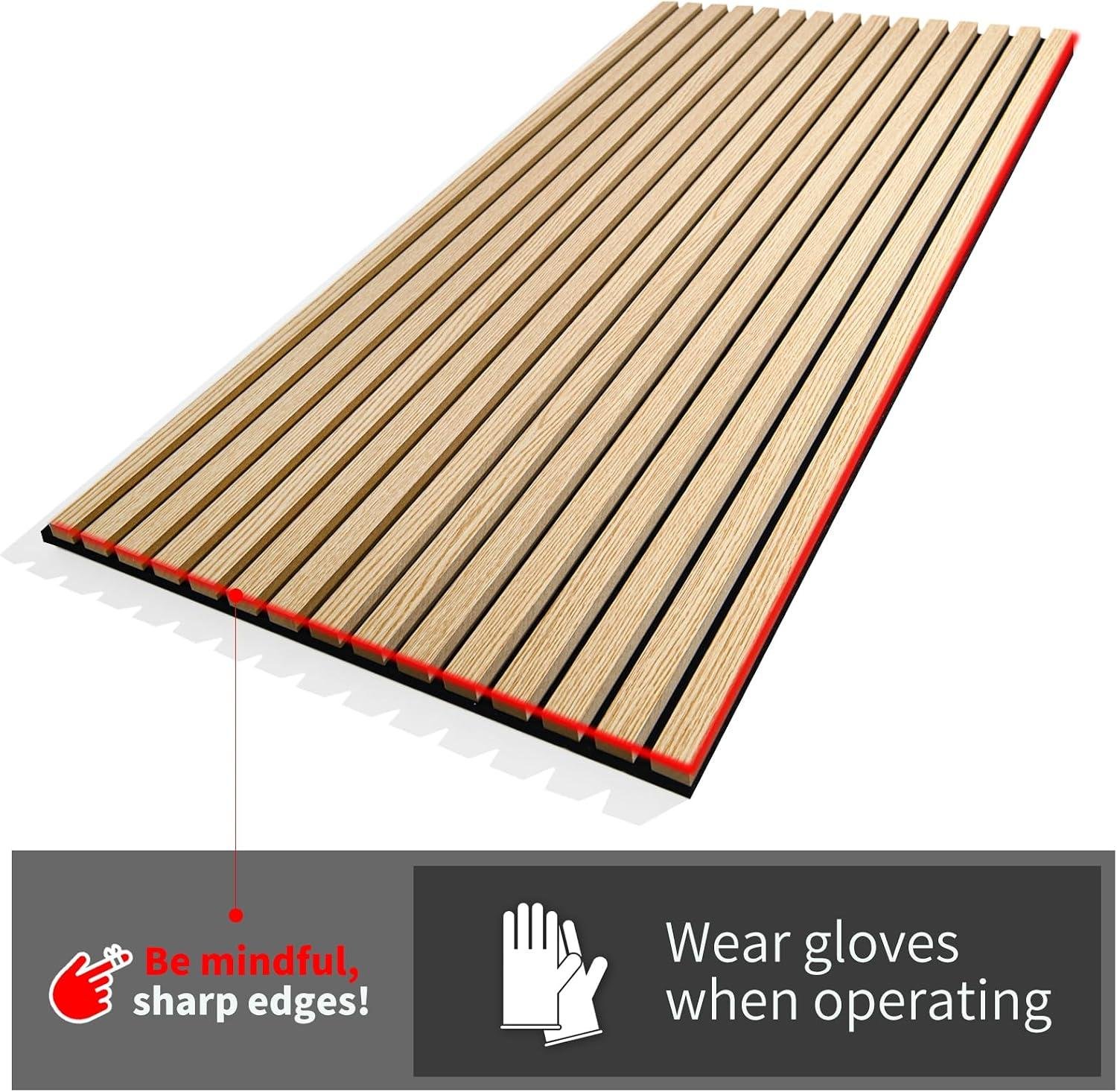
The Art3d 4-Pack Soundproof Wood Slat Wall Panels (Walnut) combines décor and acoustic control in a ready-to-install format: four 7.9″ x 94.5″ fluted panels covering about 21 sq. ft. Made from MDF slats over high-density polyester fiber, they’re marketed as low-TVOC and designed for noise-cancellation, with an emphasis on quick wall or ceiling mounting using basic tools. Customer feedback commonly centers on the warm walnut look, the noticeable reduction in echo, and the straightforward install, with the main limitation being that coverage adds up fast for larger rooms.
Best for: hobby woodworkers finishing a shop wall, content creators upgrading a recording nook, or cabinet/trim builders wanting a clean, modern accent feature.
Consider alternatives if: you need true studio-grade isolation, have a tight budget per square foot, or require solid-wood slats for heavy-duty durability.
Overall, it’s a solid mid-range option for improving acoustics while elevating a space-just plan layout and quantity carefully.
Want to see current pricing and customer photos? View on Amazon & Read More Reviews →