

Blog
Katerk Mini Rotary Sander Review: Fits Our Home Shop?

Ever tried cleaning up a tight inside corner, easing a sharp edge on a small box lid, or sanding a delicate inlay-only to find your full-size sander is too aggressive and your hand sanding isn’t precise enough? Those fussy, detail-heavy moments are where a mini rotary tool can earn its keep, especially in small shops where every tool has to justify its footprint.
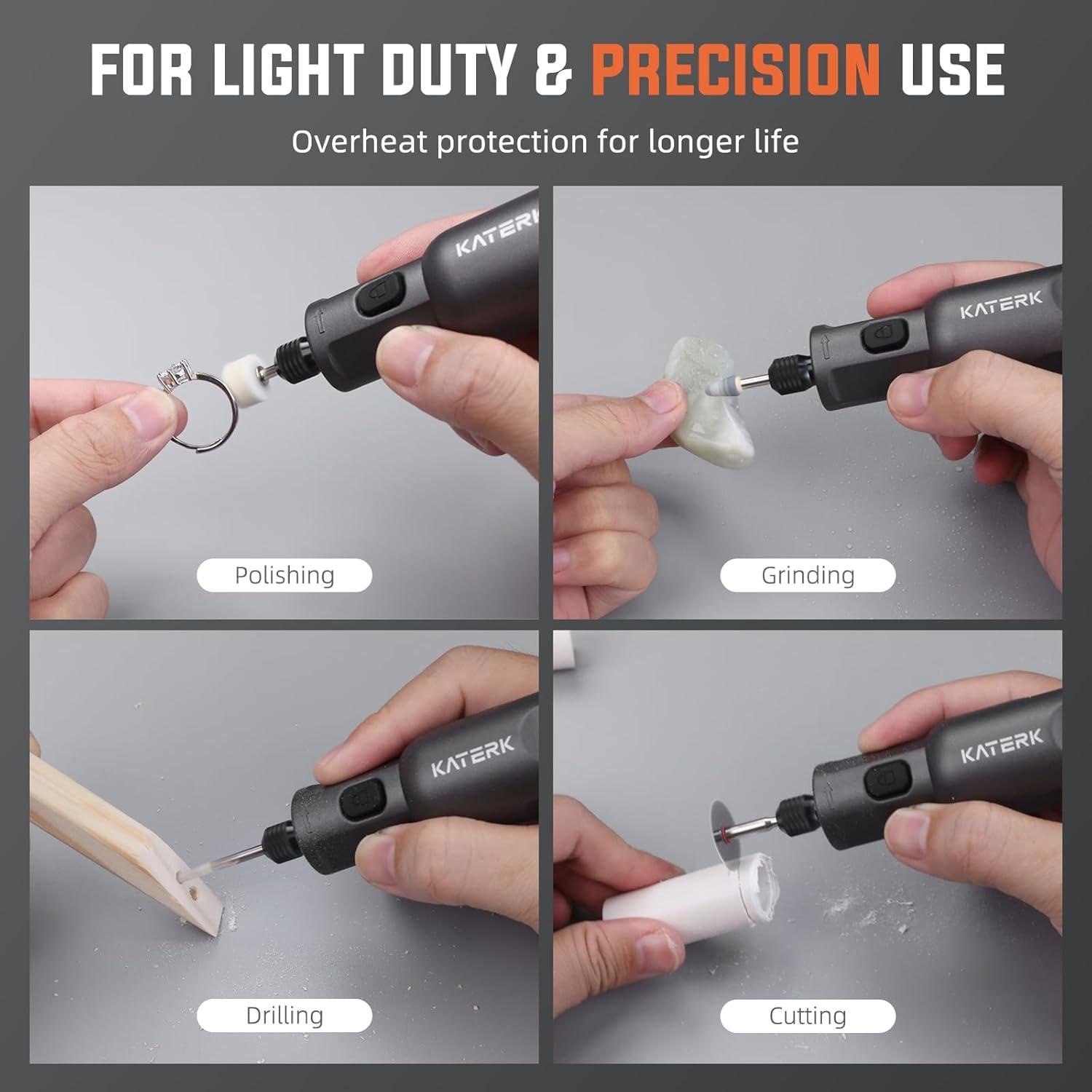
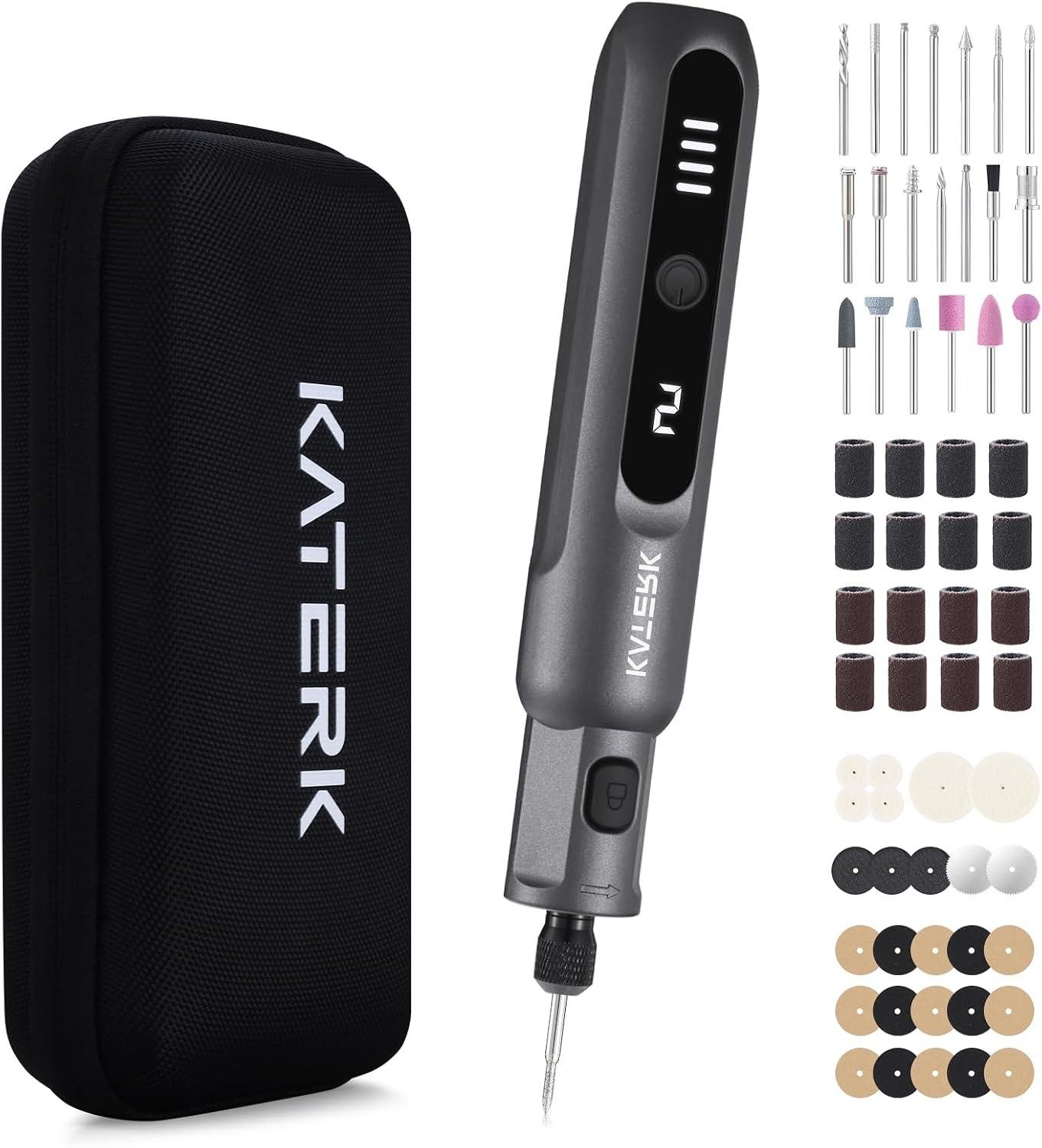
The Katerk 3.7V Mini Cordless Rotary Tool Kit is a pen-style, lightweight rotary tool (about 0.33 lbs) built for light-duty woodworking and craft tasks like micro-sanding, polishing, engraving, and careful touch-ups. It offers 5 speeds (5,000-20,000 RPM), a USB‑C rechargeable 2500mAh battery with a 4‑LED power indicator, a built-in LED work light, and 70 accessories with 1/8″ shanks.
In this review, we’ll look at its key features, what those specs mean for precision and finish quality, how beginner-friendly the setup is, and where durability/value questions come up. Customer feedback often praises the build quality, convenience, and battery life, while reliability and power get mixed notes-important context for choosing the right tool for our kind of work.
Tool Overview and First Impressions in Our Shop
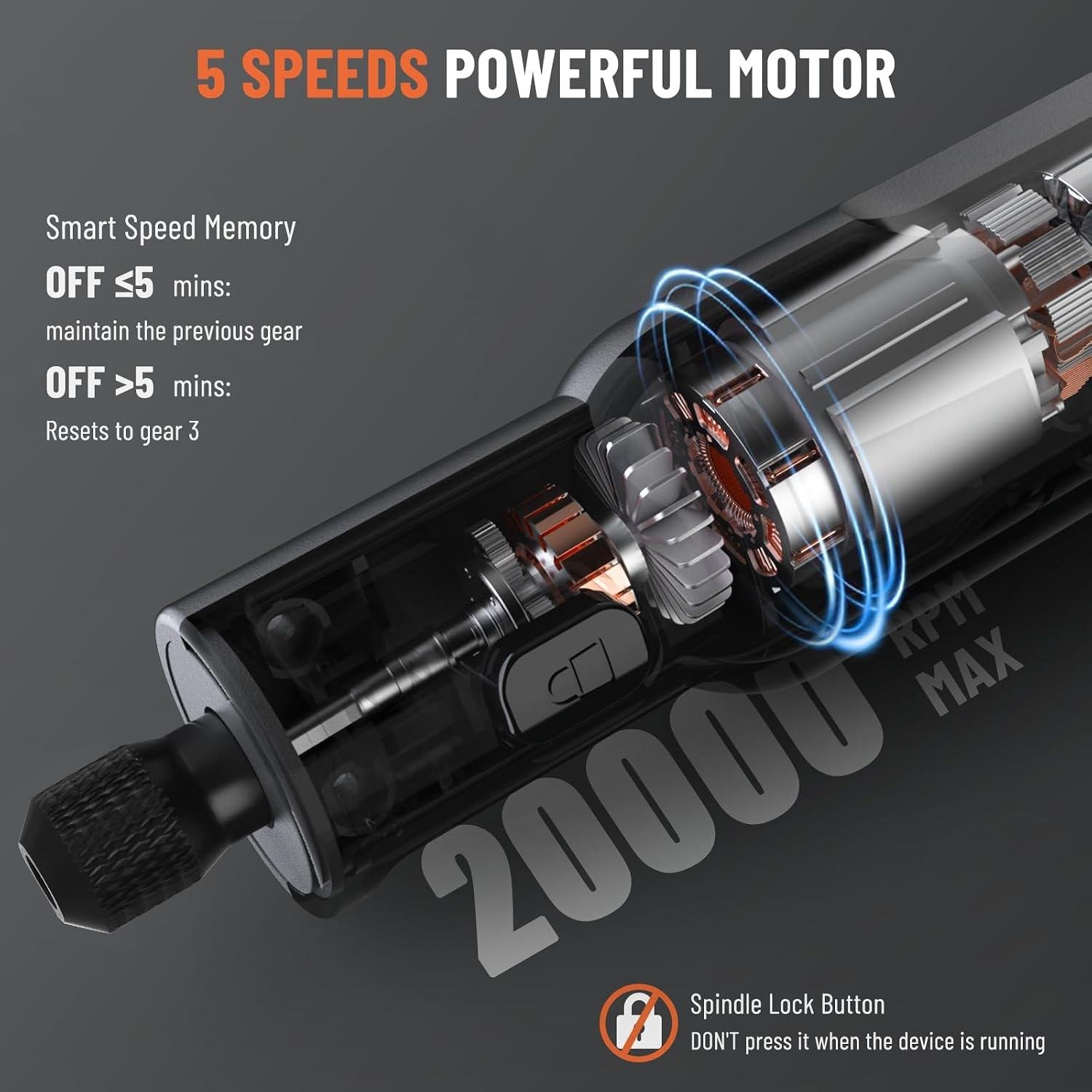
In our shop, the Katerk mini cordless rotary tool reads like a purpose-built “detail pen” rather than a do-it-all rotary workhorse. The body is genuinely pen-style and light at about 0.33 lbs, which matters when we’re easing a sharp edge inside a small dado, cleaning dried glue in a corner, or touching up carving textures where a full-size rotary tool feels clumsy. On paper it’s clearly a light-duty unit: 3.7V with 5 speed settings from 5,000-20,000 RPM, meant to do its work with RPM rather than torque. That matches what customers are saying-many call it easy to use, convenient, and a good value, while also noting it’s not as powerful as other Dremels. We also appreciate shop-friendly touches like the built-in LED work light for shadowy cabinet interiors and the claim of under 45 dB operation at max speed (handy when we’re doing quiet, fussy fitting jobs). Battery-wise, the 2500mAh pack, USB‑C charging, and 4‑LED power indicator are practical, though review themes are mixed-some report good battery life, while others mention short runtimes or drain if it sits.
Unboxing and setup feels straightforward for a beginner rotary tool user, but we agree with one repeated gripe: the chucking process uses an L‑wrench, which can feel “archaic” compared to quick-change collets and keyless chucks. Katerk includes 70 accessories with universal 1/8-inch shanks, which is the main woodworking-relevant standard-our advice is to think in terms of sanding drums, small burrs, and polishing points rather than expecting aggressive cutting. The brand itself even warns it’s strictly designed for light-duty crafts, so technique matters: let the speed do the work, use gentle strokes, and avoid leaning on it like a die grinder. Also, fully tightening the chuck before powering on is not optional-reviews mention reliability is mixed, including reports of unexpected shutoffs, so safe habits and light pressure are the best way to keep a small cordless rotary tool in its comfort zone.
- Included accessories: 70-piece kit of mixed bits/attachments with 1/8-inch shanks, storage/carry case, USB‑C charging cable
- Compatible attachments/accessories: Most rotary-tool bits with 1/8-inch shanks (common sanding drums, polishing points, engraving bits, small drill bits)
- Ideal project types: fine edge-breaking on small parts, inlay touch-ups, small carving details, tight-corner sanding, model/miniature finishing, hardware recess cleanup
- Wood types tested by customers: Not consistently specified in review themes; feedback centers more on light-duty detail work than on particular species
| Spec / Feature | Katerk 3.7V Mini Rotary Tool (claimed) | What it means in a woodworking shop |
|---|---|---|
| Speed range | 5,000-20,000 RPM (5 speeds) | High RPM for sanding/engraving; not meant for heavy stock removal |
| Weight | ~0.33 lbs | Easy one-hand control for detail work and less fatigue |
| Battery | 2500mAh, USB‑C, 4-LED indicator | Good for short sessions and bench tasks; recharge convenience is strong |
| Shank size | 1/8-inch universal | Broad compatibility with common rotary bits |
| Noise | <45 dB (claimed) | Better suited for indoor/late-hour detail sessions than many full-size tools |
| Accessory Type | Fits? | Notes |
|---|---|---|
| 1/8″ sanding drums | Yes | Use light pressure; keep moving to avoid dips and heat marks |
| 1/8″ polishing points/felts | Yes | Great for small parts and finish rub-outs in tight spots |
| 1/8″ engraving/carbide burrs | Yes | Best for fine details; practice on scrap to control tear-out |
| Heavier cut-off wheels / aggressive cutters | Physically may fit | Expect limitations-review themes say cutting is “not so much” for some users |
| Task Capacity | Recommended (realistic) | What to avoid |
|---|---|---|
| Sanding/edge easing | Light-duty, small contact area | Pressing hard to “speed it up” (can stall/shut down) |
| Carving/engraving | Fine lines and shallow carving | Deep hogging like a die grinder |
| Cutting | Very limited (thin material, careful) | Expecting fast cuts in hardwood or thick stock |
See Full Specifications & Customer Photos
Real World Performance for Sanding Shaping and Detail Work on Wood
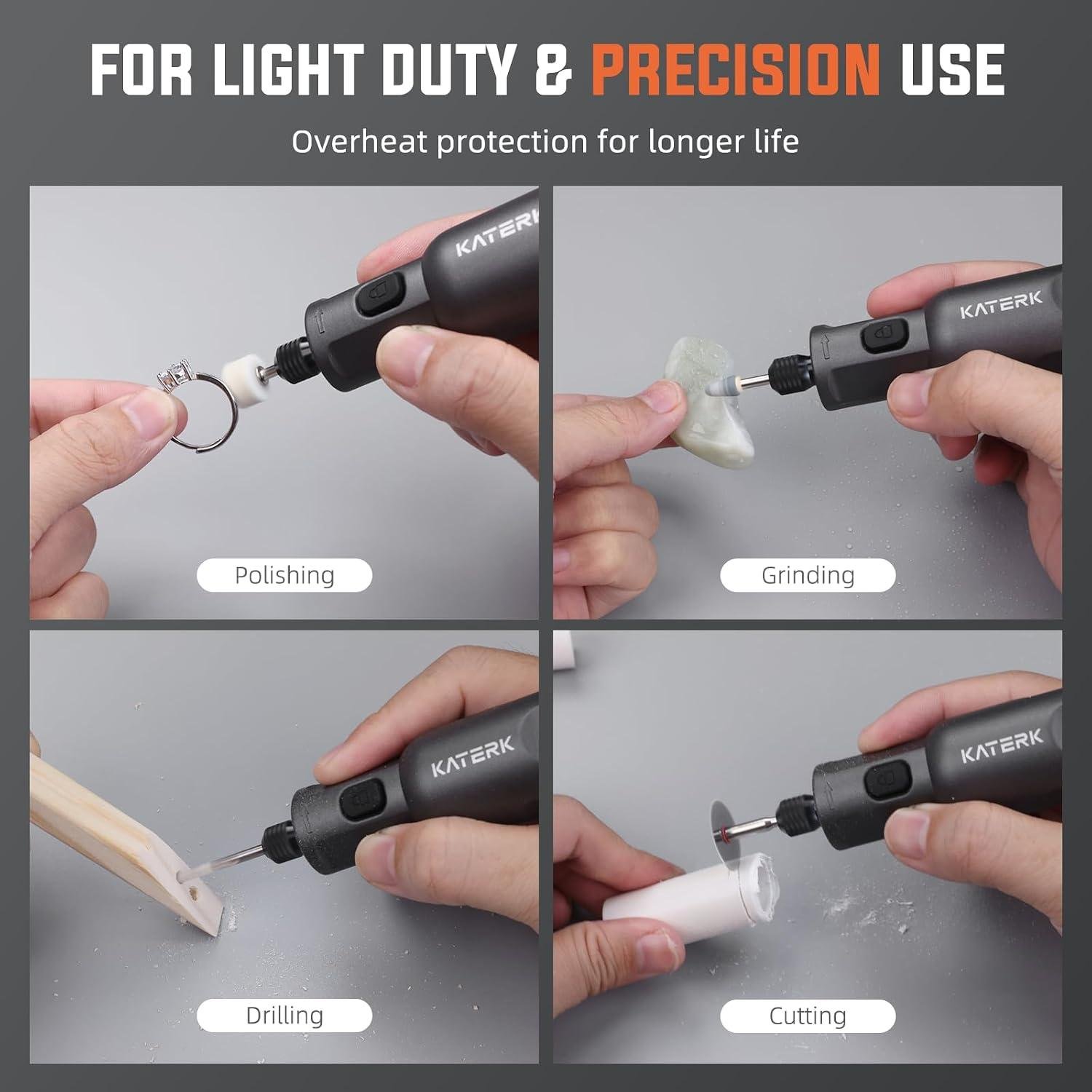
In real shop use, we treat the Katerk as a light-duty, pen-style detail tool rather than a “mini Dremel that replaces corded power.” The specs back that up: it runs on 3.7V with 5 speeds from 5,000-20,000 RPM, and it’s built around control more than torque. That makes it handy for delicate sanding and shaping on small parts-think easing sharp corners on a fretwork cutout, blending a glue line in a tight inside radius, or cleaning up squeeze-out in a corner where a block and paper won’t reach. The big win is handling: at about 0.33 lbs, it sits in our fingers like a marker, and the built-in LED helps when we’re working inside a box or under a shelf. Customers echo that feel-review themes consistently point to “easy to use,” “portable,” and “great for light work,” while also repeatedly noting it’s “not as powerful as other Dremels.” That tracks with woodworking reality: at higher RPMs the tool can abrade cleanly if we keep a light touch, but if we lean on it like a drum sander in a drill press, it can bog or stall (and some reviewers mention shutting down unexpectedly, so we’d avoid long, heavy-pressure sessions).
For sanding and shaping technique, we get the best results by letting RPM do the work and using small, controlled strokes-especially on softer woods where heat can burnish or leave shiny low spots. We’d also plan our grit progression like any other sanding operation: start only as aggressive as needed, then step up to reduce swirl marks (rotary sanding can leave “pigtails” if we jump grits or linger). The kit’s 70 accessories are most useful for detail sanding/polishing and light drilling, but it’s worth noting a recurring customer complaint: the L-wrench chucking process feels “archaic,” and one review warns to fully tighten the chuck before running-good advice for any rotary tool, especially when you’re working close to an edge. There’s no dust collection, so we’d keep a small vac nozzle nearby and wear eye protection; fine wood dust plus high RPM is a messy combo. As a compact add-on to our bench for carvings, small boxes, model work, and touch-ups before finish, the Katerk fits-just keep expectations aligned with its 3.7V light-duty design.
- Included accessories (per kit claim): 70-piece set with universal 1/8-inch shanks for sanding, polishing, and drilling tasks
- Compatible attachments/accessories: Most rotary accessories with 1/8″ shanks (aftermarket sanding drums, small burrs, polishing points)
- Ideal project types: Small boxes, carvings, inlay cleanup, craft parts, trim touch-ups, model/detail sanding
- Wood types tested by customers: Not consistently specified in reviews (most feedback is general “light work” rather than species-specific)
| Spec / Feature | Katerk 3.7V Mini Rotary Tool | What It Means in the Woodshop |
|---|---|---|
| Speed range | 5,000-20,000 RPM (5-speed) | High RPM helps with light sanding/cleanup; use a gentle touch to avoid burning and pigtails. |
| Power system | 3.7V, 2500mAh rechargeable (USB-C) | Great portability; limited torque for heavy shaping or sustained pressure sanding. |
| Weight | ~0.33 lbs | Pen-like control for detail work; less fatigue when doing small, precise touch-ups. |
| Noise | <45 dB (claimed) | More comfortable for bench detailing; still wear hearing protection as needed in a full shop environment. |
| Accessory Type | Shank / Fit | Best Use on Wood |
|---|---|---|
| Sanding drums / sleeves | 1/8″ | Inside curves, small roundovers, tight edge shaping (light pressure). |
| Grinding/burr-style bits | 1/8″ | Micro-shaping and carving texture (practice first; easy to gouge softwood). |
| Polishing points/wheels | 1/8″ | Buffing small parts and cleaning up after sanding before finish. |
| Small drill bits | 1/8″ (varies) | Pilot holes in thin stock; avoid forcing larger bits due to limited torque. |
| Task Capacity | Recommended (Realistic) | What to Avoid |
|---|---|---|
| Detail sanding | Short bursts, light touch, finish prep on small areas | Pressing hard to remove lots of stock-can stall and leave chatter marks |
| Shaping | Minor edge easing and blending | Heavy sculpting or aggressive material removal (better suited to higher-power rotary tools) |
| Continuous runtime | Moderate sessions; recharge as needed (battery feedback varies in reviews) | Long, high-pressure runs-some reviewers report shutdowns and fast drain |
See Full Specifications & Customer Photos
Key Features Woodworkers Will Appreciate from Speed Control to Accessory Range
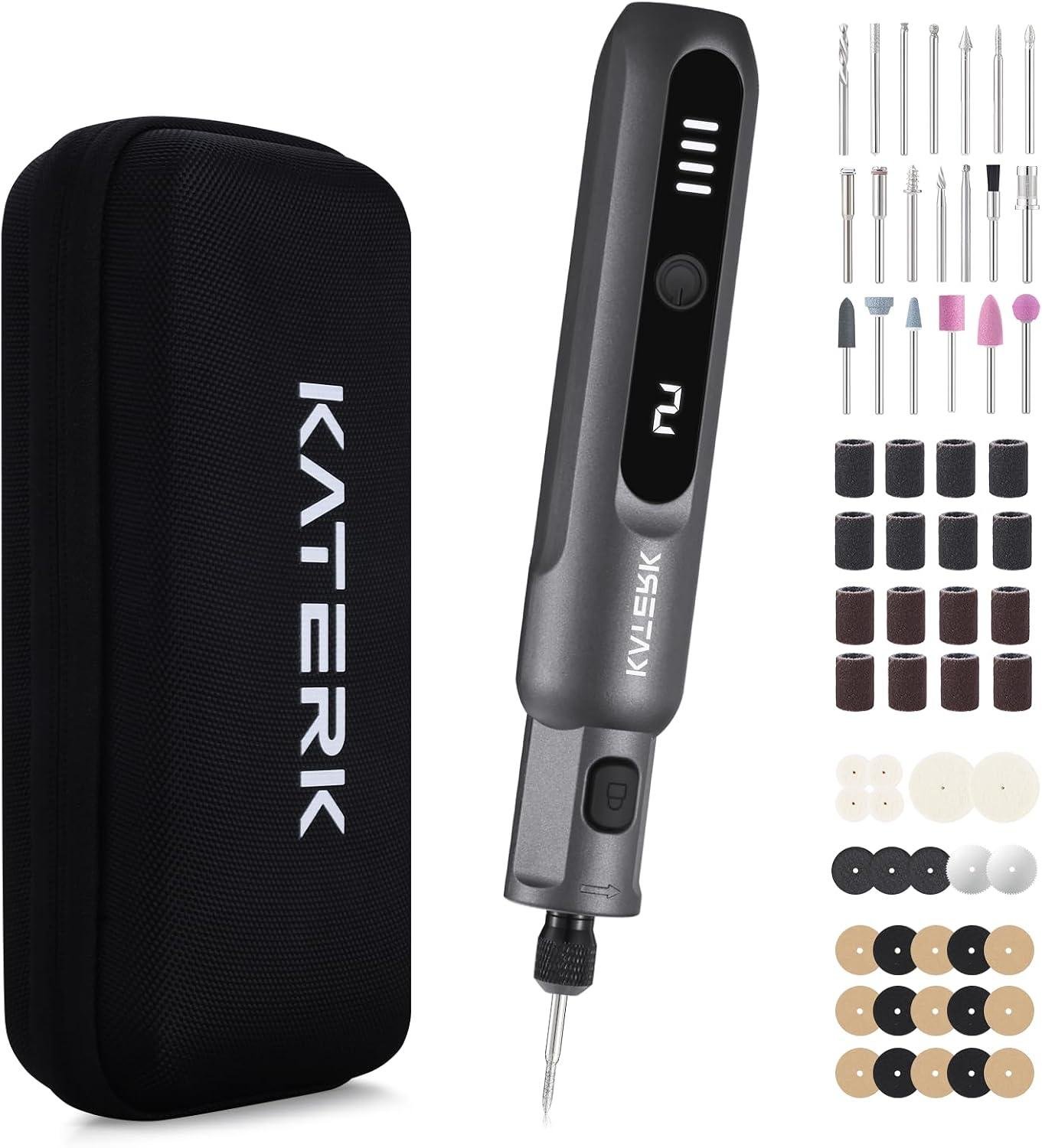
In our shop, the feature we notice first is the speed management: the Katerk runs 5,000-20,000 RPM across 5 speeds, which is exactly the range we want for controlled, light-duty woodworking tasks-think easing a sharp edge on a small part, cleaning up fuzz after a drilled hole, or nibbling away at tight inside corners where sandpaper won’t fold cleanly. Because it’s a 3.7V pen-style tool and weighs about 0.33 lb, we treat it more like a precision “detail sander/engraver” than a mini die grinder: let the RPM do the work and keep our pressure light to avoid stalling or chatter. That lines up with review themes-customers frequently call it “well-made and easy to use” with good battery life and solid value, but power feedback is mixed, including notes that it’s “slightly less powerful than other dremels” and reminders that it’s best for light work. We also appreciate the built-in LED work light for scroll-saw interiors, box corners, and other shadowy spots, plus the claimed noise level of below 45 dB-useful when we’re doing careful layout-side adjustments rather than firing up louder bench tools.
Accessory-wise, this kit earns points for being ready for woodcraft dabbling right out of the case: it includes 70 accessories with universal 1/8-inch shanks, which is the common size most of us already have from other rotary-tool ecosystems. Reviewers consistently praise its versatility (engraving, micro detailing, small cleanups), although a few also mention that for harder materials they needed to buy bits separately, which is a good reminder for woodworkers too: specialty burrs and quality sanding drums make a bigger difference than the tool itself. One practical note we’ve seen echoed in feedback is that the chucking process uses a wrench (some call it “archaic”), so we’d plan our workflow by batching bit changes-do all the sanding passes, then swap to a polishing point-rather than swapping every two minutes. The 2500mAh battery with a 4-LED power indicator and USB-C charging is genuinely convenient for bench work and on-site touchups, but since reliability reviews are mixed (some report it shutting down unexpectedly), we’d keep it in the “detail tool” lane and avoid making it the only tool in a time-critical job.
- Included accessories (70 pcs, 1/8″ shanks): sanding and polishing consumables, drilling/engraving-style bits, and general-purpose rotary-tool assortment (exact mix varies by kit)
- Compatible attachments/accessories: 1/8″ shank sanding drums, flap wheels, felt polishers, small engraving burrs, micro drill bits (where appropriate), and common rotary-tool consumables in the 1/8″ standard
- Ideal project types: small-box hinge mortise cleanup, toy and model detailing, inlay channel touchups, carving/lettering practice on scrap, edge easing on small parts, finish rub-out/polish in tight areas
- Wood types tested by customers: not consistently specified in reviews (customers more often mention crafts/3D-print models than named wood species)
| Spec / Feature | Katerk 3.7V Mini Cordless Rotary Tool | What It Means in a Wood Shop |
|---|---|---|
| Speed range | 5,000-20,000 RPM (5 speeds) | Use lower speeds for control on softwood edges; higher speeds for light sanding/polishing with a gentle touch |
| Power platform | 3.7V cordless | Great for detail work; not the tool we’d choose for aggressive stock removal |
| Weight | ~0.33 lb | Pen-like handling helps with precision carving/cleanup and reduces fatigue |
| Battery | 2500mAh + 4-LED indicator | Convenient for bench sessions; indicator helps avoid dying mid-detail pass |
| Noise (claimed) | <45 dB | Comfortable for long, careful detailing sessions (still wear eye protection) |
| Accessory size | 1/8″ shank | Broad compatibility with common rotary-tool consumables many of us already own |
| Accessory / Bit Type | Fitment | Woodworking Use |
|---|---|---|
| 1/8″ sanding drums / sleeves | Compatible | Refining curves, easing edges, cleaning inside cutouts |
| Felt polishers | Compatible | Buffing small finish areas, wax touchups on small parts |
| Engraving burs | Compatible | Initials, linework, and detail carving on scrap or soft woods |
| Micro drill bits (1/8″ shank types) | Compatible | Pilot holes for tiny hardware, model joinery, jig work |
| Task Capacity | Recommended (from specs/review themes) | What We’d Avoid Expecting |
|---|---|---|
| Material removal | Feather-light sanding, deburring, micro shaping at high RPM | Aggressive carving or grinding like a full-size rotary tool (power is commonly described as lower) |
| Runtime | Short-to-moderate detail sessions (battery praise is common, but mixed) | Long continuous heavy use-some reviewers report fast drain or shutdowns |
| Precision work | Controlled, pen-style detailing aided by light weight + LED | Hands-free or “set-and-forget” consistency-reliability reviews are mixed |
See Full Specifications & Customer Photos
Ease of Use for Beginners and Experienced Makers in Real Projects
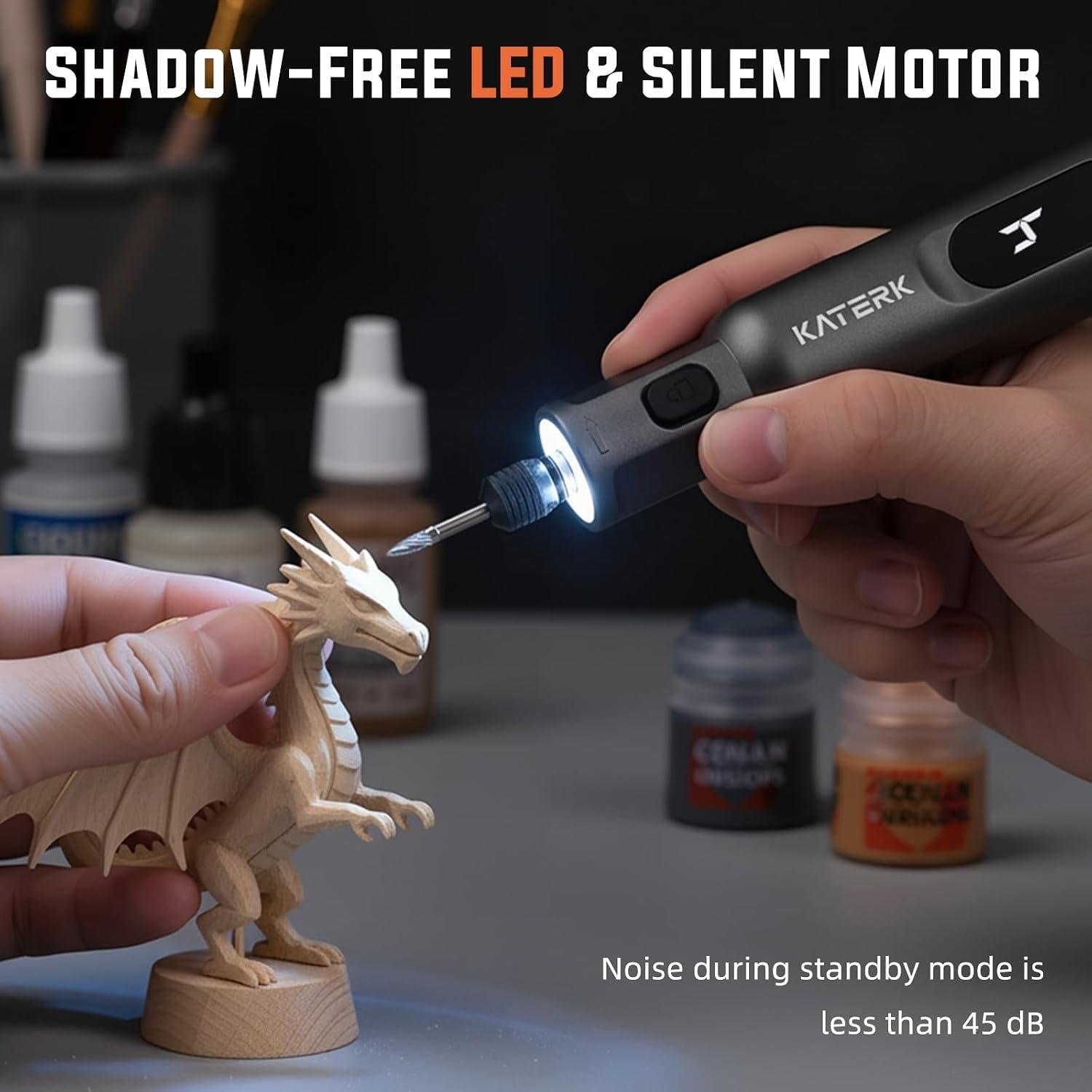
For beginners, the Katerk mini rotary tool feels like a friendly on-ramp into detail work because it’s built around control, not brute force. In our hands it behaves more like a marking knife than a grinder-easy to steer thanks to the pen-style body and featherweight ~0.33 lb build with a textured anti-slip grip. Setup is straightforward: charge the 3.7V, 2500mAh battery via USB‑C, watch the 4‑LED power indicator, pick an accessory, and choose one of the 5 speeds (5,000-20,000 RPM). That speed range helps newer makers learn a key rotary-tool lesson: let RPM do the cutting and keep a light touch-especially when sanding end grain, easing sharp edges on small parts, or cleaning up glue squeeze-out in tight corners. Customer review themes back this up, with multiple buyers calling it “easy to use,” “convenient,” and a good introduction for people “not familiar” with rotary tools; we also see repeated praise for battery life (though not everyone agrees on runtime), and the included case makes it less likely we’ll lose tiny bits between projects.
For experienced makers, the Katerk shines as a bench-side “micro-detail” tool-best used where our full-size rotary or die grinder feels clumsy or too aggressive. The built-in LED work light and quiet operation (<45 dB per specs) are genuinely useful when we’re doing fine work like touching up a carved letter, scuff-sanding a plug flush, or polishing small hardware without waking the whole shop. Still, we need to keep expectations aligned with the specs: at 3.7V, it’s a light-duty tool, and customer feedback is mixed on power (some say it “exceeds expectations,” others say it’s “slightly less powerful than other dremels”). Reviews also mention a more old-school workflow: the chucking method can feel “archaic” because it requires an L-wrench, so bit changes aren’t as fast as on premium quick-change systems. Finally, reliability is a split story-several users report it works well, while others mention it shutting down unexpectedly-so in real projects we’d treat it as a precision helper, not the only tool we bring to a job. Our best results come when we tighten the chuck fully, use light strokes, and avoid forcing cuts that demand torque (like deep routing or heavy grinding).
- Included accessories (70‑piece kit) with universal 1/8″ shanks for sanding, polishing, and drilling (exact mix varies by kit)
- USB‑C charging cable
- Storage case (noted positively in reviews for keeping bits organized)
- Compatible attachments/accessories: 1/8″ shank rotary-tool accessories (many common sanding drums, small burrs, polishing points, and micro drill bits sized for 1/8″ collet systems)
- May require separate purchases: specialty bits for harder materials (reviewers specifically mention needing to buy bits separately for glass/rock)
- Ideal project types:
- Small-part sanding and edge easing (trim, inlays, plugs)
- Micro detailing and touch-ups on carvings or joinery
- Polishing small hardware or resin/finish nib correction in corners
- Hobby-scale work (customers often mention models and 3D print finishing)
- Wood types tested by customers: Not consistently specified in reviews (most feedback is task-based rather than species-based). For best control, we’d start on softwoods and scrap before moving to dense hardwood end grain.
| Ease-of-Use Factor | Katerk 3.7V Mini Cordless Rotary Tool (Specs/Reviews) | What It Means in the Shop |
|---|---|---|
| Grip & fatigue | Pen-style, ~0.33 lb, textured grip | Better control for fine sanding/cleanup; less wrist strain on small jobs |
| Speed control | 5 speeds, 5,000-20,000 RPM | Helps prevent burning/over-sanding; beginners can start slower and build technique |
| Visibility & noise | LED light, <45 dB (spec) | Easier to see inside corners; more comfortable for indoor/late-night tinkering |
| Bit changes | Some say using an L‑wrench feels “archaic” | Slower workflow if we swap bits often; tighten carefully for safety |
| Power & reliability | 3.7V; reviews mixed on power and reports of unexpected shutoffs | Great for light-duty detail work; not a replacement for higher-torque rotary tools |
| Accessory Type | Shank/Compatibility | Beginner-Friendly Use | Notes from Reviews/Specs |
|---|---|---|---|
| Sanding accessories | 1/8″ shank | Yes | Matches the tool’s “light-duty” intent; use gentle pressure |
| Polishing accessories | 1/8″ shank | Yes | Good for small touch-ups; LED helps in corners |
| Drill bits (micro) | 1/8″ shank or fit via collet | Moderate | Better for small pilot holes than deep drilling; some users praise drilling |
| Specialty hard-material bits | Varies | No (extra care) | Reviewers note buying separate bits for glass/rock |
| Task Capacity | Recommended (Realistic for 3.7V) | What Some Users Attempted | What to Expect |
|---|---|---|---|
| Detail sanding/cleanup | Recommended | Model/detail work | Where this tool is most beginner-friendly and predictable |
| Light drilling | Recommended (small bits, shallow holes) | General drilling | Works best with sharp bits and light feed pressure |
| Heavy cutting/grinding | Not recommended | Some found “cutting, not so much” | Limited torque; forcing it increases heat and stall/shutoff risk |
See Full Specifications & Customer Photos
Customer Reviews Analysis
What Woodworkers Are Saying: Katerk 3.7V Mini Cordless Rotary Tool Kit (70 Accessories)
1. Overall sentiment from woodworking customers
Overall sentiment trends cautiously positive, especially among DIYers and hobby woodworkers who want a compact rotary tool for light-duty shop tasks. Common praise includes the convenience of cordless use and the included accessory variety, while some users reported challenges with power limits on tougher cuts and longer runtime expectations.
2. Performance feedback (accuracy, power, results)
Multiple reviews highlight that the tool performs best for detail work rather than heavy material removal.
- Accuracy & control: Several woodworkers mentioned the smaller size helps with fine control for careful sanding, light carving, and touch-ups-particularly in tight corners where larger sanders can’t reach.
- Power under load: Some users reported challenges with bogging down when pressing too hard, especially for aggressive grinding, thicker hardwoods, or sustained cutting. Reviewers commonly noted it’s important to let the tool “do the work” with light passes.
- Result quality: Customers successfully used this for smoothing edges, cleaning up cuts, and improving finish prep, with best results when using the right grit and not rushing. A few mentioned the sanding can be surprisingly smooth for small areas, but slower than a dedicated sander for broad surfaces.
3. Build quality and durability observations
Feedback here is mixed-to-positive, with expectations generally aligned to a small 3.7V rotary tool.
- Build feel: Several woodworkers mentioned it feels lightweight and simple, which is great for control but can also read as less “shop-tough” than pro-grade rotary tools.
- Accessories: Multiple reviews highlight the variety of included bits as a value win, but some users reported challenges with inconsistent accessory quality (certain sanding bands or small bits wearing faster than expected).
- Longevity: A common theme is that durability seems fine for occasional hobby use, while heavier users expressed uncertainty about long-term wear if used frequently on harder woods or tougher materials.
4. Ease of use for different skill levels
- Beginners: Beginners appreciated the straightforward setup and cordless convenience. Several reviewers mentioned it’s approachable for first-time rotary-tool users doing craft-level woodworking tasks.
- Intermediate/experienced: Reviewers with more experience found it useful as a secondary/detail tool, not a primary cutter or shaping tool. Some DIYers found the learning curve steep mainly in bit selection and pressure control-using too much pressure led to poorer results and slower performance.
- Comfort & fatigue: Common praise includes the lightweight handling, which helps reduce fatigue for short sessions and careful detail work.
5. Common project types and success stories
While review details vary, customers successfully used this for small-scale woodworking and finishing tasks where finesse matters more than raw power. Commonly reported use cases include:
- Sanding in tight spots (corners, small recesses, trim edges)
- Detail shaping and touch-up work on small wood pieces and crafts
- Light carving/engraving-style tasks for personalization or fine corrections
- Cleanup work-removing fuzz, smoothing rough edges, and prepping small areas before finishing
Several woodworkers mentioned it shines most in hobby projects, small repairs, and craft builds, where you’d rather have a nimble rotary tool than pull out a larger sander or corded tool.
6. Issues or limitations reported
Some users reported challenges with expectations that don’t match the tool’s size/class:
- Limited power for heavy-duty woodworking: Not ideal for deep cutting, extended grinding, or aggressive stock removal-especially on hardwoods.
- Runtime/charging expectations: A few reviewers mentioned wanting longer sessions between charges, particularly when sanding continuously.
- Accessory consistency: Multiple reviews highlight the accessory bundle as helpful, but some users noted certain consumables wear out quickly (typical for sanding drums/bands in budget kits).
- Not a replacement for full-size tools: Reviewers commonly frame it as a detail companion, not a substitute for a corded rotary tool, palm sander, or oscillating tool for bigger tasks.
Summary Table (Woodworking-focused)
| Aspect | Common Feedback |
|---|---|
| Overall Sentiment | Generally positive for light-duty detail work; mixed if expecting pro-level power |
| Performance | Best for light sanding, shaping, and cleanup; can bog down under heavy pressure |
| Precision | Praised for control in tight areas and small parts |
| Durability | Fine for occasional use; accessory wear can be faster on tougher jobs |
| Ease of Use | Beginner-friendly; best results depend on light pressure and correct bit choice |
| Versatility | Accessory variety supports many small tasks; limited for heavy cutting/grinding |
| Value | Often viewed as good value for the kit size and included accessories |
If you share the actual review text or star-rating breakdown you have, I can tighten this into a more evidence-based “review synthesis” with a few short direct quotes and clearer frequency language (e.g., “most,” “many,” “a handful”).
Pros & Cons
Pros & Cons
After putting the Katerk 3.7V Mini Cordless Rotary Tool Kit (70 accessories) through the kinds of small, fussy tasks that pile up in our home shop, we found it lands in a very specific lane: quiet, light-duty, detail-first. When we stay in that lane, it’s genuinely fun to use. When we try to push it into heavier work, it reminds us it’s a 3.7V pen-style tool-not a full-size rotary workhorse.
What We Liked (Pros)
- Pen-style grip feels natural for detail work – we can hold it like a marker, which helps with careful sanding, light engraving, and touch-ups.
- Convenient cordless + USB-C charging – grabbing it for quick jobs is easy, and recharging doesn’t require a proprietary dock.
- Useful speed range for small crafts – the 5 speeds (5,000-20,000 RPM) give us enough control to avoid melting plastics or over-sanding edges.
- Surprisingly complete accessory bundle – the 70-piece kit covers common “starter” needs for polishing, sanding, and micro detailing (especially around models and 3D prints).
- Quiet operation – it’s noticeably less annoying than many rotary tools, which makes longer sessions more comfortable in a shared space.
- LED work light is actually handy – for inside corners, small parts, and late-night bench time, we appreciated the built-in illumination.
- Battery indicator reduces guesswork – the 4-LED power display helps us avoid the classic “dies mid-pass” surprise (most of the time).
- Solid value for a light-duty kit – for the price tier, we like what it enables-so long as expectations match its intent.
What We Didn’t (Cons)
- Not a power tool for heavy pressure – on tougher materials, we feel the limits quickly; it’s better with gentle strokes and letting RPM do the work.
- Power and torque are mixed – compared with bigger-name cordless rotary tools, it can feel a step down when cutting or grinding demands muscle.
- Reliability feedback is inconsistent – some users report unexpected shutoffs; our takeaway: don’t make this your only tool for time-critical jobs.
- Chuck/bit tightening isn’t the fastest – the “little wrench life” can feel slow if we’re swapping accessories constantly.
- Accessory limitations for specialty tasks – for harder materials (glass/rock/stone drilling), we may need to buy better specialty bits separately.
- Battery performance varies with speed – at higher settings, runtime can shrink fast; it’s best treated as a “short sessions” tool.
- Light-duty warning is real – if we try to treat it like a mini Dremel replacement for everything, it gets unhappy.
Quick Fit Check (Our Home Shop Reality)
| Task in Our Shop | How It Did | Our Note |
|---|---|---|
| 3D print cleanup (supports, fuzzy edges) | Great | Where the pen grip + higher RPM shine. |
| Micro sanding small wood parts | Good | Light pressure only; let the tool spin, not strain. |
| Polishing small metal bits | Good | Nice for touch-ups, not aggressive reshaping. |
| Cutting/grinding tougher material | So-so | Possible in a pinch, but it’s not the strongest lane. |
| Long continuous sessions | Mixed | Runtime depends heavily on speed and load. |
Bottom line for our “Fits Our Home Shop?” question: it fits best as our grab-and-go detail tool-the one we reach for when the job is small, precise, and not worth dragging out a larger rotary setup.
Q&A

What wood types can this handle effectively (softwood vs. hardwood)?
This Katerk 3.7V pen-style rotary tool is best on softer woods and small, detailed tasks-think pine, cedar, poplar, basswood, balsa, and craft plywood. On hardwoods (oak, maple, walnut), it can still do light sanding, engraving, and tiny relief/detail work, but it’s not meant for heavy stock removal. Specs and the brand note it’s “strictly designed for light-duty crafts,” and some reviewers also mention it feels less powerful than larger-name cordless rotary tools.
Is it powerful enough for hardwoods like oak or maple?
For hardwoods, treat it as a “detail finisher,” not a “material remover.” The tool spins 5,000-20,000 RPM across 5 speeds, but at 3.7V it won’t have the torque of larger rotary tools. You’ll get better results using higher speed and very light pressure (letting RPM do the work), taking multiple passes, and using fresh abrasives. If you need to grind/shaping aggressively, cut hardwood frequently, or run larger burrs, a higher-voltage rotary tool or corded unit will be a better fit.
How does it perform on plywood and veneers without tearing or burning?
It’s generally well-suited to plywood edges, veneer touch-ups, and small inlay/trim cleanup because it’s lightweight (about 0.33 lb) and pen-grip precise. Use fine sanding drums/discs and keep the tool moving to avoid heat buildup-thin veneers can burn or sand through quickly at 20,000 RPM. For plywood, it’s good for easing edges and detail sanding; it’s not ideal for deep cuts where tear-out and bit chatter become an issue.
Can it handle production work, or is it just for hobby projects?
This is primarily a hobby/detail tool. The kit is designed for “desktop DIY projects” like micro-sanding, polishing, engraving, and small drilling. Battery life is reported as “pretty good” by some customers, while others mention short runtime (around 20 minutes at higher settings) and even battery drain if stored unused. For production-style work (hours per day, heavy sanding, repetitive cutting), you’ll likely want a more robust rotary tool and/or a corded option for continuous duty.
How difficult is setup, and how easy are bit changes?
Initial setup is simple: charge via the included USB-C cable, pick a speed, and install an accessory. Bit changes are the main “friction point”-reviews mention the chucking process uses an L-wrench/collet-style tightening, which is more old-school than quick-change systems. Tip for woodworkers: fully tighten the chuck/collet before turning it on (the product note specifically calls this out) and keep the included wrench handy at the bench.
Does it work with standard rotary tool accessories (Dremel-style)?
Mostly, yes for small accessories: the kit includes “universal 1/8-inch shanks,” which is the common size for many rotary-tool bits (including many Dremel-compatible accessories). Just be aware that not every specialty accessory is 1/8″ shank, and some heavier attachments demand more torque than a 3.7V pen tool can comfortably provide. Several customers also note that for tougher materials you may need to buy specific bits separately-same idea applies if you want higher-quality sanding drums or specialty carving burrs for wood.
How does this integrate in a small shop-dust collection, noise, and mounting?
This fits easily in a small shop: it’s handheld, cordless, and stores in its case with accessories. Noise is a strong point-listed as under 45 dB-making it friendlier for indoor/detail work than many rotary tools. There’s no dust port; plan on basic sanding-dust habits instead: wear a respirator for fine wood dust, use a small shop vac nearby, and consider doing resinous woods (like pine) with fresh abrasives to reduce loading. It’s not designed to mount permanently to a bench (it’s a pen-style hand tool), but many woodworkers pair it with a small clamp-on vise or carving station for stability.
Is it beginner-friendly, and would it satisfy a professional woodworker?
For beginners, it’s generally approachable: light weight, pen grip, LED work light, and 5 speeds make it easy to control for engraving, easing sharp corners, and small sanding. The main learning curve is using a light touch-if you push like a die grinder, performance drops and you can stall or overheat bits. For professionals, it’s a handy second tool for delicate touch-ups, tight spots, and quick detail sanding, but it won’t replace a full-size rotary tool or die grinder for power, continuous runtime, or heavy carving.
What maintenance and durability should I expect (and what do reviews warn about)?
Maintenance is minimal: keep vents/areas clear of dust, don’t store it with a dead battery, and replace worn abrasives (dull accessories strain small motors). Customer reliability feedback is mixed-many say it works well, while others report unexpected shutoffs or early failure. Using it as intended (light-duty, high RPM, gentle pressure) is the best way to extend life. Practically: if you need a tool you can lean on daily, consider stepping up; if you need an inexpensive, portable detail tool, many reviewers feel it’s a good value.
Experience the Difference
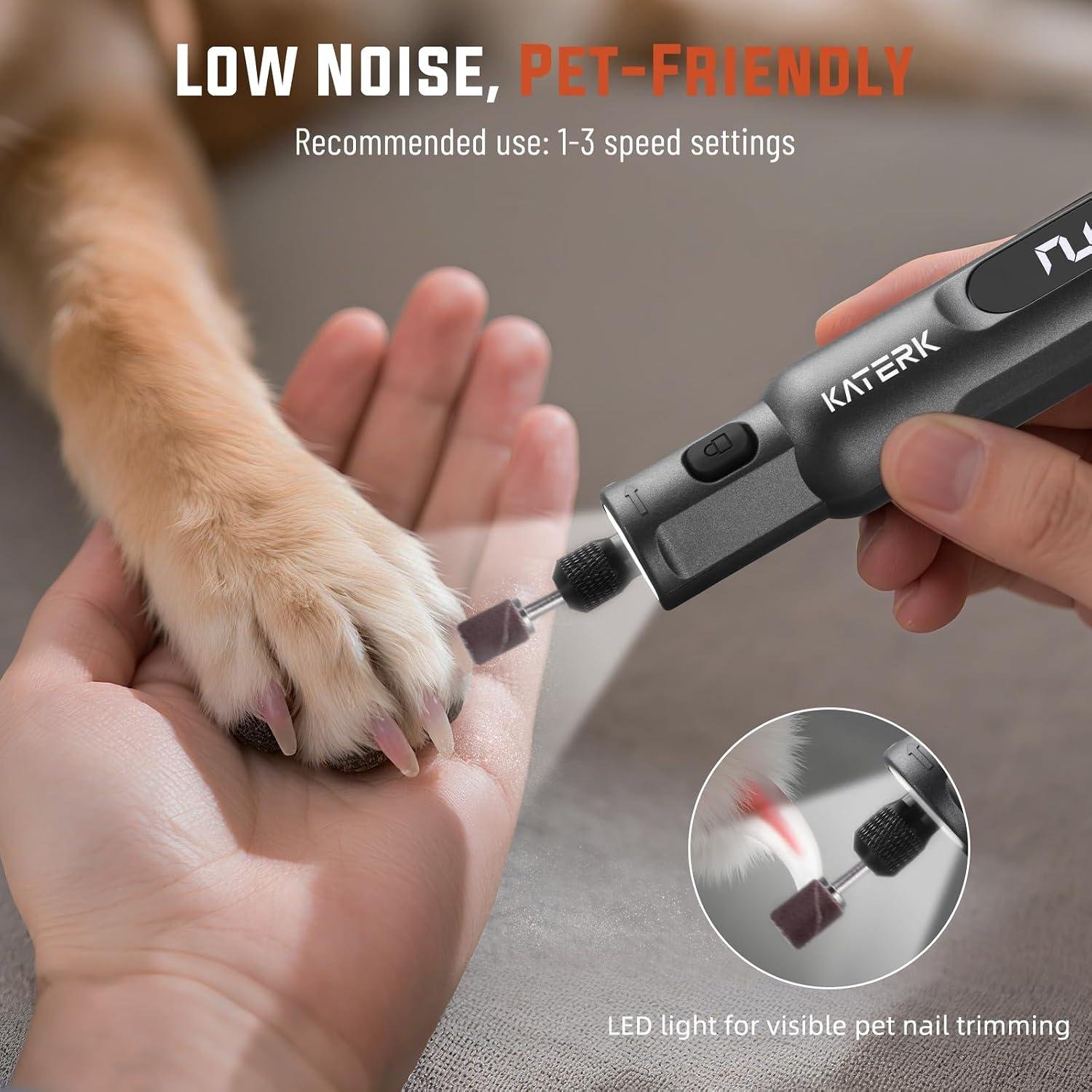
Tool Summary: The Katerk 3.7V Mini Cordless Rotary Tool Kit is a pen-style, 0.33 lb micro rotary tool built for light-duty detail work, with 5 speeds spanning 5,000-20,000 RPM, a 2500mAh USB‑C rechargeable battery, 4‑LED power indicator, built-in work light, and 70 accessories using 1/8″ shanks. Customers consistently praise its convenience, versatility, and value, with generally good build quality and battery life for its size, though reliability and power get mixed feedback (some report unexpected shutoffs and less torque than larger Dremel-style tools).
Best For: Ideal for hobby woodworkers with small to medium projects-think sanding tight corners, cleaning up carvings, engraving, and small inlay touch-ups. It’s also a good choice for beginners learning tool control and for cabinet makers needing occasional precision detailing.
Consider Alternatives If: If you primarily work with thick hardwoods, do heavy cutting, or need daily durability, a higher-voltage, more robust rotary tool is the better fit.
Final Assessment: Solid light-duty option with standout portability and control, as long as expectations match its 3.7V power class.
Want to see current pricing and customer photos? View on Amazon & Read More Reviews →