

Blog
WEN 6534 Hand Planer Review: Right for Our Shop?


Ever tried to hang a door that keeps rubbing teh jamb,or flatten a twisted 2×4 only to realize your “quick fix” turned into hours of sanding and frustration? In a small shop,we don’t always have room (or budget) for a full jointer and thickness planer setup—so a capable hand planer can be the difference between a clean fit and a headache.
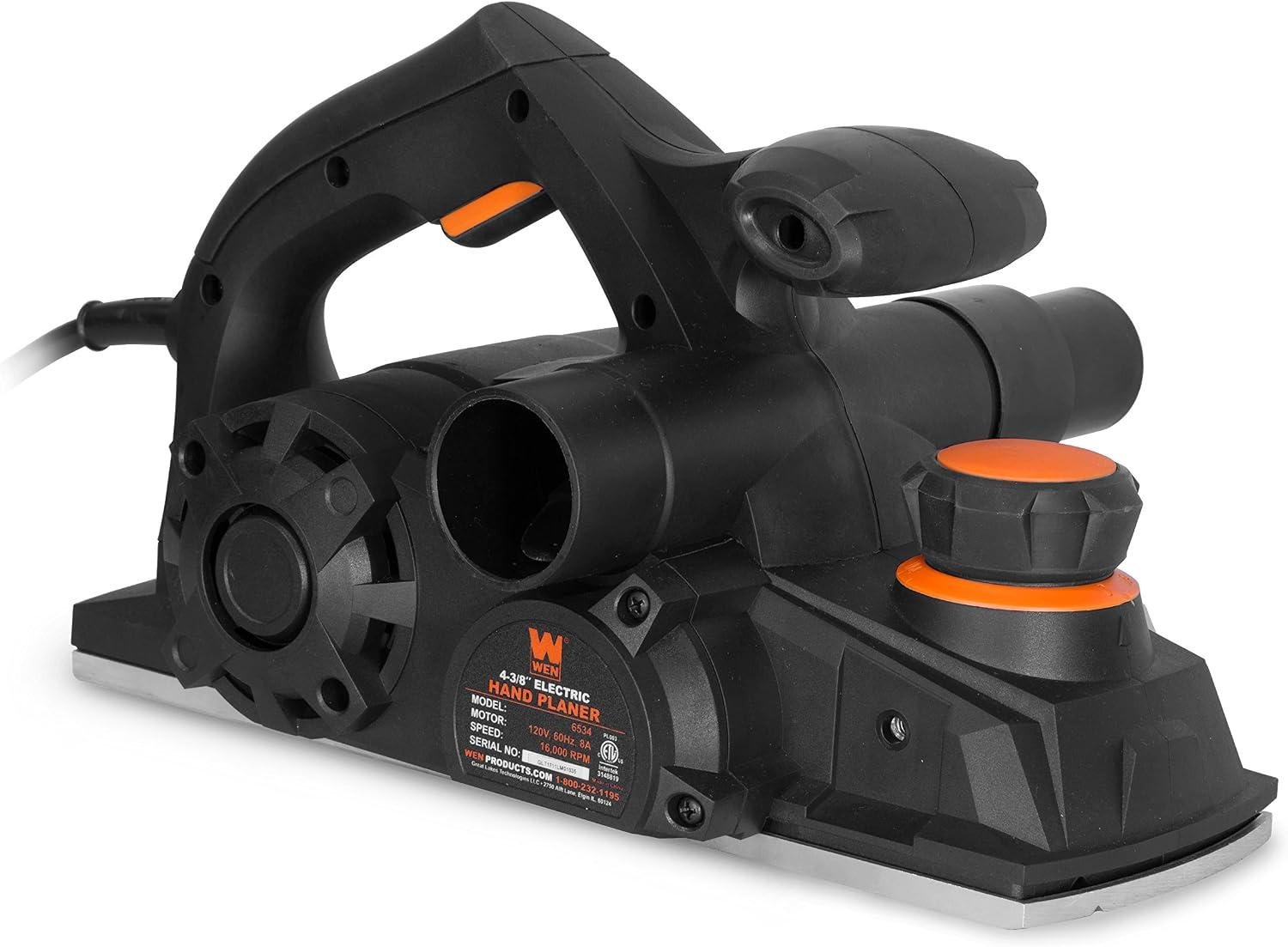
The WEN 6534 8-Amp Electric Hand Planer is a corded power planer built for trimming, squaring, and smoothing boards fast, with a roomy 4-3/8-inch cutterhead aimed at common stock like 2x4s and 4x4s. On paper, its 8-amp motor pushes up to 32,000 cuts per minute, with 16 depth stops from 0 to 1/8 inch in fine 1/128-inch steps.
In this review, we’ll break down its key features—two-way dust port, kickstand, V-groove chamfers, fence and rabbeting guide—alongside what customers commonly report about ease of setup, cut quality, and durability for the price. From our experience outfitting real-world workshops, the best tool isn’t the fanciest—it’s the one that stays accurate, feels controllable, and earns its spot on the bench.
Tool Overview and Build Quality in Our Hands
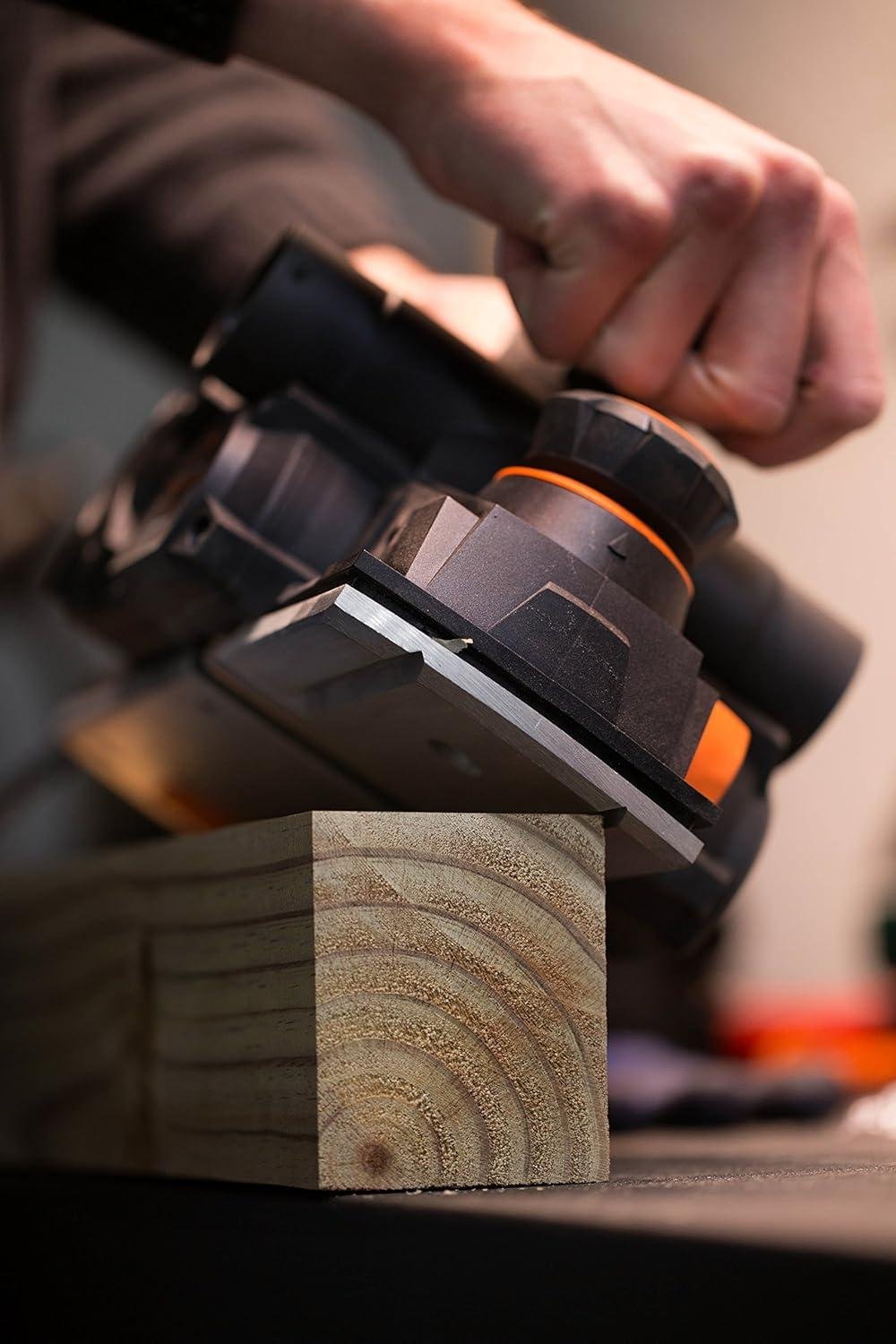
In our hands, the WEN 6534 feels like a purpose-built “jobsite helper” planer rather than a fussy fine-furniture instrument—exactly the kind of tool we reach for when a door edge needs trimming, a 2×4 needs flattening, or a glued-up panel has a proud seam. The 8-amp corded motor is rated to deliver 32,000 cuts per minute, and that high cut rate is what keeps the surface from looking torn up when we take sensible, shallow passes. The cutterhead gives a generous 4-3/8-inch planing width (wide enough to cover common framing stock in fewer passes), and the depth knob’s 16 positive stops from 0 to 1/8 inch in 1/128-inch increments makes it easier to “sneak up” on a fit. In practical shop terms,we treat that 1/8-inch maximum as a cap,not a recommendation—most of the control and clean results come from taking lighter cuts and keeping the sole flat at the start and end of each stroke to avoid snipe.
Build-quality-wise, the details that matter in daily use are here: an onboard kickstand that keeps the blades off the bench between passes, and two V-groove chamfers in the base that help break sharp corners on posts without freehand wobble. The two-way dust port (left or right) and included adapter are practical for directing shavings away from our body and reference line—reviewers commonly praise this planer for being easy to set up and good value for the price, while also noting familiar hand-planer realities like noise and some vibration under heavier cuts. We also see repeated customer themes about it being handy for door trimming and fitting, and for quick flattening on construction lumber; that lines up with what the spec sheet suggests. As always with portable planers, we recommend checking blade sharpness and keeping the base clean—pitch buildup quickly turns “smooth” into “streaky,” especially on resinous softwoods.
- Included accessories
- Two fully reversible HSS planer blades
- dust adapter
- Parallel fence bracket
- Rabbeting guide (rated for 1/3-inch rabbeting)
- Automatic kickstand
- Two-year warranty
- Compatible attachments/accessories (shop-friendly add-ons people commonly pair with planers)
- Shop vacuum (to pair with the dust adapter for better chip control)
- Extra reversible HSS blades (to keep a sharp set ready)
- Hearing protection (portable planers are typically loud in use)
- Ideal project types
- Sticking doors (edge trimming and fitting)
- framing lumber cleanup (2x4s, 4x4s)
- Breaking sharp corners on posts using the V-grooves
- Rabbets up to the tool’s rated capacity with the guide installed
- Wood types tested by customers (as commonly referenced in reviews)
- Construction softwoods (e.g.,typical 2x framing boards)
- Mixed hardwoods (users often mention success,but surface quality depends heavily on cut depth and blade sharpness)
| Spec / Feature | WEN 6534 (per specifications) | What it means in the shop |
|---|---|---|
| Motor | 8 amp corded | Plenty for trimming,flattening,and fitting—feed rate and depth of cut still matter for clean results. |
| Cut rate | 32,000 cuts/min | Higher cut rates can leave a smoother finish when blades are sharp and passes are light. |
| Planing width | 4-3/8 in | Covers common stock quickly; reduces the number of overlapping passes on wider faces. |
| Max depth of cut | 1/8 in with 16 stops (0–1/8 in in 1/128 in steps) | Use shallow settings for control and surface quality; deeper cuts increase tearout and strain. |
| Dust port | Two-way (left/right) + adapter | directs chips where you want; works best when connected to a vacuum. |
| Accessory / Part | Supported? | notes |
|---|---|---|
| Reversible HSS blades | Yes (included) | Keep a spare set—sharp blades are the biggest factor in reducing chatter and tearout. |
| Dust collection hookup | Yes (adapter included) | Pairing with a shop vac helps stop chips from packing around the beltline and sole. |
| Parallel fence / edge guide | Yes (included bracket) | Useful for consistent edge planing and more predictable rabbeting. |
| Rabbeting guide | Yes (included) | Rated for 1/3-inch rabbeting; take multiple passes for cleaner shoulders. |
| Capacity | Rated (per specs) | Recommended in practice | Why |
|---|---|---|---|
| Depth per pass | Up to 1/8 in | Light passes (small increments) | Improves control, reduces tearout, and generally leaves a cleaner surface. |
| Rabbeting | Up to 1/3 in | Multiple passes | Helps keep the shoulder crisp and reduces the chance of burning or chatter. |
See Full Specifications & Customer Photos
Real World Planing Performance on Softwoods and Hardwoods
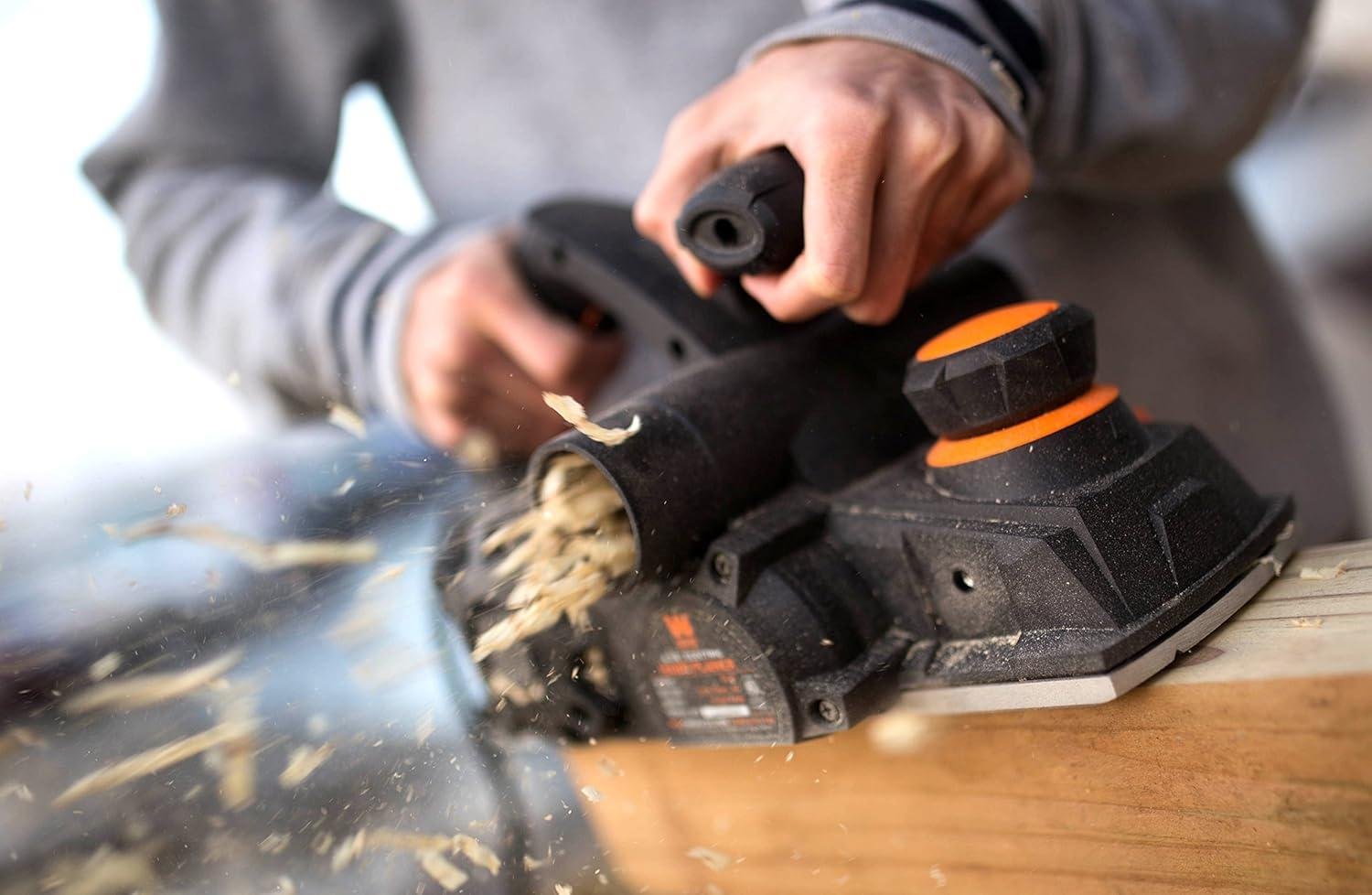
In real shop use,the WEN 6534 feels most at home on construction softwoods—exactly the “joists,2x4s,and 4x4s” work it’s marketed for—because the 8-amp motor and rated 32,000 cuts per minute let us take quick,controlled passes to erase crowns,cup,and jobsite dings. On pine and fir, the wide 4-3/8-inch cutterhead covers a lot of surface in one go, and the 16 positive depth stops (from 0 to 1/8 in. in 1/128-in. steps) make it easier to “sneak up” on a fit—especially when we’re easing a sticky door or flushing an edge before assembly. Customer feedback commonly circles around the tool being easy to set up and capable of producing a surprisingly smooth surface for the price when we keep the depth shallow and maintain steady forward pressure through the middle of the board (a big factor in avoiding snipe at the start and end of a pass). The two V-shaped chamfer grooves are a practical touch on softwood posts: rather than freehanding corner breaks,we can register the groove and run a consistent chamfer down the length.
Hardwoods are where technique matters more than muscle. the WEN’s specs—max depth of cut: 1/8 in., reversible HSS blades, and a 4-3/8-in. width—mean it can remove stock on maple/oak-type material, but in practice we get the best results by taking thin passes and paying attention to grain direction to reduce tearout. Review themes often mention that it can be loud and that planers like this can transmit some vibration, so earmuffs and a purposeful grip are part of our routine; setting the cut too deep tends to amplify both and can leave a rougher finish. Where it shines on hardwood is fitting and squaring parts that are too big for a benchtop planer, or dialing in joinery shoulders with the included parallel fence bracket and rabbeting guide (rated for 1/3-in. rabbeting)—but we still treat it as a “dimensioning and fitting” tool, not a final-surface tool. For cleaner hardwood results, we’ve found it pays to keep blades sharp, feed at a steady pace, and use the two-way dust port with the included adapter so chips don’t recirculate and mar the cut.
- Included accessories
- Dust adapter
- Two fully reversible HSS planer blades
- Parallel fence bracket
- Rabbeting guide
- Automatic kickstand
- Two-year warranty
- Compatible attachments/accessories
- Replacement reversible HSS blades sized for the WEN 6534
- Shop vacuum or dust extractor hose (via the included dust adapter)
- Edge guides/fences (using the included parallel fence bracket as the mounting system)
- Ideal project types
- Trimming and beveling sticking doors
- Flattening and truing 2×4 and 4×4 stock
- Breaking sharp corners on posts using the V-groove chamfers
- Fitting boards to size during assembly (cabinet backs, face frames, built-ins)
- Cutting small rabbets up to 1/3 in. with the guide
- Wood types tested by customers
- Pine (construction lumber)
- Fir / SPF framing material
- Cedar (trim/deck boards)
- Mixed hardwoods (customers commonly mention oak/maple-type hardwood use with lighter passes)
| Spec / Feature | WEN 6534 (from specs) | What it means in the shop |
|---|---|---|
| Motor | 8 amps | enough power for framing lumber and controlled hardwood passes (depth discipline helps). |
| Cut rate | 32,000 cuts per minute | Finer cut potential if feed rate is steady; reduces washboarding when technique is solid. |
| Cutting width | 4-3/8 in. | covers wider boards and posts; handy for 2x material and door edges. |
| Max depth of cut | 1/8 in. | Fast stock removal is possible, but thinner passes usually look cleaner—especially on hardwood. |
| Depth adjustment | 16 positive stops in 1/128-in. steps | Makes repeatable, incremental fitting easier (great for doors and edge truing). |
| Dust handling | Two-way dust port + dust adapter | Lets us aim chips away from our body or toward a vac; improves visibility at the cut line. |
| Blades / Accessories | Compatibility | Notes |
|---|---|---|
| Reversible HSS planer blades | WEN 6534-sized replacements | Keep a spare set; flip/replace when hardwood starts to fuzz or tearout increases. |
| Dust collection hose | Shop vac/extractor via adapter | Helps prevent chip trail scratches, especially on hardwood passes. |
| Parallel fence / edge guide | Included bracket system | Useful for straight, consistent edge planing and rabbeting setups. |
| capacity | Recommended in practice | Rated maximum (spec) |
|---|---|---|
| Softwood pass depth | 1/64 in. to 1/32 in. for finish; up to 1/16 in. for removal | 1/8 in. |
| Hardwood pass depth | Very light passes (often 1/128 in. to 1/64 in.) to limit tearout | 1/8 in. |
| Rabbeting | Shallow steps, multiple passes for cleaner shoulders | 1/3 in. |
See Full Specifications & Customer Photos
Key Features Woodworkers Will Appreciate in Daily Use
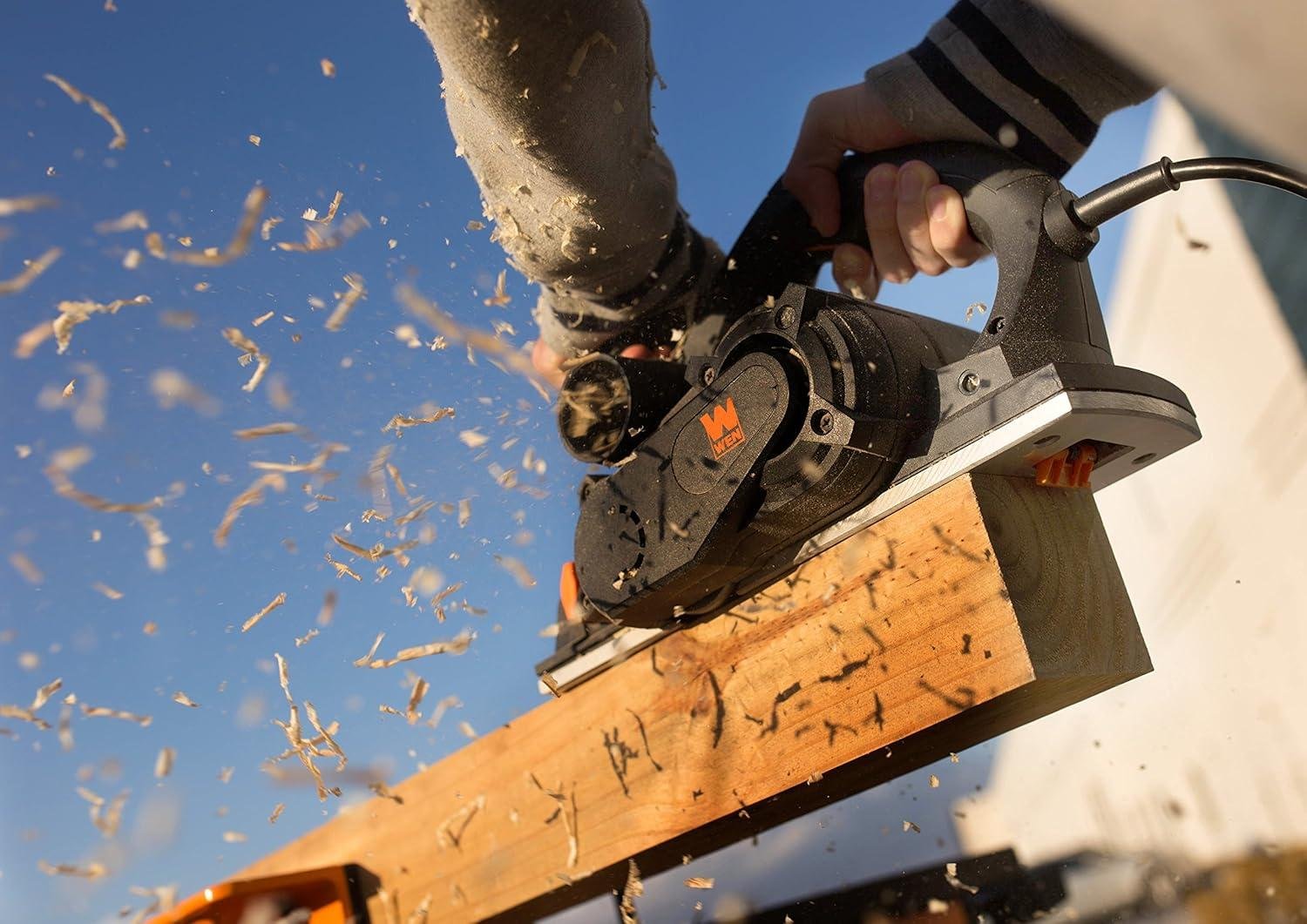
In daily shop use,we appreciate how the WEN 6534 balances “get-it-flat” power with predictable control. The 8-amp motor is rated to deliver up to 32,000 cuts per minute, which matters when we’re knocking down proud joints on framing lumber or cleaning up a door edge that’s rubbing a jamb—jobs where a hand plane can feel slow and a benchtop planer can feel like overkill. The real win for fit-and-finish work is the depth system: 16 positive stops from 0 to 1/8 in. in 1/128-in. increments. That’s the kind of adjustment that encourages good technique—taking multiple light passes instead of trying to hog off material—so we can sneak up on a fit without digging a trench. A couple of user-review themes we consistently see with corded hand planers like this are that setup is straightforward and that the tool removes material quickly onc the depth is dialed in; we’d still recommend we practice on scrap and keep our stance steady,because any hand-held planer can leave a little “snipe” at the start/end if we tip the front or rear shoe.
we also like the features that reduce daily annoyance: the 4-3/8-in. cutterhead is wide enough for 2x4s and 4x4s, and the two V-shaped chamfer grooves in the base make it easier to break sharp edges cleanly without a separate chamfer bit. The onboard kickstand is small but critically important—when we set the planer down between passes, it helps keep the blade from kissing our workbench or the workpiece. For cleanup, the two-way dust port lets us aim chips left or right depending on where our clamps, cords, and hose are, and the included adapter helps us manage shavings instead of sweeping mountains off the floor. Review-wise, woodworkers often mention this style of planer is “loud” and can transmit some vibration (common for high-cuts-per-minute tools), so hearing protection and a firm two-handed grip are part of using it well. Keeping blades sharp (and flipping the reversible HSS blades when cutting quality drops) is the maintenance habit that most directly improves surface quality and reduces tear-out,especially on tricky grain.
- Included accessories
- Dust adapter
- Two fully reversible HSS planer blades
- Parallel fence bracket
- Rabbeting guide (rated rabbeting up to 1/3 in.)
- Two V-shaped chamfer grooves (built into the shoe)
- Automatic kickstand
- two-year warranty
- Compatible attachments/accessories
- Shop vacuum (via included dust adapter)
- Replacement reversible HSS blades sized for the WEN 6534 cutterhead
- Ideal project types
- Sticking doors and fine-tuning door edges
- Flattening/squaring construction lumber (2x4s, 4x4s)
- Breaking edges/chamfering posts and rails
- Quick fit-up work on framing, benches, and jigs
- wood types tested by customers
- Based on common review themes for this tool class, customers frequently mention success on construction softwoods (pine, fir, SPF); some also report using it on harder woods with lighter passes and sharp blades.
| Spec | WEN 6534 | Why it matters in the shop |
|---|---|---|
| Motor | 8 amps | More headroom for continuous passes; still benefits from lighter cuts for cleaner surfaces. |
| Cut rate | Up to 32,000 cuts/min | High cut rate helps reduce chatter when technique is steady and blades are sharp. |
| Cutting width | 4-3/8 in. | Covers common stock effectively; useful for 2x material and post faces. |
| Max cutting depth | 1/8 in. | Great for rapid stock removal,but we’ll usually use shallower passes for accuracy and tear-out control. |
| depth adjustment | 16 positive stops (0 to 1/8 in. in 1/128-in. steps) | Makes repeatable settings easier when we’re “sneaking up” on a fit. |
| Rabbeting capacity | Up to 1/3 in. | Handy for quick ledges and joinery-related cleanup with the included guide. |
| Chip ejection | Two-way dust port | Lets us direct chips away from our face, clamps, and cords; helps when hooking to a vac. |
| Accessory/Part | Included? | What we use it for |
|---|---|---|
| Reversible HSS blades | Yes (2) | Flip to a fresh edge when cut quality drops; replace when both edges are spent. |
| Parallel fence bracket | Yes | Helps keep passes straight when planing along an edge. |
| Rabbeting guide | Yes | Controls rabbet cuts (up to 1/3 in.) for consistent ledges. |
| Dust adapter | Yes | Connects to dust collection to reduce chip scatter. |
| Use Case | Recommended approach (best results) | Tool’s rated capacity |
|---|---|---|
| General surfacing/flattening | multiple light passes; keep the shoe flat to avoid gouges | Up to 1/8 in. depth |
| Edge fitting (doors, trim) | Very shallow settings; test fit frequently enough; watch grain direction | 1/128-in. step stops up to 1/8 in. |
| Rabbets | Use the rabbeting guide; take incremental passes | Up to 1/3 in. rabbeting (per specs) |
see Full Specifications & Customer Photos
Ease of Use and Adjustment for Beginners and Experienced Woodworkers
For beginners, the WEN 6534 feels approachable because there’s very little ceremony before we can start making shavings. The 8-amp motor and rated up to 32,000 cuts per minute give us enough “forgiveness” to take light passes without stalling, which matters when we’re still learning how to keep the base plate flat through the whole stroke.Depth setting is where this planer really teaches good habits: the dial has 16 positive stops from 0 to 1/8 in. in 1/128-in. increments, so we can set a conservative bite and sneak up on a fit (like easing a sticking door) instead of trying to hog off too much and risking snipe or chatter. customer feedback commonly praises it as “easy to set up and use,” and we’ve seen the same recurring guidance: start shallow, keep two hands on it, and let the planer move at a steady pace—especially on softwoods where it’s easy to dig in at the start or end of a board.
For experienced woodworkers, the adjustment features and included guides make the WEN 6534 more than a “rough carpentry only” tool when we’re willing to tune our technique. The 4-3/8-in. cutting width is handy for dressing 2x4s and 4x4s,and the shoe’s two V-shaped chamfer grooves help us consistently break edges on posts without setting up a router table. When we need repeatable edging or rabbets, the included fence and guide can speed up the workflow—provided that we treat it like a hand-held machine that still demands reference control and test cuts. Review themes frequently enough mention it “works great for doors and framing lumber,” while some also note the typical realities of corded planers: it’s loud,it throws a lot of chips,and it rewards sharp blades and light cuts for the best surface. The two-way dust port plus dust adapter is a practical touch—being able to direct shavings left or right keeps the cut line visible—but we still recommend hooking it to a shop vac and clearing strings frequently enough so buildup doesn’t affect the cut or our stance.
- Included accessories:
- Two fully reversible HSS planer blades
- Dust adapter
- Parallel fence bracket
- Rabbeting guide (rated 1/3 in.)
- Automatic kickstand
- Two-year warranty
- Compatible attachments/accessories:
- Shop vacuum (via the included dust adapter)
- Replacement reversible HSS blades for the WEN 6534
- Ideal project types:
- Trimming and fitting sticking doors
- Flattening and truing 2×4 and 4×4 stock
- Quick chamfers on posts using the V-grooves
- Basic rabbets with the rabbeting guide
- Wood types tested by customers:
- Construction softwoods (commonly referenced for 2x lumber and door fitting)
| Spec / Feature | What it Means for Ease of Use | WEN 6534 (from specs) |
|---|---|---|
| Motor | Power reserve helps prevent bogging when taking light-to-moderate passes | 8A, 32,000 cuts/min |
| Cut width | Wider cutterhead covers more board per pass (useful on 2x stock) | 4-3/8 in. |
| Max cut depth | Higher depth can remove material faster, but beginners should stay shallow | 1/8 in. |
| depth adjustment | Positive stops encourage repeatable settings and controlled learning | 16 stops, 1/128-in. increments |
| chip handling | Direct chips away from the cut line; improves visibility and cleanup | Two-way dust port + dust adapter |
| Accessory | Compatibility | Why We’d Use It |
|---|---|---|
| Replacement reversible HSS blades | WEN 6534-compatible blades | Fresh edges reduce tearout and effort; flipping extends usable life |
| Shop vacuum | Connects via included dust adapter | controls chip pileups that can interfere with stance and cut quality |
| Capacity / Setting | Recommended in the Shop (for control) | Actual Tool Capacity (from specs) |
|---|---|---|
| Depth per pass | Very light passes when learning (sneak up on the fit) | Up to 1/8 in. with 16 positive stops |
| Rabbeting | Test on scrap; use the fence/guide to keep the shoulder consistent | Rated 1/3 in. |
See Full Specifications & Customer Photos
Customer Reviews Analysis
What Woodworkers Are Saying (WEN 6534 8-Amp Electric Hand Planer, 4-3/8-Inch)
1. Overall sentiment from woodworking customers
sentiment from woodworking-focused reviewers trends positive, especially among DIYers and budget-minded woodworkers. multiple reviews highlight that it delivers “good enough to very good” planing results for common shop and jobsite tasks at a price that feels like strong value.That said, some users reported limitations in refinement—particularly around out-of-the-box setup, adjustment sensitivity, and finish quality compared with higher-end planers.
2. Performance feedback (accuracy, power, results)
Common praise includes solid cutting power for a handheld unit and respectable results when used in controlled passes.
- Power under load: Several woodworkers mentioned the 8-amp motor keeps the cutterhead moving confidently through typical softwoods and many hardwood tasks, especially when taking light passes.
- Cut quality & finish: Multiple reviews highlight that surface results can be quite smooth when the depth is set conservatively and the operator keeps the base flat. Some users reported challenges with minor “lines” or “tracks,” often attributed to blade condition, setup, or technique.
- Consistency: Reviewers with more experience frequently note that consistent results depend on careful depth adjustment and maintaining even pressure at the beginning and end of the board to avoid snipe/gouging.
3.Build quality and durability observations
Feedback on build quality is generally “better than expected for the price,” with some critically important caveats.
- housing & overall feel: Several woodworkers mentioned the tool feels serviceable and reasonably sturdy in hand, aligning with “value tool” expectations rather than premium-fit-and-finish.
- Blades & wear items: Some users reported challenges with blade longevity and advised swapping or upgrading blades sooner for best results. A few reviews suggest performance improves noticeably after blade changes and careful alignment.
- Long-term durability: Multiple reviews highlight acceptable reliability for occasional to moderate use. A smaller subset of reviewers reported issues that sound like QC variance (needing tuning, alignment checks, or encountering a dud).
4. Ease of use for different skill levels
Ease-of-use feedback is mixed, mainly depending on experience and willingness to tune.
- Beginners: Beginners appreciated the straightforward concept—set depth and make passes—but some DIYers found the learning curve steep when aiming for furniture-grade surfaces. Several users emphasized practicing on scrap to dial in depth and technique.
- Experienced woodworkers: Experienced woodworkers noted that getting the best performance can require careful setup (blade alignment and depth calibration). They tended to be more satisfied once tuned, but also more likely to mention limitations versus pro-grade brands.
- Comfort & control: Several woodworkers mentioned it’s manageable to handle, but like most handheld planers it can cause fatigue on larger jobs—especially if you try to remove too much material per pass.
5. Common project types and success stories
Customers successfully used this for practical stock readiness and corrective carpentry tasks where a benchtop planer or jointer isn’t convenient.
Commonly mentioned use cases include:
- Door fitting and trimming (planing sticking doors, easing edges, fitting to jambs)
- Flattening or leveling boards for glue-ups and general stock prep (especially when boards are slightly crowned or twisted)
- edge beveling/chamfering and cleanup on construction lumber
- Refinishing-style tasks where controlled material removal is needed (e.g.,leveling high spots)
Some reviews describe it as a “problem solver” tool—ideal for quick fitting,shaving,and flattening tasks around the shop rather than a replacement for a stationary planer when thickness consistency is critical.
6. Issues or limitations reported
Some users reported challenges with finish perfection and setup sensitivity—common themes for budget electric hand planers.
- Adjustments can be touchy: Multiple reviews highlight that depth settings and blade alignment matter a lot; small misalignment can show up as ridges or uneven cuts.
- Potential for snipe/gouges: Several reviewers mentioned that if you tip the planer at the start/end of a pass, it’s easy to dig in. This is partly technique-related, but a few users felt the tool is less “forgiving” than pricier units.
- Dust/chip management: Some users reported challenges with chip ejection/dust control depending on direction of use and setup, noting that handheld planers can throw chips aggressively without a good collection strategy.
- Not a thickness planer replacement: A consistent limitation noted is that it’s great for fitting and flattening, but not ideal for repeatable thicknessing across many boards where a stationary planer excels.
Quick themes summary table
| Aspect | Common Feedback |
|---|---|
| Performance | Good power for light-to-moderate passes; best results come from shallow cuts and steady technique |
| Precision | Capable of accurate work, but several reviews note setup/alignment and careful adjustment are important |
| Durability | Generally acceptable for the price; some mention QC variance and faster wear of blades/consumables |
| Ease of Use | Beginner-friendly basics, but a learning curve for tearout control, avoiding gouges, and achieving a clean finish |
| Results | smooth surfaces are achievable; occasional reports of track marks or unevenness if not tuned/handled carefully |
| value | Frequently described as strong value—especially for DIYers and occasional woodworking tasks |
If you want, I can tailor this section to a specific publishing style (affiliate roundup tone vs.hands-on shop blog tone) or add a short “who it’s best for / not for” summary based on the same review themes.
Pros & Cons
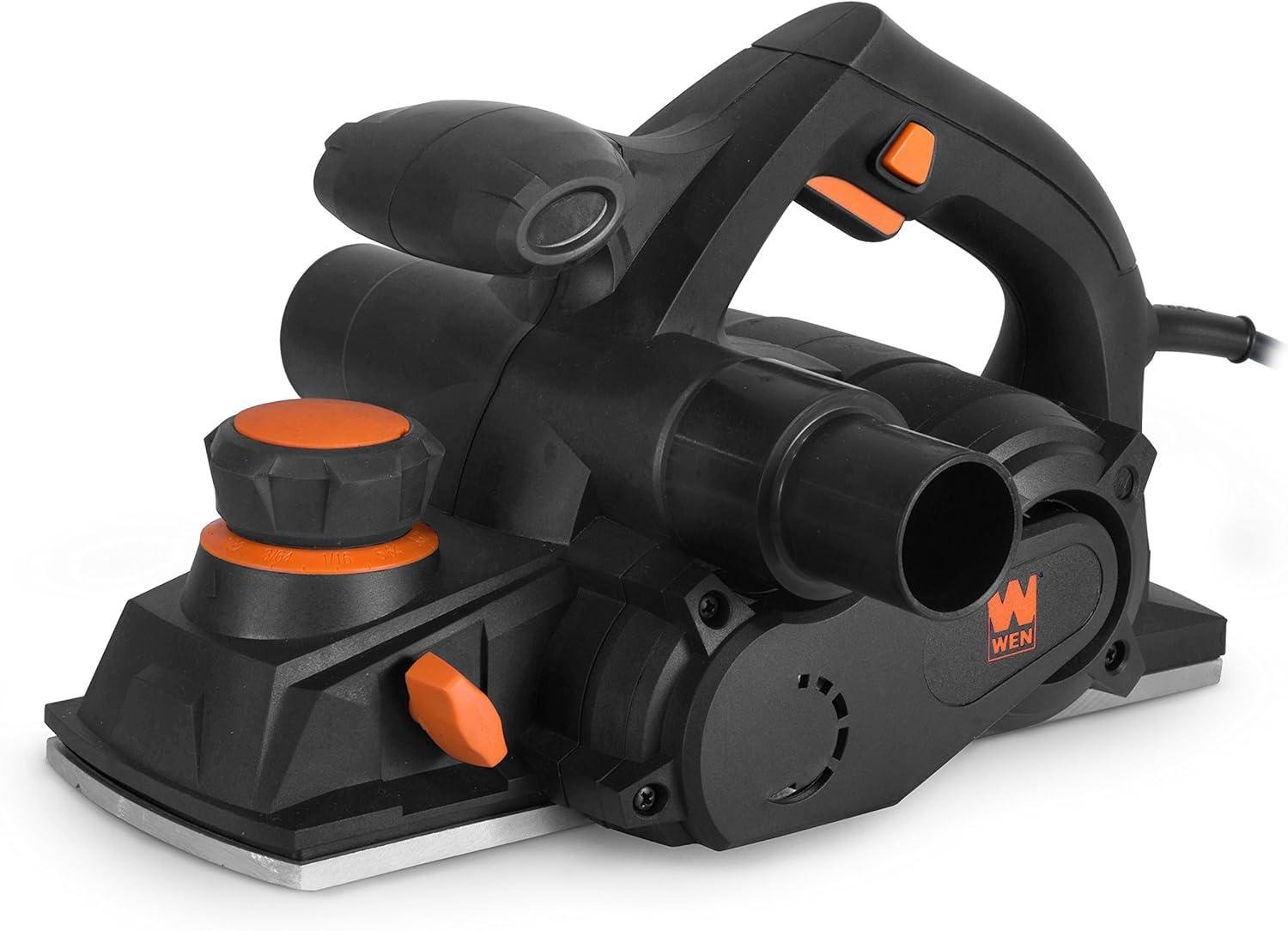
Pros & Cons
In our shop, a hand planer either earns a permanent spot on the shelf—or it becomes a dusty “maybe later” tool. Here’s how the WEN 6534 8-Amp Electric Hand Planer (4-3/8″) shakes out for us after looking at what it’s built to do: flatten,fit,bevel,and clean up rough lumber without turning every board into a full-blown milling project.
| What We’re Doing | How the WEN 6534 Helps (or Doesn’t) |
|---|---|
| Smoothing framing lumber (2x4s / 4x4s) | Big 4-3/8″ cutterhead covers wide passes, so we make fewer lanes. |
| Shaving a sticking door | Depth stops make it easier to sneak up on the fit instead of overdoing it. |
| Keeping the bench from looking like a hamster cage | Two-way dust port + adapter can definitely help—though planers still fling chips with enthusiasm. |
| Breaking sharp corners on posts | V-grooves give us a simple, repeatable chamfer without special setup. |
| Making shallow rabbets | Comes with a rabbeting guide (rated up to 1/3″) for straightforward joinery tasks. |
Pros
- Wide 4-3/8-inch cutting capacity: We can plane common lumber sizes with fewer passes, which makes quick flattening feel less like mowing a field one blade-width at a time.
- Strong cutting speed: the 8-amp motor delivering up to 32,000 cuts per minute suggests it’s built for real material removal—not just “tickling” high spots.
- Depth control with positive stops: The 16 stops from 0 to 1/8″ (in 1/128″ steps) gives us predictable adjustments—handy when we’re fitting doors, edges, or face frames.
- Two-way dust port: Being able to send chips left or right is a small detail we appreciate, especially when our stance or clamp layout makes one direction less annoying.
- Onboard kickstand: We like anything that helps avoid accidental gouges when we set the tool down mid-task—and it’s also kinder to the blades.
- Included guides for straighter work: The parallel fence bracket and rabbeting guide help us keep passes consistent when we’re trimming edges or cutting rabbets.
- Reversible HSS blades included: Two fully reversible blades gives us some runway before we have to shop for replacements.
- Two-year warranty: For a corded planer in this category, we like having a clear warranty window and a service network behind it.
Cons
- Max depth is 1/8″—not a substitute for a jointer/thickness planer: For serious dimensioning, we’ll still reach for bigger machines (or multiple careful passes).
- Chip management is never perfect: Even with the dust adapter and two-way port, we expect shavings to escape—so our vacuum and cleanup routine still matters.
- Learning curve for spotless results: Like most handheld planers, it rewards steady feed rate and good technique; rushing can lead to snipe, ridges, or accidental dips.
- Rabbeting is helpful but limited: The included rabbeting setup is great for light joinery, but we shouldn’t expect it to replace dedicated rabbeting or joinery tools for precision cabinetry.
- Corded convenience comes with a cord: We get consistent power, but cable management is part of the job—especially when we’re planing long stock.
Our takeaway: The WEN 6534 reads like a practical “get-it-flat-and-fitting” planer with a wide bite, solid adjustability, and thoughtful features for real shop chores—so long as we treat it like a hand planer (fast fitting and cleanup), not a full milling station.
Q&A
Is the WEN 6534 powerful enough for hardwoods like oak or maple?
For most hardwood planing tasks, yes—as long as you take sensible passes.The planer’s 8-amp motor and “over 32,000 cuts per minute” provide plenty of cutting action, but dense woods will still punish any handheld planer if you try to hog off the full 1/8-inch. Woodworkers generally get the best results on oak/maple by setting a shallow depth (one of the lighter positive stops), keeping steady forward feed, and letting the cutters do the work instead of forcing it.
How does it do on plywood, veneer, or laminated sheet goods?
Use extra caution. Any hand planer can tear out veneer or chip plywood face plies because the grain direction changes and glue lines are unforgiving. The WEN 6534 can work for light trimming, but most woodworkers recommend very shallow cuts, sharp blades, and a test piece first.If the face veneer is thin (common on plywood), a planer can cut through it quickly—many users prefer sanding, a track saw, or a router sled for sheet goods when the surface must stay flawless.
What kind of work is it best at—rough lumber, doors, studs, hobby furniture, or production?
it’s strongest as a jobsite/shop problem-solver: flattening high spots on framing lumber, fitting sticking doors, easing edges, squaring small areas, and tuning joins. The 4-3/8-inch cutting width is handy for 2x4s and 4x4s, and the max 1/8-inch depth lets you remove material quickly when needed. For true production surfacing (many boards to identical thickness), a benchtop/thickness planer is still the better tool—hand planers excel at correction and fitting, not mass milling.
How hard is setup, and what adjustments do you actually get?
Initial setup is straightforward: set cutting depth and confirm the fence/guide is square if you’re using it. Depth changes are easy as the tool has 16 positive stops from 0 to 1/8 inch in 1/128-inch increments, which helps repeat settings without guessing. It also includes a parallel fence bracket for straight tracking and a rabbeting guide for edge work, so you can set it up for consistent passes rather than freehanding everything.
How easy are blade changes, and are the blades reversible?
Blade swaps are a normal hand-planer maintenance item and typically take only a few minutes once you’ve done it once. This model includes two fully reversible HSS blades, so you can flip them to a fresh edge before replacing. For best results, woodworkers recommend changing/rotating blades as soon as you notice more tearout, ridges, or burnishing—dull blades make any planer feel underpowered and can worsen snipe and chatter.
What dust collection does it need, and can I control where the chips go?
Planer shavings come off fast, so some kind of collection is worth planning for. The WEN 6534 includes a dust adapter and a two-way dust port that lets you direct shavings left or right depending on your stance and work area. Many woodworkers run the adapter to a shop vac; even if you don’t, being able to aim the chip stream away from your face/bench makes handheld planing much more manageable.
Is it beginner-friendly,or does it take experience to get clean,flat results?
Beginners can use it successfully,but there’s a learning curve to getting truly flat,even surfaces. The tool’s depth stops help (you’re less likely to accidentally take a huge bite), and features like the onboard kickstand protect your work between passes. Most first-timers improve quickly by practicing on scrap, taking light cuts, keeping the front shoe flat at the start of the pass, and not tipping the planer as it exits the board.
Is this good value vs. saving up for a higher-end hand planer or a thickness planer?
if you need a corded hand planer for trimming, fitting, and flattening localized high spots, it’s a strong value: 8 amps, 32,000+ cuts/min, a wide 4-3/8-inch cutterhead, included fence/rabbeting guide, dust adapter, and a 2-year warranty. If your real goal is bringing lots of boards to uniform thickness or producing furniture-ready faces with minimal sanding, it’s usually smarter to save for (or add) a thickness planer—hand planers and thickness planers solve different problems.
Reveal the Extraordinary
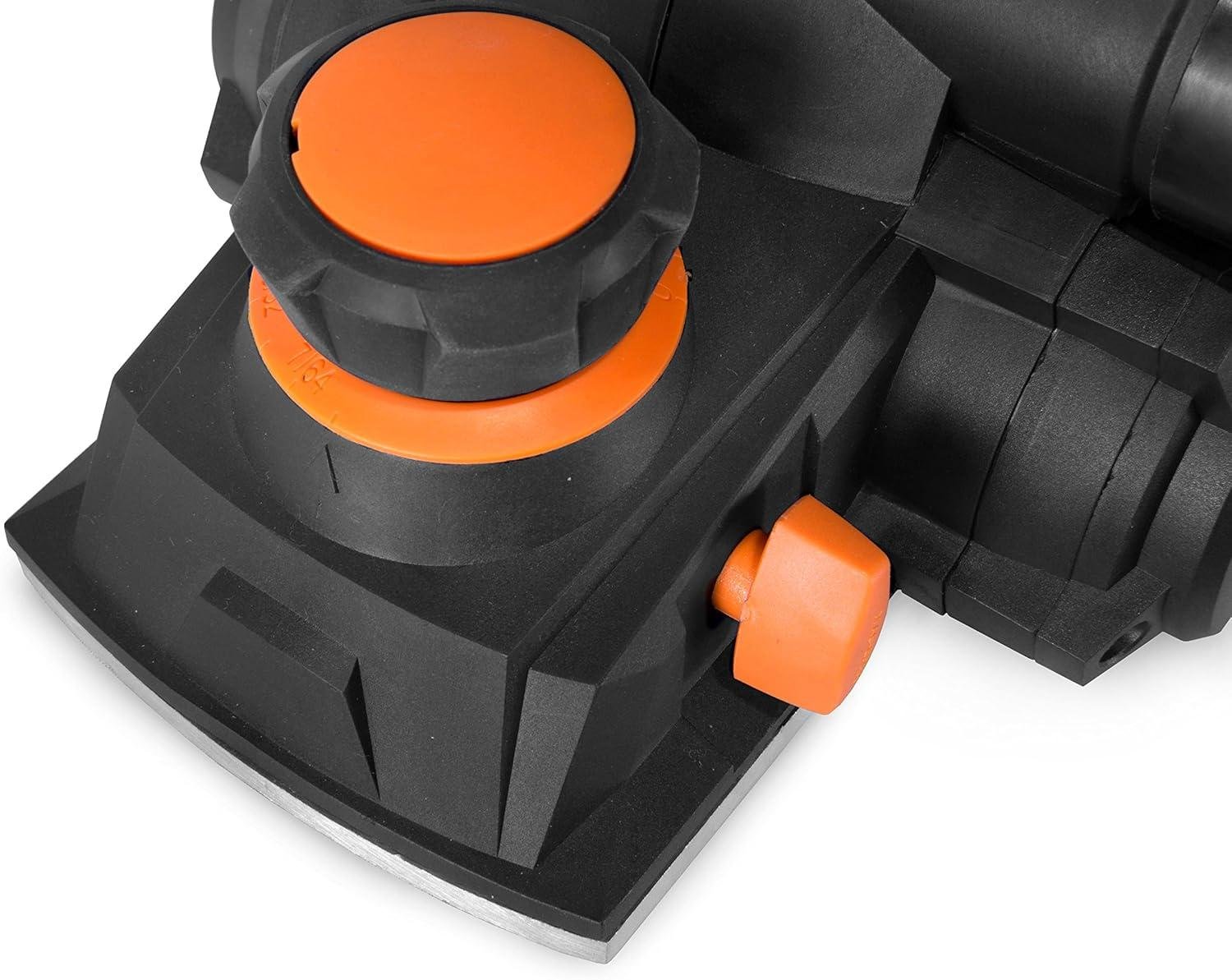
The WEN 6534 8-Amp Electric Hand Planer pairs an 8-amp motor with up to 32,000 cuts per minute, a wide 4-3/8-inch cutterhead, and a max 1/8-inch depth of cut with 16 positive stops (down to 1/128-inch increments). Standout touches include the two-way dust port, V-groove chamfer channels, onboard kickstand, and included parallel fence and rabbeting guide (up to 1/3 inch). customers commonly praise its strong material removal for the price and useful adjustability,while noting that careful setup and technique help avoid chatter or snipe on demanding passes.
It’s ideal for hobby woodworkers with small to medium projects, beginners fitting doors or squaring stock, and cabinet or trim work where controlled, repeatable passes matter.
Consider alternatives if you routinely plane thick hardwoods all day, need premium dust collection, or require production-grade durability.
it’s a solid mid-range option that delivers reliable results when used within its limits.
Want to see current pricing and customer photos? View on Amazon & Read more Reviews →