

Blog
Makita XSS02Z Circular Saw Review: Right for Our Shop?

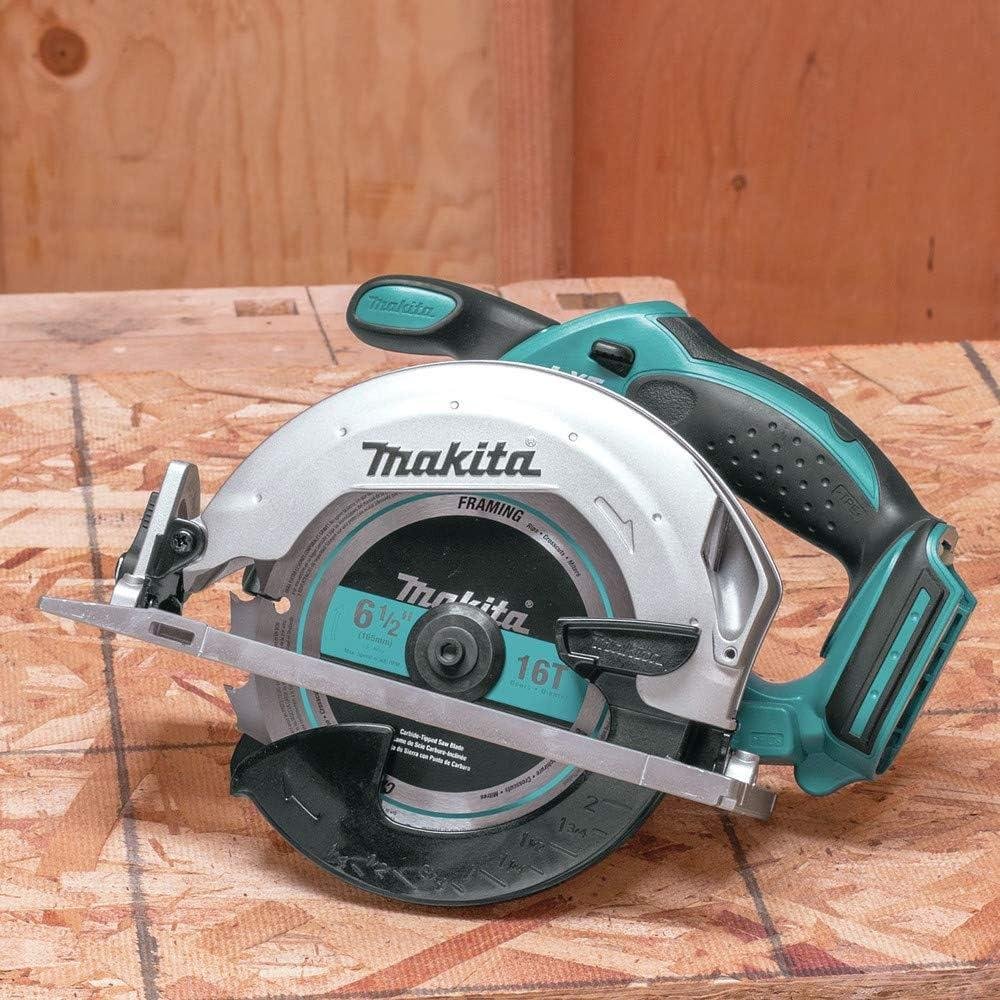
Ever tried breaking down plywood in a cramped garage shop, only to fight the cord, the saw’s balance, and a cut line that drifts just enough to ruin a good panel? When space is tight and precision matters, a circular saw has to feel predictable—especially for bevel cuts and quick crosscuts where tear-out and inaccuracies show up fast.
That’s where the Makita XSS02Z 18V LXT Lithium-Ion 6-1/2″ Cordless Circular Saw (tool only) aims to fit: a compact, battery-powered saw built around a Makita high-torque motor spinning at 3,700 RPM, with a precision-machined aluminum base designed for smoother, more accurate tracking. On paper, it brings useful capacity too—2-1/4″ at 90° and bevels from 0° to 50°, including cutting 2x at 45°.
In this review,we’ll look at key features,ergonomics (including the soft-grip handle and 7.3 lb weight with battery),durability cues,and what customers commonly report about cut quality and everyday usability. We’re longtime woodworkers who’ve learned to weigh budget vs. build quality—and to respect the learning curve of any new saw.
Tool Overview and First Impressions in the Shop
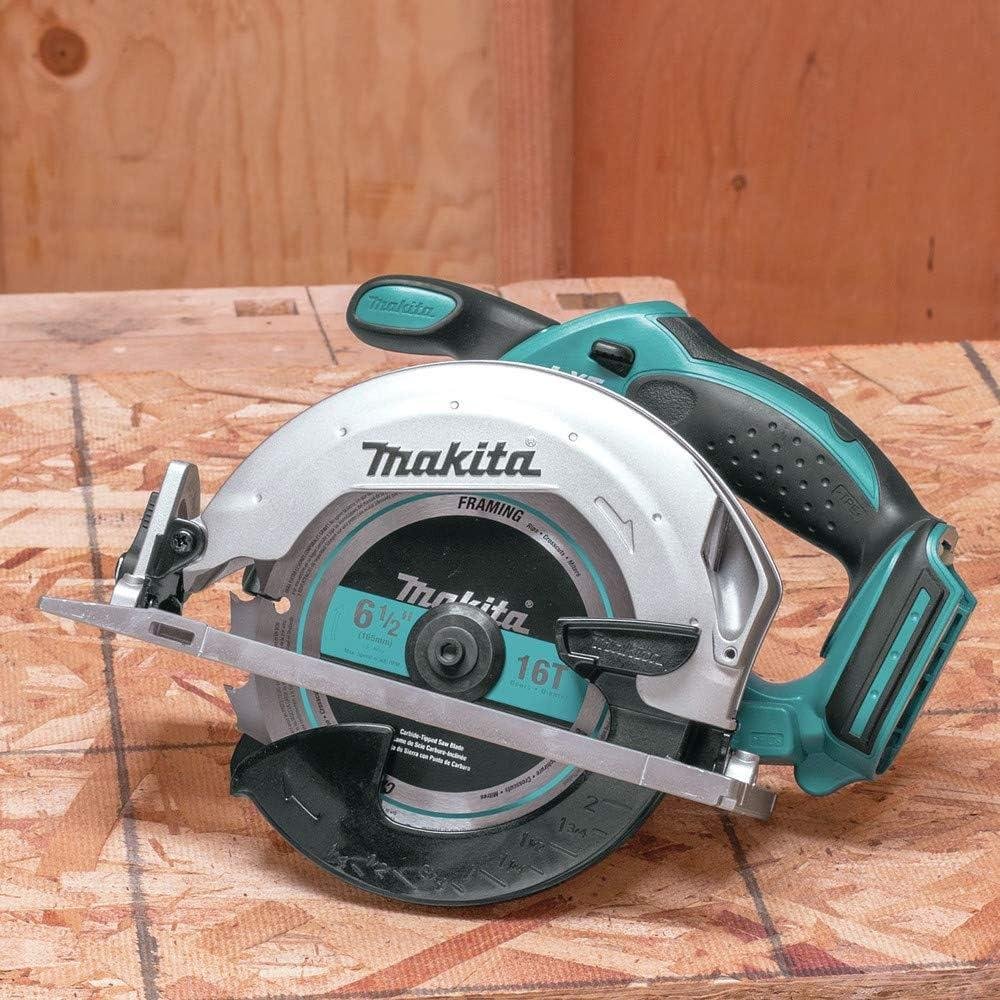
Pulling the Makita XSS02Z 18V LXT 6-1/2″ Circular Saw (tool only) onto our bench, our first impression is how purpose-built it feels for real shop movement—compact, uncomplicated, and clearly designed to get into places a corded saw can’t without snagging on a clamp or a bench dog. Makita rates the high‑torque motor at 3,700 RPM, which in practical terms means it’s aiming for steady framing-to-workshop crosscuts rather than slow, torque-heavy crawl cutting. The precision-machined aluminum base reads as a shop-amiable detail: it tends to slide predictably on plywood and MDF, and it’s the kind of base that rewards us when we take the time to set a straightedge and approach the cut with consistent feed pressure. capacity is where we instantly calibrate expectations: the max depth is 2‑1/4″ at 90° and it’s advertised to cut 2x material at 45°, plus a 0°–50° bevel range for common bevel work (splayed edges, basic chamfers, quick bevel rips with a guide). Weight is listed at 7.3 lbs with battery (battery not included), and even without putting numbers on “feel,” a lighter saw generally helps us stay on our line longer—especially when we’re breaking down sheet goods on sawhorses or trimming parts at assembly height.
Setup in the shop is straightforward, and the design choices support that: the flat motor housing gives us a stable rest when changing blades, and Makita includes an on-board blade wrench—small, but it’s exactly the sort of detail that keeps a cordless saw from becoming a “where’s that tool?” moment mid-task. Customer review themes commonly emphasize solid cutting power for a cordless saw, lighter handling, and the convenience of staying within the Makita 18V LXT battery ecosystem; some also note that a cordless circular saw like this is at itS best when we match blade choice and feed rate to the material (such as, choosing a finer-tooth blade for plywood or melamine to reduce tearout). As woodworkers, we treat the RPM and blade diameter as a reminder to let the tool do the work: we get cleaner results when we support the offcut, keep the shoe flat, start the cut with the blade clear, and avoid twisting the saw thru knots—especially in dense framing lumber or hardwood edging. Like most saws in this class, dust control is more “manage it” than “collect it,” so we plan on smart shop habits—cutting over a sacrificial surface, using a fan or vac nearby, and wearing eye protection—because the real precision comes from visibility and control as much as the spec sheet.
- Tool only (battery and charger not included)
- On-board blade wrench
- 6-1/2″ circular saw blades (carbide-tipped framing,fine-finish plywood,specialty blades by need)
- Makita 18V LXT batteries (compatible platform; higher Ah packs typically extend runtime)
- rip fence / edge guide (if available for your setup) and straightedge guides for repeatable rips
- Breaking down sheet goods (plywood,MDF) with a straightedge
- Crosscutting 2x stock for shop fixtures and framing tasks
- Bevel cuts up to 50° for quick joinery-adjacent angles and trim fitting
- on-site or driveway cuts where cords are inconvenient
- Construction lumber (2x) (common in customer feedback)
- plywood (customers often mention using it for sheet breakdown)
- MDF (typical shop material where a sharp blade matters)
| Spec | Makita XSS02Z | What It Means in the Shop |
|---|---|---|
| No-load speed | 3,700 RPM | Faster cutting in typical stock; blade choice and feed rate drive cut quality. |
| Blade diameter | 6-1/2″ | More compact than 7-1/4″ saws; great handling,slightly reduced max depth. |
| Max depth @ 90° | 2-1/4″ | Handles common lumber thicknesses; plan cuts on thicker slabs accordingly. |
| Bevel range | 0°–50° | Covers most jobsite and shop bevel needs without special rigs. |
| Weight | 7.3 lbs (with battery) | Less fatigue and easier one-handed repositioning (still cut two-handed). |
| Accessory Type | Compatibility | Notes for Woodworkers |
|---|---|---|
| Blade | 6-1/2″ arbor-compatible circular saw blades | Use fine-tooth blades for plywood/veneers; framing blades for 2x speed. |
| Battery | Makita 18V LXT | Tool-only purchase; many reviewers like it if they already own LXT packs. |
| Guide | Straightedge / clamp guide | Improves accuracy for cabinet sides and long rips without a table saw. |
| Cut Scenario | Rated Capacity / Feature | What We Recommend in Practice |
|---|---|---|
| Square cuts in dimensional lumber | 2-1/4″ depth @ 90° | Support both sides of the cut and keep the shoe flat to prevent drift. |
| Beveling 2x material | Bevel 0°–50° (cuts 2x at 45° per description) | Slow the feed slightly and confirm bevel stops with a square before repeat cuts. |
| Plywood breakdown | Cordless portability + 6-1/2″ blade | Use a sharp fine-tooth blade and a guide; score veneer first if tearout matters. |
See Full Specifications & Customer Photos
real World Cutting Performance for Plywood and Framing Lumber
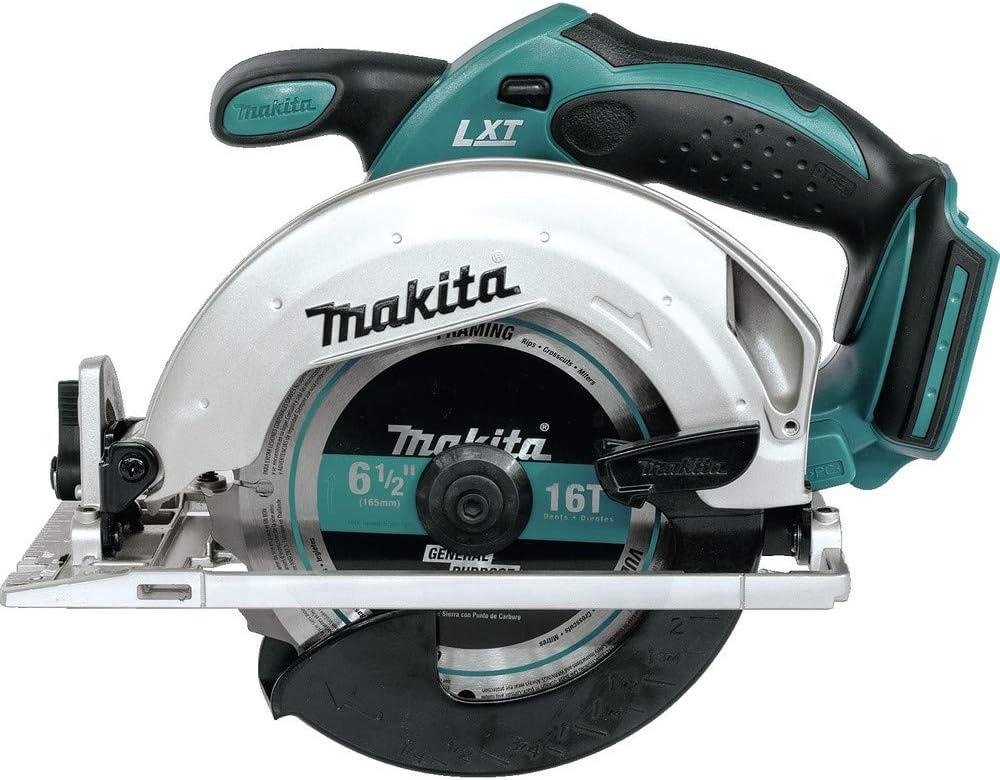
In our shop, “real world” performance on sheet goods comes down to whether a saw tracks straight, holds a bevel, and doesn’t bog when we ask it to rip a full sheet into cabinet parts. The Makita XSS02Z’s Makita-built high-torque motor spinning at 3,700 RPM feels tuned for steady, controlled cuts rather than brute-force speed, and the precision-machined aluminum base is the kind of feature we actually notice when we’re riding a straightedge on plywood—less chatter, less “wandering,” and a cleaner line to follow. On 3/4″ plywood, we’d treat it like any 6-1/2″ cordless saw: use a sharp, plywood-friendly blade, support the panel well, and let the motor maintain RPM rather of forcing the feed rate. The compact body and 7.3 lbs with battery (battery not included) helps when we’re breaking down sheets solo, and the rubberized soft-grip handle makes it easier to keep pressure consistent through long rips. Customer review themes commonly praise light weight, easy handling, and solid accuracy for a cordless saw, while noting that battery and charger are not included with this “tool only” package—so performance is closely tied to the LXT battery you pair with it.
For framing lumber, the published capacity is where this saw starts to make sense on the jobsite side of woodworking: it has a 2-1/4″ cut depth at 90° and a 0°–50° bevel range, and Makita states it will cut 2x material at 45°—a practical spec for roof blocks, braces, and bevel cuts on 2x stock. In use, that means we can confidently crosscut 2×4 and 2×6 at 90° and still have enough depth for most typical framing tasks, while bevel cuts on thicker stock demand careful setup: set the bevel, lock it down, and verify with a square because cordless saws can drift if the shoe isn’t planted firmly. Reviewers often describe it as smooth and cozy with manageable vibration, and many like the on-board blade wrench and flat motor housing for quicker blade changes—small details that save time when we’re bouncing between rough carpentry and cleaner shop cuts. educationally, our best advice is to treat this saw as a “precision-capable cordless” tool: keep the blade sharp, watch for pinch (especially in wet construction lumber), and use a guide when accuracy matters—because even with a well-machined base, technique is what makes cuts glue-line ready.
- Included accessories (per product description): on-board blade wrench
- Compatible attachments/accessories (commonly used with 6-1/2″ circular saws): 6-1/2″ saw blades (plywood/finish, framing, and rip), straightedge/track guides, edge guides, extra LXT 18V batteries, compatible LXT charger
- Ideal project types: breaking down plywood for cabinets and shelving, shop jigs, deck repairs, framing and blocking, site-built work surfaces
- Wood types tested by customers (review themes): plywood and typical construction lumber (2x material)
| Spec | Makita XSS02Z (Tool Only) | Why it matters in plywood/framing |
|---|---|---|
| Blade size | 6-1/2″ | More compact than 7-1/4″ saws; often needs the right blade choice for clean sheet-goods cuts. |
| No-load speed | 3,700 RPM | Supports steady cutting; feed rate and blade sharpness drive results. |
| Max cut depth @ 90° | 2-1/4″ | Handles most 2x stock at 90° and common plywood thicknesses comfortably. |
| Bevel range | 0°–50° | Useful for bevel rips/crosscuts; verify settings for repeatable angles. |
| Weight | 7.3 lbs (with battery) (battery not included) | Less fatigue when breaking down sheet goods or working overhead/on site. |
| Accessory Type | What to look for | Why we’d use it |
|---|---|---|
| Blade (sheet goods) | 6-1/2″ plywood/finish blade (higher tooth count) | Cleaner crosscuts and less splintering on veneer plywood. |
| Blade (framing) | 6-1/2″ framing blade (lower tooth count) | Faster cuts in 2x lumber where surface finish is less critical. |
| Guide | Straightedge or track-style guide | Turns a handheld saw into a more repeatable panel-cutting system. |
| Power | Makita 18V LXT batteries + compatible charger | Tool-only purchase means you’ll need these for runtime and performance. |
| Capacity Check | Recommended approach | What the spec supports |
|---|---|---|
| Plywood breakdown | Use a guide + fine-tooth blade; support sheet to prevent pinch | 3,700 RPM and stable base help maintain a clean line |
| 2x cuts @ 90° | Let the saw do the work; keep the shoe flat and line steady | 2-1/4″ depth @ 90° covers typical 2x stock |
| 2x cuts @ 45° | Set bevel carefully; confirm with a square before repeat cuts | Makita states it cuts 2x at 45° |
See Full Specifications & Customer Photos
Key Features Woodworkers Will Appreciate for Accuracy and Safety
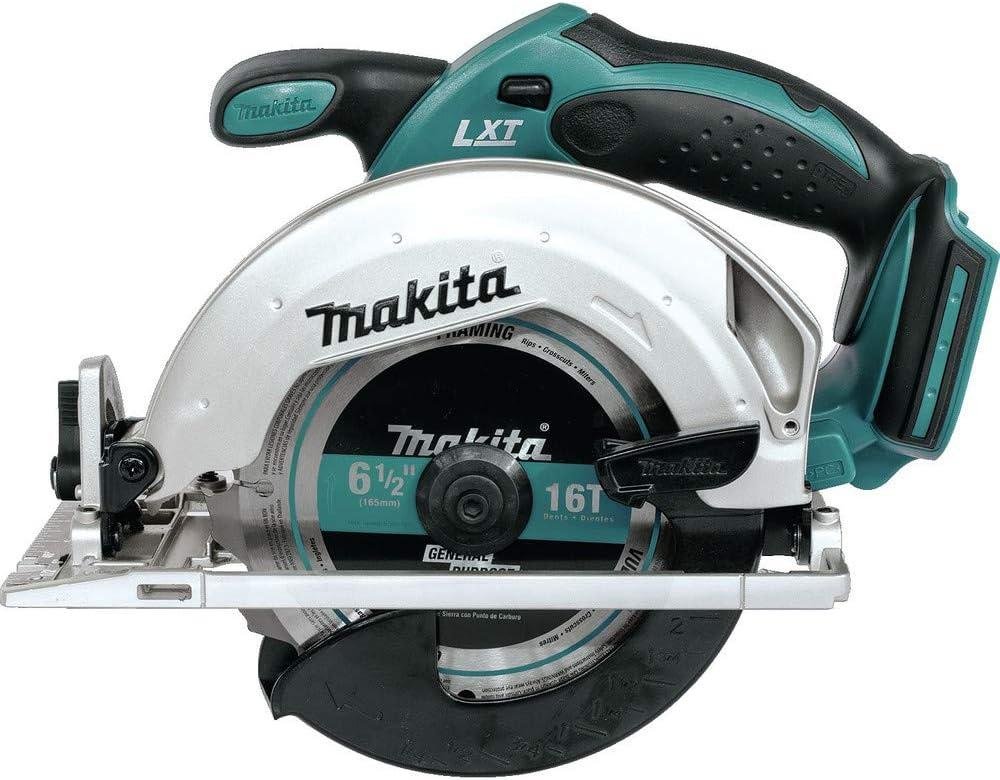
For accuracy, we like that the XSS02Z pairs a compact cordless body with a Makita-built high-torque motor rated at 3,700 RPM—fast enough to keep a blade moving cleanly through typical shop stock without feeling sluggish on rips. The real “woodworker” detail is the precision-machined aluminum base: in practical terms, that’s the part riding our plywood, MDF, or jointed boards, and it’s what helps the saw track predictably when we’re following a straightedge. The saw’s capacity numbers are also meaningful at the bench: a 2-1/4” max depth at 90° and the ability to cut 2x material at 45° covers most framing-style crosscuts and a surprising amount of cabinet-grade sizing when we break down sheet goods into manageable panels. Customers commonly echo themes of smooth cutting for a cordless saw and solid, accurate feel from the base, plus many highlight that it’s straightforward to get going as it’s essentially “battery in, blade on, and cut,” with no cord management slowing us down.
For safety and repeatable results, we appreciate the control-focused design choices: the saw weighs 7.3 lbs with battery (battery not included), and that lighter build reduces fatigue—fatigue is when accuracy slips and kickback risk climbs. The rubberized soft-grip handle gives us a steadier hold when starting a cut, and the flat motor housing adds stability during blade changes (a small detail, but it encourages safer maintenance habits). We also like the practical touches that keep workflow safe: an on-board blade wrench means fewer “improvised” blade swaps, and the 0°–50° bevel range lets us set common miters without forcing awkward body positions. In use, we still recommend best practices—let the blade reach full speed before entering the wood, support offcuts to prevent pinching, and consider a higher-tooth blade for splinter-prone veneers. Reviewers often mention a comfortable, manageable feel and good everyday control, which tracks with what we look for when we’re making repeated cuts where consistency matters as much as raw power.
- Included accessories: On-board blade wrench (battery and charger not included; “tool only”).
- Compatible attachments/accessories: 6-1/2″ circular saw blades; Makita 18V LXT batteries (sold separately).
- Ideal project types: Breaking down plywood panels; trimming 2x stock; rough sizing hardwood for milling; installing shelving and shop fixtures.
- Wood types tested by customers: Plywood; common construction lumber (2x material); MDF (as reported in general use themes).
| Spec | Makita XSS02Z | What We Use It For in the Shop |
|---|---|---|
| Motor speed | 3,700 RPM | Clean crosscuts/rips when paired with a sharp, appropriate-tooth blade |
| Max cut depth @ 90° | 2-1/4″ | Most 2x crosscuts; deep passes on thicker stock |
| Bevel range | 0°–50° | Common bevel cuts and quick miters without switching tools |
| Weight | 7.3 lbs (with battery) | Reduced fatigue for repeated cuts; easier overhead/awkward-position handling |
| base | Precision-machined aluminum | Smoother tracking against guides and workpiece edges |
| Accessory Type | Compatibility | Why It Matters |
|---|---|---|
| Blade | 6-1/2″ circular saw blade | Choose higher-tooth count for plywood/veneers, lower-tooth for faster rips |
| Battery | Makita 18V LXT (sold separately) | Higher Ah packs typically mean longer runtime for sheet-good breakdown |
| Capacity Item | Recommended (Practical Shop Guidance) | Actual Spec |
|---|---|---|
| depth for single-pass cutting | Set blade depth so gullets just clear the underside (safer, cleaner) | Up to 2-1/4″ @ 90° |
| Bevel cutting | Use a guide/track and steady feed; support offcuts to prevent pinching | 0°–50° bevel |
See Full Specifications & Customer Photos
Ease of Use for Beginners and Pros Including Setup Storage and Value
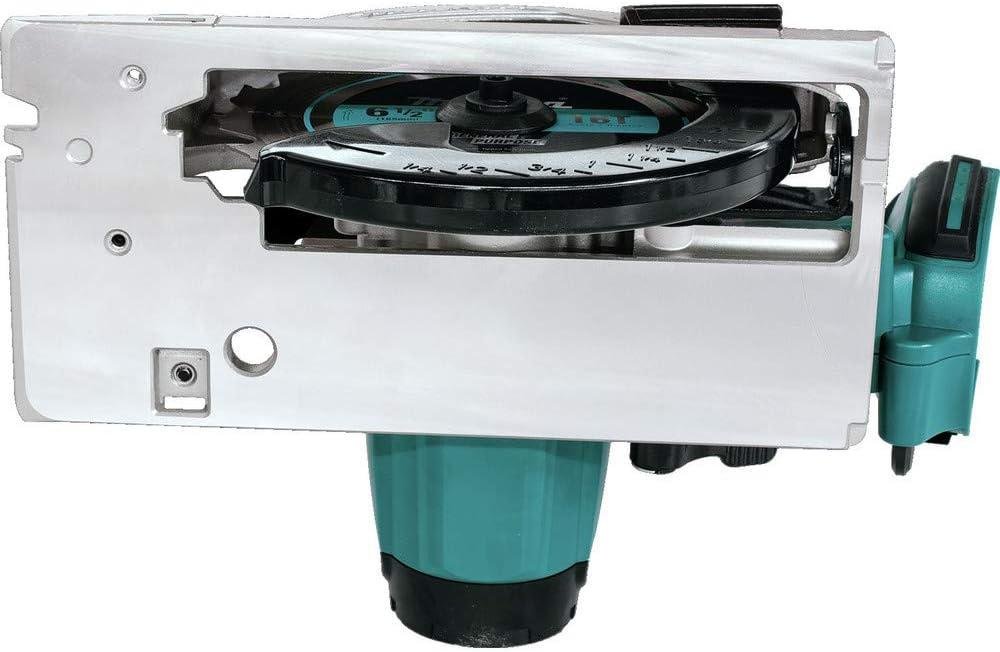
For both beginners setting up their first cordless saw station and pros who need a grab-and-go cutter, the Makita XSS02Z feels straightforward.There’s no assembly beyond installing a blade and dialing in settings, and the saw’s compact build pairs well with its 7.3 lb weight with battery (battery not included) for overhead or repetitive cuts where fatigue sneaks up fast. In our shop, the learning curve is mostly about understanding what the specs mean in real boards: the Makita-built high-torque motor at 3,700 RPM is plenty for clean crosscuts and rips when we use a sharp blade and let the saw do the work (pushing too hard is when cordless tools bog down). The 2-1/4″ max depth at 90° and bevel range of 0–50° make it practical for common framing and shop tasks,and Makita notes it can cut 2x material at 45°—a helpful benchmark for anyone still learning how bevel depth changes. Customer review themes commonly highlight that it’s easy to handle, feels well-balanced, and delivers smooth, accurate cutting, with several buyers also praising the solid aluminum base for tracking straight when the shoe stays flat and supported.
Storage and day-to-day value come down to how “tool-only” fits our kit.Because this is the XSS02Z (Tool Only), we need to already own Makita 18V LXT batteries and a charger—or budget for them—so it’s a better value for folks already on the LXT platform than for someone starting from scratch. The saw is easy to stow on a shelf or hang near the cut station, and a few details make it more beginner-friendly than it first appears: the flat motor housing helps stabilize the tool during blade changes, and the on-board blade wrench reduces the “where did I put that?” problem that slows us down mid-project. For safe, accurate use, we recommend new users practice setting bevel and depth on scrap, keep both hands positioned for control (especially at the end of a cut), and routinely check that the base plate is clean—pitch buildup can affect how smoothly the shoe slides. Reviewers frequently echo that it’s a convenient cordless option for quick cuts and site-to-shop carry, and that the rubberized soft-grip handle improves comfort during longer sessions—small features that add real value when we’re cutting repeatedly throughout a build.
- Included accessories
- On-board blade wrench
- Tool only (battery/charger not included)
- compatible attachments/accessories
- 6-1/2″ circular saw blades (thin-kerf blades can help cordless runtime and cut speed)
- Makita 18V LXT batteries (platform-compatible packs; not included)
- Edge guides/straightedges (shop-made or aftermarket, for cleaner rips)
- Ideal project types
- Breaking down sheet goods with a guide (more manageable than wrestling full panels on a table saw)
- 2x stock cuts for shop fixtures and framing-style assemblies
- Quick trim and crosscuts on boards before final milling
- Wood types tested by customers
- Construction lumber (2x material) (commonly mentioned)
- Plywood (commonly mentioned for breakdown cuts)
- General hardwoods/softwoods (varies by blade choice and feed rate in reviews)
| Spec | Makita XSS02Z | what It Means in the Shop |
|---|---|---|
| No-load speed | 3,700 RPM | Faster cutting when blade is sharp and feed rate is controlled. |
| Max cut depth @ 90° | 2-1/4″ | Covers typical 2x cuts; depth control matters for clean exits and safety. |
| Bevel range | 0–50° | Useful for trim,bevel ripping with a guide,and angled joinery setups. |
| Weight | 7.3 lbs (with battery) | Easier for beginners to control; reduces fatigue during repeated cuts. |
| Base/shoe | Precision-machined aluminum | Helps track straighter when supported and kept clean of pitch/dust. |
| Accessory Type | Compatibility | Why We’d Add It |
|---|---|---|
| Blade (general purpose) | 6-1/2″ diameter | Better all-around results for mixed shop cutting. |
| Blade (fine finish) | 6-1/2″ diameter | Cleaner plywood/veneered sheet cuts with less tear-out. |
| Straightedge/track-style guide | Worldwide (not included) | Improves beginner accuracy for rips and sheet breakdown. |
| makita 18V LXT battery | Required (not included) | Determines runtime and peak power feel; platform value if we already own LXT. |
| Capacity Scenario | Recommended Setup | Actual Tool Spec |
|---|---|---|
| Typical 2x crosscut at 90° | Set depth just below material thickness; support both sides of cut | 2-1/4″ depth @ 90° |
| 2x cut at 45° | Slow feed, sharp blade; expect reduced effective depth at bevel | Rated to cut 2x at 45° (per product description) |
| Plywood breakdown | Straightedge guide + fine-tooth blade + sacrificial foam/bench support | 6-1/2″ blade platform (tool-only) |
See Full Specifications & Customer Photos
customer Reviews Analysis
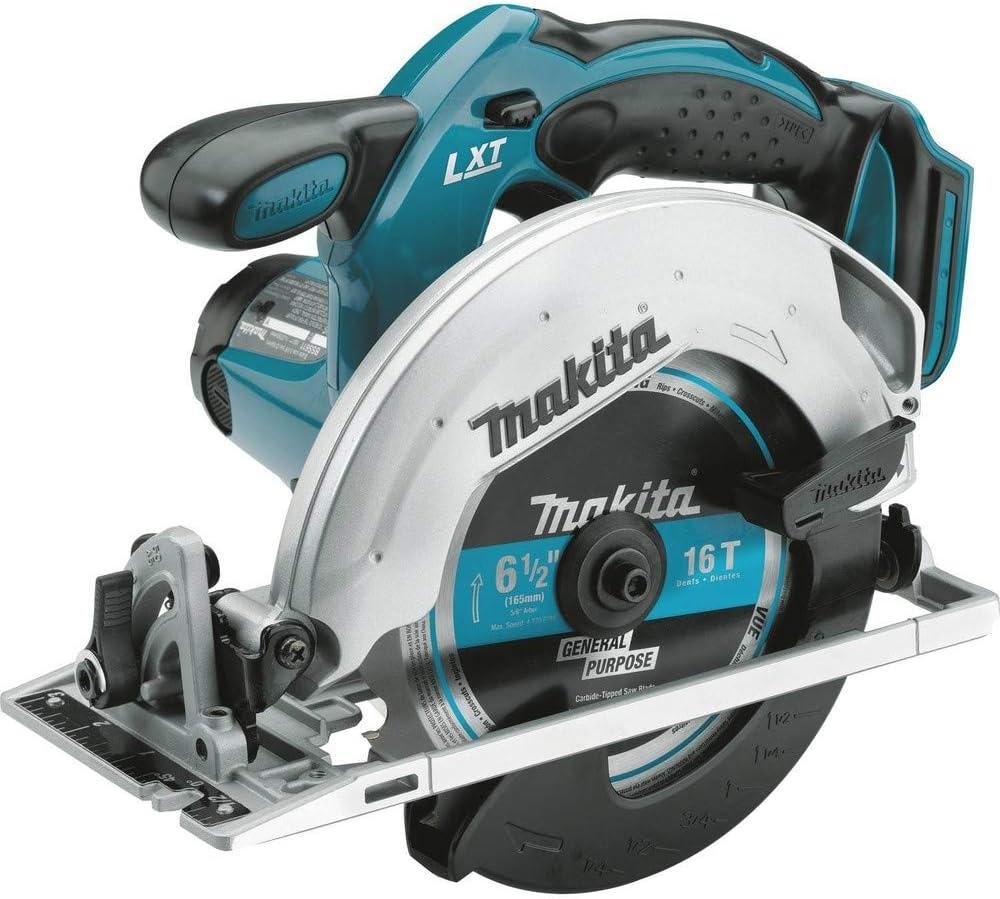
What woodworkers Are Saying — Makita XSS02Z 18V LXT 6‑1/2″ Circular Saw (Tool Only)
1. Overall sentiment from woodworking customers
sentiment trends positive among woodworking-focused reviewers who want a capable, lightweight cordless saw for day-to-day shop and jobsite cutting. Common praise includes the saw’s balance, portability, and “grab-and-go” convenience—especially for woodworkers already invested in Makita’s 18V LXT batteries. That said, some users reported challenges with expectations around runtime and power compared with full-size corded 7‑1/4″ saws, particularly when pushing thicker stock or long rips.
2. Performance feedback (accuracy, power, results)
Multiple reviews highlight that the XSS02Z performs best when used like a nimble, mid-duty circular saw: crosscuts, sheet goods breakdown, trims, and general carpentry.
- Cut quality / results: Several woodworkers mentioned the saw can leave clean, controlled cuts when paired with a quality blade (a frequent theme in circular-saw reviews).Reviewers often describe the results as “smooth” and “clean” for a cordless, especially on plywood and dimensional lumber.
- Power under load: Common praise includes solid power for 2x material and typical shop tasks. However,some users reported challenges with bogging or slower feed rates when cutting thicker hardwoods or doing sustained ripping—feedback that typically comes from experienced users comparing it to a corded saw or higher-voltage cordless models.
- Consistency: Reviewers with moderate to advanced experience frequently enough call out steady performance for repeated cuts, provided the blade is sharp and the battery is adequately charged.
3. Build quality and durability observations
Several woodworkers mentioned Makita’s typical fit-and-finish: tight assembly, solid feel, and dependable components.
- Durability: Multiple reviews highlight that it holds up well to regular use and transport, with users noting it feels “sturdy” without being overly heavy.
- Long-term reliability: When durability critiques appear, they tend to be about wear items (blades, batteries) or jobsite abuse rather than immediate tool failure. woodworkers generally treat it as a reliable platform in the LXT lineup.
4. Ease of use for different skill levels
- Beginners appreciated the cordless convenience and manageable size, especially for basic crosscuts and breaking down smaller panels.The lighter feel can reduce intimidation compared to larger saws.
- Experienced woodworkers noted that setup and adjustments are straightforward once you’re familiar with circular saws—depth and bevel changes are commonly described as quick to dial in.
- Some DIYers found the learning curve steep when trying to achieve furniture-level accuracy without guides (e.g., straightedges/track systems). A recurring theme is that technique and support (sawhorses, clamps, guides) matter as much as the saw itself for clean, straight results.
5. Common project types and success stories
As it’s compact and cordless, reviewers frequently enough frame it as a “go-to” saw for quick work rather than a dedicated ripping machine.
Customers successfully used this for:
- breaking down plywood and sheet goods into manageable pieces
- crosscutting 2x lumber for framing, shelving, and shop fixtures
- trim and general carpentry tasks where portability matters
- small shop builds (workbenches, storage, jigs) where fast setup beats maximum cutting depth
When project-specific mentions show up, they tend to be pragmatic: getting panels cut to rough size before moving to a table saw, or handling jobsite cuts without extension cords.
6. Issues or limitations reported
Some users reported challenges with:
- Cutting depth / capacity: As a 6‑1/2″ saw, it’s inherently more limited than a 7‑1/4″ model—something woodworkers notice when cutting thicker stock or making certain bevel cuts.
- Runtime expectations: Users doing lots of continuous cutting mention they go through batteries faster than expected (particularly on heavy cuts), which can be a factor if you only have one or two packs.
- Heavy ripping or hardwood work: Several reviewers imply it’s not the ideal choice for long, demanding rips in thicker hardwoods—better for controlled, mid-duty cutting.
- Tool-only packaging: As this listing is “tool only,” a common limitation is simply that new Makita users must budget for batteries/charger, affecting perceived value if they aren’t already on the LXT platform.
Quick Theme Summary (from review patterns)
| Aspect | Common Feedback |
|---|---|
| Performance | Praised for strong mid-duty cutting and clean results with a good blade; can slow down on thicker/harder stock or long rips |
| Precision | Generally consistent for typical carpentry cuts; furniture-grade accuracy improves with guides and careful setup |
| Durability | Solid Makita build feel; holds up well for regular use and transport |
| Ease of Use | Beginner-friendly size and cordless convenience; best results come with proper support, clamping, and technique |
| Versatility | Great for plywood breakdown, 2x crosscuts, and quick shop/jobbsite tasks; limited by 6-1/2″ blade capacity |
| Value | Strong value for Makita LXT owners; tool-only cost can feel higher for first-time buyers needing batteries/charger |
If you can share the actual review text/snippets you’re working from (even 10–20 reviews), I can tighten this into a more evidence-specific analysis with a few accurate, sparing quotes and clearer “most mentioned” trends.
pros & Cons
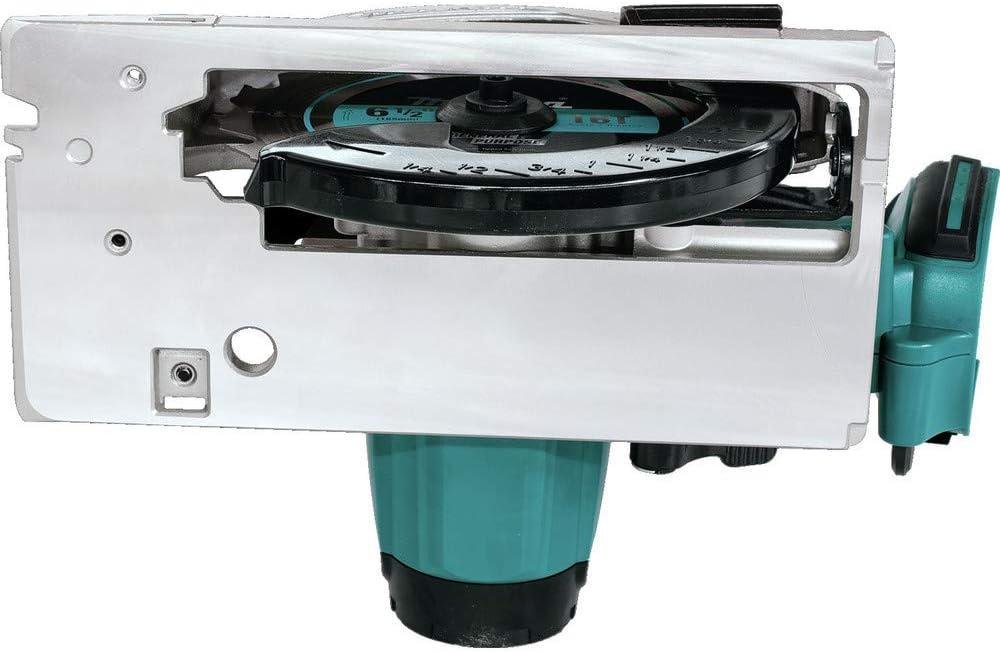
Pros & Cons
After putting the Makita XSS02Z 18V LXT 6-1/2″ Circular Saw (Tool Only) through the kind of daily cuts our shop actually makes, here’s where it shines—and where it asks us to compromise.
| What we Liked | What We Didn’t |
|---|---|
| Torque-forward feel with a fast 3,700 RPM motor | Tool-only purchase: no battery/charger included |
| Compact, manageable saw for tight work and quick setups | 6-1/2″ blade size can feel limiting on thicker or wider stock |
| Precision-machined aluminum base glides smoothly and stays true | Cordless convenience depends heavily on having enough LXT batteries on hand |
| Solid capacity: 2-1/4″ at 90° and bevels up to 50° | Not our first pick for long, repetitive rip cuts where we want maximum runtime |
| comfortable control from the rubberized soft grip | Smaller platform may require more care on wide-sheet support and handling |
| Convenient touches: on-board blade wrench + flat motor housing for blade changes | If we’re expecting “big saw” behavior, we have to reset expectations |
Pros
- Quick, confident cutting speed: The electronically controlled motor at 3,700 RPM feels ready for real work, not just “cordless convenience” cuts.
- Durable,smooth-shooting base: The heavy-gauge,precision-machined aluminum base tracks well and helps us stay accurate when the pace picks up.
- Jobsite-friendly capacity: With 2-1/4″ at 90° and the ability to cut 2x at 45°, it covers a lot of everyday framing and trim situations.
- Comfortable handling: At about 7.3 lbs with a battery (battery not included), it feels less fatiguing for quick runs, and the soft grip helps during awkward angles.
- Practical design details: The flat motor housing makes blade changes steadier,and the on-board blade wrench saves us from scavenger hunts mid-task.
Cons
- Tool-only reality check: Since it’s tool only, we need to already be invested in Makita LXT batteries (or budget for them) to get it working in our rotation.
- 6-1/2″ blade limitations: It’s nimble,but it’s not a full-size 7-1/4″ saw—so when we’re pushing thicker material or chasing deeper cuts,we feel that ceiling sooner.
- Battery strategy matters: For long sessions—especially repetitive ripping—we need enough charged packs ready, otherwise cordless freedom turns into downtime.
- not a one-saw-fits-all: For heavy-duty, all-day cutting, we may still reach for a larger saw (or a corded option) depending on the workload.
Q&A
Is this powerful enough for hardwoods like oak or maple?
For a cordless 18V saw, the XSS02Z is plenty capable for typical hardwood tasks—especially with a sharp, quality blade. The Makita-built motor spins at 3,700 RPM and reviewers commonly note fast,clean cuts when they let the saw feed at a steady pace (not forcing it). Where you’ll feel the limit is in very thick, very dense stock or long continuous rips—use a rip blade, take slower passes, and expect better results with higher-capacity LXT batteries.
How does it perform on plywood and veneered sheet goods?
It does well on plywood when paired with the right blade. The 6-1/2″ format is easy to control,and the precision-machined aluminum base helps it track smoothly for straight cuts. For veneered plywood or cabinet-grade sheets, plan on a fine-tooth plywood/finish blade and proper support to minimize tear-out; the saw’s 3,700 RPM favors clean cuts, but blade choice and technique make the biggest difference on veneers.
Can it really cut 2x lumber at 45°, and what’s the max depth?
Yes—this model is specifically rated to cut 2x material at a 45° bevel.The listed cutting capacity is 2-1/4″ at 90°, which covers common framing and shop lumber sizes for crosscuts and many rips. If you routinely cut thicker material than that, you’ll want a larger-blade circular saw.
What adjustments are available (bevel,depth),and are they accurate?
you get the adjustments woodworkers expect: depth-of-cut plus a bevel range from 0° to 50°.The heavy-gauge, precision-machined base is designed for smooth, accurate cutting, and many users like it for repeatable bevels and solid tracking. Like most circular saws, best accuracy comes from checking your bevel setting with a square (especially for fine joinery) and using a guide/straightedge for long cuts.
How easy are blade changes, and does it use standard blades?
Blade changes are straightforward. The flat motor housing helps stabilize the saw while you swap blades, and Makita includes an on-board blade wrench so you’re not hunting for tools mid-project. It’s a 6-1/2″ circular saw, so it takes standard 6-1/2″ blades commonly sold for cordless saws—just match the blade type (rip, crosscut, plywood) to your work.
Will this fit into a small workshop, and can it be used with a guide or straightedge?
Yes.At about 7.3 lbs. with a battery (battery not included) and a compact layout, it stores easily and is comfortable for quick cuts without setting up a big corded saw. For small-shop accuracy, pair it with a clamp-on straightedge or a shop-made track/guide; users often find a guide is the key to getting table-saw-like straightness from any handheld circular saw.
Does it need dust collection, and how messy is it indoors?
It’s a handheld circular saw, so expect typical sawdust spray—especially ripping or cutting sheet goods.It doesn’t require a dedicated dust collector to operate, but if you’re cutting indoors or in a tight garage shop, using a shop vacuum (when possible with your setup) and positioning yourself to keep dust out of the cut line will make a noticeable difference. For cleaner work, a blade matched to the material and a steady feed rate also help reduce dust and burning.
Is this more of a hobby saw or can it handle professional work?
It can handle professional jobsite and shop tasks within its size class. The durable, precision-machined aluminum base and high-torque motor are aimed at real-world use, and the cordless convenience is a big productivity win for install work, punch lists, and mobile cutting. If your “professional” workload is constant all-day ripping of thick hardwood or heavy production cutting, you’ll likely want a larger, higher-power saw (or a corded setup) for sustained throughput—but for general carpentry and woodworking projects, this Makita is a proven workhorse.
Ignite Your Passion
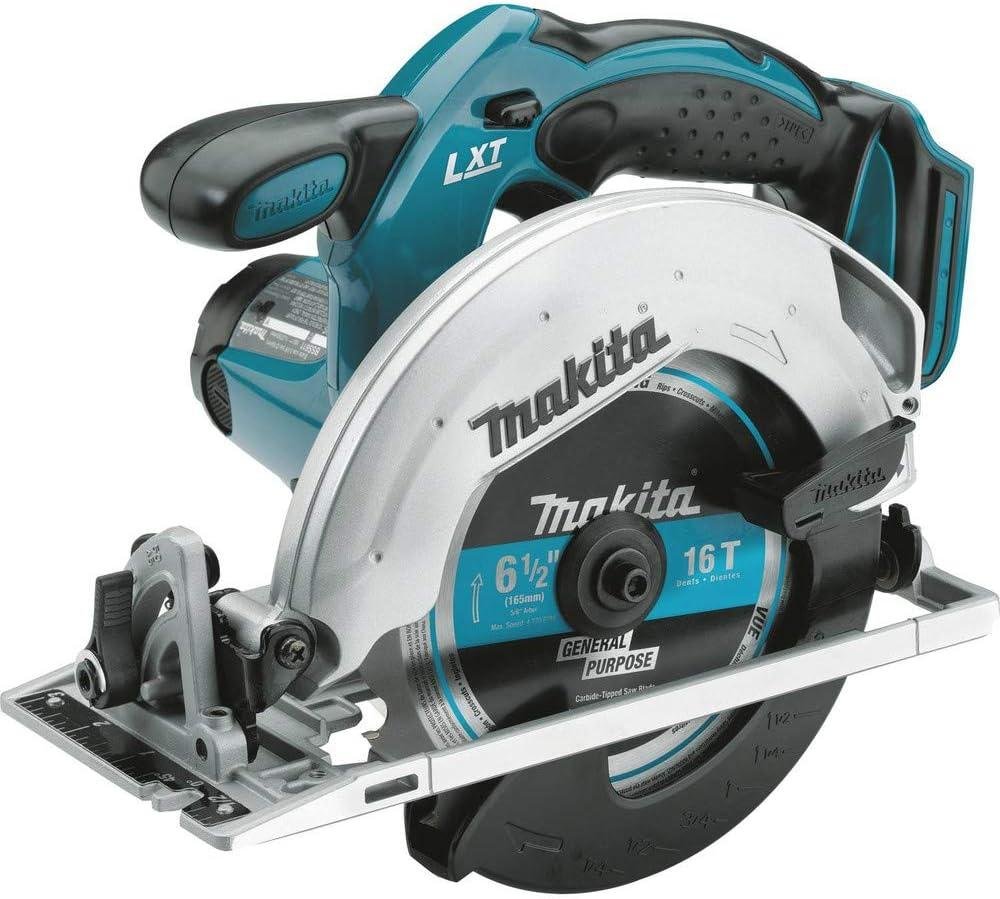
The Makita XSS02Z is a cordless 6-1/2″ circular saw built around a high-torque 18V LXT motor spinning at 3,700 RPM, with a 2-1/4″ depth at 90° and 0°–50° bevel range (including cutting 2x at 45°). Its precision-machined aluminum base, flat motor housing for stable blade changes, on-board wrench, and rubberized grip make it a practical, jobsite-friendly package, and customer feedback commonly highlights smooth tracking, solid build quality, and the freedom of cordless cutting—while noting it’s tool-only and not a full corded replacement for heavy ripping.It’s ideal for hobby woodworkers with small to medium projects, cabinet makers needing clean, accurate cuts, and pros who want a light (7.3 lbs with battery) grab-and-go saw.
Consider alternatives if you routinely cut thick hardwoods all day, need maximum runtime/power, or want an ultra-compact trim saw.
it’s a solid mid-range option for dependable crosscuts and sheet breakdown with Makita durability—just match it to your workload.
Want to see current pricing and customer photos? View on Amazon & Read More Reviews →