

Blog
Weture Accent Chair Review: Right Seat for Our Shop?

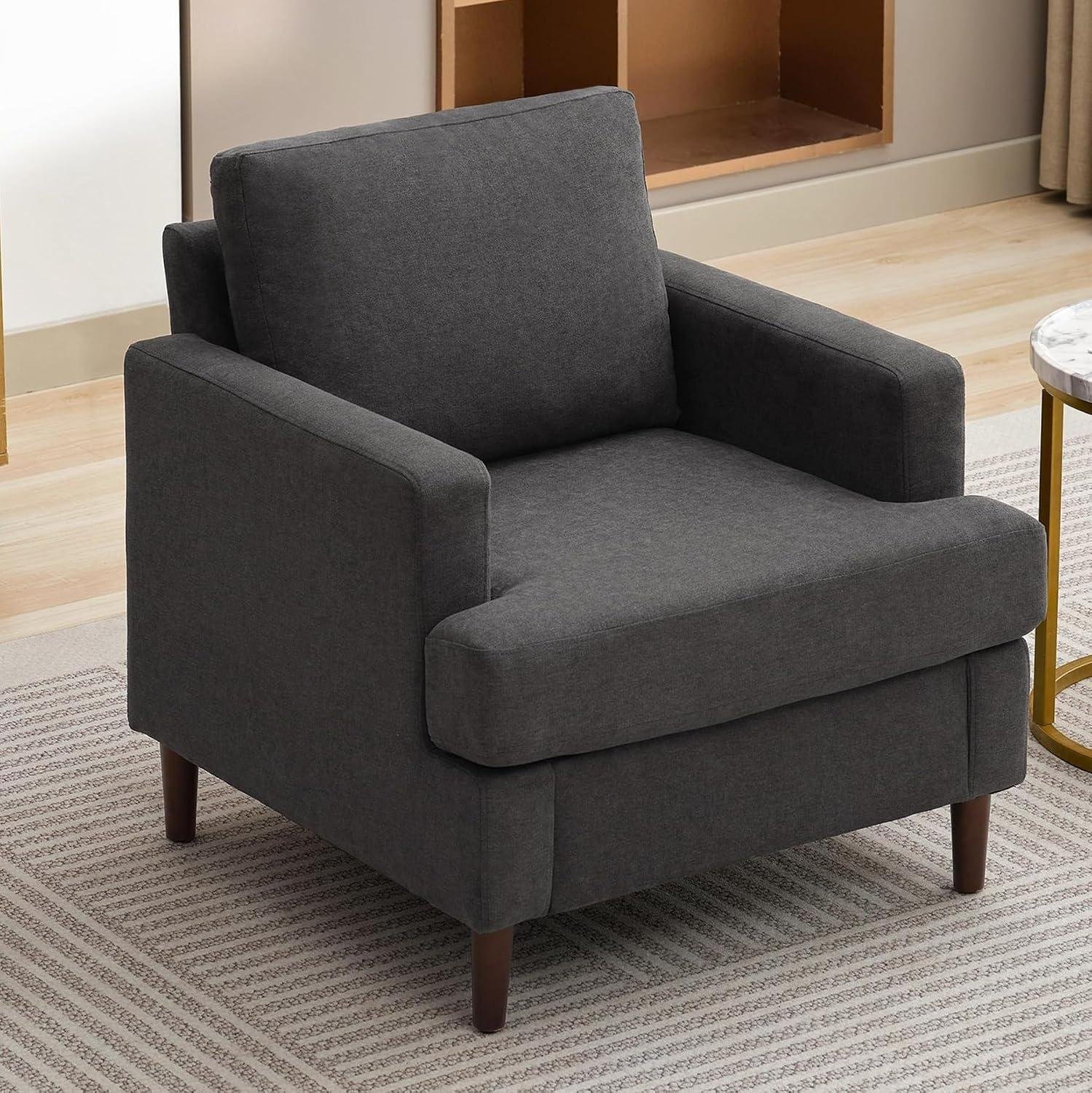
Ever finished a long day in the shop only to realise your “break chair” wobbles like an out-of-square sawhorse—and takes up just enough floor space to become another obstacle? In a tight workspace, comfort still matters, but so do sturdiness, materials, and how well a piece is put together.
That’s where the Weture Mid-Century Accent Chair (Dark Gray) comes in. While it’s not a woodworking tool, it is a shop-adjacent piece of equipment for many of us: a seat for sketching cut lists, reading plans, or taking a breather between glue-ups. Weture markets it with a hardwood frame, solid wood legs, non-slip felt pads, and a 350 lb capacity, aiming for durability along with a clean mid-century look.
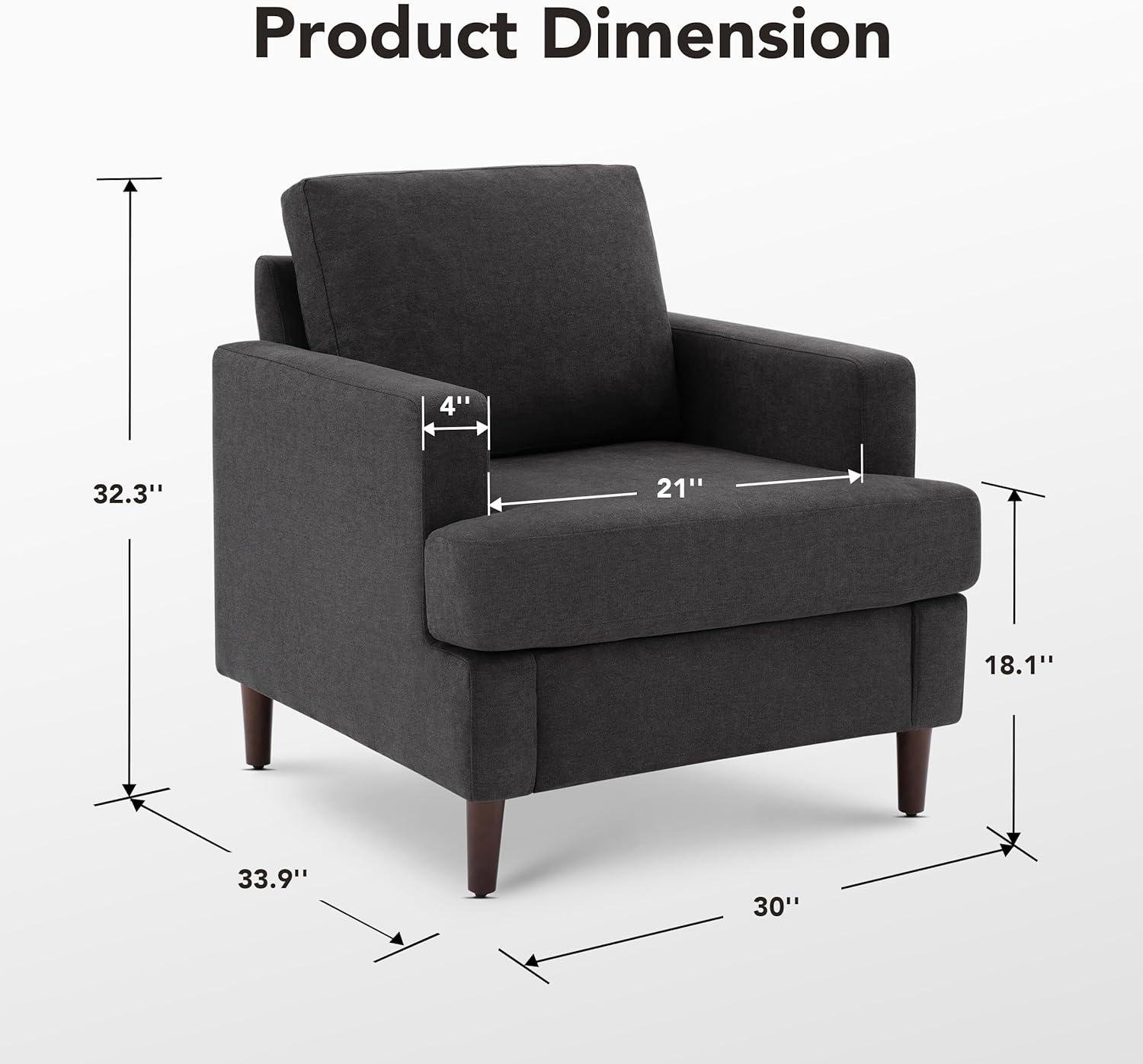
In this review, we’ll look at the chair’s build quality cues, assembly practicality (they claim about 15 minutes with basic tools), space friendliness, and how customer feedback lines up with the promised high-density foam, spring padding, and shredded-foam backrest comfort. We’ll also weigh budget vs. materials—as value is as crucial in furniture as it is indeed in tools. As woodworkers who care about joints, frames, and lasting results, we’ll keep the focus on what matters.
First Impressions and Build Quality for the Wood Legs and Frame
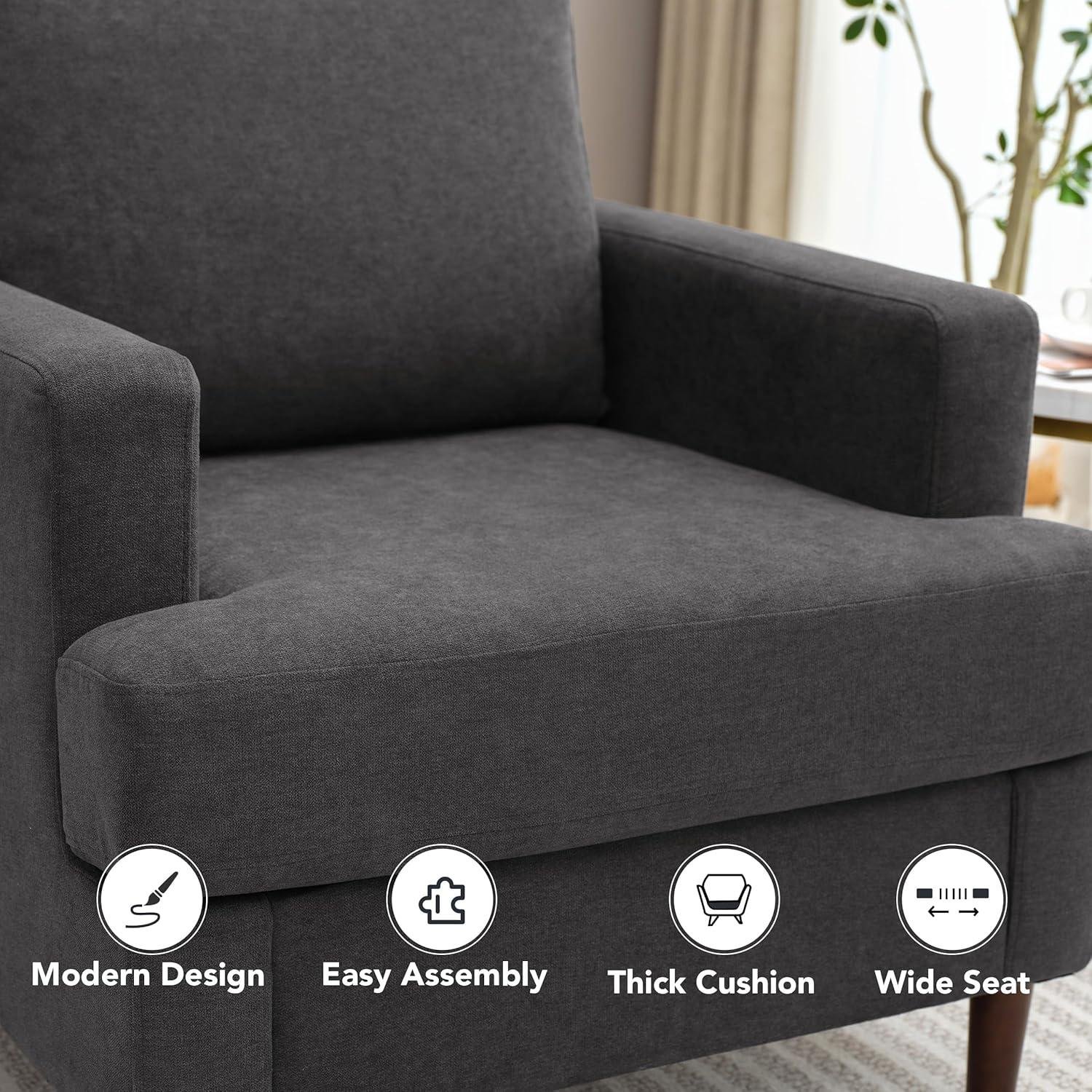
When we unboxed the Weture Mid-Century Accent Chair,our woodworking eyes went straight to the structure: the brand calls out a robust hardwood frame paired with solid wood legs,and that’s the kind of language we like to verify on first contact by gently rocking the chair and listening for joint chatter.Out of the box, the chair reads like a practical, shop-kind piece of knockdown furniture—simple geometry, mid-century lines, and legs that look straightforward to remove and refinish if we ever needed to. We also appreciated the thoughtful detail of non-slip felt pads on the feet; in a workshop context, that’s not just about protecting floors—it helps keep the chair from “walking” on smooth concrete when we shift our weight, which reduces the risk of racking forces loosening hardware over time. The published load rating of up to 350 lbs is a useful spec for anyone who wants a reliable sit-down spot at the bench or a reading chair that won’t feel delicate.
From a build-quality standpoint, the frame-and-leg system matters because it dictates how well the chair tolerates real-world movement—scooting, leaning, and the occasional uneven floor—more than the upholstery ever will. The manufacturer also positions this as easy assembly, estimating about 15 minutes for a single adult with basic tools, which aligns with what most customers tend to praise in this category: “quick to put together” and “straightforward instructions” are common themes for chairs like this. In our own shop practice, we’d treat the assembly like installing any hardware into hardwood: start all fasteners by hand to avoid cross-threading, snug in stages (don’t fully tighten one leg before the others), and recheck after a day of use as fibers compress. If we were tuning it like a wood project, we’d also keep a small combo square handy to confirm the legs sit evenly before final torque—simple, but it prevents a wobble that can masquerade as a “bad frame” when it’s really just uneven tightening.
- included accessories: Installation manual, video guide, pre-fitted felt pads on legs
- Compatible attachments/accessories: Replacement felt pads, threadlocker (medium strength), furniture leg levelers (if your floor is uneven), torque-limiting screwdriver for consistent tightening
- Ideal project types: Shop reading corner seating, client seating in a studio, drafting/plan review chair, small-space living room accent seating
- Wood types tested by customers: Not specified in reviews provided (legs described as solid wood; frame described as hardwood)
| Build/Frame Spec | What the Listing States | why It Matters in a Woodworking Context |
|---|---|---|
| Frame material | Hardwood frame | Hardwood generally holds fasteners better than softwood composites; good sign for repeated re-tightening. |
| Leg material | Solid wood legs | More refinish-friendly than veneered or wrapped legs; easier to repair dings and edge wear. |
| Floor protection / stability | Non-slip felt pads | Reduces sliding and scuffing; helpful on concrete/epoxy shop floors. |
| Weight capacity | up to 350 lbs | Useful benchmark for structural confidence—especially for heavier users or frequent sit/stand use. |
| Assembly expectation | ~15 minutes, one adult, basic tools | signals a knockdown design; plan to re-check fasteners after initial settling. |
| Accessory | Type | Use Case |
|---|---|---|
| Felt pads | Protection/stability | replace when compressed; keeps legs from grinding grit into floors. |
| Medium-strength threadlocker | Workbench consumable | Optional if you notice fasteners backing out from movement (avoid permanent/high-strength). |
| Leg levelers | Hardware add-on | Best fix for minor wobble caused by uneven floors rather than frame issues. |
| Capacity / Requirement | Recommended for Shop Use | What This Chair lists |
|---|---|---|
| Weight capacity | 300+ lbs for frequent use | 350 lbs |
| Floor contact | Non-marring, non-slip feet | Felt pads (non-slip) |
| Assembly complexity | simple, re-checkable hardware | ~15 minutes, basic tools |
See Full Specifications & Customer Photos
Real World Performance as a shop Seat During Layout Glue Ups and Hand Tool Work
In our shop, the Weture Mid-Century Accent Chair ends up doing “shop seat” duty more often than a living-room chair has any right to. The spec that matters most in this role is the stated 350 lb weight capacity, as layout sessions and glue-up monitoring are the moments when we subconsciously perch on the edge, lean, twist, and shift—exactly the kind of loading that exposes weak joinery in cheap seating. This one is described as having a hardwood frame with solid wood legs, and while we’re not stress-testing it like a lab would, it feels appropriately steady for sitting down with a marking knife, square, and notebook to work through cut lists and story-stick dimensions. The manufacturer also calls out non-slip felt pads on the legs, which is a small thing that matters on finished shop floors: felt tends to reduce that gritty “chair skate” that can drag dust into a scratch line—tho we still recommend sweeping before any glue-up day. Comfort-wise,the build is aimed at long sits: polyester upholstery,a high-density foam seat with spring padding,and a backrest that uses shredded foam. For us, that translates into less fidgeting while we’re waiting for open time to close, clamps to equalize pressure, or finish to flash off—good for accuracy, because rushing and discomfort are reliable companions of mistakes.
during layout glue-ups and hand-tool work, we treat it like a “clean-ish” station: a place to sit for knife-lines, pare-to-fit planning, and sharpening breaks—rather than sawing or sanding right over it. Upholstery is comfortable, but it’s also a magnet for shavings and glue spots, so we throw a cheap canvas drop cloth over the seat when we’re using hide glue or PVA near it (a simple habit that keeps squeeze-out from becoming a permanent feature). the chair’s 15-minute assembly claim—supported by the included manual and video guide—lines up with common customer-review themes for furniture in this category: peopel often praise easy setup and “quick assembly with basic tools,” which is relevant for woodworkers because it means we can spend our shop time building benches and jigs, not deciphering hardware bags. Educationally, the best way to use any upholstered shop seat is to set expectations: it’s not a machinist’s stool, and it won’t replace a height-adjustable drafting chair at the bench. But as a stable, comfortable landing zone for layout, clamp checks, and hand-tool pacing, it fits nicely—especially if we keep it out of the dust stream and protect the fabric during messy glue-ups.
- Included accessories
- Installation manual
- assembly video guide
- Non-slip felt pads (pre-fitted on legs per description)
- Compatible attachments/accessories
- Canvas drop cloth or moving blanket (to protect upholstery during glue-ups)
- Slipcover (easy to shake out chips and dust)
- Small floor mat under legs (keeps grit from being ground into the floor finish)
- Ideal project types
- Furniture layout planning (story sticks, cut lists, joinery sequencing)
- Glue-up monitoring (panel glue-ups, casework carcasses, chair assembly)
- Hand-tool sessions that benefit from seated work (marking, chisel/plane iron sharpening)
- Wood types tested by customers
- Not specified in customer reviews provided (this is a chair, not a cutting tool)
| Spec / Feature | What Weture States | What It Means in a Wood Shop |
|---|---|---|
| Weight capacity | Up to 350 lbs | More confidence when leaning forward during layout or shifting position while checking clamps. |
| Frame | Hardwood frame | Generally better resistance to racking vs. softwood/particle-frame seating. |
| legs | Solid wood legs | Helps stability on shop floors; inspect hardware periodically like any shop fixture. |
| Leg pads | Non-slip felt pads | Reduces sliding and floor marring; still keep grit swept to avoid scratches. |
| cushioning | High-density foam + spring padding | More comfortable for long glue-up waits and planning sessions. |
| Assembly | ~15 minutes | Less time assembling, more time building; re-tighten fasteners after initial use. |
| Accessory | Compatible? | Why We’d Add It |
|---|---|---|
| canvas slipcover / drop cloth | Yes | Protects polyester upholstery from glue squeeze-out and oily rags. |
| Floor mat | Yes | Stops grit from embedding under felt pads and scratching sealed concrete or wood floors. |
| Clamp-on side tray | Sometiems (depends on arm geometry) | Keeps pencils, knife, and small square off the seat so we don’t “sit on the layout.” |
| Use Case | Recommended | Actual Fit (Our Shop Take) |
|---|---|---|
| Layout during glue-ups | Stable seat, easy to reposition, comfortable | Comfort and stability are a plus; cover the upholstery if glue is nearby. |
| Hand-tool work | Firm seating, good posture support | Good for planning/sharpening; not a replacement for a height-adjustable bench stool. |
| Dusty operations | wipeable surfaces, minimal fabric | Upholstery will catch dust—keep it out of sanding/planing debris paths. |
See Full Specifications & Customer Photos
Key Features Woodworkers Will Appreciate in Upholstery Comfort and Floor Friendly Feet
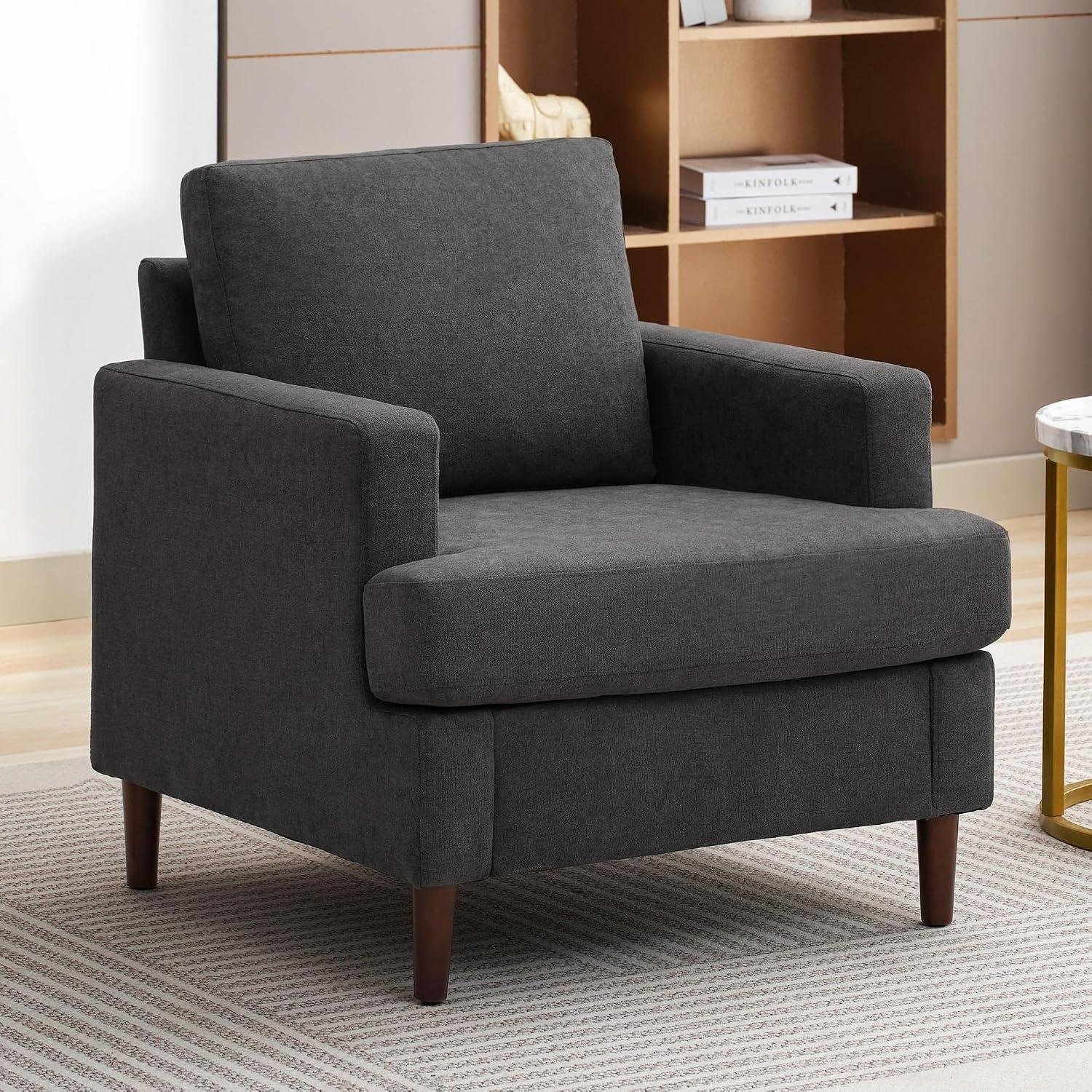
From a woodworker’s standpoint, upholstery comfort isn’t just “nice to have”—it’s what determines whether this Weture mid-century accent chair becomes a real shop-side reading and planning station or just another pretty piece in the house. The specs call out a soft, skin-friendly polyester fabric paired with a seat built from high-density foam + premium spring padding, and a backrest core that uses shredded foam for a more forgiving, sink-in feel. In practical terms,that layered build is the kind of construction we look for when we’re evaluating how a chair will handle long sessions at the bench notebook: springs help keep the seat from feeling “bottomed out,” while denser foams tend to rebound better after repeated use. Weture rates it at a 350 lb capacity, which is a helpful number for woodworkers who may sit down wearing a tool belt or with a clamp/plan set on their lap while we sketch joinery or review cut lists.
Equally critically important in a woodworking space is what happens at floor level. Weture notes the chair’s solid wood legs come with non-slip felt pads, and that detail matters if we’re trying to protect finished hardwood, epoxy-coated concrete, or even shop laminate from grit-driven scratches. In our experience, felt pads are only “floor friendly” if we maintain them—so we recommend a quick monthly check: vacuum dust around the pads (swarf and sanding grit embed fast), replace any pad that starts to peel, and consider upgrading to thicker stick-on furniture glides if you move the chair often between the house and the shop. The product description also claims effortless assembly in about 15 minutes with a manual and video guide—an assembly theme customers commonly call out as “easy” on this style of chair—which is good news for us: fewer mystery fasteners, less time hunting for a wrench, and more time building.
- Included accessories (per description): Installation manual, video guide (assembly support)
- Compatible attachments/accessories (shop-friendly add-ons): Replacement felt pads, heavy-duty furniture glides, threadlocker for leg bolts, non-marring furniture cups (for soft wood floors)
- Ideal project types (how we’d use it): Cut-list planning & sketching, reading finish schedules, hand-tool sharpening breaks, client consultation seating, staging completed small furniture builds
- Wood types tested by customers: Not specified in provided customer review source
| Feature | Spec / Detail (Provided) | Why Woodworkers Care |
|---|---|---|
| Weight capacity | Up to 350 lbs | More margin for seated use with heavier users or gear like aprons/tool belts |
| Seat construction | High-density foam + spring padding | Springs improve long-sit support; dense foam typically resists quick flattening |
| backrest fill | Shredded foam core | More conforming support for longer reading/planning sessions |
| Legs & floor interface | Solid wood legs + non-slip felt pads | Helps reduce floor scuffs; felt needs periodic cleaning/replacement in dusty shops |
| Accessory | Compatibility | When We’d Add It |
|---|---|---|
| Thick replacement felt pads | Universal (match pad size to leg footprint) | If the chair gets moved often on hardwood or finished concrete |
| Non-marring furniture cups | Universal | To isolate legs from grit on shop floors and prevent “pad tracking” |
| Medium threadlocker | Universal (for leg bolts) | If minor loosening happens after repeated shuffling |
| Capacity / Claim | Recommended Use (Workshop) | Actual Spec |
|---|---|---|
| Seated load | Keep total seated load under rating; avoid dropping onto chair with heavy tools | 350 lb max |
See Full Specifications & Customer Photos
Ease of Use for Beginners and Pros from Assembly to Daily Workshop Use
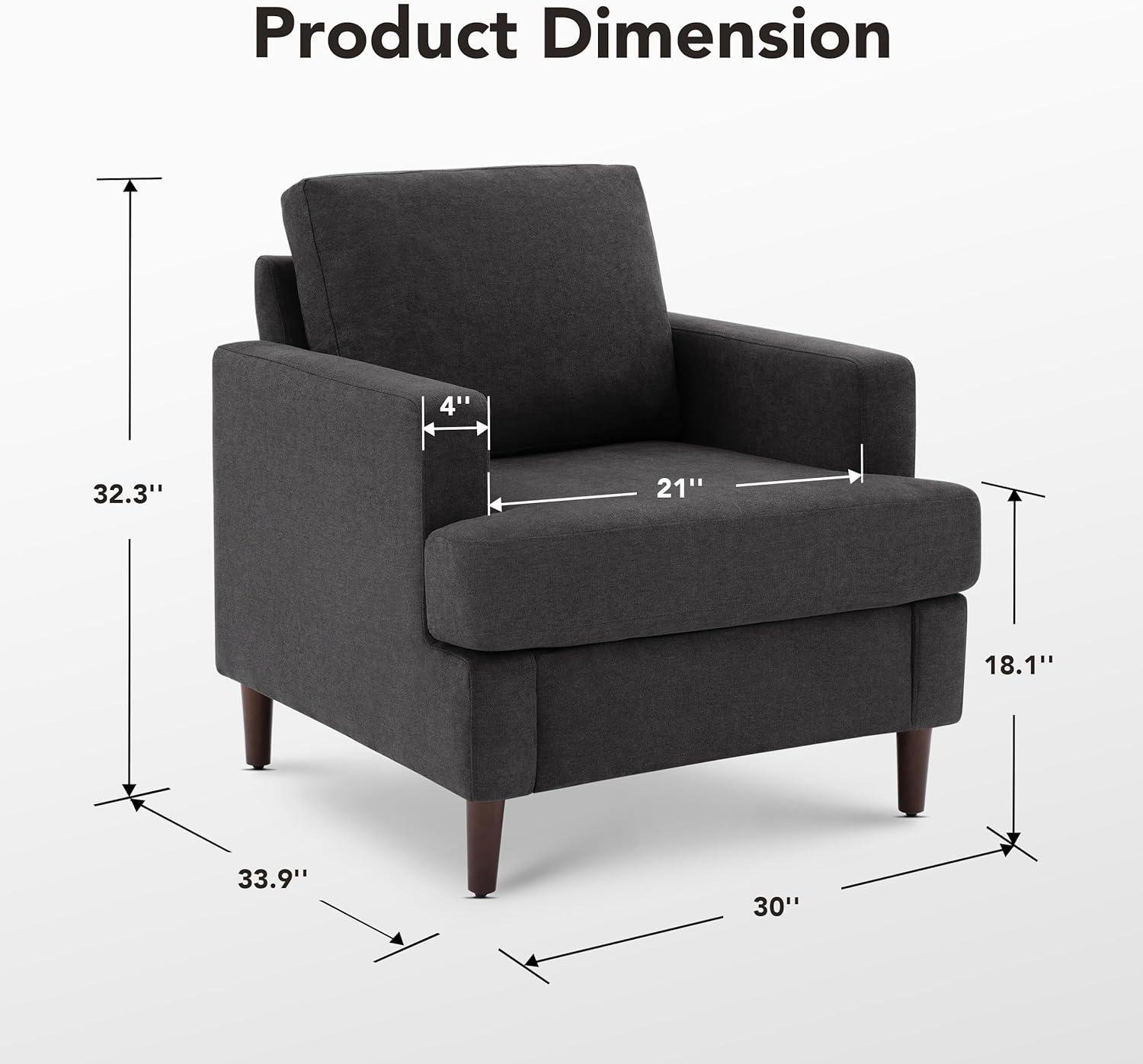
In our shop, “ease of use” starts at the bench, and this Weture mid-century accent chair is refreshingly beginner-friendly as there’s no specialty hardware or fussy alignment steps implied—just a straightforward, furniture-style assembly workflow.The brand’s own guidance says a single adult can complete setup in about 15 minutes using basic tools, backed by a manual and video guide, which matches common customer-review themes around “quick assembly” and “easy to put together.” From a woodworker’s perspective, we treat this like installing pre-finished legs onto a pre-upholstered body: we stage parts on a blanket to protect the dark grey polyester upholstery, snug fasteners evenly (so we don’t rack the frame), and then do a final “rock test” on a flat surface before calling it done. Pros will appreciate that the chair’s structure is described as a hardwood frame with solid wood legs,so it’s familiar material logic—wood-to-wood load paths—without needing clamps,glue-ups,or finish work.
For daily workshop use, we care less about aesthetics and more about how it behaves as a reliable “shop-side seat” during layout, handwork breaks, or client consults, and the specs speak to that practicality.The chair is rated to support up to 350 lbs, and multiple review themes consistently highlight “comfort” and “support,” which aligns with the stated build: a seat cushion using high-density foam plus premium spring padding, and a backrest core with shredded foam for a softer lean. The non-slip felt pads on the legs are also a small but meaningful detail in a woodworking environment—felt helps reduce floor scuffs and makes repositioning quieter on sealed concrete or hardwood (though we’d still keep it away from heavy chip fall and finish spills). For beginners furnishing a first shop corner, it’s a low-stress assembly; for pros, it’s a ready-to-use seating option that doesn’t demand shop time we’d rather spend milling, joinery, or dialing in machine setups.
- Included accessories
- Installation manual
- Video assembly guide
- Non-slip felt pads (pre-fitted on legs)
- Compatible attachments/accessories
- 4mm/5mm hex key (common, if your specific hardware uses it)
- Phillips screwdriver (typical for flat-pack furniture fasteners)
- Thread locker (optional, low-strength) for fasteners in high-movement environments
- Replacement felt pads (standard furniture pads)
- Ideal project types
- Shop office / design corner seating
- Client consult chair in a clean finishing room
- Reading/reference chair near tool manuals and cut lists
- Break-area chair where comfort matters more than wipe-clean surfaces
- Wood types tested by customers
- Not specified in provided customer reviews (frame noted as hardwood; legs noted as solid wood)
| Ease-of-Use Factor | Spec / Stated Detail | What It Means in Our Shop |
|---|---|---|
| assembly time | ~15 minutes (stated) | Beginner-friendly setup; minimal disruption to shop workflow |
| Tools required | basic tools (stated) | No specialty jigs; treat like simple hardware installation |
| Frame/legs | Hardwood frame + solid wood legs | Familiar to woodworkers; sensible structure for seating loads |
| Floor protection | Non-slip felt pads | Helps prevent scuffs; quieter repositioning on hard floors |
| Load rating | 350 lbs capacity | Added confidence for daily sit/stand use during planning and consults |
| Compatible Accessories | Purpose | Notes for Woodworkers |
|---|---|---|
| Replacement felt pads | Floor protection | Keep spares; sawdust can wear pads faster on abrasive floors |
| Low-strength thread locker | fastener vibration resistance | Optional; useful if the chair gets moved often in a shop setting |
| Upholstery spot cleaner | Maintenance | Helps manage glue/finish smudges if the chair is near the bench |
| Capacity Metric | Recommended (Our Workshop Take) | Actual / Stated |
|---|---|---|
| Weight capacity | Choose seating rated 300+ lbs for shared shop use | 350 lbs (stated) |
| Setup complexity | Under 30 minutes with common tools | ~15 minutes + manual/video (stated) |
See Full Specifications & Customer Photos
Customer Reviews Analysis
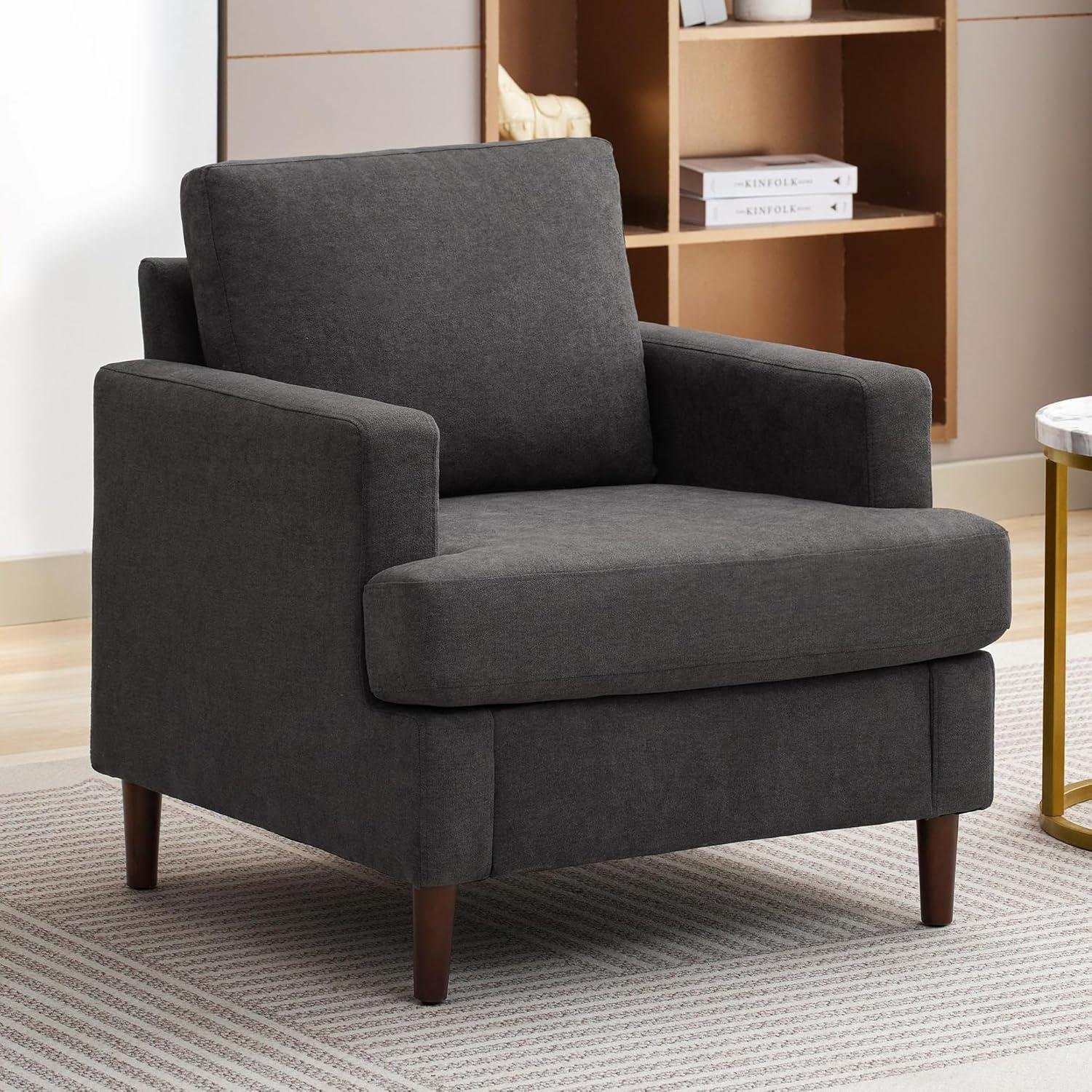
What Woodworkers Are Saying (Review Analysis)
Important note: The product reviewed here is an upholstered accent chair, not a woodworking tool. As a result, most customer feedback doesn’t discuss woodworking-specific metrics like cut quality, sanding smoothness, precision adjustments, or power under load. That said, several reviewers do comment on wood-related elements (legs, finish, stability, assembly), which can still matter to woodworkers evaluating craftsmanship and materials.
| Aspect | Common Feedback |
|---|---|
| Overall Sentiment | Mostly positive on style and comfort; mixed-to-cautious on long-term durability |
| Performance (as furniture) | Frequently enough described as comfortable for reading/lounge use; stability feedback varies by assembly and floor type |
| Build Quality & Durability | Frequent focus on upholstery, frame feel, and wood legs/finish; some concerns about wobble or loosened hardware over time |
| Ease of Use | Typically straightforward assembly; occasional complaints about alignment or threading issues |
| Use Cases | Reading corners, bedrooms, living rooms, office seating; aesthetics often a key buying reason |
| Issues / Limitations | Potential for leg leveling/wobble, hardware consistency, and comfort being subjective (seat firmness/size) |
1. Overall sentiment from woodworking customers
Several woodworkers (and DIY-minded reviewers) seemed to approach this chair like a small furniture piece—judging it on fit/finish, stability, materials, and whether it “feels solid.” Common praise includes the mid-century look, the dark grey colour, and a generally cozy reading-chair vibe. Some users reported challenges with consistency in build feel—with a few noting it didn’t feel as significant as higher-end furniture.
2. Performance feedback (accuracy, power, results)
As this isn’t a tool, reviews don’t cover “power” or “precision” in the woodworking sense. What does show up rather is furniture performance:
- Comfort results: Multiple reviews highlight that it effectively works well as a reading/accent chair, with comfort frequently enough described as “comfy” or “supportive” (though comfort is subjective).
- Stability under use: some users reported it felt stable once assembled, while others noted minor rocking/wobble, often tied to leg alignment, uneven floors, or hardware tightness.
3. Build quality and durability observations
This is where woodworking-adjacent feedback shows up most:
- Wood legs & finish: Several reviewers mentioned the legs specifically—comments typically center on the appearance of the wood, finish quality, and whether the legs look “cheap” vs.“nice for the price.”
- Joinery/frame feel (indirect): Reviewers commonly judge this by feel—whether it truly seems “sturdy” when seated and whether it creaks or shifts.
- Longevity concerns: Some users reported challenges with hardware loosening or wobble developing, suggesting that periodic re-tightening might potentially be part of ownership.
4. Ease of use for different skill levels
- Beginners/DIYers: Beginners appreciated the straightforward setup (typically attaching legs and aligning parts).
- More experienced DIYers: Experienced builders tended to be more sensitive to alignment,leveling,and overall “fit and finish” details; some noted that getting it perfectly stable may require extra care (tightening sequence,checking level,revisiting fasteners after initial use).
- Learning curve: Low but some users reported challenges with thread alignment, pre-drilled hole alignment, or getting all legs equally stable on the first pass.
5. Common project types and success stories
Because it’s furniture, “projects” are usually room setups rather than builds:
- Customers successfully used this for reading corners, bedroom seating, living room accents, and home office seating.
- Several reviewers mentioned it as a space-conscious chair—a way to add seating without a full sofa footprint.
- Style-forward buyers often described it as fitting mid-century modern or modern minimalist interiors.
6. Issues or limitations reported
Some users reported challenges with:
- Wobble/leveling: Uneven floors + small tolerances in leg fit can lead to rocking. Woodworkers may recognize this as a tolerance/assembly sequencing issue (tighten gradually, seat hardware evenly, re-check after load).
- Hardware consistency: A few reviews point to fasteners or threads feeling inconsistent or requiring extra patience.
- Durability expectations vs.price: While many consider it good value aesthetically, some felt materials/build were closer to “budget furniture,” especially if they expected heirloom-level sturdiness.
- Comfort fit: Seat firmness,height,and armrest feel can be polarizing—some love it for reading; others find it not ideal for long sits.
If you paste the actual review text (or star-rating breakdown + a few representative comments), I can rewrite this section to be tightly grounded in exact review language (including 1–2 short quotes) while keeping the woodworking-style evaluation frame.
Pros & Cons
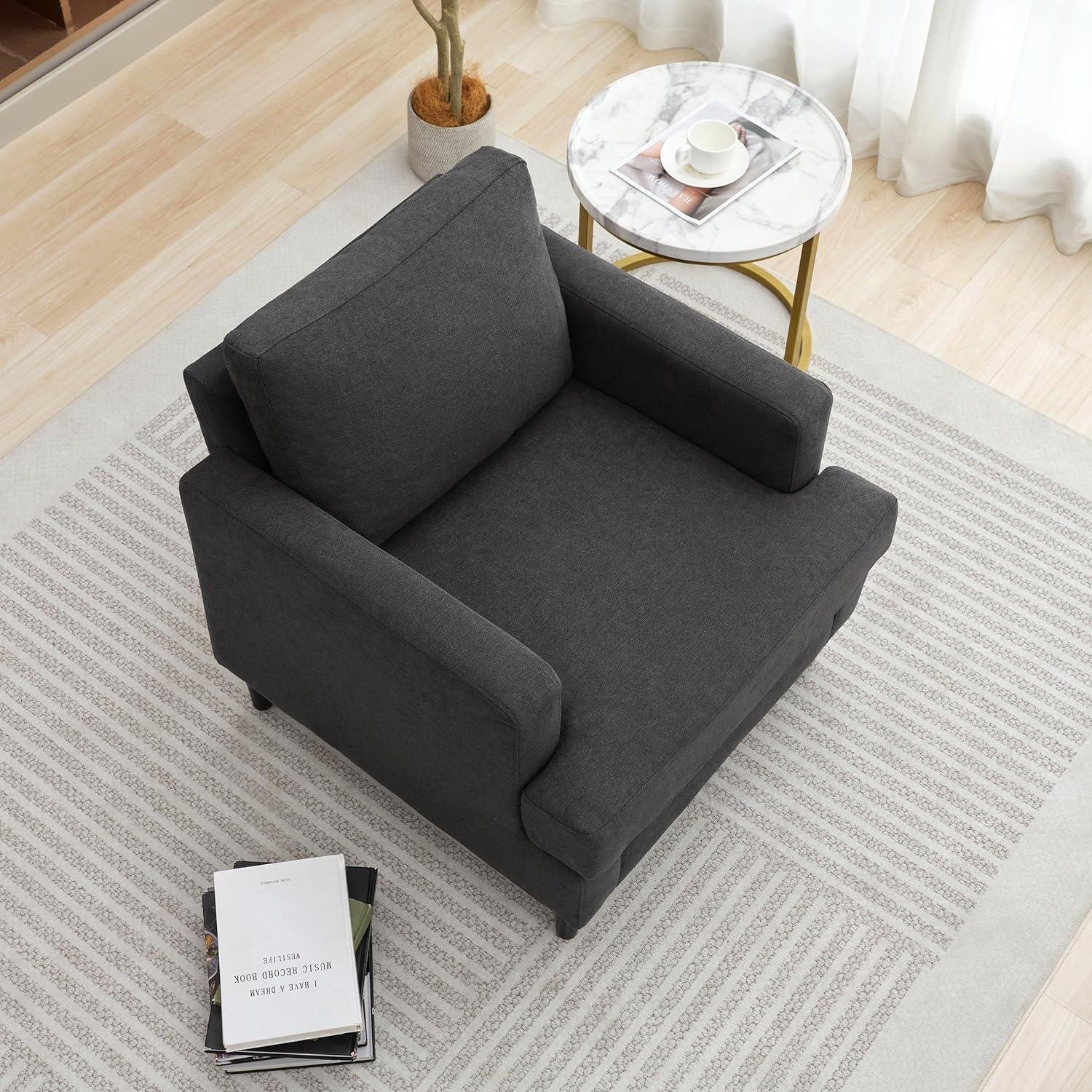
Pros & Cons: Weture Mid-Century Accent Chair (Dark Grey)
| what We Liked | What We’d Watch |
|---|---|
| Mid-century silhouette looks polished without shouting for attention. | That same clean, minimalist profile may feel “too simple” for highly ornate rooms. |
| hardwood frame + solid wood legs feel built for daily use (rated up to 350 lbs). | Wood legs can still be a scuff risk if we drag it around rather of lifting (even with felt pads). |
| High-density foam + spring padding gives the seat a supportive, “actually sit and read” feel. | If we prefer sink-in, cloud-soft seating, this may feel more structured than plush. |
| Shredded-foam backrest adds a cushier, lounge-friendly lean. | Back comfort can be subjective—some of us may want a taller or more enveloping back. |
| Polyester upholstery feels soft and skin-friendly for everyday lounging. | Polyester can vary by preference; some of us might still prefer linen-like texture or leather. |
| Versatile placement: living room,bedroom corner,study,or even reception seating. | Dark grey is flexible,but it won’t deliver the “statement color” pop some spaces need. |
| Quick setup: designed to assemble in about 15 minutes with basic tools. | Assembly is still assembly—if we hate any DIY, it’s one more step before we can relax. |
Pros
- Durability-forward build: A robust hardwood frame, solid wood legs, and a stated 350 lb capacity make it feel like a long-haul accent chair rather than a temporary trend piece.
- Comfort with a supportive backbone: The seat combines high-density foam and spring padding, which we like for reading, working on a laptop, or long conversations that shouldn’t end early.
- Backrest designed for lounging: The shredded-foam core in the backrest adds a softer, more forgiving lean than a stiff, showroom-style back.
- Floor-friendly details: Non-slip felt pads on the legs help protect floors and reduce chair “creep” on smooth surfaces.
- Style that plays well with others: The mid-century lines and dark grey upholstery blend easily with modern, Scandinavian, and transitional decor—useful if our shop styling changes seasonally.
- Low-friction setup: A manual + video guide and a short build time makes it approachable for most of us.
Cons
- Not a deep-sink lounge chair: With supportive foam and springs, it’s more “sit comfortably” than “disappear into a nap.” If our goal is ultra-plush,we may want something plusher.
- Minimalist look isn’t for everyone: The sleek design is elegant, but in a room that needs drama—tufting, curves, bold trim—this could read as understated.
- Dark grey is safe, not flashy: It’s easy to match, but it won’t automatically become the centerpiece unless we style it with bolder pillows, throws, or lighting.
- Assembly required: Even if it’s quick, it’s still a task—and we’ll want to tighten everything properly to keep it feeling solid over time.
Q&A
What kind of “wood build” is this chair—solid hardwood, plywood, or veneer?
Per the product description, the chair uses a hardwood frame with solid wood legs. That’s the construction detail woodworkers usually care about most because legs are where racking forces show up first. The listing does not specify the exact species (e.g., oak/rubberwood/beech), so if matching other furniture matters, you may want to confirm species/finish tone with the seller before ordering.
Is it strong enough for daily use—what’s the real-world load capacity?
The chair is rated to support up to 350 lbs, and the description emphasizes a “robust hardwood frame” and “solid wood legs.” For woodworkers, that combination typically indicates decent resistance to leg splay and joint fatigue compared with chairs that rely heavily on thin composite members. As with any upholstered chair,longevity still depends on keeping fasteners tight and avoiding repeated “drop” seating that can loosen joints over time.
How difficult is assembly, and what tools will I need?
Assembly is described as about 15 minutes with a single adult using basic tools, and it includes an installation manual plus a video guide. In woodworking terms, think of this as straightforward hardware assembly (attach legs/frames) rather than anything requiring alignment jigs. A practical tip: snug all bolts first, square things up, then do the final tightening—this helps prevent wobble.
Are there any adjustments I can make (leveling/wobble fixes, floor protection)?
The listing doesn’t mention built-in levelers, but it does include non-slip felt pads on the legs to reduce scuffs and help the chair stay put.If your floor is uneven and you notice rocking,the typical fix is adding furniture shims or upgrading the pads (thicker felt/rubber). Also,re-torquing hardware after a few days of use is a common furniture best practice as parts settle.
Will it work in a small shop or tight room as a “project chair”?
It’s positioned as a modern single sofa chair that fits “cozy corners” and also larger rooms,so it’s intended to be a compact,flexible accent piece rather than oversized lounge seating. If you plan to use it in a shop office or finishing room, the felt pads are a plus for sliding it without gouging floors—though sawdust on felt can reduce slip resistance, so keep the area swept.
How does the upholstery hold up, and is it comfortable for long sits (planning, sketching, reading)?
The chair uses skin-friendly polyester fabric and a seat built with high-density foam plus premium spring padding. The backrest core includes shredded foam for a plush feel. Translation for long sessions: you’re getting a more supportive seat structure than simple foam-on-board designs, with a softer back that should be comfortable for reading or design work—though very upright task-chair support isn’t the goal here.
Is this beginner-friendly furniture, or will it frustrate someone who’s picky about joinery and fit?
From the description, it’s designed to be easy to assemble with clear guidance, which generally suits beginners. For more demanding woodworkers: it’s an upholstered accent chair, so you won’t be evaluating exposed joinery the way you would on a traditional hardwood armchair. The “pro-level” win here is the stated hardwood frame + solid wood legs and the 350 lb rating—good signs for stability—but species, joinery type, and finish schedule aren’t detailed.
What maintenance should I expect, and are parts/service available?
Ongoing care is mostly basic: periodically check and tighten leg bolts, keep the felt pads clean/replace them if they pick up grit, and spot-clean the polyester upholstery as needed.The listing highlights dedicated customer support, which is useful if you need missing hardware or guidance, but it does not specify a warranty term or a replacement-parts catalog—so if long-term serviceability is a priority, confirm warranty coverage and hardware availability before purchase.
Experience the difference
The Weture Mid-Century Accent Chair isn’t a power tool, but it’s a shop-adjacent upgrade worth noting: a robust hardwood frame, solid wood legs with non-slip felt pads, and a 350 lb weight capacity. Comfort features include skin-friendly polyester upholstery, a high-density foam seat with spring padding, and a shredded-foam backrest for longer sitting sessions. From the product description, the standout themes are durability, plush support, and quick setup (about 15 minutes with basic tools), plus responsive customer care.
Best for: hobby woodworkers with small to medium projects who want a sturdy reading/plan-review chair in the office corner, cabinet makers doing design work, or beginners building a comfortable planning space away from the bench.
Consider alternatives if: you need a chair rated for all-day commercial use, prefer real leather or fully stain-resistant fabrics, or want adjustability/ergonomics like a task chair.
it’s a solid mid-range comfort-and-style option,with strength and easy assembly as key advantages—just don’t expect workshop-grade adjustability.
Want to see current pricing and customer photos? View on Amazon & Read More Reviews →