

Blog
IRONCK 78.7 Bookcase Review: Right Shop Storage?


Ever finish a cabinet project only to watch your shop get swallowed by offcuts,clamps,hardware,and half-finished jigs? When our workspace gets cluttered,precision suffers—layout lines get missed,parts get dinged,and “good enough” sneaks into joinery that should be dead accurate.
That’s where the IRONCK 78.7″ Bookcase with 4 Drawers and 4 Doors comes in. It’s a 6-tier, floor-standing storage cabinet in an industrial white finish, sized at 47.2″ W x 11.8″ D x 78.7″ H, with four adjustable shelves, four drawers, and four door compartments designed for partitioned storage. Each shelf is rated for up to 40 lb, and it includes an anti-tipping device—useful if the shop doubles as a family space.
In this review, we’ll look at the design, storage practicality, assembly (the brand says 1–2 hours with two people, tools included), and what customers report about sturdiness, fit, and everyday usability—especially for woodworkers balancing budget, durability, and space.
We’re not claiming miracle results—just applying shop logic from years of building, organizing, and maintaining workable benches and storage.
First Impressions and Build Quality in a Woodshop Setting
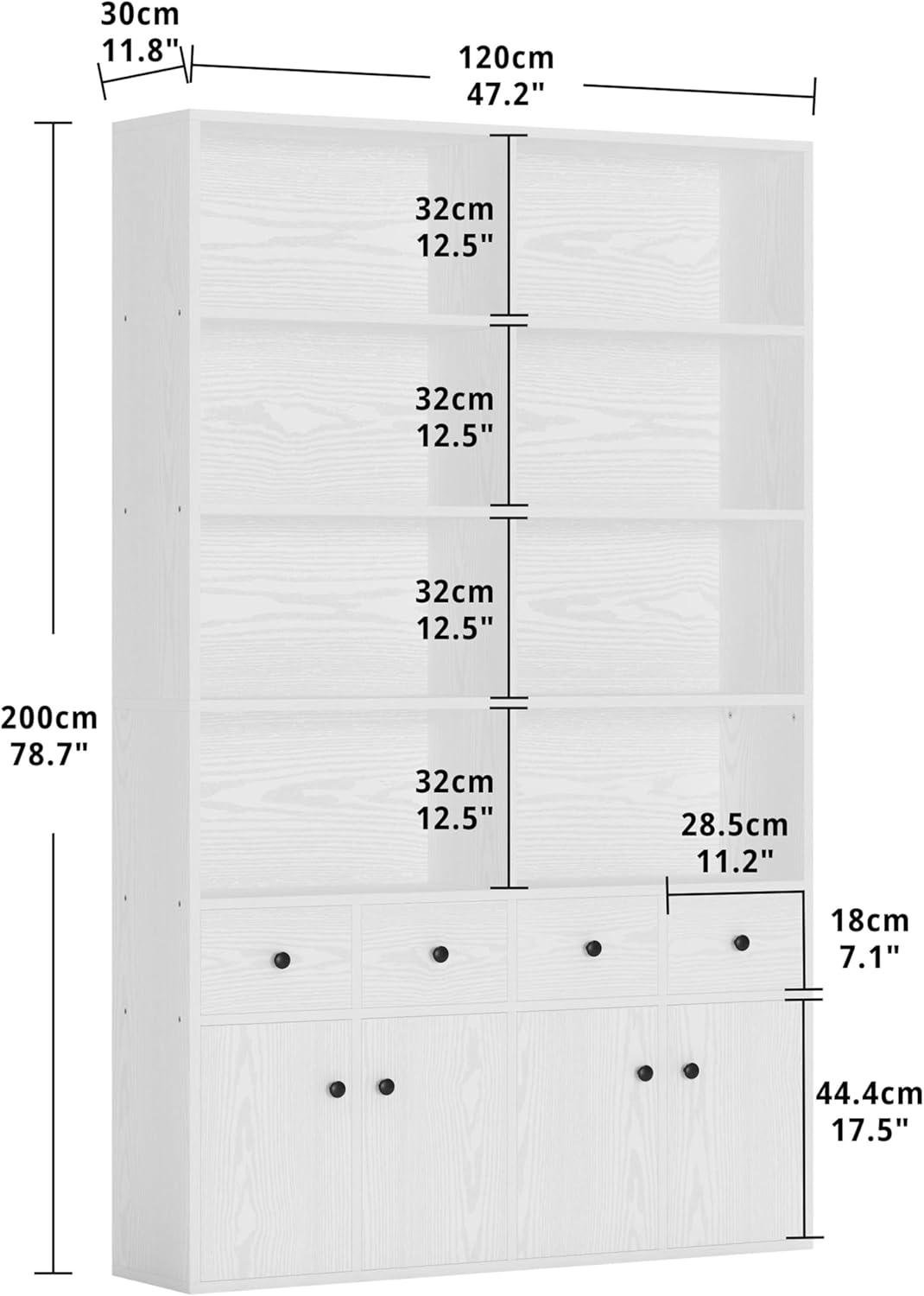
Rolling the IRONCK 78.7″ Bookcase (Industrial White) into a woodshop mindset, our first impression is that this is less “furniture-store flimsy” and more “shop storage that wants a real footprint.” At 47.2″ W × 11.8″ D × 78.7″ H, it’s tall enough to act like a standing cabinet for manuals, project binders, finishing supplies, and boxed jigs, while the 11.8–11.9″ depth is a practical sweet spot for normal-sized books and many tool cases without consuming a full cabinet depth. The materials are described as FSC-Certified wood (typical of engineered panels in this price class), and customer feedback frequently circles back to “packaged well,” “materials are of good quality,” and “once it was built it felt very sturdy.” One detail we care about in a shop is the rear panel, and multiple reviewers specifically called out that “even the back board felt like it was good quality” rather of the easy-to-crush cardboard you see on bargain units—vital if we’re loading shelves, sliding bins around, or bumping it during cleanup.
Build quality in use is closely tied to assembly accuracy, and reviews paint an honest picture: people routinely describe it as “easy to put together, but time consuming” due to the sheer size, with estimates ranging from 1–2 hours for two people (as the product description suggests) up to “6 hours” or even “12hrs” for some builders. That spread tells us what we’d expect in a woodshop: this is a large casework kit, and if we rush alignment, drawers and doors will tell on us later. A few customers mention issues like drawers not aligned and even occasional pre-drilled holes being off, which is where our woodworking habits help—dry-fitting, checking for square, and only tightening fasteners after confirming the carcass is true. For shop safety and stability,it’s good to see an included anti-tipping device; we’d still treat it like any tall cabinet and anchor it (especially if we’re storing heavier items),since each shelf is rated to 40 lb max per shelf. the theme we take from reviews is: considerable storage and a “handsome,” “beautiful sturdy” result, but the build is a real assembly session—plan a clear floor area, use a drill/driver gently to avoid stripping panels, and bring a second set of hands when stacking the upper section onto the base.
- Included accessories (per description/reviews): required assembly tools (some reviews note an actual screwdriver),anti-tipping device,hardware pack (reviewers report all parts were there,with extras)
- Compatible attachments/accessories (shop-use add-ons): magnetic bit holder for faster assembly,#2 Phillips bit set,small square,rubber door bumpers (one reviewer recommends adding these),shims for out-of-plumb floors,wall anchors appropriate to studs/masonry
- Ideal project types (workshop applications): tool manual/library storage,finishing/adhesive cabinet (sealed containers),small hardware organization using bins in drawers,display shelf for prototypes/samples,office + shop reference station
- Wood types tested by customers: Not specified in reviews (customers discuss bookshelf use and load,not wood species)
| Spec | what It Is | Woodshop Relevance |
|---|---|---|
| Overall size | 47.2″ W × 11.8″ D × 78.7″ H | Clearance planning for wall runs; tall storage without deep intrusion |
| Shelf capacity | 40 lb max per shelf | OK for books, binders, and light bins; avoid treating it like lumber storage |
| Storage layout | 6 tiers + 4 drawers + 4 doors | Separates dusty items (behind doors) from quick-grab references (open shelves) |
| Safety | Anti-tipping device included | Recommended if used in a shop aisle or on uneven floors |
| Accessory | Compatible? | Why We’d Use It |
|---|---|---|
| Rubber/silicone door bumpers | Yes | Helps prevent doors from swinging open (noted by a reviewer for slightly slanted floors) |
| Wall anchor kit (stud/masonry matched) | Yes | Improves safety when loaded; reduces racking over time |
| Shims | Yes | Levels the cabinet so drawers/doors align better |
| Clamps (bar clamps/quick grips) | Yes | Holds panels flush during fastening—useful if holes don’t pull parts tight |
| Area | Recommended | What Reviews Suggest Happens in Practice |
|---|---|---|
| Assembly time | 1–2 hours (two people) | Frequently enough described as time consuming; some report 6–12 hours depending on pace and alignment issues |
| Number of people | Two | Several reviewers strongly advise 2–3 people due to weight and stacking the sections |
| Stability approach | Use anti-tip / anchor | Some felt it was sturdy unanchored, but anchoring is the safer shop practice |
See Full Specifications & Customer Photos
Real world Performance Under Shop Loads and Daily Use
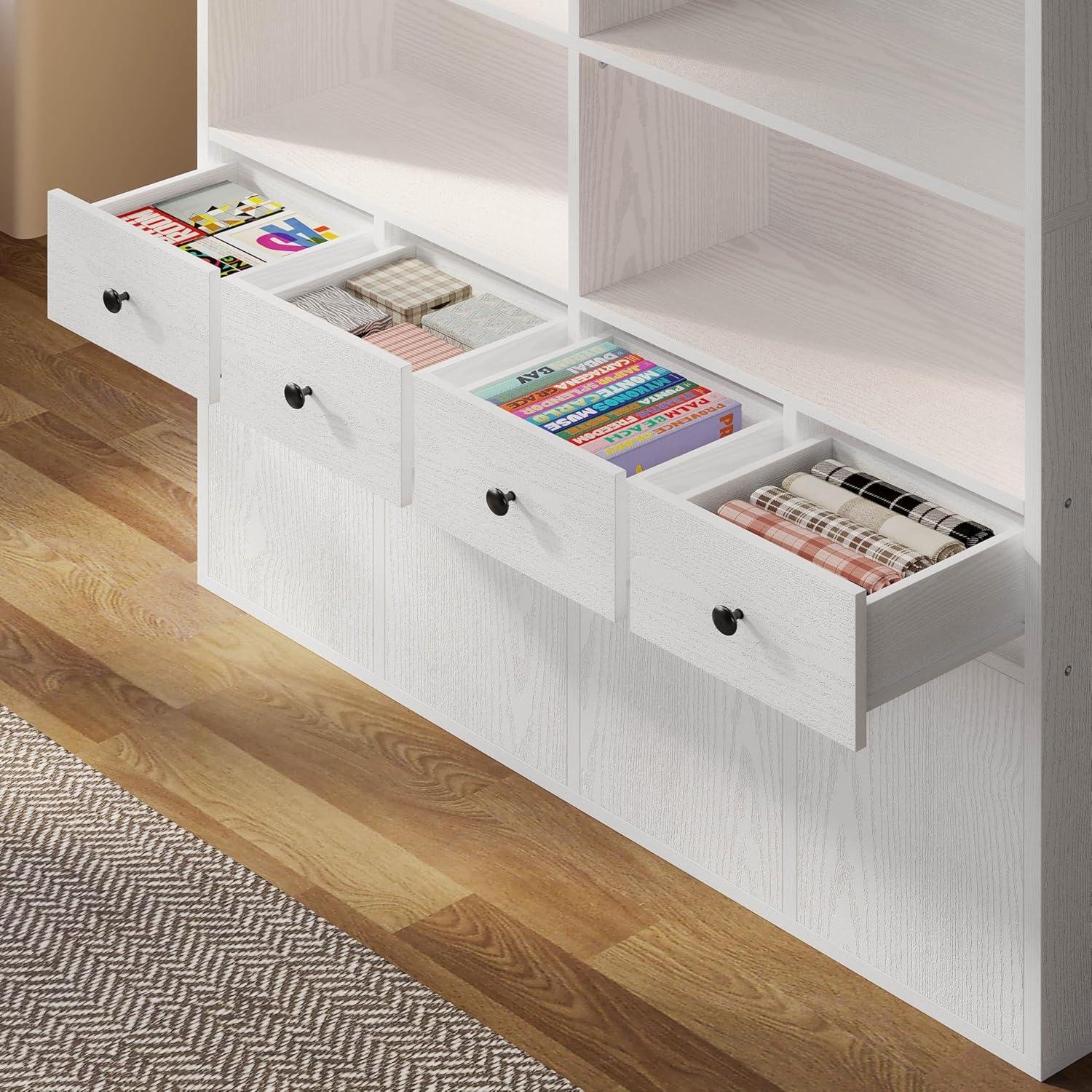
In day-to-day shop use, we look at a cabinet like the IRONCK as a “workflow tool” more than furniture, and the specs suggest it can actually play that role if we respect its limits. At 47.2″ W × 11.8″ D × 78.7″ H, it has the vertical real estate to get finishes, glue-ups, abrasives, and reference books off the bench, and the manufacturer’s stated load of 40 lb max per shelf is the number we’d plan around (think: stacks of sandpaper boxes, a couple routers in cases, or a row of finishing cans—rather than piling dense hardware bins on a single tier). The 11.8–11.9″ depth is practical for “normal-sized books,” which matches customer comments about it “fits absolutely all of my books including the tall ones,” and from a woodworker’s perspective that same depth also works for many common tool cases without stealing to much floor space from a narrow shop aisle. We also appreciate that the panels are described as FSC-Certified wood, and the included anti-tipping device is not optional in a shop—if we’re loading the upper shelves with anything heavy, we anchor it like we would any tall cabinet.
Under real shop loads, the performance story in customer reviews is consistent: once it’s together, many report it “felt very sturdy,” “holds weight well,” and even the back panel “felt like it was good quality and wouldn’t break down easy like some cheap cardboard ones.” The tradeoff is setup: multiple reviewers describe assembly as “time consuming,” “painstakingly long,” even “a bit of a nightmare,” with build times ranging from a few hours to an all-day push—plus notes about being “extremely heavy” and best handled with 2–3 people (especially when stacking the top section onto the base). A few buyers also mention fit/finish realities that matter to us as woodworkers: visible fasteners (“wish…covers to hide the open screws”),occasional alignment complaints (like drawers “not aligned”),and at least one report of hole placement being off enough to require a drill and improvisation. If we’re treating it as shop infrastructure, our best practice is to dry-fit panels before final tightening, square the carcass as we go (measuring diagonals like we would on a cabinet build), and only then cinch down hardware—because most “drawer won’t align” headaches are really “case isn’t perfectly square” headaches. For those who want a clean, built-in look, we’d also consider adding our own stick-on screw caps, magnetic catches, or small bumpers on the doors—one reviewer even suggests using little rubber pads to prevent doors from “randomly opening” on slightly slanted floors, which is a practical shop fix.
- Included accessories (per listing): required assembly tools (customers note “a few tools and an actual screw driver”),anti-tipping device,printed instructions
- Compatible attachments/accessories (shop-friendly add-ons): wall anchors suited to your stud type, stick-on screw caps, magnetic door catches, adhesive cabinet bumpers, adjustable furniture levelers, labeled bins for drawers
- Ideal project types (how we’d use it in a workshop): finishing-supply station, sanding/abrasives library, pattern/template archive, woodworking book/reference storage, board-game/craft crossover storage (as customers mention)
- Wood types tested by customers: Not specified in reviews (this is a storage cabinet; performance is about load/assembly rather than cutting wood species)
| Spec / Feature | What It Means in Our Shop |
|---|---|
| Overall size: 47.2″ W × 11.8″ D × 78.7″ H | Tall storage without deep footprint; good for tight walls, not ideal for storing deep toolboxes |
| Shelf load rating: 40 lb max per shelf | Plan loads like books, finishes, and boxed tools—avoid concentrating heavy hardware on one shelf |
| Storage layout: 6 tiers + 4 drawers + 4 doors | Separates “grab daily” items (open shelves) from dust-sensitive items (behind doors/drawers) |
| Anti-tipping device | Essential safety step if upper shelves get heavy or if the floor isn’t perfectly level |
| Accessory | Compatibility | Why We’d Add It |
|---|---|---|
| Stud-rated wall anchors / screws | Use with included anti-tip hardware (match your wall type) | Prevents racking/tip risk when drawers are loaded and doors are opened |
| Stick-on screw caps | Worldwide | Cleans up the industrial look if the visible fasteners bother you |
| Magnetic catches + rubber bumpers | Universal | Keeps doors from drifting open; reduces door slap in a shop environment |
| Area | Recommended (Practical) | Actual (From Specs/Reviews) |
|---|---|---|
| Shelf loading | Distribute weight; keep dense items low | 40 lb max per shelf; reviewers report it “holds weight well” with heavy books |
| Assembly effort | Plan a half-day with two people; square as you go | Reviews range from 1–2 hours (claimed) to 6–12 hours depending on pace/fit-up |
See Full Specifications & Customer Photos
Key Features Woodworkers Will Appreciate for Organization and Display

In our shop, organization and “at-a-glance” access matter as much as the tools themselves, and the IRONCK bookcase’s layout is genuinely geared toward that. The footprint—47.2″ W x 11.8″ D x 78.7″ H—runs tall without eating up much floor space, and that ~11.9″ depth is a practical sweet spot for woodworking manuals, binders of cut lists, finish datasheets, and even small tool cases that don’t need deep shelving. With 6 tiers rated at 40 lb max per shelf, we can stage heavier references where we want them and keep frequently grabbed items at chest height. The real workshop win is the mix of open and closed storage: 4 drawers for measuring/layout “junk drawer” supplies (pencils, knives, spare blades, sandpaper assortments) and 4 doors for the stuff we’d rather keep dusted off—glue bottles, paste wax, finishing rags, and hardware organizers that don’t love shop debris. We also appreciate the included anti-tipping device, as tall storage in a garage shop is only useful if it’s safe when we’re yanking a heavy book off the top shelf.From customer review themes, the organization benefits come with a realistic setup tradeoff.Multiple reviewers describe it as “easy to put together” but also time-consuming due to the sheer size, with install times ranging from 1–2 hours (two people) per the listing to 6–12 hours in some real-world reports—so we’d treat assembly like any shop build: stage parts, read ahead, and dry-fit the sequence before committing. Reviewers commonly call the finished unit “very sturdy” and note it “holds weight well”, including heavy books; a few also praise that the back board feels higher quality than the usual flimsy cardboard. The main teachable moment for woodworkers is alignment discipline: one reviewer reported misaligned holes and another mentioned drawer alignment issues, which are exactly where we’d reach for clamps, a square, and careful pilot drilling rather than forcing fasteners. If we’re using this in a shop, it’s also worth adding our own small upgrades—labeling drawer fronts, grouping by workflow (layout, sanding, finishing), and anchoring it even if it “feels” stable—because a tall cabinet becomes a lot more useful when it’s predictable and repeatable in how it stores our daily-use gear.See Full Specifications & Customer Photos
Ease of Use for Beginners and Experienced Woodworkers During Assembly and Setup
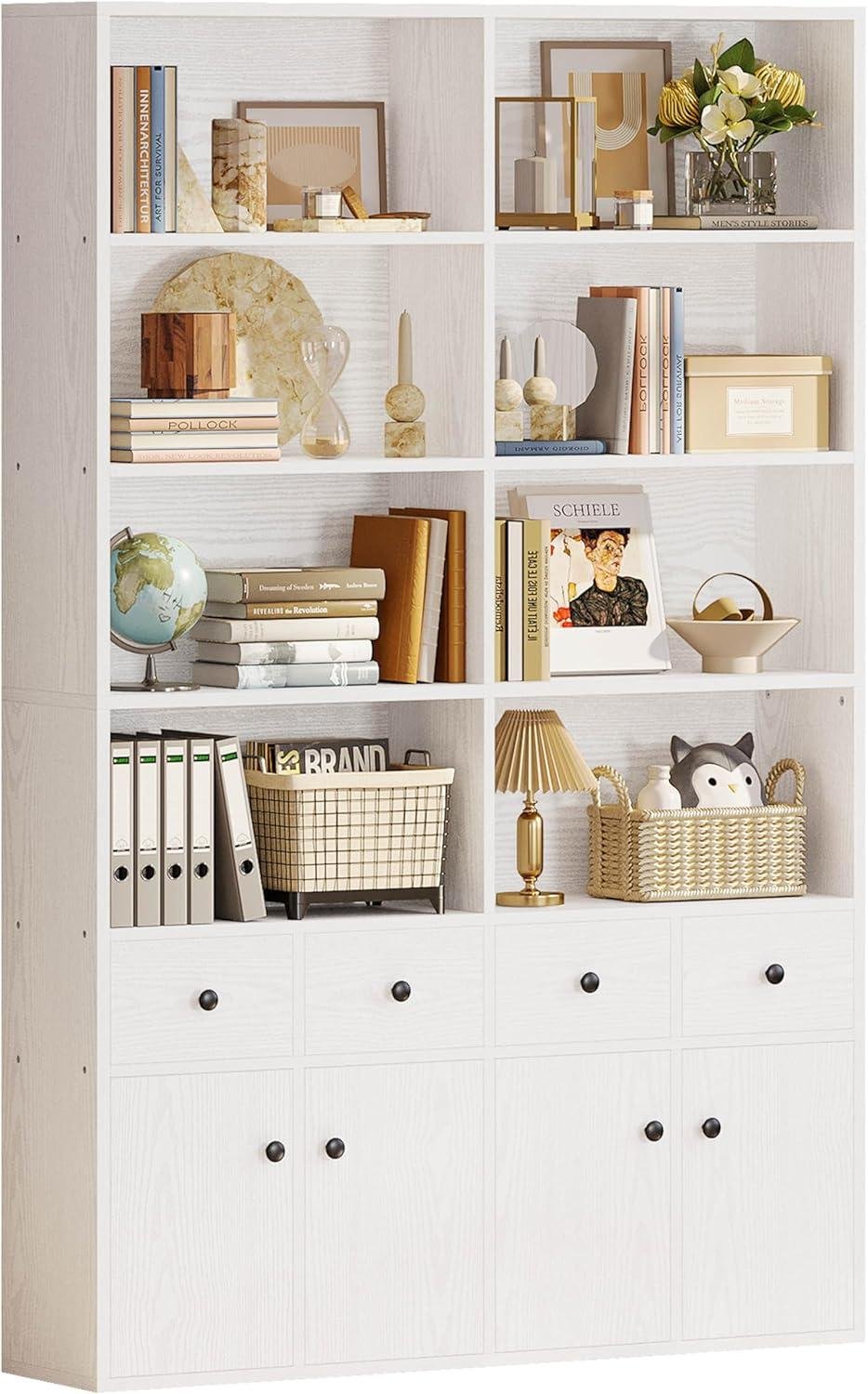
From a shop standpoint, the IRONCK bookcase goes together more like a flat-pack cabinet carcass than a “woodworking tool,” so the learning curve is mostly about process discipline rather than special skills. The finished footprint is substantial at 47.2″ W × 11.8″ D × 78.7″ H, and that sheer size is what makes setup feel intimidating for beginners—even when the steps are straightforward. The manufacturer claims 1–2 hours with two people, but customer themes consistently say it’s “easy to put together, but time consuming” and “painstakingly long”, with one report of a 6-hour build and another stretching to 12 hours. In our experience, that spread usually comes down to how carefully we stage parts, verify panel orientation before driving fasteners, and whether we have a second set of hands for squaring the case and marrying the upper/lower sections (reviewers note you build the bottom, build the top, then stack them). The good news for first-timers: reviewers repeatedly mention clear instructions, all parts present (often with extras), and the unit feeling very sturdy once assembled—even calling out that the back board feels better than cheap cardboard.
For experienced woodworkers, assembly is less about “can we do it?” and more about avoiding the kinds of alignment headaches that show up in a few reviews—namely hole placement being off on certain pieces and drawers not aligned even with guided marks. we’d treat it like installing hardware in a production run: dry-fit first, keep a square on the case, and don’t fully tighten everything until the cabinet is racked-free and the doors/drawers are test-cycling cleanly. The included tools are a nice touch for beginners (customers mention “a few tools and an actual screw driver”), but in our shop we’d still reach for a hand screwdriver for final snugging to reduce cam/fastener strip-outs, and we’d plan a safe staging area as multiple reviewers stress it’s “extremely heavy” and best with 2–3 people (especially for the anti-tipping device and wall anchoring). Once set, the specs make practical sense for real storage loads: 6 tiers with up to 40 lb per shelf, plus 4 drawers and 4 doors for keeping finishing supplies, sandpaper packs, or layout tools dust-free—exactly why many buyers use it for heavy books, craft/board games, and office storage. If we want it to blend into a cleaner built-in look, reviewers are right that you’ll still see some fasteners, so planning for optional screw caps or discreet touch-up is part of the “setup” mindset.
See Full Specifications & Customer Photos
Customer Reviews Analysis
What Woodworkers Are Saying (Review Analysis)
1. Overall sentiment from woodworking customers
Several woodworkers and DIY-minded reviewers came away impressed by the finished look, storage capacity, and sturdiness, frequently enough describing it as a “handsome” or “beautiful” piece once completed. Common praise includes good packaging, complete hardware, and a worth-it result for the price—with the biggest caveat being that assembly is long, physical, and detail-heavy. A smaller set of users reported fit/accuracy issues (misaligned holes, drawers not lining up), which turned the build into a troubleshooting job.
2. Performance feedback (accuracy, power, results)
While this isn’t a power tool, woodworkers tend to evaluate “performance” as fitment, alignment, and the final result under load:
- Results under load: Multiple reviews highlight that it handles heavy books well and “holds weight well,” suggesting the shelving structure performs as intended when fully loaded.
- Accuracy/consistency: Some users reported challenges with pre-drilled hole alignment and drawer alignment. One reviewer noted holes were “off by an inch or 2,” and another said “the drawers are not alined despite there being guided dots.”
- End result: Despite build fatigue, several reviewers said the final unit feels sturdy and looks built-in adjacent, especially in offices and bedrooms.
3. Build quality and durability observations
common praise includes solid heft and a sturdier-than-expected feel once assembled:
- Sturdiness: Several woodworkers mentioned that once built, it felt “very sturdy” and “good, heavy.”
- Back panel quality: One reviewer specifically called out the back board as better than typical “cheap cardboard ones,” implying a more durable backing than many flat-pack alternatives.
- Material realism: A recurring nitpick is that the finish/material doesn’t fully read as real wood. One user wished “the material [was] a little more like wood,” which matters to woodworkers sensitive to grain/finish authenticity.
4. Ease of use for diffrent skill levels
Ease of use is the most polarized theme—less because it’s confusing at every step, more because it’s big and time-consuming.
- beginners / solo DIYers: Some DIYers found it possible to assemble alone (“easy to assemble… by myself”), but still acknowledged the two-person suggestion—especially for anchoring and lifting sections.
- Experienced builders: Reviewers with construction/building backgrounds still emphasized time investment and the importance of careful step-by-step alignment. One said instructions were clear, but “there is A LOT to it.”
- Learning curve & fatigue: Multiple reviews highlight physical fatigue—assembly described as “really tiring,” “a nightmare,” and a “painstakingly long time.” A common theme is study the diagrams closely to avoid mistakes.
5. Common project types and success stories
customers successfully used this for home-organization builds where woodworkers often want a “built-in look” without full custom cabinetry:
- Home office library / heavy book storage: Several reviewers mentioned office setups and heavy books; one called it perfect for “multiple and heavy books.”
- Craft + hobby storage: One customer used it as a “board game/craft/nonfiction book holder.”
- small-room clutter control: A reviewer in a small room liked how the drawers/cabinets reduced visual clutter while still storing lots of books.
- Built-in aesthetic projects: One DIYer said it was “fantastic for me wanting them to feel like built ins,” which is a common woodworking goal (built-in appearance without shop time).
6. Issues or limitations reported
Some users reported challenges with the build experience and finish details:
- Assembly time is the #1 drawback: Reports ranged from ~6 hours (with experience) to 12 hours, with repeated warnings to budget time and take breaks.
- Heavy, awkward handling: multiple reviews highlight that it is “extremely heavy,” with recommendations for 2–3 people (one even said 2–4) to prevent damage or injury.
- Instruction clarity varies: Several found instructions clear, but at least one reviewer said they were “difficult to follow” and led to a mistake (resolved via customer service).
- Fit/precision problems (important to woodworkers):
- Misdrilled/misaligned hole locations (“off by an inch or 2”)
- Drawer alignment issues (“drawers are not alined”)
- Finish/visual details: Some users wish it had screw covers to hide visible hardware for a cleaner, more furniture-grade look.
- Value debate: While many felt it was worth the cost, one reviewer felt quality matched a lower price point (“more like a $120 bookshelf at best”).
Category Summary Table
| Aspect | Common Feedback |
|---|---|
| Overall Sentiment | Mostly positive on sturdiness and storage; assembly experience is the big tradeoff |
| Performance (Results) | Holds heavy books well; finished piece looks “beautiful/handsome” to many reviewers |
| Precision & Fit | Mixed: some report misaligned holes and drawers not lining up consistently |
| Build Quality & Durability | praised as sturdy and heavy; back panel noted as better than typical thin cardboard |
| Ease of Use | Instructions frequently enough described as clear, but assembly is long, tiring, and easier with 2+ people |
| Value | Many say worth it for size/storage; a few expected more “premium” fit/finish for the price |
Pros & Cons
Pros & Cons
Living with the IRONCK 78.7″ Bookcase (Industrial White) feels a bit like inviting a tidy-minded roommate into our space: it doesn’t complain,it holds a lot,and it quietly hides the mess we didn’t want on display. Still, it has a few quirks worth noting before we commit our walls (and our weekend) to it.
| Quick Snapshot | What It Means for Us |
|---|---|
| Size | 78.7″ tall, 47.2″ wide, 11.8–11.9″ deep (big presence, narrow footprint) |
| Storage Mix | 6 open tiers + 4 drawers + 4 door compartments (display + hideaway in one) |
| Capacity | Up to 40 lb per shelf (good for books, décor, and heavier accents) |
| Assembly | Designed for 2 people, about 1–2 hours (weekend-friendly, not instant) |
| Safety | Anti-tipping device included (important for homes with kids/pets) |
Pros
-
Genuinely versatile storage. We get open shelving for “look-at-this” items and drawers/doors for “please don’t look at this” items—ideal for mixed-use living rooms and home offices.
-
Drawer + door combo helps us stay organized. The 4 drawers are perfect for small essentials (cables, stationery, remotes), while the 4 door compartments keep bulkier items visually quiet.
-
Agreeable depth for real books. At roughly 11.9″ deep, it’s not a flimsy display ledge—our normal-sized books should fit without awkward overhang.
-
Tall, space-efficient design. The height makes it feel like a storage wall without eating up too much floor depth—great when we want vertical storage in tighter rooms.
-
Industrial white styling is easy to place. The clean lines and black/white scheme can blend with modern, industrial, or even minimalist spaces without dominating our décor.
- Weight rating inspires confidence. A stated 40 lb max per shelf suggests it can handle more than just lightweight décor—useful for serious readers or heavier display pieces.
-
Better peace of mind with anti-tip hardware. We appreciate that an anti-tipping device is included—especially if the bookcase is going in a family space.
-
FSC-certified wood is a welcome detail. It’s nice to see a sustainability-related callout, even for a practical storage buy.
Cons
- Assembly isn’t “no-effort.” Even with clear instructions, we should expect a 1–2 hour build for two people—manageable, but not a five-minute setup.
-
Wide footprint needs planning. At 47.2″ wide, it’s substantial; in narrow rooms, we’ll want to measure carefully so it doesn’t crowd walkways or compete with sofas/TV stands.
-
Tall furniture requires responsible placement. The anti-tip kit helps, but we still need a suitable wall location—this isn’t the kind of piece we’d casually “float” without thinking.
-
Industrial look may feel a bit structured. If our home leans very warm, traditional, or ornate, the crisp industrial lines might read slightly utilitarian unless we soften it with styling (plants, baskets, warm lighting).
-
Hidden storage can become “out of sight, out of mind.” With four doors and four drawers, it’s easy for us to stash clutter fast—great short-term, but it can encourage junk-drawer behavior if we don’t keep categories.
the biggest win here is the hybrid storage: we can curate the top shelves and quarantine the chaos below. The biggest trade-off is the reality of a large, tall build—worth it if we want a statement-sized organizer, less ideal if we’re allergic to assembly or short on wall space.
Q&A
What “wood type” is this made from—solid wood, plywood, or MDF—and how does that affect durability?
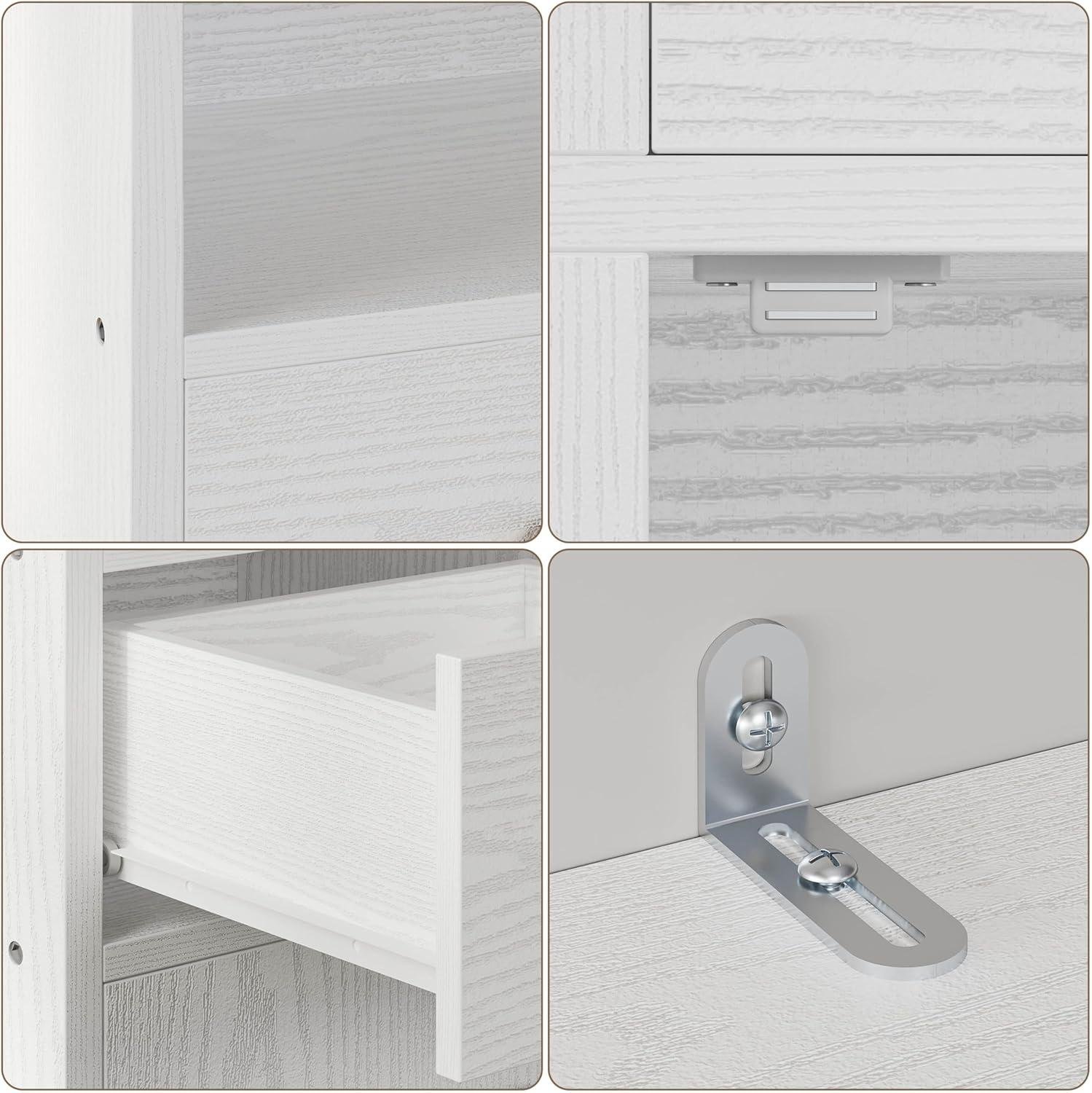
This is a ready-to-assemble storage cabinet, not a shop-built hardwood case. The listing notes the panels are FSC-certified wood boards,which in this price class typically means engineered panels (not furniture-grade solid hardwood). In reviews, customers describe it as heavy and sturdy once assembled, with a back panel that feels better than “cheap cardboard.” Practical takeaway: it’s well-suited to indoor, dry locations and everyday storage loads, but it’s not the same as a solid-oak bookcase you’d build for a lifetime of refinishing.
Is it strong enough for heavy books, hardwood sample boards, or tool catalogs?
From the specs, the shelving is rated at up to 40 lb per shelf. Multiple reviewers specifically mention it handling heavy books well and feeling sturdy after full assembly. For woodworkers storing dense items, treat 40 lb as a true limit per shelf (not “maybe more”), distribute weight evenly, and avoid concentrating a lot of weight at the front edge. If you plan to load it with especially heavy reference books or boxed media, consider using the lower shelves and cabinet compartments for the densest items.
Do the shelves adjust, and can I modify the layout for taller books or display pieces?
This version is listed as having 4 adjustable shelves (within the 6-tier layout), which helps if you’re trying to fit taller books, binders, or display items. The overall size is 47.2″ W × 11.8″ D × 78.7″ H, and the depth (~11.8–11.9″) is designed for “normal-sized books.” If you want to customize beyond the intended hole pattern (e.g., reposition shelves or add extra pin holes), you can, but you’ll be drilling into finished panels—measure carefully and expect visible holes unless you use shelf-pin sleeves/caps.
How difficult is assembly, really—and what’s the “woodworker approach” to getting it square?
Official guidance says 1–2 hours for two people, but real-world reviews range from “easy but time-consuming” to 6–12 hours, mostly due to the unit’s size and the number of steps (several reviewers emphasize it’s a lot of assembly). Woodworker tips: assemble on a flat floor, dry-fit where possible, keep clamps handy to pull panels flush, and don’t fully tighten fasteners until the carcass is square.Reviewers also caution that you need to study the drawings carefully; one mentioned holes being off on some parts and needing a drill/extra fasteners to correct alignment.Take your time, and stop if anything feels forced.
Does it work with standard workshop tools (impact driver, drill/driver, clamps), and do I need special hardware?
All required tools are said to be included (some reviewers even mention an included screwdriver), so you can assemble it “out of the box.” having mentioned that, many builders prefer a drill/driver on a low clutch setting for consistency and to reduce fatigue. Use care with an impact driver—engineered panels can strip if over-torqued. Having a square, small clamps, and a rubber mallet can make the cabinet doors/drawers align more cleanly. If a hole is slightly misaligned (as one reviewer reported), a drill/bit set and spare screws can definitely help, but that’s more of an exception than the norm.
Will this fit in a small shop/office, and how much working room do I need during assembly?
Footprint is 47.2″ wide and only 11.8″ deep, so it can work in tight rooms once installed. The challenge is assembly space: because it’s 78.7″ tall and reviewers describe it as extremely heavy, you’ll want a clear area to lay sections down, build square, then stand it up safely. Plan for at least a few feet of clearance around the build area, and ideally have 2 people available—several reviews recommend 2–3 helpers, especially when stacking/positioning the top section and when anchoring.
Is wall anchoring necessary, and is it safe around kids/pets?
At nearly 79″ tall, tip resistance matters. The product includes an anti-tipping device and is marketed as safe for homes with babies when properly secured.Even if some reviewers felt it was stable without mounting, the best practice—especially for homes with kids, pets, or uneven floors—is to use the included anti-tip hardware and anchor it to wall studs when possible. For wood floors or slightly out-of-level rooms, anchoring also helps keep doors/drawers behaving consistently.
Is this “pro-grade” furniture, and is it worth it compared to building your own bookcase?
Think of this as a storage solution with an industrial look (white/black style) and a lot of built-in organization: 6 tiers, 4 drawers, and 4 doors for partitioned storage. Reviews commonly praise the finished look, storage capacity, and sturdiness once built, but also mention drawbacks like long assembly time, occasional instruction/fit frustrations, visible fasteners (one reviewer wished for screw covers), and fit/finish not matching true custom cabinetry. If you’re a woodworker deciding between buying vs.building: buy it if you want fast access to a tall, high-capacity unit and you’re okay trading some fit/finish for cost. Build your own if you want hardwood joinery, refinishing capability, perfectly flush reveals, and shop-grade customization.
achieve new Heights
The IRONCK 78.7″ Bookcase is a tall, floor-standing storage cabinet built around a 6-tier layout (47.2″ W × 11.8″ D × 78.7″ H), rated to hold up to 40 lb per shelf.It adds four drawers plus four lower door compartments for partitioned storage, includes adjustable shelves, uses FSC-certified wood, and ships with an anti-tipping kit for safer shop or home use. Customer feedback commonly praises the sturdy feel, deep shelves for normal and tall books, and the “built-in” look for the price—while also noting a long, sometimes tiring assembly (often 2–6+ hours) and occasional alignment/instruction frustrations.
Best for hobby woodworkers and DIY organizers who need vertical storage for books, finishing supplies, hardware bins, plans, or display pieces in a small-to-medium workspace.
Consider alternatives if you want real hardwood construction, faster assembly, hidden fasteners, or production-grade cabinetry tolerances.
Final assessment: a solid mid-range storage upgrade with standout capacity and versatility, as long as you budget time (and help) for the build.
Want to see current pricing and customer photos? View on Amazon & Read More Reviews →














