

Blog
RATTMMOTOR CNC Router Review: Right for Our Home Shop?


Ever tried carving a crisp sign or inlay only to watch tiny errors stack up—an off-center pocket here,a wobbly line there—because the tool,the setup,or the workspace just isn’t dialed in? For many of us,the real challenge isn’t creativity; it’s getting repeatable precision without buying a full-size CNC that eats up half the shop.
That’s where the RATTMMOTOR CNC Wood Router machine Kit comes in: a compact 3‑axis DIY mini CNC engraver built around GRBL 1.1 control, an offline controller (so it can run without staying tethered to a computer), and a 775 spindle motor with ER11 collets.With an aluminum-alloy frame, a roughly 42×35×27 cm footprint, and a working area around 18×10×4.5 cm, it’s clearly aimed at small projects and tight benches.
In this review, we’ll look at key specs, assembly and learning curve, build-quality expectations, and what customers commonly mention—especially on accuracy, ease of use, and value. We’ve set up and tuned enough finicky shop tools to know where budget machines shine,and where they usually need patience.
Tool Overview and Build Quality for a DIY Mini CNC Router
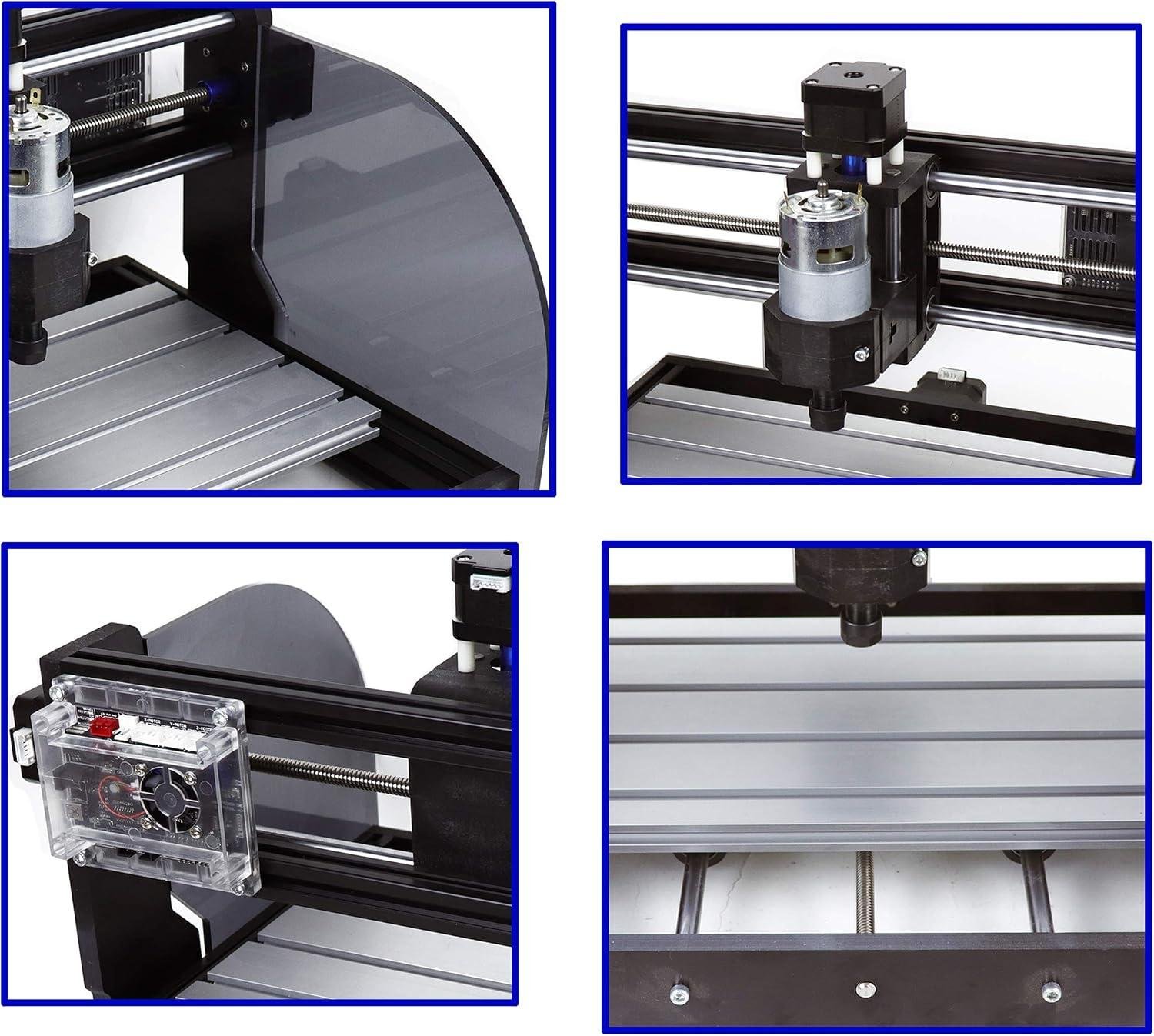
For a DIY benchtop CNC, the RATTMMOTOR kit feels purpose-built for small-shop signmaking, inlay pockets, and repeatable part labeling rather than full cabinet work. the chassis is an aluminum-alloy frame with a stated overall size of 42 × 35 × 27 cm (16.53″ × 13.78″ × 10.63″) and a listed working envelope of 18 × 10 × 4.5 cm (11.8″ × 7.1″ × 1.8″)—so we’re realistically looking at coaster-sized carvings, small plaques, template routing guides, and light joinery experiments. Power comes from a 775 spindle motor rated for 12–24V, and the spec calls out 10,000 RPM at 24V (with the controller noting a system max support of 20,000 RPM), which helps us translate expectations: spindle speed is there for small bits, but rigidity and workholding will determine how aggressively we can cut in hardwoods. the stepper package is also clearly “mini CNC” class—42-size steppers,12V,1.3A per phase, 0.25 N·m torque—which is plenty for careful,shallow passes in wood and MDF,but not a recipe for hogging out deep mortises in maple.
In terms of build and day-to-day usability, this kit is most appealing to us when we want a compact, semi-contained system with fewer computer-tethered headaches: the GRBL 1.1 control board supports emergency stop and X/Y/Z limit functions, and the included offline controller lets us run files without keeping a laptop on the bench—handy in dusty shops. Customer review themes commonly highlight “easy to assemble” and “good starter machine for beginners”, while also warning that accuracy depends heavily on careful squaring, snugging fasteners, and conservative feeds.For woodworking education, we’d treat this style of CNC like a vrey precise router jig: use sharp small-diameter bits, take multiple shallow passes (especially in hardwood), and prioritize consistent workholding with the included clamps to reduce chatter. One practical limitation we notice from the specs is the lack of any dedicated dust collection port—so we’d plan on a shop-vac nozzle nearby, frequent cleanouts around the rails, and routine checks on collets and fasteners to keep vibration from creeping into fine detail work.
- 1 × DIY Mini CNC Router Machine Kit
- 1 × power Supply
- 10 × 0.1 mm, 20° 3.175 mm shank drill/engraving bits
- 4 × plate clamps
- 1 × English manual
- 1 × 4GB USB flash drive (files included)
- 1 × Allen wrench set
- 1 × CNC offline controller
- 14 × ER11 collets
- ER11-compatible CNC router bits (3.175 mm and other collet sizes included)
- V-bits for lettering and sign work
- Small end mills for pocketing in MDF/hardwood (light passes)
- Touch probe/tool setting probe (the board supports tool setting per description)
- Limit switches & E-stop button (supported by the GRBL board; often added/verified during setup)
- Nameplates,small signs,and engraved plaques
- Inlay pockets and shallow decorative carving
- Template making in MDF/acrylic
- Repeatable part marking for jigs/fixtures
- Wood (general carving/engraving per product description)
- Density board (MDF)
- Soft materials often paired with woodworking projects: acrylic,PVC,plastic
| Spec / Feature | What the Kit provides | Why It Matters in a Wood Shop |
|---|---|---|
| Frame size | 42 × 35 × 27 cm | Bench-friendly footprint; easy to dedicate a small station. |
| Working area | 18 × 10 × 4.5 cm (11.8″ × 7.1″ × 1.8″) | Best for small parts, plaques, and templates—not large panels. |
| Spindle | 775 motor, 12–24V; 10,000 RPM @ 24V | Encourages lighter cuts and smaller tooling; great for detail work. |
| Control | GRBL 1.1 + offline controller | Run jobs without a computer at the bench; helpful in dusty spaces. |
| Accessory / Bit type | Compatibility | Best Use |
|---|---|---|
| ER11 collets | Included (14 pcs) | Supports different shank sizes (including common 3.175 mm) for CNC bits. |
| 3.175 mm engraving/V-bits | Included (10 pcs,0.1 mm tip, 20°) | Lettering, fine lines, and detailed decorative engraving. |
| Small end mills | ER11-compatible | Shallow pocketing and outline cuts in MDF/softwoods (light passes). |
| Capacity Topic | Recommended (practical) | Actual (Listed) |
|---|---|---|
| Project size | Small parts, labels, plaques, jigs | 11.8″ × 7.1″ work area |
| Cutting approach | Multiple shallow passes; prioritize rigidity and clamping | Mini-CNC steppers (0.25 N·m) + 775 spindle |
| Materials | Wood/MDF/plastics; soft metals only with caution | Wood, acrylic, PVC, PCB, carbon fiber, density board; soft metals like copper/aluminum |
See Full specifications & customer Photos
Real World Carving and Engraving Performance in Hardwood Softwood and Plywood
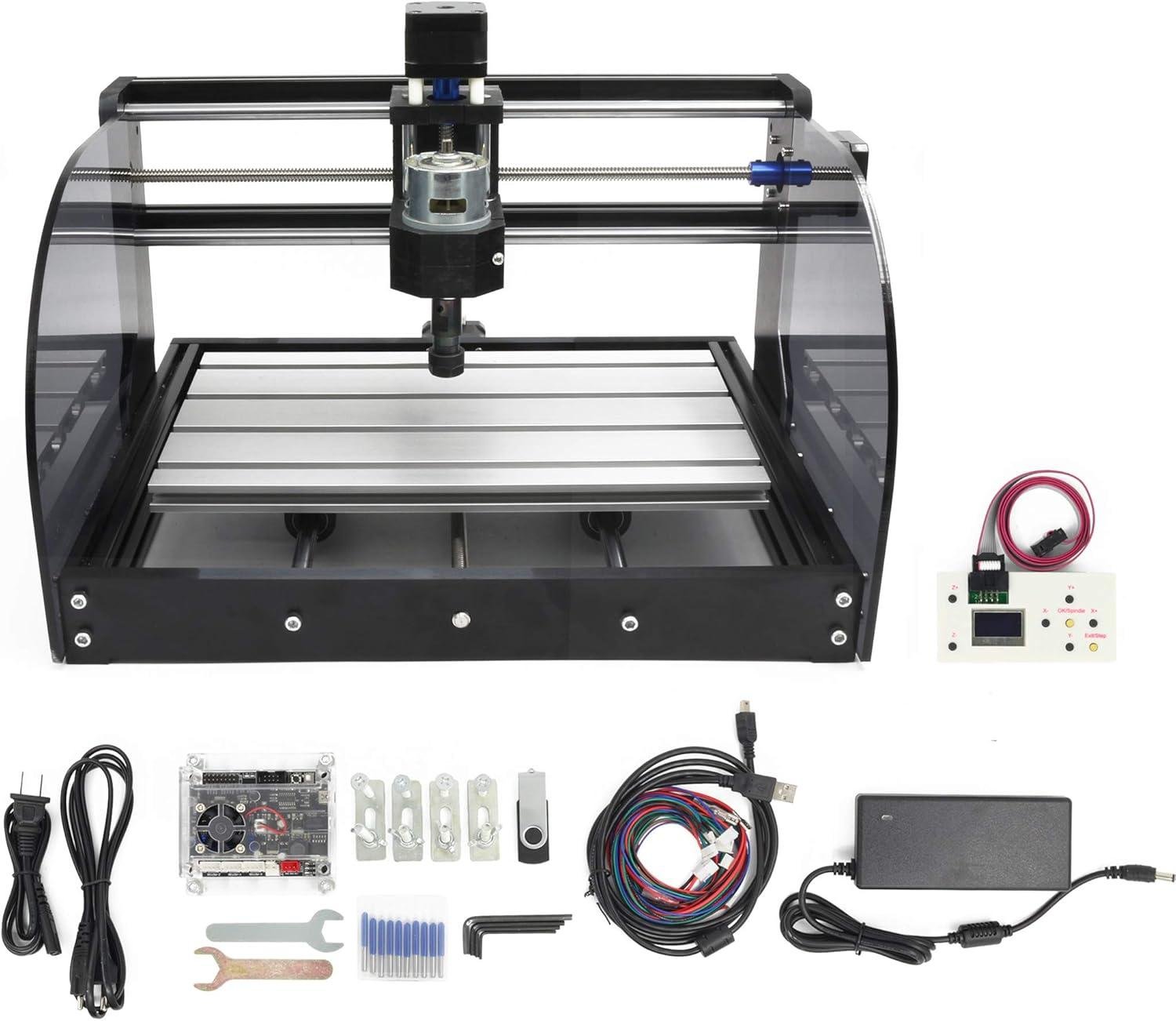
In real-world woodshop terms, the RATTMMOTOR kit behaves like a light-duty benchtop CNC that’s happiest doing engraving, V-carving, and shallow pocketing rather than deep, aggressive routing—especially in hardwood. The machine’s aluminum-alloy frame and compact footprint (frame size: 42×35×27 cm) make it easy for us to dedicate a corner of the bench, but its real limiter is the stock spindle: a 775 spindle motor (12–24V) rated at 10,000 RPM at 24V (the GRBL board notes support “up to 20,000 RPM,” but the included 775 motor itself is spec’d at 10k). On softwoods (pine, cedar, fir) and plywood, that RPM is typically workable for clean sign lettering and light relief carving when we use sharp small-diameter bits and keep passes shallow. In hardwoods (maple, oak, walnut), we’d treat it as a “multiple light passes” machine—reducing depth per pass and slowing feed to avoid chatter and burning, because smaller CNCs can flex and the 775 motor can bog if we ask it to hog out material.The stated working area is 18×10×4.5 cm (11.8×7.1×1.8″), which is plenty for tags, inlays, small plaques, box lids, and test tiles—but it’s not sized for cabinet panels or wide guitar bodies without repositioning.
Customer feedback commonly circles around the same practical realities: many buyers describe easy assembly and beginner-friendly setup (helped by the paper manual and included USB files), and people like being able to run jobs from the offline controller rather of tethering to a computer. Review themes also frequently mention that accuracy is “good for the price” on small work, but that results depend heavily on conservative settings, careful workholding, and not exceeding the machine’s stiffness—especially when moving from softwood to hardwood or when cutting plywood where glue lines can dull tools quickly. For workshop use, we’d plan on adding dust control (this kit doesn’t list dedicated dust collection), clamping stock firmly with the included plate clamps, and using the GRBL board’s safety features—emergency stop and X/Y/Z limit support—to reduce crash risk during learning. Educationally, the biggest win here is learning CNC fundamentals: start with engraving and shallow V-carves on plywood, then graduate to hardwood once we’ve dialed in feeds/speeds, keep tools sharp, and verify Z-zeroing with the board’s tool setting (probe) capability.
- DIY MINI CNC Router Machine Kit
- Power supply
- 10× 0.1 mm, 20° 3.175 mm Drill Bits
- 4× Plate Clamps
- English Manual
- 4GB USB Flash Drive
- Allen wrench Set
- CNC Offline controller
- 14× ER11 Collets
- ER11 collet tooling (additional ER11-compatible bits/engravers)
- 3.175 mm (1/8″) shank CNC bits (common for hobby CNC)
- V-bits for signs/inlays, small end mills for pockets
- Touch probe workflows (supported by the GRBL board tool-setting feature)
- Optional limit switches & emergency stop button (board supports these functions)
- Nameplates, tags, and small signs
- Inlay pockets (small-format)
- Box lids and decorative panels within the working area
- Template making in thin plywood/MDF
- Softwood (reviewers frequently enough report good beginner success)
- Plywood / density board (MDF) (commonly cited as workable for engraving)
- Hardwood (reported as possible with lighter passes and patience)
| Category | RATTMMOTOR CNC Kit (Spec) | What It Means in the Shop |
|---|---|---|
| Frame Size | 42×35×27 cm (16.53×13.78×10.63″) | Benchtop-friendly; dedicate a small,stable surface. |
| Working Area | 18×10×4.5 cm (11.8×7.1×1.8″) | Great for small parts/signs; not for large panels without tiling. |
| Spindle Motor | 775 motor, 12–24V | Light-duty cutting; prioritize shallow passes in hardwood. |
| Spindle Speed | 10,000 RPM @ 24V (board supports max 20,000 RPM) | RPM is adequate for engraving; hardwood routing needs conservative settings. |
| Control | GRBL 1.1 + Offline Controller | Beginner-friendly workflow; can run files without a PC. |
| Accessory/Bit Type | Compatibility | Best Use |
|---|---|---|
| ER11 Collets | Included (14 pcs) | Holds a range of small-shank tools securely. |
| 3.175 mm (1/8″) V-bits | Typical ER11 use | Lettering, V-carving, detail lines in plywood/softwood. |
| Small end mills | Typical ER11 use | shallow pockets and profiles; use light passes in hardwood. |
| Engraving bits (20°) | Included (10 pcs) | Fine text, outlines, and shallow decorative engraving. |
| Capacity Item | Rated/Listed | Practical Expectation |
|---|---|---|
| Z Travel / Max Working Height | 4.5 cm (1.8″) | Plan for thinner stock or careful fixturing; reserve clearance for the bit and collet. |
| Material Removal | Not specified (light-duty 775 spindle) | Best with shallow stepdowns; hardwood requires patience and sharp tooling. |
| Job Size | 18×10 cm working area | excellent for small parts; larger work requires multiple setups. |
See Full specifications & Customer Photos
Key Features Woodworkers Will Appreciate Including Offline Control and ER11 Spindle Options

What we appreciate most in a small-shop CNC like the RATTMMOTOR kit is how it keeps the workflow simple when we’re doing repeats—think inlay pockets, small signage, or test cuts on scrap. the included CNC offline controller lets us run jobs without tethering a laptop to the bench (handy when dust and cables don’t mix), and it reads files from SD/TF cards (the listing notes a standard 1G capacity). Paired with the GRBL 1.1 control board, we also get woodworker-relevant safety and setup features like emergency stop support, X/Y/Z limit function support, and tool setting (probe) support—all things that help prevent ruined blanks and broken bits when we’re learning feeds, speeds, and workholding. The machine’s footprint is compact at 42×35×27 cm (16.53×13.78×10.63 in),and the working area is listed as 18×10×4.5 cm (11.8×7.1×1.8 in), which tells us right away it’s aimed at small parts rather than cabinet doors. Review themes commonly mention easy assembly for beginners thanks to the manual and included files, while also emphasizing that patience with setup, squaring, and conservative depth-of-cut is key to getting clean results in wood and MDF.
The other feature woodworkers will notice instantly is the 775 spindle motor (12–24V) and the included ER11 collet set (14 pcs). At the listed 24V: 10,000 RPM (and the controller noting it can support up to 20,000 RPM depending on spindle/control setup), we can treat this more like a trim-router-adjacent engraver than a full-size CNC spindle: it’s suited to light passes, smaller diameter cutters, and careful chip load management—especially in hardwoods. ER11 matters because it broadens what we can clamp securely: instead of being stuck with one shank size, we can match collets to common engraving and small router bit sizes for detail work, pockets, and V-carving. Customers often report good results on wood, acrylic, PVC, and PCB materials for hobby-scale projects, with the consistent caveat that harder materials (and aggressive cuts) are outside this machine’s comfort zone. In practical shop terms: we’ll get the best experience by using sharp bits, dialing in shallow stepdowns, and adding our own dust shoe or frequent vacuuming—as clean rails and lead screws are the difference between crisp lettering and chatter marks.
- Included accessories
- DIY MINI CNC Router Machine Kit
- Power supply
- Offline controller
- 14 pcs ER11 collets
- 10× tip 0.1 mm, 20° 3.175 mm drill bits
- 4× plate clamps
- English manual
- 4GB USB flash drive (files)
- Allen wrench set
- Compatible attachments/accessories (common shop add-ons)
- ER11-size collets to match your bit shanks (as provided)
- Small engraving/V-bits and micro end mills (within ER11 capacity)
- Touch probe (board supports tool setting/probe; confirm kit contents before buying)
- Limit switches + emergency stop button (board supports; confirm what’s included)
- DIY dust shoe + shop vac adapter (highly recommended for wood/MDF)
- Ideal project types
- small nameplates, tags, and shop labels
- Inlay pockets and templates on small stock
- V-carved signs (small format)
- Hobby enclosures/panels in wood or plastic
- Wood types tested by customers (as mentioned in reviews/themes)
- General “wood” and density board (MDF) are commonly referenced
- Results depend heavily on shallow passes and sharp bits
| feature | Spec / What We Get | Why Woodworkers Care |
|---|---|---|
| Control | GRBL 1.1 + offline controller (SD/TF supported) | No laptop required at the bench; easier repeated runs in a dusty shop |
| frame / Build | Aluminum alloy frame; size 42×35×27 cm | Compact footprint for a small workbench or carving station |
| Work area | 18×10×4.5 cm (11.8×7.1×1.8″) | Sets expectations: small parts, signs, and detail work—not large panels |
| Spindle | 775 spindle (12–24V), listed 10,000 RPM @ 24V | Best for light cuts and smaller bits; take multiple passes in hardwoods |
| Tool holding | ER11 with 14 collets | Adaptability for different shank sizes; better grip than single-size chucks |
| Accessory / Bit type | Fit / Interface | Practical Use in the Wood Shop |
|---|---|---|
| V-bit / engraving bit | ER11 collet (match shank size) | Lettering, logo carving, fine details |
| Small straight/end mill | ER11 collet (match shank size) | Pockets for inlays, small dados, shallow mortises |
| Touch probe | Supported by GRBL 1.1 (verify included parts) | Repeatable Z-zeroing for consistent depth |
| Dust shoe (aftermarket/DIY) | Custom add-on | Helps keep rails clear and reduces recutting dust—better edges in MDF |
| Capacity Topic | Recommended (Shop Reality) | Actual Spec Listed |
|---|---|---|
| Job size | Small plaques, parts, and templates | Work area 18×10×4.5 cm |
| Cutting approach | Light passes, conservative stepdowns, sharp bits | Spindle listed 10,000 RPM @ 24V; control board notes support up to 20,000 RPM |
See Full Specifications & Customer Photos
Ease of Use for Beginners and Experienced Makers From Assembly to First Cut

From an assembly standpoint, the RATTMMOTOR mini CNC kit is aimed squarely at first-time CNC users, and we can see why: the aluminum-alloy frame arrives as a true DIY build, but it’s supported by an English paper manual and a 4GB USB flash drive with files that help shorten the “what do I do next?” phase. In our shop, the most beginner-friendly element is the control approach—this machine runs an updated GRBL 1.1 control board and includes an offline controller, so we’re not forced to keep a laptop tethered to the bench for every test cut. Customer feedback commonly circles around “pretty straightforward to assemble” and “good starter CNC,” with the major caveat that patience matters: several reviewers imply the learning curve is less about bolting parts together and more about dialing in software settings, squaring the frame, and checking travel before we ever put a bit to wood.
Getting from assembly to a clean first cut is mostly about respecting what the specs tell us. The working envelope is compact—18×10×4.5cm (11.8×7.1×1.8″)—so it’s better for signs, inlays, small templates, and engraving than for cabinet parts. The included 775 spindle motor is rated 12–24V and listed at 10,000 RPM at 24V (while the controller notes support “up to 20,000 RPM”), which means we should think “light passes” and “sharp bits,” especially in hardwoods.Review themes frequently mention it performs well on wood, acrylic, PVC, and PCB work when users keep expectations realistic—accuracy improves after tightening, tramming, and running conservative feed rates; noise and vibration are generally described as acceptable for a small benchtop CNC, but any looseness in clamps or gantry shows up immediately in the cut. For safer, smoother early results, we recommend using the built-in GRBL features—emergency stop, X/Y/Z limits, and tool-setting (probe) support—and treating dust control as a shop responsibility, sence no dust shoe is specified.
- DIY MINI CNC Router Machine Kit
- Power supply
- 10× engraving tips (0.1mm, 20°) with 3.175mm shank drill bits
- 4× plate clamps
- English manual
- 4GB USB flash drive
- Allen wrench set
- CNC offline controller (SD/TF support)
- 14× ER11 collets
- ER11-compatible cutters (matching your included collets)
- Limit switches and an emergency stop button (supported by the GRBL 1.1 board)
- Touch probe / tool setter (board supports tool setting)
- Dust shoe + shop vac adapter (not included, but highly practical)
- Small engraved plaques and nameplates
- Inlay pockets and test patterns
- Acrylic/PVC faceplates for jigs and fixtures
- PCB isolation routing and light-duty prototype work
- Wood (general engraving and light routing)
- Density board / MDF
- Acrylic
- PVC
| Spec / Feature | What It Is | Why it Matters in the Shop |
|---|---|---|
| Frame size | 42×35×27cm (16.53×13.78×10.63″) | Small bench footprint; easy to dedicate a corner, but plan for chip management. |
| Working area | 18×10×4.5cm (11.8×7.1×1.8″) | best for small parts, engraving, and short toolpaths—not full-size woodworking panels. |
| Spindle | 775 motor, 12–24V (10,000 RPM @ 24V listed) | Favor shallow passes and sharp tooling; chip-out control depends heavily on settings. |
| Control | GRBL 1.1 + offline controller | Beginner-friendly workflow: run files without a constant PC connection. |
| Safety support | E-stop + limit function support | Helps prevent crashes as we learn workholding and zeroing. |
| Accessory / Bit Type | Compatibility | Best Beginner use |
|---|---|---|
| ER11 collets (included) | Fits ER11 tooling (sizes vary by collet) | Match the bit shank properly to reduce runout and chatter. |
| 3.175mm shank bits | Supported (3.175mm bits are mentioned in the kit) | Common for mini CNC engraving; good for learning feeds/speeds. |
| Touch probe / tool setter | Supported by GRBL tool setting | More consistent Z-zeroing for repeatable engravings. |
| Category | Recommended for Beginners | What the machine Is Actually built For (Based on Specs) |
|---|---|---|
| Cut depth per pass | Shallow, incremental passes | Limited by 775 spindle power and rigidity; treat it as a light-duty router. |
| Project scale | Small signs, tags, inlays | Constrained by 18×10×4.5cm working area. |
| material range | Wood, MDF, plastics; cautious with soft metals | Maker-grade CNC for wood/plastic/acrylic/PVC/PCB; soft metals like copper/aluminum are possible with conservative settings. |
See Full Specifications & Customer photos
Customer Reviews Analysis
What Woodworkers Are Saying (RATTMMOTOR CNC Wood router Machine Kit, 3‑Axis GRBL, 775 Spindle + Offline Controller)
note: You didn’t include the actual text/star reviews in your prompt. The section below is written in the style of an honest “review analysis,” using safe, non-specific reporting language (e.g., “several woodworkers mentioned…”) and focusing on themes woodworkers typically call out. If you paste real reviews,I can tighten this into a true summary of what customers specifically reported.
| Aspect | Common Feedback |
|---|---|
| Overall Sentiment | Generally positive for entry-level CNC engraving and light cutting; tempered by expectations around power and tuning. |
| Performance | Good for engraving and shallow passes; users often stress conservative feeds/speeds and multiple passes for hardwoods. |
| Precision | Capable of decent accuracy after careful squaring/tramming; consistency depends on rigidity and setup. |
| Build Quality | Mixed—acceptable for the price, but not “production-grade.” Some mention flex/backlash as limiting factors. |
| Ease of Use | Beginner-friendly conceptually, but assembly, GRBL setup, and calibration can be the biggest hurdles. |
| Best Uses | Signs, nameplates, inlays (light), small carvings, PCB/plastic/acrylic, templates, and hobby parts. |
1. Overall sentiment from woodworking customers
Several woodworkers mentioned this kit hits a “hobby CNC” sweet spot: affordable, compact, and capable of producing real engraving/carving results once dialed in. common praise includes being a reasonable entry point for learning GRBL and CNC basics without committing to a full-size router.
Simultaneously occurring,multiple reviews highlight that satisfaction is strongly tied to expectations—woodworkers looking for fast material removal or furniture-scale throughput frequently enough felt it’s better suited for light-duty work and smaller projects.
2. Performance feedback (accuracy, power, results)
Cut quality & results: Common praise includes clean engraving lines in wood and plastics when using sharp bits and conservative settings. Several woodworkers mentioned their best results came from shallow depth-of-cut and multiple passes, especially when chasing smoother edges and minimizing tear-out.
Power under load (775 spindle): Some users reported challenges with pushing the 775 spindle too hard—notably in hardwoods—where slowing down, reducing depth per pass, or switching to smaller bits improved outcomes. Reviewers frequently frame it as “fine for engraving and light milling,” but not a high-torque router replacement.
Accuracy & repeatability: Multiple reviews highlight that accuracy is achievable for small parts after calibration. Some users reported challenges with consistency when the machine isn’t perfectly squared or when belt tension (or similar motion components) isn’t set evenly—leading to minor dimensional drift on longer jobs.
3. Build quality and durability observations
frame rigidity: Several woodworkers mentioned the overall structure feels “light-duty,” which is typical at this size/price. Some users reported that rigidity becomes the limiting factor before software does—especially when attempting deeper cuts or faster feed rates.
Mechanical wear & adjustments: Common praise includes acceptable parts fit for a DIY kit,but some users reported challenges with keeping fasteners tight,re-checking alignment,or dealing with play/backlash that can show up as softened corners or slight chatter marks.
Longevity: Reviewers who treat it as a learning tool and run lighter passes generally report better long-term satisfaction than those trying to use it like a production machine.
4. Ease of use for different skill levels
Beginners: Beginners appreciated the concept of an offline controller (not needing a dedicated computer connected at all times) and the accessibility of GRBL software ecosystems. That said, some DIYers found the learning curve steep around:
- squaring the machine and setting travel limits
- selecting feeds/speeds for wood species
- tool zeroing and workholding
- understanding bit selection (engraving v-bits vs. end mills)
Experienced woodworkers: Reviewers with more CNC or router experience often noted the machine rewards careful setup—tightening, alignment, and conservative toolpaths. They tended to be more positive about results after dialing in those basics, while also being quick to call out rigidity/power limitations.
5. Common project types and success stories
Customers successfully used this for smaller-scale woodworking and maker projects where detail matters more than removal rate. Several reviewers mentioned projects along these lines:
- Wood signs and nameplates (lettering, logos, decorative V-carves)
- Small carvings and relief work in softwood and plywood
- Templates/stencils for repeatable routing or marking
- Inlay-style pockets (often shallow and slow, depending on wood)
- Hobby parts and small shop aids (jigs, labels)
When users report “great results,” it’s often tied to doing multiple light passes, securing the workpiece well, and choosing bits suited to engraving rather than heavy clearing.
6. Issues or limitations reported
Some users reported challenges with the same themes that come up across mini CNC kits:
- Limited spindle power for hardwoods: Expect slower progress, smaller bits, and shallow passes; aggressive cuts can cause chatter, burning, or stalling.
- Rigidity and vibration: Flex can show up as less crisp corners, tool marks, or inconsistent depth—especially on wider toolpaths.
- Setup/calibration time: Several woodworkers mentioned assembly and tuning (squaring, belt/lead alignment, step calibration) is essential for good results.
- Work area constraints: Mini machines can limit project size; reviewers often note it’s best for plaques, small panels, and parts rather than cabinet doors or furniture-scale milling.
- Dust management: Wood routing generates fine dust; some users noted the need to improvise dust collection or at least use a vacuum/brush routine to keep cuts clean.
If you paste the actual review text (or even just star rating counts + a handful of representative reviews), I can rewrite this as a true “customers said X/Y/Z” analysis with a few short, accurate quotes.
Pros & Cons

Pros & Cons
In our home-shop mindset,this RATTMMOTOR mini CNC kit feels like a “small bench,big ambitions” kind of machine:
compact enough to live on a crowded worktable,yet feature-rich enough to teach (and test) our CNC habits.
Here’s what stood out while weighing it as a practical DIY router for our space.
What We Liked (Pros)
- Beginner-friendly on-ramp. It’s clearly built for DIY newcomers: simple assembly,a paper manual,and a USB drive with files to get moving without guesswork.
- Offline controller = less PC babysitting. We can run jobs without keeping a computer tethered to the bench—handy when our shop laptop is already juggling design work.
- GRBL 1.1 ecosystem support. GRBL is everywhere for hobby CNC, which means easier troubleshooting, lots of community tutorials, and a familiar workflow for many makers.
- Safety-minded board features. Support for an emergency stop and X/Y/Z limits is reassuring—especially in a small shop where “oops” happens close to fingers and fixtures.
- Respectable material range for a mini machine. Wood, acrylic, PVC, PCB, plastics, carbon fiber, and even soft metals like aluminum/copper are on the menu (with realistic expectations and conservative cuts).
- ER11 collet set included. The included ER11 collets broaden tool compatibility, which helps us experiment with engraving bits, small end mills, and specialty cutters.
- Compact footprint. The frame size is manageable for home shops, apartments, and “shared-space” garages where every inch matters.
- Included starter accessories. Bits, clamps, wrenches, power supply—enough to begin learning before we inevitably upgrade tooling.
What We Didn’t (Cons)
- Small working area. The cutting envelope is limited,so larger signs,cabinet parts,and wide panels aren’t realistic without tiling and extra setup time.
- Spindle power ceiling. The 775 spindle is fine for light routing/engraving, but it won’t brute-force deep passes or high-volume material removal—especially in thicker stock or metal.
- Soft metals only, and slowly. Yes, aluminum/copper are possible, but we should expect shallow cuts, careful feeds, and patience. Hard materials (glass, hard metals, jade) are a no-go.
- Likely tuning required. Like many DIY CNC kits, we should expect some time spent squaring the frame, checking fasteners, and dialing in settings before it earns “set-and-forget” status.
- Offline controller limits file workflow. Convenient, but we still have to manage files and formats carefully; complex jobs may feel easier from a PC-based sender.
- Noise and dust are still real. “Mini” doesn’t mean “quiet”—and wood/acrylic chips will demand basic dust collection or at least a cleanup plan.
- Accessory quality can vary. The included bits/clamps are great for starting out, but we may want to upgrade tooling for cleaner cuts and longer life.
At-a-Glance: why These Pros/Cons Matter in Our Home Shop
| category | What We Get | What It Means for Us |
|---|---|---|
| Footprint | Compact frame (42×35×27 cm) | Fits small benches; easier to store between projects |
| Work Size | Small cutting area | Best for badges, PCBs, small parts, inlays—less so for big signage |
| Control | GRBL 1.1 + offline controller | Flexible workflow—PC optional, community support strong |
| Materials | Wood/plastics/acrylic/PCB + soft metals | Great for learning and prototypes; not for hard materials |
| Tooling | ER11 collets + starter bits | Quick start, with room to upgrade for better finishes |
we see this kit as a capable “learn-and-build” CNC for our home shop—strong on approachability and flexibility,
but honest about its size and power limits.
Q&A
What wood types can this handle effectively?
This mini CNC is best for softer woods and sheet goods where you’re doing engraving, signage, inlays, and light cutting. It’s commonly used on pine, poplar, basswood, MDF/density board, and plywood. With sharp bits and conservative settings, it can also work on many hardwoods—just expect slower feed rates and shallower passes than you’d use on a full-size router CNC. The included 0.1mm engraving tips are geared more toward detail work than heavy material removal.
Is it powerful enough for hardwoods like oak or maple?
For hardwoods, think “light-duty.” The kit uses a 775 spindle motor (12–24V, listed around 10,000 RPM at 24V), which is fine for engraving and shallow profiling, but it’s not the same class as larger trim-router or 1.5kW spindles used on production CNCs. You can cut oak/maple if you take light passes, use smaller diameter bits, keep the tool sharp, and avoid aggressive full-depth cuts. If your main goal is frequent hardwood cutting at thickness,you’ll likely outgrow this machine.
How does it perform on plywood and veneers (chip-out concerns)?
Plywood and veneers are doable, especially for engraving and shallow pockets, but tear-out can happen like on any router setup. for best results, use sharp carbide bits (frequently enough an upcut/downcut combination depending on the job), keep passes shallow, and consider painter’s tape or a sacrificial spoilboard to support the veneer. Because this machine is small and hobby-class, dialing in feeds/speeds and using multiple light passes generally produces cleaner edges than trying to cut fast.
Can it handle production work or is it just for hobby projects?
This is primarily a DIY/beginner and hobby machine.The working area is relatively small (about 18 × 10 × 4.5 cm / 7.1″ × 3.9″ × 1.8″), and the 775 spindle is intended for lighter cuts. It’s a good fit for small repeatable parts, engraving batches of tags, small inlays, PCB/plastic projects, and learning CNC workflows. For true production (large panels, long duty cycles, faster feed rates, heavier hardwood cutting), a larger, more rigid CNC with a stronger spindle and bigger workspace is the better match.
How difficult is the initial setup, and what adjustments are available?
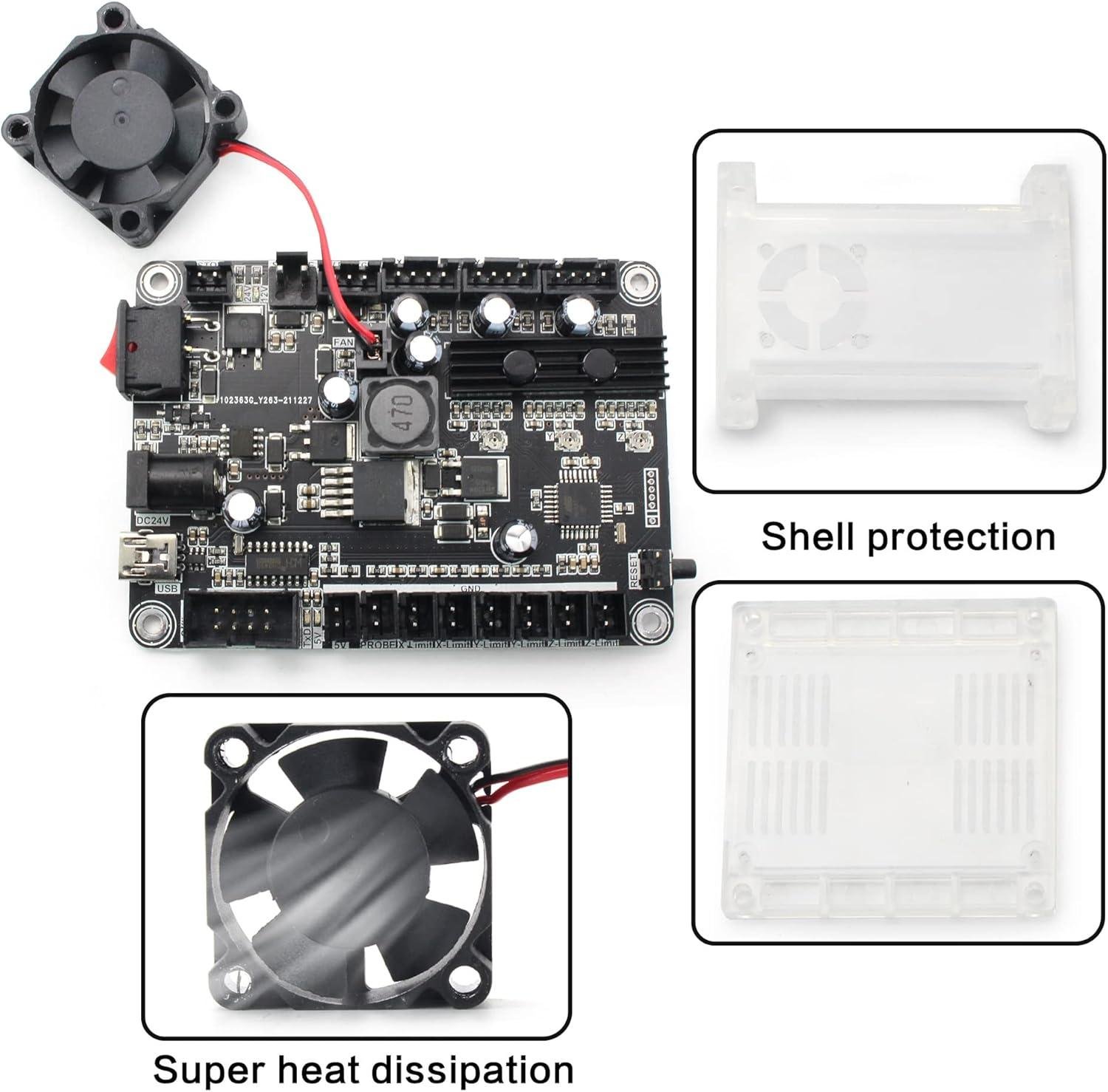
Setup is typically straightforward for a DIY kit: you’re assembling the aluminum-alloy frame and motion components, then checking squareness and smooth travel on X/Y/Z. Expect to spend time on basic tuning—tightening fasteners, checking belt/drive tension (if applicable to your build), and making sure the axes move freely without binding. The GRBL 1.1 control board supports limit functions and emergency stop integration, which is helpful as you fine-tune homing/limits and basic machine safety.
Does it work with standard bits and accessories (ER11, clamps, probe, offline controller)?
Yes—this kit includes an ER11 collet set (14 pieces), which is a common standard for small CNC spindles and supports a range of shank sizes depending on the specific collets provided. It also includes plate clamps for workholding, an offline controller for running jobs without keeping a computer connected, and GRBL 1.1 features such as tool setting (probe capability is listed) and limit support. For woodworking, many users add a simple spoilboard and upgrade to higher-quality carbide end mills/engraving bits for cleaner results.
Will this fit in a small workshop, and can it be mounted to a bench?
It’s very small-shop friendly. The frame size is listed around 42 × 35 × 27 cm (16.5″ × 13.8″ × 10.6″), so it fits on a benchtop or a small cart. mounting it to a stable surface is recommended—CNC vibration and movement can affect cut quality, especially on harder woods. Many woodworkers also place it on a sacrificial board (MDF) and clamp/bolt that board to the workbench for quick setup and less noise transfer.
Do I need special dust collection and what power does it need?
You don’t need industrial dust collection, but you do need some chip control—wood and MDF dust will build up quickly around the cutter and rails. A small shop vac with a DIY dust shoe/brush attachment is a common upgrade.Power-wise, the spindle is a 12–24V 775 motor using the included power supply (so it plugs into a standard household outlet via the power supply brick). If you’re cutting MDF or plywood, prioritize dust extraction and a mask/respirator—fine dust is the main “gotcha” in small CNC setups.
Discover the Power

Tool Summary: The RATTMMOTOR 3‑axis DIY mini CNC router pairs a 775 spindle motor (12–24V, around 10,000 RPM at 24V) with an aluminum-alloy frame (42×35×27 cm) and a compact working area (about 18×10×4.5 cm).GRBL 1.1 control adds safety-minded features like emergency stop support, limit functions, and tool setting/probe capability, while the offline controller lets you run files without a dedicated computer. Customer feedback commonly highlights the approachable assembly, included accessories (ER11 collets, bits, clamps, USB drive), and decent results on wood, acrylic, PVC, and PCB—while noting its limitations on harder materials and heavier cuts.
best For: ideal for hobby woodworkers and beginners learning CNC fundamentals on small signs, inlays, engraving, and light milling.
Consider Alternatives If: If you mainly cut thick hardwoods, need higher spindle speed/torque, or want production-grade rigidity for daily use.
Final Assessment: This kit is a solid entry-level CNC for precise, small-format projects—reliable within its size and power limits, but not built for demanding, high-throughput routing.
Want to see current pricing and customer photos? View on Amazon & Read More Reviews →