

Blog
PORTER-CABLE PCCW205B Orbital Sander Review: Our Shop?

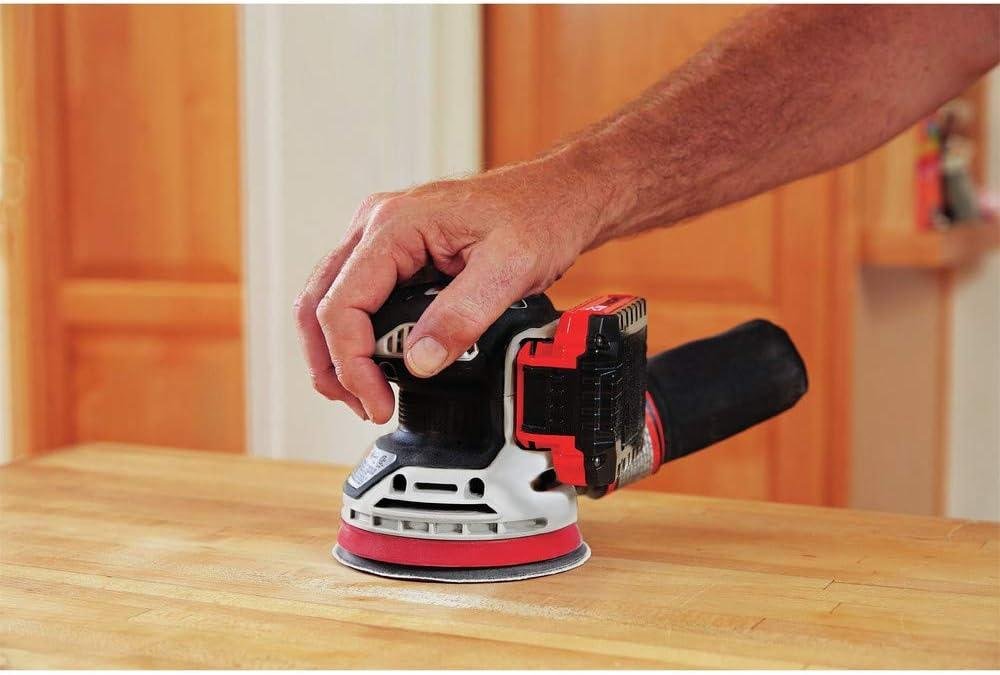
Ever tried to level a glued-up panel only to fight swirl marks, tipping edges, and a cord that keeps snagging on sawhorses? Sanding is one of those steps where precision and control matter just as much as patience—especially in small shops where every square foot (and outlet) is already spoken for.
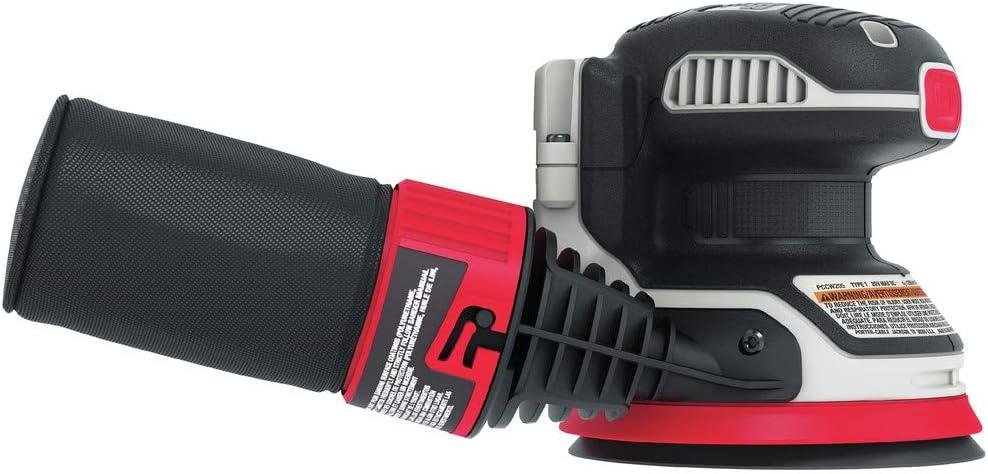
the PORTER-CABLE 20V MAX* Random Orbital Sander (PCCW205B) is a cordless, 5-inch ROS built to keep you moving without dragging a cord across fresh work. It’s rated at 12,000 OPM, has a low-profile body for better control, and includes a rubberized grip plus a dust-proof switch aimed at durability.For dust management, it ships with a detachable dust bag and also accepts a 1-1/4-inch hose via its vacuum port (battery and charger sold separately).
In this review, we’ll walk through key features, how it fits real-world workflows, what customers commonly mention in feedback—like comfort, dust collection, and finish quality—and who it makes sense for at the price. as woodworkers who’ve learned that “good enough” sanding can ruin great joinery, we’ll keep the focus on practical trade-offs and the learning curve.
Tool Overview and Build Quality in the Shop
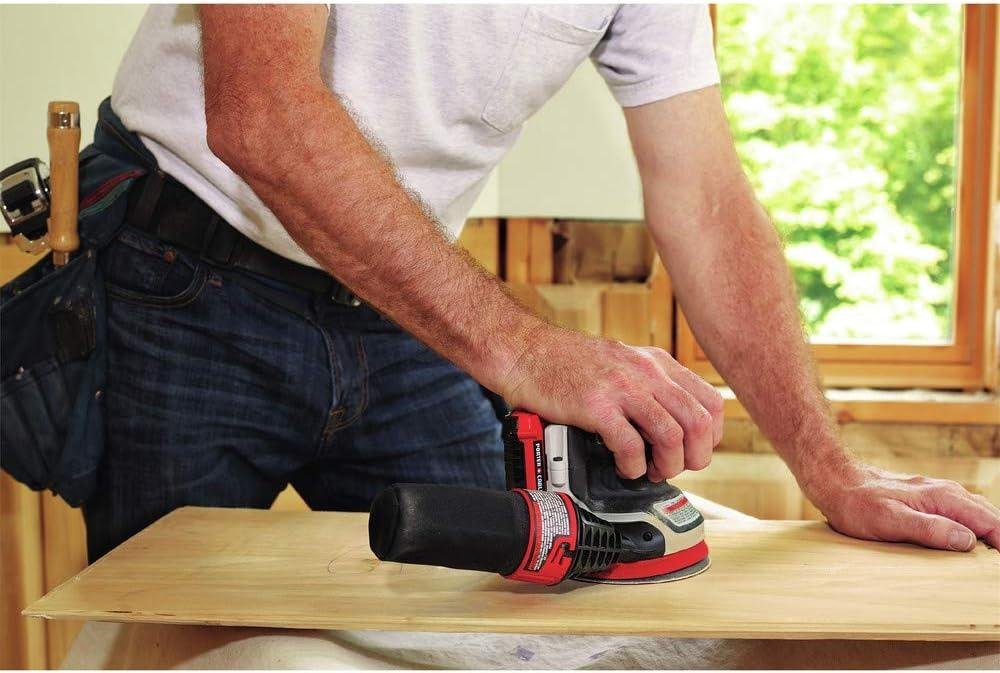
In our shop, the PORTER-CABLE 20V MAX* Random Orbital Sander (PCCW205B) reads like a practical “grab-and-go” finish tool: a cordless 20V MAX* platform sander with a 5-inch sanding pad that runs at up to 12,000 OPM (orbits per minute). That orbit rate matters—on flat panels and edge banding cleanups, higher OPM generally means faster stock removal, but it also rewards a lighter touch so we don’t introduce swirls.The body is designed with a low-profile layout for control and a rubberized grip that makes it easier to keep the pad flat during long passes. Reviewers frequently echo that it “works great,” feels like “good power,” and has a “really good grip,” while a recurring shop reality shows up too: battery runtime.Multiple customers report the tool “uses them up fast,” with one noting roughly 10–15 minutes per battery depending on pressure—an notable reminder that a cordless ROS is best treated like a sprint tool unless we’ve got extra packs on the charger.
Build-quality-wise, the details we care about as woodworkers are present: a dust-proof switch aimed at durability in fine dust environments, and a dust system that can run either with the included bag or with extraction. Customers say the hook-and-loop pad holds discs well (“the velcro…worked like a champ”), and most feedback on dust collection is realistic: the detachable dust bag “caught some of the dust,” but for finer debris (one reviewer specifically calls out drywall dust) the smarter move is to connect a vac to the 1-1/4-inch hose port. We also see user notes about small ergonomics—one person wished for “directional adaptability with the dust collector,” and another disliked that it’s not obvious which side of the switch is on/off. Those are minor, but in a busy shop they affect flow.this sander looks tailored for DIY to intermediate furniture work where cord-free control matters, especially for quick break-down sanding between coats, easing sharp edges, or refining stable hardwood surfaces—customers specifically mention using it successfully on black walnut, juniper, and a kitchen table refinish.
- Included accessories
- Detachable dust bag
- Tool only (battery and charger sold separately)
- Compatible attachments/accessories
- 5-inch hook-and-loop sanding discs (various grits)
- 1-1/4-inch vacuum hose (for dust port connection)
- PORTER-CABLE 20V MAX* batteries (2Ah–4Ah commonly referenced by customers)
- Ideal project types
- Tabletop refinishing and finish sanding between coats
- Small-to-medium furniture parts (aprons, rails, panels)
- Edge easing and corner softening before finish
- Interior trim touch-ups where cords are annoying
- Wood types tested by customers
- Black walnut
- Juniper
| Spec / Feature | What PORTER-CABLE Lists | Why It Matters in the Shop |
|---|---|---|
| Power source | 20V MAX* cordless (battery/charger not included) | no cord drag on tabletops and case sides; plan for extra batteries on big sand-ups. |
| Speed | 12,000 OPM | solid removal rate for a cordless ROS; keep pressure light to reduce swirl risk. |
| Pad size | 5-inch | Common disc size—easy grit sourcing and good balance of control vs. coverage. |
| Dust collection | Detachable bag + 1-1/4-inch vac port | Bag for quick jobs; vac hookup for fine dust control and cleaner finishes. |
| Durability detail | Dust-proof switch | Helps in real sanding conditions where fine dust can shorten switch life. |
| Accessory | Compatibility | Use Case |
|---|---|---|
| 5″ hook-and-loop sanding discs | Yes | General sanding from stock removal (lower grits) to pre-finish (higher grits). |
| 1-1/4″ vacuum hose | Yes (dust port) | Better dust control, especially on fine powders and indoors. |
| 20V MAX* battery packs | Yes (platform dependent) | Higher Ah packs help extend runtime on larger panels and longer sanding sessions. |
| Capacity Consideration | Recommended for Smooth Workflow | What Customers Commonly Report |
|---|---|---|
| Runtime planning | Keep multiple batteries (and ideally a larger Ah pack for big jobs) | Battery can go “fast”; one estimate is 10–15 min depending on pressure and battery condition. |
| Dust management | Use a vacuum hookup when dust matters (indoor work, fine sanding) | Bag “caught some” dust; vac is preferred for finer dust. |
See Full Specifications & Customer Photos
real World Sanding Performance Across Hardwood and Softwood

In real workshop use, the PORTER-CABLE PCCW205B behaves like a straightforward finish sander with the advantage of being cordless. With a 5-inch hook-and-loop pad and a listed 12,000 OPM, we found it best suited for controlled, even passes rather than heavy stock removal—exactly what a random orbital is designed for. On hardwoods, multiple customers specifically mention sanding black walnut and juniper “without any difficulty,” and that aligns with how this sander shoudl be used: keep it flat, let the orbit do the work, and step through grits instead of leaning on it. Reviewers consistently praise that it “works great,” the rubberized grip feels secure, and the hook-and-loop “held on the sandpaper like a champ,” which matters when we’re doing edge-to-field blending on tabletops, face frames, and panel glue-ups.
Across softwoods and lighter-duty tasks—think pine trim, SPF shelving, or smoothing filler/primer between coats—this sander’s low-profile body makes it easier for us to keep the pad from tipping and carving swirl marks at edges. Battery draw is the main real-world limiter: more than one reviewer notes it’s “good for about 10 to 15 minutes per battery depending on how hard you press,” and others recommend stepping up to a 4Ah pack for larger projects. That’s a useful lesson in technique: pressing harder doesn’t make a random orbital faster,it usually just stalls the pad and drains power—especially on resinous softwoods where grit loads up quickly. Dust control is “okay” with the included bag (customers say it “caught some of the dust”), but for fine sanding or anything dusty (one reviewer calls out drywall), we’ll get vastly cleaner results by removing the bag and using the 1-1/4-inch vacuum port for continuous extraction.
- Included accessories: Detachable dust bag
- compatible attachments/accessories:
- 5-inch hook-and-loop sanding discs
- Shop vacuum with 1-1/4-inch hose (via the built-in port)
- PORTER-CABLE 20V MAX* batteries & charger (sold separately)
- Ideal project types:
- Tabletop and countertop refinishing (between grits and between coats)
- Cabinet doors, drawer fronts, and face frames
- Trim and interior finish sanding where cords get in the way
- Small-shop sanding where quick setup matters
- Wood types tested by customers:
- Black walnut
- juniper
| Spec / Feature | PORTER-CABLE PCCW205B (per listing) | What it means in the shop |
|---|---|---|
| Pad size | 5-inch | Standard disc size; easy to source grits and brands |
| Speed | 12,000 OPM | Good general-purpose speed for smoothing and finish prep |
| Power | 20V MAX* (battery sold separately) | Convenient cordless sanding; runtime depends heavily on battery capacity and pressure |
| Dust collection | Detachable dust bag + 1-1/4-inch vacuum port | Bag helps a bit; vacuum hookup is best for fine dust and long sessions |
| durability feature | Dust-proof switch | Helps resist fine dust intrusion during repeated sanding sessions |
| Accessory category | What Fits | Why We’d Use It |
|---|---|---|
| Sanding discs | 5-inch hook-and-loop discs (various grits) | Fast grit changes; common size for woodworking |
| Dust extraction | 1-1/4-inch vacuum hose connection | Cleaner surfaces, clearer abrasive, better visibility of scratch pattern |
| Power | PORTER-CABLE 20V MAX* batteries (e.g., 2Ah / 4Ah) | Higher Ah generally means longer sanding sessions between swaps |
| Capacity Topic | Recommended for Best Results | what Customers Report in Practice |
|---|---|---|
| Session length per battery | Have multiple batteries for continuous work | Often 10–15 minutes per battery depending on pressure and battery age |
| Material removal rate | Use for smoothing, not aggressive flattening | “Works great” for refinishing and general sanding when used with proper technique |
| Dust control | Vacuum hookup for fine dust or long runs | Dust bag “caught some of the dust,” vacuum recommended for messier sanding |
See Full Specifications & Customer Photos
Dust Collection and Finish Quality We Can Expect
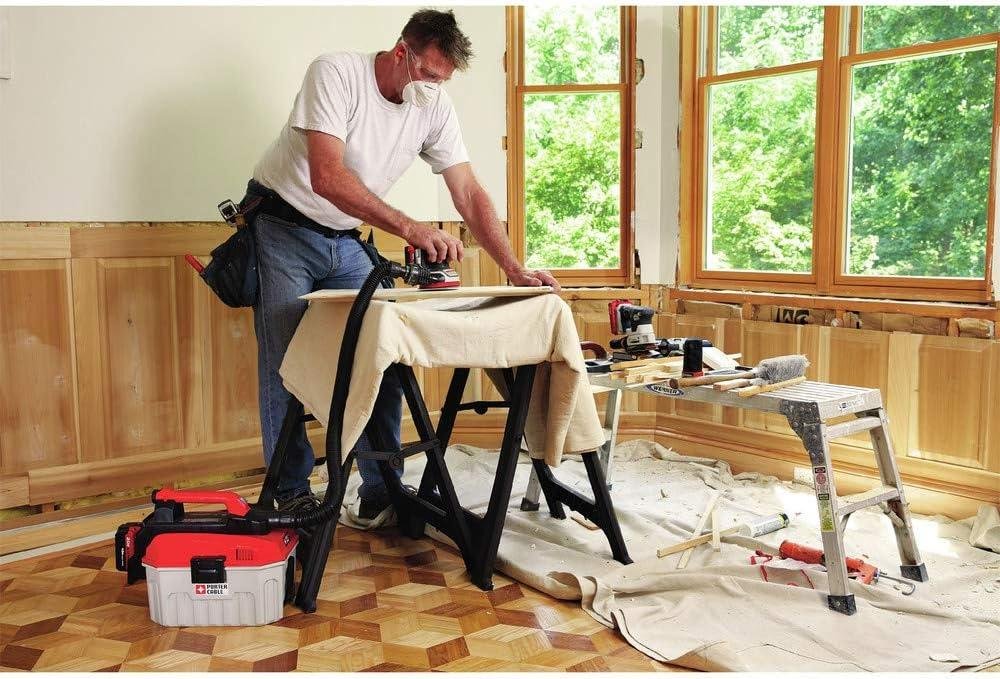
For keeping our shop air cleaner while still chasing a furniture-grade surface, the PCCW205B gives us two workable paths: a detachable dust bag that clips on for quick jobs, or a vacuum port sized for a 1-1/4-inch hose when we’re doing longer sanding sessions. In practice, the bag is handy for knocking down nibs or easing edges without dragging a hose around, and multiple reviewers echo that the “dust catcher caught some of the dust” and that the “dust bag is great for filtering dust.” When we need better capture—especially during interior work where “my plug in gets saw dust all over the place”—hooking up a vac to that port is the smarter move, and one customer specifically notes that drywall dust should be hooked up to a vacuum rather than relying on the bag alone. One consistent gripe we see is ergonomics rather than suction: a reviewer wished for more directional flexibility with the dust collector, which matters when we’re sanding inside cabinets or along aprons where hose routing can fight us.
On finish quality, this is a true random-orbit platform running at 12,000 OPM, and the 5-inch hook-and-loop pad makes it easy for us to step through grits the way we’d do on a corded ROS. Customers mention the paper hold as a bright spot—“the velcro to hold on the sandpaper worked like a champ”—which helps us maintain even scratch patterns rather of dealing with pad slip.Reviewers also report successful sanding on black walnut and juniper boards and even a kitchen table refinishing job, which lines up with what we’d expect from a 5-inch ROS: great for flats, panels, and final prep before stain or film finish, as long as we don’t lean on it. As cordless runtime is a real factor here (several users cite about 10–15 minutes per battery depending on pressure), we get the best surface when we let the sander’s orbit do the cutting, keep it moving, and reserve heavy stock removal for coarser grits or a different tool—more pressure just drains batteries faster and can worsen swirl marks.
- Included accessories: Detachable dust bag (tool-only; battery and charger sold separately)
- Compatible attachments/accessories:
- 5-inch hook-and-loop sanding discs
- 1-1/4-inch vacuum hose connection (shop vac/dust extractor) via the sander’s port
- PORTER-CABLE 20V MAX* batteries (2Ah works; many reviewers recommend 4Ah for larger projects)
- Ideal project types:
- Tabletop refinishing and finish sanding between coats
- cabinet doors, face frames, and panel glue-ups
- Interior trim touch-ups where a cord is inconvenient
- Wood types tested by customers:
- black walnut
- Juniper
| Spec / Feature | PORTER-CABLE PCCW205B | Why it matters for dust & finish |
|---|---|---|
| Orbit rate | 12,000 OPM | controls scratch pattern; suitable for typical ROS grit progression and finish prep |
| Pad size | 5-inch | Standard disc availability; good balance of coverage and control |
| dust collection | Detachable dust bag + 1-1/4-inch vacuum port | Bag for convenience; vac hookup for higher capture and cleaner sanding in enclosed spaces |
| power source | 20V MAX* cordless (tool only) | No cord drag on the work; runtime depends heavily on battery size and sanding pressure |
| Accessory | Compatibility | Use case |
|---|---|---|
| 5-inch hook-and-loop sanding discs | Yes | Grit progression for finish quality (e.g., 80→120→180→220 depending on finish) |
| 1-1/4-inch vacuum hose | Yes | Improved dust capture vs. bag; recommended for fine dust (including drywall) |
| 20V MAX* batteries (2Ah / 4Ah) | Yes | 2Ah for short tasks; 4Ah suggested by reviewers for larger sanding sessions |
| Category | Recommended (best practice) | What customers report in real use |
|---|---|---|
| Dust capture | Use a vacuum on the 1-1/4-inch port for most sanding | Bag “caught some of the dust”; vacuum preferred for finer dust |
| battery planning | Have multiple packs; consider 4Ah+ for extended work | Some users see 10–15 minutes per battery depending on pressure and battery age |
Check Current Price & Reviews on Amazon
Ease of Use for Beginners and Control Features Experienced Woodworkers Want

For beginners, this PORTER-CABLE cordless ROS keeps the learning curve friendly as there’s simply less to “figure out” before we can get sanding. The 5-inch hook-and-loop pad makes paper changes straightforward (several reviewers say the “velcro to hold on the sandpaper worked like a champ”), and the tool’s low-profile body plus rubberized grip helps us keep the pad flat—one of the biggest beginner mistakes that causes swirls and uneven spots. The spec that matters most in day-to-day sanding is speed: it’s rated at 12,000 OPM (orbits per minute), which is plenty for flattening between coats and progressing through grits on tabletops, cabinet parts, and trim.Customer themes back that up: peopel repeatedly call it “easy to use,” “works great,” and a “real time saver,” with specific mentions of success on kitchen table refinishing and boards like black walnut and juniper. The one “new-user gotcha” we want to highlight from reviews is the power switch: some buyers note you “don’t know which side of the button is power on or power off,” so we recommend making it muscle memory to verify the switch position before setting the tool down or picking it up.
For experienced woodworkers, the control features that matter show up in the way this sander manages dust, balance, and repeatability on real shop tasks.The included detachable dust bag is fine for quick passes, but the more “pro” move is using the built-in port that connects to a 1-1/4-inch hose—multiple reviewers mention the dust bag “caught some of the dust,” and others recommend hooking it to a vacuum (especially for finer dust). We also like seeing a dust-proof switch in the specs; that’s the kind of detail that helps in gritty environments where sanding fines can shorten tool life. Battery management is the real workflow control point: several customers report run time of about 10–15 minutes per battery depending on pressure, and many suggest stepping up to a 4Ah battery for larger sanding sessions. That aligns with good technique we try to follow anyway—let the 12,000 OPM do the cutting and avoid leaning hard,because excess pressure bogs any random-orbit sander, increases swirl risk, and drains cordless packs faster. (Note: this is the tool-only version, so we’ll need a compatible battery and charger if we’re not already on the PORTER-CABLE 20V MAX* platform.)
- Included accessories
- Detachable dust bag
- Vacuum port (fits a 1-1/4-inch hose)
- Tool only (battery and charger sold separately)
- Compatible attachments/accessories
- 5-inch hook-and-loop sanding discs (various grits)
- 1-1/4-inch shop-vac hose for improved dust collection
- PORTER-CABLE 20V MAX* batteries (many reviewers prefer 4Ah over 2Ah for bigger jobs)
- ideal project types
- Tabletop and furniture refinishing (common reviewer use case)
- Interior finish sanding where cord-free mobility helps
- Between-coat sanding on finishes (light pressure, higher grits)
- Edge and face clean-up after milling (with appropriate grit progression)
- Wood types tested by customers
- Black walnut
- Juniper
| Spec / Feature | PORTER-CABLE PCCW205B (from listing) | Why it matters in the shop |
|---|---|---|
| Pad size | 5-inch | Standard disc size; easy to source discs in any grit for wood sanding. |
| Speed | 12,000 OPM | Determines material removal rate; use lighter pressure to reduce swirls and extend battery life. |
| Power source | 20V MAX* cordless (tool only) | Great for portability; plan battery capacity around sanding session length. |
| Dust collection | Detachable dust bag + 1-1/4-inch vacuum port | Bag is convenient; vacuum hookup is better for fine dust control and cleaner finishes. |
| Control/Durability | Low profile,rubber grip,dust-proof switch | Improves one-hand control and helps keep the pad flat—key to avoiding swirl marks. |
| accessory Type | Compatibility | Woodworking Use |
|---|---|---|
| Sanding discs | 5-inch hook-and-loop | Grit progression for wood: coarse for stripping/leveling, fine for finish prep. |
| Dust extraction | 1-1/4-inch hose | Cleaner air and better surface visibility when chasing scratch patterns. |
| Batteries | PORTER-CABLE 20V MAX* packs | Larger Ah packs typically sustain sanding longer; reviewers often recommend 4Ah for big jobs. |
| Capacity / Expectation | Recommended (practical) | Actual (from review themes) |
|---|---|---|
| Run time per battery | Have multiple batteries ready for continuous sanding | many report about 10–15 minutes per battery depending on pressure and battery age |
| Dust control | Use the 1-1/4-inch vacuum port for best collection | Dust bag “catches some,” but vacuum hookup is commonly recommended for finer dust |
See Full Specifications & Customer Photos
Customer Reviews Analysis
What Woodworkers Are Saying — PORTER-CABLE 20V MAX* Random Orbital sander (PCCW205B)
| Aspect | Common Feedback |
|---|---|
| Overall Sentiment | Mostly positive—praised for convenience, solid power, and being a time-saver; main drawbacks are battery runtime and a few ergonomic/design quirks. |
| Performance | Multiple reviews highlight smooth, effective sanding on hardwoods and furniture refinishing; holds up well when paired with adequate batteries. |
| Dust Collection | Dust bag helps, but several woodworkers mentioned wanting better dust-port direction/flexibility; fine dust (e.g., drywall) is better with a vacuum. |
| Ease of Use | Common praise includes agreeable grip and easy pad changes; some users reported confusion with the power switch orientation. |
| Value | Often described as a good purchase—fair price for performance, especially if you already own PORTER-CABLE batteries. |
1. Overall sentiment from woodworking customers
Overall feedback trends positive. Several woodworkers mentioned it “works great” and becomes a go-to tool in regular shop use. Convenience is a repeating theme—being cordless is frequently described as the deciding factor, especially for quick sanding jobs or working where cords are annoying.
2. Performance feedback (accuracy, power, results)
Common praise includes strong sanding performance for a cordless ROS and good real-world results on wood. customers successfully used this for:
- Hardwood boards (one reviewer specifically noted black walnut and juniper) with “no difficulty”
- furniture refinishing, including a kitchen table restoration
Reviewers describe it as having “great power” and being a “real time saver.” Under load, some users implied runtime drops when pressing harder, but they still considered the sanding performance solid for the class.
3. Build quality and durability observations
Multiple reviews highlight a generally sturdy, dependable feel—comments like “It’s porter-Cable. Delivers like you expect” suggest confidence in brand-level build quality. Some users also called it small but strong, and the grip was singled out as “really good,” which frequently enough correlates with better tool control and less fatigue.
The hook-and-loop pad system also earned praise,with one woodworker noting the Velcro “worked like a champ,” implying secure paper retention during use.
4. Ease of use for different skill levels
Beginners and DIY-focused reviewers found it straightforward: “easy to use,” with sanding discs that “adhere well and remove easily.” comfort also came up frequently—good grip and cordless mobility make it approachable for less experienced users.
That said, some users reported challenges with the power switch clarity, specifically not knowing “which side of the button is power on or power off.” It’s a small issue, but it’s the kind of thing that can slow down first-time users.
5. Common project types and success stories
Project mentions skew toward household woodworking and finishing:
- kitchen table refinishing (positive outcome—“worked great”)
- Interior finish work, chosen specifically to reduce dust spread compared to a plug-in tool in that user’s situation
- Board prep on hardwoods like walnut (successful sanding without bogging down)
A recurring “success story” angle is efficiency: reviewers repeatedly frame it as a tool that saves time and simplifies setup—grab it, sand, move on.
6. Issues or limitations reported
the most consistent limitations weren’t about sanding quality—they were about support systems and ergonomics:
- Battery runtime (biggest theme): Several woodworkers mentioned short run time, often around 10–15 minutes per battery depending on pressure and battery age. Multiple reviews highlight that older 2Ah packs drain especially fast, and some suggest stepping up to 4Ah for larger projects.
- dust collection design: While the dust bag is described as “great for filtering dust,” some users wanted more directional flexibility at the dust port. Fine dust (one reviewer mentioned drywall dust) is better handled by hooking up a vacuum.
- Power switch labeling/feel: At least one reviewer noted you can’t easily tell which side is on/off—an avoidable usability nitpick.
Net takeaway from the reviews: woodworkers generally like the sanding results and cordless convenience, but recommend planning for extra batteries (or higher Ah packs) and not expecting dust collection to replace a vacuum on fine-dust tasks.
Pros & Cons
Pros & Cons
In our shop, the PORTER-CABLE PCCW205B 20V MAX* Random Orbital Sander feels like a “grab-and-go” tool: simple, mobile, and ready when we are—so long as we already have batteries on the bench. Below is what stood out to us after putting it in the rotation for typical sanding jobs.
Pros
- Cordless freedom: We can move around furniture, panels, and awkward corners without playing tug-of-war with an extension cord.
- Low-profile control: The compact, low stance helps us keep the pad flat—especially on wide surfaces where tipping can create swirls.
- Comfortable grip: The rubberized grip makes longer sanding sessions less fatiguing on our hands.
- Solid material removal: With 12,000 OPM, it has enough “get-up-and-go” for everyday smoothing and prep work.
- Flexible dust collection: We can use the included dust bag for quick jobs, or remove it and connect a 1-1/4″ hose when we want cleaner air and cleaner lines.
- Durability-minded switch: The dust-proof switch is a small detail we appreciate when sanding throws fine powder everywhere.
Cons
- Tool-only package: We need to budget for a battery and charger if we’re not already in the PORTER-CABLE 20V MAX* system.
- Runtime depends on our battery: For big tabletops or back-to-back projects, we’ll want a higher-capacity pack (or a spare) to avoid downtime.
- Dust bag is “good,” not magic: For fine dust, we get noticeably better results when we hook it to extraction rather than relying solely on the bag.
- Not a heavy stock-removal beast: For aggressive leveling or rapid material removal, we still reach for more powerful (frequently enough corded) options.
Quick Shop Takeaways
| Scenario in Our Shop | How It Feels | Why It Matters |
|---|---|---|
| Door edges, trim, on-site touch-ups | Light, mobile, simple | No cord headaches; faster setup |
| Furniture sanding (mid-size surfaces) | Controlled and steady | low profile helps avoid gouges/swirls |
| Dust-sensitive sanding indoors | Better with a hose | Cleaner air and less cleanup |
| All-day sanding marathons | Battery management required | Extra packs keep our workflow moving |
Q&A
Is it powerful enough for hardwoods like oak, maple, or walnut?
For a 5-inch cordless random orbital sander, it has solid sanding power—PORTER-CABLE lists it at 12,000 OPM (orbits per minute) for material removal. In customer feedback, woodworkers specifically mentioned using it on black walnut (and even juniper boards) “without any difficulty.” Like any ROS, it works best on hardwoods with light-to-moderate pressure and appropriate grits; pushing hard doesn’t make it cut dramatically faster and will drain batteries quicker.
How dose it perform on plywood, veneers, and refinishing work?
It’s well-suited to plywood and veneer work because the random-orbit action helps reduce obvious straight-line scratch patterns—important when you’re trying not to sand through thin face veneers.Several users also reported good results on refinishing projects (like sanding a kitchen table). Practical tip: use a fresh, sharp abrasive and let the tool float—especially on edges and veneer seams.
Can it handle production work, or is it mainly for hobby projects?
The tool itself is capable, but battery runtime is the limiting factor for “production pace.” Multiple reviewers noted the batteries can go quickly—one mentioned roughly 10–15 minutes per battery depending on pressure and workload, and others said it “went through the batteries pretty quickly,” especially with older packs. If you’re doing lots of sanding in a day, plan on multiple batteries and consider higher-capacity packs (users commonly recommend stepping up to 4Ah for larger projects). For hobby furniture builds, trim work, and intermittent sanding, the cordless convenience is a big win.
How hard is setup, and does it use standard 5-inch sanding discs?
setup is straightforward: it’s “tool only,” so you’ll supply the 20V MAX* battery and charger, then stick on a standard 5-inch hook-and-loop (Velcro-style) sanding disc. Reviews specifically call out that the hook-and-loop holds well and discs remove easily. If you already use common 5-inch ROS paper, you’re in good shape—no specialty discs required.
How effective is the dust collection, and can I hook it to a shop vac?
It includes a detachable dust bag for basic dust pickup, and PORTER-CABLE also provides a vacuum port that connects to a 1-1/4-inch hose for better dust removal. Users generally liked the dust bag for light sanding and indoor work, but for fine dust (especially drywall dust, per reviews) a vacuum hookup is the better choice. If you do a lot of sanding indoors or on open-grain hardwoods, expect noticeably cleaner results when attached to a vac.
Is it beginner-friendly, and what’s the learning curve like?
It’s approachable for beginners: the low-profile design helps control, and the rubberized grip improves comfort during longer sanding sessions. Reviewers commonly describe it as “easy to use,” and it’s a real time saver compared to hand sanding. One usability complaint that came up is the on/off button labeling—some users said it’s not immediately obvious which side is on vs. off—so expect a short “muscle memory” period.
What maintenance does it need, and is it built to last?
Routine maintenance is simple: keep the pad face clean (so discs grip well), empty/clean the dust bag regularly, and don’t let dust cake up around the vents. The tool includes a dust-proof switch aimed at durability in dusty environments, which is a real benefit for sanding. Longevity will mostly depend on how well you manage dust and how hard you lean on it—excess pressure increases heat and wear and also shortens battery runtime.
Is it a good value versus a corded random orbital sander?
If you prioritize convenience and mobility, it’s a strong value—no cord drag, and it’s handy for on-site work or quick sanding tasks where setting up a cord is annoying. The main trade-off versus corded is uninterrupted runtime: reviewers consistently point out you’ll want extra batteries (and preferably higher Ah packs) for bigger jobs. If you already own PORTER-CABLE 20V MAX* batteries, the “tool only” price usually makes the most sense; if you don’t, factor in battery/charger cost when comparing to corded options.
Reveal the Extraordinary

Tool Summary: The PORTER-CABLE 20V MAX* Random Orbital Sander (PCCW205B) delivers 12,000 OPM in a cordless 5-inch format with a low-profile body for control, a rubberized grip, and a dust-proof switch for durability. Dust collection is flexible: use the detachable dust bag or connect a 1-1/4-inch hose. Customer feedback commonly praises its comfortable handling, strong paper grip (hook-and-loop), and the freedom of cord-free sanding, while the main drawback is runtime—many report 10–15 minutes per battery depending on pressure and battery age. (Battery/charger sold separately.)
Best For: Ideal for hobby woodworkers with small to medium projects, beginners learning sanding fundamentals, and cabinet or trim work where maneuverability matters.
Consider Alternatives If: You sand thick hardwoods all day, run production workloads, or want longer runtime without multiple batteries.
Final Assessment: A solid mid-range cordless option with reliable sanding performance, best when paired with higher-capacity batteries and/or a vacuum.
Want to see current pricing and customer photos? View on Amazon & Read More Reviews →














