

Blog
DIY Cutting Board Kit Review: Right for Our Shop?

Ever glue up a cutting board only to realize your “matching” strips aren’t quite the same thickness, leaving you chasing flatness with clamps, a planer, and way too much sanding? When stock isn’t straight or square, precision takes a hit fast—and so does our patience, especially in a small shop where every extra step eats time and space.
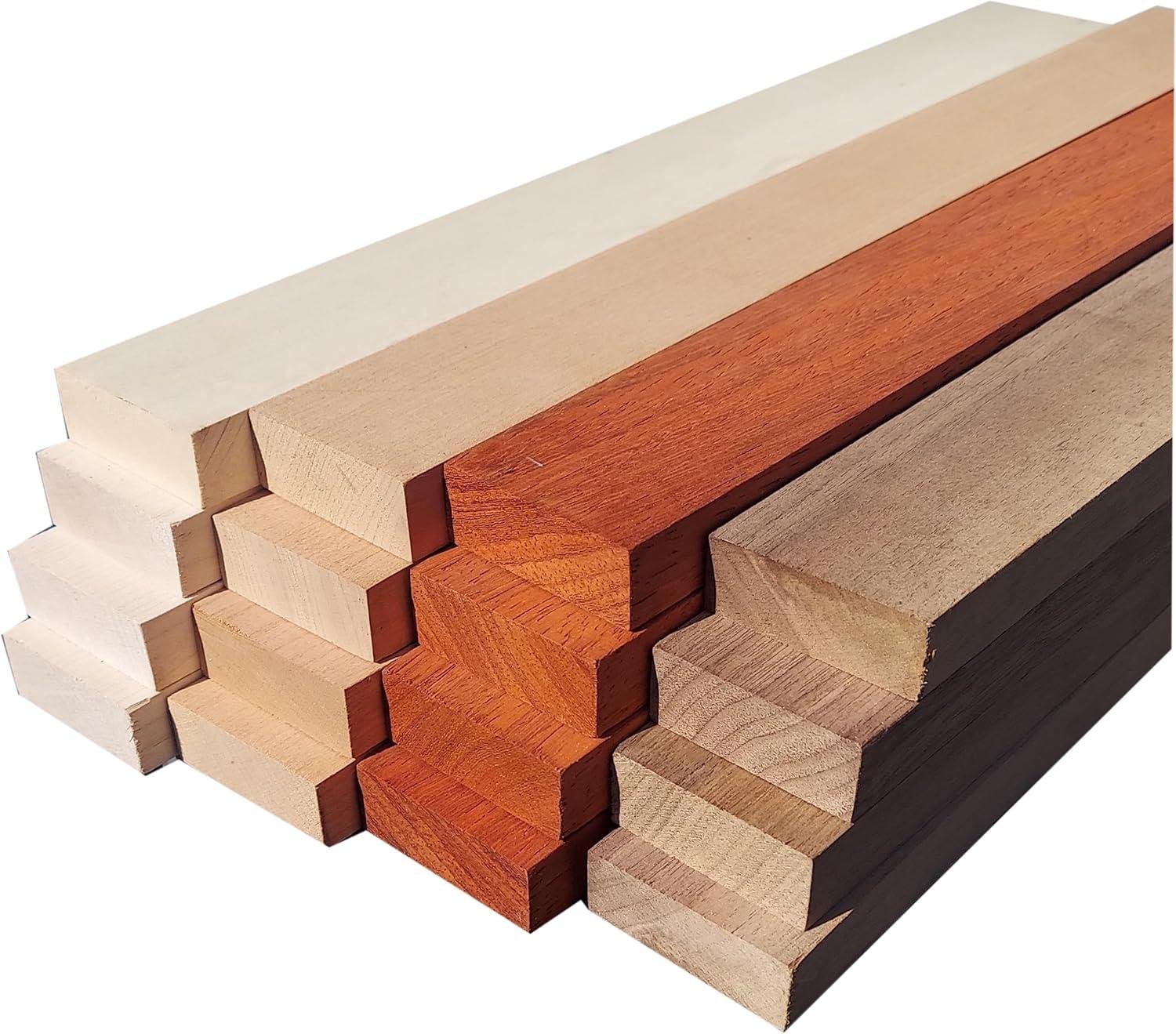
That’s where the 16 pc Walnut/Cherry/Padauk/maple DIY Cutting Board Wood Kit (3/4″ x 2″ x 16″) comes in. It’s a U.S.-made bundle from CT Power Tools LLC that includes 16 kiln-dried boards—4 each of Black Walnut, Maple, Cherry, and vivid orange Padauk—supplied S4S (surfaced four sides) and sanded to 80 grit.
In this review, we’ll look at what those specs mean for accuracy, glue-up ease, durability expectations, and finish potential, plus how the kit fits different skill levels and budgets. We’ll also weigh common customer feedback—many reviewers mention the boards arrive straight and consistent—against what we typically watch for when selecting hardwood for cutting boards. Our perspective comes from years of building shop projects and small gifts, learning which “time-savers” actually save time.
Tool Overview and Wood Selection Quality
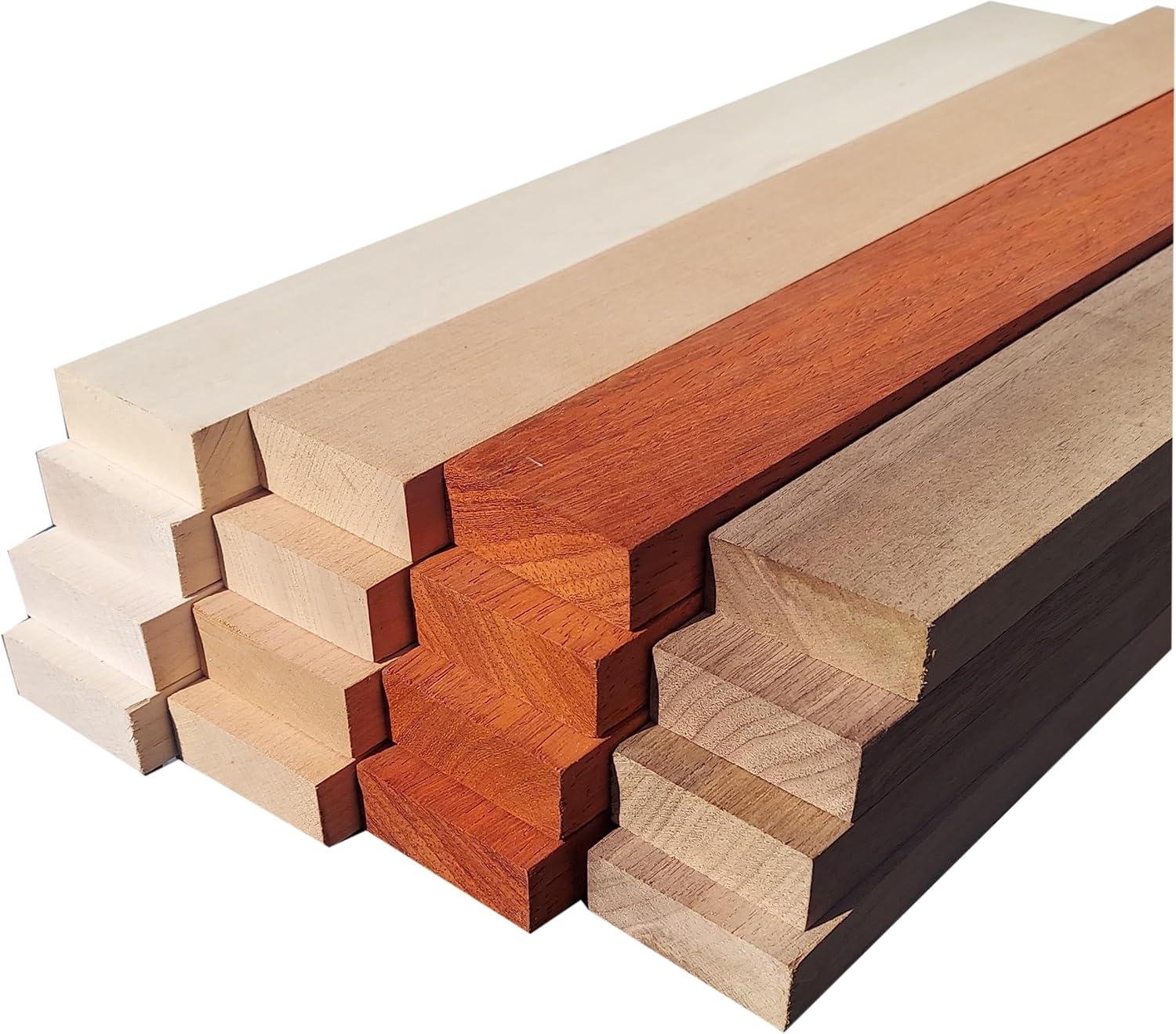
In our shop, we treat this “16 pc Walnut/Cherry/padauk/Maple DIY Cutting Board Wood Kit” less like a tool and more like a project shortcut: the stock arrives pre-portioned at 3/4″ thick x 2″ wide x 16″ long, so the “setup” is really about checking it like we would any lumber before glue-up. The listing calls the boards kiln dried, stabilized, and S4S (surfaced four sides), with an 80-grit sanded finish—meaning, in a best-case scenario, we can go straight to arranging a pattern, edge-gluing, and then flattening/sanding. Practically, we still recommend a swift pass with a straightedge and calipers: several buyers echo that the kit can be “close but not perfect,” with one reviewer noting widths off by as much as 1/16″ and “jagged” ends (enough to force a jointer/planer step if we want tight glue lines). Having mentioned that, other customers report success despite minor imperfections—“a couple pieces… weren’t that flat but I was able to make it work”—and multiple comments align on the positives: “great in color” and “easy to work with.”
Wood-selection-wise, we like the mix as it teaches real cutting-board fundamentals: Walnut and Cherry plane/sand predictably, Maple brings hardness (and can burn if our saw blade is dull), and Padauk adds striking orange contrast but can bleed color into lighter species if we’re sloppy with glue squeeze-out or wet sanding. The 80-grit surface is workable, yet we’ll still joint edges (or at least do a light edge-cleanup) so our clamps don’t “pull” gaps closed and starve joints. If we don’t own a jointer/planer, we can still make this kit work by trimming all pieces to a common length on a miter saw or crosscut sled, then using a table-saw jointing jig or careful hand-planing for glue-ready edges; reviewers who expected “same length” boards without extra milling were the most disappointed. Bottom line: for beginners, this kit can be a confidence boost if we’re willing to do basic squaring and flattening; for experienced woodworkers, it’s convenient stock that still benefits from our usual milling checks before we commit to glue-up.
- Included accessories
- 16 pre-cut boards: 4 walnut, 4 Maple, 4 cherry, 4 Padauk
- Dimensions per board: 3/4″ x 2″ x 16″
- Surface prep: S4S, sanded to 80 grit
- Drying: Kiln dried
- Compatible attachments/accessories
- Table saw crosscut sled or miter saw stop block (for equalizing lengths)
- Jointer/planer or glue-line rip blade (for cleaner glue joints)
- Random-orbit sander + sanding progression (80→120→180/220)
- Food-safe finish (mineral oil / board butter) and optional feet/hardware
- Ideal project types
- Edge-grain cutting boards and serving boards
- Striped glue-ups (high-contrast walnut/maple/padauk designs)
- Gift builds where pre-sized stock saves time
- Wood types tested by customers
- Walnut
- Maple
- cherry
- Padauk
| Spec / Claim | What We Can Expect in the shop | Customer Review Themes |
|---|---|---|
| 3/4″ x 2″ x 16″ boards | Good starting size for typical cutting-board layouts; still measure before layout | Some report boards not identical in width/length |
| S4S, 80-grit sanded | Faster glue-up prep, but edges may still need jointing for tight seams | Reports range from “easy to work with” to needing a jointer/planer |
| Kiln dried | Helps reduce movement; still acclimate in our shop before glue-up | Some mention pieces not perfectly flat |
| Walnut/Maple/Cherry/Padauk mix | Strong visual contrast; padauk may require extra care to avoid color bleed | “Great in color” is a consistent positive |
| Compatible accessories / shop aids | Why It Helps With This Kit | Notes |
|---|---|---|
| Cauls + parallel clamps | Keeps strips aligned during glue-up | Reduces sanding/flattening time |
| Crosscut sled / stop block | Makes ends consistent if boards vary | Useful if you see “jagged” factory cuts |
| Jointer / hand plane / jointing jig | Creates glue-ready edges even if widths vary slightly | addresses the “off by 1/16″” complaint |
| Card scraper | Great for removing glue squeeze-out without smearing padauk color | Safer then aggressive sanding early on |
| Capacity Topic | recommended for Best Results | What reviews Suggest Actually Happens |
|---|---|---|
| Dimensional uniformity | All strips equal width/length; ends square | Some kits may need additional milling (width/length/flatness) |
| Glue-up readiness | joint edges even if faces are S4S | Some users glue up successfully; others expected “ready to glue” and were unhappy |
See Full Specifications & Customer Photos
Real World Performance in Cutting Board Glue Ups and Milling
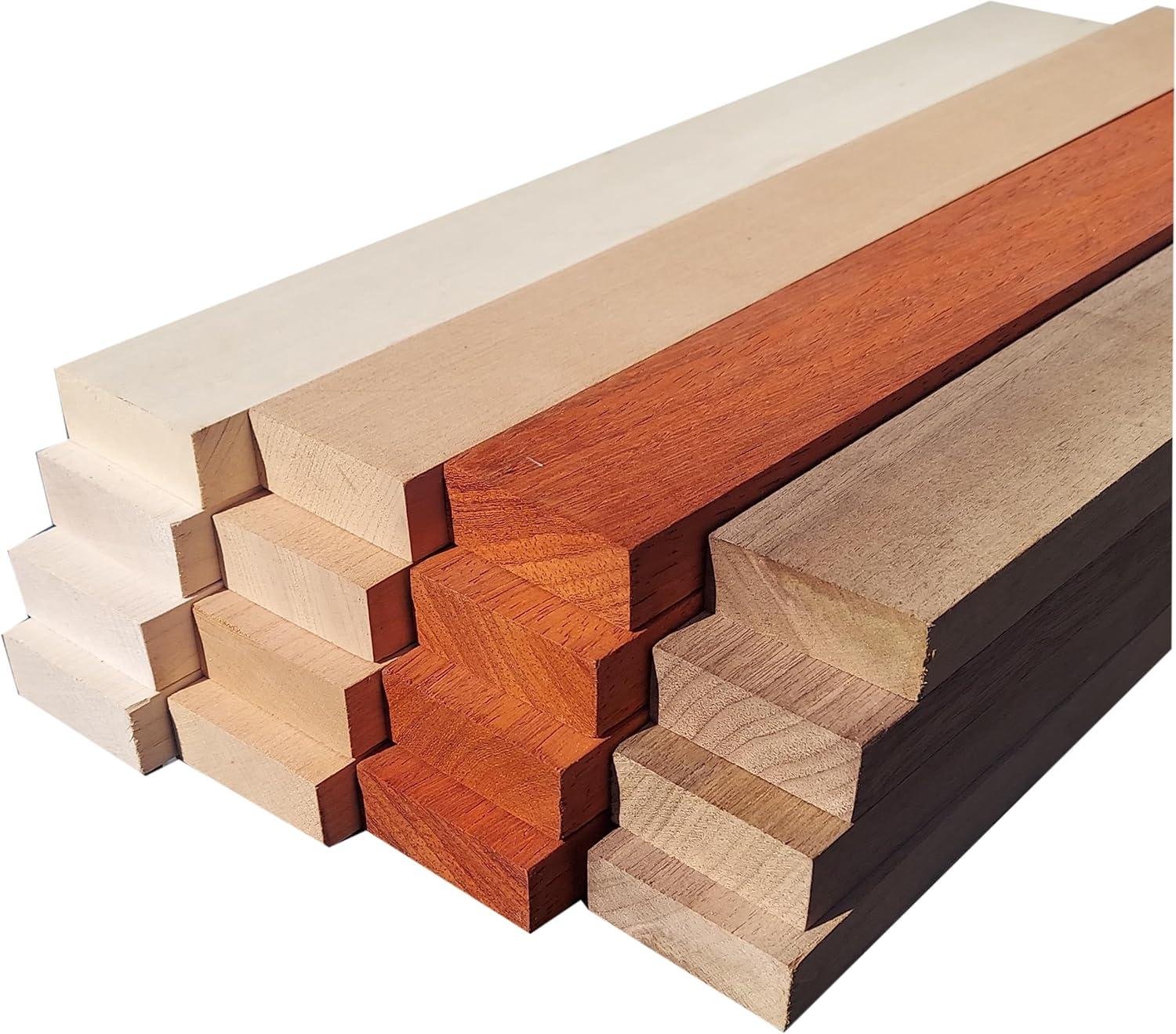
In our shop, this kit reads like a “ready-to-glue” bundle on paper: 16 boards at 3/4″ thick x 2″ wide x 16″ long, split evenly into 4 Walnut, 4 Maple, 4 Cherry, and 4 Padauk, and described as kiln dried and S4S (surfaced four sides) with an 80-grit sanded face. For cutting board glue-ups, those specs matter because consistent width and square ends determine whether we can go straight to glue, clamps, and cauls—or whether we’re forced back to milling. Customer feedback lands on both sides: some reviewers praised the stock as “great in color” and “easy to work with,” while others reported widths “off by as much as 1/16″” and ends that were “jagged and not cleanly cut.” In real glue-up terms, a 1/16″ mismatch across multiple strips can telegraph into gaps, uneven squeeze-out, and extra flattening later, so we’d treat this kit as a convenient starting point—but still anticipate doing a quick layout, marking reference faces, and dry-clamping before any glue hits the wood.
For milling and cleanup,we’d plan our process around what the reviews imply: some packs may be close to dimensionally consistent,while others may need a jointer/planer (or at least a careful table-saw rip and crosscut) to get dead-straight glue lines. If we don’t have a planer, those reported width variations can be frustrating because we’ll spend more time jointing edges with a sled, track saw setup, or hand plane—especially on hard maple and padauk, where tear-out and burn marks can show up if our blades are dull or feed rate is too slow. The included 80-grit surface is a decent “tooth” for glue, but we’d still avoid gluing over burnished spots and we’d prioritize jointed edges over sanded edges for tight seams. After glue-up, we’d expect the usual flattening steps (planer sled, drum sander, or careful belt sanding) and we’d add one safety note specific to this species mix: padauk dust can be irritating, so good dust collection and a respirator matter during milling and sanding. this kit fits us best when we want color contrast fast and don’t mind doing a bit of truing-up to get a truly seamless cutting board.
- Included accessories: 16 pre-cut hardwood boards (4 Walnut, 4 maple, 4 Cherry, 4 Padauk)
- Compatible attachments/accessories: parallel clamps/pipe clamps, cauls, Titebond III (or equivalent), planer sled, jointer (or jointing jig), crosscut sled, random-orbit sander, mineral oil/board finish, respirator & dust collection
- Ideal project types: edge-grain cutting boards, small end-grain laminations (after re-sawing), charcuterie boards, serving trays, gift boards with inlays/contrasts
- Wood types tested by customers: Walnut, maple, Cherry, Padauk (orange color)
| Spec / claim | What we Expect in the shop | What Reviews Suggest |
|---|---|---|
| Board size: 3/4″ x 2″ x 16″ | Uniform strips reduce milling and produce tighter seams | Some report up to 1/16″ width variation |
| S4S & 80-grit sanded | Faces should be close; edges may still need jointing for glue-ups | Mixed: some call it “easy to work with,” others needed more prep |
| kiln dried | More stable glue-ups and less movement after finishing | No consistent complaints about moisture, more about squareness/consistency |
| Accessory / Tool | Use With This Kit | Why It Matters |
|---|---|---|
| Jointer or jointing jig | Edge prep before glue | creates gap-free seams even if widths vary |
| Planer (or planer sled) | flatten after glue-up | Fixes minor cupping/twist reported by some buyers |
| Crosscut sled / miter saw | Trim ends square | Addresses reports of jagged ends |
| Random-orbit sander | Finish sanding | Refines beyond 80-grit and preps for oil/finish |
| Process Step | Recommended “No-fuss” Expectation | Likely Real-World Requirement |
|---|---|---|
| Glue-up readiness | Glue straight from the box | Dry-fit + likely edge jointing if pieces vary |
| End squareness | Ends already square and clean | May need trim cuts if ends are rough |
| Final flatness | Minimal flattening after glue | Plan for flattening/sanding, especially if any pieces aren’t flat |
See Full Specifications & Customer Photos
Key Features Woodworkers Will Appreciate for Pattern and Contrast Builds
For pattern-and-contrast cutting boards, we like that this kit gives us 16 pre-cut strips in four high-impact species—4 Walnut, 4 Maple, 4 cherry, and 4 Padauk—all sized at 3/4″ thick x 2″ wide x 16″ long.In the shop, that uniform format is a practical starting point for (mostly) straightforward glue-ups: we can dry-lay the strips, flip grain direction for stability, and alternate light/dark colors to make geometric patterns without needing to rip long stock from rough lumber first. The maker lists the boards as kiln dried and S4S (surfaced four sides) with an 80-grit sanded face—useful because it reduces the “from-scratch milling” time and lets us jump sooner into layout, edge-prep, and glue strategy (we still recommend a quick pass on a jointer or a shooting board if we want truly invisible seams). Reviews back up the visual payoff—multiple customers mention the wood is “great in color” and that the finished board “came out lovely”—and Padauk’s orange hue can really pop in a checkerboard or stripe build when paired against Walnut.
Where woodworkers will appreciate the kit most is as a “semi-milled” bundle that’s easy to plan projects around—while also being honest that the final fit-and-finish may still depend on our tools. Several reviewers note the pieces were not perfectly consistent, citing widths off by as much as 1/16″, and some mention ends that weren’t cleanly cut, which matters if we’re trying tight, repeatable laminations.Practically, that means if we don’t own (or don’t want to set up) a planer/jointer, we may spend extra time compensating with careful table-saw cleanup cuts, a straightedge-guided rip, or selective strip placement (saving slightly off-width pieces for edge pieces, accent strips, or sacrificial clamping cauls). On the other hand, if we do have basic milling capability, this kit becomes a convenient palette for contrast builds—especially for gifts—because the species mix encourages experimentation: we can practise glue-up sequencing, clamp pressure discipline, and sanding progression (don’t stop at the included 80-grit; work up through finer grits before oiling). One reviewer also described a full “board workflow” we’d recognize: glue together,clean up with a table saw,sand,oil—a good snapshot of the skill level needed to get the most out of these strips.
- Included accessories: None (wood-only kit)
- Compatible attachments/accessories:
- Parallel clamps or pipe clamps (for lamination)
- food-safe glue (e.g., Titebond III)
- Cutting board oil/wax finish
- Router bits for roundovers/chamfers
- Non-slip feet and hardware (optional add-ons)
- Ideal project types:
- Strip-laminate cutting boards
- High-contrast serving boards
- Beginner-to-intermediate gift builds (with basic milling tools)
- wood types tested by customers:
- Walnut (dark contrast)
- Maple (light contrast)
- Cherry (warm mid-tone)
- Padauk (orange accent)
| Spec | What You Get | Why It Matters in Pattern Builds |
|---|---|---|
| Piece count | 16 boards | Enough strips for multiple layouts (stripes, offsets, simple geometrics) |
| Dimensions (each) | 3/4″ x 2″ x 16″ | predictable strip sizing simplifies glue-up planning and clamp setup |
| Species mix | 4 Walnut / 4 Maple / 4 Cherry / 4 Padauk | High contrast palette for visual patterns without buying full boards |
| Milling | Kiln dried, S4S, sanded 80 grit | Less prep than rough stock, but still benefits from truing edges for tight seams |
| Compatible accessories | purpose | Notes for this kit |
|---|---|---|
| Jointer or jointing sled | True edges for glue-ready seams | Helps if widths vary (reviewers mention up to 1/16″) |
| Planer / drum sander | Flatten after glue-up | Useful if a few pieces arrive not perfectly flat |
| Crosscut sled / miter saw | Square ends before glue-up | Addresses reports of jagged or uneven ends |
| Router + roundover bit | Edge comfort and chip resistance | Common finishing step for cutting/serving boards |
| Capacity checkpoint | Recommended for “no-mill” workflow | Actual expectation from reviews |
|---|---|---|
| Dimensional consistency | All strips same width/length; clean ends | Some report width variation up to 1/16″ and uneven ends |
| Flatness | Flat enough to glue without forced clamps | Some mention a couple pieces weren’t that flat, but workable with prep |
See Full Specifications & Customer Photos
Ease of Use for Beginners and Experienced Shops
For beginners, this kit is about as close as we can get to “skip the lumberyard and start gluing” without buying a full cutting-board bundle of clamps and jigs. The box includes 16 boards sized 3/4″ thick x 2″ wide x 16″ long, split evenly into 4 Walnut, 4 Maple, 4 Cherry, and 4 Padauk. Because the stock is advertised as kiln dried and S4S (surfaced four sides) sanded to 80 grit, we can treat it like ready-to-layout material: dry-fit the pattern, mark reference faces, and move straight into a glue-up. that said, customer feedback suggests we should set expectations: multiple reviewers mention boards arriving with widths “off by as much as 1/16″ and ends that were “jagged and not cleanly cut”. In a starter shop with only a table saw and sander, that can turn a “weekend gift build” into a troubleshooting session—so we’d recommend beginners plan on having a simple squaring strategy (a crosscut sled, a stop block, or even a careful trim pass) and not counting on every edge being glue-ready right out of the box.
For experienced shops, this kit is easy to integrate as the parts are already dimensioned to a consistent nominal size, and the species mix is a classic cutting-board palette. We can joint/plane quickly if needed, then run a repeatable workflow: joint one face/edge, plane to final thickness, rip for perfectly matched glue lines, and crosscut to dead-equal length before the clamp-up. Reviews reflect that reality—some users say “there were a couple pieces that weren’t that flat but I was able to make it work” and still reported it “came out beatiful”,while others felt that at the price they “wouldn’t need a jointer to straighten them.” From a technique standpoint, the species selection teaches good habits: Maple is harder and can burn if we push a dull blade, Padauk’s orange dust is messy and worth extracting at the source, and all four woods benefit from tight glue lines and a final sanding progression beyond the included 80-grit surface. If our shop already has a jointer/planer (or we’re pleasant with a hand-plane clean-up), the kit becomes a fast way to get reliable cutting-board stock without milling rough lumber.
- Included accessories: none (wood-only kit)
- Compatible attachments/accessories: Parallel clamps or pipe clamps, crosscut sled/stop block, planer/jointer (optional but helpful), random orbit sander, food-safe oil/wax
- Ideal project types: Edge-grain cutting boards, serving boards, small butcher blocks, gift boards with feet/handles
- Wood types tested by customers: Walnut, Maple, Cherry, Padauk (mixed cutting-board glue-ups)
| Spec / Claim | What It Means in the Shop | What Reviews Suggest |
|---|---|---|
| 16 pcs @ 3/4″ x 2″ x 16″ | Convenient sizing for patterned glue-ups and repeatable layouts | Some report length/width inconsistency requiring trimming |
| S4S, 80-grit sanded | Faster start; still needs finer sanding after glue-up | Finish prep still required; edges may not be glue-ready |
| Kiln dried | Lower movement risk vs. green wood; better glue reliability | Mixed notes on flatness—some pieces not perfectly flat |
| Compatible Tools/Accessories | Why we’d Use It |
|---|---|
| Jointer or jointer sled | True an edge for tight glue lines if widths vary |
| Planer or drum sander | Flatten after glue-up and bring to uniform thickness |
| Table saw + crosscut sled | Square ends and equalize length quickly |
| Clamps + cauls | Even pressure and reduced bow during glue-up |
| Task | Recommended for “Easy Mode” | What We Should Expect in Reality |
|---|---|---|
| Glue-up readiness | All edges/ends square and consistent | Plan on light milling or trimming if pieces vary by up to 1/16″ |
| Final surface prep | Minimal sanding | 80-grit start means we still need a sanding progression for a finish-ready board |
See Full Specifications & Customer Photos
Customer Reviews Analysis
What Woodworkers Are Saying (16 pc Walnut/Cherry/PADAUK/Maple DIY Cutting Board Wood Kit 3/4″ x 2″ x 16″)
1) Overall sentiment from woodworking customers
Feedback trends mixed. Several woodworkers liked the species selection and the final look once assembled, but multiple reviews highlight frustrations with dimensional inconsistency and prep work needed before glue-up. Common praise includes attractive color and workable stock; common complaints center on pieces arriving out of square/flat and not truly “ready-to-glue” without milling.
2) Performance feedback (accuracy, power, results)
Because this is a wood kit (not a tool), “performance” in the reviews largely means how accurately the stock is milled and how cleanly it processes during a typical cutting-board workflow.
- Accuracy/consistency: Some users reported challenges with inconsistent widths and lengths. One reviewer noted widths “off by as much as 1/16,” which can quickly create glue-line gaps unless you have a jointer/planer or do extra table-saw cleanup.
- Results: When users were able to flatten or true the boards, customers successfully used this for cutting boards that “came out beautiful.”
- Workability: Several woodworkers mentioned the wood was “easy to work with,” implying it machines/sands predictably once you get it dimensioned.
One reviewer summed up the intended workflow as: “Precut wood that I glue together… sand, oil and boom!”—but said they couldn’t start due to poor milling.
3) Build quality and durability observations
- Material quality (species/appearance): Common praise includes great color and an attractive mix of walnut/cherry/padauk/maple—an important factor for high-contrast boards.
- Milling quality (flatness, end cuts): Some users reported pieces that weren’t flat and ends that were “jagged and not cleanly cut.” Multiple reviews highlight that you may need a jointer/planer (or extra table-saw and sanding steps) to get tight glue joints.
- Durability (long-term): The reviews provided don’t discuss long-term durability after finishing, but successful builds suggest the stock can produce a solid board once properly prepped and sealed.
4) Ease of use for different skill levels
Ease of use depends heavily on whether you have milling tools.
- Beginners / occasional DIYers: Some DIYers found the learning curve effectively steeper than expected as boards were not consistently “ready to glue.” If you’re counting on uniform widths/lengths to avoid milling, the kit might potentially be frustrating.
- More equipped woodworkers: Reviewers with more tools (table saw, sanding setup, possibly access to flattening methods) reported they could “make it work” and still get a great-looking finished board.
5) common project types and success stories
Reviews primarily mention cutting boards (as expected).
- Customers successfully used this for gift cutting boards, including a holiday gift project.
- One woodworker described upgrading the build: “Rounded the edges, added a cheese slicer and some feet,” reporting an attractive final result.
6) Issues or limitations reported
several recurring limitations show up in the reviews:
- Dimensional inconsistency: Multiple reviews highlight pieces not matching in width/length; one cited up to 1/16″ variance.
- Not fully “DIY-ready” without milling: Some users expected a glue-up-ready kit but felt they’d need a jointer/planer to do it right.
- Cut quality on ends: Reports of jagged ends and not cleanly cut stock.
- flatness issues: A couple pieces reportedly weren’t flat.
- Returns experience: One customer mentioned a $10.98 restocking fee, adding to dissatisfaction.
Quick summary table
| Aspect | Common Feedback |
|---|---|
| Performance (Results) | Beautiful finished boards when stock is trued/flattened; easy to work once prepped |
| Precision (Milling Accuracy) | Mixed—multiple reviews cite inconsistent widths/lengths and uneven cuts |
| Build Quality | Great color/species mix, but some boards arrive not flat with jagged ends |
| Ease of Use | better for makers with a table saw and/or jointer/planer; DIYers without milling tools may struggle |
| Versatility | Primarily used for cutting boards; also supports add-ons like feet and cheese slicers |
| Value | Some felt the price should include more consistent dimensions; others were happy with the final look |
Pros & Cons
Pros & Cons: 16 pc Walnut/Cherry/Padauk/Maple DIY Cutting Board Wood Kit
| At a Glance | What It Means in Our Shop |
|---|---|
| 16 pieces / 4 species | Plenty of mix-and-match potential for classic stripes or bolder, high-contrast patterns. |
| 3/4″ × 2″ × 16″ | A friendly size for most glue-ups—big enough to feel “real,” small enough to manage on the bench. |
| S4S + 80-grit sanded | Fewer prep steps before glue, but we still plan on jointing/planing for our best seams. |
| Kiln-dried, “straight as an arrow” | Promises easier alignment and less fighting the clamps. |
Pros
- Great color story right out of the box. Walnut’s deep brown, Maple’s light brightness, Cherry’s warm red, and Padauk’s punchy orange make it easy for us to build “wow” boards without hunting for complementary stock.
- Pre-sized strips accelerate the fun part. Instead of milling rough lumber for hours, we can jump quickly to layout, pattern planning, and glue-up—the parts we actually want to fuss over.
- S4S helps keep entry barriers low. Surfaced four sides and pre-sanded to 80 grit means the kit is approachable for newer makers, and it’s still a useful time-saver for our busier weeks.
- Consistent dimensions support cleaner glue-ups. Uniform 3/4″ thickness and 2″ width make our clamp setup predictable and our patterns easier to replicate for gift batches.
- Made in the USA (CT Power Tools LLC). if we’re trying to source domestically for shop projects, this checks that box.
- Enough material for creativity. With 16 strips, we can prototype a couple designs, commit to a favorite, or build one board and still have “oops insurance” if we miscut a strip.
Cons
- Not a complete “everything you need” kit for finishing. The wood is the star, but we still need glue, clamps, a saw, a sander/planer strategy, and a food-safe finish (plus the know-how) to get to a final board.
- 80-grit is a head start, not a finish line. We’ll still expect to sand through finer grits for a kitchen-ready surface, and we may want to joint edges for truly seamless glue lines.
- Padauk can be messy and dramatic. Its orange color is gorgeous, but it can create vibrant dust and may bleed color into nearby lighter woods during sanding/finishing if we’re not careful.
- Fixed strip size limits certain builds. The 2″ width is perfect for lots of stripe patterns, but it’s not the same as having wider boards if we want big uninterrupted fields or end-grain block layouts.
- Species behavior differences require attention. Mixing dense and less-dense species can mean we need to be mindful about sanding pressure and glue-up squeeze-out so the surface stays even.
- Best for “strip-style” boards. If our shop goal is thick butcher-block end grain, this kit might feel like the wrong starting point without additional material and milling.
Q&A
What wood types does this kit include, and are they “hardwood-tool friendly”?
This kit includes four each of Black Walnut, Hard Maple, Cherry, and padauk (orange). All four are common cutting-board hardwoods and machine well with typical shop tools (table saw/miter saw, router, sander). Maple and padauk are on the harder/denser side, so expect slower feed rates and sharper blades/bits to avoid burn marks—especially when ripping thin strips or routing edges.
Are the boards truly ready to glue up, or will I still need a jointer/planer?
They’re listed as kiln-dried, S4S (surfaced four sides), and sanded to 80 grit, which generally means the faces/edges are milled.However, customer feedback is mixed: some users said a couple pieces weren’t perfectly flat, and others reported width differences up to about 1/16″ and ends that weren’t cleanly cut. If you want seamless glue lines with minimal clamping stress, plan on at least light jointing or a “clean-up rip” on the table saw, plus trimming ends square. If you don’t own a planer/jointer,a straight-edge + table saw (or a track saw) and careful sanding can still get you there,just with more time.
How consistent are the dimensions (3/4″ x 2″ x 16″) in real use?
Nominally, you receive sixteen boards at 3/4″ thick x 2″ wide x 16″ long. In practice, at least some buyers reported inconsistent widths and lengths and rougher end cuts than expected.If your design depends on perfectly identical strips (tight symmetry, no planer), you may need to sort pieces, pair them strategically, and leave yourself extra length to trim after glue-up.
Is this suitable for beginners making a first cutting board?
It can be, especially if you want to skip sourcing lumber and jump straight to layout and glue-up. One customer described a simple workflow: glue-up, clean up on the table saw, sand, and oil. The main beginner “gotcha” is fit-up—if any boards are slightly bowed,twisted,or off-width,you’ll need patience during glue-up and some method to flatten/true the blank afterward (router sled,planer,belt sander,or hand planes). Beginners without flattening tools should budget extra sanding time and consider simpler patterns (fewer glue lines, wider strips).
Can this kit support small production runs, or is it more of a hobby/gift kit?
This is best viewed as a hobby/gift-focused pack: 16 pieces (4 of each species) that are convenient for one or a few boards. For repeatable production work, you’ll likely want rough or S2S lumber you can mill to your own exact thickness/width for consistent glue lines and faster batch processing. That said, several users reported the finished boards “came out beautiful,” so it can work for small batches if your shop can true and square parts efficiently.
What shop setup and accessories should I plan on (clamps, glue, sandpaper, finish)?
This is a wood-only kit, so you’ll still need the usual cutting-board essentials: waterproof wood glue (Titebond III is commonly used), enough clamps for edge-gluing (or a caul setup), a way to keep the assembly flat (cauls, clamping jig), sanding supplies (80 grit is the starting surface, not a finished-ready surface), and a food-safe finish (mineral oil and/or a board butter). A table saw or miter saw helps for trimming and pattern work, and a router is optional for roundovers/juice grooves. Dust collection isn’t “special,” but sanding hardwoods like padauk produces fine,colored dust—use a respirator and good extraction.
Any species-specific tips (burning, color bleed, allergies) with padauk and maple?
Maple can burn during ripping/routing if bits/blades are dull or feed is too slow; keep cutters sharp and avoid pausing in one spot. Padauk dust can be irritating for some people—wear a respirator—and its orange color can transfer as dust during sanding; clean between grits and consider sanding padauk last or vacuuming thoroughly before final finish. Padauk also tends to darken over time with UV exposure,so expect the luminous orange to mellow.
Is it worth the price compared to buying random lumber locally?
The value is mainly convenience: kiln-dried, pre-cut lengths in four contrasting cutting-board species, ready for layout and glue-up. The tradeoff, based on customer experiences, is you may still need milling/cleanup (width/flatness/end squareness), and one buyer mentioned a restocking fee on return. If you already have a jointer/planer and a hardwood dealer nearby, buying longer stock and milling it yourself can be more consistent and cost-effective. If you don’t have easy access to walnut/maple/cherry/padauk in small quantities, this kit can still be a practical shortcut—just plan for some fitting and trimming.
Embody Excellence
This 16 pc Walnut/Cherry/Padauk/Maple DIY Cutting Board Wood Kit includes sixteen kiln-dried, stabilized boards—3/4″ thick x 2″ wide x 16″ long—with four pieces each of walnut, maple, cherry, and padauk. The stock is advertised S4S and sanded to 80 grit, giving you a strong starting point for glue-ups, pattern layouts, and gift-ready cutting boards. Customer feedback commonly praises the color selection and workability, but critiques consistency: some report boards arriving slightly out of width/length, imperfectly cut ends, or minor warp—issues that can force extra milling.
Best for hobby woodworkers with small to medium projects, beginners learning glue-ups, and anyone making a one-off board with access to a planer, jointer, or table saw cleanup.
Consider alternatives if you need perfectly matched dimensions out of the box,don’t have milling tools,or you’re production-building boards where time and tolerance matter most.
it’s a solid project kit with attractive species, but expect to verify and true the stock before assembly.
Want to see current pricing and customer photos? View on Amazon & Read More Reviews →















One thought on “DIY Cutting Board Kit Review: Right for Our Shop?”