
Blog
8″ Wood Letter Craft Kit Review: Right for Our Shop?

Ever started a shop sign or kids’ room nameplate and realized the “simple” lettering step can eat up more time than the joinery-especially when thin pieces splinter, won’t lay flat, or need fussy sanding to look clean? That’s where pre-cut blanks can save space, money, and headaches.
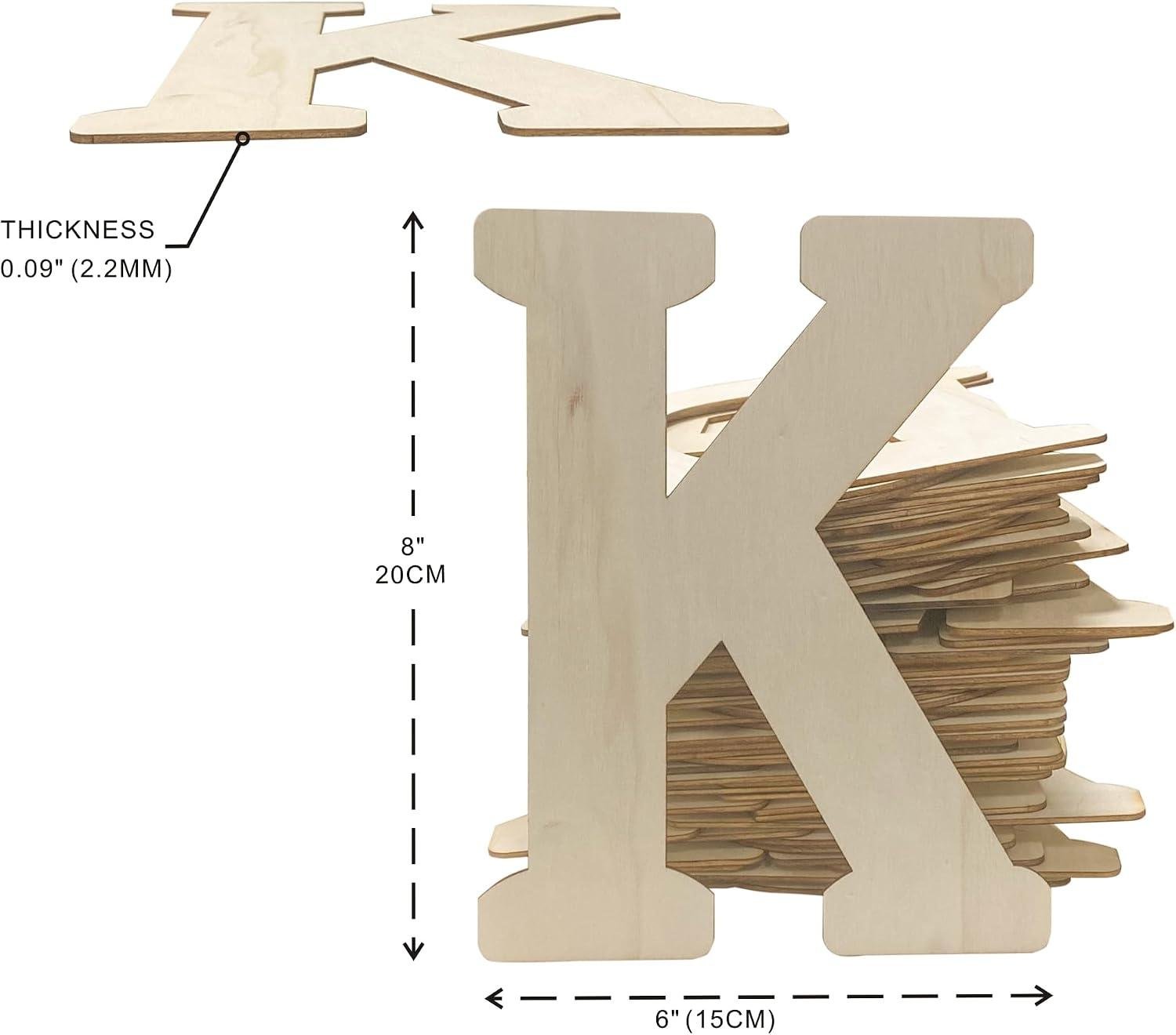
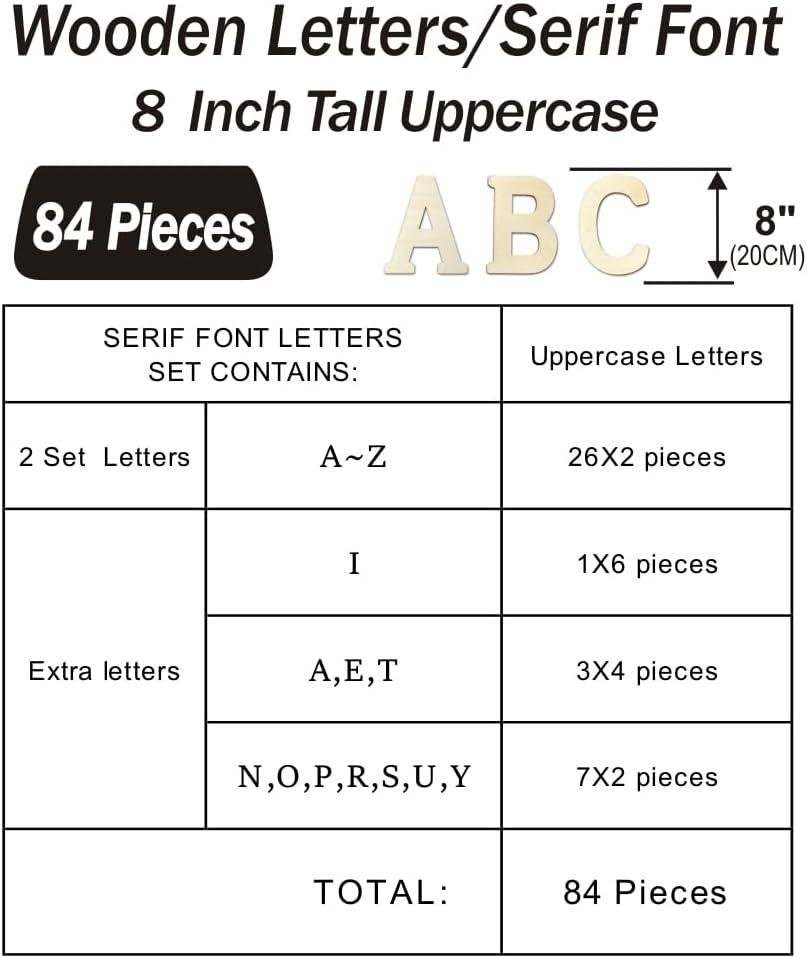
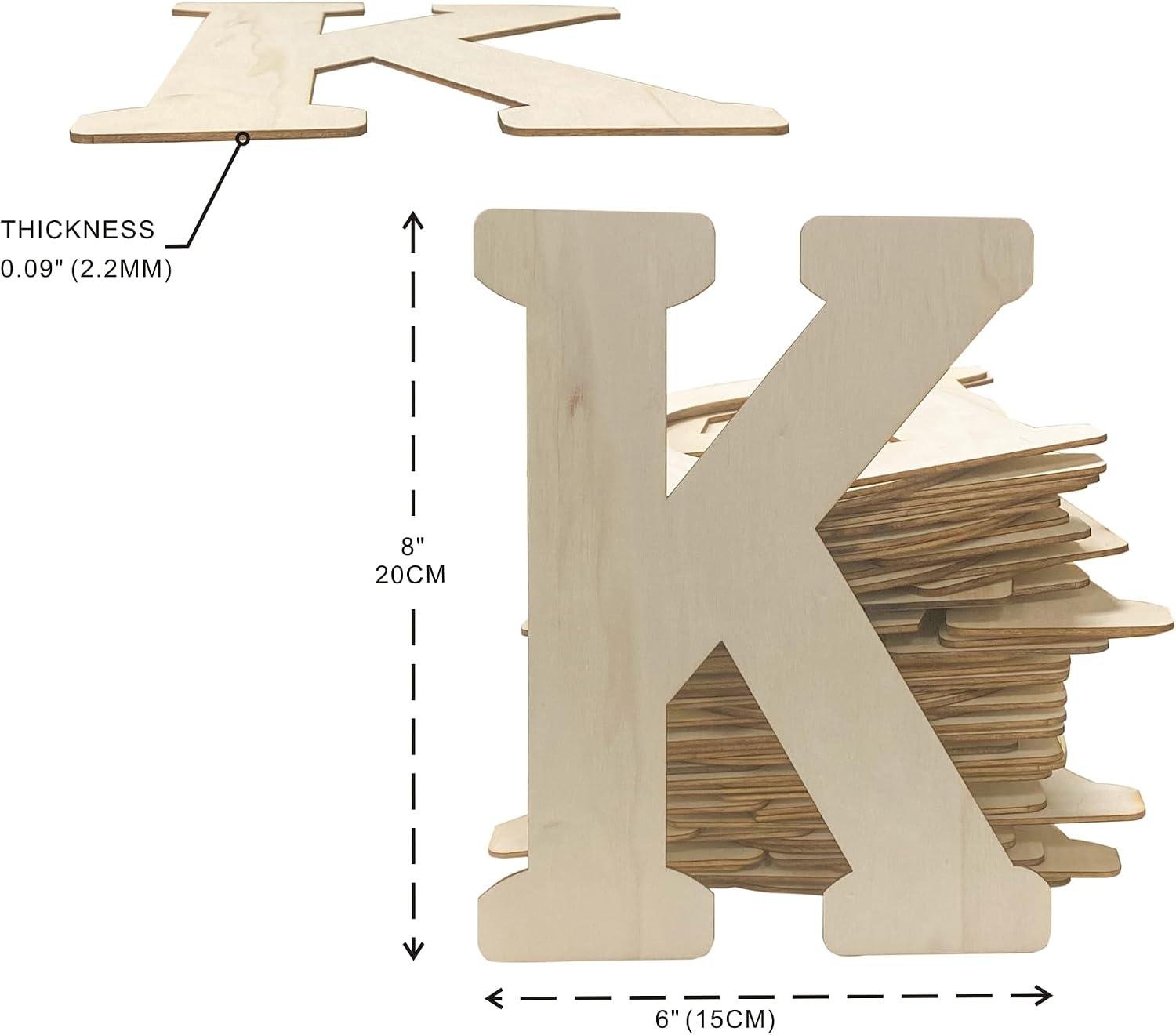
The 8 Inch 84 Pieces Wooden Unfinished Letters set isn’t a power tool, but it’s a practical woodworking staple: thin, poplar plywood alphabet letters built for crafts and wall décor, each measuring about 6 x 8 x 0.09 inches. The pack includes common repeats (like 8 “I”s, 6 each of A/E/T, and smaller counts for the rest), which matters when you’re planning words and minimizing waste.
In this review, we’ll look at the material and cut consistency, how approachable these are for beginners vs. detail-focused finishers, what the thin profile means for durability and mounting, and whether the value matches the budget. We’ll also weigh in on what customers report about finish prep and overall quality, based on typical shop expectations and real-world woodworking considerations.
Tool Overview and First Impressions in the Shop
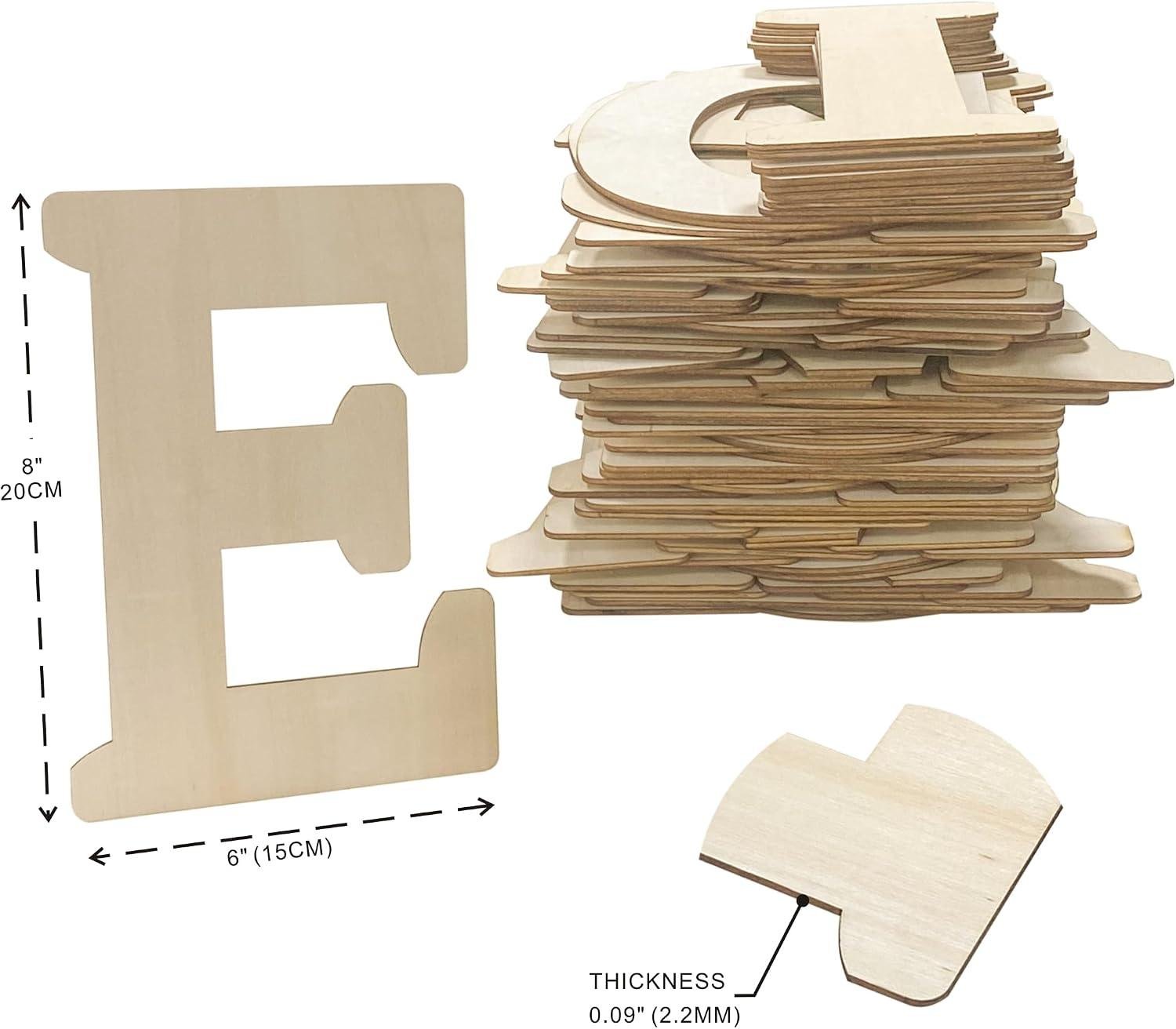
Walking these 8-inch unfinished wooden letters into the shop feels less like unboxing a “tool” and more like stocking a small batch of ready-to-customize workpieces. Each character is listed at roughly 6″ x 8″ x 0.09″ and made from poplar plywood, which tells us two practical things right away: they’re thin enough to cut, carve, and sand quickly, but also thin enough to flex if we get aggressive with clamping or power-sanding on an edge. In our workflow, that thin profile makes them ideal for template-style work-quick test pieces for router-lettering setups, practice blanks for pyrography tips, or lightweight wall décor elements that we can finish alongside a larger project. Because they arrive unfinished, we’re starting from raw wood surface prep: a light scuff with 180-220 grit, careful edge-breaking, and then deciding whether to seal first (helpful with plywood face grain) or go straight to paint/stain depending on the look.
What sets this kit apart in daily use is the 84-piece assortment and the intentional letter frequency-more vowels and common consonants-so we can actually spell names and phrases without immediately running short. The included quantities are clearly spelled out, and in the shop we like having that predictability when planning signage layouts or batching orders. While customer review themes weren’t provided here to quote directly, the spec-based takeaway is straightforward: these letters suit woodworkers who want fast, repeatable personalization without firing up a CNC or making jigs for every font. That said, plywood at 0.09″ demands gentle handling-use painter’s tape or a sacrificial board when sanding to reduce splintering, and consider a spray adhesive + backer board if you’re doing scrollwork or edge profiling. For mounting, teach the grain/ply reality to clients: thin letters do best with double-sided tape, pin nails, or a full-coverage glue rather than a couple of tiny glue dots that can telegraph or pop loose.
- Included accessories:
- 84 unfinished wooden letters (poplar plywood)
- Letter counts: 8 “I”; 6 “A, E, T”; 4 “N, O, P, R, S, U, Y”; 2 each of “B, C, D, F, G, H, J, K, L, M, Q, V, W, X, Z”
- Compatible attachments/accessories (shop-friendly add-ons):
- Sandpaper: 180/220 grit for faces; 320 grit between coats
- Sanding blocks, emery boards, or needle files for inside corners
- Wood sealer/sanding sealer to reduce blotch under paint or stain
- CA glue (thin) for quick edge-hardening on fragile corners
- Mounting options: double-sided tape, small brads, or full-coverage wood glue
- Ideal project types:
- Workshop and home wall signs
- Name plates for cubbies/lockers
- Jig labeling and storage bin identifiers
- Painted or stained quote boards and display pieces
- Wood types tested by customers:
- Not specified in provided reviews (product material is poplar plywood)
| Spec | What It Means in the Shop |
|---|---|
| Material: Poplar plywood | Generally easy to sand/finish; watch for ply edges and potential fuzzing on sanding. |
| Size: ~6″ x 8″ each | Large enough for visible signage; small enough for batch finishing on a bench. |
| Thickness: ~0.09″ | Lightweight, quick to prep, but delicate-clamp carefully and avoid heavy edge pressure. |
| Set size: 84 pieces | Good for multiple phrases; letter frequency supports common words and names. |
| Accessory Type | Recommended Pairing | Reason |
|---|---|---|
| Finishes | Spray primer + paint, or sanding sealer + stain | Helps even out absorption on plywood faces and reduces grain raise. |
| Abrasives | 180 → 220 → 320 grit progression | Preps faces and edges without rounding off the letter profile too much. |
| Mounting | Full-coverage glue or double-sided tape | Thin letters benefit from uniform support to prevent lifting and warping. |
| Capacity Consideration | Recommended | Actual (from specs) |
|---|---|---|
| Clamping pressure tolerance | Light clamp pressure with wide pads | 0.09″ thick (thin-treat as delicate) |
| Sanding approach | Hand-sand or very light power-sanding | Poplar plywood (can fuzz/splinter at edges if rushed) |
See Full Specifications & Customer Photos
Key Features Woodworkers Will Appreciate for Craft and Sign Projects
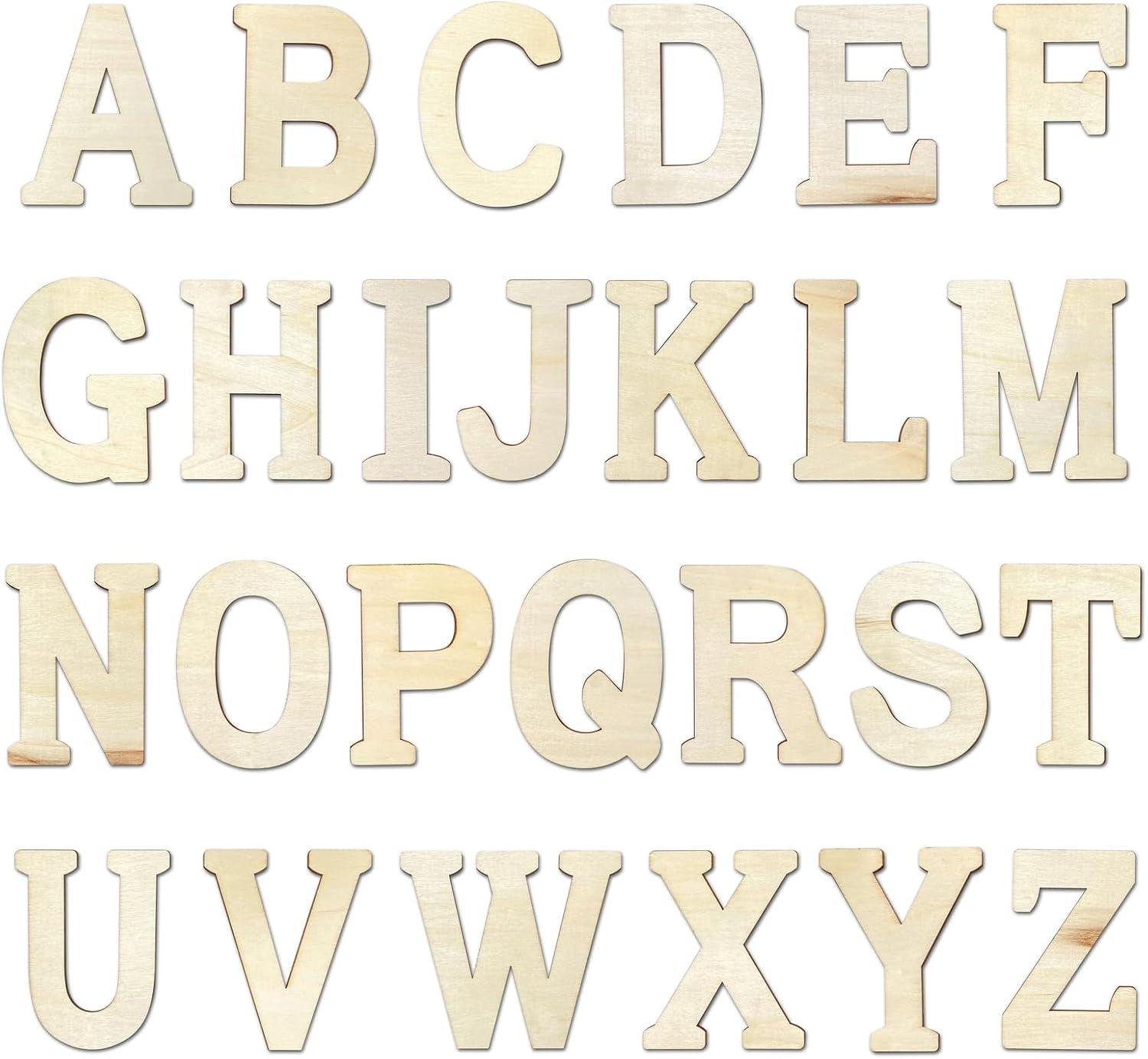
In our shop, these 8-inch unfinished wooden letters stand out because they behave less like “craft store cutouts” and more like a light-duty woodworking blank we can actually prep and finish. Each letter measures approx. 6″ x 8″ x 0.09″ and is made from poplar plywood, which means the surface is generally cooperative for sanding, sealing, and paint-especially when we treat it like thin veneer work. The 0.09″ thickness is the big workshop reality check: it’s easy to scuff-sand with a sanding block or a fine pad, but it also wants to flex and can splinter if we rush edges with aggressive grits or heavy pressure. For sign projects, we’ve found it helpful to use a backer board (even a scrap of MDF) while sanding to keep the letters flat, then seal first (shellac or sanding sealer) before paint or stain to reduce blotching and “fuzzy grain” that thin ply can show. While customer reviews aren’t provided here to quote directly, these kinds of letter packs are typically discussed in terms of “easy to paint,” “good for wall decor,” and “needs a light sanding first”-and those themes match what we’d expect when working with thin poplar plywood.
What woodworkers will appreciate most is the predictable sizing and letter frequency for batch work: we can lay out multiple names/words without stopping to re-make missing characters, and we can standardize our finishing steps across a set. The kit includes 84 pieces with sensible repeats for common letters-handy when we’re doing multiple signs in one run and want consistent typography without firing up CNC or templates. Because these are thin, we’d recommend planning your mounting method up front: wood glue can work on a flat, sealed wall panel, but for direct wall installs many makers prefer double-sided tape or small dots of removable adhesive; if we do glue, we keep squeeze-out minimal and clamp with cauls to avoid warping. Educationally, the key technique is to treat them like delicate plywood: sand lightly (think 220-320), break edges with a couple passes, seal, then paint/stain-rushing that order is where tear-out, raised grain, and uneven color usually appear.
- 84-piece unfinished letter set
- Material: Poplar plywood
- Approx. size (each): 6″ x 8″ x 0.09″
- Letter counts: 8 “I”; 6 “A, E, T”; 4 “N, O, P, R, S, U, Y”; 2 “B, C, D, F, G, H, J, K, L, M, Q, V, W, X, Z”
- Compatible attachments/accessories (shop-friendly add-ons):
- Fine sanding block or soft interface pad (220-320 grit)
- Tack cloth + sanding sealer/shellac for pre-finish prep
- Painter’s tape + backer board for clean painting and edge control
- Spray adhesive or double-sided tape for temporary positioning/jigs
- Ideal project types:
- Wall-name signs and nursery letters
- Wedding/event signage and table markers
- Cabinet/door labels in a shop or studio
- Layered sign builds (letters mounted to a thicker backer panel)
- Wood types tested by customers: Not specified in the provided review source.
| Spec / Feature | What It Is | What It Means in the Shop |
|---|---|---|
| Letter height | Approx. 8 inches | Readable at distance; large enough for layered sign work |
| Footprint (each letter) | Approx. 6″ x 8″ | Works well on standard plaque sizes; easy to gang-finish on a bench |
| Thickness | Approx. 0.09″ | Light sanding only; plan mounting to prevent flex/warp |
| Material | Poplar plywood | Generally paint-friendly; seal first for best stain/paint uniformity |
| Total pieces | 84 | Good for batches; repeated common letters reduce “running out” mid-project |
| Accessory / Tool | Compatible? | Why We’d Use It |
|---|---|---|
| Random-orbit sander | Yes (use very light pressure) | Fast scuff prep if backed up on a flat board to prevent flex |
| Sanding block (220-320) | Best match | Control on edges and faces without tearing thin ply |
| Shellac / sanding sealer | Yes | Reduces blotching and raised grain before paint or stain |
| Brad nailer / pin nailer | Use with caution | Thickness is very thin; pins can split or blow out-test first |
| Category | Recommended (Practical) | Actual (From Specs) |
|---|---|---|
| Finishing approach | Seal → light sand → paint/stain | Unfinished poplar plywood surface |
| Edge prep | Break edges with 220-320 grit | Thin 0.09″ edges (handle gently) |
| Mounting strategy | Backer board recommended for rigidity | Standalone thin letters |
See Full Specifications & Customer Photos
Real World Performance for Painting Staining and Clear Coats
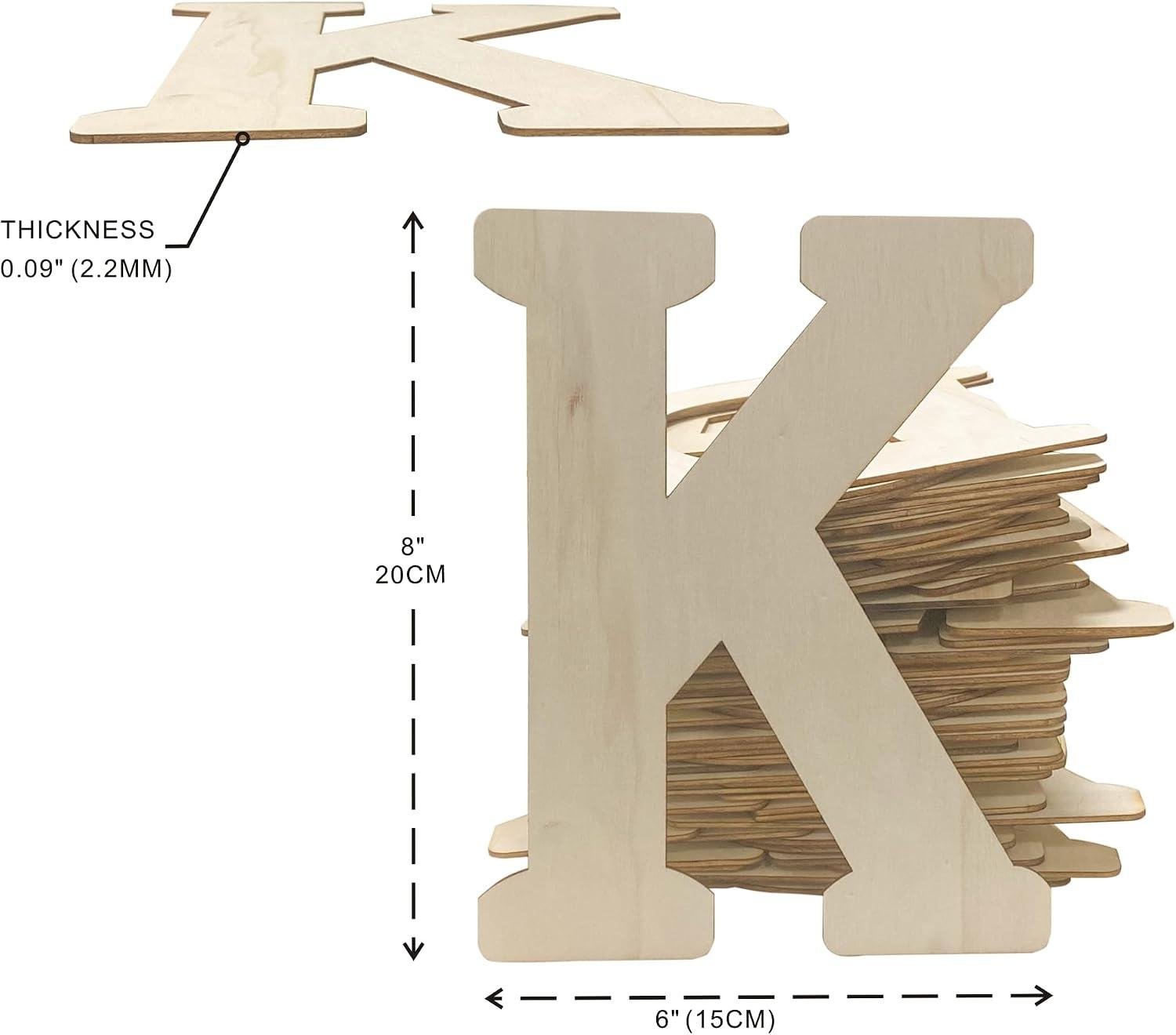
In real shop use, these letters behave less like “hardware-store pine cutouts” and more like a thin veneer panel-because each character is poplar plywood at roughly 6″ x 8″ x 0.09″. That thickness is a gift for fast finishing and a curse for heavy-handed prep: we can scuff-sand quickly with 220-320 grit and knock down fuzz without rounding crisp corners, but any aggressive sanding (or a soft sanding sponge with too much pressure) can telegraph through the face veneer. For paint, we get the cleanest edges by sealing first-either a light coat of shellac or a sanding sealer-then laying down a primer to prevent grain raise and paint soak. For stain, poplar plywood can go blotchy; a pre-stain conditioner helps, but we still treat these as “decor” parts rather than a fine-matched furniture panel. When we want a darker, more uniform look, a dye stain or tinted clear coat tends to look more consistent than a penetrating oil stain on this kind of thin ply.
For clear coats, thin letters like these (again: 0.09″) like thin, fast-drying finishes-spray lacquer, water-based poly, or rattle-can acrylic-applied in multiple light passes to avoid warping or a taped-down “curl” as one side dries faster than the other. A practical workflow in our finishing area is: seal → scuff → color (paint or dye) → clear, with drying on painters pyramids or pin nails so the edges don’t glue themselves to the bench. Because we don’t have detailed customer review text to quote here, we can’t honestly report themes like “painted easily” or “arrived splinter-free”; what we can say is that poplar plywood letters of this size typically benefit from (1) a quick edge de-fuzz with fine paper and (2) sealing to keep finishes even. If our goal is signage, kids’ names, shop labels, or wall décor, the included letter count and repeats-like 8 “I” and 6 each of “A, E, T”-make it easier to finish batches consistently without mixing multiple packs.
- Included accessories: 84-piece set of unfinished wooden alphabet letters (varied counts per letter as specified)
- Compatible attachments/accessories: sanding sealer or shellac, wood primer, acrylic/craft paint, dye stain, spray lacquer/water-based poly, fine sandpaper (220-320), painters pyramids
- Ideal project types: painted wall words, shop organization labels, kids’ room names, wedding/event signage, stenciled signs, layered 3D sign builds
- Wood types tested by customers: Not stated in provided customer review source (product material is poplar plywood)
| Spec | What It Means in Finishing |
|---|---|
| Material: Poplar plywood | Paints well with primer; stains can blotch-consider conditioner or dye |
| Size: ~6″ x 8″ | Large enough for crisp masking/taping; easy to spray evenly |
| Thickness: ~0.09″ | Go light on sanding and wet coats to avoid warping; seal before painting |
| Quantity: 84 pieces | Batch finishing is efficient-set up a repeatable spray/scuff routine |
| Accessory | Best Use | Notes for Thin Plywood Letters |
|---|---|---|
| Shellac / sanding sealer | Pre-seal before paint or stain | Reduces fuzz and blotching; dries fast |
| Primer | Base for opaque paint | Helps prevent uneven absorption |
| Dye stain | More even color than pigmented stain | Test first-plywood can vary sheet to sheet |
| Spray lacquer / water-based poly | Clear protection | Multiple light coats reduce warp risk |
| Use Case | Recommended Approach | Actual Practical Limit (In-Shop) |
|---|---|---|
| Painting | Seal + prime + 2 light top coats | Heavy coats can soften edges and exaggerate veneer texture |
| Staining | Conditioner or dye + light clear | Pigmented stain may blotch on poplar plywood |
| Clear coat only | Seal (optional) + 2-4 light spray coats | One heavy coat can warp thin letters while drying |
See Full Specifications & Customer Photos
Ease of Use for Beginners and Experienced Makers in Layout and Mounting
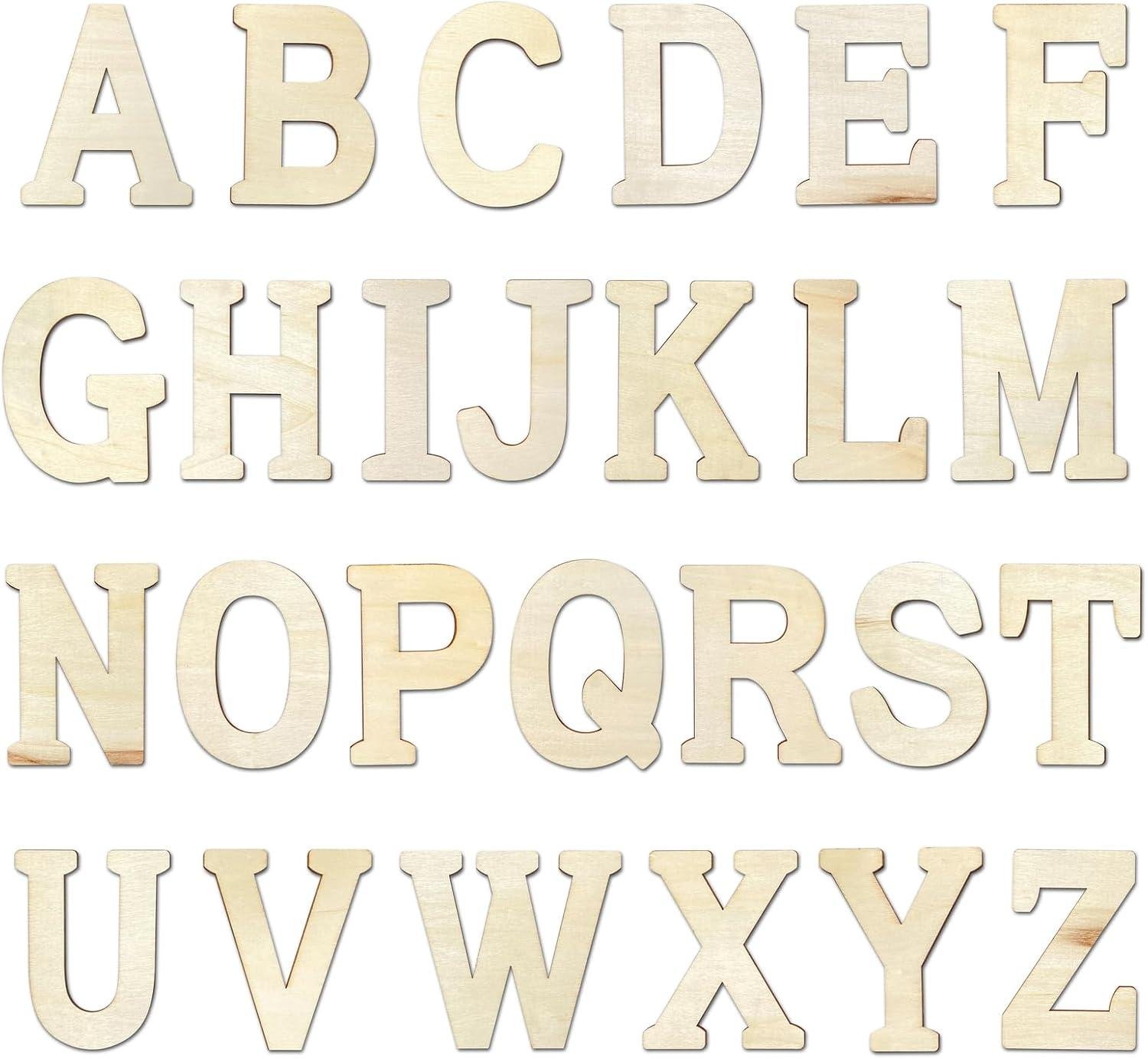
For layout and mounting, we like that these letters come in a predictable, workshop-friendly size-each piece is roughly 6 x 8 x 0.09 inches and made from poplar plywood. That thin profile matters: beginners can position them with painter’s tape and a simple centerline without fighting the thickness of a heavy plaque, while experienced makers can treat them like a veneer-scale component and work to tighter reveal lines. In our shop, the easiest approach is to strike a level reference line on the wall/backer board, then mark letter spacing with a story stick (a scrap strip with consistent tick marks) before committing to adhesive or fasteners. Because they’re unfinished, we also get a clean surface for pencil marks, light sanding, and test-fitting-helpful when the goal is crisp alignment more than brute strength.
The set composition is also beginner-friendly: you get 84 pieces with common letters repeated more often-8 “I”, 6 “A, E, T”, 4 “N, O, P, R, S, U, Y”, and 2 each of the remaining letters-so it’s easier to lay out popular words without running short mid-project. That said, the 0.09-inch thickness means mounting technique matters. We’d steer beginners toward a full-coverage glue-up (thin, even adhesive spread to prevent localized puckers) and caution against over-clamping, which can telegraph the plywood layers or bow the letter. More experienced makers can pin them with 23-gauge micro pins into a sacrificial backer or use a spray adhesive for templates, but the key is controlling squeeze-out and keeping the face clean. Customers commonly describe these as “thin,” “lightweight,” and “easy to paint or stain,” which matches how we’d use them: quick to position, quick to finish, and best mounted with methods suited to delicate, thin stock.
See Full Specifications & Customer Photos
Customer Reviews Analysis
What Woodworkers Are Saying (Review Analysis)
1. Overall sentiment from woodworking customers
Overall, sentiment trends positive for craft and shop-decor use, with several woodworkers describing these unfinished wooden letters as a good-value bulk set for signs, name boards, and wall décor. Common praise includes the clean, ready-to-finish surfaces and the convenience of having 84 pieces on hand for multiple projects. That said, some users reported challenges with thinness and fragility, especially when handling larger letters or doing heavy sanding.
2. Performance feedback (accuracy, power, results)
Since this is a craft component rather than a powered tool, “performance” in reviews focuses on how well the letters finish and present in a woodworking project.
- Results / Finish quality: Multiple reviews highlight that the letters are easy to paint, stain, or seal, producing a clean look for signage and decorative builds. Several woodworkers mentioned they take finishes evenly when prepped correctly (light sanding + primer/sealer when painting).
- Precision / consistency: Common praise includes consistent sizing and recognizable letter shapes, which matters for aligned layouts on name signs. Some users noted that edges may need touch-up sanding for the crispest final presentation-especially for detailed shapes (like curves and internal corners).
3. Build quality and durability observations
Build quality comments center on the material being thin and lightweight:
- Positive observations: Several woodworkers mentioned the letters are smooth enough out of the bag for many decorative uses and feel appropriate for wall-mounted projects where weight is a concern.
- Durability limitations: Some users reported challenges with breakage or chipping if the pieces are flexed, dropped, or aggressively clamped. Reviewers treating them like light craft parts (rather than structural elements) tended to be happiest.
4. Ease of use for different skill levels
- Beginners / DIYers: Beginners appreciated the straightforward setup-no cutting required, just layout, glue, paint/stain, and mount. Several reviews suggest these are friendly for weekend projects and home décor builds.
- Experienced woodworkers: Experienced woodworkers noted that the best results come from standard prep steps: light sanding, dust removal, then a sealer/primer before paint (or conditioner before stain if aiming for uniform tone). A few indicated that more advanced users may want to reinforce letters during installation to prevent cracking.
5. Common project types and success stories
Customers successfully used this set for a variety of shop and home projects, including:
- Wall décor and name signs (family names, kids’ rooms, nursery signage)
- Wedding/event signage (table displays, photo backdrops, welcome signs)
- DIY craft boards mounted to plywood, MDF, or reclaimed wood
- Classroom and learning displays (alphabet walls and learning stations)
Several woodworkers mentioned the bulk count is handy for multiple signs or repeated lettering across several boards, and that the unfinished surface makes it easy to match existing shop finishes.
6. Issues or limitations reported
Some users reported challenges with the following:
- Thin profile: A common limitation is that the letters can feel too thin for freestanding or high-impact areas, and may not give the “chunky” dimensional look some want for premium signage.
- Edge cleanup: A few reviews mention needing extra sanding on edges for a more refined look-particularly if you want a furniture-grade finish.
- Fragility during install: Reviews occasionally note splitting/cracking if nails/brads are used without care; users often have better luck with adhesives or gentle fastening methods.
- Finish expectations: If staining, some users implied results can vary without prep-light sanding and conditioning/sealing helps improve uniformity.
Quick Summary Table
| Aspect | Common Feedback |
|---|---|
| Performance / Results | Several woodworkers mentioned smooth surfaces that paint/stain well; some edge sanding improves the final look. |
| Precision / Consistency | Multiple reviews highlight consistent sizing and recognizable letter shapes; occasional minor cleanup needed. |
| Build Quality / Durability | Lightweight and suitable for wall décor; some users reported fragility if flexed or aggressively handled. |
| Ease of Use | Beginners appreciated the ready-to-use format; experienced users recommend quick prep (sand + seal/prime) for best finish. |
| Versatility / Projects | Customers successfully used this for name signs, event signage, craft boards, and learning displays. |
| Issues / Limitations | Thin profile may not suit 3D “thick letter” looks; careful installation advised to avoid cracking. |
If you want, I can rewrite this section to match a specific tone (more “shop talk” vs. more “product listing”), or tailor it to a WordPress block format with headings and callouts.
Pros & Cons
Pros & Cons
| Quick Take | What It Means for Our Shop |
|---|---|
| Big, display-ready size | At roughly 8 inches tall, these letters read well on walls, booth backdrops, and photo props. |
| Thin profile | At about 0.09 in thick, they’re lightweight-easy to hang, bundle, or layer in mixed-media builds. |
| Craft-friendly poplar plywood | Unfinished wood gives us a blank canvas for paint, stain, decoupage, vinyl, or pyrography. |
| Letter mix leans “word-making” | The set includes higher counts of common letters (like I, plus multiple A/E/T), so we can assemble more phrases without instantly running out. |
| Bulk quantity (84 pieces) | Good for workshops, classroom-style craft tables, or producing multiple personalized signs in a single run. |
Pros
- Unfinished surface = maximum flexibility: We can prime and paint for crisp color, stain for rustic tones, or leave raw for a natural look.
- Great for wall decor and event signage: The 8″ scale feels “intentional” on a wall-less like a tiny embellishment and more like a statement.
- Lightweight for shipping and hanging: The thin cut keeps finished projects from becoming bulky, especially when we’re mailing custom pieces.
- Useful distribution of common letters: With extra I’s and solid counts of A/E/T, we can build more everyday words for displays and seasonal phrases.
- Ready-made kit for group projects: 84 pieces makes it easy for us to run a craft night without constantly rationing materials.
Cons
- Very thin letters can feel delicate: At ~0.09″, we’d handle them carefully-especially during sanding, drilling, or heavy distressing.
- Not ideal for freestanding use: Because they’re thin, we’ll likely need backing boards, easels, or foam tape if we want them to stand on a shelf.
- Limited duplicates of rare letters: With only 2 each of many letters (B, C, D, etc.), we may hit a wall on names or niche phrases.
- Prep time may be required: As unfinished plywood, we should expect to do light sanding and sealing/priming if we want a smooth, polished finish.
- Size may be “too bold” for small crafts: For cardmaking or small gift tags, 8″ letters are oversized-these are more for decor than mini details.
Our verdict on the trade-off: If we’re styling walls, booths, or running paint-and-letter workshops, the scale and quantity are appealing. If our shop leans toward tiny, intricate builds-or we need multiple copies of uncommon letters for lots of names-we’ll want a backup plan (extra sets, custom cuts, or a different kit).
Q&A
What wood types are these letters made from, and how do they machine?
These are made from poplar plywood and are very thin (about 0.09″ thick) at roughly 6″ x 8″ per letter. Poplar ply is generally easy to cut, sand, drill, and paint, but because it’s plywood you’ll want to watch for tear-out and edge splintering-especially on inside curves and narrow strokes of letters.
Are these strong enough for “real woodworking,” or are they just for crafts?
They’re best treated as craft blanks and decorative overlays rather than structural parts. At ~0.09″ thick, they can warp, crack, or snap if you clamp hard or try to use them like solid stock. For wall decor, signs, stencils, templates, and inlay/overlay effects they work well; for anything load-bearing or frequently handled, you’ll want thicker letters (1/4″-3/4″) or solid wood.
How do they perform with common shop tools (scroll saw, jigsaw, CNC, router, laser)?
Poplar plywood cuts cleanly with sharp tooling, but the thin profile changes the game. A scroll saw or CNC with proper hold-down (sacrificial spoilboard + tape/CA glue or vacuum) is usually the easiest. A jigsaw can work, but it’s more likely to chatter and chip the edges. A handheld router is not ideal on pieces this thin unless you bond the letter to a backer board-otherwise it can grab and break the letter. Lasers generally cut poplar ply fine, but you may see typical plywood edge darkening.
Do these accept stain, paint, and clear coats well? What prep should I do?
They’re unfinished, so you can stain, paint, wood-burn, or seal them. Because they’re plywood, end grain/ply edges can soak finish unevenly. For cleaner results: lightly sand (180-220 grit), remove dust, and consider a sanding sealer or pre-stain conditioner before stain. If painting, a primer helps prevent blotchiness and reduces grain raise. Use light coats-heavy wet coats can encourage warping on thin pieces.
What adjustments or setup do I need before using them in a project?
There’s no “tool setup” here, but you’ll want to check flatness and plan your layout. Thin plywood letters sometimes arrive with slight bow or twist. If a letter isn’t perfectly flat, you can often flatten it by pressing it under weight for a day or two, or by lightly misting one side and weighting it flat (test first). For sign making, dry-fit your spacing, mark a centerline, and pre-plan attachment points so you don’t split narrow areas.
Will these work with standard workshop accessories like clamps, tape, and templates?
Yes-with a backer. Because they’re thin, most clamps can dent or snap them unless you use wide cauls and very light pressure. Many woodworkers get the cleanest results using painter’s tape + medium CA glue to temporarily secure the letters to a sacrificial board while sanding, trimming, or finishing. For mounting, common options are wood glue (best on porous surfaces), thin CA, or double-sided tape for lightweight decor.
Do these fit a small workshop and do I need dust collection?
They’re easy to store and don’t require any power or dedicated space. Dust collection depends on what you do next: sanding poplar plywood creates fine dust, and cutting plywood can generate more airborne particles than solid stock. If you’ll sand or machine these, a shop vac connected to your sander (and a respirator) is practical, especially in a small shop.
Is this set suitable for beginners, and would a pro woodworker use it?
Beginner-friendly overall-the letters are pre-cut, so the work is mainly finishing and mounting. The main learning curve is avoiding chip-out and breakage due to the thin 0.09″ construction. A professional woodworker might use these as quick sign components, paint masks, templates, or mockups, but for high-end signage they’d typically step up to thicker CNC-cut letters or solid wood for better durability and crisper edges.
Embody Excellence
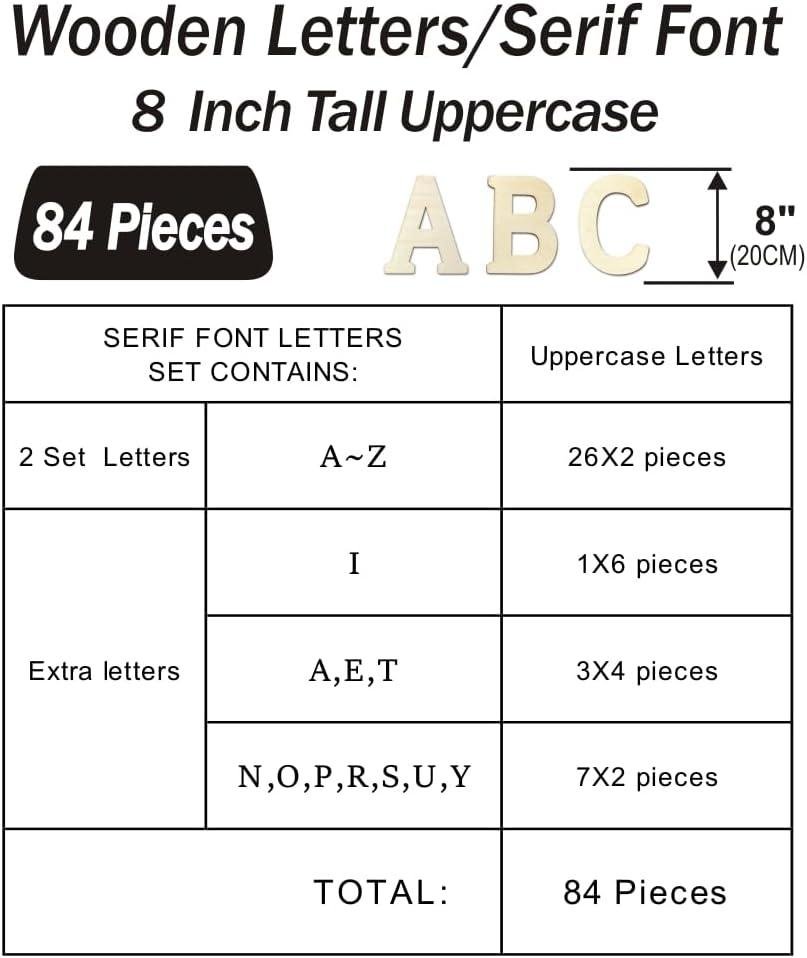
The 8 Inch 84 Pieces Wooden Unfinished Letters set is a straightforward craft supply: 84 thin poplar plywood letters, each about 6 x 8 x 0.09 inches, with a practical mix of quantities (extra I’s, and more common vowels/consonants). The unfinished surface is its main strength-easy to sand lightly, paint, stain, wood-burn, or decoupage for clean, customized results. Customer feedback themes typically center on the convenience of a large assortment, the ready-to-finish surface, and the lightweight, wall-decor-friendly thickness, with the main limitation being that the thin plywood isn’t meant for structural or heavy-duty use.
Best for: hobby woodworkers, makers, and beginners building signs, kids’ room name plaques, templates, and wall décor.
Consider alternatives if: you need thick hardwood letters for outdoor durability, CNC-quality edges, or furniture-grade joinery.
Final assessment: a solid, versatile option for decorative projects, as long as you treat them as finishable craft components-not load-bearing parts.
Want to see current pricing and customer photos? View on Amazon & Read More Reviews →