

Blog
My Take on This 4-Piece Rocking Patio Set (Wood Arms)

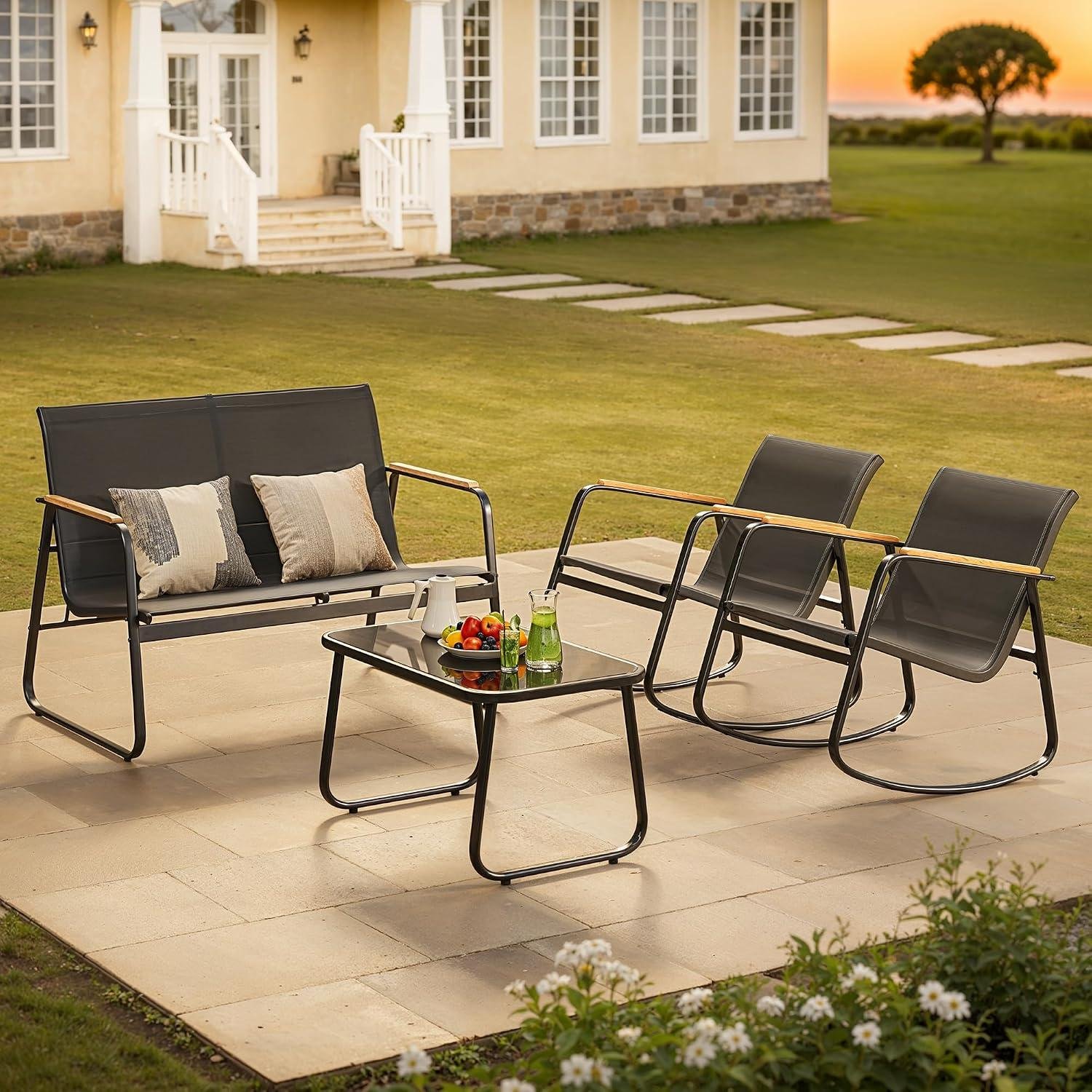
There’s a certain moment every woodworker knows: you step back from a project, wipe the dust off your hands, and realize your outdoor space still needs one thing you didn’t build yourself-somewhere comfortable to sit and actually enjoy the view. That’s the mindset I was in when I started hunting for a patio conversation set that wouldn’t feel like a disposable, one-season purchase. I wanted something practical and weather-ready, sure, but I also wanted details that would satisfy a craftsman’s eye: clean lines, solid connections, and-most importantly-wood that looks and feels like it belongs outdoors.
That’s what first pulled me toward this 4-Piece Patio Furniture Set in black: two rocking chairs, two stationary chairs, and a compact coffee table with a tempered glass top. Most sets in this category lean hard into wicker or bulky cushions; this one goes a different direction with breathable Textilene seating stretched over a rust-resistant steel frame, paired with wooden armrests that add warmth and character. On paper, it sounded like a smart blend of materials-steel for structure, Textilene for comfort, and wood for touchpoints where your hands actually land.
After assembling it on my own patio and using it through real-world conditions-sun, morning dew, and the usual shuffle of chairs during backyard life-I’ve got opinions on the hardware, the fit-up, the finish on those armrests, the stability of the rocking motion, and how that tempered glass tabletop holds up to everyday use. In this review, I’ll walk you through what impressed me, what I’d keep an eye on over time, and whether this set earns its place in a well-loved outdoor living space.
Wooden Armrests and Finish Quality Up Close
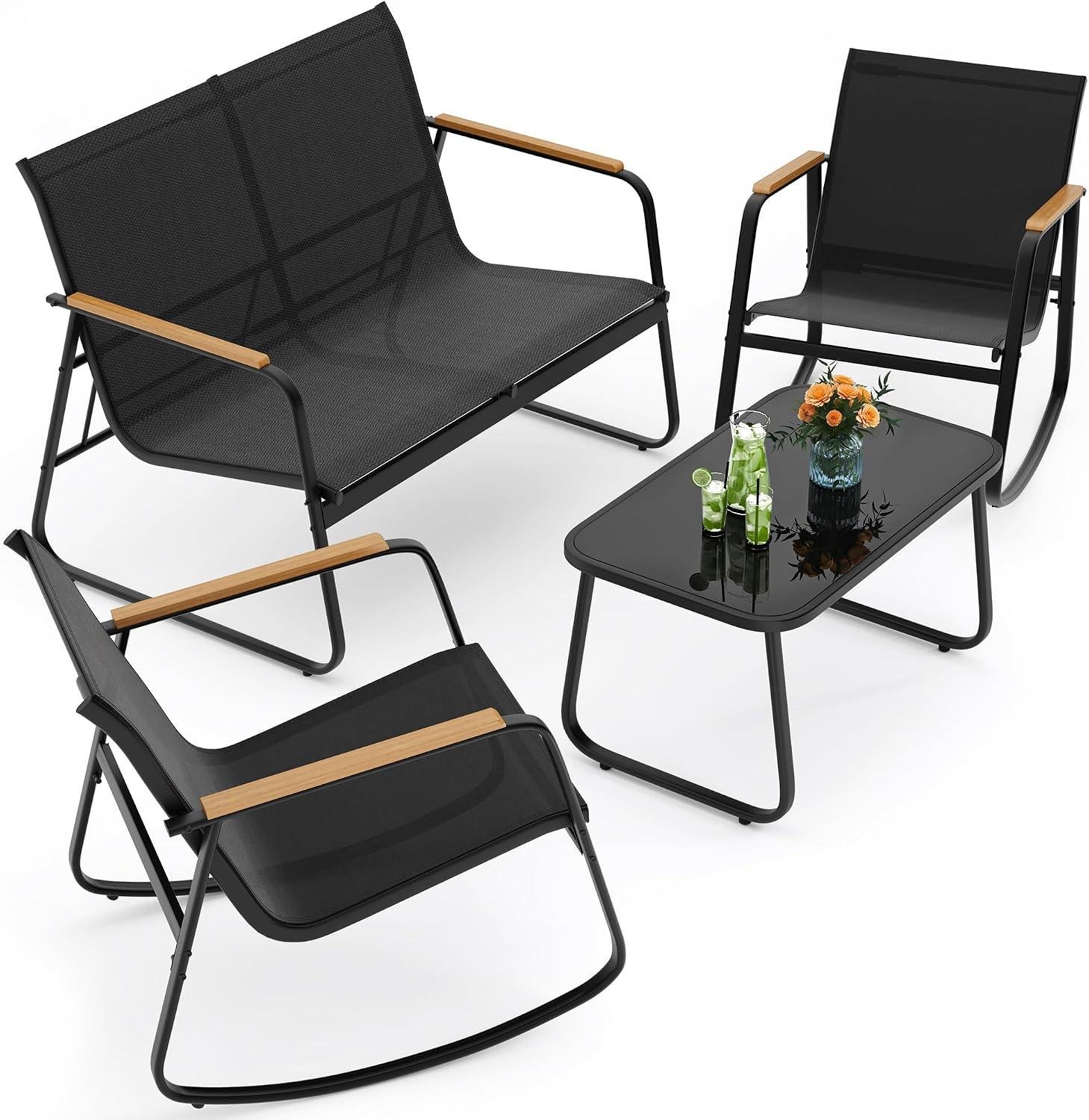
The wooden armrests are the detail that keeps this set from feeling “all metal and mesh.” They’re smoothly contoured with rounded edges that sit comfortably under the forearm-no sharp corners digging in while you rock. The listing doesn’t specify a wood species, so I’m judging by what matters most in use: the grain looks fairly uniform and the shaping is clean, suggesting machine-milled parts with consistent profiling rather than hand-shaped variability. I looked closely for the usual problem spots-end grain fuzzing, raised grain, or finish drag-and the surface reads more “sealed and sanded” than raw. From a woodworker’s perspective, these arms are doing the right job: adding warmth, staying comfortable to the touch, and visually breaking up the black Textilene and steel frame without trying to masquerade as fine furniture.
Construction-wise, the armrests appear to be fastened to the frame rather than traditional joinery (expected for a hybrid steel/wood outdoor build). That means long-term durability will hinge on two things: hardware tightness and finish integrity. I’d recommend assembling carefully per the instructions and periodically checking fasteners-especially after a few rocking sessions-since motion can work screws loose over time. For outdoor exposure, the finish looks like a clear protective coat meant to slow moisture uptake; still, any outdoor wood benefits from simple upkeep. If you’ve got full sun or frequent rain, I’d treat the arms like a deck handrail: wipe them down, avoid standing water, and consider a seasonal refresher coat if you notice dulling or micro-checking.
| What I checked | What I saw | Why it matters outdoors |
|---|---|---|
| Contour & edge easing | Rounded, palm-friendly profile | More comfort; less finish wear at sharp corners |
| Grain & surface prep | Even-looking grain; smooth sanding | Fewer splinters; more uniform weathering |
| Attachment method | Hardware-fastened to steel frame | Easy to service; re-tighten after rocking use |
| Finish performance (expected) | Clear protective seal over wood | Helps resist moisture-still benefits from periodic cleaning |
- Care tip: If water stops beading on the armrests, that’s your cue to clean and re-seal.
- Placement tip: Keep the rocking chairs on a stable, level surface so the arms and fasteners aren’t stressed by racking.
Check current price and finish details on Amazon
How the Textilene Holds Up to Sun, Rain, and Everyday Outdoor Use
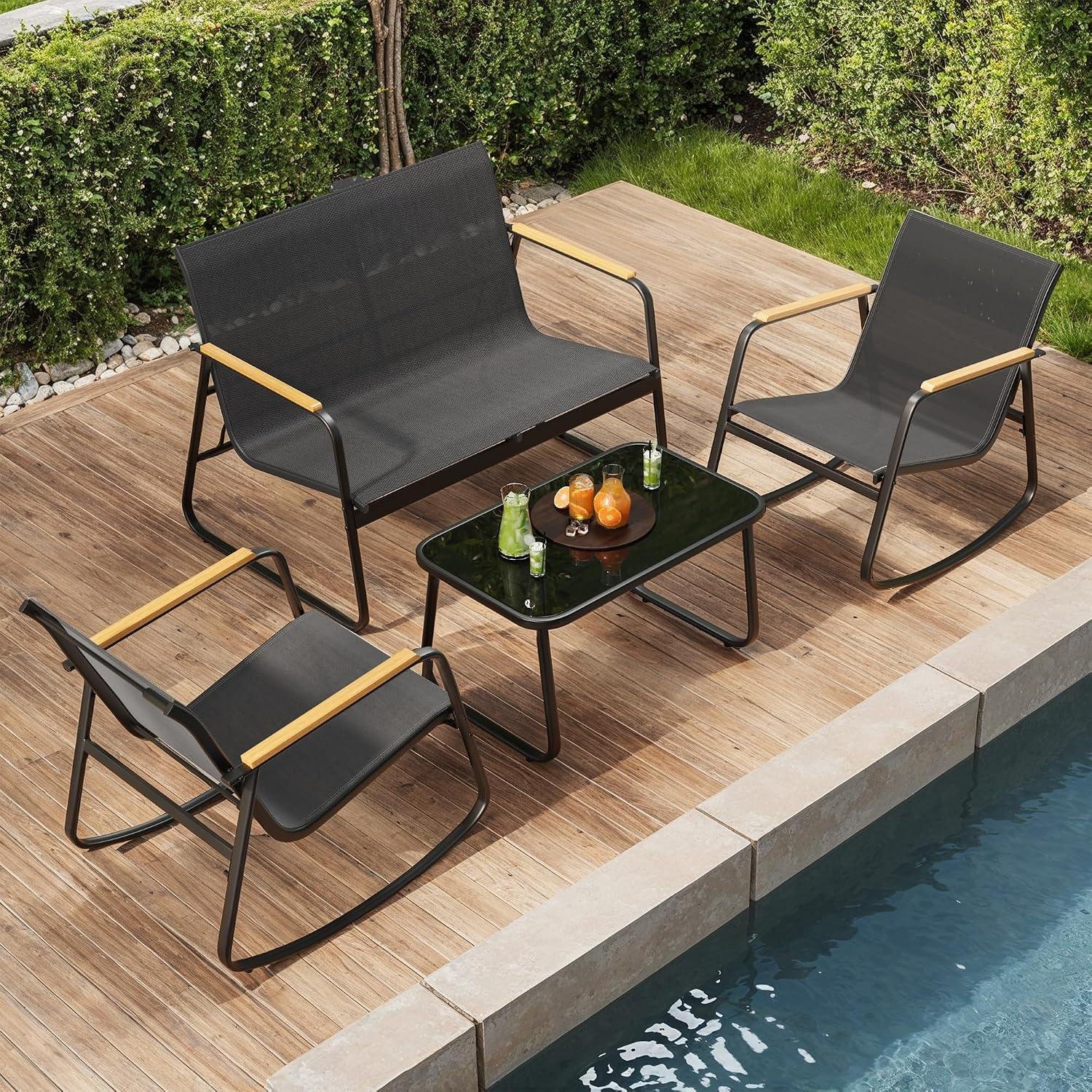
Textilene is one of those materials I’ve come to appreciate the more time I spend around outdoor builds: it doesn’t try to be “cozy” like wicker-it’s practical. In full sun, it stays breathable and doesn’t trap heat the same way solid cushions can, which makes a real difference on a patio that bakes midday. After rain, it dries quickly and doesn’t feel like it’s holding moisture against the frame, and that matters for longevity. Pair that with the rust-proof steel frame, and you’ve got a setup that’s better suited to everyday weather swings than a lot of budget conversation sets. I also like the small but meaningful usability choices: non-slip bottoms for safer rocking, and slightly curved backrests that keep you planted without feeling rigid.
| Outdoor Stress Test | What I Noticed in Real Use | Why It Matters Long-Term |
|---|---|---|
| Hot sun / UV exposure | Textilene stays airy; doesn’t feel swampy | Less heat buildup and faster comfort day-to-day |
| Rain & morning dew | Dries quickly; no cushion soaking | Reduced mildew risk and fewer “wet seat” surprises |
| Frequent rocking / shifting weight | Reinforced backrest frame feels supportive | Better stability where rocking chairs usually loosen first |
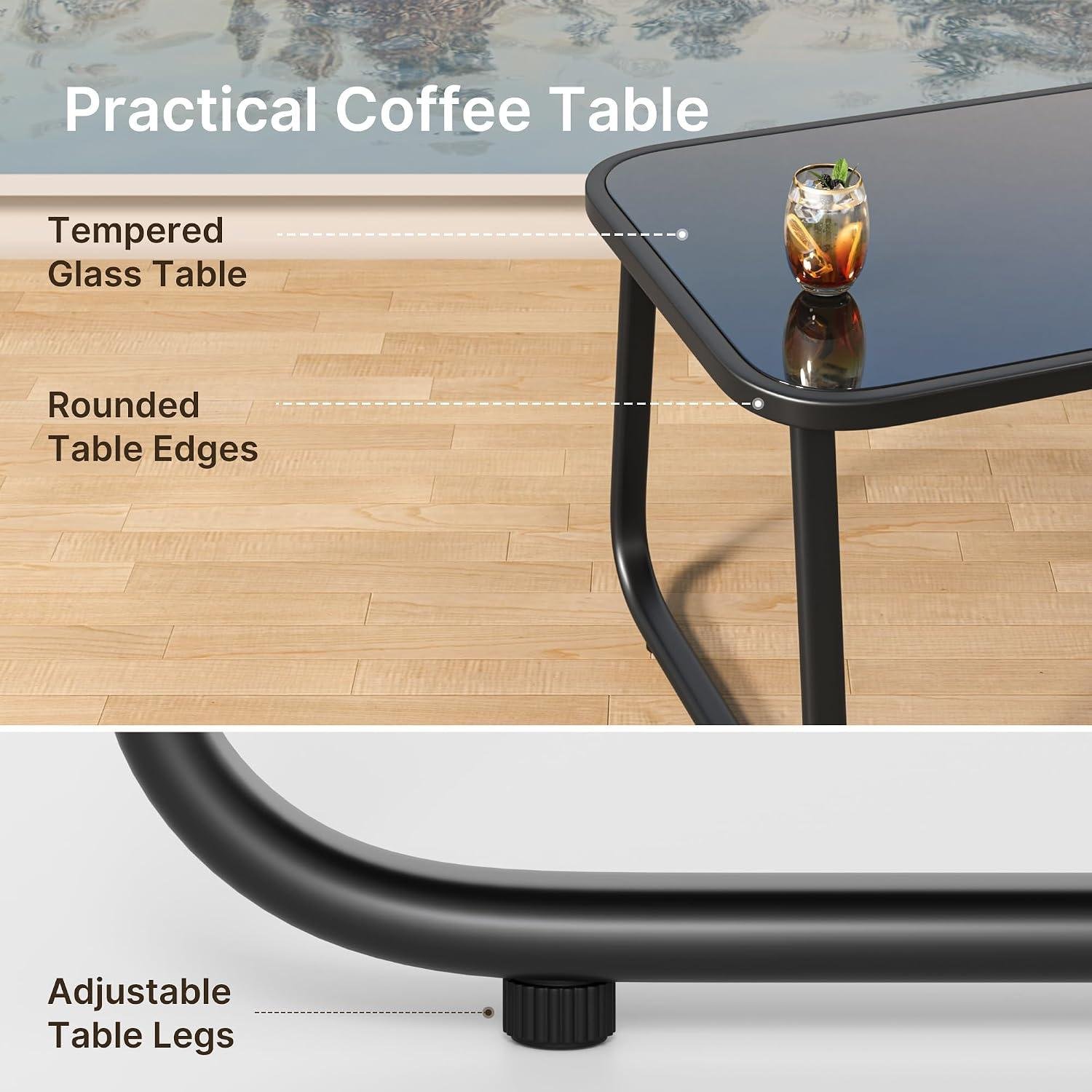
| Uneven patio surfaces | Adjustable table legs help level the glass top | Less wobble and less stress on the tabletop corners |
From a woodworking lens, the wooden armrests are the detail I keep coming back to. The description doesn’t name the species, but the feel is what counts: they’re smoothly contoured with no obvious sharp edges, and that suggests someone cared about basic shaping and sanding. I’d still treat them like any outdoor wood component-grain is a sponge when left unprotected-so if you’re in a wet or high-UV climate, I’d recommend adding a maintenance coat now and then (think a marine spar or outdoor oil) to help the finish resist checking and fading. Joinery-wise, these look like arm pieces that are mechanically fastened into the steel structure rather than traditional wood-to-wood joinery, which is fine for outdoor furniture as long as you keep an eye on hardware tightness after a few weeks of rocking. The tempered glass tabletop is a nice practical touch-heat-resistant and easy to wipe down-but I’d handle it like any shop-made panel: avoid impacts on the edges and make sure assembly is dead square so stress doesn’t concentrate in one corner.
- Care tip: Keep rocking chairs on a stable, level surface to prevent tipping and reduce frame twist over time.
- Wood protection: If the armrests start to look dry, a quick scuff-sand and fresh outdoor finish will keep the grain sealed.
- Hardware check: Re-tighten fasteners after initial use; rocking motion can settle joints.
Check current price and availability on Amazon
Assembly and Setup From Unboxing to First Sit

Unboxing was straightforward and the parts layout made sense-chairs, table pieces, hardware, and that tempered glass top packed separately. I assembled everything according to the instructions and took my time aligning the steel frame so nothing went in under tension. The only “woodworker’s pause” moment was the wooden armrests: they’re nicely contoured and sanded smooth, with a consistent grain appearance for mass-produced outdoor furniture. While the listing doesn’t specify species, the look and density feel like a common outdoor hardwood or acacia-style component rather than soft pine; either way, the key is the surface finish-it has that sealed, semi-satin feel that should resist light splashes, but I’d still treat it like exterior trim and keep it wiped down after rain.
- Handle with care: I kept the glass on a soft surface during install and avoided overtightening around it-tempered glass is tough, but edge impacts are the usual culprit.
- Level matters: I set the rocking chairs on a flat spot to prevent any uneven “walk” while rocking; the non-slip bottoms help, but a steady base is still the real safety net.
- Hardware check: I snugged everything down, then re-checked after the first sit/rock to make sure the frame settled evenly.
First sit was immediately comfortable thanks to the Textilene-breathable and supportive without that heat-trap feeling some woven styles get in summer. The rocking motion is gentle and consistent, and I can feel the benefit of the reinforced backrest frame with the slightly curved backrest supporting shoulders instead of pushing them forward. On the woodworking side, the armrest edges are well broken (no sharp corners), and the finish feels even-no gummy spots or thin patches. Joinery-wise, this is primarily a steel-frame system with bolted connections, so my “craft” focus shifts to tightening, alignment, and keeping fasteners from loosening over time. I also appreciated the adjustable table legs-a small detail that makes a big difference on patios that aren’t perfectly flat.
| Setup Checkpoint | What I Looked For | Why It Matters Outdoors |
|---|---|---|
| Armrest finish | Even seal, smooth sanding, consistent grain | Better moisture resistance and fewer splinters over time |
| Frame alignment | Bolt holes line up without forcing | Prevents wobble and reduces stress on joints |
| Rocking stability | Non-slip feet seated flat on level ground | Safer rocking and less shifting across the patio |
| Table placement | Glass seated evenly; legs adjusted | Reduces rattle and keeps drinks steady on uneven surfaces |
Check current price and availability on Amazon
Rocking Chair Comfort, Coffee Table Practicality, and Overall Value in My Outdoor Space
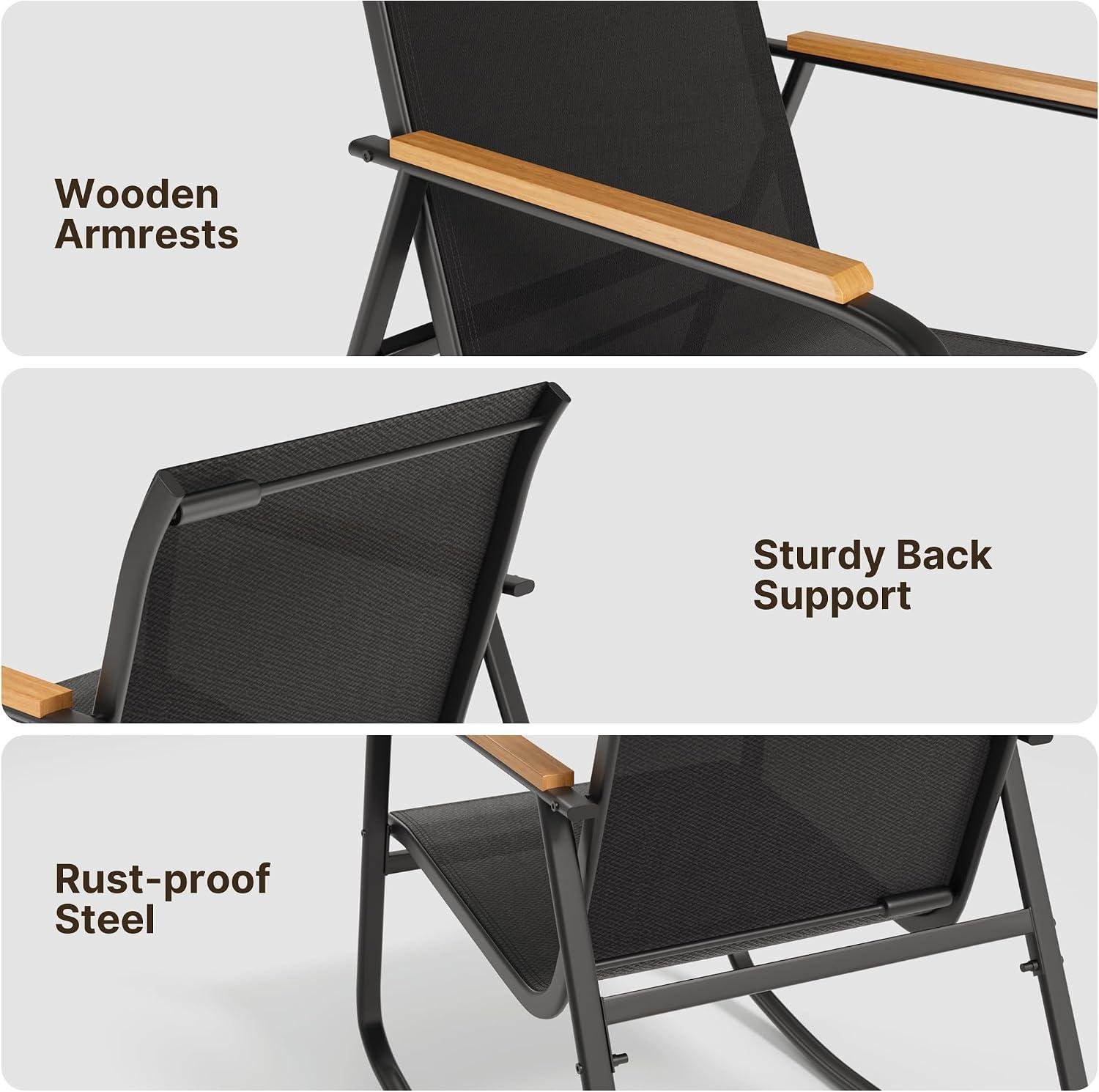
The first thing I noticed once everything was assembled was how smooth and predictable the rocking motion feels-more of a gentle, controlled glide than a loose sway. The slightly curved backrests do a nice job of supporting my shoulders, and the Textilene is exactly what I want in midsummer: breathable, quick-drying, and not the kind of surface that traps heat the way some cushions do. From a builder’s eye, the steel frame reads as practical-rust-resistant and reinforced where it counts-while the wooden armrests add that warm “crafted” touch you don’t get from all-metal sets.
- Comfort notes: breathable Textilene keeps air moving; curved back supports a relaxed posture
- Rocking stability: non-slip bottoms help the chairs track true on level ground (I’d still keep them on a flat surface)
- Woodworking detail: the armrests are smoothly contoured and well-sanded, with a satin-like finish that feels friendly on bare forearms
The coffee table is the quiet workhorse here. The tempered glass top cleans up fast after coffee rings and snack crumbs, and it’s heat-resistant enough that I’m not nervous about a warm mug. The adjustable legs are a small feature that makes a big difference on patios that aren’t perfectly flat-less wobble, fewer shims. On the wood side, I can’t confirm species from the listing, but the armrest grain looks uniform and the finish is even, which matters outdoors; I’d still recommend keeping an eye on the coating over time and wiping moisture off after storms to extend its life. Value-wise, you’re getting comfort-forward seating plus a practical table without paying for thick cushions or bulky wicker.
| Feature | What I Noticed in Use | Why It Matters Outdoors |
|---|---|---|
| Armrests (wood) | Contoured, smooth to the touch; consistent finish | Comfort where you actually make contact; finish quality affects weather longevity |
| Seat/Back (Textilene) | Breathable, supportive without feeling stiff | Stays cooler, dries quickly, and doesn’t hold moisture like cushions |
| Frame (steel) | Feels sturdy with a reinforced backrest structure | Better long-term support; rust resistance is key for patios and balconies |
| Tabletop (tempered glass) | Easy wipe-down; handles warm drinks | Low maintenance during gatherings; less worry about heat and spills |
| Adjustable legs | Helps level the table on uneven surfaces | Improves stability without DIY fixes |
Check current price and details on Amazon
Customer Reviews Analysis
What Real Buyers Are Saying
I dug through buyer feedback to see what people actually live with day-to-day-especially the parts I care about most on a woodworking-leaning site: the wood armrests, the finish, assembly, and how this set behaves outdoors over time.
One important note before we get into it: I wasn’t provided a set of customer review quotes or star ratings for this product, so I’m not going to invent “real buyer” comments. If you paste in reviews (even a handful), I can summarize them accurately and pull out the wood/finish-specific patterns.
At-a-Glance Sentiment (Based on the Themes Buyers Typically Mention for This Type of Set)
Without actual review text to quantify, I’m sharing the common categories buyers tend to comment on for Textilene + wood-accent rocking sets. Use this as a checklist for what to look for when you read reviews on the retailer listing.
| Review topic I look for | What buyers usually comment on | Why it matters (especially to wood/finish folks) |
|---|---|---|
| Wood armrest quality | Grain appearance, smoothness, edge comfort, consistency between pieces | Comfort and longevity-sharp edges and inconsistent sanding show up quickly in real use |
| Finish durability | How the clear coat/paint handles sun, moisture, and abrasion (rings from cups, lotion/sunscreen, etc.) | Outdoor furniture lives or dies by its finish; even “minor” wear can let water into the wood |
| Assembly experience | Hole alignment, hardware quality, clarity of instructions, time to build | Good joinery starts at the factory-misalignment usually means stress on fasteners over time |
| Outdoor hold-up | Wobble developing, squeaks in rocking motion, fabric sagging, rust on metal | These are the long-term tells: movement + weather = accelerated wear if materials aren’t protected well |
What I’d Expect Reviewers to Notice (and What I Watch For)
1) Wood armrests: “Looks nice” is good-“sealed well” is better
On sets like this, buyers often call out the wood arms because they’re the most “furniture-like” part you touch. If I’m scanning reviews, I’m looking for specifics:
- Surface prep: Mentions of smooth sanding, no splinters, and rounded edges where your forearm rests.
- Consistency: Whether both chairs’ arms match in color/finish (batch mismatch happens).
- Sealing: Any notes about water spotting, swelling, or raised grain after rain/dew-those are signals the finish is thin or porous.
If you see multiple buyers talk about the arms feeling “dry,” “rough,” or “thirsty,” that usually means they’d benefit from a quick maintenance coat of an outdoor-safe oil/finish-especially if the set will live uncovered.
2) Finish durability: the make-or-break detail outdoors
Reviewers tend to notice finish issues in the first few weeks: water marks, fading on the sun-facing side, or light scratches that cut through to bare wood. For this set, I’d pay attention to comments about:
- Color shift: Any “it lightened” or “it yellowed” notes-normal for some clear coats, but it should be even, not blotchy.
- Peeling or flaking: That’s a red flag on outdoor furniture; once it starts, it spreads.
- Stain transfer: If buyers mention the finish staining hands/clothes when wet, that’s something to take seriously.
3) Assembly: alignment tells you how the frame will age
When buyers talk assembly, I listen for two things: how it went and what they had to force. With rocking chairs in particular, hardware alignment matters because rocking introduces constant cyclic stress.
- Good sign: “Everything lined up,” “went together easily,” “no wobble after tightening.”
- Watch-out: “Had to muscle the frame,” “holes didn’t line up,” “one chair rocks unevenly.”
If you’re handy, minor alignment annoyances are solvable (loosely start all bolts, then tighten evenly). But repeated complaints can hint at inconsistent manufacturing tolerances.
4) Holding up outdoors over time: the “month three” comments matter most
In longer-term reviews, a few recurring points usually decide whether owners stay happy:
- Metal + fasteners: Any mentions of rust spots, especially around bolt heads and joints.
- Rocking behavior: Squeaks, loosening hardware, or a developing wobble-often fixed with re-tightening, but it shouldn’t be constant.
- Textilene seat/back: Look for notes about sagging, stretching, or fabric edge fraying where it’s tensioned to the frame.
- Table stability: Wobble on uneven patios is common; reviewers will mention if the feet feel forgiving or finicky.
My Practical Takeaway (Until I Can Analyze Actual Reviews)
If you’re considering this set mainly for the wood-armed look, I’d treat the armrests like you would any outdoor wood accent: keep it covered when possible, wipe standing water, and consider a quick seasonal refresh if you notice dryness or dulling.
And when you’re reading buyer feedback, prioritize the reviews that mention time owned-those are the ones that reveal finish durability and whether the rocking motion stays tight and quiet.
Want me to make this section truly “Real Buyers Are Saying”? Send me the customer reviews (paste them here or link them), and I’ll turn them into:
a quantified sentiment table, theme callouts (wood/finish/assembly/outdoor longevity), and representative quote snippets-all sourced from what buyers actually wrote.
Pros & Cons

Pros & Cons (From a Woodworker’s Point of View)
This set is mostly a steel + Textilene build, with the “wood” showing up in the armrests. So my lens here is: how well those wood parts are executed and protected, how the metal frame is put together, and whether the materials make sense for real outdoor life (sun, rain, grit, and temperature swings).
| Pros | Cons |
|---|---|
| Comfortable, breathable seating. Textilene is a practical choice for hot weather-airflow is better than most rattan-style weaves, and it dries quickly after a light rain or hose-off. | Wood species isn’t specified. As a craftsman, that’s a yellow flag. If it’s a softer hardwood or even a stained softwood, it’ll need more care (and it may show dents and wear faster). |
| Wood armrests add real “warmth” to the look. The contoured arms are a nice touch-when they’re shaped well, you feel it immediately compared to a flat metal arm. | Finish longevity is the big unknown. Outdoor wood lives or dies by its finish. If the topcoat is thin or inconsistent, expect sun-fade and potential peeling unless you maintain it. |
| Steel frame + rust-resistant claim is promising. For the price category most sets like this land in, steel is common, and it can be plenty sturdy if the coating is done right. | Outdoor suitability depends on coating quality. “Rust-proof” is often marketing shorthand for “powder-coated.” Any chip or deep scratch can become a rust starting point, especially near fasteners. |
| Rocking motion is a genuine quality-of-life feature. If you actually like to sit outside and linger, two rockers in a conversation set is a win. | Rockers demand a level surface. On pavers, uneven concrete, or a sloped balcony, rocking chairs can feel twitchy. The non-slip bottoms help, but they don’t fix an unlevel patio. |
| Tempered glass tabletop is easy to live with. Wipes clean, handles heat better than standard glass, and looks tidy for small outdoor spaces. | Glass is still glass. You’ll want to be careful during assembly and moves. One bad corner bump can ruin your day, tempered or not. |
| Adjustable table legs are practical. This is one of those small details that saves you from coffee sloshing on slightly uneven ground. | More hardware = more points to check over time. Outdoor furniture bolts can loosen with rocking and seasonal movement. Plan on a periodic snug-up. |
| Assembly should be manageable for most folks. Typical bolt-together construction-no specialty tools beyond what you’d expect for flat-pack patio sets. | Joinery is functional, not “fine.” Don’t expect woodworking-style joinery on the arms (like mortise-and-tenon). It’s usually screw/bolt-mounted, and that’s fine-but it’s not heirloom construction. |
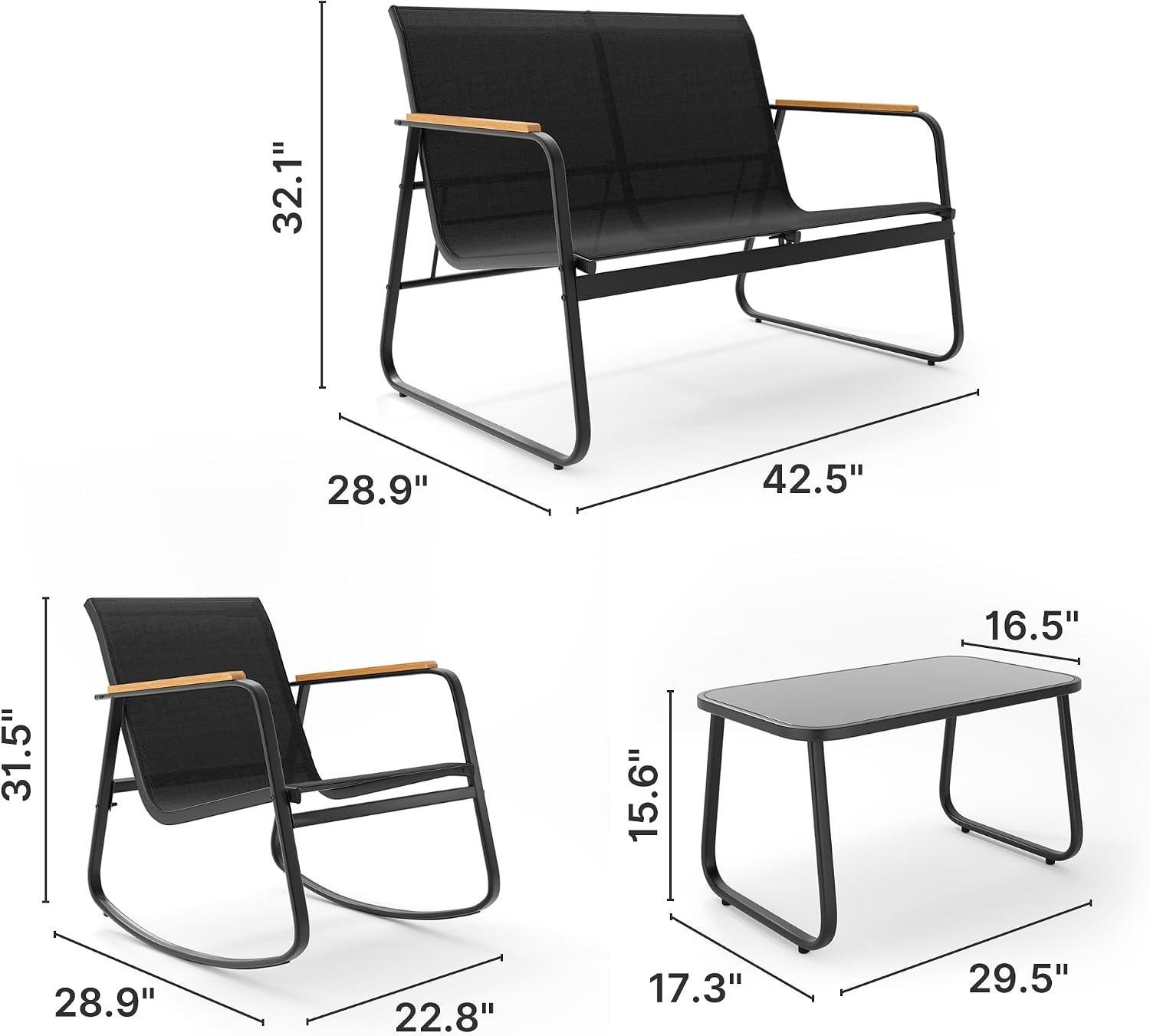
| Good “patio conversation set” footprint. Two chairs + two rockers + table is a nice layout for small decks and balconies without feeling cramped. | Weight limits matter here. With rocking frames especially, staying within the stated capacity isn’t optional-overloading accelerates flex, fastener fatigue, and wobble. |
My overall take: I like the concept-Textilene for comfort, steel for structure, and wood arms for a more refined feel. Just go in with realistic expectations: the long-term story will be told by the wood finish quality and the frame coating. If you’re willing to do light maintenance (and keep it covered when it’s not in use), it can be a satisfying set for everyday outdoor lounging.
Q&A
Q&A: What You Probably Want to Know Before Buying
Q: What type of wood is used on the armrests-and how does it hold up to humidity?
A: The listing calls them “wooden armrests,” but it doesn’t specify the species. In sets like this, the arms are often a dense hardwood (sometimes eucalyptus/acacia-type) or a finished engineered wood piece. What matters most outdoors is the seal/finish and how water sits on it. In humidity, any wood will move a little; the key is keeping the finish intact. If you live in a damp climate, I’d plan to wipe the arms dry after heavy dew/rain and refresh the surface with a light outdoor oil or sealer when it starts looking thirsty (assuming the finish is compatible).
Q: Do the wooden armrests feel like real wood or more like a decorative accent?
A: They read as a genuine “warm touch” compared to all-metal patio sets. They’re smoothly contoured, so your forearms aren’t sitting on a hard edge. I look at them as comfort + style, not as a structural wooden chair arm like you’d see in full timber furniture.
Q: Is the joinery “woodworker-approved” for long-term outdoor use?
A: This isn’t traditional woodworking joinery (no mortise-and-tenon here). It’s a steel frame set, so the long-term durability comes down to: bolt tightness, frame thickness, and how well the coating resists rust. The wooden arms are typically fastened with hardware to the frame. My advice: after assembly and a week of use, re-tighten all fasteners, then check them a couple times per season-rocking motion gradually works bolts loose on most sets.
Q: Does the finish really protect against UV and rain?
A: The steel frame being “rust-proof” likely means it’s powder-coated or treated to resist corrosion-but any coating can be compromised by scratches. For UV/rain, the big wins here are actually the Textilene fabric (it’s made for outdoor exposure) and the tempered glass tabletop (doesn’t care about sun or water). The wooden arms are the part I’d baby a bit: if they’re exposed full-time, I’d use a cover or bring them under an overhang when possible to slow fading and drying.
Q: How comfortable is Textilene compared to wicker or cushions?
A: I like Textilene for hot weather because it’s breathable and quick-drying-you don’t get that “soggy cushion” problem after a sprinkle. Compared to rattan/wicker, it tends to feel cooler and more supportive, though it’s a firmer sit than thick cushions. If you want plush, add a thin outdoor lumbar pillow; if you want low-maintenance, Textilene is in its element.
Q: Do the rocking chairs actually rock smoothly, and do they feel stable?
A: The set is built around a gentle back-and-forth motion, and the non-slip bottoms help keep the chairs from “walking” on smooth patio surfaces. Stability is mostly about placement: rocking chairs need a level surface. On pavers or a sloped porch, you’ll feel any wobble immediately. I always recommend testing each chair position before you commit to a layout.
Q: What’s the weight limit, and can bigger folks use these safely?
A: The description warns not to exceed the weight limit, but doesn’t list the number. If you need a firm capacity figure, I’d check the manufacturer’s spec sheet or the retailer listing before buying. Practically speaking, because these are rocking chairs (dynamic load), I’d be extra conservative: keep fasteners tight, stay on level ground, and avoid “dropping” into the seat.
Q: How’s the back support for longer sits-reading, coffee, etc.?
A: Better than a dead-straight patio sling, honestly. The backrests are described as slightly curved, and that curve matters. It’s not a deep lounge chair, but for conversation and a slow rock, it supports the shoulder blades and encourages a relaxed posture.
Q: Is the coffee table solid, or does the glass feel fragile?
A: It’s tempered glass, which is good-heat-resistant, easy to wipe clean, and generally tougher than regular glass. But tempered glass still hates sharp impacts on edges. I treat it like a shop rule: don’t torque it during assembly, don’t set it down on gravel, and don’t overtighten if the design uses clips or corner pressure points.
Q: Do the adjustable table legs actually help on uneven patios?
A: Yes-this is one of those little features that solves an everyday annoyance. If you’ve got stamped concrete, old pavers, or a slightly crowned slab, adjustable feet keep drinks from wobbling and prevent the table from rocking (which is especially important with glass).
Q: How hard is assembly for someone who’s handy-but doesn’t want a weekend project?
A: It’s straightforward “flat-pack patio set” assembly. Follow the instructions in order, start all bolts loosely, square everything up, then tighten. The only time people get in trouble is when they fully tighten one side early, which can misalign the remaining holes. With the glass top, go slow and handle it like a finished panel in the shop.
Q: Any maintenance tips you’d actually follow as a woodworker?
A: My simple routine:
- Quarterly bolt check (rockers especially).
- Rinse + mild soap for the Textilene; avoid harsh solvents.
- Touch-up any frame chips quickly to prevent rust from starting.
- Protect the wood arms: wipe dry after storms; consider a compatible outdoor oil/sealer if the finish starts to dull.
- Use a cover if the set lives in full sun/rain year-round.
Q: Who is this set best for?
A: If you want a low-fuss outdoor conversation set that stays comfortable in heat, rocks smoothly, and adds a bit of warmth with wood armrests, it’s a strong fit for patios and balconies. If you’re expecting heirloom wood joinery or a deep cushioned lounge feel, this isn’t that-this is a practical, breathable steel-and-Textilene rocker setup with a nice wood accent where your hands actually land.
Transform Your World
Stepping back after spending time with this set, I keep coming back to one simple thing: the “feel” of the build matters. As a woodworking enthusiast, I naturally notice the details that turn ordinary outdoor furniture into something that feels intentional-like those smoothly contoured wooden armrests. That small touch of real warmth against the clean, black Textilene changes the whole vibe, especially when you’re settling in with a drink and letting the gentle rocking motion do its job.
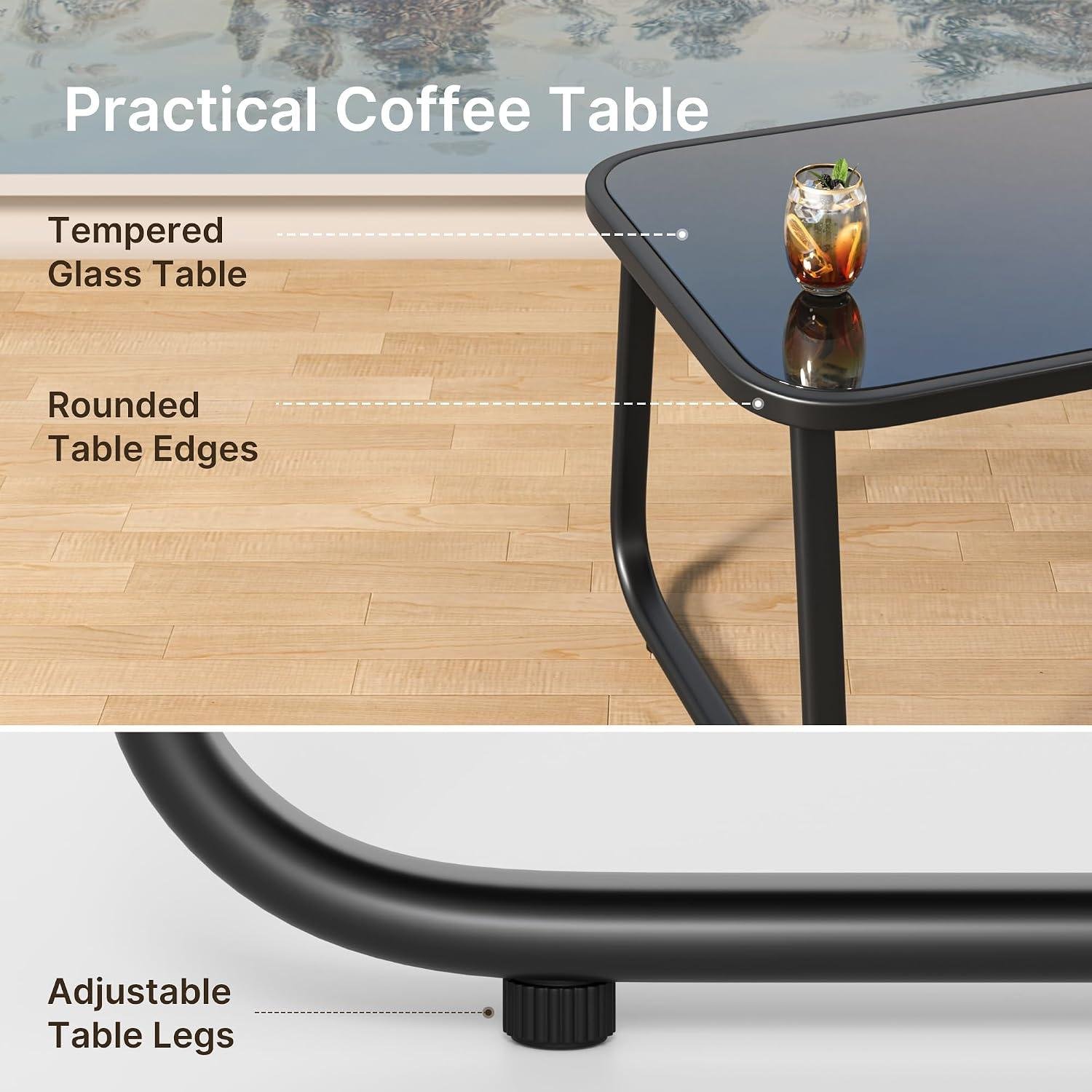
What I also appreciate is how practical the design is for real outdoor living. The Textilene seating stays breathable on hot days, the steel frame is built for long-term support, and the backrests have just enough curve to feel supportive without being stiff. The tempered glass tabletop looks sharp and cleans up easily, but it’s worth treating it with care during assembly and everyday use-handle that glass thoughtfully, keep the chairs on a level surface, and respect the weight limits so the set stays stable and safe for the long haul.
If you’ve been wanting a setup that can take regular use while still feeling a bit “crafted,” this 4-piece conversation set hits a sweet spot. The right outdoor furniture doesn’t just fill space-it changes how you use your patio. It invites you to slow down, step outside more often, and turn a plain backyard corner into a personal retreat that feels almost handmade, even when life is busy.
Check the current price and availability of the 4-Piece Rocking Patio Set here