

Blog
LE LEMATEC Sandblaster Gun Review: Right for Our Shop?

Ever tried to refurbish a flea-market hand plane, clean up rusty clamps, or prep old hardware for a new jig-only to realize that sanding tight corners is slow, imprecise, and eats up shop time (and patience)? That’s where a small abrasive blaster can earn its keep, especially when we want consistent surface prep without rounding over edges or scratching nearby work.
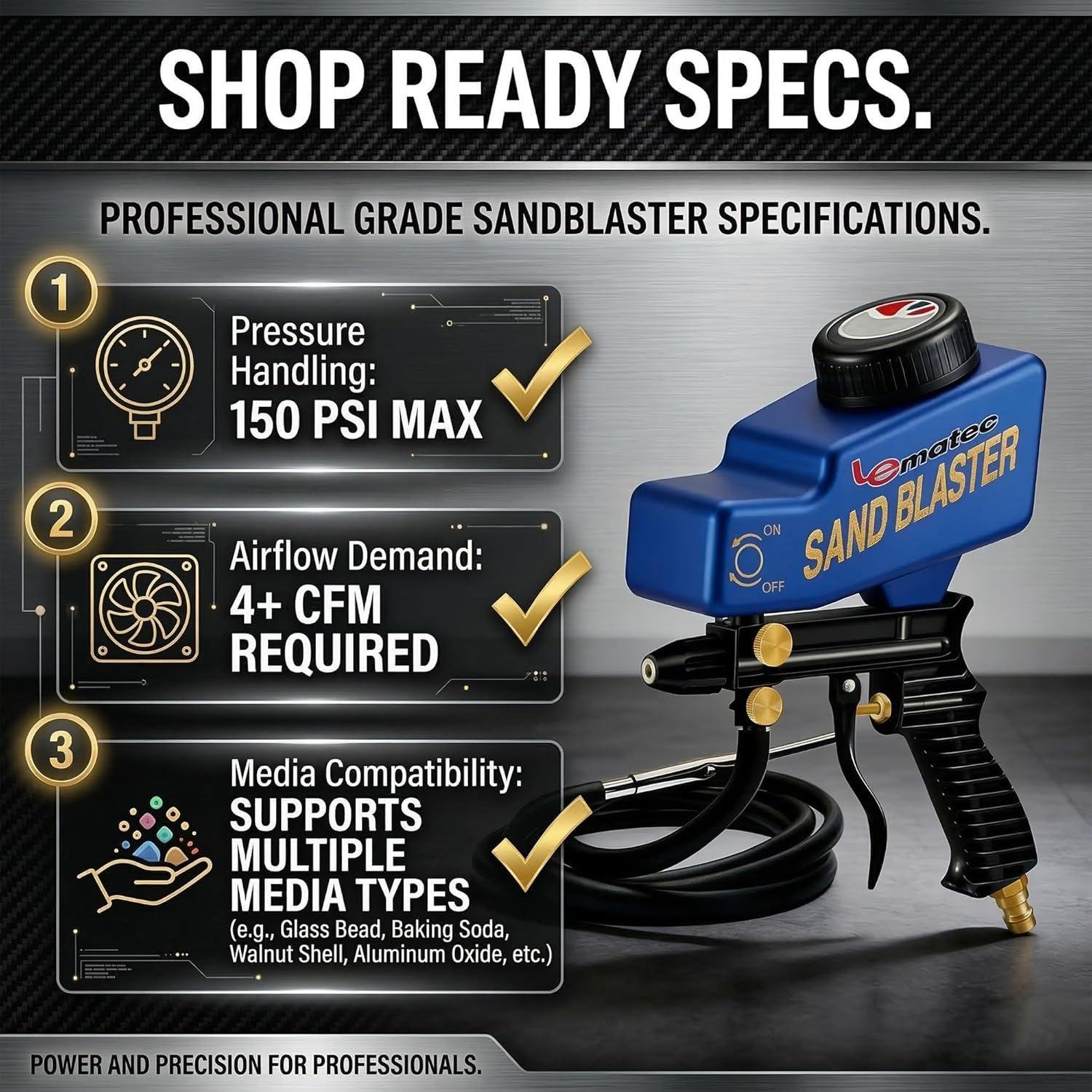
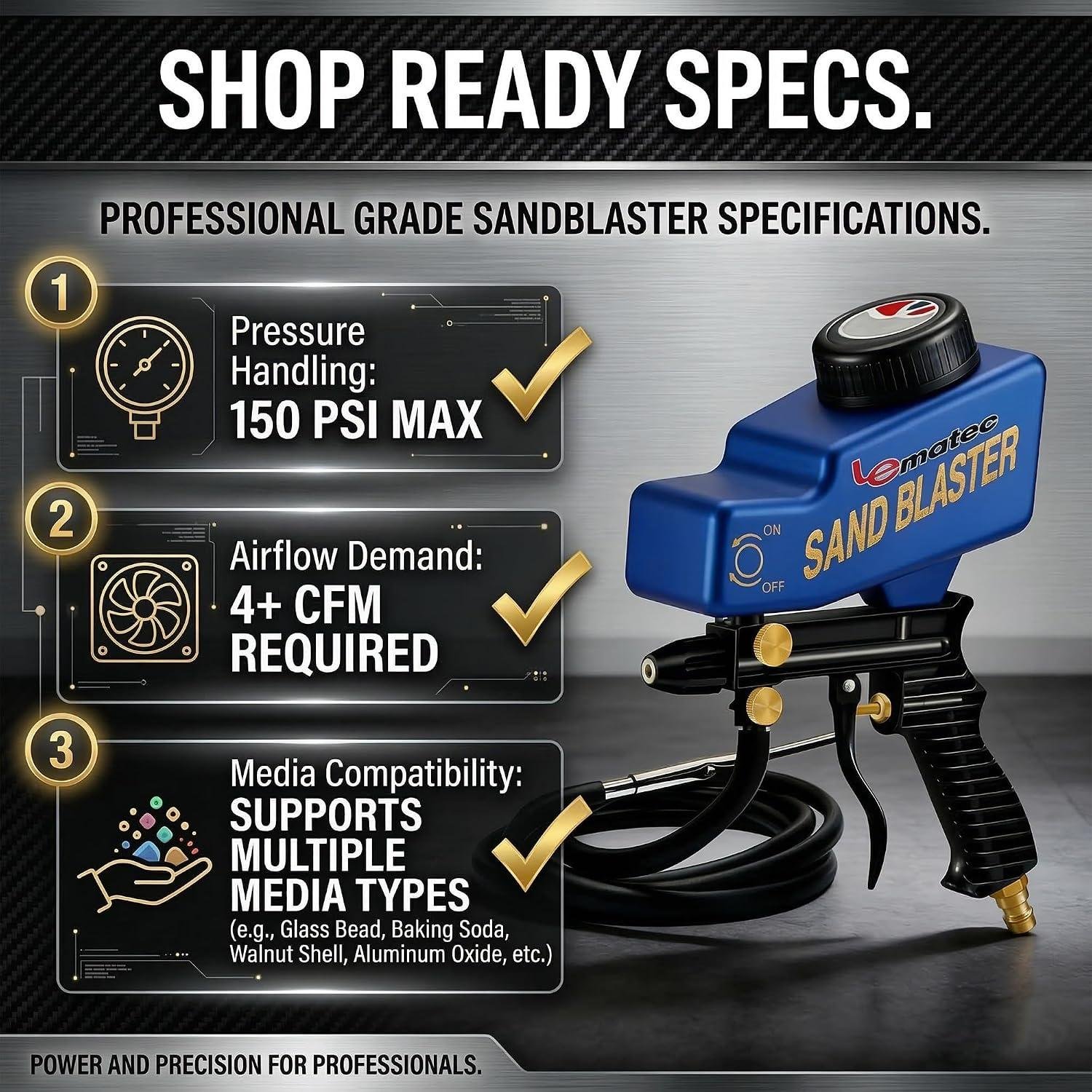
The LE LEMATEC Sand Blaster Gun Kit (AS118-2C) is a portable, air-compressor-powered sandblaster built for rust removal, surface prep, glass etching, and cleaning jobs, with 2-in-1 gravity and siphon feed plus a hardened ceramic nozzle. It connects via a standard 1/4″ NPT fitting and is rated for 4 CFM at 90 PSI (up to 150 PSI), which matters a lot for performance.
In this review, we’ll break down build quality, setup, compressor requirements, space and budget tradeoffs, and what customer feedback highlights-especially its effectiveness on small jobs, lightweight feel, and the recurring complaint about clogging if moisture control is neglected.
We’ve spent years around woodworking tools and shop workflows, and we’ll evaluate this like woodworkers: practicality first, hype last.
Tool Overview and Build Quality in a Woodshop Setting
In a woodshop, we don’t reach for a sand blaster every day-but when we’re restoring old vises, cleaning rust off cast-iron fences, de-gunking hardware before a refinish, or prepping metal brackets for paint, a compact air-powered blaster like the LE LEMATEC AS118-2C can earn its keep. This kit is built around a fully serviceable gun with a hardened ceramic nozzle (a meaningful upgrade over plastic tips when abrasive media is involved) and a standard 1/4″ NPT connector, so it plays nicely with typical shop air setups. The big “build quality” takeaway from customer feedback is split: many describe it as lightweight, easy to use, and good quality for the money, while a minority call out that some parts feel “plastic” or “toy-like.” In our view, that lines up with how this tool is positioned: a portable, detail-oriented blaster meant for controlled, smaller areas-not a production blast system.
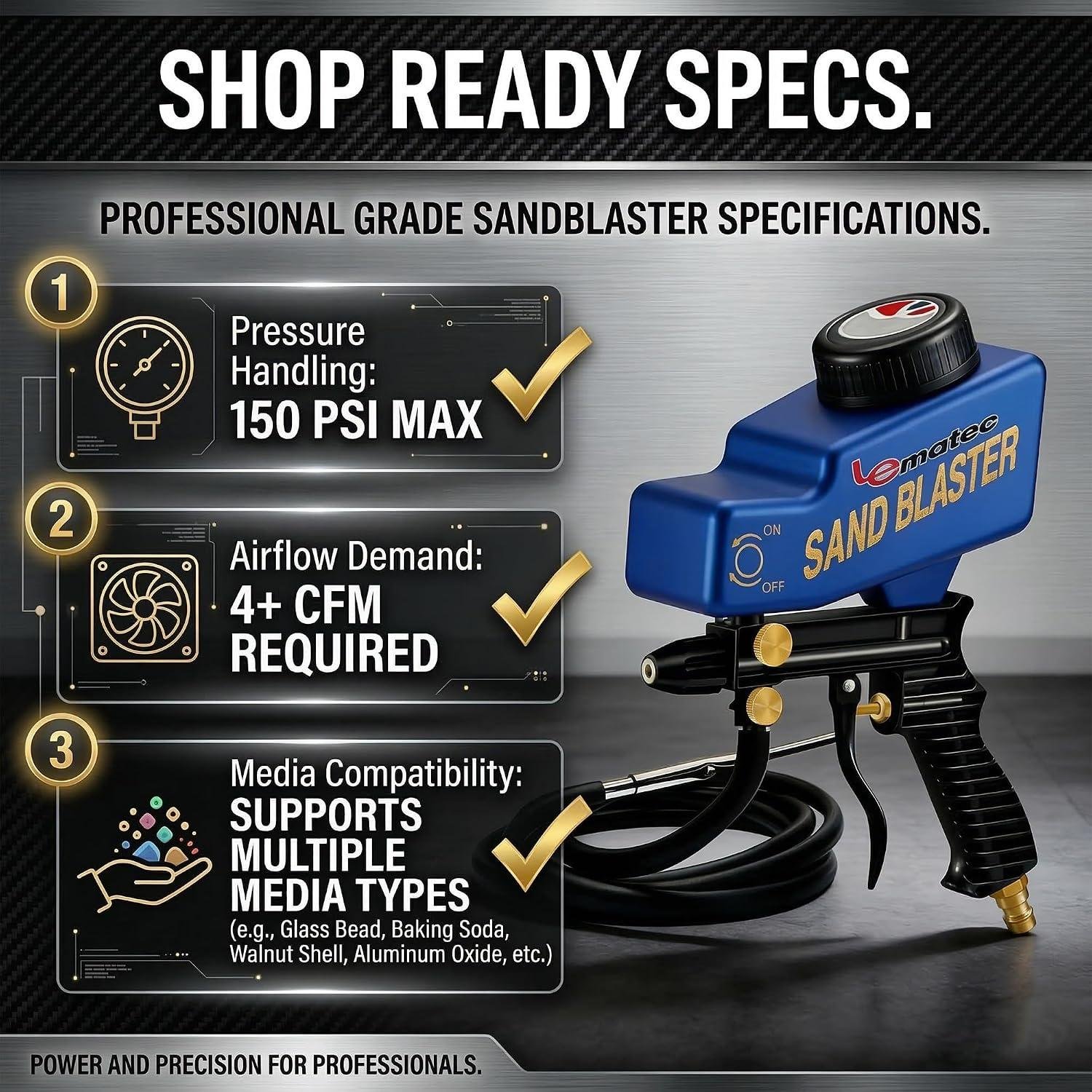
What matters more than heft in the hand is whether our air system can support it, because performance and perceived quality are closely tied to airflow. LE LEMATEC rates it for minimum 4 CFM at 90 PSI for continuous blasting and up to 150 PSI max, and they explicitly warn it’s not for pancake compressors under 6 gallons-a theme echoed in reviews where users report sputtering on small tanks and better results when they can hold pressure. We also see repeated “real shop” notes about usability: reviewers often praise the 2-in-1 feed modes–gravity feed for quick spot work and siphon feed for longer passes-while also warning about clogging, usually traced to moisture in the line or damp media. As woodworkers, we should treat that as a teachable moment: blasting is unforgiving about air quality, so an inline filter/water trap and truly dry media (LE LEMATEC suggests 46-100 grit options like aluminum oxide, glass beads, or silicon carbide) aren’t “nice-to-haves”-they’re part of what makes this tool feel solid and reliable in day-to-day shop use.
- Included accessories:
- Gravity-feed hopper/reservoir (for small, quick detail work)
- 7-foot siphon hose (for drawing media from a bag/bucket)
- Ceramic nozzle
- 1/4″ NPT air connector
- Compatible attachments/accessories:
- Inline air filter/water trap (strongly recommended to reduce clogging)
- Air dryer/desiccant system (helpful in humid shops)
- 46-100 grit blasting media (aluminum oxide, glass beads, silicon carbide, etc.)
- Respiratory protection (full-face mask or blasting hood) and gloves
- Ideal project types:
- Rust removal on fences, vises, clamps, cast-iron accessories (spot work)
- Paint/finish stripping from hardware and small metal parts
- Surface prep for metal brackets before priming/painting
- Detail cleaning where sanding can’t reach (crevices, texture)
- Wood types tested by customers:
- Not specified in customer reviews (reviews focus on metal, rust, paint, and general DIY use)
| Spec / Feature | What It Means in Our Shop |
|---|---|
| Minimum air requirement: 4 CFM @ 90 PSI | Plan on a compressor that can sustain airflow; small tanks tend to sputter during continuous blasting. |
| Maximum pressure: 150 PSI | Headroom for stubborn coatings, but control matters-too much pressure can waste media and increase mess. |
| 2-in-1 feed: Gravity + Siphon | Gravity is handy for quick touch-ups; siphon helps when we want longer runs without constant refills. |
| Nozzle material: Ceramic | Better wear resistance than plastic under abrasive flow-important for keeping spray pattern consistent. |
| Fitting: 1/4″ NPT | Common shop standard; usually a straightforward hookup to existing air hoses (though some reviews note their coupler style didn’t match). |
| Recommended vs. Real-World Capacity Considerations | Recommended (per listing) | What Customers Commonly Report |
|---|---|---|
| Compressor size | Not for under 6-gallon pancake compressors | Works well on small jobs, but small compressors “run out of air quickly” and performance drops if PSI can’t be maintained. |
| Media dryness | Clean, dry media + moisture control | Clogging is a recurring complaint; many fixes point to adding a moisture remover and keeping valves fully open. |
| Job size | Small/detail to medium surface prep | Often described as a “hobby tool” that’s great for small areas, not large-scale stripping (truck frames, big panels, etc.). |
| Compatible Accessories (Shop Add-Ons) | Why We’d Add It |
|---|---|
| Inline filter / water trap | Reduces moisture-driven clogs and helps the gun maintain a consistent media flow. |
| Dry blasting media (46-100 grit) | Helps prevent bridging/clumping and improves cut consistency for prep work. |
| Blasting hood / full-face shield + respirator | Abrasive rebound is real; proper PPE is part of using this safely around a woodshop. |
See Full Specifications & Customer Photos
Real World Performance for Rust Removal and Surface Prep Before Finishing
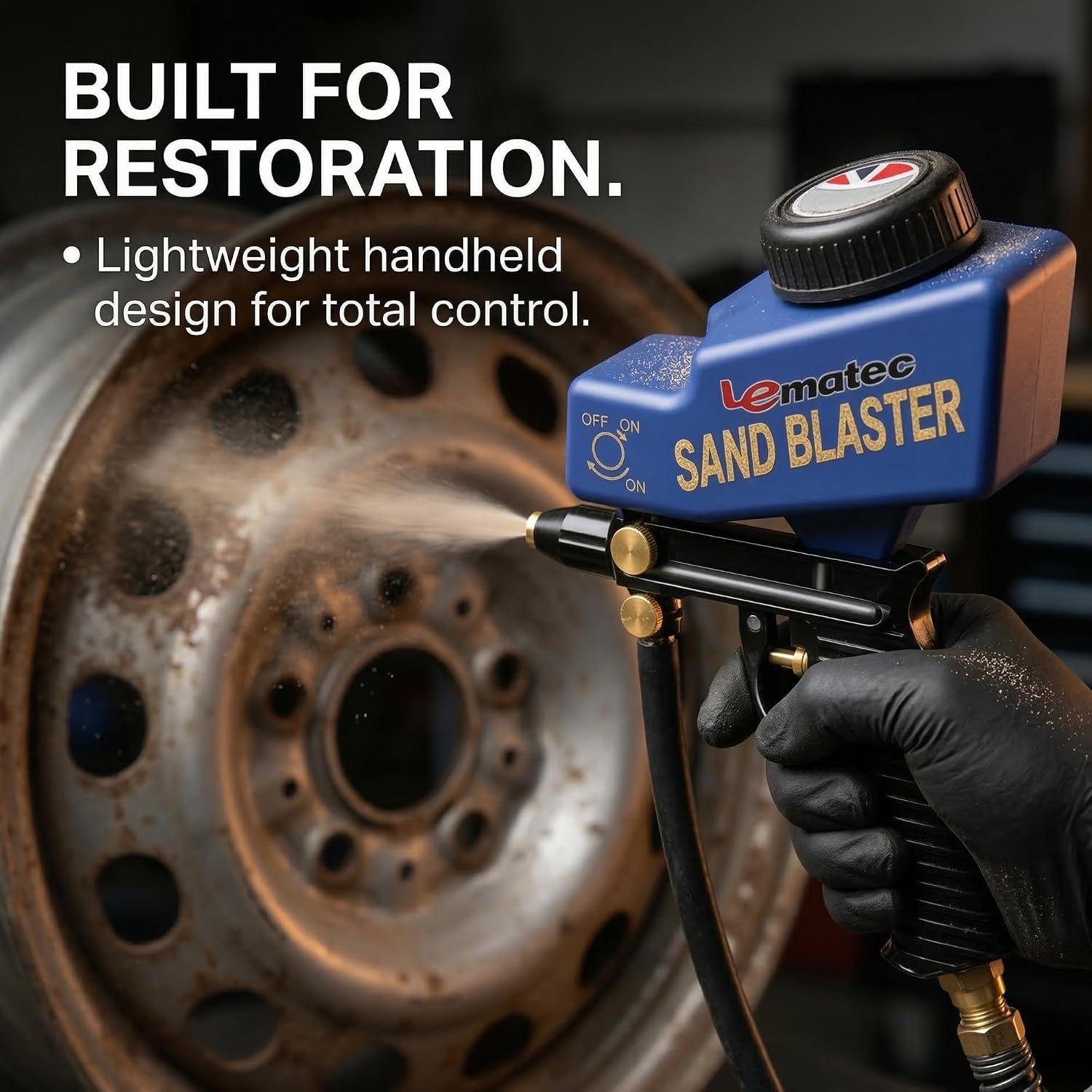
In our shop, we look at the LE LEMATEC AS118-2C less as a “wood sander” and more as a practical surface-prep blaster for all the metal and hard-to-reach hardware that shows up in woodworking-vise parts, hand-tool restorations, brackets, hinges, antique pulls, and welded bases that need clean tooth before primer and paint. On paper it’s set up for that role: it’s a 2‑in‑1 design (gravity feed + siphon feed) with a hardened ceramic nozzle, a 7‑foot siphon hose, and a standard 1/4″ NPT connector for typical shop air hookups. The key real-world “performance spec” is air delivery: LE LEMATEC calls for minimum 4 CFM at 90 PSI for continuous blasting, with a maximum pressure of 150 PSI. That lines up with what customers repeatedly report: it’s effective for small jobs, lightweight, and easy to use, and several mention it “takes rust off down to a better finish.” With the right grit (the brand recommends clean, dry media in the 46-100 grit range like aluminum oxide, glass beads, or silicon carbide), we can see why this tool earns “good value” comments-it’s a straightforward way to get an even, finish-ready profile on metal parts that would be miserable to hand-sand.
Where the real-world performance can fall apart is also consistent across reviews: clogging and air supply limitations. Multiple customers point out that small compressors sputter or can’t maintain the needed flow (LE LEMATEC explicitly warns it’s not for pancake compressors under 6 gallons), and others note the instructions are weak even if the tool itself is simple. Reviewers who got great results tend to echo the same best practices we’d recommend to any woodworker dabbling in blasting: keep the gun level in gravity mode, use the siphon when you need longer runs, and-most importantly-run a moisture filter/water trap because wet air clumps media and leads to nozzle plugging. Used with that mindset, this is a solid “detail blaster” for workshop prep before finishing-especially for hardware, fixtures, and tool restoration-just not the right choice if we’re expecting cabinet-style blasting speed on large surfaces.
- Included accessories: 2-in-1 gravity/siphon blaster gun, 7-ft siphon hose, ceramic nozzle, 1/4″ NPT air fitting/connector (as fitted)
- Compatible attachments/accessories: inline air filter/water trap, desiccant dryer, extra ceramic nozzles, blast hood/full-face shield, blast cabinet or DIY blast tent, abrasive media (46-100 grit) such as aluminum oxide or glass beads
- Ideal project types: bench vise and clamp restoration, cast-iron tool parts cleanup, removing rust on brackets/stands, prepping hinges/handles for repaint, etching/cleaning small metal components before primer
- Wood types tested by customers: N/A (customer feedback focuses on metal/automotive and general DIY use rather than blasting wood)
| Performance Factor | What the Specs Say | What Customers Commonly Report |
|---|---|---|
| Air requirement | Min 4 CFM @ 90 PSI (continuous); Max 150 PSI | Works well when pressure/flow is maintained; small compressors run out quickly and performance drops |
| Feed modes | Gravity feed (detail) + siphon feed (larger flats) | Versatile for DIY; siphon helps extend run time, but needs strong airflow to lift media reliably |
| Clog resistance | Requires clean, dry abrasive; recommends water trap | Clogging is a common complaint-often tied to moisture in the airline or inconsistent media |
| Accessory | Why We’d Pair It With This Blaster | Priority |
|---|---|---|
| Inline water trap / moisture filter | Reduces media clumping and nozzle blockage; improves consistency | Must-have |
| Blast hood / full-face respirator | Protects from rebound grit and dust during surface prep | Must-have |
| Extra ceramic nozzles | Nozzles wear; keeping spares minimizes downtime mid-project | Nice to have |
| Aluminum oxide / glass bead media (46-100 grit) | Tunes the cut rate and finish profile for primer-ready surfaces | Must-have |
| Usage Need | Recommended Capacity (per specs) | Typical “Actual” Expectation (from review themes) |
|---|---|---|
| Continuous blasting | 4 CFM @ 90 PSI minimum; compressor >6-gallon recommended | Best on small parts and short sessions; larger surfaces feel slow unless you have robust air supply |
| Clog-free operation | Dry air + dry media (46-100 grit) | Many clogging complaints disappear when users add a water trap and avoid damp/dirty sand |
See Full Specifications & Customer Photos
Key Features Woodworkers Will Appreciate for Hardware Cleaning and Glass Etching
In a woodworking shop, a small sandblaster like the LE LEMATEC AS118-2C earns its keep less as a “strip a whole trailer” machine and more as a practical problem-solver for our hardware and jig parts. The big feature we appreciate is the 2-in-1 feed system (gravity + siphon): gravity feed lets us do quick, controlled bursts for small detail work (think hinges, threaded inserts, router baseplates, or a rusty vise handle), while siphon mode-with the included 7-foot siphon hose-is there for longer sessions when we’d rather pull abrasive from a bag or bucket. Specs matter here: it’s built around compressor performance, calling for minimum 4 CFM at 90 PSI for continuous work and allowing up to 150 PSI max, with a standard 1/4″ NPT connector. That lines up with a common customer theme: many folks say it’s effective for small jobs, easy to use, and lightweight, but they also stress that you need adequate air volume (and not a tiny pancake compressor under 6 gallons) or you’ll get sputtering and underwhelming cutting action.
For glass etching and careful cleaning around finished surfaces, the detail-friendly hardware is what separates “handy” from “frustrating.” The kit includes a hardened ceramic nozzle (a durability upgrade over plastic tips), and the tool is marketed as fully serviceable-important for us because abrasive tools are wear tools by nature. Reviewers frequently praise the value for money and versatility for DIY use, but we also have to echo the most repeated complaint: clogging. The product guidance is clear that wet air and contaminated media cause clogs, so in practical shop terms we should treat an inline air filter/water trap as mandatory, run only clean, dry media (46-100 grit), and keep technique consistent (steady distance, keep the gun level in gravity mode, and maintain pressure so the stream doesn’t pulse). That’s also the safest path to predictable glass etching-lighter passes, lower aggressiveness media like glass beads where appropriate, and proper PPE (a full-face shield/hood and dust control) since customers repeatedly warn that media gets everywhere.
- 2-in-1 feed modes: Gravity feed + Siphon feed
- 7-foot siphon hose
- Hardened ceramic nozzle
- Standard 1/4″ NPT connector
- Inline air filter / water trap (strongly recommended to reduce clogging)
- Abrasive media (46-100 grit): aluminum oxide, glass beads, silicon carbide
- Hearing + respiratory protection and a blasting hood/full-face shield
- Cleaning rusty hardware (hinges, brackets, bolts, nuts, washers)
- Refreshing bench vises and small cast-iron parts before waxing/painting
- Surface prep on metal jigs and fixtures for better paint adhesion
- Glass etching on small shop signage, cabinet panes, or template-marked panels
- N/A: customer reviews are primarily on metal and glass applications (wood species use not commonly reported)
| Spec / Feature | LE LEMATEC AS118-2C (from listing) | Why We Care in the Woodshop |
|---|---|---|
| Air requirement | Min 4 CFM @ 90 PSI | Determines whether our compressor can maintain steady blasting without sputter. |
| Max pressure | 150 PSI | Headroom for tougher oxidation-though control matters more than raw PSI for etching. |
| Feed modes | Gravity + Siphon | Gravity for quick detail work; siphon for longer runs pulling from a media bag/bucket. |
| Connector size | 1/4″ NPT | Typically matches common air fittings; some reviewers mention needing a different fitting. |
| Nozzle material | Ceramic | Better wear resistance than plastic; still a consumable in abrasive use. |
| Accessory | Compatibility | Notes for Woodworkers |
|---|---|---|
| Inline water trap/filter | Recommended with this tool | Helps prevent clogging-a frequent reviewer complaint when moisture is present. |
| 46-100 grit blasting media | Supported (per listing) | Choose media by task: gentler for glass etching, more aggressive for rust/paint. |
| 1/4″ NPT quick-connect fittings | Standard port size | Some setups may need an adapter depending on our shop’s coupler style. |
| Capacity / Requirement | Recommended (for best results) | What Customers Commonly Report |
|---|---|---|
| Compressor size | Not a pancake compressor under 6 gallons + enough CFM to hold 90 PSI | Works well for small jobs; can feel weak or sputter on undersized compressors. |
| Media condition | Clean + dry with water trap | Moisture leads to clogging; several reviewers mention clearing jams by disassembly. |
See Full Specifications & Customer Photos
Ease of Use for Beginners and Pros Including Media Control and Compressor Pairing
For beginners, the LE LEMATEC AS118-2C feels approachable because it’s a true “hook it up and start learning” blaster-no cabinet, no special plumbing-just a standard 1/4″ NPT connector to our air hose and a simple trigger to control flow. The kit’s 2-in-1 feed modes are the real ease-of-use win: we can run gravity feed for quick, close-up detailing (think cleaning paint out of hinge mortises on old hardware, or lightly texturing metal pulls before finishing), then switch to siphon feed when we want longer runtime without constantly topping off the hopper. That matches what customers consistently say: it’s “easy to use,” “lightweight,” and effective for small jobs, especially once pressure is dialed in. Where we need to be honest-especially for first-timers-is that multiple reviews also mention the instructions are “kind of poor/complete junk,” so we’d plan on using basic sandblasting know-how (or a quick tutorial video) to avoid the common beginner mistakes.
For pros (or anyone already comfortable with finishing prep), “ease of use” is really about air management and media pairing, and this gun is picky in a predictable way. LE LEMATEC specifies minimum 4 CFM at 90 PSI for continuous blasting and 150 PSI max, and they explicitly warn it’s not for pancake compressors under 6 gallons; reviewers echo that small tanks “run out of air quickly” and sputter. In our shop, that means the media control checklist matters more than the trigger feel: use only clean, dry abrasive in the 46-100 grit range (they call out aluminum oxide, glass beads, silicon carbide), and treat an inline air filter/water trap as mandatory-because “clogging” is the most common complaint, and several customers tie it directly to moisture in the line. Once we match the compressor and keep media dry, the tool’s ceramic nozzle and fully serviceable design make it straightforward to tune for woodworking-adjacent tasks like restoring clamps and vises, prepping steel brackets, or etching glass inserts for cabinet doors-just with the right expectation that it’s a small-job blaster, not a production surface-prep rig.
- Included accessories
- Ceramic nozzle (hardened)
- 7-ft siphon hose
- Gravity-feed hopper (integrated)
- 1/4″ NPT air connection (gun fitting)
- Compatible attachments/accessories
- Inline air filter / water trap (strongly recommended to prevent clogs)
- Moisture remover + desiccant for humid shops or long air lines
- Full-face shield or blasting hood (customer “word of the wise” safety theme)
- Fine abrasive media (clean/dry 46-100 grit: glass beads, aluminum oxide, silicon carbide)
- Hearing protection (compressor noise is usually the limiter)
- Ideal project types
- Rust/paint removal on small hardware (hinges, brackets, vise parts, clamps)
- Surface prep for shop-made jigs (metal plates, hold-down parts before coating)
- Detail cleaning where sanding can’t reach (tight corners, textured castings)
- Glass etching (decor panels, cabinet inserts-practice on scrap first)
- Wood types tested by customers
- No specific wood species are consistently reported in the provided customer review themes
| Spec / Requirement | LE LEMATEC AS118-2C (from specs) | What it means for our shop use |
|---|---|---|
| Air consumption | Min 4 CFM @ 90 PSI (continuous) | Plan for a compressor that can sustain airflow; small tanks may blast in short bursts only. |
| Max pressure | 150 PSI | Higher PSI isn’t the whole story-CFM and dry air matter more for steady cutting and fewer clogs. |
| Feed modes | Gravity + Siphon | Gravity for quick detail; siphon for longer sessions (needs more airflow to maintain vacuum lift). |
| Media range | 46-100 grit recommended | Coarser media cuts faster but may be harder to feed; finer media is gentler for controlled prep. |
| Connector | 1/4″ NPT | Should integrate with common shop air setups, but some reviewers mention the included fitting may not match every hose system. |
| Accessory | Compatible? | Why we’d add it |
|---|---|---|
| Inline filter / water trap | Yes (recommended by specs & review themes) | Reduces moisture-driven clogging and keeps media flowing consistently. |
| Dry abrasive media (46-100 grit) | Yes | Controls aggression for surface prep; helps avoid sputtering and jams from contaminated media. |
| Extra nozzles | Yes (replacement parts) | Wear item; helpful if we blast regularly or use harsher abrasives. |
| Full-face protection / blasting hood | Yes | Abrasive rebounds everywhere-safety and comfort go up dramatically. |
| Capacity Item | Recommended (from specs/review themes) | Actual user-reported experience (summary) |
|---|---|---|
| Compressor size | Not under 6 gallons; maintain 4 CFM @ 90 PSI | Users report small compressors can sputter/run out of air quickly; better results with adequate airflow. |
| Job size | Small/detail work (portable blaster) | Many praise it for “small jobs,” while others caution it’s not for big surfaces like frames/panels. |
| Clog prevention | Dry air + dry media (use water trap) | Clogging is a recurring complaint; several users say moisture removal and valve setup reduce it. |
See Full Specifications & Customer Photos
Customer Reviews Analysis
What Woodworkers Are Saying (Review Analysis)
1. Overall sentiment from woodworking customers
Overall, woodworking-adjacent reviewers (DIYers, makers, shop owners doing restoration and prep work) trend positive on this LE LEMATEC sand blaster kit for small-to-medium cleaning/etching tasks, especially where a portable, compressor-driven tool is preferred over bulky blasting cabinets. Common praise includes its versatility (gravity or siphon feed) and usefulness for surface prep. That said, some users reported challenges with media flow, air demand, and nozzle wear-often tied to compressor size, abrasive choice, and setup.
2. Performance feedback (accuracy, power, results)
Multiple reviews highlight that the gun can deliver strong results when paired with adequate air supply and the right abrasive/media size.
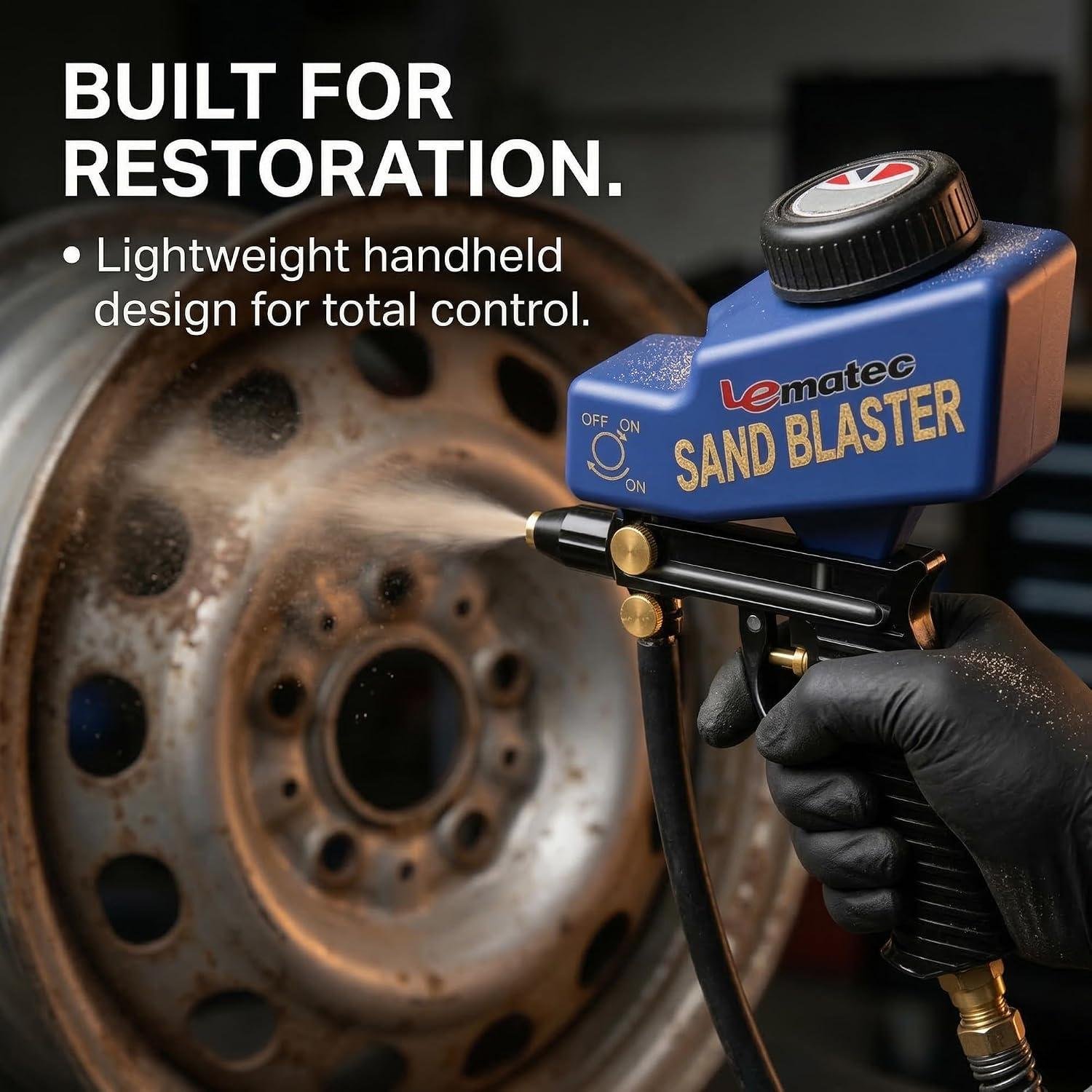
- Power & cutting action: Several woodworkers mentioned it removes rust/scale and old coatings effectively on smaller parts, hardware, brackets, and shop fixtures. Users doing restoration work noted it can be “surprisingly aggressive” for its size when dialed in.
- Results quality: Common praise includes achieving clean, ready-to-finish surfaces for repainting or refinishing-especially on metal components used in woodworking jigs, saw stands, vises, and shop-made tools.
- Control/accuracy: Some users appreciated the ability to “feather” the blast for more controlled cleaning and etching. However, some users reported that consistent output depends heavily on maintaining steady pressure and good media flow (clogs and surging reduce precision).
Woodworking tie-in: Reviewers focused less on “cut quality” (as with saws) and more on surface prep quality-how evenly it cleans, how predictable the blast pattern is, and whether it leaves a consistent tooth for coatings.
3. Build quality and durability observations
Several woodworkers mentioned the kit feels solid for the price, with positive notes around the general construction and included ceramic nozzle(s).
- Durability positives: Common praise includes the gun holding up well for occasional shop use-cleaning hardware, pre-finishing prep, and intermittent restoration tasks.
- Wear items: Multiple reviews highlight that nozzles (ceramic) and internal passages are wear points, especially with harsher abrasives. Some users noted performance drops as nozzles wear (wider opening = more air demand, less focused blast).
- Long-term reliability: Some users reported challenges with longevity when used heavily or with more aggressive media; others said it remains dependable if treated as a “light-duty to medium-duty” blaster rather than a production tool.
4. Ease of use for different skill levels
Ease of use is commonly described as straightforward, but not “plug-and-play” if you’re new to blasting.
- Beginners appreciated the basic setup and the ability to choose gravity or siphon feed depending on the job.
- Some DIYers found the learning curve steep around: air pressure tuning, selecting the right grit/media, moisture control, and preventing clogs.
- Experienced woodworkers noted that once dialed in, the tool is predictable-but they emphasized that results are highly dependent on compressor capacity and dry air.
Ergonomics/comfort feedback tends to be neutral-to-positive, with the bigger usability issue being managing hoses, media containers, and PPE during longer sessions.
5. Common project types and success stories
Woodworking reviewers commonly frame this tool as a shop support tool-useful for prep, restoration, and finishing steps rather than core joinery.
Customers successfully used this for:
- Rust removal on shop tools, clamps, vises, metal brackets, and hardware
- Surface prep before painting (stands, bases, frames, outdoor metal furniture used around the shop)
- Glass etching, often for decorative shop projects, signage, or hobby crafts
- Tile/pool tile cleaning and other cleaning tasks (less “woodworking,” but frequently mentioned in the tool’s use cases)
Where reviewers connect it to wood projects, it’s typically in the context of refinishing workflows-e.g., restoring hardware for furniture pieces, cleaning ornate metal pulls/hinges, or prepping metal accents used in mixed-material builds.
6. Issues or limitations reported
The most consistent negatives are about air requirements, media feeding, and clogging-problems that affect results and user satisfaction.
- Air compressor demand: Some users reported challenges with maintaining steady pressure/CFM. Smaller compressors may lead to pulsing, weak blasting, or frequent waiting for the tank to recover.
- Clogging & inconsistent feed: Multiple reviews highlight that moisture in the airline, wrong media size, or irregular abrasive quality can cause clogs-particularly with siphon setups.
- Media compatibility limits: Several reviewers implied it performs best with properly sized, dry blasting media; chunkier abrasives or damp media reduce consistency.
- Mess/containment: As with most open-air blasting, users noted overspray and cleanup can be significant if you don’t have a controlled area.
- Not ideal for large surfaces: Some users reported it’s inefficient for big jobs (large panels, extensive stripping), where a cabinet system or heavier blasting setup would be faster and more consistent.
Quick Categories Summary
| Aspect | Common Feedback |
|---|---|
| Overall Sentiment | Mostly positive for small-to-medium blasting tasks; expectations matter |
| Performance | Strong cleaning/etching when air supply is sufficient; results depend on steady pressure and dry media |
| Precision | Good control for targeted cleanup; consistency drops if media clogs or compressor can’t keep up |
| Durability | Solid for occasional shop use; nozzles wear and performance can change over time |
| Ease of Use | Beginner-friendly setup, but tuning media/air and avoiding clogs takes practice |
| Versatility | Praised for gravity & siphon options; used for rust removal, etching, and cleaning tasks |
| Value | Often viewed as a good value if used within its capacity; less satisfying for large-scale blasting |
If you share the actual review text or star-rating breakdown you have (even a paste of the top positive/critical reviews), I can tighten this into a more citation-anchored summary with a few short, representative quotes.
Pros & Cons
Pros & Cons
After putting the LE LEMATEC AS118-2C into our mental “shop lineup,” we’d describe it as a small-job specialist with a couple of very real caveats. When our air supply and media are right, it feels like a tidy shortcut for rust, paint prep, and detail blasting. When they’re not, it reminds us-loudly-why air tools live and die by CFM and dry air.
Pros
- Genuinely effective on small tasks: For brackets, hardware, tight rust spots, and surface prep, we get satisfying results without dragging out bigger equipment.
- Two feed styles in one kit: We like having gravity feed for quick touch-ups and siphon feed when we want longer runs without constantly refilling.
- Lightweight and easy to handle: It’s comfortable for short sessions and doesn’t feel like a forearm workout after five minutes.
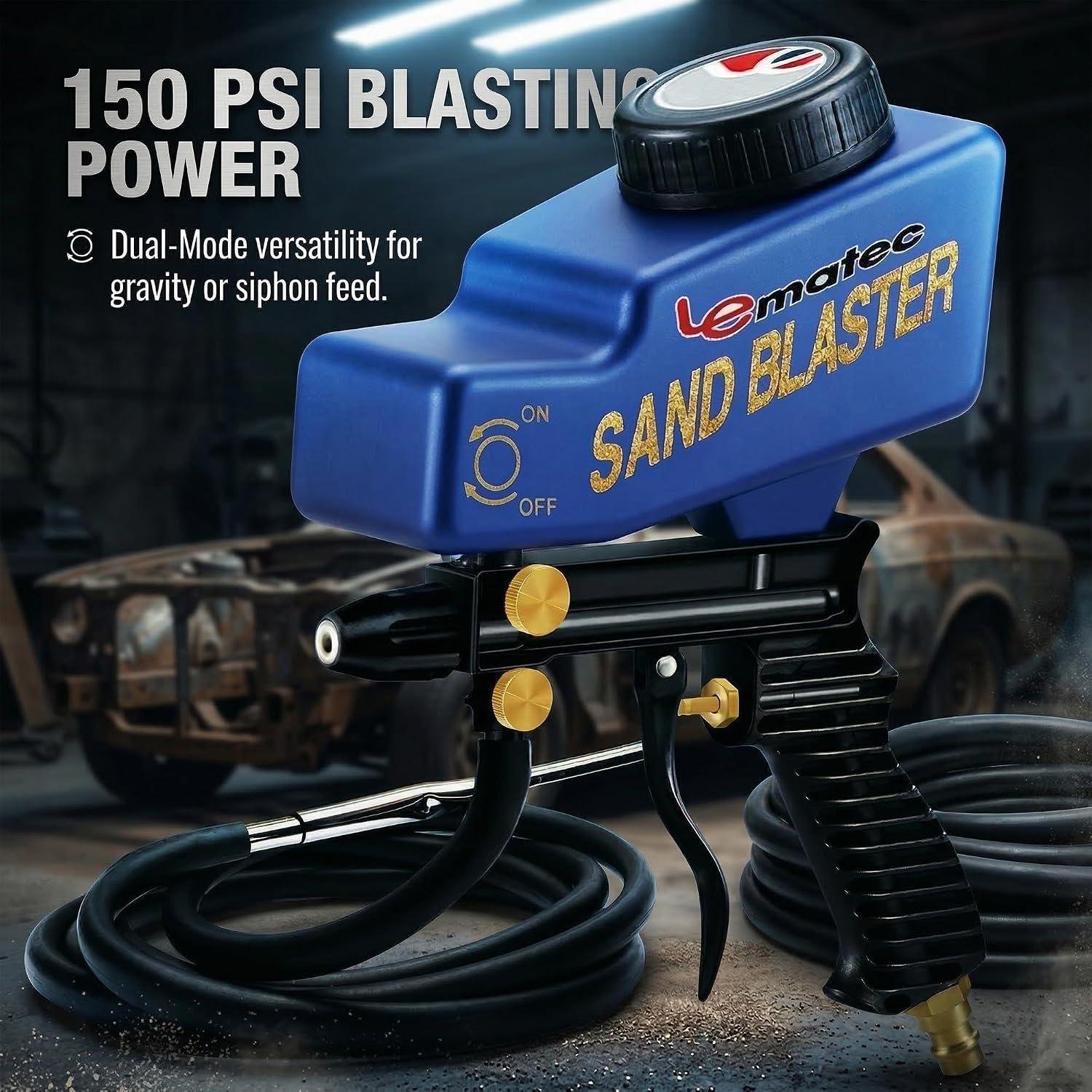
- Ceramic nozzle is a smart upgrade: The hardened ceramic tip feels more “tool” than “toy,” and it’s a welcome step up from plastic nozzles found on bargain blasters.
- Versatile uses beyond rust: We can see this fitting into our rotation for glass etching, cleaning grime/scale, and other DIY surface prep jobs.
- Good value (with the right expectations): If we treat it like a hobby/prosumer blaster-not a production machine-the performance-to-price ratio is solid.
Cons
- Clogging can be the main villain: If our air has moisture or the media isn’t perfectly dry/consistent, the flow can clog and interrupt work.
- Needs real air volume, not just pressure: This isn’t friendly with tiny “pancake” compressors. Without adequate CFM, we see sputtering and weak cutting power.
- Not for big surfaces: Stripping wheels, frames, or large panels can turn into an all-day media-eating marathon.
- Media gets everywhere: Like any open blasting setup, cleanup can easily take longer than the blasting if we don’t prep the area.
- Instructions can be thin: We may end up relying on experience (or videos) for best setup and troubleshooting.
Our Quick Take (What It’s Great For vs. Not)
| Job Type | How It Feels in Our Shop | Notes We’d Stick on the Wall |
|---|---|---|
| Small rust removal (brackets, bolts, tools) | Strong fit | Runs best when we keep PSI steady and media dry. |
| Detail blasting / spot prep | Sweet spot | Gravity feed is quick and convenient for short bursts. |
| Longer sessions on flatter surfaces | Works (with airflow) | Siphon feed helps, but our compressor must keep up. |
| Big paint stripping (frames, full wheels, panels) | Not ideal | We’d rather use a pressurized pot or blast cabinet setup. |
| Any blasting with moist air lines | Frustration risk | An inline filter/water trap feels mandatory, not optional. |
Bottom line: If we’re looking for a portable blaster that shines on small-to-medium DIY and shop-detail jobs-and we’re willing to supply dry air and proper media-this kit makes sense. If our plan is to chew through large painted surfaces at speed, we’ll outgrow it fast.
Q&A
Can I use this on wood for stripping paint or texture work-and what wood types does it suit best?
Yes, but think of it as a surface-prep/detail blaster, not a “strip an entire tabletop fast” tool. It can work well for woodworkers doing distressing/texture, removing finish from carved details, turnings, hardware recesses, or cleaning up live-edge bark pockets. Softer woods (pine, cedar) will texture very quickly and can gouge if you linger. Harder woods (oak, maple) are more forgiving but still easy to overdo. Many customers describe it as effective for small jobs and DIY versatility, which matches typical woodworking “spot work” rather than broad panels.
Is it powerful enough for hardwoods like oak or maple?
For hardwoods, it’s capable-within its design limits. The kit is rated for minimum 4 CFM at 90 PSI (up to 150 PSI max), and users report it works well when you can hold pressure consistently. Where people get disappointed is expecting aggressive, fast removal on large surfaces; several reviews call it a hobby/small-project blaster. On oak/maple, plan on short passes, closer control, and patience, and use an abrasive that cuts cleanly (many stick to aluminum oxide/glass bead in the recommended grit range).
How does it perform on plywood, veneers, and laminated surfaces?
Use caution. Blasting can erode softer veneer layers, expose glue lines, and cause uneven “pitting” because plywood has varying hardness between plies. If you want a “weathered” look, you can experiment on offcuts, but for furniture-grade plywood/veneers it’s easy to ruin the face veneer quickly. If your goal is simply finish removal, a chemical stripper + scraper or sanding is often safer; reserve this blaster for edges, grooves, carvings, and tight corners where other methods struggle.
How difficult is initial setup, and what adjustments do I actually get?
Most users say it’s easy to use and lightweight, but setup quality depends on your air system. You’ll connect via the standard 1/4″ NPT fitting (note: some reviewers mention the included fitting may not match every hose setup). You can run it in gravity-feed for quick, small detail work or switch to siphon-feed using the included 7-foot hose for longer runs. Practical adjustment is mainly controlling air pressure, media choice, and nozzle distance/angle. Expect to do a few test passes to dial in cut rate and avoid over-texturing wood.
Will this work with my compressor in a small workshop-what air supply do I need?
This is the make-or-break point. The manufacturer calls out minimum 4 CFM at 90 PSI for continuous operation and specifically says it’s not for pancake compressors under 6 gallons. In reviews, people using small tanks commonly report sputtering/weak performance, while those with bigger compressors (or at least adequate CFM) are much happier. For a typical small woodworking shop, check your compressor’s delivered CFM at 90 PSI (not just max PSI). If you’re below spec, it may still work for very short bursts, but it won’t feel “productive.”
Clogging: what causes it, and how do I prevent it in real shop conditions?
Clogging is one of the most common complaints in customer feedback. The biggest culprits are moisture in the air line and damp/dirty media. The product guidance is clear: you must use an inline air filter/water trap and only use clean, dry abrasive (recommended 46-100 grit, such as aluminum oxide, glass beads, silicon carbide). Woodshops are often humid and many compressors pass water-so put the water trap as close as practical, drain your tank, and store media sealed. Several users note that once they dried the air supply, clogging dropped dramatically.
Is it beginner-friendly, or do I need blasting experience to get good results on woodworking projects?
It’s generally beginner-friendly in handling-reviews frequently mention it’s easy to use-but getting predictable results on wood takes a little practice. The learning curve is mostly about not over-blasting: keep moving, don’t dwell on edges, and test on scrap first. Also, some reviewers say the included instructions are weak, so many beginners end up using YouTube setup/technique videos. If you can already run an HVLP gun or router safely, you can learn this quickly-just treat it like a tool that removes material fast and indiscriminately.
Is this worth it versus cheaper blaster guns or saving up for a pressure pot/blast cabinet?
Woodworkers tend to like it when they need a portable, do-anywhere solution for small parts, hardware, jigs, or occasional texture work-many reviews call it good value for money and effective for small jobs. The limitation is throughput: if you’re planning to strip large furniture panels, doors, or production batches, you’ll likely be happier saving for a pressure-pot system or using a blast cabinet for consistent media flow and containment. In short: great “shop utility” blaster, not the fastest option for big woodworking refinishing jobs.
Seize the Opportunity
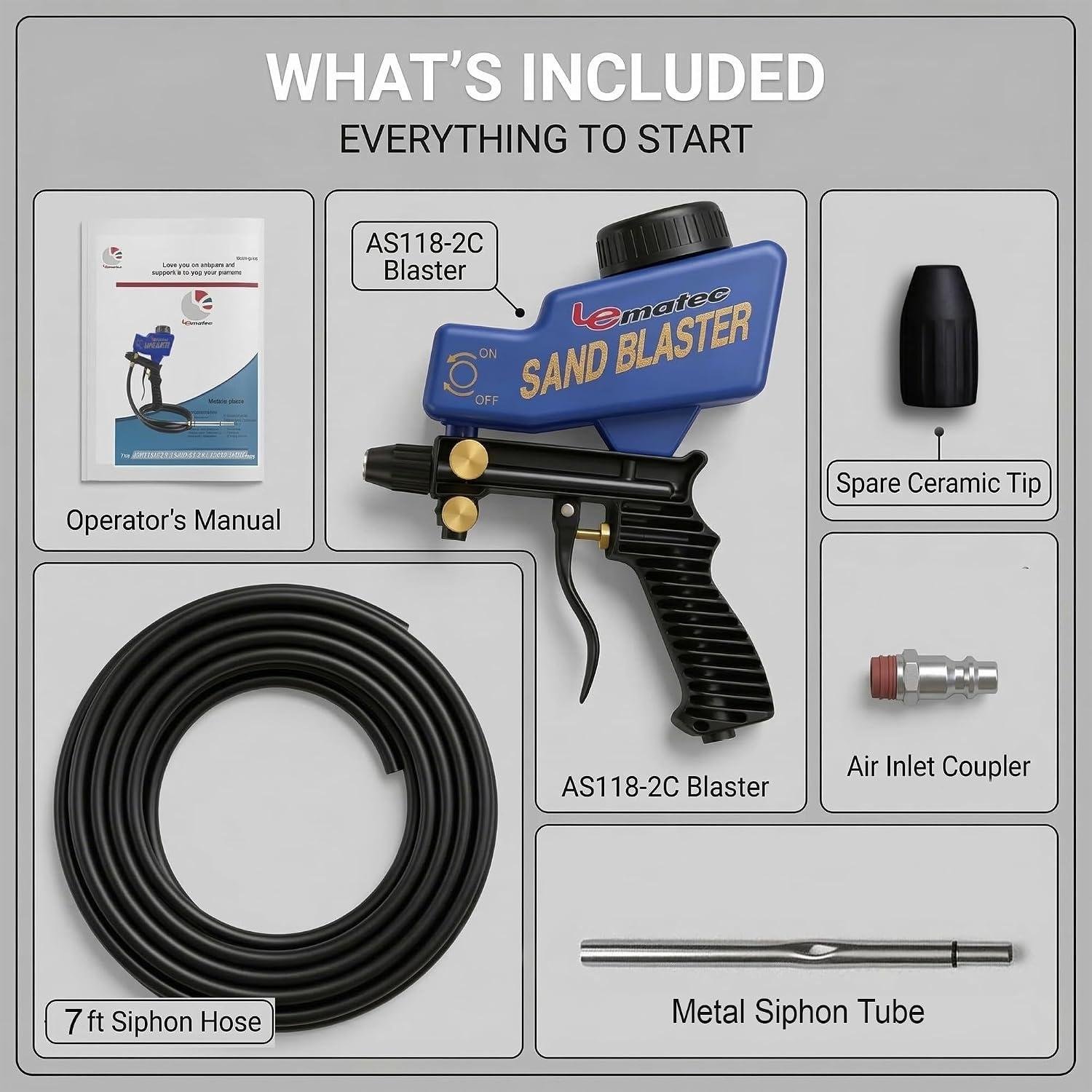
The LE LEMATEC AS118-2C Sand Blaster Gun Kit is a portable, air-compressor-powered blaster with 2-in-1 feed modes (gravity hopper + 7-ft siphon hose), a hardened ceramic nozzle, and a serviceable design aimed at rust removal and surface prep. It’s rated for up to 150 PSI and needs roughly 4 CFM at 90 PSI (and generally 6+ gallon compressors) to avoid sputtering. Customer feedback commonly highlights strong effectiveness on small jobs, good versatility and value, and a lightweight, easy setup-with the biggest recurring drawback being clogging, especially when moisture gets into the line.
Best for: hobby woodworkers doing small-to-medium hardware cleanup, refurb projects, tool restoration, and texturing/etching experiments-especially if you already run a decent compressor and moisture trap.
Consider alternatives if: you need production-scale stripping, only have a small/pancake compressor, or want a pressurized pot blaster for faster large-surface work.
Final assessment: a solid, budget-friendly blaster for detail work, provided you manage air supply and moisture to minimize clogs.
Want to see current pricing and customer photos? View on Amazon & Read More Reviews →