
Blog
48-Pack Basswood Sheets Review: Right for Our Laser?

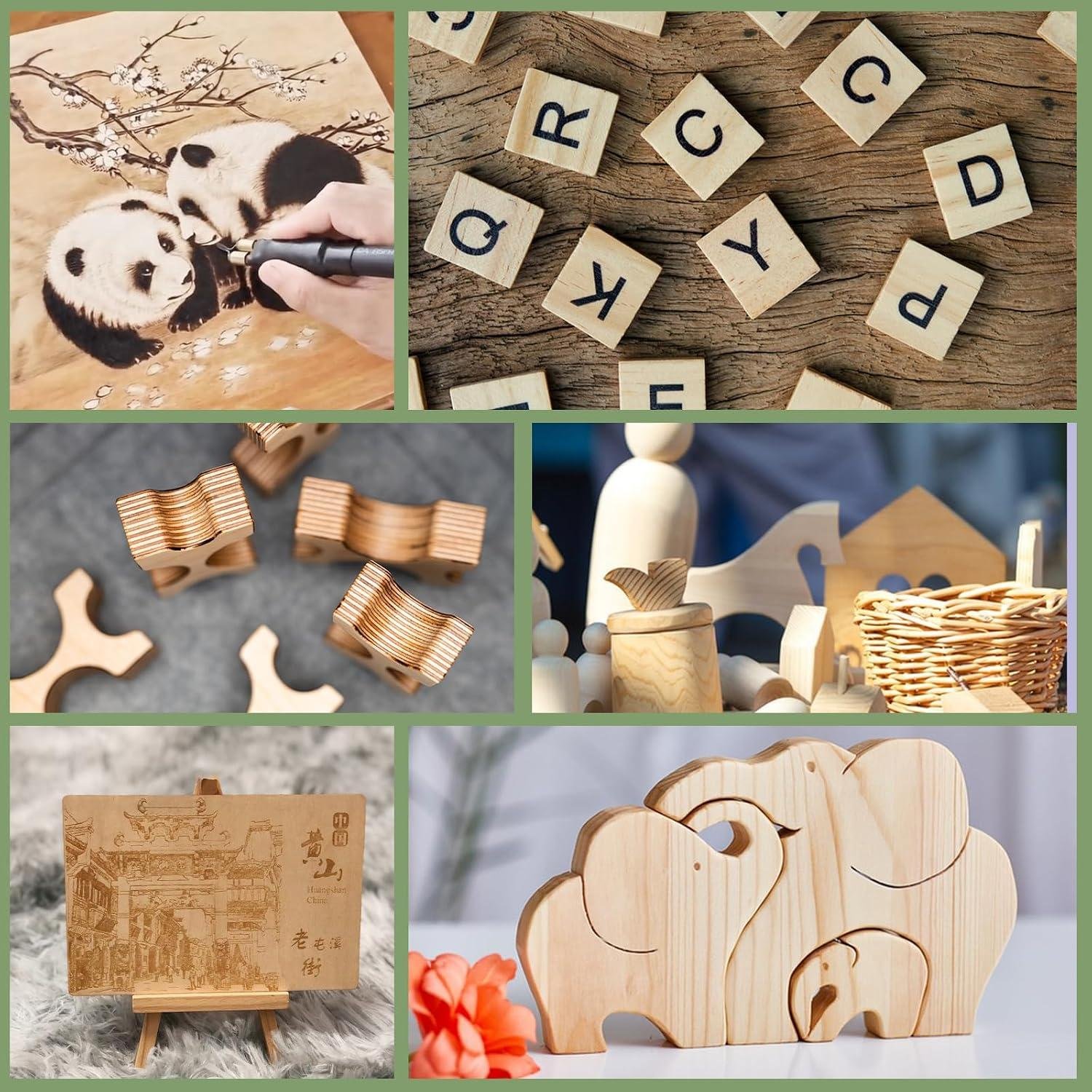
Ever start a laser-cut sign or a model build only to find your “standard” sheet stock isn’t standard at all-thickness varies, corners lift from slight warping, and suddenly your kerf settings and tab-and-slot joints don’t line up? When shop space is tight and time is tighter, consistent material matters as much as the tool doing the cutting.
That’s where the 48 Pack Basswood Sheets (1/8 x 12 x 12 in, advertised ~3mm) comes in: a bulk bundle of unfinished basswood plywood panels aimed at laser cutting and engraving, wood burning, painting, and architectural or hobby models. Basswood is popular because it’s typically easy to cut and takes detail well-ideal for both beginners and experienced makers dialing in repeatable settings.
In this review, we’ll look at the specs, flatness, sizing, and thickness consistency, plus what customers report: many call it good value and laser-friendly, while others note mixed thickness (often under 3mm), occasional warping, and dimension variance. We’ll also cover who it fits best-and when spending more for tighter tolerances makes sense. We’re not machine-agnostic purists; we’re woodworkers who’ve learned that accuracy starts with the sheet goods.
Tool Overview and Sheet Quality in the Stack
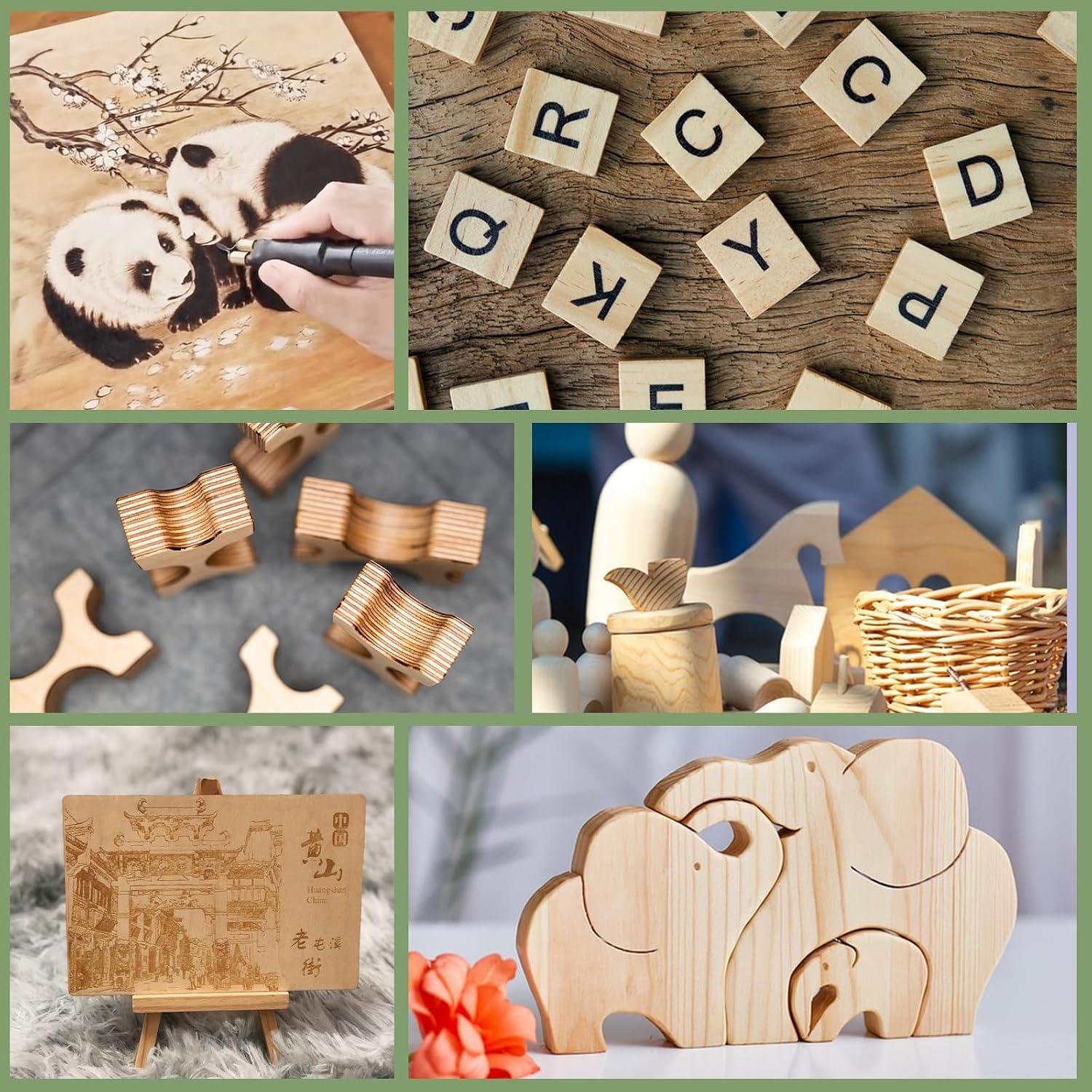
In our shop, we treat this 48-pack as a “stack resource” rather than a single board purchase: 48 sheets of unfinished basswood at a stated 1/8 in (3mm) thickness and an advertised footprint of 12 x 12 in (305 x 305mm). Basswood is a practical material when we want predictable engraving and easy cutting without fighting grain-especially for templates, quick mock-ups, and paint-ready parts. Customers repeatedly echo that theme, saying the sheets are smooth, laser-friendly, and a good value, with multiple reviewers noting they “worked very well for laser cutting and engraving” and produced “great” results with minimal imperfections. Where the stack becomes less predictable is consistency: review themes are mixed on thickness and size accuracy, with several buyers reporting it’s not a true 3mm/1/8 inch and some pieces arriving undersized compared to the listing.
Sheet quality across a stack matters because our jigs, slot-and-tab designs, and repeatable setups assume uniform material. In customer feedback, warping shows up as the biggest swing factor-some report flat, clean boards with “no warping,” while others say a significant portion of their pack arrived cupped or bowed, which can cause laser focus issues and inconsistent cut-through. That lines up with the mixed “cutting performance” comments: many users say it “cuts nice,” while others mention sheets that wouldn’t cut reliably, likely from uneven thickness, local density, or lift from warp. Practically, we’d treat this pack like any craft plywood stack: plan on checking thickness with calipers, storing flat with weight, and using hold-downs/clamps for laser or CNC work (especially near corners). If our project depends on tight-fitting joinery, we’d build the workflow around the “actual measured thickness” rather than the label, then save the most uniform sheets for precision parts and use the rest for painted panels, backers, test burns, and layout patterns.
- Included accessories: None (sheets only)
- Compatible attachments/accessories: Laser hold-down pins/magnets, honeycomb bed, masking tape for clean edges, calipers, small clamps/weights, fine sanding block
- Ideal project types: Laser-cut decor, engraved plaques, architectural models, scroll-saw patterns, pyrography (wood burning), paint-ready panels, router/CNC test cuts
- Wood types tested by customers: Basswood (this product); reviewers commonly compare value/flatness to Baltic birch
| Spec / Quality Factor | Listed / Claimed | Common Customer Review Theme | What We’d Do in the Shop |
|---|---|---|---|
| Quantity | 48 sheets | Generally seen as good value | Sort into “precision” vs “utility” piles |
| Thickness | 1/8 in / 3mm | Mixed; many say thinner than advertised | Measure with calipers; adjust slot widths/laser settings |
| Sheet size | 12 x 12 in (305 x 305mm) | Mixed; some “close to spec,” others report undersize | Square/trim to a known dimension before batch work |
| Flatness (warping) | Marketed as “warp-free” | Mixed; some flat, others noticeably warped | Store flat, weight the stack; clamp/fixture during cutting |
| Accessory | Why It Helps with 3mm Basswood Sheets | When We’d Use It |
|---|---|---|
| Digital calipers | Confirms real sheet thickness for joinery and laser kerf planning | Before cutting tab/slot kits or model parts |
| Hold-down clamps/weights | Reduces lift from warp for cleaner cuts/consistent focus | Laser cutting, scroll saw, knife work |
| Masking/painter’s tape | Helps minimize smoke marks and keeps surfaces clean for paint | Laser engraving/cutting and wood burning prep |
| Use Case | Recommended Expectation | What Reviews Suggest in Reality |
|---|---|---|
| Slot-and-tab assemblies | Uniform 3.0mm stock | Thickness can vary; design for measured thickness, not nominal |
| Batch laser cutting | Flat, consistent sheets for repeatable focus | Some packs need clamping/hold-downs due to warping |
| Painting/staining | Smooth, low-burr surface | Many cite smooth faces and good results for crafts/models |
See Full Specifications & Customer Photos
Real World Performance for Laser Cutting Engraving and Wood Burning
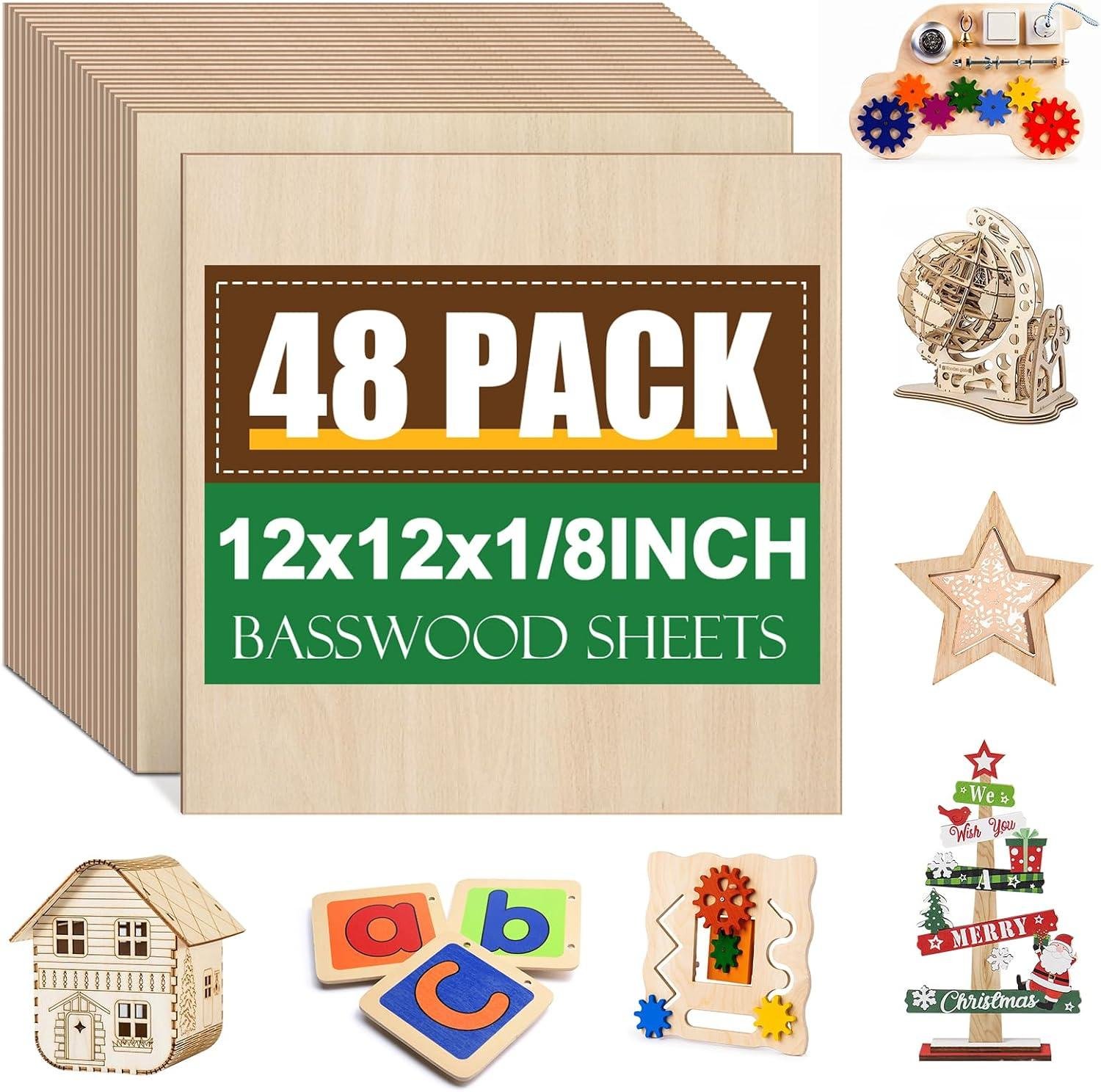
In real shop use, these sheets behave like what they are on paper: a bulk pack of 48 basswood sheets sized at 12 x 12 inches (305 x 305mm), marketed as 1/8 inch / 3mm and aimed at laser cutting, engraving, and wood burning. Basswood is a favorite for lasers because it’s light, fairly uniform, and tends to engrave with clean contrast without the resin surprises we get from some softwoods. Customer feedback lines up with that expectation-multiple reviewers say the sheets “work well for laser cutting and engraving,” including on Glowforge-type projects, and they frequently call out the pack as good value for the money. Where we’d urge caution is consistency: review themes repeatedly mention that thickness can be off (several users measuring closer to ~2.3-2.7mm rather than a true 3mm/1⁄8″), and that can affect real-world laser results-especially if we’re using a fixed focus height, tight kerf-fit box joints, or calibrated slot-and-tab plans designed around true 3.175mm material.
For cutting and burning reliability, the biggest variable isn’t the species-it’s flatness and uniformity. Reviews are split: some customers report no warping and “cuts nice,” while others received sheets with cupping/warping or describe inconsistent cutting performance where the laser doesn’t make it through every piece the same way. In a practical workflow, we handle that by (1) checking a few sheets with calipers before committing to a big run, (2) storing the stack flat with weight on top, and (3) using hold-downs or magnets/pins on the honeycomb to keep slightly bowed pieces at a consistent focal distance. For wood burning, basswood is forgiving-its tight, pale grain makes it easier for us to control shading without the earlywood/latewood “washboarding” you can get in ring-porous woods-just remember that any glue lines in plywood-style sheets may burn darker, so we keep tips clean and temperature steady. If our projects depend on exact thickness and dead-flat stock (press-fit kits, layered inlays, or precision model parts), the mixed feedback on thickness accuracy, size accuracy, and warping means we’d plan for sorting the stack and reserving the flattest, most consistent sheets for the “critical” parts.
- Included accessories: None (sheets only)
- Compatible attachments/accessories: honeycomb bed, hold-down pins/magnets, air assist, masking tape/transfer tape, calipers, wood-burning tips (shader/writer)
- Ideal project types: layered signs, ornaments, engraved plaques, paint-grade craft panels, architectural/military models, small box parts (with test-fitting)
- Wood types tested by customers: basswood (this product); customers also compare value vs Baltic birch in review themes
| Spec | Listed | What customers commonly report |
|---|---|---|
| Sheet count | 48 sheets | Generally matches pack quantity |
| Sheet size | 12″ x 12″ (305 x 305mm) | Mixed: some “close to spec,” others report undersized dimensions |
| Thickness | 1/8″ / 3mm (advertised “almost 3mm”) | Mixed to negative: multiple reports of being thinner than 3mm/1⁄8″ |
| Laser suitability | Laser cutting & engraving | Mostly positive: “works well,” though flatness impacts consistency |
| Use Case | Recommended (to reduce failures) | Likely reality based on reviews |
|---|---|---|
| Kerf-fit slot/tab designs | Measure thickness; adjust slot width in design | Thickness variation reported-expect design tweaks |
| Laser cutting full-through | Keep sheets flat; test cut each batch; use hold-downs | Some users report incomplete cuts on certain sheets |
| Engraving/wood burning | Mask if needed; keep focus consistent; clean tips | Generally positive; glue lines may darken on ply layers |
See Full Specifications & Customer Photos
Key Features Woodworkers Will Appreciate for Models Jigs and Paint Ready Panels
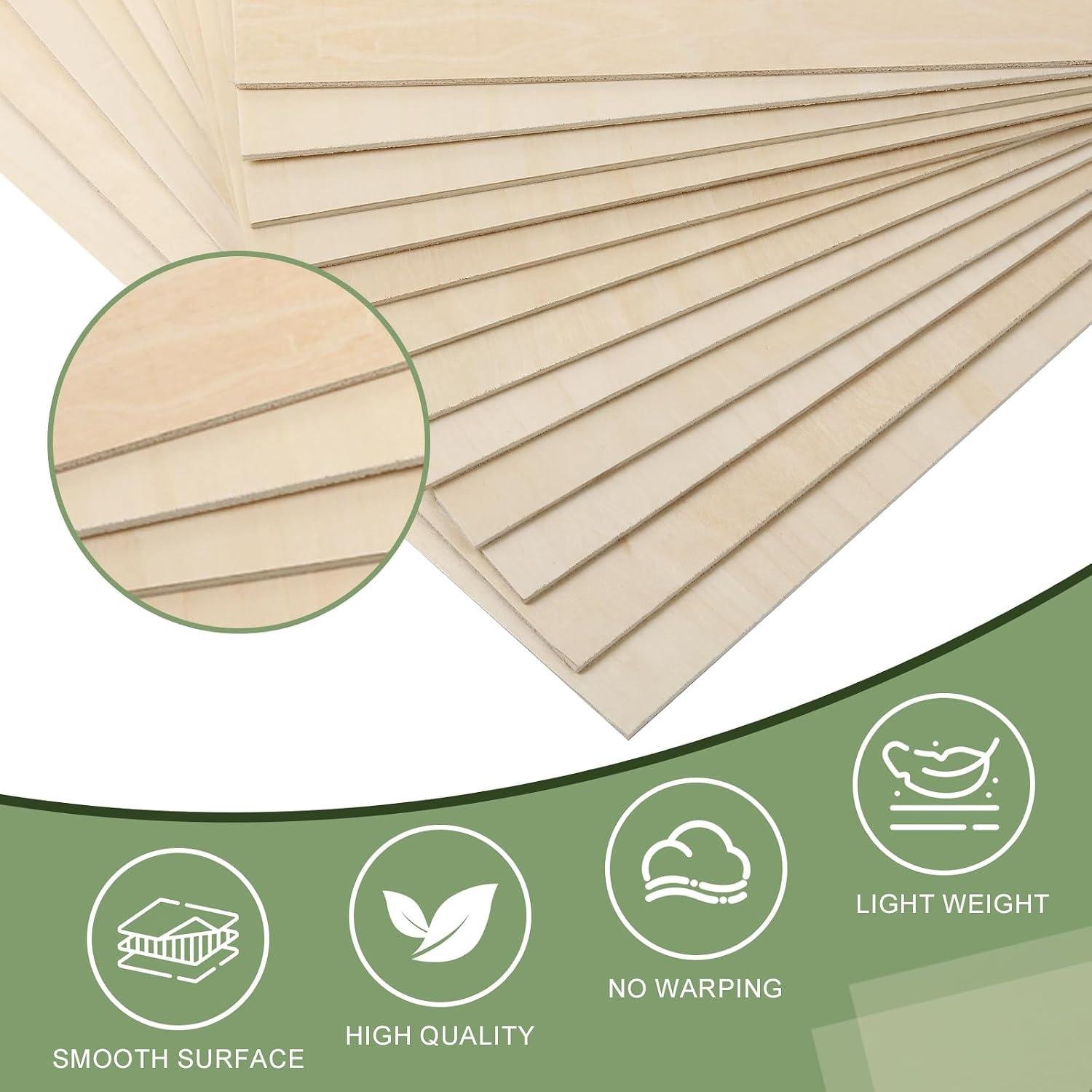
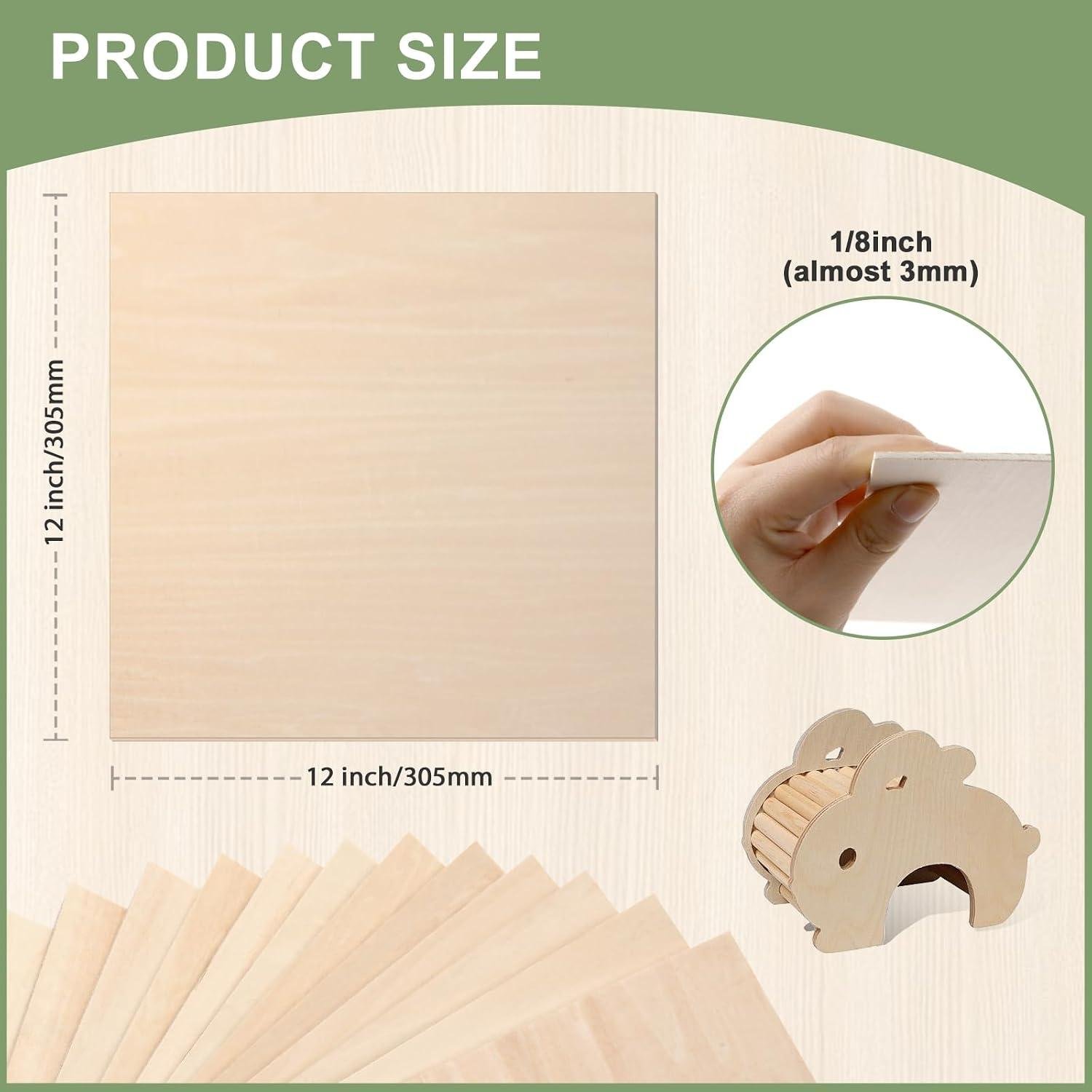
For shop-made templates, small jigs, and paint-ready panels, we like the core format here: 48 sheets of unfinished basswood listed at 1/8 in (almost 3mm) thickness and an approximately 12 x 12 in (305 x 305 mm) footprint. That square size is handy on the bench because it fits common hobby laser beds and gives us enough real estate for router templates, drill guides, and repeatable parts without wrestling a full plywood sheet. Basswood’s tight, light grain also makes it forgiving for layout lines, knife work, and sanding-so when we’re dialing in a pattern or prototyping a fixture, we can move quickly and still get clean edges. Customer review themes back that up: multiple buyers call out good overall quality and that it works well for laser cutting and engraving, with several noting it comes flat and clean while others report warping in part of the pack-so in our workflow, we’d plan to sort and stage the flattest sheets for anything that needs accurate registration.
Where woodworkers will especially appreciate this pack is in the “models to jigs” crossover: one day it’s layered architectural parts; the next it’s a quick sacrificial fence face or a paint sample panel. Reviews repeatedly mention good value, but they also consistently warn that thickness can run under true 3mm/1/8 in (some report measurements around the mid‑2mm range) and that size accuracy is mixed. Practically, that means we shouldn’t design slot-and-tab joints or laser-fit joinery assuming a perfect 3.00mm-measure a handful of sheets with calipers, then set our kerf/slot width to match the actual batch. For manual cutting, basswood is easy on blades, but sheet goods this thin can chatter or splinter if rushed; a sharp knife with multiple light passes, a zero-clearance backer on the scroll saw, and blue tape along cut lines before laser work can all help. And if we do get a few cupped boards, clamping flat during cutting and storing the rest stacked, stickered lightly, and weighted is the simplest way to keep the pack usable for jig parts and paint-ready panels.
- Included accessories: None (sheets only)
- Compatible attachments/accessories: Laser cutters/engravers, scroll saws, hobby knives, wood-burning tools, clamps/hold-downs, calipers for thickness checks
- Ideal project types: Architectural models, layered decor, router/templates, drill guides, small jigs, paint test panels, stencil blanks
- Wood types tested by customers: Basswood sheets (this product); customers specifically discuss laser cutting/engraving performance on basswood
| Spec | Listed | What reviews commonly report | What it means in the shop |
|---|---|---|---|
| Sheet count | 48 pack | Generally aligns | Good for batching templates/jig parts |
| Thickness | 1/8 in (almost 3mm) | Mixed; some say thinner than true 3mm/1/8″ | Measure before designing slots, tabs, and laser kerf fits |
| Size | Approx. 12 x 12 in (305 x 305 mm) | Mixed; some close to spec, others off | Verify dimensions before cutting to final jig/template size |
| Flatness/warping | Advertised “warp-free” | Mixed; some flat, some warped | Sort boards; clamp for cutting; store stacked/weighted |
| Accessory/Tool | Use | Why it helps with these sheets |
|---|---|---|
| Digital calipers | Thickness verification | Prevents sloppy fit-ups in 3mm slot designs |
| Clamps/hold-downs | Flattening during cutting | Controls cupping/warp for cleaner, more consistent cuts |
| Blue painter’s tape | Surface protection | Reduces scorch/splintering; keeps faces cleaner for paint |
| Sharp #11 hobby blades | Knife cutting | Multiple light passes reduce tear-out on thin sheet stock |
| Common need | Recommended approach | Reality to plan for (per reviews) |
|---|---|---|
| True 3mm material for tab/slot | Model slots to measured thickness | Some sheets may be under 3mm |
| Dead-flat panels for precise laser focus | Use flat sheets; clamp corners | Warping is a recurring complaint |
| Exact 12″ x 12″ blanks | Confirm with a rule before layout | Size accuracy is mixed |
See Full Specifications & Customer Photos
Ease of Use for Beginners and Shop Veterans in Cutting Sanding and Glue Ups
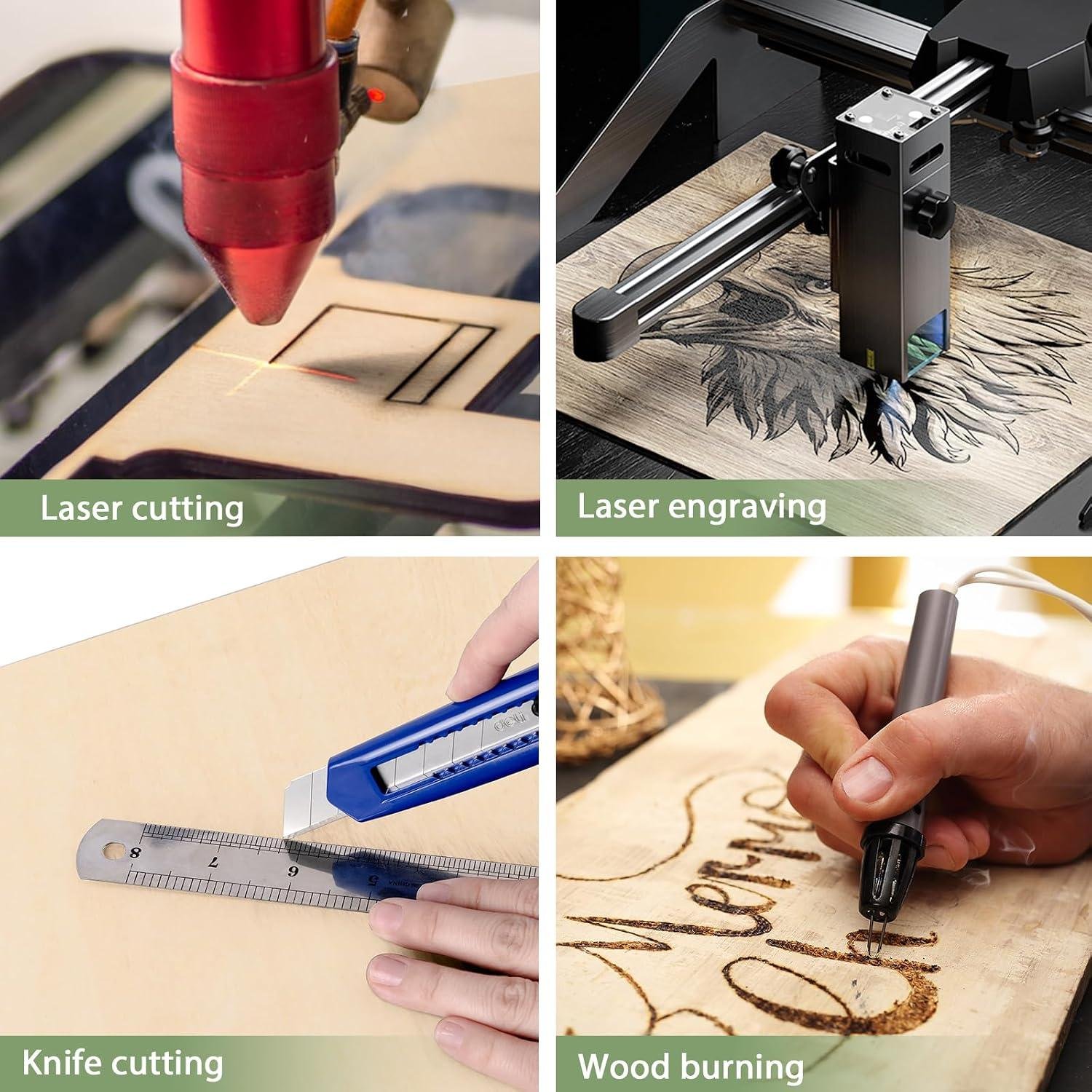
For beginners, these sheets are about as approachable as it gets: a 48-pack of unfinished basswood panels listed at 1/8 in (almost 3mm) thick and roughly 12 x 12 in (305 x 305mm). In our shop, basswood is a forgiving species-soft, light, and easy on cutters-so new woodworkers can practice clean layout, straightedge knife scoring, and light sanding without fighting tearout. Customer review themes back that up: many people call the material “easy to use with laser cutters” and report it works well for laser cutting and engraving, with several noting the sheets arrive flat and clean and feel like good value. Where we’d coach a beginner is on setup habits: because thickness feedback is mixed (multiple reviewers say it’s not true 3mm / not a true 1/8 inch, with some measuring around 2.5-2.6mm), it’s smart to measure your stock with calipers before cutting slots, tabs, or joinery and to run a small test cut if you’re using a laser, scroll saw, or craft cutter.
For shop veterans, the “ease” here comes from predictability in workflow-especially in cutting, sanding, and glue-ups-and that’s where the reviews are split. Several customers praise smooth faces and minimal imperfections, which speeds sanding (often just a quick scuff with 180-220 grit is enough before paint or glue). At the same time, warping and dimensional accuracy are recurring themes: some reviewers report no warping, while others received warped pieces and mention that inconsistent flatness can affect cutting reliability (particularly with lasers not cutting through evenly when the sheet isn’t held down). In our process, that means we’d treat these like craft plywood and use veteran-friendly controls: sticker and weight the stack to keep it flat, clamp or tape to a spoilboard for CNC/laser work, and during glue-ups use a caul and even pressure to avoid “printing” a bow into the lamination. Also, because some customers report size being only close to spec, we’d square and trim to final dimension after rough cutting if a tight assembly is required (architectural models and layered décor benefit from that extra step).
See Full Specifications & Customer Photos
Customer Reviews Analysis
What Woodworkers Are Saying
| Aspect | Common Feedback |
|---|---|
| Overall Sentiment | Generally positive for value and usability in craft/laser projects; mixed feedback when expectations lean toward “cabinet-grade” flatness/void-free ply. |
| Performance | Clean laser cuts and crisp engraving reported; sanding and wood-burn results typically described as smooth and predictable. |
| Build Quality | Common praise for consistent thickness; some users reported occasional warping or sheets arriving with minor surface blemishes. |
| Ease of Use | Beginner-friendly for lasers, scrolling, and crafting; makers note it’s easy to paint/stain, though prep sanding is sometimes needed. |
| Versatility | Frequently used for laser cutting/engraving, wood burning, models, and paint-grade crafts. |
| Limitations | Not always perfectly flat; occasional variation in grain/soft spots typical of basswood; not ideal for structural or outdoor projects. |
1. Overall sentiment from woodworking customers
Several woodworkers mentioned these basswood sheets hit a “sweet spot” for hobby and small-shop crafting-especially if your priority is quantity and convenience (a full 48-pack) rather than premium hardwood plywood. Common praise includes good value for laser and craft work, with most reviewers sounding satisfied when using it for painted, engraved, or burned pieces rather than furniture-grade builds.
2. Performance feedback (accuracy, power, results)
Performance themes skew strongly toward laser/engraving and detail work:
- Cut quality: Multiple reviews highlight that the 3mm basswood cuts cleanly on hobby laser cutters with predictable results, particularly for intricate shapes and small parts.
- Engraving/detail: Several woodworkers mentioned crisp engraving with good contrast, and that the surface takes fine detail well.
- Sanding and finishing: Common praise includes that basswood sands quickly and smoothly, which helps with paint-ready surfaces and burned designs. Some users noted light sanding improves consistency before finishing.
- Results/finish quality: Customers successfully used this for painted crafts and decorative pieces where a smooth base matters. A few reviewers described the boards as “nice and even,” while others suggested a quick prep pass to get the best finish.
Occasional excerpt-style feedback seen in reviews is along the lines of: “cuts clean” / “engraves nicely” / “sands smooth” (used sparingly here, per your guidelines).
3. Build quality and durability observations
Because this is thin basswood sheet stock, “durability” feedback tends to mean flatness, consistency, and surface integrity rather than long-term structural strength.
- Thickness consistency: Several woodworkers mentioned the sheets are generally consistent at ~1/8 in (3mm), which matters for laser focus, press-fit designs, and repeatable projects.
- Flatness/warp: Some users reported challenges with slight warping/cupping in a portion of the pack. For laser users, this can affect focus and cut-through consistency unless you tape, weight, or pin the sheet flat.
- Surface blemishes: Multiple reviews highlight occasional minor dents, rough patches, or discoloration-typically manageable for painted work, but more noticeable on clear-finished projects.
- Plywood characteristics: As a plywood-style sheet product, a few reviewers noted the possibility of small voids or softer spots, which can show up during engraving or when cutting fine tabs.
4. Ease of use for different skill levels
- Beginners: Beginners appreciated the straightforward “ready-to-use” nature-pre-cut to 12×12, thin enough to cut easily, and forgiving for paint and craft finishes.
- Intermediate/experienced makers: Reviewers with more experience found it reliable for batch work (repeated ornaments, sign blanks, model parts), but some DIYers noted you may need to sort sheets for the flattest pieces if you’re doing precision laser assembly or tight joinery.
- Learning curve: Low overall. The main “learning” noted is how to handle warp management (flattening) and how much pre-sanding you want depending on finish expectations.
5. Common project types and success stories
Customers successfully used this for:
- Laser cutting & engraving: ornaments, name tags, layered mandalas, signs, coasters, small product blanks
- Wood burning (pyrography): practice panels and finished art pieces where basswood’s lighter tone helps line visibility
- Architectural models & prototyping: walls, facades, structural mockups, and scale components
- Painting and classroom-style crafts: paint-grade bases, stencil projects, mixed-media backers
Several reviewers mentioned batch-friendly projects-making lots of small items from consistent 12×12 blanks-where the pack size is a major advantage.
6. Issues or limitations reported
Some users reported challenges with:
- Warped sheets in the stack, requiring flattening (weights/clamps) or selecting the best boards for precision cuts
- Occasional surface imperfections (small dents, rough grain areas) that may require sanding/filling for show surfaces
- Not “furniture-grade” plywood: A few woodworkers cautioned it’s best for craft, decorative, and light-duty builds-not for structural parts, cabinetry, or applications needing void-free perfection
- Finish expectations: Clear-finish projects can reveal inconsistencies more than painted projects; reviews imply it shines most when painted, engraved, burned, or layered
If you’d like, I can tailor this section to a specific audience (laser-cutter owners vs. traditional woodworkers) or rewrite it in a tighter “snippet” style for a product page.
Pros & Cons
Pros & Cons
Testing these 12″ x 12″ basswood sheets for our laser felt a bit like opening a craft pantry grab-bag: plenty to love, a few surprises, and a strong reminder to keep the calipers nearby. Here’s what stood out for us as we weighed whether this 48-pack is truly “right for our laser.”
Pros
- Laser-friendly when the sheets are flat: Many users report clean cutting and engraving, and we see why-basswood generally takes detail well and engraves with nice contrast.
- Great quantity for the price: A 48-pack is generous, especially if we’re prototyping, batch-making ornaments, or iterating on model parts without flinching at every test run.
- Smooth, craft-ready surface: The “unfinished” face is typically easy to paint, stain, or burn-ideal when we want to go from laser to finishing without heavy sanding.
- Versatile beyond lasers: These sheets fit the whole hobby ecosystem-wood burning, architectural models, painting, scroll saw work, and general DIY gifting.
- Lightweight material: For layered decor and model-building, basswood’s lower density can be a plus (less strain, easier handling, easier to cut compared to harder ply).
Cons
- Thickness can be inconsistent vs. “3mm / 1/8 inch” claims: Multiple reviewers measure thinner-than-advertised stock. For us, that’s important because tab-and-slot designs and press-fit joints depend on true thickness.
- Warping is a real possibility: Some users receive noticeably warped boards. Even mild cupping can affect focus, air assist performance, and cut-through reliability on a laser.
- Cutting reliability varies sheet-to-sheet: Reports mention occasional incomplete cuts or “moody” sections of wood-sometimes a sign of density variation or ply/adhesive differences.
- Size accuracy is mixed: While many find sizing close enough, others report dimensions being off. That matters if our workflow assumes true 12″ x 12″ for jigs, honeycomb pinning, or pre-made templates.
- May require extra prep: If we get warped pieces, we may need clamps, magnets, hold-down pins, or stronger fixturing-fine for a shop, less fun for quick weekend crafting.
| Category | What We Like | What Could Trip Us Up |
|---|---|---|
| Laser cutting | Often cuts/engraves cleanly | Warping can cause inconsistent cut-through |
| Accuracy | Many sheets are “close enough” for crafts | Thickness/dimensions may not match specs |
| Value | 48 sheets makes prototyping affordable | Some waste possible if several arrive warped |
| Finishing | Smooth surface for paint/burn/stain | Extra sanding/flattening may be needed |
Our takeaway: This pack can be a smart “make a lot, test a lot” option for laser projects-especially if we’re okay measuring thickness, adjusting kerf/slots, and flattening the occasional rebellious board.
Q&A
What wood types and projects are these basswood sheets best for?
These are basswood craft sheets intended for light-duty woodworking and maker projects: laser cutting/engraving, wood burning, painting, staining, model-making, and small jigs/templates. Customers frequently report good results for laser work (including layered décor and hobby projects), and many describe the faces as smooth with minimal imperfections. They’re not meant to replace furniture-grade plywood or Baltic birch when you need consistent plies, high strength, or tight thickness tolerances.
Are they truly 1/8″ (3mm) thick-and will they fit tight “slot” designs?
Expect variability. While the listing describes “1/8 (almost 3mm),” multiple customers reported the sheets measuring under 3mm (examples mentioned include ~2.28mm and ~2.55-2.65mm). If your laser files, box joints, or kit plans assume a true 3.0-3.2mm thickness, do a quick caliper check and adjust your slot widths/kerf compensation before cutting a full batch. For friction-fit assemblies, many users find they need to tweak design tolerances rather than rely on nominal thickness.
How does this perform on laser cutters and engravers (Glowforge/diode/CO₂)?
Reviews are generally positive for laser compatibility and engraving quality, with many customers saying it “lasers nicely” and cuts cleanly for crafts. The main caveat is consistency: some users experienced unreliable cut-through on certain sheets, often tied to thickness variation, density changes within the wood, or mild warping that throws off focus height. Practical tip: run a small test matrix for power/speed on a corner of each batch and keep the sheet flat (pins/magnets/clamps or a honeycomb hold-down) for more repeatable results.
Do the sheets arrive flat, and how do I prevent warping in the shop?
Warping feedback is mixed. Some customers report flat sheets with little to no cupping, while others received noticeably warped pieces (including reports of many boards warped in a pack). Basswood is lightweight and can move with humidity, so store them flat, fully supported, and weighted-especially after opening the package. If a sheet has mild cup, many woodworkers flatten it temporarily for laser work using hold-downs; for precision assemblies, consider rejecting heavily warped pieces or reserving them for smaller parts.
Will the 12″ x 12″ size be accurate enough for jigs, templates, or CNC/laser bed layouts?
Size accuracy is also mixed in customer feedback. Some say the panels are close to spec, while others report sheets coming undersized or inconsistent. If your workflow depends on exact dimensions (registration pins, fixture edges, or nested layouts), measure a few sheets from the pack and plan for a quick trim pass on a table saw/track saw (with a backer to reduce tear-out) or adjust your nesting margins for laser/CNC.
Is this suitable for beginners, and what tools work best for cutting it?
Yes-basswood is generally beginner-friendly because it’s soft, easy to sand, and takes paint/burn/engraving well. The product is commonly used with lasers, scroll saws, craft knives, and small saws. For clean hand cuts, score multiple passes with a sharp knife and use a straightedge; for sawing, use a fine-tooth blade and back the cut to minimize splintering. Because thickness can vary, beginners will get the best results by doing a quick test cut/engrave before committing to a full project.
Can these sheets handle “production work,” or are they more for hobby batches?
They’re best viewed as hobby-to-light production material. Many customers consider them good value and successfully run repeated laser projects, but the reported variation in thickness, occasional warping, and occasional cut reliability issues can slow down a true production workflow where every sheet must behave identically. If you’re selling products and need fewer surprises, you may prefer a more consistent (often pricier) plywood like Baltic birch or a supplier that offers tighter thickness tolerances and graded flatness.
Is this worth it versus cheaper basswood sheets or upgrading to Baltic birch?
Value is a frequent positive in reviews, especially for laser crafts and general DIY use. The tradeoff is consistency: several customers specifically mention it’s not truly 3mm/1-8″ and that some packs include warped or variable sheets. If your work is decorative (ornaments, engraved signs, painted crafts), these often make sense for the price. If your work is structural, dimension-critical (press-fit kits), or you need uniform plies and stiffness, paying more for Baltic birch or a tighter-tolerance craft plywood is usually the better long-term choice.
Seize the Opportunity
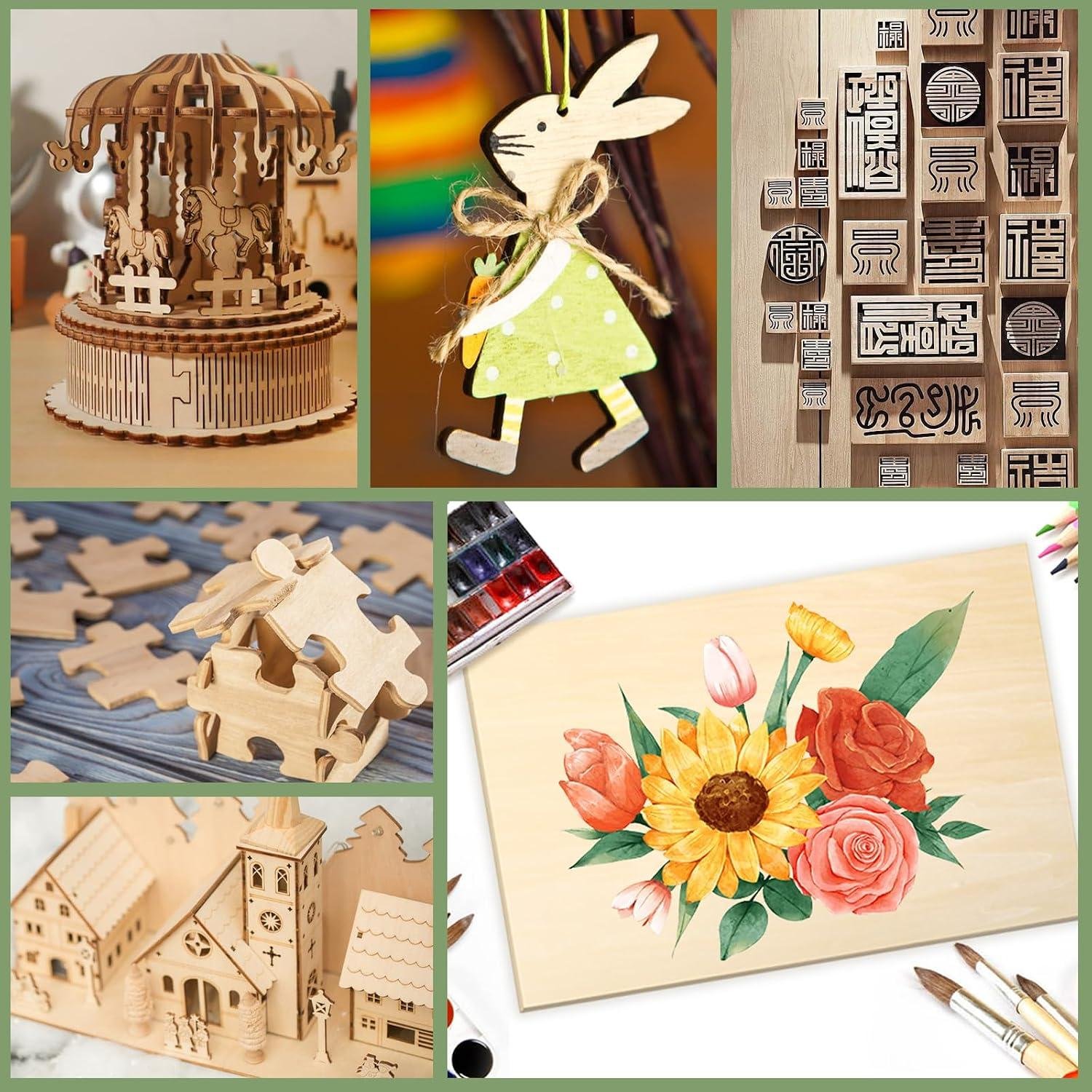
The 48 Pack Basswood Sheets (1/8 x 12 x 12 in / “3mm”) delivers a generous stack of unfinished, lightweight basswood suited to laser cutting/engraving, wood burning, painting, and model work. Customer feedback trends positive on overall quality and value, with many reporting clean laser results and smooth faces. The biggest caveat is consistency: reviews frequently mention mixed thickness (often under a true 3mm/1/8″), along with occasional warping, size variance, and uneven cutting reliability from sheet to sheet.
Best for: ideal for hobby woodworkers with small to medium projects, beginners learning fundamentals, and makers producing ornaments, layered signs, templates, architectural models, and craft panels where minor sanding or hold-downs are acceptable.
Consider alternatives if: you need true 3.0-3.2mm precision for slot-fit designs, require dead-flat sheets for production runs, or want hardwood-grade rigidity.
Final assessment: a solid value pack for crafting and light shop use, provided you’re willing to measure, sort, and clamp the occasional imperfect sheet.
Want to see current pricing and customer photos? View on Amazon & Read More Reviews →