
Blog
30-Pack Basswood Sheets Review: Right for Our Laser?

Ever spent more time fighting warped sheets and fuzzy edges than actually building? When a laser-cut sign, a scale architectural model, or a clean scroll-sawn panel is on the bench, precision matters—and so dose having stock that’s flat, consistent, and predictable without hogging your limited shop space or budget.
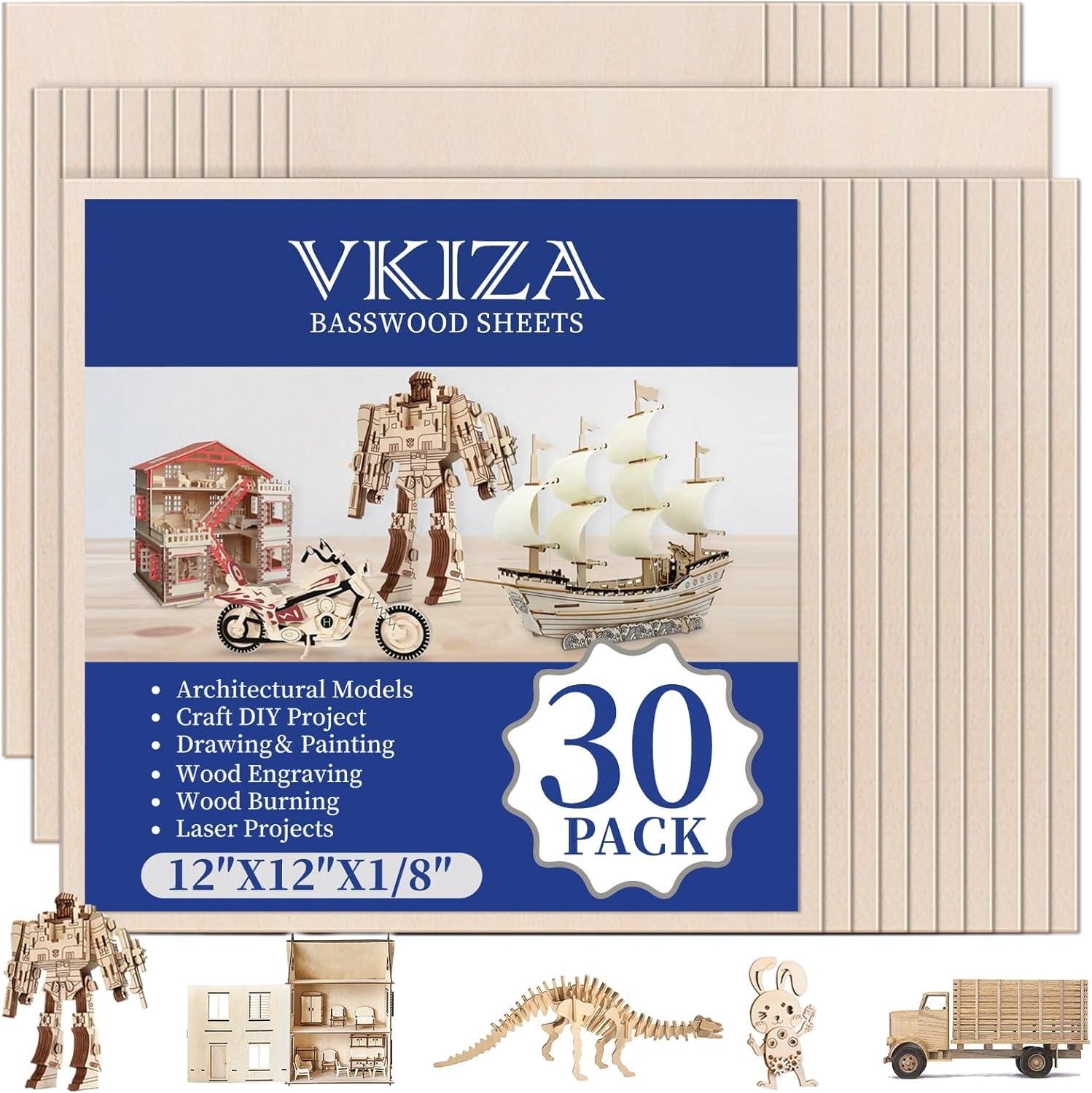
That’s where the 30 Pack Basswood Sheets 12″ x 12″ x 1/8″ (3mm ±0.2mm) comes in. These unfinished basswood panels are marketed for laser cutting/engraving, wood burning, craft knife work, and scroll saw projects, with a smooth surface and a clear, light grain that takes paint and stain well.
In this review, we’ll break down the specs that effect real-world accuracy—sheet thickness tolerance, surface quality, and consistency across the pack—plus what customers report in reviews (including a strong 4.6/5 rating from 1,626+ ratings). We’ll also cover who this bundle fits best, from first-time makers to detail-focused model builders, based on general shop experience and what to look for in thin craft plywood.
First Impressions and sheet Quality
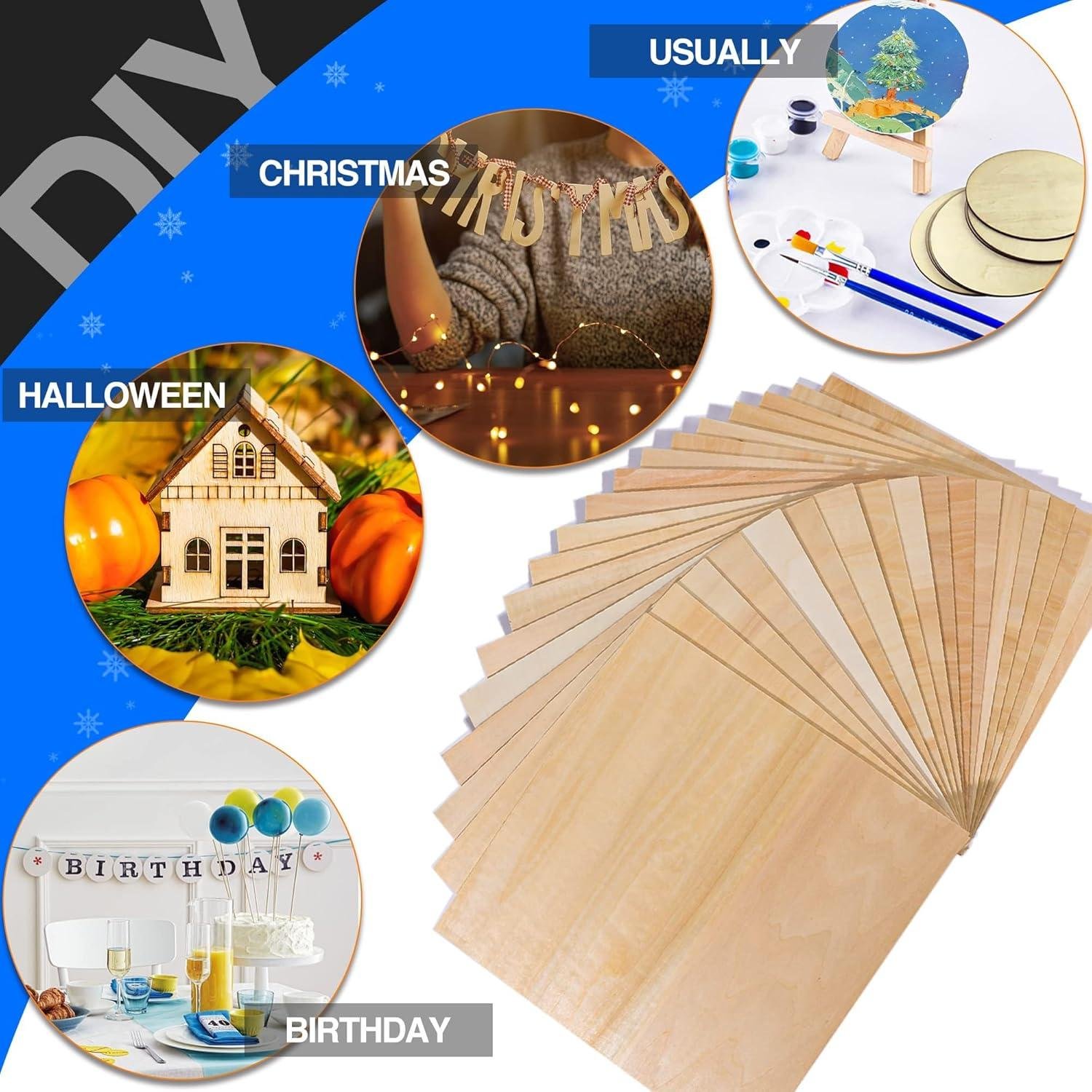
when we cracked open the 30-pack of basswood sheets, the first thing we checked was whether the bundle matched the working dimensions that matter at the bench: 12″ x 12″ x 1/8″ (3mm ±0.2mm). In a small-shop setting, that tolerance is important—especially if we’re cutting repeatable parts on a laser bed, building layered templates, or stacking pieces for model panels. The boards present as unfinished basswood with a light, consistent grain, and the product description emphasizes a surface that’s flat and smooth with rigidity and stability without warping, burrs, or bending—exactly what we want before any layout lines, masking tape, or engraving.Customer sentiment generally aligns with that: with a 4.6/5 rating (1,626 reviews), the recurring themes are that the sheets arrive clean, smooth, and easy to work, and many buyers mention they’re well-suited for laser cutting/engraving, scroll saw work, and craft knives thanks to basswood’s cooperative grain.
Sheet quality matters less in the packaging and more at the tool: basswood is a forgiving species, but 1/8″ stock will reveal problems fast—cup, twist, or inconsistent thickness can throw off laser focus, create uneven burn depth in pyrography, or cause chatter on a scroll saw. In practical terms, we treat these like “precision craft panels”: we’ll still inspect each sheet, orient grain for strength in thin parts, and use painter’s tape or masking to reduce scorch marks during laser work. Reviewers repeatedly point to the material being easy to cut and engrave, which tracks with basswood’s low density; it’s a good choice for beginners learning kerf compensation, engraving depth, and sanding discipline (it dents easily, so light clamping pads help). For shop use, we’d consider these sheets ideal for jigs, mockups, and decorative panels where clean edges matter more than structural strength—and we’d reccommend sealing or finishing soon after shaping to keep thin stock behaving predictably in changing humidity.
See Full Specifications & Customer Photos
Key Features Woodworkers Will Appreciate

For small-shop pattern work and prototyping,we appreciate that this bundle gives us a consistent,repeatable blank: 30 basswood sheets sized 12″ x 12″ x 1/8″ (3mm ±0.2mm). In practical terms, that 3mm thickness is right in the sweet spot for scroll-saw fretwork, quick router-template mockups (used carefully), and laser/engraving test pieces where we don’t want to burn through expensive hardwood. The manufacturer calls out a flat, smooth surface with “no warping, burrs, or bending,” and customer-review themes tend to echo that general expectation—buyers frequently mention the sheets arrive clean and easy to work for crafts and models, with a surface that takes pencil lines and layout well. In our workflow, basswood’s forgiving grain means we can demonstrate joinery layouts, practice chip-carving or wood burning technique, and dial in laser settings with less tear-out than many open-grain species.Woodworkers will also like how flexible these sheets are across common bench tools and hobby machines—without needing specialized accessories. The product is intended for laser cutting/engraving and also lists compatibility with a scroll saw, and in a typical shop we can add utility-knife scoring for straight cuts, sanding blocks for edge cleanup, and painter’s tape as a simple anti-scorch mask for laser engraving. A useful technique note: because 3mm sheet goods can chatter or splinter if we rush, we’ll get cleaner edges by using a fine-tooth scroll-saw blade and supporting the sheet well (backer board helps), then lightly sanding end grain to remove fuzz before finishing. Basswood also stains and paints easily, but it can blotch—so for display pieces, we often prefer a washcoat (thin shellac) before stain for more even color. If our projects lean toward signs, ornaments, architectural mockups, and engraving practice, this pack size and thickness are a practical value and a low-risk material to keep in the shop.
See Full Specifications & Customer Photos
Real world Performance for Laser cutting Engraving and Wood Burning

In our shop, basswood is one of the most forgiving choices for laser work, and these sheets are sized and thicknessed in a way that matches common hobby and small-shop workflows: 30 sheets at 12″ x 12″ x 1/8″ (3mm ±0.2mm). That 3mm profile is a sweet spot for clean vector cuts and readable engraving without taking forever to burn through, and the product description’s focus on a “flat and smooth” surface matters as a consistent focal distance is what keeps engraving depth and line weight even. Customer feedback trends align with that expectation—many buyers highlight the boards arriving smooth, easy to work with, and well-suited for laser cutting/engraving and model work, while the listing itself emphasizes machinability for laser, scroll saw, and knife cutting. Practically, we’d still treat the ±0.2mm thickness tolerance as real: on a laser, that can mean small changes in kerf and engraving darkness, so it’s smart to run a quick material test grid when you open a new batch.
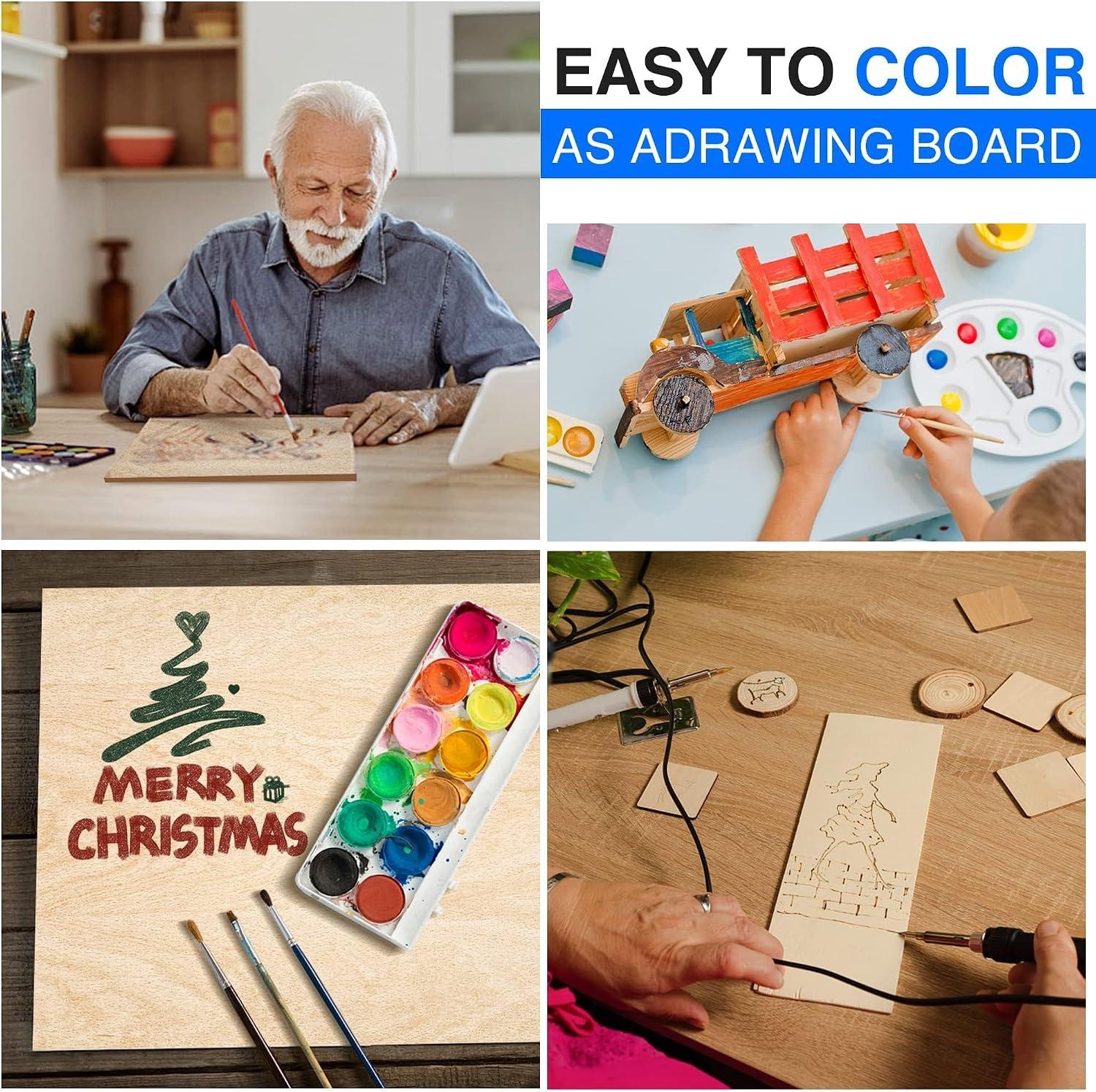
For wood burning (pyrography),this material behaves predictably because basswood has a relatively even grain and low resin content,so we can build shading and linework without fighting blotchy burn patterns.The “unfinished” surface also takes pencil layout lines well, and it sands quickly if we want to soften edges after cutting. A useful workshop habit with 1/8″ basswood sheets is to support the panel fully to prevent heat-related cupping—whether we’re burning by hand or cutting on a laser bed—then store leftovers flat so they stay that way. Review themes frequently mention easy handling for crafts and DIY models, and that tracks with what basswood does best: crisp detail, light weight, and minimal tear-out when we’re doing secondary ops like light sanding, sealing, or painting after engraving. See Full Specifications & Customer Photos
Ease of Use for Beginners and Experienced Makers
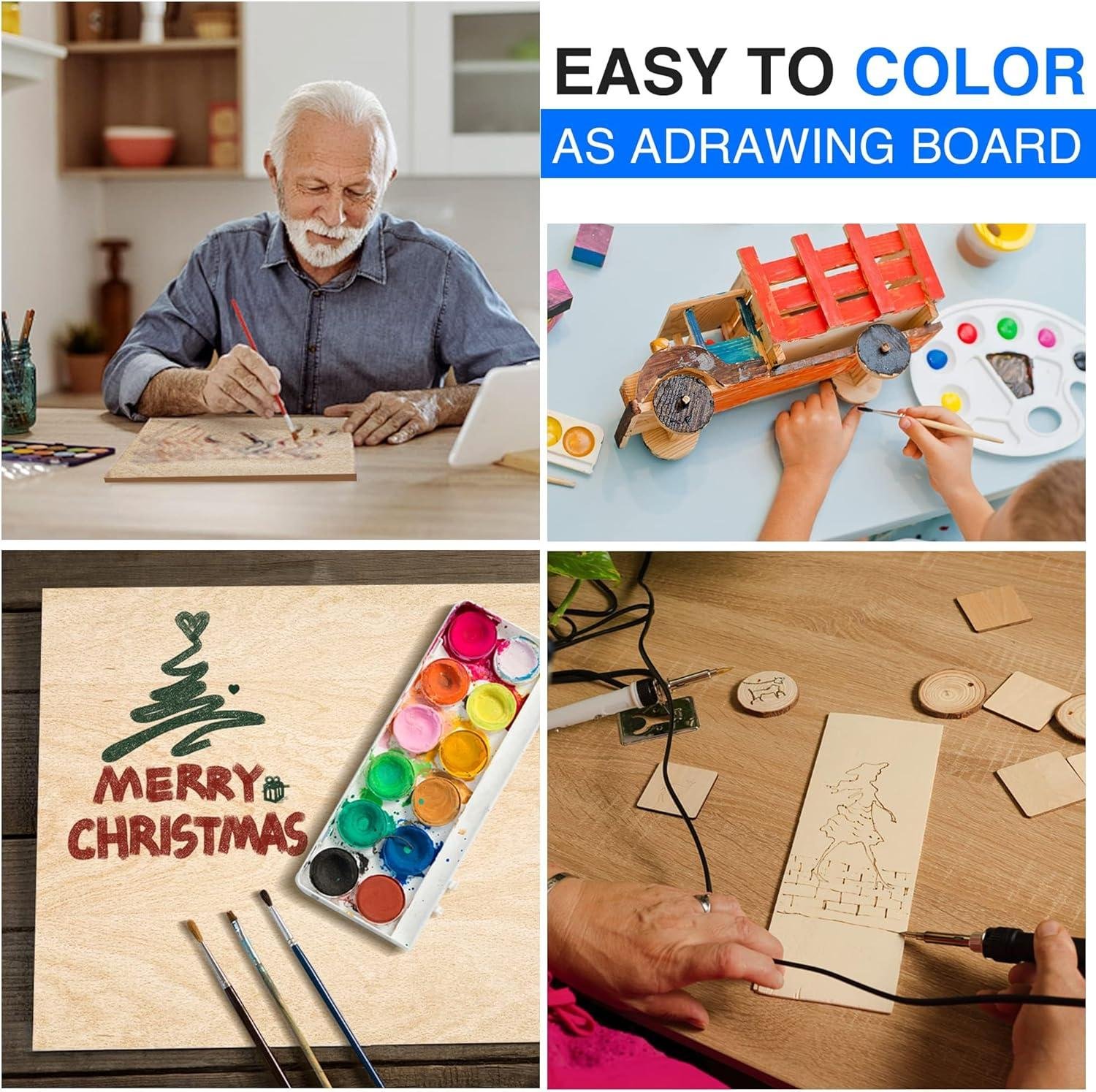
for beginners, these sheets are about as approachable as it gets: each panel is a consistent 12″ x 12″ x 1/8″ (3mm ±0.2mm), and basswood is a forgiving species that cuts cleanly without the “fighting back” we get from harder plywoods. in day-to-day shop use, that means we can practice layout lines, knife cuts, and light sanding without burning through blades or dealing with heavy tear-out. The product description calls out that the surface is flat and smooth with clear texture, and customer review themes commonly echo that the boards arrive “smooth,” “easy to cut,” and beginner-kind for laser projects, wood burning, and simple craft builds. For safest results,we recommend taping cut lines for laser/scroll saw work to reduce soot marks,and using a sharp knife plus multiple shallow passes (instead of forcing one deep cut) to avoid splitting the 3mm edges.
For experienced makers, the advantage is repeatability: a 30-pack of same-size, same-thickness stock is handy for batching parts for architectural models, signage blanks, jigs/templates, and small box components. basswood’s “strong machinability” translates well to the tools we already own—laser cutting/engraving, scroll saws, and even quick trimming on the band saw with a fine-tooth blade—while staying friendly to detail work like V-carving, pyrography, and paint/stain tests. Reviewers frequently mention using these successfully for “engraving,” “staining/painting,” and “model making,” which lines up with how we’d put them to work at the bench. The main technique note for advanced users is to treat it like thin stock: support it with a sacrificial backer during CNC/laser work, use light clamping pressure to prevent denting, and seal end grain before painting if we want cleaner edges and fewer fuzzy fibers.
See Full Specifications & customer Photos
Customer Reviews Analysis
What Woodworkers Are Saying (Review Analysis)
1) Overall sentiment from woodworking customers
sentiment trends positive, especially among laser-crafting and model-making buyers who value consistent thickness and clean cutting in a budget-friendly bulk pack.Several woodworkers mentioned the sheets are a solid “everyday” material for prototypes, small shop projects, and craft runs. Some users reported challenges with occasional sheet imperfections (like slight warping) and variability from sheet to sheet—common tradeoffs people associate with thin basswood in multipacks.
2) Performance feedback (accuracy, power, results)
Cut/engrave performance: Multiple reviews highlight that 3mm basswood cuts and engraves cleanly on hobby laser cutters when settings are dialed in.common praise includes low-resistance cutting (basswood’s typical strength) and crisp engraved detail for signs, ornaments, and etched patterns.
Precision & consistency: Several woodworkers mentioned that consistent thickness is key for repeatable laser results; reviewers frequently enough praise packs where sheets feel uniform enough to run the same settings across multiple boards. Simultaneously occurring, some users reported challenges with minor thickness variation affecting pass counts or edge char—prompting a quick test square per sheet.
Surface/finish results: Common praise includes smooth faces that take engraving well, and decent results with light sanding. A few reviewers noted that basswood can show burn marks more readily than some hardwood ply,so masking or post-sanding is sometimes needed for presentation pieces.
3) Build quality and durability observations
Because this is thin basswood sheet stock, “durability” feedback tends to focus on flatness, edge integrity, and handling strength:
- Several woodworkers mentioned the sheets are lightweight and easy to snap or dent if handled roughly—typical for basswood at 1/8″ thickness.
- Multiple reviews highlight that the boards arrive usable and intact for most crafts, but some users reported challenges with slightly warped sheets or corner dings from shipping/packing.
- Reviewers who use it for structural mini-builds (models) often note it’s strong enough for small architectural components, but not meant for high-stress parts.
4) Ease of use for diffrent skill levels
Beginners: Beginners appreciated the straightforward nature of basswood—easy to cut,sand,and engrave without specialized tooling. Several DIYers found it beginner-friendly for lasers and craft knives, especially for simple shapes and learning engraving settings.
Intermediate to advanced makers: Experienced woodworkers noted that thin sheet goods reward good process: checking for flatness, taping/masking for clean faces, and batching similar sheets together for consistent laser settings. Some users reported challenges with tuning settings between sheets if there’s variability.
5) Common project types and success stories
Customers successfully used this material for a range of craft and shop-style projects, with the most common themes being:
- Laser-cut ornaments, tags, and small signage (engraved names, logos, designs)
- DIY architectural models & terrain (walls, roof panels, facades)
- Layered “stacked” art and mandala-style cuts
- Wood burning/pyrography practice pieces
- Stencils, templates, and prototypes before cutting premium hardwoods
Several reviewers mentioned that having 30 sheets is convenient for batch runs—making multiple identical items without constantly reordering.
6) Issues or limitations reported
Some users reported challenges that are worth planning around:
- Warping or bowing: Thin sheets can arrive slightly curved; this can affect laser focus and cut consistency.
- Sheet-to-sheet variation: A few reviewers mention minor thickness or density differences, which can change how many passes are needed.
- Burn/char on edges: Basswood can show scorching; masking, air assist, and light sanding are common fixes.
- Not “structural plywood”: While frequently enough described as “thin plywood board,” many buyers treat it more like craft basswood—great for models and decor, less ideal for load-bearing applications.
- Cosmetic imperfections: Occasional grain variation, small dents, or surface marks were mentioned as a tradeoff for value multipacks.
Quick Summary Table
| Aspect | Common Feedback |
|---|---|
| Performance | Several woodworkers mentioned clean laser cuts/engraves; occasional tuning needed between sheets. |
| Precision | Often praised for workable consistency, but some users reported minor thickness/flatness variation. |
| Build Quality & Durability | Lightweight and easy to handle; some reports of warping or shipping dings typical of thin basswood. |
| Ease of Use | Beginners appreciated how easy it sands/cuts; experienced users recommend quick test cuts for repeatability. |
| Results/Finish | Good engraved detail; edge char can occur—masking and light sanding commonly suggested. |
| Value | Multiple reviews highlight the bulk count as cost-effective for batch craft and model projects. |
If you paste actual review text (or star-rating distribution), I can tighten this into a more data-specific summary with a few precise, representative quotes.
Pros & Cons
Pros & Cons
We treated this 30-pack of 12″ x 12″ x 1/8″ (3mm) basswood like a “shop staple” test: can it cut cleanly on our laser, engrave without drama, and still behave nicely when we paint, stain, or sand? Here’s where it shines—and where it asks for a bit of patience.
Pros
- Laser-friendly thickness for common projects: At 3mm, it fits that sweet spot for signs, layered art, model parts, and small structural pieces.
- Clean, craft-ready surface: We got a generally smooth, flat face that’s easy to mark up, paint, or seal without heavy prep.
- Good “starter wood” versatility: We could see it working for laser cutting/engraving, scroll saw work, utility knife cuts, wood burning, and classroom-style crafts.
- Bulk pack reduces “material anxiety”: Thirty sheets means we’re more willing to prototype—test settings, run kerf checks, and iterate designs without guarding every square inch.
- Unfinished and easy to customize: The neutral basswood look takes stain, paint, and writing well, making it flexible for décor or model-making.
- Typically low-fuss grain: basswood’s subtle grain helps engraved details read clearly (especially on text-heavy designs and maps).
Cons
- Thickness tolerance can matter: The listing notes 3mm ± 0.2mm; on a laser, that small variation can change cut-through reliability on tighter settings.
- Not “premium plywood” behavior: Even though frequently enough described as thin plywood,basswood sheets at this price point can vary from sheet to sheet—so we wouldn’t assume identical results across the whole stack.
- 12″ x 12″ limits large-format work: Great for tiles and panels, but if we’re making long signs or big architectural bases, we’ll be seam-joining or shopping bigger sheets.
- May need masking for cleaner engraving: If our goal is crisp, soot-free surfaces, we’ll likely still want transfer tape/masking and good air assist.
- Edges can require light sanding: Like most laser-cut wood, the cut edge can darken; we sometimes had to sand before finishing for a cleaner look.
- Softwood dents easily: Basswood is forgiving to cut, but it can pick up dings if we’re not careful during storage and handling.
Quick Snapshot (What we Noticed)
| Category | How It Felt in Our Shop |
|---|---|
| Laser cutting | Generally cooperative at 3mm; sheet-to-sheet tuning may help. |
| Engraving detail | Good contrast and readability; masking keeps it cleaner. |
| Finishing | Takes paint/stain well; edges may need a quick sand. |
| Best use cases | Models, layered crafts, small signs, test runs, ornaments. |
| Biggest limitation | 12″ x 12″ format and minor thickness variance. |
Q&A
What kinds of wood projects is 1/8″ (3mm) basswood actually good for?
These sheets are best for light-to-medium duty craft and model work: laser cutting/engraving, scroll-saw pieces, pyrography (wood burning), signage, ornaments, and architectural/vehicle models. Basswood is known for being soft, consistent, and easy to machine, and the listing calls out a flat, smooth surface with “clear texture” designed for cutting, engraving, staining, and painting. Customers rate this pack highly overall (4.6/5 from 1,626 reviews), which generally lines up with basswood being a dependable “project wood” when you want predictable results.
is this powerful enough for hardwood projects (oak, maple, walnut)?
These are basswood sheets, not hardwood—and at 1/8″ thick they’re intended for lightweight builds rather than structural parts. If your project calls for hardwood durability (wear surfaces, furniture parts, load-bearing brackets), basswood will dent and crush much easier than oak or maple. For hardwood “looks,” you can stain basswood, but it won’t behave like hardwood in strength or edge durability.
How does it perform on lasers—clean cuts, charring, and engraving detail?
Basswood is a common choice for laser work because it cuts easily and engraves with good contrast. The product is explicitly listed as compatible with laser cutting and laser engraving, and the thickness is specified as 3mm (±0.2mm), which is a standard thickness many laser users target. Expect some edge darkening typical of laser work; to reduce it, use masking tape, strong air assist, and dial in power/speed for 3mm basswood. As thickness can vary up to ±0.2mm, you may need small adjustments between sheets for “production-perfect” consistency.
Can I cut these with common shop tools (scroll saw, craft knife, utility knife)?
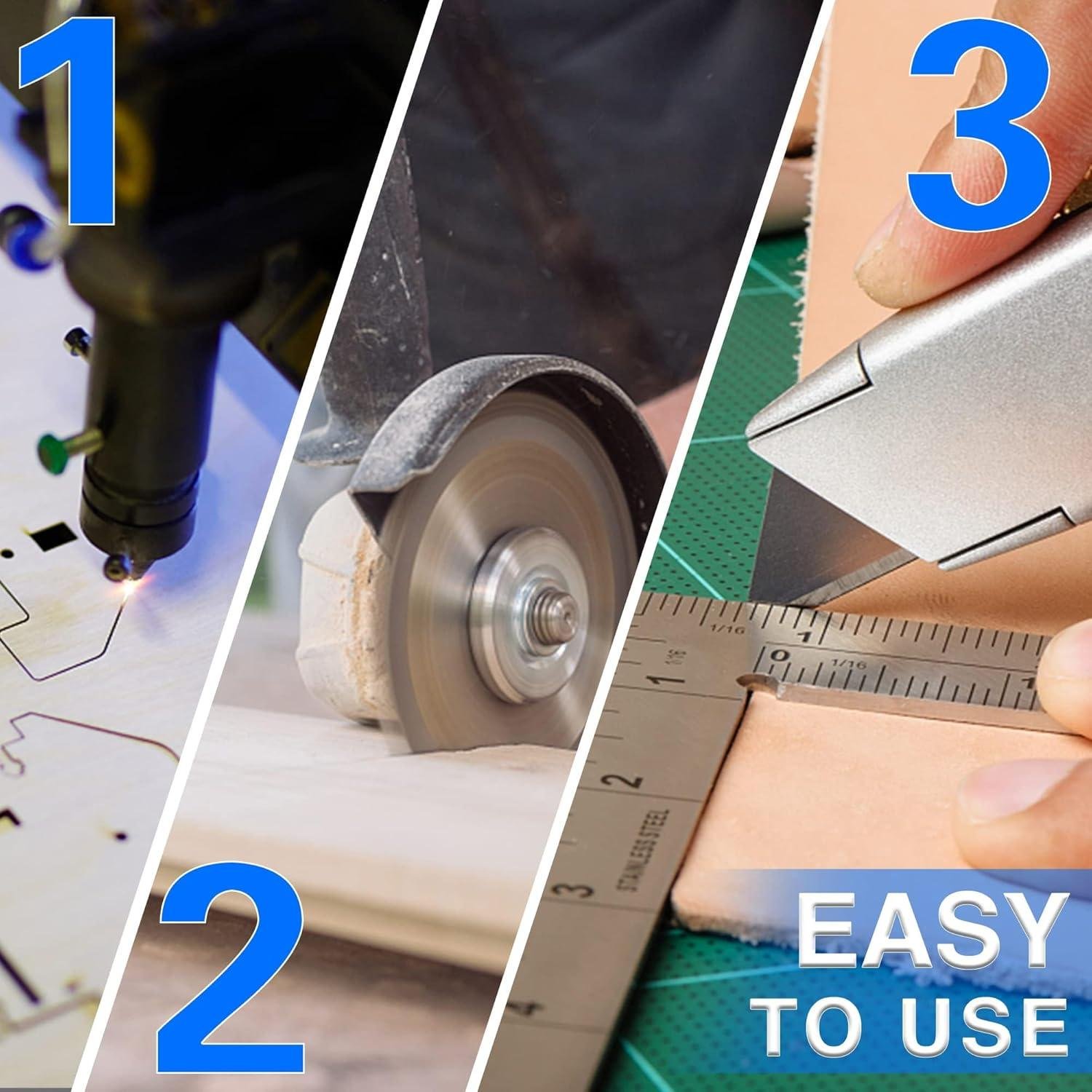
Yes—this is one of the main advantages of basswood. The description notes it can be cut and engraved with a regular utility knife, scroll saw, laser, or craft knife. For the cleanest results: use a fine-tooth scroll-saw blade, back up the cut to reduce tear-out, and make multiple light passes with a knife rather than forcing one deep cut. Sanding the edges lightly after cutting is usually all that’s needed.
Will these sheets stay flat—are warping and bending common?
The listing claims good stability “without warping… and bending,” and basswood is generally stable for it’s weight, but any thin wood can move with humidity. Store the sheets flat, keep them stickered or weighted, and avoid leaning them against a wall in a damp shop. If you’re doing precision laser assemblies, let the sheets acclimate to your workspace before cutting.
do I need special setup or accessories to use this material in my workshop?
No special accessories are required—these are simply 12″×12″×1/8″ sheets. For workshop integration, the main considerations are workholding and dust control: clamp or tape the sheet to a sacrificial backer for scroll-sawing/knife work, and use dust extraction or a vacuum when sanding/cutting (basswood dust is fine and can build up quickly). For laser use, proper ventilation/filtration is important as with any wood lasering.
Is this beginner-friendly for first-time woodcraft, model making, or wood burning?
Yes. Basswood is widely considered one of the easiest woods to learn on because it’s soft, cuts cleanly, and takes paint and stain well. The description emphasizes “easy to use” for staining, painting, cutting, and engraving, which matches typical beginner experience. the main “learning curve” is technique (light pressure, sharp blades, and test cuts), not the material fighting you.
Is this suitable for production work, or is it more of a hobby pack?
This 30-pack is a solid quantity for small-batch making (ornaments, tags, small signs, model parts), but it’s still packaged and spec’d like a craft supply rather than calibrated industrial sheet stock. The given tolerance (3mm ±0.2mm) is fine for most hobby and Etsy-style production,but if your workflow demands extremely tight thickness control or sheet-to-sheet color matching,you may want to step up to premium “laser-grade” stock or plan on sorting sheets and tweaking laser settings as you go.
Discover the Power

The 30 pack Basswood Sheets (12″ x 12″ x 1/8″, 3mm ±0.2mm) is a craft-focused material bundle designed for laser cutting/engraving, scroll saw work, utility-knife cuts, and wood burning. Each sheet is unfinished basswood with a flat, smooth surface and clear grain, and the brand emphasizes rigidity and stability with minimal warping or burrs. Customer feedback trends are strong overall (around 4.6/5 across many reviews), commonly reflecting satisfaction with surface quality and ease of machining, while the main limitation is that 3mm stock is inherently “thin-plywood”—great for detail, not for structural strength.
Best for: hobby woodworkers with small to medium projects, beginners learning fundamentals, model builders, and makers producing signs, ornaments, architectural models, or laser-ready craft parts.
Consider alternatives if: you need thicker hardwood stock, furniture-grade panels, or production-level consistency for heavy-duty joinery.
Final assessment: a solid, reliable option for precision craft work, with sensible limits due to thickness.
Want to see current pricing and customer photos? View on amazon & Read More Reviews →