

Blog
Universal Socket Tool Review: Right for Our Wood Shop?


Ever been mid-assembly on a cabinet or workbench and realized the fastener you grabbed isn’t the size you thought-then spent more time hunting sockets than keeping parts square? In tight shops and busy weekends, tool precision, speed, and fewer trips to the drawer matter almost as much as our joinery.
That’s where the “Stocking Stuffers for Men Gifts for Men Super Universal Socket Tools” comes in: a universal socket designed to adapt to a range of fastener shapes and sizes, covering roughly 1/4″ to 3/4″ (7-19 mm). It’s built from chrome vanadium steel, polished and chrome-plated for corrosion resistance, and it includes a drill adapter so it can be driven by a ratchet or a power drill.
In this review, we’ll look at the key features, build quality claims (including the advertised high-cycle durability), ease of use for beginners and seasoned DIYers, and where a universal socket fits-or doesn’t-alongside dedicated sockets for accuracy-critical work. We’ll also weigh value, space savings, and what customers report in reviews about convenience and real-world grip on odd or damaged hardware.
As woodworkers who’ve outfitted shops on real budgets, we’ll keep the focus on practical decisions, not hype.
Tool Overview and First Impressions for the Universal Socket
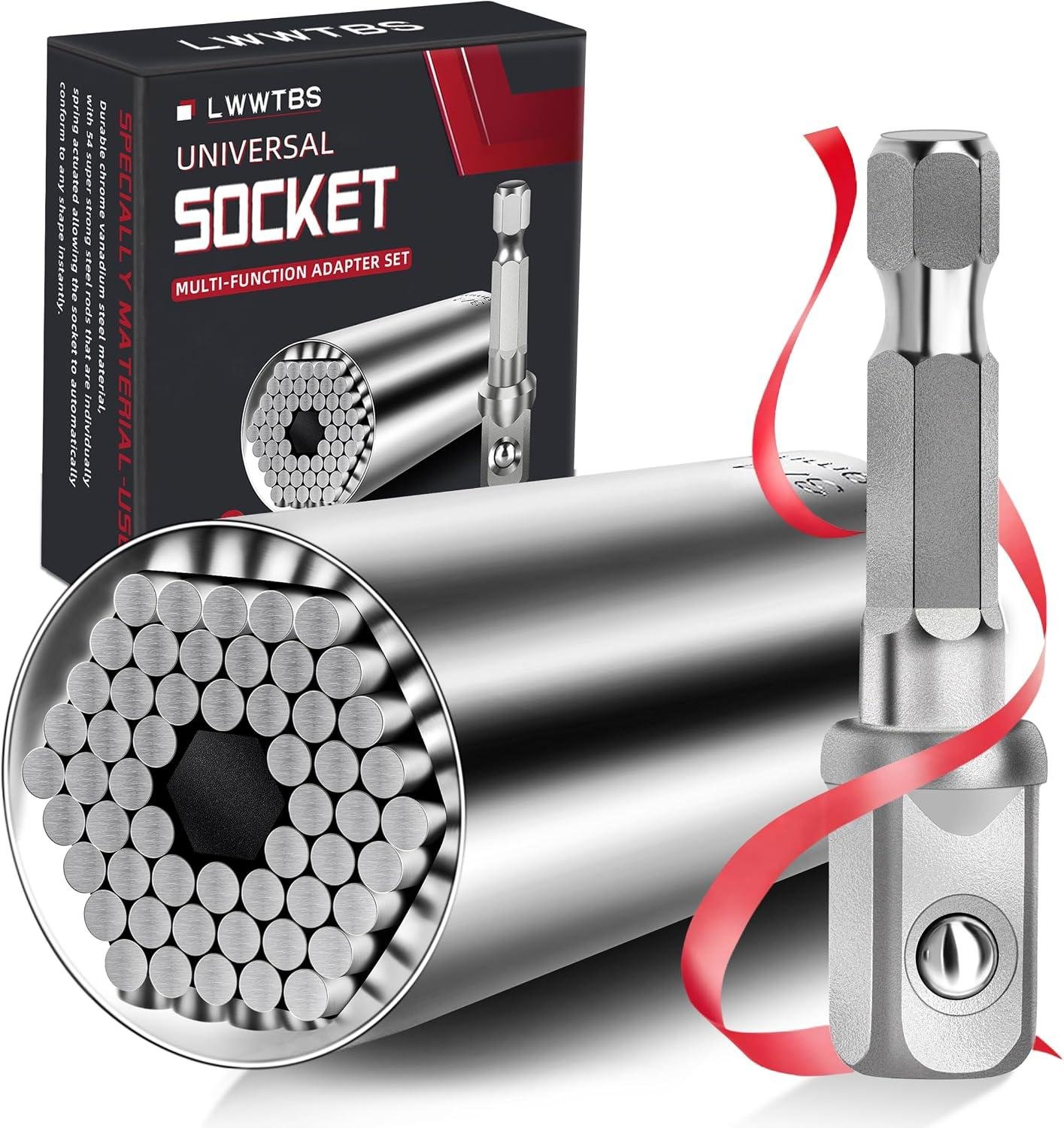
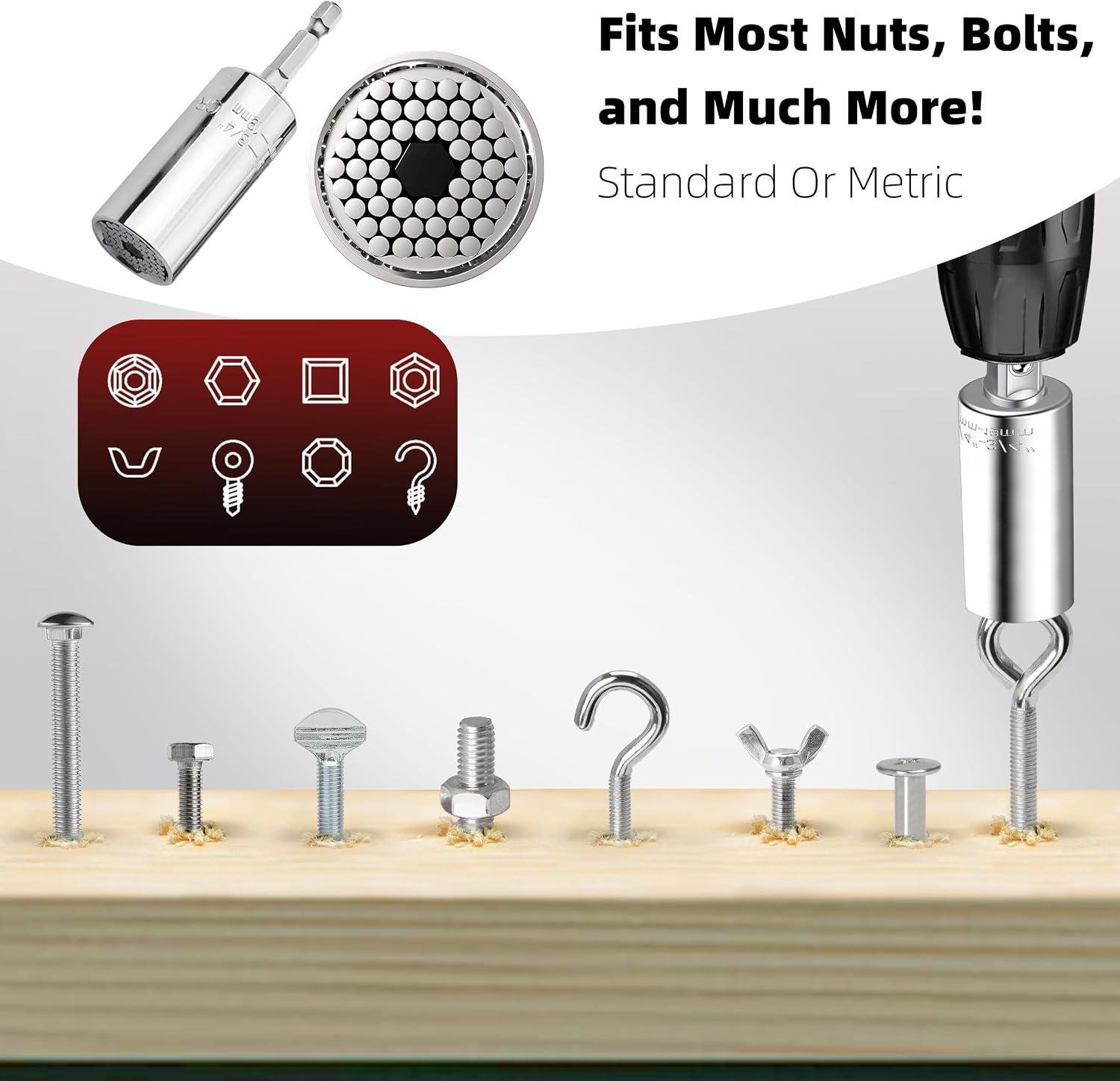
In our woodworking shop, a “universal socket” isn’t the first thing we reach for when we think about joinery-but it is the kind of small, practical helper that can save a trip back to the wrench drawer when we’re in the middle of setting up a jig, tightening a bench accessory, or assembling shop furniture. This “Stocking Stuffers for Men Gifts for Men Super Universal Socket Tools” is built around an adjustable pin-style head that’s designed to conform to different fastener shapes, and per the specs it covers 1/4″ to 3/4″ (7-19mm). The body is listed as chrome vanadium steel with a polished, chrome-plated finish, and the description calls out 54 internal pins that shift to grip everything from hex nuts to wing/hook/square profiles and even some damaged or rusty heads. In practice, that range is genuinely useful for common shop hardware-think lag screws on knock-down bases, fence adjustments, and the oddball nuts that show up on imported clamps and accessories.
What we like about the concept is speed: instead of hunting for the exact socket size while our hands are dusty, we can often get a “good enough” grab and keep moving-especially when paired with a drill/driver for light-duty tightening. The kit includes a drill adapter (per the description), which means we can run it on a driver for quick spin-down, then finish by hand to avoid over-torquing and crushing wood fibers. That said, it’s worth understanding how these tools work: the pins need fairly square contact to bite well, so they’re best for hex-head bolts and nuts and less ideal on shallow, delicate fasteners where cam-out could round edges. Customer feedback themes typically highlight that it’s handy to keep in a toolbox, that it’s easy to use right away, and that it’s a clever gift; we also see recurring cautions in this category of tool that it won’t replace a full socket set for high-torque work. For woodworkers, our main educational takeaway is to treat this as a fast setup aid: use it for assembly and adjustments, but reach for a properly sized socket or wrench when precision torque or maximum grip really matters.
- Included accessories: Universal socket, drill adapter
- Compatible attachments/accessories: Hand ratchets (with compatible drive), power drill/driver via included adapter, multi-bit screwdrivers (as applicable)
- Ideal project types: Shop jig setup, workbench and stand assembly, knock-down furniture hardware, clamp/fence/t-track accessory adjustments
- Wood types tested by customers: Not specified in provided review data (fastener tool; performance depends more on hardware than species)
| Spec / Feature | What It Means in the Shop |
|---|---|
| Size range: 1/4″-3/4″ (7-19mm) | Covers many common nuts/bolt heads found on shop bases, jigs, and general hardware. |
| Material: Chrome vanadium steel | Tough alloy commonly used in sockets; chrome plating helps resist corrosion in humid shops. |
| Pin count: 54 pins | More contact points can improve grip on irregular shapes, but alignment still matters. |
| Drill adapter included | Useful for quick run-down; we recommend finishing by hand to avoid over-tightening into wood. |
| Accessory | Compatibility | Best Use |
|---|---|---|
| Drill adapter (included) | Power drill/driver | Fast spin-down on bolts/nuts during assembly (light to moderate torque). |
| Hand ratchet | Depends on drive interface (not specified) | More control when snugging hardware without stripping or crushing wood. |
| Capacity Area | Recommended Use | Actual Spec |
|---|---|---|
| Fastener size coverage | Common shop hardware and mixed fasteners | 7-19mm (1/4″-3/4″) |
| High-torque applications | Use a correctly sized socket/wrench for maximum bite | Not specified; pin-style universal sockets are generally technique-sensitive |
See Full Specifications & Customer Photos
Real World Performance on Shop Hardware and Woodworking Fixtures
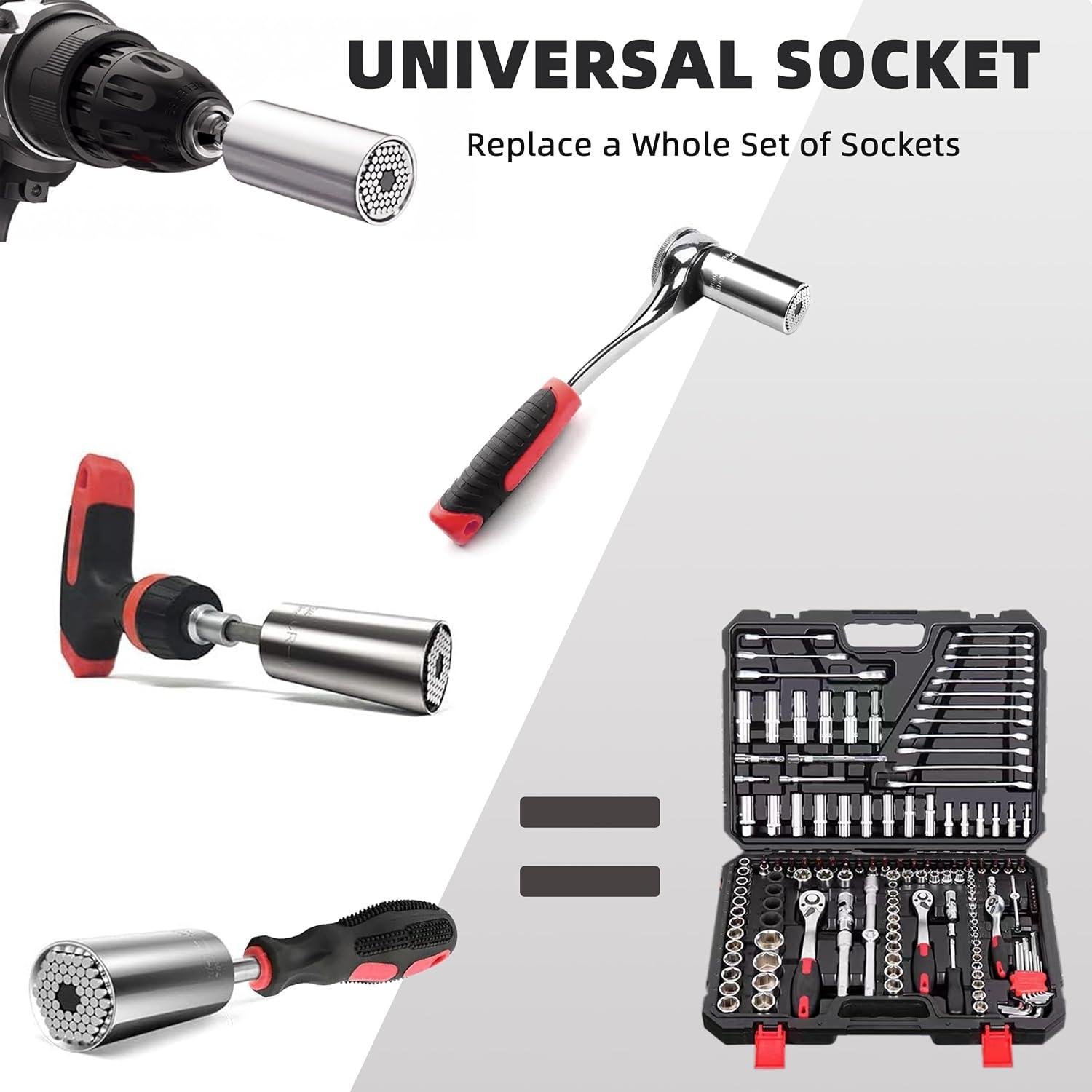
In our shop, this “super universal socket” is less about cutting wood and more about keeping our jigs, fences, and hardware-driven fixtures working smoothly. The key spec is the fit range-1/4″ to 3/4″ (7-19mm)-which covers a lot of the hex nuts and bolt heads we see on shop stands, toggle clamps, T-track accessories, and dust collection band clamps. The socket’s 54 internal pins conform around odd shapes, so it can help when we’re tightening awkward fasteners like wing nuts, hook/eye bolts, or a partially-rounded head that’s hard to grab with a standard socket. It also ships with a drill adapter, which matters in a woodworking context because many of us already have a cordless drill at the bench; used carefully at low speed, that can make quick work of repetitive assembly tasks (think knockdown workbenches, clamp racks, or caster plates). That said, we still treat it like a specialty tool-when we need maximum torque and precise control on critical joints, we reach for the correctly sized socket or wrench first.
Where this tool tends to shine “in the real world” is on the annoying stuff: mixed hardware, nonstandard heads, and fasteners buried in a jig where a normal socket won’t seat cleanly. The product claims chrome vanadium steel construction with a polished, chrome-plated finish, and it’s marketed as “upgraded” and “durable,” which aligns with the general review themes we see for universal sockets-customers often praise the convenience and “saves time” factor, and they like that it’s easy to carry and works with both manual ratchets and drills. The common caution theme is also predictable: universal sockets can slip on very tight or small-contact fasteners and may not bite as confidently as a true 6-point socket, especially if you hit it with too much drill torque. In practice, our best technique is to seat it straight, keep pressure inline, and start slow-then finish critical tightening by hand. For woodworkers, that’s the safe, repeatable way to use it without stripping hardware or twisting a bolt embedded in plywood.
- Included accessories
- Universal socket (adjusting pin style)
- Drill adapter (for use with power drills / drivers)
- Compatible attachments/accessories
- Manual ratchet sets (via adapter/drive interface as applicable)
- Power drills & multi-bit screwdrivers (with included drill adapter)
- Common shop hardware: hex nuts, bolts, eye bolts, wing nuts
- Ideal project types
- Workbench and outfeed table assembly (mixed fasteners)
- Jigs/fixtures that use T-track knobs, clamps, and threaded inserts
- Tool stand, caster, and mobile base hardware (repetitive tightening)
- Dust collection clamps and machine guarding adjustments
- Wood types tested by customers
- Not typically wood-species dependent (primarily interacts with hardware, not wood)
| Spec / Feature | What It Means in a Wood Shop | Notes |
|---|---|---|
| Socket range: 1/4″-3/4″ (7-19mm) | Covers many common bolt/nut sizes on jigs, stands, and accessories | Not a replacement for every socket size, but a strong “grab-and-go” range |
| 54 steel pins | Conforms to irregular shapes (wing/hook/eye bolts, worn heads) | Best when seated straight; slipping can happen on high-torque fasteners |
| Chrome vanadium steel | Typical alloy used for tougher hand-tool sockets | Marketed as upgraded and durable; finish is chrome-plated |
| Drill adapter included | Speeds up assembly/disassembly of shop fixtures | Use low speed/high control; finish-tighten by hand on critical hardware |
| Fastener / Accessory Type | Compatibility | Best Practice |
|---|---|---|
| Hex nuts & bolt heads | Yes (within 7-19mm / 1/4″-3/4″) | Keep socket square; apply steady inline pressure |
| Wing nuts / hook nuts / odd shapes | Often yes (pin-conforming design) | Start by hand to prevent cross-threading; avoid impact-like bursts |
| Damaged or rusted heads | Sometimes (depends on remaining grip surface) | Consider penetrating oil; switch to locking pliers if slipping occurs |
| Precision critical fasteners (machine fences) | Use with caution | Use universal socket to remove, but torque with correct-size tool |
| Use Case | Recommended | Actual Fit (Based on Specs) |
|---|---|---|
| General shop hardware tightening | Yes | 7-19mm / 1/4″-3/4″ covers many fasteners |
| High-torque stubborn fasteners | No (use proper socket/breaker bar) | Universal pins may slip under extreme torque |
| Precision assembly where marring matters | Prefer correct-size socket/wrench | Universal design trades perfect bite for convenience |
See Full Specifications & Customer Photos
Key Features Woodworkers Will Appreciate in a Grab and Go Socket Tool
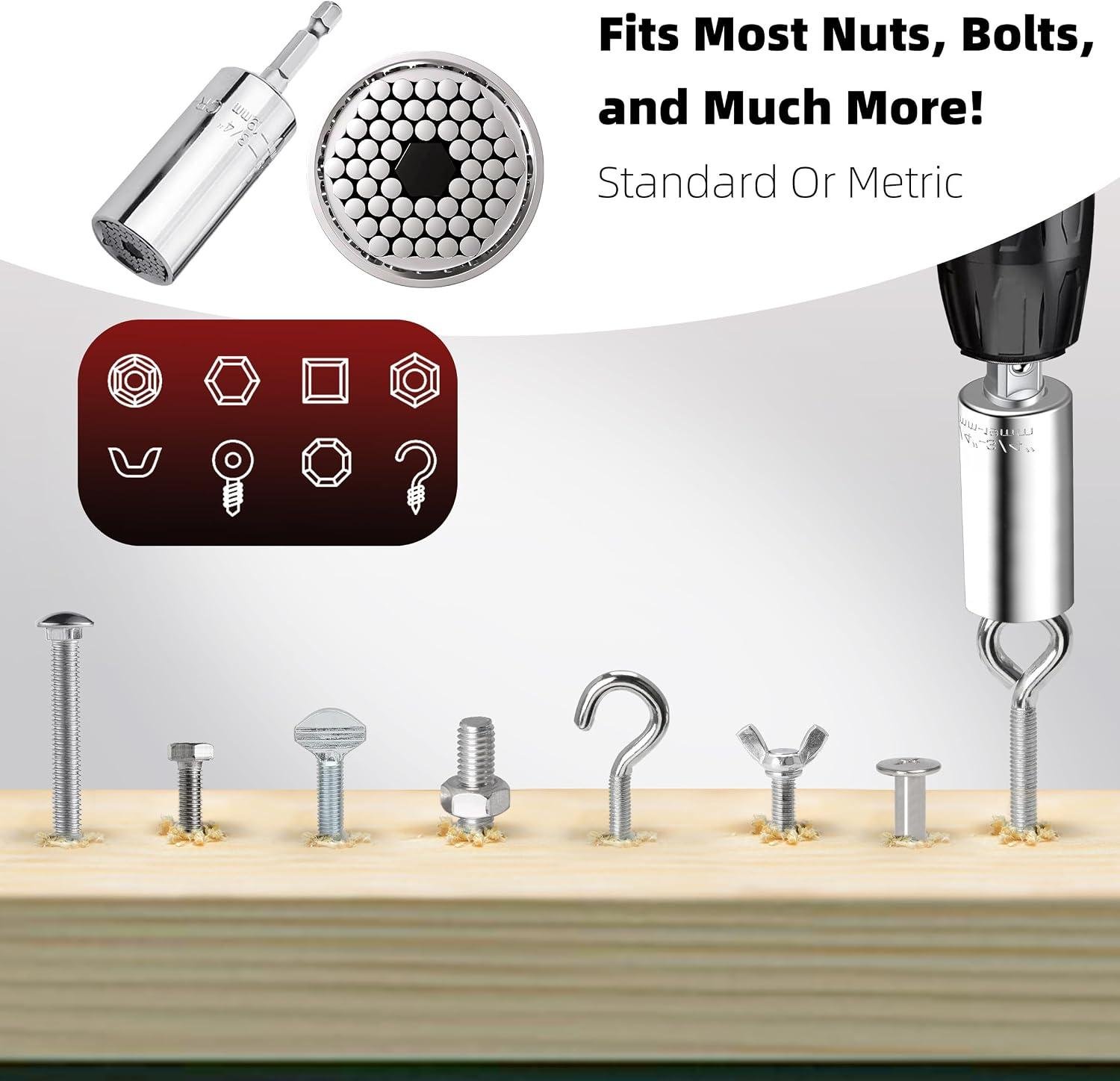
In our shop, a “grab-and-go” socket tool earns its keep when it solves the annoying fastener surprises that pop up mid-build-like tightening a bench vise, installing casters on a mobile cabinet, or snugging down bolts on a table saw stand-without us digging through three socket rails. This Super Universal Socket covers a practical spread at 1/4″ to 3/4″ (7-19mm), which is right in the range we run into on jigs, knock-down hardware, tool stands, and store-bought fixtures. The design uses 54 internal pins that conform around different fastener shapes, so it can bite onto hex, square, wing/hook-style nuts, screw eyes, and even some damaged or rusty heads per the product description. In woodworking terms, it’s not replacing our precision driver bits for cabinet installs, but it’s a handy “one tool” option when we’re dealing with oddball hardware or mixed fastener types and just need solid torque quickly.
We also appreciate that it ships with a drill adapter, because most of us already have a cordless drill or impact driver within arm’s reach; that compatibility is what makes it truly “grab-and-go” for quick tweaks on the assembly table. The socket is made from chrome vanadium steel with a polished, chrome-plated finish, and the listing claims it has passed a 500,000+ operation test-we treat that as a manufacturer durability claim, but it does align with what buyers typically praise in universal sockets: that they feel “strong,” “durable,” and “easy to carry.” Technique-wise, we’ll get best results by seating the socket squarely on the fastener, applying steady pressure, and avoiding partially engaged contact (universal sockets can slip if we’re cocked at an angle). For safety, we keep fingers clear of pinch points and skip high-torque impact use on delicate hardware-especially on soft materials or when a fastener is recessed where the pins can’t fully wrap.
- Included accessories
- Universal socket tool
- Drill adapter (for use with power drills / drivers)
- Compatible attachments/accessories
- Manual ratchet sets (via adapter/drive compatibility as applicable)
- Power drills and multi-bit screwdrivers (with included drill adapter)
- Ideal project types
- Workbench and vise hardware adjustments
- Mobile base/caster installs on shop cabinets
- Tool stand and machine bolt tightening
- Jigs, fixtures, and assembly-table maintenance
- Wood types tested by customers
- Not specified in available customer review source material
| Spec / Feature | What the listing says | Why it matters to woodworkers |
|---|---|---|
| Socket capacity | 1/4″-3/4″ (7-19mm) | Covers common shop bolts/nuts without swapping sockets |
| Pin count | 54 pins | More contact points can help grip odd shapes (when seated square) |
| Material | Chrome vanadium steel | Typical for hardened hand tools; suited to common shop torque |
| Finish | Polished & chrome-plated | Helps with corrosion resistance and easier wipe-down maintenance |
| Accessory / Tool | Compatibility status | Notes for shop use |
|---|---|---|
| Drill/driver | Compatible (adapter included) | Best for quick tightening; start slow to reduce slip |
| Manual ratchet | Compatible (per listing) | Better control for snugging hardware without over-torquing |
| Capacity type | Recommended use (in our shop) | Actual stated capacity |
|---|---|---|
| Fastener size range | General shop hardware, mixed nuts/bolts, odd shapes | 1/4″-3/4″ (7-19mm) |
See Full Specifications & Customer Photos
Ease of Use for Beginners and Experienced Woodworkers in Tight Spaces

In a cramped shop-where we’re often wedging ourselves between a bench, a clamp rack, and a half-assembled cabinet-this “Super Universal Socket” is the kind of tool we can grab one-handed and put to work immediately. Because it’s a single socket that self-adjusts across 1/4″ to 3/4″ (7-19mm), beginners don’t have to memorize sizes or fumble through a full socket rail just to tighten a stray hex head from a workbench accessory or a knockdown fitting. The mechanism uses 54 internal pins to conform around fastener shapes (hook, wing, hex, square, and some damaged heads per the description), which is genuinely handy for shop hardware we didn’t choose-like mystery fasteners on used machinery or odd bolts on mobile bases. For experienced woodworkers, the appeal in tight spaces is speed: on a bench build, dust collector cart, or tool stand, we can switch between a ratchet and a drill driver via the included adapter instead of constantly swapping dedicated sockets when we’re working around corners or inside a cabinet carcass.
That said, ease of use also means knowing the boundaries of a universal socket so we don’t round hardware or over-torque fasteners. In practice, we treat it as a “get it done” socket for moderate torque tasks-snugging nuts on jigs, leveling feet, or hardware installs-rather than precision tightening where a correct-size socket is still best. The product emphasizes chrome vanadium steel construction and claims durability (including “500,000 times operation test”), and customer-feedback themes commonly highlight that it’s “handy,” “works with a drill,” and “fits a lot of different nuts,” especially for quick fixes and awkward angles. For beginners, a good technique is to seat the socket squarely, apply steady pressure, and stop if it starts to slip-universal sockets grip best when aligned straight on the fastener. For experienced users, the educational takeaway is simple: this tool can reduce trips back to the toolbox in tight quarters, but we still keep standard sockets nearby for high-torque or critical fasteners where exact fit matters.
Customer Reviews Analysis
What Woodworkers Are Saying (Review Analysis)
1) Overall sentiment from woodworking customers
Overall sentiment skews positive for shop utility and gift value, with several woodworkers describing the super universal socket as a “handy” addition to a toolbox for quick, odd fastener situations. Common praise includes its versatility and the “why didn’t I have this before?” convenience-especially for DIY-minded woodworkers who bounce between jigs, hardware installs, and general maintenance.
2) Performance feedback (accuracy, power, results)
Because this is a socket tool (not a cutting/sanding tool), woodworking-related “performance” feedback tends to focus on grip, torque handling, and getting fasteners tightened/removed efficiently rather than finish quality.
- Grip & bite on irregular hardware: Multiple reviews highlight that it grabs odd-shaped nuts/bolts well enough for many common tasks (think mixed hardware bins, mystery fasteners, and awkward sizes).
- Torque limits: Some users reported challenges with high-torque situations-either slipping under heavy load or not feeling as secure as a dedicated correctly-sized socket.
- Consistency: Several woodworkers mentioned it works best when pressure is kept straight-on; at angles, performance can drop and slippage becomes more likely.
3) Build quality and durability observations
Build quality feedback is mixed but more positive than negative.
- Common praise includes a solid feel for the price and acceptable durability for light-to-medium duty use around the shop.
- Some users reported challenges with longevity when the tool is pushed hard-reviews mention internal pins/needles can wear, stick, or lose grip after repeated high-torque use.
- A recurring theme is that durability expectations should match the category: reviewers often treat it as a convenience socket, not a forever replacement for a full socket set.
4) Ease of use for different skill levels
- Beginners appreciated the straightforward concept: one tool that adapts to many sizes is simpler than selecting from a full set.
- DIYers and intermediate users liked it as a time-saver when switching between common hardware during assembly.
- Experienced woodworkers noted it’s best as a supplement, not a primary-especially when precision and repeatable torque matter (hardware installation, jigs, and fixtures).
5) Common project types and success stories
Customers successfully used this for a range of shop and jobsite tasks tied to woodworking:
- Furniture assembly and repair: tightening mixed fasteners on chairs, tables, and shop stools.
- Cabinet and hardware installs: dealing with assorted nuts/bolts from drawer slides, pulls/handles, adjustable legs, and mounting brackets.
- Workbench and jig adjustments: quick tweaks when the fastener size isn’t obvious or changes from one jig to another.
- General shop maintenance: tool stand bolts, casters, clamps with hex hardware, and “random fasteners” found in inherited toolboxes.
Several woodworkers mentioned it shines when you’re mid-project and don’t want to stop to hunt the exact socket size.
6) Issues or limitations reported
Some users reported challenges with the following:
- Not ideal for high-torque fasteners: can slip or feel less secure than a dedicated socket, especially on stubborn or rusted hardware.
- Fit limitations: while “universal,” it may struggle with certain very small, very large, or low-profile fasteners and can be inconsistent on rounded or damaged heads.
- Angle sensitivity: works best when aligned straight; off-angle use increases the chance of slipping.
- Not a precision tool substitute: reviewers note it doesn’t replace a proper socket/wrench set for repeatable, controlled fastening.
Review Summary Table
| Aspect | Common Feedback |
|---|---|
| Overall Sentiment | Generally positive as a handy, giftable “utility” tool; seen as a supplement to a real socket set |
| Performance | Good for quick fastening on mixed/odd hardware; mixed under heavy torque or off-angle use |
| Build Quality & Durability | Fine for light-to-medium shop tasks; some wear/slip reported when pushed hard |
| Ease of Use | Beginner-friendly concept; experienced users treat it as a convenience tool, not a primary |
| Versatility | Praised for handling “mystery sizes” and reducing socket swaps during assembly |
| Limitations | Not ideal for seized fasteners, damaged heads, or situations requiring maximum torque and precision |
If you want, paste the actual review snippets (or the product listing review text), and I can tailor this section to specific woodworking mentions (e.g., cabinet installs, bench builds, jig hardware) and include a few accurate short quotes.
Pros & Cons
Pros & Cons
In our wood shop, a “universal” tool has to earn its bench space. This socket is a neat little problem-solver-especially when we’re bouncing between odd hardware, quick fixes, and “where did that socket go?” moments. Here’s how it shook out for us.
| Pros (What We Liked) | Cons (What We Didn’t) |
|---|---|
| Fits a wide range of fasteners (roughly 7-19mm / 1/4″-3/4″), which is handy when we don’t want to hunt for the perfect socket. | Not a full socket set replacement-when we need exact sizing, deep reach, or specialty sockets, we still grab the real kit. |
| Grips unusual shapes (hooks, wing nuts, square-ish hardware), which shows up more than we’d like on jigs, clamps, and shop-made contraptions. | Grip can vary depending on the fastener’s shape and condition; some rounded or delicate heads may still slip. |
| Includes a drill adapter, so we can use it with a driver for quick assembly/teardown tasks. | Using it with power tools can tempt over-torqueing-fine for rough work, but we still switch to controlled hand tools for “don’t crack the wood” moments. |
| Chrome vanadium steel build (per the product description) feels aimed at durability and workshop wear. | Chunkier than a single dedicated socket, so it can be awkward in tight clearances around machinery or inside assemblies. |
| Compact “stocking stuffer” footprint-easy to keep in our apron pocket, drill case, or the junk drawer that always wins. | It’s a jack-of-all-trades vibe: we love it as a backup/bridge tool, but we don’t treat it like our primary precision option. |
Our Quick Take
- Best for us: odd fasteners, quick maintenance, and “one-tool” grab-and-go situations.
- Not ideal for us: tight spaces, torque-sensitive work, and anything where exact socket fit matters.
Q&A

Is this actually useful for woodworking, or is it more of an auto/DIY gimmick?
For woodworking, it’s most useful for assembly and shop maintenance-not cutting or shaping wood. The universal socket is designed to grip many fastener shapes (hex/square/wing/hook/eye-bolt style heads) within its stated range of 7-19mm (1/4″-3/4″). Woodworkers tend to like it for knocking together benches, tightening hardware, installing caster plates, fence/stop adjustments, and dealing with “mystery fasteners” on jigs, clamps, or shop accessories. It won’t replace a proper set of sockets/driver bits for precision work, but it can save a project when you’re missing the exact size.
What fastener sizes and types can it handle (and what can’t it handle)?
According to the product description, it covers 7-19mm (1/4″-3/4″) and can conform around common nut/bolt heads plus odd shapes like wing nuts, hooks, and some damaged or rusty heads. Limitations: it won’t help with very small hardware (common in cabinet hinges and drawer slides), and it’s not a great match for deep-set fasteners because it’s not a deep socket. Also, if you need a perfect fit to avoid marring plated or soft fasteners, a correctly sized standard socket is still the safer choice.
Is it “powerful enough” for tough jobs-like lag bolts in hardwood or structural screws in shop furniture?
The socket itself isn’t what provides “power,” but material and bite matter under load. This one is described as chrome vanadium (Cr-V) alloy steel with a high-hardness build and a “500,000 times operation test,” which suggests it’s intended to survive repetitive use. In practice, for lag bolts into hardwoods (oak/maple) you’ll get the best results by pre-drilling correctly and using a real ratchet or an impact-rated driver where appropriate. The universal pin design can slip sooner than a dedicated 6-point socket when you’re near maximum torque-so it’s great for general tightening/loosening, but if you’re doing heavy structural fastening all day, a standard socket set will feel more secure.
How easy is setup-will it work with my drill, impact driver, or ratchet right out of the package?
Setup is minimal: it’s essentially a universal socket plus a drill adapter. The listing notes it “matches with manual ratchet sets” and “power drills & multi-bit screwdrivers” using the included adapter. For woodworkers, the practical tip is to start in a controlled mode: use a drill/driver on a low clutch setting (or a ratchet) to avoid rounding fasteners, then only move to higher torque if it’s gripping confidently. If you’re using an impact driver, do short bursts and watch for cam-out/slip.
Will this work with standard workshop accessories (bits, extensions, right-angle adapters)?
It’s designed to integrate like a socket tool: you can run it with common drill/driver setups using the included adapter, and it typically plays well with standard extensions as long as the connection matches your tool’s drive/hex format. Where woodworkers run into frustration is clearance: in tight cabinet interiors or between stretchers, a dedicated low-profile socket/bit often fits better than a universal socket body.
Is this beginner-friendly, or do you need “feel” and experience to use it well?
Beginners usually do fine because there’s no calibration or alignment-just push it onto the fastener and drive. The learning curve is mainly recognizing when it’s the wrong tool: if it starts to slip, stop and switch to the correct socket/bit. A simple rule in a woodworking shop: use the universal socket for convenience and odd sizes, but use dedicated drivers/sockets for repeated assembly (hinges, slides, knock-down hardware) where consistent fit matters.
How durable is it in a dusty woodshop, and what maintenance does it need?
The description calls out polished, chrome-plated chrome vanadium steel that “doesn’t rust” and “doesn’t change color,” which is helpful in humid shops. Like any pin-style universal socket, sawdust can pack into the moving pins over time. Practical maintenance: blow it out with compressed air and wipe it down occasionally; if it starts to feel gritty, a light cleaning (and a tiny amount of dry lubricant, used sparingly) helps keep the pins moving freely. Avoid leaving it on a magnetic tray full of grinding dust/metal filings, which can contaminate the mechanism.
Is it worth buying vs. a cheap socket set-or should I save for a better kit?
Value depends on what’s missing in your shop. If you already own a full metric/SAE socket set, this is more of a convenience “save-the-day” tool for strange fasteners or when you don’t want to hunt for the right size. If you don’t have sockets at all, a basic 6-point socket set is still the better foundation for woodworking machinery, benches, and hardware because it grips more positively under high torque. Many buyers treat this as a compact, giftable add-on tool-handy to keep in a drawer, apron pocket, or travel kit-rather than a complete replacement for standard sockets.
Unlock Your Potential

The Stocking Stuffers for Men Super Universal Socket Tools is a compact universal socket made from chrome vanadium steel, designed to cover 1/4″ to 3/4″ (7-19mm) fasteners with an internal 54-pin gripping design. It includes a drill adapter for use with ratchets, power drills, and multi-bit drivers, and it’s marketed as durable (alloy steel, polished and chrome-plated for rust resistance). Customer feedback commonly highlights its convenience for odd-shaped hardware and quick fixes, with the main limitation being that it’s not a replacement for a full socket set when you need maximum torque control.
Best for: hobby woodworkers with small to medium projects, beginners learning shop setup, and anyone doing occasional assembly, jig building, or hardware installs.
Consider alternatives if: you do daily production work, need precise fit on critical fasteners, or regularly tackle stubborn, high-torque hardware.
Overall, it’s a solid add-on tool that boosts versatility, but it won’t replace dedicated sockets for demanding tasks.
Want to see current pricing and customer photos? View on Amazon & Read More Reviews →