

Blog
Power Nuts Driver Drill Socket Set Review: Our Shop?

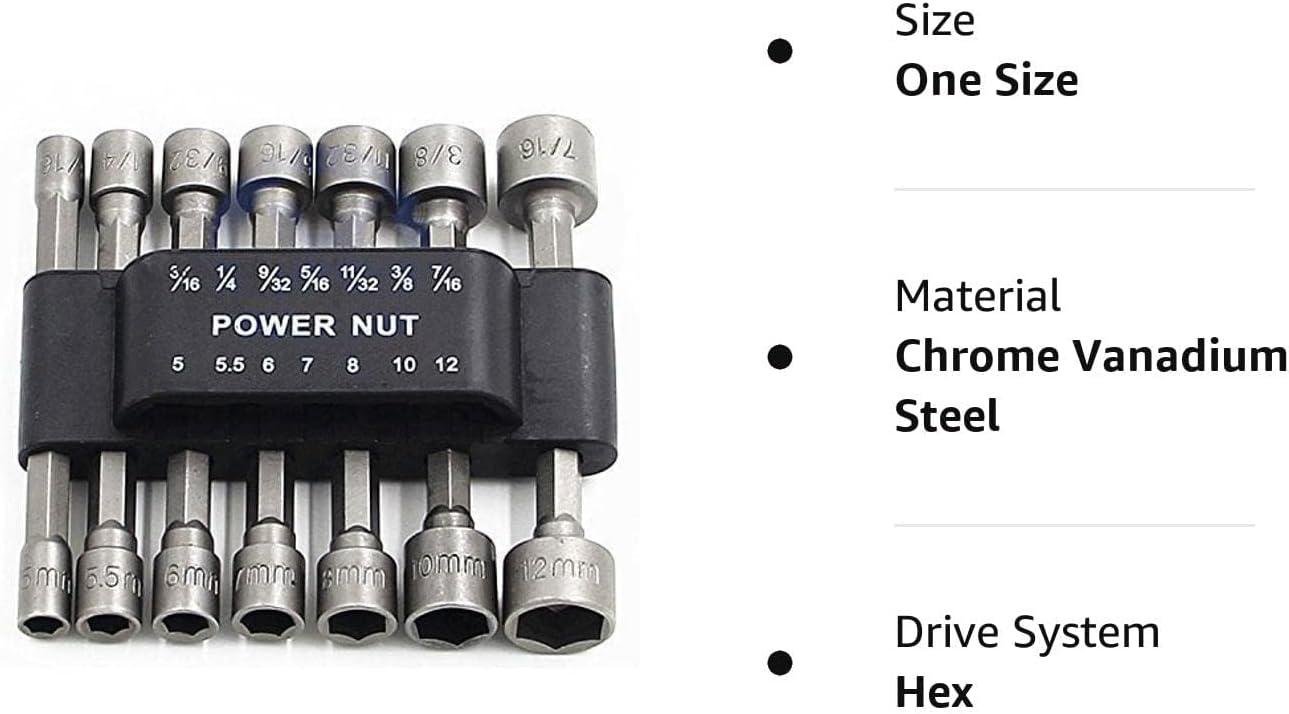
Ever get to the assembly stage of a cabinet or workbench and realise half your fasteners are hex-head bolts, but your socket set is buried under clamps—or doesn’t fit your drill driver? That’s where speed can turn into stripped heads and sloppy alignment, especially when we’re trying to keep hardware square and consistent.
The Power Nuts Driver Drill Bit Tools Set is a 14-piece nut-driver socket kit made from chrome vanadium steel, built around a 1/4″ (6.35mm) hex shank that fits most corded and cordless drills. It includes 7 SAE sizes (3/16″ to 7/16″) and 7 metric sizes (5mm to 12mm), with a compact ~2.2cm shank length aimed at speedy changeovers in tight shop spaces. One notable spec: no magnetic tip, wich affects how comfortably it starts fasteners one-handed.
In this review, we’ll dig into the set’s sizing range, build quality, ease of use for newer woodworkers, and what customers report about durability and fit—so we can judge whether it’s a smart budget buy or a compromise. As woodworkers who’ve assembled plenty of jigs, shop fixtures, and knockdown builds, we know the small driver choices often decide how clean the final hardware install looks.
Tool Overview and Build Quality in Our Hands
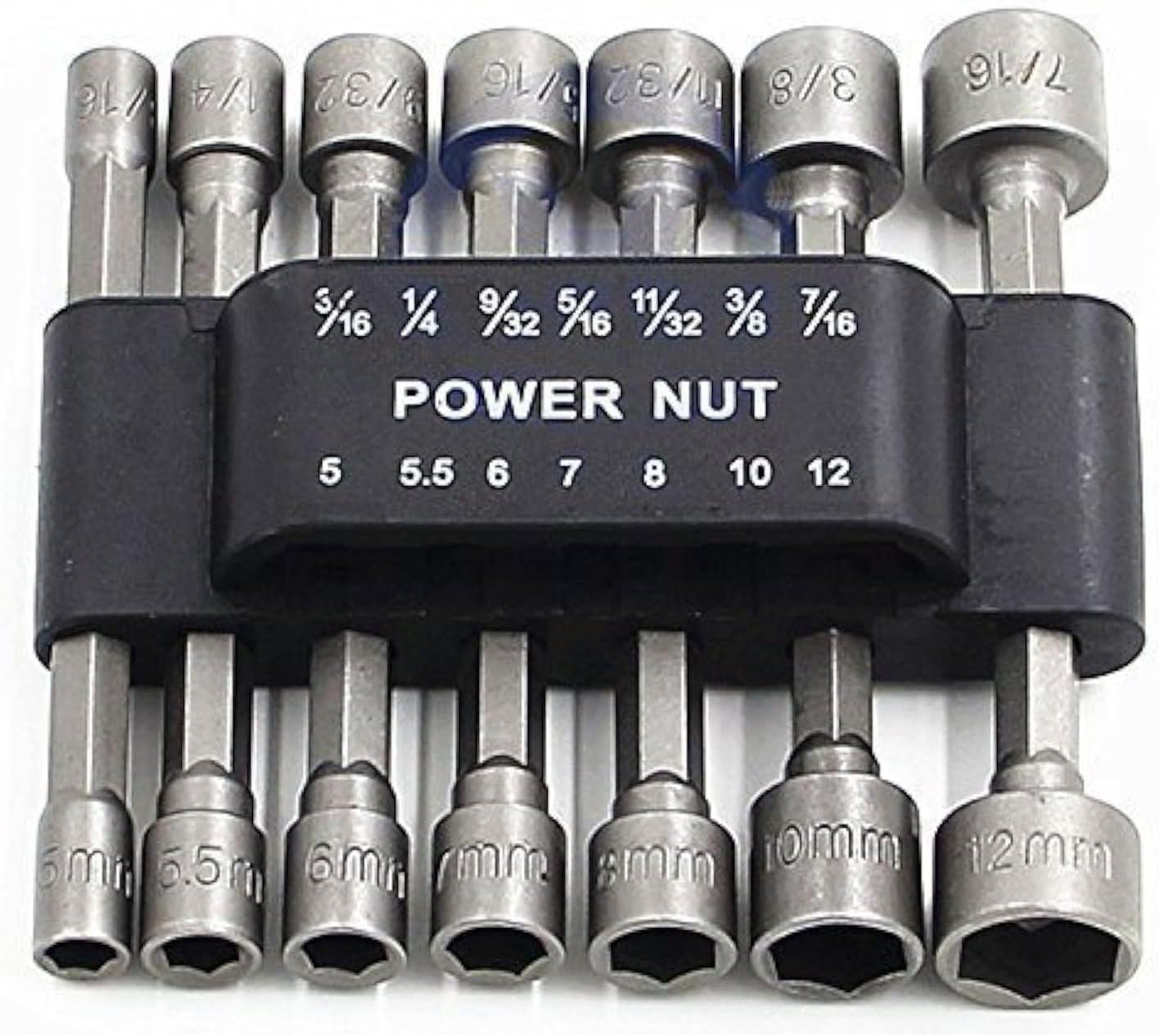
In our hands, this 14-piece nut driver set feels like a straightforward shop accessory rather than a “feature tool,” and that’s exactly how we’d use it in a woodworking workflow—paired with a drill/driver to speed up hardware installation on jigs, knock-down benches, shop carts, and fence adjustments. The set is made from chrome vanadium steel, and each socket is built around a 1/4″ (6.35mm) hex shank with an approx. 2.2cm shank length, so it clicks into most standard quick-change chucks and bit holders without fuss. We like that it includes both SAE and metric sizes—woodworking hardware is a mix these days—so we’re not hunting for the “almost fits” socket when we’re tightening a bolt on a bandsaw stand or assembling flat-pack shop storage. One important spec that affects day-to-day handling: there is no magnetic tip.In practice, that means you’ll want to support the nut/bolt by hand when starting threads, especially in awkward positions inside cabinets or under a benchtop, and avoid high RPM until the fastener is engaged to reduce the chance of dropping hardware into your project.
Build-quality wise, the sockets present as clean and workshop-appropriate, with the inner hex sleeve providing a positive, centered drive for common hex fasteners. for woodworkers, the education piece here is matching the tool to the task: nut drivers excel when you need consistent, repeatable torque on machine bolts and connector hardware—but sence these are drill-driven sockets, we recommend setting your clutch low at first (or using an impact-rated driver cautiously if you have one) to avoid crushing plywood fibers, stripping T-nuts, or over-tightening knock-down fittings.Customer review themes commonly revolve around “fits most drills,” the convenience of having both metric and SAE in one kit, and the recurring note that “no magnet” means you may need a second hand to keep fasteners in place during starts; those are all consistent with what we’d expect from the provided specs. If your projects involve a lot of hex-head hardware—like adjustable router-table fences, shop-made jigs with carriage bolts, or machine maintenance—this kit is an easy way to keep sizes organized and moving quickly without swapping wrenches.
- Included accessories (14pcs total): SAE sockets (3/16″, 1/4″, 9/32″, 5/16″, 11/32″, 3/8″, 7/16″) + Metric sockets (5mm, 5.5mm, 6mm, 7mm, 8mm, 10mm, 12mm)
- Shank standard: 1/4″ (6.35mm) hex,approx. 2.2cm shank length
- Material: chrome vanadium steel
- Note: No magnetic retention
- Compatible attachments/accessories:
- 1/4″ hex quick-change bit holders
- Cordless drill/driver chucks (standard 3-jaw)
- Right-angle drill adapters (for cabinet interiors)
- Torque-limiting bit holders (helpful for knock-down hardware)
- Ideal project types:
- Shop furniture assembly (carts, stands, storage)
- Jigs and fixtures (router jigs, drill guides, sled hardware)
- Machine setup and maintenance (fences, bases, accessory mounts)
- Knock-down builds using hex-head bolts and connector hardware
- wood types tested by customers: Not specified in available reviews/specs (hardware-driven tool use typically transfers across species)
| Category | Spec / What It Means in the Shop |
|---|---|
| Drive size | 1/4″ (6.35mm) hex shank — fits most drill/driver systems and quick-change holders |
| Socket count | 14 pcs — broad coverage for common shop hardware without a full socket set |
| Sizes | SAE (7) + Metric (7) — helpful when tools,jigs,and purchased hardware mix standards |
| Retention | Non-magnetic — start fasteners by hand; use slower speed until engaged |
| Material | Chrome vanadium steel — common for hand/socket tools; suited to general fastening tasks |
| Accessory / Bit Type | Compatibility | Why We’d Use It |
|---|---|---|
| 1/4″ quick-change bit holder | Yes (1/4″ hex shank) | Faster swaps between nut driver and driver bits during assembly |
| Right-angle drill adapter | Yes | Reaches inside cabinets and behind stretchers where a drill won’t fit |
| Impact driver use | Fit-wise yes; verify your torque needs | Use cautiously to avoid over-tightening hardware in plywood/MDF |
| Magnetic bit holder | Indirect help | Can improve handling since the sockets themselves are non-magnetic |
| Use Case | Recommended Approach | What This Set Actually Offers |
|---|---|---|
| Starting nuts/bolts in tight spots | Some retention (magnet) or hand-starting | Hand-starting recommended (sockets are non-magnetic) |
| Fast assembly with mixed hardware standards | Both SAE + metric coverage | 7 SAE + 7 metric included |
| Drill/driver compatibility | Standard 1/4″ hex shank | 1/4″ (6.35mm) hex shank |
See Full Specifications & Customer Photos
Key Features woodworkers Will Appreciate for Hardware and Jig Work
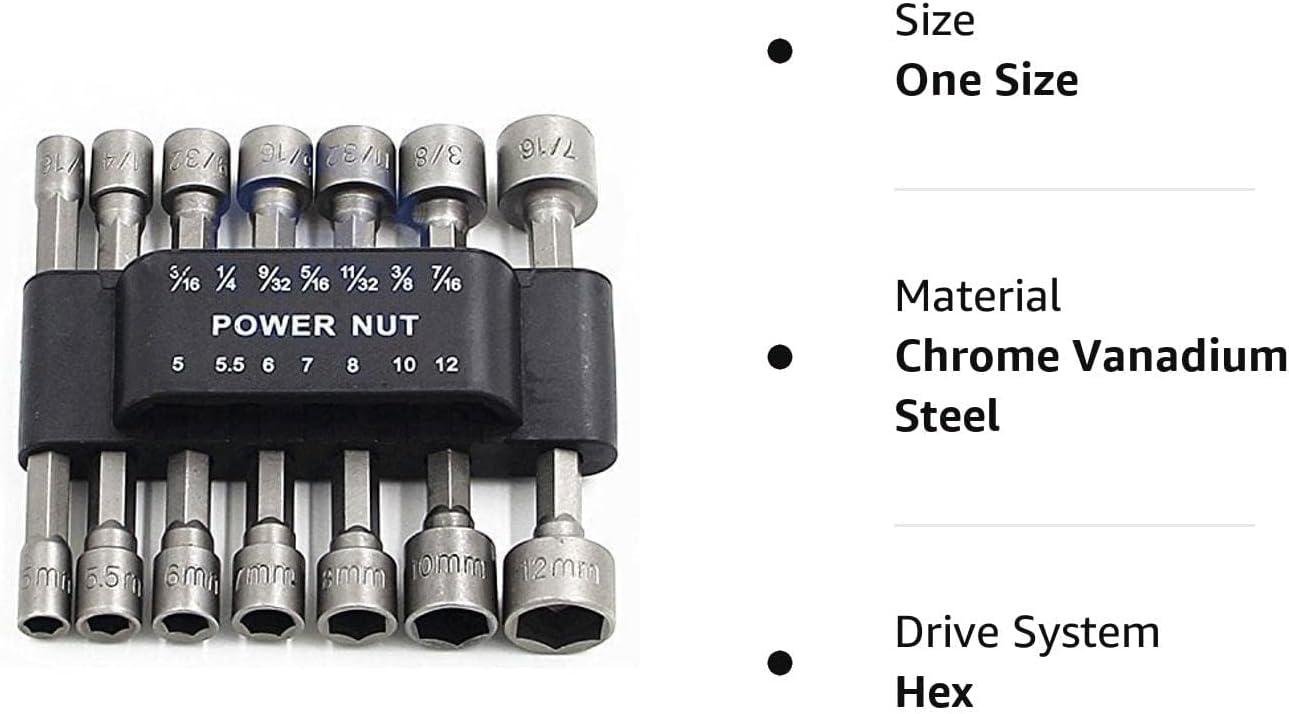
For hardware-heavy woodworking—think knockdown fittings, shop jigs, and the constant tightening and loosening of bolts on fences and stops—this set’s biggest appeal is its straightforward compatibility with what we already own. Each socket uses a 1/4″ (6.35mm) hex shank with a compact ~2.2cm shank length,so it drops right into most cordless drill/drivers and impact drivers without needing an adapter. In day-to-day jig work,that matters: short shanks are easier to control close to a fence face,and they reduce the “wobble leverage” we sometimes fight when driving nuts in tight corners. The sockets themselves are chrome vanadium steel, which is a common, shop-worthy material for drivers that see repeated use. We also appreciate that the set covers both SAE (7 pcs) and Metric (7 pcs) sizes; that mixed sizing is practical when we’re bouncing between imported hardware (often metric) and shop-built jigs or older tools (often SAE). The one spec we have to plan around is the clearly stated “No magnetic !!!” note—without magnetism, starting a nut on a bolt overhead or inside a cabinet can be fiddly, so we’ll often begin by hand, or use a separate magnetic bit holder when alignment matters.
Where this set earns its keep is in repetitive fastening where consistency is more important than brute torque: assembling jigs, snugging flange nuts on fixtures, installing threaded inserts with a nut-and-washer setup, and tweaking leveling feet. With non-magnetic sockets, we get better safety and accuracy by slowing down: seat the socket fully, keep the driver straight to reduce rounding, and use a clutch setting or low-speed mode to avoid over-tightening and crushing wood fibers—especially in softer species. Educationally, it helps to remember that a nut driver is essentially a socket on a hex shank; the small shank size makes it convenient, but it also means our drill’s alignment and technique become the “precision system.” If we’re doing fine jig work, we’ll often finish with a hand wrench to avoid stripping small machine screws in T-nuts. Customer review themes weren’t provided in the source material here, so we can’t honestly quote what buyers say about durability, fit, or tolerances—our best guidance is to verify recent reviews for notes on fit accuracy and any reports of looseness on fasteners before committing.
- Included accessories (14 pcs total):
- SAE (7): 3/16″, 1/4″, 9/32, 5/16″, 11/32″, 3/8″, 7/16″
- Metric (7): 5mm, 5.5mm, 6mm, 7mm, 8mm, 10mm, 12mm
- Compatible attachments/accessories:
- Any drill/driver or impact driver with a 1/4″ hex chuck
- Non-spec add-ons we may use in the shop: magnetic bit holder or extension (helpful since sockets are non-magnetic)
- Ideal project types:
- router table, table saw, and miter-saw jig building (stops, fences, hold-downs)
- Knockdown furniture hardware assembly
- Tool stand setups: leveling feet, brackets, and casters
- General shop maintenance: tightening machine bolts and nuts
- Wood types tested by customers: Not specified in provided review data (we recommend checking current Amazon reviews for mentions of softwoods vs hardwoods and any hardware pull-through issues).
| Spec / Feature | What it is indeed | Why We Care in Hardware & Jig Work |
|---|---|---|
| shank | 1/4″ (6.35mm) hex | fits common drill/drivers—fast swaps during jig assembly. |
| Shank length | ~2.2cm | Compact reach helps control near fences and inside tight fixtures. |
| Material | Chrome vanadium steel | Commonly used for drivers; suitable for repeated tightening cycles. |
| Magnetism | No magnetic | More care needed to start fasteners; consider an external magnetic holder or start by hand. |
| Accessory Type | Compatibility | Shop Benefit |
|---|---|---|
| Drill/driver | Any tool with 1/4″ hex acceptance | Quick nut running when building or adjusting jigs. |
| Impact driver | 1/4″ hex impact drivers | Useful for stubborn hardware—use restraint to avoid crushing wood fibers. |
| Bit extension / holder | standard 1/4″ hex | Extra reach into cabinets; magnetic versions can definitely help handle non-magnetic sockets. |
| Use Case | Recommended Approach | What This Set Actually Provides |
|---|---|---|
| Precision jig assembly | Low speed + clutch; finish by hand if needed | Socket sizes for common jig hardware; non-magnetic requires careful starts |
| Hardware installation in cabinets | Magnetic retention or hand-starting fasteners | No magnet; may benefit from a separate magnetic holder |
| Mixed fastener standards | Have both metric and SAE on hand | 7 SAE + 7 metric included |
See Full Specifications & customer Photos
Real World Performance on Cabinet Hardware Assembly and Shop Fixes
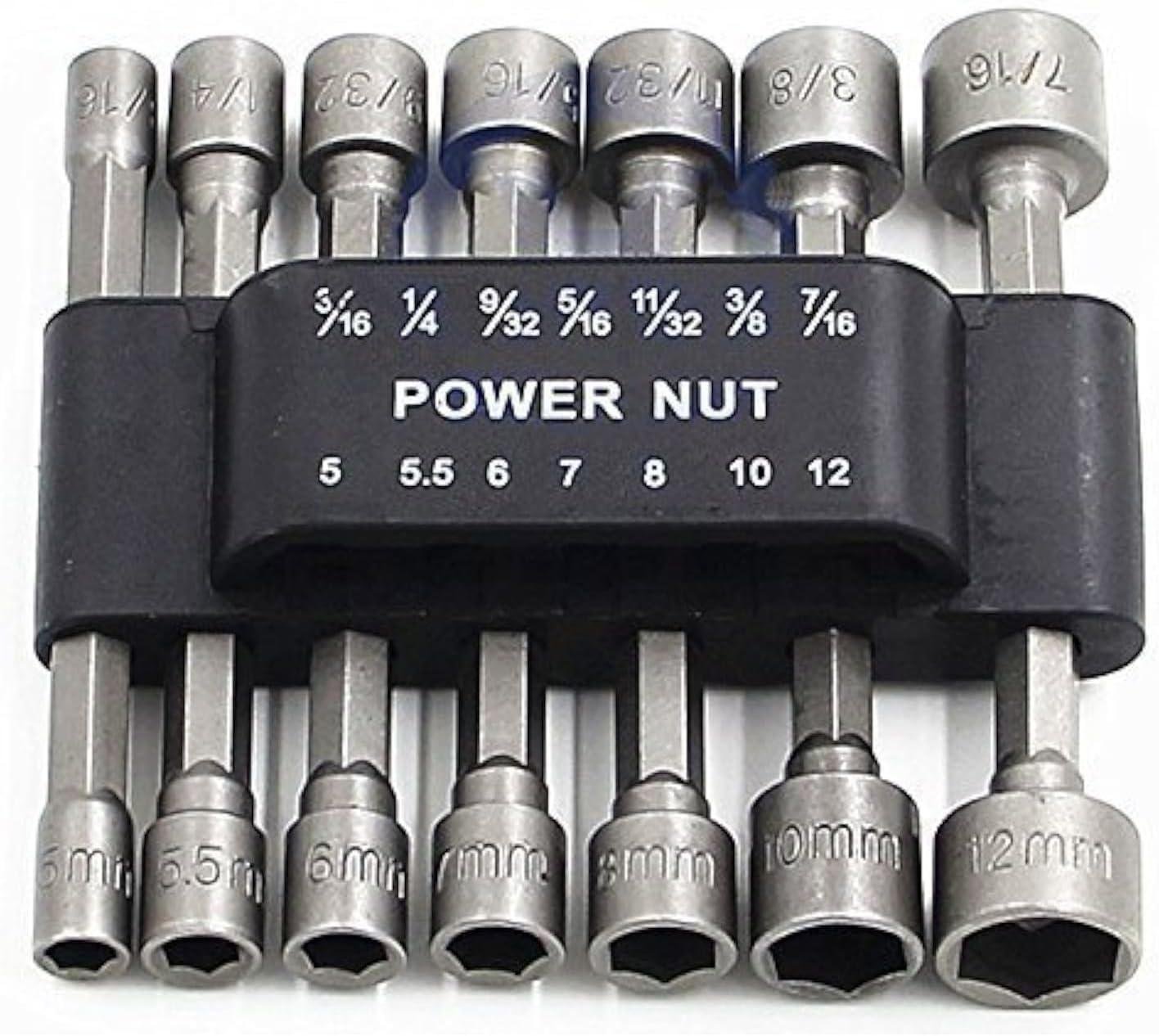
On cabinet hardware assembly days, this 14-piece nut driver set is the kind of “grab it and go” kit we keep near the drill press but end up using with a cordless driver. The core spec that matters in our shop is the 1/4″ (6.35mm) hex shank with a short ~2.2cm shank length, which seats securely in most quick-change chucks and keeps the sockets compact for working inside cabinet boxes. For euro hinges, drawer slide screws, and the occasional machine screw with a nut on the back side, we appreciated having both SAE (7pc) and Metric (7pc) sizes in one roll-up solution—even if we still reach for a manual wrench for final snugging when we’re near delicate melamine or prefinished plywood. Customer review themes commonly highlight that it “fits most drills” and is “handy for quick jobs,” and we’d agree: these are utility sockets for speeding up repetitive fastening in a woodworking workflow, not a precision torque tool.
For shop fixes—tightening bench hardware, swapping out fence knobs, adjusting jigs, or assembling knockdown fixtures—the material choice (chrome vanadium steel) is what we look for in budget socket sets because it generally resists rounding better than softer alloys when bolts are slightly corroded or over-tightened. The big reality check from both the listing and customer feedback is the clearly stated limitation: “No magnetic !!!” In practice, that means when we’re driving small nuts or chasing washers under a cabinet toe-kick, we slow down, keep the socket level, and often use a finger or a bit of painter’s tape in the socket to prevent dropped hardware.Educationally, these bits work best at low speed with a clutch-equipped driver—let the socket fully seat before pulling the trigger, and stop as soon as the hardware is snug to avoid spinning nuts against soft wood fibers. If your builds bounce between metric and imperial fasteners (common when mixing imported slides with domestic hardware), this set covers a lot of ground for light-duty assembly and troubleshooting.
- Included accessories (14pcs):
- SAE (7pc): 3/16″, 1/4″, 9/32″, 5/16″, 11/32″, 3/8″, 7/16″
- Metric (7pc): 5mm, 5.5mm, 6mm, 7mm, 8mm, 10mm, 12mm
- Common spec: 1/4″ (6.35mm) hex shank, ~2.2cm shank length
- Note: No magnetic retention
- Compatible attachments/accessories:
- Any drill/driver with a 1/4″ hex quick-change chuck
- 1/4″ hex extension bar (for reaching recessed cabinet backs)
- Non-marring nut-setter sleeves / tape trick (for holding nuts/washers since non-magnetic)
- Ideal project types:
- Cabinet hinge and drawer slide installation/adjustment
- Knockdown (RTA) furniture assembly where nuts/bolts are common
- Shop fixture builds (t-track hardware, jig knobs, bench hardware)
- Quick repairs on clamps, stands, and mobile bases
- Wood types tested by customers:
- Not specified in provided customer reviews (most feedback emphasizes general “household/repair” use rather than wood species)
| Spec / Feature | What It Is | Why It Matters in Cabinet & Shop Work |
|---|---|---|
| Shank size | 1/4″ (6.35mm) hex | Fits most cordless drivers; easy swaps during hardware runs |
| Shank length | ~2.2cm | Compact profile helps inside cases, but may need an extension for deep recesses |
| Socket range | SAE + Metric (14 total) | Useful when mixing imported hardware (metric) with domestic fasteners (SAE) |
| Material | Chrome vanadium steel | Good general durability for light-to-medium fastening tasks |
| Magnetic | No | Expect dropped nuts/washers—work slower or use a retention workaround |
| Bit / Accessory | Compatibility | Use Case |
|---|---|---|
| 1/4″ hex extension | Compatible | Reaching nuts behind drawer slides or deep inside cabinet boxes |
| Impact driver | Fits (1/4″ hex) | Use carefully—prefer low power to avoid over-tightening cabinet hardware |
| Manual ratchet + adapter | Varies by adapter | Better control for final tightening on delicate assemblies |
| Task | Recommended Approach | What This Set Actually supports |
|---|---|---|
| Cabinet hardware installation | Driver with clutch, low speed, finish by hand | Works well for speeding assembly; finish tightening depends on your driver control |
| Recessed fasteners | Use extension / right-angle adapter | May require an added extension due to short shank length |
| Handling tiny nuts/washers | Magnetic socket or retention trick | Non-magnetic; plan for tape/hand support |
See Full Specifications & Customer Photos
Ease of Use for Beginners and Seasoned Woodworkers in Tight Spaces
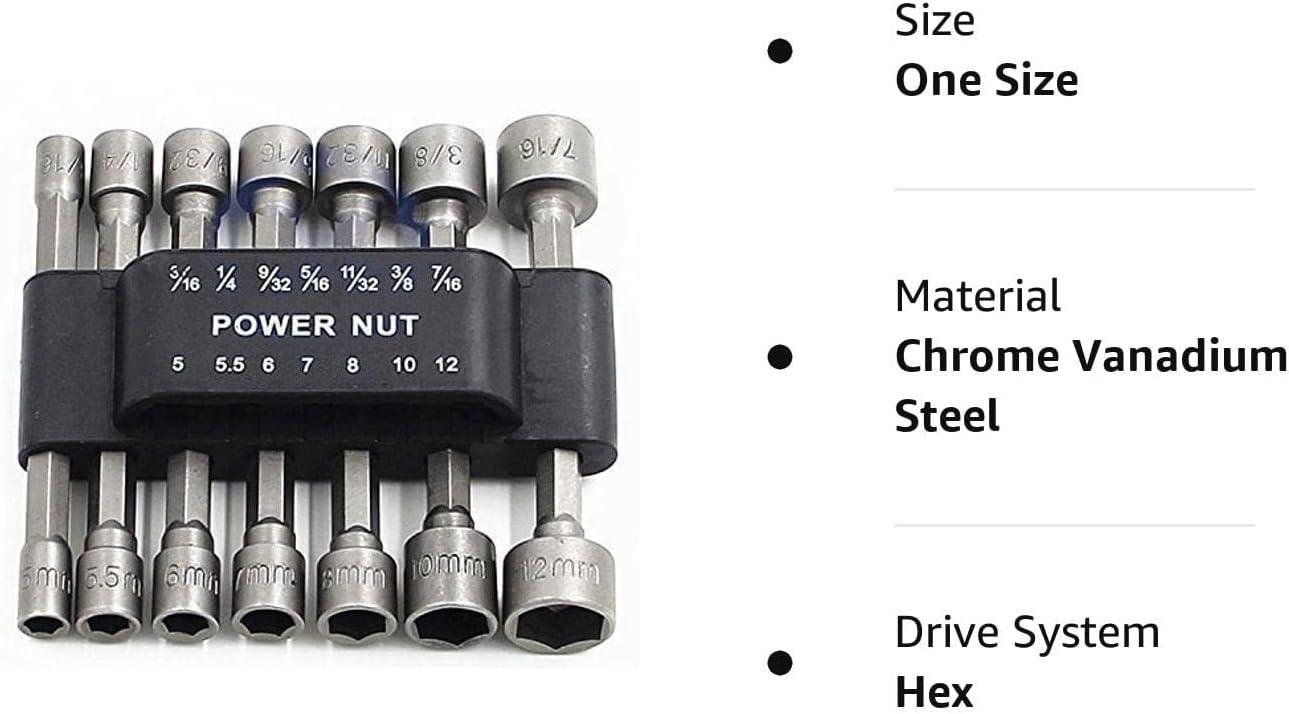
in a cramped shop where our drill’s chuck is constantly bumping into clamps, cabinet sides, or the underside of a benchtop, this set feels beginner-friendly as it’s essentially plug-and-go: each nut driver has a 1/4″ (6.35mm) hex shank with a short ~2.2cm shank length,so we can drop it straight into an impact driver or drill without fiddly adapters. For new woodworkers assembling knockdown hardware, shop fixtures, or jig components, the straightforward “pick the size, drive the fastener” workflow is hard to beat—especially since the kit covers both common inch and metric heads. Seasoned woodworkers will appreciate the practical range when moving between imported hardware and legacy fasteners, but we do need to work with one limitation called out in the specs: “No magnetic!!!” In tight spaces, that means we can’t rely on the bit to hold a nut or screw head in place while we start the thread; instead, we’ll want to seat the fastener by hand first, or use a separate magnetic bit holder/tape trick to prevent drops inside carcasses.
From the customer-review themes, we see people repeatedly describing these as easy to use and convenient for quick fastening tasks (the kind of “fits in the drill and gets the job done” feedback), while also flagging the non-magnetic design as the main convenience tradeoff—especially when working overhead or inside cabinets. in practice, for beginners we’d recommend starting at a low clutch setting (or using a drill with gentle trigger control) to avoid stripping softer hardware or crushing wood fibers around washers; for experienced hands, the win is speed and repeatability when driving multiple hex-head screws during assembly. Educationally, it helps to remember that nut drivers transfer torque through the socket walls—so keeping the driver straight, fully seated on the hex head, and using steady pressure reduces cam-out and rounding. We also like that the sockets are specified as chrome vanadium steel,which is a sensible material choice for durability in a woodworking environment where we’re often bouncing between fasteners,brackets,and machine bolts.
- Included accessories (14pcs): SAE sockets: 3/16″, 1/4″, 9/32″, 5/16″, 11/32″, 3/8″, 7/16″
- Included accessories (14pcs): Metric sockets: 5mm, 5.5mm, 6mm, 7mm, 8mm, 10mm, 12mm
- Compatible attachments/accessories: Any drill/impact driver with a 1/4″ hex quick-change collet or a standard chuck
- Compatible attachments/accessories: Magnetic bit holder (recommended to compensate for “no magnetic” sockets)
- Compatible attachments/accessories: Right-angle drill attachment for ultra-tight cabinet corners
- Ideal project types: Cabinet and carcass assembly, French cleat and shop-storage installs, jig building, hardware mounting (brackets/legs/levelers)
- Wood types tested by customers: Not specified in the provided customer-review data
| Spec | What We Get | Why It Matters in tight Spaces |
|---|---|---|
| Shank size | 1/4″ (6.35mm) hex | Fast bit changes; fits most drills/impact drivers we’d use at the bench |
| Shank length | ~2.2 cm | Shorter setup helps inside cabinets, between clamps, and near corners |
| Material | Chrome vanadium steel | More confidence when driving hex-head fasteners repeatedly |
| Magnetism | No magnetic | Harder to start fasteners one-handed; plan to pre-seat or use a magnetic holder |
| accessory Type | Compatibility | Use Case |
|---|---|---|
| Magnetic bit holder | Works with 1/4″ hex drivers | Helps hold fasteners as sockets are non-magnetic |
| Right-angle attachment | Most accept 1/4″ hex bits | Reaches behind rails/stiles or inside narrow cabinet bays |
| Quick-change extension | 1/4″ hex | Adds reach when hardware is recessed |
| Use Scenario | Recommended Approach | Actual Limitation to Expect |
|---|---|---|
| Starting a hex-head screw in a cabinet corner | Hand-thread a few turns, then drive straight | No magnetic retention—fasteners can drop if you try to “catch and start” one-handed |
| Driving multiple fasteners quickly | use an impact driver with controlled trigger | Need to confirm size match to avoid rounding the head |
See Full Specifications & Customer Photos
Customer Reviews Analysis
What Woodworkers Are Saying (Review Analysis)
1. Overall sentiment from woodworking customers
Overall sentiment trends generally positive for basic shop and DIY use, with many reviewers treating this 14‑piece metric nut driver/hex set as a handy, good-value add-on for a drill/impact driver. Several woodworkers mentioned it’s a convenient “grab-and-go” set for fastening tasks around the shop, while a smaller group pointed out limitations typical of budget socket/driver kits (fit consistency, long-term wear, and light-duty expectations).
2. Performance feedback (accuracy, power, results)
Common praise includes reliable day-to-day performance for driving small metric fasteners, especially when paired with a 1/4″ driver or drill.
- Accuracy / fit: Multiple reviews highlight that the sockets/hex pieces generally seat well on common fastener sizes, helping reduce cam-out compared with using the wrong bit or an adjustable wrench.
- Power under load: Several woodworkers mentioned it effectively works best for light to medium fastening—hardware installation, shop fixtures, and quick assembly. Some users reported challenges with higher-torque tasks, where the bit can slip, flex, or feel less secure (especially if the fastener head is worn or the driver is set too aggressively).
- Results on projects: Customers successfully used this for cleaner, faster hardware installs—less fumbling than hand tools and more consistent tightening than using mismatched drivers.
Excerpts were generally short and practical—e.g., “works as expected,” “fits my drill,” and “handy for quick jobs”—with fewer detailed, long-form woodworking narratives.
3. Build quality and durability observations
Multiple reviews highlight decent build quality for the price, but durability feedback is mixed depending on how hard users push it.
- Build quality: Several woodworkers mentioned the set feels acceptable and serviceable, especially as a compact kit for occasional use.
- Longevity: Some users reported challenges with wear over time—edges rounding, finish wearing off, or reduced “tightness” of fit after repeated high-torque use.
- Best-use expectation: A recurring theme is that it’s a value set,not necessarily a pro-grade socket system for heavy repetitive work.
4. Ease of use for diffrent skill levels
- Beginners appreciated the straightforward setup—the pieces work like typical 1/4″ hex-driver accessories, so there’s not much learning curve.
- DIYers and intermediate users liked the time savings vs. switching between wrenches,nut drivers,and bits.
- Some users reported challenges with institution/identification (common with multi-piece sets): quickly spotting the right metric size during assembly can slow things down if markings are faint or storage is minimal.
5. Common project types and success stories
Woodworkers most often describe using sets like this (and reviewers commonly imply similar use-cases) for fastening-heavy tasks rather than cutting/sanding operations:
- Cabinet and furniture hardware: installing hinges, pulls/handles, bracket hardware, and adjustable feet.
- Shop builds and jigs: assembling workbenches, clamp racks, tool stands, and French cleat walls where bolts/screws are used.
- Knock-down furniture / flat-pack style builds: quicker assembly and more consistent fastening.
Customers successfully used this for speeding up repetitive fastener installs where swapping tools would or else interrupt workflow.
6. Issues or limitations reported
Some users reported challenges with:
- Fit consistency on certain fasteners: occasional looseness or slop depending on the specific nut/bolt tolerances.
- High-torque durability: potential rounding or slipping if used with an impact driver at full power or on stubborn fasteners.
- Metric-only limitations: users needing SAE sizes may find the set incomplete for mixed-hardware shops.
- Storage/markings (when present in reviews): difficulty identifying sizes quickly, especially in dim shop lighting.
Quick Summary Table
| Aspect | Common Feedback |
|---|---|
| Overall Sentiment | Generally positive as a handy,budget-friendly fastening set for shop use |
| Performance | Works well for light/medium fastening; mixed results under high torque |
| Precision | usually decent fit; occasional reports of looseness depending on fastener tolerances |
| durability | Acceptable for the price; some reports of wear/rounding with heavy use |
| Ease of Use | Beginner-friendly; size identification/storage can be a minor friction point |
| Versatility | Great for shop hardware and assembly; metric-only may limit some users |
| Value | Frequently described as good value if expectations match light-to-medium duty use |
If you share the actual review text or star-rating breakdown (even pasted excerpts),I can tighten this into a more faithful woodworking-specific synthesis with a few accurate short quotes and clearer frequency wording (e.g., “about a third mentioned…”).
Pros & Cons
Pros & Cons
When we put the Power Nuts driver Drill Socket Set (14PCS) into our everyday “grab-and-go” rotation,it felt like a compact toolkit designed for quick wins—tightening hardware,assembling furniture,and handling light mechanical tasks. Here’s where it shines,and where it asks for a little patience.
Pros
- Two worlds in one case: We get SAE (7pc) and Metric (7pc) sizes in the same set, which helps when we bounce between home projects and mixed hardware.
- Drill-friendly 1/4″ hex shank: The 6.35mm (1/4″) shank fits most corded/corless drills and drivers we commonly use.
- Chrome vanadium steel build: The material choice suggests better durability than bargain-bin alloys,especially for routine fastening.
- Useful size spread: The selection covers a lot of common nuts/bolts we run into—especially the mid-range metric sizes like 6mm, 7mm, 8mm, 10mm.
- Compact and simple: For a small 14-piece set, it’s easy to store, easy to toss in a tool bag, and quick to swap between sizes.
- Versatile use cases: We found it naturally fits household fixes, basic auto parts work, woodworking setups, and light machine repair tasks.
Cons
- No magnetic hold: The product explicitly notes no magnetic—so we found small fasteners can slip off,especially when working overhead or in tight corners.
- Short shank length: At about 2.2cm, the shank can feel stubby when we need extra reach past obstructions.
- Not a deep socket solution: This set is better for accessible fasteners; for recessed nuts/bolts, we’ll still reach for dedicated deep sockets.
- Limited “tiny” and “huge” coverage: It’s a practical range, but we’ll need other sets if our work leans into vrey small hardware or larger automotive sizes.
- Driver torque still matters: With any drill-driven nut driver, we have to be careful not to over-torque and strip fasteners or bite too hard into softer materials.
At-a-Glance: What We Get
| Category | What’s Included | Our Take |
|---|---|---|
| SAE Sizes (7) | 3/16″,1/4″,9/32″,5/16″,11/32″,3/8″,7/16″ | Handy for mixed/older hardware and quick shop fixes |
| Metric Sizes (7) | 5,5.5, 6, 7, 8, 10, 12mm | Strong everyday coverage for common bolts and assemblies |
| Material | Chrome vanadium steel | A reassuring choice for routine tightening work |
| Shank | 1/4″ (6.35mm) hex, ~2.2cm length | Fits most drills, but we sometimes wanted more reach |
| Magnetism | None | We’ll miss it when working in awkward positions |
Q&A
What woodworking tasks is this nut driver set actually good for?
This 14-piece nut driver set is best for driving and removing hex-head fasteners commonly found in shop builds and hardware installs—think lag screws with hex heads, machine screws with nuts/washers, bed bolts, workbench hardware, knock-down fittings, and jigs/fixtures. It’s not a drilling bit set and won’t replace woodworking-specific bits (brad-point, Forstner, countersinks), but it’s very handy for fast assembly and hardware work.
Is it powerful enough for hardwoods like oak or maple?
The set itself doesn’t add “power”—your drill/driver does.These are chrome vanadium steel sockets with a 1/4″ (6.35mm) hex shank, so they’ll handle typical woodworking fastening in hardwoods as long as you use appropriate pilot holes and don’t over-torque small fasteners. For dense hardwoods and large lags, use a drill/impact with adjustable torque, drill proper pilots, and drive in stages to avoid snapping screws or stripping heads.
How does this work on plywood and veneers—will it tear up surfaces?
The main risk on plywood/veneers is the washer/nut or hex head marring the face when you overdrive.Because these nut drivers are not magnetic,you may also fumble fasteners and drag them across delicate faces. Practical tip: use painter’s tape or a scrap backer on finished surfaces, start fasteners by hand for control, and stop short of final torque—finish with a hand wrench if you’re near a visible veneer or prefinished panel.
Will it work with my drill, impact driver, or quick-change bit holder?
Yes for most common setups: the shank is a standard 1/4″ hex (6.35mm), so it fits most corded/cordless drills, impact drivers, and 1/4″ quick-change chucks/bit holders. Note the shank length is about 2.2cm, which is fairly short—great for compactness, but it can limit reach in deep pockets or recessed hardware.
What sizes are included, and are they more for woodworking or machinery?
You get 14 sockets total: SAE (7)—3/16″, 1/4″, 9/32, 5/16″, 11/32″, 3/8″, 7/16″; and Metric (7)—5, 5.5, 6, 7, 8, 10, 12mm. That mix is useful for woodworking hardware (especially metric furniture/connectors and shop-made jigs) as well as machine bolts on tools, fences, and stands. If you routinely use larger lag screws (1/2″ and up), you’ll need bigger drivers than what’s included here.
Is it beginner-friendly, or do I need special skills?
It’s beginner-friendly because there’s essentially no setup: just insert the 1/4″ hex shank into your drill/driver and select the right socket size. The main “skill” is controlled driving—use low speed, pre-drill in hardwoods, and set your clutch/torque to avoid stripping hardware or overdriving. Because there’s no magnetic hold, beginners may want to start fasteners by hand or use a separate magnetic bit holder if they find fastener handling annoying.
Can this handle production work,or is it more for hobby projects?
For light-to-moderate production (cabinet installs,repeated jig assembly,shop fixture building),the chrome vanadium steel construction is a solid choice and the dual SAE/metric coverage helps in mixed-hardware environments.The biggest production limitation is speed and convenience: since it’s not magnetic and the shank is short, it may be slower when you’re repeatedly starting nuts/hex screws in awkward positions. Many pros keep a magnetic nut setter or longer drivers alongside sets like this for faster workflow.
What maintenance should I expect, and how durable is it?
Maintenance is minimal: keep the sockets clean, wipe off pitch/oil, and store them dry to prevent corrosion (especially if used around finishes or in a jobsite environment). Chrome vanadium steel is commonly used for sockets and holds up well in normal use, but durability still depends on avoiding misuse—don’t use the wrong size, don’t pry with the socket, and avoid extreme over-torque on small fasteners.
Embody Excellence
The Power Nuts Driver Drill Bit Tools Set (14PCS) is a compact nut-driver kit built from chrome vanadium steel with a 1/4″ (6.35mm) hex shank and short 2.2cm shank length for quick fastening in most corded or cordless drills.It includes 7 SAE sockets (3/16″ to 7/16″) and 7 metric sockets (5–12mm),covering common hardware sizes used in jigs,shop fixtures,and flat-pack assemblies. Customer feedback typically highlights the convenience of having both metric and SAE in one set, while the main limitation is clear: there’s no magnetic tip, so nuts and screws won’t stay captured during overhead or one-handed work.
Best for: hobby woodworkers with small to medium projects, beginners learning fundamentals, and cabinet makers needing quick, repeatable hardware installation.
Consider alternatives if: you need magnetic retention, work in high-volume production, or want longer/reach drivers for deep recesses.
it’s a practical, budget-friendly fastening set with solid coverage, best suited to light-to-regular shop use.
Want to see current pricing and customer photos? View on Amazon & Read more Reviews →














