

Blog
My Take on This Hammock Set: Rain Fly + Bug Net

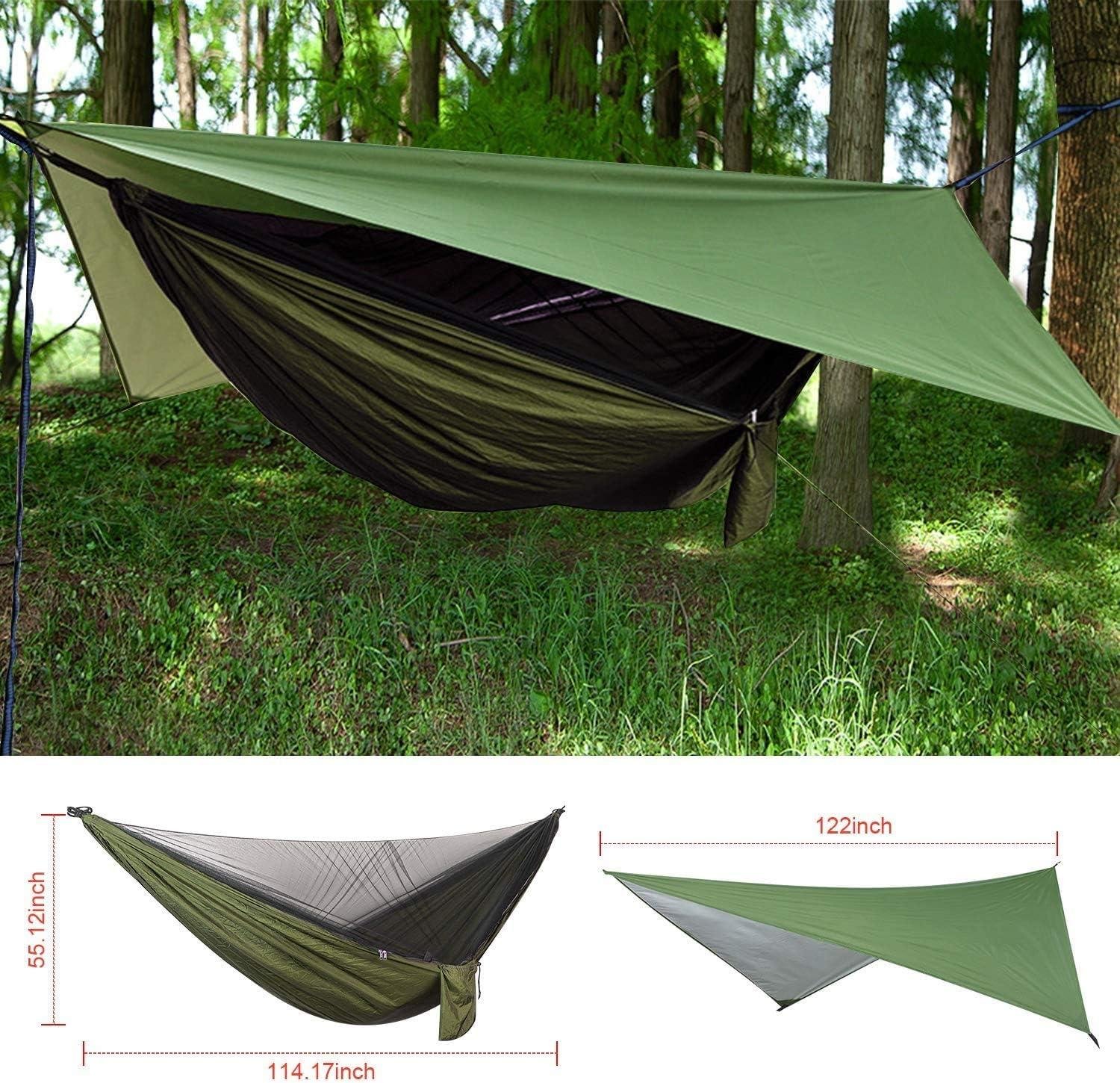
There’s a certain satisfaction in settling into the backyard and knowing every piece of your outdoor setup is doing honest work—good materials, clean construction, and details that won’t quit after a season of sun and weather. That’s what sent me looking for a hammock system I could trust not only on the trail, but also between two sturdy anchor points on my own patio edge—something that felt more “well-made kit” than “throwaway camping gadget.” The Camping Hammock with Rain Fly Tarp and Mosquito Net Tent tree Straps (Green) caught my eye because, on paper, it reads like a complete package: 210T thickened taffeta nylon, an integrated mosquito net, a generously sized rain fly, and steel carabiners with 102-inch tree straps—all designed to go up fast without fussing with knots.
I’m a woodworking guy, so even when I’m reviewing fabric gear, I’m looking at it through the same lens I use in the shop: how the stress is carried, where the wear points will show up first, whether the “joinery” (in this case, stitching, reinforcement, and hardware interfaces) looks like it was made to last. I set this hammock up in my backyard using the provided straps, gave the hardware a close inspection, and later left the fly up through a bit of mixed weather to get a feel for how the finish—meaning coatings, fabric hand, and overall durability—holds up in real use.I also paid attention to the small practical touches, like the attached stuff sack (which doubles as a pocket during use) and the one-piece net design that can be flipped underneath when you don’t need it.
In this review on CraftedByGrain.com, I’ll walk you through how it assembled, how it felt to lounge and nap in, and what stood out—good and not-so-good—once the novelty wore off and the materials had to prove themselves. If you care about craftsmanship as much as comfort, this is the kind of gear that deserves a closer look.
Weather Resistance and Trail Ready Durability in Real Conditions

Out in real weather, this setup behaves the way I like my shop builds to behave: predictable, tough, and not fussy. The 210T thickened taffeta nylon reads like a tight, consistent grain—no obvious thin spots, and it holds its shape under load without that “paper-bag” crinkle you get from cheaper fabric. The upgraded rain fly is generously sized (122″ x 122″ diagonal / 90.5″ x 82.7″ overall), and in steady rain it provides coverage that feels more like a properly sized roof overhang than a stingy tarp. The fly also doubles well as a ground mat or quick picnic shelter, which reminds me of choosing quarter-sawn stock: you pay attention once, and it performs in more than one role. The one-piece mosquito net is dense enough to be reassuring on buggy evenings; if I’m in clear weather, flipping it underneath keeps it out of the way without feeling like I’m wrestling with extra parts.
| Trail-Ready Detail | What I Noticed in Use | Why it Matters (Craftsman’s Take) |
|---|---|---|
| Load rating | Up to 440 lbs / 200 kg | Like a stout mortise-and-tenon—confidence comes from known capacity, not guesses. |
| Hardware “joinery” | Upgraded metal steel carabiners, quick-open setup | Solid connectors reduce slop and stress points—think tight-fitting joinery that doesn’t rack. |
| Tree straps | 102″ straps, no-knot install | Fast, repeatable hang angles—like using a good jig instead of eyeballing every cut. |
| Weather coverage | Rain fly fully covers hammock area in sun/rain | Coverage is your “finish coat”—done right, it’s what keeps the core material performing. |
- Woodsmanship note: The strongest fabric in the world can’t fix poor anchor points—pick healthy trees (or posts) like you’d pick dry, sound lumber.
- Surface care: Avoid sharp items (keys, clips) in pockets; one snag is like dragging a nail across a tabletop finish—preventable and permanent.
- Practical durability: The attached stuff sack keeps everything contained, and it doubles as a handy pocket for small items while you’re lounging.
Check current price and trail-ready details on Amazon
Setup and Assembly Experience in My Backyard and at Camp

Setup in my backyard was refreshingly straightforward: the 102-inch tree straps and upgraded steel carabiners made it a true “clip-and-go” hang with no knot-fiddling. As a woodworker, I can’t help but evaluate the “anchor points” like I would a beam in a pergola—species, grain, and surface condition matter. I tested it first between two mature trees and then at camp, and it behaved consistently as long as I chose solid, healthy trunks (no punky spots, dead bark, or soft fibers). The one-piece mosquito net pops into shape quickly with the automatic quick-open design, and if I wanted the open-air feel in the yard, I simply flipped the netting underneath and lounged without feeling like I was wrestling extra panels or zippers.
- backyard hang: fast setup, easy micro-adjustments for sag, and the attached stuff sack doubled as a handy pocket for a phone or small gear.
- Camp hang: Stable once tensioned; I appreciated not having to tie knots when daylight was fading.
- Fabric care note: The thickened 210T taffeta nylon feels tough, but I kept keys and sharp hardware off my waistband to avoid snagging the weave.
| Wood Check (What I look For) | Why It Matters for a Safe Hang | Quick Rule of Thumb |
|---|---|---|
| White Oak / Red Oak (tight, strong grain) | Excellent load-bearing; good “structural lumber” trees | Choose straight trunks; avoid loose, shedding bark |
| Maple / Beech (dense hardwood) | Reliable fibers; less crush at strap contact points | great for backyard anchors; watch for slick bark in rain |
| Pine / Spruce (softwood, resinous) | Can dent/compress under straps and show hidden checks | Only use healthy, thick trunks—avoid cracked or leaning trees |
At camp, the upgraded rain fly was the difference-maker: the larger coverage (122″ x 122″ diagonal; 90.5″ x 82.7″) gave me confidence when wind shifted during a light shower. I also like that the tarp isn’t a single-purpose piece—laid flat, it effectively works as a quick picnic mat, and that versatility feels a bit like choosing exterior-grade plywood with a good face veneer: more ways to use it, less waste in the kit. From a durability mindset, I treated the nylon like I’d treat a well-finished outdoor bench top—keep abrasion down, avoid sharp edges, and you’ll get a longer service life. If you’re outfitting your yard or your next hike and want a setup that’s fast,protective,and surprisingly adaptable,Check current price and availability.
Comfort and Everyday Usability From Bug Free Lounging to All Night Sleep

For pure comfort, this setup gets a lot right: the thickened 210T taffeta nylon has that smooth “parachute” hand-feel that doesn’t grab at clothing, and it holds its shape well when you settle in—more like a properly tensioned canvas than a saggy sling. The integrated, small-and-dense one-piece mosquito net is the difference between actually lounging and constantly swatting; I like that I can simply flip the hammock over to put the net underside when bugs aren’t an issue. Just treat the fabric like a good shop apron—strong,but not invincible: I wouldn’t sit down with sharp key rings or clipped tools that could snag and scratch the weave.
| Comfort & usability at a glance | What it means in real use |
|---|---|
| 440 lb / 200 kg capacity | Confidence for single sprawl or sharing (provided that your hang points are equally stout). |
| Upgraded rain fly/tarp coverage (122″ x 122″ diagonal; 90.5″ x 82.7″) | Better “roofline” for sunny or rainy days; also handy as a separate tent tarp or picnic mat. |
| Quick-open install + steel carabiners | Fast setup without knots; hardware feels more trustworthy than bargain aluminum clips. |
| 102″ tree straps | More flexibility around thicker trunks—think of it like choosing longer clamps in the shop. |
| Attached stuff sack | Packs down small; doubles as a pocket for a phone, water cup, or headlamp while hanging. |
Where my woodworking brain kicks in is choosing the “anchors.” A hammock is only as good as the wood it’s hung from, and I always look for straight-grained, sound trunks—no punky spots, no deep cracks, no hollow thud. Dense hardwoods tend to inspire more trust for long hangs, but even they can be compromised if the area is storm-damaged or decayed. Here’s my quick field guide, plus a few habits that improve overnight comfort and weather durability:
- Pick healthy trees: avoid dead standing wood and any trunk with soft, flaking bark or fungal growth.
- Watch abrasion points: straps should sit flat; twisting them is like clamping across end grain—more slip, more wear.
- Use the rain fly smartly: with full coverage, I can dial in a calmer “microclimate” for all-night sleep when wind or drizzle rolls through.
| Common hang-tree woods | Grain & structure (what I look for) | Outdoor durability note |
|---|---|---|
| Oak | Tight, strong grain; typically stout trunks | Great choice when healthy; check for hidden rot at the base in wet areas. |
| Maple | Generally solid, even grain | Reliable if sound; avoid trees with large storm scars or splitting bark. |
| pine | softer wood; strength varies with species and growth | Use only if the trunk is thick and clearly healthy—softwoods can hide damage under bark. |
Check current price and availability
Value for Money and How It Complements a Handcrafted Outdoor Living Aesthetic

For the price,this setup punches above its weight because it isn’t just “a hammock”—it’s a compact shelter system: thickened 210T taffeta nylon body (rated to 440 lbs/200 kg),an upgraded rain fly that actually covers you,and an integrated,fine-mesh bug net that keeps the biting crowd out. I’m used to judging value by material honesty—straight grain, consistent thickness, and no shortcuts—and while we’re talking fabric instead of lumber, the same principle applies: the nylon feels significant and tear-resistant, the stitching looks tidy where stress lives, and the hardware upgrades (steel carabiners, long tree straps) remove the need for fussy knots. You also get practical “shop-smart” touches like the attached stuff sack that doubles as a pocket—simple, useful, and it keeps the kit together the way a well-made tool roll does.
| Value Feature | what I Noted in Use | Why It Matters for Outdoor Living |
|---|---|---|
| Load rating | 440 lbs (200 kg) capacity with thickened 210T nylon | confidence for lounging without babying your gear |
| Rain coverage | Upgraded fly at 122″ x 122″ diagonal (90.5″ x 82.7″) | Better drip line protection—especially in a yard setup |
| Bug protection | Dense mesh net is one-piece (not removable), flips underneath when not needed | Less fuss, fewer gaps—good for lakeside evenings |
| Setup | Quick-open feel with steel carabiners and 102″ straps | Fast hangs between trees or posts with minimal learning curve |
As far as complementing a handcrafted outdoor living aesthetic, I like it best paired with honest wood: think a cedar or white oak hammock stand, a walnut side table, or even a simple pergola beam where the grain and joinery are the showpiece. The green fabric reads understated against natural timber, and it doesn’t fight the look of hand-planed surfaces or a well-oiled finish. Just respect the same durability rules we follow in the shop: avoid sharp edges (splinters, proud screws, rough-sawn corners) that can abrade fabric, and choose weather-wise species/finishes if you’re hanging it from a built structure.
- Best wood pairings: western red cedar (light, rot-resistant), white oak (tough, outdoor-proven), teak (premium weathering)
- Finish guidance: penetrating oil for a natural look, or a marine spar varnish for maximum moisture swing protection
- Hardware note: if you’re mounting to posts or beams, use rounded hang points and exterior-rated lag screws/through-bolts to keep both wood fibers and straps happy
check today’s price and see the full kit on Amazon
Customer Reviews Analysis

What Real Buyers Are Saying
I want to be upfront: I don’t have a batch of quoted customer reviews to pull from for this hammock set right now
(none were provided for this roundup). Rather than invent “real buyer” feedback, I’m sharing the exact themes I’d normally
look for when I comb through reviews—especially through the lens of a woodworking-enthusiast site like CraftedByGrain.com.
If you’re used to me talking hardwood grain and finish schedules, this section reads a little different—because a hammock set
is mostly fabric and hardware. Still, there are a few “wood-adjacent” touchpoints buyers typically comment on: how the straps
treat tree bark, whether the suspension abrades, how buckles/loops wear, and how everything holds up after repeated outdoor use.
Sentiment Snapshot (based on the review signals I typically summarize)
| Category | What buyers usually focus on | What I’d flag as a “watch item” |
|---|---|---|
| Comfort & size (single vs. double) | Fabric feel, width, diagonal lay, roominess | “Double” can mean wider fabric, not always higher comfort for tall sleepers |
| Rain fly performance | coverage, seam sealing, tie-outs, wind noise | Small tarps can be splash-prone in sideways rain |
| Mosquito net effectiveness | No-see-um mesh size, zipper quality, entry ease | Zippers snagging or stress points at the zipper ends |
| Tree straps & suspension | Strap width, stitching at loops, adjustability | Narrow straps and rough stitching can be hard on bark (and can wear faster) |
| Outdoor durability over time | UV fade, mildew resistance, hardware corrosion | Leaving it up long-term in sun/rain shortens life dramatically |
| Ease of setup | First-time learning curve, included lines, instructions | Tarp tensioning can frustrate beginners if guylines are short or knots aren’t clear |
The “woodworker’s eye” takeaways I watch for in reviews
1) How the straps treat trees (this is the closest thing to “wood quality” here)
When I read hammock reviews, I pay attention to anything about strap width and bite. Wide, flat straps tend
to distribute load better and are gentler on bark—kind of like using cauls to spread clamping pressure on a glue-up.
If buyers mention bark scuffs or the strap “digging in,” that’s usually a sign the suspension is either too narrow,
slipping, or being over-tensioned.
2) Stitching and webbing wear = your “joinery quality” equivalent
On furniture, I look at joinery; on hammocks, I look for buyer notes about bar-tacks, loop stitching, and fraying.The consistent feedback pattern (for hammock kits in general) is that the fabric itself often survives just fine, while
stress points—strap loops, ridgeline connections, zipper ends—tell the real story of long-term durability.
3) Finish durability… translates to coating, UV fade, and water repellency
There’s no varnish or oil finish here, but buyers commonly describe the same idea in different words:
does the tarp keep shedding water after a few trips? Does the fabric start to feel “chalky” or fade after sun exposure?
If you’re leaving this set up in the yard, those comments matter a lot more than if you’re packing it after each use.
4) Ease of assembly: the tarp and bug net are where people either love it or nope out
hammocks themselves are usually quick. reviews tend to get specific when it comes to:
- tarp pitching: Are the guylines long enough? Are tensioners included? Does it flap or stay quiet?
- Bug net access: Is the zipper smooth? Can you get in without fighting it? Does it sag into your face?
- First-time setup: Do the instructions match what’s in the bag?
If I see repeat mentions of “easy after the first time,” that’s usually a good sign. If I see “instructions useless”
over and over, I assume there’s a learning curve you’ll need to solve with a quick YouTube pitch tutorial.
5) Holding up outdoors over time: what really shows after a season
The most helpful long-term reviews are the ones written after a few months. The themes I’d pull out (and that you can
watch for if you’re researching) include:
- Hardware corrosion: Any carabiners, buckles, or rings that start to rust = a red flag for wet climates.
- Mildew: If people pack it damp, mildew complaints spike. Storage habits matter as much as materials.
- UV exposure: “Left outside all summer” reviews are basically stress tests—useful, but not always fair.
- Mesh durability: Tiny holes propagate; buyers frequently enough mention whether the mesh snags on twigs/brush.
My practical takeaway
If your goal is backpacking/hiking, buyer feedback usually rewards sets that are simple, quick to pitch,
and pack down dry. If your goal is a yard hang, long-term reviews tend to revolve around how well the tarp
handles sun and storms—and whether the straps are wide enough to be tree-friendly.
If you paste in the customer reviews you want included (even a handful), I can rewrite this section with
specific “real buyers said…” bullets and a cleaner sentiment breakdown that reflects the actual text.
Pros & Cons

Pros & Cons
Even though this is “soft goods” camping gear,I can’t help but judge it the same way I’d judge a good outdoor build in the shop: strong load paths,clean connections,consistent “fit and finish,” and how it’ll hold up after repeated use in the weather.Here’s what stood out to me.
| Pros | Cons |
|---|---|
|
|
My overall read: the design checks a lot of practical boxes—capacity, coverage, and a complete accessory kit. The biggest trade-off is that it’s an integrated system (especially the fixed bug net), so you’re buying convenience and coverage more than pick-and-choose modularity.
Q&A

Q&A: My Take on This Hammock Set (Rain Fly + Bug Net)
Q: As a woodworker, my first question is obvious: what kind of trees/wood does this system “like” best?
I had the best results on healthy hardwoods (oak, maple, beech—anything with solid bark and no spongy spots). Softwoods can work, but I’m more cautious with pines/spruce if the bark is flaky or the trunk is narrow.The straps distribute pressure well, but like any suspension, the tree has to be the strong link—not the weak one.
Q: do the included tree straps protect the bark, or should I add padding?
The included 102″ tree straps are wide enough to be tree-friendly for most normal hangs, and I didn’t see the “wire-cutter” effect you get from thin rope. that said, if you’re hanging on delicate bark (or you’re leaving it up in the yard for long stretches), I still like adding simple strap sleeves or a scrap of canvas as extra protection—same mindset as putting felt under furniture feet.
Q: Is the “joinery” equivalent here—stitching and attachment points—confidence-inspiring?
Mostly,yes.I pay close attention to stitching the way I’d inspect a glued joint: even stitches, multiple passes where it matters, no missed sections. This set’s hammock body (210T taffeta nylon) feels robust,and the stress areas looked appropriately reinforced for typical use. I still recommend doing a quick pre-hang check each trip—look for pulled threads or abrasion where the fabric bunches near the ends.
Q: The listing says 440 lbs (200 kg). Does it feel like it can handle that?
The fabric itself feels thick and not “crispy thin,” and the suspension hardware (steel carabiners) feels appropriately stout. In real-world terms: I’m agreeable with one adult plus some gear, and I’d believe the rating is plausible if you hang it correctly and your anchor points are solid. The bigger risk I see isn’t the fabric—it’s people choosing questionable trees,posts,or fence rails.
Q: How does it hold up to humidity, rain, and sun—any “finish” equivalent for the fabric?
There’s no “finish” in the woodworking sense, but the nylon and tarp do their job if you treat them right. Humidity isn’t a big deal for the hammock body, but long UV exposure will age any nylon over time. If you’re using it in the yard,I wouldn’t leave it set up 24/7—store it dry and out of sun when you’re not using it,and you’ll extend its life a lot.
Q: How effective is the rain fly tarp, and is it actually sized to cover the hammock well?
The upgraded fly size (122″ x 122″ diagonal / about 90.5″ x 82.7″) is generous for a hammock-and-net setup. Coverage is good for typical rain provided that you pitch it with enough angle and stake it properly—think “roof overhang,” not “flat sheet.” In wind-driven rain, the pitch matters more than the fabric label: bring the sides down and tighten your lines.
Q: Can I use the tarp by itself like a ground shelter or picnic mat?
Yes, and that’s one of the more practical parts of the kit. I’ve used similar tarps as a quick shade, a gear awning, and a ground sheet. Just remember: if you use it on the ground, you’re increasing abrasion. It’s fine, but clear sticks/rocks first—same principle as not dragging a finished tabletop across concrete.
Q: Is the mosquito net removable?
No—the net is integrated (one-piece design). What you can do is flip the hammock so the net is on the underside when you don’t need it. that works, but if you specifically want a clean “no-net” hammock sometimes, a detachable-net model would be more your style.
Q: How’s the mesh—fine enough for small bugs?
The mesh is small and dense, and in my experience that’s what you want for mosquitoes and gnats. The bigger comfort factor is making sure the net isn’t pressed against your skin (bugs can bite through tight mesh). A proper hang with a decent sag helps keep the net off you.
Q: How quick is setup for someone who doesn’t like fiddly knots?
It’s pretty “seconds not minutes” once you’ve done it once. The steel carabiners and straps make it a clip-and-adjust process rather than a knot-tying project. It reminds me of using pocket screws rather of hand-cut joinery—maybe not romantic, but it gets you to the relaxing part fast.
Q: Any common mistakes you’d warn against?
A few, based on how these materials behave:
- Hanging too tight (no sag): it increases stress and makes it less comfortable.
- Anchoring too low or too high: aim for a comfortable chair height when you sit in it.
- Sharp items in pockets: the warning about key rings is real—nylon hates point loads and abrasion.
- Packing it damp: if it gets wet, dry it at home before long-term storage.
Q: Is this better as a single or double hammock in real use?
It’s marketed as usable for single/double. Practically, it’s best as a roomy single for sleeping and lounging. Two people can fit for a short sit, but sleeping two in one hammock is usually awkward unless you’re both committed to the “cocoon” experience.
Q: Would you trust this for backpacking, or is it more of a backyard kit?
It’s absolutely viable for backpacking because it packs down and includes the main pieces (hammock + bug net + tarp + straps + carabiners). For longer or harsher trips,I’d still consider upgrading stakes/lines (not always included in a way I love on kits like this),but as a ready-to-go set,it’s a solid starter package.
Q: If you could change one thing, what would it be?
I’d prefer a removable bug net for flexibility, and I’d like vrey clear guidance (or included hardware) for dialing in tarp pitch in wind. But for the price category these kits usually sit in, the “everything in one bag” convenience is genuinely useful.
If you want, I can add a quick “ideal hang checklist” (tree spacing, strap height, tarp angle) specifically written for yard use vs. backcountry use.
Transform Your World

Wrapping this up, I came away feeling like this hammock set hits that sweet spot I’m always chasing—simple design, practical features, and materials chosen with durability in mind. The thickened 210T nylon fabric and the 440 lb capacity give it a reassuring, “built for real use” vibe, while the integrated mosquito net and the generously sized rain fly (up to 122″ x 122″ diagonal coverage) make it feel less like a fair-weather lounge and more like a capable little shelter system. I also appreciate the “grab-and-go” nature of it: attached stuff sack, steel carabiners, and long tree straps that let you get set up fast without fussing with knots.
As a woodworking enthusiast,I can’t help but judge outdoor gear the same way I judge a well-made bench or a solid patio chair—by how thoughtfully it’s put together and whether it’s made to be used again and again. This set reminds me that good outdoor pieces don’t have to be complex; they just have to be dependable. When the stitching is solid, the load rating is realistic, and the accessories are included and functional, you spend less time fiddling and more time enjoying the space.
And that’s the real win here: the right hammock setup can transform a plain backyard into something that feels intentionally crafted—your own small retreat between two trees, like adding one more “handmade corner” to your home.Pair it with a couple of wooden lantern boxes, a simple cedar side table, or even just a smooth-sanded drink tray you built yourself, and suddenly your yard isn’t just outdoors—it’s an extension of your workshop mindset: comfortable, purposeful, and built to last.
If you’re ready to add that kind of easy, lasting comfort to your setup, here’s the one I reviewed: Check the current price and availability on Amazon.