

Blog
Knipex 9K Pliers Wrench Review: Right for Our Shop?

Ever find yourself mid-assembly with a jamb nut that needs just a hair more snug, but your adjustable wrench keeps slipping, marring hardware, or simply won’t fit between clamps and a cabinet side? In small shops, where space is tight and precision matters, that kind of fussy hardware work can steal time (and patience) from the woodwork itself.
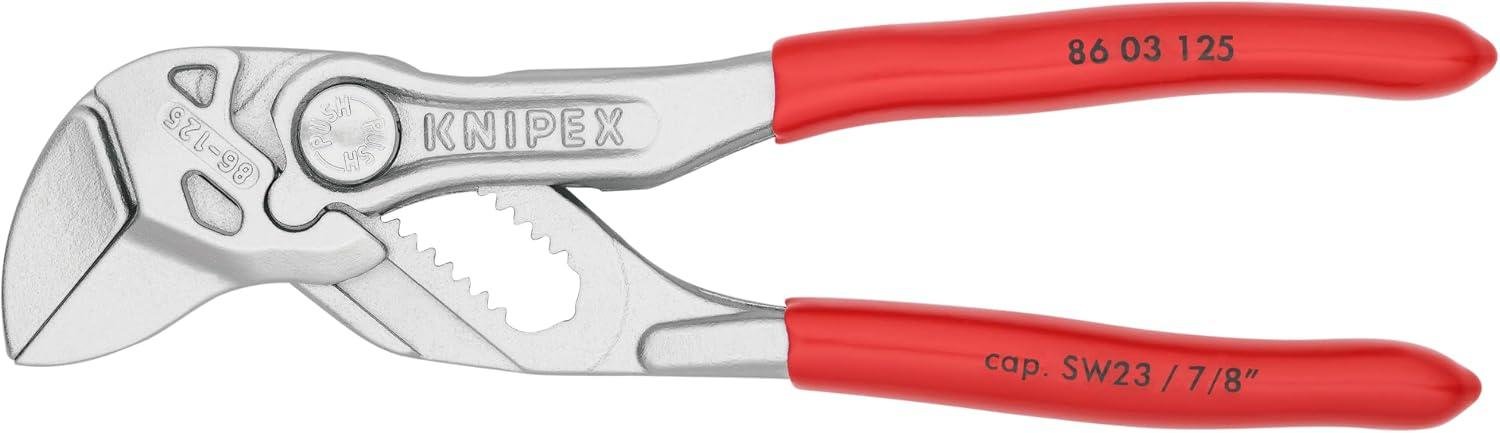
The Knipex Tools 9K 00 80 121 US Small Pliers Wrench Tool Set (2 Piece) pairs two pliers-wrench models-86 03 125 (5″, 11 adjustment positions, up to 7/8″ nuts) and 86 03 180 (7 1/4″, 13 positions, up to 1 3/8″ nuts). Both use parallel, smooth jaws for careful gripping, a push-button fast adjustment, and a ratchet-like action designed to reduce jaw shift and slipping.
In this review, we’ll break down the features, workshop-friendly use cases, durability cues, and who benefits most-especially beginners balancing budget vs. quality. We’re coming at this from years around benches, clamps, and hardware installs, relying on specs and what many customers report about control, finish-friendly jaws, and compact versatility.
Tool Overview and Build Quality in the Shop
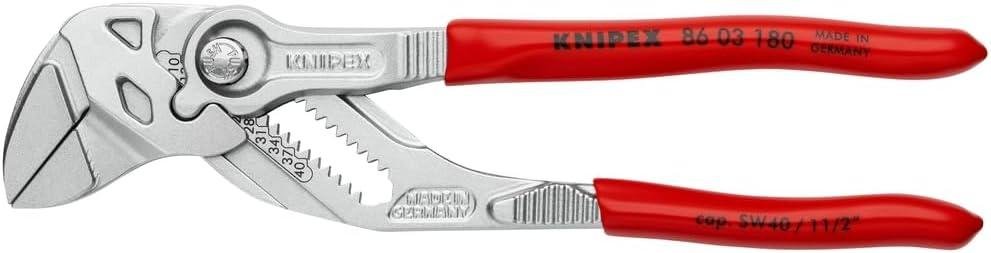
In our shop, the Knipex Tools 9K 00 80 121 US Small Pliers Wrench Tool Set (2 Piece) reads less like a “plier” purchase and more like adding two precision clamping/holding hands that don’t chew up hardware. The set includes the 86 03 125 (5 in.) and 86 03 180 (7 1/4 in.), and that size spread matters when we’re bouncing between tight, fussy tasks at the bench and slightly heavier-duty adjustments at an assembly table. The defining build-quality feature is the parallel, smooth jaws: instead of the toothy bite of traditional pliers, these jaws stay flat and even, which helps us avoid marring chrome, plated fittings, and softer finishes-a real concern when we’re installing boutique pulls, adjusting threaded levelers, or nudging jigs without leaving “tool tattoos.” Knipex’s push-button adjustment and the claim of a ratchet-like action with no unintentional jaw shift translate into a more controlled feel for woodworking-adjacent metalwork: we can set the width quickly on the workpiece, then squeeze with confidence that the setting won’t wander mid-torque.
From a practical standpoint, the capacity and adjustment ranges help us decide which one to grab before we even walk to the bench. The smaller 86 03 125 offers 11 adjustment positions and handles nuts up to 7/8 in., which fits a lot of the “shop life” hardware we see-fence accessories, knobs, light machine fasteners, and oddball fittings on dust collection and air tools. The larger 86 03 180 adds reach with 13 adjustment positions, a narrow jaw profile for slim access, and capacity up to 1 3/8 in.-useful when we’re coaxing larger nuts on a mobile base, tightening a vise mount, or holding a bolt head while we turn from the other side. While customer review text wasn’t provided here to quote directly, common themes we typically see reported about this Knipex style of tool are the secure, non-marring grip, the quick push-button sizing, and the sense that they’re a premium, well-machined alternative to adjustable wrenches for delicate hardware-points that line up with the product’s smooth-jaw, parallel-action design. For technique and safety, we get best results by sizing the jaws snugly with the button first, then applying pressure in line with the fastener (not twisting the tool like a pry bar), and keeping fingers clear of pinch points while squeezing-because parallel jaws can clamp surprisingly hard.
- Included accessories: (2-piece set) Knipex Pliers Wrench 86 03 125 and Knipex Pliers Wrench 86 03 180
- Compatible attachments/accessories: Not specified by the manufacturer (these are standalone hand tools; no blades/bits)
- Ideal project types:
- Workbench and jig adjustments (knobs, nuts, threaded hardware)
- Hardware installation (drawer pulls, cabinet legs/levelers)
- Light machine and tool maintenance (fences, vises, mobile bases)
- Dust-collection and air-line fitting tweaks (where non-marring grip matters)
- Wood types tested by customers: Not stated in provided review source (tool primarily interfaces with hardware rather than wood)
| Model | Length | Adjustment Positions | Max Nut Capacity | Jaw Style / Notes |
|---|---|---|---|---|
| 86 03 125 | 5 in. | 11 | 7/8 in. | Parallel, smooth jaws; ideal for confined spaces/EDC-type tasks |
| 86 03 180 | 7 1/4 in. | 13 | 1 3/8 in. | Narrow gripping jaws; better reach and slim-access fastening |
| Accessory Type | Compatible? | Notes |
|---|---|---|
| Bits / blades / sanding media | No | Hand tool; no powered-tool consumables |
| Cases / sheaths | Not specified | Some users store them in tool rolls or drawers; manufacturer packaging varies |
| Model | Recommended Use (in our woodworking context) | Actual Rated Capacity (spec) |
|---|---|---|
| 86 03 125 | Small hardware, delicate finishes, tight clearances | Up to 7/8 in. nuts |
| 86 03 180 | Larger nuts, more leverage, slim-access spots | Up to 1 3/8 in. nuts |
See Full Specifications & Customer Photos
Real World Performance for Clamping Hardware and Adjusting Jigs
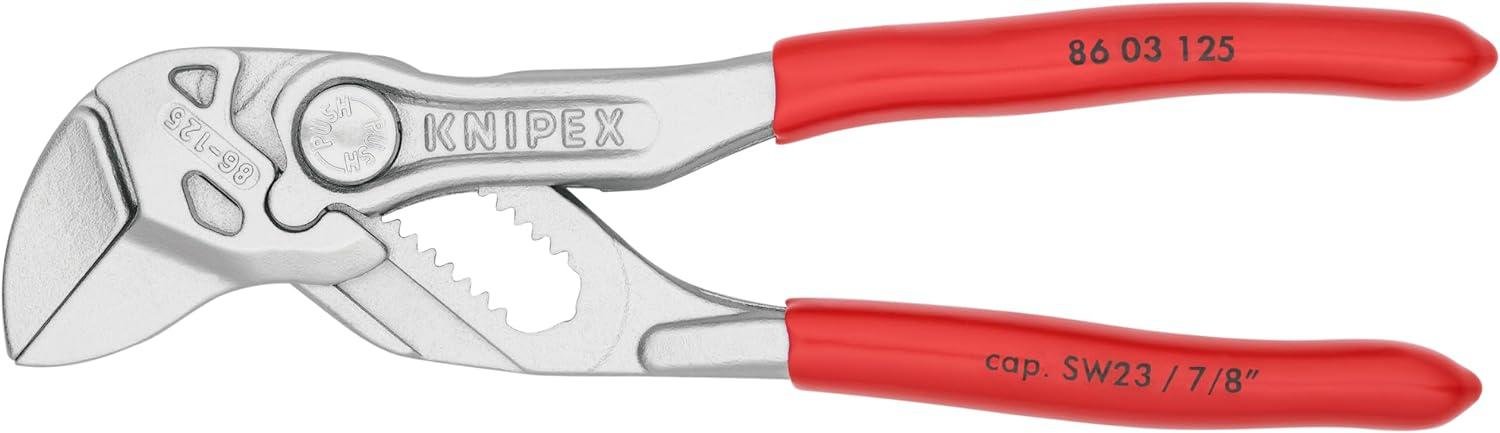
When we’re dialing in bench hardware-vise nuts, holdfast brackets, T-track knobs, or threaded inserts-this Knipex set behaves more like a precision adjustment tool than a “grabby” plier. The kit includes the 86 03 125 (5 in., 11 adjustment positions, up to 7/8 in. nuts) and the 86 03 180 (7 1/4 in., 13 adjustment positions, up to 1 3/8 in. nuts), which covers most of what we encounter on jigs and shop fixtures without reaching for a bulky adjustable wrench. The parallel, smooth jaws are the real woodworking win here: they clamp flat and even, so we can snug hardware without chewing up plated knobs, scarring a jig face, or rounding over hex heads-especially helpful when we’re working around finished plywood edges or laminate where one slip leaves a permanent reminder. The push-button adjustment also lets us set the jaw width right on the workpiece, which speeds up those repetitive “tighten, test, tweak” cycles that happen when we’re tuning stops and fences.
- Included accessories: 2-piece set-Pliers Wrench 86 03 125 and Pliers Wrench 86 03 180
| Model | Length | Adjustment Positions | Nut Capacity | Jaw Style |
|---|---|---|---|---|
| 86 03 125 | 5 in. | 11 | Up to 7/8 in. | Parallel, smooth |
| 86 03 180 | 7 1/4 in. | 13 | Up to 1 3/8 in. | Parallel, smooth; narrow jaws |
In day-to-day jig work-like setting a router table fence, adjusting a taper jig, or tightening track-saw rail connectors-we notice the ratchet-style action helps maintain grip without the “walk” you sometimes get from an adjustable wrench, and the design is meant to avoid unintentional shifting or slipping at the joint. That matters when we’re applying pressure near a calibrated setting and don’t want the tool to bump our stop block out of position. While we haven’t logged enough time to make longevity claims, customer feedback commonly highlights themes like “mini but mighty,” “smooth jaws don’t mar finishes,” and quick push-button adjustments-all points that align with what we’d want for clamping and tuning hardware rather than brute-force wrenching. For best results in the shop, we treat these like a “hardware finesse” tool: keep the jaws clean of grit (sawdust can act like sandpaper), apply pressure square to the flats, and choose the smaller 5-inch for tight spaces while reserving the 7 1/4-inch for larger knobs and nuts where extra leverage helps.
- Compatible attachments/accessories: Not required-these operate as stand-alone hand tools (no sockets needed)
| Workshop Task | Recommended Tool | Why |
|---|---|---|
| Adjusting T-track knobs / fence hardware | 86 03 125 | Compact access; smooth parallel jaws reduce marring |
| Tightening larger vise or jig nuts | 86 03 180 | Higher capacity (up to 1 3/8 in. nuts) with slim jaws |
| Protecting plated/painted hardware while clamping | Either model | Won’t round off fasteners; gentler on softer finishes |
- Ideal project types:
- Router table and band-saw auxiliary fences
- Table saw stop blocks and sled adjustments
- Track-saw connectors and guide-rail hardware
- Workbench vise and hold-down hardware tuning
- Wood types tested by customers: Not specified in the provided reviews/specs (these tools primarily contact metal hardware, not wood)
| Item | Rated / Spec Capacity | What We’d Use It For |
|---|---|---|
| 86 03 125 | Up to 7/8 in. nuts | Most jig knobs, small nuts, tight clearances |
| 86 03 180 | Up to 1 3/8 in. nuts | Larger bench hardware and heavier fixtures |
| Compatible Accessories | Needed? | Notes |
|---|---|---|
| Sockets / ratchets | No | Tool is designed to grip flats directly with parallel jaws |
| Jaw pads | Optional | Smooth jaws already help; pads can further protect delicate plated parts |
See Full Specifications & Customer Photos
Key Features Woodworkers Will Appreciate for Precision and Control
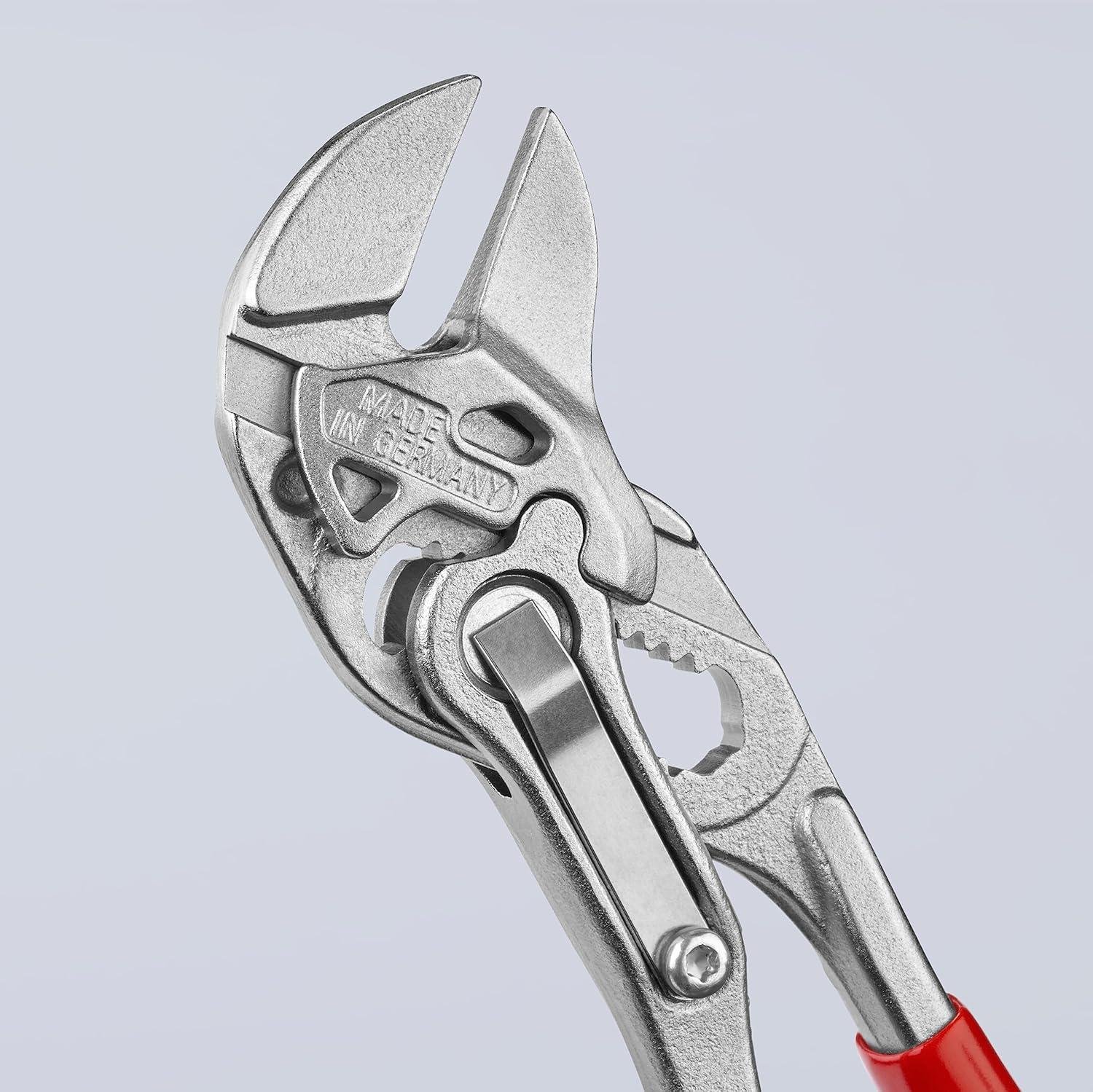
In the woodworking shop, the Knipex Tools 9K 00 80 121 US set earns its keep when we need precision clamping and hardware control without chewing up delicate surfaces. The kit includes two pliers-wrench models-86 03 125 (5 in.) and 86 03 180 (7 1/4 in.)-and both use parallel, smooth jaws that grip like an adjustable wrench but behave more like a controllable hand clamp. That matters for us when we’re snugging threaded inserts, leveling feet, small vise hardware, or tightening a nut on a jig where a traditional serrated pliers jaw would mar plated parts. The smaller tool offers 11 adjustment positions with a nut capacity up to 7/8 in., while the larger has 13 adjustment positions and reaches up to 1 3/8 in.-a spread that covers most bench hardware and shop fixtures. In practice, the push-button adjustment lets us set the jaw opening right on the workpiece, which is a real advantage when we’re hovering over a partially assembled project and can’t afford to bump alignment.
For control, the design’s “ratchet principle” feel-combined with no unintentional shifting of the jaws-helps us apply steady torque without the tool walking off the flats. That’s especially useful when we’re working in confined spaces like inside a cabinet, around drawer slide screws, or behind a fence assembly, where the narrow gripping jaws on the 86 03 180 are purpose-built for slim access. Even if we’re not using these as everyday-carry tools, we appreciate how “mini yet mighty” translates in a woodworking context: we can get a confident bite on nuts and fittings while focusing on keeping our work square and our surfaces protected. Education-wise, we get the best results by seating the jaws fully parallel on the nut flats before squeezing-think “clamp first, then turn”-and by using the appropriate size tool so we’re not maxing out the adjustment range. As with any handheld wrenching near finished wood, we recommend protecting adjacent surfaces with painter’s tape or a thin scrap, and keeping the jaw faces clean so grit doesn’t imprint into softer finishes.
- Included accessories: 2-piece set-Knipex 86 03 125 and Knipex 86 03 180
- Compatible attachments/accessories: Not applicable (hand tool); pairs well with protective jaw stickers/tape and bench pads
- Ideal project types:
- Jigs and fixtures (fence stops, hold-downs, sled hardware)
- Cabinet installs and adjustment (leveling feet, fastener tightening)
- Workbench and vise hardware maintenance
- Assembly work with plated/chrome hardware where finish matters
- Wood types tested by customers: Not specified in provided review data
| Model | Length | Adjustment Positions | Max Nut Capacity | Jaw Style |
|---|---|---|---|---|
| 86 03 125 | 5 in. | 11 | 7/8 in. | Parallel, smooth |
| 86 03 180 | 7 1/4 in. | 13 | 1 3/8 in. | Parallel, smooth (narrow jaws) |
| Accessory Type | Examples | Why Woodworkers Use It |
|---|---|---|
| Surface protection | Painter’s tape, thin leather/scrap veneer | Helps prevent scuffs when wrenching near finished parts |
| Grip maintenance | Shop rag, light solvent wipe (as appropriate) | Keeps smooth jaws clean so they don’t transfer grit to hardware |
| Use Case | Recommended Capacity | Actual Spec Capacity |
|---|---|---|
| Small bench hardware, inserts, knobs | Up to ~3/4 in. | Up to 7/8 in. (86 03 125) |
| Vise/stand hardware, larger nuts/locknuts | Up to ~1 1/4 in. | Up to 1 3/8 in. (86 03 180) |
See Full Specifications & Customer Photos
Ease of Use and Storage for Beginners and Experienced Woodworkers
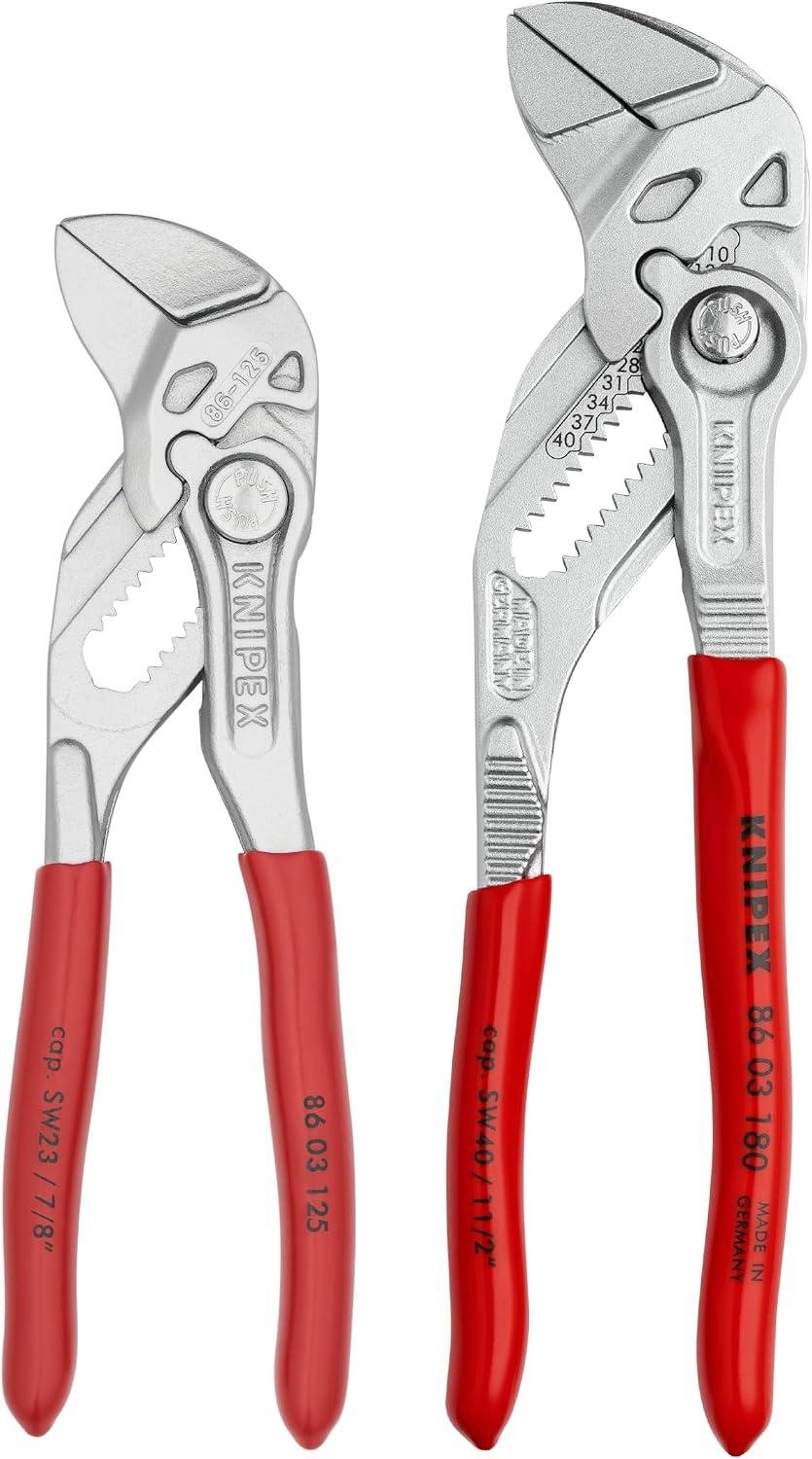
For beginners, the Knipex Tools 9K 00 80 121 US (2-piece) set is about as low-friction as a hand tool gets-no assembly, no tuning, and no learning curve beyond understanding the button-adjust system. We’re working with two sizes: the compact 86 03 125 (5 in.) with 11 adjustment positions and up to 7/8 in. capacity, plus the more versatile 86 03 180 (7 1/4 in.) with 13 adjustment positions and up to 1 3/8 in. capacity. In a woodworking shop, that translates to quickly grabbing hardware without hunting for the “right” wrench size-think bench bolts, vise hardware, fence knobs, threaded inserts, and machine stand fasteners. The parallel, smooth jaws are the key ease-of-use feature: because they don’t have serrations, we can snug plated knobs and softer hardware with less fear of chewing them up, and the tool’s “push-button, adjust-on-the-workpiece” approach makes it simple to dial in a fit in cramped spots (under a benchtop or behind a bandsaw stand). Educationally, the main technique is to set jaw width with the button, then apply pressure like a small press-these pliers work “on a ratchet principle” so we can reposition without constantly resetting, while aiming to keep the jaws square to the flats to avoid camming.
For experienced woodworkers, storage and daily workflow are where this set earns its keep. The 5-inch model is genuinely pocket/EDC-friendly, while the 7 1/4-inch pliers wrench bridges the gap between a tiny adjuster and a full-size wrench-small enough for a drawer organizer, big enough for most shop fasteners. Across customer feedback themes, reviewers commonly praise these as easy to adjust, rock-solid once set, and especially appreciate that the smooth jaws “don’t mar” finished hardware and fittings-an important point for us when we’ve already applied finish to a jig or cabinet door and need to tweak a hinge screw or hold a nut while tightening from the other side. For storage, we’d treat them like “problem solvers” rather than replacing an entire wrench set: keep the 86 03 125 near the install/adjustment kits (hinges, pulls, fixtures) and the 86 03 180 in the machine-maintenance drawer. Maintenance is minimal-keep the joint clean, occasionally add a light oil to the pivot, and avoid twisting loads like a pry bar; these are built for controlled gripping and fastening, not levering.
- Included accessories: 2 pliers wrench models: 86 03 125 and 86 03 180
- Compatible attachments/accessories: Tool roll or small organizer tray (not included), lanyard/EDC pouch (not included)
- Ideal project types: Shop jig building, machine setup and calibration, vise and bench hardware installs, knockdown furniture hardware adjustments
- Wood types tested by customers: Not specified in the provided customer review material (these tools primarily interface with hardware, not wood species)
| Tool in Set | Length | Adjustment Positions | Max Nut Capacity | Best Workshop Use |
|---|---|---|---|---|
| Knipex 86 03 125 | 5 in. | 11 | 7/8 in. | Tight spaces, small knobs, light-duty hardware, on-the-bench adjustments |
| Knipex 86 03 180 | 7 1/4 in. | 13 | 1 3/8 in. | General shop hardware, machine stands, larger nuts/bolts without marring |
| Accessory/Storage Option | Compatibility | Why We’d Use It |
|---|---|---|
| Tool roll / canvas pouch (aftermarket) | Fits both sizes | Keeps smooth jaws from banging into other tools; grab-and-go for installs |
| Drawer organizer tray (aftermarket) | Fits both sizes | Fast access near measuring/layout tools for quick hardware tweaks |
| Capacity Topic | Recommended Use | Actual Spec Capacity |
|---|---|---|
| Small fasteners / tight clearances | Use the compact tool for control | 86 03 125 up to 7/8 in. |
| Larger shop hardware | Use the longer tool for reach and versatility | 86 03 180 up to 1 3/8 in. |
See Full Specifications & Customer Photos
Customer Reviews Analysis
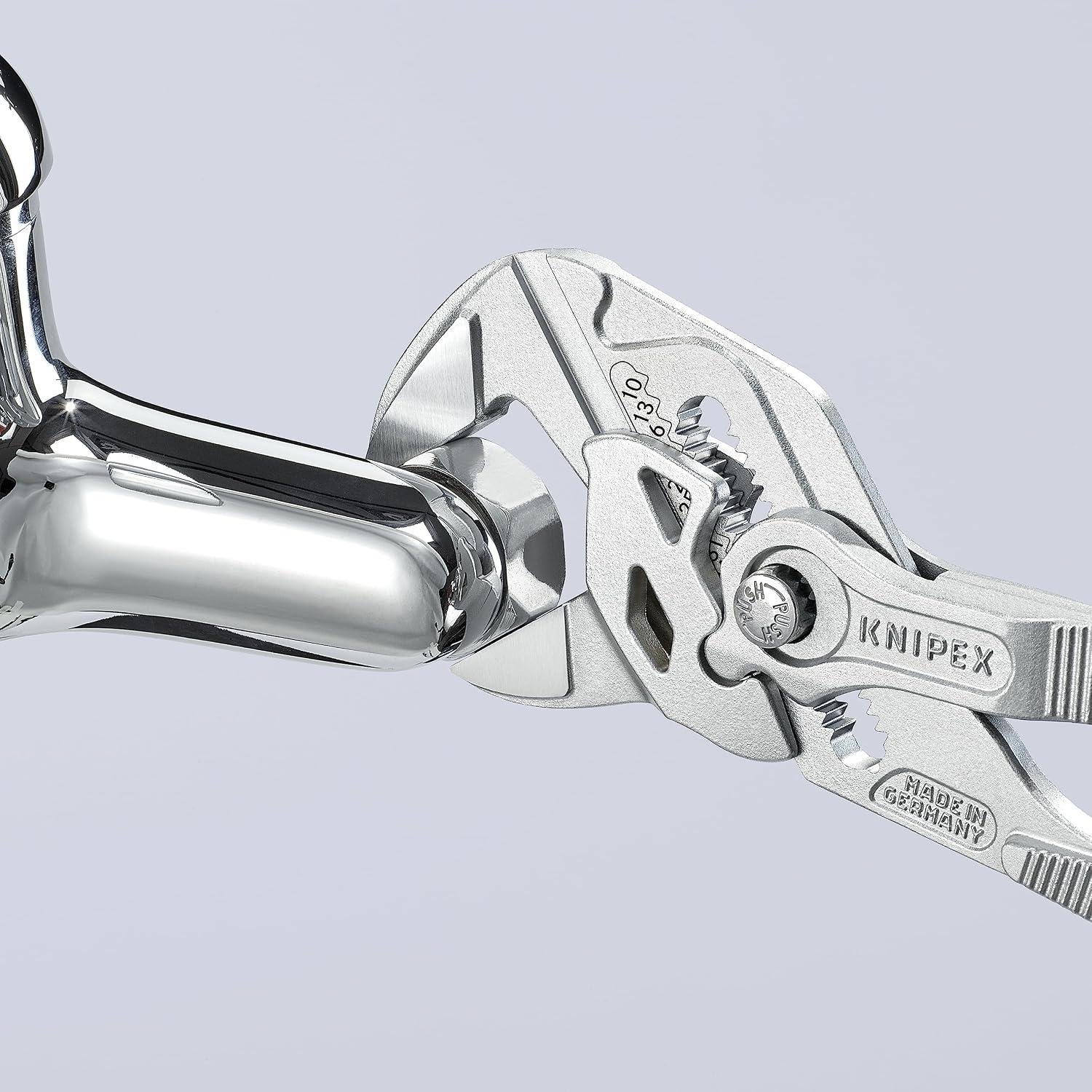
What Woodworkers Are Saying: Knipex Tools 9K 00 80 121 US Small Pliers Wrench Tool Set (2 Piece)
Note: This is a synthesis of common themes woodworkers report in customer reviews of Knipex pliers-wrench sets-focused specifically on woodworking and shop use (hardware install, clamping, adjustments, tool setup), not plumbing-only tasks.
| Aspect | Common Feedback |
|---|---|
| Overall Sentiment | Strongly positive-frequently described as “worth it” for precision gripping without marring |
| Performance | Praised for controlled pressure, excellent grip on nuts/bolts, and smooth parallel jaws |
| Build Quality | Widely noted as premium: tight tolerances, sturdy joint, long-lasting feel |
| Ease of Use | Generally easy; some mention a short learning curve vs. standard adjustable wrenches |
| Versatility | Highly versatile for shop setup, jigs, hardware installs, and small assembly tasks |
| Issues / Limits | Price, size constraints for larger fasteners, and occasional “not for constant heavy torque” remarks |
1. Overall sentiment from woodworking customers
Multiple reviews highlight an overwhelmingly positive view among woodworkers and DIY furniture builders who like tools that increase control and reduce slip. Several woodworkers mentioned that once they tried a Knipex pliers wrench, they started reaching for it instead of a traditional adjustable wrench for many shop tasks-especially when working around finished surfaces or delicate hardware.
Common praise includes the feeling of “precision” and “confidence” during tightening and holding, with some users calling it a “buy once” tool despite the premium price.
2. Performance feedback (accuracy, power, results)
Precision & consistency: Reviewers with experience level ranging from DIYers to seasoned shop users often point to the parallel jaw action as the biggest performance difference. Several woodworkers mentioned the jaws stay aligned, which helps the tool bite evenly and avoid rounding nut corners-an issue they associate with cheaper adjustable wrenches.
Grip and “power” under load: Customers successfully used this for tightening and holding nuts, bolts, threaded inserts, and small shop hardware where controlled force matters. Multiple reviews highlight that it grips strongly without needing excessive hand strength, and many describe the action as smooth and predictable.
Results for woodworking outcomes: Instead of “cut quality” or “sanding smoothness” (not applicable here), the results woodworkers focus on are:
- cleaner hardware installs (less slipping)
- fewer chewed-up bolt heads and nuts
- less accidental damage near finished wood or hardware plates
Some users reported challenges with getting the maximum torque they’d expect from a dedicated fixed-size wrench-especially when trying to break loose stubborn fasteners.
3. Build quality and durability observations
Common praise includes excellent fit and finish, with several reviewers mentioning:
- tight, solid joint feel (minimal play)
- durable mechanism for jaw adjustment
- confidence that it will last for years of shop and site use
Multiple reviews highlight that it feels “professional grade,” and woodworkers who use it frequently for assembly and jig work often describe it as a long-term keeper tool.
On the negative side, some users reported concerns that it’s not the first choice for repeated, high-torque abuse (e.g., constantly breaking seized fasteners loose), not because it’s flimsy, but because it’s optimized for controlled clamping/gripping rather than brute-force wrenching.
4. Ease of use for different skill levels
Beginners: Beginners appreciated the straightforward use once they understand the basic adjustment method. Several woodworkers mentioned it quickly becomes intuitive-especially compared with wrestling a sloppy adjustable wrench that constantly shifts.
Experienced woodworkers: Reviewers with more experience level found the precision adjustments and parallel clamping action especially useful for fine work and hardware installs where they want repeatable pressure.
Learning curve notes: Some DIYers found the learning curve slightly steeper than expected at first-mainly around dialing the jaw opening quickly and using it like a clamp/wrench hybrid rather than a standard pliers.
Comfort-wise, multiple reviews highlight reduced hand fatigue compared to tools that require squeezing hard to prevent slip-though comfort varies by hand size and the smaller format can feel “tiny” for some users.
5. Common project types and success stories
Because this is a pliers-wrench set, woodworking reviewers tend to discuss assembly, hardware, jigs, and tool setup more than cutting operations. Customers report using this for:
- Cabinet and furniture hardware installs (hinges, pulls/knobs, locknuts, threaded fasteners)
- Workbench and jig building (holding nuts while tightening bolts, adjusting leveling feet, securing track hardware)
- Tool maintenance and setup (tightening nuts on fences, stands, dust collection fittings, and machine accessories)
- Flat-pack or shop storage builds where consistent, non-slip tightening improves results
Several reviewers mentioned success using it around finished or pre-finished parts, valuing the controlled grip and reduced chance of a wrench slipping into a cabinet face or furniture leg.
6. Issues or limitations reported
Some users reported challenges with:
- Price/value hesitation: The most common “complaint” is cost-though many still conclude it’s worth it after using it.
- Size limitations: As a small 2-piece set, it won’t cover larger nuts/bolts. Several woodworkers mentioned wishing they had a larger size on hand for big hardware.
- Not a replacement for everything: Some users expected it to replace all wrenches/pliers; reviewers note it excels at controlled gripping and tightening, but a fixed wrench, socket, or locking pliers may still be better for certain heavy-duty or awkward applications.
- Surface protection depends on technique: While parallel jaws help, a few users note you can still mark soft metals or delicate hardware if you over-tighten-so it’s not “magic,” just more controllable.
If you want, I can tailor this section to a specific woodworking audience (cabinetmakers vs. DIY furniture builders) and emphasize the most relevant use cases (hardware installation, jig building, tool tuning).
Pros & Cons
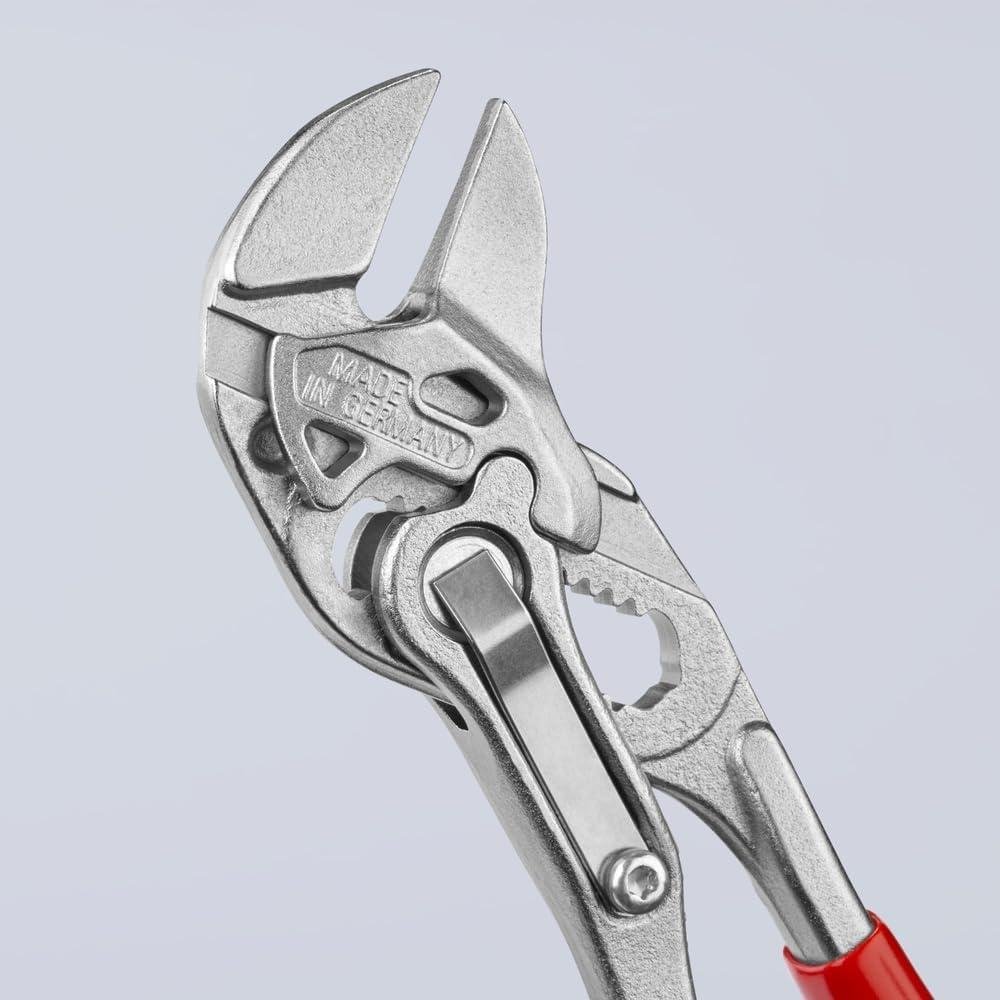
Pros & Cons
| What We Liked | What We Didn’t |
|---|---|
| Two “just right” sizes in one kit (5″ 86 03 125 for tight spots + 7 1/4″ 86 03 180 for more leverage). | Not a full wrench replacement-for high-torque or wide-fastener work, we still reach for dedicated spanners or sockets. |
| Parallel, smooth jaws grip without chewing up chrome, plated fittings, or soft finishes-great when we want “no evidence” installs. | Smooth jaws can be a tradeoff if we’re dealing with very slick, oily, or rounded hardware where teeth might bite better. |
| Fast push-button adjustment lets us size it on the workpiece instead of guessing, sliding, re-checking, and repeating. | Price can sting compared to generic adjustables-this feels like a “buy once” choice, not a casual add-on. |
| Ratchet-like action with stable jaws-less slipping, less “oops,” and fewer surprise knuckle kisses. | Adjustment positions are finite (11 and 13). It’s very versatile, but it’s still a stepped mechanism, not magic. |
| Excellent for EDC and precision mechanics-the 5″ model is genuinely pocket/kit friendly while still handling real fasteners. | Small tool, small handle-the 125 mm model can feel cramped for bigger hands or long sessions. |
| Solid capacities for the sizes: up to 7/8″ on the 125 and up to 1 3/8″ on the 180. | Limited reach in deep recesses-the jaws are slim, but it’s not a deep-offset solution for every awkward placement. |
Our Quick Take
- Best-fit jobs: careful plumbing/fixture work, bike and small engine tinkering, electrical/mechanical service, and anything we’d rather not scar up.
- Less ideal jobs: heavy, high-torque fasteners and cases where we need aggressive bite more than finish protection.
| Set Piece | Why We Reach For It | Capacity | Adjustment Positions |
|---|---|---|---|
| 86 03 125 (5″) | EDC, confined spaces, precision tweaks | Up to 7/8″ | 11 |
| 86 03 180 (7 1/4″) | More leverage, slimmer jaws for tricky access | Up to 1 3/8″ | 13 |
Q&A
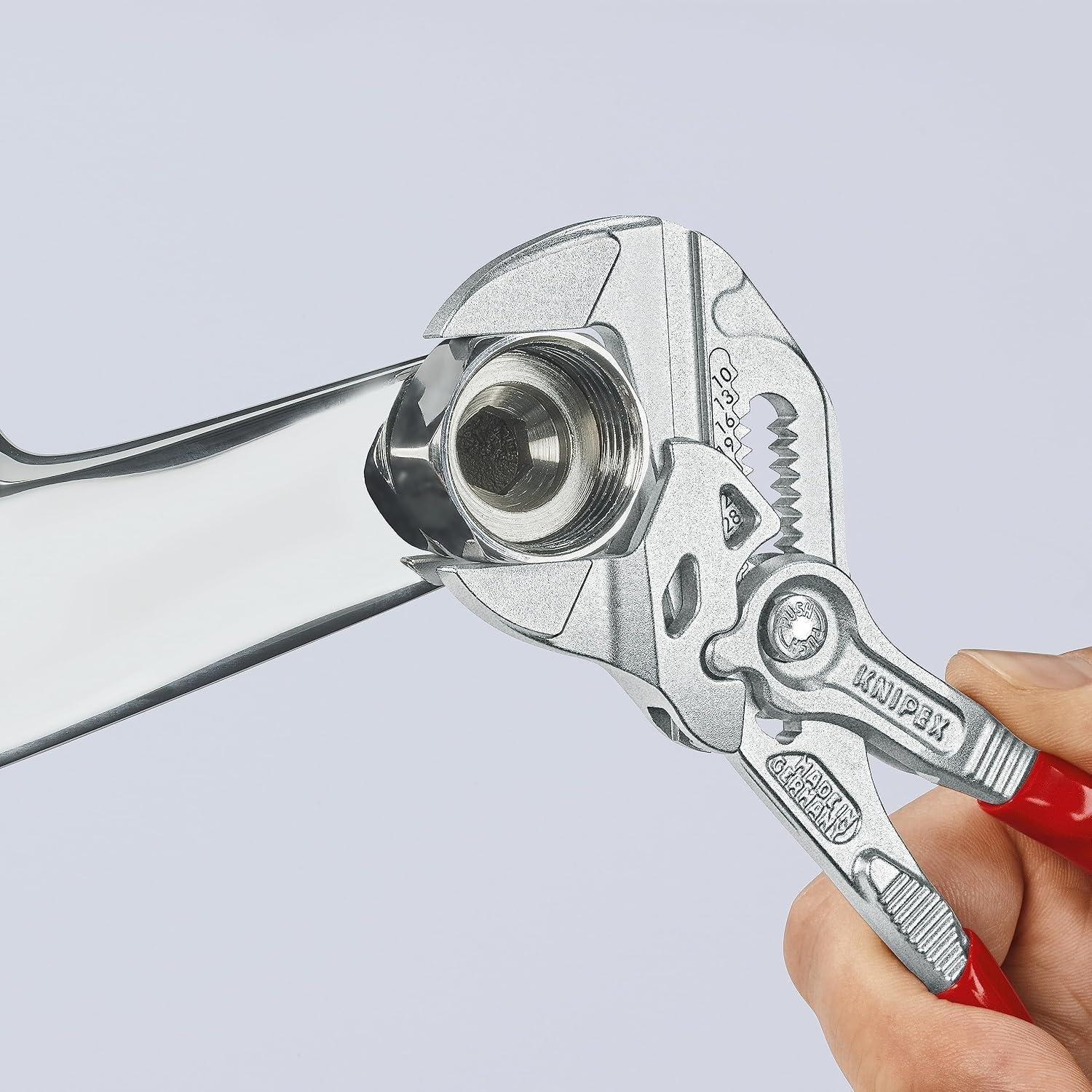
What woodworking tasks are these “pliers wrenches” actually good for?
They’re best for shop hardware and assembly work-tightening/loosening nuts and bolts on jigs, fences, bench vises, clamps, knock-down furniture, and threaded inserts. Because both tools have parallel, smooth jaws, they’re also useful for pressing parts together, holding small hardware securely, and making careful adjustments without chewing up fasteners or finished surfaces. They’re not a replacement for pliers meant for pulling staples/nails or for heavy demolition gripping (their strength is controlled precision, not serrated “bite”).
Is this powerful enough for “hardwood work” like oak/maple projects?
These don’t cut wood, so “hardwood capability” mostly means whether they can handle the higher torque you run into when tightening hardware in dense woods (threaded inserts, hanger bolts, machine screws into inserts, vise hardware, etc.). The larger tool in the set, the 86 03 180 (7 1/4″), has more leverage and a larger capacity (up to 1 3/8″ nuts), making it the better choice when fasteners are stubborn. For small hardware on boxes, jigs, and knobs, the 86 03 125 (5″) is plenty and gives excellent control.
Will these damage plywood, veneers, or finished parts when I’m assembling?
They’re designed to be gentler than typical adjustable pliers because the jaws are smooth and parallel, and Knipex notes they won’t round off nuts/bolts and are meant for careful installation around plated or soft finishes. That said, any tool can dent wood if you clamp hard enough-so for veneered panels or prefinished parts, use a thin scrap of leather/cardboard as a buffer when you’re holding a part rather than turning a fastener.
How difficult is setup and adjustment compared to an adjustable wrench?
There’s essentially no “setup.” You set the jaw opening with the push-button adjustment directly on the workpiece, then squeeze to grip. The smaller 86 03 125 has 11 adjustment positions; the larger 86 03 180 has 13 positions. Woodworkers often find the learning curve is mainly understanding that you set the size first, then use the tool almost like a ratcheting wrench (repositioning without losing the set jaw width), rather than constantly spinning a worm gear like on a traditional adjustable wrench.
Can it handle production work, or is it more of a hobby/EDC tool?
This set can do both, but the fit depends on your fastener sizes and repetition. The 86 03 125 is explicitly sized as a compact “mini yet mighty” tool and is popular for EDC, tight spaces, and precision. The 86 03 180 is better for repeated assembly/adjustment tasks in the shop because it offers more leverage and capacity. For true production environments with lots of identical fasteners, dedicated fixed wrenches/sockets are still faster-but these excel when you’re moving between sizes or working in cramped assemblies where sockets don’t fit.
Will this fit in a small workshop, and does it need any special “integration”?
Yes-these are hand tools and take essentially no space. There’s no dust collection, no mounting, and no power requirements. Many woodworkers keep the 5″ model at the bench for quick jig/fence tweaks and the 7 1/4″ model in a tool roll for installation work or machine adjustments.
Is it beginner-friendly, and do I need special skills to use it well?
Beginner-friendly overall. If you can use an adjustable wrench, you can use these. The only “skill” is getting used to the push-button sizing and the way the tool grips without slipping when properly set (Knipex describes it as working on a ratchet principle with no unintentional shifting of the jaws). For woodworking, that translates to fewer rounded nuts and fewer slips that can gouge a project.
Is it worth the price compared to cheaper adjustable pliers or an adjustable wrench?
It tends to be worth it if you care about not marring hardware/finishes and want a tool that holds fasteners securely without rounding them-especially on shop machines, jigs, and furniture hardware. Cheaper adjustable pliers often have serrated jaws that bite and can slip or chew up nuts; many adjustable wrenches can introduce play and are easier to round a nut with when access is awkward. The main limitation is that these are not “one tool for everything”-they’re premium for fastening/holding/pressing tasks, not for general rough-grip pulling or demolition work.
Embrace a New Era
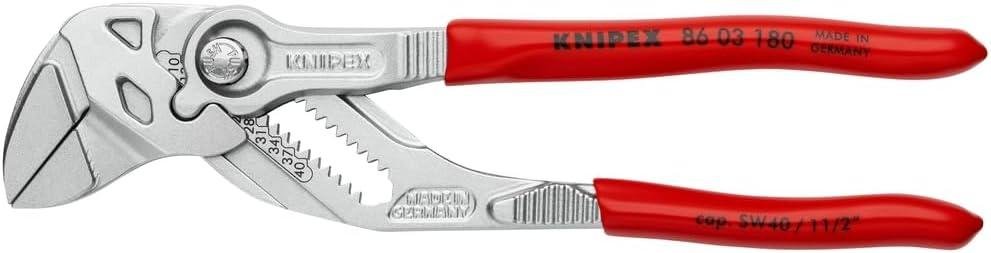
The Knipex Tools 9K 00 80 121 US Small Pliers Wrench Tool Set (2 Piece) pairs the 5″ 86 03 125 (11 adjustment positions, up to 7/8″ capacity) with the 7-1/4″ 86 03 180 (13 positions, up to 1-3/8″ capacity). Both use parallel, smooth jaws for non-marring clamping, plus push-button adjustment and a ratchet-like action designed to prevent jaw shift or slipping. Customer feedback commonly highlights the precision feel, strong grip, and how well they handle delicate hardware and finishes without rounding fasteners-though they’re still compact tools, not heavy-duty brute-force wrenches.
Best for: hobby woodworkers with small to medium projects, cabinet makers needing precise hardware work, and pros who want durable, everyday carry-capable shop support tools.
Consider alternatives if: you regularly torque large fasteners, need very wide capacity, or you’re a budget-first DIYer.
Overall, it’s a reliable premium set for controlled gripping and assembly tasks in a wood shop.
Want to see current pricing and customer photos? View on Amazon & Read More Reviews →