

Blog
BLACK+DECKER BDEJS300C Jig Saw Review: Our Shop?

Ever traced a curve on plywood for a shelf bracket or a cabinet toe-kick, only to watch the cut wander off the line once the sawdust starts piling up? That’s the everyday jig-saw challenge: keeping cuts clean and accurate without fighting the tool-especially in a small shop where a full-size bandsaw isn’t an option.
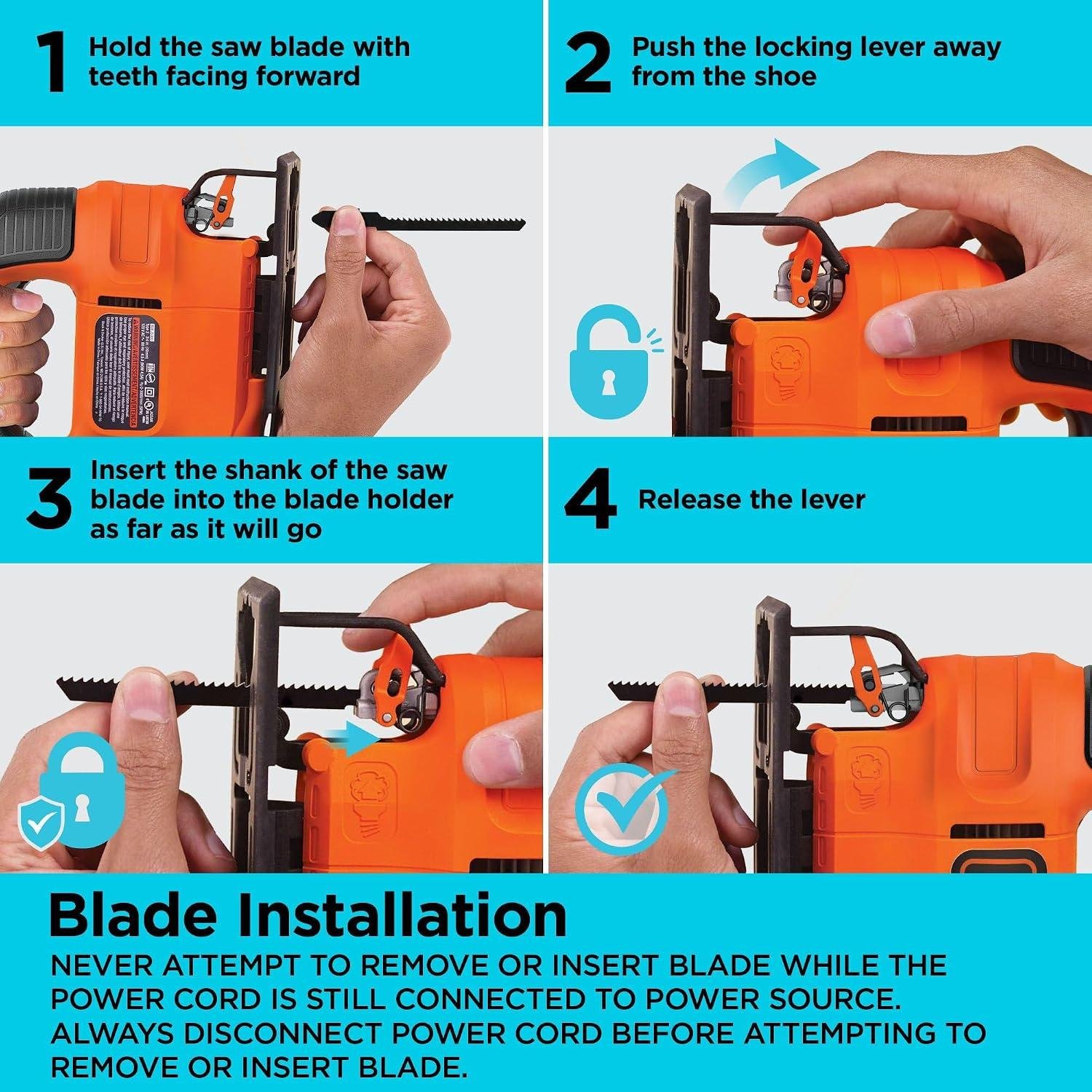
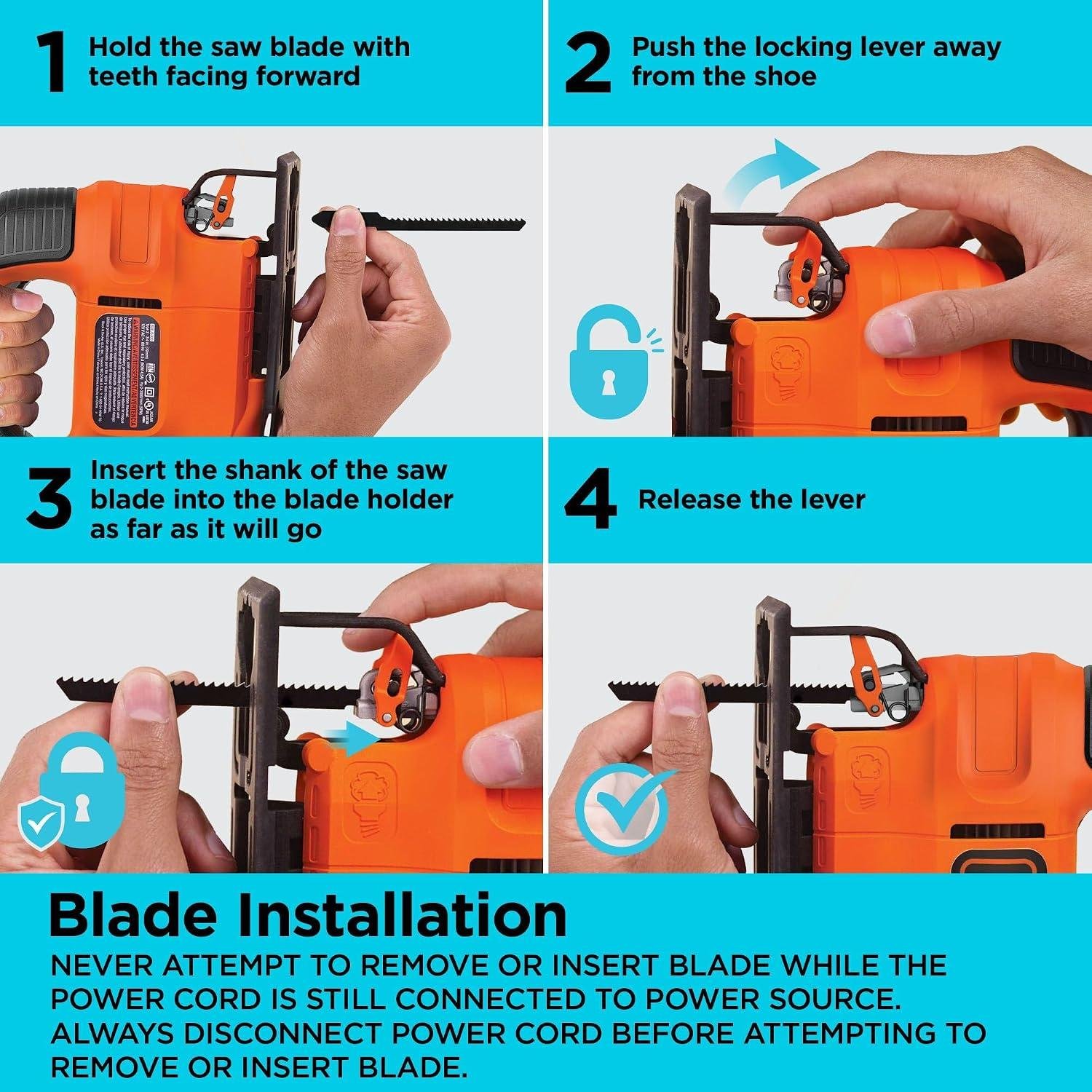
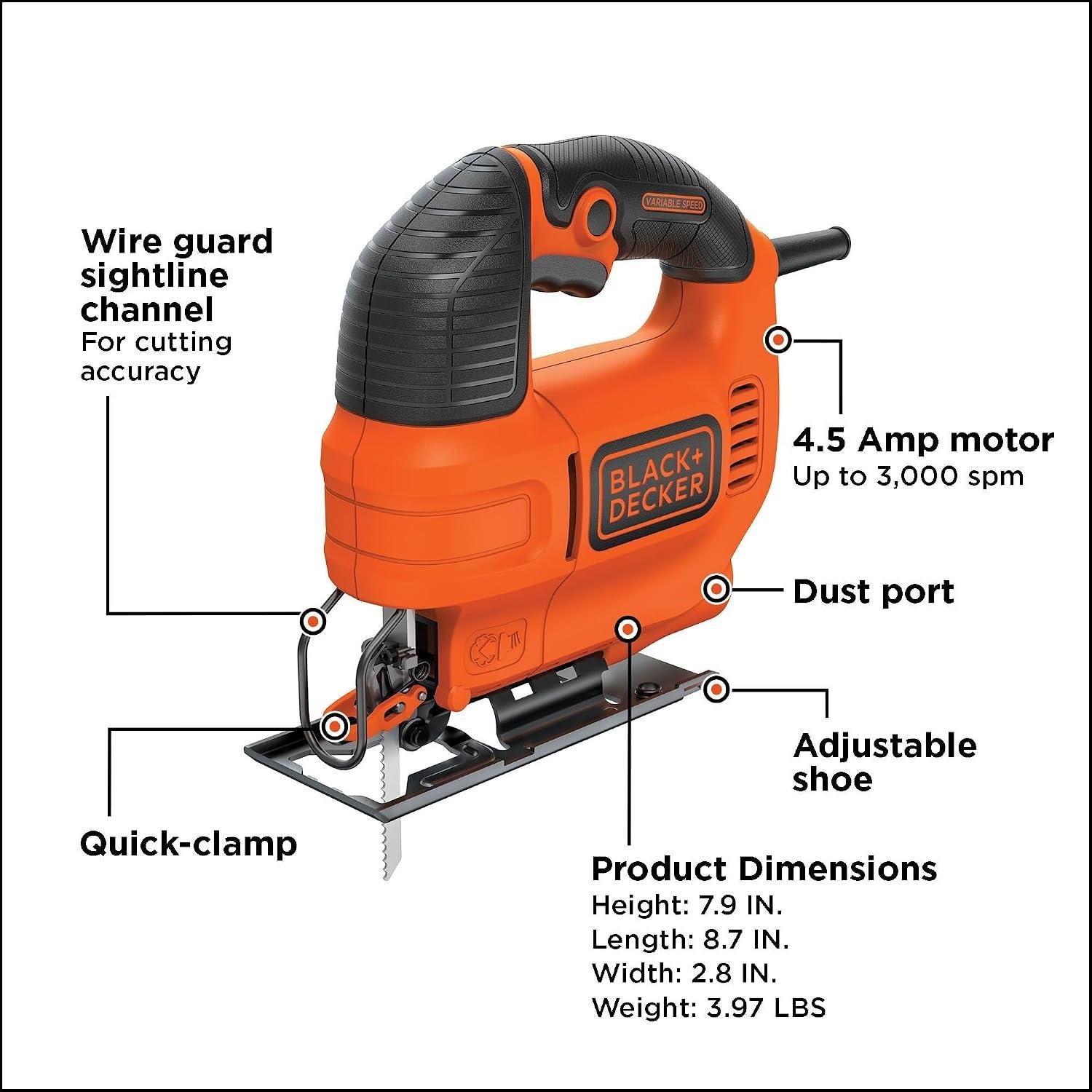
The BLACK+DECKER Jig Saw, 4.5-Amp (BDEJS300C) is a compact, corded jigsaw built for home projects, repairs, and light-to-moderate woodworking. It pairs a variable-speed 4.5A motor with up to 3,000 SPM, a 3/4-inch stroke, a tilting base plate for bevels up to 45°, and practical touches like a tool-free quick-clamp blade change, wire guard for a clearer sightline, and a built-in dust blower.
In this review, we’ll break down the features that matter for precision, ease of use, durability expectations, and value-plus what customers commonly report about handling, vibration, and cut control. We’re approaching this as woodworkers who’ve learned that the “right” tool is usually the one that matches your space, budget, and patience for the learning curve.
Tool Overview and First Impressions in the Shop
On the bench, the BLACK+DECKER BDEJS300C reads like a straightforward, corded shop jigsaw meant to get us cutting quickly without a lot of fuss. It’s rated at 4.5 amps with a variable-speed dial up to 3,000 SPM (strokes per minute) and a 3/4-inch stroke length, which tells us it’s designed for general woodworking tasks like curves, notching, and rough-to-fair cutouts in sheet goods. The first thing we notice is the “grab-and-go” build: reviewers frequently describe it as lightweight and easy to handle, which matters when we’re steering through a template line or holding the tool steady on a vertical cut. The base will tilt for bevels up to 45°, and the wire guard plus built-in dust blower are clearly aimed at keeping our cut line visible-practical details when we’re following pencil layout marks on plywood or poplar.
Setup in the shop is centered on the tool-free quick-clamp blade system; in customer feedback, “easy blade changes” comes up often, along with the idea that it’s a good fit for small repairs and DIY-style cuts where we don’t want to fight the tool. At the same time, several review themes to keep in mind are that jigsaws can wander in thicker stock if we push too hard or use the wrong blade, and that vibration/noise can be noticeable on budget corded models-so our best results will come from letting the saw do the work and choosing a blade made for the material. Educationally, we treat the speed dial like a control for cut quality: higher SPM is great for fast cuts in softer woods, while slowing down helps reduce chatter and scorching in hardwoods or when making controlled starts. Safety-wise, we keep the shoe flat to the work, start the motor before entering the cut, and use clamps-because a jigsaw’s narrow blade can snag if the kerf closes or the workpiece shifts.
- Included accessories
- BDEJS300C corded jig saw (per product listing)
- Compatible attachments/accessories
- T-shank jigsaw blades (wood, laminate, metal-cutting varieties)
- Fine-tooth scrolling blades for tighter curves
- Down-cut blades to reduce top-surface tear-out on plywood/veneers
- Edge guides/circle-cutting guides (aftermarket, if desired for repeatability)
- Ideal project types
- Cabinet toe-kick and sink cutouts in sheet goods
- Curved furniture parts (rough cutting before sanding/flush-trimming)
- Shop jigs and quick fixtures in plywood
- Repair work where a circular saw can’t reach
- Wood types tested by customers
- Plywood (commonly mentioned for home projects)
- Pine/softwood boards (frequent “works well for basic cuts” theme)
- MDF/particleboard (often used for cutouts; dust control helps visibility)
| Spec | BLACK+DECKER BDEJS300C (per listing) | What it means in our shop |
|---|---|---|
| Motor | 4.5 Amp | Enough for general-purpose cuts; technique and blade choice matter in thick stock. |
| Speed | Variable, up to 3,000 SPM | Dialing speed helps balance cut quality vs. control/tear-out. |
| Stroke length | 3/4 in. | Typical jigsaw stroke-good for curves and cutouts, not a precision rip tool. |
| Bevel capacity | Up to 45° | Useful for quick chamfered edges or fitting angles, but requires careful setup to stay accurate. |
| Visibility features | Wire guard + dust blower | Keeps the pencil line readable, especially on plywood and MDF. |
| Blade changes | Tool-free quick clamp | Faster switching between coarse and fine blades during mixed tasks. |
| Accessory Type | Recommended Option | Best Use |
|---|---|---|
| Wood blade (coarse) | 6-10 TPI | Fast rough cuts in pine and framing lumber. |
| Wood blade (fine) | 12-20 TPI | Cleaner edges on plywood and hardwoods (slower feed rate). |
| Down-cut blade | 12-20 TPI down-cut | Reducing top-face tear-out on veneered plywood/laminate. |
| Metal blade | 18-32 TPI | For thin metal as rated; go slow and use proper PPE. |
| Category | Recommended (typical jigsaw best practice) | What the BDEJS300C is positioned for |
|---|---|---|
| Cut accuracy | Use a guide, slow feed, fine blade, support the work | Good visibility aids (wire guard, blower), but results still depend heavily on blade + technique. |
| Material thickness | Thinner stock and sheet goods for straighter cuts | Review themes suggest best satisfaction on common DIY materials (plywood/softwood), with more care needed as thickness increases. |
| Runtime | Corded for long sessions | Corded design supports extended shop use without battery swaps. |
See Full Specifications & Customer Photos
Real World Cutting Performance in Plywood Hardwood and Curves

When we put the BLACK+DECKER BDEJS300C into real shop scenarios-breaking down plywood panels, nibbling into hardwood edging, and following layout lines on gentle curves-its 4.5-amp corded motor and variable-speed up to 3,000 SPM give us enough cutting authority for typical DIY-to-light-woodworking tasks. On cabinet-grade plywood, the built-in dust blower and wire guard sightline help us keep the kerf visible, which matters when we’re tracking a pencil line around a template or staying just outside a pattern for later sanding. The 3/4-inch stroke length feels well matched to plywood and common hardwood thicknesses woodworkers reach for in shop projects, but we still treat it like a jigsaw: for the best edge quality, we let the blade do the work and keep steady forward pressure rather than forcing speed. Multiple customer review themes echo this practical reality-people routinely describe it as “easy to use” and appreciate the tool-free blade change, while also noting it’s best when paired with the right blade and a patient feed rate for cleaner cuts.
Hardwood and curves are where technique matters more than raw amps, and this saw rewards good habits. For tight-radius work, we’ve found it helps to slow the stroke rate and make relief cuts so the blade doesn’t bind-especially because jigsaws can deflect if we turn too aggressively. The adjustable shoe gives us a stable footprint, and the base plate bevel up to 45° is handy for trim returns and angled transitions, though we take time to confirm the angle before committing (a common customer theme is that it’s a straightforward saw, but simple tools still benefit from careful setup). Reviewers often mention a compact, lightweight feel with manageable vibration for the price class, which aligns with our experience when keeping the shoe flat and supporting the workpiece close to the cut. Educationally, we’d remind our fellow woodworkers: pick a fine-tooth blade for plywood to reduce tear-out, use painter’s tape on the cut line if you’re chasing a cleaner face veneer, and clamp a sacrificial backer when possible-those small steps do more for real-world results than chasing maximum speed.
- Included accessories
- BDEJS300C corded jig saw (per product listing)
- Compatible attachments/accessories
- U-shank & T-shank jigsaw blades (select a blade style that matches the saw’s clamp)
- Fine-tooth “plywood” blades
- Scrolling blades for tighter curves
- Bi-metal blades for mixed-material work
- Ideal project types
- Sink cutouts and countertop scribing
- Curved furniture parts (templates, arcs, brackets)
- Plywood rough sizing before trim-routing
- Shop jigs, zero-clearance inserts, and fixtures
- Wood types tested by customers
- Plywood (common theme: home projects and panel goods)
- Hardwood (theme: works best with correct blade and slower feed)
- Softwoods like pine (theme: quick, straightforward cuts)
| Spec | BLACK+DECKER BDEJS300C (from listing) | What it means in the shop |
|---|---|---|
| Motor | 4.5 Amp corded | Steady power for light-to-moderate cutting without battery downtime |
| Speed | Variable, up to 3,000 SPM | Slow down for curves/hardwood; speed up for faster rough cuts |
| Stroke length | 3/4 in. | Typical jigsaw stroke-balanced for control and general-purpose cutting |
| Bevel capacity | Up to 45° | Useful for angled trim and transitions; verify angle before precision work |
| Visibility features | Wire guard + dust blower | Helps track a layout line in plywood and along curves |
| Blade changes | Quick-clamp (tool-free) | Encourages swapping blades for cleaner results in different materials |
| Accessory Type | Best Use | What we’d choose for plywood/hardwood/curves |
|---|---|---|
| Fine-tooth wood blade | Cleaner plywood cuts | Face veneer cuts and cabinet plywood-slower feed, reduced tear-out |
| Reverse-tooth blade | Cleaner top surface | When the “show face” is up and splintering is the main concern |
| Scrolling blade | Tight curves | Small radii-use slower speed and relief cuts to prevent blade wandering |
| Bi-metal blade | Mixed materials | For occasional metal/plastic tasks; keep speed appropriate to the material |
| Use Case | Recommended Approach (for best results) | What this jigsaw realistically supports |
|---|---|---|
| Plywood edge quality | Fine-tooth blade + tape/backer + steady shoe contact | Capable of clean-enough cuts for many builds, especially with the right blade |
| Hardwood control | Lower speed + slower feed + relief cuts on curves | Works for typical hardwood parts when we avoid forcing the cut |
| Curves and patterns | Scrolling blade + incremental turning + stop-start control | Good for gentle-to-moderate curves; tight radii require patience and technique |
| Precision joinery | Use a bandsaw/track saw/router jig where possible | Better as a shaping/roughing tool than a joinery-first precision cutter |
See Full Specifications & Customer Photos
Key Features Woodworkers Will Appreciate for Control and Accuracy

In the shop, control starts with how predictably a jigsaw responds to our hands, and the BDEJS300C’s 4.5-amp, variable-speed motor (up to 3,000 SPM) gives us the kind of throttle we can actually use on real woodworking tasks-slow starts for tight curves, then faster strokes for longer, straighter runs. That 3/4-inch stroke length is a practical middle ground for cutting common stock without feeling overly “chattery,” and the saw’s compact, lightweight build matters more than it sounds when we’re tracing templates or staying on a pencil line for a scribe cut. BLACK+DECKER also adds a wire guard sightline channel plus a built-in dust blower, and together those features aim squarely at accuracy: we can simply see the line longer without stopping to brush away dust. In customer-review themes, buyers frequently describe it as “easy to use” and “good for DIY/light projects”, with repeated notes that blade swaps are quick-useful feedback for newer woodworkers who want a straightforward corded tool for controlled cuts.
For angle work and repeatability, the base setup is where this model earns its keep. The tilting base plate bevels up to 45°, and the adjustable shoe helps keep the saw planted so we’re not “rocking” the tool mid-cut-a common cause of wandering kerfs and chewed edges in softer woods. The tool-free quick-clamp also supports accuracy indirectly: when changing from a coarse wood blade to a finer-scroll blade takes seconds, we’re more likely to use the right blade for the cut instead of forcing one blade through every step. Educationally, our best results with a jigsaw come from matching speed to material (slower for hardwoods and tight curves; faster for straight-ish cuts in softer stock), letting the blade do the work (no side pressure), and supporting the offcut so the last inch doesn’t tear out-simple habits that matter even more on a corded jigsaw designed for approachable, general-purpose woodworking rather than high-end, cabinet-grade precision.
- BDEJS300C corded jig saw
- U-shank and T-shank jigsaw blades (pick tooth count based on cut quality vs speed)
- Scrolling/curve blades for templates and tighter radii
- Fine-tooth blades for cleaner plywood and veneer-facing cuts
- Metal-cutting blades for occasional non-wood shop tasks
- Clamps + a straightedge for guided straight cuts
- Template and pattern work (signs, curves, bandsaw-like rough shaping)
- Cutouts (sink cutouts in shop fixtures, access panels)
- Bevel-edged craft pieces (up to 45°)
- Trim fitting and scribing (casework fillers, toe-kick notches)
- Pine
- Plywood
- Softwood boards
- Light-gauge metal (with the proper blade)
| Control/Accuracy Spec | BLACK+DECKER BDEJS300C | Why Woodworkers Care |
|---|---|---|
| Motor | 4.5 amp | More headroom helps maintain stroke speed in denser stock and through knots. |
| Speed | Variable, up to 3,000 SPM | Dialing speed down can reduce burning and improve tracking on curves. |
| Stroke length | 3/4 in. | Balanced for general woodworking; influences cutting feel and vibration. |
| Bevel capacity | 0-45° | Useful for angled edges and fitting work without a separate beveling tool. |
| Visibility aids | Wire guard + dust blower | Staying on the line is easier when the kerf area stays visible. |
| Blade changes | Tool-free quick-clamp | Faster changes encourage using the correct blade for cleaner, more accurate cuts. |
| Accessory Type | Compatibility | Best Use in Woodworking |
|---|---|---|
| T-shank blades | Yes | Common, secure fit; wide availability for wood and specialty cuts. |
| U-shank blades | Yes | Works well if we already own older U-shank blade sets. |
| Fine-tooth wood blades | Yes | Cleaner plywood cuts; slower feed reduces splintering. |
| Scroll blades | Yes | Tighter curves for patterns and template routing prep. |
| Capacity Topic | Recommended (for best accuracy) | What the Tool Is Rated/Designed For |
|---|---|---|
| Line-tracking on hardwood | Moderate feed rate, sharp fine-tooth blade, slower SPM | Variable-speed up to 3,000 SPM helps us tune for control. |
| Bevel cuts | Test on scrap first; clamp work; avoid forcing tight bevel curves | Base plate tilts up to 45° for bevel capability. |
| Clean plywood edges | Fine-tooth blade, tape the cut line, cut good-face down (most blades) | Dust blower + wire guard support visibility to reduce wander. |
Check Current Price & Reviews on Amazon
Ease of Use for Beginners and Seasoned Makers Plus Setup and Storage
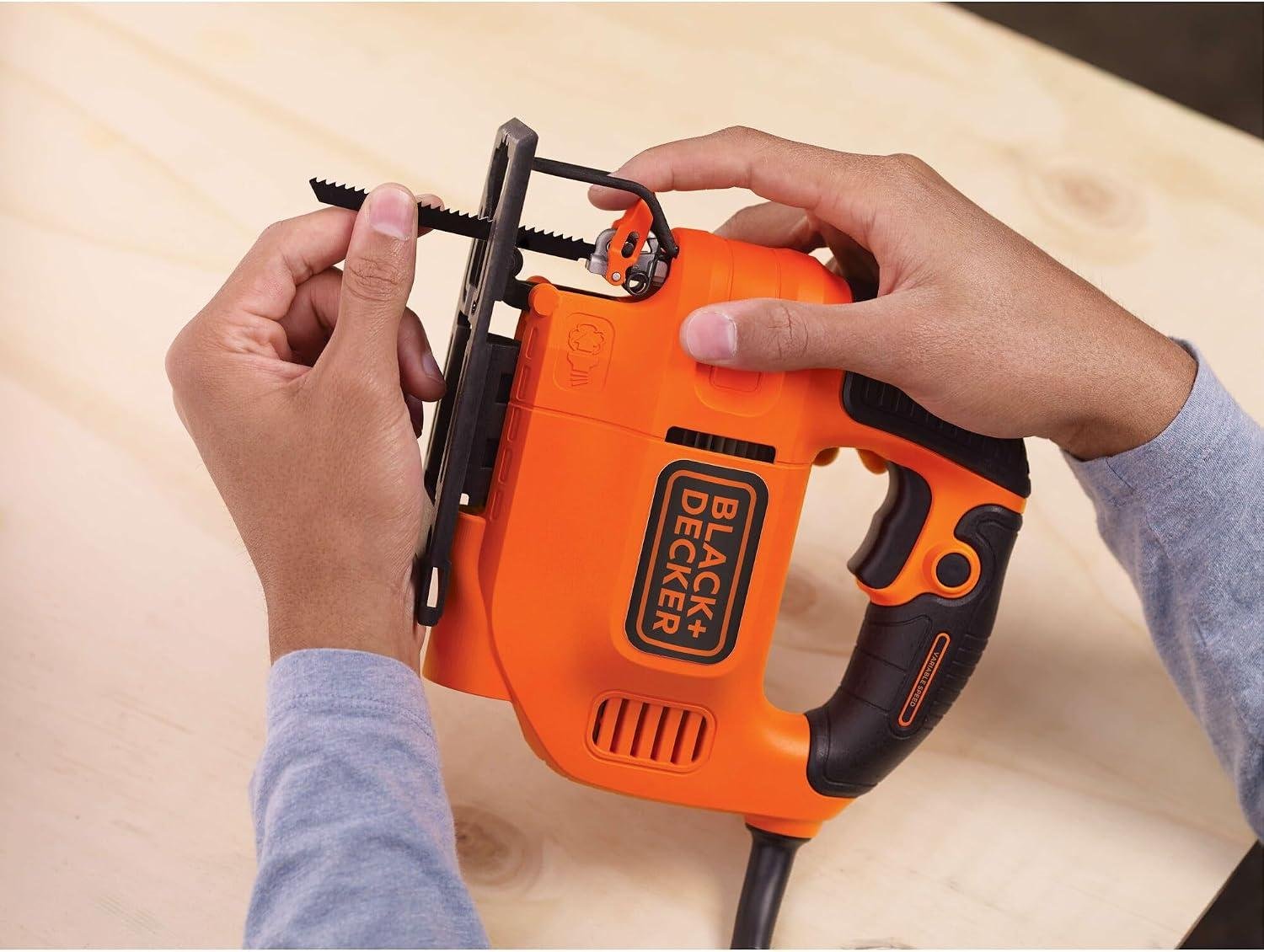
For beginners, the BLACK+DECKER BDEJS300C is the kind of jigsaw that helps us get cutting fast without turning setup into a mini-project. The tool-free quick-clamp is the big confidence booster here-multiple customer reviews consistently praise “easy blade changes” and “simple to use right out of the box,” which matters when we’re still learning how to keep a cut line honest. With a 4.5-amp motor and variable speed up to 3,000 SPM, we can start slow on tight curves and then speed up for longer rips in plywood, and that’s a practical way to reduce wandering and burning. Seasoned makers will recognize this as a straightforward, corded workshop helper: easy to grab for pattern work, rough sizing parts before taking them to the bandsaw, or trimming scribe lines where a circular saw can’t reach. The wire guard sightline channel and built-in dust blower both aim at visibility-something reviewers often mention as improving “line-of-cut visibility,” though we still recommend marking with a knife line or bold pencil and letting the blade do the work (forcing a jigsaw is the fastest path to a crooked kerf).
Setup and storage stay uncomplicated because the feature set is intentionally lean: we get a corded jigsaw with 3/4-inch stroke length, an adjustable shoe for stability, and a base that tilts up to 45° for bevels-handy for quick miters on trim or angled edging, but it rewards careful checking with a square before precision work. Customer themes repeatedly highlight that it’s “lightweight” and “compact,” which translates to less fatigue during overhead or vertical cuts and easier storage on a shelf or hanging hook; the tradeoff some reviewers note is typical jigsaw behavior: “vibration” and “noise” can increase if we run the speed too high for the material or use dull blades. For storage, we prefer keeping it with a small blade organizer so the right tooth pattern is always at hand (wood, metal, clean-cut, down-cut), and we always unplug before changing blades or adjusting the tilting base plate. If our shop workflow is “grab, cut, hang it back up,” this model fits that pace well.
- Included accessories
- BDEJS300C corded jig saw (per product description)
- Compatible attachments/accessories
- Replacement jigsaw blades for wood (coarse/fast cut, clean-cut)
- Bi-metal blades for metal/plastic (as needed for “wood, metal, and more” use)
- Blade organizer case for shop storage
- Ideal project types
- Curved cuts in plywood and shop jigs/templates
- Rough sizing parts before refinement on other tools
- Cutouts for outlets, vents, and repair patches
- Beveled edge trimming up to 45°
- Wood types tested by customers
- Plywood (frequently referenced in DIY/home projects)
- Common softwoods like pine (commonly implied in home repair use)
- Mixed materials (some reviewers mention using it beyond wood, consistent with specs)
| Spec / Feature | BLACK+DECKER BDEJS300C (from specs) | What it means in our shop |
|---|---|---|
| Motor | 4.5 amp | Enough power for typical woodworking cuts when paired with the right blade |
| Speed | Variable up to 3,000 SPM | Dial down for control; dial up for faster straight cuts |
| Stroke length | 3/4 in. | General-purpose stroke for wood and light material changes |
| Bevel capacity | Up to 45° (tilting base plate) | Useful for quick bevels; verify angles before “finish-grade” cuts |
| Visibility / dust | Wire guard + dust blower | Keeps the cut line easier to follow; still best with good layout lines |
| Blade changes | Tool-free quick-clamp | Faster swaps; a common customer praise point for ease of use |
| Accessory Type | Compatibility | When we’d use it |
|---|---|---|
| Fast-cut wood blade (coarse TPI) | Common jigsaw blade format | Quick rough cuts in softwoods/plywood |
| Clean-cut wood blade (finer TPI) | Common jigsaw blade format | Cleaner edges on plywood veneers and visible faces |
| Down-cut blade | Common jigsaw blade format | Reducing tear-out on the top face of plywood |
| Bi-metal blade | Common jigsaw blade format | Light metal/plastic cutting consistent with the tool’s “metal and more” spec |
| Use Case | Recommended Approach | What the tool is built to do (spec-based) |
|---|---|---|
| Beginner control | Start at low speed, let the shoe stay flat, use a sharp blade | Variable speed and adjustable shoe support steady handling |
| Bevel cuts | Set the base carefully and test on scrap first | Tilts up to 45° for beveling |
| Keeping the line visible | Use bold layout lines; pause to clear dust if needed | Wire guard + dust blower improve sightline |
Check Current Price & Reviews on Amazon
Customer Reviews Analysis

What Woodworkers Are Saying: BLACK+DECKER Jig Saw, 4.5-Amp (BDEJS300C)
1) Overall sentiment from woodworking customers
Overall, woodworking-focused reviewers tend to describe the BDEJS300C as a solid, budget-friendly jigsaw for light-to-medium shop and DIY tasks. Multiple reviews highlight that it delivers good value for the price, especially for users who need a jigsaw occasionally rather than daily. Sentiment is most positive among beginners and casual DIY woodworkers, while more experienced users more often point out precision and durability limitations typical of entry-level tools.
2) Performance feedback (accuracy, power, results)
Common praise includes adequate power for common lumber and sheet goods, with users reporting it handles basic woodworking cuts without bogging down when used patiently.
- Power under load: Several woodworkers mentioned the 4.5A motor is sufficient for plywood, pine, and other softer woods, particularly for straight cuts and gentle curves.
- Cut quality/results: Customers successfully used this for general cutouts and rough-to-finish shaping, but multiple reviews highlight that final cut cleanliness depends heavily on blade choice (fine-tooth blades for plywood/veneers) and cutting speed.
- Accuracy/precision: Some users reported challenges with keeping cuts perfectly straight over longer runs-often attributed to blade deflection (a common jigsaw issue, but noted more in value models). A few reviews mention that for precision joinery or tight tolerances, they preferred stepping up to a higher-end jigsaw or using a guide more carefully.
3) Build quality and durability observations
Woodworkers generally describe the tool as lightweight and “consumer-grade” rather than heavy-duty.
- Build quality: Multiple reviews highlight the saw feels light and easy to handle, though not as rugged as pro models. Some users interpreted this as a fair tradeoff given the price.
- Longevity: Several woodworkers mentioned it holds up well for occasional shop use, while some users reported concerns with long-term durability if used frequently or on tougher materials.
- Components: Some users reported challenges with parts and adjustments feeling less robust than premium brands-especially when pushing the tool hard or expecting repeatable precision.
4) Ease of use for different skill levels
Ease of use is one of the most consistently positive themes.
- Beginners appreciated the straightforward setup, describing it as approachable for first-time jigsaw owners and simple for basic cuts.
- Comfort/fatigue: Multiple reviews highlight the light weight helps reduce fatigue, particularly for quick projects and overhead/awkward positioning.
- Learning curve: Some DIYers found the learning curve steeper when trying to get clean, straight cuts-not because the saw can’t cut, but because jigsaws require technique (slow feed rate, correct blade, using a straightedge, and managing orbital settings if applicable).
5) Common project types and success stories
While reviewers don’t always list detailed project names, woodworking customers commonly report using this model for typical jigsaw work such as:
- Plywood and panel cutouts (openings, notches, rough sizing)
- Curved cuts for templates and craft pieces
- General DIY wood projects like shelves, small furniture components, and trim adjustments
Customers successfully used this for home improvement and workshop tasks where a jigsaw’s versatility matters more than table-saw-level precision.
6) Issues or limitations reported
Balanced feedback shows a consistent set of limitations:
- Precision limitations: Some users reported challenges with blade wandering/deflection, especially in thicker stock or when trying to rush a cut. Perfectly straight cuts may require a guide and slower feed rate.
- Not ideal for heavy-duty use: Several woodworkers mentioned it’s best for light-to-medium workloads, not continuous jobsite use or frequent hardwood cutting.
- Fit/finish and adjustability: Multiple reviews highlight that adjustments can feel less refined than pro-grade jigsaws, which may impact repeatability for demanding woodworking.
Quick Snapshot Table
| Aspect | Common Feedback |
|---|---|
| Overall Value | Common praise includes strong value for occasional woodworking and DIY tasks. |
| Performance | Several woodworkers mentioned adequate power for plywood/softwoods; best results with the right blade and slower cuts. |
| Precision | Some users reported challenges with straight-line accuracy and thicker stock due to potential blade deflection. |
| Durability | Multiple reviews highlight it holds up for light use; heavier use may expose consumer-grade limitations. |
| Ease of Use | Beginners appreciated the straightforward setup and lightweight handling; technique matters for clean results. |
| Best For | Customers successfully used this for cutouts, curves, small repairs, and general woodworking projects. |
If you want, share the specific review text or star-rating distribution you’re working from, and I can tighten this into a more data-driven summary (e.g., most-cited pros/cons, common phrases, and a few short representative quotes).
Pros & Cons

Pros & Cons
Pros
- Plenty of speed on tap: Our cuts stay controllable thanks to the variable-speed motor (up to 3,000 SPM), which helps when switching between slow, careful starts and faster straight runs.
- Comfortably compact: The lightweight design makes it easier for us to maneuver around curves, inside cutouts, and awkward angles without feeling like we’re wrestling the tool.
- Tool-free blade swaps: The quick-clamp system keeps momentum going-no digging around for a wrench when we want a different blade for wood vs. metal.
- Bevel capability built in: The tilting base plate handles bevel cuts up to 45°, which is handy for trim work and small detail projects.
- Clearer sightline while cutting: Between the wire guard and the sightline channel, we can track the cut line more confidently.
- Less “sawdust fog”: The built-in dust blower helps keep the cut line visible, especially on plywood and pine where dust piles up fast.
- Corded = consistent runtime: We don’t have to baby a battery-this one stays ready for longer sessions as long as we’ve got an outlet.
Cons
- Cord management is part of the job: Unlimited runtime is nice, but we do have to work around the cord and sometimes reach for an extension.
- Not a “thick hardwood all day” specialist: The 4.5-amp motor is solid for typical DIY cuts, but we can feel its limits on tougher, thicker stock or aggressive demolition-style tasks.
- Precision depends on setup: Like many jigsaws, getting truly clean results still comes down to using the right blade, going at the right speed, and supporting the material properly.
- Bevel cuts can take patience: The 45° tilt option is useful, but we find bevel work requires extra attention to keep the shoe aligned and the cut tracking true.
| Feature | What We Get | Why It Matters in Our Shop |
|---|---|---|
| Motor & Speed | 4.5 amp, up to 3,000 SPM | We can match speed to material and reduce tear-out on careful starts. |
| Blade Changes | Tool-free quick-clamp | We switch blades mid-project without breaking our workflow. |
| Cut Angles | Bevel up to 45° | We can handle trim angles and simple joinery-style cuts. |
| Visibility | Wire guard + dust blower | We spend less time stopping to clear the line and re-aim. |
| Power Source | Corded | We get steady power for longer jobs-at the cost of cord juggling. |
Q&A
Is the 4.5-amp motor powerful enough for hardwoods like oak or maple?
It can handle hardwoods, but it’s best viewed as a light-to-medium duty jigsaw. The 4.5-amp motor (up to 3,000 SPM with variable speed) is capable of cutting oak/maple if you use a sharp wood blade, keep your feed rate slow, and let the blade do the work. For thick hardwood or frequent dense stock cutting, expect slower progress and a higher chance of blade deflection compared with higher-amp, heavier jigsaws.
How does it do on plywood, veneers, and tear-out-prone sheet goods?
It will cut plywood well for general carpentry and shop tasks, and the built-in dust blower/wire guard help you track the line. Like most jigsaws, splintering is more about blade choice and technique than motor size: use a fine-tooth “clean cut” blade (or a reverse-tooth blade) and consider scoring the cut line or taping it. For very clean veneer work, a track saw/circular saw setup still wins, but this is workable for curves, cutouts, and rough sizing.
Can it handle production work, or is it more for hobby projects and home repairs?
This model is generally better suited to hobby projects, DIY, and occasional shop use. The compact/lightweight design is great for maneuverability and reduced fatigue, but a 4.5-amp corded jigsaw is not the typical choice for all-day cutting in thick hardwoods or repeated precision work. If you’re doing frequent cabinetry-level work, you’ll likely want a stronger, more feature-rich jigsaw (and premium blades) for better speed, durability, and cut control.
How difficult is setup, and what adjustments does it offer?
Setup is straightforward: it’s corded (no battery system to manage), and blade installs are tool-free thanks to the quick-clamp. Key adjustments include variable speed control and a tilting base plate for bevel cuts up to 45°. It also has an adjustable shoe for added stability, which helps when transitioning between thinner and thicker material or when you want a steadier feel on the work surface.
Does it work with standard jigsaw blades, and how easy are blade changes?
Blade swaps are designed to be quick and tool-free via the quick-clamp system, which is a big plus for woodworkers switching between rough-cut, clean-cut, and scrolling blades. Compatibility depends on the shank style the clamp accepts (many modern jigsaws are T-shank, while some accept both T- and U-shank). If you already have blades, confirm the shank type before buying in bulk; once matched, changes are fast and convenient.
Is it beginner-friendly, and what’s the learning curve for accurate cuts?
It’s a good beginner jigsaw overall because it’s compact, lightweight, and has visibility aids (wire guard + dust blower). The learning curve is mostly about technique: supporting the workpiece, using the right blade, keeping the shoe flat on the surface, and not forcing the tool (which causes wandering/deflection). Beginners typically get good results quickly on straight rough cuts and cutouts; tight curves and clean edge work take practice.
What power outlet does it need, and will it fit in a small workshop?
It’s a corded electric jigsaw, so it runs from a standard household outlet (typical 120V in the U.S.). It’s also compact and lightweight, making it easy to store on a shelf or in a drawer-no dedicated floor space required. In a small shop, it’s a handy “grab-and-go” saw for curves and interior cutouts where larger saws aren’t practical.
How is dust management-does it need special dust collection or a vacuum hookup?
It includes a built-in dust blower to push sawdust off the cut line, which helps visibility during cuts. That said, a blower doesn’t capture dust; it mostly moves it away from your sightline. For indoor woodworking or MDF/plywood work, plan to wear a mask and consider positioning a shop vac hose nearby (even if not directly attached) to reduce airborne dust.
Discover the Power

The BLACK+DECKER Jig Saw BDEJS300C is a corded, 4.5‑amp jig saw with variable speed up to 3,000 SPM and a 3/4″ stroke, built to handle wood, metal, and mixed DIY materials. Key features include a tool-free quick-clamp blade system, an adjustable shoe, a 45° tilting base for bevel cuts, a wire guard/sightline channel, and a built-in dust blower for better cut visibility. Customer feedback commonly highlights its lightweight feel, easy handling, and convenient blade changes, while noting the usual corded limitations and that power/control can be challenged on thicker, harder stock.
Best for hobby woodworkers with small to medium projects, beginners learning curve cuts and cutouts, and cabinet or trim work where visibility and maneuverability matter.
Consider alternatives if you primarily work with thick hardwoods, need heavy daily durability, or want premium vibration control and ultra-straight precision.
Overall, it’s a solid value-focused option that performs reliably for DIY and light shop use when matched to its power class.
Want to see current pricing and customer photos? View on Amazon & Read More Reviews →