

Blog
Adrattnay Basswood Sheets Review: Right for Our Shop?


Ever dial in a laser or knife cut only too watch your material lift, bow, or splinter right when the design gets detailed? In a small shop, thin sheet stock is supposed to simplify things—less waste, less sanding, cleaner edges—but only if it’s flat, consistent, and predictable.
that’s where Adrattnay Basswood Sheets (1/16″ / 1.5mm, 12″ x 12″) aim to fit. This is a 36-piece pack of unfinished basswood plywood sheets designed for DIY crafts, laser cutting, wood burning, painting, staining, and model carving, with a smooth surface meant to take marks and finishes cleanly.
In this review, we’ll look at the specs, surface quality, thickness consistency, and what customer feedback suggests about real-world performance—including the big talking points like warpage, flatness, and durability at lamination points, plus whether the price makes sense for batch projects.
as woodworkers who’ve spent plenty of time chasing accuracy on thin stock, we’ll keep it practical: what to expect, what to watch for, and who these sheets are best suited for.
Tool Overview and First Impressions of the Basswood Sheets
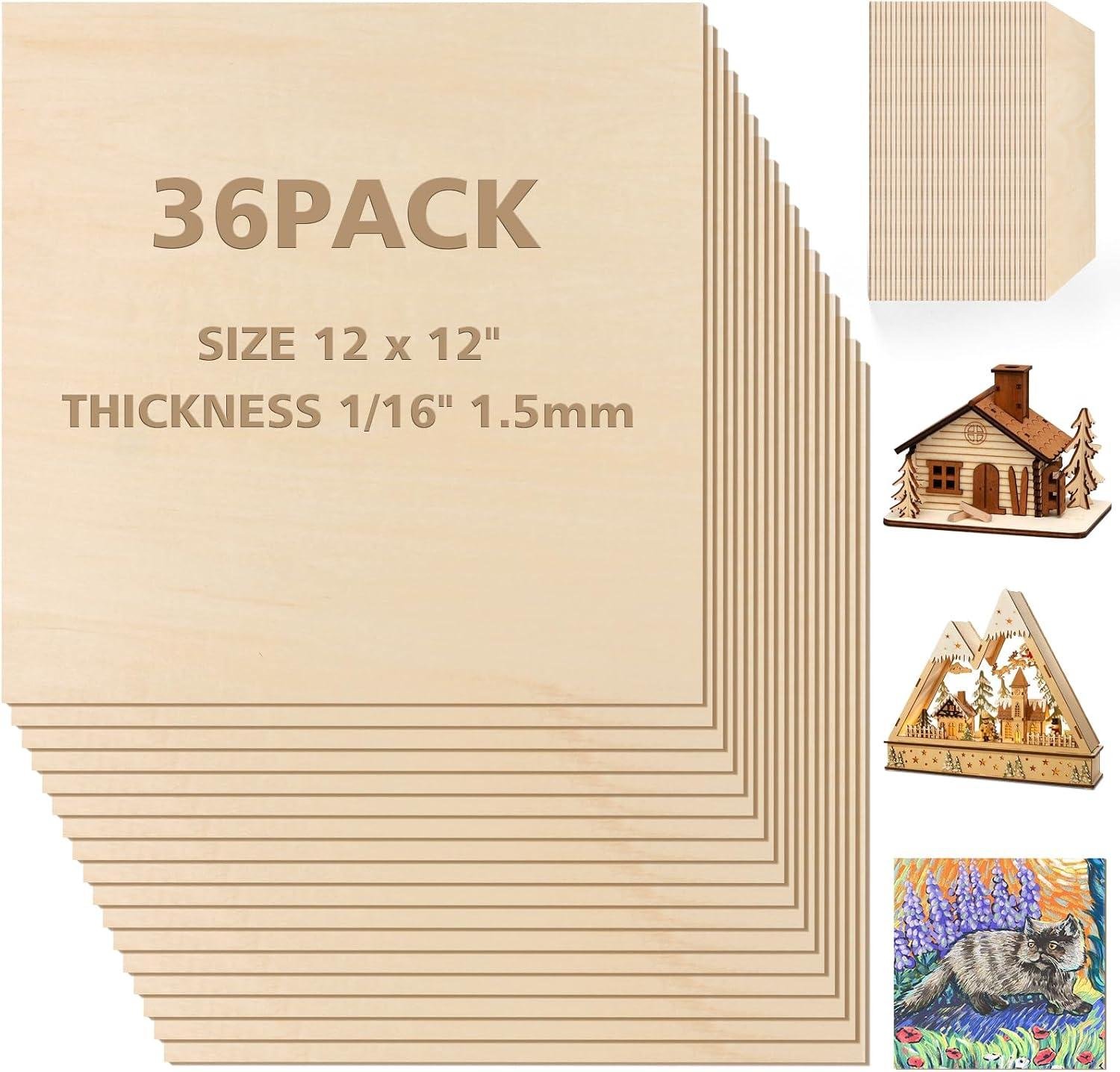
In our shop, the Adrattnay pack reads more like a consumable “material tool” than a traditional woodworking machine, but it still earns a proper overview because sheet goods live or die by consistency. each panel is rated at 12 x 12 inches (about 300 x 300 mm) and a nominal 1/16 inch / 1.5 mm thickness, and you get 36 pieces—enough to prototype jigs, test finishes, or batch out small parts without guarding every square inch.Out of the box, the first impression is that these are meant for clean, fast handling: the listing calls them unfinished basswood plywood sheets with a smooth, even surface, which is exactly what we want when we’re doing layout lines, glue-ups, or quick sanding passes before paint or stain. In practical terms, that thin profile makes them easy to score-and-snap for straight cuts, or to trim on the bandsaw with a fine-tooth blade; just remember that at 1.5 mm, controlling tear-out and supporting the workpiece matters more than brute force.
Customer feedback lines up with how we’d expect this material to behave in a mixed craft/woodworking workflow. Multiple reviewers say the sheets work well on laser cutters and produce clean cuts and engravings, and several call the overall quality good—especially for engraving and layered projects. At the same time, reviews repeatedly disagree on thickness consistency and flatness, with warpage being the most common complaint; some folks mention having to hold sheets down with magnets or deal with bowed stock that doesn’t sit flat on a laser bed. Durability is also mixed, including reports of breaking at lamination points or visible seams that burn or stain differently—an vital reminder that “plywood-style” basswood can have glue lines that show up under heat, dye, or translucent finishes. Educationally, our takeaway is simple: if your project needs dead-flat stock (laser work, scroll-sawn inlays, tight tolerance templates), plan on checking each sheet on a known-flat reference and, if needed, using clamping/vacuum hold-down or selecting only the flattest boards for precision work.
See full Specifications & Customer Photos
Key Features woodworkers Will Appreciate for Crafting and Model Work
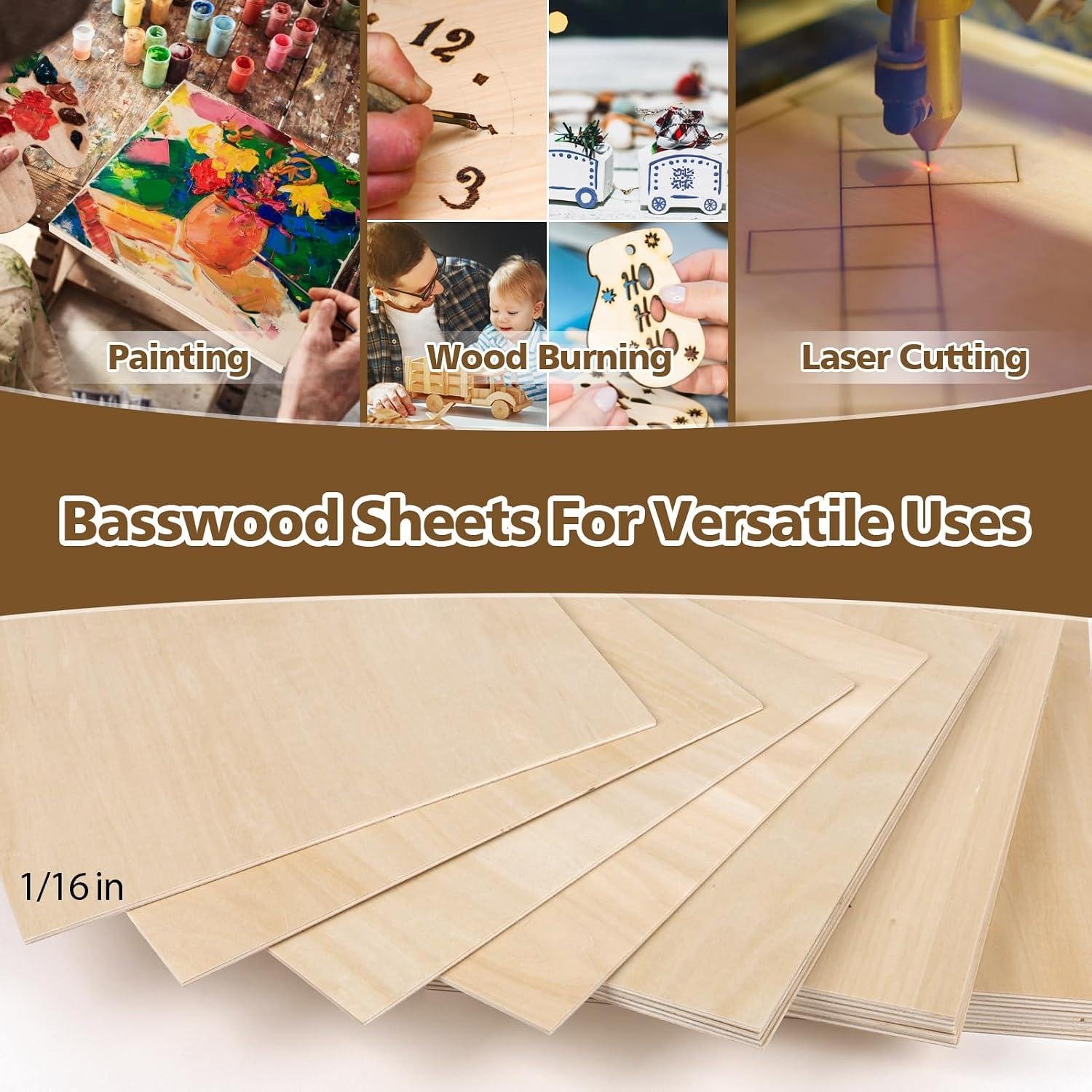
What we appreciate most about the Adrattnay pack is how workshop-amiable the format is: 36 sheets at a true craft scale of 12 x 12 inches and a stated thickness of 1/16 inch (1.5mm).In our shop, that footprint is easy to register against a fence, tape down to a spoilboard, or nest efficiently for template work—especially when we’re doing repeat parts for models or layered signs. The surface is marketed as unfinished basswood with a smooth, even face, and that lines up with customer themes praising “good quality” and clean cuts and engravings on lasers. As woodworkers, we also like basswood for practice burns and detail carving because it’s forgiving under a knife and takes pencil lines clearly—just remember it’s soft, so crisp edges depend more on sharp tools and light passes than brute force.
That said, real-world handling matters with thin stock, and customer feedback is consistent on one key point: warpage shows up often, with multiple reviewers saying “more than half the boards were warped” or that they had to use magnets to hold down sheets during laser work. We can work around mild bowing by taping edges, using a vacuum table, or weighting the corners, but any curve will affect laser focus, scroll-saw accuracy, and glue-up flatness for laminations. Reviews also disagree on thickness uniformity and flatness, so if we’re fitting parts into tight slots (model frames, inlays, or press-fit kits), it’s smart to measure with calipers and standardize: orientation the crowns the same way, or reserve the flattest sheets for precision layers. A few durability comments mention breaking at lamination points, which is a reminder to us to route/trim with a sharp bit, back up cuts to prevent tear-out, and avoid aggressive clamping pressure on thin plywood-style sheets.
- Included accessories: 36 x basswood sheets (12 x 12 x 1/16 in (300 x 300 x 1.5mm))
- compatible attachments/accessories (shop add-ons that help): masking tape/transfer tape, magnets or hold-down clamps, vacuum table/spoilboard, sharp hobby blades, fine-tooth scroll-saw blades, small sanding blocks, CA glue/wood glue, sealer or shellac for finishing
- Ideal project types: laser-cut ornaments and signs, multi-layer clock faces (mentioned by customers), model carving parts, pyrography practice panels, paint/stain samples, small jigs/templates
- Wood types tested by customers: basswood sheets (this product); customers specifically report success on laser cutters and with Cricut-style cutting attempts (mixed results)
| Spec | Adrattnay Basswood Sheets | What It Means in the Shop |
|---|---|---|
| Sheet size | 12 x 12 in | Easy to fixture, square up, and batch-process for repeat parts |
| Thickness (stated) | 1/16 in (1.5mm) | Great for layered builds; thin stock is sensitive to bowing and clamp marks |
| Quantity | 36 pcs | Enough for prototyping and production runs of small crafts/models |
| Surface | Unfinished, smooth | Takes pencil marks, paint, stain, and burn lines well; prep is minimal |
| Accessory/Tool | Compatibility | Why We’d Use It |
|---|---|---|
| Diode/CO₂ laser + honeycomb bed | Yes (commonly reported) | Customers mention clean cuts/engravings; keep sheets flat for consistent focus |
| Magnets/hold-downs or vacuum table | Recommended | Addresses the most common complaint: warpage |
| Scroll saw / craft knife | Yes | Thin basswood is easy to cut—use sharp blades to avoid splintering |
| Wood burner (pyrography pen) | Yes | Smooth surface helps produce cleaner shading and line control |
| Use Case | Recommended Capacity/Expectation | What Customers Actually Report |
|---|---|---|
| Laser cutting | Best when sheets are flat and consistently thick | Often “perfect for laser cutting”, but bowed/warped sheets can cause issues |
| Precise fit parts (press-fit/model frames) | Measure thickness and sort sheets | Mixed feedback on thickness uniformity/flatness |
| Laminated builds | Light clamping pressure; flat cauls | Some mention breaks at lamination points (handle edges gently) |
See Full Specifications & Customer Photos
Real World Performance in Laser Cutting Wood Burning and Clean Hand Cuts
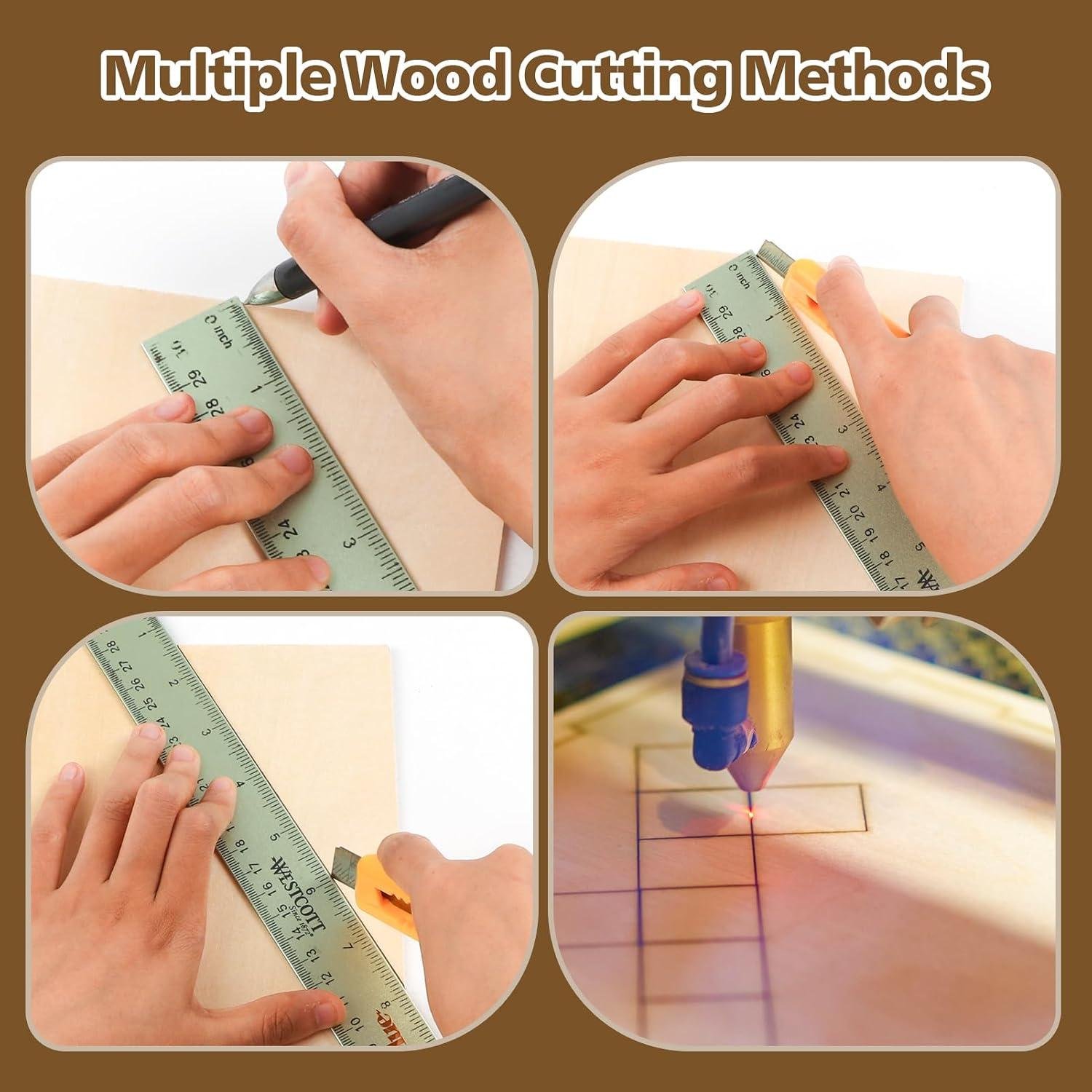
In real shop use,these Adrattnay basswood sheets hit the sweet spot for light,detailed work because the format is consistent on paper: 12 x 12 inches and about 1/16 inch thick (1.5mm),with 36 sheets in the pack. That thickness is exactly why so many buyers call them “perfect for laser cutting projects” and mention clean cuts and engravings—ther’s simply less material for a diode laser to push through, so kerf and char can be easier to control. Reviewers specifically report good results on common hobby machines (including mention of a 10W diode laser), and we’ve found that when basswood is flat against the bed, it typically produces crisp edge detail and predictable engraving depth compared to harder, resinier species. The real-world caveat matches the most repeated customer theme: warpage. Several buyers say “more than half the boards were warped” or that bowed sheets “don’t work as well” as the laser loses focus and the cut/engrave lines can wander—so in practice, plan on flattening (weights, magnets/pins if your bed allows, or a hold-down/vacuum approach) before you waste time re-running passes.
For wood burning and clean hand cuts, the smooth unfinished surface is the main advantage—basswood takes pen tips well, and it’s forgiving for beginners learning heat control because it doesn’t fight the tip like dense maple can.Customers repeatedly praise smoothness and “good front and back,” which matters when we’re burning fine lines or shading: fewer grain surprises means fewer blotchy scorch marks. For knife work and small shop cutting (utility knife, X-Acto, small backsaw, scroll saw), the 1.5mm thickness makes it easy to score-and-snap or stack-cut for patterns, but we’d still treat it like thin plywood: use a sharp blade, support the sheet fully, and cut with the grain to reduce fuzzing. Durability feedback is mixed—some reviewers mention sheets “breaking at the lamination points” or seams that “don’t burn the same”—so if we’re doing show-face work (signs, stained projects, picture layers), we’d inspect each sheet under raking light first and reserve any visibly pieced boards for painted or backer layers rather than the final top layer.
See Full Specifications & Customer Photos
Ease of use for Beginners and Precision Expectations for Experienced Makers
For beginners in the shop, these sheets are about as approachable as thin stock gets: each panel is a manageable 12 x 12 inches at 1/16 inch (1.5mm) thick, and the surfaces are commonly described as smooth and ready for paint, stain, or wood burning without a bunch of prep. In practical terms, that means we can mark layouts cleanly, score and snap small parts, or cut curves with a sharp knife and straightedge before graduating to a scroll saw or laser. Review themes also line up with beginner-friendly use on digital tools—customers repeatedly say they’re “perfect for laser cutting projects” and report clean cuts and engravings when the sheets are flat. The biggest beginner pitfall is holding the material down: multiple reviewers mention warpage/bowing, and some say they had to use magnets or other hold-down methods to keep sheets flat for consistent results—good shop practice is to check each board on a known-flat surface and clamp or weight the corners before committing to a long cut or burn.
For experienced makers, the precision expectation is more nuanced: the spec calls out 1.5mm thickness and the product description claims “flat” and resistant to warping, but customer feedback shows variability—buyers disagree on thickness and flatness, and warpage is the most common complaint theme. That matters when we’re targeting tight tolerances for layered laminations, inlays, or laser-fit tabs/slots where even slight bowing changes focus distance and kerf performance. A few reviewers mention issues at lamination points (breaking or seams burning differently), which is a reminder to treat these as craft-grade plywood sheets: before precision work, we shoudl sort the stack, reject visibly bowed pieces, and do a quick caliper check if our joinery depends on exact thickness. If we’re using a laser or drag-knife system, a vacuum table, strong tape-down, or a spoilboard with perimeter clamping can turn “usable but inconsistent” sheets into repeatable stock—just don’t assume every panel in the 36-piece pack will behave identically across a production run.
See Full Specifications & Customer Photos
Customer reviews Analysis

What Woodworkers Are Saying (Review Analysis)
1) Overall sentiment from woodworking customers
sentiment trends positive for adrattnay 1/16″ basswood sheets as a craft- and model-grade material. Common praise includes the convenient pre-cut 12″x12″ size,the quantity (36 sheets) for the price,and the clean look of unfinished basswood for finishing,painting,and detailed work. Some users reported challenges with inconsistency from sheet to sheet (flatness and thickness), which matters most for precision builds and laser work.
2) Performance feedback (accuracy,power,results)
Multiple reviews highlight that these sheets generally cut and engrave cleanly for typical hobby workflows.
- Cut quality (hand tools / craft cutters): Several woodworkers mentioned the sheets score and snap reasonably and respond well to hobby knives and straightedges, especially for light-duty parts and templates.
- Laser cutting / engraving: Customers successfully used this for laser cutting, wood burning, and engraving, with reviewers often noting crisp lines and good contrast after burning. Some users reported challenges with variable density (some boards cut faster/slower), requiring power/speed tweaks to keep results consistent.
- Sanding & finish results: Common praise includes basswood being easy to sand smoothly and taking paint and stain evenly for craft-style finishes. A few reviewers mention being careful not to over-sand due to the thin 1/16″ profile.
3) Build quality and durability observations
Feedback tends to frame these as lightweight craft sheets, not structural plywood.
- Flatness & warp: Some users reported challenges with slight warping/cupping in a portion of the stack, especially important if you’re making laminated panels, tight-fitting inlays, or precision model assemblies.
- Edges & surface: Several woodworkers mentioned clean faces suitable for painting and burning. Occasional comments point to minor surface marks or small imperfections, typical of budget-friendly bulk packs.
- Strength: Reviewers generally treat the sheets as fragile by design (very thin) and recommend bracing,laminating,or sealing depending on use.
4) Ease of use for different skill levels
- Beginners: beginners appreciated the straightforward “ready-to-use” size, making it easy to start wood burning, painting, or simple patterns without milling lumber down.
- Intermediate/experienced makers: Experienced woodworkers noted that thin sheet stock like this requires careful handling and workholding (taping to a spoilboard, using lighter cuts, and sealing to reduce warp). Some DIYers found the learning curve steep specifically when using a laser—dialing settings for variability can take test cuts.
5) Common project types and success stories
Customers report using this pack for a wide range of small-format work, including:
- Laser-cut ornaments, signage, and layered art
- Wood burning practice panels and decorative plaques
- Model making and carving (including small vehicle/model components)
- Craft templates, stencils, and pattern prototypes
- painted DIY crafts where a smooth, light-colored base helps colors pop
Several reviewers mentioned that having 36 matching squares is especially helpful for production-style crafting (batch ornaments, repeated designs, classroom projects, and quick prototypes).
6) Issues or limitations reported
Some users reported challenges with the following:
- Sheet-to-sheet variation: Occasional feedback cites inconsistent thickness or density, which can affect laser settings, tight joints, and stacked assemblies.
- Warping/cupping: A recurring limitation is not every sheet is perfectly flat—fine for many crafts, but frustrating for precision builds.
- Not “plywood-like” for structural use: Despite “plywood sheets” appearing in the product naming, reviewers often treat these as thin basswood craft boards—better for decorative and light-duty applications than load-bearing parts.
- Thinness demands careful handling: At 1/16″, sheets can crack, dent, or over-sand if handled aggressively.
Summary Table (Common Review Themes)
| aspect | Common Feedback |
|---|---|
| Performance | Generally clean cuts/engraves and sands easily; some variability requires testing (especially for lasers). |
| precision | Good for patterns and craft parts; occasional thickness/flatness variation noted. |
| Durability | Thin craft stock—adequate for decorative projects, not intended for structural strength. |
| Ease of Use | Beginner-friendly format; best results with careful workholding and light passes. |
| Versatility | Widely used for laser cutting, wood burning, painting, and model work. |
| Value | Quantity (36 sheets) is a strong selling point; quality consistency is the main tradeoff mentioned. |
If you want, share the actual review text or star-rating distribution you have, and I can tailor this section to match the most frequent phrases customers used (including 1–2 short, representative quotes).
Pros & Cons

pros & Cons
When we bring a new sheet good into our shop, we’re looking for two things: predictable results on the tools we already own, and a surface that behaves nicely once paint, stain, or scorch marks enter the chat. The Adrattnay 1/16″ (1.5mm) 12″ x 12″ basswood sheets mostly feel aimed at makers who want fast, clean cuts and a smooth canvas—but there are a few practical trade-offs we’d want to plan around.
| What we liked | What held us back |
|---|---|
| Clean laser cuts and crisp engravings (when the sheet is flat). | Warpage appears often in customer feedback, which can throw off focus and cut depth. |
| Thin 1.5mm profile is great for layered projects and lightweight signage. | Thickness/consistency gets mixed comments—some users find it thinner than expected. |
| Smooth, unfinished surface takes stain, paint, and marker details nicely. | Durability is mixed; some reports mention breaking at lamination points or seams showing. |
| 36-sheet pack supports batch production and prototyping without rationing sheets. | Value-for-money depends on how many sheets arrive useably flat—waste can erase the “deal.” |
pros
- Laser-friendly performance (on good boards): Customers frequently mention clean cuts and sharp engravings, which is exactly what we want when we’re dialing in repeatable settings.
- Versatile “blank canvas” material: The sheets are unfinished and described as smooth,making them a solid base for wood burning,painting,staining, and engraving.
- Convenient standard size: At 12″ x 12″, these are easy for us to store, fixture, and tile into multi-piece designs.
- Good for thin builds: The 1/16″ (1.5mm) thickness is handy for layered wall art,clock faces,ornaments,and lightweight panels where bulk is the enemy.
- Plenty in one bundle: with 36 pieces, we can prototype, iterate, and still have enough left for a small run.
Cons
- Warpage is the headline risk: A notable portion of customer feedback centers on sheets arriving bowed/warped. in our shop, that can mean extra hold-down time, inconsistent focus, or uneven engraving darkness.
- Flatness can be inconsistent: Even when the surface is smooth, “not laying flat” is a real workflow problem—especially for lasers and precision cutting.
- Durability and construction aren’t universally praised: Some reviews mention breaking at lamination points or seams that burn/stain differently, which can ruin a “premium-looking” finish on display pieces.
- Thickness expectations vary: While some find the thickness uniform, others describe it as thin or inconsistent. If we’re matching parts to existing templates, that variability can become rework.
- Value depends on usable yield: The price can feel great when most sheets are flat; it feels expensive when we’re sidelining half a pack due to bowing.
Our takeaway: These sheets look strongest for lightweight, laser-cut projects where we can manage hold-down (magnets, honeycomb pins, or a vacuum table). If our product line demands perfectly flat, “show-face” wood every time, we’d factor in sorting time—or consider a more consistently flat alternative.
Q&A
What types of wood and projects are these sheets best for?
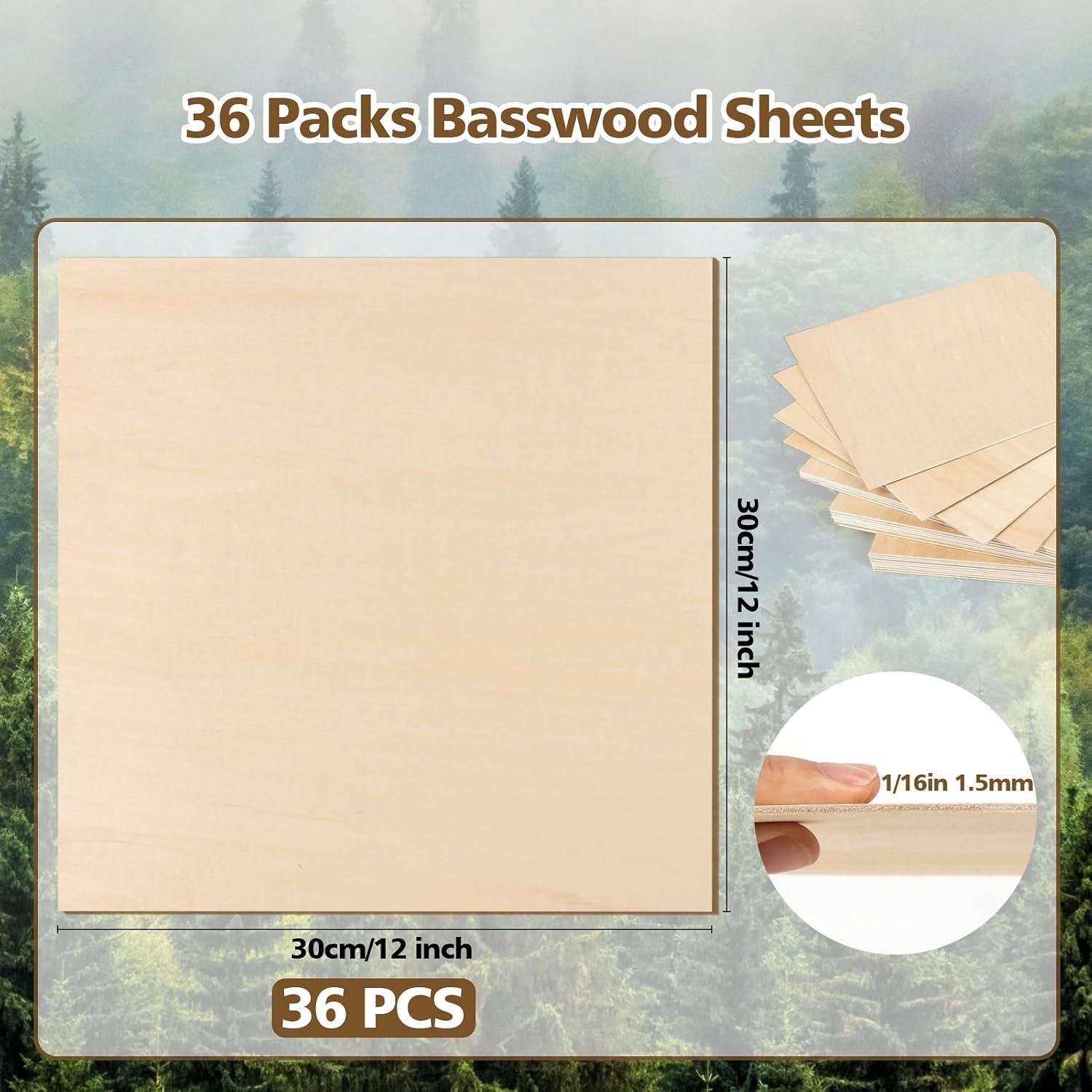
These are 1/16 in (about 1.5mm) basswood sheets intended for light-duty woodworking and craft work—laser cutting/engraving, wood burning, painting, staining, scroll-saw style parts, templates, and model making. Basswood is a soft, fine-grained wood, so it machines and sands easily and is popular for carvings and signage where you want a smooth surface and clean detail.
Will they cut and engrave cleanly on a diode laser or CO₂ laser?
Many customers report clean cuts and engravings on laser cutters, and several specifically mention good results with diode lasers (one noted success on a 10W diode setup). At 1.5mm thick, it’s a very laser-friendly thickness for detail work and layered projects. The main real-world limiter mentioned in reviews is sheet flatness—bowed/warped boards can cause inconsistent focus and “weird lines,” so hold-down or flattening methods matter.
Is this “plywood” actually a multi-ply panel, and will glue lines show or burn differently?
The listing describes them as “basswood sheets” and also calls them “plywood sheets,” and customer feedback suggests some boards may have lamination/seam behavior. A few reviewers report breakage at lamination points and note seams burning differently or looking odd under stain. If your project will be stained, clear-finished, or relies on perfectly uniform engraving, plan on testing a piece first and orienting your design to avoid any visible seam areas.
How flat are the sheets—will they work on a laser bed or CNC without issues?
Expect mixed results. Warpage is the most common complaint in reviews (many customers report bowed sheets, sometimes “more than half” a pack).Others received sheets in great shape with little warping. For best outcomes, use magnets/pins, a honeycomb hold-down, painter’s tape tabs, or a vacuum table; and store the stack flat with weight on top in a controlled-humidity area to reduce future bowing.
Is the thickness truly 1/16 inch (1.5mm), and is it consistent enough for joinery or stacked laminations?
The stated spec is 12 x 12 x 1/16 in (1.5mm). Reviews are split: some customers say the thickness is uniform, while others feel it’s thinner than expected or not consistent.If you’re building layered assemblies or tight-fitting slots/tabs (laser “press fits”), plan to measure a few sheets with calipers and adjust your kerf/clearance settings per batch.
Are these suitable for beginners, or do you need woodworking experience?
They’re beginner-friendly because basswood is forgiving: it cuts easily with hobby knives, scroll saws, and lasers, and it takes paint well. The main “skill” factor is handling thin stock—1.5mm can scorch with aggressive laser settings, dent during clamping, and snap if flexed. Beginners usually do well if they use light pressure, sharp blades, and proper support under the sheet.
Will these hold up for durable,structural parts or “production” products?
They’re best treated as craft/model stock,not structural material. The thin profile is great for ornaments, inlays, layered art, and prototypes, but it can be fragile, and durability feedback is mixed (some users report cracking or breaking at lamination points). For production work, they can be viable for small items—especially laser-cut goods—if you’re willing to sort/grade sheets for flatness and keep a few extras to account for occasional defects or warp.
Do these take stain, paint, and wood burning well—and what finishing tips help?
Customers generally like the smooth surface for painting and decorating, and basswood typically burns cleanly for pyrography. For staining, be aware that any seams/lamination lines (if present) can absorb differently and show more. For best results: lightly sand with fine grit (220–320), remove dust, use a sanding sealer or pre-stain conditioner for more even color, and keep finishes thin to avoid warping thin sheets.
Achieve New Heights

Adrattnay Basswood sheets come as a 36-pack of unfinished 12 x 12 inch panels at 1/16 inch (about 1.5mm) thick. They’re designed for laser cutting and engraving, wood burning, painting, staining, and light model carving, with a smooth surface that many customers say produces clean cuts and crisp engravings. Feedback is strongest on overall quality and laser performance, but buyers consistently report mixed thickness consistency, durability at lamination points, and—most notably—warpage and flatness issues.
best for hobby woodworkers with small to medium projects,Cricut/diode-laser users making signs,ornaments,layered art,and beginners practicing layout,finishing,and engraving on an affordable consumable.
Consider alternatives if you need reliably flat sheets for production laser work, want uniform thickness for tight-fit joinery, or plan to build structural parts where delamination woudl be a problem.
Final assessment: a solid craft-material option when you can sort/flatten sheets, but inconsistent flatness keeps it from being a no-compromise choice.
Want to see current pricing and customer photos? View on Amazon & Read More Reviews →














