

Blog
BOSCH PL2632K Hand Planer Review: Right for Our Shop?

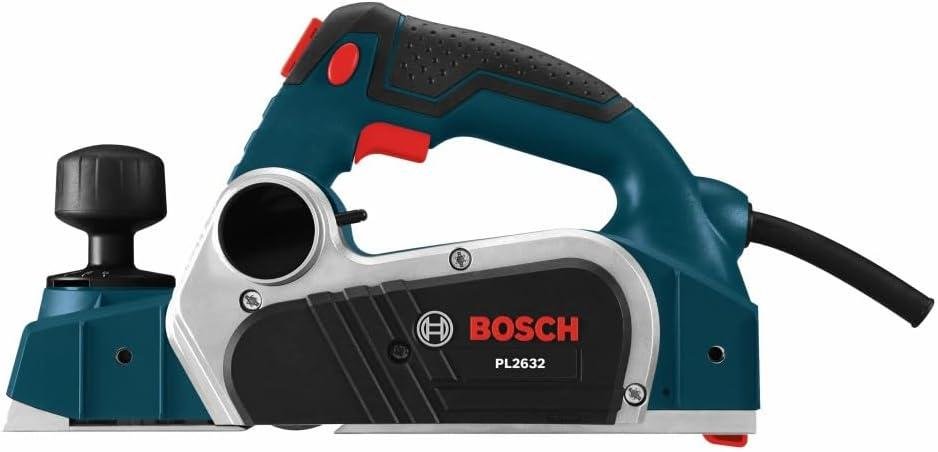
Ever tried flattening a sticking door edge or knocking down a proud glue line only to end up with a wavy surface, tear-out, and shavings blasting straight at your bench? When shop space is tight and the project pile is growing, a reliable hand planer can be the difference between “good enough” and work that actually fits and finishes cleanly.
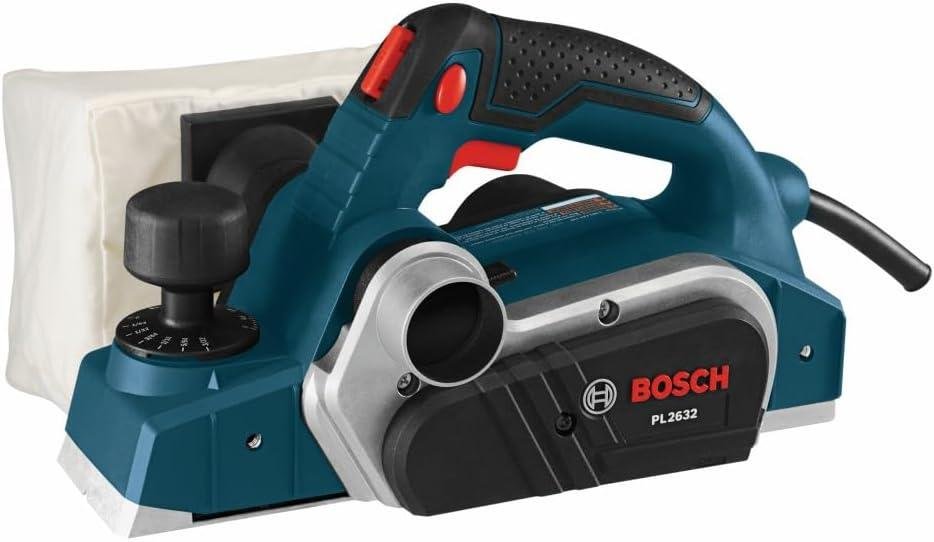
The BOSCH PL2632K 3-1/4 in. Electric Hand Planer Kit is built for controlled stock removal and smoothing, pairing a 6.5 Amp motor with 16,500 RPM for fast cuts. Bosch leans into accuracy with precision-machined aluminum front and rear shoes, plus a ratcheting depth knob that sets 0–2.6 mm (3/32 in.) in one revolution. Practical touches—like left/right chip ejection,dust ports on both sides,and a spring-loaded stand—aim to keep the workflow cleaner and the blade protected.
In this review, we’ll look at key features, day-to-day usability, durability cues (including the poly micro‑V belt), and who benefits most—newer users versus seasoned builders—especially where budget and learning curve intersect. We’ve spent years around planers and edge work, and we’ll lean on the specs plus what customers consistently report in reviews.
Tool Overview and Build Quality
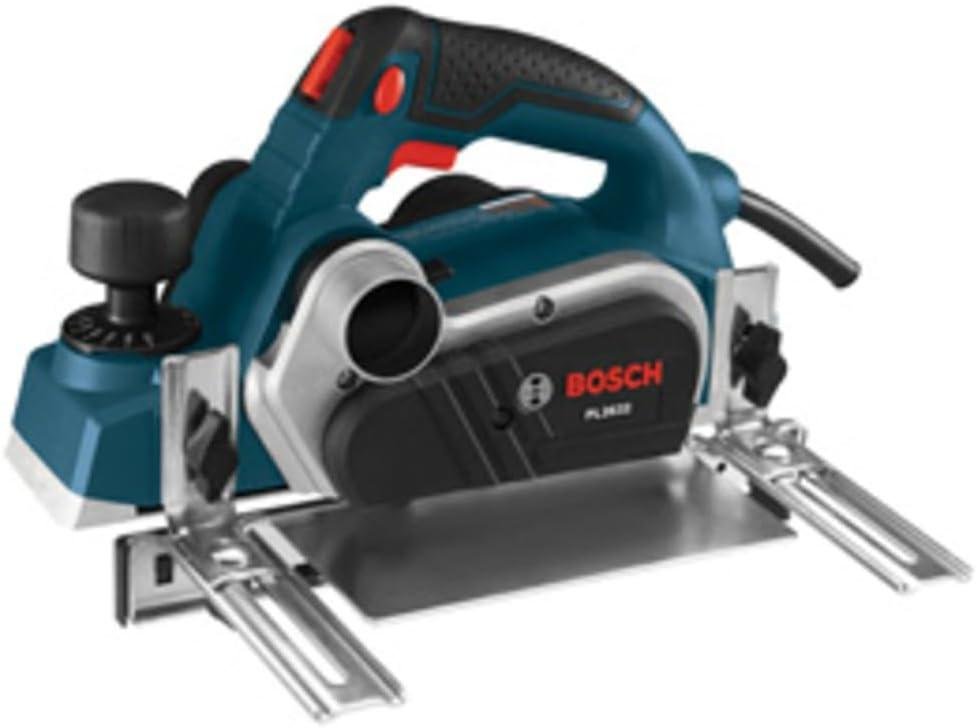
The BOSCH PL2632K is a compact, jobsite-amiable hand planer built around a 6.5‑amp motor spinning the cutterhead at 16,500 RPM, which is the kind of speed that generally translates to cleaner cuts when we keep our feed rate steady and our depth setting sensible. In the shop,this style of planer shines for trimming proud edges,flushing doors,and dialing in fit on face frames—work where a stationary planer is overkill or simply can’t reach. Bosch’s precision-machined aluminum front and rear shoes are a meaningful build-quality detail because sole flatness is what keeps an electric planer from “rocking” and creating a subtle hollow; multiple customer themes echo that the tool feels solid and smooth in operation when properly set up. We also like seeing practical protection features such as the spring-loaded stand (to keep the blade off the bench) and the ambidextrous lock-off with lock-on, which supports safer starts and less hand fatigue on longer passes—as long as we still treat it with the respect any exposed-cutter tool deserves.
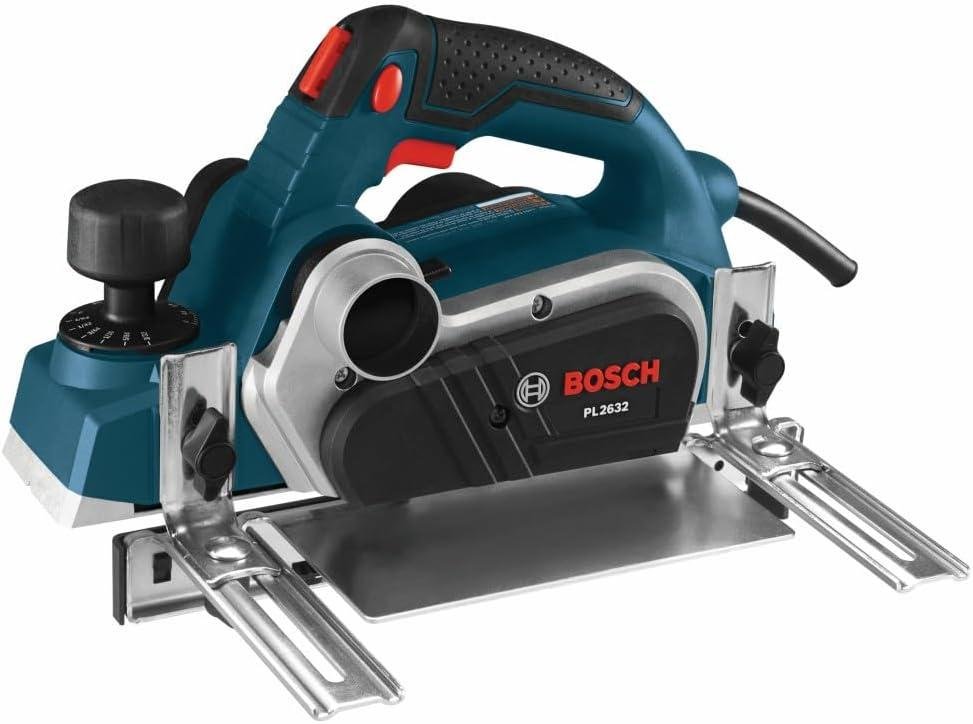
For adjustment and day-to-day usability,the PL2632K’s ratcheting depth knob is designed to set depth from 0 to 2.6 mm (3/32 in.) in one revolution, eliminating the “hunt and re-zero” routine that frustrates a lot of us on older planers. Customers commonly mention easy setup and appreciate the dual-mount guide fence (mounts on either side) plus the no-mar overshoe for planing finished faces without scuffing—useful when we’re sneaking up on a fit rather than hogging material. Chip handling is also thoughtfully done: a chip-ejection switch lets us direct shavings left or right, and there are dust ports on both sides to accept the included shavings bag—critically important as hand planers can bury a bench in curls fast if we don’t manage the stream. Educationally, the big takeaway is to let the tool’s speed do the work: we’ll get the best surface by taking light passes, keeping the front shoe flat at the start, transitioning pressure to the rear shoe at the end, and maintaining sharp blades—especially on reversing grain where tearout can show up quickly.
- included accessories
- Reversible BOSCH Woodrazor micrograin carbide blades
- dual-mount guide fence
- No-mar overshoe (protective plastic shoe)
- Shavings/dust bag (fits the dual-side dust ports)
- Carry case (kit packaging)
- Compatible attachments/accessories
- High-speed steel blades (with optional accessories required for the two-blade system)
- Replacement woodrazor carbide blades
- Aftermarket dust collection adapters (shop-vac hookup may vary by fitting)
- Ideal project types
- Hanging and trimming doors (edge fitting)
- Flushing face frames and scribed panels
- Breaking edges with the machined chamfering groove
- Leveling proud glue-ups (light passes,then follow with sanding)
- Wood types tested by customers
- Pine and othre softwoods (common “smooth results” mentions)
- Oak and similar hardwoods (often noted as capable with sharp blades and lighter cuts)
- Plywood edges (users often report acceptable trimming; blade wear depends on glue/veneers)
| Spec | BOSCH PL2632K (from specs) | Why it matters in the shop |
|---|---|---|
| Motor | 6.5 A | More amperage generally helps maintain speed under load (fewer stalls on wider cuts). |
| No-load speed | 16,500 RPM | Higher RPM can improve cut quality when feed rate and depth are controlled. |
| Max depth setting range | 0–2.6 mm (0–3/32 in.) per knob revolution | Fast to dial in, but best results typically come from lighter passes to avoid tearout. |
| Shoe material | Precision-machined aluminum | Flat, rigid soles help accuracy and reduce unintended snipe at board ends. |
| Chip ejection | Left/right selectable | Keeps shavings out of our face and off reference edges depending on setup. |
| Accessory / Blade Option | Compatibility | Use case |
|---|---|---|
| Woodrazor micrograin carbide blades | Included / direct replacement | General planing; carbide is helpful for longer edge life in mixed stock. |
| High-speed steel (HSS) blades | Supported via two-blade system (optional accessories required) | Fine cuts in clean softwoods; can be economical if you sharpen/replace often. |
| shavings bag | Fits dual-side dust ports | Quick cleanup for door fitting and on-site trimming. |
| Capacity topic | Recommended in practise | Tool’s stated range |
|---|---|---|
| Depth per pass | light passes for finish and control (especially on hardwood/reversing grain) | up to 2.6 mm (3/32 in.) adjustment range |
| Stock removal approach | Multiple controlled passes; keep blades sharp; verify grain direction | 16,500 RPM supports fast removal when needed |
See Full specifications & Customer Photos
Real World Planing Performance on Softwoods and Hardwoods
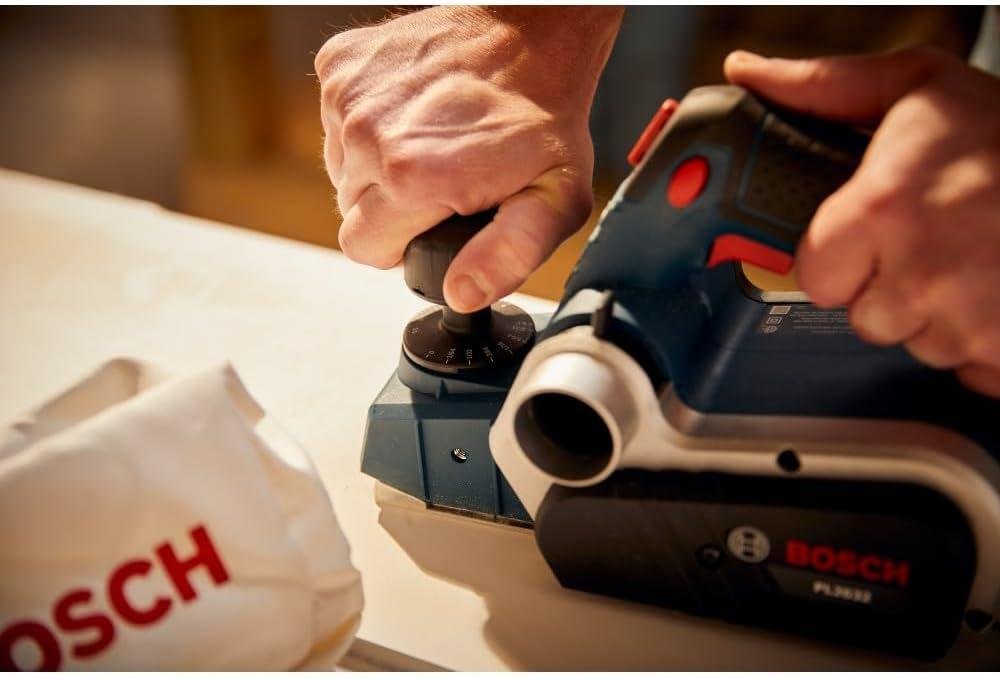
In real shop use,the BOSCH PL2632K’s 6.5 amp motor spinning at 16,500 RPM is the kind of spec that translates into confident, clean passes on common softwoods like pine, SPF, and cedar—especially when we keep the depth conservative and let the planer’s speed do the work. The ratcheting depth knob (0 to 2.6 mm / 3/32 in. in one revolution) makes it easy for us to “sneak up” on final thickness without losing track of settings,which matters when we’re flattening a crowned 2x edge or easing a sticky door.A recurring customer theme is that it’s easy to set up and start using, with multiple reviewers calling out smooth stock removal and a nice final surface when the blades are sharp and the depth is kept reasonable. For softwoods that like to fuzz or tear, we get the best results by planing “downhill” with the grain, taking lighter cuts at the ends to avoid snipe, and using the planer’s spring-loaded stand so we’re not dinging the work or the blades between passes.
Hardwoods are where technique and blade condition matter most, and the included reversible BOSCH Woodrazor micrograin carbide blades help—reviewers often mention the blades staying sharp well and delivering clean results on tougher woods, though some also note the usual tradeoff of noise and a bit of vibration common to hand planers at this RPM. The planer’s accuracy feels supported by the precision-machined aluminum front and rear shoes, which customers frequently praise for helping the tool track flatter, especially when we’re doing practical tasks like fitting hardwood edge banding flush, beveling with the machined chamfer groove, or truing a glued panel edge before a final jointer pass. We also appreciate shop-friendly details that show up mid-project: the chip-ejection switch (left/right) and dust ports on both sides make it easier to keep chips from blasting our layout lines or landing in a freshly glued-up corner. As a learning note,we’ve found the PL2632K rewards a steady two-hand stance—front hand guiding pressure early,rear hand driving pressure late—because that’s what keeps the shoes registered and reduces scallops irrespective of whether we’re planing poplar or oak.
- Included accessories
- Reversible BOSCH Woodrazor micrograin carbide blades (installed/set for use)
- Dual-mount guide fence with protective shield
- No-mar plastic overshoes (to help prevent marring)
- Shavings bag (uses the dual side dust ports)
- Carrying case (kit)
- Compatible attachments/accessories
- High-speed steel (HSS) blade conversion system (requires optional accessories per BOSCH)
- Replacement Woodrazor carbide blades (reversible)
- Shop vacuum hookup via side dust port (fit depends on your hose/adapters)
- Ideal project types
- Door fitting (trimming swollen edges and high spots)
- Breaking edges & chamfers on boards and shelves
- Flattening small assemblies and leveling proud joints
- Quick thickness tuning on short stock (light passes)
- Wood types tested by customers (as commonly mentioned in review themes)
- Pine / construction lumber
- Cedar
- Poplar
- Oak (and other common hardwoods)
| Spec / Feature | BOSCH PL2632K | What it means in the shop |
|---|---|---|
| Motor | 6.5 Amps | Enough power for steady passes; technique and depth control still matter in hardwoods. |
| No-load speed | 16,500 RPM | Fast cutter speed can improve finish quality when cuts are light and blades are sharp. |
| Max depth of cut (per pass) | 0–2.6 mm (0–3/32 in.) | Use smaller increments for hardwoods/end grain to reduce tearout and chatter. |
| Shoe construction | Precision-machined aluminum front & rear shoes | Helps the planer register flat—useful when truing edges and faces. |
| Chip ejection | Left/Right switch + dual dust ports | Direct chips away from your body, clamps, and reference lines; improves visibility. |
| Compatible Blades / Accessories | Type | Notes |
|---|---|---|
| BOSCH Woodrazor micrograin carbide blades | Reversible carbide | Included; convenient edge-flip when performance drops. |
| HSS blade setup (optional) | High-speed steel | Tool supports a two-blade system with optional accessories (per manufacturer). |
| Guide fence | Edge guide | Dual-mount design; helps keep consistent width/step on repeated passes. |
| capacity / Setting | Recommended for best finish (our shop approach) | Actual tool capacity (spec) |
|---|---|---|
| Softwoods (surface quality focus) | Light-to-moderate passes; multiple steps | Up to 3/32 in. (2.6 mm) |
| Hardwoods (tearout control focus) | Light passes; pay attention to grain direction | up to 3/32 in.(2.6 mm) |
See Full Specifications & Customer Photos
Key Features Woodworkers Will Appreciate

In day-to-day shop use, the BOSCH PL2632K brings a set of “quality-of-life” features that we tend to appreciate most when we’re doing repetitive fitting work—door edges, face-frame tweaks, and leveling proud joints.The planer is rated at 6.5 amps and spins at 16,500 RPM, which (in practical terms) means it can remove stock fast enough to matter while still leaving a surface that typically needs only light sanding when our grain direction and depth are set correctly.We also like the ratcheting depth knob as it sets depth from 0 to 2.6 mm (3/32″) within one revolution,so we can “sneak up” on a fit in predictable steps instead of chasing an inconsistent cut. The precision-machined aluminum front and rear shoes are intended to keep the tool tracking flat—an area where many reviewers commonly praise Bosch for “staying true” and producing “smooth results,” especially when taking shallow passes. For education: with any handheld planer, we get the best control by starting with the front shoe flat on the work, applying slightly more pressure up front at the beginning of the cut, then transitioning pressure to the rear shoe as we exit—this helps reduce snipe and keeps our edges crisp.
We also see several workshop-friendly touches that reviewers frequently describe as “well thought out” for real-world handling. The chip-ejection switch lets us direct shavings left or right,and with dust ports on both sides it’s easier to set up around sawhorses,door jambs,or a bench without blasting chips into our face or onto a freshly finished surface. The spring-loaded stand is another detail we value: it elevates the planer when we set it down, helping protect the blade (and our workbench top) between passes. For edge work, the body includes a machined groove for chamfering, and the dual-mount guide fence can be mounted on either side—useful when we’re planing a long edge and want consistent width control without awkward wrist angles. Many customers also mention the planer feels “cozy” in use, and the ball-joint cord swivel helps keep the cord from fighting us when we’re repositioning mid-pass. As always, we recommend wearing eye protection (planers throw chips aggressively), checking for nails/staples before planing, and flipping/rotating the reversible BOSCH Woodrazor micrograin carbide blades as soon as we notice tearout or increased effort—sharp knives are what make these tools feel “effortless.”
- Included accessories (kit):
- Reversible BOSCH woodrazor micrograin carbide blades
- Dual-mount guide fence with protective shield
- No-mar overshoe(s) to help prevent marring (per product description)
- Shavings bag compatibility via dual-side dust ports (bag referenced in specs)
- Compatible attachments/accessories (mentioned by BOSCH):
- Optional high-speed steel blade system (requires optional accessories)
- Dust/shavings bag (fits the planer’s dust ports; confirm what’s included in your kit)
- Replacement Woodrazor carbide blades sized for this model
- Ideal project types:
- Door edging and sticking doors (fine,repeatable trimming)
- Fitting face frames and scribing to walls
- Flush-trimming proud joints on glued panels
- Chamfering edges using the V-groove
- Wood types tested by customers (common review themes):
- Softwoods (reviewers frequently enough mention smooth results on pine-type materials)
- Hardwoods (reviewers commonly cite good performance when taking light passes)
| Spec / Feature | BOSCH PL2632K (per provided specs) | What it means in the shop |
|---|---|---|
| Motor | 6.5A | More ability to keep cutterhead speed up under load; still plan for multiple shallow passes. |
| No-load speed | 16,500 RPM | Helps with cleaner cuts when blades are sharp and feed rate is steady. |
| Max cutting depth | 0–2.6 mm (3/32″) in one knob revolution | Convenient for dialing in fit; we typically use lighter cuts to reduce tearout. |
| Shoe construction | Precision-machined aluminum front/rear shoes | Improves flat tracking when edge planing or leveling joints. |
| Chip control | Left/right ejection + dual-side dust ports | Lets us choose where shavings go based on stance, fence side, and workholding. |
| Accessory / Consumable | Compatibility | Why we’d use it |
|---|---|---|
| Woodrazor micrograin carbide blades | Yes (included, reversible) | Fast blade refresh by flipping; key to maintaining smooth results. |
| high-speed steel blade setup | Convertible two-blade system (optional accessories required) | Allows option blade options depending on preference and sharpening workflow. |
| Shavings bag / dust collection | Yes (ports on both sides) | Better chip management during edge planing and indoor work. |
| Capacity Category | Recommended (typical best practice) | Actual Tool Capability (spec) |
|---|---|---|
| Pass depth for finish-quality work | Light passes (helps reduce tearout and snipe) | Up to 2.6 mm (3/32″) |
| Pass depth for fast stock removal | Moderate passes with attention to grain direction | Up to 2.6 mm (3/32″) (max) |
See Full Specifications & Customer photos
Ease of Use for Beginners and Seasoned Woodworkers
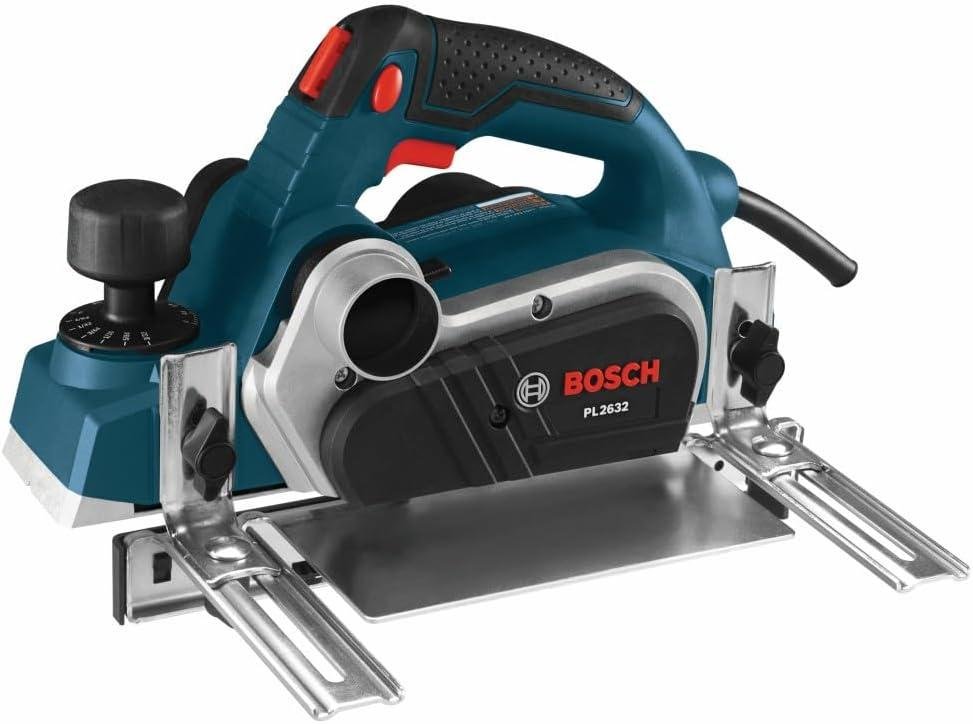
For beginners,the BOSCH PL2632K feels welcoming because the core controls are hard to mess up. The ratcheting depth knob is the big confidence-builder in day-to-day shop use—within one revolution it indexes from 0 to 2.6 mm (3/32 in.), so we can make predictable, repeatable passes without constantly “re-zeroing” or guessing where the cut is set. Paired with the 6.5 Amp motor spinning at 16,500 RPM, it removes stock quickly enough to be satisfying, but still rewards the basic hand-planer fundamentals we’re always trying to teach newer woodworkers: start with a light cut, keep the front shoe flat on the board at the beginning, shift pressure to the rear shoe as we exit, and overlap passes to avoid ridges. Customer feedback commonly circles the same points—setup is straightforward, the planer “cuts smooth,” and the blade system is easy to live with—while the built-in safety and handling features (like the ambidextrous lock-off release and spring-loaded stand) help reduce the typical beginner mistakes, such as setting the tool down before the drum fully stops.
Seasoned woodworkers will appreciate that Bosch didn’t skip the accuracy details that matter when we’re fitting doors, flushing edges, or dialing in joinery. The precision-machined aluminum front and rear shoes (machined together after assembly) support consistent flatness, and the dual-mount guide fence can be mounted on either side—handy when we’re planing a reference edge and want a stable, repeatable offset. In reviews, experienced users frequently enough echo themes like “solid feel,” “good power,” and praise for the planer’s control features, especially the chip-ejection switch that lets us direct shavings left or right and the dust ports on both sides to accommodate a shavings bag—small things that reduce cleanup chaos when we’re hogging material. Practically, we still recommend the same pro habits: use the shallowest depth that gets results, skew the planer slightly on tricky grain to reduce tear-out, and keep the reversible Woodrazor micrograin carbide blades sharp/rotated for the best finish rather than trying to “power through” burnished dull edges.
- Included accessories: Reversible BOSCH Woodrazor micrograin carbide blades, dual-mount guide fence, plastic overshoe(s) to help prevent marring, shavings bag, and carrying case (kit format).
- Compatible attachments/accessories: Optional setup to run a two-blade system that accommodates large high-speed steel (HSS) blades (requires optional accessories).
- Ideal project types (based on specs and common planer use): Door trimming, edge flushing on glued panels, fitting drawers, breaking edges with the machined chamfer groove, and quick thickness corrections on small parts.
- Wood types tested by customers: Reviews commonly reference planing on typical shop materials like softwoods and hardwoods (varies by user); grain direction and depth-of-cut remain the biggest factors in surface quality.
| Spec | BOSCH PL2632K | What it means in the shop |
|---|---|---|
| Motor | 6.5 A | Enough power for steady hand-planing passes; let the cutter do the work. |
| No-load speed | 16,500 RPM | Higher RPM generally supports cleaner cuts—especially with sharp blades and light passes. |
| Depth adjustment range | 0–2.6 mm (3/32 in.) in one knob revolution | Fast, predictable depth changes; great for controlled “sneak-up” fitting. |
| Chip ejection | Left/Right switchable | Helps keep shavings out of our face or off a finished surface depending on stance. |
| Accessory Type | Compatibility | Notes |
|---|---|---|
| Carbide blades | Included | Reversible Woodrazor micrograin carbide; rotate/replace when cut quality drops. |
| HSS blade setup | Optional | Planer supports a two-blade system for larger HSS blades with optional accessories. |
| Fence | Included | Dual-mount design installs on either side to match our workflow and grain direction. |
| Capacity/setting | Recommended in practice | Rated/Available |
|---|---|---|
| Depth per pass | Light passes for finish and tear-out control | Up to 2.6 mm (3/32 in.) |
| Use duration | Take breaks; manage cord and shavings direction | Lock-on button available for extended operation |
See Full Specifications & Customer Photos
Customer Reviews analysis
What Woodworkers Are Saying: BOSCH PL2632K 3-1/4 In. Electric Hand Planer Kit
1.Overall sentiment from woodworking customers
sentiment trends positive, with many reviewers framing the PL2632K as a solid, dependable hand planer that delivers clean results when set up correctly. Common praise includes smooth cutting, good power for typical shop tasks, and useful features (notably the guide/fence and rabbet capability). Some users reported challenges with dust/chip management, blade setup/alignment, and the realities of handheld planing (it’s fast, but easy to gouge if technique slips).
2. Performance feedback (accuracy, power, results)
Performance is one of the most frequently praised themes.
- Cut quality / surface results: Several woodworkers mentioned the planer leaves a surprisingly smooth finish for a power tool, especially when taking light passes. Multiple reviews highlight that it can reduce sanding time,though most still recommend final sanding for furniture-grade surfaces.
- Power under load: Common praise includes the tool having enough torque for trimming doors, flattening edges, and planing down proud joints without bogging as long as users avoid overly aggressive depth settings.
- Accuracy & consistency: Reviewers with more experience frequently enough emphasized that the tool can be very accurate once dialed in, with adjustments that allow repeatable depth control for consistent passes. Some users reported challenges with keeping the tool perfectly level at the start/end of a board—typical of handheld planers—leading to occasional snipe/gouges if technique isn’t careful.
A few reviews use language like “removes material fast” and “leaves it smooth,” but also note that light cuts are key for best results.
3. Build quality and durability observations
- General build feel: Multiple reviews highlight a sturdy, professional feel—the kind woodworkers associate with Bosch’s pro electric tools.
- Longevity notes: Several woodworkers mentioned continued reliable use across repeated projects, suggesting good durability under normal workloads.
- Wear items: Some users pointed out that blades are consumables and performance depends heavily on keeping them sharp and properly set. A few noted that blade changes and alignment matter more than expected for maintaining top-tier results.
4. Ease of use for different skill levels
- Beginners / DIYers: Beginners appreciated the straightforward “set depth and go” concept, especially for easing sharp edges, fitting doors, or quickly flushing joints. Some DIYers found the learning curve steep at first—mainly around avoiding dips, edge gouges, and getting a feel for starting/ending pressure.
- Intermediate to experienced woodworkers: Experienced woodworkers noted the precision adjustments and controlled material removal are strong points,and that the planer becomes very predictable once technique is consistent.
- Comfort & handling: Several woodworkers mentioned it feels stable in hand. A few users flagged that—like most planers—extended use can lead to fatigue, especially if you’re doing overhead or awkward-position work (e.g., installed doors or trim).
5. Common project types and success stories
Customers successfully used this planer for a range of practical shop and home projects, especially where fast stock removal and fitting is needed:
- Door fitting and trimming: Several reviewers mentioned planing sticking doors or trimming doors after flooring/carpet changes.
- Edge joint cleanup and flush work: Multiple reviews highlight using it to flush proud joints,tame glued panels,and straighten/true edges before final sanding.
- Rabbets and shoulder work: Some woodworkers specifically call out the usefulness of the rabbet depth capability and guide fence for consistent shoulder cuts.
- General “cleanup” carpentry and woodworking: Reviewers describe using it for lumber cleanup, correcting slight twists/cups on smaller pieces (within reason), and refining fit-up on assemblies.
(Reviews often frame it as a “get it close fast” tool—then finish with sanding,a hand plane,or a sander depending on the project.)
6. Issues or limitations reported
Some users reported challenges with the following:
- Chip ejection / dust control: Several woodworkers mentioned that chip management can be messy, and some shops may want better dust collection integration (especially indoors).
- Technique sensitivity: A common theme is that handheld planers can gouge or create uneven surfaces if you take too deep a bite or don’t keep even pressure at the start/end of the pass.
- Blade setup and alignment: Some users reported challenges with getting the blades perfectly aligned, especially early on. When alignment is off, people reported streaks/ridges and less consistent finish quality.
- Not a thickness planer replacement: Multiple reviews implicitly (and sometimes explicitly) cautioned that it’s excellent for trimming/fitting and localized flattening, but it’s not the same as running boards through a benchtop planer for full-surface uniform thickness.
Quick Summary Table (Review Themes)
| Aspect | common Feedback |
|---|---|
| Overall sentiment | Mostly positive—seen as reliable, capable, and “pro-feeling” for a handheld planer |
| Performance | Praised for strong material removal and smooth results on light passes; good power for typical tasks |
| precision | Adjustments can be accurate and repeatable; technique matters to avoid dips and gouges |
| Durability | Generally viewed as well-built; blades are a key wear item affecting long-term results |
| Ease of Use | Beginner-friendly basics, but a real learning curve for clean starts/stops and consistent flatness |
| Typical Projects | Door trimming, edge flattening, flushing joints, rabbets with fence/guide |
| Reported Limitations | Dust/chip mess, setup sensitivity, and not a substitute for a thickness planer |
Pros & Cons
Pros & Cons
| What We Noticed | Why It Matters in Our Shop |
|---|---|
| 6.5A motor / 16,500 RPM | We can remove stock quickly without feeling like we’re waiting on the tool to catch up. |
| Precision-machined aluminum shoes | We get steadier, more predictable passes—especially when we’re trying to “sneak up” on a fit. |
| Ratcheting depth knob (0–2.6 mm in one revolution) | We can make repeatable adjustments without re-zeroing and second-guessing the dial. |
| Ambidextrous controls + lock-off and lock-on | We can run it comfortably left- or right-handed, and the safety/continuous-run combo feels well thought out. |
| Chip ejection left/right + dust ports on both sides | We can aim shavings away from our face, our work, or a finished surface—handy in tight spots. |
| Spring-loaded stand | We can set it down between passes without nicking the blade or chewing up the bench. |
| Reversible Woodrazor carbide blades | We get longer blade life and a quick “flip” option when an edge starts to fade. |
Pros
- Fast, confident cutting thanks to the 16,500 RPM motor—great when we’re flattening edges or trimming doors.
- Accurate feel on the workpiece from the precision-machined front and rear shoes.
- Easy depth changes with the ratcheting knob—our adjustments feel purposeful, not fussy.
- Cleaner workflow with left/right chip ejection and dual-side dust ports; we can adapt to the way we’re standing and the space we’re in.
- Thoughtful “set-it-down” design with the spring-loaded stand protecting both blade and bench.
- Flexible fence setup as the dual-mount guide fence can go on either side, and the overshoe helps protect faces we don’t want marred.
- Comfort during longer runs from the ball-joint cord swivel and lock-on option.
Cons
- Accessory upgrades may be required if we want to convert to the optional high-speed steel blade setup (not a “complete out of the box” upgrade path).
- Shavings management still needs planning—even with directional ejection, planers can launch chips, so we’ll likely want the bag or a vacuum strategy ready.
- Power can be a double-edged sword: with fast stock removal, we have to stay disciplined on depth settings to avoid taking too much in a single pass.
- Best results depend on blade condition; like any planer, performance drops quickly if we push dull edges on knotty or dirty stock.
Q&A
Is the 6.5A motor powerful enough for hardwoods like oak or maple?
For typical jobsite and shop planing, yes—this planer’s 6.5 Amp motor and 16,500 RPM are well-suited to hardwoods when you take sensible passes.On dense woods (oak, maple), most woodworkers get the best results by using light depth settings and a steady feed rate rather than trying to hog off material in one go. The reversible micrograin carbide Woodrazor blades help by staying sharp longer than standard carbide, which matters a lot when you’re working abrasive or dense species.
How does it do on plywood, veneer, and tricky grain?
Like any hand planer, it can work on plywood edges and some sheet goods, but you’ll want to be cautious on faces with thin veneer—planers can tear through veneer fast if you get aggressive.The high cutterhead speed (16,500 RPM) can leave a smooth finish on solid wood, but figured grain and reversing grain still benefit from very shallow cuts, sharp blades, and attention to direction. If your priority is protecting veneer faces, many woodworkers reserve a hand planer for solid wood and use a sander or scraper for delicate veneers.
What adjustments are available, and how precise is the depth control?
The PL2632K uses a ratcheting depth knob that adjusts from 0 to 2.6 mm (3/32 in.) within one revolution, designed so you don’t have to re-zero the depth each time. That ratcheting action is handy for repeatable, incremental changes—especially when sneaking up on a fit (doors, drawers, edge-banding flush-up). The precision-machined aluminum front and rear shoes (machined together after assembly) also help it track accurately and produce consistent results.
How easy are blade changes, and are replacements common?
Blade changes are straightforward as it ships with reversible Bosch Woodrazor micrograin carbide blades—when an edge dulls, you can flip the blade rather than promptly replacing it. Replacement Woodrazor-style blades are commonly available, and many owners like the convenience of having two fresh edges on hand. The tool can also be converted to a two-blade system that accepts large high-speed steel blades,but that requires optional accessories,so plan on the included carbide system unless you specifically want HSS.
Can it handle production work, or is it more of a hobby planer?
It’s strong enough for regular furniture and jobsite tasks—door fitting, beveling, edge straightening, and stock cleanup—thanks to the 6.5A motor, durable poly micro-V drive belt, and lock-on button for extended operation. For true production flattening or heavy, all-day thickness removal, most woodworkers still prefer stationary machines (jointer/thickness planer) because thay’re faster and more consistent over large surface areas. Think of this Bosch as a high-quality hand planer for frequent use, not a replacement for milling machines.
How does dust/chip management work, and will it fit a small workshop?
It’s friendly to tight spaces because it’s a handheld tool, and Bosch includes practical chip control: a chip-ejection switch lets you direct shavings left or right, and there are dust ports on both sides to accommodate the included shavings bag. This is especially helpful when you’re planing along a wall or working at a bench where chip direction matters. It won’t require “special” dust collection,but planing creates bulky shavings—many woodworkers still prefer connecting a shop vac or using the bag when working indoors.
Is it beginner-friendly, and what’s the learning curve?
Beginners can use it successfully, but hand planers reward technique. The safety/handling features help (ambidextrous lock-off to prevent accidental starts, plus a lock-on for longer passes), and the spring-loaded stand is a practical touch that protects both blades and your work surface when you set the tool down. Expect a short learning curve around keeping the planer flat at the start/end of a board (to avoid snipe), setting shallow cuts, and using the fence correctly for consistent edges.
Does it work with common accessories (fences/chamfers), and can it be used for edge beveling?
Yes—this kit includes a dual-mount guide fence that can be installed on either side, which is useful if you’re working left-handed/right-handed or need to plane while keeping a certain edge against a reference. it also has a machined groove for chamfering,making it easier to consistently break edges. The included no-mar overshoe on the fence is a nice detail for finish work (like doors), helping reduce the chance of scuffing the face of the workpiece.
Seize the Opportunity
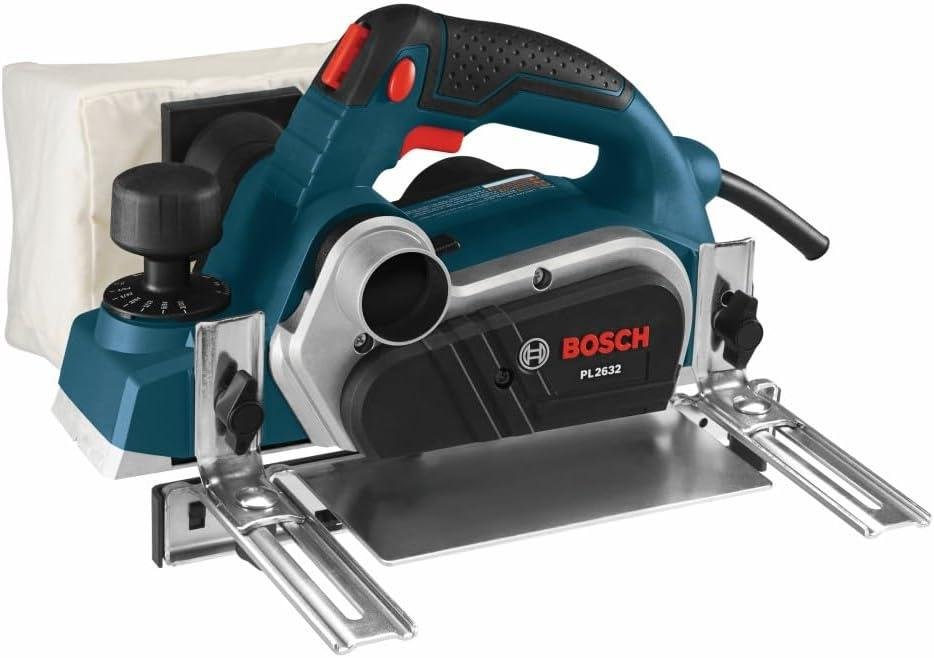
The BOSCH PL2632K 3-1/4 in. Electric Hand Planer Kit pairs a 6.5-amp motor with 16,500 RPM for quick stock removal and consistently smooth passes. It’s built around precision-machined aluminum front/rear shoes for accurate leveling, a ratcheting depth knob (0–2.6 mm / 3/32 in. per revolution), and reversible Woodrazor micrograin carbide blades that customers often praise for clean results and long edge life. Practical touches—like the spring-loaded stand, left/right chip ejection, dual-side dust ports, and dual-mount guide fence with no-mar overshoe—make it more user-friendly on doors, edges, and face planing.
Best for: hobby woodworkers with small-to-medium projects, cabinet makers needing controlled chamfers and flush-up work, and beginners learning planer fundamentals without fighting the tool.
Consider alternatives if: you routinely plane thick hardwoods all day, need a more compact body for tight jobs, or want a heavier-duty planer for production output.
Final assessment: a solid mid-range option that balances accuracy and convenience, with only power/throughput limits in demanding pro use.
Want to see current pricing and customer photos? View on Amazon & Read More Reviews →