
Blog
QWORK Mini Heat Gun Review: Right for Our Home Shop?

Ever tried to level a tiny epoxy flood coat in a routed inlay, only to watch stubborn bubbles hang around—or worse, scorch the surrounding wood when you reach for a full-size heat gun? In a crowded shop, we often need controlled heat that’s precise enough for detail work, without the bulk, noise, and “too much power” of larger tools.
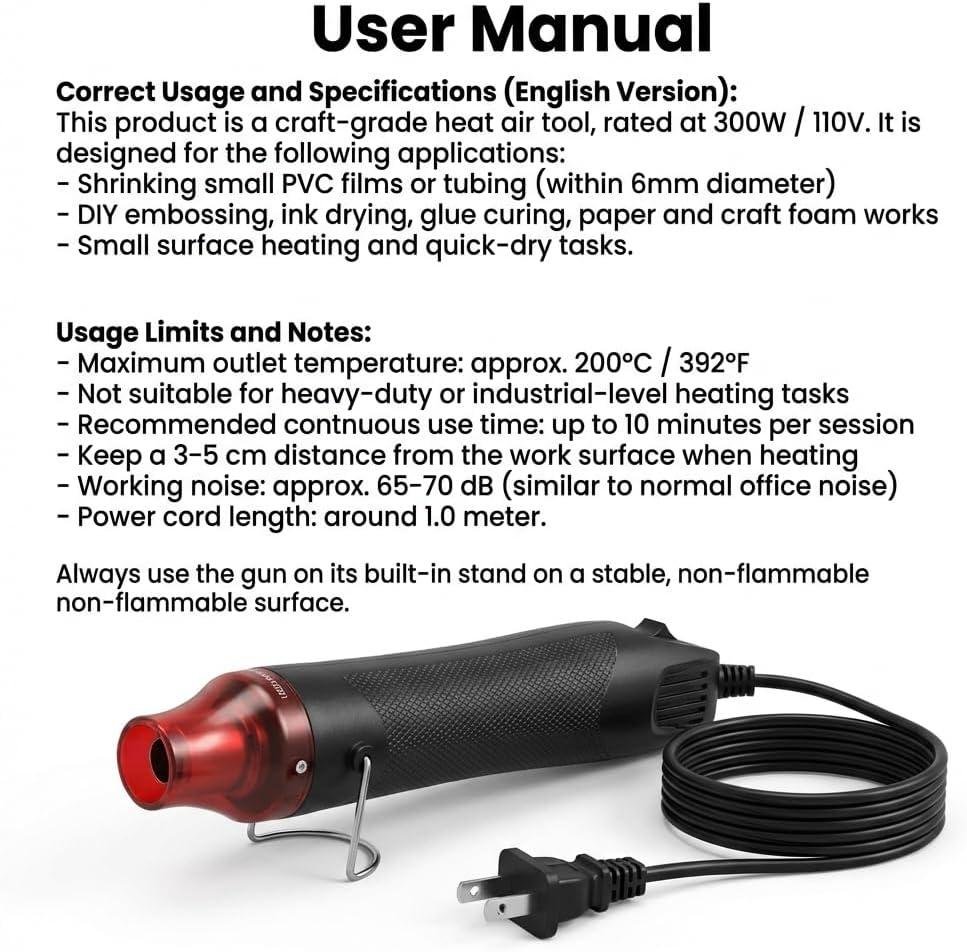
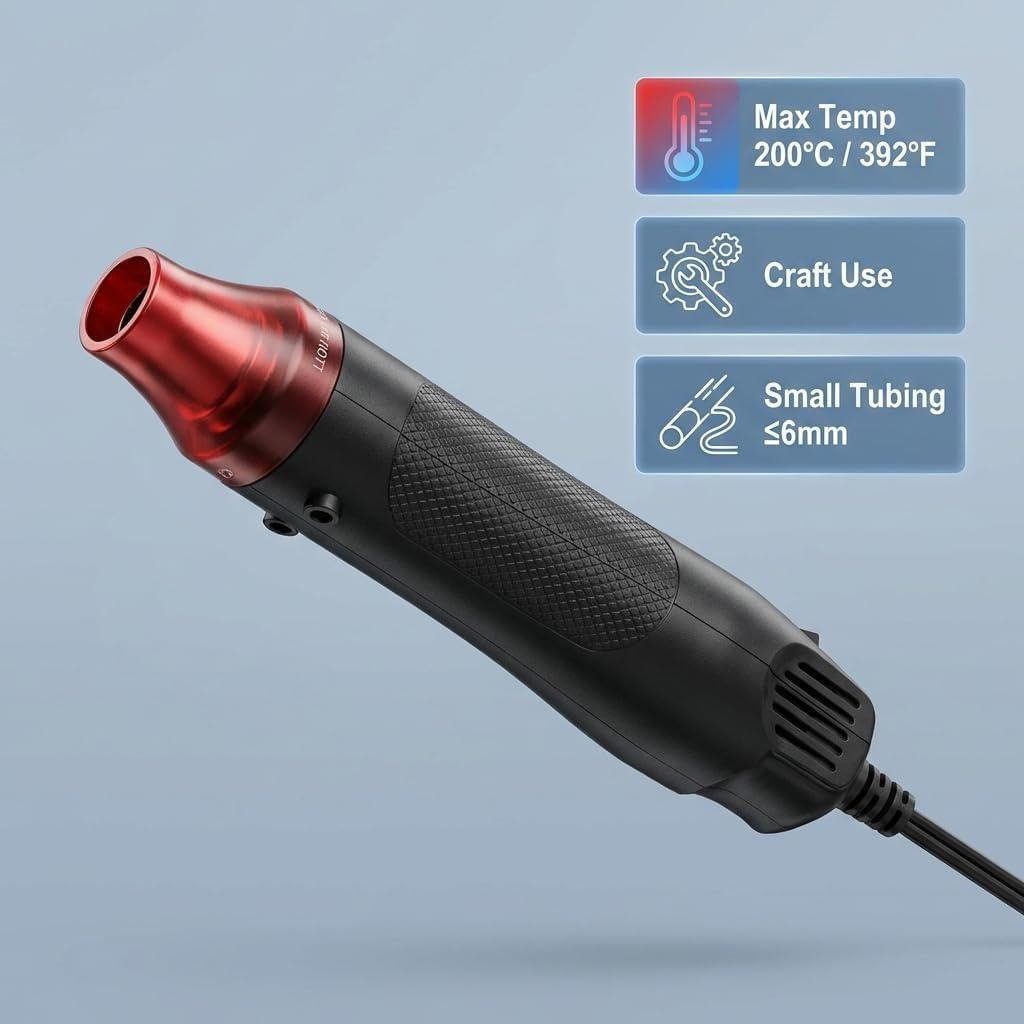
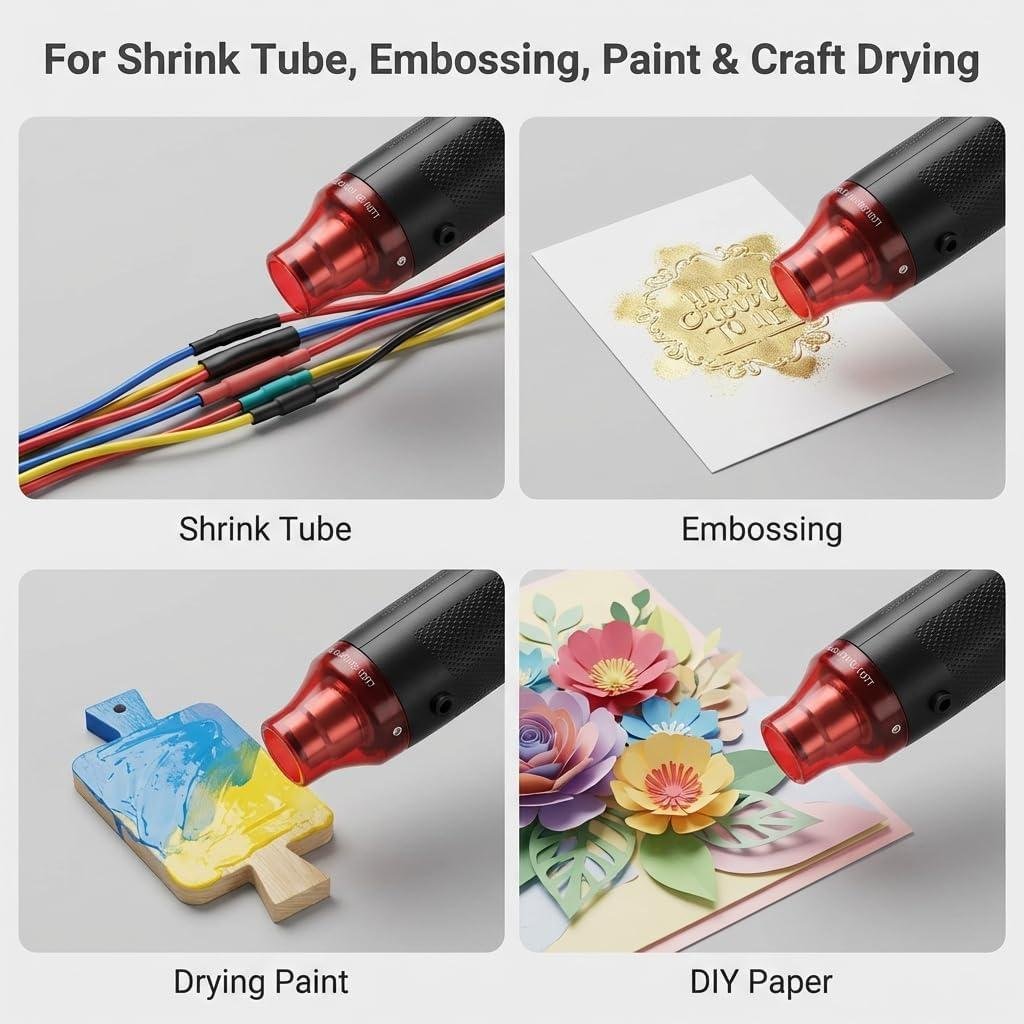
That’s where the QWORK mini Heat gun, 300W Portable Hot Air Tool (110V) comes in. It’s a pencil-grip hot air tool designed for crafts that overlap with woodworking—epoxy resin bubble removal,shrink tubing for wiring,vinyl wrap,and speedy drying—and it’s rated to heat fast up to 390°F (200°C). A retractable stainless-steel stand enables hands-free use while protecting the bench, and the compact body aims to reduce fatigue and save space.
In this review, we’ll cover its key features, build quality, ease of use and learning curve, and where it fits on the budget-vs.-quality scale—plus what customers report about control, durability, and consistency. As woodworkers who’ve used plenty of “almost right” specialty tools, we’ll keep it practical and honest.
Tool Overview and Build Quality in Our Hands

In our hands, the QWORK Mini Heat Gun feels like a purpose-built “bench helper” rather than a full-size finishing heat gun.It’s rated at 300W and tops out around 390°F (200°C), which tells us right away it’s aimed at controlled, localized heat—not stripping thick paint off a door. The pencil-style body makes it easy to “aim” hot air into tight spots like inlay corners, small glue squeeze-out areas, or around edge-banding repairs where we’re trying to persuade adhesive without scorching surrounding fibers. The retractable stainless-steel stand is the build-quality feature we appreciate most: it keeps the hot nozzle off the bench and makes short bursts of hands-free use more practical when we’re juggling parts. Power is standard shop-friendly with a 110V plug, but the 1 meter cord is short enough that most woodworkers will want an outlet nearby or a decent extension cord to keep cords away from heat and finish fumes.
Setup is basically “plug in and go,” and customer review themes commonly highlight quick heat-up, lightweight handling, and good control for small tasks—the same reasons we’d reach for it at the bench instead of dragging out a larger gun. Reviews also tend to frame it as ideal for craft-scale work (resin bubbles,shrink tubing,vinyl) rather than high-output stripping,which matches the 300W spec. From a woodworking education standpoint, the key is technique: keep the nozzle back 3–5 cm, keep the heat moving, and treat it like a “warm-air brush” so we don’t blister finishes or dry out end grain too aggressively. The manufacturer guidance to use it in 10-minute sessions is worth respecting in a shop routine—short cycles for heat-shrink, touch-ups, or spot-drying are where this tool’s size and build make the most sense.
- Included accessories
- Mini heat gun body
- Retractable stainless-steel stand
- Compatible attachments/accessories
- Heat-resistant silicone mat / bench pad (recommended for protecting surfaces)
- Small clamps/third-hand holders for wire or small parts
- Extension cord (shop-rated) to compensate for the 1 m cord length
- Ideal project types
- Edge-banding touch-ups and small adhesive reactivation
- Spot-drying paint/finish on small parts (with careful distance and motion)
- Epoxy resin bubble chasing in small pours or knots/fills
- Shrink tubing for shop jigs, LEAD wiring, and tool repairs
- Wood types tested by customers
- Not specified in available customer review data
| Spec | QWORK Mini Heat Gun | What It Means in a Wood Shop |
|---|---|---|
| Power | 300W | Lower output; better for detail heat and light-duty spot work than heavy stripping |
| Max temperature | 390°F (200°C) | safer ceiling for small tasks; still hot enough to damage finishes if held too close |
| Power requirement | 110V | Standard household/shop circuit |
| Cord length | 1 meter | Bench-friendly but may require an extension cord for larger work areas |
| Stand | Retractable stainless steel | Helps with hands-free pauses and reduces bench-scorch risk |
| Accessory | Compatibility | Why We’d Use It |
|---|---|---|
| Silicone work mat | Compatible | Protects benchtops and catches drips when warming epoxy/fills |
| Third-hand clamp / small vise | Compatible | Stabilizes tiny parts while we direct heat precisely |
| Extension cord (shop-rated) | Compatible | improves reach given the 1 m cord |
| Use Case | recommended “Capacity” | What We’d Actually Plan For |
|---|---|---|
| Continuous use | Up to 10 minutes per guidance | Short bursts with cool-down pauses to stay within intended duty cycle |
| Working distance | 3–5 cm | Start farther back, then creep in only if needed to avoid scorching |
| Task scale | Small/detail work | Spot heating, small parts, and bench tasks—not large surface stripping |
See Full Specifications & Customer Photos
Real World Performance for Veneer Work Epoxy Cures and Heat Shrink Tasks
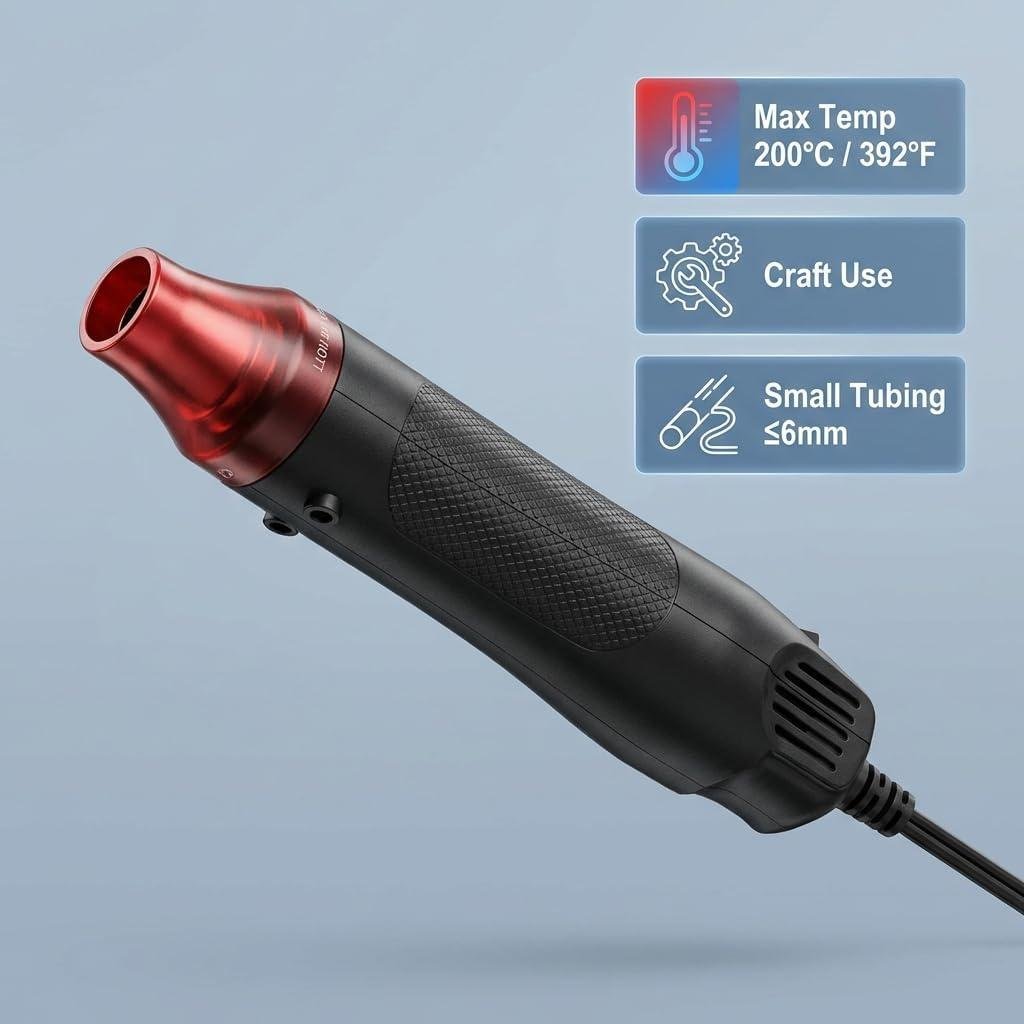
In real shop use, we treat the QWORK Mini Heat Gun as a detail heat source rather than a “finish dryer,” and its specs match that role: 300W on 110V with a stated max of 390°F (200°C) gives us a tight cone of hot air that’s handy around veneer and small glue-ups. On veneer work,it’s most useful for gently warming a stubborn edge where we want a little more open time and tack—think nudging down a lifted corner or softening squeeze-out before it fully sets—without blasting an entire panel the way a full-size gun can. For epoxy, the focused airflow helps us chase surface bubbles along an inlay line or river-pour edge, but we still use restraint because extra heat can also thin epoxy too much and encourage runs. The manufacturer’s technique notes are worth following in a wood shop: keep the nozzle 3–5 cm off the surface and operate in 10-minute sessions, especially around thin veneer where overheating can print through or telegraph glue lines.
Where this tool really fits our workflow is in “small, controlled heat” jobs—shrink tube on tool cords, spot-warming tape, or quick bubble passes on epoxy fills—especially because the pencil-style grip gives good control and the retractable stainless-steel stand lets us set it down safely between passes. The 1 meter cord is short for a bench-based shop, so we typically plan on using an extension cord or staying near an outlet, and we keep a scrap board under the stand to protect the bench. Common customer review themes for mini heat guns like this tend to echo what we look for: heats up fast, easy to handle, and works well for resin bubbles and shrink tubing, with the usual caution that it’s a small tool for small tasks (not for stripping a tabletop or heating large veneer panels quickly). In terms of skill level, it’s beginner-friendly if we treat it like a precision tool: keep it moving, test on offcuts, and avoid dwelling in one spot—especially on resin-rich woods and thin veneer where heat can cause sudden discoloration or adhesive failures.
See Full Specifications & Customer Photos
Key Features woodworkers Will Appreciate for Controlled Spot Heating
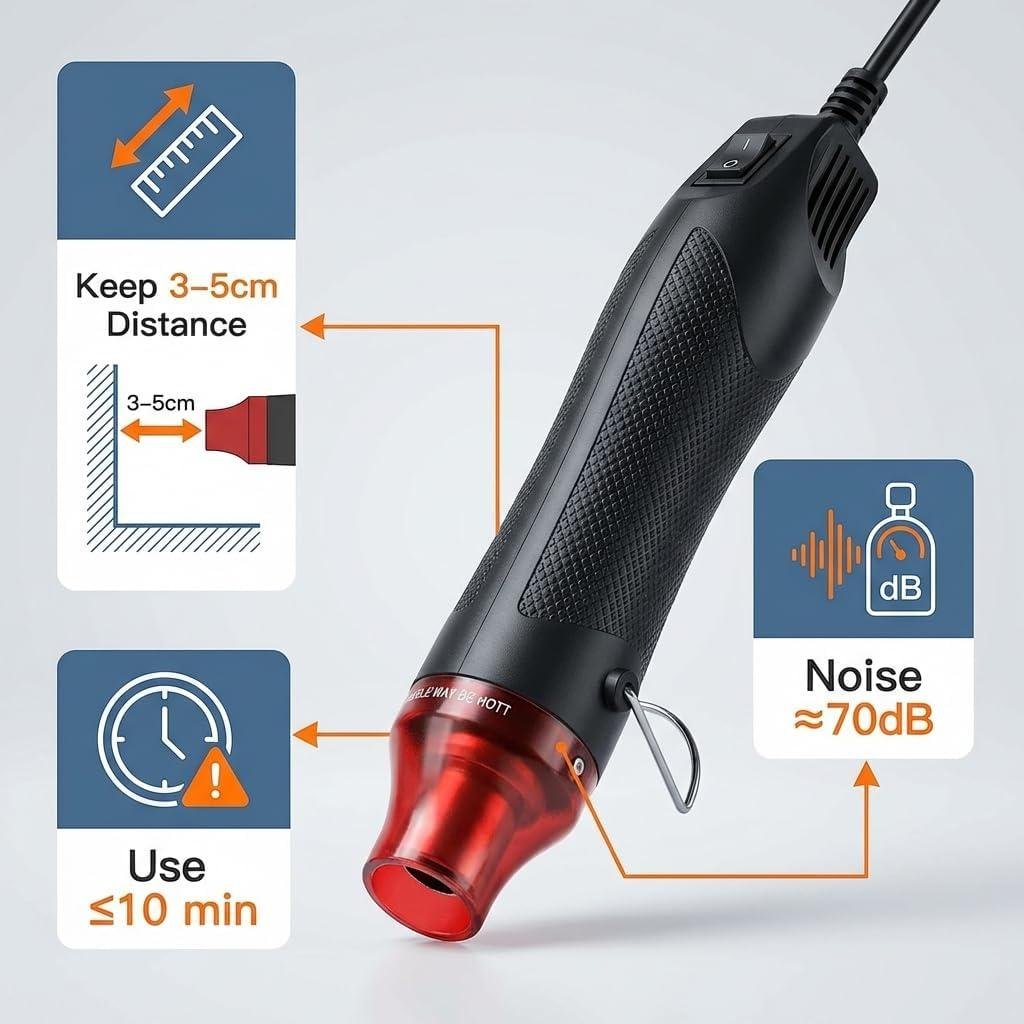
In our shop, the QWORK mini Heat Gun’s biggest draw for controlled spot work is its focused, craft-scale output: it’s a 300W unit that’s rated to heat quickly up to 390°F (200°C) on a standard 110V plug. That temperature range is useful when we’re trying to coax finish behavior without “roasting” a surrounding area—think easing a stubborn sticker label off a jig, helping shrink tubing on a cord repair, or gently warming a small epoxy spot to encourage bubbles to release. the pencil-style body gives us a more “marking-knife” kind of control than a full-size heat gun, which matters when we’re working near edges, inlay lines, or detailing where heat creep can telegraph through thin veneer. It’s also worth using the maker’s guidance: keep the nozzle 3–5 cm off the surface and run it in short sessions (up to 10 minutes); with wood and finishes, we’ve found that motion—never hovering—is what keeps heat even and reduces the chance of softening glue lines or imprinting a finish.
We also appreciate that QWORK includes a retractable stainless-steel stand for hands-free positioning—handy when we’re warming a small part while keeping both hands on clamping, burnishing, or holding a shield card to protect adjacent wood. The cord is listed as 1 meter,which is workable at the bench but often means we’ll want to pair it with a good extension cord or mount a power strip close to our finishing area. While the listing reads more like a crafts tool than a cabinet-shop staple, customer review themes commonly highlight quick heat-up, easy handling, and that it’s well-suited for small/detail jobs like epoxy and shrink tubing—exactly where woodworkers need precision rather than brute airflow. For education and safety, we’d treat this like a micro “hot-air pencil”: use a scrap test with your finish system, shield with foil or thin sheet metal near sensitive edges, and give the tool cool-down time on its stand so the nozzle isn’t resting on the benchtop.
- Included accessories: Retractable stainless-steel stand (integrated)
- Compatible attachments/accessories:
- Heat-resistant silicone mat (bench protection)
- Aluminum foil or thin sheet-metal heat shield
- Small spring clamps/third-hand holder for parts
- Quality extension cord or bench-mounted power strip (due to 1 m cord)
- Ideal project types:
- Epoxy resin touch-ups and bubble removal
- Shrink tubing for tool/cord repairs
- Vinyl wrap/edge-banding corners (light heat assist)
- Drying small paint/finish spots (carefully, with motion)
- Loosening labels/tape residue on shop fixtures
- Wood types tested by customers: Not specified in available review summaries (we recommend testing on scrap for your species and finish)
| Spec | QWORK Mini Heat Gun | What it means in a wood shop |
|---|---|---|
| Power | 300W | Better for spot warming and detail work than rapid large-area stripping |
| Max Temperature | 390°F (200°C) | useful for light heat-assist tasks; still hot enough to damage finishes if held too close |
| Power Requirement | 110V | Standard outlet use at the bench |
| Cord Length | 1 meter | May require an extension cord for assembly/finishing zones |
| Hands-Free Support | Retractable stainless stand | Safer cool-down and steadier positioning for small parts |
| Accessory | Works With This Heat Gun? | Use Case |
|---|---|---|
| Silicone heat mat | Yes | Protects benchtops during hands-free use |
| Foil/metal heat shield | Yes | Prevents heat spread onto adjacent finished wood |
| Bench power strip/extension cord | Yes | Improves reach given the 1 m cord |
| “Reducing” nozzles from full-size heat guns | Not specified | Not listed—assume it’s a fixed-nozzle mini tool |
| Workshop Task | Recommended Capacity | QWORK Mini Heat Gun (Per Specs) |
|---|---|---|
| Small epoxy bubble release | short, controlled warm airflow | 390°F max; use 3–5 cm distance, keep moving |
| Heat-shrink on wiring | Consistent spot heat | 300W focused output; suitable for small tubing |
| Large-area finish stripping | High airflow/high heat, sustained runtime | Not the intended use; 10-minute session guidance signals “detail tool” |
See Full Specifications & Customer Photos
Ease of Use for Beginners and Seasoned Woodworkers in the Shop
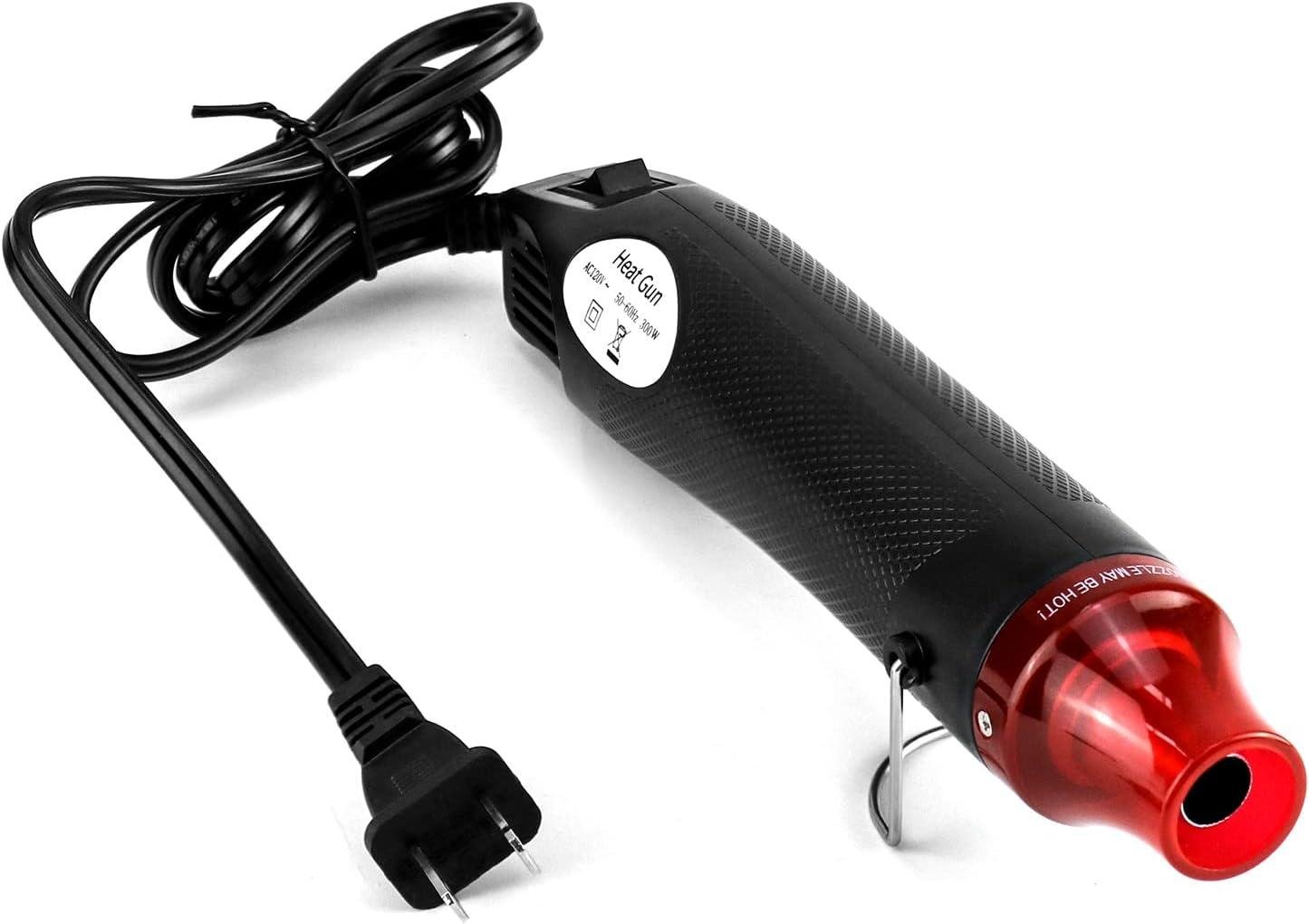
In the shop, we appreciate tools that don’t require a learning curve, and the QWORK mini heat gun keeps things straightforward for beginners while still being useful to seasoned woodworkers.It’s a compact, pencil-grip hot air tool rated at 300W that heats up quickly to 390°F (200°C), running on a standard 110V US plug with a 1 meter cord. Setup is basically “plug in and go,” and the retractable stainless steel stand is a real quality-of-life feature—when we’re shrinking tubing on LED wiring in a cabinet, softening edge-banding touch-ups, or coaxing bubbles out of a small epoxy fill, hands-free stability matters. As with any single-temp mini heat gun, control comes from technique, not a dial: we get the best results by keeping the nozzle moving and following the maker’s guidance to work at about 3–5 cm from the surface and in ≤10 minute sessions to avoid overheating both the tool and our workpiece.
For experienced woodworkers, this isn’t a “replace-the-full-size-heat-gun” situation—it’s a detail tool that shines in tight spots and on small assemblies where a big gun feels clumsy. Customer review themes commonly emphasize quick heat-up, lightweight handling, and the usefulness of the stand for tabletop work, especially for crafts and small DIY tasks like shrink tubing and epoxy resin. In woodworking terms, we’d treat it like a precision heat source for localized jobs: warming adhesive residue for safer scraping, helping certain finishes level on tiny areas, or shrinking labels/sleeves on shop fixtures. Education-wise, we get cleaner outcomes when we “feather” heat—start farther away, approach slowly, and test on scrap—because 390°F can still scorch resinous softwoods (like pine) and can telegraph heat through thin veneers if we linger. As always, we keep airflow away from sawdust piles and solvent fumes, and we let the tool cool on its stand between passes.
- Retractable stainless steel stand (integrated)
- Attached power cord (1 meter)
- heat-shrink tubing (electrical/LED shop wiring)
- Epoxy resin work (bubble reduction on small pours/fills)
- Vinyl wrap (jigs, tool handles, labeling)
- Paint/finish drying on small parts (light, moving passes)
- Small epoxy fills (knots, checks, corner repairs)
- Cabinet/fixture wiring (heat-shrink connections)
- Jigs and templates (vinyl labels, shrink sleeves)
- Detail touch-ups where a full-size heat gun is too blunt
- Not specified in reviews provided (we recommend testing on scrap for pine, oak, maple, and any veneered panels)
| Spec | QWORK Mini Heat Gun | What It Means in Our Shop |
|---|---|---|
| Power | 300W | Good for small, localized heating, not for large-area stripping |
| Max temperature | 390°F (200°C) | Hot enough for shrink tubing and epoxy bubble work; can scorch wood if held still |
| Stand | Retractable stainless steel | Safer hands-free placement and cooling between passes |
| Power requirement | 110V | Standard outlet compatibility |
| Cord length | 1 meter | Often needs an extension cord on a large bench or assembly table |
| Duty guidance | ≤10 minutes per session; 3–5 cm distance | Plan short bursts and keep moving for consistent results |
| Accessory / Attachment | Compatibility | Notes for Woodworkers |
|---|---|---|
| Heat-shrink tubing | Compatible | Great for wiring cabinets, lights, and shop jigs |
| Silicone craft mat / heat-resistant pad | Recommended | Protects bench when using hands-free stand |
| Extension cord (grounded) | Recommended | Helps overcome the 1 meter cord on larger benches |
| Foil heat shield / thin metal guard | Recommended | Reduces risk of heating adjacent veneer/finish during spot work |
| Use Case | Recommended Capacity/Approach | Actual Limitation (Per Specs) |
|---|---|---|
| Shrink tubing on 18–12 AWG wires | Short bursts, keep moving | Single-temp tool; control depends on distance and motion |
| Epoxy bubble removal (small fills) | Quick passes, avoid overheating epoxy | 390°F max; linger too long and you can ripple or yellow resin |
| Large-area finish stripping | Use a full-size heat gun instead | 300W is better suited to detail work than broad surfaces |
See Full Specifications & Customer Photos
customer Reviews Analysis
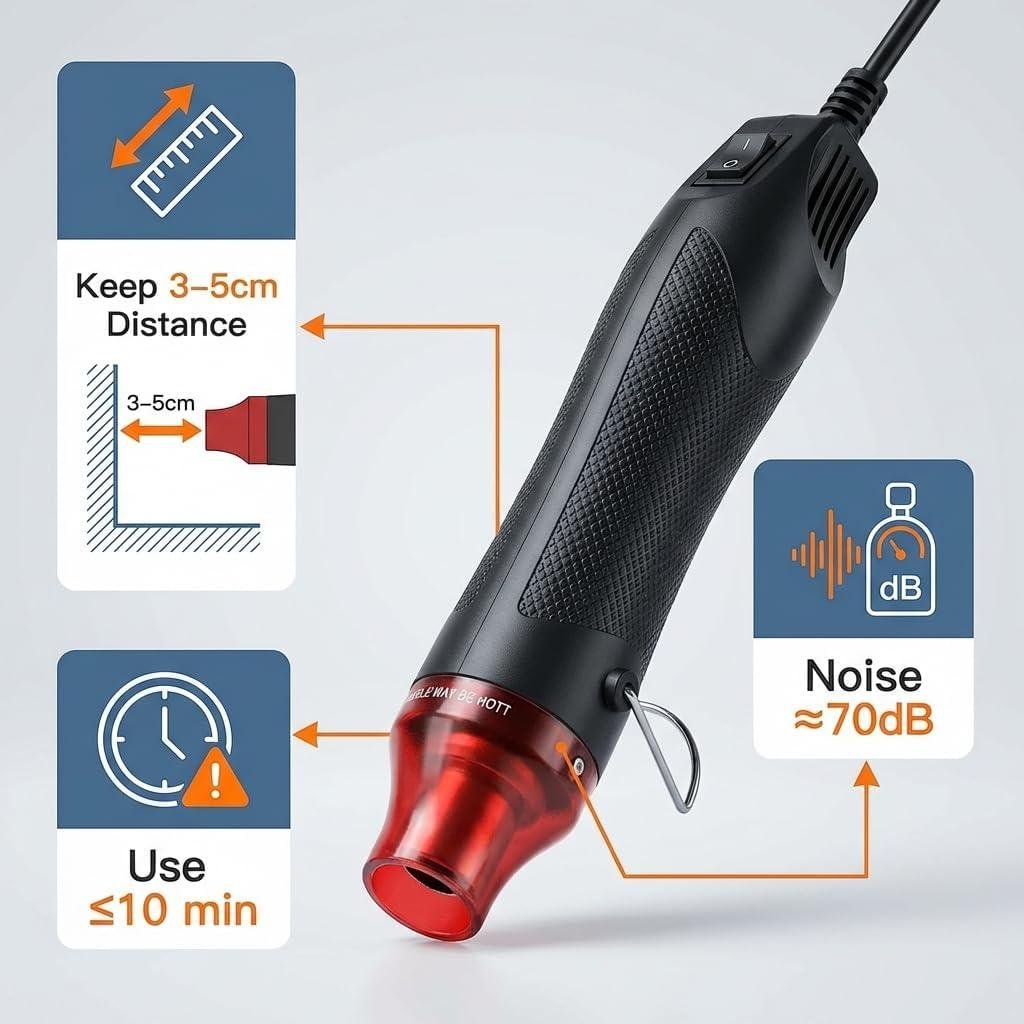
What Woodworkers Are Saying (QWORK Mini Heat Gun, 300W)
1. Overall sentiment from woodworking customers
woodworking-adjacent reviewers (DIYers, makers, finish-focused users) lean positive on this mini heat gun as a handy, low-cost specialty tool. Several woodworkers mentioned it’s not meant to replace a full-size heat gun, but it earns a spot on the bench for small parts, touch-ups, and controlled heat work.
2. Performance feedback (accuracy, power, results)
Common praise includes consistent heat for light-duty tasks and good results when used at the right distance.
- Power/heat output: Multiple reviews highlight that 300W is sufficient for small crafts and detail work, but underpowered for heavy stripping or heating large surfaces (where a full-size gun would be faster).
- Precision and control: Several woodworkers mentioned the smaller format helps with targeting heat in tight areas—useful when you don’t want to overheat nearby glue joints, veneer, or finished faces.
- Results quality: Customers successfully used this for shrink tubing, epoxy resin bubble removal, and quick drying/setting tasks, reporting cleaner finishes when used carefully (short passes, not parked in one spot).
3. build quality and durability observations
Feedback trends toward “reasonable for the price,” with a few caution notes.
- Budget-tool expectations: Several woodworkers mentioned it feels lightweight and more “hobby grade” than professional-grade.
- Stand usefulness: Multiple reviews highlight the included stand as a practical feature for safety and hands-free use (helpful when you’re holding a small workpiece or mixing epoxy).
- Longevity uncertainty: Some users reported challenges with long-term durability, especially if run continuously for extended sessions—reviewers implied it’s best for short bursts rather than long heating cycles.
4. Ease of use for different skill levels
This tool tends to score well for approachability.
- Beginners appreciated the straightforward setup—plug in,heat up,use.
- Control takes practice: some DIYers found the learning curve steep in the sense that small heat guns can still scorch wood or overheat epoxy quickly if held too close. Several woodworkers mentioned using constant motion and testing on scrap first.
5. Common project types and success stories
Even though this product is marketed broadly, woodworking reviewers tend to bring it into the shop for finishing and assembly support.
Customers successfully used this for:
- epoxy resin work (popping bubbles in pours, flood coats, or small fills)
- Shrink tubing for wiring on shop jigs, LED installs, or tool repairs
- Craft/detail drying around finishes or touch-ups (small areas rather than whole panels)
- DIY and hobby builds where controlled heat is needed in tight spaces
Some users described it as ideal for small-part workflows—heating only what’s necessary without blasting an entire piece.
6. Issues or limitations reported
Balanced reviews do point out constraints that matter in a woodworking environment:
- Not for heavy-duty tasks: Some users reported challenges with paint/finish stripping or large-area heating—performance can feel slow compared to higher-wattage guns.
- Heat concentration risk: Several woodworkers mentioned that because the heat is localized, it’s easier to scorch wood, blister finishes, or overheat epoxy if you pause too long or work too close.
- Extended run time concerns: A few reviewers noted limitations around long continuous use, implying it’s better for intermittent heating than marathon sessions.
Quick category summary
| Aspect | Common feedback |
|---|---|
| Overall Sentiment | Mostly positive as a compact, light-duty heat tool for shop and craft tasks |
| Performance | Good for small jobs (epoxy bubbles, shrink tubing); underpowered for large stripping/heating |
| Precision | Praised for targeted heat; requires motion/control to avoid scorching |
| Build Quality | Lightweight, budget feel; stand is a useful safety/convenience feature |
| Ease of Use | beginner-friendly operation; technique matters for consistent results |
| Limitations | Not a replacement for full-size heat guns; mixed confidence for extended continuous runtime |
If you want, I can rewrite this section to match a specific tone (more technical “shop notes” vs. more shopper-friendly) or tailor it specifically to wood finishing,epoxy river tables,or jig/electrical use in the shop.
Pros & Cons
Pros & Cons
Pros
- Fast heat-up for small jobs: It gets to about 390°F / 200°C quickly,so we can jump straight into bubble-busting epoxy or shrinking tubing without a long warm-up.
- Focused airflow: The hot air stream feels tight and “aimable,” which helps when we’re working on details instead of blasting an entire area.
- Hands-free stand is genuinely useful: The retractable stainless stand makes it easier to set down mid-project without us playing “don’t-melt-the-table.”
- Lightweight,pencil-style control: The slim grip is pleasant for craft-level precision—nice for vinyl corners,heat-shrink,and small touch-ups.
- Compact for our home shop: It takes up very little space and travels easily to whatever corner of the bench we’ve currently cluttered.
Cons
- Limited power for heavy-duty work: At 300W, it’s not the tool we’d pick for stripping paint, bending bigger plastics, or large surface heating.
- Short session guidance: The recommendation to use it in 10-minute bursts can interrupt longer crafting runs (especially if we’re batch-making).
- Distance-sensitive results: Needing to keep 3–5 cm standoff means a small change in hand position can shift outcomes from “perfect shrink” to “oops.”
- Cord length may feel tight: The 1-meter cable is fine at a dedicated workstation, but we may want an extension cord for more flexible setups.
- Not a temperature-adjustable tool: If we’re picky about dialing exact heat levels, the simplicity can feel limiting.
| Best for (In Our Shop) | Works Great | Not Ideal |
|---|---|---|
| Epoxy resin finishing | Chasing surface bubbles | Deep pours needing prolonged heat |
| Electrical tidy-ups | Shrink tubing & quick sleeves | Large cable bundles |
| Craft + DIY details | Vinyl edges, small paint-drying help | Big-area heat work (like paint stripping) |
Q&A
Is this powerful enough for woodworking tasks like paint/finish removal or bending wood?
This is a 300W mini heat gun that tops out around 390°F (200°C),so it’s best for small,targeted jobs—softening wax/fillers,warming epoxy for bubble release,shrinking tubing on jigs,loosening some stickers/labels,or gently warming small areas of finish. For full paint stripping,heavy-duty finish removal,or serious wood bending,most woodworkers will want a full-size heat gun with higher wattage and higher temperature. Think of this as a detail heat tool rather than a “strip a door” heat gun.
What wood types can this handle effectively—hardwoods like oak/maple vs. plywood/veneers?
Because the heat is relatively modest and focused,it works similarly across species: the main risk isn’t “hardwood vs.softwood,” it’s scorching and glue-line damage. On hardwoods (oak/maple/walnut),it can gently warm small glue squeeze-out,epoxy,or finishes without instantly burning—if you keep it moving. On plywood and veneers, use extra caution: prolonged heat can soften veneer glue and cause bubbling or telegraphing. Keep the recommended 3–5cm distance,move continuously,and test on scrap first.
Can I use this for epoxy on wood (bubble removal, warming a flood coat, speeding cure)?
Yes—this is one of the better woodworking-adjacent uses. At ~390°F max, it can help pop surface bubbles and lower viscosity slightly for leveling on small pours. Practical tip: use short passes, don’t park the nozzle, and don’t overheat edges (epoxy can ripple or “flash cure” in spots). If you’re coating large tabletops, a mini gun will feel slow; it’s more comfortable for small projects, inlays, knots, and touch-ups than full-size pours.
How challenging is setup and what adjustments are available?
Setup is minimal: plug it into a standard 110V US outlet and use it like a pencil-style tool. This model is primarily a single-temperature, focused-air mini gun (no listed variable temp/airflow controls), so “adjustment” is mostly technique—distance, angle, and dwell time. Follow the safe-use guidance: work in 10-minute sessions and keep the nozzle 3–5cm from the surface for control and to reduce scorching.
Does it work with standard heat-gun accessories or nozzles?
Generally, mini pencil-style heat guns like this are not compatible with the common full-size heat gun nozzle attachments (reflector nozzles, wide spreaders, reduction tips). The value here is the built-in small, directed airflow for detail work. if you need specialty nozzles for edge banding, large-area shrinking, or paint stripping, you’ll likely want a larger, accessory-compatible heat gun.
Will this fit in a small shop, and can it sit safely on the bench?
Yes. It’s compact and lightweight, and it includes a retractable stainless steel stand for hands-free tabletop use. That stand is useful in a cramped shop when you need to set it down between passes without the hot tip touching the bench.Even so, treat it like any heat tool: keep it away from shavings, solvents, and rags, and give it a clear “parking spot” on a non-flammable surface.
Is this suitable for beginners, and what’s the learning curve?
Beginner-friendly for small jobs: there’s no complex setup, and the lower temperature compared to heavy-duty heat guns can be a bit more forgiving. The learning curve is mostly about avoiding scorch marks—keep moving, stay at the recommended distance, and sneak up on the result. Practice on offcuts, especially on veneered plywood or light woods (maple, birch) where heat discoloration shows quickly.
How long will it last, and what maintenance does it need?
Maintenance is simple: keep the air intake clear of dust, don’t let finish/epoxy get sucked toward the nozzle area, and let it cool before storing. The product guidance recommends using it within 10 minutes each time, which is a good clue that it’s designed for intermittent, detail work rather than continuous production use. For longevity,use short bursts,avoid obstructing airflow,and store it where it won’t get packed with sawdust.
Is it worth it vs. a cheaper mini heat tool or saving up for a full-size heat gun?
It’s worth it if your woodworking needs are precision heat: epoxy bubble release, small touch-ups, heat-shrink on shop fixtures, vinyl edge details, or warming small glue/finish spots. If your goal is paint/finish stripping,big veneer work,or any routine “production” heating,you’ll get more value from a higher-wattage,higher-temperature,adjustable full-size heat gun. Many woodworkers end up owning both: this for bench-top detail work,and a larger gun for heavy lifting.
Elevate Your Lifestyle
The QWORK Mini Heat Gun is a compact 300W hot air tool designed for detail work, heating quickly to about 390°F (200°C) on standard 110V power. Its pencil-style grip and lightweight body make it easy to control, while the retractable stainless-steel stand supports hands-free use and helps protect your bench. Customer feedback commonly highlights the fast warm-up, portability, and usefulness for small tasks, with the main limitation being its modest power compared to full-size heat guns and the recommended 10-minute operating window.
Best for: hobby woodworkers with small to medium projects, cabinet makers needing precision, and beginners doing shrink tubing, paint drying, vinyl edge work, or epoxy bubble removal.
Consider alternatives if: you regularly strip finishes on large surfaces, heat-bend thicker stock, or need all-day durability for production work.
it’s a solid, budget-friendly precision heat tool—great for controlled spot heating, less ideal for heavy-duty shop use.
want to see current pricing and customer photos? View on Amazon & read More Reviews →