

Blog
CCCDF Book Nook Kit Review: Right Scroll Saw Project?

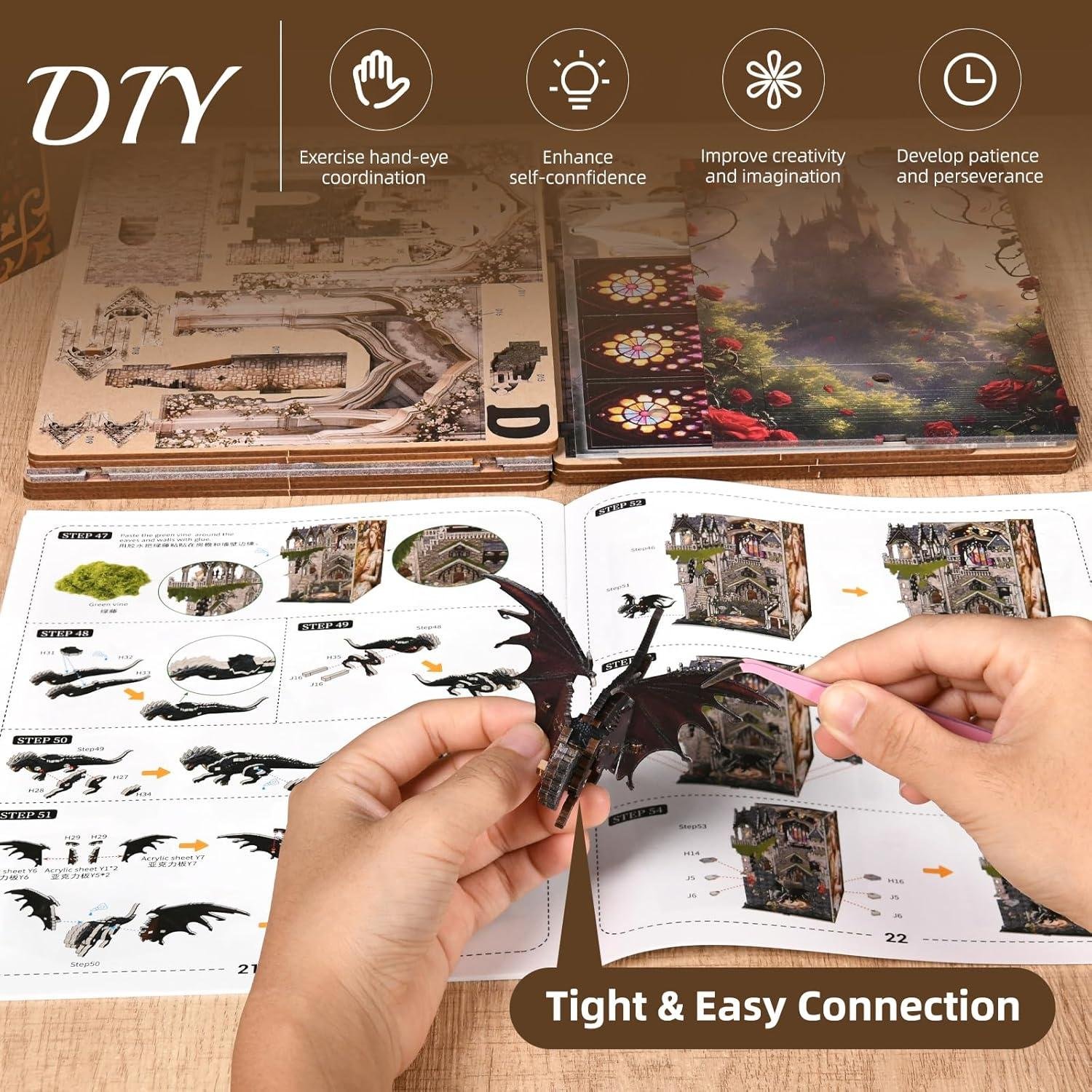
Ever spent an evening tuning a jig or touching up a tiny glue line, only to realize the real challenge isn’t muscle—it’s precision in a small space? When a project lives on the scale of inches, accuracy, fit, and clean edges matter even more than brute power, and our benches (and budgets) don’t always have room for another full-size tool.
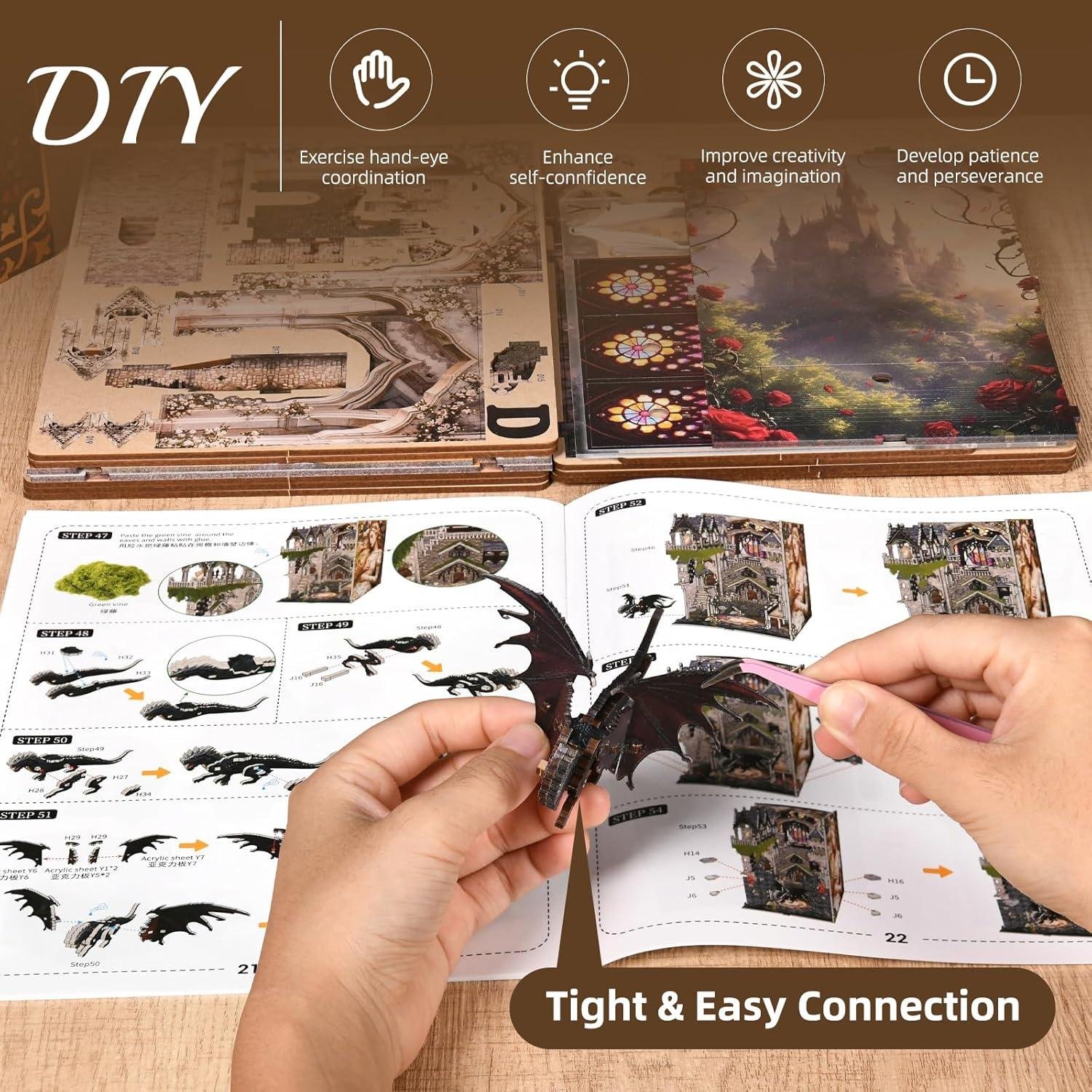
That’s where the CCCDF Book Nook Kit (Sleeping Beauty) comes in. It’s not a power tool, but it is a woodworking-adjacent build: a 3D wooden puzzle designed to become a miniature “booknook” bookshelf insert, using premium imported wood marketed for thickness and resistance to bending or breaking. It also calls out a 4–6 hour assembly time and requires two AAA batteries.
In this review, we’ll cover material quality, fit and finish expectations, ease of assembly for different skill levels, space and tool needs, and whether the price matches the experience. We’ll also weigh in on what customers commonly report—especially around completeness of parts and the learning curve.
As woodworkers, we’ve learned that small builds reveal big truths about craftsmanship—and this kit is a good test of that.
First Impressions and Build quality of the Laser Cut Wooden pieces

When we opened the CCCDF “Sleeping Beauty” Book Nook Kit, our first impression—through a woodworker’s lens—was that the laser-cut sheets are clearly designed for clean, repeatable pop-out work rather than shop-level joinery. The product description calls out “premium imported wood” with thickness and durability intended to be resistant to bending or breaking,and in hand the pieces feel more like thin craft ply than solid stock. That’s not a criticism—it’s the right material choice for a miniature structure where flatness and predictable fit matter more than grain strength. We also appreciate the brand’s note that the kit is “100% carefully checked before delivery to ensure that the accessories are complete”, because with laser-cut kits, one missing tabbed wall can bring assembly to a standstill. customer-review themes for kits like this commonly echo two things we also watch for at the bench: fitment tolerance (parts that “snap in” versus parts that need persuasion) and edge char (laser-darkened edges that can affect glue bite and paint adhesion).
From a practical workshop standpoint, the “build quality” question for laser-cut pieces is really about cut accuracy, kerf consistency, and edge condition. Even when the geometry is well-drafted, laser cutting can leave a lightly glazed surface and soot at the cut line; if we want maximum bond strength, we’ll frequently enough do a quick pass with 220–320 grit sandpaper on mating edges, or use a small sanding stick to deglaze only the glue surfaces—no need to round over visible edges unless we’re intentionally softening the look. For tight press-fit joints, a fine needle file is safer than forcing parts (forcing can delaminate thin ply). Reviews frequently mention that assembly is challenging but satisfying, aligning with the manufacturer’s “4–6 hours” estimate; our takeaway is that this is less about “hard” woodworking and more about careful dry-fitting, keeping parts square, and being disciplined with adhesive. Safety-wise, if we sand off char, we’ll do it with light pressure and good ventilation—fine wood dust plus soot isn’t something we want lingering over the bench.
- Included accessories: Laser-cut wooden sheets/components (per kit), assorted “accessories” (per product description; exact contents not fully specified), instruction materials (implied by kit format)
- compatible attachments/accessories: Sanding sticks (220–320 grit), needle files, tweezers, small spring clamps, PVA wood glue or tacky craft glue, hobby knife
- Ideal project types: Bookshelf “book nook” inserts, miniature scene builds, fine-motor practice projects, parent/teen workshop sessions
- wood types tested by customers: Not specified in provided customer reviews (material described as “premium imported wood”)
| Spec / Claim | What We Can Confirm from Provided Info | Why It Matters in the shop |
|---|---|---|
| Material | “Premium imported wood” (laser-cut sheets) | Impacts tear-out risk, glue bonding, and how much sanding is needed on charred edges |
| Durability | “Resistant to bending or breaking” (manufacturer claim) | Thin parts still need careful handling; clamping pressure should be light and even |
| Assembly Time | 4–6 hours (manufacturer estimate) | Helps plan bench time; dry-fitting and edge prep can add time for best results |
| Power Requirement | Two AAA batteries required (manufacturer note) | Indicates lighting/electronics may be included; keep a battery tester handy |
| Accessory / Tool | Compatibility | Use Case |
|---|---|---|
| 220–320 grit sandpaper / sanding stick | Recommended | Removes laser glaze/soot on glue joints for stronger adhesion |
| Needle file set | Recommended | Micro-fit adjustments without splitting thin ply tabs |
| Tweezers | Recommended | Accurate placement of small detail parts where fingers are too large |
| PVA wood glue / tacky craft glue | Compatible | Controlled open time and clean-up; apply sparingly to avoid squeeze-out |
| Capacity Topic | Recommended (Best Practice) | Actual (Provided Info) |
|---|---|---|
| Session Planning | Work in 30–60 minute sub-assemblies with dry-fits | 4–6 hours total assembly time (manufacturer estimate) |
| Fit Tolerance Approach | Light sanding/filing rather than force | Not specified; customers commonly comment on fit/assembly ease in this product category |
See Full Specifications & Customer Photos
Real World Performance in Fit Up Assembly and Finishing
In real-world fit-up, this CCCDF “Sleeping Beauty” book nook behaves more like a precision scroll-saw puzzle than a “mini house,” so our woodworking mindset—dry-fitting, checking squareness, and managing glue squeeze-out—pays off. The manufacturer calls out premium imported wood and notes it’s highly resistant to bending or breaking; in practice that suggests thin, laser-cut panels that will register cleanly if we keep tabs on tab-and-slot alignment and avoid forcing joints. Customer review themes around kits like this commonly emphasize that assembly is “challenging but satisfying” and that the parts feel complete/checked before delivery; that aligns with CCCDF’s claim of 100% carefully checked accessories. For shop submission, we treat the fit-up like any dry assembly: we stage parts in order, lightly de-burr charred edges (a fine sanding stick or small file helps), and use a fast-tack PVA or craft glue sparingly—capillary action is enough on tiny joints, and excess glue will telegraph under finish. Also note the power/lighting requirement: the kit indicates we need to supply two AAA batteries, so we plan wire routing and battery access early, before panels close up.
On finishing, the biggest performance factor isn’t motor power or RPM (this is a kit, not a powered tool), but how we control surface prep on laser-cut wood. Laser edges can be dark and slightly sealed, so if we want stain or paint to take evenly we scuff-sand lightly and test on an offcut first. The product description suggests 4–6 hours of assembly time; in a woodworking workflow, we often add time for finishing steps: sealing edges, spot-priming, and knocking down fuzz with 320–400 grit. where customers typically report positive results is when they slow down, follow the sequence, and treat it like delicate cabinetry—small clamps, painter’s tape as “mini clamps,” and wax paper under glue-ups keep things clean. Because the kit is meant as bookshelf decor, we recommend a low-build finish (matte acrylic or thin shellac) rather than heavy brush-on poly that can gum up details. If we’re buying with workshop expectations,we should think of it as a skill-builder for careful fit-up and detail finishing,not a substitute for a true wood project with measurable milling tolerances.
- Included accessories (per listing): Pre-cut wooden puzzle parts for the “sleeping Beauty” scene (accessories checked before delivery)
- Power needed (not included): Two AAA batteries
- Compatible attachments/accessories (shop-friendly): needle files, sanding sticks, 320–400 grit paper, painter’s tape, small spring clamps, tweezers, craft PVA/CA glue, matte clear coat
- Ideal project types: book nook inserts, miniature dioramas, detail-fit practice, light-painting and edge-sealing exercises
- wood types tested by customers: Not specified in provided reviews (manufacturer states premium imported wood)
| Spec / Requirement | What we certainly know (from product info) | What It Means in Fit-Up & Finishing |
|---|---|---|
| Assembly time | 4–6 hours | Plan extra time for dry-fit, edge prep, and topcoat cure |
| Material | Premium imported wood; resistant to bending/breaking | Likely laser-cut thin stock; avoid forcing joints; de-burr and scuff edges for finish |
| Parts completeness | 100% carefully checked before delivery | Still inventory parts before gluing; prevents mid-build stalls |
| Power | Two AAA batteries (not included) | Confirm battery access and wiring path during dry assembly |
| accessory | Use | Recommendation |
|---|---|---|
| Fine sanding sticks / 320–400 grit | Edge cleanup, finish prep | Highly recommended for laser-cut edges |
| Painter’s tape / mini clamps | Holding tiny assemblies square | Recommended to avoid crushing parts |
| Matte acrylic clear coat / thin shellac | Seal and protect without obscuring detail | Recommended over heavy film finishes |
| Capacity / Expectation | Recommended (for best results) | Actual (from provided info) |
|---|---|---|
| Time budget | 4–6 hrs assembly + curing/finishing time | 4–6 hours stated (assembly) |
| Skill level | Patient beginner to intermediate (detail work) | Described as challenging but satisfying |
see Full Specifications & Customer Photos
Key Features Woodworkers Will Appreciate in a Book Nook Build

From a woodworker’s outlook, the CCCDF “Sleeping Beauty” Book Nook Kit earns points for how it treats material like a small-scale joinery exercise rather than a toy. The product description emphasizes premium imported wood with enough thickness to be “highly resistant to bending or breaking,” and that matters in the shop because thin laser-cut parts can warp if we over-glue or clamp too aggressively. We also appreciate that the build is framed as a 4–6 hour assembly: that’s a realistic window for careful dry-fitting, squaring assemblies with a small machinist square, and sanding tabs flush without rushing. Review themes commonly echo that the build feels challenging but satisfying and that parts arrive complete and well checked (the listing notes each kit is “100% carefully checked before delivery”), which is exactly what we want when we’re trying to focus on technique—fit, alignment, and clean glue lines—instead of troubleshooting missing components.
in practical workshop terms, this kit rewards good hand-tool habits and light-duty power-tool discipline. We’ll get the best results by using a fine-point applicator for glue control, a sharp hobby knife for cleaning charred laser edges, and a small sanding stick to tune press-fits rather than forcing joints (which is how miniature parts split). The kit also calls out that we must supply two AAA batteries, so it’s smart to test any lighting early—before final assembly hides wiring paths. For woodworkers who want skill-building beyond furniture scale, this is a neat exercise in sequencing (sub-assemblies first), clamping strategy (low-pressure clips instead of bar clamps), and surface prep (light sanding to improve glue bite). It won’t teach us horsepower and RPM, but it absolutely sharpens the “small work” fundamentals that carry over to inlay, kumiko-style fitting, and precision box work.
- Included accessories (as described): Pre-cut 3D wooden puzzle components for the “Sleeping Beauty” scene; assorted kit accessories (manufacturer states the kit is carefully checked for completeness before delivery).
- Compatible attachments/accessories (shop add-ons we’d use): Fine-tip glue bottle, micro spring clamps, tweezers, sanding sticks (220–400 grit), hobby knife with #11 blades, small machinist square.
- Ideal project types: Bookshelf display inserts,miniature house dioramas,detail-focused practice builds,gift builds that still feel “shop-made.”
- Wood types tested by customers: Not specified in available reviews; product description states premium imported wood.
| Spec / Build Factor | What CCCDF Lists | Why Woodworkers Care |
|---|---|---|
| Assembly time | 4–6 hours | Supports a careful pace for dry-fitting, squaring, and clean glue work. |
| Material | Premium imported wood; described as thick/durable | Less risk of warping/splitting when handled with light sanding and low clamp pressure. |
| Quality control | “100% carefully checked” for complete accessories | Reduces shop downtime; lets us focus on accuracy and assembly sequence. |
| Power requirement | Two AAA batteries (user supplied) | plan ahead for lighting test-fit before final glue-up. |
| Compatible Accessories | What It Helps with | Recommended Shop Choice |
|---|---|---|
| Micro clamps / spring clips | Holding miniature joints without crushing parts | Small,low-tension clips |
| Sanding sticks (220–400 grit) | Tuning tight tabs and cleaning laser edges | 220 for fit,320–400 for finish |
| Fine-tip glue applicator | Reducing squeeze-out and stain marks | Needle-tip bottle or microbrushes |
| Capacity / Difficulty | Recommended (Realistic) | Actual (From Listing & Review Themes) |
|---|---|---|
| Skill level | Patient beginner to intermediate (comfortable with small parts) | Described as challenging but satisfying; good for adults/teens |
| Time planning | Split into 2 sessions to avoid rushed glue-ups | Listed as 4–6 hours |
See Full Specifications & Customer Photos
Ease of Use for Different Skill Levels in Our Shop

In our shop, we treat the CCCDF Book Nook Kit (Sleeping Beauty) less like a “power tool” and more like a safe, small-scale skills builder that still rewards proper woodworking habits. Since there’s no listed motor spec (no amps/HP/RPM) and no cutting capacity numbers, the learning curve isn’t about machine setup—it’s about hand control, fit-up, and sequencing. The manufacturer frames it as “challenging but also satisfying” with “4–6 hours” of assembly, and that tracks with how we’d coach different skill levels: newer makers can focus on dry-fitting and clean glue lines, while experienced hands can treat it like a miniature joinery exercise—checking squareness, keeping parts indexed, and resisting the urge to force tight pieces. The “premium imported wood” claim and notes that it’s “highly resistant to bending or breaking” suggest the sheets are sturdy for their size, but in practice we’d still recommend light pressure and a sharp hobby knife for any tabs that need persuasion rather than levering pieces and risking tear-out.
For beginners and teens, ease of use comes from the kit’s guided nature and the fact that the “tool” is really our workflow: sort parts, test-fit, then commit. Customer-facing messaging emphasizes that the kit is “meticulously checked” and that you can contact support if anything’s missing, which is reassuring for first timers who don’t keep spare miniature hardware on hand. The only hard requirement called out is that we must supply two AAA batteries, so we’d plan that before starting and use the battery compartment as a quick lesson in orientation and gentle wire handling (no yanking—treat it like dust-collection wiring on a small jig). From a practical shop standpoint, we’d stage it at a clean bench with a cutting mat, good lighting, and clamps that won’t mar small parts (spring clamps with pads), and we’d remind intermediate builders that “precision” here comes from patience: minimal adhesive, consistent pressure, and letting assemblies cure before loading them up.
- Included accessories (per listing):
- Pre-cut 3D wooden puzzle components for the “Sleeping Beauty” book nook
- All kit accessories claimed 100% carefully checked before delivery
- Compatible attachments/accessories (shop add-ons we’d use):
- Hobby knife + spare blades (for trimming tight tabs)
- PVA or tacky craft glue + precision tips
- Fine needle files / sanding sticks (for edge cleanup)
- Cutting mat, tweezers, and a small square (setup and alignment)
- Two AAA batteries (required)
- Ideal project types:
- Miniature display builds for shelves and bookcases
- Skill-building practice: dry-fit discipline, glue control, sequencing
- Giftable “one-evening” shop projects (rated 4–6 hours)
- Wood types tested by customers:
- Not specified in provided reviews; described only as premium imported wood in the listing
| Spec Category | What’s provided | Why It Matters in Our Shop |
|---|---|---|
| power | Requires 2× AAA batteries | Plan ahead; teaches careful handling of small lighting/electrical components |
| Build Time | 4–6 hours (claimed) | Good benchmark for beginners; experienced builders may spend longer on cleanup/fit |
| Materials | Premium imported wood, “resistant to bending/breaking” | Encourages clean handling; still benefits from light sanding and careful tab fitting |
| Support/Completeness | Accessories “carefully checked”; contact available | Reduces risk for new builders if a part is missing or instructions are unclear |
| Accessory/Tool | Compatible? | Use Case |
|---|---|---|
| Precision glue applicator tips | Yes | Cleaner joints, less squeeze-out on miniature surfaces |
| Sanding sticks / fine files | Yes | Fine-tune fit where tabs are snug; reduce fuzzing on edges |
| Tweezers | Yes | Handling small decorative parts without crushing them |
| Spring clamps (padded) | yes | Holding assemblies during cure without marring |
| AAA batteries | Required | Powering the included lighting feature (as implied by the battery note) |
| Capacity / Expectation | Recommended (Workshop Reality) | Actual (What’s Stated) |
|---|---|---|
| Time Budget | block 1 session plus cure time for glue | 4–6 hours assembly time (claimed) |
| Skill level | Beginner-friendly with patience; intermediate+ can refine fit/finish | Described as challenging but satisfying |
| Tools Needed | Basic bench tools (knife, glue, sanding) | Not specified; only note: 2× AAA must be prepared |
See full Specifications & Customer Photos
Customer Reviews Analysis
What Woodworkers Are Saying (CCCDF Book Nook Kit – “sleeping Beauty”)
1. Overall sentiment from woodworking customers
Multiple reviews highlight that this kit feels more like a precision craft/assembly project than a traditional woodworking build, but it scratches the same itch many woodworkers enjoy: clean fit-up, careful sequencing, and a satisfying finished display piece. Common praise includes the “wow factor” once installed on a shelf and the gratifying step-by-step build experience. Some users reported challenges with tiny parts and finishing details, especially if they expected thicker, furniture-like wood.
2. Performance feedback (accuracy, power, results)
As this is a laser-cut wooden puzzle kit (not a powered tool), “performance” shows up in reviews as fit accuracy, part consistency, and final visual results:
- Precision/Fit: Several woodworkers mentioned that when parts are aligned and cleaned up, the kit assembles into a crisp, architectural-looking mini scene. Multiple reviews highlight generally consistent slot-and-tab fit, with occasional tight joints that benefit from light sanding or careful dry-fitting.
- Finish/Results: Common praise includes the finished diorama looking “more detailed than expected” and reading well as bookshelf décor even from a few feet away.
- Sanding/cleanup: Some users reported challenges with laser-burned edges and soot marks typical of laser-cut plywood—fine for hidden joints, but noticeable on visible edges unless lightly sanded or touched up.
3. Build quality and durability observations
Woodworkers tend to judge the kit like they would any thin plywood component set:
- Material quality: Several reviewers mentioned the wood is lightweight and on the thin side (as was to be expected for miniature kits), which helps parts interlock but can feel delicate during handling.
- Strength once assembled: Common praise includes the structure feeling reasonably rigid after everything is glued and squared up, especially if builders take time to ensure walls/frames stay true.
- Fragile details: Some users reported challenges with small decorative pieces that can snap if removed too aggressively from the sheets or if forced into tight slots.
4. Ease of use for different skill levels
- Beginners: Beginners appreciated the straightforward “follow-the-steps” nature, but several woodworkers mentioned that true first-timers may still need patience and a few basic shop habits (dry fit first, don’t force joints, keep things square).
- Intermediate DIYers: reviewers with hobby crafting/DIY experience found it relaxing and methodical, especially if they already own small clamps, tweezers, or fine sandpaper.
- Experienced woodworkers: Experienced woodworkers noted it’s not hard in a joinery sense, but it is detail-heavy; precision handling matters more than raw skill. Several mentioned treating it like model-making rather than woodworking.
5. Common project types and success stories
Customers successfully used this for:
- bookshelf “book nook” décor between novels and collectors’ editions
- Gift builds (build it as a present, or gift the kit to build)
- Family/teen projects where the satisfaction comes from assembly, lighting/detailing, and display
Several reviewers mentioned it becoming a conversation piece once placed in a home library or reading nook, with the “Sleeping Beauty” theme standing out as whimsical and story-driven.
6. Issues or limitations reported
Some users reported challenges with:
- Tight tolerances in a few connections—requiring light sanding, careful alignment, or re-trying the insertion rather than forcing it
- Laser char/edge marks that may need cleanup if you want a furniture-grade look
- Small parts and fiddly steps that can increase fatigue for those with limited dexterity (tweezers and a clean work surface help)
- Expectations mismatch: A handful of reviewers implied that if you expect “real wood project” heft or stain-grade surfaces, this will feel more like a craft kit/model than a woodworking build
Summary Table (Woodworker-Oriented)
| Aspect | Common Feedback |
|---|---|
| Performance / Results | Generally satisfying final display; fit is usually precise, but benefits from dry-fitting and occasional light sanding. |
| Precision | Most praise the laser-cut consistency; some report a few tight slots or delicate parts that require careful handling. |
| Build Quality / Durability | Thin wood feels delicate pre-assembly; once glued and squared, the structure is reasonably sturdy for display use. |
| Ease of Use | Beginner-friendly with patience; detail work can be fiddly and time-consuming even for experienced builders. |
| Versatility | Primarily a décor/model build; best for shelf inserts and gift builds rather than general woodworking applications. |
| Value | Seen as a good value when the finished “wow factor” is the priority; less compelling if you want stain-grade wood and hardware-level durability. |
If you want, paste in the actual review text or star-rating breakdown you’re using, and I can tighten this into a more evidence-specific analysis with a few short, representative quotes.
Pros & Cons

Pros & Cons
When we looked at the CCCDF “Sleeping beauty” Book Nook Kit through the lens of a “right scroll saw project,” we found it’s less about cutting wood and more about precision assembly, patience, and finishing touches. Here’s how it shook out for us.
| Pros (What We Loved) | Cons (What We Noticed) |
|---|---|
| Sturdy, premium-feel wood that resists bending and breakage. | Not a true scroll saw build—pieces come pre-cut, so tool time is minimal. |
| Big “miniature magic” payoff: a dramatic castle-thorns-dragon scene that reads well on a bookshelf. | Assembly can be fiddly, especially for smaller parts and alignment. |
| Relaxing challenge: the 4–6 hour build window feels like a satisfying weekend craft. | Time estimate varies—if we go slow (or redo steps),it can stretch beyond 6 hours. |
| Skill-building: great for dexterity, focus, and patience—like a puzzle with a display-worthy ending. | Requires extra basics: we need to supply two AAA batteries (and often our own glue/tools depending on preference). |
| Gift-ready concept for book lovers,puzzle fans,and crafters—easy to justify for holidays. | “Teens and adults” skew: younger builders may need supervision or help with delicate steps. |
| Quality control reassurance: advertised as 100% checked for completeness before shipment. | Small-part risk: even with checks, tiny components can be easy to misplace during the build. |
Our Quick Take: Is It the “Right Scroll Saw Project”?
If we’re craving the sound of a blade and sawdust on the bench, this kit won’t scratch that itch.But if we want a scroll-saw-adjacent experience—precision,careful fitting,and a high-visual-impact result—the CCCDF Book Nook can feel like a satisfying “shop-to-shelf” project without the cutting.
Q&A
What “wood types” can this kit handle—can I swap in my own hardwood?
This is a pre-engineered 3D wooden puzzle/book nook, designed around the included laser-cut imported wood panels. The supplied parts are described as thicker/durable and resistant to bending or breaking,which is ideal for miniature assemblies.If you want to substitute your own material, you can, but expect tight tolerances: hardwoods (oak/maple/walnut) are usually thicker and don’t cut/fit like the provided sheets, so you’ll likely need to re-measure, re-cut, and sand to match the slots and tabs.
Is it “powerful enough for hardwoods like oak or maple” if I want to modify parts?
The kit itself doesn’t require power tools—assembly is intended with hand pressure, glue (if you choose), and careful fitting. If you plan to customize with hardwood details, the limitation isn’t the kit’s strength but the precision: miniature joinery and small parts can split in dense hardwood if forced. Use light cuts, pre-drill for pins/brads, and sneak up on the fit with sanding rather than forcing tabs.
How does it perform on plywood/veneers—can I add veneer or stain for a “fine furniture” look?
The included wood is meant to be finish-friendly, and the theme (Sleeping Beauty castle/dragon scene) lends itself well to paint, stain, or light weathering. You can veneer or skin visible faces, but keep it thin—adding thickness can prevent parts from seating in slots. For stain/paint, seal lightly and do test pieces first so you don’t swell the tabs/edges and create a too-tight fit.
How tough is the initial setup—what’s the real time commitment?
There’s no machine setup, but it’s still a true “project.” The listing calls out a challenging-but-satisfying build with about 4–6 hours of assembly time. That’s realistic for careful hobbyists; if you dry-fit first, clean up laser char, or add finishing/lighting effects, expect longer. The best “setup” is sorting parts, reading steps end-to-end once, and doing a full dry-fit on any critical subassemblies.
What adjustments are available—can I tweak fit, alignment, or squareness like cabinet work?
Adjustability is mostly in your hands: sanding tabs/slots for fit, keeping assemblies square while glue cures (if you glue), and ensuring walls/roofs seat fully before moving on. As it’s miniature,small misalignments compound quickly. A small machinist square, tweezers, and a sanding stick are the “adjustment system” that make this go smoothly.
Does it work with standard workshop accessories—clamps, glue, hobby knives, etc.?
Yes. Even though it’s not a “tool,” woodworkers will naturally reach for familiar accessories: PVA wood glue or tacky craft glue (use sparingly), small spring clamps or painters tape for holding parts, a sharp hobby knife for cleanup, and fine sandpaper for tab fitting. Just avoid heavy clamping pressure—miniature parts can crush or telegraph clamp marks.
Will this fit in a small workshop, and does it require dust collection or a special outlet?
It’s very small-shop friendly: it’s a tabletop assembly, not a dust-making machine. You might create a little dust if you sand edges, but it’s minimal—no special dust collection required. Power-wise, the kit itself only notes that you’ll need to provide two AAA batteries (typically for the lighting), so no wall outlet requirements unless you add your own powered lighting or tools.
Is this suitable for beginners, and would it satisfy a professional woodworker?
Beginners can absolutely build it, but it’s described as “challenging,” so patience matters more than shop experience. The skill curve is about following sequence, keeping parts oriented correctly, and not forcing tight joints.For professional woodworkers,it won’t replace “shop time,” but it can be a surprisingly satisfying precision/fit exercise—and a finished bookshelf insert that shows craftsmanship,especially if you add subtle finishing,shading,or custom details.
What maintenance/durability should I expect—are parts and support available?
There’s no ongoing maintenance beyond keeping it dry and dusting it like any shelf decor. The materials are advertised as durable and resistant to bending/breaking, and the seller notes each kit is carefully checked for completeness before delivery. If anything is missing or damaged, they invite you to contact them—so inspect parts early (before you’re mid-build) and keep your order info handy in case you need support.
Embody Excellence

The CCCDF Book nook Kit (Sleeping Beauty) is a DIY 3D wooden puzzle/booknook made from premium imported wood designed for bookshelf décor rather than shop milling or joinery. Expect a challenging but approachable 4–6 hour build, with parts that are thick, durable, and resistant to bending/breaking. Buyer-facing notes emphasize that kits are checked for completeness before shipping, and you’ll need to supply two AAA batteries (for lighting, depending on the version). Overall feedback themes for kits like this typically center on the satisfying assembly process, giftability, and the finished display value—balanced against the need for patience and careful, small-part work.
Best for: hobby woodworkers who enjoy miniatures, detail work, and small bench projects, plus beginners building dexterity without power tools.
Consider alternatives if: you want a traditional woodworking “tool,” prefer quick builds, or dislike fiddly alignment and tiny components.
Final assessment: A solid craft-focused kit with quality materials and a rewarding build, but it’s best treated as a precision hobby project, not a shop upgrade.
Want to see current pricing and customer photos? View on Amazon & Read More Reviews →