

Blog
Jovi-mindly Wooden Block Set Review: Right for Our Shop?

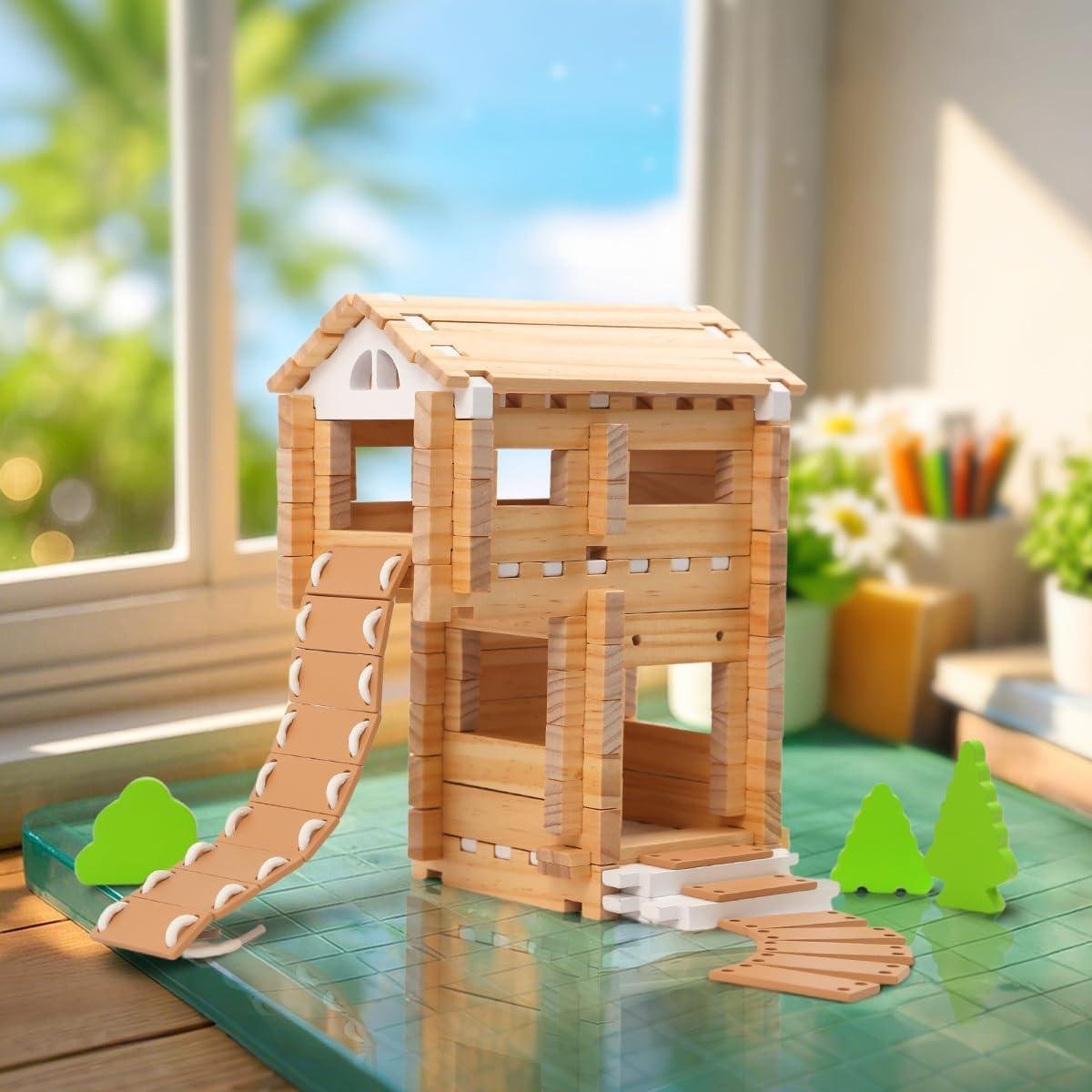
Ever try to keep a small project square while a curious kid hovers at the edge of the bench, eager to “help”? In our shops, precision and safety matter—and so does finding a wood-based activity that teaches real joinery concepts without turning the workspace into a cluttered hazard.
That’s where the jovi-mindly&Notchies 96 PCS Wooden Blocks set fits in. It’s a New Zealand pine block system that leans on mortise-and-tenon–style interlocking,aimed at kids ages 4–8 (with a clear small-parts warning and adult supervision required). The set is FSC certified, includes an instruction manual, and comes with a storage bag—a practical bonus for anyone battling tight shop or home space.
In this review, we’ll look at the fit and consistency you can expect from a pre-made wooden system, the finish and build-quality cues the brand emphasizes (hand-polished, splinter-free), and what customer feedback commonly highlights about ease of use, durability, and engagement. As woodworkers who value accuracy and materials, we’ll keep the focus on informed, realistic expectations—not hype.
First Impressions and Build Quality of the Wooden Blocks Set
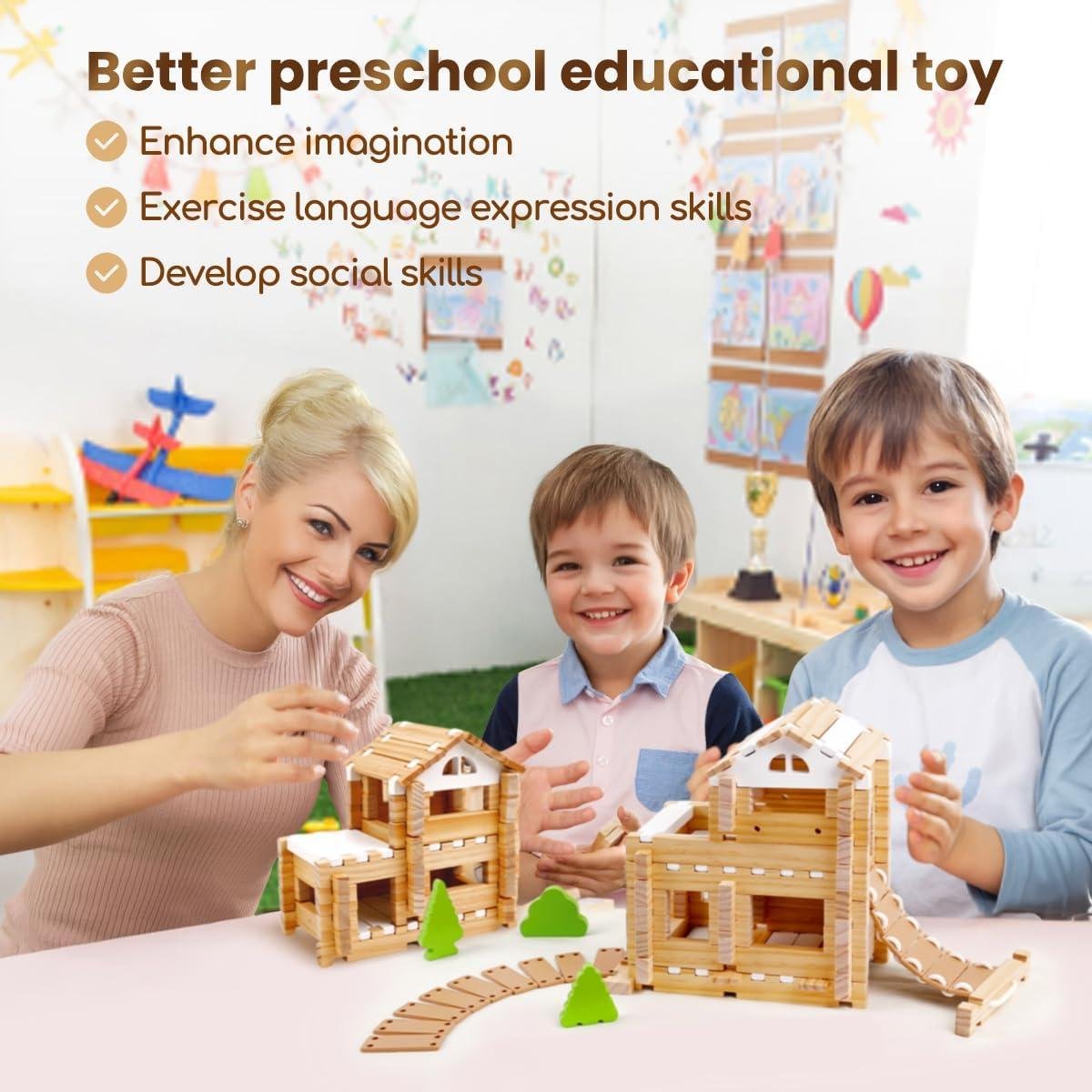
When we first opened the Jovi-mindly&Notchies 96 PCS Wooden Blocks set, our woodworking brains instantly went to the timber choice and machining. The manufacturer specifies New zealand Pine with a hand-polished, splinter-free finish and FSC Certified sourcing—two details that matter in a shop as they hint at consistent stock and safer handling for small hands around the bench. The kit presents more like a small joinery teaching aid than a random pile of blocks: the product description leans into mortise-and-tenon principles, and the included shapes (including “premade things—doors and windows,” per review themes) encourage kids to think in terms of structure, openings, and load paths. For practical workshop use, we see this set working well on a side table during glue-ups or finishing cure times—something to keep kids engaged nearby without introducing sharp tools—while we talk through why real joinery depends on clean shoulders, accurate fit, and grain direction.Build quality, based on both the specs and recurring review themes, lands in the “solid-for-a-toy” category rather than precision-machined maker parts. Multiple reviewers describe the blocks as “sturdy,” “high quality,” and “well made,” with pieces that “fit well together” and resemble Jenga-style wood quality; one dissenting theme notes “thin but decently sturdy wood” and frustrations that the instructions can feel like “just photos” with limited description (while others praise a step-by-step booklet but say it skews older than 8). In our shop, that translates to a good conversation starter: we can teach kids how “fit” is a spectrum—too tight splits pine, too loose racks—then let them experiment safely and learn why real-world tolerances matter. The included storage bag also gets consistent praise as a practical add-on; we like that because controlling small parts is part of shop discipline (and it supports the product’s own safety guidance to inspect for damage/sharp edges and store dry to prevent warping or mold). See Full Specifications & Customer Photos
Real World Performance for Shop Jigs Prototypes and Skill Building
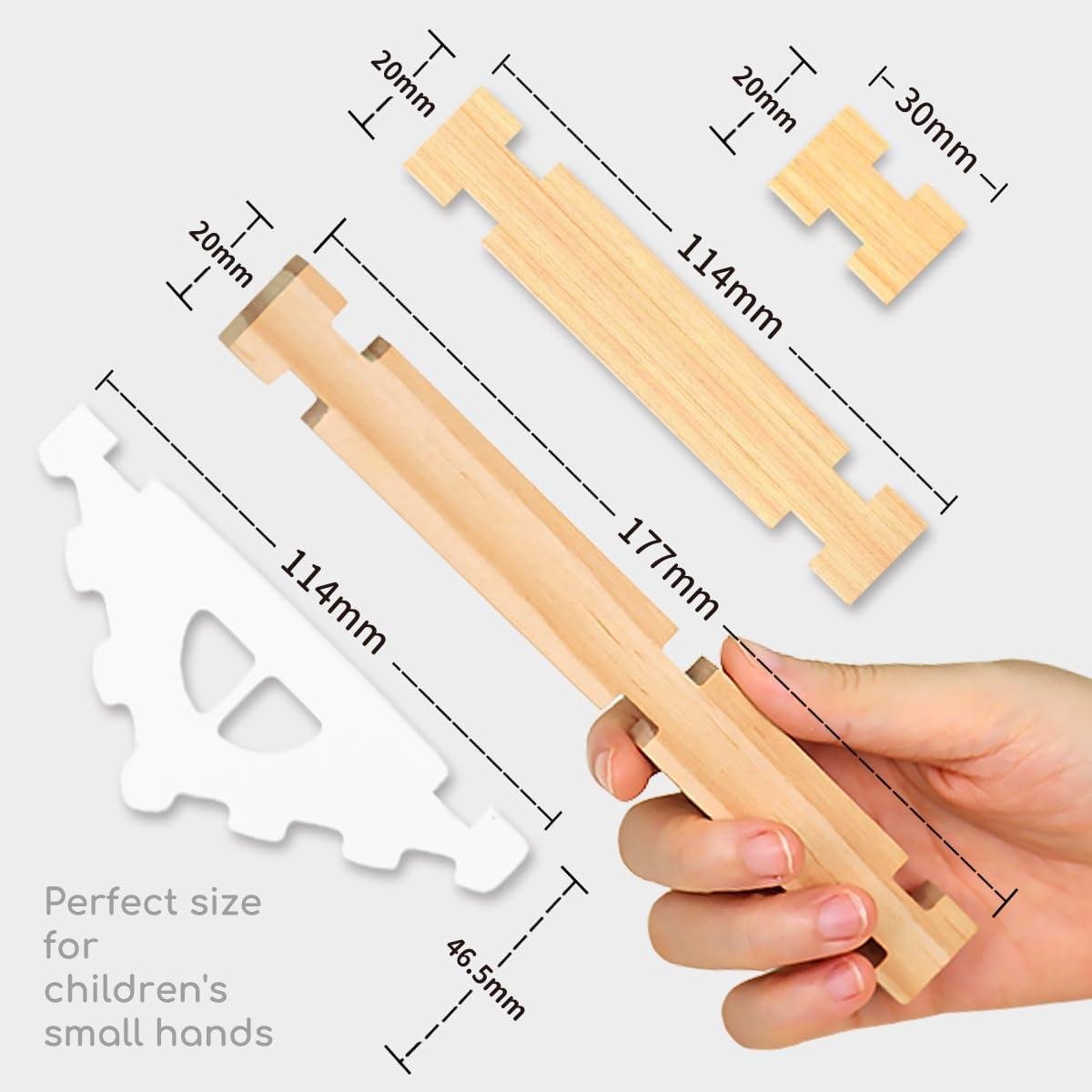
In our shop, we look at the Jovi-mindly&Notchies 96 PCS set less as a “toy” and more as a low-stakes way to prototype joinery ideas at the bench. The blocks are made from FSC-certified New Zealand pine with a hand-polished,splinter-free finish,and the system is built around a mortise-and-tenon-inspired interlocking method. That matters for woodworkers because it lets us mock up structure—bracing, spans, and load paths—before we commit to real stock. Multiple reviews echo the same baseline performance notes we care about: “sturdy,” “high quality,” “well made,” and that the pieces fit well together. We also saw consistent feedback that the instruction booklet is useful but skews older—more than one customer suggests it lands better around 7–8+, while younger kids often do better building freely once they understand the connection logic.
For skill building, we’ve found this kind of kit helps teach two workshop fundamentals: (1) how joinery geometry controls racking, and (2) how incremental assembly order affects accuracy. That makes it a surprisingly decent “dry run” tool for planning simple shop jigs—think stop-block layouts, basic fixture footprints, or a visual explanation of why triangles stiffen frames—without firing up machines. review themes also warn us about limits: some customers describe the instructions as “just photos” and not truly open-ended unless you’re willing to improvise; others recommend buying a second set as you “just about get to make a house” with one box. In woodworking terms, that’s a capacity constraint—great for small prototypes and teaching moments, but if we’re planning bigger assemblies (a “village,” bridge-like spans, or multi-module setups), we’ll want more pieces on hand and we’ll treat the included storage bag as the shop’s “parts bin” to keep blocks clean and dry.
- Included accessories: Instruction manual; storage bag
- Compatible attachments/accessories: Additional block sets (many reviewers recommend 2 sets); pairs well with train tracks and magnetic tiles for extended layouts (per customer comparisons)
- Ideal project types: Joinery concept demos; racking/bracing mockups; swift layout “sketches” for simple jigs/fixtures; kid-safe shop STEM sessions; basic architectural forms (house/village/bridge concepts)
- Wood types tested by customers: Pine (New Zealand pine, per specs)
| Spec / Attribute | What We Look for in the Shop | What This Set Provides |
|---|---|---|
| Piece count | Enough “parts” to explore structure and iteration | 96 pieces (some reviewers prefer two sets for larger builds) |
| material | Consistent grain, predictable friction, safe handling | FSC-certified New Zealand pine, hand-polished |
| Joinery concept | Clear mechanical logic (alignment + anti-rack) | Mortise-and-tenon-inspired interlocking system |
| Storage | Quick cleanup; keeps parts dry and together | Included storage bag (praised as useful) |
| Accessory / Add-on | Works With This Set? | Why Woodworkers Might Care |
|---|---|---|
| Extra block sets (same system) | Yes | Expands “fixture capacity” for bigger mockups; reviewers often prefer more pieces |
| Train track sets | Yes (conceptually) | Useful for layout planning and kid-pleasant shop play zones (mentioned in reviews) |
| magnetic tiles | Yes (conceptually) | Helps visualize mixed-material structures; reviewers mention “next level” city builds |
| Capacity Question | Recommended (If You Want…) | Actual (per Reviews + Specs) |
|---|---|---|
| Build size | Large village / multiple modules | 96 pcs can feel limiting; some say you “just about get to make a house” and recommend adding another set |
| Instruction usability | Younger kids following steps independently | booklet helps, but multiple reviewers note it’s better for ~8+ and sometimes photo-only |
See Full Specifications & Customer Photos
Key Features Woodworkers Will Appreciate in a Kid Friendly Block Kit
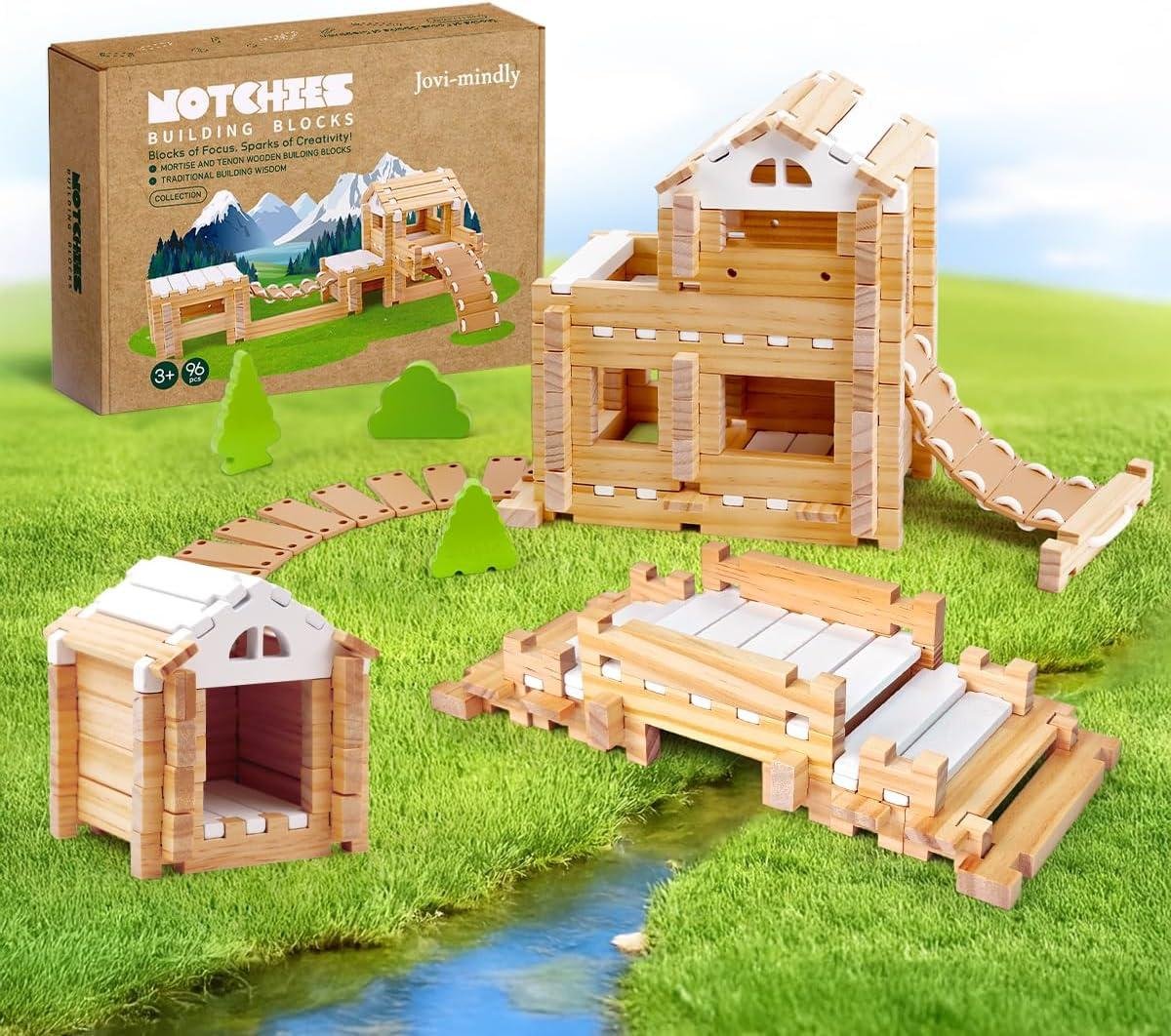
In our shop, the big “kid-friendly” feature we look for isn’t cartoon colors—it’s whether the materials behave like real wood should. Jovi-mindly&Notchies gives us 96 pieces made from FSC-certified New Zealand pine, and multiple reviewers echo the same theme: “sturdy,” “high quality,” “well made,” and pieces fit well together. That matters because when we’re teaching kids (or apprentices) how grain, friction, and fit work, sloppy tolerances turn into frustration fast. The set’s mortise-and-tenon-inspired connections are also genuinely useful for “mini joinery” demos—without putting a chisel in small hands. In practical terms, we can use these blocks at the bench to talk about compression vs. shear, why a “tight” joint holds, and how structural choices change a build—concepts that transfer directly to furniture frames, face frames, and even basic jig thinking.
Woodworkers will also appreciate the kit’s workflow details: the included instruction manual and optional video tutorials provide a repeatable “project plan” experience, while the storage bag is the kind of cleanup accessory we wish every small-part system included. Customer feedback suggests kids often start with the booklet then move into open builds—several mention it kept them busy and off screens—but we should note an important review theme: some buyers felt the directions were “just photos” and not always clear, and a few said it’s more functional for older kids (around 7–8+). From a safety-and-technique standpoint, we’d still treat this like any small-part shop “kit”: the product warning calls out small parts (not for under 3) and recommends adult supervision, plus regular checks for damage or sharp edges. That aligns with good shop habits—inspect parts before use, teach careful handling, and store wood properly (they advise dry, well-ventilated storage) to avoid warping or mold, especially if the kit lives near a basement workbench.
- Included accessories: Storage bag, instruction manual, access to video tutorials (via brand page)
- Compatible attachments/accessories: Extra sets for more build capacity (multiple reviewers bought two sets), pairs well with train tracks and magnetic tiles (per customer reports)
- Ideal project types: Mini “log cabin” builds, doors/windows role-play structures, bridge-style builds (customers mention a suspension bridge), town/village layouts
- Wood types tested by customers: Pine (New Zealand pine per specs); reviewers compare feel/quality to Jenga-like wooden blocks
| Spec / Feature | What We Get Here | Why Woodworkers Care |
|---|---|---|
| Piece count | 96 PCS | Enough for guided builds, but some reviewers recommend adding a second set for larger structures. |
| Material | New Zealand pine | Good teaching wood—lightweight, forgiving, and easy to discuss grain/fit without heavy hardware. |
| Certification | FSC Certified | Helps us talk about responsible sourcing—relevant when we’re choosing shop lumber, too. |
| Storage | Included bag | Small parts stay together—less time sweeping up “shop confetti.” |
| Accessory / Add-on | Works With This Kit? | Notes from Reviews / Shop Use |
|---|---|---|
| Additional block sets | Yes (recommended) | Several buyers purchased 2 sets to increase build versatility and size. |
| Train track sets | Yes (informal compatibility) | one reviewer built a village and expects it to integrate well with train tracks. |
| Magnetic tiles | Yes (informal compatibility) | Mentioned as a “next level” add-on for city/village play. |
| Capacity Topic | Recommended Expectation | What Reviews Suggest in Practice |
|---|---|---|
| Build scale (single set) | Small-to-medium builds with guidance | “just about get to make a house” with one set; larger scenes often benefit from more pieces. |
| Instruction usability | Best with adult help for younger kids | Some praise step-by-step ideas; others say it’s mostly photos and clearer for 8+. |
See Full Specifications & Customer Photos
Workshop Setup Storage and Ease of Use for Beginners and Experienced Makers
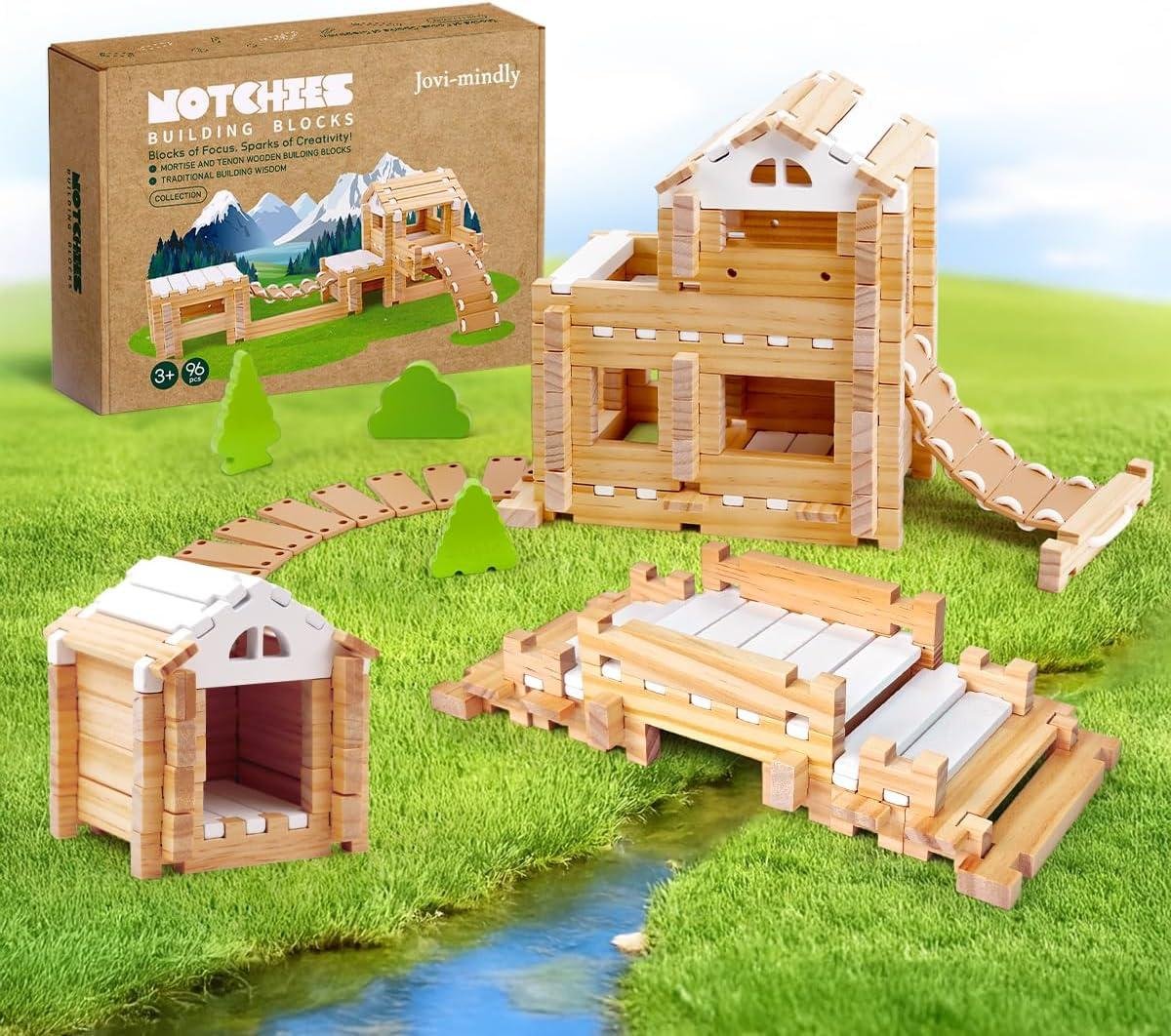
In our shop, “setup” matters even for a kid-focused kit, because anything that’s quick to stage and quick to clear earns bench space. The Jovi-mindly&Notchies set comes as a 96-piece assortment of FSC-certified new Zealand pine with a hand-polished,splinter-free feel,and it ships with a building instruction manual plus an included storage bag. That combination makes it easy for us to keep a small “design corner” ready for sketching joinery ideas without dragging clamps and offcuts into the mix. Several customers echo that the “pick up” bag for storage is very useful and that the blocks are “sturdy” / “high quality”. For beginners in woodworking households, the practical win is that these pieces mimic mortise-and-tenon-inspired interlocking without tools—so we can introduce fit, alignment, and sequencing at a clean tabletop before a child (or a brand-new maker) ever handles a chisel.
For experienced makers, the ease-of-use is less about “learning to stack” and more about how fast the system supports prototyping: reviewers mention kids follow the pamphlet first, then switch to imagination, and multiple families say it’s easier to build with than Lincoln Logs, with some noting the inclusion of premade doors and windows and even the ability to build a suspension bridge.Having mentioned that, review themes are split on instructions—some praise a step-by-step guide, while others complain the directions are “just photos” and not enough for younger builders; one reviewer cautions it may feel more functional for ages 7+. In workshop terms, we’d treat the booklet as a starting jig, not a full lesson plan: we can speed adoption by laying parts out in shallow trays, counting pieces back into the bag at cleanup, and using the blocks to teach repeatable habits—dry-fit first, check squareness by eye, and store wood in a dry, well-ventilated place to avoid humidity issues (the product guidance specifically warns about moisture and regular checks for damage or sharp edges).
See Full Specifications & Customer Photos
Customer Reviews Analysis
What Woodworkers Are Saying (Review Analysis)
1.Overall sentiment from woodworking customers
several woodworkers/DIY-minded buyers describe this as a well-made, satisfying “classic wood” building kit that keeps kids engaged and encourages imaginative construction after a brief start with the booklet. Overall sentiment trends positive on material feel and fit, with the most consistent pushback being value-for-piece-count and instruction clarity/depth depending on the child’s age.
2. Performance feedback (accuracy, power, results)
while this isn’t a power tool, reviewers still evaluated it like a wood product should be evaluated: how cleanly it “works” and how consistent the results are.
- Precision / fit-up: Multiple reviews highlight that pieces fit well together, making structures stable and repeatable (“All pieces fit well together and are sturdy.”).
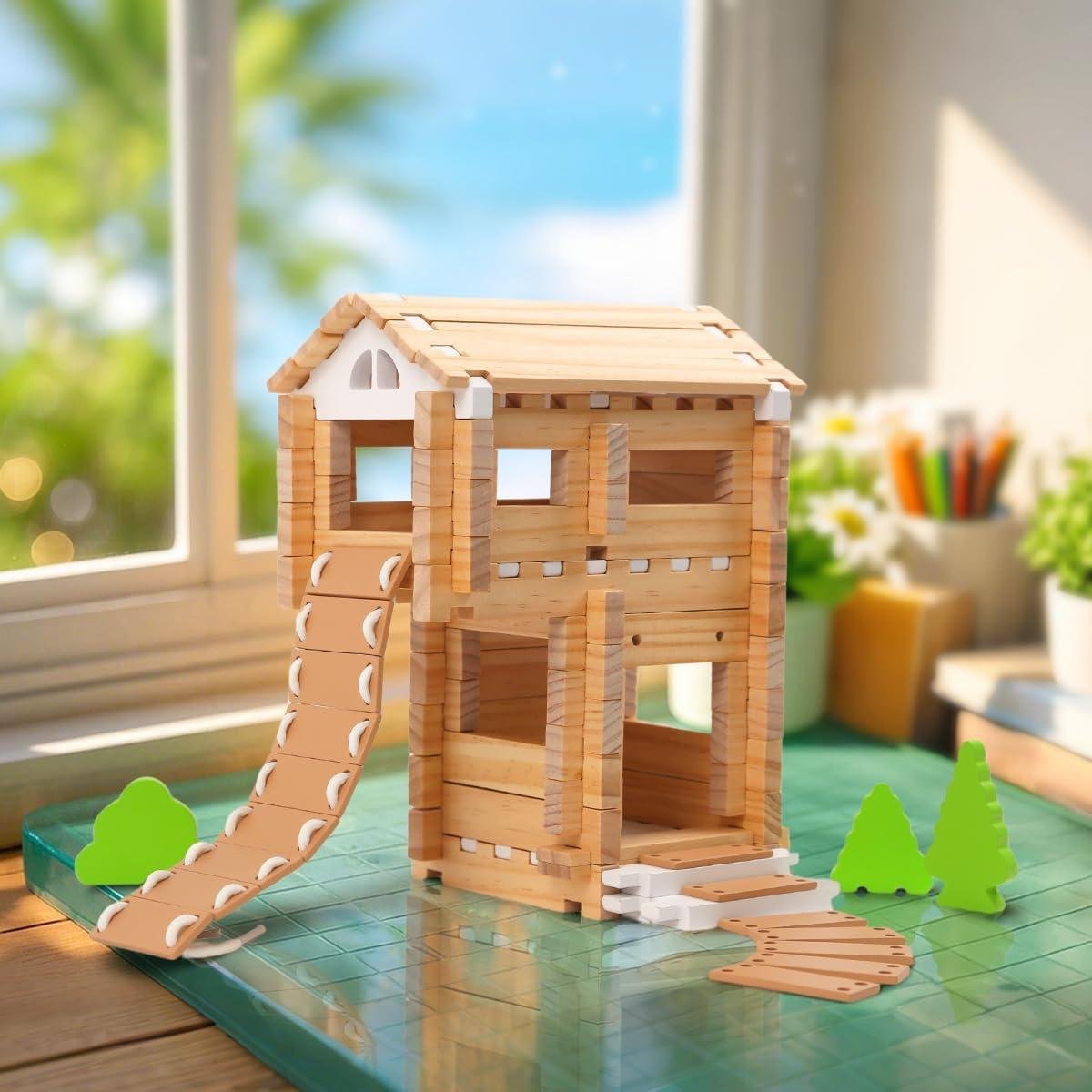
- Building results: Customers successfully used this for villages, houses/log-cabin style builds, and a “suspension bridge”, with one noting it pairs well with train tracks and magnetic tiles for more complex builds.
- Learning outcomes: Common praise includes kids moving from pamphlet builds to free-building, suggesting the kit supports both guided and creative construction.
3. Build quality and durability observations
Durability is where this set gets its most “woodworker-style” approval.
- Material quality: Several woodworkers mentioned the blocks feel sturdy and high quality, with one calling them “Lovely wood blocks that will last a lifetime.”
- Wood feel/finish: Reviewers repeatedly liked the natural wood look and “toys-of-the-past” vibe. One compared the wood type/quality to Jenga-style blocks.
- Hardware/cordage: One critical review describes the wood as “thin but decently sturdy” and notes the string is shoelace-like—not premium, but functional.
- Sustainability cue: A French-language review explicitly praises FSC certification and an overall sense of careful, safe manufacture.
4. Ease of use for diffrent skill levels
Skill level/age matters a lot here, and reviews reflect a split.
- Beginners/younger kids: Multiple reviews highlight that kids aged ~4–6 can use the pieces, with one saying a 4.5-year-old “quickly understood how it effectively works.” Several also mention the set held attention for long periods.
- Guided vs. self-reliant building: Some users reported challenges with the instructions: one reviewer complains the instructions are “just photos” and not clear enough to learn from, while others say the booklet is step-by-step and helpful.
- Age fit: A recurring nuance is that the booklet/instructions may skew older—one reviewer: “not meant for little ones (below 8yrs),” though they can still free-play. Another critical take says under seven it “doesn’t have much functionality for learning or play” (this is an outlier compared to several positive reviews for ages 4–6, but it highlights variability by child).
5. Common project types and success stories
Customers successfully used this for:
- Houses / cabins / log structures (multiple mentions)
- A “little village” setup (especially when combined with another set for more parts)
- suspension bridge (called out as a build option)
- Integrated play scenes, e.g., combining with train track sets, adding farm sets, and upgrading with magnetic tiles for a bigger “city” build
Several caregivers also report meaningful engagement benefits—kids staying focused for “quite a while” and being pulled away from screens.
6. Issues or limitations reported
Common limitations are less about the wood itself and more about system design (instructions, piece count, expectations):
- instruction clarity/depth: Some users reported challenges with the booklet being too photo-based or not offering enough project variety (“I’d have given 5 stars if there were more instructions for other projects.”).
- Piece count/value: Multiple reviews highlight that 96-ish pieces may feel limiting—“you just about get to make a house,” with several recommending buying a second set for richer builds.
- Expectation mismatch (“open play”): One negative review felt it wasn’t truly “open play” and criticized the guidance as insufficient to unlock the advertised builds.
- Material/safety uncertainty (one review): One EU buyer noted it appears China-made and expressed uncertainty about lacquer/wood safety/quality (a concern raised, not confirmed).
Quick category snapshot
| Aspect | Common Feedback |
|---|---|
| Performance (fit/results) | Multiple reviews highlight good fit and stable builds; common successes include houses/villages and a suspension bridge. |
| Precision/Consistency | Pieces “fit well together” and feel repeatable; structures hold up during play. |
| Durability | Frequently enough described as sturdy and high quality; one reviewer calls them “will last a lifetime,” though one notes the wood is thin but sturdy. |
| ease of Use | Mixed by age—free-build is accessible, but booklet guidance may be better for older kids; some found instructions unclear/too photo-based. |
| Versatility | Good for standalone builds and combines well with train sets/farm play/magnetic tiles; many want more pieces for bigger projects. |
| Value | Generally “decent,” but several recommend buying an additional set to avoid feeling limited. |
pros & Cons

Pros & Cons
Pros
- Thoughtful “build logic” approach: We like that it pushes kids to move from simple assemblies to more complex structures—less mindless stacking, more “how does this hold together?”
- Mortise-and-tenon style interlocking: The connection concept feels more “engineering toy” than basic block pile, which can keep our young builders engaged longer.
- 96 pieces hits a sweet spot: Enough variety for multiple builds without turning cleanup into a full-time job.
- New Zealand pine + hand-polished finish: The focus on smooth, splinter-free wood is reassuring for little hands, especially for longer play sessions.
- FSC-certified wood: We can comfortably position it as a more planet-friendly option to plastic-heavy construction sets.
- Storage bag included: “Galactic Command Center” can actually disappear in seconds, which matters in real homes (and busy classrooms).
- Collaboration-friendly: The set naturally invites turn-taking and co-building—good for playdates, siblings, or small-group learning environments.
- Manual + optional video tutorials: Helpful for kids who want a mission to follow—and for us when we want quicker success builds.
Cons
- Small parts caveat: We must treat the age guidance seriously—this is firmly 3+, and we wouldn’t recommend it around toddlers without strict supervision.
- Requires regular safety checks: Like any wooden set, we’ll need to keep an eye out for damage, rough spots, or sharp edges and pull pieces if needed.
- Wood needs good storage conditions: If our customers live in humid climates,the “store dry and ventilated” note matters—wood can suffer if it’s kept damp.
- Learning curve vs. classic blocks: The interlocking/structured method may frustrate kids who prefer pure free-stack play at first.
- Theme-specific vibe: The “space fleet/transport” framing is fun, but some families may want more open-ended visuals or mixed-theme inspiration.
- Not a large-scale set: For kids who love building huge cities, 96 pieces might feel limiting unless combined with other sets.
| What we’re judging | What we noticed | Why it matters in our shop |
|---|---|---|
| Build experience | More “connect and engineer” than “pile and hope” | Appeals to STEM-minded parents and educators |
| Materials | FSC-certified New Zealand pine, polished feel | Supports eco-conscious positioning and gifting |
| Home friendliness | Storage bag + manageable piece count | lower cleanup friction = fewer returns/regrets |
| Safety notes | Small parts; supervision required | We’ll want clear age signage and guidance |
Q&A
What wood types can these blocks handle—and what are they made from?
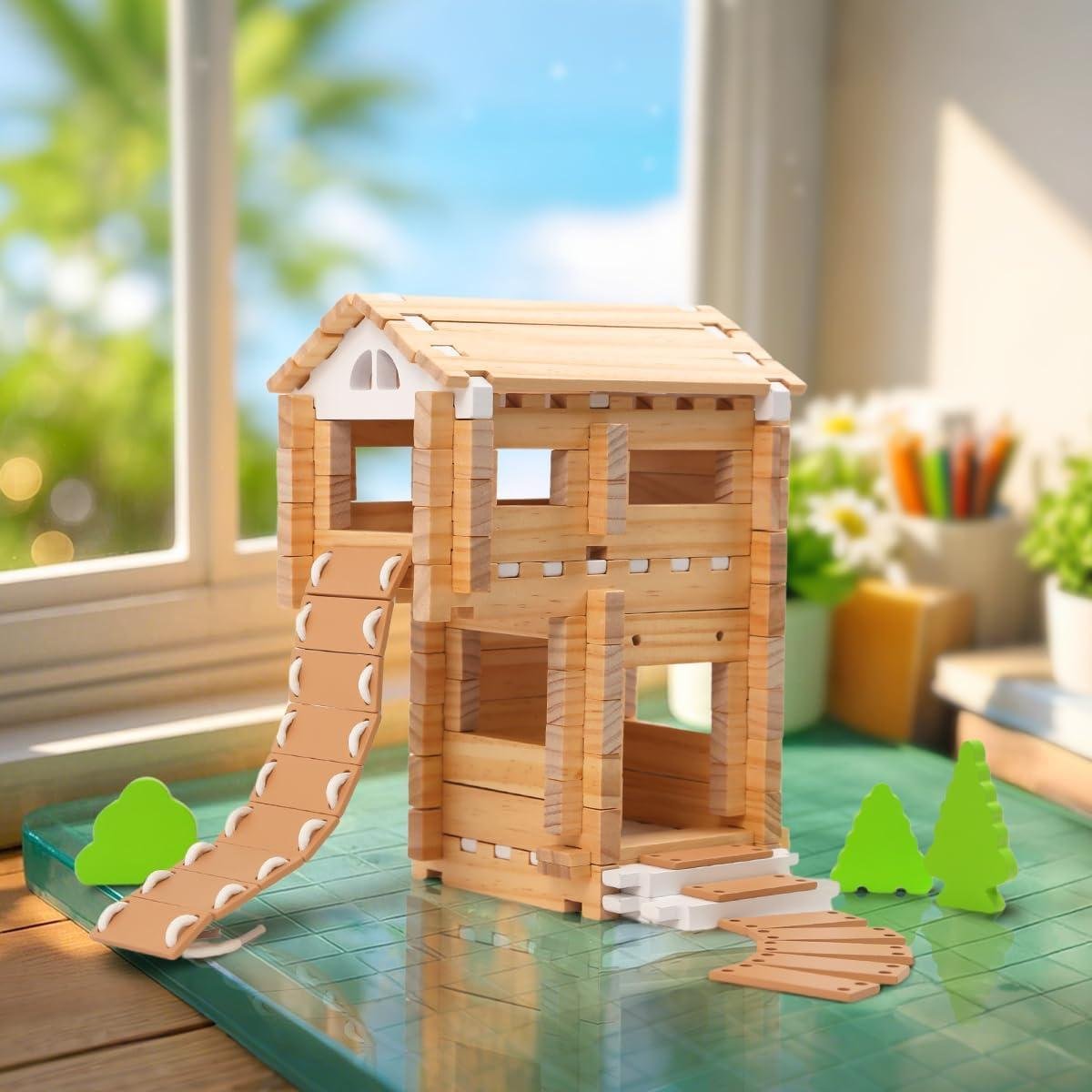
These aren’t “for cutting” wood types like a shop tool—they are the wood. The set is made from New Zealand pine and is listed as FSC certified. Pine is a softwood, so you can expect a lighter feel in the hand and easier stacking/interlocking than denser hardwood toys. Reviews commonly describe the pieces as well made, sturdy, and similar in vibe/quality to Jenga-style wood.
Is this “strong enough” for hardwood-level durability, or will it dent and wear quickly?
Because it’s pine, it won’t have the dent resistance of maple, beech, or oak blocks—softwoods can pick up dings if they’re tossed in a bin or stepped on. That said, multiple customers call it high quality and sturdy, and one review specifically says the blocks feel like they’ll “last a lifetime.” Realistically: long-term durability is very good for a kids’ pine set if you store it dry and avoid hard impacts,but it will show cosmetic wear sooner than a hardwood set.
How difficult is the initial setup—do you need to assemble anything or tune parts?
No shop-style setup is required. It’s a 96-piece wooden building set that comes with an instruction manual and a storage bag. The only “setup” is sorting pieces and learning the connection logic. Reviews are mixed on the directions: some families found the booklet easy for a 6-year-old, while others felt the instructions are mostly photos and could use more explanation—especially for younger kids or first-time builders.
What adjustments or standard accessories does it work with (like other building systems)?
think of it less like a universal “fits standard accessories” system and more like a proprietary mortise-and-tenon style wooden construction set. Several reviewers mention it’s reminiscent of Lincoln Logs but “easier to build with,” and one parent noted it can integrate nicely with train tracks and even pair with magnetic tiles for expanded play scenes. If you want maximum cross-compatibility with other brands, this might potentially be more limited than mainstream interlocking plastic systems.
Will this fit in a small workshop or mixed-use space—and do I need dust collection or power?
It’s workshop-friendly as it needs no electricity and creates no dust in use. the included storage bag is specifically aimed at quick cleanup, which matters if you’re using a shop corner, classroom shelf, or living-room table. Storage guidance from the manufacturer is practical: keep it in a dry, well-ventilated place to prevent humidity-related damage or mold.
Is this suitable for beginners (kids) or does it require advanced building skills?
Skill level depends on age and expectations. It’s marketed for ages 4–8, but one critical review suggests it has more “learning/play functionality” when the child is older than seven. Several parents report younger kids start by copying the pamphlet, then move to imaginative builds and stay engaged “for quite a while.” A good rule: ages 4–6 may enjoy free-building and simple models with adult help; ages 7–8+ tend to get more out of the structural logic and multi-step builds.
What maintenance and safety checks should a woodworker parent/grandparent actually do?
Treat it like any wooden shop-made toy: inspect regularly for damage or sharp edges and discontinue use if you find a problem. The product warning notes small parts and recommends adult supervision; it’s not for children under 3 due to choking hazard. For longevity, keep it away from moisture and heat sources (explicitly: store dry and don’t place near fire). If blocks ever feel rough, don’t sand aggressively unless you’re confident you won’t compromise any finish—basic inspection and proper storage do most of the work.
Is it worth the price compared to cheaper block sets—or should I buy more pieces?
Value feedback is split. Many reviews praise the quality, fit, and the fact it keeps kids off screens; others felt it wasn’t worth the money due to the instruction style and expectations about “open play.” A very consistent practical takeaway: piece count matters. One grandparent bought two sets so kids had enough parts, and another parent said you can “just about” make a house and recommended adding more/buying a bigger set if you want larger builds. If your goal is bigger structures (villages, bridges, multi-room buildings), plan on expanding beyond one 96-piece set.
Ignite Your Passion
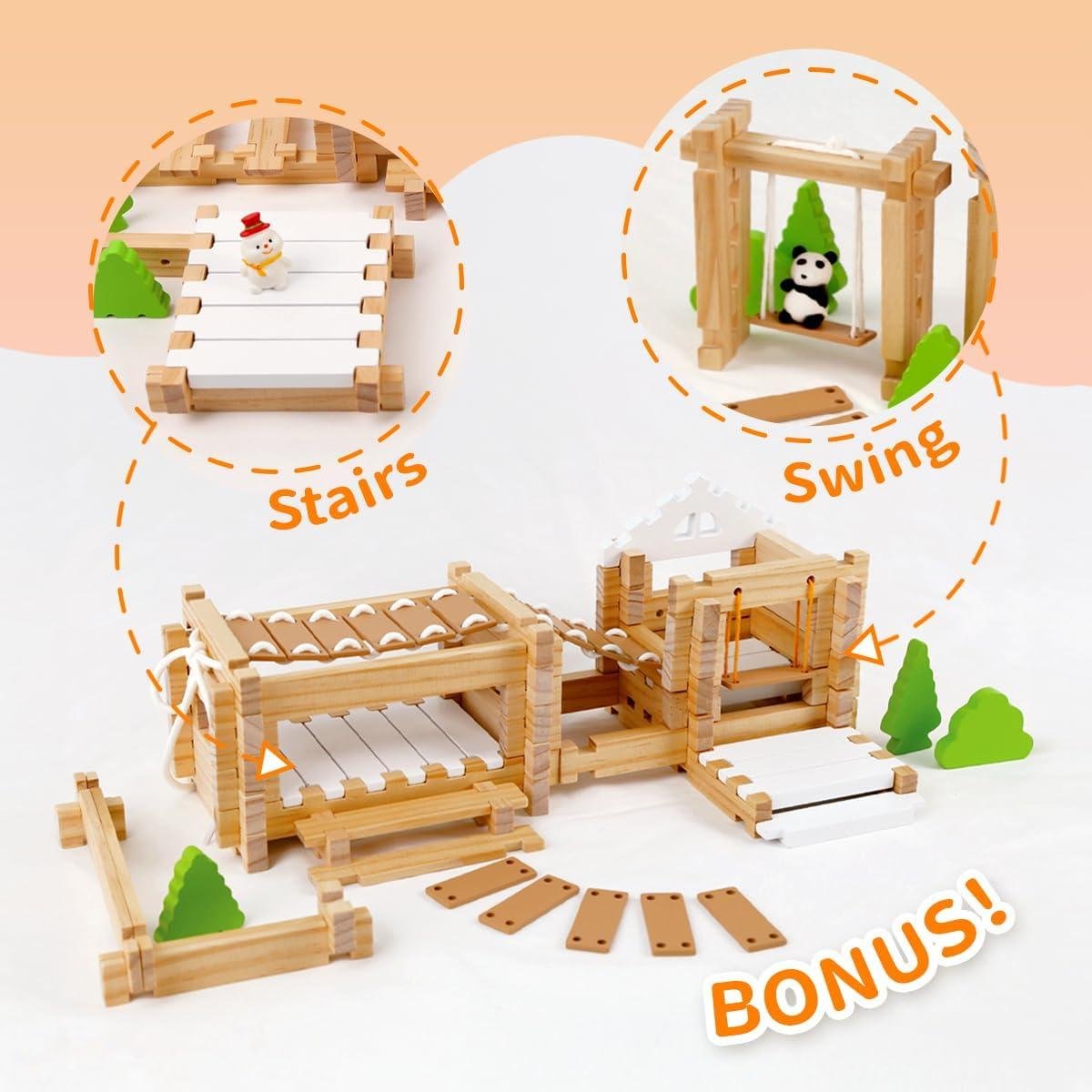
The Jovi-mindly&Notchies 96 PCS Wooden Blocks set isn’t a power tool, but it’s a thoughtfully made “shop-adjacent” learning kit: 96 FSC-certified New Zealand pine pieces with a smooth, splinter-free finish, mortise-and-tenon style connections, a build booklet, and a handy storage bag. Customer feedback consistently highlights sturdy fit, durable wood, and strong screen-free engagement—though a few buyers mention the photo-based instructions feel limited and that younger kids may need help.
Best for hobby woodworkers and DIY parents who want a safe, wood-forward STEM toy for kids (roughly 4–8) and a fun way to introduce joinery concepts during small, low-stakes projects.
Consider alternatives if you need truly open-ended blocks, want more detailed step-by-step plans, prefer a larger piece count for bigger builds, or have children under 3 (small-parts choking hazard).
it’s a solid mid-range option for family workshops: well-made materials and satisfying connections, with instructions that may require adult guidance.
Want to see current pricing and customer photos? view on Amazon & Read More Reviews →