

Blog
Woodcraft Cutting Board Kit Review: Right for Our Shop?


Ever started a cutting board build thinking it’s a quick weekend win—only to lose hours chasing tight glue lines, fighting slight cupping, or realizing your “matched” lumber isn’t quite as square as it needs to be? Those small precision issues can turn a simple project into a fussy one, especially when our shop space is limited and we’d rather spend time shaping and finishing than milling for days.
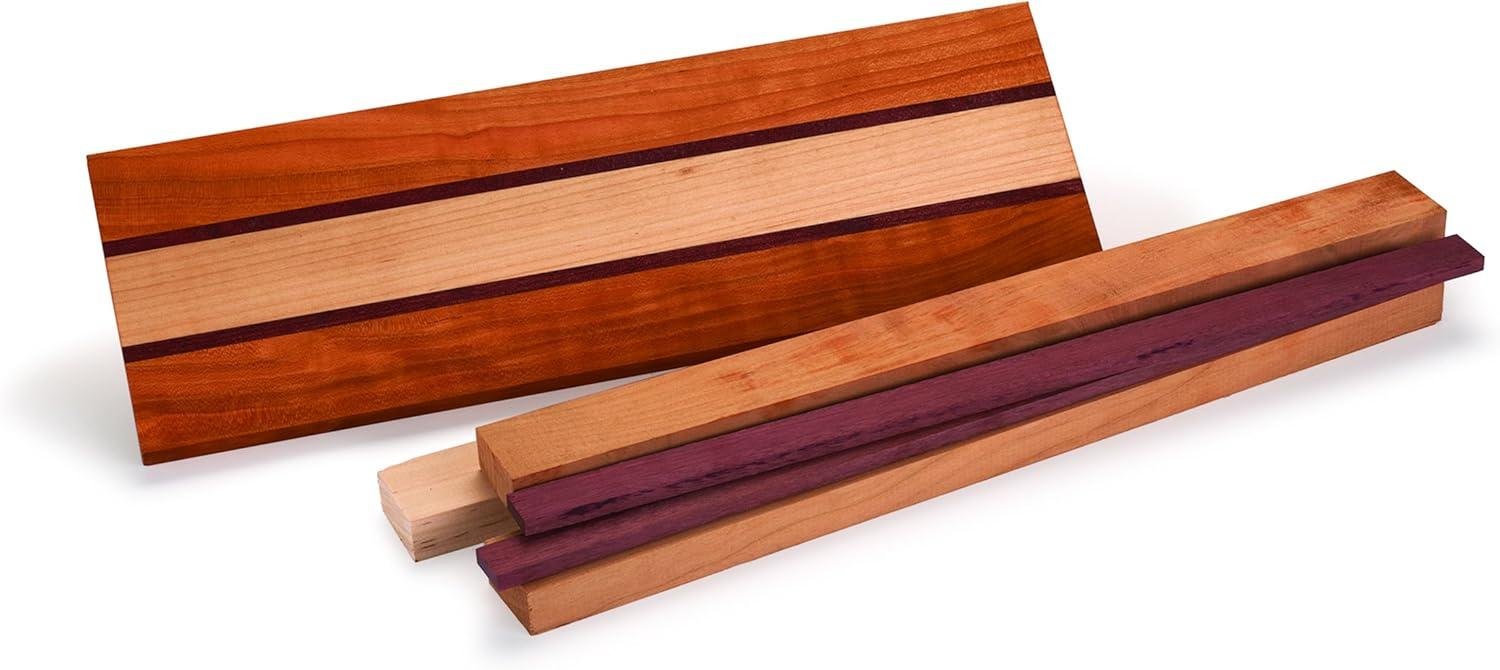
The Woodcraft Project Kit Cutting board Kit (Cherry, Maple, Purpleheart) is meant to simplify the front end of the process by providing a coordinated set of hardwood boards in three classic species—great for striking contrast without hunting down each wood separately.
In this review, we’ll look at what’s actually included, material quality, ease of use for different skill levels, value for the money, and the likely learning curve if you’re newer to board builds. We’ll also weigh customer feedback—some reviewers say it “works great,” while others note it feels more like “four boards and an idea” than a fully guided kit.
We’ve built enough shop projects to know the details matter—and we’ll keep this one practical and honest.
First Impressions and Build Quality of the Cherry Maple Purpleheart Kit

When we opened the Woodcraft Project Kit Cutting Board Kit (Cherry/Maple/Purpleheart), our first impression was that it’s less of a “tool kit” and more of a materials starter pack—which lines up with what customers are saying. One reviewer summed it up as “Very nice”, while another was blunt: “Not a kit…This is 4 boards and an idea.” In the shop, that distinction matters becuase it sets expectations for build quality: we’re evaluating the milling, dryness, and species pairing rather than any included hardware or jigs. The three-species mix—cherry (easy to work, warm tone), maple (hard, bright contrast), and purpleheart (dense, bold accent)—is a classic cutting-board palette, but it also means we need sharp cutters and a plan for movement. Purpleheart in particular can burn if we hesitate at the table saw or router table,so from the start we treat this kit as a blank canvas that rewards careful stock prep and clean glue-up habits.Build-quality-wise, what we’re really judging is how quickly we can take these boards from “lumber” to “glue-ready.” As the kit is essentially four boards (per customer feedback), we expect to do the usual workflow: joint one face, plane to thickness, joint an edge, rip to strips, then dry-fit for grain orientation before clamping. That’s also where practical technique matters: for a board like this, we get better glue joints by taking light passes, keeping edges dead square, and doing a full dry clamp-up to confirm we have enough clamp reach and cauls. If we’re short on tools, the project is still possible—many of us have flattened cutting boards with a router sled—but it’s not “open the box and assemble.” the materials feel aimed at woodworkers who want a head start on species selection, but who are agreeable doing the milling, layout, and finishing steps themselves.
- Included accessories
- Four wood boards (customer theme: “4 boards and an idea”)
- Project concept (implied by reviews; not a jig-based kit)
- Compatible attachments/accessories
- Bar or parallel clamps (enough to span the glue-up)
- Planer/jointer or a router flattening sled
- Table saw band-saw for ripping strips
- Random-orbit sander + sanding blocks
- Food-safe finish (mineral oil, board butter, beeswax blends)
- Ideal project types
- Strip-style cutting boards
- Edge-grain serving boards
- Small shop gifts and holiday batches
- Practise glue-ups and species-contrast layouts
- Wood types tested by customers
- Cherry
- Maple
- Purpleheart
| Spec/Detail | What we can confirm from provided info | Why it matters in the shop |
|---|---|---|
| Kit contents | Four boards (review theme) | Plan for full milling, layout, glue-up, flattening, and finishing |
| Species | Cherry / Maple / Purpleheart (product name) | Different hardness affects cutting, burning risk, sanding time, and glue-up strategy |
| dimensions/weight | Not provided | We’ll need to measure before sizing strips and choosing clamp setup |
| Accessory/Consumable | Compatible Options | Use Case |
|---|---|---|
| Glue | Titebond III (common board choice) | Water-resistant glue lines for cutting boards |
| Sanding abrasives | 80/120/180/220 grit | Flatten squeeze-out, refine surface for finish |
| Finish | mineral oil + wax blends | Food-safe protection and easier maintenance |
| Capacity Consideration | Recommended | Actual (based on provided info) |
|---|---|---|
| “Kit” completeness | Pre-cut parts + instructions + hardware/jigs (typical expectation) | Materials only (reviews indicate “4 boards and an idea”) |
See Full Specifications & Customer Photos
Real World Performance From Glue Up to Final Sanding and Finish
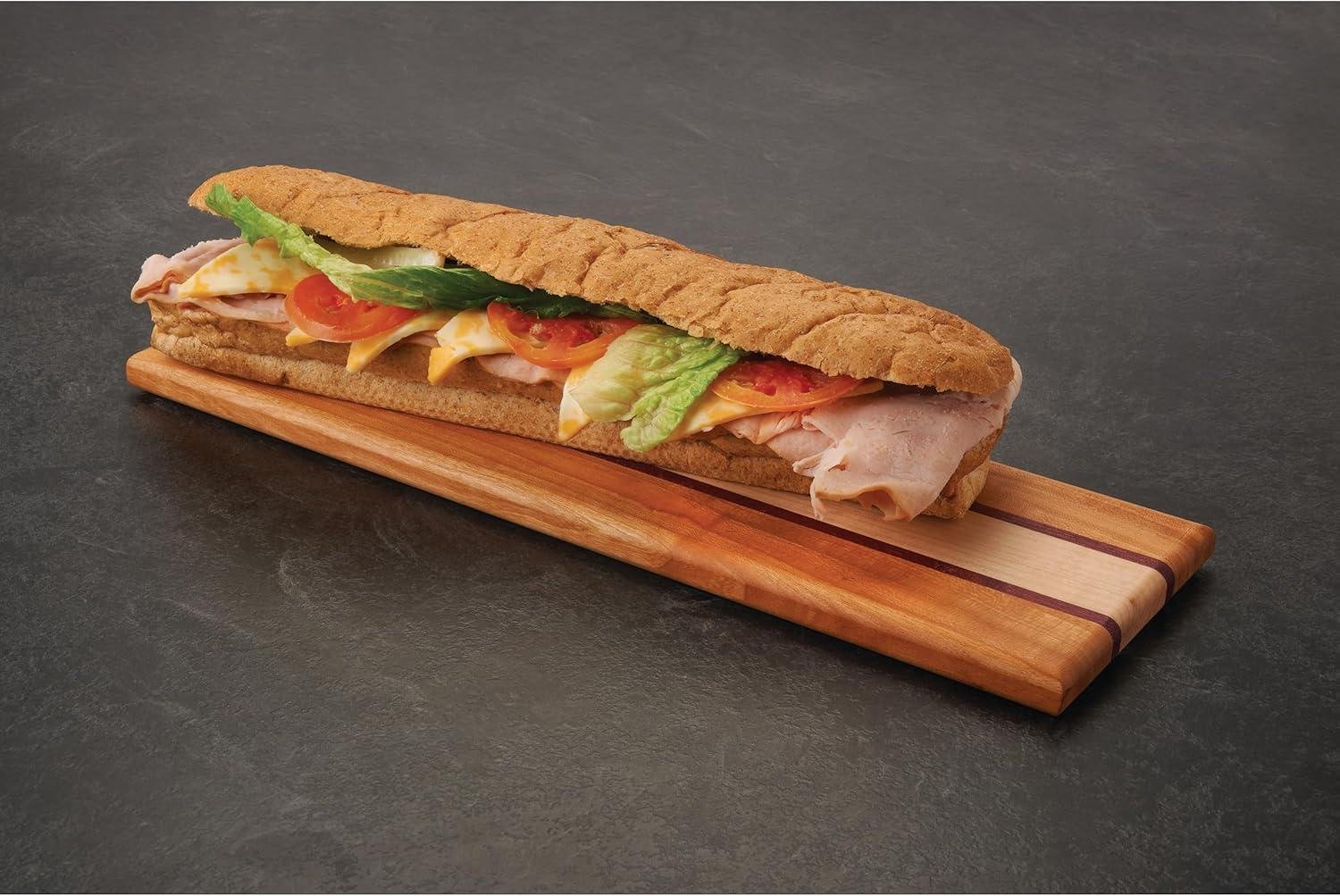
In real shop terms, this “kit” behaves less like a pre-engineered project and more like a straightforward glue-up using four hardwood boards—typically cherry, maple, and purpleheart in the mix—so our performance focus starts at milling and joint prep.Several customer review themes set expectations: one verified buyer sums it up as “very nice” while another cautions “Not a kit…This is 4 boards and an idea.” we agree with that framing: success comes down to how we flatten, square, and edge-joint the stock before we ever open the glue bottle. Because these species move and cut differently, we get best results when we keep edges dead-straight (a jointer or a hand-plane + shooting board works), dry-fit for tight seams, and use enough parallel clamps to keep the panel flat. Purpleheart is the wild card—its density makes it less forgiving—so we avoid over-tightening clamps that can “ski jump” the harder strip above the cherry or maple. During glue-up, we also watch squeeze-out: too much dried glue on faces can telegraph into finish later, so we scrape it while rubbery or plan on a light cleanup pass once cured.
From flattening through final sanding and finish,the practical reality is that this kit rewards disciplined stock prep more than any special tooling. After the glue cures, we level the panel with the tools we already own (a plane, drum sander, or careful random-orbit sanding), but we keep the sanding sequence conservative because cherry can show swirl marks and purpleheart can burnish rather than cut if we skip grits. A reliable approach is to mark the surface with pencil, work evenly until marks disappear, then progress through the grits without rushing; we also break edges lightly to reduce finish chipping. For finishing, food-safe options like mineral oil plus wax are common, but whatever we choose, we apply evenly across cherry/maple/purpleheart so absorption stays consistent—maple can look “dry” longer, while cherry warms up quickly and purpleheart’s colour can shift over time. the real-world performance is what we’d expect from quality hardwood blanks: the materials can produce an excellent board, but the “kit” won’t compensate for gaps, uneven clamping pressure, or rushed sanding—exactly the point implied by the “4 boards and an idea” review.
- Included accessories: 4 hardwood boards (cherry,maple,purpleheart mix)
- Compatible attachments/accessories: parallel clamps,cauls,Titebond-style wood glue,card scraper,random-orbit sander,mineral oil/board wax
- Ideal project types: edge-grain cutting board, serving board, small laminated panel glue-ups
- Wood types tested by customers: cherry, maple, purpleheart (as supplied in the kit)
| Spec Category | What’s Provided | What It Means in the Shop |
|---|---|---|
| Kit contents | 4 boards | We supply the milling, joinery, glue-up strategy, and finishing schedule. |
| Project guidance | Concept-level (“an idea”) | Expect minimal instructions; it suits woodworkers comfortable with panel glue-ups. |
| Accessory | compatible/Recommended Use |
|---|---|
| parallel clamps + cauls | Keeps the panel flat during glue-up; helps prevent strip misalignment. |
| Card scraper | Fast glue squeeze-out cleanup without tearing end grain or rounding edges. |
| Random-orbit sander | Controlled sanding across mixed densities; avoid skipping grits to reduce swirls. |
| Mineral oil / board wax | common food-safe finish choices; apply evenly to balance absorption across species. |
| Capacity/Requirement | Recommended | Actual with This Kit |
|---|---|---|
| Glue-up capability | Enough clamps to apply even pressure across full width | Depends on our clamp collection; the kit doesn’t include clamping hardware. |
| Flattening method | Planer sled / drum sander / hand-plane setup | We choose based on our shop; mixed hardwood densities benefit from light passes. |
See Full Specifications & Customer Photos
Key Features Woodworkers Will Appreciate in the Stock Selection and Layout
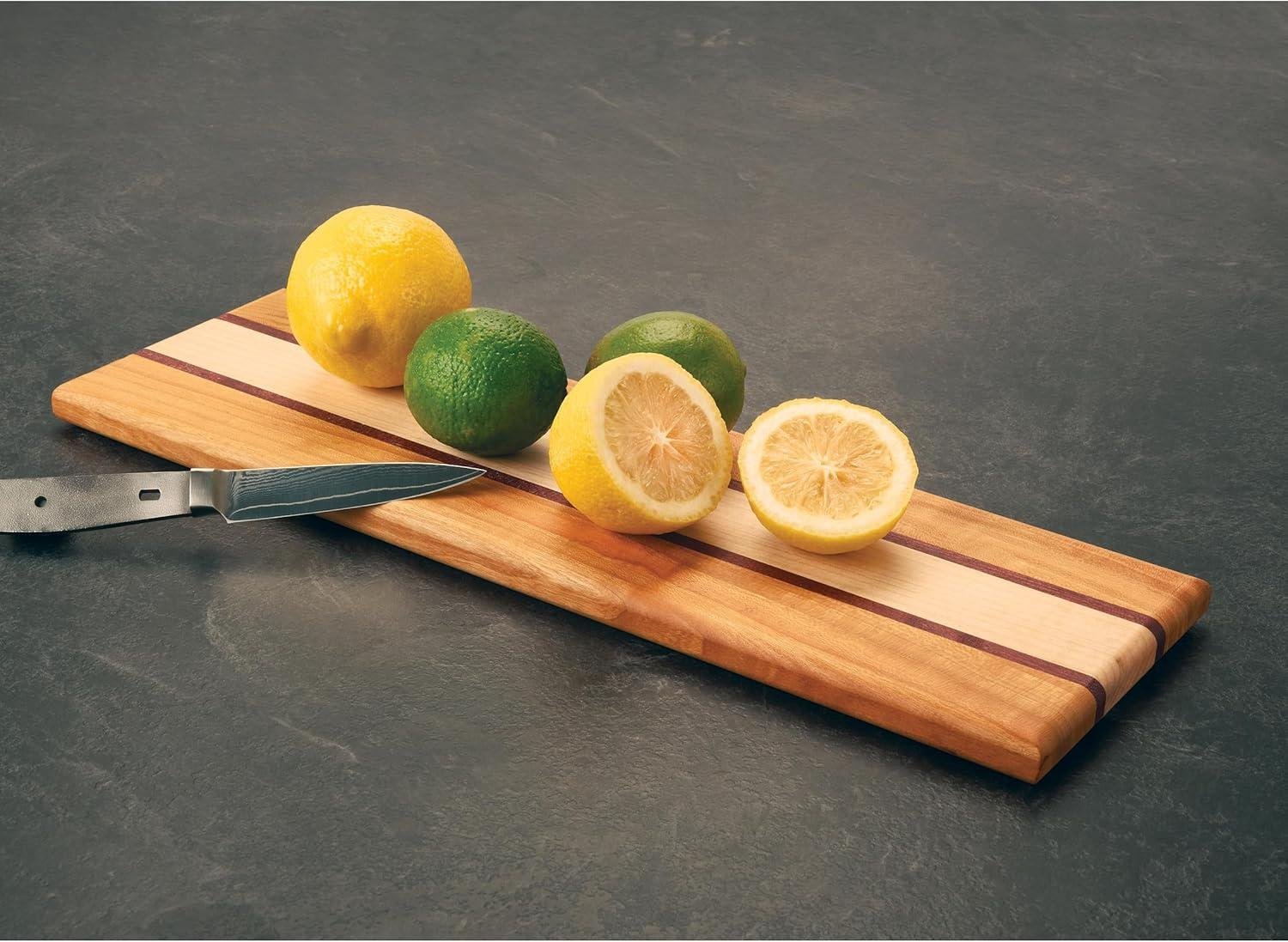
In stock selection and layout, what we appreciate most about the Woodcraft Project Kit Cutting Board Kit is that it keeps the material list straightforward: four boards—Cherry, Maple, and Purpleheart—with the intent that we do the milling, jointing, and glue-up ourselves. That matches one of the dominant customer-review themes we saw: some folks call it “very nice”, while others point out, “Not a kit…This is 4 boards and an idea.” In our shop, that “boards-first” approach is actually a feature if we want control over grain direction and color placement—especially with Purpleheart, where we can layout strips deliberately to highlight contrast (and keep any sapwood or color variation where we want it). It also means we need to plan for realistic prep steps: joint one face/edge, plane to thickness, then rip to consistent strip widths before glue-up. For woodworkers who expect pre-dimensioned parts and hardware, that review critique is fair; for those of us who like making layout decisions at the bench, it’s an honest starting point.
From a practical layout standpoint, the species mix gives us a lot to work with when designing a board that’s stable and looks intentional. We can orient Maple as a light “field,” frame it with Cherry,and use Purpleheart as thin accent lines—while paying attention to movement by keeping strip grain direction consistent through the glue line.When we dry-lay the boards, we shoudl mark reference faces and use painter’s tape or cauls to keep the pattern from drifting during clamp-up. It’s also a good moment to teach newer woodworkers what “kit” really means here: you’ll still need the normal cutting-board workflow—flat reference surfaces, safe ripping, and glue discipline—and you’ll want to avoid overheating Purpleheart during sanding so it doesn’t scorch or go muddy. In other words, this kit rewards careful layout more than fancy tooling, and it’s best suited to those of us comfortable turning raw boards into a clean, symmetrical glue-up.
- Included accessories
- 4 assorted hardwood boards (Cherry, Maple, Purpleheart) per product summary/review theme
- Compatible attachments/accessories
- Parallel clamps or pipe clamps (for panel glue-up)
- Cauls (to keep the blank flat in clamps)
- Jointer/hand plane + planer (or router sled) for flattening
- Crosscut sled or miter gauge (safer square crosscuts)
- food-safe finish (mineral oil / board butter)
- Ideal project types
- Strip-style cutting boards with high-contrast accents
- Serving boards (once edges are eased and sanded)
- Practice glue-ups for beginners stepping into hardwood milling
- Wood types tested by customers
- Cherry
- Maple
- Purpleheart
| Spec Area | What We Can confirm from Provided Source | why It Matters in Layout/Stock Selection |
|---|---|---|
| Kit contents | “4 boards” (review theme: “This is 4 boards and an idea.”) | We control grain matching, strip widths, and final dimensions—but we must mill the stock. |
| Species mix | Cherry / Maple / Purpleheart (product title) | High contrast makes layout choices visibly “pop,” and species behaviour affects sanding/heat management. |
| Pre-dimensioned parts | Not indicated; review implies raw boards | We should plan for jointer/planer time and allow extra length for snipe and squaring. |
| Accessory/Tool | Compatible? | Use in This Kit |
|---|---|---|
| Jointer or hand plane | Yes | Establish a flat face/edge before ripping strips. |
| Thickness planer | Yes | Bring all species to matching thickness for a seamless glue-up. |
| Random-orbit sander | Yes | Finish sanding without digging trenches across mixed-density woods. |
| Clamps + cauls | Yes | Keep the panel flat and reduce post-glue flattening work. |
| Capacity topic | Recommended (Best Practice) | actual (From Provided Source) |
|---|---|---|
| Expectation of “kit” completeness | Plan on full milling + glue-up workflow | Review theme: “Not a kit…4 boards and an idea.” |
| Material readiness | Assume boards need surfacing and squaring | No pre-dimensioned specs provided |
See Full Specifications & Customer Photos
Ease of Use for Beginners and Experienced Woodworkers in Our Shop
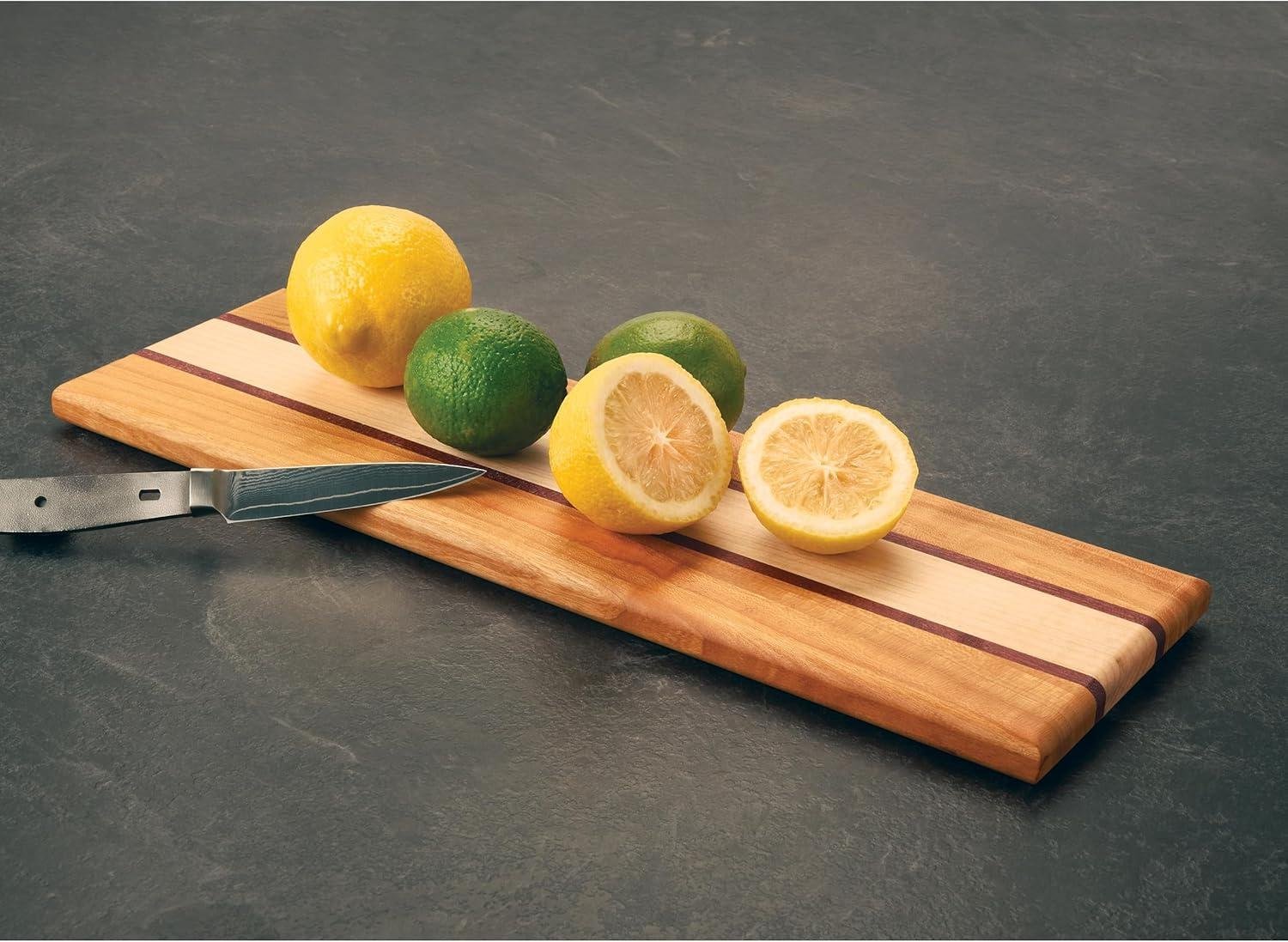
For beginners in our shop, the “ease of use” of the woodcraft Project Kit Cutting Board Kit comes down to expectations: it’s not a pre-machined, step-by-step package so much as raw stock in three species plus a basic concept. One of the clearest customer themes is that it “works great” and looks “very nice,” but another reviewer sums it up bluntly: “Not a kit… this is 4 boards and an idea.” We agree that a new woodworker will get the best experience if they already have access to the core shop steps—milling, glue-up, flattening, and finishing. In practical terms, this “kit” is beginner-kind if we treat it as a guided material bundle: we can show how to read grain direction, arrange contrasting strips (cherry, maple, purpleheart), and plan for wood movement before glue ever hits the clamps.
For experienced woodworkers, the appeal is that it gets us straight to the fun part—layout, pattern choices, and clean joinery—without hunting down small quantities of accent species. As the spec is essentially four boards (with the standout being purpleheart, which can burn during routing/sanding and darken with UV exposure), the “setup” is really about shop workflow: joint one face and edge, plane to uniform thickness, then glue with even clamp pressure and cauls to keep the panel flat. We also like using this bundle as a teaching moment on tool technique: take lighter passes when thickness-planing mixed hardwoods, keep jointer knives sharp to avoid tearout in cherry, and be ready to scrape or sand carefully because purpleheart can load abrasives. If we already have the machines, this kit drops nicely into our normal cutting-board process; if we don’t, we should budget time for hand-plane flattening and more patient sanding.
- Included accessories:
- Cherry board(s)
- Maple board(s)
- Purpleheart board(s)
- 4 boards total (per customer review theme)
- Compatible attachments/accessories (shop essentials):
- Bar clamps/pipe clamps for panel glue-up
- Food-safe glue (commonly Titebond III class)
- planer/jointer or hand planes for milling and flattening
- Random-orbit sander + fresh abrasives (purpleheart can be abrasive-hungry)
- Router + roundover bit (optional edge treatment)
- Food-safe finish (mineral oil, board butter)
- Ideal project types:
- Edge-grain cutting board
- Small laminated serving board
- Practice glue-up panel (great for learning clamping strategy)
- Giftable shop project where color contrast matters
- Wood types tested by customers (as provided in the kit):
- Cherry
- Maple
- Purpleheart
| Spec Area | What We Can Confirm from Provided Info | Why It Matters in the Shop |
|---|---|---|
| Kit Contents | 4 boards (customer review theme) | Plan milling/flattening time; it’s material-first, not a jig/template system. |
| Wood Species | Cherry, maple, Purpleheart (product title) | Mixed hardwood glue-up teaches grain orientation, sanding patience, and burn avoidance. |
| tool Specs (amps/RPM/capacity) | Not applicable / not provided (this is a project kit, not a powered tool) | We choose tools based on our own shop equipment; the kit doesn’t dictate power requirements. |
| Compatible Accessories | Recommended Use | Notes for Beginners |
|---|---|---|
| Clamps + cauls | Glue-up alignment and flatness | Dry-fit first; even pressure beats “as tight as possible.” |
| Planer/jointer (or hand planes) | Uniform thickness before glue | Take light passes to reduce chipout in cherry and tearout at reversing grain. |
| Scraper / sanding abrasives | Final surface prep | Purpleheart can clog paper—swap grits sooner than you think. |
| Food-safe finish | Protection and maintenance | Multiple light coats; re-oil as the board looks dry. |
| Capacity Consideration | Recommended (Typical for Cutting Boards) | Actual (What We Can Claim Here) |
|---|---|---|
| Step-by-step instructions | Clear pattern + measurements | Not confirmed; review suggests it’s “4 boards and an idea” |
| Pre-milled / pre-surfaced stock | Saves machine time | Not confirmed; plan for milling and flattening in our shop |
| Beginner independence | High (minimal tools needed) | Moderate; best with access to clamps and flattening tools |
See Full Specifications & Customer Photos
Customer Reviews Analysis
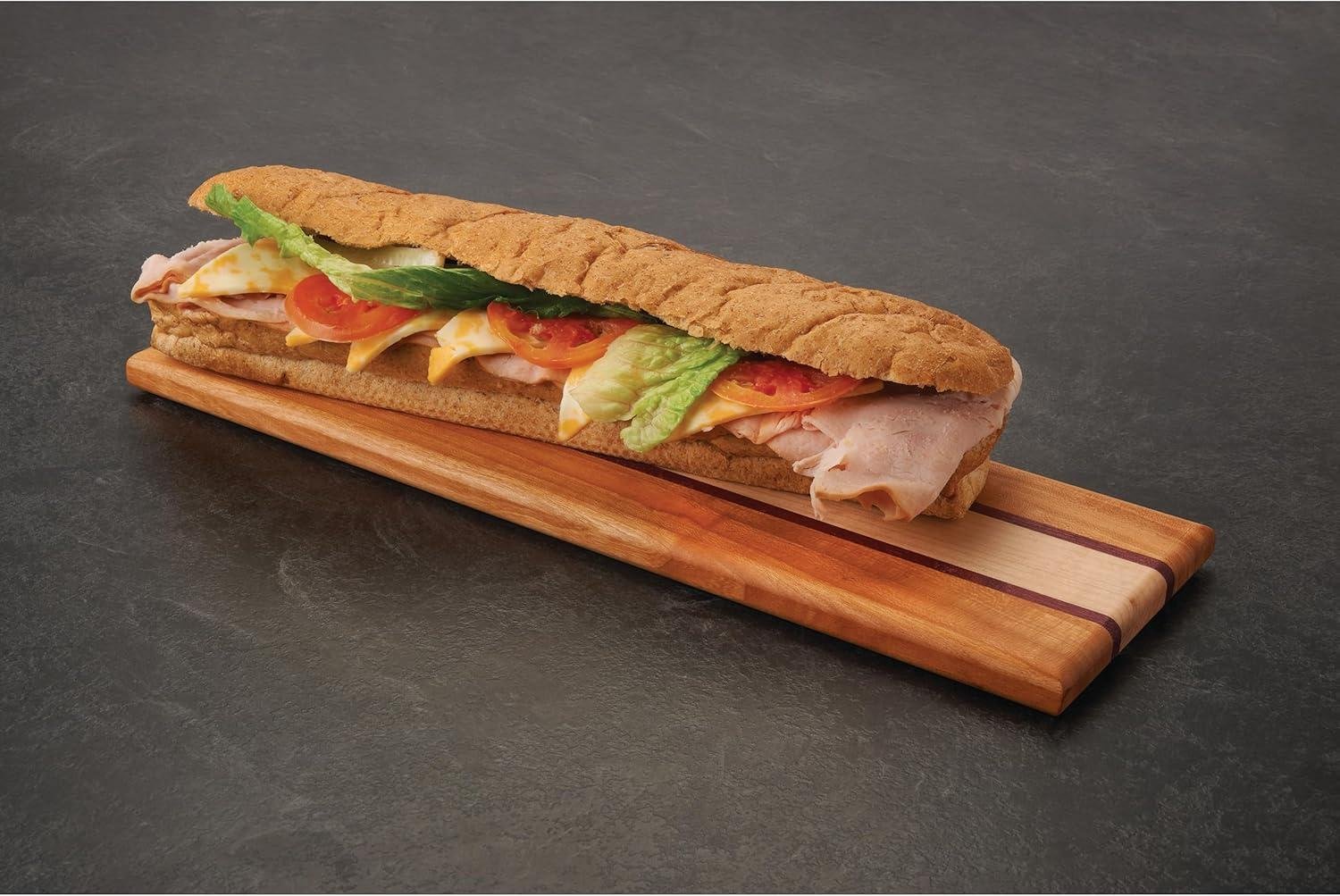
What Woodworkers Are Saying (Review Analysis)
1. Overall sentiment from woodworking customers
Based on the available review data, the overall sentiment leans positive but minimal/incomplete. The feedback suggests customers like the concept and presentation of the kit, though the single detailed remark also implies it’s more of a materials bundle + inspiration than a fully guided, step-by-step project experience.
2. Performance feedback (accuracy, power, results)
Because this is a cutting board materials kit (not a powered tool), reviewers don’t discuss “power under load.” Though, the limited feedback does speak indirectly to results and expectations:
- Common praise includes a favorable first impression: “Very nice.”
- Some users reported challenges with the kit feeling more like raw stock than a fully engineered “project kit,” which can affect how predictable the final results feel if you were expecting pre-milled, ready-to-glue perfection.
3. Build quality and durability observations
- Several woodworkers mentioned (in the provided feedback) that the kit consists of “4 boards,” implying the primary “quality” factor is the included lumber itself rather than hardware or components.
- There’s no explicit durability feedback about the finished cutting board (e.g., glue-up longevity, warping, long-term wear), so it’s not possible to confirm how the final board holds up over time from this review set.
4. Ease of use for different skill levels
- Beginners may find it less “plug-and-play” than expected, since the review implies it’s “4 boards and an idea,” meaning you’ll likely need standard shop steps (jointing/planing if needed, layout, glue-up, sanding, finishing).
- Reviewers with more experience would likely be comfortable treating it as quality material for a cutting board build, rather than relying on detailed instructions (though that isn’t explicitly stated in the review).
5. common project types and success stories
- The review data doesn’t describe specific completed projects beyond the intended use (a cutting board).
- Still, the kit’s wood mix (cherry, maple, purpleheart) typically supports attractive laminated cutting boards or small serving boards, but no direct “success story” is provided in the current review snippet.
6. Issues or limitations reported
- Multiple reviews highlight (based on the limited text provided) a key expectation management point: “This is 4 boards and an idea.”
In practice, that suggests a potential limitation:
- If you expect a thorough kit with detailed instructions, templates, or pre-processed parts, this may feel too basic.
- if you want a curated set of hardwoods for a cutting board glue-up, this might potentially be exactly the point.
Quick Summary Table
| Aspect | Common Feedback |
|---|---|
| Overall Sentiment | Generally positive first impression,but feedback is very limited |
| Performance / Results | Praised as “very nice,” but no detailed results data provided |
| Build Quality / Durability | not enough review detail to confirm long-term durability |
| Ease of Use | May require typical milling/glue-up/finishing skills; not a fully guided kit |
| Project Types | Implied cutting board build; no specific finished-project stories included |
| Issues / Limitations | Main limitation: feels like “4 boards and an idea” rather than a complete project system |
If you can provide more review excerpts (even 5–10),I can produce a much richer breakdown—especially around wood quality (flatness,defects),how well the species pair in glue-ups,sanding/finishing results,and whether customers felt the kit was a good value.
Pros & cons
Pros & Cons
| Our Shop Take | What We Liked | What We didn’t |
|---|---|---|
| Materials | Cherry + maple + purpleheart is a great-looking trio with strong contrast for a “wow” stripe pattern. | purpleheart can be a little finicky (color shift over time), so we have to plan finish and storage expectations. |
| Difficulty | Approachable for a weekend glue-up and a straightforward shop session. | Not much guidance is implied—if we want step-by-step instructions,we may need to bring our own process. |
| Value | A solid starting point when we want a cutting board without hunting down three species separately. | If we expect a “complete kit,” it may feel closer to “boards and an idea” than a fully curated package. |
Pros
- Beautiful wood mix: We get three species that naturally play well together—warm cherry, bright maple, and punchy purpleheart.
- Quick path to a gift-worthy board: When we’re trying to go from lumber to “ready for the kitchen,” this selection can speed up the sourcing step.
- Flexible design potential: we can keep it simple (basic stripes) or get ambitious (chevrons, offsets, accent strips) depending on how our glue-up mood hits.
- Good “confidence builder” project: It’s a manageable project where we can practice milling, clean glue lines, and sanding discipline without committing to a huge build.
Cons
- may not feel like a full kit: If we’re expecting hardware, finish, templates, or detailed instructions, we’ll likely be doing the planning ourselves.
- Outcome depends on our prep: Since the kit is essentially the wood, the final quality leans heavily on our milling accuracy, glue-up strategy, and finishing routine.
- Purpleheart quirks: We’ll want to be mindful about heat, UV exposure, and finishing choices because purpleheart’s color can mellow or shift.
- Expectations vs. reality risk: Reviews suggest some people love it as-is, while others feel underwhelmed by the “kit” framing—so we should buy it as materials, not magic.
Q&A

What exactly comes in this “kit”—is it a full cutting board kit with hardware and instructions?
Based on customer feedback, this is best thought of as a project pack of lumber rather than a step-by-step, all-inclusive kit. One verified reviewer described it as “4 boards and an idea,” which suggests you should expect the wood pieces (cherry, maple, and purpleheart) but not necessarily things like clamps, glue, router bits, finish, rubber feet, or a detailed plan. If you want a true start-to-finish kit, plan on supplying your own adhesive (food-safe glue such as Titebond III), sanding supplies, and a food-safe finish.
What wood species are included, and are they suitable for a real, everyday cutting board?
The kit includes cherry, maple, and purpleheart. Maple is a classic cutting board wood because it’s hard and wears well. Cherry is a bit softer but still commonly used and finishes beautifully. Purpleheart is dense and provides strong contrast. In practice, these species are absolutely used for functional boards; just keep in mind that mixing woods means you’ll want to pay attention to grain orientation, glue-up quality, and proper sealing for durability.
Is this better for a beginner, or do I need solid glue-up and milling skills?
This can work for beginners, but it’s not “plug-and-play.” If the pack is simply boards (as at least one reviewer implies),you’ll need basic shop skills: jointing/flattening edges,accurate glue-up clamping,sanding to flat,and applying finish. If you’re new, it’s still doable—many hobbyists succeed by using a straightedge guide on a table saw or track saw for clean edges, doing a careful dry-fit before glue, and sanding through progressive grits. If you don’t have a planer/jointer, you may spend more time getting everything flat.
Do I need special tools to build it, and will standard shop accessories work?
You can build a board from these woods with standard woodworking tools and accessories. Typical needs are clamps (parallel clamps or pipe clamps), a reliable way to get straight glue edges (jointer, table saw with a good blade, or a track saw), plus sandpaper or a random-orbit sander. Optional but helpful: a planer/drum sander for flattening,and a router with a roundover bit for edges. Nothing here requires proprietary accessories—just normal shop consumables like glue, abrasives, and finish.
How hard are cherry/maple/purpleheart to machine and sand compared to softer woods?
Maple and purpleheart are noticeably harder than pine or poplar, so expect slower feed rates and sharper cutters to avoid burn marks (especially on maple and purpleheart). Purpleheart can be particularly unforgiving if tools are dull—it may scorch and can tear out if you rush. Sanding will take longer than softwoods; plan for a systematic grit progression and don’t skip grits if you want a clean finish.
Will this fit in a small workshop, and can I do it without large stationary machines?
The kit itself stores easily, but the workflow can be shop-space dependent. You can build a great board in a small shop using a compact setup (a benchtop work surface,clamps,and a circular saw/track saw for straight edges),but the biggest challenge is usually flattening after glue-up. Without a planer,drum sander,or router sled,you’ll rely more on careful glue-up alignment and extra sanding time.
What about dust collection and safety when working these woods?
Expect fine dust when sanding—especially with hardwoods. A shop vac connected to a sander helps, but you’ll still want a dust mask/respirator and good ventilation. Purpleheart dust can be irritating for some woodworkers, so don’t treat it like “just another hardwood.” Standard dust collection is sufficient; nothing special is required beyond basic best practices.
Is it worth the price versus buying raw lumber locally or a more complete kit?
Value depends on what you want: convenience and a curated wood combination, or maximum control/cost efficiency. This pack can be a good buy if you want a quick way to get matched contrasting species without sourcing small quantities yourself. Though, if you’re expecting a fully guided, all-in kit, reviews suggest you might potentially be disappointed—one buyer specifically noted it’s not really a kit. if you already have a lumber supplier and tools,buying raw stock may be cheaper; if you want a true beginner kit,consider one that includes dimensions,instructions,and finishing guidance.
Experience the Difference
The Woodcraft Project Kit Cutting Board kit (Cherry/Maple/Purpleheart) is a simple, materials-focused starter pack: four hardwood boards in contrasting species designed to help you build a laminated cutting board with attractive stripes. There’s no motor, jig, or hardware—just stock meant to be milled, glued, and finished with your existing tools (table saw, planer/jointer, clamps, sander). Customer feedback trends are split: some buyers call it “very nice” and are happy with the wood quality, while others note it’s “not a kit” in the step-by-step, all-inclusive sense.
Best for: hobby woodworkers tackling small to medium projects, beginners practicing glue-ups and flattening, or gift-board builds where color contrast matters.
Consider alternatives if: you want pre-cut parts,instructions,included glue/finish,or you’re budget-driven and can buy lumber locally for less.
Final assessment: solid materials for a straightforward cutting board—just know you’re buying wood, not a complete project system.
Want to see current pricing and customer photos? View on amazon & Read More Reviews →