

Blog
NLBFOU Hot Knife Foam Cutter Review: Fit Our Shop?

Ever tried roughing out a jig, template, or insulation-backed build and ended up with ragged foam edges, melted craters, and a shop full of static-clinging crumbs? In a small woodworking space, that kind of mess slows us down fast-and precision matters when foam is standing in for a pattern, a mock-up, or a clean channel for wiring.
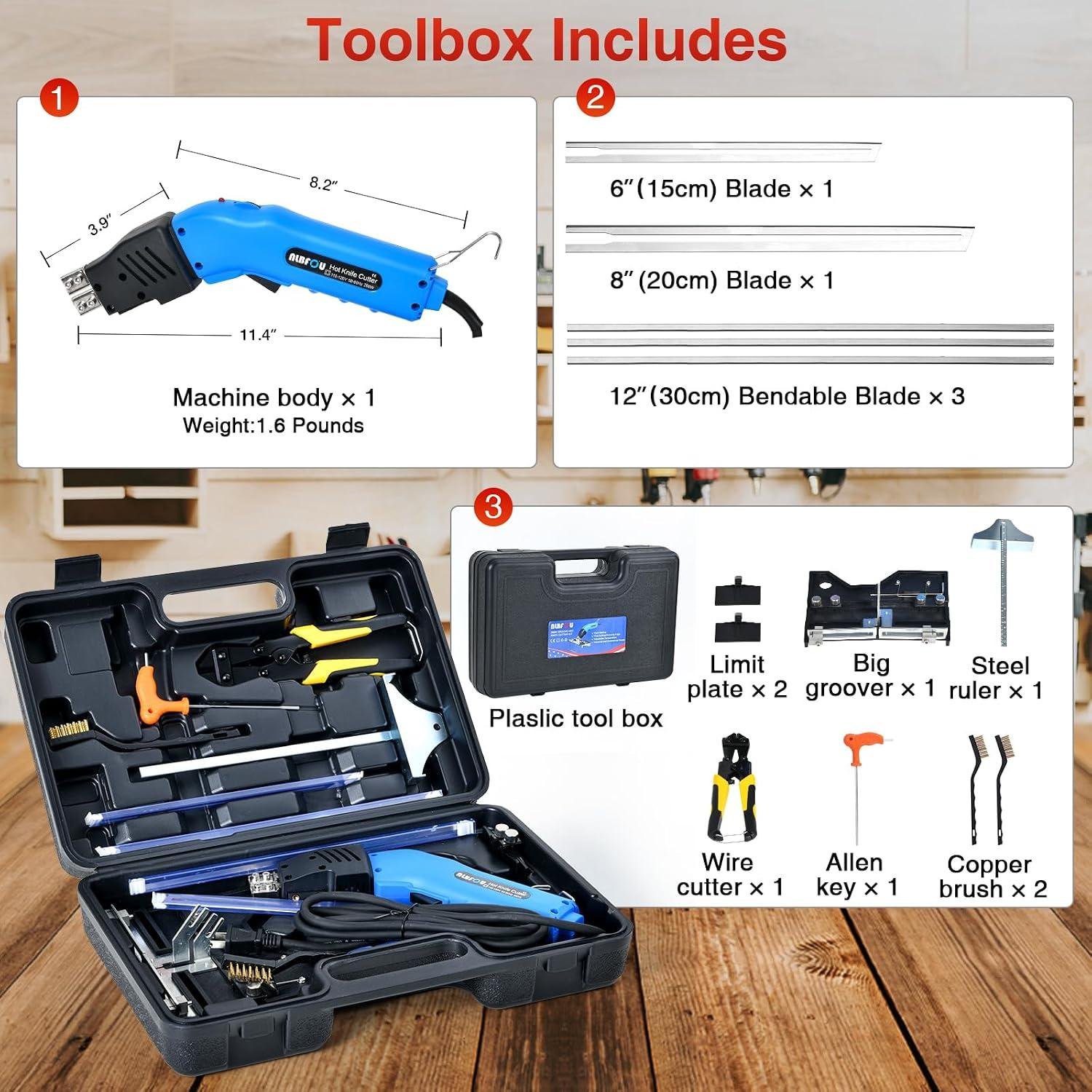
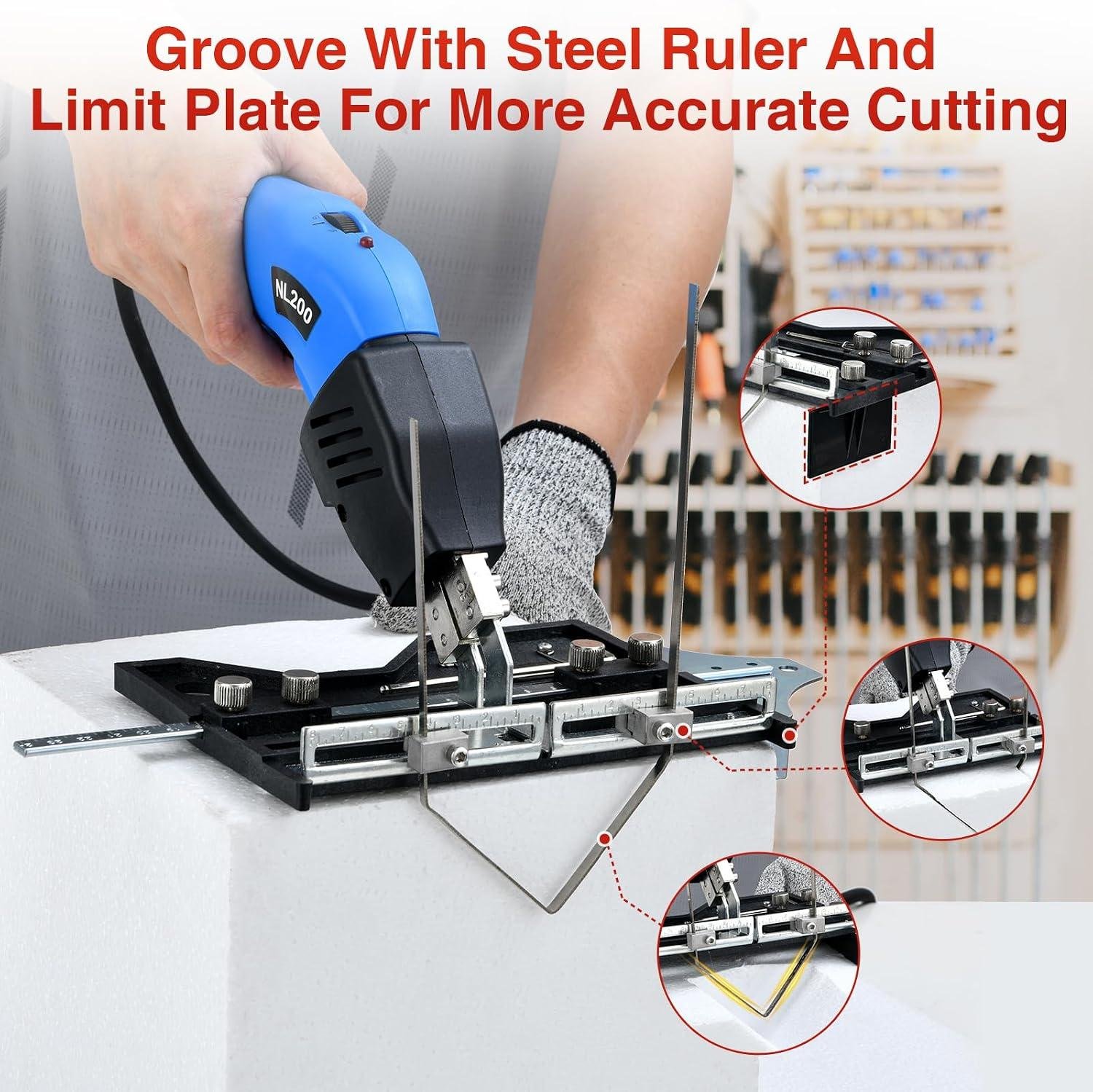
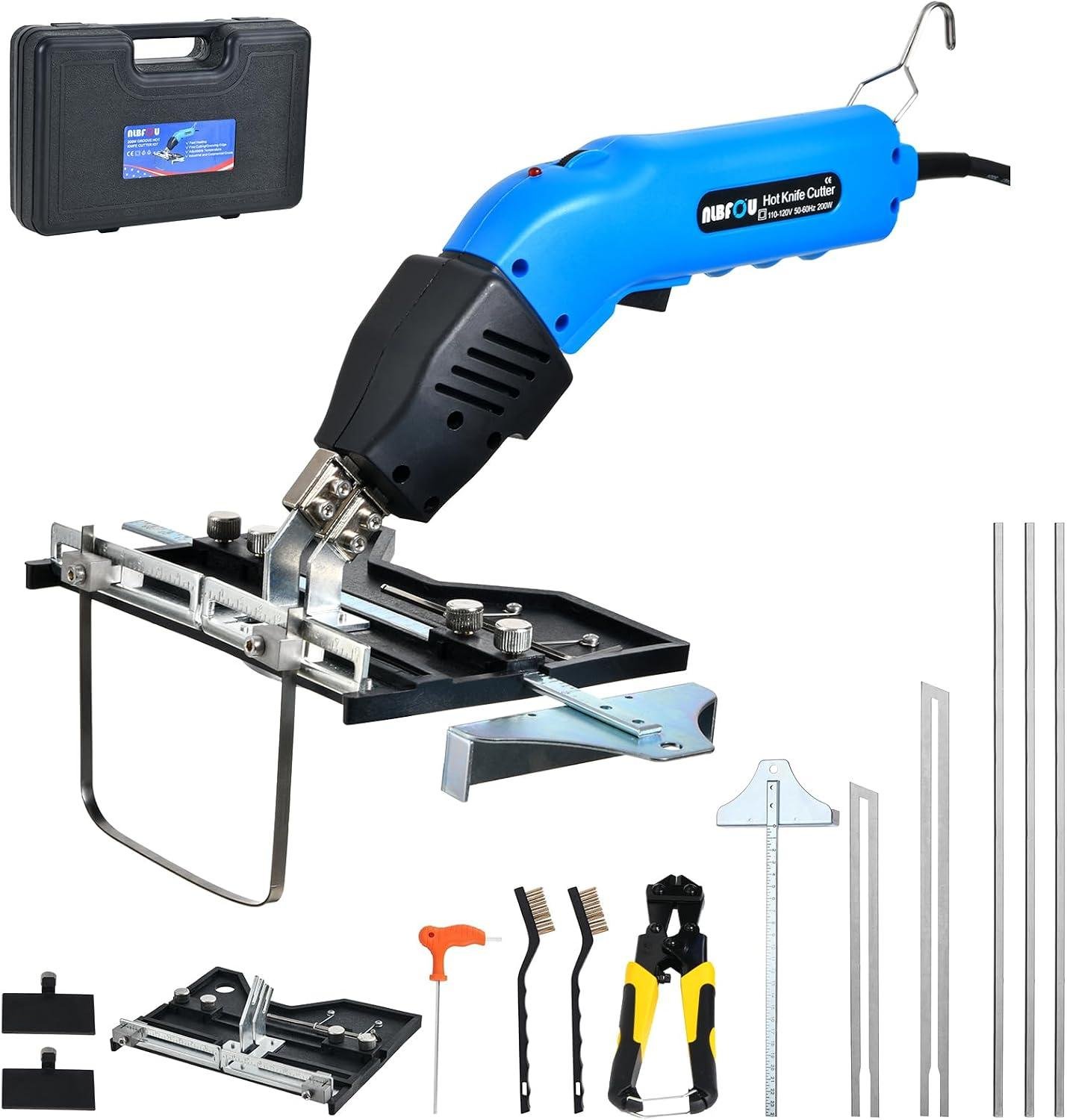
The NLBFOU Electric Hot Knife Foam Cutter Tool Kit (Air Cooled) is a 200W, 110-120V hot-knife system built for cutting, grooving, and sculpting materials like EPS/XPS/EPP, EVA, and more. It includes a “Big Groover” platform with a steel ruler and limit plate, plus five blades (three 12″ bendable, one 6″, one 8″) and a carrying case-aimed at controlled, repeatable cuts without bulky benchtop gear.
In this review, we’ll break down the feature set, ease of setup, space and budget fit, and what customers report-like fast heat-up, a hot edge during use, and strong performance on ICF foam and thick insulation, alongside a few notes about heat control and expectations. From years around sawdust and setups, we know new tools only earn their place when accuracy, durability, and learning curve make sense.
Tool Overview and Build Quality for Shop Use
In a woodworking shop, we think of the NLBFOU Electric Hot Knife Foam Cutter Tool Kit (200W, 110-120V) less as a “foam toy” and more as a specialty cutter for the moments we’re working with rigid insulation, templates, mockups, or packaging foam around finished parts. The spec that matters most in day-to-day handling is that 200W heating capacity paired with air-cooled dual fans (per the product description) is designed to keep the tool stable under use-NLBFOU even claims up to 120 minutes of continuous operation versus the “rest every 10 minutes” behavior many basic hot knives require. In customer feedback, the most consistent theme is that it “heats up quickly” and “maintains a hot edge”, especially on ICF styrofoam and thick pink insulation blocks. We also see realistic limits called out: a few reviewers mention it can feel “too small” for bigger building-panel work, and one notes the blade can bend when it hits glue or other hard inclusions-a useful reminder that hot knives are happiest in clean foam, not composite laminations.
Build-quality-wise, this kit reads like something meant for travel between jobsite and shop: it ships with a portable carrying case and a grooving platform (“Big Groover” with steel ruler and auxiliary limit plate) that helps us treat foam work more like joinery-set a reference, make a pass, repeat. Reviews repeatedly praise the “great design” and that it comes with “everything including multiple spare blades”, and several people call it a “nice little tool to have” for cutting and grooving. For shop safety and workflow, we appreciate a review detail noting a power trigger so it’s not actively heating unless squeezed; combine that with keeping vents clear (a reviewer tip) and we can reduce heat soak and avoid cooking foam dust into the housing. Educationally, the key technique is to let the heat do the work: we get cleaner edges by moving at a steady pace, avoiding side-load that can kink a hot blade, and planning for ventilation-because at least one customer reports it “makes a lot of smoke”, which matters in an enclosed woodworking shop with finishes and dust.
- Included accessories (per product description):
- Hot knife cutting machine
- “Big Groover” grooving platform (includes steel ruler + auxiliary limit plate)
- 3 × 12″ (30cm) bendable blades
- 1 × 6″ blade
- 1 × 8″ blade
- Portable carrying case
- Compatible attachments/accessories (shop-relevant add-ons):
- Sacrificial cutting surface / foam backer board to protect our bench
- Edge guide/clamps to keep long grooves straight (pairs well with the included ruler)
- P100 respirator + active ventilation (recommended when any review mentions “smoke”)
- Ideal project types in a woodworking workflow:
- Cutting XPS/EPS insulation for shop fixtures, cabinets-inside-out mockups, and router-template prototypes
- Grooving foam channels for wiring runs in displays and built-ins before committing to wood
- Custom foam inserts for tool cases and packing finished pieces
- Wood types tested by customers:
- None reported (reviews and specs focus on foam like ICF, EPS/XPS, and insulation board)
| Spec / Feature | What the listing/reviews say | Why it matters in a shop |
|---|---|---|
| Power | 200W, 110-120V | Enough heat for fast foam cutting; standard outlet compatibility. |
| Cooling | Dual-fan air-cooled; claims 120 min continuous use | Less downtime and fewer heat-related slowdowns during repetitive grooves/cuts. |
| Heat behavior (reviews) | “Heats up quickly” and “stays hot” are common themes | More consistent kerf/edge quality on long passes in foam. |
| Blade / Accessory | Included? | Best use |
|---|---|---|
| 12″ bendable blade (×3) | Yes | Custom curves, V-grooves, channels, and shaping foam mockups. |
| 8″ blade | Yes | General straight cuts in thicker foam blocks. |
| 6″ blade | Yes | Tighter control for smaller parts and detail trimming. |
| “Big Groover” platform | Yes | Repeatable grooves with reference control (think “fence” mindset). |
| Capacity Item | Recommended (practical) | Actual (what’s stated/reported) |
|---|---|---|
| Continuous runtime | Work in sessions and clear vents regularly | Product description claims up to 120 minutes continuous use; one reviewer advises taking breaks to help longevity |
| Material hardness | Clean foam only; avoid hard inclusions | One review notes glue/hard items can bend the blade |
See Full Specifications & Customer Photos
Key Features Woodworkers Will Appreciate for Foam Templates and Layout Work
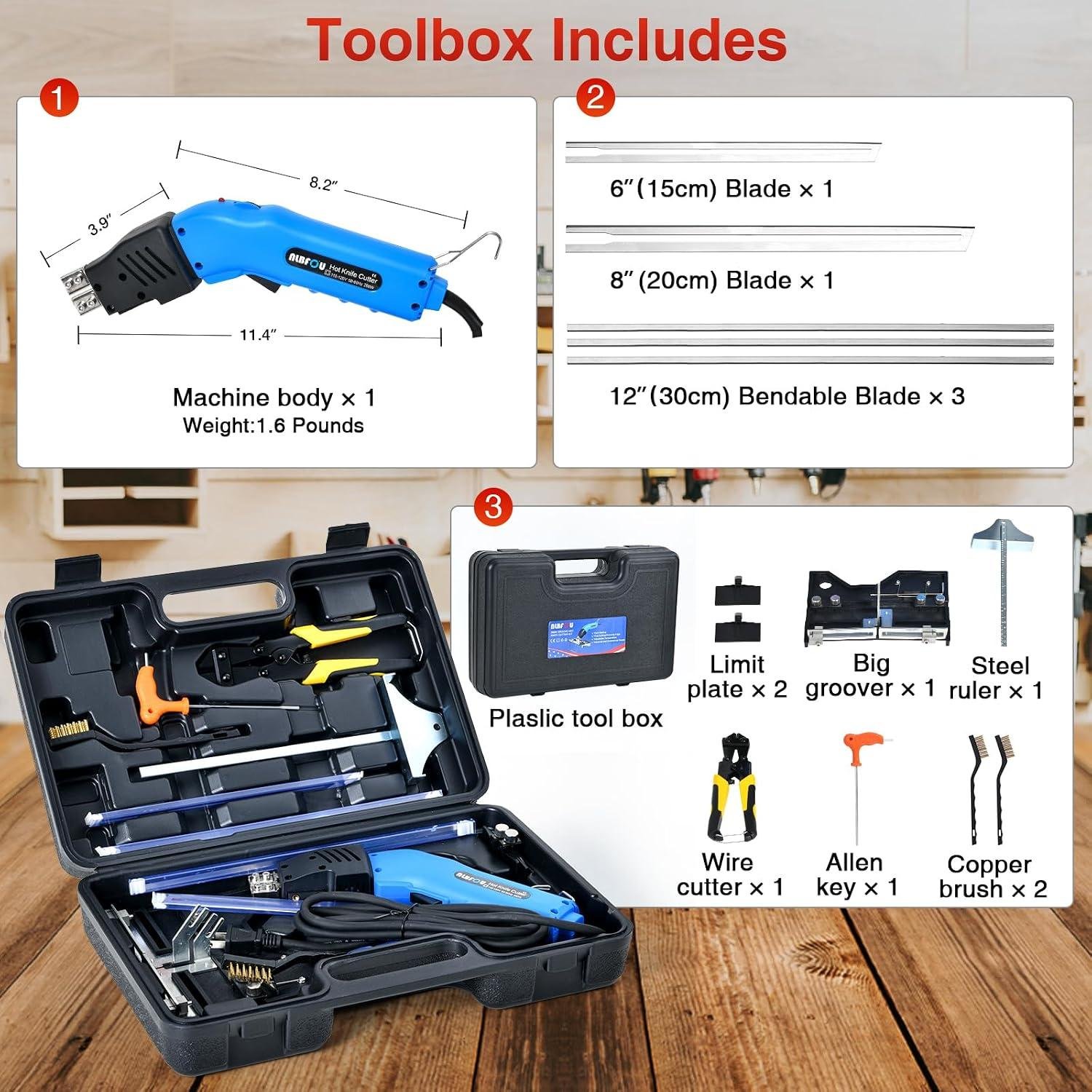
When we’re building foam templates for curved aprons, cabriole legs, or routing patterns, the big win with the NLBFOU kit is how quickly it gets us from layout lines to a usable, sandable edge. This unit is rated at 200W on 110-120V, and multiple reviewers echo that it “heats up in seconds” and “maintains a hot edge”-exactly what we want when we’re trimming template blanks without stopping every few minutes to recover temperature. The temperature dial and a power trigger (a reviewer notes it’s “not actively heating unless you squeeze the trigger”) can help keep cuts controlled around tighter radii, which matters when we’re aiming for clean, fair curves that won’t telegraph bumps into a flush-trim bit. As woodworkers, we also appreciate the included Grooving platform “Big Groover” with a steel ruler and auxiliary limit plate-that’s the kind of simple guidance system that can turn rough freehand passes into repeatable grooves for mock joinery layouts, wiring channels in insulation foam for shop jigs, or consistent setback lines when we’re making routing fixtures.
For layout work, the blade set is what makes this feel like a kit instead of a single-purpose hot knife. The package includes five blades–3× 12″ (30 cm) bendable blades plus 6″ and 8″ blades-so we can choose a shorter blade for tighter control or use the long bendable blades for sweeping template arcs and custom profiles. Review themes back up that flexibility: people mention it works well on ICF styrofoam and thick pink insulation blocks, and several call it a “great little tool” with “all the attachments” and a case. At the same time, reviews also warn us where hot knives can disappoint: one user says it’s “too small” for SIPs house-scale work, another mentions heat control being tricky, and there are notes about blades bending when they hit glue or harder inclusions. In practice, that means we get the best results by letting the heat do the work, keeping a steady pace, and using good ventilation-one review mentions it “saca mucho humo” (makes a lot of smoke). We’d treat it like any heat tool in the shop: clear vents, don’t force the cut, and reserve it for foam and similar materials-not wood-so it stays a precise template and layout helper instead of a frustration.
- Included accessories
- Hot knife cutting machine (air-cooled, dual-fan design)
- Grooving platform “Big Groover” (includes steel ruler + auxiliary limit plate)
- 3 × 12″ (30 cm) bendable blades
- 1 × 6″ blade
- 1 × 8″ blade
- Portable carrying case
- Compatible attachments/accessories (workshop add-ons we’d pair with it)
- Metal straightedge or drywall T-square for long template cuts
- Bench stops/clamps to keep foam blanks from drifting while cutting
- Shop ventilation (fan + open door/window) or fume extraction (recommended for foam work)
- Marker/paint pen for high-contrast layout lines on XPS/EPS
- Ideal project types
- Router templates (curves, arcs, custom profiles) from XPS/EPS
- Mock-ups for casework clearances and hardware placement
- Jig shaping in foam before committing to MDF/plywood
- Grooved channels for wiring/plumbing in insulation foam (also useful for shop-fixture prototyping)
- Wood types tested by customers
- None reported (reviews focus on foam materials like ICF/XPS/EPS and insulation boards)
| Spec / Feature | NLBFOU Electric Hot Knife Foam Cutter Tool Kit (Air Cooled) | Why it matters for foam templates & layout |
|---|---|---|
| Power requirement | 110-120V | Plugs into a standard shop outlet without special wiring. |
| Rated power | 200W | Supports quick heat-up; reviewers commonly mention it heats fast. |
| Cooling | Dual-fan air-cooled | Designed to run longer between breaks; helpful for batching template parts. |
| Claimed continuous runtime | Up to 120 minutes (per product description) | Less stop-and-wait during layout-intensive sessions; still plan pauses as needed. |
| Heat control | Temperature dial + trigger (per review) | Dial in heat for different foam densities; trigger helps avoid idling hot. |
| Blade options | 5 blades (3×12″ bendable, 6″, 8″) | Choose control vs reach; bendable blades suit custom template curves. |
| Compatible blades / accessories | Included in kit? | Template/layout use |
|---|---|---|
| 12″ (30 cm) bendable blade | Yes (3) | Long arcs, custom bends for patterns and sculpted foam forms. |
| 8″ blade | Yes (1) | General-purpose trimming for template blanks. |
| 6″ blade | Yes (1) | Tighter control near corners and small radii. |
| “Big Groover” platform (ruler + limit plate) | Yes | Repeatable grooves/offsets; useful for consistent layout references. |
| Capacity / Expectation | Recommended (realistic workshop use) | Actual / Reported |
|---|---|---|
| Best material fit | EPS/XPS foam for templates and mock-ups; avoid hard inclusions | Customers report success with ICF styrofoam and thick pink insulation blocks |
| Long continuous passes | Work in controlled sections; let the tool re-stabilize as needed | One reviewer notes cooling over long paths (“más de 1 metro… la cuchilla se enfría”) |
| Smoke/ventilation needs | Use ventilation and avoid breathing fumes; keep shop air moving | A review mentions “makes a lot of smoke”; common with hot foam cutting |
See Full Specifications & Customer Photos
Real World Performance on Foam Jigs Patterns and Inlay Backers
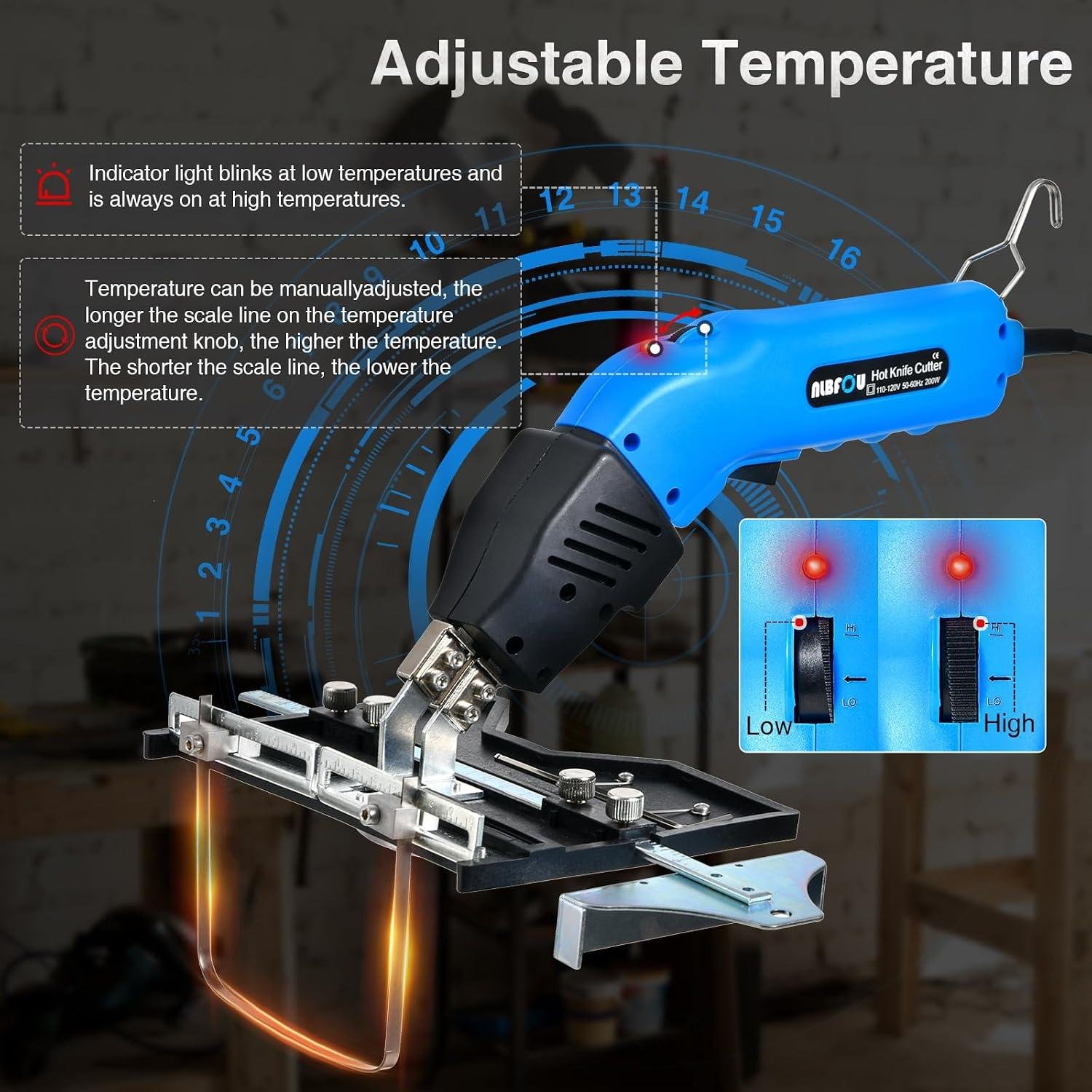
When we’re building foam jigs for odd-shaped glue-ups or making inlay backers that need a clean, repeatable outline, the NLBFOU kit behaves more like a layout-and-template tool than a “rough foam” cutter. The unit is rated at 200W on 110-120V, and that power shows up in how quickly it comes up to temperature-matching the customer theme that it “heats up quickly” and “maintains a hot edge.” In practical shop terms, that means we can trace a pattern, make a slow, controlled pass, and get an edge that needs minimal cleanup before we use it as a sacrificial caul, a registration cradle, or a backing block behind an inlay recess. For woodworking-style accuracy, the included “Big Groover” platform with its steel ruler and auxiliary limit plate is the difference between “freehand carving” and something closer to a guided cut-handy when we’re sizing foam to support veneer work or stabilizing parts during routing. Reviewers repeatedly mention it works well on ICF styrofoam and thick pink insulation blocks, which lines up with the kinds of XPS/EPS sheets many of us already keep around the shop for templates and assembly fixtures.
That said, foam jigs and inlay backers demand predictable heat and consistent feed rate, and customer feedback suggests we should set expectations: a few users note heat can be “hard to control” and one mentions the blade can cool on longer cuts, so we’re better off treating it like a precision hand tool-make short, steady passes, let the heat do the work, and avoid forcing the blade. The kit’s strongest “pattern shop” feature is flexibility: the 12″ (30cm) bendable blade can be shaped for custom profiles (one reviewer even describes using older softened blades for custom shapes), which can help when we need a curved inlay backer or a cradle for a round turning. Safety-wise, we need to treat cutting foam like finishing work-expect fumes (one customer complained it “saca mucho humo”/makes a lot of smoke), so we use ventilation, keep the tool moving to reduce scorching, and keep the dual fan vents clear so the air-cooled system can do its job. NLBFOU claims the air cooling supports up to 120 minutes of use versus ~10 minutes for typical hot knives; even if our real-world mileage varies, the practical takeaway is to still build in cool-down habits and keep spare blades ready for the cleanest pattern edges.
- Included accessories
- Hot knife cutting machine (air-cooled)
- “Big Groover” grooving platform (includes steel ruler + auxiliary limit plate)
- 3× 12″ bendable blades
- 1× 6″ blade
- 1× 8″ blade
- Portable carrying case
- Compatible attachments/accessories (from kit + intended use)
- Bendable blade forms for curved pattern cuts
- Big Groover fence/limit plate for repeatable grooves
- Spare blades (customers highlight “multiple spare blades”)
- Ideal project types
- Foam cauls and clamping forms for curved glue-ups
- Registration cradles and positioning jigs
- Inlay backers and sacrificial supports behind delicate parts
- Wiring/plumbing-style channels in shop insulation boards (dust-free alternative to carving)
- Wood types tested by customers
- Not applicable-customer feedback focuses on foam materials (e.g., ICF styrofoam, XPS “pink” insulation), not wood species.
| Spec / Feature | NLBFOU Electric Hot Knife (per listing) | What it means for foam jig & inlay backer work |
|---|---|---|
| Power | 200W | Fast heat-up and enough heat to slice XPS/EPS cleanly when feed rate is steady. |
| Power requirement | 110-120V | Standard shop outlet; easy to keep on the bench for template/jig sessions. |
| Cooling | Dual-fan air-cooled | Designed for longer sessions; keep vents clear when cutting foams that shed beads/dust. |
| Claimed continuous runtime | Up to 120 minutes | Useful for batching multiple jig parts; still plan short pauses for best control and blade life. |
| Blades | 6″, 8″, 12″ bendable | Short blades for detail/trim; bendable blade for curved patterns and custom grooves. |
| Accessory / Blade | Included | Best use in a woodworking-oriented foam workflow |
|---|---|---|
| Big Groover platform + ruler/limit plate | Yes | Guided grooves and repeatable straight cuts for jig components and backers. |
| 12″ bendable blade | Yes (3) | Curves, cradles, and custom profiles for odd-shaped workholding jigs. |
| 6″ blade | Yes (1) | Tighter control for small patterns and trimming backers to a line. |
| 8″ blade | Yes (1) | General-purpose bench work-balancing reach and control. |
| Carrying case | Yes | Keeps blades protected and organized-important because bent blades can kink if tossed in a drawer. |
| Capacity / Use Case | Recommended (for best results) | Actual user feedback themes |
|---|---|---|
| Long continuous cuts | Work in sections; maintain steady pace | Some users report it stays hot with consecutive uses, while at least one notes cooling on longer runs. |
| Material type | EPS/XPS foam sheets and blocks | Multiple reviews highlight success with ICF styrofoam and thick pink insulation. |
| Cut cleanliness | Let heat cut; avoid forcing the blade | Most report strong cutting performance; a minority mention heat/edge control challenges. |
See Full Specifications & Customer Photos
Ease of Use for Beginners and Experienced Woodworkers in the Workshop
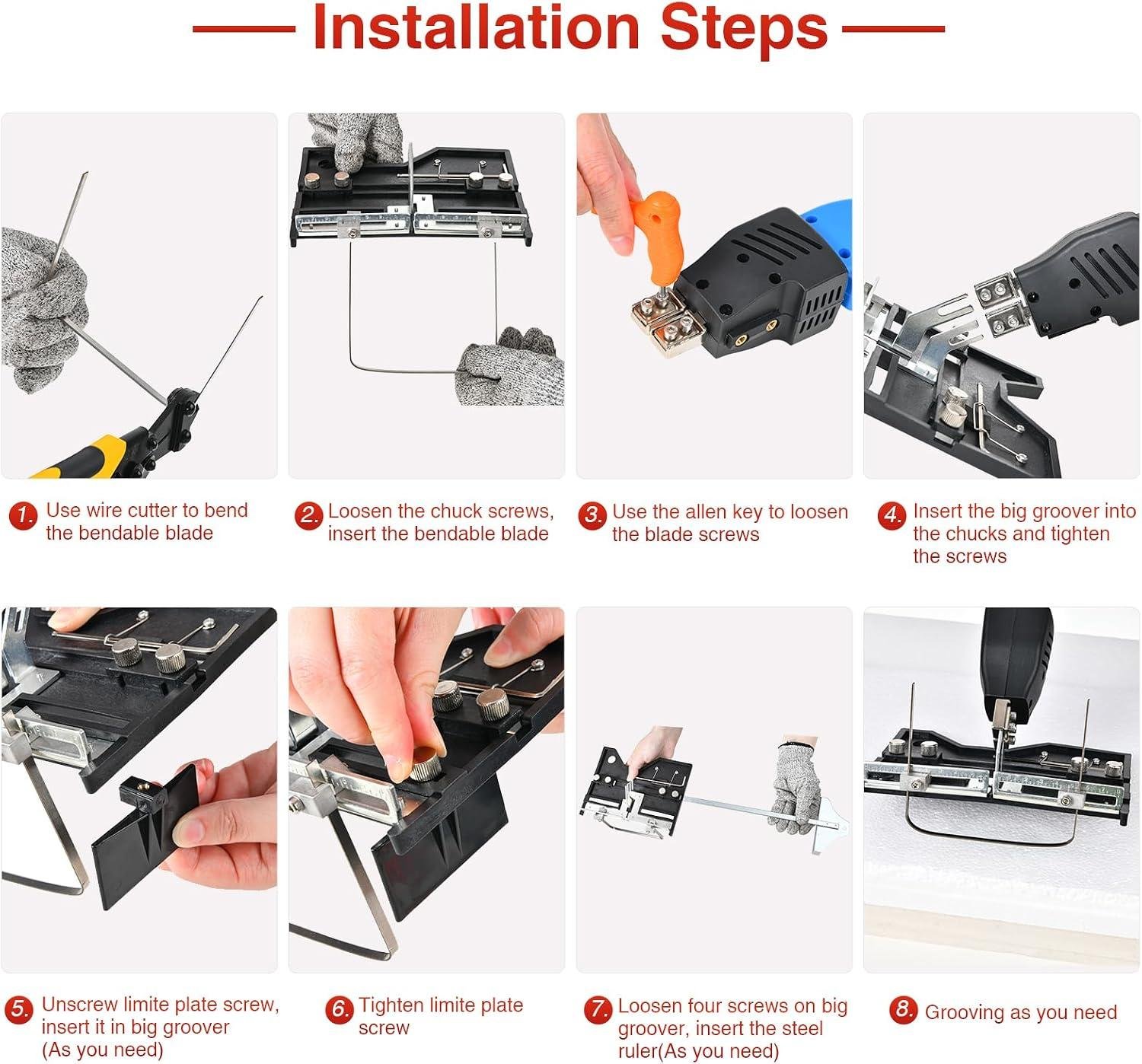
In our shop, the NLBFOU Electric Hot Knife Foam Cutter Tool Kit (200W, 110-120V, air-cooled) feels approachable for beginners because setup is intentionally simple: loosen a screw, seat the groover/platform, slide in the blade, and tighten-no elaborate alignment rituals. That matches what customers keep repeating in different ways: it “heats up quickly,” “heats up in seconds,” and comes with “everything including multiple spare blades.” For woodworkers who don’t cut foam every day, that fast ramp-up matters-especially when we’re building jigs, packing inserts, templates, or mockups out of XPS/EPS. The built-in temperature dial and power trigger are also newcomer-friendly (several reviewers like that it’s “not actively heating unless you squeeze the trigger”), because we can pause to reposition without cooking the edge or melting a trench where we didn’t intend.
For experienced woodworkers, the real “ease of use” advantage is workflow: the dual-fan air-cooled design is advertised for up to 120 minutes of continuous use versus basic hot knives that need frequent rests, which can make repetitive grooving tasks less stop-and-go. That said, the learning curve isn’t zero-heat management and feed speed still matter. A few customers mention heat control can feel touchy, and one notes the blade cooling on longer runs; another warns it can be “too small” for SIP-style production work and that glue lines or harder inclusions can bend blades. In practice, we get the cleanest cuts by letting the heat do the work (don’t force it), using the platform’s guides for consistency, and planning for fumes: some reviewers note it “saca mucho humo” (makes a lot of smoke), so good ventilation and a respirator are part of responsible shop use-especially since melted foam fumes aren’t the same as sawdust.
- Included accessories
- Hot knife cutting machine
- “Big Groover” grooving platform (with steel ruler and auxiliary limit plate)
- 3 × 12″ bendable blades
- 1 × 6″ blade
- 1 × 8″ blade
- Portable carrying case
- Compatible attachments/accessories
- Replacement hot-knife blades sized 6″, 8″, and 12″ bendable (same style/fitment as the included set)
- Custom-bent shapes using the 12″ bendable blade (a reviewer notes reusing softened blades for custom forms)
- Ideal project types
- Grooves/channels for wiring and plumbing runs in insulation foam
- Foam templates, mockups, and patterns for build planning
- Protective tool case inserts and packing blocks
- Shaping crown-molding prototypes or architectural foam details
- Wood types tested by customers
- None reported-reviews focus on foam materials (EPS/XPS/ICF styrofoam and insulation boards), not wood species.
| Spec / Feature | What it is (per listing/reviews) | What it means in the workshop |
|---|---|---|
| Power | 200W, 110-120V | Heats fast and is suited to foam cutting/grooving tasks without waiting around. |
| Cooling | Dual-fan air-cooled | Designed to reduce downtime; helps when we’re doing repeated grooves or multiple passes. |
| Continuous run claim | Up to 120 minutes continuous use (advertised) | Potential productivity boost vs basic hot knives, but ventilation and breaks still matter for safety. |
| Control | Temperature dial + power trigger (praised in reviews) | Easier to “feather” heat and stop/start cleanly without scorching or over-melting. |
| Blade set | 5 blades (3×12″ bendable, 6″, 8″) | Lets us switch from straight cuts to custom grooves without buying add-ons immediately. |
| Accessory / Blade | Included | Best use in a woodshop setting |
|---|---|---|
| 12″ bendable blade | Yes (3 pcs) | Custom groove shapes for wire chases; can be bent (carefully) for specialty profiles. |
| 8″ blade | Yes (1 pc) | General trimming and mid-depth passes in foam templates and insulation. |
| 6″ blade | Yes (1 pc) | Tighter control for detail work, shorter cuts, and fitting foam inserts. |
| Big Groover platform | Yes | More repeatable grooves when we need consistent channel width/position. |
| Task | Recommended approach | Real-world notes from reviews |
|---|---|---|
| Short grooves/cutouts | Higher heat, steady feed, use the trigger to pause | Many say it heats quickly and keeps a hot edge. |
| Long continuous passes | Moderate heat; avoid pushing; take planned pauses for layout checks | One reviewer reports blade cooling on runs over ~1 meter. |
| Foam with hard inclusions (glue lines) | Lower pressure; consider scoring first; keep spare blades ready | A reviewer warns harder materials can bend the blade. |
See Full Specifications & Customer Photos
Customer Reviews Analysis

What Woodworkers Are Saying: NLBFOU Electric Hot Knife Foam Cutter Tool Kit (Air Cooled)
1. Overall sentiment from woodworking customers
Several woodworkers describe this as a useful, budget-friendly specialty cutter-especially for shop-made jigs, templates, and foam applications where a clean, controlled cut matters more than brute force. Overall sentiment trends positive on cutting convenience and results, with mixed feedback around durability and consistency depending on workload and expectations.
2. Performance feedback (accuracy, power, results)
Common praise includes clean slicing through foam materials with less tearing than blades or saws, which woodworkers often associate with “less cleanup” and more predictable fit.
- Cut quality: Multiple reviews highlight smoother edges on foam compared with utility knives (less ragged edge, fewer crumbs). Some users describe results as “clean” or “neat,” especially on straight cuts and simple curves.
- Power/heat under load: Some users reported challenges with heat consistency on thicker or denser foam-mentioning they needed to slow down, make multiple passes, or allow the tool to reheat to keep cuts clean.
- Accuracy/consistency: Several woodworkers mentioned that once the heat is dialed in and the motion is steady, it can produce consistent cuts. Others note that rushing can cause drag marks or slight melt ridges that need light trimming.
3. Build quality and durability observations
Multiple reviews highlight that build quality feels “okay for the price,” but not necessarily heavy-duty.
- Tool body/parts: Some users reported the kit feels light-duty, suitable for occasional projects rather than daily production use.
- Longevity: Several reviewers mention acceptable short-term reliability, while a smaller set of users reported concerns about long sessions-suggesting it’s best treated as a specialty tool, not a forever tool.
- Consumables/tips: Some users reported challenges with tips or cutting elements being more fragile than expected if pressed too hard or used on the wrong materials.
4. Ease of use for different skill levels
Beginners appreciated that it’s straightforward to start cutting quickly, but reviews suggest it still rewards technique.
- Beginner experience: Common feedback is that it’s intuitive-heat up, guide the cut, go slowly. Many DIYers liked that it reduces the “fight” you get when a knife grabs foam.
- Intermediate/experienced users: Reviewers with more experience tended to emphasize pace and pressure control-letting heat do the work for straighter, cleaner lines.
- Learning curve notes: Some DIYers found the learning curve moderate: moving too fast can tear or leave rough edges; pushing too hard can wander off line.
5. Common project types and success stories
Customers successfully used this for woodworking-adjacent shop tasks where foam cutting needs to be clean and repeatable.
- Packaging foam and tool cases: Several reviewers mentioned shaping foam inserts for tool storage, cases, or drawer organization-where cleaner edges improve fit and presentation.
- Templates, mockups, and prototyping: Some users referenced using foam for layout models, practice shapes, or pattern mockups before committing to wood.
- Insulation or workshop foam projects: A handful of reviews point to trimming foam sheets for shop use where straight edges and reduced mess are a plus.
6. Issues or limitations reported
Some users reported challenges with expectations-particularly if they hoped it would behave like a heavy-duty shop tool.
- Heat/cut speed limitations: A recurring theme is that thicker foam may require slower passes; forcing speed can reduce precision and edge quality.
- Material compatibility: Woodworkers note this is purpose-built for foam; using it on non-foam materials (or overly dense materials) can reduce performance or increase wear.
- Durability under frequent use: A smaller group reported concerns about long-term toughness, suggesting it’s better for occasional shop tasks than constant production cutting.
- Finish quality: While edges are generally cleaner than knife cuts, a few users mention occasional melt lines or slight ridges that can require quick touch-up trimming depending on the foam type and cutting speed.
| Aspect | Common Feedback |
|---|---|
| Performance | Often praised for cleaner foam cuts and reduced tearing; slower passes help on thicker foam. |
| Precision | Good control with steady technique; some variability if rushed or if heat lags on dense foam. |
| Build Quality | “Decent for the price,” but not always viewed as heavy-duty for long, frequent sessions. |
| Ease of Use | Beginner-friendly startup; best results require pacing and light pressure. |
| Versatility | Strong for foam inserts, packaging foam, and shop organization; limited outside foam use cases. |
| Value | Seen as a worthwhile specialty tool when priced competitively, especially for occasional foam projects. |
If you want, share a few actual review snippets (or star-rating breakdown + top pros/cons), and I can tighten this into a more quote-backed section while keeping it woodworking-focused.
Pros & Cons
Pros & Cons: NLBFOU Electric Hot Knife Foam Cutter Tool Kit (Air Cooled)
| What we liked | What we didn’t |
|---|---|
| Heats up fast and stays hot through back-to-back cuts | Heat control can feel finicky until we find the “sweet spot” |
| Air-cooled design is built for longer runs (less forced downtime) | Long, continuous passes can still cool the blade on tougher/longer cuts |
| Comes as a real kit: multiple blades, “Big Groover” platform, case | Not our pick for SIPS-style jobs or foam with glue/hard inclusions-blades can bend |
| Excellent for practical shop tasks: ICF channels, wiring/plumbing grooves, shaping | Smoke/fumes can be noticeable; we’ll want ventilation and a sensible setup |
| Compact, “grab-and-go” size that feels manageable in tight areas | Like many hot knives, long-term durability is a question mark in heavy daily use |
Pros
- Quick heat-up, hot edge: In our workflow, speed matters, and this tool is praised for getting up to temp fast and keeping a cut-ready edge.
- Air-cooled for longer sessions: The dual-fan cooling concept is the big headline-useful for us when we’re doing repeat grooves and don’t want constant cool-down breaks.
- Strong cutting performance on common foams: Reports are especially positive for ICF styrofoam and thick pink insulation blocks-exactly the kind of material that can turn “just a quick cut” into a chore.
- Grooving versatility: The included “Big Groover” platform and bendable blades give us more than straight cuts-V-grooves, channels, and custom shapes are on the menu.
- Accessory-rich kit + carrying case: We like tools that arrive ready for the job, not begging for add-ons before the first project.
- Trigger-style power behavior: Having heat tied to a trigger can help us feel more in control versus an always-on heater (and may help reduce idle overheating).
Cons
- Heat control isn’t universally “set-and-forget”: Some users note it can be hard to dial in; we should expect a brief learning curve to match temperature to foam density and cut speed.
- Not ideal for mixed materials: If we hit glue lines, reinforced spots, or harder inclusions, blades may bend more easily than we’d like-better suited to “clean” foam.
- Long runs can challenge consistent heat: For very long passes (think meter-plus), there are reports of blades cooling mid-cut even when the dial seems right.
- Smoke/fumes are part of the deal: Hot cutting foam can generate noticeable smoke; in our shop, that means ventilation is non-negotiable.
- Durability varies by workload: Hot knives can be consumable in busy environments; even if this one is solid, we’d still plan for blade wear and maintenance (keeping vents clear, taking breaks when needed).
- Occasional “DOA” risk: A small number of buyers report units not working out of the box-worth factoring into our return/testing routine when it arrives.
Q&A
Can this cut wood (pine, oak, plywood) or is it strictly for foam?
This is a hot knife foam cutter, not a woodworking saw or knife. It’s designed to melt/cut EPS/XPS/EPP/EVA/EPE/PU foam, KT board, sponge and similar materials. It is not intended for solid wood, plywood, MDF, or veneers-those materials won’t melt cleanly, can scorch/smoke, and you can damage the blade and tool. For woodworking tasks (joinery, trimming plywood edge banding, etc.), you’ll get better and safer results from standard cutting tools.
Is it powerful enough for dense “materials” like rigid insulation, and will it stay hot during long cuts?
For its intended use, yes. This kit is rated at 200W (110-120V) and customers frequently mention it heats up quickly and maintains a hot edge when cutting thick pink insulation blocks and ICF styrofoam. One reviewer did note the blade can cool over very long runs (over ~1 meter) depending on pace and foam density-slowing down and letting the heat do the work helps keep the cut consistent.
Can it handle “production work” in a shop, or is it more of a hobby tool?
It’s positioned closer to light-production than many basic hot knives. The “air-cooled” design with dual fans is intended to reduce downtime; the listing claims up to 120 minutes of continuous use compared to typical tools needing breaks about every 10 minutes. A professional fabricator also described it as a solid foam cutter with good heat-up speed. That said, hot knives are still consumable-heavy tools: blades soften over heat cycles, and one practical shop tip from reviews was to give it periodic breaks and keep vents clear to extend life.
How difficult is initial setup, and what adjustments do I get for repeatable grooves?
Setup is generally straightforward: the kit is described as “getting started is a breeze”-you loosen a screw, insert the groover into the chucks, and install a blade. For repeatable work (think: foam templates, router-jig substitutes, insulation channels), the included “Big Groover” platform has a steel ruler and an auxiliary limit plate to help guide and control groove width/position. There’s also a temperature dial (mentioned in reviews) to match heat to foam type and speed.
How easy are blade changes, and are the blades “standard” hot-knife replacements?
Blade changes are simple-this kit is built around swapping the included blades (it comes with 5 blades: three 12″ bendable, plus 6″ and 8″). However, the system uses its own chuck/groover setup, so you should assume replacement blades should match this kit’s format rather than expecting universal compatibility with other brands’ hot knives. Reviewers also mention blades can soften after repeated heating cycles; some people even repurpose “softened” blades by bending them into custom shapes for sculpting.
Will this fit into a small woodworking shop, and can it be bench-mounted?
It’s a compact handheld-style kit and customers consistently like the size (“great little tool,” “perfect for ICFs”). It also includes a portable carrying case, which helps in tight shops where tools must store efficiently. Bench mounting isn’t a core feature like a benchtop tool, but for controlled, repeatable work you can treat the grooving platform like a small jig station-set it on a bench, clamp your foam workpiece, and guide cuts using the ruler/limit plate.
Do I need dust collection or special ventilation? I’m concerned about fumes.
You typically don’t need dust collection the way you would for MDF, but you do need to plan for fumes. At least one review specifically mentions it produces a lot of smoke, which is normal when melting/cutting some foams-especially if the temperature is higher than necessary or the foam includes additives. Practical advice: use good ventilation (open door/window + fan), avoid breathing the plume, and test temperature on offcuts to find the lowest setting that still cuts cleanly.
Is this beginner-friendly, and would it satisfy a professional woodworker building jigs/templates?
Beginners can use it effectively because the basic workflow is simple (heat, guide, cut), and reviews highlight fast heat-up and good cutting performance on common insulation foams. The learning curve is mostly about heat control and feed speed-move too slowly and you can widen the kerf or create more smoke; move too fast and you can cool the blade and drag. For professionals, it’s useful as a specialty tool for foam-based workflows (mockups, templates, insulation channels for wiring/plumbing, prop/forms). It won’t replace woodworking cutters, but it can speed up foam shaping where a saw or router would be messy or inaccurate.
Ignite Your Passion
The NLBFOU Electric Hot Knife Foam Cutter Tool Kit (200W, 110-120V) is built for fast, controlled shaping of foam materials, pairing an air-cooled dual-fan design with a temperature dial, power trigger, and a “Big Groover” platform (ruler and limit plate) plus five blades (three 12″ bendable, one 6″, one 8″) and a carry case. Customer feedback commonly highlights quick heat-up, strong cutting performance in XPS/EPS/ICF foam, and a handy size, with occasional notes about heat control learning curve, smoke, and blades bending when encountering harder inclusions.
Best for: hobby woodworkers making shop jigs, router templates, mock-ups, insulation projects, and cabinet makers needing clean foam grooves for wiring or plumbing chases.
Consider alternatives if: you mostly cut thick hardwoods (this is not a wood-cutting tool), need production-duty longevity, or require fume extraction and ultra-consistent temperature regulation.
Final assessment: a solid mid-range option for foam work, especially where continuous runtime matters, but it’s best treated as a specialized helper-not an all-purpose shop cutter.
Want to see current pricing and customer photos? View on Amazon & Read More Reviews →