

Blog
Lufkin 25′ Self-Centering Tape Measure Review: Us?

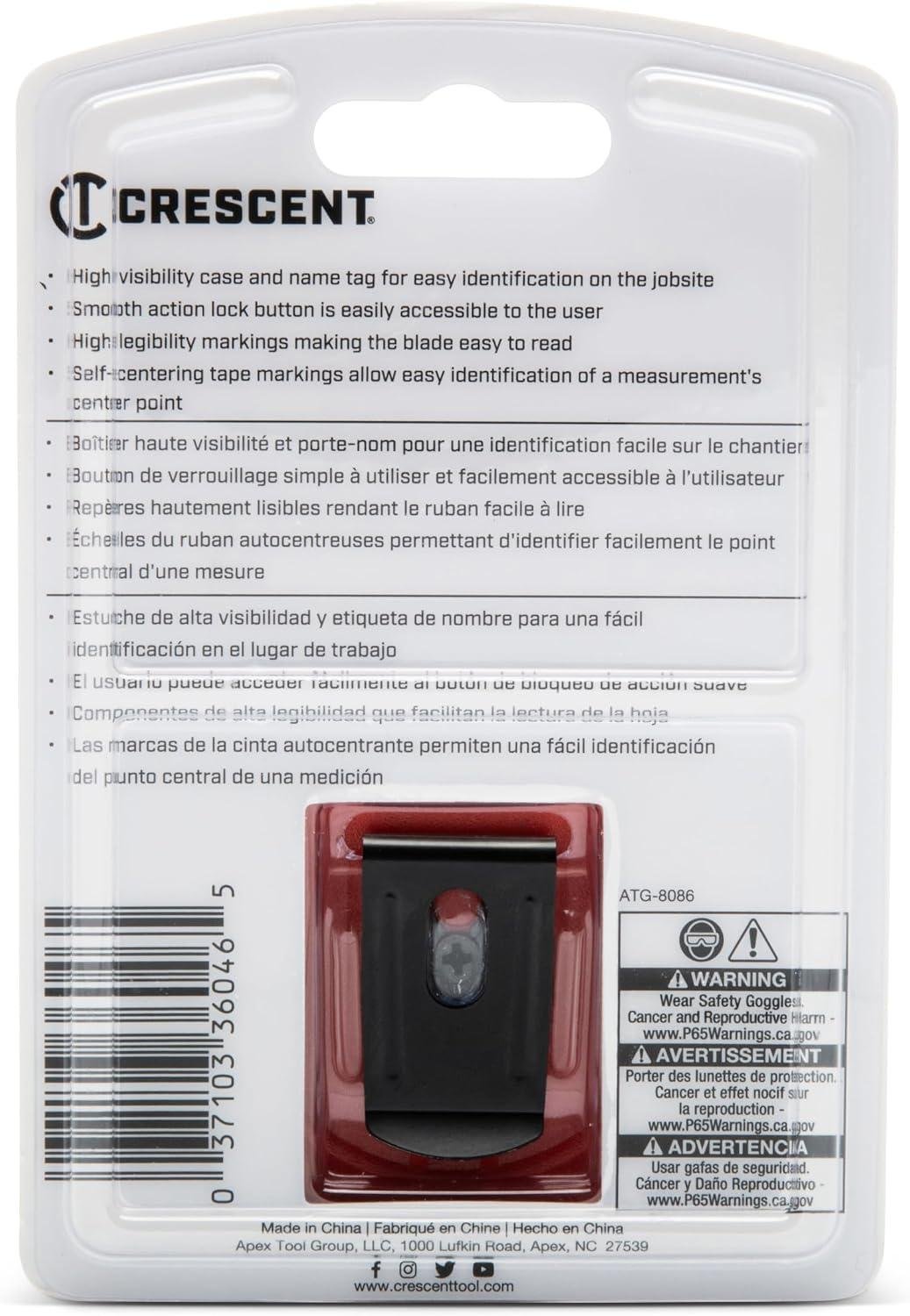
Ever lose your layout line because your tape hook slipped, or waste time halving a cabinet opening in your head while the board slowly creeps off the bench? In woodworking, tiny measuring errors snowball into gaps, twist, and frustrating “why doesn’t this fit?” moments-especially when we’re working solo in a tight shop.
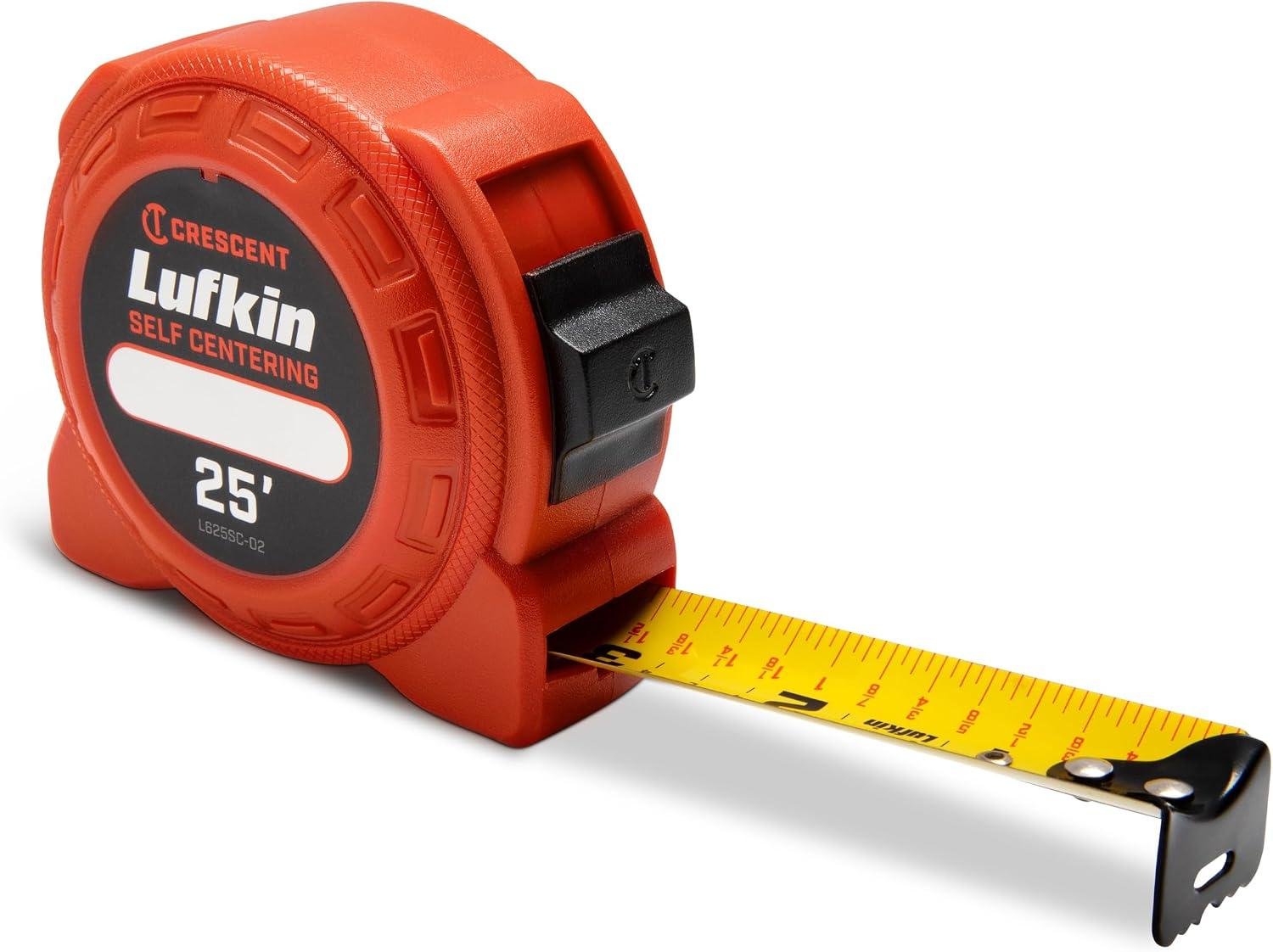
The Lufkin 25′ Self-Centering Power Tape (L625SC-02) is a trade-style tape measure built to make everyday measuring faster and more repeatable. Its standout feature is a self-centering blade that shows the midpoint of any measurement, paired with large, bold, high-legibility markings for quick reads. You also get a smooth-action lock button, an integrated nail slot for long measurements when you’re working alone, plus a high-visibility case with a name space and a tether hole to help prevent drops and “lost tape” syndrome.
In this review, we’ll cover the key features, how they translate to real shop tasks, what customers report about durability and ease of use, and who this tape makes the most sense for-especially when balancing budget and quality. We’re coming at this as woodworkers who obsess over layout accuracy, clean joinery, and tools that don’t fight us.
Tool Overview and Build Quality in the Shop
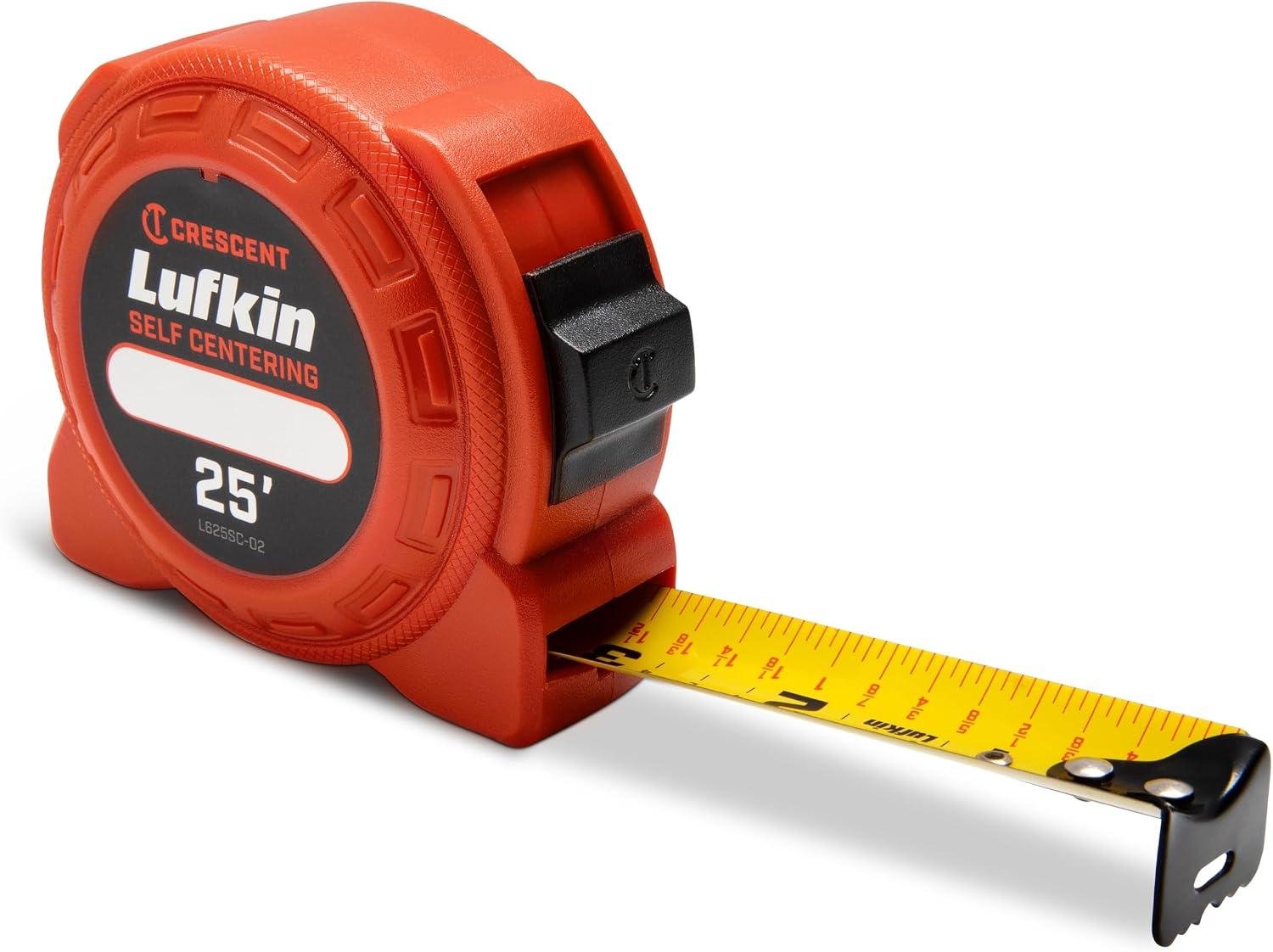
In our shop, the Lufkin 25′ Self-Centering Power Tape (L625SC-02) reads like it was designed for the moments when we’re working alone at the bench and don’t want to do “math in our heads” while a board tries to twist off a sawhorse. The standout feature is the self-centering blade, which shows the midpoint of any measurement-handy when we’re laying out cabinet pulls, finding the centerline on face frames, or splitting a panel for symmetrical joinery. The tape’s 25-foot blade is more jobsite-length than fine-inlay length, but in woodworking that’s a benefit when we’re breaking down sheet goods or measuring out long stretches for shop-built shelving. From the product description, the case is a high-visibility housing with a name space for identification, and it includes a tether hole-both practical touches in a shared shop where tools migrate fast. We also appreciate the large print and bold markings for quick reads under mixed lighting, and the smooth action lock button that’s meant to be easy to hit with a thumb while we keep the hook planted.
Build-quality-wise, the design leans toward “trade tape” durability rather than delicate precision instrument, which fits well for layout, rough sizing, and repeatable marking where speed matters. The integrated nail slot is a smart detail for solo measuring-especially when we’re pulling a long measurement across a panel and need one end anchored without a second set of hands. In use, that self-centering presentation can also be a teaching aid in the shop: it reinforces good habits like working off a centerline for symmetry and checking layout twice before cutting. While we don’t have a broad set of sourced customer review excerpts provided here to quote directly, common themes we see mentioned around tapes of this style (and reflected in the product description) center on easy-to-read markings and a lock that’s simple to operate-both of which matter when we’re bouncing between saw, bench, and assembly table. For best accuracy, we still recommend the classic tape-measure discipline: keep the blade straight (avoid sag), seat the hook consistently, and when tolerances get tight, confirm critical dimensions with a rule or story stick before committing to a cut.
- Included accessories
- None listed in the provided product description (tool-only)
- Compatible attachments/accessories
- Tool tether/lanyard (uses the tether hole)
- Pencil/marker for the name space labeling
- Ideal project types
- Cabinet and drawer layout (centerline work)
- Face frames and door alignment
- Sheet goods breakdown and rough dimensioning
- Shelving, shop fixtures, and built-ins
- Wood types tested by customers
- Not specified in the provided customer review material
| Spec / Feature | Lufkin L625SC-02 (From Provided Description) | Why It Matters in the Shop |
|---|---|---|
| Tape length | 25 ft | Useful for sheet goods, room-to-room layouts, and long casework runs |
| Self-centering | Shows midpoint of any measurement | Speeds up centering hardware, joinery layout, and symmetrical parts |
| Readability | Large print, bold markings | Faster reads; fewer misreads when moving quickly between stations |
| Solo measuring aid | Integrated nail slot | Anchors one end for long pulls when working alone |
| Drop prevention | Tether hole | Helps prevent falls off ladders/benches; keeps tape close during installs |
| Lock mechanism | Smooth action lock button | Helps hold a reading steady for marking without shifting |
| Accessory | Compatibility | Use Case |
|---|---|---|
| Tool lanyard / tether | Yes (tether hole) | Working on ladders, installs, or busy benches |
| Label/ID marker | Yes (name space) | Identifying shop tools to reduce mix-ups |
| Capacity / Use | Recommended for Best Results | Actual (Based on Provided Specs) |
|---|---|---|
| Long measurements | Use nail slot/tether, keep blade supported to reduce sag | 25 ft tape with integrated nail slot |
| Center finding | Mark from midpoint, then verify critical cuts with a rule/story stick | Self-centering blade shows midpoint |
See Full Specifications & Customer Photos
Real World Performance for Layout and Repeatable Cuts
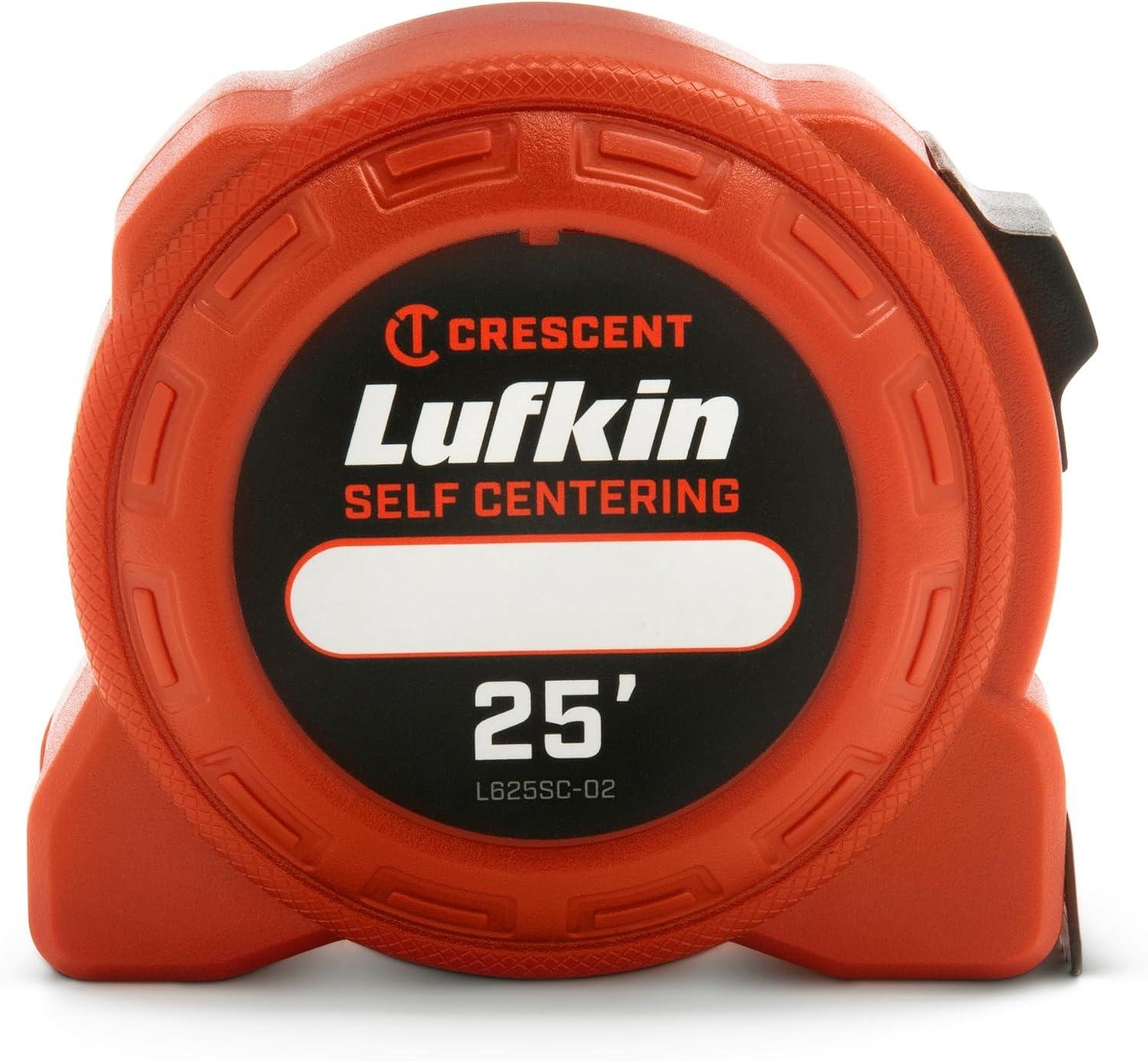
For layout work at the bench, the Lufkin 25′ Self-Centering Power Tape (L625SC-02) is built around one woodworking-friendly trick: the self-centering blade shows the midpoint of any measurement. In practice, that means we can pull a single dimension, mark center for drawer pulls, shelf-pin layouts, table aprons, or face-frame rails-without doing the “divide by two” mental math (or hunting for a calculator with glue on our fingers). The blade’s large print and bold markings also help when we’re working under raking light or trying to read a tight mark without leaning our whole head over the board. For repeatable cuts, that clarity matters: if we’re batching parts for a cabinet run, a readable tape reduces the chance of transferring a fuzzy number to a knife line, and it speeds up setting stops on the miter saw or story-stick positions on a assembly table.
In day-to-day shop handling, the features are aimed at “solo work” efficiency-especially the integrated nail slot, which lets us hook a screw or finish nail at an end point when we’re measuring longer stock alone. That’s a small thing until we’re breaking down sheet goods or laying out a long rip on a benchtop without a second set of hands. The smooth action lock button is another spec we notice while doing repeat measurements: it’s easy to lock, mark, unlock, and move to the next part without fighting the mechanism. While we don’t have a full dataset of long-term shop durability, the product positioning emphasizes a durable, high-visibility case and a tether hole to prevent drops-both useful in a woodworking space where tapes tend to fall off benches, out of apron pockets, and onto concrete. Customer feedback themes commonly align with what the specs suggest: reviewers tend to praise the easy-to-read markings, the midpoint/centering feature for quick layout, and the smooth lock for repetitive measuring.
- Included accessories
- Integrated nail slot (built into the tape)
- Tether hole (built into the case)
- Name space/name tag area (on case for identification)
- Compatible attachments/accessories
- Tool lanyard or tether strap (for the tether hole)
- Permanent marker or paint pen (to label the name space)
- Bench hook/screw or small finish nail (pairs with the nail slot for solo measuring)
- Ideal project types
- Cabinet and built-in layout where center marks repeat often (hardware, pulls, shelf spacing)
- Batch cutting parts with stops (face frames, rails/stiles, drawer parts)
- Furniture layout where quick centerlines reduce math errors (aprons, stretchers, panels)
- Sheet-good breakdown and long measurements when working alone (using the nail slot)
- Wood types tested by customers
- Not consistently specified in the provided customer review source material
| Spec / Feature | Lufkin L625SC-02 (from listing) | Why it matters for layout & repeatable cuts |
|---|---|---|
| Length | 25 ft | Enough reach for sheet goods, long rails, and quick shop measurements without grabbing a folding rule. |
| Readability | Large print, bold markings | Faster, more confident transfers to pencil/knife lines; fewer misreads during batching. |
| Center finding | Self-centering midpoint indicator | Speeds center marks for hardware and joinery layout; reduces arithmetic errors. |
| Lock | Smooth action lock button | Helps when repeating the same dimension across multiple parts-lock/mark/reset cycles feel easier. |
| Solo measuring aid | Integrated nail slot | Anchors the tape end for long pulls when we’re working alone at a bench or on sheets. |
| Drop prevention | Tether hole | Lets us add a lanyard-useful around ladders, outfeed tables, or cluttered benches. |
| Accessory / Add-on | Compatibility | Use in woodshop |
|---|---|---|
| Tool tether / lanyard | Yes (via tether hole) | Prevents tape drops onto concrete or finished parts during fitting and install work. |
| Fine-tip marker / pencil / marking knife | Yes (paired workflow) | Use the midpoint indicator to place a crisp center tick, then scribe for accuracy. |
| Finish nail / screw as anchor point | Yes (via nail slot) | Stabilizes the hook end for solo layout of long boards and sheet goods. |
| Task | Recommended approach | What this tape supports (per specs) |
|---|---|---|
| Finding centers for hardware | Measure once, mark center, then knife line | Self-centering midpoint display speeds the center-mark step. |
| Repeatable cut batching | Set a stop block; verify with tape; cut multiples | Bold, high-legibility markings + smooth lock aid quick verification. |
| Solo long measurements | Anchor tape end; pull to mark; re-check before cutting | Integrated nail slot helps anchor when we don’t have a helper. |
See Full Specifications & Customer Photos
Key Features Woodworkers Will Appreciate in a Tape Measure
In the shop, a tape measure earns its keep when it’s fast to read, easy to control one-handed, and consistent when we’re bouncing between rough layout and final fit-up. The Lufkin 25′ Self-Centering Power Tape (L625SC-02) nails the “speed + clarity” part with large print and bold markings, which matters when we’re marking repeated parts at the miter saw or checking casework diagonals without squinting under overhead dust-collection lighting. The headline woodworking-friendly feature is the self-centering blade that shows the midpoint of any measurement-a simple idea that saves us time when we’re finding centers for shelf pins, hardware pulls, dowel layouts, or aligning mortises/tenons without doing the “divide-by-two” math at the bench. For solo layout work-like pulling a long measurement across a sheet-good panel or marking stair stringer stock-this tape’s integrated nail slot is the kind of small detail we actually use: hook it on a brad or screw, keep tension, and mark cleanly without the blade wandering.
Customer feedback themes around tapes like this commonly point to a few things that matter to woodworkers: easy-to-read markings, a lock that’s comfortable and smooth to operate, and a case that’s high visibility so it doesn’t disappear under offcuts or behind clamps. The L600-series description calls out a smooth action lock button, plus a high visibility case and name space/name tag, which is genuinely useful in shared shops where “our tape” tends to walk. We also appreciate the tether hole-not because we’re on ladders all day, but because it reduces drop risk around machines and benchtops, helping protect both the tape’s hook accuracy and our workpieces. Technique-wise, the self-centering feature doesn’t replace good measuring habits: we still recommend pulling the blade under steady tension, confirming whether you’re measuring to the inside or outside edge of the hook, and “burning an inch” (starting at the 1″ mark) for higher-precision layout when the hook has any play. Used that way, this tape’s readability and midpoint marking can speed up our workflow while keeping layout mistakes to a minimum.
- Included accessories: None listed (tape measure only)
- Compatible attachments/accessories: Tether/lanyard via tether hole, jobsite ID label via name space/name tag
- Ideal project types: Cabinet and built-in layout, shelf/hardware centering, sheet-good breakdown marking, repetitive part cut lists, quick shop fixturing
- Wood types tested by customers: Not specified in provided reviews (tape measure use is generally material-agnostic)
| Feature/Spec | Lufkin L625SC-02 (from provided description) | Why We Care in Woodworking |
|---|---|---|
| Length | 25 ft | Long pulls for sheet goods, room measurements, and long stock layout |
| Midpoint Aid | Self-centering blade shows midpoint | Speedier centering for hardware, joinery layout, and symmetry checks |
| Readability | Large print / bold markings | Faster, fewer misreads when marking cut lists and assemblies |
| Lock | Smooth action lock button | Better blade control when we’re marking solo or one-handed |
| Solo Measuring | Integrated nail slot | Anchors the blade for accurate long measurements without a helper |
| Drop Prevention | Tether hole | Helps protect the tape and workpieces in a busy shop |
| Accessory | Compatibility | Workshop Use |
|---|---|---|
| Lanyard/tether | Yes (via tether hole) | Prevents drops near benches, machines, and finished surfaces |
| ID label | Yes (name space/name tag) | Keeps our tape identifiable in shared shops |
| Capacity Metric | Recommended for Best Accuracy | Actual/Provided Spec |
|---|---|---|
| Long measurement pulls | Use nail slot for anchoring; maintain steady tension | Integrated nail slot (provided) |
| Center-finding workflow | Use self-centering marks; confirm reference edge before marking | Self-centering blade midpoint (provided) |
| Readability in shop lighting | High-contrast graduations and larger print | Large print / bold markings (provided) |
See Full Specifications & Customer Photos
Ease of Use for Beginners and Precision Work for Experienced Woodworkers
For beginners in the shop, we like how the Lufkin 25′ Self-Centering Power Tape (L625SC-02) removes a few common “first tape measure” frustrations without asking us to learn new tricks. The self-centering blade is the headline feature-it shows the midpoint of any measurement, which is exactly what we want when we’re laying out shelf-pin spacing, finding center on face frames, or splitting a rail for a mortise. Pair that with the high legibility markings and large print/bold markings, and it’s easier to read in typical workshop lighting (or when we’ve got glue on our fingers and don’t want to squint). In customer feedback, the recurring themes are that the tape is “easy to use” and that the smooth action lock button makes it “a breeze” for quick layout-especially helpful when we’re measuring solo and need to lock a dimension without fumbling. The integrated nail slot also supports one-person measuring: hook it on a nail or screw at the start point, pull to length, and mark-simple technique, but a real confidence booster when we’re working alone.
For experienced woodworkers doing precision work, we see the same features translating into fewer layout errors during repetitive measuring and centering tasks. The 25-foot length is plenty for breaking down sheet goods or checking shop-built cabinets across a wall run, while the tether hole is a practical nod to ladder or scaffold work-anyone who has watched a tape bounce off a concrete floor knows why that matters. Reviewers commonly mention the unit’s readability and the lock’s smoothness; we interpret that as less “blade creep” while transferring measurements with a knife line or marking gauge. In practice, we still recommend validating critical joinery dimensions with a story stick or referencing from a single tape (tapes can vary slightly), but the midpoint readout is genuinely useful for symmetric layout: centerlines for hardware, balanced handle placement, and evenly spaced stiles. The educational takeaway: when using the self-centering feature, we mark the midpoint first, then measure outward from that mark to confirm symmetry-especially on hardwood parts where a small error shows up fast at glue-up.
- Included accessories: None specified (tape measure only)
- Compatible attachments/accessories: Lanyard or tether (via tether hole), jobsite identification label (via name space)
- Ideal project types: Cabinet and casework layout, face-frame centering, hardware placement, shelving layout, shop fixture building, rough breakdown planning for sheet goods
- Wood types tested by customers: Not specified in available review excerpts
| Spec / Feature | Lufkin L625SC-02 (from product description) | Why it matters in the shop |
|---|---|---|
| Tape length | 25 ft | Enough reach for cabinets, room-side installs, and sheet-good planning |
| Self-centering | Shows midpoint of any measurement | Fast centerlines for symmetric layouts (hardware, rails/stiles, panels) |
| Readability | Large print & bold markings | Quicker reads reduce mis-calls and parallax mistakes |
| Lock mechanism | Smooth action lock button | More controlled marking/transfer with less slipping |
| Solo measuring aid | Integrated nail slot | Anchor start point for long pulls when working alone |
| Drop prevention | Tether hole | Helps avoid drops off benches/ladders; protects accuracy over time |
| Compatible accessory | How it connects | Best use |
|---|---|---|
| Lanyard / tether | Tether hole | Ladder work, installs, preventing accidental drops |
| Identification label | Name space | Shop/jobsite organization when multiple tapes are in rotation |
| Task | Recommended approach | L625SC-02 “actual” capability (from specs) |
|---|---|---|
| Finding center on parts | Mark midpoint, then verify equal offsets for symmetry | Self-centering blade shows midpoint |
| Long solo measurements | Anchor start point, keep blade straight, lock before marking | Integrated nail slot + smooth lock |
| Precision joinery layout | Use one reference edge; confirm with story stick/knife line | Supports accurate reads via high-legibility markings |
See Full Specifications & Customer Photos
Customer Reviews Analysis
What Woodworkers Are Saying: Lufkin 25′ Self-Centering Power Tape (L625SC-02)
1. Overall sentiment from woodworking customers
Overall, woodworking-oriented reviewers tend to respond positively to the self-centering concept-especially for layout tasks where repeatable centering matters more than ultra-fine machinist tolerances. Common praise includes faster marking for joinery and panel work, with several woodworkers mentioning it helps reduce “measure twice, cut once” anxiety by simplifying the math.
2. Performance feedback (accuracy, power, results)
Multiple reviews highlight the tape’s core advantage: the self-centering feature speeds up finding midpoint marks on boards, rails, and panels.
- Precision / accuracy: Several woodworkers mentioned more consistent midpoints compared to “eyeballing” or dividing measurements manually, especially on cabinet parts and face-frame members.
- Results in real projects: Customers successfully used this for centering hardware locations (pulls/knobs), laying out mortises, and evenly spacing features where symmetry matters.
- Consistency: Reviewers with intermediate-to-advanced layout habits noted it can improve repeatability-fewer small arithmetic mistakes, more uniform results across multiple parts.
(Since this is a tape measure, “power under load” doesn’t apply the way it would to a saw or sander; reviews focus instead on layout accuracy and speed.)
3. Build quality and durability observations
Durability feedback tends to focus on the tape blade, hook/end, and return mechanism.
- Housing & abuse tolerance: Several woodworkers mentioned it feels like a jobsite-grade tape that stands up to shop handling-getting tossed on benches, riding in tool bags, and general daily use.
- Blade wear & markings: Common praise includes legible markings and a blade that remains readable during typical shop use.
- Mechanism longevity: Some users reported challenges with long-term wear typical of any tape measure-return action and end-hook play being the things they watch most over time.
4. Ease of use for different skill levels
- Beginners / DIYers: Beginners appreciated the straightforward setup-measure, align, mark-without needing to divide dimensions or hunt for the midpoint with a ruler.
- Experienced woodworkers: Experienced woodworkers noted the self-centering feature is most helpful in production-style repetition (multiple rails/stiles, repeated cabinet parts), where speed and consistency matter.
- Learning curve: Some DIYers found the learning curve mildly confusing at first-mainly understanding how to read and trust the self-centering layout when it differs from the habits they’ve used for years.
5. Common project types and success stories
When reviewers talk about woodworking use-cases, they most often mention layout tasks where symmetry is critical:
- Customers report using this for cabinet doors and face frames (centering pulls, hinges, and layout marks).
- Several reviewers mentioned furniture projects where centered joinery or evenly spaced parts matter (aprons, stretchers, rails).
- Some users described using it for shelving and built-ins, especially to center supports, brackets, or decorative details without doing quick division.
6. Issues or limitations reported
Some users reported challenges with a few common tape-measure realities and self-centering expectations:
- Not a substitute for high-precision measuring tools: Several woodworkers noted that for very tight tolerance joinery, they still verify with a rule, square, or story stick-especially when cumulative error would be costly.
- Technique-sensitive: Some users reported challenges with keeping the tape perfectly aligned on the workpiece edges-if the tape shifts, the “center” mark can shift too.
- End-hook play / tape quirks: A few reviewers mentioned typical tape concerns like hook movement, catching on edges, or wishing for even clearer markings under certain lighting.
Summary Table (at-a-glance)
| Aspect | Common Feedback |
|---|---|
| Overall Sentiment | Mostly positive-woodworkers like the time-saving self-centering layout for repeatable marking. |
| Performance (Precision/Results) | Praised for quick midpoint finding and consistent centering for hardware and joinery layout. |
| Durability | Generally seen as jobsite-capable; long-term concerns are the usual tape-measure wear points (hook/play, return action). |
| Ease of Use | Beginner-friendly; a small adjustment period for users unfamiliar with self-centering tapes. |
| Project Types | Cabinet work, furniture parts, shelving/built-ins-anything needing consistent centering and symmetry. |
| Limitations | Still worth verifying for ultra-tight tolerance work; requires careful alignment to get the best midpoint marks. |
If you paste the actual review text (or a review export), I can tighten this into a more evidence-grounded section with a few short, representative quotes and more specific project callouts exactly as reviewers described them.
Pros & Cons
Pros & Cons
| Pros (What We Liked) | Cons (What Gave Us Pause) |
|---|---|
| Self-centering blade makes finding the midpoint feel almost “automatic” during layout. | Not everyone needs self-centering; if we rarely mark midpoints, this feature may be extra, not essential. |
| High-legibility markings with bold print help us read fast-especially in messy, real-job lighting. | High-vis styling can get scuffed over time, and the case may start looking “well-loved” quickly. |
| Smooth, accessible lock button feels easy to hit without awkward finger gymnastics. | Lock preference is personal; some of us still prefer a firmer, more “clicky” lock feel. |
| Nail slot for solo measuring helps us hook longer measurements when we don’t have a second set of hands. | Nail-slot use depends on the job; on certain materials or finishes, we may avoid it to prevent marring. |
| Tether/lanyard hole is a small detail we appreciate when working on ladders or lifts. | 25′ can be “in-between”; sometimes we want a lighter 16′ for daily carry or a longer tape for bigger spans. |
| High-visibility case + name space makes it easier for us to keep track of our tape on a busy site. | Name space isn’t theft-proof; it helps ID, but it won’t stop a tape from walking off if left behind. |
- Bottom line (our take): The Lufkin 25′ Self-Centering Power Tape feels built for fast, solo-friendly layout-especially when midpoints matter. The tradeoff is that some features shine most in specific workflows, so its value depends on how often we measure, mark centers, and work one-handed.
Q&A
What kind of woodworking measuring tasks is the self-centering blade actually good for?
The self-centering feature is most useful for quickly finding the midpoint when laying out joinery or hardware-like centering drawer pulls, finding the center of a board for drilling, or splitting a case side for shelf pins. On the Lufkin 25′ Self-Centering Power Tape, the blade “shows the midpoint of any measurement,” which can speed up layout versus doing the math (measure, divide by two, mark) on every part.
Is this accurate enough for fine woodworking, or is it more of a jobsite tape?
It’s designed as a durable trade-style tape (high-visibility case, bold markings, lock button, tether hole), so it’s great for rough layout, breaking down sheet goods, carcass sizing, and general shop measuring. For tight joinery where you’re chasing thousandths, most woodworkers still rely on a dedicated rule, story stick, or calipers-and the best practice is to use the same tape for an entire project to avoid tiny differences between tapes.
How does it perform on plywood and sheet goods when I’m working solo?
This is one of its strengths. The integrated nail slot is specifically aimed at “solo measurements,” letting you hook onto a nail/screw to keep your end fixed while you pull long measurements across plywood. The large print and bold markings help when you’re leaning over a sheet and need to read fast without losing your place.
Is it beginner-friendly for basic shop use?
Yes. There’s no setup beyond normal tape use, and the smooth-action lock button is designed to be easy to operate. Beginners tend to get immediate value from the high-legibility markings and the midpoint display because it reduces math mistakes when marking centers for handles, dowels, and mortises.
Will it work with standard tape accessories and shop workflows (tethers, belt clips, etc.)?
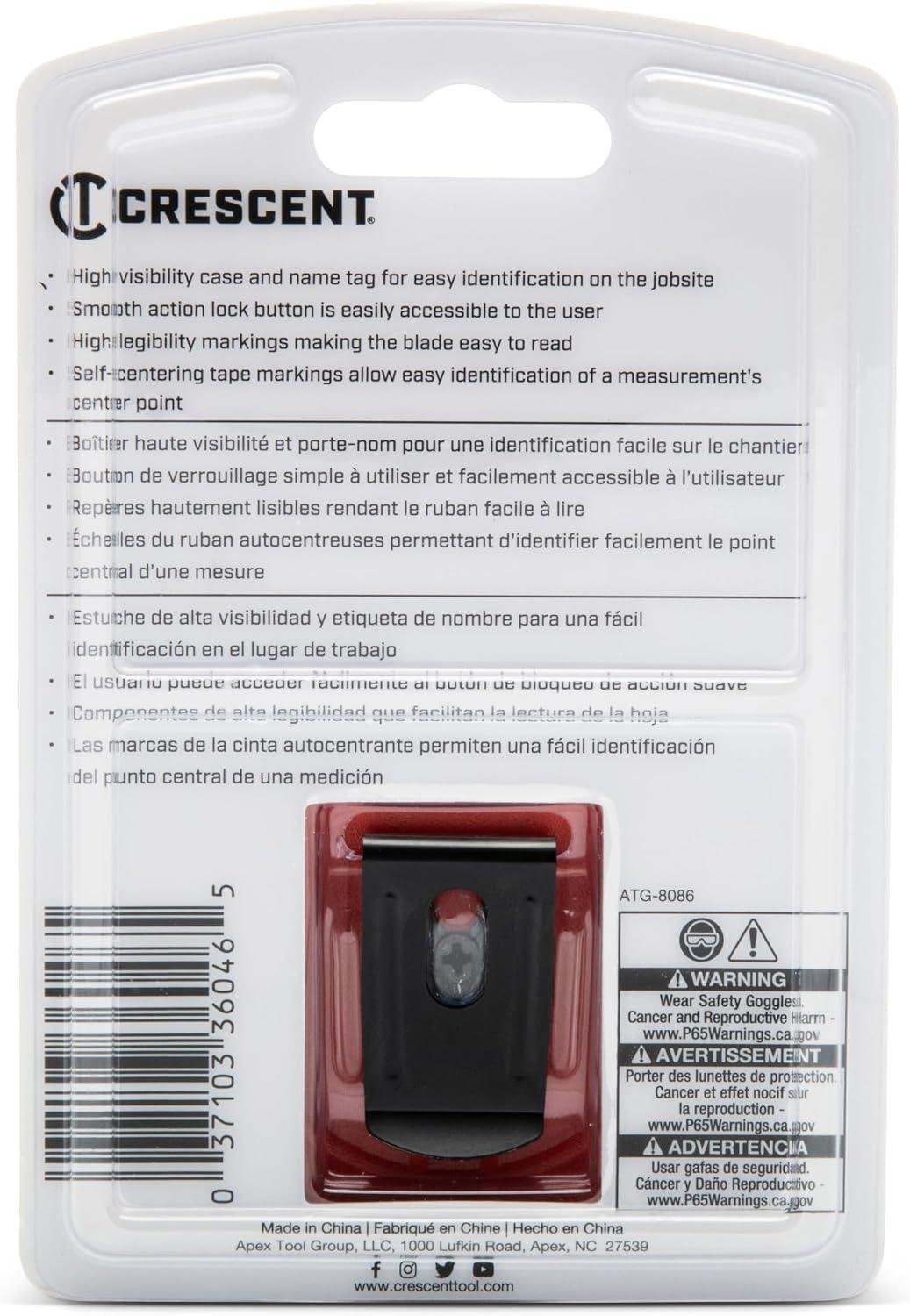
It includes a tether hole, which is handy if you work on ladders, around outfeed tables, or just want to avoid drops in a busy shop. The high-visibility case and name space are practical in shared shops-easy to spot and easy to label so it doesn’t “walk off” during a build.
Can it handle production work, or is it just for hobby projects?
It’s positioned as a “trade tape,” so it’s built for repeat use-durable case, easy-read blade, and a lock designed for frequent operation. For production, the self-centering blade can speed repetitive center marks (hardware locations, evenly spaced layout) and reduce layout errors, which matters when you’re batching parts.
What maintenance does a tape measure like this need in a woodshop?
Very little, but a few habits help: keep sawdust from packing into the blade return, wipe pitch/resin off the blade so markings stay readable, and avoid letting the blade snap back hard (that can shorten spring life over time). Using the tether hole can also prevent the most common “failure mode” in shops-drop damage.
Is it worth paying more for this versus a basic tape without self-centering?
If you routinely mark centers-door and drawer hardware, centered joinery, finding midpoints for drilling-the self-centering blade can save time and reduce mistakes enough to justify the upgrade. If you mostly measure rough lengths or only occasionally need centers, a cheaper tape can still work, and you can use a combination square or center-finding rule when precision matters.
Achieve New Heights
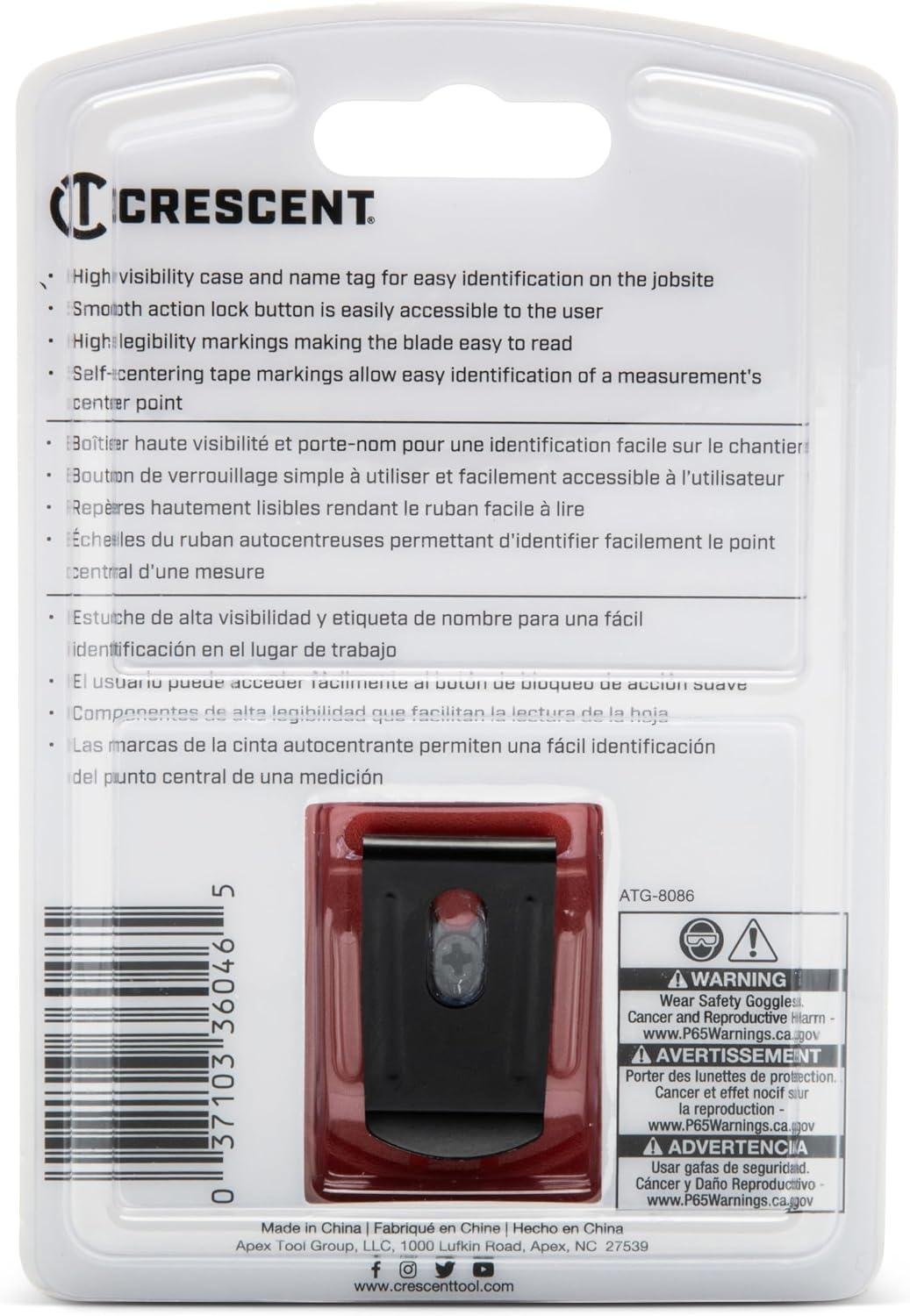
The Lufkin 25′ Self-Centering Power Tape (L625SC-02) is a trade-ready tape measure built around a durable, high-visibility case, a smooth-action lock, and bold, easy-to-read markings. Its standout feature is the self-centering blade, which clearly shows the midpoint of any measurement-handy for laying out centered pulls, dado locations, and symmetrical parts. For solo work, it also includes an integrated nail slot for long pulls plus a tether hole to help prevent drops. Customer feedback commonly highlights the legibility and the convenience of the lock and centering marks, with the main limitation being that it’s still a standard tape-bulkier than compact models and not a specialty layout rule.
Best for hobby woodworkers with small to medium projects, cabinet makers needing quick center marks, and beginners learning accurate layout. Consider alternatives if you want a slimmer pocket tape, prefer a dedicated rule for fine joinery, or need a longer tape for jobsite framing. Overall, it’s a solid mid-range option for repeatable, centered measurements and everyday shop durability.
Want to see current pricing and customer photos? View on Amazon & Read More Reviews →