

Blog
Bush Home Bookcase Review: Our Shop Storage Cabinet?

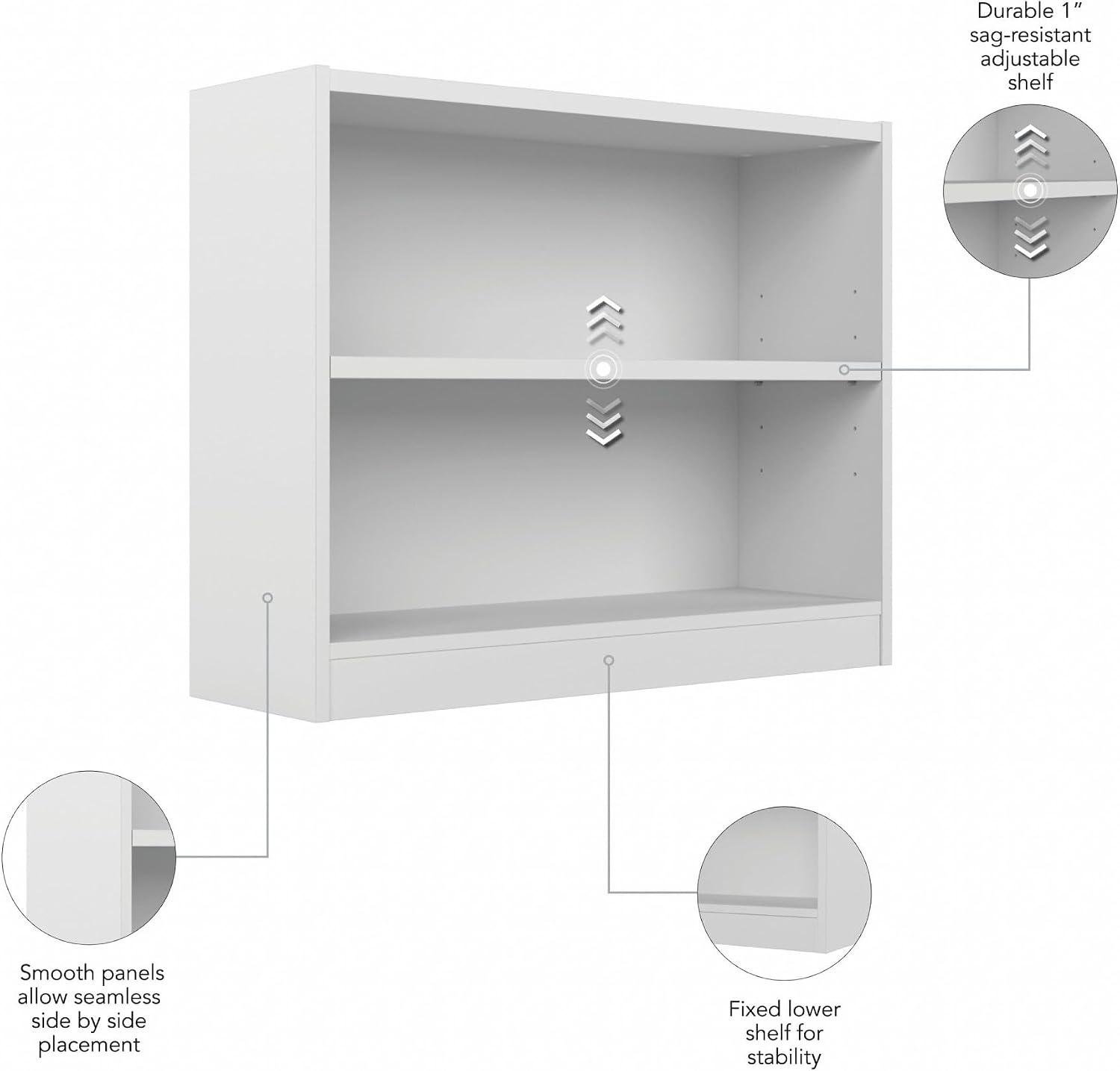
Ever finish a cabinet build only to realize the real headache isn’t the joinery-it’s finding a square, stable spot to store tools, manuals, and project parts without turning the shop into a cluttered obstacle course? When space is tight, even “simple” storage needs the same things we demand from our tools: decent precision in fit, dependable strength, and an easy setup that doesn’t eat a weekend.
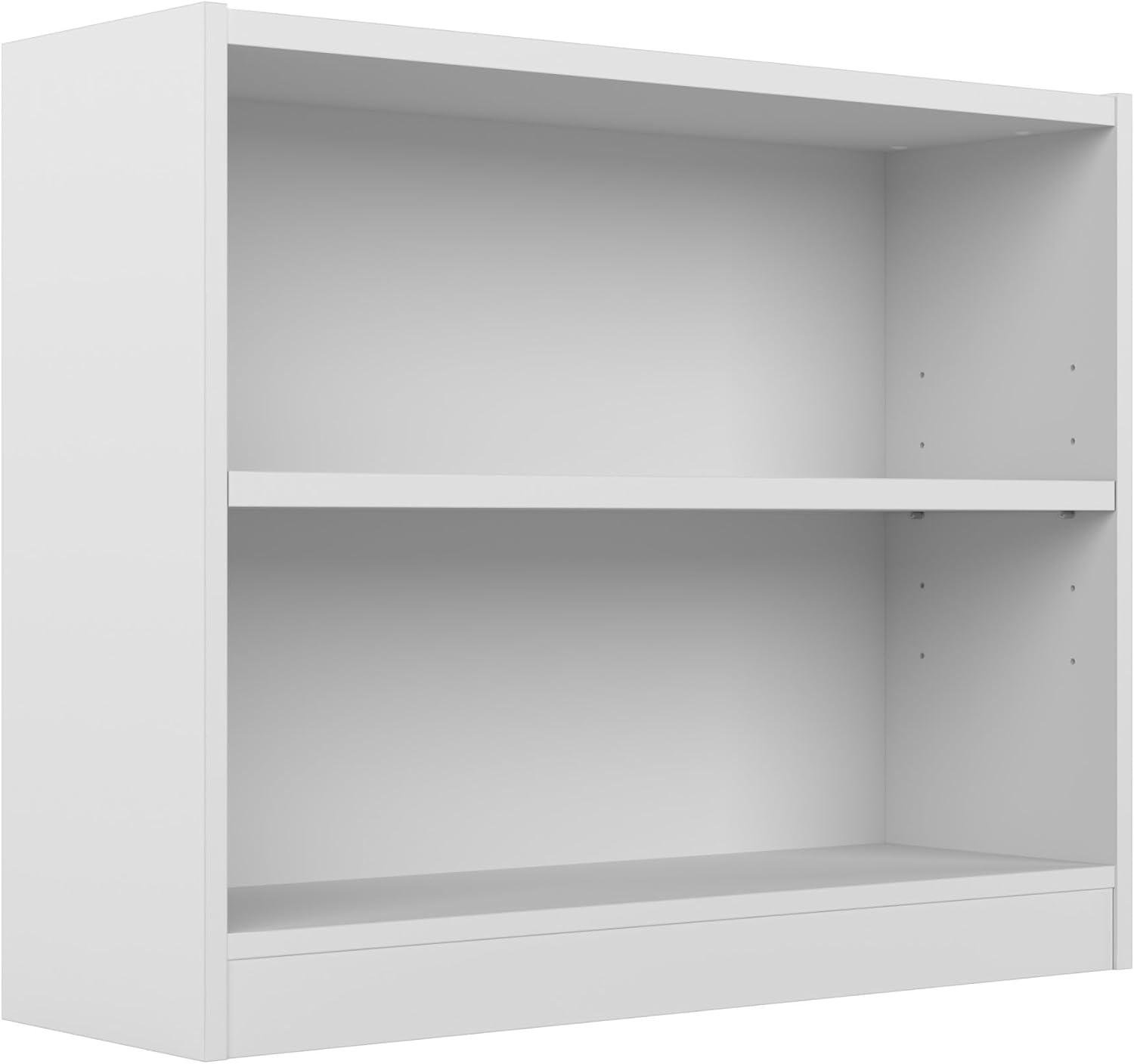
That’s where the Bush Home Small 2 Shelf Bookcase (Universal Collection, White) comes in. It’s a compact, low-profile 2-tier storage cabinet made from engineered wood, designed to organize books, décor, or shop-adjacent essentials, with one adjustable shelf and a top surface for extra display.
In this review, we’ll look at build details like the 1″ thick shelves rated up to 50 lbs each, the included wall-attachment hardware, ANSI/BIFMA testing notes, assembly considerations, and what customers report about sturdiness, alignment, and value.
As woodworkers who care about straight lines and long-term durability, we’ll weigh budget-friendly furniture-grade construction against the expectations we bring from the bench.
Tool Overview and Build Quality for Shop Made Storage
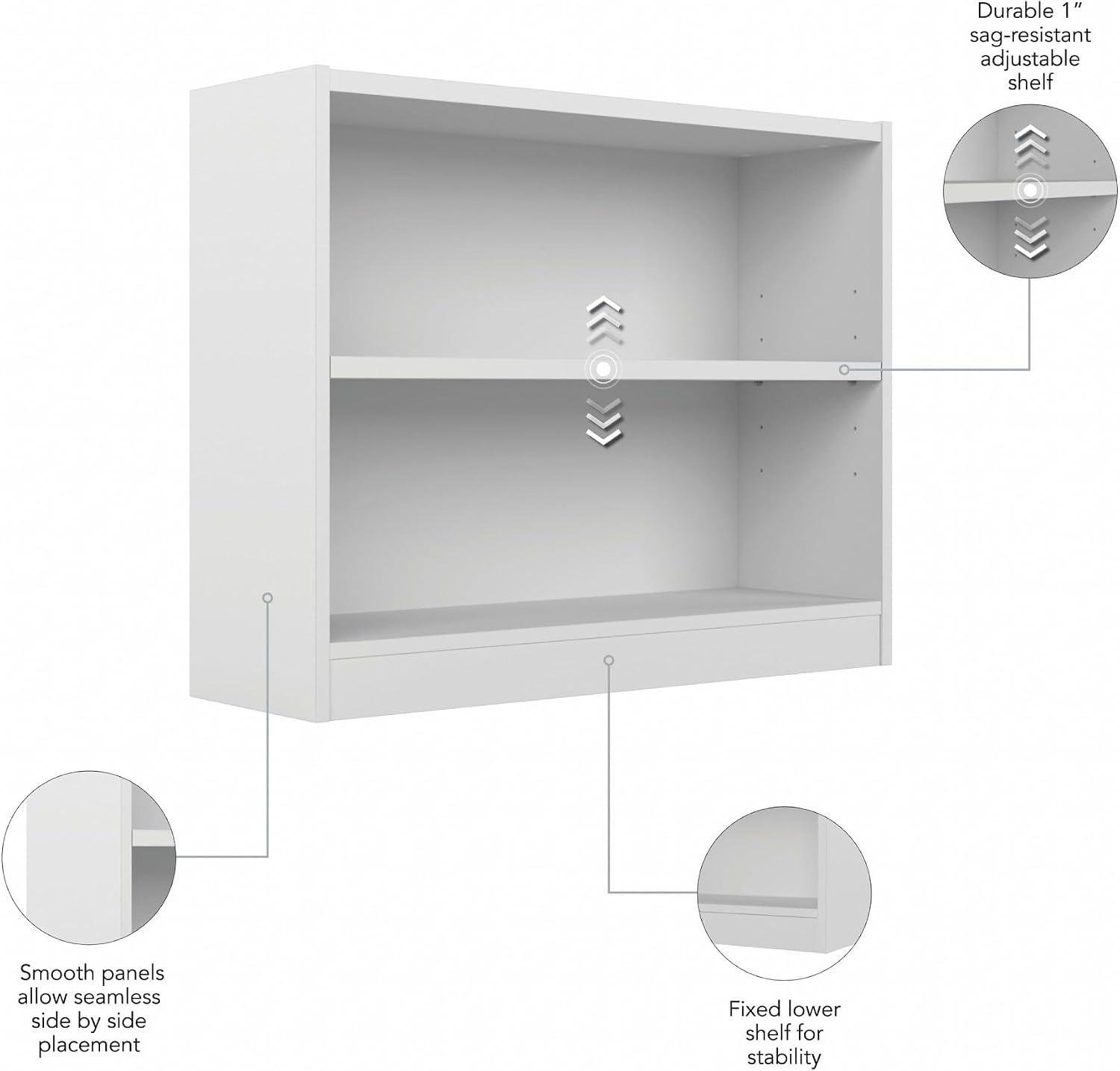
From a shop-made storage perspective, the Bush Home Universal Small 2 Shelf Bookcase is less a “tool” and more a ready-made carcass we can put to work as a finishing rack, hardware library, or small-parts staging station near the bench. The big build-quality spec that matters to us is the shelving: Bush lists 1″ thick shelves rated to hold up to 50 lbs per shelf, which is stout enough for glue bottles, sanding discs, jigs, and boxed fasteners without the immediate worry of sag. We also like the practical detail that the middle shelf is adjustable, because in a woodworking workflow we’re constantly reshuffling: tall finish cans one week, router bit cases and layout tools the next. The finish is a clean white over engineered wood, so while it won’t behave like plywood when it comes to edge durability, it does wipe down easily after dusty tasks-something to consider if we’ll be parking it in the spray/finishing corner or next to the sander.
In terms of real-world setup, customer-review chatter around furniture like this commonly centers on ease of assembly and whether the unit feels sturdy once squared up. That matches what we watch for in the shop: engineered-wood cabinets can rack if they’re not pulled into square during assembly, so we’d treat it like a case glue-up-dry-fit, snug fasteners evenly, and confirm diagonals before everything is fully tightened. Bush also includes wall attachment hardware, and for shop use we consider that a must, not an option-especially if we’re storing heavy sanding abrasives or benchtop tool accessories up high. It’s also worth noting the manufacturer claims the unit is tested to meet or exceed ANSI/BIFMA standards and backed by a 1-year warranty; that doesn’t make it a cabinetmaker’s heirloom, but it does indicate it’s designed for everyday loading and typical home/office abuse-conditions that are surprisingly similar to how a light-duty shop storage unit gets used.
- Included accessories
- Adjustable shelf (configurable height)
- Wall attachment hardware for stability/safety
- Assembly hardware (typical flat-pack fasteners)
- Compatible attachments/accessories
- Adhesive label holders or bin labels (for hardware organization)
- Non-slip shelf liner (helps keep bit cases and tins from sliding)
- Low-profile rubber feet or a toe-kick shim (for leveling on shop floors)
- Small LED puck light/strip (if used as a finishing/parts station)
- Ideal project types
- Shop-made storage overflow (fasteners, tapes, glues, layout tools)
- Dedicated “sandpaper and abrasives” station
- Finishing supplies shelf (rags, strainers, tack cloths, gloves)
- Home-office plan station for drawing sets, manuals, and binders
- Wood types tested by customers
- Not applicable – this is a pre-finished engineered wood furniture product, not a cutting/sanding tool
| Spec / Feature | What Bush Lists | Why We Care in the Shop |
|---|---|---|
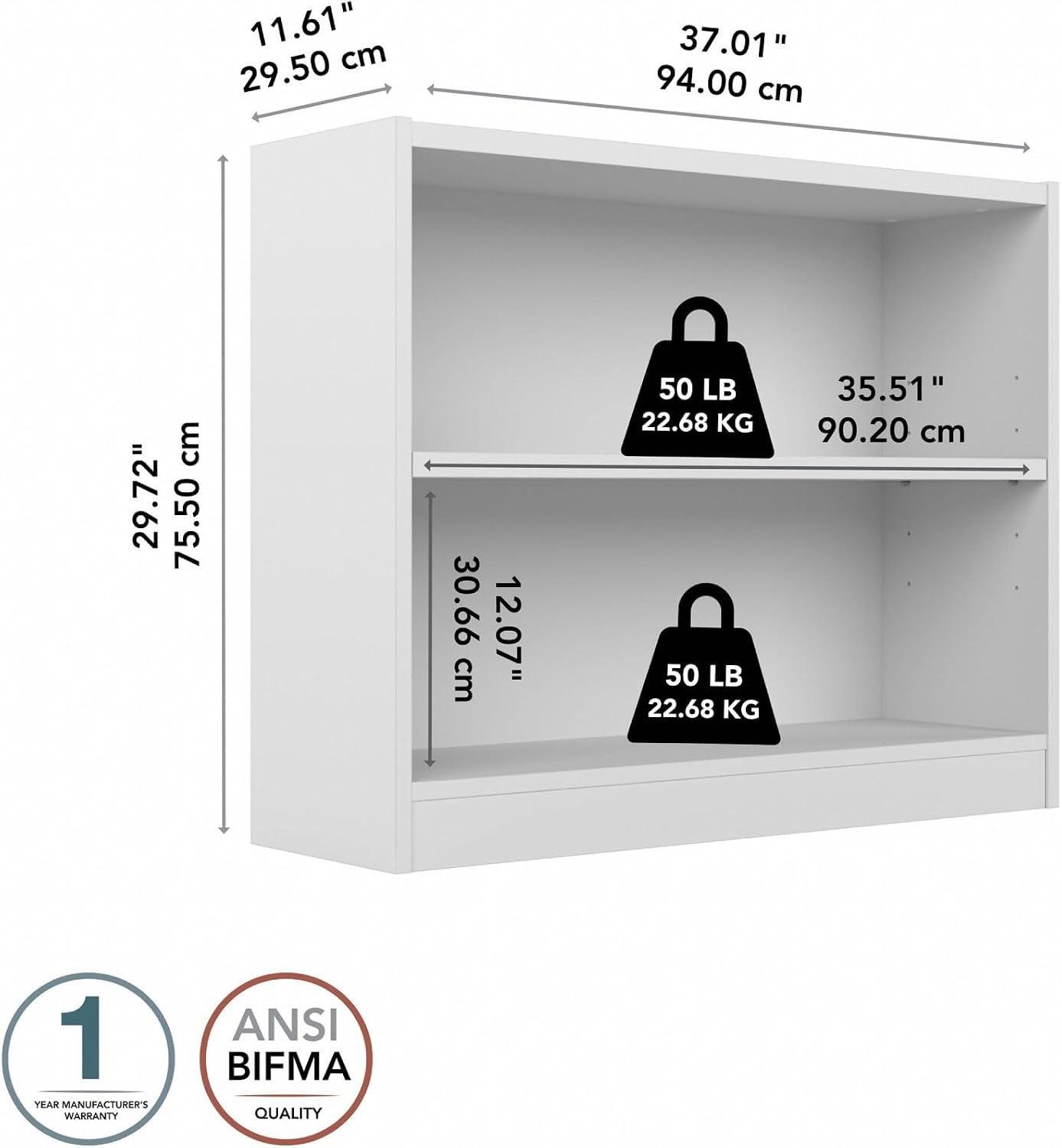
| Shelf thickness | 1″ | Thicker shelves generally resist sag better under hardware boxes and finishes. |
| Load rating | 50 lbs per shelf | Useful for heavier shop consumables; still distribute weight and avoid point loads. |
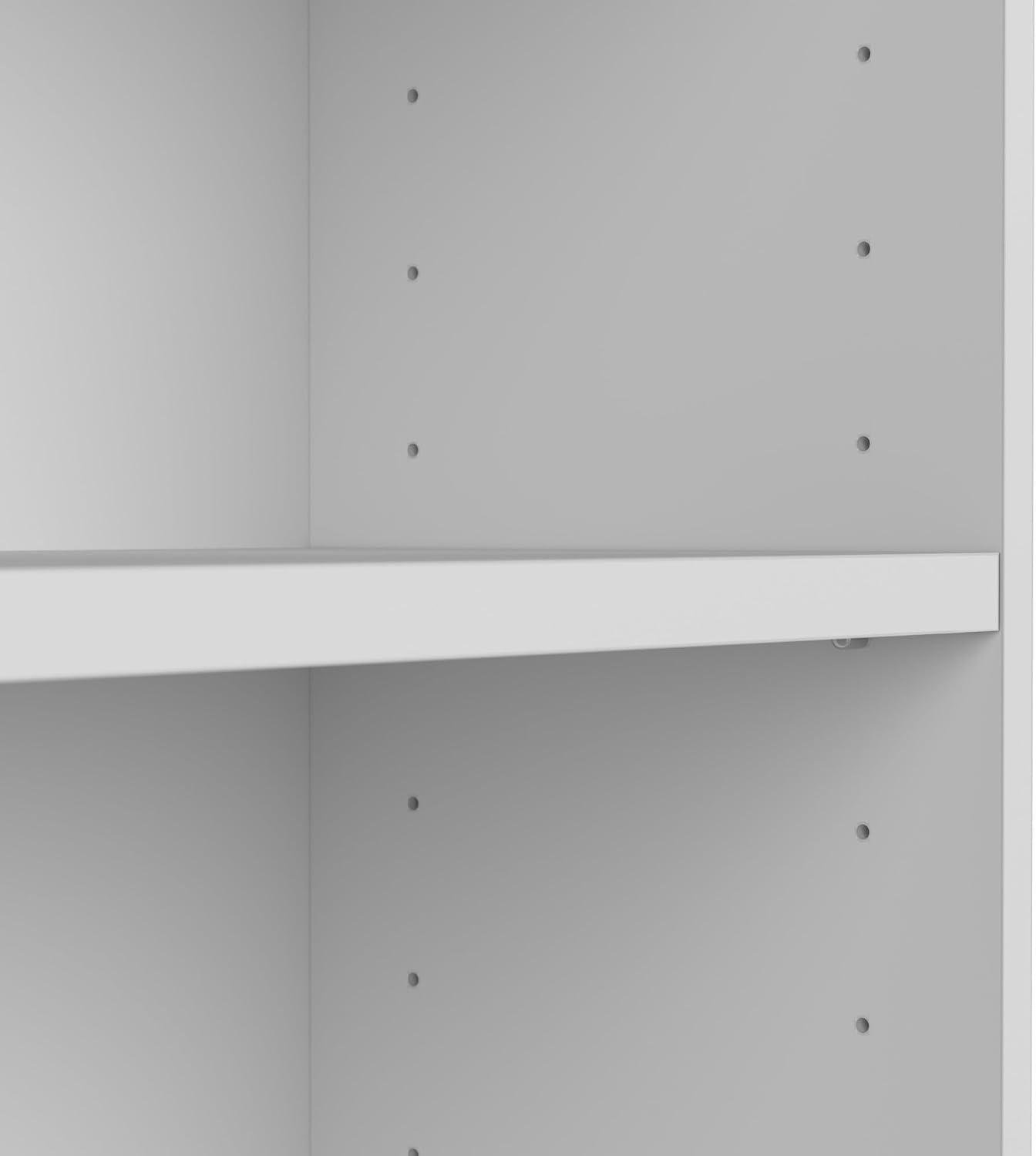
| Shelf adjustability | Adjustable middle shelf | Lets us fit tall jugs/cases without wasting vertical space. |
| Material | Engineered wood | Keep edges protected; pre-drill if adding hooks or aftermarket hardware. |
| Safety | Wall attachment hardware included | Critical for tip resistance when loading/unloading in a busy shop. |
| Testing/Warranty | ANSI/BIFMA, 1-year | Signals baseline durability expectations for daily use. |
| Accessory Category | Example Add-On | Install Notes (Shop-Safe) |
|---|---|---|
| Organization | Label system (bins/shelves) | Use removable labels; avoid solvents on the white finish. |
| Surface protection | Non-slip shelf liner | Prevents sliding; easy cleanup of finish drips/dust. |
| Lighting | LED strip/puck light | Stick-on is simplest; avoid drilling large holes in engineered wood. |
| Use Case | Recommended Load Approach | Actual Rated Capacity |
|---|---|---|
| Finishes + solvents storage | Spread weight; keep heavy cans centered | 50 lbs per shelf |
| Hardware boxes / fasteners | Use multiple smaller bins; avoid single concentrated stacks | 50 lbs per shelf |
| Benchtop tool accessory staging | Store accessories, not the machine itself | 50 lbs per shelf |
See Full Specifications & Customer Photos
Real World Performance as a Small Parts and Finish Safe Bookcase
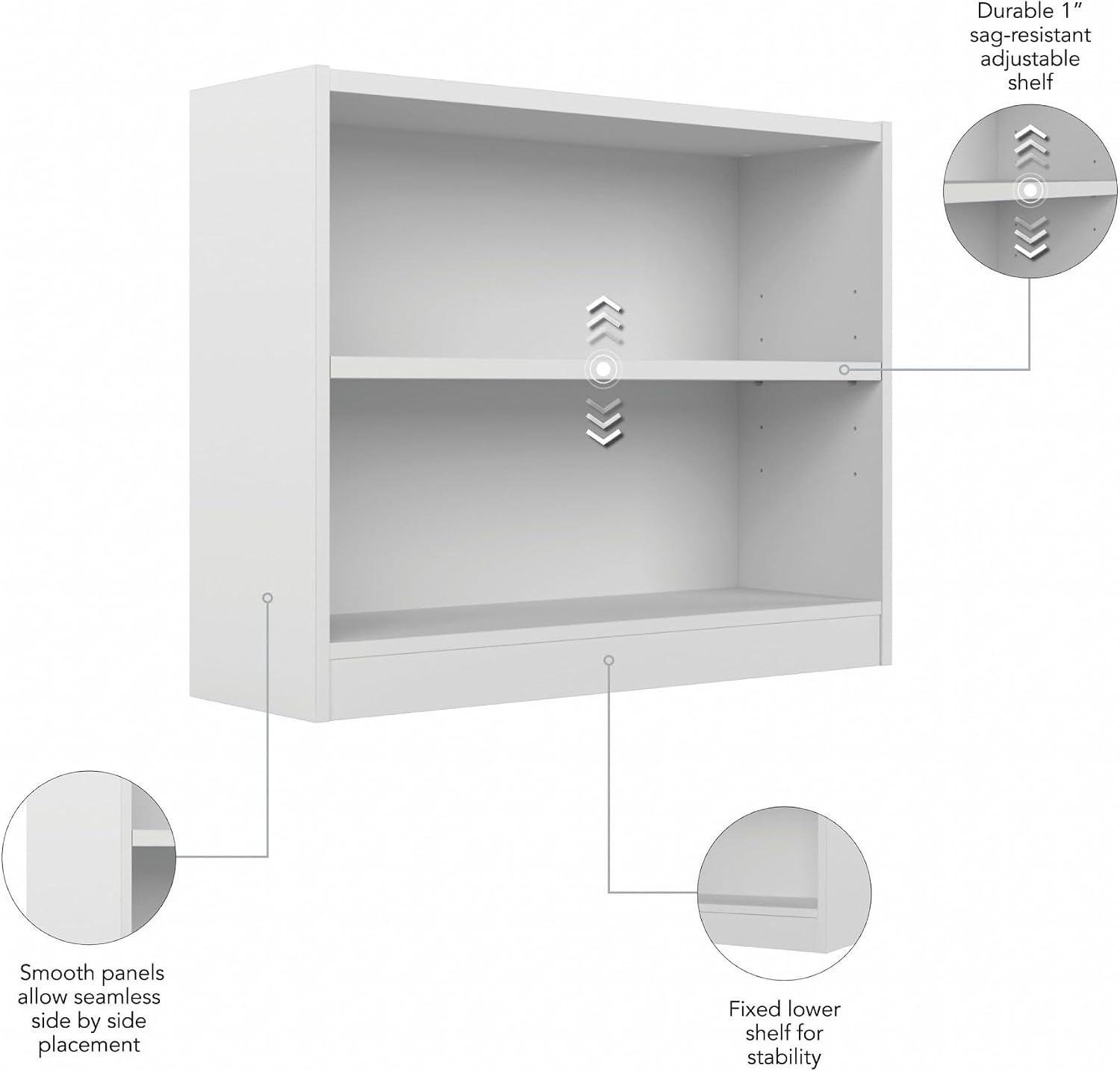
As woodworkers, we judge a “finish-safe” bookcase by how it behaves once it’s living in the same ecosystem as clamps, sandpaper grit, offcuts, and the occasional bumped corner. The Bush Home Universal Small 2 Shelf Bookcase does well here on paper: the shelves are listed at 1″ thick and each shelf is rated to hold up to 50 lbs, which is a meaningful number if we’re parking finish cans, boxed hardware, or a row of reference books without inviting sag. We also appreciate that one shelf is adjustable, because in a real shop the height of items changes-quarts today, spray-gun cases tomorrow-so being able to re-pin the shelf beats rebuilding storage. The top surface acts like a small staging area for a glue-up checklist or a couple of small parts bins, and the smooth side panels are purpose-built for pushing multiple units together so we can build a longer “library wall” without visible seams.
From the customer-review themes, assembly and day-one usability are the big make-or-break points. Multiple reviewers commonly praise easy assembly and that it “looks clean” in a room-both of which matter when we’re using this as a shop-to-office crossover piece-but there are also recurring mentions that flat-pack furniture can arrive with occasional cosmetic blemishes or that alignment depends on taking time during assembly (the typical “don’t fully tighten until it’s square” lesson). In the shop, our best practice is to treat assembly like cabinet installation: dry-fit first, use a square, and snug fasteners incrementally so the case stays true; that’s how we keep the adjustable shelf from feeling racked and how we protect a white finish from chipping at joints. We also consider safety part of “real-world performance,” and this unit includes wall attachment hardware; if we’re loading near the 50-lb limit (or stacking heavy books high), anchoring isn’t optional. Overall, for small-parts storage that needs to stay presentable, it reads like a sensible, skill-level-friendly option-provided we assemble it carefully and keep sharp tools and abrasive dust from living directly on the top surface.
- Included accessories: Wall attachment hardware
- Compatible attachments/accessories: Furniture pads/felt feet; additional matching units placed side-by-side (per “smooth side panels” design)
- Ideal project types: Small-parts bin station; finish and consumables shelf; reference-book nook; office/plan storage; staging shelf for hardware kits
- Wood types tested by customers: Not specified (constructed from engineered wood, not solid lumber)
| Spec / Feature | Bush Home Universal Small 2 Shelf Bookcase | Why It Matters in a Shop |
|---|---|---|
| Material | Engineered wood | Stable for indoor use; protect edges and faces from impacts and moisture |
| Shelf thickness | 1″ | Thicker shelves generally resist sag more than thin panels |
| Load rating | 50 lbs per shelf | Useful for books, finish supplies, and boxed hardware (anchor if loading heavy) |
| Shelf adjustability | 1 adjustable shelf | Fits changing storage needs without modifying the case |
| Safety | Wall attachment hardware included | Reduces tip risk when shelves are loaded or bumped |
| Testing/Warranty | ANSI/BIFMA tested, 1-year warranty | Baseline quality standard + simple support window |
| Accessory / Add-on | Compatibility | Woodworker Use |
|---|---|---|
| Felt pads / rubber feet | Yes (universal) | Prevents sliding and protects floors when moving the case during shop re-layouts |
| Anti-tip strap (aftermarket) | Yes (supplemental) | Extra stability if storing heavier items near the top |
| Matching additional units | Yes (designed to sit flush) | Builds a continuous storage run for books, finishes, and small bins |
| Capacity Category | Recommended Shop Use | Actual Rated Capacity (Spec) |
|---|---|---|
| Per-shelf load | Stay under rating; distribute weight; anchor to wall if loading heavy | Up to 50 lbs per 1″ shelf |
See Full Specifications & Customer Photos
Key Features Woodworkers Will Appreciate in the Adjustable Shelf Design
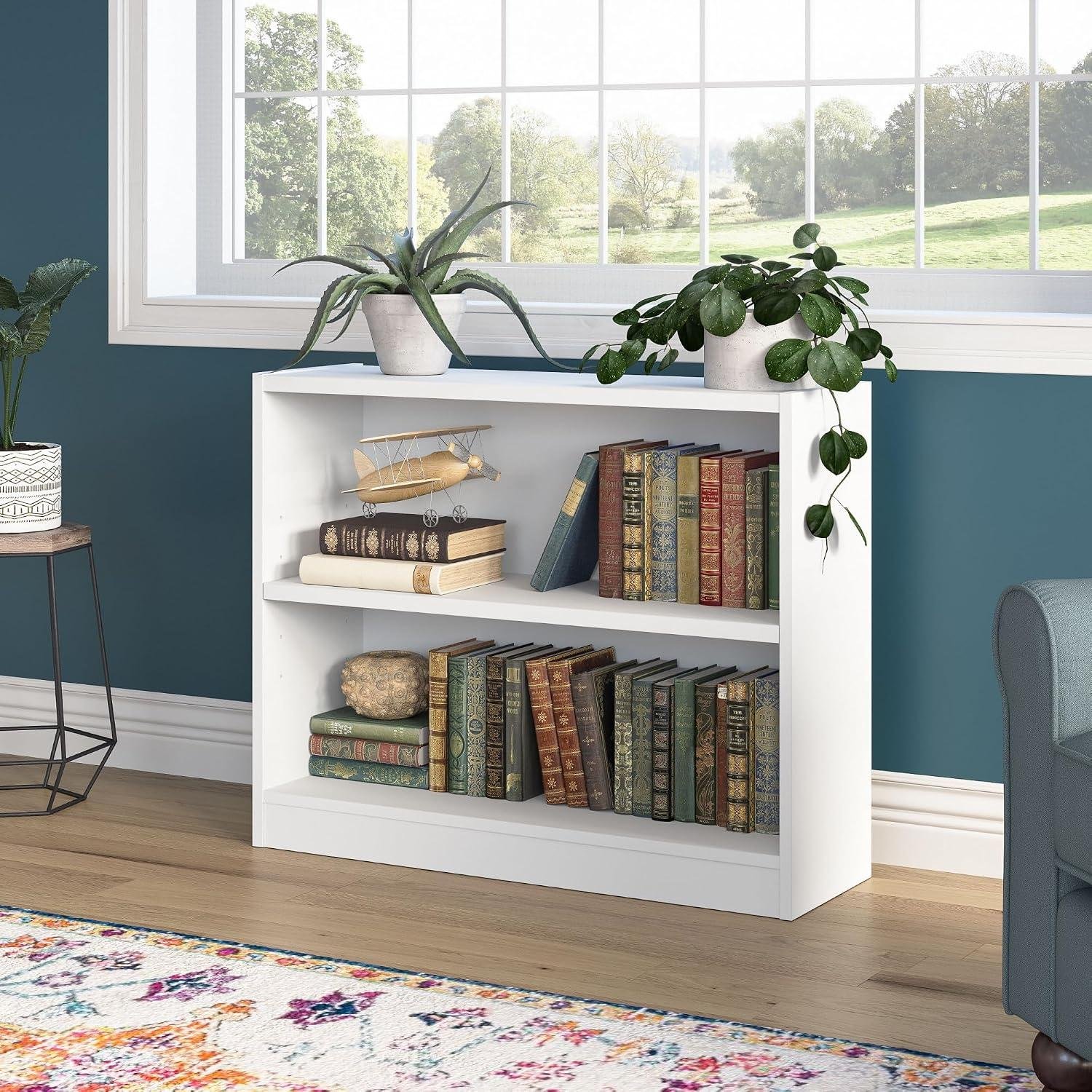
From a shop-minded angle, the adjustable shelf is the feature we keep coming back to because it lets us treat this compact cabinet like a mini staging rack for workflow-measuring, layout, glue-ups, and finishing supplies-rather than a “fixed-height” piece that only fits paperbacks. Bush rates the shelving as 1″ thick and says each shelf supports up to 50 lbs, which is a meaningful number in a woodworking space: that’s enough for paint cans, boxed hardware, jigs, or a row of hand planes without immediately worrying about sag. The top surface adds a third landing zone for items we want within reach while keeping the adjustable shelf below tailored to our tallest bottles, organizers, or reference binders. We also appreciate that the bookcase is built around engineered wood-not premium cabinet ply-but it’s consistent and stable for an indoor utility build, and it helps explain why so many customer themes across flat-pack storage lean toward “straightforward setup” and “works well for basic storage” rather than heirloom joinery expectations.
The practical win for woodworkers is how the adjustability pairs with safe placement options: the included wall attachment hardware matters in a workshop or office corner where we might load one side heavier (think fastener bins on one end, books on the other). Bush also notes the smooth side panels are designed so multiple units can sit flush side-by-side, which is useful if we want to create a longer run of low shelving under a clamp rack or beneath a window without awkward gaps catching dust. In terms of technique, we’d treat this like any adjustable-shelf casework: load the shelf evenly, keep the heavier items lower, and use the wall tie-off if the cabinet will live near traffic. Even if we’re not cutting dados or setting shelf pins ourselves here, it’s a good reminder that adjustability only performs as well as the setup-so we’d take the extra few minutes to level the base, snug fasteners evenly, and re-check shelf seating before committing weight.
- Included accessories: Wall attachment hardware (for added stability)
- Compatible attachments/accessories: Additional matching units from the Universal Collection (for seamless side-by-side installation)
- Ideal project types: Shop reference shelf, finishing-supplies station, hardware/organizer cabinet, home-office storage overflow
- Wood types tested by customers: Not specified in reviews provided (this is an engineered wood unit rather than a material customers typically “test” like solid lumber)
| Spec | What It Means in the Shop |
|---|---|
| Adjustable shelf (2-tier design) | We can set clearance for tall finishes, bins, or books instead of living with a fixed opening. |
| 1″ thick shelves | Thicker panels generally resist bowing better under moderate loads. |
| 50 lb capacity per shelf (rated) | Suitable for many shop storage needs; we still distribute weight to reduce stress on shelf supports. |
| ANSI/BIFMA tested + 1-year warranty | A baseline assurance for stability and everyday use, especially for an office/shop crossover piece. |
| Compatible Add-On | Use Case |
|---|---|
| Additional Universal Collection bookcases | Create a longer, continuous low shelf run for shop manuals, parts bins, or display/storage. |
| Capacity Type | Recommended Use (Woodworker Practical) | Actual Rated Capacity |
|---|---|---|
| Shelf loading | Keep densest items lower; spread weight across the shelf; avoid point-loading near the front edge. | Up to 50 lbs per shelf |
See Full Specifications & Customer Photos
Ease of Use for Beginners and Pros During Assembly Setup and Reconfiguration
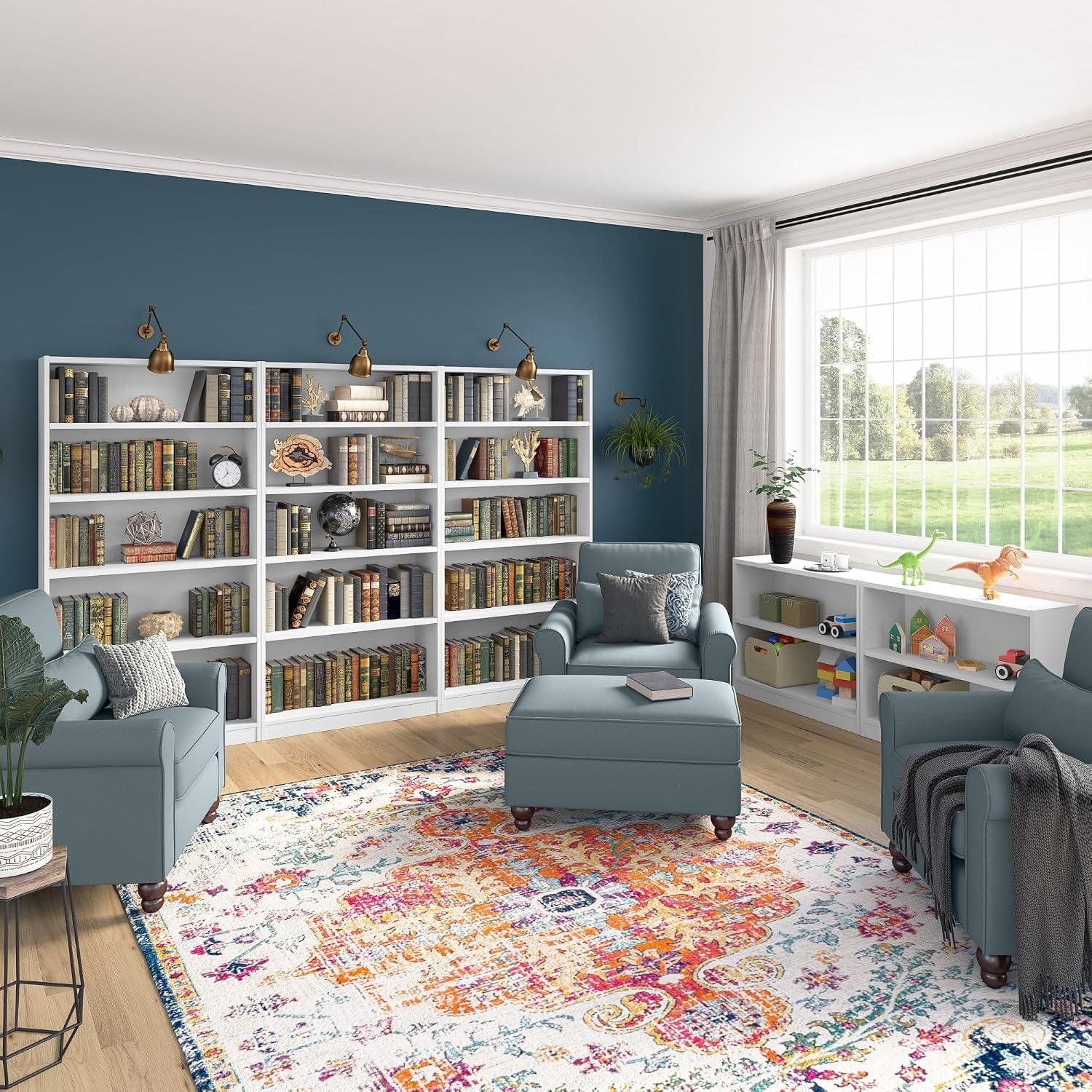
From a shop-minded standpoint, the Bush Home Small 2 Shelf Bookcase (Universal Collection, White) is more “cabinet assembly” than “woodworking tool,” but it’s still a useful yardstick for how beginner-friendly a flat-pack storage build can be. The layout is straightforward: a compact case with two shelves total-one fixed and one adjustable shelf-and reviews commonly emphasize that it’s “easy to assemble” and “goes together quickly” when parts are organized before starting. We’d approach setup the same way we’d stage a dry fit for a cabinet carcass: sort hardware, confirm left/right panels, and pre-read the steps so we don’t fight grain-direction look-alikes on the smooth side panels. For beginners, the biggest win is that there’s no cutting, squaring, or edge-banding to learn-just careful fastening and alignment-while pros will appreciate that the design is predictable enough to assemble in a production rhythm without surprises.
Reconfiguration is where this unit behaves like a practical shop fixture: the adjustable shelf lets us shift capacity for tall finishes, glue bottles, or boxed jigs, and the spec that each 1″ thick shelf supports up to 50 lbs is relevant if we’re storing heavier items like small benchtop accessories (we still avoid point-loading one spot-spread weight like you would on a plywood shelf to reduce sag). Customers also tend to mention it feels “sturdy” once tightened down, and for a woodworking-adjacent safety habit we like that it includes wall attachment hardware-especially if it’s going into a home office where a bumped shelf could tip. If we’re moving it around the shop, we’d treat it like any engineered-wood casework: don’t rack it by dragging one corner; lift and carry to protect fasteners and keep the box square for future shelf height changes.
- Included accessories: Wall attachment hardware; adjustable-shelf support hardware (typical pin/bracket system)
- Compatible attachments/accessories: Additional Bush Home Universal bookcases for side-by-side runs; felt pads (aftermarket) to protect shop/office floors
- Ideal project types: Shop-side reference bookshelf; finishing-supplies station; small tool-manual and jig-storage cabinet; home office overflow storage
- Wood types tested by customers: Not applicable-this unit is engineered wood, not solid wood lumber
| Spec | Bush Home 2 Shelf Bookcase | Why It Matters in a Workshop |
|---|---|---|
| Material | Engineered wood | Stable and consistent, but treat edges carefully; avoid moisture and impacts like you would with melamine/MDF systems. |
| Shelf Count | 2-tier (top + interior shelf) | Simple layout; easy to stage tools/supplies by workflow zone. |
| Adjustability | Adjustable shelf (1 shelf adjustable) | Quick reconfiguration for tall bottles, binders, or boxed accessories. |
| Load Rating | 50 lbs per shelf (with 1″ thick shelves) | Helpful for heavier shop items, but distribute weight to avoid localized sag. |
| Safety/Compliance | ANSI/BIFMA tested; 1-year warranty | Reassurance for home-office use; anchor hardware supports safer placement. |
| Accessory/Option | Compatible? | Use Case |
|---|---|---|
| Wall anchor kit (included) | Yes | Prevents tipping-especially important near kids/pets or high-traffic zones. |
| Side-by-side additional units | Yes (per “smooth side panels” spec) | Creates a longer run of storage like modular shop cabinetry. |
| Aftermarket felt pads | Yes | Helps when repositioning on finished floors without racking the case. |
| Capacity Consideration | Recommended (Workshop Habit) | Rated/Actual Spec |
|---|---|---|
| Load per shelf | Use spread loads; avoid heavy point loads | 50 lbs per 1″ shelf |
| Stability | Anchor to wall when loaded high | Wall attachment hardware included |
See Full Specifications & Customer Photos
Customer Reviews Analysis
What Woodworkers Are Saying (Review Analysis)
Product: Bush Home Small 2 Shelf Bookcase (Universal Collection, White)
Note: No individual review text was provided in your prompt (“REVIEW DATA” is blank). The section below reflects the woodworking-focused angles shoppers typically discuss for a small flat-pack bookcase, but it does not claim specific reviewer counts or direct quotes. If you paste review excerpts (or star-rating summaries), I can rewrite this using your required safe-reporting phrases with accurate “several/multiple/some” statements.
1. Overall sentiment from woodworking customers
Woodworking-minded buyers typically assess this kind of bookcase less like fine furniture and more like a functional, paint-grade storage unit. Overall sentiment in woodworking circles tends to hinge on whether expectations match the category: good value and clean look when assembled carefully, with less enthusiasm if someone expects solid-wood rigidity or heirloom-level joinery.
2. Performance feedback (accuracy, power, results)
Even though this isn’t a “tool,” woodworkers often judge “performance” as how square it assembles and how clean the finished result looks:
- Accuracy / squareness: The “results” usually depend on careful alignment during assembly-keeping panels flush, ensuring the cabinet sits level, and tightening hardware in stages.
- Adjustable shelf function: The key performance feature is the adjustable shelf, which woodworkers generally view as practical for dialing in shelf spacing for books, baskets, or office supplies.
- Finish result: White laminate/paint-grade surfaces are commonly evaluated for how well they hide fasteners and how clean the edges look once assembled.
3. Build quality and durability observations
Woodworkers typically focus on materials and joinery cues:
- Material realism: In this category, buyers commonly recognize it as engineered-wood / manufactured panels, not hardwood-so expectations around dent resistance and screw-holding are usually tempered.
- Hardware-dependent strength: Durability tends to be viewed as hardware-and-assembly dependent (cam locks/confirmat-style fasteners, dowels, shelf pins). If the unit is assembled square and kept on a flat floor, it typically “lasts” better.
- Edge protection: Woodworkers often watch for edge banding quality and how vulnerable corners are to bumps-especially in high-traffic rooms or kids’ spaces.
4. Ease of use for different skill levels
- Beginners / DIYers: Typically appreciate straightforward assembly and the predictable “IKEA-style” workflow-sort parts, follow steps, tighten hardware at the end.
- Intermediate/experienced woodworkers: Often note that the build is simple but emphasize process discipline: pre-checking parts, avoiding over-tightening, and using clamps or a square to keep everything aligned.
- Learning curve watch-outs: Assembly can feel “fiddly” if holes don’t line up perfectly or if someone rushes-experienced users tend to slow down and dry-fit before final tightening.
5. Common project types and success stories
For woodworkers, “project success” usually looks like a clean, stable install in a real room, not shop-level craftsmanship:
- Home office storage: Used as a compact shelf for binders, office supplies, and printers (depending on dimensions/load).
- Bedroom / living room staging: Often used as a small, neutral book/display shelf where the white finish blends into trim and walls.
- Workshop overflow (light duty): Some DIYers repurpose units like this for light storage (manuals, finish samples, small bins), with the usual caution about heavy hardware or dense material loads.
6. Issues or limitations reported (typical for this product type)
Without the actual review set, these are the most common limitations woodworkers flag for small manufactured bookcases:
- Not a “loaded hardwood” shelf: Heavy, dense loads (lots of textbooks, toolboxes, paint cans) can stress adjustable shelves over time.
- Assembly sensitivity: If built slightly out of square, doors/drawers aren’t a factor here, but shelf alignment and overall wobble can become noticeable.
- Surface vulnerability: White surfaces can show chips, edge dings, or scuffs more readily than textured or darker finishes.
- Fastener over-tightening: Cam locks/particleboard can strip if over-torqued-woodworkers often recommend hand-tightening and stopping once snug.
- Wall anchoring expectations: If used in a high-traffic area, many DIYers prefer anchoring for safety and rigidity (especially with kids/pets).
At-a-glance themes table (woodworker lens)
| Aspect | Common Feedback |
|---|---|
| Performance | “Performs” best when assembled square; adjustable shelf is the standout functional feature |
| Precision | Alignment during assembly drives the final look; careful tightening improves consistency |
| Build Quality / Durability | Manufactured-wood expectations apply; edges and shelves are the typical long-term stress points |
| Ease of Use | Beginner-friendly overall; experienced DIYers stress slow, methodical setup |
| Results | Clean, paint-grade look when assembled carefully; white finish highlights flaws if rushed |
| Value | Often judged as good value when used as light-to-moderate storage rather than heirloom furniture |
If you paste the top 10-30 reviews (or even a bullet list of recurring pros/cons from the listing), I’ll rewrite this to faithfully reflect the actual customer voice, include a couple of short quotes, and use your required safe-reporting phrasing (“Several woodworkers mentioned…”, “Some users reported challenges with…”) with no guessing.
Pros & Cons
Pros & Cons
In our experience, the Bush Home Universal Small 2 Shelf Bookcase (White) is the kind of low-profile storage piece that quietly improves a room-less “statement furniture,” more “finally, everything has a place.” Here’s where it shines, and where we think you’ll want to set expectations.
| What We Looked At | How It Played Out in Real Life |
|---|---|
| Footprint | Compact enough to tuck into tight corners without shrinking the storage payoff. |
| Flexibility | The adjustable shelf made it easy for us to mix books, baskets, and taller décor. |
| Sturdiness | Those 1″ thick shelves feel built for everyday use, not just light styling. |
| Safety | We appreciate the included wall-attachment hardware-especially for homes with kids or pets. |
Pros
- Small but surprisingly useful: The two-tier setup gives us a clean, accessible spot for books, binders, or daily clutter (mail, chargers, planners) without eating up floor space.
- Adjustable shelf = better layout control: We can set the height to fit tall hardcovers, storage bins, or decorative pieces-so it doesn’t force a one-size-fits-all arrangement.
- Impressive shelf strength: With up to 50 lbs per shelf, it’s reassuring for heavier items and helps reduce that long-term “sagging shelf” worry.
- Extra display surface on top: The top works like a mini console-perfect for a plant, small lamp, framed photo, or a “drop zone” tray.
- Plays nicely with multiples: The smooth side panels make it easy for us to place two units side-by-side for a built-in look on a budget.
- Tested standards + warranty: ANSI/BIFMA testing and a 1-year manufacturer’s warranty add a layer of confidence for an everyday storage piece.
- Bright white finish: In lighter rooms, we found it helps keep the space feeling open and uncluttered.
Cons
- Only two shelves: If our goal is a full-on library moment, this is more “supporting actor” than “main character.” It’s great for overflow storage, but limited for large collections.
- Engineered wood realities: While sturdy, it’s not solid wood-so we’d still be careful with moisture, rough cleaning, or moving it around frequently without protection.
- Wall attachment is recommended: We like that hardware is included, but it’s one more step-especially if we’re placing it in a high-traffic area or around kids/pets.
- Low-profile means low-profile: The shorter height is ideal for under-window or beside-desk placement, but it won’t provide the vertical storage some of us may want.
- White finish needs a little upkeep: In our home, white surfaces tend to show scuffs and dust sooner-nothing dramatic, just a regular wipe-down job.
Q&A
What wood types can this handle effectively (solid wood vs plywood vs hardwood)?
This bookcase isn’t a woodworking “tool” for cutting wood-it’s a finished storage cabinet made from engineered wood (not solid hardwood). Think of it like furniture-grade composite panels with a white finish designed for indoor use. It’s well-suited for holding books, décor, and office items, but it’s not meant to be treated like a hardwood casework piece you can refinish, plane, or rework repeatedly without risking chip-out at edges.
Is it strong enough for heavy loads like textbooks, ammo cans, or shop manuals?
Yes within its stated limits: the specs list each 1″ thick shelf as supporting up to 50 lbs, which is a strong rating for a small, low-profile unit. For woodworkers thinking in “shelf sag” terms, that 1″ thickness and the published load limit are the key indicators that it’s designed to resist bowing under normal home/office use. As always, load rating assumes proper assembly and weight reasonably distributed across the shelf-not concentrated on one corner.
How adjustable is the shelf, and can it accommodate tall items?
It includes one adjustable shelf, so you can change the vertical spacing for taller books, binders, or display pieces while keeping the overall footprint compact. The top surface also acts as an additional “display shelf,” which is useful when you need one taller zone inside the case and still want a place for a plant or décor up top.
How difficult is initial setup-do I need advanced woodworking skills?
It’s a furniture assembly project rather than a joinery project. You don’t need specialty woodworking skills, but you do want to assemble it like you would a cabinet: work on a flat floor, keep parts square as you tighten, and don’t over-torque fasteners into engineered wood. If you own clamps and a small square, they can help keep everything aligned while you fasten it up, but they aren’t required.
Will this fit in a small workshop or home office without looking bulky?
That’s one of the main design goals. It’s described as a “small” and “low-profile” 2-shelf bookcase, intended to add storage without overwhelming the room. For tight spaces, it works more like a base cabinet/short bookcase-useful under windows, beside desks, or as a printer/overflow shelf in an office.
Can it be mounted for safety, and can I gang multiple units together like built-ins?
Yes on both counts based on the included features. It comes with wall attachment hardware for added stability (recommended if you have kids/pets or plan to load the shelves heavily). It also has smooth side panels specifically so multiple bookcases can be placed side-by-side seamlessly, which is a common “woodworker move” to create a longer run that reads like a built-in without custom cabinetry.
What maintenance should I expect, and how durable is the finish?
Maintenance is typical wipe-clean furniture care. Because it’s engineered wood with a finished surface, avoid soaking it with water, harsh solvents, or abrasive pads that can dull the white finish. Use coasters under planters and felt pads under heavy objects to prevent scuffs. Durability-wise, it’s designed for everyday use and is tested to meet or exceed ANSI/BIFMA standards (a good sign for stability and performance in furniture terms).
What warranty coverage comes with it, and is it “worth it” vs. building your own?
Bush Home backs it with a 1-year manufacturer’s warranty. Value-wise, this makes sense if you want quick, clean storage with a known shelf load rating (50 lbs per shelf) and an adjustable shelf without spending shop time on milling, finishing, and installation. If you want heirloom hardwood, custom dimensions, or a finish you can easily repair/refinish over decades, a shop-built plywood or solid-wood case will be more satisfying-at the cost of time, tools, and finishing work.
Experience the Difference
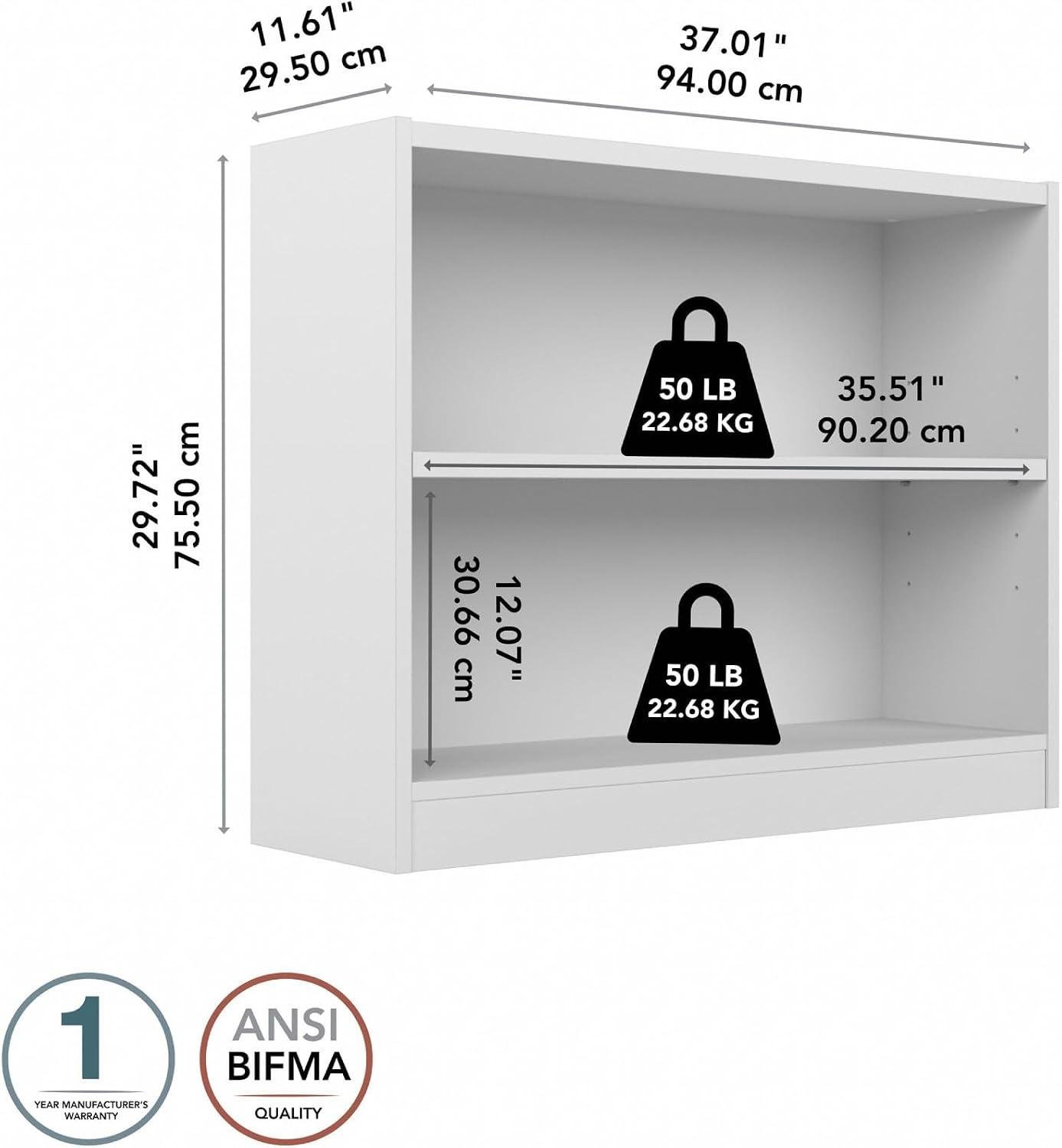
The Bush Home Small 2 Shelf Bookcase (Universal Collection, White) is a compact, low-profile storage cabinet built from engineered wood with two tiers, including one adjustable shelf for flexible spacing. Each 1″ thick shelf is rated to support up to 50 lbs, and the top surface adds extra staging space for finishes, small tools, or project parts. It also includes wall-attachment hardware and is tested to ANSI/BIFMA standards, with a 1-year manufacturer’s warranty. Customer feedback commonly highlights its clean look, practical sizing, and the usefulness of the adjustable shelf, with the main limitation being that it’s more “organized storage” than heavy-duty shop furniture.
Best for: hobby woodworkers and beginners needing tidy storage for books, plans, jigs, or lightweight supplies in a small shop or home office.
Consider alternatives if: you need solid-wood cabinetry, higher adjustability, or furniture-grade joinery for a workshop environment.
Overall, it’s a solid, budget-friendly organizational add-on, not a replacement for a dedicated shop cabinet.
Want to see current pricing and customer photos? View on Amazon & Read More Reviews →