

Blog
Hammerhead HAHD075 Hammer Drill Review: Right for Us?


Ever tried boring clean shelf-pin holes only to have the bit wander,the edge splinter,or your wrist take the hit when the drill binds? In a small shop,we need a drill that stays accurate,feels controllable,and doesn’t eat the tool budget—especially when we’re bouncing between pilot holes in hardwood and the occasional masonry anchor for shop fixtures.
The Hammerhead 7.5-Amp 1/2 Inch Variable Speed Hammer Drill (HAHD075) is a corded, two-mode drill built to switch from rotation-only drilling to hammer-drill action at the flip of a selector. on paper it offers a 7.5A motor, 0–3,000 RPM, up to 48,000 IPM, a 1/2″ metal keyless chuck, forward/reverse, and a side handle with depth gauge—plus a 6-piece bit set. (it’s also clearly noted it’s not for reinforced concrete.)
In this review, we’ll break down the key features, ease of use, space-and-budget practicality, and what customers commonly report about feel, durability, and control—so we can decide who this drill fits best. Our outlook comes from general woodworking experience: building, installing, and maintaining the kind of shop setups where tool choices matter.
Tool Overview and First Impressions in the Shop
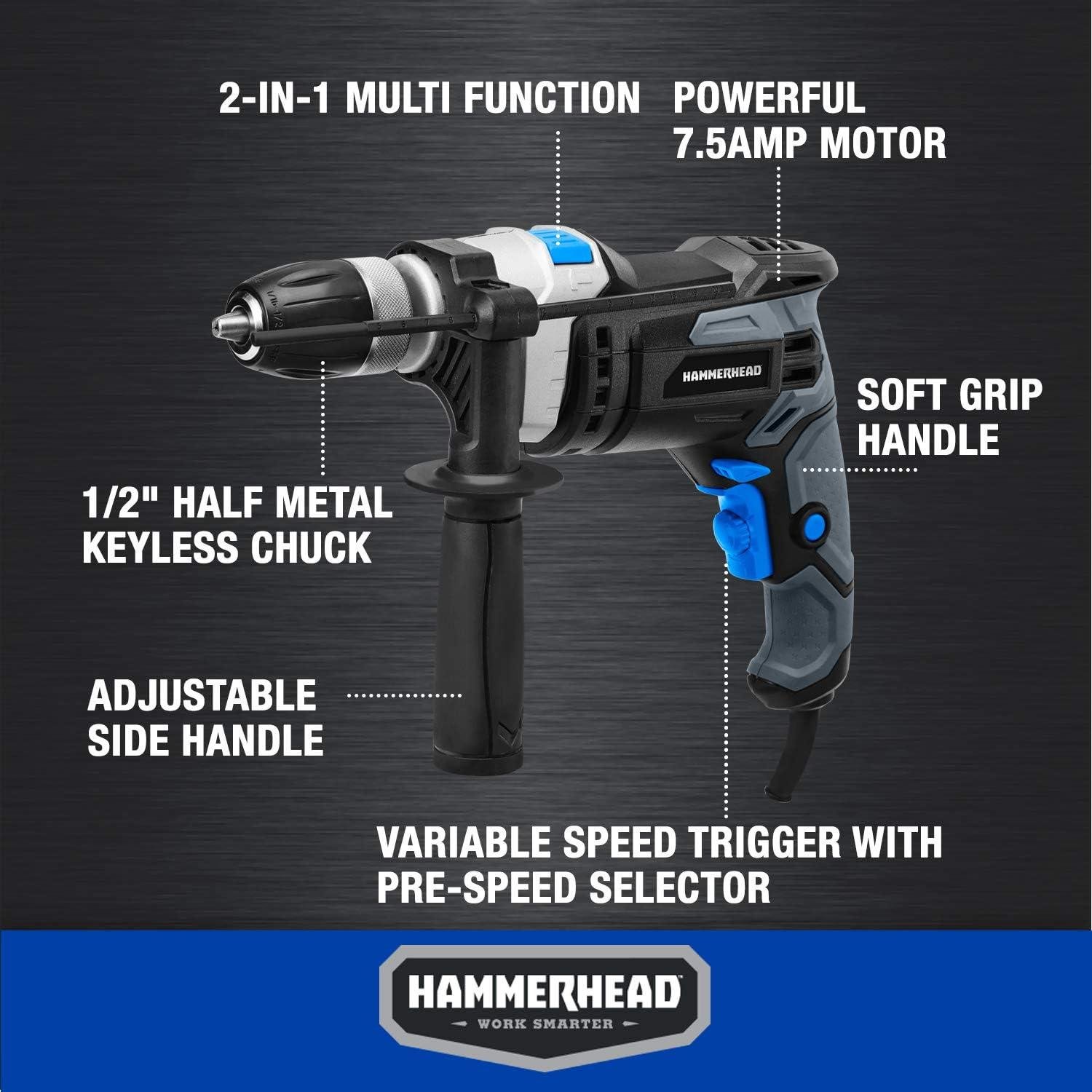
When we pulled the Hammerhead HAHD075 out on the bench, it felt like a straightforward, corded “get-it-done” drill rather than a gadgety one. The headline specs are solid for a shop that occasionally needs drilling muscle: a 7.5-amp motor, 0–3,000 RPM variable speed trigger (with lock-on for longer runs), and 0–48,000 IPM when we flip it into hammer mode. For woodworking, that means we can treat it like a regular 1/2″ drill for holes in studs, plywood jigs, workbench hardware, and lag screws—then switch to hammer action when we’re mounting shop fixtures into masonry. The 1/2″ metal keyless chuck makes bit swaps quick, and the included side handle with depth gauge is the kind of feature we actually use when we need repeatable depths (think shelf-pin templates or drilling consistent pilot holes for hardware) and want extra control when a large bit starts to bite.
First impressions from the broader customer feedback line up with what we’d expect at this price point: multiple buyers call it “surprisingly well-performing for the price” and sturdy/heavy, especially for one-off jobs like installing handrails in concrete or drilling into brick, while others caution it’s not pro-grade and can run hot with continuous use (several mention working in short bursts). Noise and feel are often described as “not very loud”, more like a quieter air tool than a jackhammer, which matters when we’re drilling anchors in a finished space. The moast repeated theme is educational: reviewers strongly suggest learning proper hammer-drill technique—start a hole without hammering to keep it straight, then switch to hammer mode—and they consistently warn the included bits are low quality, recommending premium carbide masonry bits instead. Also worth noting for our shop reality: it doesn’t come with a case, and the chuck can be hard to grip while loosening because there’s no spindle lock, so we plan to keep it stored with our drill accessories and use two hands for safe bit changes.
- Included accessories
- 6-piece bit set (commonly criticized in reviews as “not good quality”)
- Adjustable side handle with depth gauge
- Compatible attachments/accessories
- 1/2″ shank drill bits (brad-point, twist, spade, Forstner—within reason for a 7.5A corded drill)
- Carbide-tipped masonry bits (recommended by multiple reviewers for best hammer performance)
- Hole saw arbor for light-to-moderate use (watch heat buildup; use pauses)
- Screwdriver bits for occasional fastening (variable trigger helps control)
- Ideal project types
- Workbenches and shop fixtures (pilot holes, hardware, lag screws)
- Jigs and templates (repeatable drilling using the depth gauge)
- Mounting cleats/shelving to masonry walls (use hammer mode)
- Outdoor projects where you’re anchoring to concrete/brick (per common review use cases)
- Wood types tested by customers
- Not specified in reviews (most customer feedback focuses on concrete/brick use)
| Spec / Feature | Hammerhead HAHD075 (per spec) | What it means in a woodworking shop |
|---|---|---|
| Motor | 7.5 amp | More sustained power than many cordless drills for extended drilling/fastening at the bench. |
| Speed Range | 0–3,000 RPM (variable trigger, lock-on) | Slow start for clean entry; higher RPM for smaller bits; lock-on helps during repetitive drilling. |
| Impact Rate (hammer mode) | 0–48,000 IPM | Useful for masonry anchors when hanging cabinets, french cleats, or shop gear on concrete/brick. |
| Chuck | 1/2″ metal keyless | Quick bit changes; some reviewers note it can be hard to loosen/tighten without a spindle lock. |
| Modes | Rotation-only + Hammer-drill | rotation-only is what we use for wood; hammer mode is for masonry (not for reinforced concrete per notes). |
| Accessory / Bit Type | Recommended | notes from specs & review themes |
|---|---|---|
| Masonry bits | Yes (carbide-tipped) | Reviewers repeatedly say the tool performs far better with premium bits; included bits are often discarded. |
| Brad-point bits (wood) | Yes | Cleaner entry holes in hardwood/plywood; use rotation-only mode. |
| Forstner bits | Yes (moderate sizes) | Use the side handle for control; back off to clear chips and manage heat. |
| Spade bits / augers | Yes (with care) | Higher torque loads—use two-handed stance and let the bit cut; take breaks if the housing warms up. |
| Use Case | Recommended Approach | Capacity Reality (based on spec + review themes) |
|---|---|---|
| Drilling in wood (shop tasks) | Rotation-only; variable trigger; clamp work | Well-suited for typical holes and hardware, especially when you want corded consistency. |
| Drilling masonry for anchors | Start without hammer, then switch; use carbide bit | Common success in reviews for handrails/anchors; described as adequate light-duty hammering. |
| Continuous heavy hammering | Work in short bursts; allow cooling | Mixed feedback: some report heat/smell/smoke under load; not positioned as industrial-duty. |
See Full Specifications & Customer Photos
Real World Performance for Drilling Clean Holes in softwoods and Hardwoods

When we’re drilling clean holes in wood, we treat the Hammerhead HAHD075 primarily as a standard drill—not a hammer drill—and in that role the 7.5-amp corded motor with 0–3,000 RPM variable speed gives us the kind of steady, battery-free consistency we want at the bench. In softwoods like pine and SPF framing,we can feather the variable-speed trigger to start screws and pilot holes without skating,then bring the speed up for twist bits or brad-point bits to reduce tearout. The 1/2-inch metal keyless chuck makes bit swaps quick, but one customer theme we keep seeing is that the chuck can be “kind of hard to hold onto” during release, and a few reviewers mention bits slipping unless they really crank it down—so in our shop we’d pause, brace the chuck firmly, and re-check tightness before drilling accurate holes for hinges, shelf pins, or hardware. We also keep in mind that several customers call it sturdy/heavy, which can definitely help stabilize the drill for straighter bores, but it’s still worth using the side handle with depth gauge to control angle and stop depth when we’re drilling repetitive holes.
In hardwoods like oak or maple, the same specs matter even more: we’d set a slower speed, apply consistent feed pressure, and clear chips often to prevent burning—because multiple reviewers note it can get hot with steady use, recommending shorter bursts (roughly a few minutes at a time). That’s good practice in hardwood anyway, especially with larger diameters (Forstner bits, spade bits, or hole saws), where heat and torque spike quickly; the drill’s forward/reverse switch also helps when backing out a clogged bit. Reviewers repeatedly say the drill is “pretty good for its price” and “not pro grade,” and we agree that’s the right mindset for woodworking: it’s a capable corded drill for cabinet installs, shop jigs, and occasional furniture work, but we’d plan on using higher-quality bits than what comes in the box—because the most consistent customer advice is to avoid the included bits and upgrade if we want cleaner holes and better control. If we respect its limits, focus on sharp bits, and let the motor cool between heavier bores, it can fit a lot of everyday woodshop tasks without pretending to be an industrial-duty tool.
- Included accessories:
- 6-piece drill bit set (customer theme: “included bits aren’t good quality”)
- Adjustable side handle with depth gauge
- Compatible attachments/accessories (we’d pair it with):
- Brad-point bits for cleaner entry holes in hardwoods
- Forstner bits for flat-bottom holes (use slower RPM, clear chips frequently enough)
- Countersink bit for screw seating and reduced splitting
- Self-centering VIX bit for hinges and hardware alignment
- Hole saw arbor (use the side handle for control)
- Ideal project types:
- Cabinet hardware installs (pulls/knobs, hinge pilots)
- Shop jigs and fixtures (fences, stops, drill guides)
- furniture pilot holes and countersinks
- General framing/deck repair where corded power is convenient
- Wood types tested by customers (as mentioned in reviews):
- No specific wood species commonly reported; reviews focus mainly on masonry/anchors
- Woodworking use implied by customers drilling through pressure-treated 2×4 into brick
| Spec / Feature | Hammerhead HAHD075 (From Specs) | What It Means for Clean Wood Holes |
|---|---|---|
| Motor | 7.5 Amp corded | Steady power for repetitive drilling; less “fade” than cordless when boring many holes. |
| Speed | 0–3,000 RPM variable speed | Slow starts for accuracy; faster drilling for smaller bits in softwoods. |
| Chuck | 1/2″ metal keyless | Quick changes, but reviewers mention grip/slip—tighten carefully for clean, wobble-free holes. |
| Modes | Drill + Hammer (2-mode selector) | Use rotation-only for wood to avoid blowout and chatter. |
| Control | Side handle + depth gauge, trigger lock-on | Better angle control and consistent depth—useful for shelf pins and hardware drilling. |
| Accessory / Bit Type | Compatible with 1/2″ Keyless Chuck? | Best Use in Wood |
|---|---|---|
| Brad-point bits | Yes | Clean entry holes; accurate layout drilling. |
| Twist bits | Yes | General drilling; use backing board to reduce tearout. |
| Forstner bits | Yes | Flat-bottom holes; go slow, clear chips frequently enough to manage heat. |
| Countersink bits | Yes | Cleaner screw seating; reduced splitting in hardwood. |
| Hole saw arbor | Yes | Larger cutouts; use side handle for safety/control. |
| Capacity Topic | Recommended in Woodworking | What customers Report in Practice |
|---|---|---|
| Continuous drilling | Work in intervals; clear chips; let motor cool | Multiple reviewers note it gets hot with continuous use; “3–5 min burst” works better. |
| Bit quality | Use quality brad-point/Forstner/countersinks | Common theme: included bits aren’t good; users recommend upgrading. |
| precision drilling | Use rotation-only mode; start slow; consider a drill guide | Some report chuck handling/slip issues; technique and tightening matter. |
Check Current Price & Reviews on Amazon
Key Features Woodworkers Will Appreciate for Bits Speed Control and Hammer Mode

In our woodworking shop, the biggest “make-or-break” factor on a corded drill like the Hammerhead HAHD075 is control, and this one gives us a lot to work with: a 7.5-amp motor paired with a variable-speed trigger (with trigger lock-on) and a top speed of 0–3,000 RPM. That range matters when we’re stepping through pilot holes in hardwood, driving larger spade bits in framing lumber, or easing into a countersink without scorching the rim. We also like that it uses a 1/2-inch all-metal keyless chuck for quick swaps, but it’s worth noting the most common review theme: several customers say the chuck can be hard to grip/tighten and may slip on smooth round-shank bits unless you really cinch it down. Another repeated theme is that the included bits aren’t great—multiple reviewers basically recommend upgrading instantly—so in practice we’d treat the “6pcs bit” as starter spares and rely on better brad-point bits (for clean wood holes) or quality driver bits (for hardware installs).
Hammer mode isn’t something we use on wood, but in real woodworking life we’re often attaching ledger boards, porch rail parts, shop fixtures, or PT sleepers to masonry—so having a 2-mode selector (rotation-only vs. hammer) is genuinely useful. This drill is rated for 0–48,000 IPM, and reviewers frequently describe the hammer action as “just right” and “not very loud”—more of a subdued air-tool sound than a jackhammer—helpful when we’re drilling anchors near edges and want to reduce “collateral damage.” One customer even suggests a technique we agree with for straighter holes: start the hole with hammer OFF to establish position, then switch hammer ON once the bit is seated. The educational caveat is workload: multiple reviews mention the drill can get hot under steady use (they recommend short bursts), and at least a few users report smoke/burning smell when pushing it hard—so we’d treat it as a light-duty, occasional hammer-drill for woodworkers rather than an all-day concrete tool. Also, per the product notes, it cannot be used in reinforced concrete walls, which matters if your “shop build-out” includes structural concrete.
- Included accessories:
- 6pcs drill bits (commonly criticized in reviews as low quality)
- Adjustable side handle with depth gauge
- 1/2-inch metal keyless chuck (installed on drill)
- compatible attachments/accessories (practical picks for woodworkers):
- Brad-point bits (clean entry/exit in hardwoods and plywood)
- Forstner bits (hinge cups, flat-bottom holes—run at lower RPM)
- Countersink bits (hardware installs, pocket-hole screw cleanup)
- Carbide-tipped masonry bits (for anchors; reviewers strongly recommend upgrading)
- Hex shank driver bits (cabinet screws, structural screws—best with controlled trigger)
- Ideal project types:
- Shop fixture installs (French cleats, wall brackets—wood mode)
- Deck/porch rail hardware into masonry or brick (hammer mode where appropriate)
- Jigs and templates needing controlled drilling speed
- Occasional anchor holes for dust collector mounts or tool stand tie-downs
- Wood types tested or referenced by customers (from review context):
- Pressure-treated lumber (PT 2×4 mentioned for Tapcon-style fastening)
| Spec area | Hammerhead HAHD075 (from listing) | Why We Care in a Wood Shop |
|---|---|---|
| Motor | 7.5 Amp (corded) | More consistent run time than cordless when drilling lots of holes or mixing light materials. |
| Speed | 0–3,000 RPM (variable trigger + lock-on) | Lower trigger pressure for clean starts; higher RPM for small twist bits and fast drilling in softwood. |
| Hammer action | 0–48,000 IPM + 2-mode selector | Useful for anchors/fasteners into brick or concrete during installs; not used for woodworking joinery itself. |
| Chuck | 1/2″ all-metal keyless | Quick bit swaps, though reviews mention gripping/tightening can be finicky with smooth round shanks. |
| Accessory / Bit type | Fit | Notes for Better Results |
|---|---|---|
| Brad-point bits | 1/2″ chuck compatible | Best choice for tear-out control in hardwood and plywood. |
| carbide masonry bits | 1/2″ chuck compatible | Review theme: upgrade from included bits for real performance. |
| Forstner bits | 1/2″ chuck compatible | run slower; back out often to clear chips and reduce heat. |
| Screwdriver bits | With standard bit holder | Use variable trigger to avoid cam-out; consider a clutch driver for delicate hardware. |
| Use Case | Recommended Approach | What customers Actually Report |
|---|---|---|
| long drilling sessions | Work in intervals; let the motor cool | Several say it gets hot if used continuously; “3–5 minute bursts” mentioned. |
| Concrete/brick anchors | Start hammer OFF to spot; switch hammer ON once seated | Users report the hammer action is effective but not overly aggressive; some praise reduced edge chipping. |
| Bit quality | Use premium wood bits and carbide masonry bits | strong theme: included bits are poor; many recommend replacing immediately. |
See Full Specifications & Customer Photos
Ease of Use for Beginners and Pros Plus Workshop Storage and Value Perspective
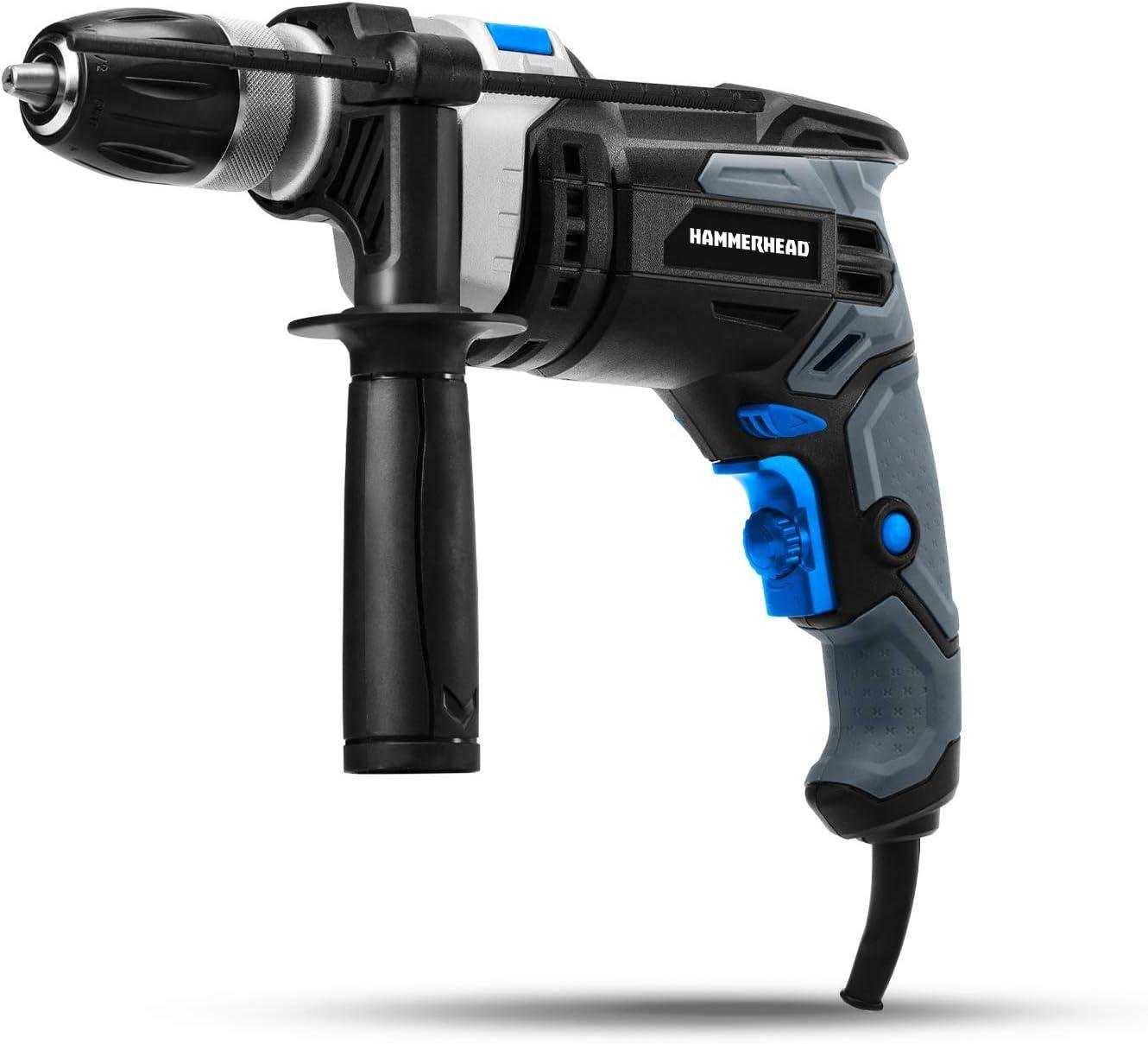
In day-to-day shop use, we found the Hammerhead HAHD075 feels approachable for beginners while still offering the core controls most of us want for repeatable results. The 7.5-amp corded motor and variable-speed trigger (with lock-on) make it easier to ease into a hole—especially when we’re boring clean pilot holes in hardwood before driving screws, or when we’re drilling shelf-pin holes in a jig and don’t want the bit to wander at startup. The 2-mode selector (rotation-only vs. hammer) is straightforward, and in wood we’ll live almost entirely in rotation-only mode; the hammer setting is more of a “jobsite crossover” for occasional masonry, which lines up with customer feedback describing the hammer action as “just right” and “not very loud,” more like a quieter air tool. for learning, we can’t stress enough: start slow, keep the drill square, and let the bit cut—several reviewers mention the tool can get hot under steady use, so working in short bursts (3–5 minutes) and clearing chips frequently enough is a smart habit for both accuracy and tool health.
From a pro perspective, this drill reads like a practical backup or a corded alternative when we’re tired of batteries—multiple reviewers frame it as “not pro grade,” “not heavy-duty industrial,” but “surprisingly good for the price” when used within its limits. The 1/2-inch metal keyless chuck is convenient for quick swaps, though users report it can be hard to hold while releasing bits and may struggle to clamp some round-shank bits tightly unless we’re deliberate. Storage-wise, note that it does not come with a case, so we’d plan on a dedicated shelf hook or tote to keep the cord controlled and the bits together; that matters in a busy woodworking space where accessories walk off. value is where it shines: customers repeatedly call out the tool as “well within my budget” and “an easy 5-stars for the price,” but the most consistent advice is educational and blunt—upgrade the included bits if we want the drill to show its best performance. Also keep the limitation in view: per the product details, it cannot be used in reinforced concrete walls, so we should treat the hammer function as occasional-duty rather than a replacement for a true rotary hammer.
- Included accessories
- 6-piece bit set (many reviewers recommend replacing with higher-quality bits)
- Adjustable side handle with depth gauge
- Compatible attachments/accessories
- brad-point bits (cleaner holes in hardwood/plywood)
- Forstner bits (controlled, flat-bottom holes at slower speeds)
- Hole saws (use rotation-only; start slow)
- Premium carbide-tipped masonry bits (for occasional non-reinforced masonry work)
- Ideal project types
- Cabinet and furniture assembly (pilot holes, hardware mounting)
- Shop jigs and fixtures (repeat drilling with depth gauge)
- Deck/yard woodworking where corded power is convenient
- occasional anchoring into brick or concrete (within stated limitations)
- Wood types tested by customers
- Not commonly specified in reviews; feedback centers on masonry tasks (brick/concrete). For wood, we recommend testing on scrap first, especially in oak/maple where heat and bit quality matter.
| Key Spec | Hammerhead HAHD075 | What It Means in the workshop |
|---|---|---|
| Motor | 7.5 Amp (corded) | Steady power for repetitive drilling without battery swaps |
| Speed | 0–3,000 RPM | Slow starts for accuracy; higher RPM for smaller bits in wood |
| Impact rate | 0–48,000 IPM | Relevant for masonry; keep hammer mode off for woodworking |
| Chuck | 1/2″ metal keyless | Quick bit changes; some users note tightening/grip quirks |
| modes | Drill + Hammer Drill | One tool for shop drilling + occasional masonry needs |
| Accessory Type | Best Use | Notes Based on Review Themes |
|---|---|---|
| Premium wood bits (brad-point) | Clean entry holes for joinery and hardware | Better control than “included bits” quality |
| Premium carbide masonry bits | Brick / non-reinforced concrete drilling | Reviewers repeatedly say the included bits aren’t good |
| Bit extensions / right-angle adapters | Cabinet installs, tight shop corners | Use slower RPM to reduce wobble and heat |
| Use Case | Recommended Approach | Capacity Reality (Based on Specs/Reviews) |
|---|---|---|
| long continuous drilling sessions | Work in bursts; clear chips; let motor cool | Several reviewers note it gets hot if run steadily |
| Masonry anchoring | Start without hammer for accuracy, then switch to hammer | A common review theme; also note: not for reinforced concrete walls |
| Precision woodworking holes | Use rotation-only + quality bits + slow start | Very doable, but chuck grip and bit quality matter |
Check Current Price & Reviews on Amazon
Customer reviews Analysis
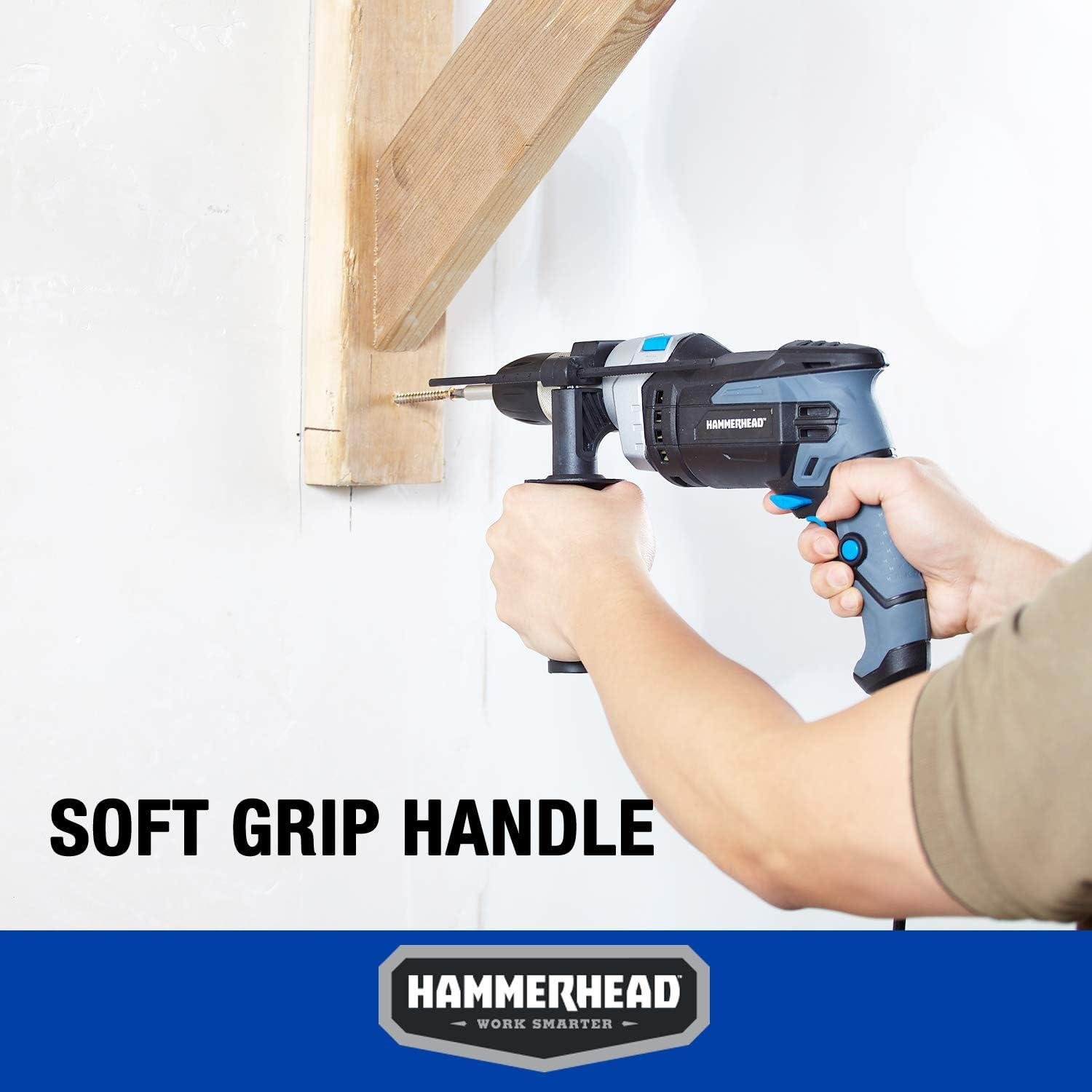
What Woodworkers Are Saying (Review Analysis: Hammerhead 7.5-Amp 1/2″ Variable Speed Hammer Drill – HAHD075)
| Aspect | Common Feedback |
|---|---|
| Overall Sentiment | Generally positive for DIY/light-duty use; mixed when pushed hard or used like a pro-grade tool |
| Performance | Praised for “does the job” drilling in concrete/brick; some users report weak torque or smoking under load |
| Build Quality | frequently enough described as sturdy/heavy for the price; durability concerns appear when run continuously or overloaded |
| Ease of Use | Straightforward for DIYers; common complaints about chuck grip and removing/tightening bits |
| Value | multiple reviews highlight strong value vs.renting or buying premium brands—if expectations stay realistic |
1. Overall sentiment from woodworking customers
Several woodworkers and DIY-minded reviewers mentioned being pleasantly surprised by how capable this drill feels for the price—especially for occasional jobs (anchors, masonry holes for mounting, handrails). Common praise includes “performed surprisingly well” and “easy 5-stars for the price.”
At the same time,some users reported challenges when treating it like a daily-use professional tool.Multiple reviews highlight that it’s best viewed as a budget/light-duty hammer drill rather than a “jobsite every day” workhorse.
2. Performance feedback (accuracy, power, results)
Power & drilling results: Customers successfully used this for drilling into concrete and brick for anchors/fasteners—tasks woodworkers commonly face when mounting ledger/rail hardware, attaching PT sleepers, or fastening shop fixtures to masonry. One reviewer reported drilling multiple 3/8″ x 1-3/4″ holes for anchors near an edge and felt the hammer action was “just right” to avoid blowing out concrete.
Hammer action: Several reviewers mentioned the hammer function is effective but not aggressive like higher-end demo-style tools (one described it as quieter than expected). That’s a positive for controlled drilling near edges, but it also explains why some users felt the hammer effect “didn’t seem to do much” on tougher driving tasks.
Heat under use: Some users reported it gets hot during steady use, with 3–5 minute bursts being fine. A few reviews go further and describe smoke/burning smell when the tool was pushed—usually during high-resistance work (like ground anchors/ground rods).That suggests performance is acceptable in bursts but less reliable under sustained heavy load.
Accuracy & straight holes: Reviewers indirectly pointed out that straightness in concrete can be tricky. One user recommended starting without hammer action and using a better bit first to improve the hole’s straightness—useful advice for woodworkers who need accurate anchor alignment for railings, brackets, or jigs.
3. Build quality and durability observations
Common praise includes the tool feeling “well built,” “sturdy,” and “heavy,” and at least one reviewer called out the 2-year warranty as reassuring.A couple of reviewers mentioned being happy after multiple holes and a few months of ownership (“so far excellent”).
However, some users reported concerning durability signals: burning electronics smell and smoke from the housing under load. These comments typically come with a warning that internal components may be underrate when used beyond light-duty expectations.
4. Ease of use for different skill levels
Beginners/DIYers: Reviewers with DIY-level experience found it straightforward for occasional tasks like drilling into brick for Tapcon-style fasteners, and several said they don’t regret the purchase.
More experienced users: Some users suggested negative experiences may come from not understanding hammer-drill technique and limitations. One practical technique tip showed up: start the hole without hammering to improve control, then switch to hammer action.
Comfort/handling: The most repeated usability complaint is the chuck:
- “Chuck is kind of hard to hold onto while trying to release bit.”
- No spindle/shaft lock, so removal can be fiddly.
- One reviewer reported the chuck wouldn’t clamp tightly enough on round-shank bits, causing slippage—he solved it by grinding flats on the bit shanks.
5. Common project types and success stories
While not many reviews were explicitly “woodworking-project” focused, several common woodworker-adjacent tasks were mentioned:
- Installing porch/hand railings into concrete (multiple reviewers), including anchor installations near edges.
- Drilling into brick for Tapcon screws through dimensional lumber (e.g.,pressure-treated 2×4).
- Basement floor drilling (concrete holes drilled in stages).
- Ground anchors / grounding rod driving (more demanding, mixed success).
In general, reviewers report success when the drill is used for mounting, anchoring, and masonry drilling—the kind of work woodworkers often need for shop builds, outdoor fixtures, and hardware installs.
6. Issues or limitations reported
Some users reported challenges with:
- Included bits: Multiple reviews highlight the included bits are poor quality (“toss the included drill bits…”). Upgrading to premium carbide masonry bits was a repeated suggestion.
- Not pro-grade / heavy-duty limits: Several reviewers emphasized it’s not meant for daily professional use. One comment was blunt that pros should look elsewhere unless they only need it for a quick job.
- Overheating / smoke / burning smell: A minority of reviews describe alarming overheating behavior under load (smoke from housing,burning-electronics smell),particularly during anchor/rod driving or high-torque situations.
- torque limitations: One reviewer expected it to “rip out of my hands” on a hard stop but instead experienced smoke and called the torque “not extraordinary.”
- Chuck performance: bit slippage and difficulty tightening/removing bits came up more than once.
- No case included: Mentioned as a minor downside for storage/transport.
Bottom line (from the pattern of reviews): several woodworkers mentioned it’s a solid-value option for occasional masonry drilling and hardware installs—especially if you bring your own quality bits and use it in reasonable bursts. If you need consistent heavy-load performance (or plan to run it hard all day), multiple reviews highlight limitations like heat, torque, and possible reliability concerns.
Pros & Cons
Pros & Cons
After putting the Hammerhead HAHD075 7.5-Amp 1/2″ Variable Speed hammer Drill through a mix of everyday drilling and “let’s see what it can handle” tasks, we found it lands firmly in the practical, budget-pleasant camp: strong fundamentals, a few clear boundaries.
Pros
- Plenty of corded muscle (7.5A) for general home projects, especially when we don’t want to babysit batteries.
- 2-in-1 mode switch (drill / hammer drill) makes it easy for us to jump between wood/metal and masonry-style tasks.
- Variable speed with lock-on feels helpful for longer runs—once we find the sweet spot, we can keep it there.
- Solid speed ratings up to 0–3,000 RPM and 0–48,000 IPM on paper, which translates to a “confident” feel in lighter masonry.
- 1/2″ metal keyless chuck speeds up bit swaps when we’re moving between pilot holes and larger bits.
- Forward/reverse is straightforward—nice when we inevitably bind a bit and need to back out.
- Adjustable side handle + depth gauge helps us steady the drill and keep holes consistent (especially overhead or on tougher material).
- Soft grip adds comfort during longer sessions; it’s not luxury, but it’s not punishing either.
- Includes 6 bits, which gives us a small “ready-to-go” starter set out of the box.
Cons
- Not for reinforced concrete (explicitly). That’s a hard limit—if rebar-ready drilling is on our list, we’ll need a different tool.
- Corded mobility trade-off: we get steady power,but we’re also managing outlets,extensions,and cord routing.
-
Bit bundle is basic—helpful, but we shouldn’t expect it to replace a proper set tailored to our materials.
-
Hammer drilling comfort depends on setup: without using the side handle (and using it correctly),we feel strain faster.
-
keyless chuck convenience can be a double-edged sword: for very demanding jobs,we have to make sure it’s tightened well to avoid slip.
At-a-Glance: What Worked Best for Us
| Use Case | How It Felt | Our Take |
|---|---|---|
| Wood / general drilling | steady, controllable | Great everyday “go-to” |
| Light masonry (non-reinforced) | fast, punchy action | Good with the right bit & patience |
| Long continuous runs | More manageable with lock-on | Comfort improves with side handle |
| Reinforced concrete | Not supported | deal-breaker for that job |
we see the HAHD075 as a strong-value corded hammer drill for common DIY and homeowner tasks—so long as we keep it in its lane and don’t ask it to be a rebar-busting solution.
Q&A

Is this powerful enough for hardwoods like oak or maple?
For drilling typical wood holes (pilot holes, clearance holes, and moderate-size spade/Forstner bits), the 7.5-amp corded motor and variable-speed trigger are generally up to the task in hardwoods—especially if you run a slower speed and let the bit cut without heavy pressure. Where it’s less at home is sustained, high-torque work in dense stock (large hole saws, big Forstners for long periods), because multiple users mention it can get hot during steady use and it’s not considered “pro grade” for daily production.
How does it perform on plywood, veneers, and cabinet-grade sheet goods?
The 0–3000 RPM variable speed helps you start slowly to prevent skating and tear-out, then ramp up once the bit is established. For clean work on veneered plywood, use sharp brad-point bits and back up the exit side—this drill’s keyless 1/2″ metal chuck makes frequent bit changes quick, but the cut quality will depend far more on bit choice than the drill itself. If you’re seeing splintering, slow down and use painter’s tape or a sacrificial backer.
Can this handle production work, or is it more of a hobby/DIY drill?
Most feedback aligns with it being a solid value for household projects and intermittent shop use rather than a daily, industrial-duty tool. Reviews include positive experiences for one-off jobs and small projects, but also mention heat buildup during continuous drilling and that it’s “by no means pro grade.” If you’re drilling all day (cabinet installs, shop jigs, repeated large holes), you’ll likely be happier with a higher-end model designed for continuous duty.
Does it work with standard woodworking accessories and bits?
Yes—its 1/2″ keyless metal chuck accepts common round- and hex-shank drill bits used in woodworking. That said, one reviewer noted the chuck may struggle to clamp some smooth round-shank bits tightly under heavier load. For best grip,use quality bits with clean shanks,tighten firmly,and consider hex-shank accessories when possible to reduce slipping.
How easy are bit changes and adjustments?
Bit changes are intended to be fast thanks to the 1/2″ keyless chuck. A couple of users mention it can be hard to hold the chuck while loosening (no spindle lock), so you may need two hands and a firm grip. For adjustments, you get variable speed via the trigger (with lock-on for longer runs), forward/reverse for driving and backing out, plus a side handle you can reposition for better control. It also includes a depth gauge, which is useful for consistent hole depth in jigs and hardware work.
Will this fit in a small workshop, and what power does it need?
This is a corded handheld drill, so it stores easily on a shelf or pegboard and doesn’t take floor space like a drill press. It runs on standard household power (typical 120V outlet in the U.S.). Several reviewers liked avoiding battery limitations for longer tasks—just plan for cord management at the bench to keep it from catching on clamps or workpieces.
Is it beginner-friendly, and do I need special skills?
Beginners can use it successfully for common woodworking tasks as the controls are straightforward: variable speed trigger, forward/reverse, and a simple two-mode selector (drill vs. hammer). The main “skill” is learning to let the bit do the work—avoid forcing the drill, especially at low speed, since multiple reviewers mention heat buildup during steady use. For clean holes in wood, keep it in rotation-only mode (hammer mode is for masonry, not wood).
What maintenance should I expect, and what about durability/warranty?
Maintenance is basic: keep the vents clear (heat is the enemy of corded drills), avoid binding bits, and periodically check the chuck for dust buildup so it grips well. Don’t expect the included bits to be long-term “shop quality”—several customers recommend replacing them immediately with premium bits for best performance. The tool is backed by a 2-year warranty per customer reports and product info. Longevity will depend heavily on duty cycle: light-to-moderate use with breaks tends to go well; prolonged heavy use is where reviewers report heat and occasional “burning electronics” smells.
unleash Your True Potential
the Hammerhead 7.5-Amp 1/2 Inch Variable Speed Hammer Drill (HAHD075) is a corded,two-mode drill that switches from rotation-only to hammer action,delivering 0–3,000 RPM and up to 48,000 IPM through a 1/2″ all-metal keyless chuck. Practical add-ons like the side handle with depth gauge, forward/reverse, and trigger lock make it easier to control on longer holes. Customer feedback commonly praises its value and “surprisingly strong” performance for occasional jobs, while noting heat buildup with sustained use, a stiff chuck, and that the included bits are poor—plan on using better accessories.
Best for: hobby woodworkers with small to medium projects,beginners learning fundamentals,and anyone needing a dependable corded drill for shop fixtures,pocket-hole jigs,or occasional masonry anchoring.
Consider alternatives if: you drill thick hardwood all day,want compact/lightweight ergonomics,or need pro-grade durability and torque.
Final assessment: a solid budget-friendly option with real capability, provided that expectations (and bits) are upgraded.
Want to see current pricing and customer photos? View on Amazon & Read More Reviews →