

Blog
EZARC Rotary Burr Kit Review: Right for Our Home Shop?

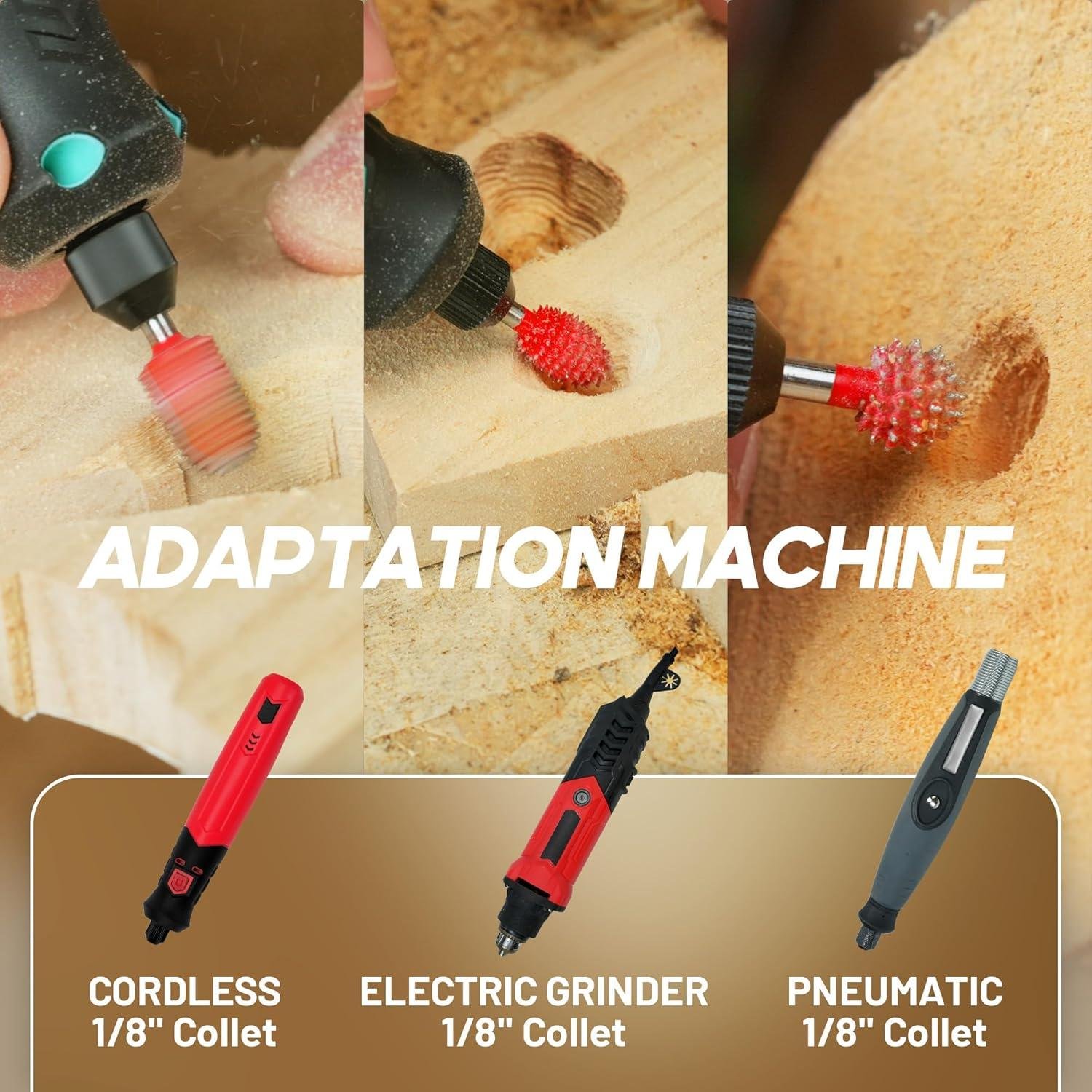
Ever tried to hog out waste for a spoon, sign, or relief carving and found yourself stuck between slow hand-rasps and a full-size router that feels like overkill? When we’re shaping curves, hollowing pockets, or cleaning up tight inside corners, precision matters—but so do control, dust management, and not turning a small project into a bench-space takeover.
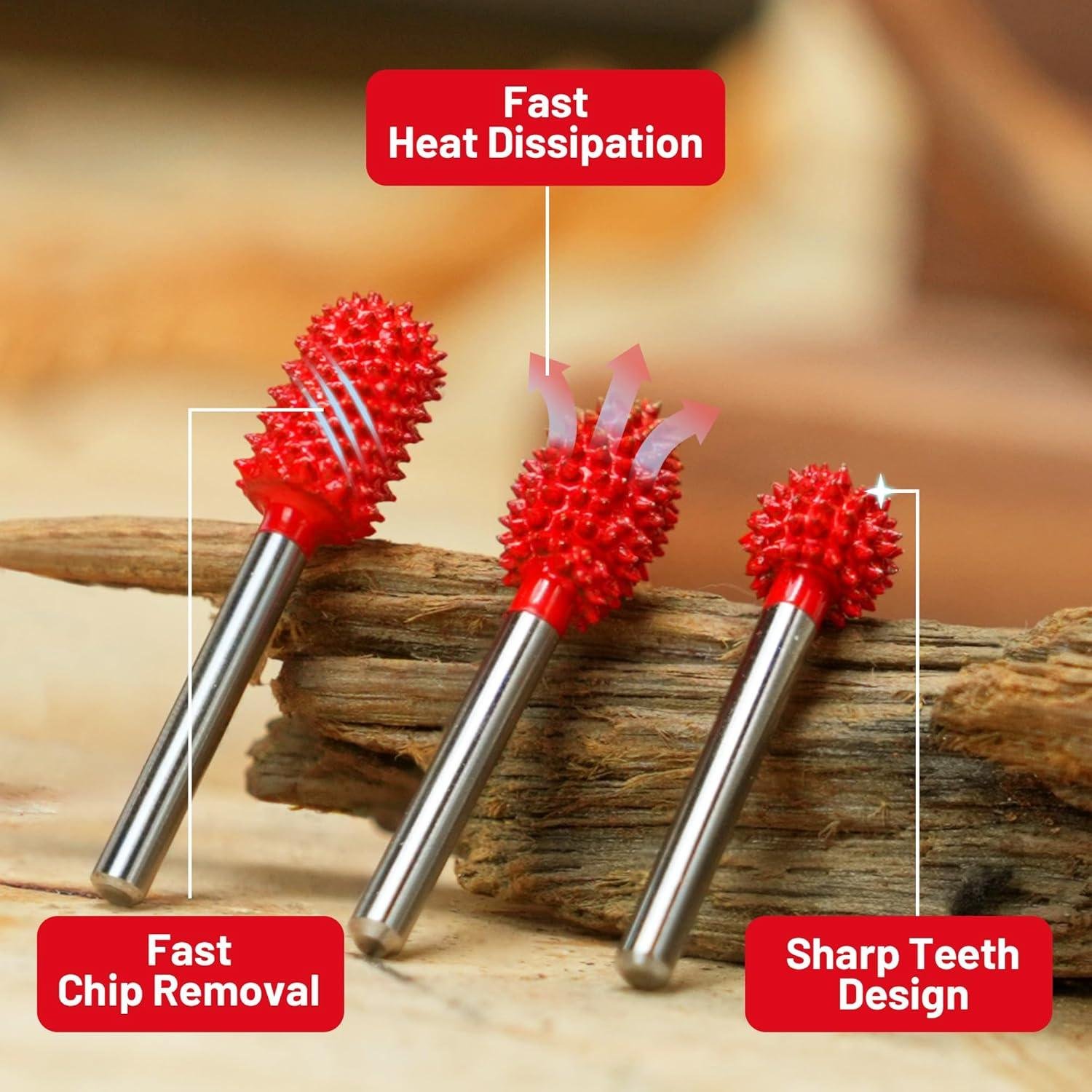
That’s where the EZARC Tungsten Carbide Rotary Burr Kit comes in: a 3-piece set (SG, SB, SD) of very coarse carbide burrs built for rapid material removal with a 1/8″ shank (use with a matching collet or adjustable chuck) and a storage case for keeping small bits from vanishing in the drawer. EZARC also claims an open tooth pattern to resist loading and notes it’s meant for wood, plastic, foam, fiberglass—not metals, ceramics, or hard stone.
In this review, we’ll break down the design specs, ease of control for different skill levels, durability expectations, and whether customer-reported performance—like fast carving and good value—fits your budget and learning curve. We’ve spent years around rotary tools, rasps, and carving setups, and we’ll keep the focus on practical decision-making.
Tool Overview and First Impressions in the Shop

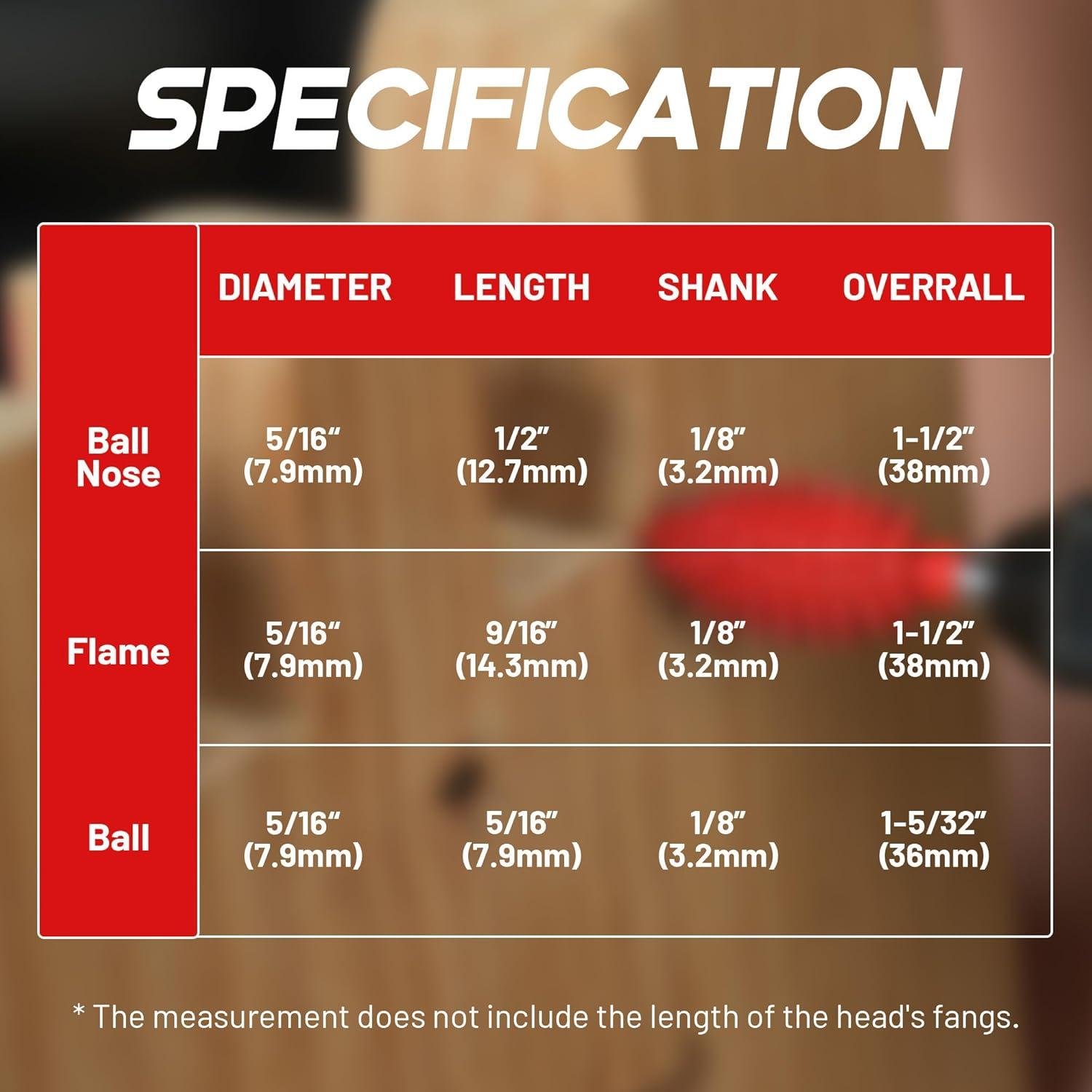
When the EZARC Tungsten Carbide Rotary Burr Kit first hit our bench, it read like a simple, purpose-built set for aggressive shaping: 3 pieces (SG, SB, SD) with a 1/8″ shank, each measuring about 1-1/2″ total length, a 5/16″ cutter diameter, and a stated 5/16″–9/16″ length of cut. In the shop, that means these are sized for the same rotary-tool jobs we’d normally tackle with a Dremel-style tool or a small die grinder fitted with a 1/8″ collet or adjustable chuck—think shaping in tight spots where a rasp, file, or spokeshave can’t quite reach. Customer feedback consistently frames them as “very aggressive” and excellent for fast material removal, with multiple reviewers specifically noting thay run well around 15,000–20,000 RPM. That lines up with how carbide burrs behave: they’re not “sanding” so much as cutting, so the first impression is less about finesse and more about controlled hogging—great when we need to rough a form quickly, but it demands a steady grip and a plan for tearout when grain gets squirrelly.
Setup is as straightforward as any 1/8″ rotary accessory—seat the shank fully, tighten the collet, and do a swift spin check—yet the “first impressions” that matter most are about control and safety. Review themes mention “makes carving effortless” and “removes a lot of material FAST,” alongside a very real caution: “Be very careful around your fingers”. We agree with that takeaway as general shop advice for coarse burrs: use two hands when possible, brace the workpiece firmly, and sneak up on the line with light passes rather then trying to steer a deep bite (especially when cutting against the grain). EZARC also highlights an open tooth pattern designed to resist loading; customers echo that indirectly by noting it “throws the saw dust and stays clean.” That’s useful in resinous woods or softer species where standard rotary rasps can pack up quickly—though we still treat dust control as a must, because these burrs can generate a surprising amount of fine, airborne debris.
- Included accessories
- 3 carbide rotary burrs: SG, SB, SD
- Storage case
- Compatible attachments/accessories
- Rotary tool with 1/8″ collet (or adjustable chuck)
- Detail carving/engraving handpiece that accepts 1/8″ shank bits
- Small bench vise or carving vise (for safer workholding)
- Stiff nylon/brass brush for cleaning debris from teeth
- Ideal project types
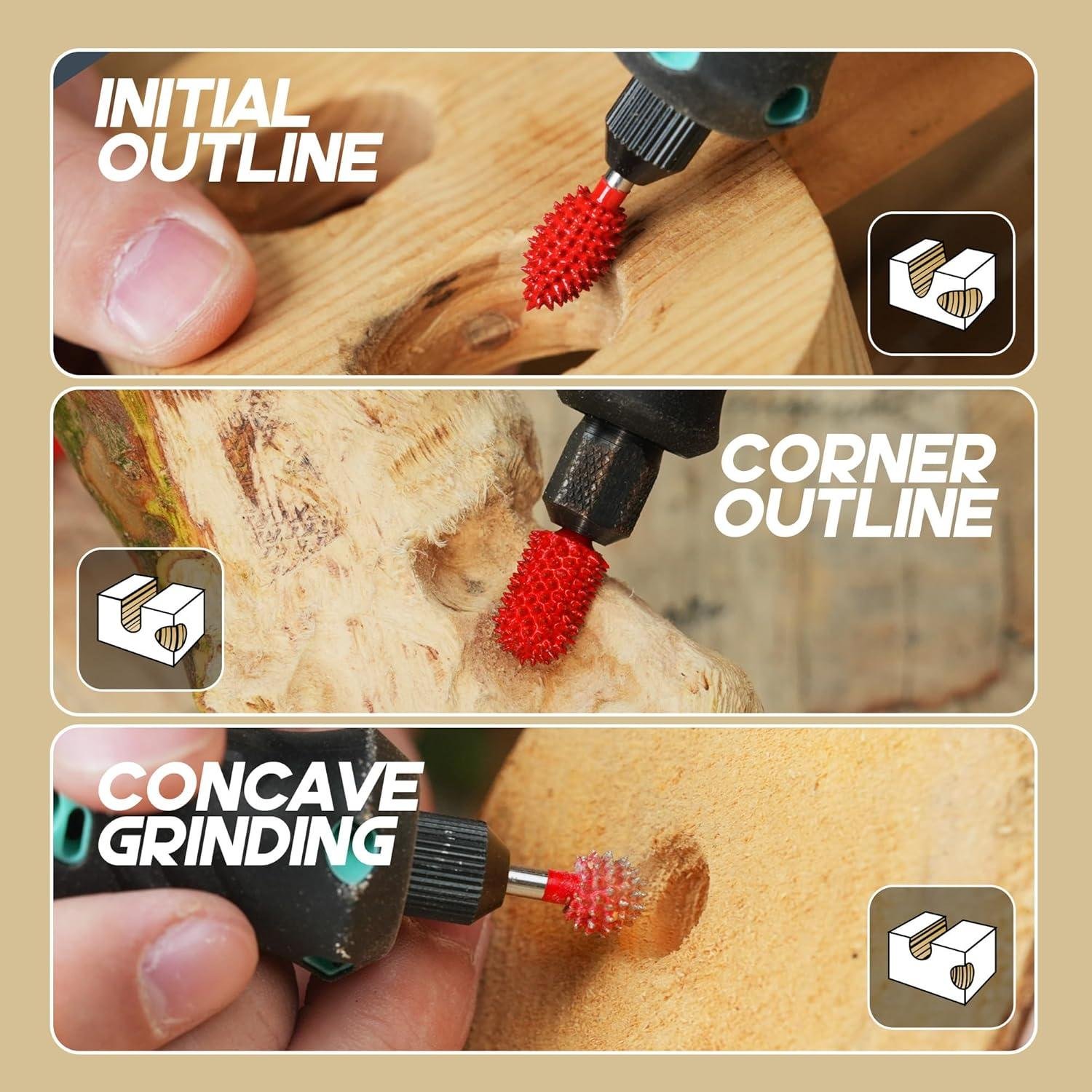
- Roughing-in carved shapes and contours
- Notches, hollows, and relief carving groundwork
- Walking stick carving (commonly cited by reviewers)
- Foam/plastic shaping for templates and mockups (per specs)
- wood types tested by customers
- Not specified in reviews (customers generally reference “wood projects” and carving use without naming species)
| Spec / Detail | EZARC Burr kit (per listing) | What it means in the shop |
|---|---|---|
| Shank size | 1/8″ | Fits most Dremel-class rotary tools; must use the correct collet/chuck. |
| Cutter diameter | 5/16″ | Good balance for quick stock removal while still fitting tighter curves. |
| Total length | 1-1/2″ | Compact—helps visibility and control for detail areas. |
| Length of cut | 5/16″–9/16″ | Sets how deep a bite you can take before the shank/body interferes. |
| Recommended RPM (from reviews) | 15k–20k RPM (user-reported) | A practical target range many rotary tools can hit; start lower for control. |
| Tool / Accessory Type | Compatibility | Notes |
|---|---|---|
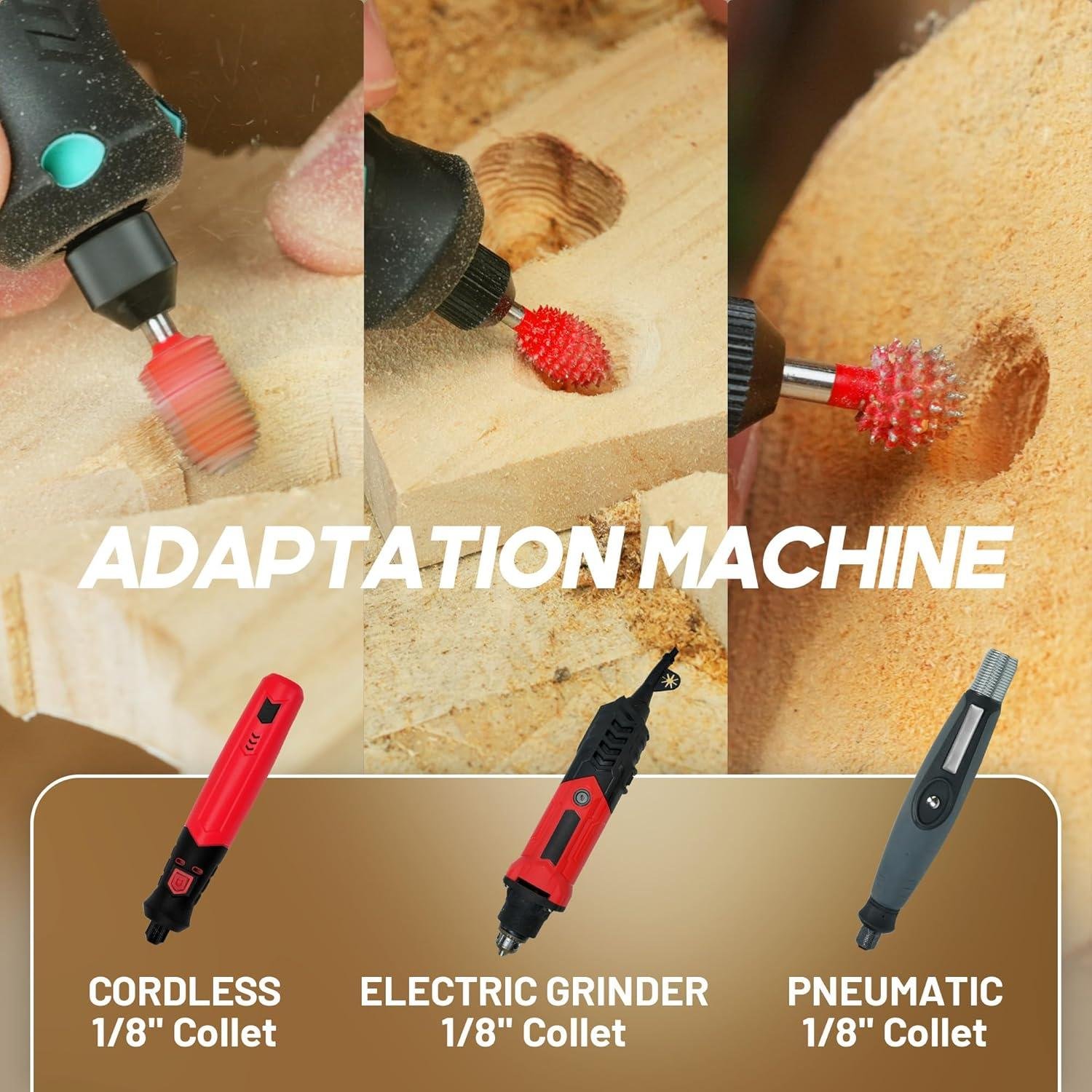
| 1/8″ collet | Required | If your rotary tool came with multiple collets, confirm you’re using the 1/8″. |
| Adjustable keyless chuck | compatible | Convenient for swaps; ensure it’s rated for your tool’s RPM. |
| Flex shaft | Often compatible | Can improve control for carving, but depends on your rotary tool setup. |
| Capacity Topic | Recommended (best practice) | Actual (per kit specs/reviews) |
|---|---|---|
| Material removal rate | Light passes; let the burr cut without forcing | Reviewers consistently report very fast removal and aggressive bite |
| Detail access | Use smaller diameters for tight corners | Some reviewers note the burrs are “smaller than one might realize” (helpful for detail areas) |
See Full Specifications & Customer Photos
Real World Wood Carving Performance and Material Removal
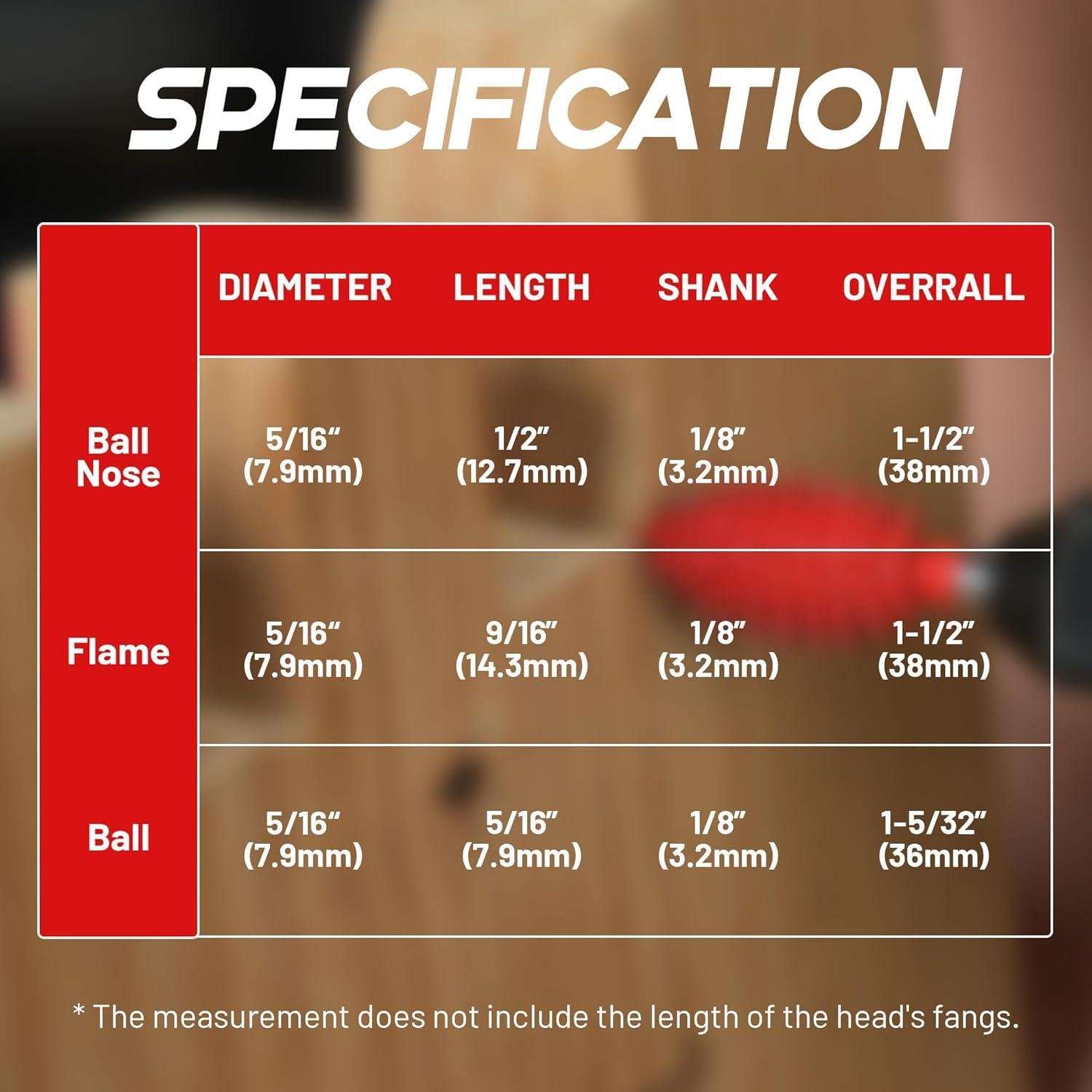
In real shop use, this EZARC kit behaves like a “mini power-carving” upgrade for any rotary tool that can take a 1/8″ shank. The three burrs are compact—each is 1-1/2″ total length with a 5/16″ cutter diameter and a 5/16″–9/16″ length of cut—so we see them fitting best where a flap sander or drum can’t reach: tight coves, small relief areas, and quick stock removal before hand-refining. Multiple reviewers specifically mention it removes material quickly and that it “works perfectly at 15k–20k RPM,” which lines up with how carbide burrs like to run: fast enough to slice cleanly, but not so fast that you loose control or burnish the surface. We also noticed a consistent theme that these are “very aggressive” and “fantastic for roughing in,” which is exactly how we’d position them—get the shape established, then switch to sanding drums, rasps, or hand tools for final surface quality.
Control and safety matter more with these than with typical Dremel stones or small sanding sleeves, because the “very coarse” tooth pattern can grab if we shove the tool or hang an edge. The product description notes the open cutting pattern is designed to resist loading, and customer feedback echoes that in practical terms (“self clean… they throw the sawdust and stay clean while you work!”). For best results, we’d keep a light touch, brace our hands, and use a steady sweeping motion—especially when working near end grain or reversing grain—because carbide will happily cut with or against the grain, but our layout lines disappear fast when the tool is this hungry. Reviewers also mention it’s “so much better on wood than regular Dremel tips” and well built, including one using them for walking stick carving; that tracks with carbide’s advantage in wood: it stays sharp longer than basic steel accessories and clears chips better. Just remember the compatibility note: we must have a 1/8″ collet or adjustable chuck, and per the specs these are not for metals, ceramics, or hard stones—they’re purpose-built for wood (plus plastics/foam/rubber/fiberglass), where controlled, fast material removal is the main win.
- SG, SB, SD carbide rotary burr shapes (3-piece set)
- Storage case
- Rotary tool that accepts 1/8″ shank bits (via 1/8″ collet or adjustable chuck)
- stiff nylon/brass brush for cleaning teeth
- Dust collection (shop vac near the work) + respirator (these throw chips aggressively)
- Rough shaping small carvings before sanding/refining
- relief carving backgrounds and stop cuts (with careful control)
- Contouring handles, spoons, small molds, and touch-ups
- Notching/hollowing in tight areas where drums won’t fit
- Wood (primary use per reviews)
- Soft materials mentioned in specs: foam, plastic, rubber, fiberglass
| Spec | EZARC Rotary Burr Kit (per listing) | What It Means in the Shop |
|---|---|---|
| Shank diameter | 1/8″ | Fits most Dremel-style tools; confirm you have a 1/8″ collet/chuck. |
| Total length | 1-1/2″ | Good reach for small recesses without feeling too whippy. |
| Cutter diameter | 5/16″ | Aggressive footprint; fast shaping but can overcut if we rush. |
| Length of cut | 5/16″–9/16″ | controls how deep the teeth can engage; helps with small hollows/relief areas. |
| Suggested review RPM range | 15,000–20,000 RPM (customer-reported) | A practical target range many rotary tools can reach; start lower for control. |
| Accessory/Bit Type | Compatibility | Notes |
|---|---|---|
| 1/8″ collet | Required | Essential if your rotary tool isn’t already set up for 1/8″ shanks. |
| Adjustable/keyless chuck | Compatible | Makes bit swaps faster; ensure it grips 1/8″ securely. |
| Rotary sanding drums/flap wheels | Complementary | Use after burrs to remove tooth marks and refine contours. |
| Capacity Metric | Recommended/Typical Use | actual Spec Limit |
|---|---|---|
| Depth per pass | Light, controlled passes for accuracy | Up to 5/16″–9/16″ tooth engagement (length of cut) |
| Material suitability | Wood shaping and rough carving | Not for metals, ceramics, hard stones (per listing) |
See Full Specifications & Customer Photos
Key Features Woodworkers Will Appreciate in a Rotary Burr Kit
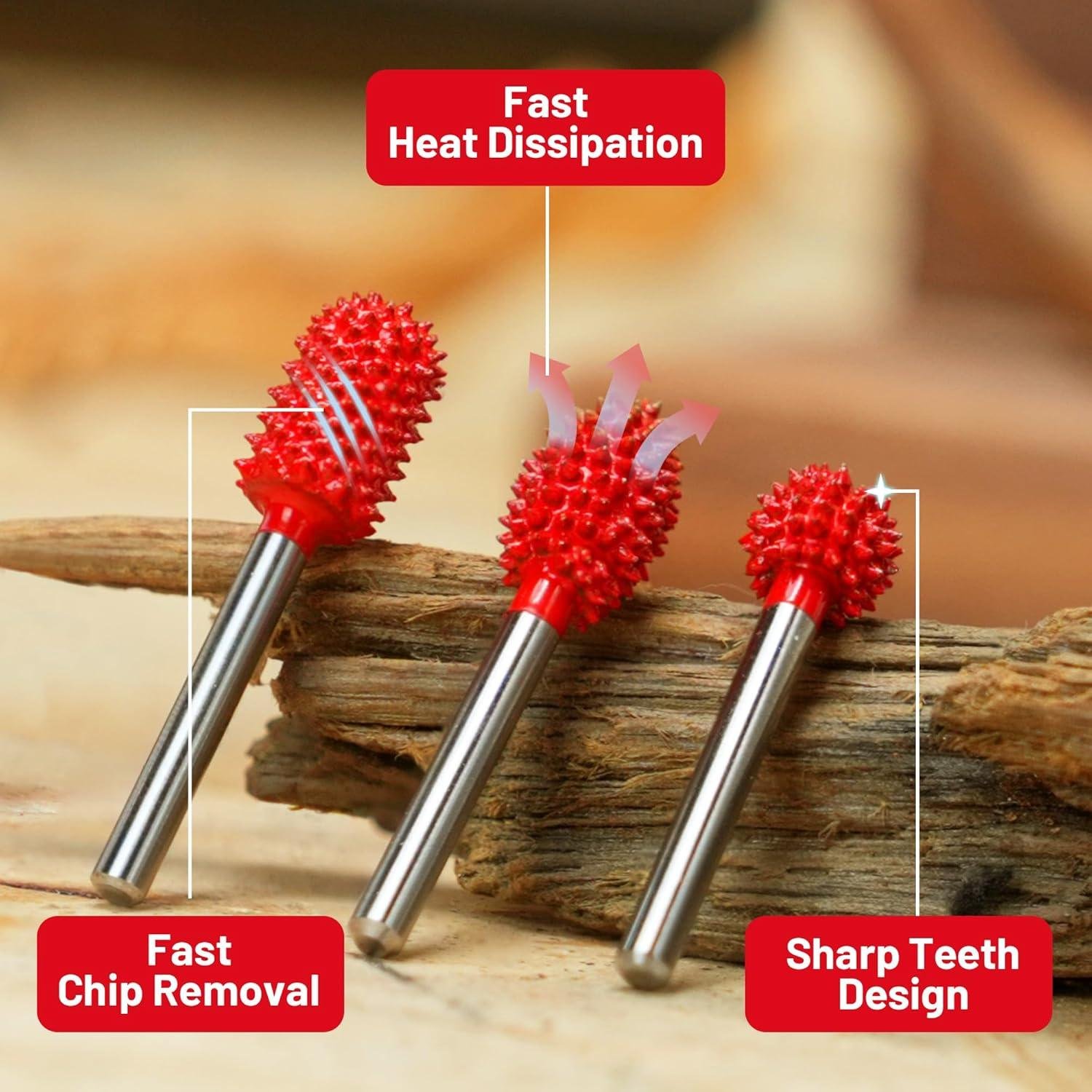
In our shops, a rotary burr kit earns its keep when it balances speed with control—and the EZARC set checks a lot of those boxes on paper and in customer feedback. Each bit is built around a 1/8″ shank (so it’s aimed squarely at Dremel-style rotary tools and die grinders with a matching collet/chuck), with a compact 1-1/2″ total length that helps us keep hand position close to the cut for better stability. The cutter head is a stout 5/16″ diameter with a 5/16″–9/16″ length of cut, which is a practical size for rough shaping without feeling like we’re swinging a tiny chainsaw on the end of a spindle. EZARC calls these “very coarse” tungsten carbide burrs with an open tooth pattern designed to resist loading, and that lines up with review themes where customers say they “remove material quickly,” “really bite into the wood,” and even “throw the sawdust and stay clean.” Multiple reviewers also mention running them around 15,000–20,000 RPM for roughing work—useful context for dialing in speed so the burr cuts cleanly instead of just burning and bouncing.
What we appreciate most is how the three included profiles give us real workshop options without overcomplicating the kit—especially when we’re moving from bulk removal to shaping lines we’ll later refine with rasps, rifflers, or sanding. The manufacturer claims the burrs can cut with or against the grain, and while technique still matters (light pressure, keep the burr moving, and brace our hands), reviewers repeatedly describe the cutting action as fast and confidence-building—phrases like “fantastic for roughing in a project,” “makes carving effortless,” and “so much better on wood than the regular dremel tips” show up often. We also like that EZARC acknowledges maintenance: they say we can clear debris with a brush or even burn it off with a torch without harming the teeth (a reminder to do that safely and off the tool). One caution we agree with from reviews: these are very aggressive, so they’re best treated like a power carving cutter—not a dainty engraving point—meaning eye protection, a dust mask/respirator, and keeping fingers well away from the bite zone are non-negotiable.
- 3-piece burr set: SG, SB, SD shapes
- Storage case
- Rotary tool with a 1/8″ collet (Dremel-style)
- Adjustable chuck that accepts 1/8″ shanks
- Detail sanding drums/flap wheels (for smoothing after roughing)
- Small rasps/files (to refine facets and remove burr marks)
- Roughing in carvings (spoons, relief panels, sculpted details)
- Shaping and hollowing small recesses and contours
- Trimming/notching tight areas where bigger tools can’t reach
- Foam/plastic shaping (per specs), for templates and mockups
- Mixed wood projects (reviewers don’t consistently name species)
- Walking sticks (project type mentioned by customers)
| Spec | EZARC Rotary burr Kit (3-Piece) | Why We Care in the Shop |
|---|---|---|
| Shank diameter | 1/8″ | Determines whether it fits our rotary tool collet/chuck. |
| Total length | 1-1/2″ | Shorter bits feel more controllable for carving and shaping. |
| Cutter diameter | 5/16″ | Big enough to hog material; still suitable for small areas. |
| Length of cut | 5/16″–9/16″ | Sets how deep we can hollow/shape per pass before repositioning. |
| Material | Tungsten carbide | Typically stays sharper longer than basic stones or HSS cutters. |
| Recommended use | Wood, plastic, foam, fiberglass (not metals/ceramics/hard stone) | Helps avoid dulling/chipping and mismatched expectations. |
| RPM mentioned by customers | 15k–20k RPM | Useful starting point for tuning cut speed vs. control. |
| Accessory / Attachment | Compatibility | Notes for woodworkers |
|---|---|---|
| 1/8″ collet | Required | If our tool only has smaller collets, we’ll need the correct size. |
| Adjustable keyless chuck | Compatible | Handy for quick bit swaps during shaping and refining. |
| Rotary sanding drums / flap wheels | Compatible (separate) | Best follow-up step after coarse burr work to remove tool marks. |
| Cut-off wheels / engraving points | Compatible (separate) | Different operations—these burrs are for fast carving/removal. |
| Capacity Consideration | Recommended (Practical) | Actual (Per Specs/Reviews) |
|---|---|---|
| Material removal rate | Use for roughing, then refine with sanding/hand tools | Customers report very fast removal and “very aggressive” cutting |
| Detail work | Best for small areas, not ultra-fine engraving | Reviewers say it works well for detail, but note it’s smaller than expected (good for tight spots) |
| User skill level | Beginner-amiable with practice and safe technique | One reviewer noted they’re learning and practicing due to hand steadiness |
See Full Specifications & Customer Photos
Ease of Use and Control for Beginners and Experienced Makers
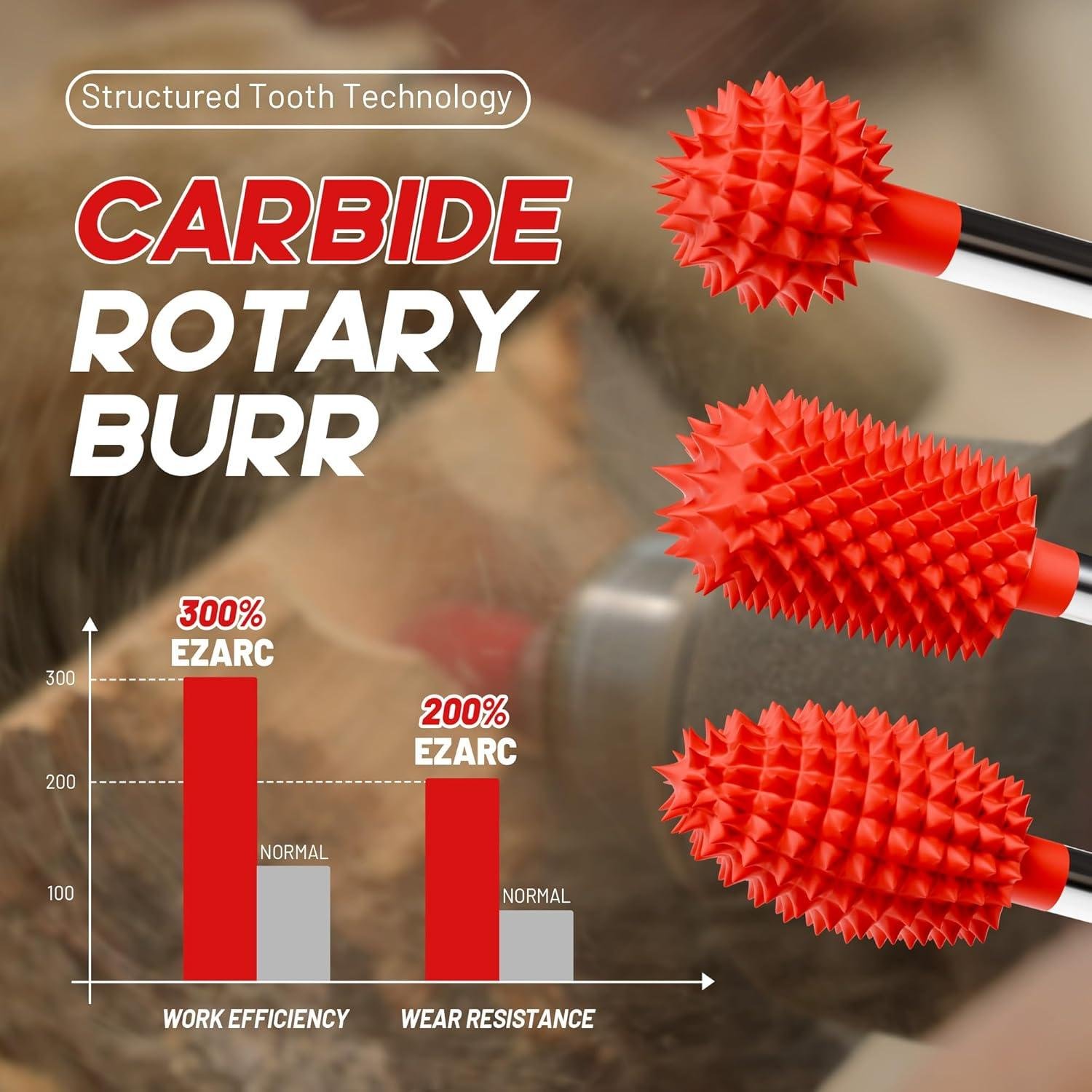
For beginners, the biggest “ease of use” win with the EZARC kit is that the basics are simple: all three burrs share a 1/8″ shank, so once our rotary tool (Dremel-style) has a 1/8″ collet or an adjustable chuck, setup is essentially “insert, tighten, and go.” The kit includes three shapes—SG, SB, and SD—and because each bit is only 1-1/2″ total length with a 5/16″ cutter diameter and a 5/16″–9/16″ length of cut, we can get into tight spots without feeling like the tool is steering us. That said, these are labeled “very coarse” for a reason: multiple reviewers say they remove material quickly, one notes they “work perfectly at 15k–20k RPM,” and another new carver warns, “Be very careful around your fingers!!” In our shop, that translates to a controlled learning curve—start at a lower speed your tool can hold steadily, brace our hands, and use light passes so the burr doesn’t “grab” end grain or jump a layout line.
For experienced makers, control comes from how aggressively these carbide teeth cut while still resisting loading. Reviews repeatedly call them “very aggressive”, “fantastic for roughing in,” and even “so much better on wood than the regular Dremel tips,” which matches what we want for fast shaping before switching to finer burrs, files, or sanding drums. The open-tooth pattern is designed to throw sawdust and stay cleaner (one user even calls them “self clean”), and maintenance is straightforward: we can brush debris out between passes, and the manufacturer notes you can burn buildup off with a torch without damaging the teeth (we’d do that outdoors and let the bit cool fully before reinstalling). The included storage case also helps keep the cutting edges from knocking together—small detail, but it matters when we’re reaching for the right profile mid-project. the kit feels best suited to makers who want confident, controllable stock removal in small-scale carving and shaping—just not as a “one-bit-does-all” solution, as the very-coarse cut is intentionally geared toward speed over finish.
- included accessories:
- 3 burr shapes: SG, SB, SD
- Storage case
- Compatible attachments/accessories:
- rotary tool with 1/8″ collet (Dremel-style)
- Adjustable chuck that accepts a 1/8″ shank
- Cleaning brush for packed debris
- Ideal project types:
- Roughing-in wood carvings (fast shaping before refining)
- notching, hollowing, and contouring small areas
- Walking stick carving (mentioned by customers)
- Trimming/adjusting foam, plastic, rubber, fiberglass (per specs)
- Wood types tested by customers:
- unspecified wood projects (reviews mention “wood projects,” “wood carving,” and walking sticks without naming species)
| Spec / Feature | EZARC Rotary Burr Kit (This Product) | Why It Matters in the Shop |
|---|---|---|
| Shank size | 1/8″ | Determines whether our rotary tool/collet fits—common for Dremel-style tools. |
| Total length | 1-1/2″ | Shorter bits generally feel easier to control and reach into tight work. |
| Cutter diameter | 5/16″ | Sets the “bite” size—wide enough for fast shaping but still nimble. |
| Length of cut | 5/16″–9/16″ | How deep the teeth can engage—helps when hollowing or dishing small areas. |
| Aggressiveness | Very coarse | Best for roughing-in and rapid removal; expect to follow with refining steps. |
| Suggested RPM (from reviews) | 15,000–20,000 RPM | Practical speed range reported to cut well; beginners may prefer starting lower for control. |
| Accessory / Bit Type | Compatible? | Notes |
|---|---|---|
| 1/8″ collet | Yes (required) | Must match the 1/8″ shank for safe, true running. |
| Adjustable chuck | Yes | Convenient if we swap between different shank sizes often. |
| Dremel-style rotary tools | Yes | Customers specifically mention using them with a Dremel tool. |
| Die grinders (typically 1/4″ collet) | not directly | Would require a proper adapter/collet solution; don’t force-fit for safety. |
| Capacity / Use | Recommended (Best Practice) | Actual / Reported in Reviews |
|---|---|---|
| Material removal per pass | Light passes for control, especially near edges and end grain | users report very fast removal and “very aggressive” cutting |
| Speed range | Start moderate, increase as control improves and cut stays stable | One reviewer reports best results at 15k–20k RPM |
| Finishing expectation | Plan to refine with finer burrs/sanding after rough shaping | Reviews emphasize roughing-in and fast stock removal |
See Full Specifications & Customer Photos
Customer Reviews Analysis
What Woodworkers Are Saying (EZARC Tungsten Carbide Rotary Burr Kit,3‑Piece,1/8″ shaft)
1.Overall sentiment from woodworking customers
woodworking-focused reviews lean strongly positive. Common praise includes strong cutting performance on wood, excellent value compared with pricier burrs, and durability that exceeds expectations for the price. A few comments note these are very aggressive and smaller than some buyers expected—more of a “remove material quickly” set than a finesse-only kit.
2. performance feedback (accuracy, power, results)
Multiple reviews highlight fast, confident material removal—especially for rough shaping.
- Cut speed & bite: Several woodworkers mentioned the burrs “really bite into the wood” and remove stock FAST, with one calling them “fantastic for roughing in a project.”
- RPM performance: One reviewer reported optimal control/results around 15k–20k RPM, saying it “worked perfectly.”
- Results on wood vs standard rotary tips: Customers consistently reported these are “so much better on wood than the regular Dremel tips,” suggesting cleaner, more efficient cutting for carving and shaping.
- Control & detail: While they’re primarily described as coarse, some users also said they work well for detail work, balancing speed with the ability to refine shapes when handled carefully.
3. Build quality and durability observations
Durability feedback is a standout theme.
- Unexpected longevity: One user said they were “genuinely surprised” by how well the burrs held up—and even noted the burr “lasted longer than my rotary tool.”
- Well built: Several reviewers described them as “very well built” and “durable,” reinforcing that the carbide grit/teeth hold up through real carving sessions.
- Storage case: The included case gets positive mentions as a practical bonus (“good case is a bonus”), helping keep small bits organized.
4. Ease of use for different skill levels
Feedback suggests they’re accessible, but require respect.
- Beginners: One new carver said they bought them after seeing a video and promptly noticed how quickly they remove material—implying a short learning curve to start, but also a need for caution.
- Safety/handling: Because they’re described as “very aggressive,” some users reported challenges with safe handling—one explicitly warned: “Be very careful around your fingers!!”
- Effort reduction: More than one reviewer framed the experience as easier than expected (e.g., “makes carving effortless”), especially compared to standard rotary accessories.
5. Common project types and success stories
Specific woodworking use cases show up clearly, especially carving.
- Walking sticks: Customers report using this with a Dremel for carving walking sticks,with “works great” feedback.
- General carving & shaping: Several reviewers mentioned using them for carving broadly—roughing in forms, then working toward final shape. One described the workflow as removing a “good amount while you’re working your way towards the final product.”
- Clean cutting behavior: One woodworker reported a “self-cleaning” feel—throwing sawdust effectively and staying clear while working,which supports smoother progress during longer carving sessions.
6. Issues or limitations reported
While reviews are mostly enthusiastic, a few limitations pop up:
- Very coarse/aggressive: These are not gentle bits. Several reviewers emphasized how aggressive they are—great for rapid removal, but they can be unforgiving and increase the risk of gouging or over-removing material if you rush.
- Size expectations: One reviewer noted they are “smaller than one might realize,” so buyers expecting larger burr heads for broad surfacing might potentially be surprised.
- Safety caution: The aggressiveness also translates into stronger safety warnings than typical—users recommend careful finger placement and controlled technique.
| Aspect | Common Feedback |
|---|---|
| Performance | Very fast stock removal; strong bite into wood; reported best control around 15k–20k RPM; better than standard rotary tips |
| Precision | Capable of detail work, but primarily praised for roughing and shaping due to coarse, aggressive cut |
| Durability | Surprisingly long-lasting for the price; “very well built”; one user said the burr outlasted their rotary tool |
| Ease of Use | Beginner-friendly to start, but aggressive cutting demands careful handling and safety awareness |
| Versatility | Strong fit for carving and material removal tasks; commonly paired with Dremel-style rotary tools |
| Value | Frequently described as worth the money and comparable to higher-cost competitors |
Pros & cons
Pros & Cons
In our home shop, these EZARC tungsten carbide burrs feel like the “roughing-in crew”: they show up fast, get loud, and move a surprising amount of material in a hurry. But they’re not the whole carving orchestra—more like the percussion section—so the trade-offs matter.
Pros
- Very fast material removal: When we want to hog out wood, foam, or plastic quickly, these coarse teeth bite hard and save time (users even mention sweet spots around 15k–20k RPM).
- Carbide “stays ready” feel: The kit’s durability gets a lot of praise, and in practice carbide tends to keep its edge longer than many basic rotary tips we’ve burned through.
- Open tooth pattern helps resist loading: Dust and chips clear better than tightly patterned cutters, so we spend less time “un-gunking” the bit mid-pass.
- Good control in small areas: The 1/8″ shank suits common rotary tools, and the cutter size is handy when we’re shaping contours or hollowing tighter spots.
- Solid value for a 3-piece set: Reviewers repeatedly call the price “worth it,” and we agree it’s a sensible entry point if we want carbide performance without premium-brand sticker shock.
- Storage case included: Small win, but in our shop it means fewer loose, sharp surprises in a drawer.
Cons
- Not a do-it-all material kit: EZARC notes these are not for metals, ceramics, or hard stone, so we can’t treat them as universal burrs.
- “Very coarse” means exactly that: They’re excellent for rough shaping, but we still need finer burrs/sanding drums for clean details and finishing passes.
- Aggressive bite raises the risk level: These can grab and wander if we get careless—especially near edges, knots, or end grain. We need a firm grip and a plan.
- Requires the right collet/chuck: to use the 1/8″ shank, our tool must have a 1/8″ collet or an adjustable chuck—or else it’s a non-starter.
- Small kit size: Three shapes (SG, SB, SD) cover the basics, but we may outgrow the selection quickly if carving becomes a regular hobby.
- Dust management is on us: Fast removal makes fast debris—so extraction and PPE matter more than usual.
| What We Used It For | How It Felt | Best Follow-Up Tool |
|---|---|---|
| Roughing in a spoon/handle blank | Quick “bulk removal” progress | Flap sander or sanding drum |
| Shaping foam or soft plastic | Clean,fast cuts with less clogging | Fine-grit sanding/polish bit |
| Hollowing small recesses | Controlled,but easy to overdo | Small tapered stone or fine burr |
Q&A
What wood types can this handle effectively?
These tungsten carbide rotary burrs are best on solid woods (softwoods and hardwoods) for shaping and fast stock removal. Reviews specifically mention wood carving and roughing-in projects,including walking sticks,with users highlighting that the burrs “remove material FAST” and “really bite into the wood.” They also work well on softer materials listed in the specs like foam, plastic, rubber, and fiberglass. Per the product notes, they’re not intended for metals, ceramics, or hard stone.
Is this powerful enough for hardwoods like oak or maple?
The burrs themselves are aggressive enough for hardwood—carbide teeth are designed for tough cutting—and customers describe them as “very aggressive” and great for removing a lot of wood quickly. Practical limitation: the tool you run them in matters more than the bits. In a Dremel/rotary tool with a 1/8″ collet, they’ll cut hardwood, but expect best control with lighter passes and letting the burr do the work rather than forcing it (forcing can cause chatter or burning).
How does this perform on plywood and veneers?
These are very coarse burrs meant for rapid shaping, so plywood edges can splinter and veneers are easy to blow through if you’re not careful. They can be used for rough notching, hollowing, or trimming, but for face veneers and clean edges you’ll usually get better results with a finer carving burr, sanding drum, or a sharp router bit and hand tools. If you do use them on ply, take shallow passes and approach from directions that minimize tear-out.
Can this handle production work or is it just for hobby projects?
It’s capable of repeated use—one reviewer noted the durability held up well and even outlasted their rotary tool—but it’s still a 1/8″ shank rotary-burr kit aimed at carving/reshaping rather than industrial production throughput. For small-batch work (sign carving, walking sticks, sculpting, rapid roughing before sanding), it can save ample time. For true production environments, you’d typically step up to larger shank burrs, die grinders, or dedicated shaping systems for speed and longevity.
How arduous is the initial setup, and will it fit my rotary tool?
Setup is straightforward: insert the burr’s 1/8″ shaft into your tool’s 1/8″ collet or an adjustable chuck and tighten securely. The key “gotcha” is compatibility—if your rotary tool is set up for smaller shanks (like 3/32″),you’ll need the correct 1/8″ collet/chuck. Several customers mention using these successfully with a Dremel-style rotary tool.
What speed should I run, and what adjustments matter most?
Users report strong results around 15,000–20,000 RPM for wood removal. Use your tool’s variable speed as your main “adjustment”: lower speeds can improve control and reduce scorching; higher speeds can cut more smoothly but generate more heat and dust. Because these are coarse and aggressive, control comes from light pressure, stable bracing, and short passes (especially near edges and end grain).
Is this suitable for beginners, or is the learning curve steep?
Beginner-friendly in the sense that they cut quickly and don’t require complex setup, but they’re also unforgiving as they remove material very fast. A newer carver mentioned practicing to improve control, and another reviewer specifically warned to be careful around fingers. If you’re new: practice on scrap, clamp the work, wear eye protection and a dust mask/respirator, and consider starting at a slightly lower RPM until you get a feel for how aggressively they bite.
What maintenance is required, and how long will these last?
Maintenance is minimal: keep them clear of buildup. The open tooth pattern is designed to resist loading, and the listing notes you can clean debris with a brush or even burn it off with a torch without damaging the teeth (common practice for resinous buildup—use caution and proper ventilation). Longevity depends on material and pressure, but reviews consistently praise durability and value, with multiple buyers noting they hold up well and compare favorably to higher-cost competitors.
Is this worth the price compared to cheaper burrs or standard Dremel carving bits?
Based on customer feedback, many see these as a strong value: reviewers say they work “as good as the higher cost competitors,” are “well worth the money,” and are “so much better on wood than the regular dremel tips.” The main tradeoff is that they’re very coarse: excellent for roughing,shaping,and fast removal,but you’ll still need finer tools (and sanding) for finish-quality surfaces and crisp detail.
Transform Your World
The EZARC tungsten Carbide Rotary Burr Kit includes three very-coarse rotary burrs (SG, SB, SD) with a 1/8″ shank, 1-1/2″ overall length, and roughly 5/16″ cutter diameter, stored in a compact case.Designed for rotary tools with a 1/8″ collet or adjustable chuck, its open-tooth carbide pattern is built for rapid material removal while resisting loading—something customers consistently praise, along with solid build quality and strong value. Reviewers also note it performs well around 15k–20k RPM for rough shaping and fast stock removal.
Best for hobby woodworkers with small to medium projects, beginners learning carving fundamentals, and anyone roughing in spoons, walking sticks, relief carving, foam shaping, or quick contouring.
Consider alternatives if you need fine finishing/detail burrs, work primarily in metal/ceramic/stone, or want larger cutters for high-volume production removal.
it’s a solid mid-range option for aggressive shaping—just pair it with careful control and follow-up sanding for final surfaces.
want to see current pricing and customer photos? View on Amazon & read More Reviews →