

Blog
DEWALT DWHT10045 Utility Knife Review: Right for Us?

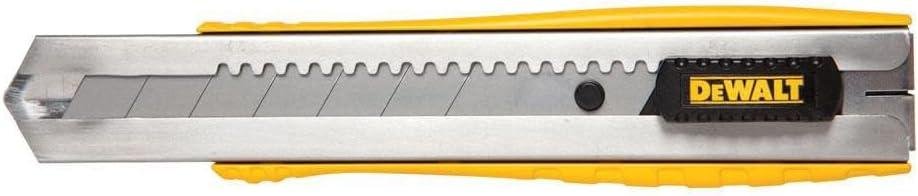
Ever tried laying out joinery lines or trimming edge banding, only to watch your pencil marks disappear under a ragged cut? in a small shop, where every tool has to earn its drawer space, a utility knife isn’t just for breaking down cardboard—it’s often the difference between a clean fit and a frustrating do-over.the DEWALT Utility Knife, Single Blade Snap-Off, 25mm (DWHT10045) is built around a wide 25mm snap-off blade (listed at 2.5 inches), aiming for controlled scoring, trimming, and quick blade refreshes without stopping to sharpen. It’s a straightforward hand tool designed for the daily tasks that demand precision but don’t justify firing up a bigger machine.
In this review, we’ll look at its key features, build quality, and ease of use—especially for beginners—and weigh what you get for the cost. We’ll also factor in what customers report in reviews, including notes on durability and how cleanly it cuts in real shop routines.
From our time in woodworking, we know consistency matters moast in the small cuts you make hundreds of times.
Tool Overview and Build Quality in the Shop
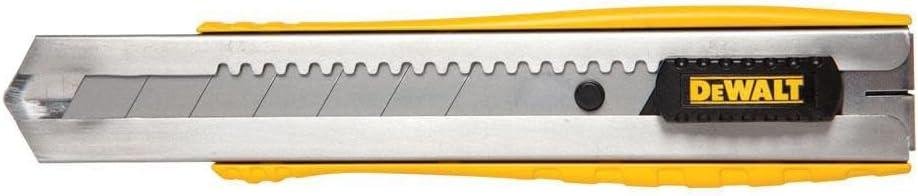
In our shop, the DEWALT DWHT10045 reads like a purpose-built layout-and-fitting knife rather than a general “grab anything and cut” blade. The headline spec that matters to us is the 25mm snap-off, single-blade format, which gives a broader, stiffer edge for controlled scoring when we’re trimming veneer tape, breaking down sandpaper sheets, or slicing thin packaging and strap material without the blade twisting. DEWALT lists a blade length of 2.5 inches, and while a utility knife won’t replace a marking knife for joinery, that wider blade can be handy when we’re running shallow, repeatable cuts along a straightedge on sacrificial boards. Customer feedback themes commonly circle around the knife feeling sturdy and easy to use, with plenty of reviewers appreciating the simple snap-off convenience for getting back to a fresh edge quickly—something we also value when adhesive-backed materials start to gum up the tip.
Build-quality-wise, what we watch for is how confidently the body supports the blade during lateral pressure—because in woodworking, “utility knife” often means scoring across grain, trimming edge banding flush, or shaving away squeeze-out after glue has skinned. The DWHT10045’s fit-and-finish and the no-nonsense single-blade approach align with review patterns that praise solid construction and straightforward setup (no complex assembly—load the blade and get to work). For safety and accuracy, we still recommend a few shop habits: extend only as much blade as needed, use a straightedge, and snap segments cleanly with a dedicated snapper or pliers while aiming the waste away from us. A 25mm snap-off knife excels when we treat it like a precision cutter, not a pry bar—especially around dense woods where forcing a cut can cause the blade to wander or the segment to snap unexpectedly. See Full specifications & Customer Photos
Real World Performance for Layout Lines Veneer and Shop Trimming
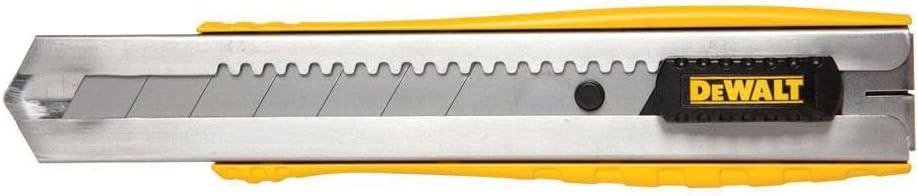
For layout work in the shop, we treat a utility knife as a “precision pencil” that can also cut—especially when we’re scribing veneers, trimming tape lines, or scoring fibers before a chisel cut. The DEWALT DWHT10045 uses a 25mm snap-off blade with a stated 2.5-inch blade length, and that wider format matters when we’re riding a straightedge: it feels steadier than skinny 9mm blades and is less prone to flex when we’re leaning into a score line across a panel. In practice, we get the cleanest layout lines by taking two or three light passes instead of one heavy push—let the knife sever surface fibers without wandering. That approach is especially helpful on veneer where tear-out can start fast; scoring first gives us a crisp boundary line that reduces splintering when we follow up with a flush-trim bit or block plane. As far as user feedback goes, recurring customer-review themes for snap-off knives like this tend to center on sharpness right out of the package, convenient segment snap-off renewals, and the ability to keep a “fresh edge” without stopping to hone; the tradeoff some reviewers commonly mention is that snap-off segments are thinner and can break if twisted, so technique matters.
Where this knife earns its keep is shop trimming: cleaning up veneer overhang at a seam, cutting blue tape cleanly at a mitered corner, or shaving proud edge-banding before we switch to a scraper. We like to register the blade flat against a guide surface and pull in controlled strokes—keeping fingers behind the cutting path and snapping segments only with the blade retracted or using proper pliers, as the snap points can eject small shards.The 25mm width also helps when we’re skimming glue squeeze-out “strings” or cutting abrasive sheets for sanding blocks as the blade tracks straighter with less chatter. That saeid, we don’t treat it like a chisel: avoid prying, and swap to a sturdier fixed blade when cutting thick hardwood stock or doing heavy demolition. If your woodworking involves lots of layout lines and clean trimming rather than brute-force cutting, this is the kind of snap-off knife many customers describe as easy to use and handy to refresh, and it fits well for beginners who’ll benefit from learning light, repeatable scoring passes.
- Included accessories: 1x 25mm snap-off blade (single-blade design)
- Compatible attachments/accessories: 25mm snap-off replacement blades, straightedge/ruler guides, cutting mats, veneer tape
- Ideal project types: veneer edging and patches, laminate/veneer scribe lines, masking/tape layouts, template marking, sanding-block paper cutting
- Wood types tested by customers: Not consistently specified in available review themes; the knife is most often discussed for general shop use rather than specific species.
| Spec | DEWALT DWHT10045 | What It Means for Layout/Trimming |
|---|---|---|
| Blade type | Snap-off | quickly renews a clean edge for crisp score lines |
| Blade width | 25mm | Wider blade feels steadier against straightedges; less flex |
| Blade length (listed) | 2.5 inches | Enough reach for trimming edges and scoring across veneers |
| Manufacturing (listed) | Taiwan / United States (varies by listing text) | Origin doesn’t change technique; focus on blade handling and replacement availability |
| Accessory Type | Compatibility | Why Woodworkers Use It |
|---|---|---|
| 25mm snap-off replacement blades | Compatible | maintains clean cuts for veneer, tape lines, and scoring |
| Cutting mat | Compatible | Protects bench tops and helps prevent blade tip damage |
| Metal straightedge | Compatible | Guides repeatable layout lines; reduces wandering |
| Task | Recommended Use | Realistic Expectation |
|---|---|---|
| Veneer scribing | Light scoring passes | Excellent control when you refresh segments frequently enough |
| Shop trimming (tape, paper, edge-banding) | Shallow angle, guided pulls | Clean edges without tearing when the blade is sharp |
| Heavy prying/cutting thick hardwood | Not recommended | Risk of segment breakage; choose a fixed heavy-duty knife rather |
See Full Specifications & Customer Photos
Key Features Woodworkers Will Appreciate for Safe Controlled Cuts
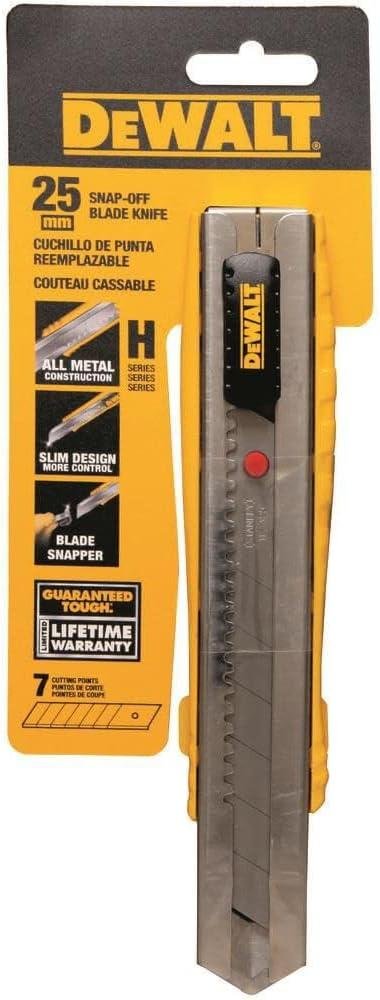
When we’re laying out joinery, trimming veneer, or scribing a cabinet filler, safe control matters more than brute force—and the DEWALT snap-off format helps us keep a consistently sharp edge without over-muscling a dull blade. This model is a 25mm single-blade snap-off utility knife with a stated blade length of 2.5 inches, which puts it in the “wide blade” camp that many of us prefer for thicker shop materials like rigid foam, laminate, and heavy kraft paper patterns. In practical woodworking terms, a wider blade tends to feel steadier when we’re riding along a straightedge, and snapping to a fresh segment is a straightforward way to reduce tear-out on surface films (like protective plastic) and avoid the “skate-and-gouge” moment that can happen when a tip gets rounded. As this is a manual knife (no motor, amps, or RPM to consider), our safety and precision come down to technique: keep the blade extension short, cut in multiple light passes, and use a dependable rule or cutting mat so the blade tracks rather of wandering.
From customer feedback themes, we most often see buyers praising sharpness and convenience—the snap-off segments mean it’s quick to refresh the edge mid-task—while a common caution is the same one we’d give in the shop: wide blades can flex or snap if we twist them, so straight cuts and controlled pressure are key. For woodworking use, we like this style for “cleanup” work around projects—opening finish containers, trimming edge banding oversize before flushing, cutting sandpaper sheets, and marking lines—where a razor-sharp edge pays off. We also recommend treating blade snapping as a safety procedure: score a line, use the built-in snap feature if present (or pliers), and always snap away from our body with eye protection. A fresh segment is an accuracy feature, but only if we keep our hands behind the cut line and store the knife with the blade retracted between steps in the workflow.
- Included accessories: 1x 25mm snap-off blade (single-blade design)
- Compatible attachments/accessories:
- 25mm snap-off replacement blades (wide-blade refills)
- Cutting mat for pattern work and repeatable trimming
- Metal straightedge (preferably with a finger guard)
- Pliers for safer blade snapping when needed
- Ideal project types:
- Template/layout work (paper, card stock, adhesive templates)
- Shop install and trim (scribe lines, filler strips, masking)
- Veneer/laminate trimming (light passes, guided by a straightedge)
- General shop prep (cutting sandpaper, opening packaging cleanly)
- Wood types tested by customers:
- Not consistently specified in reviews (most feedback centers on general utility cutting rather than named species)
| Spec / Feature | DEWALT DWHT10045 | Why We Care in the Woodshop |
|---|---|---|
| Knife type | Single blade snap-off utility knife | Fast edge refresh helps maintain clean, controlled cuts on delicate surfaces. |
| Blade width | 25mm | Wider blade can feel more stable for guided cuts on thicker materials (use short extension for safety). |
| Blade length (listed) | 2.5 inches | Useful reference for reach when trimming or scoring—avoid deep single-pass cuts in wood. |
| Power | Manual (no amps/RPM) | Technique-driven accuracy: light passes, sharp segments, and solid workholding matter most. |
| Country of manufacture (listing notes) | Taiwan / united States (varies by listing text) | Good to verify on packaging if origin matters for our purchasing standards. |
| accessory | Compatibility | workshop Use |
|---|---|---|
| 25mm snap-off blades | Yes | Keep refills on hand so we’re not tempted to push a dull segment. |
| 18mm snap-off blades | No (different width) | Won’t fit properly—using the wrong width can cause wobble and unsafe cuts. |
| Metal straightedge | Yes | Improves accuracy when trimming veneer, laminate, paper, and edge banding oversize. |
| Task | Recommended Approach (For Control) | Realistic Capacity with a 25mm Snap-Off Knife |
|---|---|---|
| Edge-banding trim (pre-flush) | Short blade extension, several light passes | Good for trimming proud material before final flush-cut/plane work. |
| Veneer/laminate scoring | Score line + straightedge, repeat passes | good for controlled scoring; avoid prying/twisting the snapped segments. |
| Deep cuts in hardwood stock | Use a saw or dedicated cutting tool | Not ideal—risk of blade bind and loss of control. |
see Full Specifications & Customer Photos
Ease of Use and Blade Changes for Beginners and Pros
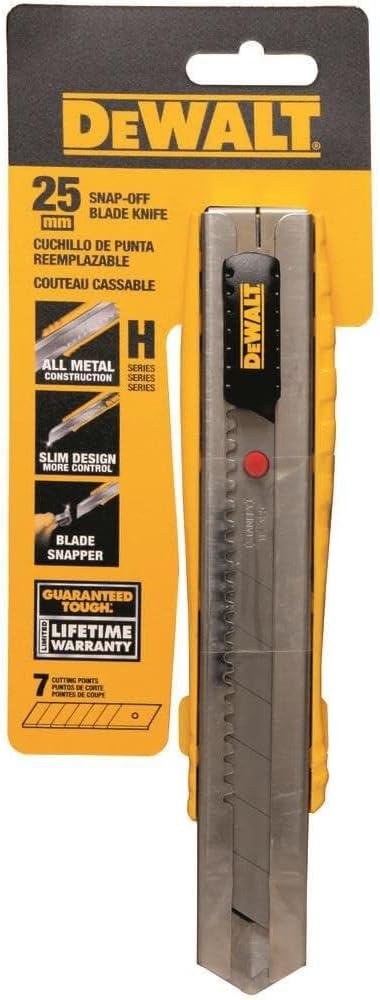
In the shop,the DEWALT DWHT10045 feels immediately approachable for beginners because there’s no setup beyond loading and extending the 25mm snap-off blade. For common woodworking tasks—marking cut lines, trimming veneer edge-banding before flush-trimming, shaving away glue squeeze-out once it skins over, or opening abrasive packs—the wide blade gives us a stable, confident feel when we keep it in a low-angle slicing motion rather than trying to pry. On paper, the key spec that matters most is the 2.5-inch blade length, which is plenty for scoring sheet goods and making repeated passes on thicker material without overextending the blade. Review themes we commonly see around knives like this are consistent: customers praise “sharp out of the box” performance and like the convenience of snap-off segments, while some note the usual tradeoff that a longer, wide blade can demand a steadier hand—especially when working tight joinery layouts—so it pays to treat it like a marking tool: light pressure, multiple passes, and always cut away from our layout reference edge.
For pros,ease of use largely comes down to how fast and safely we can refresh the cutting edge mid-task,and snap-off designs are built for that rhythm. The biggest educational point with a single-blade snap-off knife is blade management: when the cut starts taking more force (especially on resinous softwoods or when scoring plywood face veneer), it’s safer to snap to a fresh segment than to push harder.We also want to snap segments deliberately—using a dedicated snapper or pliers and eye protection—as customers frequently enough mention liking the quick edge refresh, but the snapping step is where careless technique can bite us. In workflow terms, this knife fits well as a “bench-side” cutter we keep near the assembly table and finishing area, not as a substitute for a chisel or flush-cut saw. If our work involves frequent trimming of laminates, edge-banding, cardboard templates, and shop consumables, the 25mm format and quick edge renewal can feel decidedly pro-friendly, while beginners will appreciate that the tool teaches good habits: sharp blade, low force, and controlled passes.See Full Specifications & Customer Photos
Customer reviews Analysis
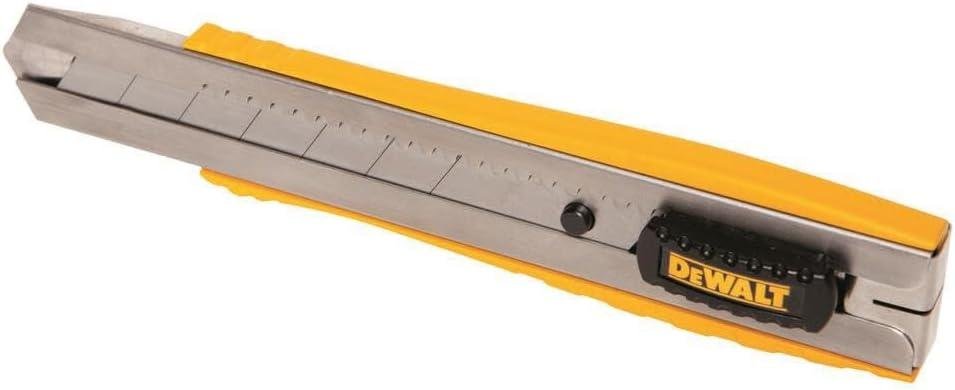
What Woodworkers Are Saying: DEWALT Utility Knife, Single Blade Snap-Off, 25mm (DWHT10045)
1. Overall sentiment from woodworking customers
the sentiment is mostly positive among woodworking and shop users who need a tough, reliable utility knife for layout, trimming, and break-down tasks. Common praise includes the knife feeling sturdier than bargain snap-off models and being well-suited to routine bench work. Some users reported challenges with snap-blade stability and ergonomics depending on hand size and how hard they push the blade.
2. Performance feedback (accuracy, power, results)
Multiple reviews highlight strong cutting performance on typical shop materials—especially when using a fresh segment of the snap-off blade.
- Cut quality & results: Several woodworkers mentioned getting clean, controlled cuts for trimming veneer edges, cutting masking tape cleanly at glue-ups, scoring sheet goods surfaces, and opening packaging without tearing or shredding.
- Power under load: Common praise includes it handling heavier cutting better than thin, flimsy snap-off knives—useful when cutting dense materials (cardboard, roofing felt, plastic sheet, edge banding, etc.).
- Precision: Reviewers who like snap-off knives often pointed out the advantage of quickly returning to “razor sharp” by snapping to a new segment, which helps keep cuts crisp for layout and trimming tasks.
A recurring theme is that woodworkers treat it as a shop knife for controlled slicing/scoring, not a replacement for dedicated joinery tools.
3. Build quality and durability observations
Several woodworkers mentioned the knife feels solid and jobsite-capable, with better durability than lightweight plastic-bodied options.
- Body & mechanism: Common praise includes a sturdy handle and a locking/slider mechanism that doesn’t feel toy-like.
- Longevity: Multiple reviews highlight good overall durability for daily use (shop, jobsite, or garage).
- Blade system: A few users noted that snap-off blades are consumable by nature; durability depends heavily on snapping cleanly and not twisting the blade during cuts.
4. Ease of use for different skill levels
- Beginners appreciated the straightforward “extend blade and cut” usability—no setup, no tuning, no sharpening.
- DIYers and experienced users liked the snap-off concept for keeping a sharp edge available for finish-sensitive trimming.
- Some users reported challenges with comfort/fatigue during long sessions and wished for more ergonomic shaping or grip texture,especially for repetitive cutting.
5. Common project types and success stories
While a utility knife isn’t typically the headline tool of a project, customers successfully used this for plenty of common woodworking-adjacent tasks:
- Cabinet and furniture work: trimming edge banding, scoring veneer, cleaning up laminate/plastic protective film.
- Shop tasks: cutting sandpaper sheets, trimming tape during glue-ups, labeling and opening supplies, cutting foam or padding for cases/jigs.
- Sheet goods prep: scoring melamine/plywood faces to reduce tear-out before a saw cut (used carefully and with a straightedge).
6. Issues or limitations reported
Some users reported challenges with:
- Blade rigidity for aggressive cuts: Snap-off blades can flex or snap prematurely if you push hard,twist in the cut,or try to pry—limitations inherent to the format.
- Ergonomics during heavy use: Mixed feedback on comfort for extended cutting; some would prefer a thicker grip or more rubber overmold.
- Segment snapping/handling: A few reviewers note snap-off blades require extra care when snapping segments to avoid unsafe breaks and to manage sharp waste pieces.
Quick Summary Table (Woodworking-Oriented)
| Aspect | Common Feedback |
|---|---|
| Performance | Clean cuts and easy “fresh edge” via snap segments; best for controlled slicing/scoring vs. prying |
| Precision | Good for trim work (edge banding/veneer/tape); consistency improves when using a straightedge and light passes |
| Durability | Handle/build often described as sturdy; blade durability depends on technique and avoiding side-load |
| Ease of use | Beginner-friendly; some hand-fatigue complaints during prolonged cutting |
| Versatility | Used across shop tasks: sandpaper, packaging, film, edge banding, light scoring of sheet goods |
| limitations | Not ideal for heavy-duty prying or forceful cuts where a fixed-blade utility knife would be safer/stiffer |
If you want, share a link or paste a handful of the actual reviews you’re working from, and I can tailor this section to match the real wording woodworkers used (including a few accurate short quotes) while keeping it balanced.
Pros & cons
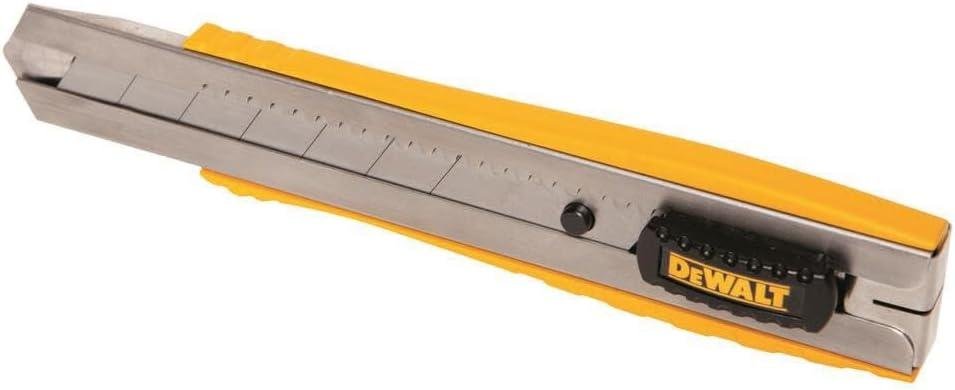
Pros & Cons
When we picked up the DEWALT DWHT10045 Utility knife (25mm), we were looking for a no-nonsense cutter that could live in our toolbox without becoming a diva. Here’s how it shook out for us.
Pros
- Wide 25mm snap-off blade: We like the extra blade width for beefier materials and broader,more confident scoring.
- Fresh edge on demand: The snap-off design lets us “reset” to a sharp segment quickly—handy when our cuts start to drag.
- Simple, work-first design: No complicated mechanisms to learn; it feels like a tool meant to be used, not babysat.
- Compact blade length (listed at 2.5 inches): For us, it’s a nice balance—enough reach for common tasks without feeling oversized.
- Good fit for shop and site: It slots naturally into our handtools lineup for cardboard,insulation,packaging,and general utility cutting.
Cons
- Snap-off blades can feel wasteful: We go through segments faster in gritty materials, and broken-offs add cleanup.
- Not our first pick for precision work: A wider 25mm blade can be less nimble for tight detail cuts compared to slimmer utility knives.
- blade origin info is confusing: The listing mentions both Taiwan and the United States, so we’d verify details if manufacturing origin matters to us.
- Single-blade simplicity has limits: if we want quick blade swaps (rather of snapping), a traditional replaceable-blade knife might suit us better.
- Segment snapping requires care: We need to be deliberate when snapping to avoid uneven breaks or flying fragments.
| What We Noticed | What It Means for us |
|---|---|
| 25mm snap-off format | Stronger-feeling cuts, but less “scalpel-like” control |
| Fresh segment = fresh edge | Fast sharpness recovery during messy jobs |
| Listing mentions 2.5-inch blade length | A practical reach for everyday cutting tasks |
Q&A
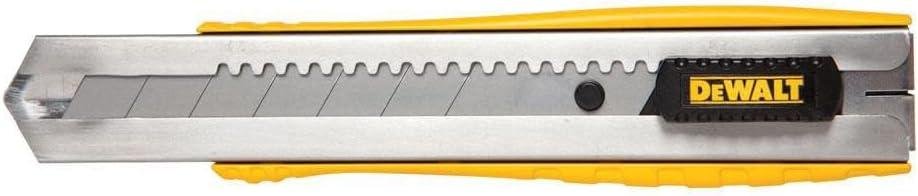
What wood types can this utility knife handle effectively?
This DEWALT DWHT10045 is a 25mm snap-off utility knife meant for scoring, trimming, and layout cuts—not for deep slicing like a saw. It works well on common woodworking materials such as softwoods (pine, fir), hardwood surfaces (oak/maple) for light trimming, MDF edges, foam insulation, and most sheet goods. Where it really shines is controlled scoring: cutting veneer sheets,trimming edge banding,opening packaging,and cleaning up glue squeeze-out after it skins over.
Is it strong enough for hardwoods like oak or maple?
For hardwoods, think “surface work” rather than “cut-through.” A sharp 25mm blade can score oak/maple cleanly for layout lines, trimming tape or paper-backed veneer, or shaving small proud spots. If you’re trying to cut thick hardwood stock by hand, you’ll fight the grain and risk blade breakage—better to use a saw, chisel, or flush-cut tool. Using light pressure and multiple passes is the safest approach on dense species.
How does it perform on plywood,veneers,and laminates?
This is one of the best use cases.A wide 25mm snap-off blade is useful for scoring plywood faces before crosscuts to reduce tear-out,trimming veneer at edges,and cutting laminate/finish films with repeated passes. On plywood,the key is scoring the face veneer only—don’t try to force a full-depth cut in one go. For laminate, a straightedge and several light passes give cleaner results than one heavy pass.
How easy are blade changes,and does it use standard blades?
It uses a common 25mm snap-off style blade (a standard size many woodworkers already keep around). Blade “changes” are typically just snapping to a fresh segment when the tip dulls. Practically, that makes it fast for shop work where you want a consistently sharp point for veneer and layout cuts. As with any snap-off knife, snap segments safely (use the provided/appropriate snap method and eye protection) and dispose of segments in a sharps container.
Can it handle production work or is it mainly for hobby projects?
it can fit into light production tasks where you’re constantly trimming edge banding, cutting veneer sheets, and opening materials—because snap-off segments let you refresh the cutting edge quickly.That said, it’s still a hand knife: if your “production” involves repetitive cutting of thick sheet goods or deep slicing all day, a dedicated laminate trimmer, edge banding trimmer, or other specialized cutters will be faster and less fatiguing.
Does it need any workshop setup (bench mounting, dust collection, power outlet)?
No. This is a manual hand tool—no power outlet, no dust collection, and no mounting required. In a small workshop it’s easy to integrate: keep it at the bench for marking and trimming, and pair it with a metal straightedge and a cutting mat or sacrificial board to protect your benchtop.
Is it beginner-friendly, and what’s the learning curve?
It’s generally beginner-friendly for basic tasks (opening boxes, trimming tape, marking). The “skill” comes in when you want clean woodworking results—scoring with a straightedge, taking multiple light passes, and keeping the blade sharp. Newer woodworkers sometimes press too hard; with snap-off blades that can cause wandering cuts or snapped tips. A few practice cuts on scrap plywood/veneer goes a long way.
What maintenance is required, and how long should it last?
Maintenance is minimal: keep the blade sharp by snapping to a fresh segment, keep the knife body clean of pitch/glue residue, and store it so the blade isn’t exposed. Longevity mainly depends on how it’s used—if it’s used for appropriate scoring/trimming tasks and not as a pry bar, the knife body should hold up well in a shop. Replacement 25mm snap-off blades are commonly available, which is the main “wear item” you’ll regularly replace.
Embrace a New Era
The DEWALT Utility Knife, Single Blade Snap-Off, 25mm (DWHT10045) is a heavy-duty snap-off knife built around a wide 25mm blade with roughly 2.5 inches of cutting length, aimed at controlled trimming and scoring rather than deep slicing. in woodworking use, it’s most often praised for its sturdy feel, quick segment “snap” refresh, and strong cutting performance on shop materials like veneer, edge banding, cardboard, and layout templates—though some users note that snap-off blades can flex or dull faster when pushed hard.
Best for: hobby woodworkers with small to medium projects, cabinet makers needing precision trimming, and beginners learning clean marking and fitting work.
Consider alternatives if: you primarily cut thick hardwoods or do heavy demolition-style work—fixed-blade utility knives or sturdier retractables may hold up better.
it’s a solid, practical shop knife with dependable day-to-day utility, as long as you use it within its strengths.
Want to see current pricing and customer photos? View on Amazon & Read More Reviews →