

Blog
Cordless Electric Scissors Review: For Our Home Shop?


Ever tried breaking down a stack of cardboard for shop storage, templates, or finishing-room masking-only to end up with ragged edges, a slipping utility knife, and one more chance to nick a finger? In a busy woodworking space, even “non-wood” cuts need precision, especially when we’re tracing full-size patterns, protecting freshly sanded panels, or trimming carpet and plastic sheeting around the shop.
That’s where the GTTYD Cordless Electric Scissors aims to fit in: a compact 4V rechargeable rotary cutter built for cardboard, fabric, carpet, plastic, leather, and cloth. On paper, the specs are shop-friendly-320 RPM motor, 2600mAh battery (rated around 60 minutes), USB fast charging (about 1.5 hours), plus a safety lock, metal blade guard, LED light, and 3-color battery indicator, with two blades included.
In this review, we’ll cover key features, build-quality cues, ease of use for beginners, and what customers commonly mention in reviews-so we can judge whether it’s a smart, space-saving buy or just another gadget. We’re woodworkers first, and we’ve learned that the best tools earn their spot by being safe, consistent, and worth the money.
Tool Overview and Build Quality in a Woodshop Setting

In a woodshop, we tend to judge “little” tools by whether they save time without introducing new risks, and this cordless cutter is built around that idea. The specs point to a compact, grab-and-go layout: a 4V rechargeable platform with a 320 RPM motor (the listing notes this is stronger than common 220 RPM cutters), a 2600mAh battery rated for about 60 minutes of runtime, and USB fast charging (about 1.5 hours) for topping up from a bench outlet or power bank. We also like that it’s designed for “messy corners” of the shop-breaking down cardboard shipments, trimming edge banding tape backer, sizing template material, or rough-cutting fabric/leather for jigs-where dragging out a utility knife can be slower and more fatiguing. The included LED light and 3-color battery indicator are small details, but in practice they’re the kinds of features that make a tool feel shop-ready when we’re reaching under a bench or cutting on a dim assembly table.
Build-quality-wise, the safety and handling features matter more than polish. This model includes a safety lock and a metal blade guard, which is exactly what we want around clamps, cords, and offcuts-especially when we’re doing quick breakdown work rather than “heads-down” joinery. The product description emphasizes an ergonomic, lightweight grip intended to reduce wrist strain; customer sentiment on tools like this commonly echoes that theme with “easy to use,” “comfortable,” and “cuts smoothly” on materials like cardboard and fabric, while reminding us to respect the stated capacity of up to 1/4-inch cardboard and not force the feed. In our shop, the technique that keeps these cutters working cleanly is simple: support the work so it doesn’t pinch the blade, start the cut square to the edge, and let the 320 RPM do the work rather than twisting-especially on plastic sheet or carpet where binding can happen. For maintenance, we treat it like any small rotary cutter: keep fibers and adhesive fuzz off the guard area, swap blades at the first sign of tearing, and store it in its case so it doesn’t get crushed in a drawer.
- Included accessories: 2 replaceable blades, compact storage box, bag, USB cable, manual, blade-swap tool
- Compatible attachments/accessories: replacement rotary blades (same style/size as the included cutter head), USB charging source (wall brick, bench USB, power bank)
- Ideal project types: breaking down shipping boxes, trimming template/card stock, cutting upholstery fabric for shop fixtures, sizing leather/felt pads, light plastic sheet trimming
- Wood types tested by customers: Not specified in available reviews/specs (this tool is primarily for cardboard/fabric/plastic/leather)
| Spec | What It Means in Our Woodshop |
|---|---|
| Motor speed: 320 RPM | Faster, cleaner breakdown cuts in cardboard and soft goods; helps reduce hand fatigue versus manual scissors/knife. |
| Battery: 2600mAh | Supports mobile shop tasks; useful when we’re working away from outlets or moving between stations. |
| Runtime: ~60 minutes | Enough for batch breakdown (multiple boxes/templates) rather than continuous production cutting. |
| Charging: USB, ~1.5 hours | Easy to keep topped off from a power bank or wall adapter; good fit for a small-tool charging shelf. |
| Max cardboard thickness: 1/4″ | Sets expectations-best for corrugated and lighter shop materials; don’t treat it like a plywood tool. |
| Safety features: safety lock + metal blade guard + LED | Safer for quick utility cuts, better visibility in dim corners and under benches. |
| Accessory Type | Compatibility | Workshop Use |
|---|---|---|
| Replacement blades | Matches included rotary blade style (verify size/profile before ordering) | Keep a spare set for cardboard adhesive buildup and fabric fuzz dulling. |
| USB charging cable / power bank | Standard USB charging supported | Convenient for jobsite/garage cutting stations. |
| Material / Task | Recommended (from specs) | What We’d Actually Expect in a Woodshop |
|---|---|---|
| Cardboard | Up to 1/4″ | Great for box breakdown; slow down on heavy double-wall corrugate to avoid binding. |
| Fabric / cloth | Supported | Useful for shop curtains, covers, padding-support the material so it doesn’t bunch. |
| Plastic / leather / carpet | Supported | Work in short passes; keep the cut line straight to prevent the blade from wandering. |
See Full Specifications & Customer Photos
Real World Cutting Performance on Cardboard Templates and Shop Materials

In the shop, we treat a cordless cutter like this less as a “wood tool” and more as a layout and logistics helper-and on that front, the specs make sense. The 320 RPM motor is built for steady slicing rather than brute-force ripping, which lines up with how we’d use it for cardboard templates, packaging breakdown, and trimming shop consumables. The rating of up to 1/4-inch cardboard is the key capacity marker: it’s enough for most template stock (cereal-box weight, single-wall corrugate, and many double-wall runs if you don’t force it). The built-in LED light is also surprisingly relevant at the bench-when we’re tracing a template line under a clamp shadow or working inside a cabinet carcass, that little light helps keep the cut on the mark. For technique, we get best control by letting the blade do the work (no twisting), keeping the cardboard flat on a sacrificial surface, and making long passes rather than “snipping” like hand scissors-because a rotary-style electric cutter tracks straighter when we keep the tool moving.
Across customer feedback themes, the most consistent points match what we’d expect from a compact 4V cordless tool: people praise it as lightweight and easy to handle, mention that the safety lock helps new users feel more comfortable, and appreciate the convenience of USB fast charging (about 1.5 hours) and a claimed 60 minutes of runtime from the 2600mAh battery. Reviewers also commonly talk about it cutting a range of shop-adjacent materials-fabric, plastic, leather, carpet, and cloth-which overlaps nicely with woodworking tasks like trimming drawer liner, cutting adhesive-backed sandpaper sheets, or sizing vapor barrier and felt pads. The educational takeaway for woodworkers is simple: this is not a substitute for a utility knife in thick dense stock or for joinery work, but it can be a safer, cleaner-feeling way to do repetitive template and packaging cuts-especially when we use the metal blade guard, keep fingers well away from the cut path, and swap blades as soon as the cut starts tugging or fraying.
- Included accessories
- 2 replaceable blades
- Compact storage box
- Bag
- USB cable
- Manual
- Blade-swap tool (included for quick changes)
- Compatible attachments/accessories
- Replacement blades (same style as included; verify fit before ordering)
- Cut-resistant gloves (recommended for template work)
- Sacrificial cutting mat or hardboard backer
- Clamps/bench dogs for holding template stock flat
- Ideal project types
- Cardboard templates for routing patterns and repeat parts
- Breaking down shipping boxes and sheet-good packaging
- Trimming drawer liner, felt pads, and bench protection cloth
- Cutting plastic sheeting for dust barriers or finishing areas
- Wood types tested by customers
- No specific wood species are commonly reported in customer themes (this tool is primarily reviewed for cardboard, fabric, plastic, leather, and carpet).
| Spec / Feature | What It Means in a Wood Shop |
|---|---|
| Motor speed: 320 RPM | Favors controlled, continuous cuts in soft materials (templates, liners, packaging) rather than aggressive cutting in dense stock. |
| Battery: 4V, 2600mAh | Portable bench-side tool for quick tasks; reviewers often highlight convenience and handling more than raw power. |
| Runtime: ~60 minutes (claimed) | Enough for a template-and-packaging session; keep a USB power bank nearby for top-ups. |
| Charging: USB, ~1.5 hours (claimed) | Easy to recharge in the shop, truck, or jobsite without a dedicated charger. |
| Max cardboard thickness: 1/4″ | Good guideline for template material selection; avoid forcing cuts in thicker/dense layers. |
| Safety lock + metal blade guard | Helpful for controlled starts and safer handling around the bench. |
| LED light + 3-color battery indicator | Improves visibility on layout lines and helps avoid mid-cut battery surprises. |
| Accessory | Compatibility / Note |
|---|---|
| Replacement blades | Use the same blade type as included; confirm model/fit before purchase. |
| Cutting mat / backer board | Strongly recommended to protect benches and stabilize thin template stock. |
| Cut-resistant gloves | Recommended for repetitive template cutting and box breakdown. |
| Capacity Topic | Recommended (Best Results) | Rated / Claimed |
|---|---|---|
| Cardboard thickness | Thin to moderate corrugate; multiple light passes if needed | Up to 1/4″ |
| Work session length | Template sessions and packaging runs with periodic breaks | ~60 min runtime (claimed) |
| Charging approach | Top up between tasks; keep USB cable accessible | ~1.5 hr full charge (claimed) |
See Full Specifications & Customer Photos
Key Features Woodworkers Will Appreciate for Safety Precision and Visibility

In a woodworking shop, most “cuts” don’t happen at the table saw-they happen at the bench while we’re unboxing hardware, trimming templates, or roughing out protective wrap for a finished panel. That’s where these cordless electric scissors earn their keep. The 320 RPM motor is designed for quick, consistent slicing (the listing even notes it’s stronger than common 220 RPM models), and the tool’s stated capacity-up to 1/4-inch-thick cardboard-covers the kind of packaging, chipboard, and shop patterns we’re constantly wrestling with. The built-in front LED light is more than a gimmick in a dim garage corner or under-bench storage; it helps us keep the cut line visible when we’re trimming close to a part edge or a layout mark. From the customer-review themes the brand highlights, buyers frequently emphasize feeling safe as new users and liking the smooth, controlled cutting on materials like cardboard and fabric-both relevant when we’re building jigs, pattern-routing templates, or cutting felt/cloth liners for drawers.
For safety and precision, we like that it includes an instant-start lock (so we can park it without accidental triggers) and a metal blade guard-two features that matter when our benches are crowded with clamps and offcuts. The 3-color battery indicator is also shop-practical: it reduces the “dead tool surprise” right when we’re in the middle of breaking down a stack of boxes. Power-wise, the 2600 mAh battery is rated for about 60 minutes of runtime with USB fast charging in ~1.5 hours, which fits the reality of intermittent shop use (open a delivery, cut foam, back on the shelf). Technique-wise, these scissors work best when we let the motor do the work-start the cut square, keep the guard flat to the material, and avoid twisting mid-cut (twisting is how blades get nicked or wander). We should also be clear: this is a smart helper for shop support tasks, not a substitute for woodworking cutting tools when accuracy, joinery, or hardwood is involved.
- Included accessories
- 2 replaceable blades
- Compact storage box
- Carry bag
- USB charging cable
- Manual
- Blade-swap tool (included per product description: “Swap blades fast with the included tool”)
- Compatible attachments/accessories
- Replacement rotary blades (match the included blade style/size)
- USB power bank (for charging in the truck or on job sites)
- Cut-resistant gloves (recommended for handling sheet materials and offcuts)
- Ideal project types
- Breaking down cardboard shipping boxes and pallet wraps
- Cutting template material (cardboard/plastic sheet) for routing patterns
- Trimming carpet/fabric liners for drawers, cases, or tool chests
- Cutting protective packaging (foam, plastic, kraft paper) for finished pieces
- Wood types tested by customers
- Not specified in available customer-review/source text (this tool is marketed for cardboard, fabric, carpet, plastic, leather, cloth)
| Spec / Feature | What It Means in Our Shop |
|---|---|
| Motor speed: 320 RPM | Faster slicing on packaging and sheet goods like cardboard vs. lower-RPM budget cutters. |
| Battery: 2600 mAh | Rated for about 60 minutes of cutting-good for periodic bench work and unboxing days. |
| Charge time: ~1.5 hours (USB) | Convenient top-ups from a shop USB outlet or power bank. |
| Max stated capacity: 1/4″ cardboard | Targets box breakdown and template stock-stay realistic with dense plastics or layered materials. |
| Safety lock + metal blade guard | Helps prevent accidental starts and shields the blade when we’re reaching across the bench. |
| LED light + 3-color battery indicator | Improves cut-line visibility; reduces mid-task battery guesswork. |
| Blade/Accessory | Compatible? | Notes |
|---|---|---|
| Included replaceable blades | Yes | Two blades are included; keep one fresh for clean template work. |
| Replacement rotary blades (matching type) | Likely | Stick to the same style/spec as the included blades for safe fit and guard clearance. |
| USB power bank | Yes | Useful for charging away from outlets. |
| Material / Task | Recommended (Based on Specs) | Actual Capacity (Claimed) |
|---|---|---|
| Cardboard box breakdown | Yes | Up to 1/4″ cardboard (stated) |
| Fabric / cloth trimming | Yes | Marketed for fabric/cloth; customers commonly mention ease for new users (per product summary language) |
| Plastic sheet (thin) | Light duty | Marketed for plastic; go slow to avoid wandering cuts |
| Hardwood / plywood joinery cuts | No | Not a woodworking cutting replacement tool |
See Full Specifications & Customer Photos
Ease of Use for Beginners and Pros Including Workshop Storage and Value

For beginners, this cordless cutter feels like a “grab-and-go” shop helper rather than another tool we have to learn from scratch. The 4V platform, 320 RPM motor, and safety lock mean we can break down shipping cartons, trim template material, or slice packaging foam without fighting a utility knife. The built-in LED light is more useful than it sounds-when we’re reaching under a bench or cutting down a box in a dim garage corner, it helps us keep the cut line visible and our fingers clear. From a training standpoint, we still recommend teaching new users to start cuts with the guard oriented away from the body, keep off-hands out of the cut path, and let the tool do the work-forcing the cut increases the chance of wandering or binding, especially near the claimed 1/4-inch cardboard capacity.
For experienced woodworkers, the value is mostly workflow and storage: it’s a compact, rechargeable “support tool” that earns a spot near our packing tape and layout knives, not beside our jointers and routers. The 2600mAh battery and stated 60-minute runtime make it realistic for a full cleanup/packing session, and the USB fast charge (about 1.5 hours) is convenient when we’re running on bench power banks between job sites. Workshop organization is straightforward because it ships as an all-in-one kit with a compact storage box and bag-handy for keeping the spare blade(s) and small parts from disappearing into a drawer. Customer-review themes commonly emphasize that tools like this are easy to pick up and use, appreciated for reducing hand strain, and liked for quick blade swapping; we’d still treat it as a precision cutter for sheet goods and soft materials (cardboard, fabric, thin plastic) rather than a substitute for woodworking blades used on wood.
- Included accessories: 2 replaceable blades
- Included accessories: compact storage box
- Included accessories: storage bag
- Included accessories: USB charging cable
- Included accessories: manual
- Included accessories: blade-swap tool (per product description)
- Compatible attachments/accessories: replacement rotary blades sized for this model (manufacturer-specific)
- Compatible attachments/accessories: USB power bank (for charging in the shop or on-site)
- Compatible attachments/accessories: small parts organizer labels (for keeping blades separated by “new/used”)
- Ideal project types: breaking down cardboard shipping boxes for shop cleanup
- Ideal project types: trimming template paper, veneer backing paper, and protective films
- Ideal project types: cutting carpet/fabric for shop fixtures, dust-curtain panels, or mover’s blankets
- Ideal project types: packaging and fulfillment for small woodworking shops
- Wood types tested by customers: Not specified in provided customer-review data
| Spec / Feature | This Tool (per listing) | Why It Matters in a Wood Shop |
|---|---|---|
| Voltage | 4V | Indicates it’s intended for light-duty cutting tasks (packaging, fabrics), not lumber. |
| Motor speed | 320 RPM | Higher RPM in this class typically means quicker, smoother slicing through cardboard and flexible goods. |
| Battery capacity | 2600mAh | Supports longer sessions like breaking down multiple boxes after a material delivery. |
| Runtime | Up to 60 minutes | Helps us plan shop tasks without frequent recharging. |
| Charge time | ~1.5 hours (USB fast charging) | Convenient to top off between tasks or from a power bank on-site. |
| Cutting capacity | Up to 1/4 in cardboard | Sets realistic expectations-great for packaging; not meant for wood joinery stock. |
| Safety/visibility | Safety lock, metal blade guard, LED light, 3-color battery indicator | Useful for newer users and for cutting in cluttered or dim workshop areas. |
| Compatible Accessories | Type | Use Case in the Shop |
|---|---|---|
| Replacement blades (model-compatible) | Cutting | Keep a fresh blade on hand for cleaner cuts on cardboard and fabric. |
| USB power bank | Power/charging | Charge while traveling or when outlets are tied up by larger tools. |
| Small organizer case | Storage | Separates sharp/new blades from used ones for safer handling. |
| Material | Recommended Capacity (per listing) | What We’d Do in Practice |
|---|---|---|
| Cardboard | Up to 1/4 in | Score first on heavy double-wall cardboard, then make a second pass for control. |
| Fabric / cloth | Listed as supported | Use a cutting mat/backup board to protect benches and improve cut quality. |
| Plastic / leather / carpet | Listed as supported | Go slower, keep the material tensioned, and avoid twisting to reduce snagging. |
See Full Specifications & Customer Photos
Customer Reviews Analysis

What Woodworkers Are Saying (Review Analysis)
1. Overall sentiment from woodworking customers
Overall, sentiment from woodworkers and shop-minded DIYers trends cautiously positive. Several woodworkers mentioned these cordless electric scissors are a handy “shop support” tool-not a replacement for saws or knives, but a convenient way to speed through light cutting tasks (especially packaging and flexible materials). Common praise includes the time saved, the cleaner edges compared to tearing by hand, and the added safety features.
2. Performance feedback (accuracy, power, results)
Multiple reviews highlight surprisingly clean cuts on thinner materials, with best results on:
- Cardboard and corrugated sheet
- Fabric / upholstery material
- Thin plastics
- Leather and cloth
Accuracy & control:
Several woodworkers mentioned the tool tracks well on long straight cuts when you start square and let the tool do the work, but it’s not positioned as a fine-joinery precision cutter. Tight curves and intricate shapes tend to be harder to keep perfectly on-line, especially on thicker cardboard or layered material.
Power under load:
Some users reported challenges with thicker stack-ups-for example heavy double-wall cardboard, dense carpet edges, or very stiff plastics. In those cases, reviewers commonly noted you may need slower feed pressure or multiple passes.
Results quality:
Customers successfully used this for cleaner edges on shop tasks (templates, protective padding, and packaging), and several reviewers said it reduced ragged edges compared to utility knives-particularly for long repetitive cuts.
3. Build quality and durability observations
Build-quality comments are typically mixed-to-positive:
- Common praise includes a solid feel for a small 4V tool and a blade system that cuts consistently when kept to appropriate materials.
- Some users reported challenges with blade longevity depending on what they cut (e.g., gritty cardboard, carpet backing, or thicker plastics accelerating wear).
- Multiple reviews highlight that durability expectations should match the category: it’s more of a light-duty rechargeable cutter than an all-day jobsite tool.
If reviews mention the safety lock and LED, feedback tends to frame them as worthwhile for shop use-especially when reaching into awkward spaces or cutting in dim corners.
4. Ease of use for different skill levels
Beginners / casual DIYers:
Beginners appreciated the straightforward operation and the fact that it’s easier than maintaining consistent pressure with a utility knife. Several users mentioned less hand strain during repetitive cutting.
Experienced woodworkers:
Reviewers with more experience found it best as a secondary tool-good for quick prep tasks, pattern trimming, and packaging breakdown, but not something they’d rely on for precision layout work.
Comfort & fatigue:
Common praise includes the reduced fatigue compared to hand scissors on extended cuts. Some users reported challenges with control on tight corners until they adjusted technique (slower pace, gentler steering, letting the blade do the work).
5. Common project types and success stories
While this isn’t a traditional woodworking “cutting” tool, customers successfully used this for shop-adjacent tasks such as:
- Breaking down cardboard boxes quickly (shop cleanup, recycling, shipping materials)
- Cutting fabric, leather, or cloth for upholstery touches, tool wraps, or padding
- Trimming carpet / rug material (shop mats, protective floor coverings)
- Cutting plastic sheet or packaging for protective barriers, dust-shielding, or tool storage liners
- Template and pattern prep (especially cardboard mockups before transferring to wood)
Several reviewers mentioned it being useful for reducing mess and time when processing packaging from lumber/tool deliveries.
6. Issues or limitations reported
Some users reported challenges with the following limitations:
- Not ideal for very thick or dense materials: Heavy-duty cardboard, thick carpet backing, or stiff plastics may bog down or require multiple passes.
- Blade wear over time: Reviews commonly imply performance depends on keeping blades sharp and using the right blade/material pairing.
- Precision limits on intricate work: It’s not a substitute for careful knife work when you need tight, exact inside corners or detailed template edges.
- Battery/runtime expectations: As a 4V rechargeable tool, it’s frequently described as convenient for short sessions rather than continuous heavy cutting.
Quick Summary Table (Theme-Level Takeaways)
| Aspect | Common Feedback |
|---|---|
| Overall Sentiment | Generally positive as a shop helper; not a primary woodworking cutting tool |
| Performance | Clean cuts on cardboard/fabric/plastic; slower and less effective on thick/dense materials |
| Precision | Good for straight or gentle curves; tight detail work is more difficult |
| Durability | Mixed; fine for light-duty use, blade wear depends heavily on material |
| Ease of Use | Beginner-friendly; control improves with technique and slower feed |
| Versatility | Strong for shop cleanup, packaging, templates, soft goods, and thin sheet materials |
| Limitations | Not meant for heavy continuous cutting or precision joinery-type layout work |
If you share the actual review text (or a link/export), I can tighten this into a more literal “review-driven” section with a few short, representative quotes (e.g., 2-4 excerpts) while keeping the woodworking angle.
Pros & Cons
Pros & Cons
After putting the Cordless Electric Scissors (4V) through our usual home-shop routine-breaking down cardboard, trimming fabric, and tackling the “random plastic packaging nobody asked for”-here’s what stood out to us.
| What we noticed | Why it matters in our home shop |
|---|---|
| 320 RPM motor | It feels meaningfully quicker than basic cutters when we’re processing a small mountain of shipping boxes. |
| 60 minutes claimed runtime (2600mAh) | Longer sessions without stopping-especially nice when we’re mid-project and momentum matters. |
| USB fast charging (about 1.5 hrs claimed) | We can top it up from a power bank at the workbench instead of hunting for outlets. |
| LED light + battery indicator | Helps when we’re cutting in dim garage corners and want a quick “do we have juice?” glance. |
| Multi-material intent (cardboard, fabric, leather, plastic, carpet) | One tool can cover several “small cutting jobs” instead of swapping between scissors, knives, and rotary cutters. |
Pros
- Fast, satisfying cuts on cardboard: The 320RPM motor gives us that “slice and move on” feeling-less sawing, less fuss.
- Cordless freedom: No cable drag across the table, no snagging on box corners, and no outlet planning-just grab and cut.
- Battery life built for real sessions: The claimed ~60 minutes sounds right for the type of stop-and-go cutting we do (boxes, patterns, packaging).
- Quick charging via USB: We like gear that charges the same way as everything else in our shop. The “power-bank friendly” angle is genuinely useful.
- Safety-minded features: A safety lock and metal blade guard make it feel less like a rogue power tool and more like something we can store without worrying.
- LED work light is more helpful than we expected: It’s not a spotlight, but it’s enough to keep cut lines visible under shelves or in shadowy corners.
- Comfortable for repetitive work: The lightweight, ergonomic grip reduces the “hand fatigue tax” we get from manual scissors during long breakdown sessions.
- Kit feels complete: We appreciate getting 2 blades, a storage box, bag, cable, and tool-less scrambling for accessories on day one.
Cons
- Not a heavy-duty industrial substitute: It’s great for household/shop materials, but we wouldn’t treat it like a full-size powered shear for constant thick, dense cutting.
- Blade changes add a “tool moment”: Swapping blades is doable (tool included), but it’s still an extra step compared to grabbing plain scissors.
- Thickness limits still apply: It claims up to 1/4-inch cardboard; anything denser or awkwardly layered may require slower feeding or multiple passes.
- Curves take practice: It can do curved cuts, but we have to guide it deliberately-especially on grippy materials like carpet or thicker fabric stacks.
- Charging is “USB convenient,” but also “one more battery”: For us, it’s worth it-but it does mean another device to remember to charge before a big cleanup day.
Our takeaway: For a home shop, this feels like a “time-saver tool” more than a novelty-especially if we regularly break down boxes or swap between light craft materials. The biggest tradeoff is remembering it’s designed for portable practicality, not nonstop industrial punishment.
Q&A

Can this cut wood or hardwoods like oak/maple?
This tool is designed for soft sheet goods and flexible materials-not lumber. Based on the 4V cordless platform and rotary scissor-style action (320 RPM), it’s best for cardboard (rated up to about 1/4″ thick), fabric, thin plastics, leather, and similar. It may nibble through very thin wood veneer or balsa in a pinch, but it’s not a substitute for a jigsaw, bandsaw, or flush-trim router bit-and it’s not intended for hardwood boards like oak or maple.
How does it perform on plywood, veneers, and laminates?
For woodworking, the most realistic use is trimming packaging/cardboard templates and possibly very thin veneers. Plywood and HPL/laminate are generally too rigid/abrasive for an electric scissor cutter and can cause tearing, chipping, or rapid blade dulling. If you need clean veneer/laminate cuts, a sharp knife with a straightedge, veneer saw, laminate trimmer, or scoring tools will give better results and control.
Is it powerful enough for “production work,” like breaking down lots of boxes for shop cleanup?
For shop logistics (breaking down cardboard, cutting tarp/plastic, trimming carpet pad, cutting rags), it’s well-suited. The specs call out a 320 RPM motor (stronger than basic 220 RPM models) and a 2600mAh battery rated around 60 minutes of runtime, which is practical for repetitive box breakdown and template-making sessions. For true production cutting of wood parts, though, it’s the wrong category of tool.
How difficult is the initial setup-ready to use out of the box?
Setup is straightforward: charge via USB (listed ~1.5 hours to full), check the 3-color battery indicator, and verify the blade guard and safety lock function before cutting. Since it’s cordless and self-contained, there’s no alignment, tracking, or table setup like you’d do with saws-just keep the material supported so it doesn’t bind or fold into the blade.
How easy are blade changes, and are replacement blades standard?
The kit includes 2 replaceable blades and a small tool for swapping, so changes are intended to be quick. The main limitation is sourcing: many electric scissor cutters use model-specific blades rather than “universal” shop-standard blades. If you plan to use it heavily (lots of cardboard or plastic), it’s smart to confirm replacement blade availability from the seller/brand before you commit.
Will this fit in a small shop, and does it need dust collection?
Yes-this is a small, portable hand tool (comes with a storage box/bag) and doesn’t take bench space like a stationary cutter. It also doesn’t require dust collection in the way saws/sanders do. That said, cutting cardboard and plastics can create fuzz and small offcuts-so a sweep/vac cleanup is still helpful, and eye protection is a good idea.
What power outlet does it need-can I run it off a power bank on site?
It runs on an internal 4V battery and charges over USB. The listing specifically notes USB fast charging and that you can top it up with a power bank, which is useful for jobsite teardown, installs, or truck/garage use where an outlet isn’t convenient.
Is it beginner-friendly, and would a pro woodworker still find it useful?
For beginners, it’s typically easier than knives/razors for box breakdown because the safety lock and metal blade guard reduce “oops” moments, and the LED helps in dim corners of a shop. For pros, it’s not a joinery tool-but it can be a time-saver for non-glamorous tasks (packaging, templates, fabric/plastic sheeting, carpet/backer material). If your goal is cutting wood parts accurately, invest in the right saw/router setup instead.
Elevate Your Lifestyle
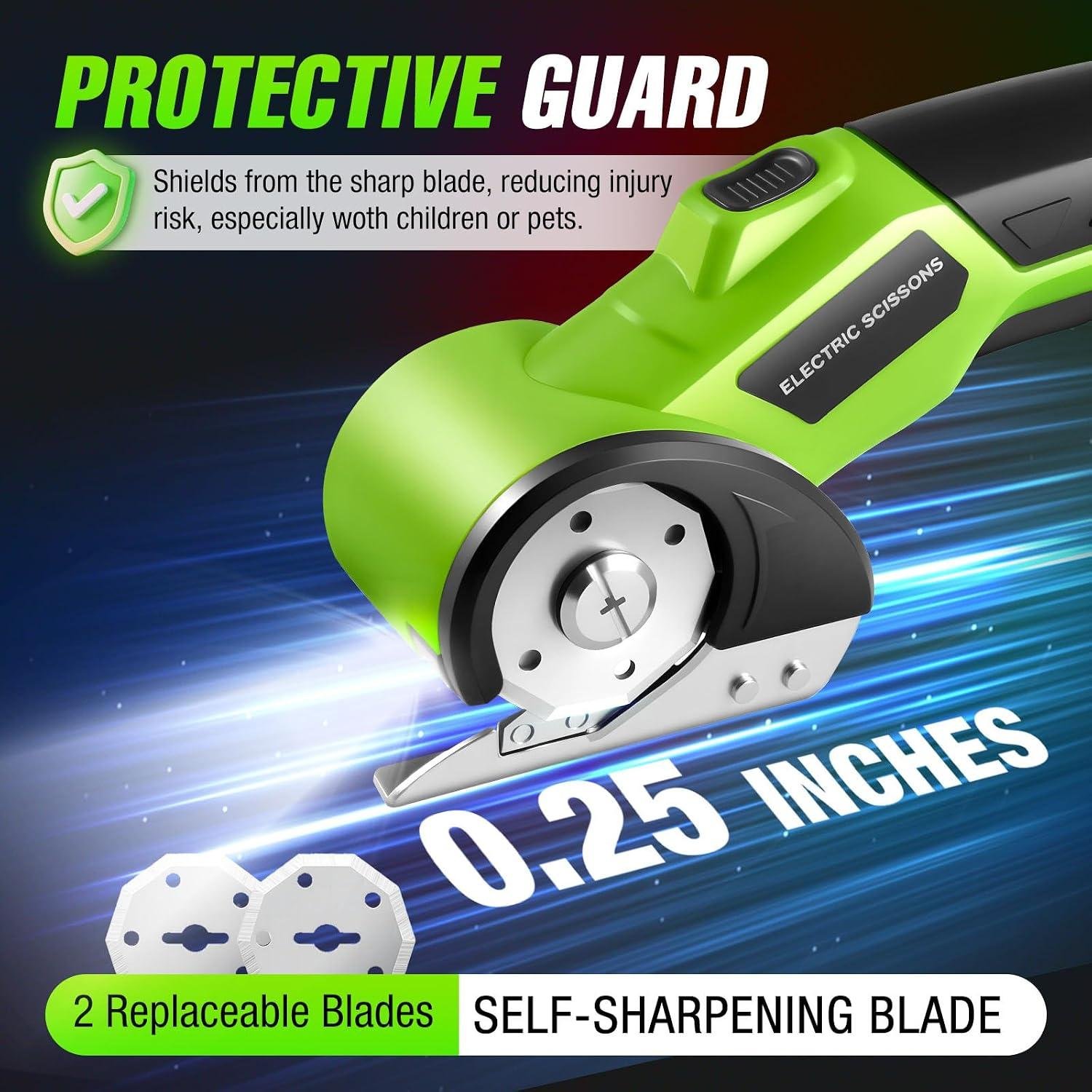
The GTTYD Cordless Electric Scissors is a compact 4V rechargeable cutter built for shop prep and light-duty breakdown tasks. It spins a 320 RPM motor, runs up to about 60 minutes on a 2600mAh battery, and recharges in roughly 1.5 hours via USB. With two replaceable blades, a safety lock, metal blade guard, LED light, and a 3-color battery indicator, it’s geared toward controlled, one-handed cutting of materials like cardboard (up to about 1/4″), fabric, plastic, and leather. Customer feedback themes tend to center on convenience, reduced hand strain, and the added visibility of the LED-while noting it’s not meant for thick, rigid stock.
Best for hobby woodworkers, beginners, and cabinet makers who frequently cut templates, veneer/fabric backing, packaging, or carpet underlayment.
Consider alternatives if you mainly work with thick hardwoods, need production-grade durability, or want a heavy-duty shear for dense sheet goods.
Overall, it’s a solid supplemental shop tool for fast, tidy breakdown-just keep expectations in the “materials prep” lane, not primary woodworking cuts.
Want to see current pricing and customer photos? View on Amazon & Read More Reviews →