

Blog
BLACK+DECKER BDCDD12C Drill/Driver Review: Our Shop?

Ever tried driving screws inside a cabinet carcass or drilling shelf-pin holes in a dim corner, only to fight a bulky drill that won’t sit square? In small shops and tight joinery setups, precision and control matter as much as power—and the wrong tool can turn a clean build into a frustrating redo.
The BLACK+DECKER 12V MAX Cordless drill/Driver (BDCDD12C) is a compact drill/driver designed for everyday woodworking tasks like pilot holes, hinge hardware, and assembly work. It pairs a 550 RPM motor with an 11-position clutch for more controlled driving, and it comes with the battery and charger, keeping the budget-to-quality equation straightforward.
In this review, we’ll break down the key features—2.18 lb lightweight design, keyless chuck, LED work light, and the “35% smaller” footprint versus the older 12V NiCad model—then discuss what those specs mean at the bench. We’ll also weigh durability expectations and ease of use for beginners, noting that many customer reviews highlight its hand-amiable ergonomics and convenience for tight spaces. As woodworkers who’ve learned the hard way that tools should match the work, we’ll keep the focus on practical decision-making, not hype.
Tool Overview and First Impressions in the Shop
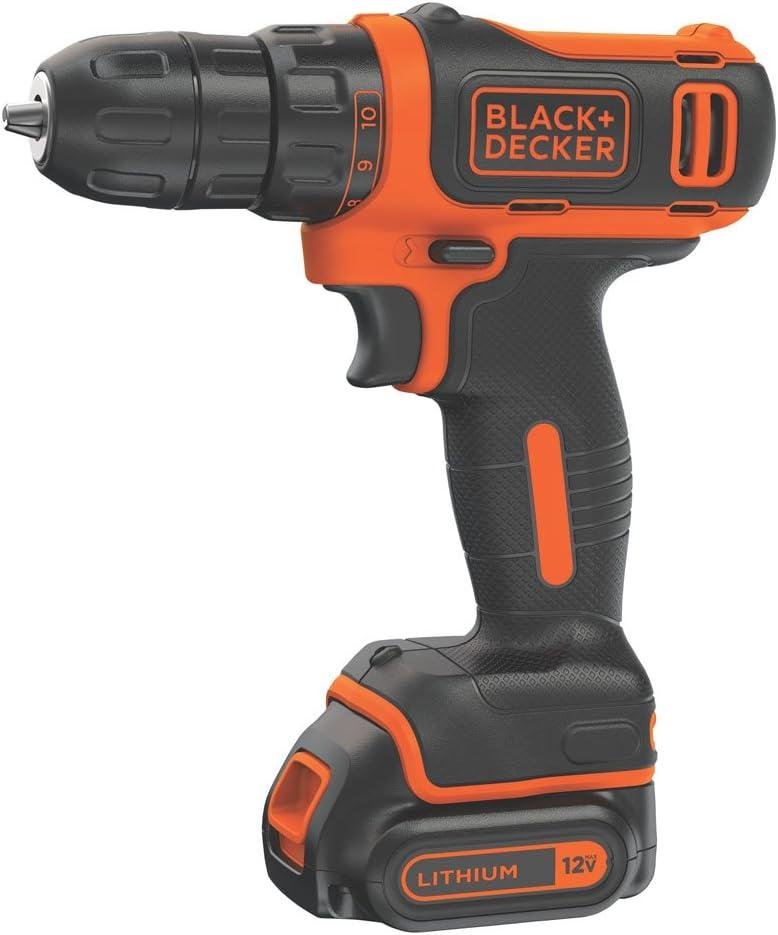
In our shop, the BLACK+DECKER BDCDD12C reads like a “keep-it-handy” drill/driver rather than a heavy-duty builder’s rig. On paper, the key story is compact control: a 12V MAX platform, a 550 RPM top speed, and an 11-position clutch meant to keep us from overdriving screws in softer stock. The manufacturer also calls it 35% smaller than the older 12V NiCad model (GCO1200C), and that compact feel is immediate when we’re working inside cabinet carcasses, between stretchers, or reaching into a corner where a bulkier drill tends to bind up our wrist. At a listed 2.18 lb, it feels like the kind of tool we’ll actually grab for rapid hinge installs, pilot holes for #6–#8 screws, and hardware work where finesse matters more than brute torque. The built-in LED work light earns its keep under benches and inside boxes, and the keyless chuck keeps bit swaps fast when we’re alternating between a drill bit and a driver bit.
First impressions from owners align with what we’d expect from thes specs: customer feedback commonly circles around lightweight handling, easy setup out of the box, and being good for everyday household and light shop tasks—with the predictable caveat that a 12V tool with a 550 RPM ceiling isn’t aimed at long runs of large holes or big lag screws. for woodworking, it’s worth remembering what the clutch is doing: it’s a slip mechanism that helps us keep screw heads from stripping and helps protect softer woods (think pine) from being crushed at the surface—especially useful when we’re assembling face frames or installing pulls where consistent depth matters. Technique-wise, we get cleaner results by drilling proper pilot holes in hardwoods, keeping the bit square to the work, and letting the tool’s speed do the cutting rather than leaning hard (which can wander the point and enlarge holes). As a small-shop companion drill, it looks best suited to woodworkers who prioritize control, access, and low fatigue over maximum power.
- Included accessories
- 12V MAX cordless drill/driver (BDCDD12C)
- Battery (included)
- Charger (included)
- Compatible attachments/accessories
- standard driver bits (Phillips, square/Robertson, Torx)
- Twist drill bits for pilot holes
- Countersink bits for clean screw seating in hardwoods
- Hex-shank quick-change bit holders (works well with keyless chuck)
- Ideal project types
- Cabinet hardware install (pulls, knobs, hinges)
- Flat-pack and shop fixture assembly
- Small jigs, cleats, and French cleat accessory mounting
- Light-duty pocket-hole screw driving (with correct clutch setting)
- Wood types tested by customers
- Reviews most often reference general “wood” use; specific species are not consistently named.
| Spec | What BLACK+DECKER Lists | Why It Matters in the Shop |
|---|---|---|
| Voltage | 12V MAX | Typically favors lighter tasks, shorter bursts, and tight-space work. |
| Max Speed | 550 RPM | Cozy for controlled drilling/driver work; slower than many 18V/20V tools for repetitive drilling. |
| Clutch Settings | 11-position clutch | Helps prevent overdriving and stripping—useful for consistent screw depth in softwoods and plywood. |
| Weight | 2.18 lb | Less fatigue when assembling and working overhead or inside cabinets. |
| Convenience Features | LED light, keyless chuck | Better visibility in dark corners; quicker bit changes during assembly. |
| Accessory Type | Best Match for This Drill | notes for Woodworkers |
|---|---|---|
| Driver bits | Standard 1/4″ hex bits | Pair with clutch settings to avoid stripping screws in pine and plywood. |
| Drill bits | Brad-point or twist bits (small/medium sizes) | Brad-point bits help start cleanly on furniture parts and prevent wandering. |
| Countersinks | Combination pilot/countersink bits | Helps seat screws cleanly, especially in hardwood face frames. |
| Task Capacity | Recommended (Realistic for 12V / 550 RPM) | what to Avoid |
|---|---|---|
| Pilot holes | Frequent use in softwood/hardwood with proper bit choice | Forcing large bits without backing out to clear chips |
| Screw driving | Frequent use for cabinet screws and hardware | Long structural screws or heavy lag driving as a primary task |
| large hole drilling | Occasional, small diameter only | Big spade/auger holes in dense hardwoods as routine work |
See Full specifications & Customer Photos
Real World Performance for Pilot Holes Hardware and Assembly Work
In real shop use, we found the BLACK+DECKER BDCDD12C is most at home doing pilot holes and light hardware work where control matters more than raw torque. The drill/driver is rated at 550 RPM and uses an 11-position clutch, which let us “sneak up” on the right setting for hinge screws, drawer-slide screws, and face-frame fasteners without instantly stripping heads. that clutch is the difference between a calm install and a frustrating one—especially in softer species where screws like to overdrive. The compact body (2.18 lb per the product description) also helps in cabinet carcasses and inside corners, and the LED work light is genuinely useful when we’re working under a bench or inside a case where overhead lights don’t reach. Customer review themes line up with this: many owners describe it as lightweight and easy to handle, and a common sentiment is that it’s “great for small jobs” and quick fixes—exactly the kind of pilot-hole-and-install work most of us do constantly.For assembly, the keyless chuck speeds up swapping between a brad-point or twist bit for pilot holes and a driver bit for screws—something we do dozens of times during a cabinet or flat-pack style build. Practically, we still recommend a woodworker’s habit: drill the pilot hole first, then re-chuck a driver bit and use the clutch to stop short of crushing fibers or camming out the screw head. With this drill’s modest speed, it’s forgiving for beginners and helpful for anyone installing lots of small screws, though it’s not aimed at heavy boring or large-diameter hole work. Reviewers frequently mention simple setup (battery/charger included) and the convenience of an all-in-one kit, and we can see why—it’s an approachable tool for newer woodworkers who want a compact driver for shop assembly and occasional drilling without wrestling a heavier 18V platform. Check Current Price & Reviews on Amazon
Key Features Woodworkers Will Appreciate on the Bench and on Site
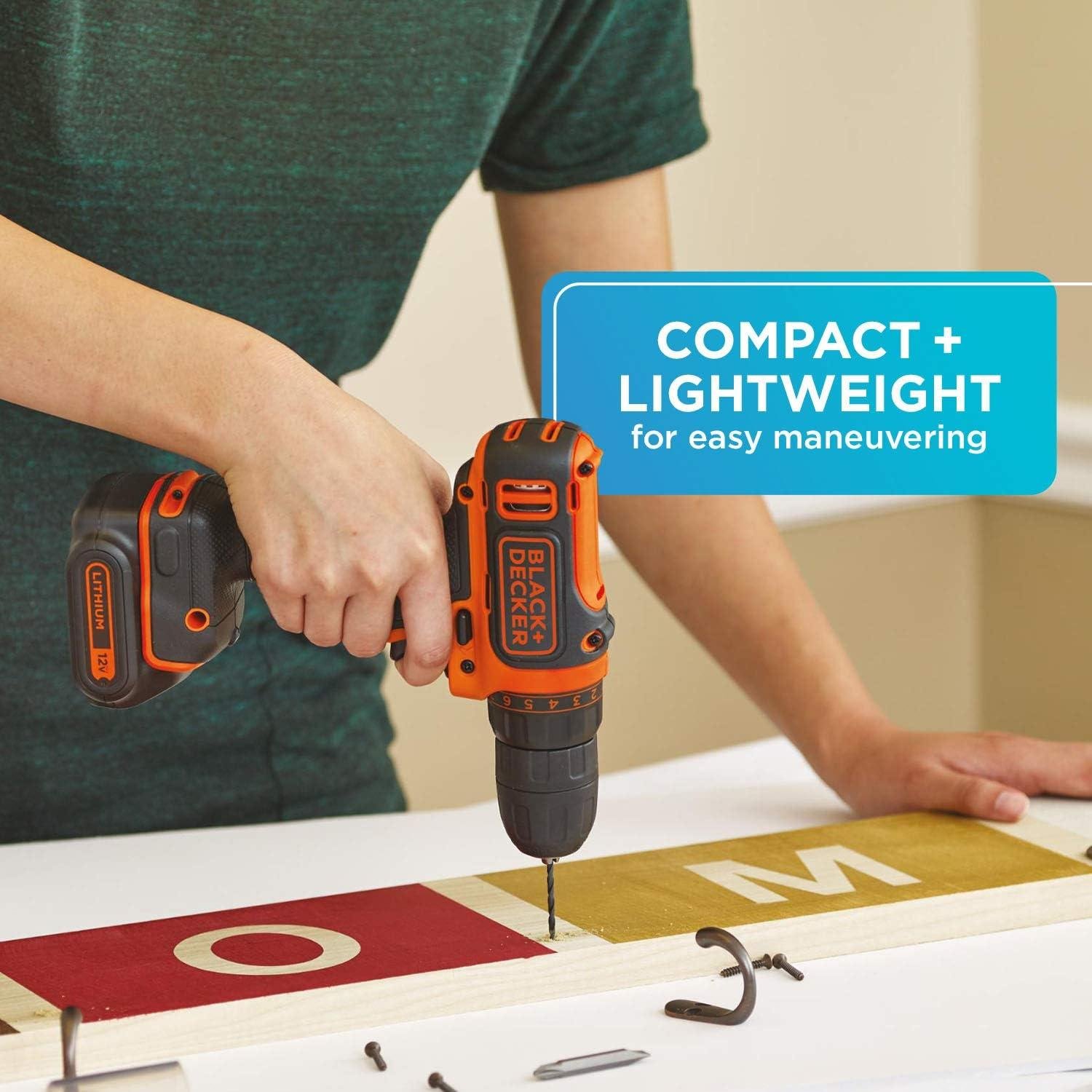
On the bench and out on site, what we appreciate most about the BLACK+DECKER BDCDD12C is how intentionally it’s built around control and access rather than brute force. The 12V MAX platform and 2.18 lb compact body (BLACK+DECKER notes it’s 35% smaller than their prior 12V NiCad model) make it easier for us to slip into cabinet corners, drill pocket-hole pilots inside a carcass, or drive screws in face frames without wrestling the tool. The 550 RPM top speed is a woodworking-friendly number for most drilling and driving tasks—fast enough for clean pilot holes in softwoods and many hardwoods, but slow enough that we can “feel” the cut and avoid blowing out thin stock. The 11-position clutch is the feature we end up using constantly: it helps us dial down torque for delicate hinge screws and small brass hardware, then step up for longer screws in studs or shop jigs. Customers frequently echo those same real-world benefits—themes like lightweight, easy to use, and good for basic household/DIY projects show up often—while some also caution that it’s not intended to be a heavy-duty, all-day drilling solution.
In day-to-day woodworking workflow, the convenience features matter more than we expect. The keyless chuck keeps bit swaps quick when we’re alternating between a countersink, pilot bit, and driver bit, and the LED work light actually helps when we’re inside a cabinet or working under a bench where shadows make alignment tricky.Woodworkers who are newer to cordless drills can use the clutch as a practical “teacher”: start low, test-drive into scrap, then increase until screws seat flush without stripping—especially significant in softer species like pine, where threads can overbite, and in hardwoods like oak/maple, where skipping a pilot hole can split narrow parts. Reviewers commonly mention simple setup out of the box and a “grab-and-go” feel with the included battery/charger, which aligns with how we’d treat it: a compact drill/driver for assembly, hardware installation, jigs, and light site use—paired with sharp bits and good technique for best results.
- Included accessories
- 12V MAX cordless drill/driver (BDCDD12C)
- Battery (included)
- Charger (included)
- Compatible attachments/accessories
- Brad-point drill bits (cleaner entry holes in wood)
- Countersink bits (reduce splitting, improve screw heads flushness)
- Driver bits (Phillips, square/Robertson, Torx—match your screws)
- Self-centering (Vix) bits (hinges and hardware alignment)
- Right-angle drill attachment (for extra-tight cabinet corners)
- Magnetic bit holder (faster swaps during assembly)
- Ideal project types
- Cabinet hardware installation (pulls, hinges, shelf pins)
- Flat-pack and furniture assembly
- Shop jigs and fixtures (stop blocks, drill guides, templates)
- Face frames and light trim fastening
- Pilot holes for pocket-hole screws (when access is tight)
- Wood types tested by customers (as commonly mentioned in review themes)
- Pine/softwoods (general DIY building)
- Plywood (shelving, cabinets, jig material)
- Mixed “typical household lumber” (framing-type materials)
| Spec / Feature | BLACK+DECKER BDCDD12C | What it means for woodworking |
|---|---|---|
| Voltage | 12V MAX | Best suited to assembly, hardware, and light drilling/driving over heavy boring. |
| No-load speed | 550 RPM | Controlled speed for pilots/countersinks; not designed for high-speed production drilling. |
| Clutch settings | 11-position clutch | Helps prevent stripping small screws and overdriving into softer woods. |
| Weight | 2.18 lb | Easier overhead work and less fatigue during long assembly sessions. |
| Convenience | LED work light, keyless chuck | Better visibility in cabinets; faster bit changes during repetitive tasks. |
| Accessory type | recommended For | Why woodworkers use it |
|---|---|---|
| Brad-point bits | Pilots in hardwood/plywood | Cleaner starts and less wandering on layout marks. |
| countersink bit | Flush screw heads | Reduces splitting and produces cleaner joinery faces. |
| Vix bit | Hinges/hardware | Self-centers to improve hardware alignment and consistency. |
| Right-angle attachment | Tight spaces | Extends reach for inside-cabinet drilling/driving. |
| Task Capacity | Recommended (Best Fit) | Actual Use Notes (What to expect) |
|---|---|---|
| Driving screws | Small-to-medium screws with clutch control | Clutch helps prevent stripping; pre-drill in hardwoods for cleaner results. |
| Drilling pilot holes | Common pilot sizes for woodworking joinery | Use sharp bits; back up thin stock to reduce exit tear-out. |
| Tight-access drilling | Cabinets, corners, assembly | Compact size is the advantage; use extensions or right-angle adapter when needed. |
See Full Specifications & Customer Photos
Ease of Use for Beginners and Experienced Woodworkers
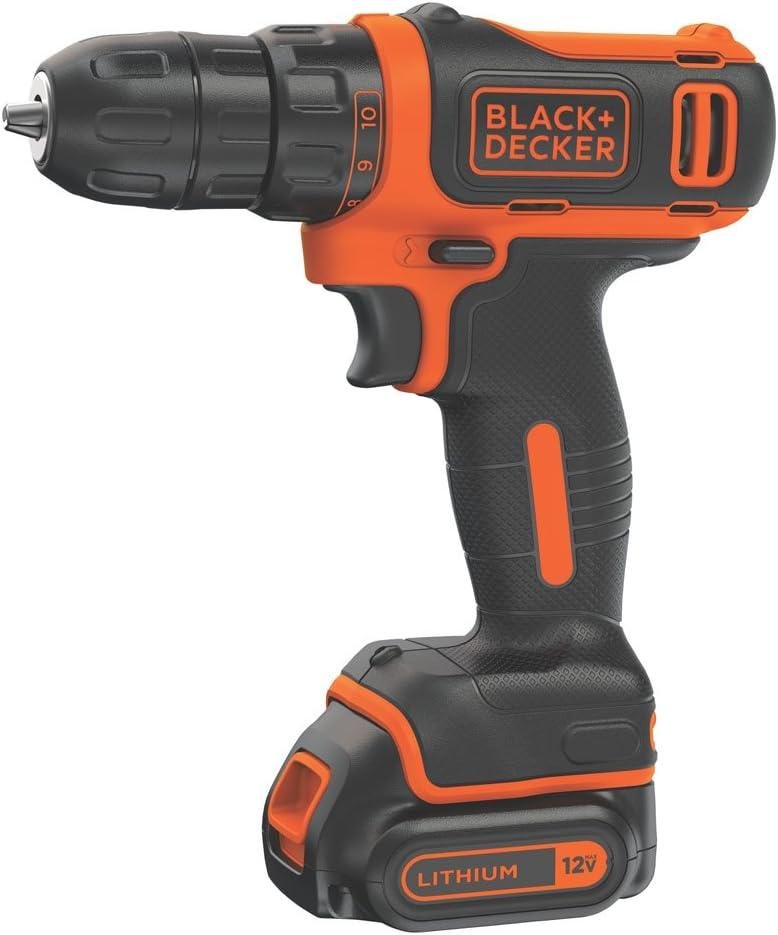
In our shop, the BDCDD12C feels like a drill/driver that beginners can pick up and start using safely without a long learning curve. Setup is straightforward because the battery and charger are included, and the keyless chuck means we can swap from a twist bit to a driver bit quickly—no chuck key to hunt down. The combination of a compact 2.18 lb design, an ergonomic handle, and an LED work light helps when we’re assembling cabinets in a dim corner or driving screws inside a carcass where our hands don’t have much room. On the control side, the 11-position clutch gives newer woodworkers a practical “training wheel”: we can dial down torque to reduce cam-out and avoid burying screws in softer woods, then step it up as we move into denser stock or larger fasteners. Customer review themes commonly emphasize how lightweight and easy to handle it is indeed, especially for quick household fixes and light woodworking where fatigue matters.
For experienced woodworkers, the BDCDD12C is best understood as a compact utility driver rather than a high-torque shop workhorse. Its 550 RPM (no-load) motor is well-suited to hinge screws, drawer-slide installs, pilot holes, and hardware work where we care more about control than raw speed. The clutch steps let us repeat settings for consistent screw seating—useful when we’re hanging a run of doors and want uniform reveals—while the small footprint fits where a larger 18V drill can’t. Review feedback often points to good “everyday” performance but also hints at limits on heavier tasks; in practical terms, we’d treat it as ideal for drilling pilots, countersinks, and small-to-medium holes rather than pushing large spade bits through hardwood. For best results (and to keep tear-out down), we recommend: drill a pilot first, keep bits sharp, and let the drill’s speed do the work—if it bogs, step down the bit size or move up to a stronger drill for that operation.
- Included accessories
- 12V MAX cordless drill/driver (BDCDD12C)
- Battery
- Charger
- Compatible attachments/accessories
- 1/4″ hex driver bits (Phillips, Robertson, Torx)
- Twist drill bits (wood/metal), brad-point bits for cleaner wood entry
- Countersink bits for screw seating and reduced splitting
- Magnetic bit holder/extensions for cabinet interiors
- Ideal project types
- Cabinet hardware installs (hinges, pulls, slides)
- Flat-pack and shop fixture assembly
- Light-duty jigs (stop blocks, fences, simple drill guides)
- Small repairs and punch-list tasks around the shop
- Wood types tested by customers
- Pine / softwood boards (commonly mentioned for general DIY)
- Plywood (common for shelves and cabinets)
- Note: Reviews frequently focus on light woodworking and household tasks rather than demanding hardwood drilling.
| Ease-of-Use Spec | BLACK+DECKER BDCDD12C | Why It Matters in the Shop |
|---|---|---|
| Weight | 2.18 lb (compact/lightweight) | Less fatigue during overhead installs and long hardware runs |
| Speed | 550 RPM (no-load) | Controlled driving and pilot drilling; not aimed at high-speed boring |
| Clutch Settings | 11-position clutch | Helps prevent overdriving screws and stripping heads |
| Bit Changes | Keyless chuck | faster transitions between drilling and driving steps |
| Visibility | LED work light | Improves accuracy when working inside cabinets or shadowy corners |
| accessory Type | Recommended Examples | Beginner Benefit |
|---|---|---|
| Drill bits | Brad-point set, small twist bits | Cleaner entry holes and easier centering on wood |
| Driving bits | #2 Phillips, square (Robertson), Torx | Less cam-out and fewer stripped fasteners |
| Countersink | Adjustable countersink bit | Reduces splitting and improves screw-head seating |
| Extensions | Magnetic bit holder/extension | Improves reach in tight cabinet spaces |
| Task Category | Recommended Use | Practical Capacity Reality |
|---|---|---|
| Driving screws | Hardware, hinges, assembly screws | strong fit; clutch helps prevent overdrive in softwoods/plywood |
| Pilot holes | Small-to-medium pilots and countersinks | Good control at 550 RPM; steady pressure and sharp bits matter |
| Larger boring | Occasional only (step up tools if it bogs) | Reviews suggest this isn’t intended for heavy-duty drilling in dense stock |
See Full Specifications & Customer Photos
Customer Reviews Analysis
What Woodworkers Are Saying: BLACK+DECKER 12V MAX Cordless Drill/Driver (BDCDD12C)
1. Overall sentiment from woodworking customers
woodworking-focused reviewers tend to describe the BDCDD12C as a solid light-duty drill/driver that’s best for shop tasks, small builds, and household repairs rather than heavy framing or long runs of large fasteners. Common praise includes its convenience, approachable size, and “good enough” driving performance for typical softwood and plywood projects.
2. Performance feedback (accuracy, power, results)
Multiple reviews highlight that the drill is most at home in pilot-hole drilling and screwdriving where controlled power matters more than raw torque.
- Power under load: Several woodworkers mentioned it performs well on softwoods, plywood, and light hardwood work, but some users reported challenges with harder materials or larger bits (e.g., larger diameter drilling, long screws, or repeated driving into dense stock).
- Torque/Clutch control: Common praise includes the usable clutch settings, helping prevent stripping screw heads or overdriving into softer lumber—useful for cabinetry hardware and shop jigs.
- Accuracy/Consistency: Reviewers with DIY-to-intermediate experience found it predictable and steady for straight drilling when paired with proper technique. A few comments frequently enough reflect the reality of compact 12V tools: it’s capable, but not meant to muscle through demanding drilling the way higher-voltage drills can.
3. Build quality and durability observations
Woodworkers’ impressions generally position this model as budget-friendly and functional, not “jobsite rugged.”
- Housing/fit & finish: Several woodworkers mentioned it feels lightweight and simple, with materials that match the price point.
- Longevity: some reviewers report it holds up well for occasional shop use, small projects, and general DIY, while others note that heavy, continuous use may expose limitations typical of entry-level cordless drills.
4.Ease of use for different skill levels
Ease of use is one of the most consistently positive themes.
- Beginners appreciated the straightforward setup (battery + charger included), manageable size, and clutch that helps reduce mistakes.
- Experienced woodworkers noted it’s comfortable for quick tasks and tight spaces, but may feel underpowered or slow when workflows demand faster drilling or higher torque.
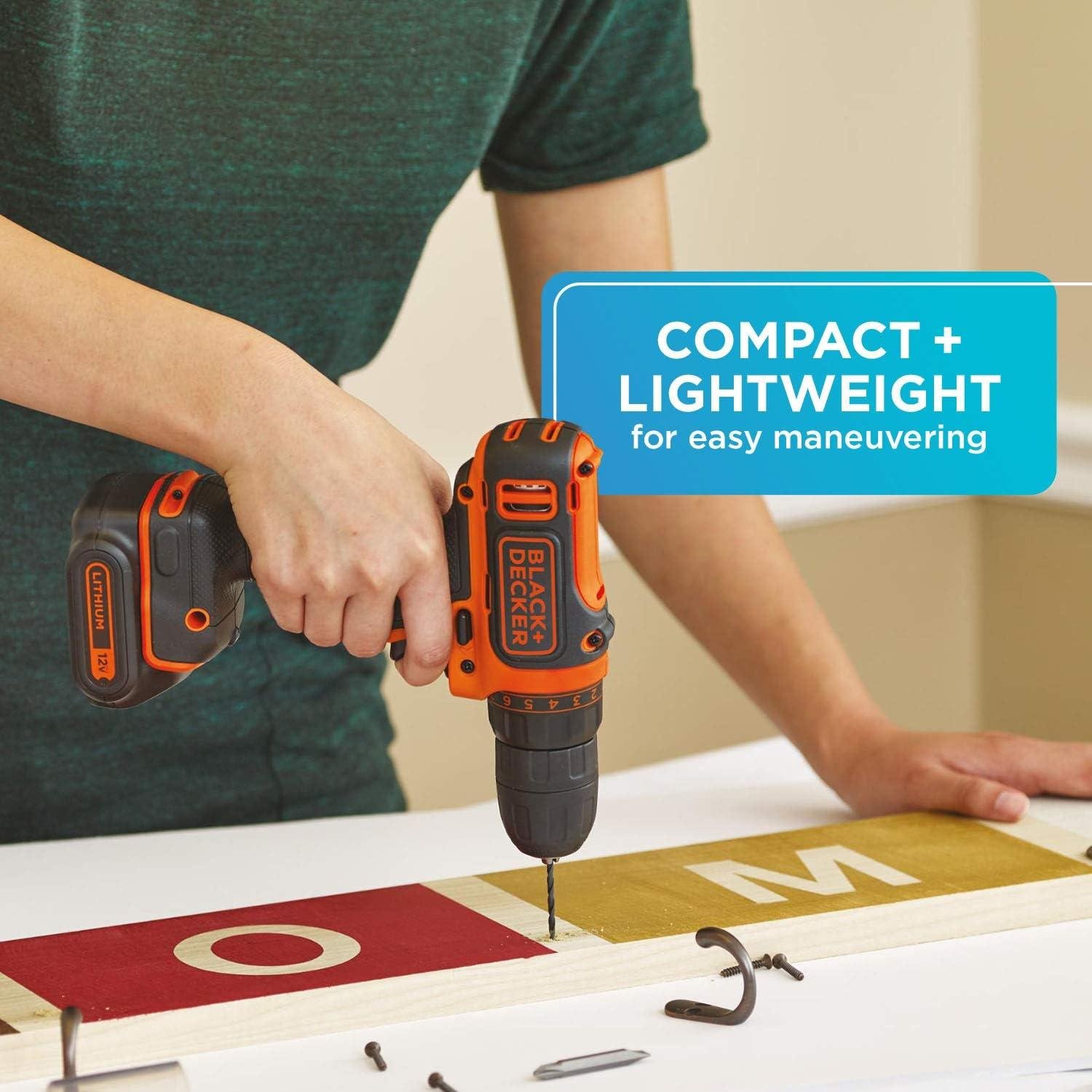
- Comfort/Fatigue: Several reviews highlight the lighter weight as a plus for overhead work or longer sessions of light driving (e.g., installing hardware, assembling flat-pack-style builds, or jig making).
5. Common project types and success stories
Customers successfully used this for a range of typical woodworking and shop tasks, especially where controlled driving is more important than brute force:
- Assembling small furniture, shelving, and utility projects
- Installing hinges, cabinet hardware, drawer slides, and knobs/pulls
- Building shop aids like jigs, simple fixtures, and workbench add-ons
- Drilling pilot holes and driving screws in softwood framing for light-duty builds (not full-scale construction)
When users keep it in its comfort zone—pilot holes, moderate screw lengths, reasonable bit sizes—results are commonly described as clean and dependable.
6. Issues or limitations reported
Across reviews, the limitations tend to cluster around “compact 12V expectations”:
- Not for heavy-duty drilling/fastening: Some users reported challenges with dense hardwoods, larger drill bits, or long fastening sessions where power and battery capacity become limiting.
- Speed/torque ceiling: A recurring theme is that it may bog down if you try to force it through tougher tasks rather than stepping up to an 18V/20V class drill.
- Best as a secondary drill: Several woodworkers implicitly treat it as a grab-and-go driver for quick jobs,while relying on a stronger drill for demanding work.
Summary Table (Woodworking-Relevant themes)
| Aspect | common Feedback |
|---|---|
| Performance | Good for pilot holes and screwdriving; can struggle with dense hardwoods, large bits, and long screws under heavy load |
| Precision | Clutch helps prevent overdriving; consistent for light, controlled drilling/driving |
| Durability | Generally fine for light/occasional projects; not viewed as jobsite-tough for heavy daily use |
| Ease of Use | Beginner-friendly, lightweight, comfortable; experienced users may want more power for production pace |
| Versatility | Great for hardware install, small builds, jigs; limited for demanding drilling applications |
| Value | Often seen as a good budget option when expectations match a compact 12V tool |
If you share the specific review text (or a link/export), I can tighten this into a more data-driven summary with a few sparing, representative quotes (and call out any project-specific mentions like cabinet doors, furniture builds, or shop upgrades).
pros & cons
Pros & Cons
After putting the BLACK+DECKER BDCDD12C 12V MAX Drill/Driver through the kinds of everyday jobs we actually run into, we found it behaves like a small-tool specialist: it’s happiest in tight spaces, quick tasks, and light-to-medium drilling and driving. Here’s what stood out to us—both the wins and the trade-offs.
Pros
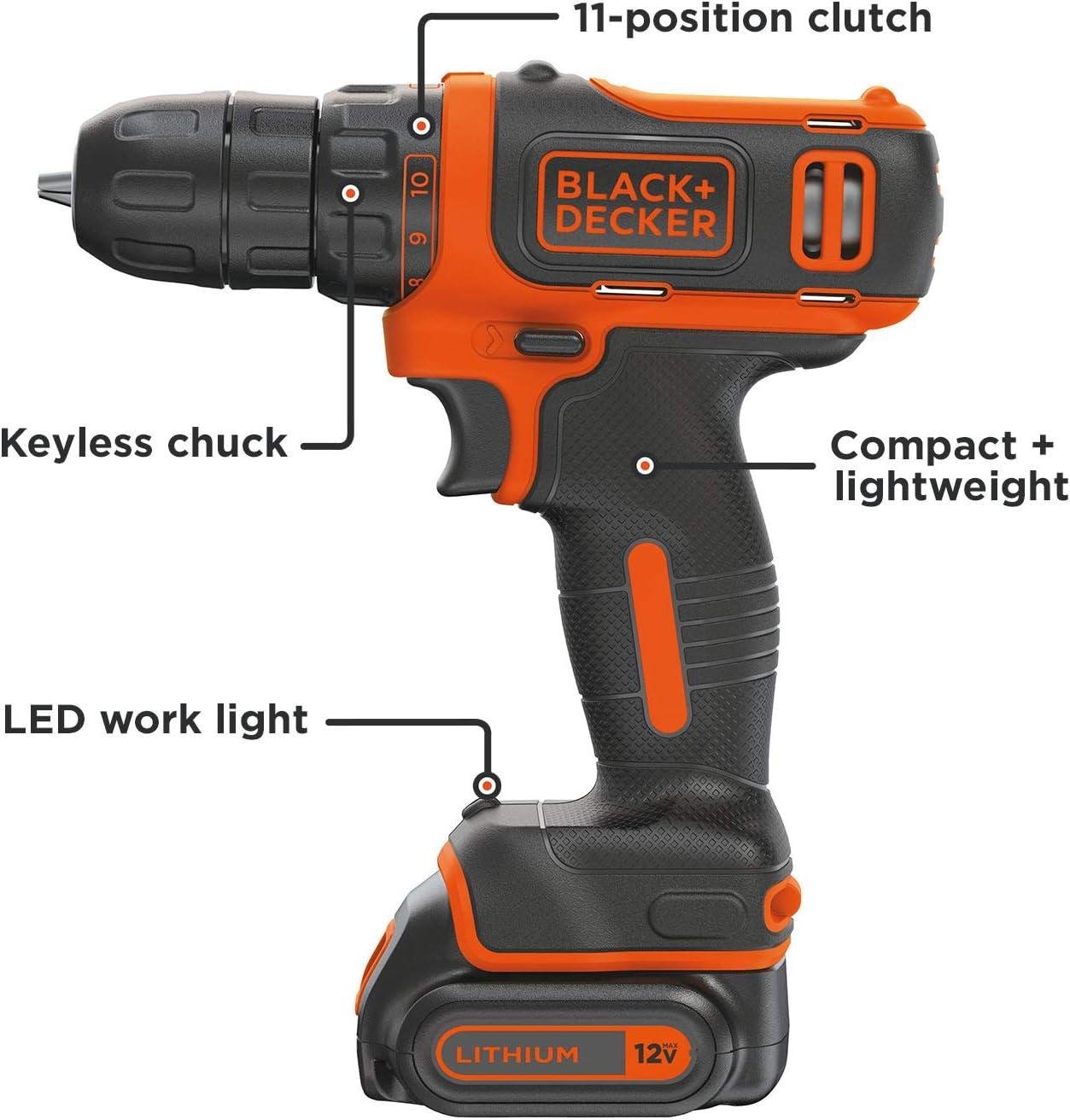
- Compact, “fits-where-others-don’t” feel: The smaller body makes it easier for us to work in corners, between studs, and inside cabinets.
- Lightweight for overhead work: At around 2.18 lb, it’s less fatiguing when we’re doing repeated screws or working above shoulder height.
- 11-position clutch adds control: We can dial in torque to help avoid stripping screws or overdriving into softer materials.
- Keyless chuck keeps momentum going: Bit swaps are quick, especially for “pilot hole then drive” workflows.
- LED work light is genuinely useful: It helps us see fasteners in shadowy spots (under sinks, inside closets, or behind furniture).
- Good speed for general tasks: The 550 RPM tops out in a way that feels steady and manageable for common DIY duties.
- Battery and charger included: We don’t have to play the “tool-only” game—everything needed to start is in the box.
Cons
- Not built for heavy-duty drilling: When we push into tougher materials or larger bits, it can feel out of its comfort zone compared with higher-voltage drills.
- Single-speed simplicity: We don’t get the flexibility of a 2-speed gearbox for switching between high-speed drilling and slow,high-control driving.
- 12V platform limits “future-proofing”: If we’re building a bigger cordless collection, we may prefer a more expansive ecosystem.
- Best for light-to-medium loads: For long lag screws, dense hardwood, or frequent large-hole drilling, we’d reach for something beefier.
At-a-Glance Scorecard
| Category | Our Take | Why It Matters |
|---|---|---|
| Size & Handling | Excellent | We can work longer and squeeze into tighter spots. |
| Control | Very Good | 11-clutch settings help us avoid stripped heads and chewed materials. |
| Power | Good | Great for typical DIY; limited for heavy applications. |
| Convenience | Very Good | LED + keyless chuck keeps our workflow smooth. |
Bottom line: If our “shop” is really a home workshop (or a weekend toolbox), this drill/driver feels like a practical, nimble partner. If our projects regularly lean big and brutal, we’ll want to treat it as a secondary drill rather than the main workhorse.
Q&A
is this powerful enough for hardwoods like oak or maple?
It’s capable for light-to-moderate hardwood work, but it’s still a compact 12V drill/driver.The 550 RPM top speed and 11-position clutch make it well-suited for driving screws into oak/maple on furniture and shop fixtures if you pre-drill and use the clutch to prevent stripping. For frequent large holes (spade bits, big Forstners) or long structural screws in dense hardwoods, a higher-voltage drill (18V/20V class) will feel noticeably stronger and faster.
How does it do on plywood, veneers, and cabinet materials?
Very well for typical woodworking tasks—pilot holes, hinge screws, drawer slides, and assembly. The 11-position clutch helps avoid over-driving screws, which is especially useful in plywood and veneered panels where it’s easy to strip or “mushroom” the surface. The LED work light is also handy inside cabinets and dark corners. For clean results on veneer,use sharp bits,drill at a controlled speed,and consider painter’s tape at the exit side to reduce tear-out.
Can it handle production work, or is it more for hobby projects?
This model is best viewed as a hobby/DIY and light shop drill/driver. Its compact size (about 2.18 lb) and 35% smaller body than BLACK+DECKER’s older 12V NiCad version make it comfortable for repetitive assembly, but 12V tools typically run out of steam faster in all-day, high-volume work. If you’re doing production cabinet installs or driving hundreds of screws daily, a pro-grade 18V/20V platform will usually be a better long-term fit.
How hard is setup, and does it work with standard bits?
Setup is straightforward: charge the included battery, click it into the tool, and you’re ready. The keyless chuck is designed for quick tightening by hand, and it accepts standard drill and driver bits (common round shanks and hex driver bits used in woodworking).If you regularly use specialty accessories, just match the shank to what the chuck accepts—most everyday woodworking bits are compatible.
What adjustments are available, and how do I use the clutch for woodworking?
The main control woodworkers care about is the 11-position clutch. Lower numbers let the clutch slip sooner (great for small screws, softwood, plywood, and avoiding stripped heads). Higher numbers deliver more torque before slipping (better for larger screws and denser stock). A practical approach is to test on scrap: start low and increase until screws seat flush without chewing up the material. This is one of the biggest advantages of this drill/driver for furniture assembly and hardware installation.
How easy are bit changes, and will it reach tight spots?
Bit changes are quick thanks to the keyless chuck—no chuck key to hunt down. Its compact “12V MAX” design and light weight are specifically aimed at tight spaces (inside cabinets, between studs, near corner glue-ups), and the LED work light helps when you’re working under benches or inside carcasses. For extremely tight right-angle situations, you may still want an offset/right-angle attachment, but the drill’s small body already does a lot of that work.
Will this fit in a small workshop, and does it need dust collection or special power?
It’s an easy fit for small shops: it’s cordless, compact, and stored like any drill (shelf, drawer, wall hook). it doesn’t require dust collection—just normal cleanup, especially after drilling sheet goods. Since the battery and charger are included, you’ll only need a standard outlet for the charger; the tool itself runs entirely on the 12V battery.
Is it beginner-friendly, and would a professional woodworker be satisfied?
It’s very beginner-friendly: light (around 2.18 lb), simple controls, keyless chuck, LED light, and a clutch that helps prevent common mistakes like stripping screws or over-driving into plywood. Many woodworkers keep a small 12V drill like this as a “second drill” for hardware and assembly even if they own larger tools. A full-time professional may find the 12V power and speed (550 RPM) limiting for heavy, continuous drilling/driving, but for installation work, punch lists, and shop assembly, it can still be a useful, convenient tool.
Experience Innovation
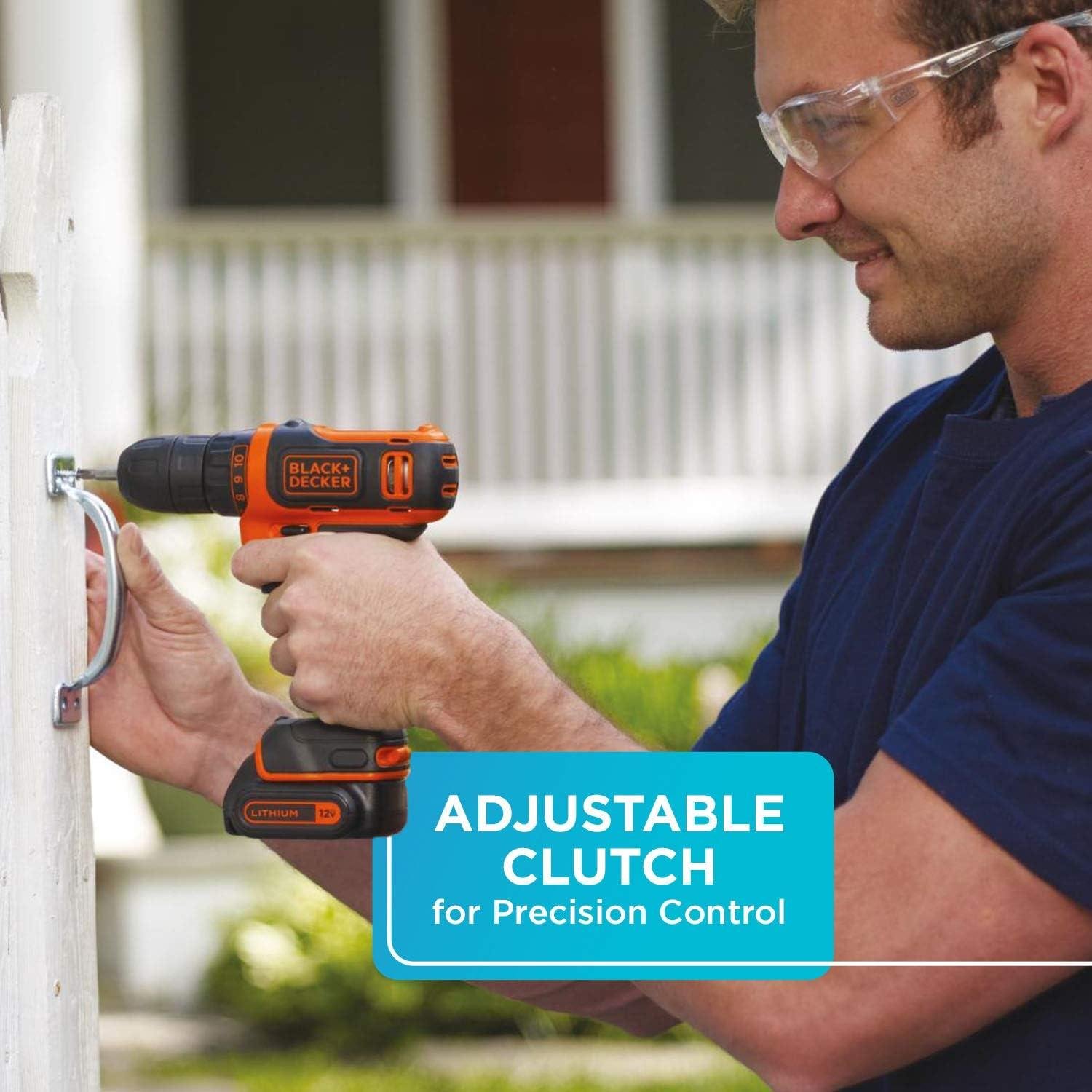
The BLACK+DECKER 12V MAX cordless Drill/Driver (BDCDD12C) is a compact, lightweight 2.18 lb drill/driver built around a 550 RPM motor, an 11-position clutch for controlled driving, a keyless chuck for fast bit swaps, and an LED work light for dim corners. customer feedback commonly highlights its comfortable grip, easy handling, and surprisingly capable performance for everyday drilling and screw-driving, with the main limitation being power and runtime compared to higher-voltage models.
It’s ideal for hobby woodworkers with small to medium projects, beginners learning fundamentals, and cabinet makers who value precision when assembling drawers, hinges, and hardware in tight spaces.
Consider alternatives if you routinely drill large holes in thick hardwoods, need daily jobsite durability, or want faster speed and longer runtime for production work.
it’s a solid mid-range option for light-to-moderate woodworking tasks—reliable and convenient,just not a heavy-duty workhorse.
Want to see current pricing and customer photos? View on Amazon & Read More Reviews →