

Blog
BESTCOOK Cutting Board Review: Right for Our Shop?

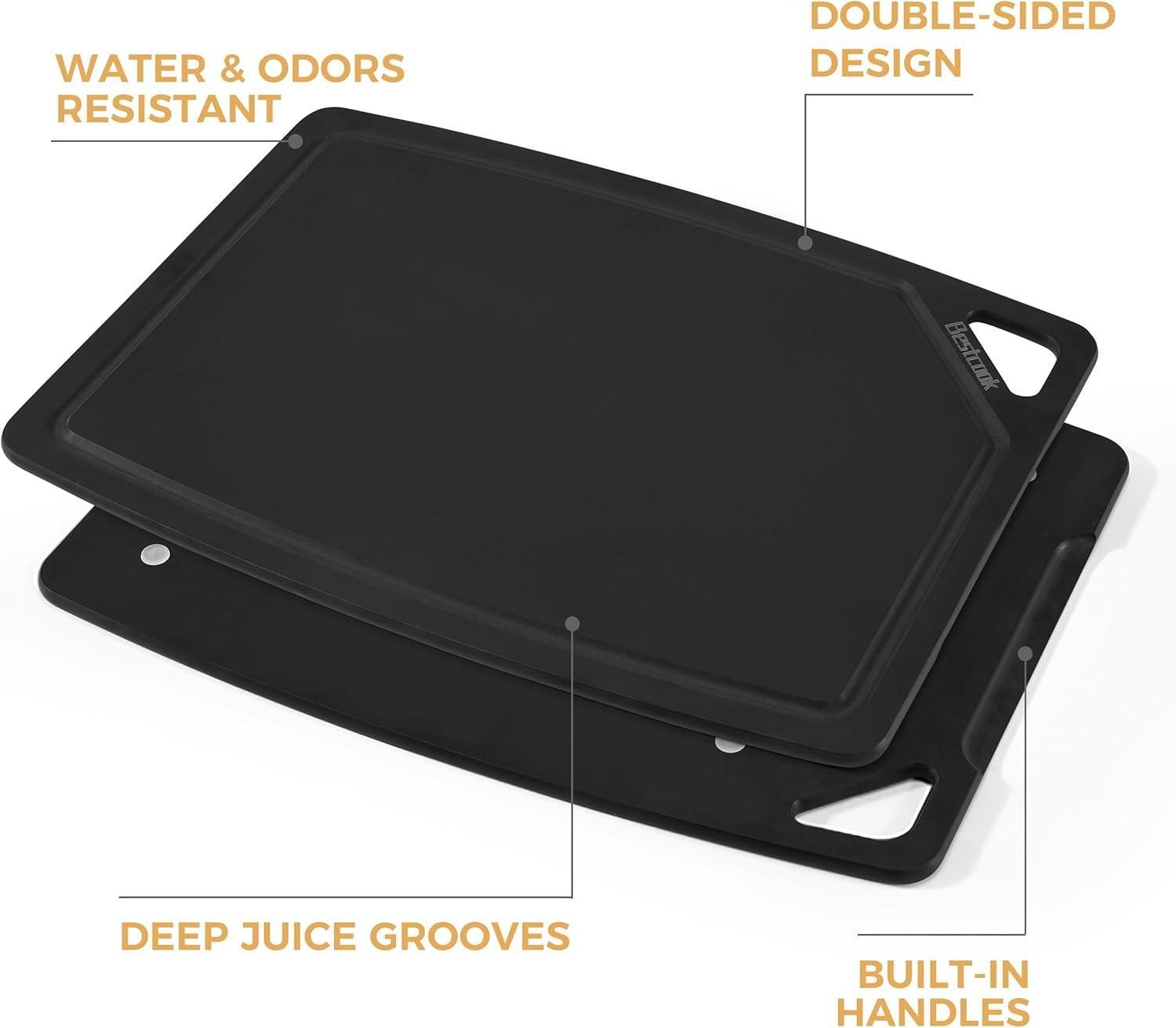
Ever tried to glue up a panel only to realize your “flat” surface is rocking like a wonky sawhorse? In our shops, accuracy starts with what we build on—and a dependable cutting surface matters just as much at the bench as it does in the kitchen, especially when space is tight and cleanup time is limited.
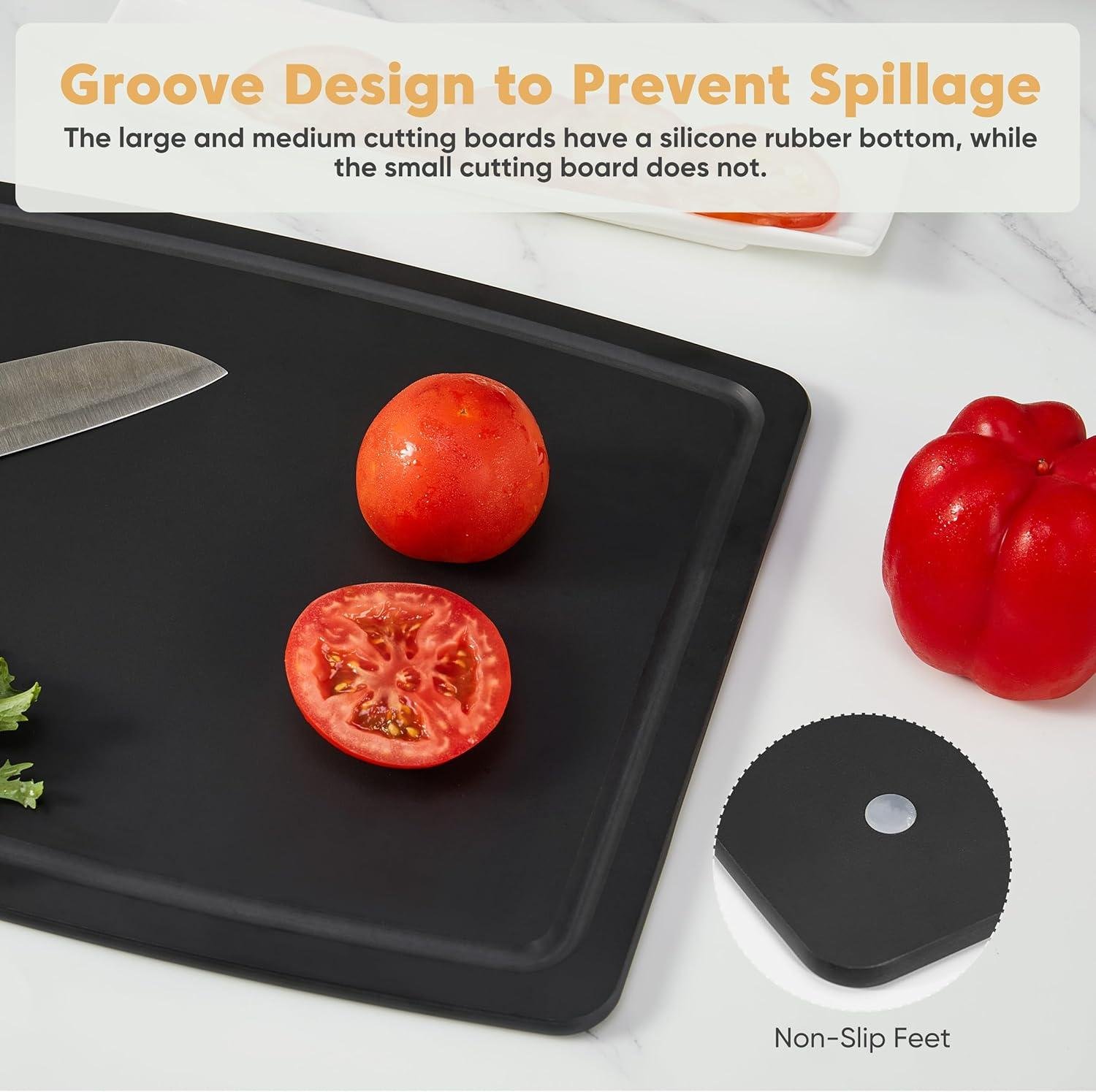
The BESTCOOK Wood fiber cutting Board Set of 3 is a composite, non-porous board system designed for everyday prep: meat, vegetables, and fruit. It includes three sizes (small, medium, large), reversible boards, juice grooves to control runoff, and dishwasher-safe, BPA-free, non-toxic construction. the medium and large boards add non-slip feet, while the small board notably does not.
In this review, we’ll look at build quality, stability, board thickness, and how the features translate to real use—plus whether the price makes sense versus plastic or hardwood boards. We’ll also weigh customer feedback: many reviewers praise the durability, easy cleaning, and slim storage footprint, while a few report issues like warping, sliding (especially the small board), color fading, or material shedding.
As woodworkers, we’re used to judging materials by feel, wear, and honesty—so that’s the lens we’ll use here.
Tool Overview and shop Ready build Quality
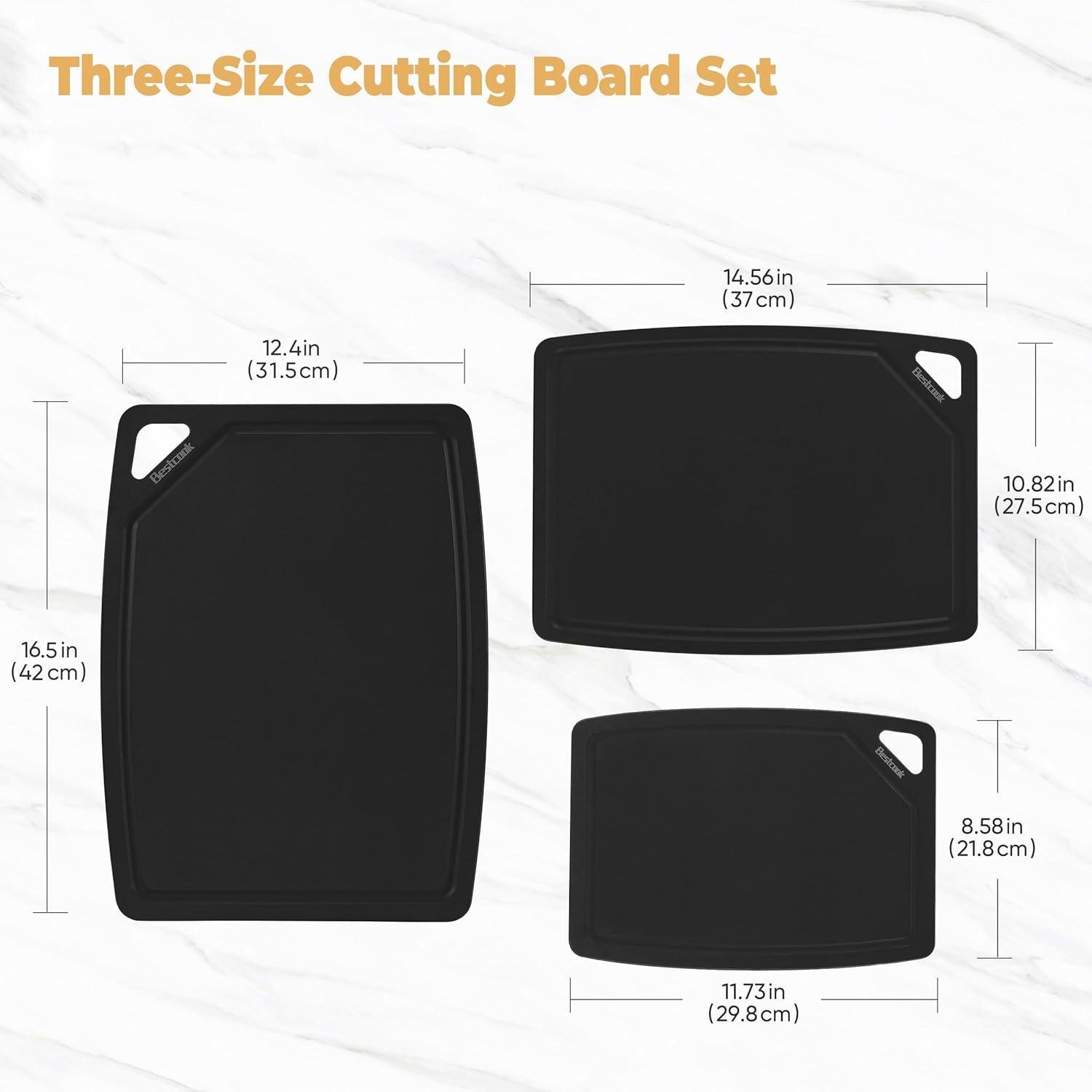
In our shop,we treat cutting boards like any other benchtop surface—if it won’t stay put,stay flat,and clean up quickly,it’s not “shop ready,” even if it lives in the kitchen. The BESTCOOK wood fiber set is built from a high-density wood fiber composite that’s marketed as non-toxic, BPA-free, non-porous, and dishwasher safe, which translates well to a woodworking workflow where we’re constantly bouncing between layout, glue-ups, and finishing prep. The three included sizes are genuinely practical: Small: 8.6″ x 11.7″ x 0.2″, Medium: 10.8″ x 14.6″ x 0.3″, and Large: 12.8″ x 17.3″ x 0.35″. that thin profile is a double-edged sword—several reviewers praise them as “thin but sturdy” and say they “take up so much less space,” but others call them “super thin” and report sliding issues when the board doesn’t have enough grip. For woodworkers who like a dedicated, easy-to-sanitize surface for mixing epoxy tint, trimming veneer tape, or staging hardware without soaking up oils, a non-porous composite board can be a surprisingly handy shop accessory—just don’t expect the mass and damping you get from a thick maple butcher block.
Build-quality feedback from customers is mostly positive, with themes of durability and easy cleanup: owners report “no signs of wear or tear” after months to about a year, and multiple mentions that they “wash up well” with dishwasher cycles. The design details matter here: the medium and large boards include non-slip feet (rubber bumpers), while the small board explicitly does not—and that shows up in reviews where buyers “wish the smallest one also had rubber bumpers,” or received a small board that “slid and rocked” (including a case of warping/defect, followed by “great customer service” when the seller made it right). A few negatives are worth taking seriously in a workshop context: some reports of boards arriving warped/not level, black finish looking ashy gray after washing, and one complaint about material shedding (“black stringy pieces”) during slicing. Educationally, we’d treat these like any composite consumable surface: inspect flatness on arrival, test for rub-off under your typical cutting pressure, and if you’re using it at the bench, pair it with a router-mat or shelf liner for traction—especially the small board and any time you’re doing one-handed trimming where slip is a safety issue.see Full Specifications & Customer photos
Real World performance for Glue Ups Finishing Prep and Bench Top Protection
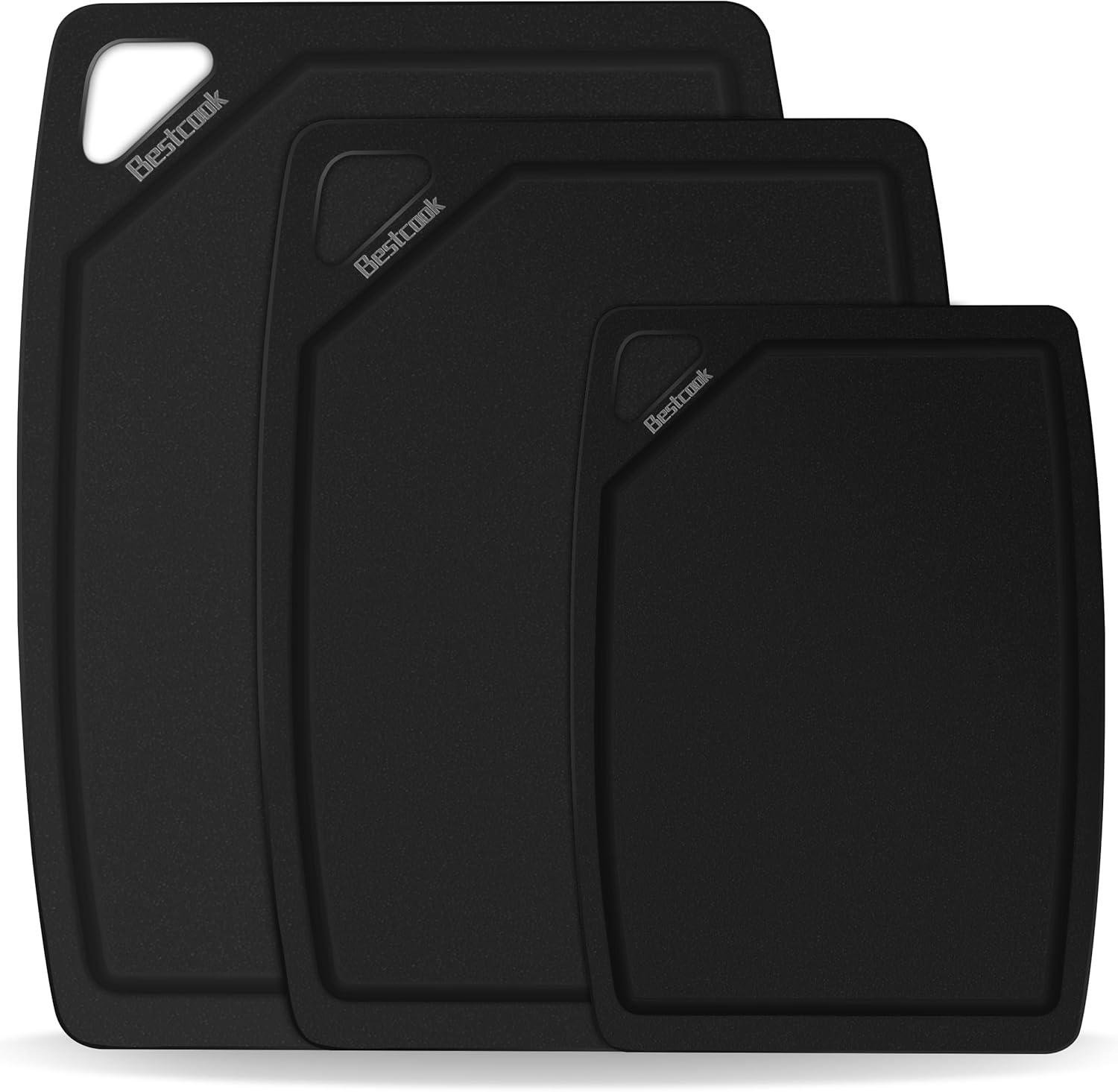
In the shop, we don’t look at the BESTCOOK set as a “cutting board” first—we look at it as three flat, tough, easy-to-clean work surfaces we can sacrifice to glue, finish, and general mess. The size spread is genuinely useful: Small: 8.6 x 11.7 x 0.2 in, Medium: 10.8 x 14.6 x 0.3 in, and Large: 12.8 x 17.3 x 0.35 in. That thin profile is a double-edged sword for woodworking: it’s quick to stash near the bench and easy to tape down as a disposable palette for epoxy tinting,spreading glue,or mixing small batches of finish,but it also means it can telegraph any bench-top hump or clamp bar underneath. The non-porous wood fiber composite and BPA-free / non-toxic claims translate well to finishing prep—spilled dye and glue squeeze-out don’t soak in like they can on raw MDF jigs, and cleanup is more “scrape and wipe” than “sand and reset.” The juice groove is surprisingly handy for us when we’re brushing edges: it’ll catch drips from thin finishes or CA runoff before it migrates onto the bench, which is basically the same job it does for kitchen liquids.
Real-world feedback lines up with a lot of what we’d expect in a woodworking setting: customers repeatedly mention “great quality”, “thin but sturdy”, and that the boards “wash up well” and remain “un-scratched” after months to a year of use. That’s encouraging if we’re using one as a dedicated glue-up station or a finishing-ready landing pad for small parts. But the drawbacks in reviews matter for bench-top protection: multiple buyers point out the small board has no non-slip feet, and another mentions it can slide—so in our shop we’d treat the small one as “tape it down, or don’t use it under pressure.” There are also reports of boards arriving warped/not level and at least one complaint about black color drying to an ashy gray, which coudl be a non-issue for workshop use but is worth noting if you want a clean, consistent-looking finishing station. The most serious outlier review claims black stringy pieces came off during slicing; we can’t verify that behavior in our use,but as woodworkers it’s a reminder to avoid using any questionable surface as a final finishing table—keep it to glue,masking,mixing,and bench protection where contamination risk is low.
- Included accessories: 3 boards (Small, Medium, Large)
- Compatible attachments/accessories: painter’s tape, double-stick tape, bench dogs (as stops), disposable craft paper, silicone glue mat (on top for squeeze-out), wax paper, nitrile-safe solvent wipes
- Ideal project types: small glue-ups (blocks, trim returns), finish-mixing/palette work, CA glue staging, hardware sorting, protecting a benchtop during touch-ups
- wood types tested by customers: Not specified in reviews (customers discuss food prep usage rather than wood species)
| Board | Dimensions (L x W x T) | Non-slip feet | Workshop take |
|---|---|---|---|
| Small | 8.6 x 11.7 x 0.2 in | No (per product spec) | Best as a tape-down mixing/parts station; not ideal for aggressive clamping without a stop |
| Medium | 10.8 x 14.6 x 0.3 in | Yes (rubber bumpers noted by reviewers) | Good general benchtop protector for sanding blocks, glue-ups, and finish staging |
| large | 12.8 x 17.3 x 0.35 in | Yes (rubber bumpers noted by reviewers) | Most useful “mini assembly pad” size; groove helps corral drips and squeeze-out |
| Accessory | Works with these boards? | Why we’d use it |
|---|---|---|
| Painter’s tape / masking tape | Yes | Creates temporary “non-slip” and protects the surface from dye/epoxy stains |
| Double-stick tape | Yes (use lightly) | Anchors the small board to the bench since it lacks feet |
| Wax paper / craft paper | Yes | Prevents glue squeeze-out from bonding parts to the board |
| Silicone glue mat (on top) | Yes | Turns it into a dedicated glue-up pad with peel-off cleanup |
| Use case | Recommended “capacity” | Likely real-world limit |
|---|---|---|
| Glue-up surface | Small parts and trim assemblies | Clamping pressure can make thin boards shift—especially Small (no feet) unless taped/stopped |
| Finish prep / mixing | Small batches, brush/edge work | Very good—non-porous surface wipes clean; groove can catch drips |
| Benchtop protection | Hand-tool tasks, hardware staging | If a board arrives warped, it may rock—inspect on a flat surface before relying on it |
See Full Specifications & Customer Photos
Key Features Woodworkers Will Appreciate from Non Porous Surface to Non Slip Feet
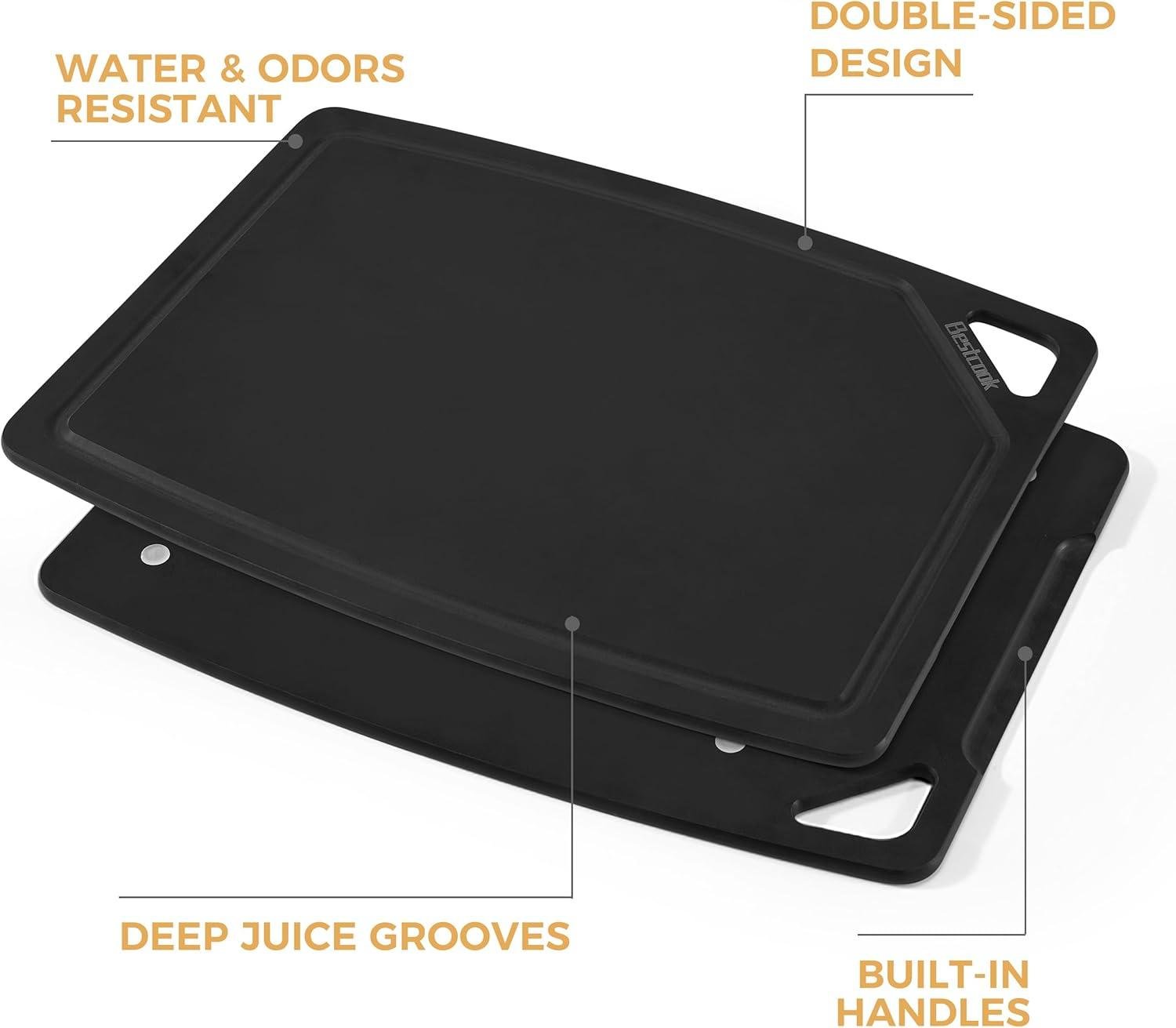
In the shop,we’re always looking for surfaces that don’t soak up glue,finish,or mystery liquids,and the BESTCOOK set leans into that with a non-porous wood-fiber composite build that’s also BPA-free and dishwasher safe. That matters for woodworking in two practical ways: first, it’s a handy sacrificial pad for small bench tasks like mixing a dab of epoxy, setting down freshly oiled hardware, or corralling small parts without worrying about staining a nice maple benchtop. Second, it cuts down on maintenance compared to conventional end-grain boards—several reviewers echo that theme, saying the boards “wash up well,” “clean easily,” and have stayed in “perfect shape” after months of use. The set’s three sizes also make it easy to dedicate a board to specific messy tasks: Small: 8.6 x 11.7 x 0.2 in, medium: 10.8 x 14.6 x 0.3 in, and Large: 12.8 x 17.3 x 0.35 in—and that thin profile is something customers repeatedly describe as “thin but sturdy” and “slim” for storage.
Where this set gets especially workshop-relevant is stability: the medium and large boards include non-slip feet (4 rubber bumpers),which helps keep a work surface from skating around when we’re pressing down while trimming veneer tape,scraping gasket material,or doing any repetitive knife work at the bench.Customers frequently praise the non-slip pads and the juice groove that “traps juice,” and while that groove is clearly meant for food prep, we can treat it like a perimeter catch for drips when cleaning small parts or wiping down a wet tool.That said, the details matter: per the listing and reviews, the small board does not have non-slip feet, and a few buyers mention the small board sliding or even arriving warped—while others report “no obvious wear and tear” after dishwasher cycles and “no scratches” compared to older plastic boards. One educational note we appreciated from reviewers: the dense surface can be loud when chopping, so if we’re using it on a hollow bench top or metal cart, a rag underneath can dampen noise and improve grip. See Full Specifications & Customer Photos
Ease of Use for Beginners and Pros Plus Workshop Setup and Storage

In a woodworking shop, we don’t treat these as “just kitchen boards”—we treat them like sacrificial, easy-to-clean bench surfaces for messy layout and light-duty trimming. The BESTCOOK set is straightforward for beginners because there’s no finish schedule, no oiling routine, and no seasoning: it’s non-porous, BPA-free, and dishwasher safe, which is a big deal when we’re moving between glue-ups, epoxy dye tests, or marking parts with inks that we’d rather not grind into end grain. The three-size spread is genuinely useful: Small: 8.6 x 11.7 x 0.2 in (noted by the brand as no non-slip feet), Medium: 10.8 x 14.6 x 0.3 in, and large: 12.8 x 17.3 x 0.35 in. Pros will appreciate that the boards are reversible and have a juice groove—in shop terms, that groove can capture drips when we’re brushing on finish samples or cutting oily materials. Customer feedback frequently echoes “thin but sturdy,” “great quality,” “wash up well,” and that they’ve “held up nicely” for months to about a year with “no signs of wear.” One practical note we’d pass along: at least one reviewer warns they’re “quite loud” under heavy chopping—so in a quiet studio shop, the harder composite surface may transmit more impact sound than wood.
- Included accessories: 3 composite boards (Small, Medium, Large), each with juice groove; non-slip feet on Medium and Large (small board noted as no feet).
- Compatible attachments/accessories: non-slip drawer liner/shelf mat (under the small board), spring clamps (for temporary edge registration), bench hook, silicone mat (for finish drips), cabinet scraper/putty knife (cleanup), dishwasher (sanitizing).
- Ideal project types: finish and dye sample staging, epoxy color tests, glue squeeze-out cleanup station, parts sorting tray, small-space “bench top” for apartment/garage shops, knife/chisel edge-protecting staging surface (not for pounding).
- Wood types tested by customers: Not specified in reviews (most feedback is kitchen use: vegetables/meat/fruit).
For workshop setup and storage, the biggest win is how these boards tuck away: reviewers repeatedly like the “slim” profile because it “takes up so much less space,” and we agree that matters when every vertical slot in a shop cabinet counts. We can stand the medium and large boards vertically beside a sharpening station or slide them into a shallow drawer; the thicknesses (0.2–0.35 in) make them easy to store without hogging room like thick butcher-block boards.Setup is basically instant—no assembly—though real-world reviews do flag quality control edge cases: one person reported a board arriving “warped” and another wished the small board had rubber bumpers; if we use the small one at the bench, we’d park it on a non-skid mat or clamp one edge to prevent “rocking.” A few owners also mention cosmetic concerns on the black version—water stains or the black finish looking ashy gray after drying—so we’d store them fully dry and accept that “shop duty” may show marks. More importantly, one critical review outside the U.S.claims material came off as black stringy pieces during slicing; in our shop, that’s a reminder to inspect the surface before using it for food-contact tasks and to reserve a board for workshop-only use if any shedding appears. On the upside, multiple reviewers praise quick seller response and customer service when defects happened, which can reduce the risk if we get a board that isn’t flat out of the box.
| Board | Size (inches) | Thickness | Non-slip feet | Notable feature |
|---|---|---|---|---|
| Small | 8.6 x 11.7 | 0.2 | No (per product note; reviewers also request bumpers) | Compact staging; may need a mat/clamp |
| Medium | 10.8 x 14.6 | 0.3 | yes (rubber bumpers referenced) | General-purpose prep and shop “mess board” |
| Large | 12.8 x 17.3 | 0.35 | yes (rubber bumpers referenced) | Best for larger parts/finishing drips; groove helps contain liquids |
| Accessory | Compatibility | Why we’d use it in the shop |
|---|---|---|
| Non-slip shelf liner | All sizes (especially Small) | Prevents sliding/rocking when doing precise knife or layout cuts |
| Small clamps / bench dogs | All sizes | Quick registration against a bench edge for repeatable work |
| Silicone mat / kraft paper | All sizes | Keeps finish, epoxy, or CA glue from contacting the board surface |
| Use Case | Recommended | Actual notes from specs/reviews |
|---|---|---|
| Slip resistance | Feet on all boards | Medium & Large have feet; Small noted as no feet and some users report sliding |
| Flatness for precision | Dead-flat surface | Some reviews mention warping on individual boards; inspect on arrival |
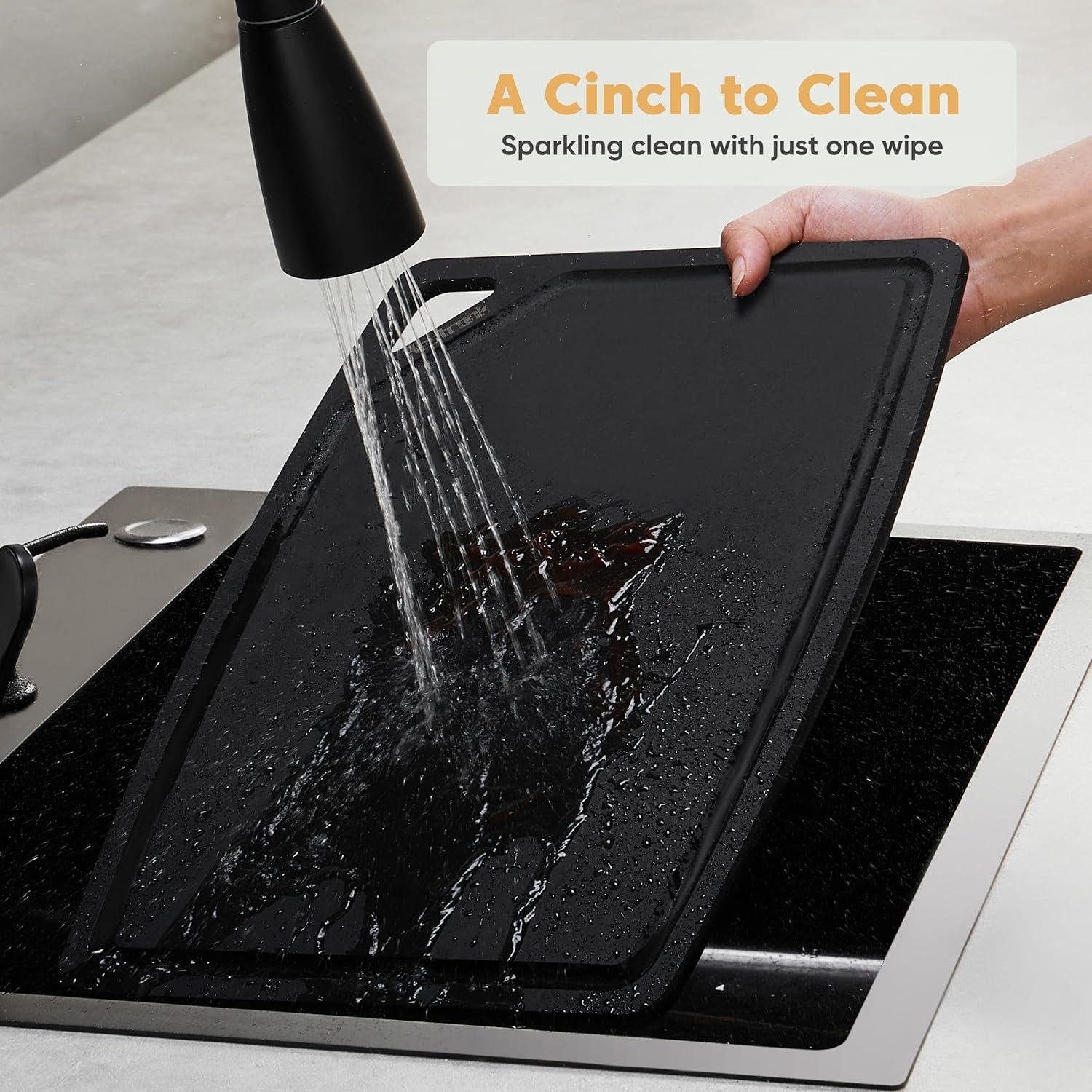
| cleanup in a shared shop/kitchen | Fast sanitizing | Multiple reviewers highlight dishwasher safe and cleans easily |
See Full Specifications & Customer Photos
Customer reviews Analysis
What Woodworkers Are Saying (Review Analysis)
1.Overall sentiment from woodworking customers
Several woodworkers and DIY-minded buyers describe the BESTCOOK wood fiber boards as a welcome upgrade from plastic, mainly for the non-porous feel, dishwasher compatibility, and resistance to staining/scratch marks. Common praise includes comments like “held up nicely” after long-term use and “no signs of wear and tear.”
That said, sentiment is mixed because a smaller set of reviewers reported flatness/warping issues, sliding, surface shedding, and color fading, plus a couple of missing-board shipments.
2. Performance feedback (accuracy, power, results)
While this isn’t a power tool, reviewers still judged “performance” the way woodworkers would: stability under use, surface behavior under a blade, and consistency of results.
- Cutting performance & results: multiple reviews highlight clean cutting with minimal visible knife scarring, especially compared with plastic boards that get “scratchy.” Several users reported no food stains (including tomato) and no obvious wear after repeated prep sessions.
- Surface feel: Some users noted the board feels harder than plastic, which changes the cutting sensation.One reviewer warned,“they are quite loud” when chopping—an impact/noise feedback issue some found irritating at first.
- Grip/stability: Performance feedback is split. Some liked the non-slip pads, while others said the boards are “super thin” and “slide all over the counter,” hurting confidence and control.
3.Build quality and durability observations
Durability is one of the most common themes—both positive and negative.
Positive durability notes
- Several woodworkers mentioned year-long ownership with no wear,calling them “great quality.”
- Reviewers repeatedly liked that they don’t scratch like plastic and stay cleaner-looking after heavy use.
concerns about consistency
- some users reported challenges with warping/flatness, including “Warped not level on the big board,” which is a red flag for anyone who values a reliably flat work surface.
- A few reported appearance durability issues: the black finish fading to an ashy gray or showing water marks/stains that require constant wiping.
- One especially concerning report described “black stringy pieces” shedding into food during slicing—suggesting a potential material/finish integrity issue on at least some units.
4. Ease of use for different skill levels
- Beginners and casual cooks appreciated the low-maintenance workflow: dishwasher-safe, easy to sanitize, and no oiling/seasoning like traditional wood boards.
- More detail-oriented users (the type who care about reliable setups—like woodworkers) were more likely to call out drawbacks like sliding,missing bumpers on the smallest board,or not being level.
- Learning curve is minimal, but several reviewers implied an “adjustment period” to the harder, louder cutting feel.
5. Common project types and success stories (real-world use)
No one described woodworking shop projects (these are kitchen boards),but customers successfully used this set for everyday “workbench-like” prep tasks where durability shows up fast:
- Vegetable prep: salads,peppers,onions,carrots—frequently enough cited specifically as these foods highlight staining problems on white plastic boards.
- Meat prep: multiple reviewers mentioned cutting meat (including BBQ prep).
- General kitchen rotation: the three sizes were frequently praised, with many saying they mostly use the large board.
Success stories often centered on: stain resistance, reduced visible knife marks, and easy dishwasher cleaning.
6. Issues or limitations reported
Some users reported challenges with:
- Slipping / stability: despite claims of non-slip feet, at least one reviewer said the boards slide a lot, making them feel “virtually useless.”
- Small board missing grip features: one reviewer liked the rubber bumpers on the two larger boards but said, “I wish the smallest one also had rubber bumpers.”
- Warping / not level: reports of the large board being warped.
- Cosmetic durability: fading from deep black to gray, and water staining that shows after wiping.
- material shedding: one report of stringy black fibers coming off during slicing (high-severity complaint even if not widespread in the dataset).
- Fulfillment errors: at least two reviews reported receiving only 2 boards rather of 3, including a French review noting the same issue and a difficult return.
Quick summary table
| Aspect | Common Feedback |
|---|---|
| Performance | Good stain resistance and fewer visible knife marks than plastic; some find it loud/hard; mixed reports on slipping |
| Durability | Many report year-long hold-up and dishwasher tolerance; some report warping, fading, water marks |
| Ease of Use | Easy to clean and maintain; smallest board lacking bumpers for some; stability complaints from some users |
| Versatility | Works well for vegetables, fruit, and meat prep; sizes make it convenient for different tasks |
| Value | Several feel it’s solid but a bit expensive; a few expected better quality at the price |
If you want, I can rewrite this section in a more “shop-talk” woodworking voice (focusing on flatness, surface hardness, and consistency between units), or shorten it to fit a product page block.
Pros & Cons
Pros & Cons
For our shop, this BESTCOOK wood fiber set feels like a “sleek and serious” upgrade from the usual plastic boards—thin, modern, and designed to take daily prep without turning into a scratched-up science project. That said, the details matter with this set (especially the smallest board), and the customer feedback shows a few recurring themes worth weighing.
Pros
- Three boards, three zones: We like having small/medium/large on standby, so we can keep fruit, veg, and raw meat tasks more separated without constantly washing the same board mid-shift.
- Juice grooves that actually do the job: The perimeter groove helps catch runoff from tomatoes, citrus, and meat prep—less countertop cleanup for us.
- dishwasher-safe convenience: Being able to sanitize in the dishwasher is a big win versus traditional wood,especially for a busy kitchen rhythm.
- Non-porous, BPA-free positioning: On paper, the “non-toxic / BPA-free / non-porous” story is exactly the kind of material spec we want when moving away from plastic.
- Sturdy despite the slim profile: Multiple reviewers describe them as thin but still very sturdy, and some report minimal scratches after months of use.
- Black color helps hide stains: If we’re tired of the “tomato blush” that lives forever on white boards, black is a practical aesthetic.
Cons
- Small board may have no non-slip feet: This is confirmed in the product details and echoed by reviewers. For us, that can mean extra sliding unless we add a damp towel or mat underneath.
- Can be loud under the knife: Wood fiber composites can have a sharper “clack” than softer plastic or end-grain wood—some users found it irritating at first.
- Mixed reports on warping/levelness: Several reviews mention boards arriving warped or not sitting flat, which is a dealbreaker for confident slicing.
- Finish/color can look uneven when drying: A few users report water marks or the black surface fading to a gray/ashy look after washing and drying.
- Inconsistent QC/fulfillment in some reports: A small number of customers say a board arrived missing from the set or had defects out of the box.
- Rare but concerning “material shedding” complaint: One review claims black fibers came off during slicing. It’s not the dominant trend, but it’s something we’d watch for instantly during our first uses.
| Feature | What we Get | What We’d Watch |
|---|---|---|
| Set sizes | 3 boards for different tasks | Small board is the “compromise” piece (no feet) |
| cleanup | Dishwasher-safe, easy sanitation | Possible water marks/finish changes on black |
| Counter control | Non-slip feet on medium & large | Small board may slide without a mat |
| Long-term wear | Many reports of good durability | some reports of warping or defects |
Q&A
What “wood types” can this handle—softwoods, hardwoods, plywood?
This set isn’t a woodworking cutting surface in the lumber sense—it’s a wood-fiber composite kitchen board meant for food prep. It’s designed for knives, not chisels, saws, routers, or sanding. For slicing and chopping meats/veg/fruit, reviews consistently describe it as sturdy and holding up well over months to a year, with some users reporting no visible knife cuts or scratches. If you’re thinking “shop use” (gluing, finishing, trimming veneer), note the included juice groove and food-focused surface make it a poor substitute for an assembly board or sacrificial bench top.
Is it “hardwood tough”—will it resist deep knife grooves and wear like maple?
Compared with typical plastic boards, multiple reviewers say it doesn’t scratch as easily and stays looking cleaner (especially against stain-prone foods). That said, it’s also described as thin but sturdy (small: 0.2″, medium: 0.3″, large: 0.35″), so it won’t feel like a thick end-grain maple block. A minority of reviewers reported warping (including a large board not sitting level) and one report of black “stringy” material coming off during slicing—so while many users find it durable, it’s not universally trouble-free.
how’s the setup—do I need to oil, wax, or “season” it like real wood?
No seasoning routine is required.One of the main reasons people buy wood-fiber composite boards is low maintenance: customers specifically note they’re easy to clean and sanitize because they’re dishwasher safe, unlike traditional wood boards that typically need hand-washing and periodic oiling. If you’re used to maintaining maple/walnut boards, expect a more “set it and forget it” experience—just be aware some users mentioned water marks/appearance changes on the black finish after washing/drying.
Does it stay put on the bench—are the non-slip feet actually effective?
Mixed, and size matters. The product details and reviews indicate the medium and large boards have rubber bumpers/feet, which several users like for stability. However, the small board does not have non-slip feet (called out in the listing), and more than one reviewer wished it did. Some users also complained about boards sliding on the counter, and one reported a board arriving warped, which will make rocking/slipping worse. Practical tip: if you use the small board often, plan on a damp towel, router mat, or shelf liner underneath—same trick woodworkers use to keep jigs from skating.
How does it integrate into a small shop/kitchen—storage, space, and noise?
People who like this set often mention the boards are slim and take up less space than thicker plastic or butcher-block styles, and the three sizes make it easy to grab the right one. One repeated “shop-like” observation: these boards can be loud—a reviewer noted a fairly loud sound when the knife contacts the surface, especially with forceful chopping. If noise or vibration bothers you, put a thin mat/towel under the board to dampen it.
Beginner-pleasant or fussy—any learning curve?
This is very beginner-friendly: there’s essentially no setup beyond washing and using it. The main “gotchas” called out by customers are stability (small board lacks feet; some reports of sliding) and cosmetics on the black version (some reviewers say it can look ashy/gray after washing or show water staining). Functionally, most reviewers find it straightforward and easy to live with—especially compared with wood boards that require upkeep.
What maintenance and durability should I realistically expect—dishwasher, warping, finish changes?
The selling point is dishwasher safe convenience, and several reviewers reported running them thru the dishwasher with no obvious wear. Long-term durability feedback is mostly positive (“held up nicely,” “no signs of wear”), but there are notable exceptions: a few reports of warping/not level, and some complaints that the black color/finish appearance changes after washing/drying. if flatness is critical for you, inspect the boards on arrival on a known-flat counter, and consider exchanging if any rocking shows up early.
Is it worth it versus cheap plastic boards or a traditional wooden board?
Based on reviews, the value proposition is: less staining and fewer visible knife marks than typical plastic, plus dishwasher-safe convenience that most traditional wood boards don’t offer. Many buyers specifically mention switching away from plastic and liking the cleaner look over time. The tradeoffs are that it can be noisier than plastic, the small board lacks feet, and there are some quality-variance complaints (warping, cosmetic issues, and one report of material shedding).If you want maximum stability and a quiet, heavy feel, a thick wood board may still win—if you want easy sanitizing and low maintenance, this set is aligned with that goal.
Elevate Your Lifestyle
The BESTCOOK Wood Fiber Cutting Board Set (3 pcs) uses a high-density wood-fiber composite in three sizes (Small 8.6″×11.7″×0.2″,Medium 10.8″×14.6″×0.3″, Large 12.8″×17.3″×0.35″). Key features include juice grooves, a reversible, non-porous surface, and dishwasher-safe, BPA-free, non-toxic construction; the medium and large boards have non-slip feet (the small typically does not). Customer feedback most often praises quality, durability, and easy cleanup, while criticisms mention occasional warping, sliding on the smallest board, and some reports of color fading or material shedding.
Best for: hobby woodworkers outfitting a shop kitchenette, cabinet makers/finish carpenters wanting a cleaner prep surface, and beginners who value low maintenance.
Consider alternatives if: you need a true non-slip board in every size, prefer thick end-grain hardwood, or want a quieter cutting surface.
Final assessment: a solid mid-range, low-fuss set with practical features, but consistency and grip—especially on the small board—are the main watch-outs.
Want to see current pricing and customer photos? View on Amazon & Read More Reviews →