

Blog
Batavia Electric Brad Nailer Review: Right for Our Shop?

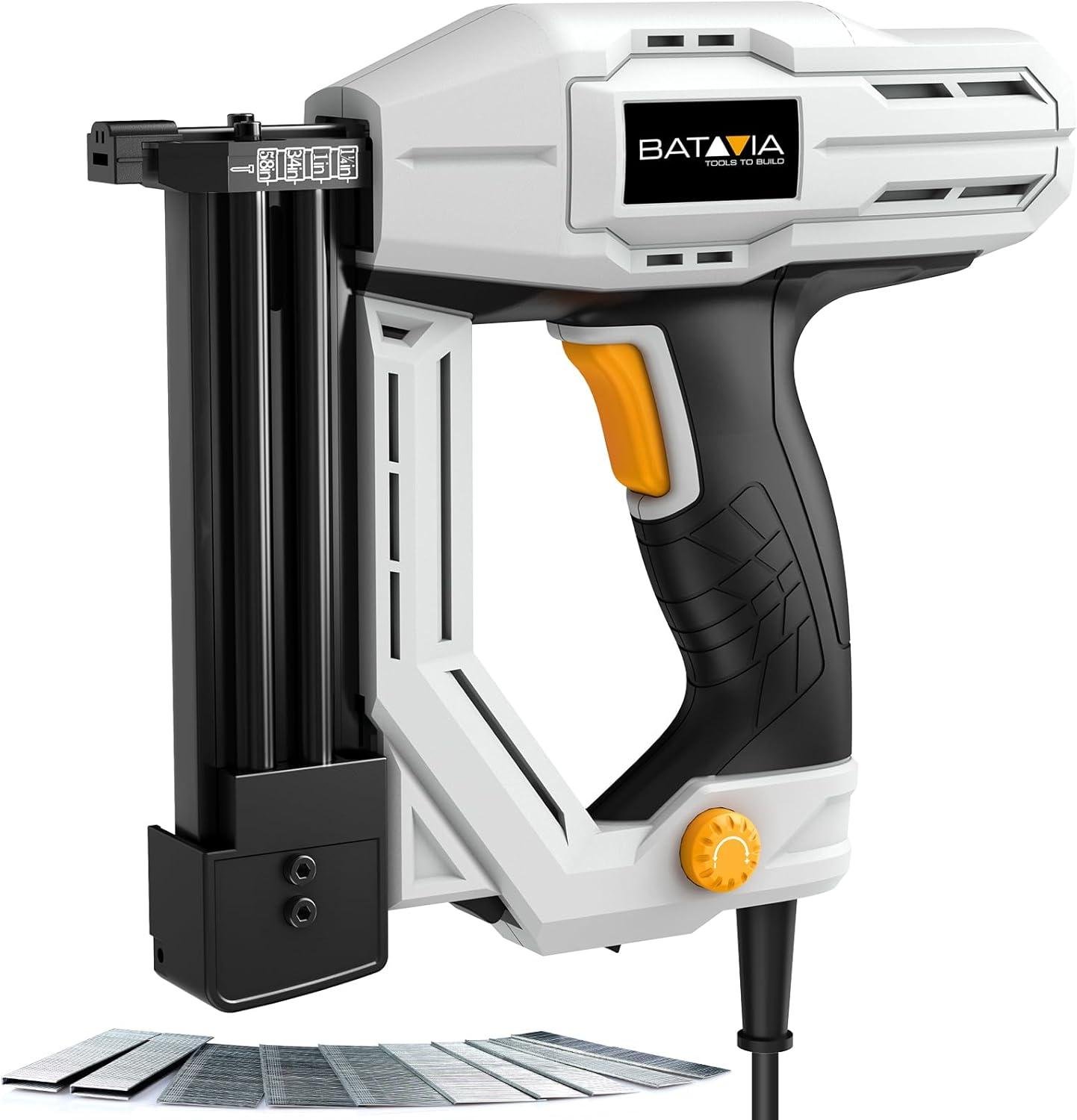
Ever tried to tack on cabinet backs or re-stretch upholstery adn ended up with crooked fasteners,crushed trim,or a tool setup that eats more time than the actual build? In a small shop,dragging out a compressor and hose for a handful of brads can feel like overkill—yet hand staplers don’t always deliver the precision or clean results we’re after.
That’s where the Batavia Electric Nail Gun comes in: a 120V corded, 2‑in‑1 brad nailer and narrow-crown stapler designed to fire 18‑gauge brad nails (5/8″–1.25″) and 1/4″ narrow crown staples (5/8″–1″), with 800 nails and 200 staples included. It’s built for upholstery, picture framing, light carpentry, and DIY—without compressors or hoses.
in this review, we’ll look at key features like the adjustable force dial, 1.6 lb lightweight body, non-marring rubber nose, and triple-safety controls, alongside what customers report about ease of use, consistency, and durability over time. As woodworkers who’ve assembled plenty of projects and fought the learning curve of new tools, we’ll focus on helping us decide if this balances budget, build quality, and workshop practicality.
Tool Overview and Build quality in the Shop
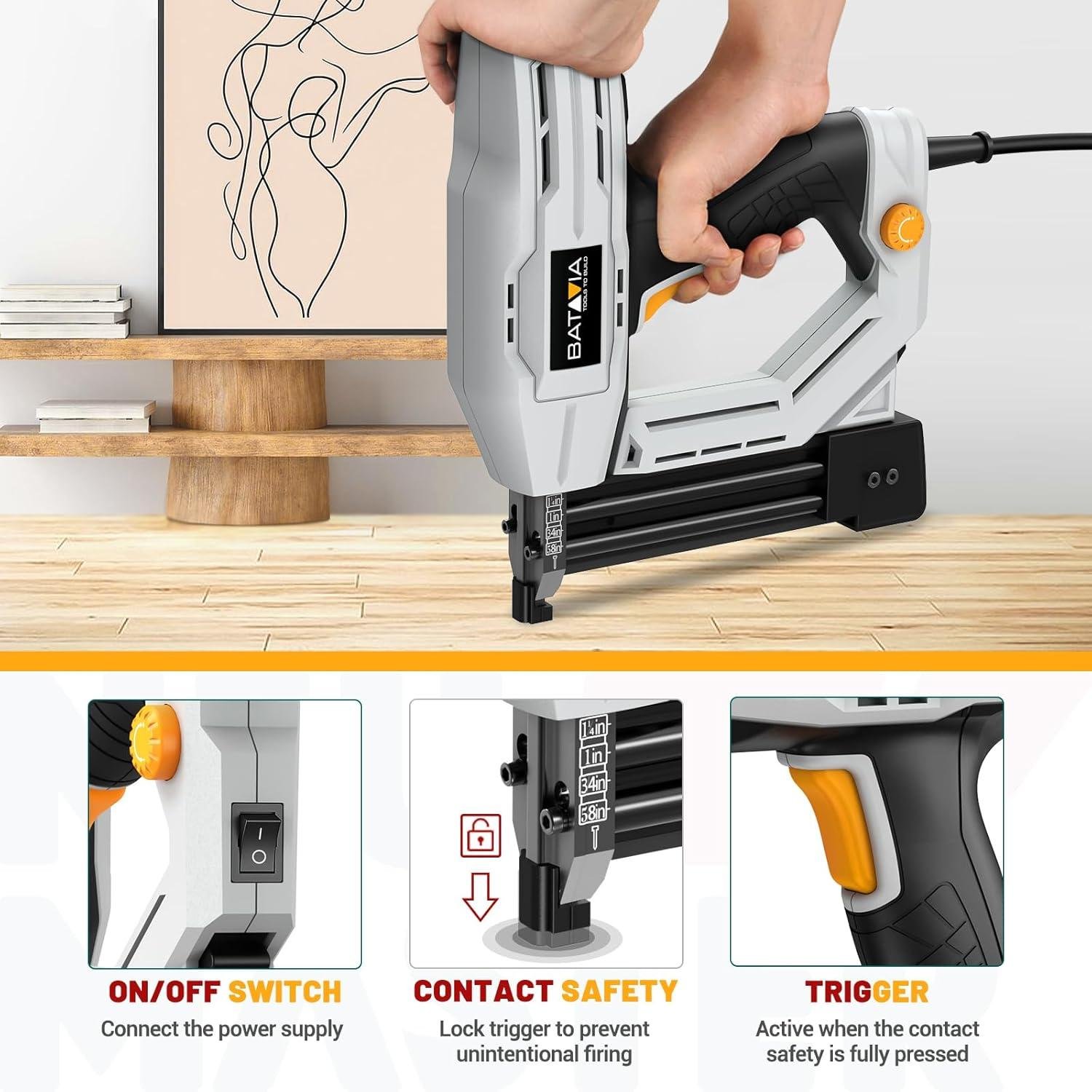
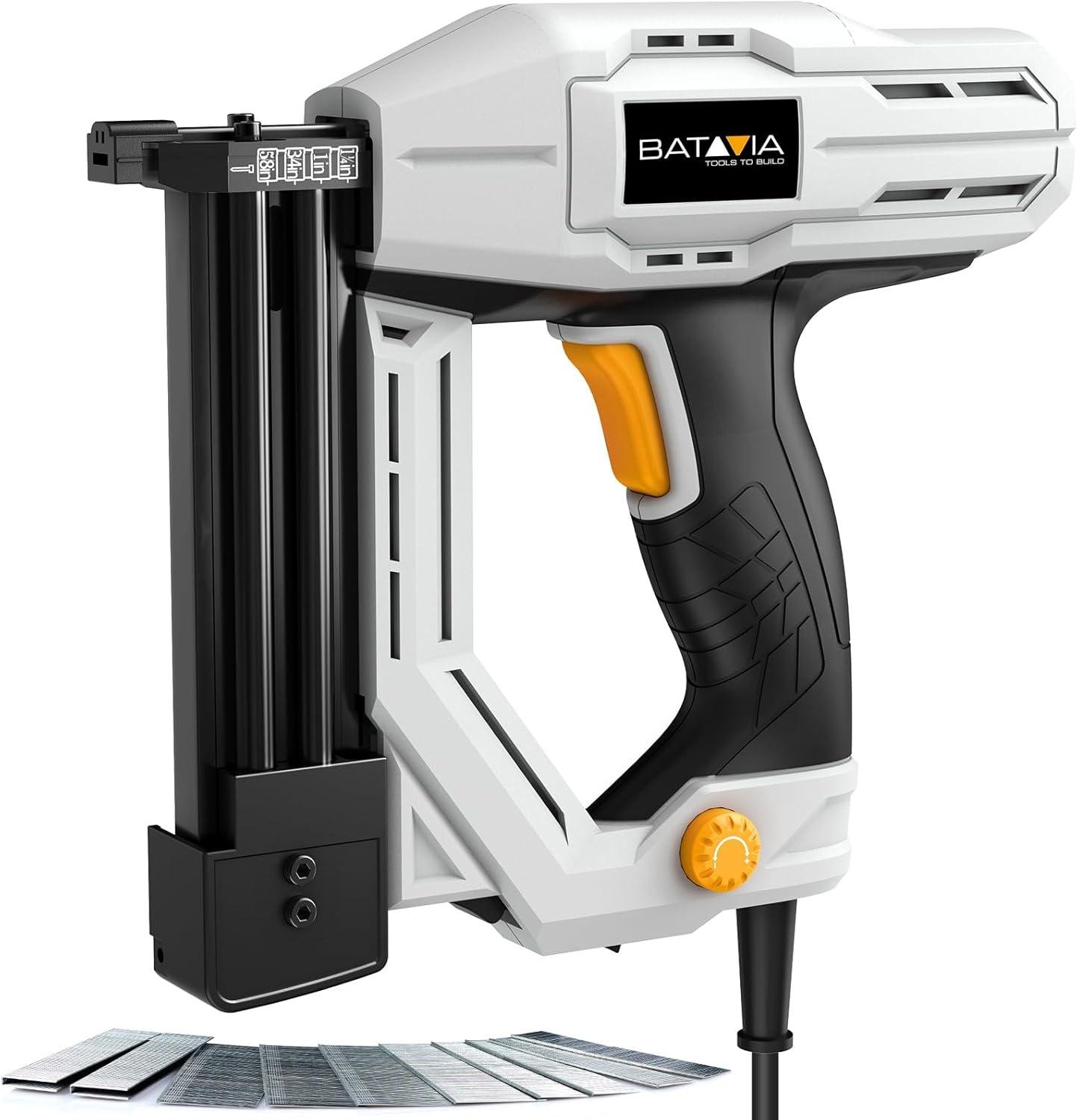
In our shop, the Batavia 2‑in‑1 feels like it’s built around convenience first: it’s a 120V corded electric brad nailer/stapler that skips the compressor, hoses, and oiling routines we associate with pneumatics. The body is rated at just 1.6 lb, and the soft-grip handle plus the non‑marring rubber nose are the kind of details we appreciate when we’re working near show faces on projects like cabinet backs or small assemblies. The tool’s core spec is its fastening range—18‑gauge brad nails from 5/8″ to 1‑1/4″ and 3/4″ narrow crown staples from 5/8″ to 1″—which covers a big slice of trim and light woodworking tasks, but it’s not aiming at framing or heavy construction. customers repeatedly echo the “plug in and go” advantage, calling it a solid fit for DIY and hobby work, and several mention the gun is comfortable and controllable during longer sessions.
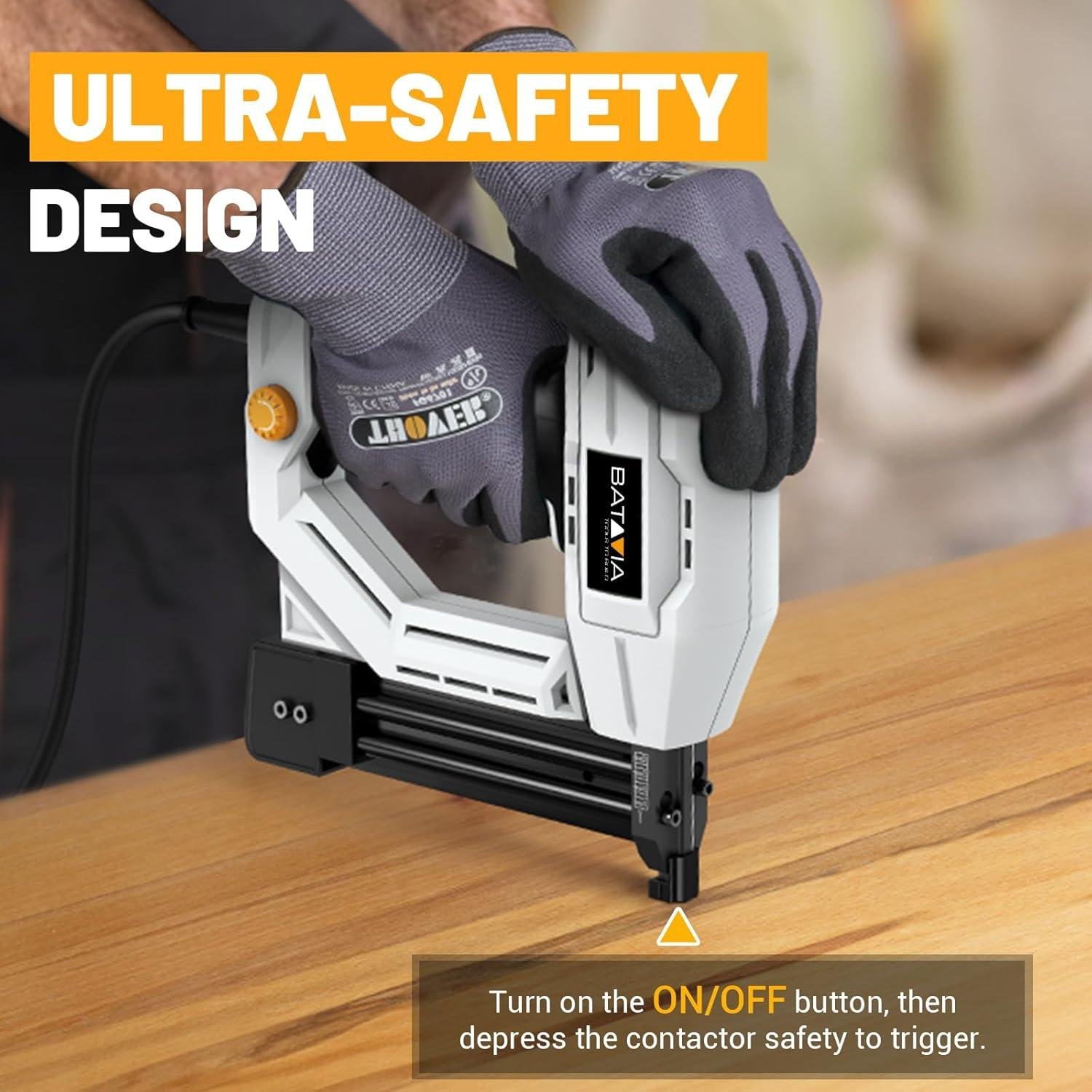
build-quality-wise, we like seeing the layered safety approach: Batavia uses a triple safety control system (power switch, contact sensor, and trigger lock) that only allows firing with the nose fully depressed—useful when we’re indexing parts on a bench and don’t want an accidental fastener into a finger or a workpiece edge.The adjustable drive force dial (minus-to-plus) is the key “shop” feature here: it teaches the right habit—test on scrap before committing—especially when moving between softwoods, hardwoods, and MDF. Reviews show a split that’s worth taking seriously: many users report it drives 5/8″ and 1‑1/4″ brads flush (some even one-handed in cedar), while others say it lacks power and required finishing with a hammer or struggled to sink staples. That pattern suggests we’ll get the best results when we apply firm, square pressure (often two hands, as the manual recommends), keep the nose planted, and choose the right fastener length for the material density—because an 18‑gauge platform is inherently more “finish work” than “force work.”
- Included accessories
- 3/4″ narrow crown staples (200 pcs)
- 18GA brad nails (800 pcs)
- Compatible attachments/accessories
- 18‑gauge brad nails (5/8″–1‑1/4″)
- 3/4″ narrow crown staples (5/8″–1″)
- Extension cord (customers commonly use longer cords for room reach; select an appropriately rated cord)
- Ideal project types
- Upholstery repairs (wood-to-fabric/leather fastening)
- Picture framing and light trim/finish work
- Small builds and hobby assemblies (e.g., pet house-style projects)
- Cabinet backs, drawer bottoms, thin stock fastening (with test shots)
- Wood types tested by customers
- Red cedar (multiple mentions of driving brads flush)
- General “wood repairs” (softwood/hardware-store lumber implied)
| Spec | Batavia 2‑in‑1 (per listing) | What it means in the shop |
|---|---|---|
| Power | 120V corded | No compressor needed; consistent firing as long as power is stable. |
| Weight | 1.6 lb | Easier overhead and bench work; less fatigue for repetitive fastening. |
| Brad nail range | 18GA, 5/8″–1‑1/4″ | Good for trim, small assemblies, and light joinery reinforcement. |
| Staple range | 3/4″ crown, 5/8″–1″ | upholstery and panel fastening; crown spreads holding power on thin materials. |
| adjustments | Force dial (minus to plus) | Dial in depth by material density; always test on scrap to avoid blow-through. |
| Work surface protection | Non‑marring rubber nose | Helps prevent dents/scratches on finished stock. |
| Safety | Power switch + contact sensor + trigger lock | reduces accidental firing and misfires when positioning parts. |
| Accessory Type | Compatible spec | Notes for Woodworkers |
|---|---|---|
| Brad nails | 18‑gauge, 5/8″–1‑1/4″ | Use shorter lengths for thin stock to reduce blowout; step up length for better bite in softwoods. |
| Narrow crown staples | 3/4″ crown, 5/8″–1″ | Great for fabric, back panels, and jigs; hold-down is wide but can telegraph on thin veneers. |
| Power extension | 120V rated extension cord | Long cords help around the shop/room; avoid undersized cords that can drop voltage. |
| Capacity Area | Recommended (practical) | Actual (per specs/review themes) |
|---|---|---|
| Brad nail length | Use 5/8″–1‑1/4″ with scrap testing | Rated 5/8″–1‑1/4″; some users report flush seating,others report occasional under-driving at 1‑1/4″. |
| Staple driving | Best in softer woods/panels and upholstery layers | Rated to 1″; a few reviews report staples not sinking deeply in wood. |
| Duty use | Light-to-medium fastening sessions | Positioned for “hobby/DIY”; reviews praise convenience, with mixed notes on power consistency. |
See Full Specifications & Customer Photos
Real World Fastening Performance in Trim Upholstery and Light Carpentry
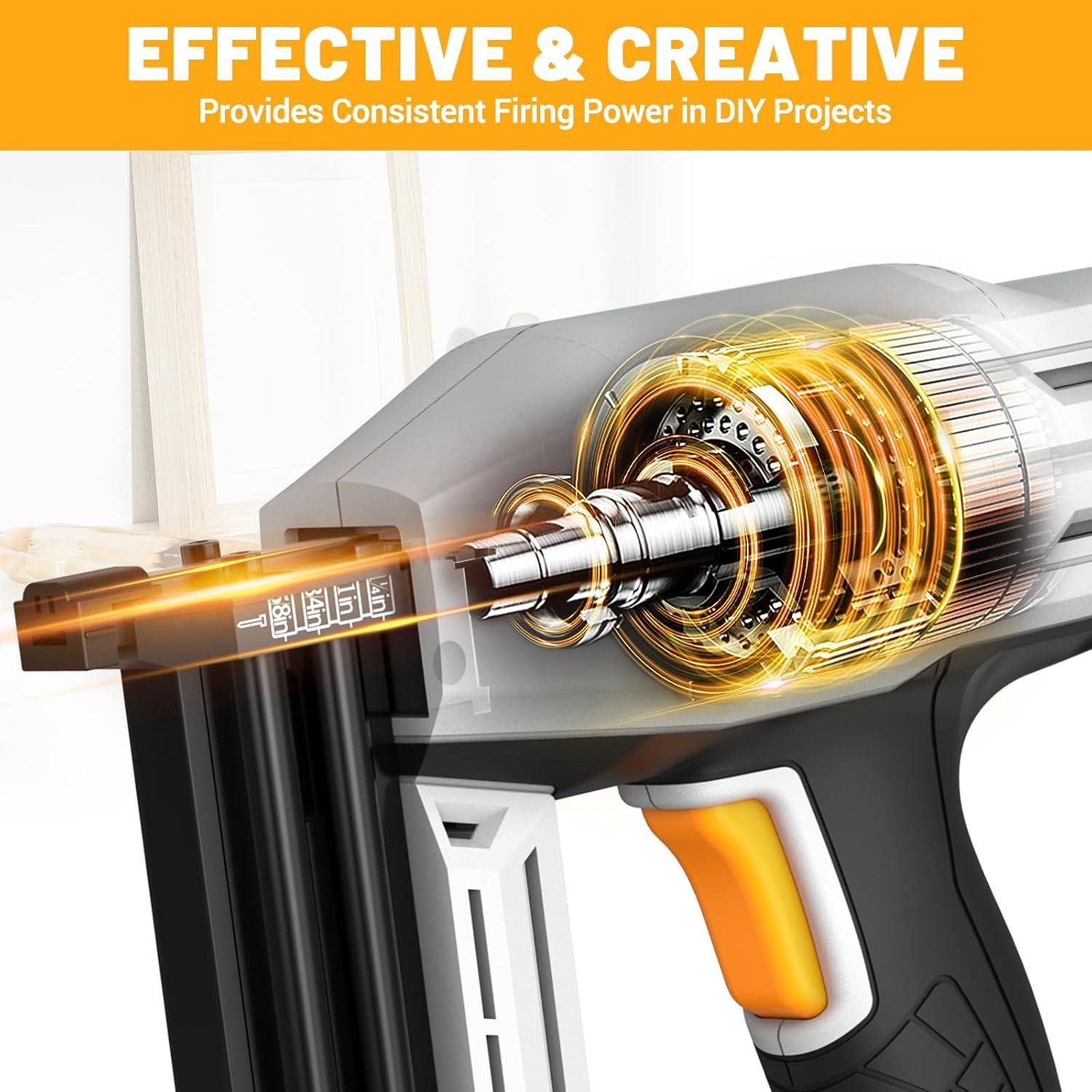
In trim upholstery and light carpentry, this Batavia corded unit behaves like a “grab-and-go” fastener driver rather than a compressor-style production gun—and that’s exactly how we’d frame its real-world role. Because it’s a 120V plug-in 2‑in‑1, we can move from stapling fabric to tacking on light trim without dragging out a hose. On the bench, the most useful spec is its compatibility range: it drives 18‑gauge brad nails from 5/8″ to 1‑1/4″ and 3/4″ narrow crown staples (5/8″ to 1″). The adjustable power/force dial (minus for delicate materials, plus for dense stock) matters in upholstery: we can sneak up on the right setting so staples bite without dimpling thin wood or telegraphing through fabric—something reviewers also emphasized when they mentioned “testing on scrap first helps get it just right.” The non‑marring rubber nose is a practical detail for pre-finished trim and face frames, and the 1.6 lb lightweight body is a genuine advantage when we’re reaching into cabinet carcasses or working inside furniture frames for 20–30 minutes at a time.
Where performance gets more nuanced is fastener seating in real lumber densities. Multiple customer themes suggest it’s “simple to plug in and start,” “no compressor needed,” and “handled wood repairs and fabric work smoothly,” but there are also reports that it “isn’t strong enough” for some users to sink 1‑1/4″ brads consistently—one reviewer said they had to finish with a hammer and another complained of bending thin nails. On the other hand, another hobbyist specifically cited driving 1‑1/4″ brads flush in red cedar by turning power all the way up, and noted harder wood may require the manual’s recommended two‑hand operation to keep the nose fully planted so the internal drive can do its job. In our shop terms,that means this tool fits best when our work is upholstery frames,small molding/quarter-round,picture frames,light jigs,and craft builds—and we treat it like a finish tool: hold it square,press firmly,adjust depth on scrap,and keep expectations realistic on dense hardwoods and longer fasteners. The triple safety control (power switch, contact sensor, trigger lock) also changes pacing: it helps prevent accidental fires, but it rewards intentional placement—ideal for careful trim work where one misplaced brad can mean extra filling and sanding.
- Included accessories
- 3/4″ narrow crown staples: 200 pcs
- 18GA brad nails: 800 pcs
- Compatible attachments/accessories
- 18GA brad nails: 5/8″ to 1‑1/4″
- 1/4″ narrow crown staples (3/4″ crown): 5/8″ to 1″
- Extension cord: customers mention using a 20′ cord for room reach
- Ideal project types
- Upholstery repairs (fabric/leather to frames)
- Picture framing and small decorative trim
- Light carpentry and DIY assemblies (e.g., small pet-house style builds)
- Cabinet backers, toe-kick returns, and craft/shop fixtures where 18GA is appropriate
- Wood types tested by customers
- Red cedar (reported brads driven flush at higher power)
- General “wood” (multiple reviewers: repairs/trim tasks)
- Hardwood (general) (mixed: some say power may be insufficient; others advise two-hand technique)
| Spec / Feature | Batavia 2-in-1 (from listing) | What it means in trim & upholstery |
|---|---|---|
| Power source | 120V corded | Fast setup; no compressor/hose—good for quick fixes and indoor trim runs |
| Brad nail capacity | 18GA, 5/8″–1‑1/4″ | Best for light trim, returns, small assemblies—not structural fastening |
| Staple capacity | 3/4″ narrow crown, 5/8″–1″ | upholstery and light panel attachment with wider hold than a brad |
| Weight | 1.6 lb | Less fatigue overhead or inside cabinets; easier control on delicate work |
| adjustment | Force dial (− to +) | Helps avoid blow-through in soft materials and improves seating in denser stock |
| Work protection | Non-marring rubber nose | Reduces surface dents on pre-finished trim and face frames |
| Accessory | Compatible? | Notes for woodworkers |
|---|---|---|
| 18GA brad nails (5/8″–1‑1/4″) | Yes | Use shorter lengths for thin stock; step up length only when you have bite depth |
| 3/4″ narrow crown staples (5/8″–1″) | Yes | Great for fabric/webbing and light panels; test to avoid staple “crowning” proud |
| Air compressor fittings | No | This is electric—no pneumatic compatibility needed |
| Extension cord | Yes | Keeps work mobile; use an appropriately rated cord to reduce voltage drop |
| Use case | Recommended Expectation | What customers reported |
|---|---|---|
| Stapling upholstery to frames | Consistent drive with correct pressure and setting | Positive theme: “handled fabric work smoothly,” “easy to control” |
| 18GA brads in softwood trim | Flush to slight countersink with tuned dial | Mixed-positive: “flush to barely countersunk,” “saved my fingers” |
| 1‑1/4″ brads in denser wood | May require two hands and careful setup; test first | Mixed: some “drives flush in cedar,” others “not strong enough / needed hammer” |
See Full Specifications & Customer Photos
Key Features Woodworkers Will Appreciate Including Staple and brad Compatibility
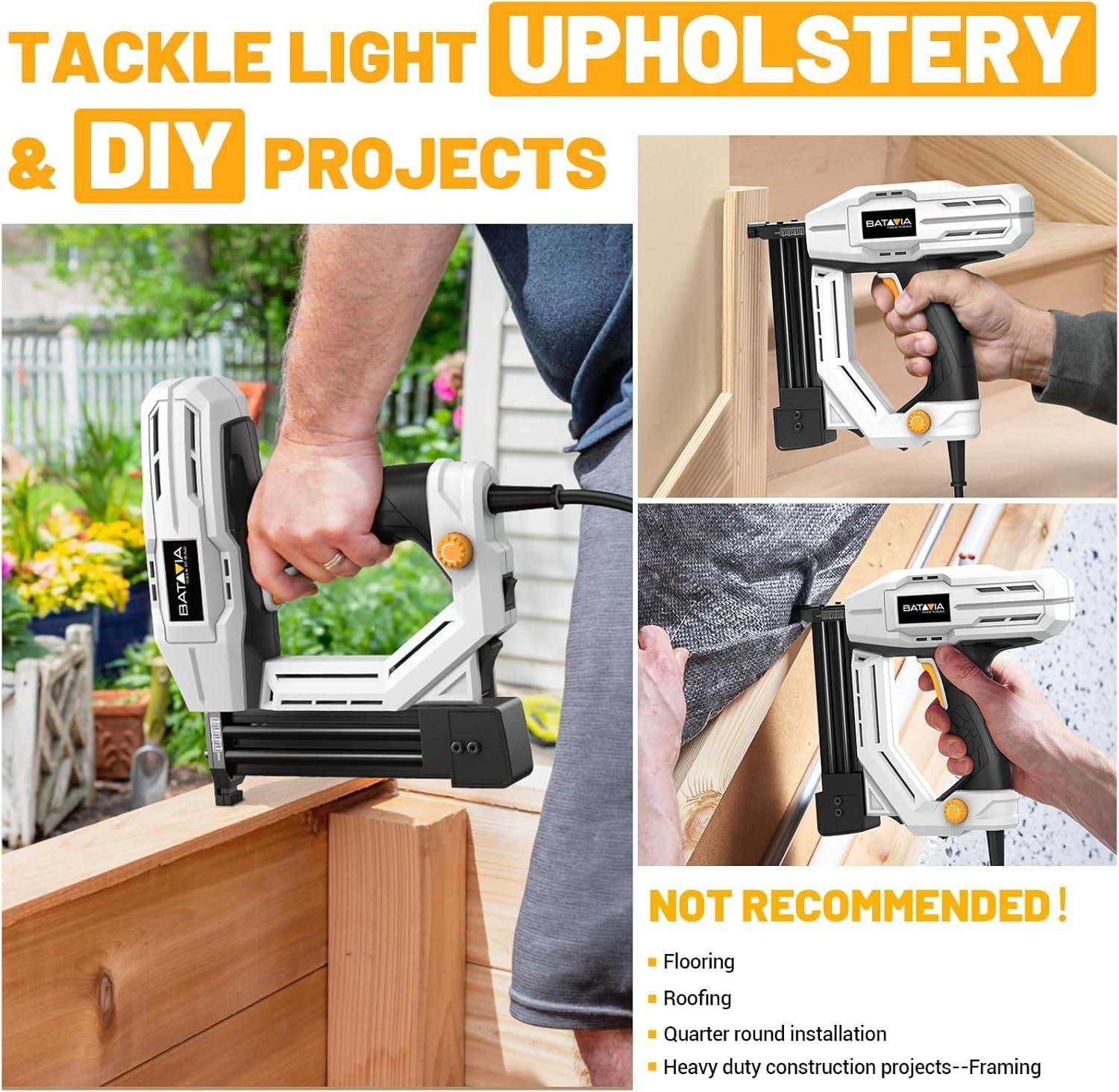
in our shop, the most woodworker-kind feature here is the true 2-in-1 compatibility: one corded tool that can drive 18-gauge brad nails from 5/8″ to 1-1/4″ and 1/4″ narrow crown staples from 5/8″ to 1″ (with the listing also calling out 3/4″ narrow crown staples included). That range covers a lot of the “light build” and “clean-up” work we do—think quick jig skins, backer panels, drawer bottoms, shop fixtures, and upholstery tacking—without dragging a compressor around. Multiple reviewers echo the same theme: “no compressor or hoses—just plug in and start”, and for many of us that convenience is the difference between knocking out an hour-long task now versus putting it off. The included power/force dial is also a practical touch for staple-and-brad switching: customers describe turning it “around half” for short brads and going “all the way up” for 1-1/4″ brads, which is the exact kind of real-world adjustment we want when moving from soft materials (fabric/leather) to denser stock.
Where this matters for woodworking is control and surface quality. The tool’s 1.6 lb body and non-marring rubber nose tip are aimed at reducing dents and scuffs—especially helpful on pre-sanded faces where a metal nose would leave a witness mark. The manufacturer also requires two-hand operation for stability,and customers generally confirm it can be driven one-handed in softer woods,though some note harder woods may need both hands to consistently seat fasteners flush. We also need to be honest about reviewer split: several users report it drives brads “flush to barely countersunk,” while others specifically complain the power isn’t strong enough to sink 1-1/4″ finish nails without a hammer follow-up, and a few mention bent nails or poor performance. For our workflow, that suggests a smart approach: treat this as a versatile 18GA trim/assembly tool (not a framing solution), test depth on scrap, and choose fastener length conservatively when stepping into harder species—because staple-and-brad tools are most reliable when we let the spec range guide the application.
- Included accessories
- 200 pcs staples (listed as 3/4″ narrow crown)
- 800 pcs brad nails
- Compatible attachments/accessories
- 18GA brad nails: 5/8″–1-1/4″
- Narrow crown staples: 1/4″ crown, 5/8″–1″ leg length (listing also references 3/4″ narrow crown staples included)
- Extension cord (customers mention using a 20′ cord for room reach)
- Ideal project types
- Upholstery repairs (fabric/leather) and dust-cover work
- Picture frames, light trim, quarter-round, and small finish tasks
- Shop jigs/fixtures, thin panel assembly, small hobby builds
- pet-house assembly and similar light carpentry
- Wood types tested by customers
- Red cedar (reported flush seating even with longer brads)
- Oak (manufacturer claims scratch-free results with proper setup)
- Pine (manufacturer claims scratch-free results with proper setup)
- MDF (manufacturer lists engineered wood compatibility)
| Fastener Mode | Specification (from listing) | What We Use It For in the Shop |
|---|---|---|
| Brad nails | 18GA, 5/8″–1-1/4″ | Light trim, small assemblies, jig skins, fastening thin stock before glue sets |
| Staples | 1/4″ narrow crown, 5/8″–1″ (also notes 3/4″ included) | Upholstery fabric, backers, dust covers, securing thin panels where holding power needs more surface area |
| Accessory Type | Compatible Spec | Notes for Woodworkers |
|---|---|---|
| Brad nails | 18GA, 5/8″–1-1/4″ | Use shorter brads in hard species to avoid proud heads; test on scrap and adjust the dial. |
| Narrow crown staples | 1/4″ crown,5/8″–1″ | Better bite than brads in sheet goods and fabric—watch crown width when buying refills. |
| Capacity Topic | Recommended (Best Practice) | Actual (Spec / Review Theme) |
|---|---|---|
| Brad length in dense wood | Start with 5/8″–1″, adjust power, and step up only if seating is consistent | Spec supports up to 1-1/4″, but some reviewers report not enough power to fully sink 1-1/4″ in all cases |
| Setup & control | Two-hand use, nose fully depressed, test on scrap | Manufacturer requires two-hand operation; some users drive one-handed in softer woods, others need two hands for consistent seating |
See Full specifications & Customer Photos
Ease of Use for Beginners and Speed for Experienced Woodworkers
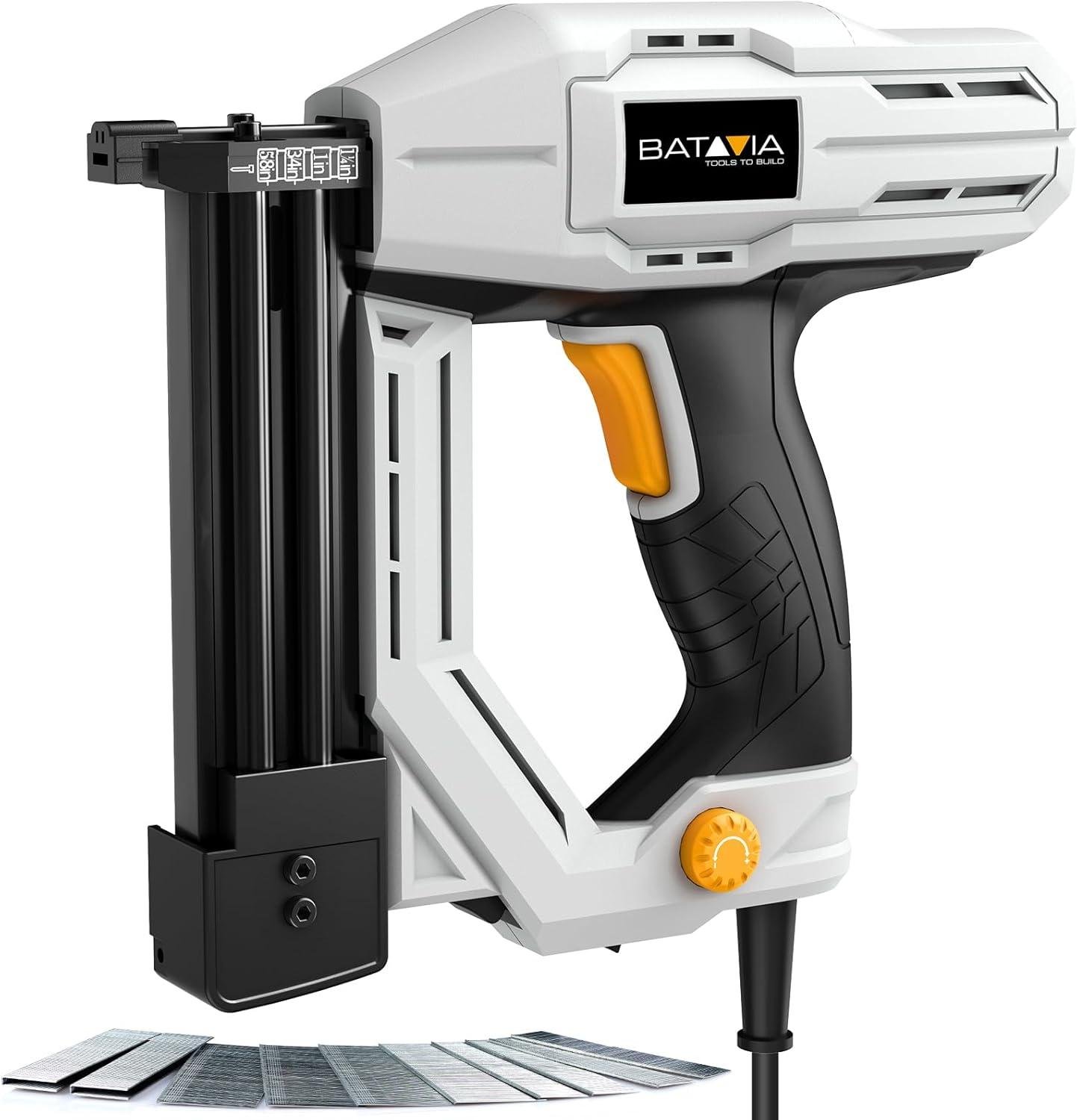
For beginners in our shop, the batavia 2‑in‑1 is approachable because it skips the compressor learning curve entirely—this is a 120V corded tool, so we can simply load fasteners and start. The biggest “new user” helper is the adjustable power/force dial (minus for delicate work,plus for denser stock),which lets us creep up on the right setting rather of guessing and denting a workpiece. The non‑marring rubber nose tip is another beginner-friendly detail: if our stance or angle isn’t perfect yet, it helps avoid those ugly crescent marks common with bare metal noses. Safety is also more structured than many entry nailers—Batavia uses a triple safety control (power switch, contact sensor, and trigger lock) so it only fires when properly pressed to the material, which matches customer themes calling it “reassuring” and “safe.” That said, reviews do conflict on power: some users report it drives 5/8″–1‑1/4″ 18‑gauge brads flush (even in cedar) with the dial turned up, while others say it “isn’t strong enough” for 1‑1/4″ and needed a hammer finish—so for beginners, we’d treat scrap testing as mandatory, especially when moving from pine/MDF into tougher hardwoods.
For experienced woodworkers, speed comes from eliminating setup friction and keeping the workflow tight: the 2‑in‑1 format means we can bounce between 18GA brad nails (5/8″–1.25″) and narrow crown staples (1/4″ crown, 5/8″–1″) without dragging out a second tool, and multiple reviewers praise the “plug in and go” convenience for trim, repairs, and upholstery.The body is advertised as 1.6 lb with a soft grip, which should help during repetitive fastening, though one reviewer still described it as “a bit heavy”—our takeaway is that balance and technique matter. Batavia also calls for two‑hand operation for stability during longer sessions; some customers admit they can run it one‑handed in softer woods,but when we’re chasing consistent countersink depth for paint-grade casing or delicate edge banding,using two hands and letting the contact tip fully seat is what keeps the rhythm fast and the results predictable. If our work regularly demands more bite (like thicker baseboards, flooring, or heavier-gauge fasteners), it’s worth noting the manufacturer explicitly says it’s not recommended for flooring, baseboards, or drywall installation, and a few reviews echo limitations with deeper drives—so we’d frame this as a quick, flexible bench-and-room tool for light-to-medium fastening rather than an all-day production finish gun.
- Included accessories
- 3/4″ narrow crown staples: 200 pcs
- 18‑gauge brad nails: 800 pcs
- Compatible attachments/accessories
- 18GA brad nails: 5/8″ to 1‑1/4″
- 1/4″ narrow crown staples: 5/8″ to 1″
- Extension cord (120V): customers commonly use longer cords for room reach
- Ideal project types
- Upholstery and fabric-to-wood fastening
- Picture framing and small trim/repair work
- Hobby builds and small assemblies (reviewers mention model-scale structures)
- Light finish work where consistent depth matters
- Wood types tested by customers
- Red cedar: reported flush driving up to 1‑1/4″ with power increased
- General “wood”: mixed power feedback depending on thickness/density
- Manufacturer-listed: oak, pine, MDF (noted as suitable with the non-marring tip)
| Spec / Feature | What It Means in the shop |
|---|---|
| Power: 120V corded | no compressor/hose; quick setup and consistent firing as long as line power is stable |
| Fastener types: 2‑in‑1 brads + staples | Switching tasks (trim vs. upholstery) without swapping tools saves time |
| Brad capacity: 18GA, 5/8″–1.25″ | Covers common light finish lengths; edge-to-face fastening, small trim, hobby work |
| staple capacity: 1/4″ narrow crown, 5/8″–1″ | Useful for fabric, screens, thin panels, jigs, and light assembly |
| Weight: 1.6 lb (published) | Should reduce fatigue,though some users still perceive heft—try two-hand stance for control |
| Depth/force adjustment: dial (− to +) | Dialing in flush/countersink reduces filler work; scrap testing is key |
| Accessory Type | Compatible Size | Notes for Woodworkers |
|---|---|---|
| Brad nails | 18GA,5/8″–1‑1/4″ | use shorter lengths for thin stock; longer brads may require higher power and firm contact |
| Narrow crown staples | 1/4″ crown,5/8″–1″ | Great for upholstery and light assemblies; test depth to avoid telegraphing through fabric |
| Use Case | Recommended (Best Fit) | What Reviews Suggest in Practice |
|---|---|---|
| Driving 5/8″ brads | Very suitable for light trim and small parts | Multiple users report smooth,flush results with mid dial settings |
| Driving 1‑1/4″ brads | Use on softer woods; apply firm,square pressure | Mixed: some report flush in cedar; others report under-driving and bending nails |
| Dense hardwood fastening | Test on scrap; expect slower,more deliberate technique | Customers suggest two-hand operation may be needed; power complaints appear in negative reviews |
Check Current Price & Reviews on Amazon
Customer Reviews Analysis
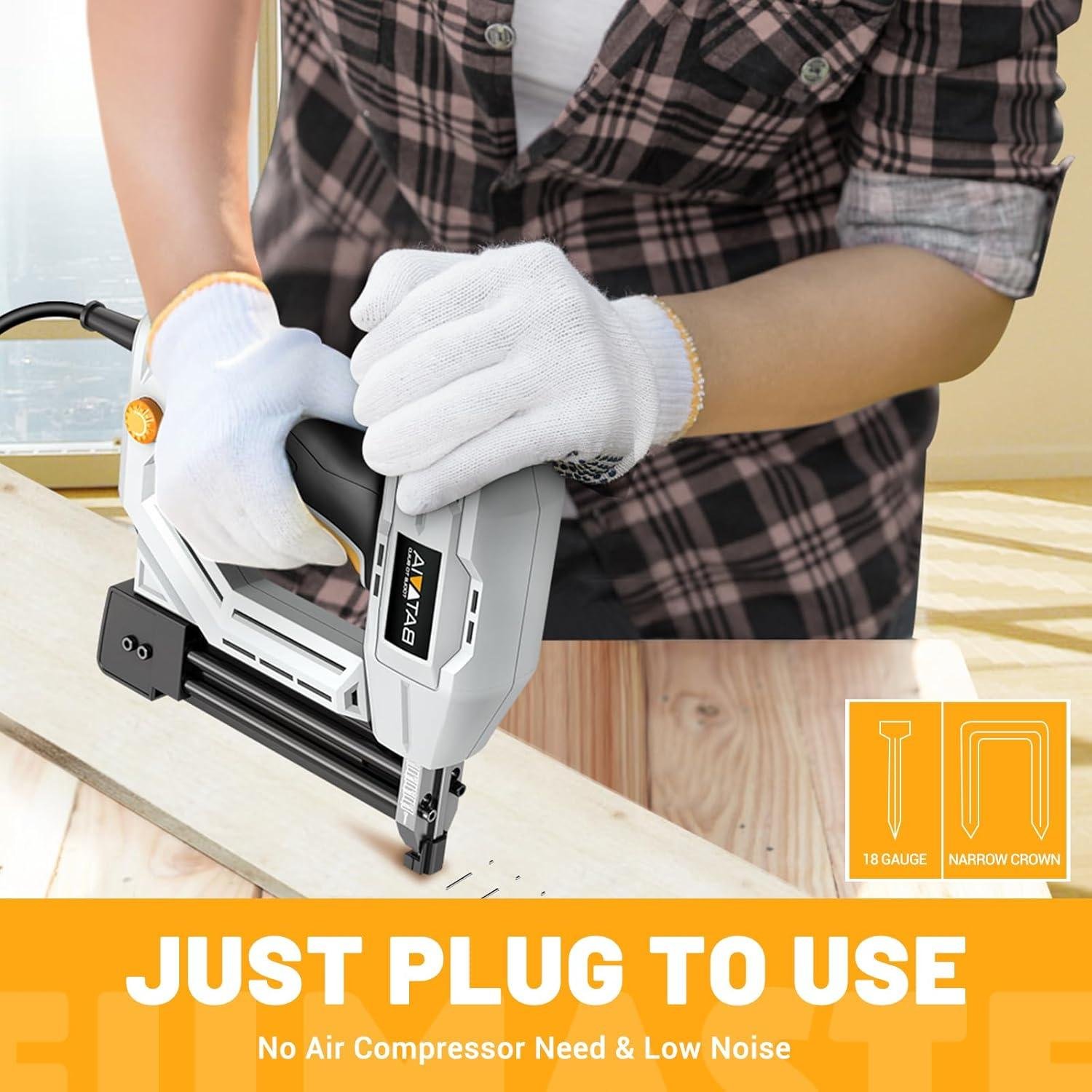
What Woodworkers Are Saying (Review Analysis)
1. Overall sentiment from woodworking customers
Overall sentiment is mostly positive among hobbyists and DIY woodworkers, with repeated gratitude for compressor-free convenience, versatility (brads + staples), and adjustable depth/power. That said, a noticeable minority reported power or reliability problems, including tools that “still not working,” or not driving fasteners deep enough—big red flags for anyone depending on consistent finish results.
2. Performance feedback (accuracy, power, results)
Common praise includes solid driving performance when dialed in correctly, especially for typical trim and light carpentry work.
- Power & seating: several woodworkers mentioned it can sink 5/8″ and 1-1/4″ 18ga brads, with one reviewer noting 1-1/4″ brads went flush one-handed in red cedar when the power was turned up. Others echoed that nails were flush to slightly countersunk, which is ideal for filling.
- Adjustability: Multiple reviews highlight the depth/power adjustment knob as a real benefit—especially when switching between thinner materials and harder wood. One reviewer emphasized testing on scrap first to dial in the setting.
- Mixed under-load results: Some users reported challenges with insufficient power for 1-1/4″ finish brads, requiring a hammer to finish seating. Another complained staples/brads wouldn’t drive deep and called it “useless,” suggesting either a defective unit, wrong fastener/material pairing, or a power/technique limitation in denser stock.
3. Build quality and durability observations
Feedback on build quality is generally favorable but not deeply proven over time.
- One reviewer said it “appears to be well-made” out of the box.
- Others liked the soft grip and described it as comfortable, though one noted it’s “a bit heavy.”
- Durability/reliability concerns show up in a few reviews: non-working units and a replacement complaint (“sent back same product… still not working”) point to possible quality control inconsistency, even if many users had smooth experiences.
4. Ease of use for different skill levels
This is where the tool gets a lot of love.
- Beginners and DIYers appreciated the “plug in and go” approach—no compressor, no hoses, less setup friction.
- Several reviewers mentioned using it one-handed, while also noting smaller users or tougher material may require two hands (the manual recommends two-hand operation for full seating).
- safety design got positive mentions: “only fires when pressed correctly against the surface,” which helps new users feel more confident.
5. Common project types and success stories
Customers successfully used this for a range of light-to-medium duty projects:
- Trim and finish carpentry: Several reviewers mentioned floor trim, quarter round, and general finish work where flush/countersunk results matter.
- hobby builds / small-scale woodworking: One woodworker described building a detailed 16″ x 16″ “Squirrel Pavilion” (dollhouse-quality scale), using 5/8″ brads for slats and 1-1/4″ brads for rafters, and praised the adjustable power for swapping between lengths.
- Upholstery and fabric work: Multiple reviews mention fabric work and upholstery-style tasks, benefiting from staple capability.
- Repairs and small home projects: Reviewers referenced wood repairs and general DIY use.
6. Issues or limitations reported
Several drawbacks appeared repeatedly enough to note:
- Power inconsistency (especially at 1-1/4″): Some users reported it won’t consistently sink longer brads, requiring manual finishing with a hammer.
- Fastener bending: One reviewer said the included nails were very thin and bent most of the time, which coudl point to either softer brads, angle/pressure technique issues, or challenging material.
- Staple depth complaints: At least one user said it couldn’t drive staples deep into wood.
- Reliability / defective units: A small cluster of reviews report not working units and a frustrating replacement experience (“still not working”).
- Gauge limitation: One hobbyist “wished it could take 16ga,” implying that while 18ga is great for trim and light builds, it may not be the best choice for heavier-duty joinery or thicker structural stock.
Summary Table
| Aspect | Common Feedback |
|---|---|
| Overall Sentiment | Mostly positive for DIY/finish work, but a minority report power/reliability problems |
| Performance | Good results on trim and cedar with proper power setting; some users couldn’t fully sink 1-1/4″ brads |
| Precision | Depth/power adjustment praised; flush to slightly countersunk results reported |
| Build Quality | Feels well-made and comfortable; some note it’s a bit heavy; a few report defective units |
| Ease of Use | Plug-in convenience is a major win; beginners like the safety features; two hands may be needed in harder wood |
| Versatility | 2-in-1 brads + staples helps for upholstery, repairs, and general DIY |
| Limitations | Power complaints, occasional bending nails, and inconsistent reliability; 18ga may be too light for heavy-duty needs |
If you tell me what materials you typically nail into (pine vs oak vs cedar, trim thickness, staple use), I can translate these review themes into a “best fit / not a fit” suggestion for your projects.
Pros & Cons
Pros & Cons
| What We Liked | Where We Hesitated |
|---|---|
| True 2-in-1 flexibility: shoots 18GA brad nails and narrow crown staples. | It’s corded (120V), so our range depends on outlets and extension cords. |
| No compressor, no hose—our setup time stays quick and the bench stays less chaotic. | Not a fit for everything: clearly not intended for drywall, flooring, baseboards, or wiring work. |
| Lightweight at about 1.6 lb, which we appreciated during longer sessions. | The required two-hand operation boosts control, but it can feel slower for rapid one-handed tacks. |
| Adjustable force dial lets us dial down for fabrics or crank up for denser woods—nice for mixed-material projects. | We still needed scrap testing to avoid under-driving or over-driving, especially when switching materials. |
| Non-marring rubber nose helps keep our work clean—less worry on oak, pine, or MDF. | If we’re working in tight corners, the nose/contact requirement can make some angles awkward. |
| Triple safety setup (power switch, contact sensor, trigger lock) adds confidence and reduces accidental firing. | More safety steps can mean more “start/stop” moments when we’re moving fast between pieces. |
| Included fasteners (200 staples + 800 nails) let us start immediately without a supply run. | The included pack is great for a kickoff, but serious shop use will burn through it quickly. |
Pros
- 2-in-1 convenience: we can switch between brad nails (18GA, 5/8″–1.25″) and narrow crown staples (1/4″ crown, 5/8″–1″) without changing tools.
- Plug-and-play power: The 120V corded design means no compressor, no air lines, and fewer variables before we start a project.
- Easy on our wrists: At roughly 1.6 lb with a soft-grip handle, it stays comfortable for upholstery touch-ups and light carpentry runs.
- Power control on tap: The force dial gives us a practical way to match the drive strength to fabric, softwood, hardwood, or MDF.
- Cleaner finishes: The non-marring nose helps us avoid dents and scratches—especially helpful when we’re doing visible trim or frames.
- Safety-forward design: The combination of power switch,contact sensor,and trigger lock helps prevent misfires and accidental marks.
- Fastener starter kit included: The staples and nails in the box let us test, tweak settings, and get a small project done right away.
Cons
- Cord management is part of the job: We gain reliable power,but we lose the freedom of wandering anywhere in the shop or yard.
- Not a universal replacement tool: It’s best for wood/leather/fabric tasks like upholstery repairs,picture framing,and pet-house assembly—not heavy construction uses like flooring or baseboards.
- Two-hand operation slows some workflows: We like the stability, but it makes quick “hold-and-tack” moments less fluid.
- Material changes require patience: Even with the dial, we found it smartest to test on scrap when moving between delicate fabric and dense hardwood to keep the finish consistent.
- Starter fasteners won’t last long: Great for first impressions, but we’d stock up immediately for bigger builds.
Q&A
What wood types can this handle effectively?
This Batavia 2‑in‑1 drives 18‑gauge brad nails (5/8″–1‑1/4″) and 1/4″ narrow crown staples (5/8″–1″), so it’s best for trim/finish-style fastening in softwoods (pine, cedar), many hardwood tasks (oak on the higher setting), and engineered wood like MDF. The non-marring rubber nose helps avoid dents on visible faces. It’s commonly used for upholstery frames, picture frames, small cabinets, and light assembly rather than structural framing.
Is it powerful enough for hardwoods like oak or maple?
It can work on dense wood, but expect to use the plus end of the adjustable force dial and firm two-hand pressure (the tool is designed for two-hand operation). The description specifically calls out hardwoods like oak,and some buyers report 1‑1/4″ brads seating flush in cedar and doing “finish work” well. That said, reviews are mixed: a few users report 1‑1/4″ brads not fully sinking and needing a hammer set. For hardwoods (oak/maple), plan to test on scrap, adjust power up, and be realistic that occasional proud nails can happen—especially at maximum length.
How does it perform on plywood, veneers, and MDF—will it blow out the face?
For plywood and veneers, the combination of 18GA fasteners, an adjustable force dial (minus for delicate materials), and the non-marring tip helps reduce surface damage. You’ll still want to: (1) dial power down, (2) use shorter brads/staples, and (3) shoot into thicker plies or framing beneath thin skins when possible. On MDF it’s generally a good match for light fastening (like edge banding support or small assemblies), but avoid over-driving near edges where MDF can mushroom or split.
Can it handle production work or is it more for hobby/DIY?
this is primarily a hobbyist/DIY and light shop tool: it’s corded 120V (no compressor), lightweight at about 1.6 lb, and intended for tasks like upholstery repairs, picture framing, and small builds. The built-in safety system requires proper contact and two-hand control, which is great for accuracy but can slow down repetitive “production line” pacing. For daily cabinet-shop volume, many pros still prefer pneumatic or higher-end cordless guns for speed, consistent depth at max length, and serviceability.
How challenging is initial setup and loading nails/staples?
Setup is straightforward: plug into a standard 120V outlet, load either 18GA brads or 1/4″ narrow crown staples, and set depth/power using the force dial. Users frequently mention the convenience of “plug in and go” with no hoses or compressor. The key setup tip is to test-fire on scrap every time you change material thickness/wood species—use the minus end for fabric/soft materials and increase toward plus for denser stock.
What adjustments are available for controlling depth and preventing surface dents?
It has an adjustable power/force dial (minus to plus) to tune drive depth from delicate fabrics up to denser woods. the non-marring rubber nose tip helps protect finished faces from scratches and dents—useful on clear-coated trim, hardwood faces, and veneered panels. Practical tip: if you’re getting proud nails at max setting, shorten the fastener length or pre-clamp parts tighter; if you’re over-driving and leaving divots, back the dial down and keep the nose flat to the surface.
What power outlet does it need, and will it fit in a small workshop?
It’s a 120V corded tool, so it runs on a normal household outlet. As it doesn’t need an air compressor or hoses, it’s easy to integrate in a small shop, apartment workspace, or jobsite punch-list setup. Several users mention adding a longer extension cord (for example, a 20′ cord) to reach around rooms—just use a properly rated extension cord to avoid voltage drop that can reduce driving performance.
Is this suitable for beginners, and what safety features matter in real use?
It’s generally beginner-friendly because it’s corded (consistent power, no compressor setup) and has a “triple safety control” system: power switch, contact sensor, and trigger lock—so it fires only when the nose is fully depressed. That reduces accidental shots and helps protect work surfaces. The main learning curve is dialing in depth for different woods and holding it square to the work. If you’re new, start with shorter fasteners, keep your free hand well away from the exit path (brads can deflect), and always test on scrap before moving to finished pieces.
Unleash Your True Potential
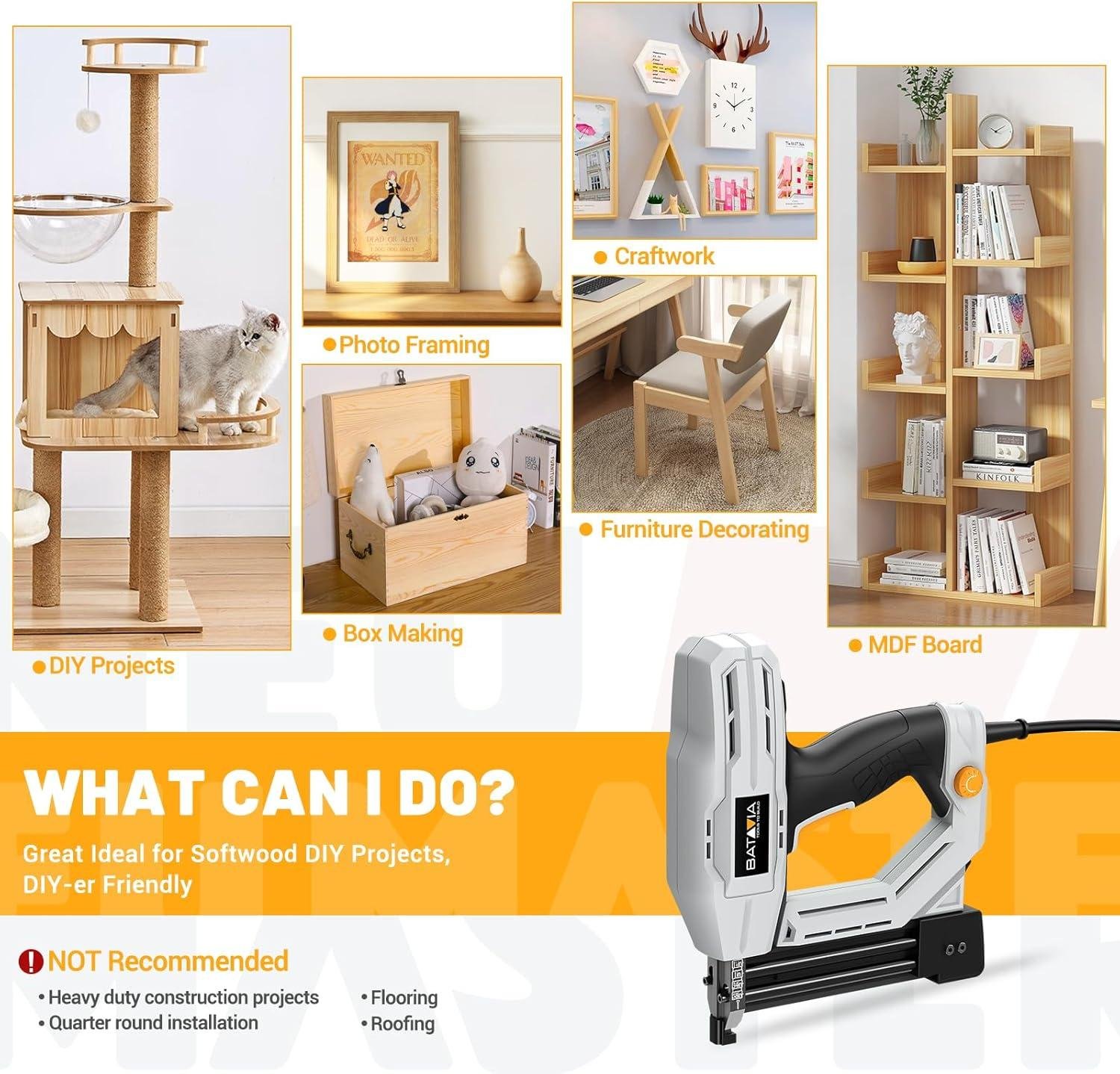
Tool Summary: The Batavia 2‑in‑1 120V corded electric nailer/stapler drives 18‑gauge brad nails from 5/8″ to 1‑1/4″ and 1/4″ narrow crown staples from 5/8″ to 1″. It’s compressor‑free, includes 800 nails and 200 staples, and stands out for its 1.6 lb lightweight body, adjustable power dial, non‑marring nose, and triple safety system. Customer feedback commonly praises the convenience and depth control, though a few users report inconsistent driving power or occasional “won’t seat fully” results on tougher stock.
Best For: Ideal for hobby woodworkers with small to medium projects,DIYers doing trim,picture frames,and upholstery,and beginners learning clean fastening without an air setup.
Consider Alternatives If: You work mostly with thick hardwoods, need 16‑ga strength, or do daily production work where higher consistency matters.
Final Assessment: The Batavia offers solid mid‑range versatility and safety for home-shop tasks, with real strengths in ease of use and finish protection—balanced by mixed reports on maximum drive power.
Want to see current pricing and customer photos? View on Amazon & Read More Reviews →