
Blog
AUSTOR Drum Sander Set Review: Right for Our Shop?


Ever tried sanding inside a tight curve,easing an edge in a boxed-in corner,or cleaning up a cutout where a sheet sander simply won’t fit—only to end up with chatter marks,uneven pressure,or a sleeve that slips at the worst moment? Small-detail sanding is where precision,control,and patience get tested,especially when we’re working in cramped shops and trying to balance tool quality against the budget.
The AUSTOR Aluminum Oxide Sanding Drum Set is a 132-piece rotary-tool accessory kit built for dremel-style tools, including 120 aluminum-oxide sleeves (120 grit) and 12 self-expanding rubber mandrels in 1/2″, 3/8″, and 1/4″ diameters, plus a storage box for institution.
In this review,we’ll look at what the set includes,how easy the mandrels are to tighten and swap,where thes sizes make sense in real woodworking,and who benefits most. We’ll also weigh customer feedback: many reviewers call it great value and say it works well, while others report mixed durability and occasional unraveling/slippage, especially under heavier pressure.
We come at this as woodworkers who regularly rely on rotary-tool sanding for detail work—and we’ll focus on helping you choose wisely.
Tool Overview and First Impressions of the Drum Set and Mandrels
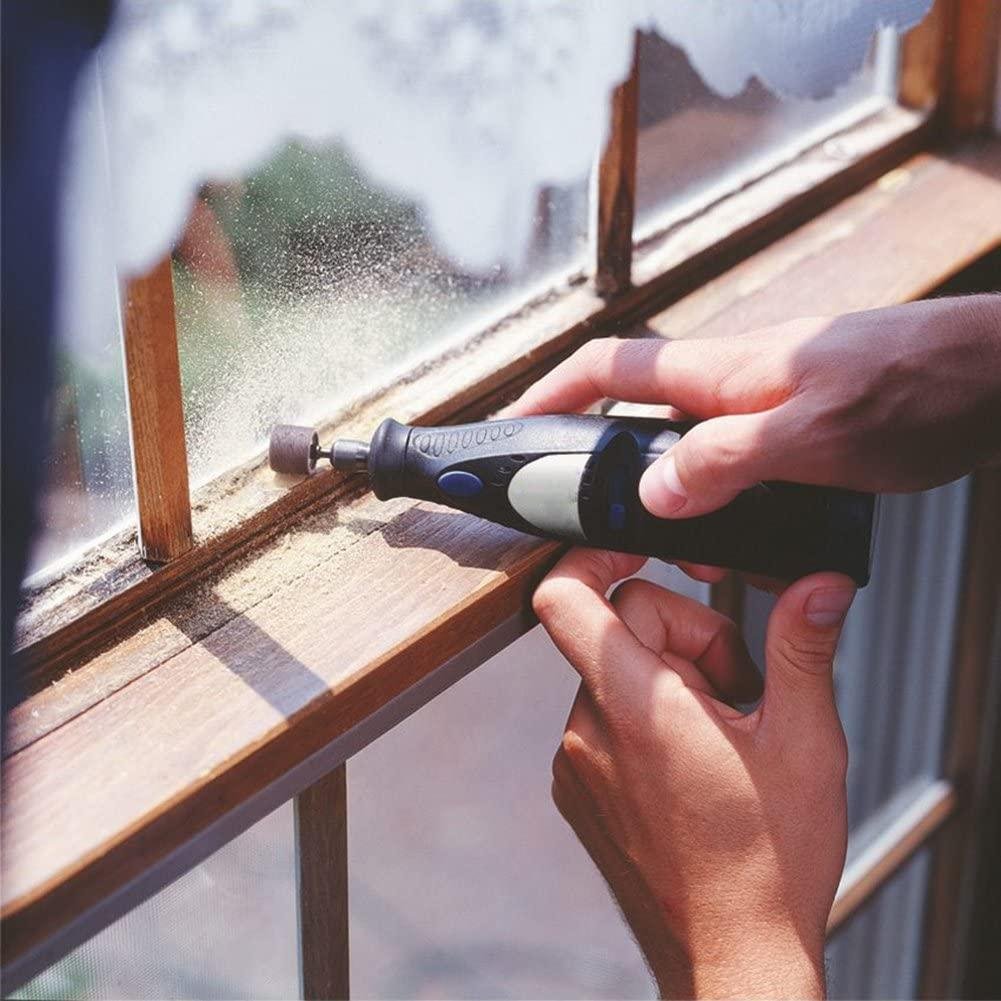
On the bench, this AUSTOR kit reads like a “stock-up and stop thinking about it” purchase: 132 pieces total—120 aluminum-oxide sanding sleeves plus 12 drum mandrels—packed into a free plastic storage box with compartments that make it easy to grab the diameter we want without dumping a pile onto the floor. The sleeves are all 120-grit (a practical middle grit for shaping and smoothing),and they come in three diameters: 1/2″,3/8″,and 1/4″ (40 sleeves per size). The mandrels match those sizes with four mandrels per diameter, using a self-expanding rubber cushion tightened by a small screw—exactly the style most of us recognize from Dremel-style drums. In the shop, that size spread matters: the 1/4″ drums reach into tight curves and small cutouts, while the 1/2″ drums are easier to control on broader inside radii and tend to run a bit steadier.
Our first impression is that this set is designed for everyday, small-area sanding on a Dremel/rotary tool, where sleeves are treated like consumables. That matches what customers keep saying: many call it “good value for money” and note it “works well with Dremel tools”, and several mention the sleeves are easy to swap by loosening the screw, sliding on the sleeve, and tightening until the band grips.At the same time, review themes around mixed quality and especially durability show up repeatedly—some users report sleeves that delaminate/unravel quickly or even fly off at speed, especially under heavy pressure or on harder materials.That’s a good reminder for woodworkers: use a light touch, keep the drum moving to avoid heat buildup, and always wear eye protection (multiple reviewers explicitly mention goggles because sleeves can “spit and fly off”). For skill level, we’d put this in the beginner-to-intermediate sweet spot: it’s simple to set up, but it rewards disciplined rotary-tool technique—gentle pressure, correct speed, and frequent sleeve changes—especially when refining inside curves, easing sharp edges, or cleaning up small joinery details.
- 120 sanding sleeves (aluminum oxide), 120 grit
- 40× 1/2″ sanding sleeves
- 40× 3/8″ sanding sleeves
- 40× 1/4″ sanding sleeves
- 12 drum mandrels with self-expanding rubber (4 per size: 1/2″, 3/8″, 1/4″)
- Plastic storage box with compartments
- Dremel rotary tools (and similar rotary tools that accept sanding drum mandrels)
- Drill press use (customers mention using it in a drill press for controlled sanding)
- Small screwdriver for mandrel screw tightening
- Inside curve sanding on small cutouts and templates
- Edge easing and quick chamfer softening where a block won’t fit
- Detail cleanup around joinery (light touch to avoid rounding corners)
- Scroll-sawn/fretwork smoothing and craft-scale parts
- Soft wood (reviewers report better performance on softer materials)
- Hard wood (usable with light pressure; expect faster wear)
- Plastic (customers mention decent results on softer materials like plastic)
- Aluminum (customers report it effectively works, but sleeves can wear quickly under pressure)
| Feature | AUSTOR Set (this kit) | What It Means in a Wood Shop |
|---|---|---|
| Total pieces | 132 (120 sleeves + 12 mandrels) | Good for high-consumption detail sanding; fewer “run to the store” interruptions. |
| Grit | 120 grit (single grit) | Best for smoothing/shaping; not aggressive stock removal, not fine finishing. |
| Drum diameters | 1/4″, 3/8″, 1/2″ | Covers most small radii; larger drums are typically easier to control. |
| Mandrels per size | 4 each | Convenient if we pre-mount sleeves or keep spares ready when one slips. |
| Accessory / Tool | Compatibility | Notes |
|---|---|---|
| Rotary tool (Dremel-style) | Yes | Customers repeatedly mention it “works well with Dremel tools.” |
| Drill press chuck | Frequently enough yes | Some reviewers report using it in a drill press for more control; keep speeds reasonable. |
| Other grits | No (not included) | This kit is 120-grit only; consider separate sleeves if you need coarser/finer steps. |
| Use Expectation | Recommended in Practice | What reviews Suggest Happens |
|---|---|---|
| Pressure | Light pressure, keep moving | Heavier pressure increases slipping and faster wear; some report quick unraveling. |
| Material removal rate | Moderate (120 grit) | Some customers warn it can “cut aggressively,” especially at higher speed. |
| Sleeve lifespan | Consumable (expect swaps) | Durability feedback is mixed; frequent reports of early delamination/fly-off, especially on metal. |
Check Current Price & Reviews on Amazon
real World Sanding Performance on Curves, Edges, and Small Joinery Cleanup

When we’re doing real-world cleanup on curves and edges—think easing a profile on a template-routed part or blending a small chamfer into a rounded transition—this AUSTOR kit is clearly aimed at the “rotary-tool sanding” niche rather than broad-panel finishing. The set comes with 120 sanding sleeves in three diameters—1/2″, 3/8″, and 1/4″ (40 of each)—plus 12 self-expanding rubber drum mandrels (4 per size) that tighten via a small screw. In practice, these small drums shine where a full-size sander can’t reach: inside tight radii, around curved cutouts, and along edges where we just need to knock down a whisker or remove a glue bead without changing the overall shape. Multiple customer review themes echo that: users like the variety of sizes, call the kit good value for money, and repeatedly mention it works well with Dremel-style rotary tools. For woodworking technique, we get the best control by using light pressure, keeping the drum moving, and “sneaking up” on our line—as a 120-grit drum at rotary-tool RPM can cut more aggressively than expected, which some reviewers also warn about.On edges and small joinery cleanup (box joints, half-lap shoulders, hinge mortises, and the inside corners of small cutouts), we treat these as a precision cleanup tool—not a substitute for chisels or a card scraper. The 1/4″ drum can get into small inside curves and relief areas, while the 1/2″ drum is easier to stabilize for gentle edge easing. Setup is straightforward: reviewers note they’re easy to swap—loosen the screw, slide on a sleeve, tighten—and that tip matches how we use them at the bench. The main caution is durability and safety. Customer feedback is mixed on quality, with a strong theme that sleeves can delaminate/unravel and in some cases fly off, especially when pushed hard or used on tougher materials; several reviewers explicitly recommend eye protection. For that reason, we keep pressure light, avoid “hogging” material on hardwood edges, and replace sleeves as soon as they start loosening. Used that way, this kit is most appropriate for hobbyists and small-shop woodworkers who want an inexpensive way to handle curved sanding and quick joinery touch-ups—while accepting that the sleeves are consumables and may not match premium durability.
- 120 sanding sleeves: 1/2″, 3/8″, 1/4″ diameters (40 each)
- 12 drum mandrels: 4 per size with self-expanding rubber cushion
- Free plastic storage box
- 120 grit sleeves (per product description)
- Dremel rotary tools (per reviews and product positioning)
- Other rotary tools with compatible mandrel/shank sizing (users report “global” fit)
- Drill press use (some reviewers report success using it this way—use caution and low pressure)
- Template work: smoothing inside radii after routing
- small joinery cleanup: glue squeeze-out removal and corner blending
- Edge easing on small parts, trim, and crafts
- Scroll-sawn or cutout parts needing inside-curve sanding
- Soft woods (reviewers note better results on softer material)
- Plastic (reviewers report it works adequately)
- Mixed results on harder materials (durability complaints increase as materials get tougher)
| Spec / Feature | AUSTOR Drum Set (This Kit) | Why It Matters in woodworking |
|---|---|---|
| Sleeve diameters | 1/4″, 3/8″, 1/2″ (40 each) | Smaller drums reach tighter curves; larger drums are easier to control on edges. |
| Grit | 120 grit | Good “cleanup grit” for shaping and smoothing; not a final finish on show surfaces for most woods. |
| Mandrels | 12 total, self-expanding rubber | Having multiples reduces downtime; rubber expansion is what keeps sleeves tight—tighten securely. |
| best-use focus (from reviews) | Value + variety, works with Dremel; durability mixed | Great for occasional/small sanding tasks; plan on sleeves being consumable and wear eye protection. |
| Accessory / Bit Type | Compatibility | Notes for Shop Use |
|---|---|---|
| Rotary-tool sanding drum sleeves | Included (1/4″, 3/8″, 1/2″) | Keep a few sleeves pre-staged for quick swaps when doing repetitive edge cleanup. |
| Drum mandrels | Included (matching sizes) | Ensure the screw is snug; several reviewers mention sleeves can slip or fly if not tightened well. |
| Other Dremel accessories | Works alongside (not included) | Pair with burrs/cutters for shaping, then switch to the 120-grit drum for refinement. |
| Use Case | Recommended “Capacity” | What Customers Actually Report |
|---|---|---|
| Curves/edges in wood | Light passes, keep moving, minimal pressure | Works well for small areas; sleeves are consumable; value praised. |
| Small joinery cleanup | feather touch; avoid hard inside corners | Good control in tight spots; aggressive cutting if pushed. |
| Hard materials / heavy removal | Not ideal; use purpose-built abrasives | Many reports of quick wear, delamination, and occasional sleeves flying off. |
Read All Woodworker Reviews on Amazon
Key Features woodworkers Will Appreciate in Grit Variety, Fit, and Compatibility

In our shop,the big appeal of this AUSTOR set is the practical spread of sizes and the fact that it’s a straightforward,“grab-and-go” consumable kit for a rotary tool. You get 132 total pieces, built around 120 aluminum oxide sanding sleeves and 12 drum mandrels, all in a small storage box.The sleeves are all 120 grit (a common “middle” grit that leans toward shaping and smoothing rather than final finish), and they come in three diameters: 1/2″, 3/8″, and 1/4″—40 sleeves per size. That diameter variety matters in woodworking because it determines where we can physically reach: 1/4″ sneaks into tight inside curves, small cutouts, and carved details, while 1/2″ is easier to control on broader radii and tends to run a little more stable. Customers repeatedly echo that this set is a “great value for the money” and that it “works great exactly what I was looking for” on small tasks—especially where a full-size sander can’t fit.
Fit and compatibility are where we recommend woodworkers pay attention, because reviews are mixed. The mandrels use a self-expanding rubber cushion with a screw to clamp the sleeve, and multiple buyers mention they’re “wonderfully easy to swap out”—loosen the screw, slide the sleeve on, tighten, and go. That said, several reviewers also warn that sleeves can “fly dangerously off” or unravel quickly if they aren’t tightened enough, if we push too hard, or if we run them aggressively on harder materials. We also see the common complaint that “the mandrills are too big in diameter” for certain sleeves/tools, so checking your rotary tool’s collet/shank compatibility and doing a quick test fit before starting a piece is smart. From a technique standpoint, we get better control (and longer sleeve life) by using lighter pressure, keeping the drum moving, and letting RPM do the cutting—plus wearing proper eye protection as the product notes and reviewers stress. This kit makes the most sense for hobby-to-intermediate woodworkers who need an affordable supply for detail sanding, not those expecting premium sleeves for heavy stock removal on dense hardwoods.
- 120 sanding sleeves (120 grit): 40 × 1/2″, 40 × 3/8″, 40 × 1/4″
- 12 sanding drum mandrels: 4 × 1/2″, 4 × 3/8″, 4 × 1/4″
- Plastic storage box (compartment style)
- Dremel rotary tools (commonly reported by customers)
- Other mini rotary tools (customers describe them as “universal” fit, but verify your shank/collet)
- Drill press use (reported by at least one reviewer; requires secure setup and careful technique)
- Inside curves and cutouts (scrollwork, brackets, small openings)
- Edge easing and shaping on small parts and crafts
- Detail sanding where larger sanders can’t reach
- Soft woods (reviewers note better results on softer materials)
- Hardwoods (usable for light shaping, but expect faster wear at 120 grit)
| Feature | what’s Included | Why Woodworkers care |
|---|---|---|
| Grit options | 120 grit only | Good “all-purpose” for shaping/smoothing; not a full progression for finish sanding. |
| Sleeve diameters | 1/4″, 3/8″, 1/2″ | Smaller drums reach tight radii; larger drums are easier to control and cover more area. |
| Mandrels | 12 total (4 per size) | less downtime—keep multiple sizes ready instead of constantly swapping hardware. |
| Accessory / Setup | Compatibility Notes |
|---|---|
| Rotary tool (Dremel-type) | Commonly reported as a good fit; verify collet size and mandrel shank before buying. |
| Safety glasses | Strongly recommended—reviews mention sleeves can “fly off,” especially if over-pressured. |
| Small screwdriver | Needed to loosen/tighten the mandrel screw for quick sleeve changes. |
| Task Expectation | Recommended Use | What Reviews Suggest Happens in Practice |
|---|---|---|
| Light detail sanding on wood | Short passes, moderate RPM, keep moving | Generally “work well,” especially on small areas; considered good value. |
| Aggressive hogging / heavy pressure | Avoid; step up to heavier-duty abrasives | More reports of slippage/unraveling and faster wear. |
See Full Specifications & Customer Photos
Ease of Use for Beginners and Experienced Woodworkers Plus Workshop storage and Value

For day-one beginners, this AUSTOR kit is about as close as we get to “open the box and start shaping” with a rotary tool: the set includes 120 aluminum-oxide sanding sleeves in 120 grit and 12 self-expanding rubber drum mandrels, so we can match the drum size to the curve or cavity we’re working on without hunting for extra hardware. The sleeves come in three diameters—1/2″,3/8″,and 1/4″ (40 of each),which is exactly the range we reach for when sanding inside drilled holes,easing small roundovers,cleaning up tight joinery corners,or fairing curved parts where a block or ROS can’t fit. Setup is straightforward: loosen the mandrel screw, slide on the sleeve, then tighten so the rubber expands—one customer noted they’re “wonderfully easy to swap out” with “a small screwdriver.” For experienced woodworkers, the practical takeaway is technique: these drums can “cut very aggressively,” so we get better control by using a lighter touch, keeping the drum moving, and letting the grit do the work—especially at higher rotary-tool speeds. Safety matters here more than usual; multiple reviewers mention sleeves that “fly” or “unravel,” so we should treat them like any high-RPM consumable and wear proper safety glasses (as the product note also warns), avoid side-loading the sleeve, and re-tighten the screw after the first few seconds of use.
On storage and value, the included free plastic box is genuinely useful in a woodworking shop as it keeps all three sizes separated and prevents the sleeves from getting crushed in a drawer—handy when we’re swapping grits/sizes mid-task (even though this kit is single-grit: 120). Customers consistently praise the set as “a lot…for the price” and “good value for money,” and that tracks with how we’d actually use it: as a bulk supply for detail sanding where sleeves are expected to wear out. The big caution is durability—reviews are mixed on quality, and many report the drums “fall apart quickly,” sometimes lasting only “10–30 seconds” under heavy pressure or on harder materials; one reviewer frames it fairly as “a consumable product.” In practice, that means we’d keep this kit around for small wood cleanup and quick shaping, but if we’re doing sustained heavy grinding (or pushing hard on metal), we should expect faster sleeve consumption and more frequent changes. There’s also mixed feedback on sizing, with some noting the mandrels can feel too large in diameter for certain sleeves/spaces—so we’ll want to test-fit before committing to a delicate area on a project.
- Included accessories: 120 sanding sleeves (120 grit), 12 drum mandrels, 1 plastic storage box
- Compatible attachments/accessories: Dremel and similar rotary tools (standard mandrel-style drum sanding); some users also report use in a drill press (with appropriate speed control and guarding)
- Ideal project types: detail sanding on small wood projects, smoothing curved edges, cleaning tight recesses, shaping small parts, touch-ups after carving/scroll work
- Wood types tested by customers: customers commonly mention soft wood performance positively; durability complaints increase on harder materials (and especially metal)
| Spec / Feature | AUSTOR Drum Set | Why It Matters in the Shop |
|---|---|---|
| Total pieces | 132 (120 sleeves + 12 mandrels) | Bulk consumables mean less downtime when sleeves wear or delaminate. |
| Grit | 120 grit | Good for smoothing and light shaping; not a heavy hogging grit and not final-polish fine. |
| Sleeve diameters | 1/2″, 3/8″, 1/4″ | Smaller drums reach tighter radii and holes; larger drums are easier to control. |
| Mandrel type | Self-expanding rubber | Proper tightening reduces slip; re-check tightness for safety at high RPM. |
| Storage | Plastic organizer box | Keeps sleeves sorted and prevents damage—more usable pieces in the long run. |
| Accessory / Bit Type | Included? | notes |
|---|---|---|
| 1/4″ sanding drum sleeves | Yes (40) | Best for tight inside curves and small holes. |
| 3/8″ sanding drum sleeves | Yes (40) | General-purpose size for small shaping and smoothing. |
| 1/2″ sanding drum sleeves | Yes (40) | Easier control; can last longer with lighter pressure. |
| matching mandrels (1/4″, 3/8″, 1/2″) | Yes (4 each) | Multiple mandrels reduce swap time when changing sleeves. |
| Other grits | No (single grit) | If we need a sanding “progression,” we’ll add finer/coarser sleeves separately. |
| use Case | Recommended Approach | Real-World Notes from Reviews |
|---|---|---|
| Detail sanding on wood | Light pressure,keep moving,moderate RPM | Many say they “work well” and are “handy” for small areas. |
| Aggressive removal / hard material | Even lighter pressure, short passes, expect faster sleeve changes | Durability complaints spike; some report sleeves “fly off” or “delaminate” quickly. |
| Extended sanding sessions | Plan on sleeves as consumables; keep spares at hand | Common theme: great quantity/value, mixed quality, frequent replacements. |
See Full Specifications & Customer Photos
Customer reviews Analysis

What Woodworkers Are Saying (Review Analysis)
1. Overall sentiment from woodworking customers
sentiment is mostly positive on value and versatility, with woodworkers (and other makers) repeatedly emphasizing that you get a lot of sleeves/mandrels for the price and that the kit helps tackle small, detailed sanding tasks. The biggest split in feedback is around durability and safety under tougher loads—some users find the sleeves hold up well for hobby work, while others report fast wear, delamination, or sleeves flying off, especially when pushed hard or used on metal.
2. Performance feedback (accuracy,power,results)
Common praise includes strong day-to-day sanding performance for small work and hard-to-reach areas:
- Sanding results: Several users said the drums “work well” and help them finish small projects faster,particularly where larger sanding tools can’t reach. One reviewer called them the “best sander for small wood projects” as they can get into tight areas.
- Size options: Multiple reviews highlight the variety of drum sizes as a real advantage for precision work (e.g., fitting into spaces where the stock Dremel drum was too large).
- Under load: Some users reported slippage or rapid grit loss when they applied heavy pressure—one noted they “burned through them pretty quick” during aggressive material removal, but durability improved with lighter pressure and more movement.
3. Build quality and durability observations
Durability feedback is mixed and appears to depend heavily on material and how aggressively the drums are used.
- Better for wood/soft materials: Some users reported the sleeves are “adequate” or “work decently” on soft wood and plastic,and that the kit is a good “hobby” option.
- wear and consumable expectations: Several reviewers frame these as consumables that wear out fairly quickly—acceptable given the quantity.
- Failures reported: Some users reported sleeves delaminating/splitting or “spit and fly off the tool,” especially when sanding harder materials. One reviewer specifically criticized quality, saying they “fall apart when used on metal or harder items.”
- Longevity counterpoint: A longer-term review (nearly two years of frequent use) claimed the bands held up well on both wood and metal and that they still had plenty left—suggesting quality consistency may vary by batch or usage style.
4. Ease of use for different skill levels
- Beginners/DIYers: Beginners and casual DIYers generally appreciated the straightforward sleeve swap process (loosen screw → sleeve on → tighten). Several mentioned how quick it is to change sleeves and keep moving.
- More experienced users: Experienced users tended to comment on control and tool setup, including preferring larger drums for stability and control. One reviewer wished the kit included a 3/4″ option, noting larger drums can be easier to control and may last longer.
- safety habits: Some users explicitly mentioned using goggles because sleeves can come off at speed—an ease-of-use “reality” of rotary sanding when sleeves aren’t perfectly secured or are overstressed.
5. Common project types and success stories
Even though not all reviews are woodworking-specific, customers successfully used this for detail sanding and small-form shaping tasks that translate well to woodworking:
- Small wood projects & detail work: Several reviewers mentioned using the set for “small wood projects” and getting into tight areas they previously couldn’t.
- Furniture/refinishing crossover: One user described using it to restore furniture (paired with detail sanding and smoothing).
- Mixed-material shop tasks: Users also reported shaping/sanding aluminum and doing general DIY polishing—useful context for woodworkers who also do hardware fitting,tool restoration,or shop jigs.
6. Issues or limitations reported
Some users reported challenges with durability,consistency,and kit completeness:
- sleeves flying off / safety concerns: A recurring negative theme is sleeves occasionally coming loose and flying off,especially under heavy pressure or on harder materials.Users stressed eye protection.
- Fast wear under aggressive use: Multiple reviews note the sleeves can wear out quickly if you “hog off” material or bear down hard.
- Not ideal for metal/hard materials: Several users specifically warned that using these on metal can cause splitting/delamination and frustration—though some had better luck on aluminum than steel.
- Kit/content inconsistencies: One buyer reported receiving fewer sleeves than advertised and inconsistent sleeve lengths (they did note the product was still usable and customer service handled the complaint).
- Grit limitations (per some users): At least one review mentioned it felt like “just one grit” for their set/job, even though others stated multiple grits—again suggesting listing variation, pack variation, or user confusion.
Summary Table (Woodworker-style takeaways)
| aspect | Common Feedback |
|---|---|
| Performance | Good for tight-area sanding and small projects; works best with moderate pressure and steady movement |
| Precision | Size variety helps fit into small spaces; control improves with larger drums (some want a 3/4″ option) |
| Durability | Mixed—fine for soft wood/plastic; faster wear, splitting, or delamination reported on harder materials |
| Ease of Use | Generally easy sleeve swaps; beginners like the straightforward setup |
| Versatility | Used across wood, plastic, and some metal tasks; broad mandrel/sleeve assortment is a plus |
| Value | Frequently praised—“a lot of tools for the price,” frequently enough seen as a cost-effective option to name-brand drums |
| Limitations | Occasional slippage/fly-offs, fast wear under heavy pressure, and one report of missing pieces |
If you want, I can rewrite this section in a more “shop talk” tone (shorter sentences, more practical recommendations) or tailor it specifically to wood-only use cases (softwoods vs hardwoods, spindle sanding edges, inside curves, etc.).
Pros & Cons
Pros & Cons
| what We Noticed in the Shop | Pros | Cons |
|---|---|---|
| Kit size (132 pieces) | We get a “grab-and-go” stash that can cover a lot of little jobs without reordering. | So many sleeves can feel like overkill if we only sand occasionally. |
| included sizes | Three diameters (1/4″, 3/8″, 1/2″) make it easier for us to reach tight spots and curves. | Fit can be finicky—some users report mandrels feeling “too big” for certain sleeves/tools. |
| Grit choice | 120 grit is a practical “middle ground” for smoothing and cleanup work. | It’s basically a one-grit kit—if we want rough shaping or fine finishing, we’ll need other sleeves. |
| Storage | the included plastic box keeps our consumables from becoming a drawer mystery. | Plastic organizers are handy, but not always the most rugged long-term. |
Pros
- High piece count for the price: for everyday sanding and “use it up” tasks, we like having a deep bench of replacement sleeves.
- Works with Dremel-style rotary tools: in general, the set is designed for the tools we already use, so setup is straightforward.
- Three drum diameters: the 1/4″, 3/8″, and 1/2″ options give us flexibility—small drums for detail work, larger drums for steadier control.
- Quick sleeve swaps: The self-expanding rubber mandrels make changing sleeves a fast pit stop instead of a full tool teardown.
- Good for light-duty materials: for soft wood, plastics, craft projects, and general shaping, this kind of kit can be genuinely convenient.
Cons
- Durability is the biggest question mark: A recurring theme in customer feedback is sleeves unraveling or delaminating quickly—sometimes within minutes (or seconds) under tougher use.
- Performance can drop fast on metal: On harder materials, we may burn through sleeves quickly, which turns “cheap per sleeve” into “constant swapping.”
- Potential safety nuisance: Some reviewers mention drums flying apart; that means we should treat eye protection as non-negotiable and keep pressure/speed in check.
- Fit consistency can vary: Mixed feedback suggests some sleeves or mandrels may not feel perfectly matched every time, especially across different rotary tools.
- Not a full sanding system: With primarily 120 grit, we’ll still want a broader grit range if we’re chasing specific finishes.
Our takeaway: In our shop, this set reads like a “bulk consumables” buy—great when we want lots of sleeves on hand for light-to-medium tasks, less convincing if we need heavy-duty longevity or consistent performance on metal.
Q&A

What wood types can this handle effectively (softwoods vs. hardwoods)?
These 120‑grit aluminum oxide sleeves work best for typical rotary-tool sanding jobs on softwoods (pine,cedar,poplar) and for light shaping/refining on hardwoods (oak,maple,walnut). On dense hardwoods, you’ll get better results using a lighter touch and keeping the drum moving—customer feedback suggests the sleeves can wear quickly or even unravel if you lean on them too hard. Think “detail sanding and shaping,” not heavy stock removal.
Is this powerful enough for hardwoods like oak or maple?
The set itself doesn’t add power—your Dremel/rotary tool does. With a typical Dremel,it’s capable of sanding oak/maple for small areas (roundovers,inside curves,joinery touch-ups),but it’s not a substitute for a belt sander or spindle sander. Reviews frequently mention aggressive cutting, but also mixed durability, so hardwood use is doable—just plan on using multiple sleeves and avoid high pressure that can cause slipping or delamination.
How does it perform on plywood,veneers,and edge banding?
It can work well for plywood edges,small void clean-up,and trimming/sanding edge banding flush—especially because you get three small diameters (1/2″,3/8″,1/4″) for tighter spots. The limitation is control: a drum sander on a rotary tool can eat through veneer fast. Use a lower speed, very light pressure, and short passes to avoid sanding through the face veneer or burning the glue line.
Can this handle production work or just hobby projects?
This kit is primarily “hobby/consumable” oriented: you get 120 sleeves and 12 mandrels (4 per size),which reviewers often call a great value because you can swap sleeves quickly. However, durability is a common complaint—some customers report sleeves coming apart quickly—so for production work you may find downtime (and sleeve use) higher than with premium brands. for repetitive daily use, many woodworkers keep sets like this for rough/detail jobs and reserve higher-quality sleeves for critical work.
How difficult is the initial setup, and how do you change sleeves?
Setup is straightforward: slide the sanding sleeve over the rubber drum mandrel, then tighten the mandrel’s screw so the rubber expands and grips the sleeve. Multiple reviewers mention it’s “wonderfully easy to swap out” with a small screwdriver. Practical tip: tighten firmly and re-check after the first few seconds of sanding—several users report occasional sleeve slippage when applying heavy pressure.
Does this work with standard Dremel/rotary-tool accessories and collets?
These are designed for Dremel-style rotary tools and are commonly reported to work well with Dremel units.Having mentioned that, some reviews mention fit issues (mandrels feeling “too big” or certain pieces not fitting), which usually comes down to your tool’s collet size and the shank diameter of the mandrel. If your rotary tool uses different collets, confirm you have the correct collet/chuck to match the mandrel shank before buying.
do I need special dust collection, and is it safe to use indoors?
No special dust collection is required, but sanding drums throw dust in a concentrated stream—especially in small, enclosed sanding areas.Reviews specifically warn about pieces “flying off” at speed,so wear eye protection at minimum (the product notes also call this out).For indoor use, a shop vac hose held near the work, a small benchtop hood, or sanding near an air filter helps a lot, and a respirator is smart for MDF/plywood dust.
Is this suitable for beginners, and what’s the learning curve?
Beginners generally do fine as the system is simple (tighten screw, sand), and the included case keeps sizes organized. The main learning curve is control and pressure: these drums can cut aggressively, and pushing hard can cause faster wear or sleeve failure. start at a moderate speed, use two hands for control, and practice on scrap—especially if you’re sanding near edges, veneer, or small parts.
Is it worth the price compared to Dremel-branded sanding drums?
Based on review sentiment, many buyers consider it strong value because you get a lot of sleeves (120) and multiple mandrels (12) in three sizes plus a storage box.The tradeoff is consistency: quality and durability feedback is mixed, with a significant number of users reporting sleeves that unravel or wear out very quickly. If you want inexpensive drums for occasional detail sanding (and don’t mind swapping sleeves), it’s a good fit; if you want maximum lifespan and fewer mid-task failures, higher-end sleeves are often the better long-term choice.
Embody Excellence
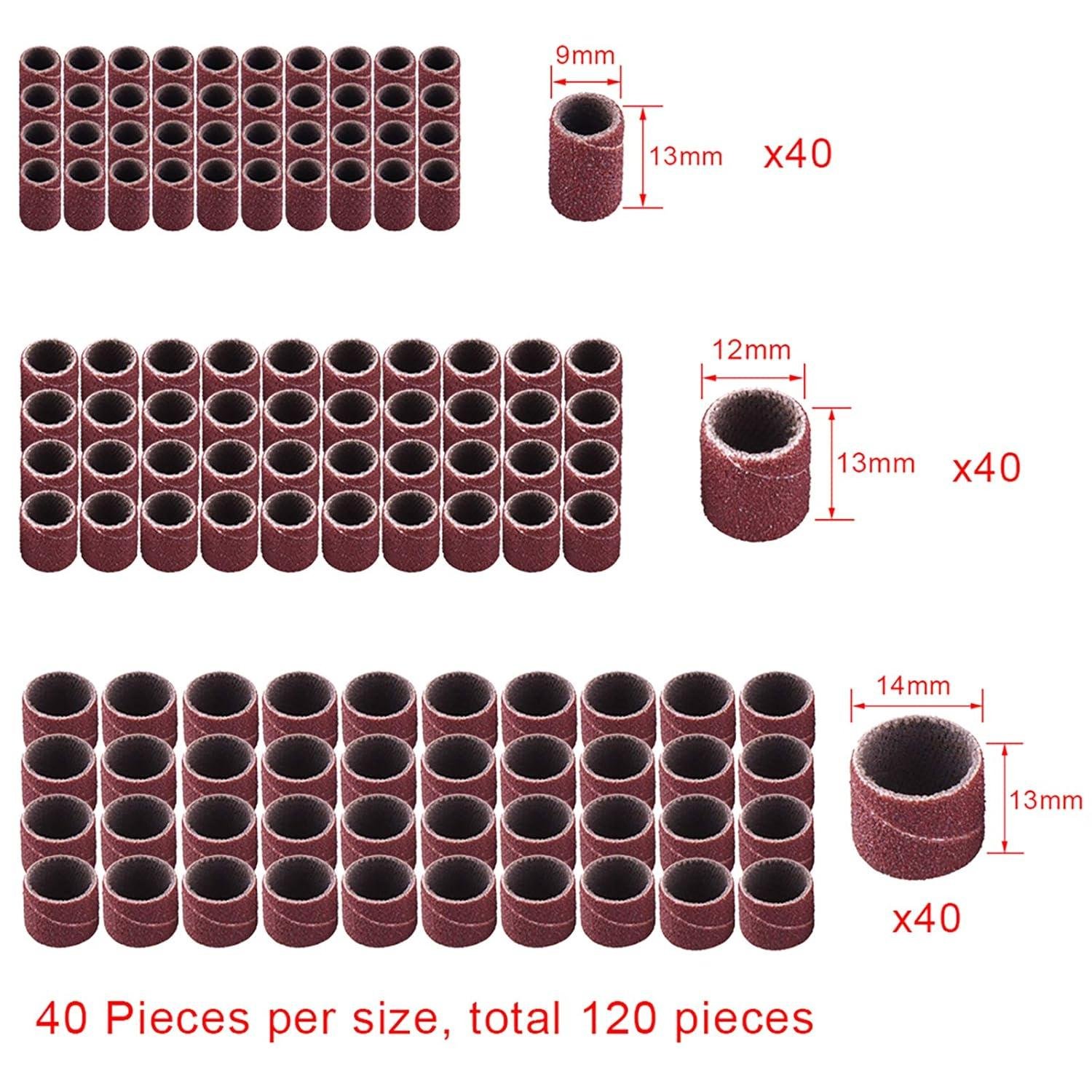
The AUSTOR Aluminum Oxide Sanding Drum Set is a 132-piece accessory kit built for Dremel-style rotary tools, including 120 sleeves in 120-grit (40 each in 1/2″, 3/8″, and 1/4″) plus 12 self-expanding rubber mandrels and a storage box. In reviews,customers consistently highlight strong value for money,handy size variety,and easy sleeve changes,but quality and durability are mixed—some sleeves can delaminate or fly off quickly,and a few users note mandrels that feel oversized.
Best for hobby woodworkers with small to medium projects—rounding edges, cleaning up routed profiles, smoothing tight curves, and detail sanding where larger sanders can’t reach. It’s also a good choice for beginners learning rotary-tool control without burning through premium consumables.
Consider alternatives if you need daily, production-level durability, frequently sand dense hardwoods aggressively, or want multiple grits and tighter quality control.
it’s a solid budget kit for light-duty shaping and cleanup—just use eye protection and expect sleeves to be consumables.
Want to see current pricing and customer photos? View on Amazon & Read More Reviews →