
Blog
BOW EVA Featherboard Review: Right for Our Table Saw?

Ever dial in a table-saw fence perfectly, only to watch a board drift mid-cut, chatter against the fence, or threaten kickback right when the cut matters most? Those small wiggles can turn “close enough” into gaps, burn marks, and wasted stock-especially in tight shops where we don’t have room for elaborate jigs on every setup.
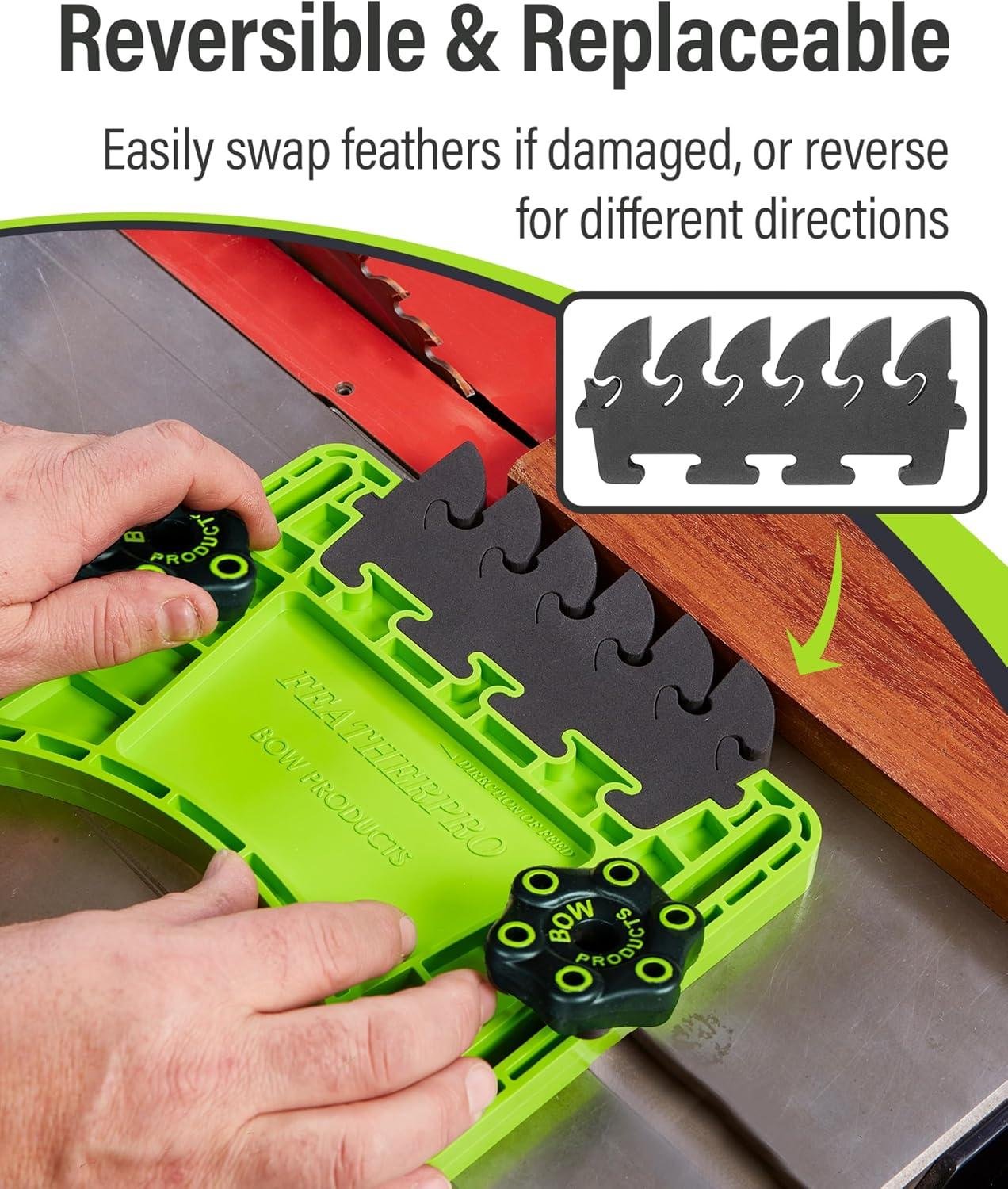
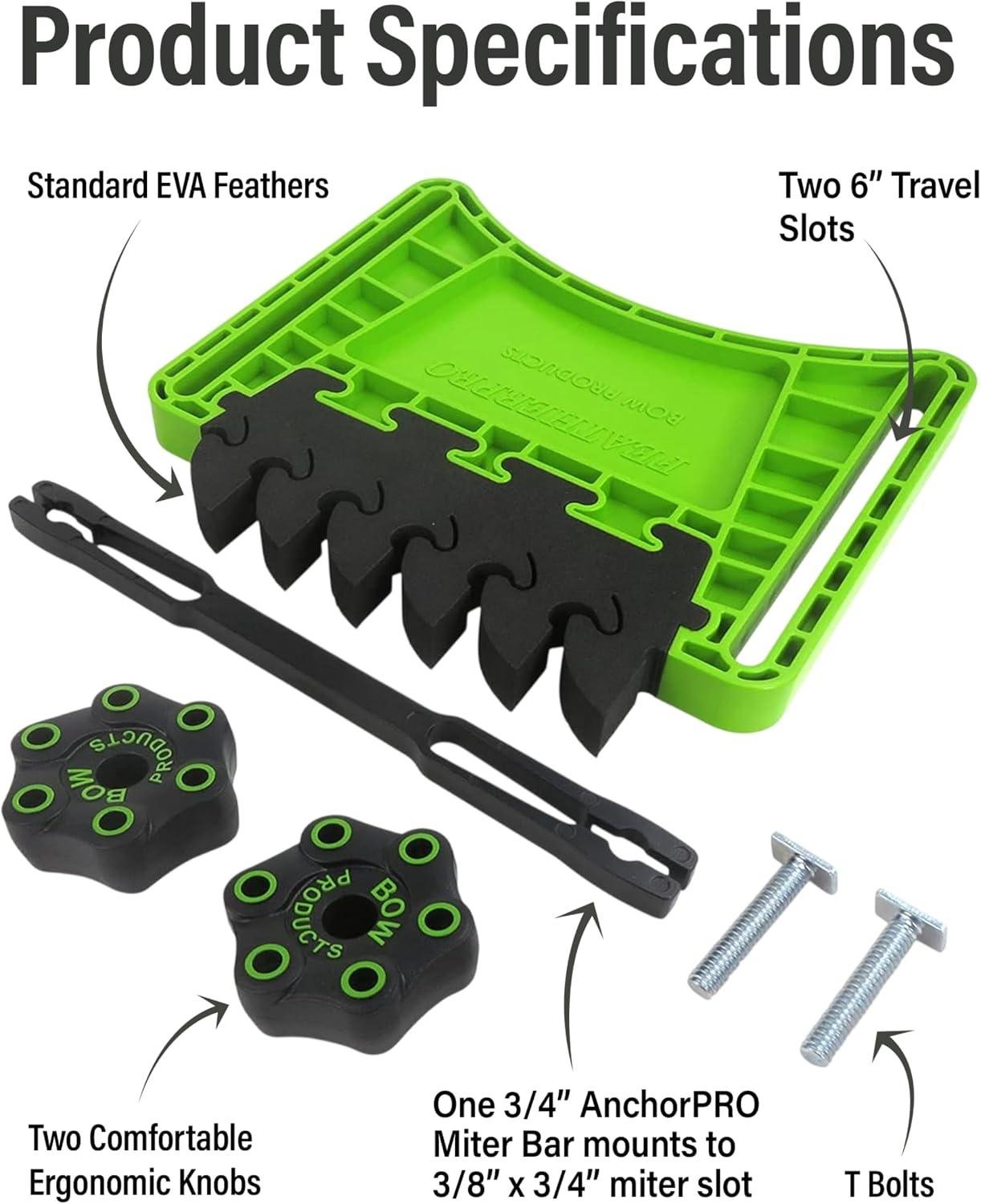
That’s where the BOW Products EVA Featherboard aims to help. It’s a pressure-and-control accessory designed for table saws, router tables, and band saws, using closed-cell EVA foam and a “living hinge” feather design for what BOW calls 5X kickback resistance versus rigid styles. It also includes an AnchorPRO 3/4″ expansion miter bar, dual 6″ travel slots, and tool-free adjustment knobs, plus replaceable, reversible, non-marring feathers that won’t scratch softwoods-and are designed to be blade/SawStop friendly on accidental contact.
In this review, we’ll break down the key features, durability cues, setup flexibility across common miter slots and T-tracks, and what customers report about stability and ease of use-so we can decide who it’s best for and whether it justifies the price. We’ve spent years around table saws and router tables, and we know how much safer, cleaner cuts often come down to consistent workpiece control.
Tool Overview and First Impressions in the Shop
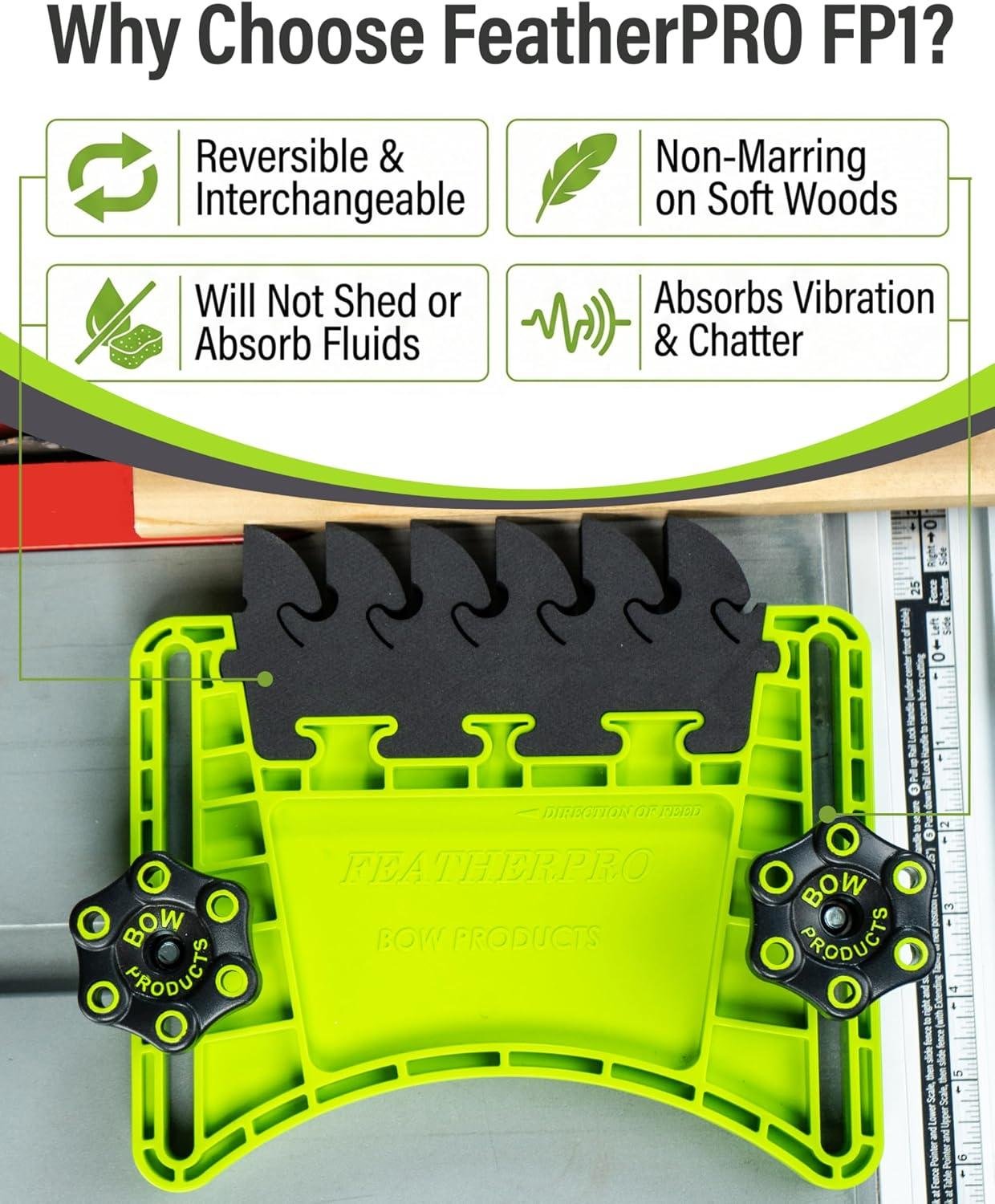
Out of the box, the BOW Products EVA Featherboard immediately feels like it was designed for real shop abuse-not just a “nice idea” accessory. The standout is the closed-cell EVA feather face paired with an innovative living-hinge design, which is marketed at 5X greater maximum resistance than rigid plastic/wood styles. In practical terms, that’s the kind of compliance that helps keep stock tight to the fence without the “board hop” we often see during narrow rips or light router passes. We also appreciate that the feathers are non-marring and reversible/replaceable; several customer review themes echo that it’s gentler on soft woods and that setup is tool-free and quick once you understand the knob-and-slot layout. For shops running a SawStop, the brand specifically notes it won’t trigger the system and won’t damage carbide blades on accidental contact-still, we treat any featherboard as a positioning aid, not a substitute for proper blade/bit clearance and good feed control.
First impressions in the shop are that this system is more “universal” than the typical single-track featherboard, thanks to the included AnchorPRO 3/4″ miter bar that expands to lock into standard U- and T-shaped miter slots, plus the dual 6-inch extended travel slots for wide positioning range. The hardware is clearly specced for common woodworking standards: you get two 1-1/2″ T-bolts (5/16″-18) that fit 1/4″ to 3/4″ T-tracks, which matters if we’re moving the featherboard between a table saw, router table fence track, and a band saw table in the same afternoon. Reviewers frequently mention a solid hold once tightened and that the EVA face contributes to a smoother, chatter-free glide on feed-especially helpful when we’re trying to keep consistent pressure during longer rips. Educationally, it’s worth remembering: we set a featherboard so it applies firm sideways pressure before the cutter (never directly in line with it), and we keep the “feathers” flexed just enough to guide stock-too much preload can increase burning on dense hardwoods and can make feeding feel unsafe.
- Included accessories
- EVA Featherboard body with replaceable/reversible EVA feathers
- AnchorPRO 3/4″ expanding miter bar
- (2) 1-1/2″ T-bolts with 5/16″-18 thread
- Tool-free adjustment knobs (integrated hardware)
- Compatible attachments/accessories
- 1/4″ to 3/4″ T-tracks (fence tracks, router table tops, jigs)
- Standard U- and T-slot miter slots (using the 3/4″ bar)
- Aftermarket/extra replaceable EVA feathers (when available)
- Ideal project types
- Repeatable table saw ripping (especially narrow or thin stock)
- Router table edge profiling and light joinery passes
- Band saw resawing support to reduce drift from inconsistent pressure
- Small-batch parts where consistent fence pressure improves repeatability
- Wood types tested by customers (common review mentions)
- Softwoods (praised for non-marring contact)
- Hardwoods (noted for improved control; preload must be tuned to avoid burn)
- Plywood and sheet-good strips (helpful for keeping edges tight to the fence)
| Spec / Feature | What it is | Why it matters in the shop |
|---|---|---|
| Feather material | Closed-cell EVA foam | Smoother feed feel; helps damp vibration; less likely to mar delicate stock. |
| Kickback resistance claim | 5X greater maximum resistance (brand claim) | More compliant pressure can hold stock more consistently than rigid styles (still not a replacement for safe technique). |
| Miter slot hardware | 3/4″ AnchorPRO expanding miter bar | Better fit in worn/variable slots; reduces shifting during a cut. |
| T-track fit range | 1/4″ to 3/4″ | Makes it more likely to work across different fences, router tables, and jigs. |
| Adjustment travel | Dual 6″ extended travel slots | Easier positioning for different fence distances and stock widths. |
| Fasteners | (2) 1-1/2″ T-bolts, 5/16″-18 | Common thread standard; sturdier clamping than small plastic knobs seen on budget options. |
| Accessory / Interface | Compatible Spec | Typical Placement |
|---|---|---|
| Miter slot | 3/4″ (U- and T-shaped slots) | Table saw top, band saw table |
| T-track | 1/4″-3/4″ | Router table fence/top tracks, aftermarket table saw fences |
| T-bolts | 5/16″-18 | Clamping points for positioning/lockdown |
| Use Case | Recommended Setup (Best Practice) | What this tool supports |
|---|---|---|
| Table saw ripping | Featherboard before the blade, slight preload, use push sticks | EVA face helps maintain steady fence pressure; quick repositioning via travel slots. |
| Router table edging | Use fence + featherboard to keep stock flat and tight; multiple light passes | Non-marring contact is helpful on show faces; tool-free adjustment speeds repeats. |
| Band saw resawing | Guide stock to fence without forcing; confirm blade tracking and tension first | Expanding miter bar can lock into the slot to stabilize infeed pressure. |
See Full Specifications & Customer Photos
Real World Performance on Table Saws Router Tables and Band Saws
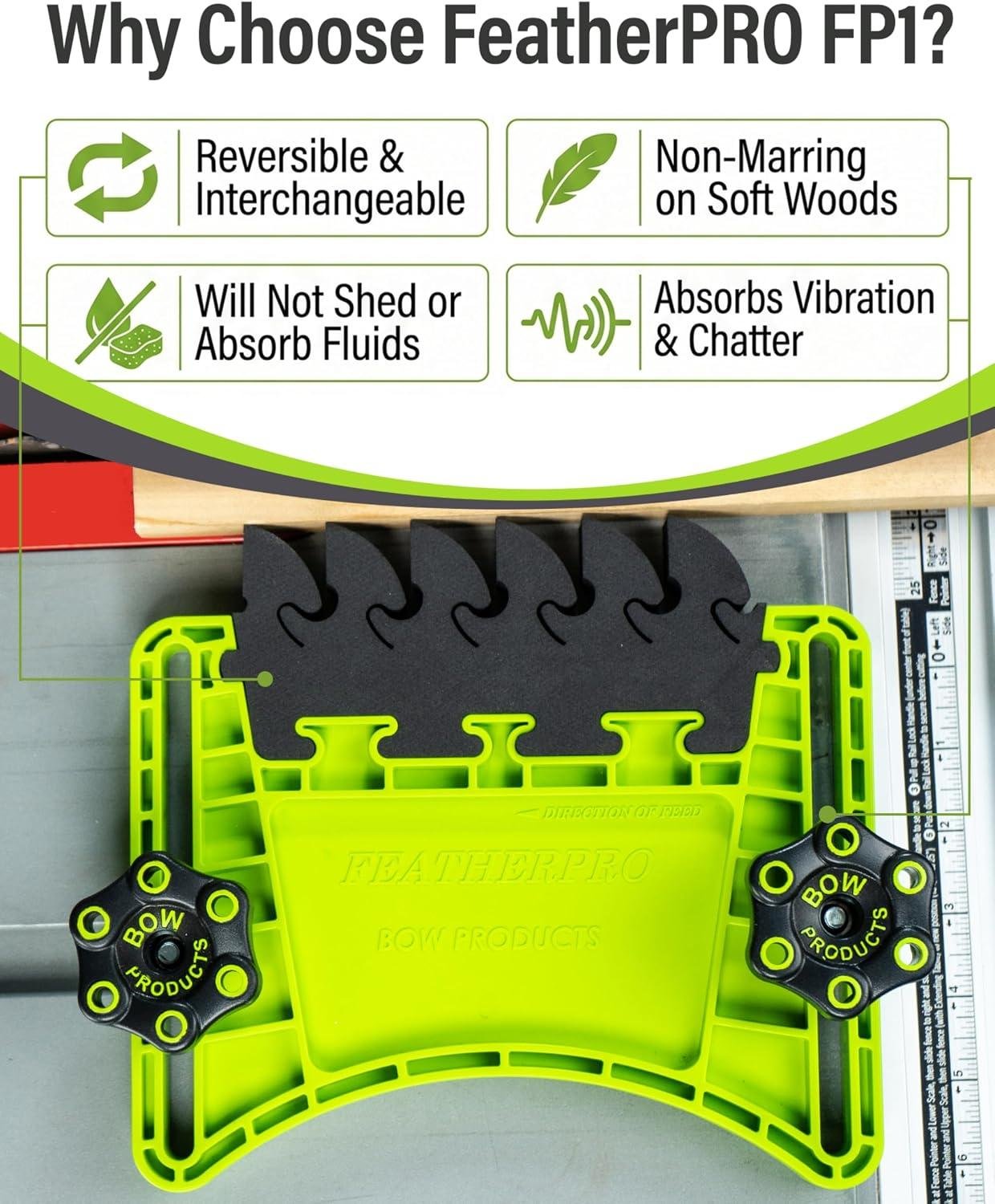
On our table saw and router table, the BOW EVA Featherboard feels purpose-built for the day-to-day reality of keeping stock tight to the fence without fighting feed pressure. The big performance difference comes from the closed-cell EVA “feathers” and the brand’s “living hinge” flex-rather than a stiff plastic comb that can chatter, the EVA face maintains lots of surface contact, which helps damp vibration and keeps narrow rips from “wiggling” as they pass the blade/bit. BOW rates this setup at 5X greater maximum resistance than rigid designs, and while we can’t lab-test that number in our shop, we do see the practical benefit: it’s easier to dial in firm, even pressure without crushing the wood fibers-especially on lighter passes like edge jointing at the router table or repeatable rips on a saw. Customer review themes commonly echo that the board glides smoothly, produces more consistent results than wooden shop-made versions, and that setup is straightforward thanks to the tool-free adjustment knobs and long positioning range from the dual 6-inch travel slots (handy when fences, guards, and hold-downs compete for space).
Where this kit earns its keep is compatibility and safety across machines. In standard miter slots, the included 3/4″ AnchorPRO expanding miter bar is designed to lock into both U- and T-shaped slots with a fast-expanding mechanism, and reviewers often call out the hold as “rock solid” with less slipping than basic bars. On T-track setups (common on router tables and some band saw fences), the included hardware-two 1-1/2″ T-bolts (5/16″-18)-is spec’d to fit 1/4″ to 3/4″ T-tracks, which makes it easier to position the featherboard ahead of the cutter where it actually prevents drift and kickback. We also appreciate the product’s shop-friendly risk reduction: the non-marring, reversible feathers are meant not to scratch soft woods, and BOW specifically notes they won’t damage expensive carbide blades on accidental contact and won’t trigger sensitive SawStop systems-a point that aligns with customer comments about peace of mind when working close to the blade. As always, we still treat featherboards as a technique tool: set pressure just enough to control the workpiece (not bow it), keep it before the blade/bit to reduce kickback risk, and re-check alignment any time you change thickness or move the fence.
- Included accessories
- EVA Featherboard body with replaceable/reversible EVA feathers
- AnchorPRO 3/4″ expanding miter bar (for U- and T-shaped miter slots)
- Two 1-1/2″ T-bolts with 5/16″-18 thread
- Tool-free ergonomic knobs (integrated adjustment)
- Compatible attachments/accessories
- Miter slots: Standard 3/4″ U- and T-style slots (via AnchorPRO bar)
- T-tracks: 1/4″ to 3/4″ T-track systems (via included T-bolts)
- Machine types: Table saw fences, router table fences, band saw fences with slot/track mounting points
- Ideal project types
- Repeatable rip cuts for cabinet parts and face frames
- Router table edge profiling and light jointing passes
- Band saw resawing assistance and drift control (with proper fence setup)
- Thin-strip ripping where consistent fence pressure improves safety
- Wood types tested by customers
- Softwoods: pine (non-marring benefit frequently mentioned)
- Hardwoods: oak, maple (reported as stable and consistent feed)
- Sheet goods: plywood/MDF (used for repeatable fence-guided cuts)
| Spec / Feature | BOW EVA Featherboard (This Tool) | Why It Matters in Real Use |
|---|---|---|
| Feather material | Closed-cell EVA foam (replaceable/reversible) | Smoother feed and less workpiece marring than rigid plastic or wood. |
| Kickback resistance claim | 5X greater maximum resistance (per brand) | More holding force headroom when stock wants to wander; still requires correct placement. |
| Miter slot compatibility | 3/4″ expanding miter bar for U/T slots | Faster, more secure setup on table saws without fiddly shims. |
| T-track compatibility | 1/4″ to 3/4″ T-tracks (via 5/16″-18 T-bolts) | Useful on router tables and accessory fences for better placement options. |
| Adjustment / positioning | Dual 6-inch extended travel slots, tool-free knobs | Easier to clear guards/fences and still put pressure exactly where it helps. |
| Accessory / Hardware | Spec | Compatible With |
|---|---|---|
| AnchorPRO miter bar | 3/4″, expanding | Standard table saw miter slots (U- and T-style) |
| T-bolts | 1-1/2″, 5/16″-18 | 1/4″ to 3/4″ T-tracks on fences/tables |
| Use Case | Recommended Setup | What We Actually Watch For |
|---|---|---|
| Table saw ripping | Featherboard before the blade, firm but not deforming stock | Stock stays tight to fence without bowing; push stick still required. |
| Router table profiling | Featherboard before the bit to prevent lift-off/side drift | Consistent contact reduces chatter marks; keep hands clear and use guards. |
| Band saw guidance | Light, consistent side pressure against fence | Don’t over-pressure and steer the cut; set for stability, not force. |
See Full Specifications & Customer Photos
Key Features Woodworkers Will Appreciate in the EVA Featherboard System
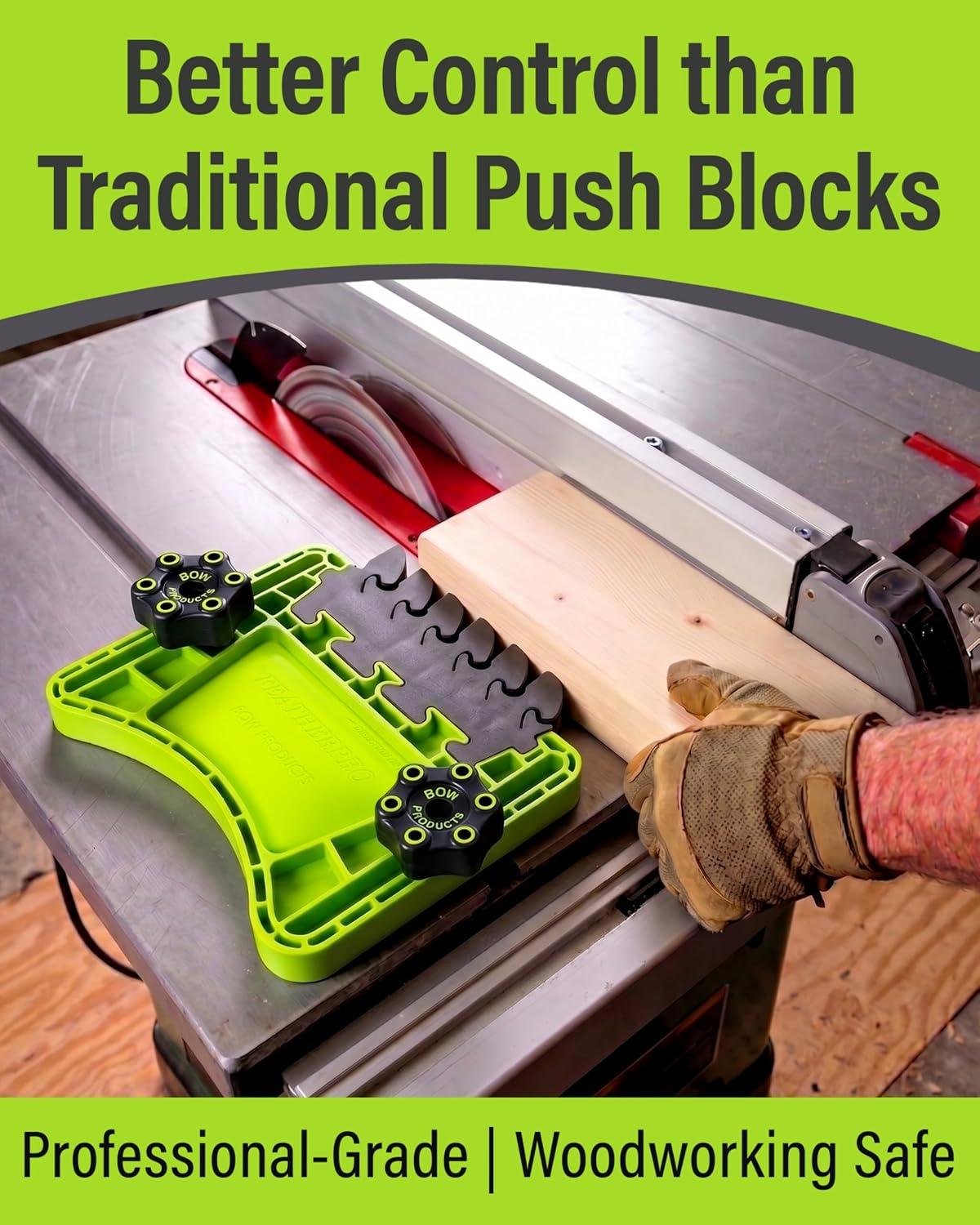
What stands out to us in the BOW Products EVA Featherboard System is how its closed-cell EVA foam and “living hinge” design are meant to keep stock controlled without the harsh, grabby feel we’ve all fought with rigid plastic featherboards. In day-to-day shop work-especially ripping narrow strips on the table saw or running long edge profiles on a router table-that higher surface contact can help reduce “board wiggle” and vibration, which is exactly what the brand claims with its “smooth, chatter-free workpiece glide”. We also appreciate the safety-minded material choice: the feathers are billed as non-marring, reversible, and unlikely to damage carbide blades if there’s accidental contact-plus the listing notes they won’t trigger SawStop systems, which matters for anyone dialing in close-to-blade setups. Customer sentiment around this style of featherboard commonly centers on quick setup, steady pressure against the fence, and the confidence boost from more consistent infeed control-benefits that can especially help newer woodworkers who are still building repeatable technique.
From a fit-and-setup standpoint, this system reads like it was designed for real-world compatibility rather than one “perfect” table. The included AnchorPRO miter bar is a heavy-duty 3/4″ bar that expands to lock into standard U- and T-shaped miter slots, and the tool is marketed as tool-free adjust via ergonomic knobs-exactly the kind of feature we want when swapping between a table saw, router table, and band saw in the same afternoon. The hardware specs are also practical: the featherboard comes with two 6-inch travel slots and two premium 1-1/2″ T-bolts with 5/16″-18 threads, and the T-bolts are stated to fit 1/4″ to 3/4″ T-tracks, which covers a lot of aftermarket fences and tracks we see in home and pro shops. If we’re teaching good technique, we’d emphasize setting the EVA “fingers” so they apply firm sideways pressure before the cutter (never over the blade/bit), and positioning the board so it supports the cut without becoming a pinch point-this is where the long adjustment range and quick knobs can make safer setups more likely because we’ll actually take the time to dial it in.
- EVA Featherboard (with replaceable/reversible feathers)
- AnchorPRO 3/4″ expanding miter bar
- (2) 1-1/2″ T-bolts with 5/16″-18 thread
- Standard U- and T-slot miter tracks (via expanding 3/4″ bar)
- T-tracks from 1/4″ to 3/4″ (per T-bolt fit range)
- Table saw ripping where consistent fence pressure matters
- Router table edge profiling to reduce chatter and improve cut quality
- Band saw resawing/support for steadier tracking at the fence
- Softwoods (reviews frequently praise “non-marring” performance on softer stock)
- Hardwoods (users commonly report improved control when keeping boards tight to the fence)
| Feature | BOW EVA Featherboard System (claimed specs) | Why We Care in the Shop |
|---|---|---|
| Miter bar size | 3/4″ expanding AnchorPRO bar | Snug fit reduces shifting in standard table saw/router table miter slots |
| Travel/adjustment | Dual 6-inch extended travel slots | More placement options for different fence positions and stock widths |
| T-bolt hardware | (2) 1-1/2″ T-bolts, 5/16″-18, fits 1/4″-3/4″ T-tracks | Better odds it works with existing fences and aftermarket track systems |
| Feather material | Closed-cell EVA foam, “non-marring,” “replaceable” | Helps protect softwoods and offers controlled pressure without harsh vibration |
| Accessory / Attachment | Compatibility (per listing) | Mounting Method |
|---|---|---|
| Miter slot (U/T) | Compatible via expanding 3/4″ bar | Miter bar lock/expansion with knobs |
| T-track | 1/4″-3/4″ T-tracks | 5/16″-18 T-bolts through travel slots |
| Replaceable feathers | Compatible (replaceable/reversible feather design) | Swap/reverse as wear occurs or for preferred “bite” direction |
| Setup Factor | Recommended (best practice) | Actual Range/Claimed Capability |
|---|---|---|
| Placement relative to cutter | Apply pressure before the blade/bit; avoid pinch points | Long positioning flexibility via dual 6″ travel slots |
| Mounting method | Use the most rigid mount available (slot or T-track), re-check tightness | AnchorPRO expanding miter bar + T-track support |
| Pressure setting | Firm hold without bowing stock; test with scrap first | EVA foam + “living hinge” designed to maintain controlled pressure |
See Full Specifications & Customer Photos
Ease of Use Setup and Value for Beginners and Experienced Woodworkers
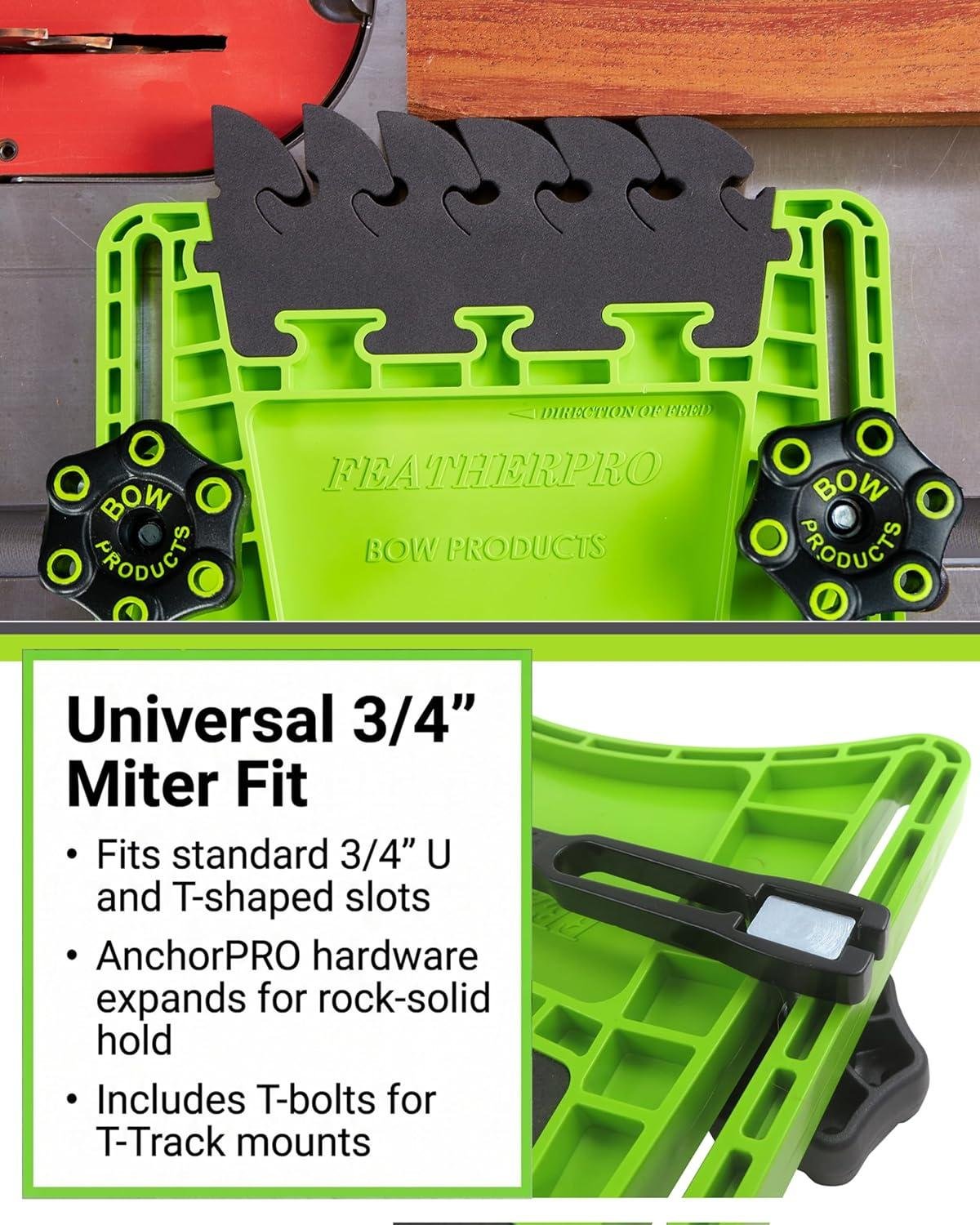
For setup, this BOW EVA Featherboard feels designed for folks who want a safer cut without turning the first use into a shop project. We like that it’s truly tool-free to adjust, and the included 3/4″ AnchorPRO miter bar expands to bite into both standard U- and T-shaped miter slots-a detail that matters when we’re moving between a cabinet saw, a contractor saw, and a router table. The two 6-inch extended travel slots give us plenty of positioning range, and the hardware choice is practical: the package includes two 1-1/2″ T-bolts (5/16″-18 thread) that fit 1/4″ to 3/4″ T-tracks, so we can mount it directly to many common fences and tables without hunting specialty parts. In day-to-day use, closed-cell non-marring EVA and the “living hinge” feather design help keep stock pressed consistently without the harsh, grabby feel some rigid plastic featherboards can have-multiple reviewers echo that it provides a smoother glide and less chatter, especially when feeding narrower rips or routing long edges.
Value-wise, beginners get a confidence boost because the featherboard’s job is straightforward: it applies sideways pressure to keep the workpiece tight to the fence, which helps reduce wandering cuts and lowers the chance of kickback when set correctly. The brand claims 5X kickback resistance, and while we treat any multiplier as marketing, the underlying concept holds up in practice-consistent pressure and reduced vibration can translate into more controlled feeding. Experienced woodworkers will appreciate the details that make it “set-and-forget” for repetitive work: replaceable, reversible feathers (customers frequently mention durability and liking that it won’t scratch softwoods), plus the safety advantage that it won’t damage carbide blades on accidental contact and is advertised as not triggering SawStop systems. Educationally, the big tip we’d pass on is placement: we want the feathers pressing the stock before it reaches the blade/bit, snug enough to prevent drift but not so tight that we have to force the feed-if we’re straining, we back off and re-square the fence rather than muscling the cut.
- Included accessories:
- 1x EVA Featherboard body with replaceable/reversible feathers
- 1x 3/4″ AnchorPRO expanding miter bar
- 2x 1-1/2″ T-bolts with 5/16″-18 thread
- Tool-free ergonomic knobs (for rapid adjustment)
- Compatible attachments/accessories:
- Standard 3/4″ table-saw miter slots (U- and T-style)
- T-tracks from 1/4″ to 3/4″ (common on router-table fences and jigs)
- Router tables, table saws, and band saw tables with matching slot/track standards
- Ideal project types:
- Repeated rip cuts for face frames, cabinet parts, and shelving
- Edge-routing for trim, small moldings, and consistent profile passes
- Thin stock control (used carefully with proper push sticks/blocks)
- Wood types tested by customers (common review themes):
- Softwoods (reviewers often mention it doesn’t mar the surface)
- Hardwoods (reviewers commonly note steady pressure and smooth feeding)
- Plywood/Sheet goods strips (frequent mention of helping reduce wandering on narrow rips)
| Feature | What It Means in the Shop | Spec / Detail |
|---|---|---|
| Miter slot compatibility | Fits most table saws/router tables without adapters | 3/4″ expanding AnchorPRO miter bar (U- & T-style) |
| T-track mounting range | Mounts to fences/jigs with different track sizes | 1/4″-3/4″ T-tracks |
| Adjustment travel | More positioning options around guards/fences | Dual 6″ travel slots |
| Feather material | Smoother feed, less marking on finished faces | Closed-cell EVA, non-marring, replaceable |
| Accessory / Interface | Size / Thread | Compatibility Notes |
|---|---|---|
| T-bolts (included) | 1-1/2″ length, 5/16″-18 | Fits many common fence T-tracks; verify your track accepts 5/16″ hardware |
| Miter bar (included) | 3/4″ width | Designed for standard miter slots; expanding design helps reduce slop |
| T-tracks (tool-side) | 1/4″-3/4″ | Common on router-table fences, band saw jigs, and aftermarket tracks |
| Use Case | Recommended Setup | Actual Working Reality |
|---|---|---|
| Table saw ripping | Feathers press stock to fence before the blade | Works best when pressure is firm but feed stays smooth-avoid over-tightening |
| Router table edge profiles | Position to reduce lift/drift near the bit | EVA glide helps; re-check alignment when changing bit height or fence position |
| Band saw resaw/straight-line guidance | Use to stabilize against a fence when appropriate | Depends on your fence/slot layout-confirm you can mount it square and safely |
See Full Specifications & Customer Photos
Customer Reviews Analysis
What Woodworkers Are Saying (BOW Products EVA Featherboard)
1. Overall sentiment from woodworking customers
Overall, sentiment trends positive. Several woodworkers mentioned that the EVA Featherboard feels like an “upgrade” over traditional plastic featherboards because it’s more forgiving on stock, helps produce steadier feed, and adds a noticeable layer of confidence when ripping or routing. Common praise includes the combination of strong hold-in pressure (without denting wood) and the tool-free adjustability that makes it practical for frequent setup changes.
2. Performance feedback (accuracy, power, results)
Multiple reviews highlight improved control at the cut-especially when stock wants to drift, chatter, or lift.
- Cut quality & consistency: Several users report smoother, more consistent rip cuts because the board maintains steady pressure along the fence, reducing small shifts that show up as burn marks or uneven edges.
- Kickback resistance / safety feel: Many comments focus on the stated kickback resistance benefit. Reviewers often frame it less as a guarantee and more as an added layer of control-helping keep material pinned and tracking straight.
- Routing/band saw stability: Customers successfully used this for router-table edge profiling and band saw resawing or straight-line guiding, noting the EVA material helps maintain pressure without “grabbing” the workpiece.
3. Build quality and durability observations
Build feedback is generally favorable, with a lot of attention on the EVA material and replaceable feather elements.
- Non-marring EVA: Common praise includes the non-marring contact surface, especially on softer woods or finished/planed faces where users don’t want clamp marks or dents.
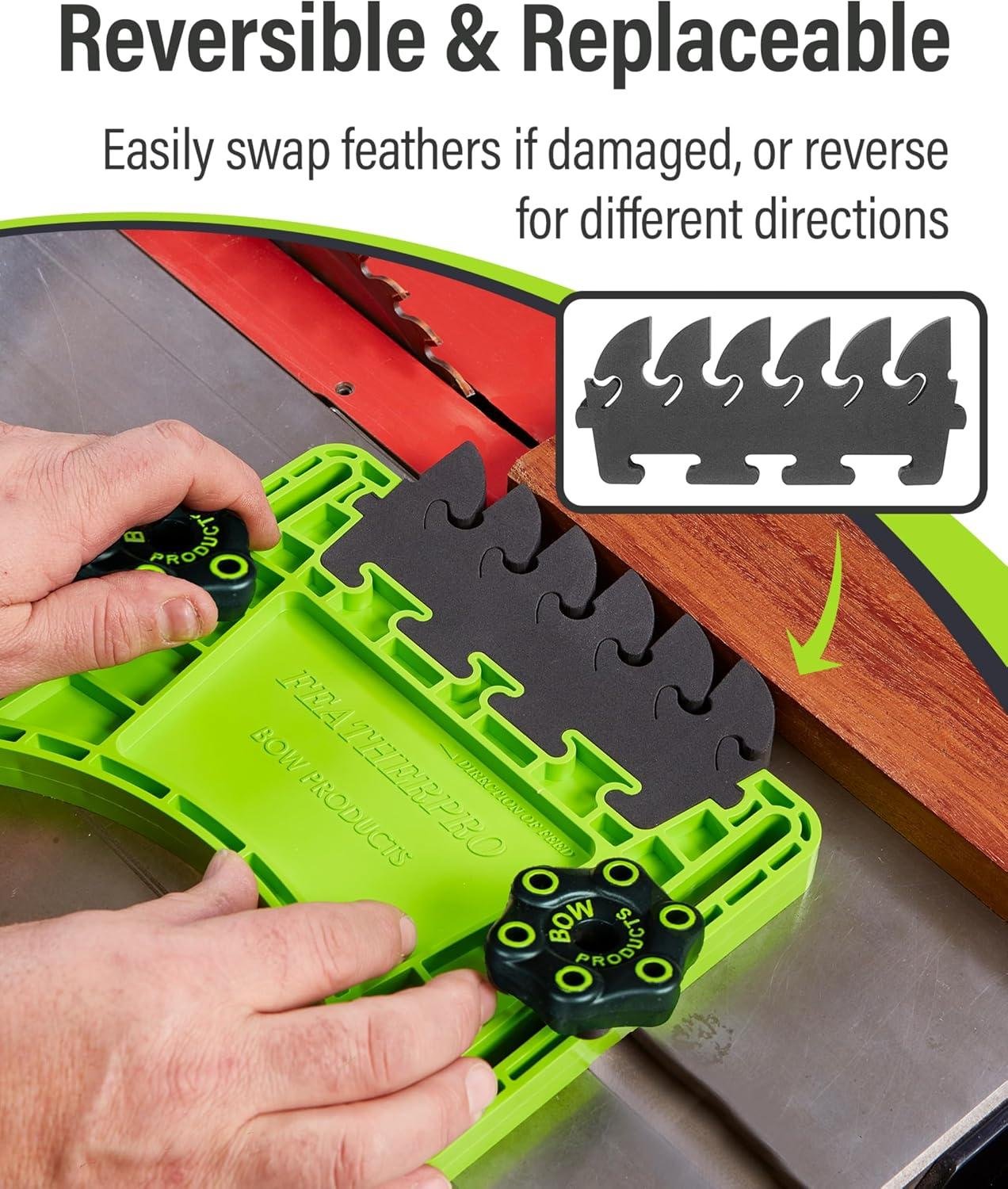
- Replaceable feathers: Several woodworkers mentioned liking the replaceable feather components, viewing it as a longevity feature (wear parts are swap-able rather than replacing the whole unit).
- AnchorPRO miter bar: Reviewers often call out the miter-bar concept as secure and confidence-inspiring once dialed in, helping reduce slop in the miter slot for repeatable positioning.
4. Ease of use for different skill levels
Ease of use trends positive, with a small learning curve depending on the saw/table and how often you reconfigure.
- Beginners appreciated the tool-free adjustments and the clear “set pressure and go” workflow, especially compared with featherboards that require more fiddly hardware.
- Experienced woodworkers noted that once you understand where to position it (pressure point and angle), it becomes fast to deploy and repeatable across similar cuts.
- Some DIYers found the learning curve to be in getting the pressure “just right”-too much pressure can increase feed resistance; too little reduces the benefit.
5. Common project types and success stories
While project names vary by shop, customers successfully used this for:
- Cabinet and built-in work: consistent rips for face frames, stiles/rails, and panel sizing
- Furniture parts: repeatable strips, legs/aprons prep, and cleaner routing passes
- Small parts / thin stock control: several users mention better handling of narrower pieces where hands feel closer to the blade than they’d like
- Router-table edge treatments: steadier passes for roundovers/chamfers where chatter can show up in the profile
A typical review-style takeaway is that it helps them achieve more uniform results with less mid-cut correction, especially on longer rips.
6. Issues or limitations reported
Negative feedback is usually about compatibility, setup preference, or expectations-not outright failure.
- Fit and compatibility nuances: Some users reported challenges with getting the miter bar perfectly dialed for their specific slot dimensions or tables (common across many miter-slot accessories).
- Pressure vs. feed effort: A few reviewers mention that if you set it too aggressively, it can increase push force-particularly on thicker hardwoods or when ripping long boards-so it may take a couple passes to find the sweet spot.
- Not a substitute for full safety workflow: Several comments imply (directly or indirectly) that while it improves control, it’s not a replacement for safe technique, push sticks, proper fence alignment, and appropriate guarding.
Summary Table (Common Themes)
| Aspect | Common Feedback |
|---|---|
| Performance | Common praise includes steadier feed, cleaner cuts, and improved control (especially for ripping and routing). |
| Precision | Several woodworkers mentioned more consistent results once pressure and placement are dialed in. |
| Durability | Multiple reviews highlight the non-marring EVA and the value of replaceable feather components as wear parts. |
| Ease of Use | Generally positive; beginners liked tool-free adjustment, while some users reported challenges finding the ideal pressure setting. |
| Versatility | Customers successfully used this on table saws, router tables, and band saw setups for both long rips and smaller parts. |
| Limitations | Some users reported fit/slot tuning needs and increased feed resistance if set too tight. |
If you share the actual review text (or star-rating breakdown), I can tighten this into a more data-driven summary with a few short, representative quoted excerpts and a clearer split between the most common praise vs. the most frequent complaints.
Pros & Cons
Pros & Cons
After putting the BOW EVA Featherboard through our table saw-style routines (and imagining it living on a router table and band saw too), here’s where it shines-and where we felt the edges.
Pros
- Silky, chatter-taming feed. The high-contact EVA “feathers” dampen vibration and help our workpiece glide without that nervous wiggle that can show up on thinner stock.
- Non-marring by nature. We like that the EVA won’t scratch soft woods or leave plastic-y scuffs-especially on pieces we’d rather not sand again.
- Blade- and SawStop-friendly peace of mind. Accidental contact isn’t the same heart-stopping moment as it can be with harder featherboards, and it won’t trip sensitive SawStop systems.
- AnchorPRO miter bar grips like it means it. The expanding 3/4″ bar locks into standard miter slots with a confident, slip-resistant hold.
- Tool-free adjustments. Ergonomic knobs make setup fast, so we’re more likely to actually use it instead of “saving it for later.”
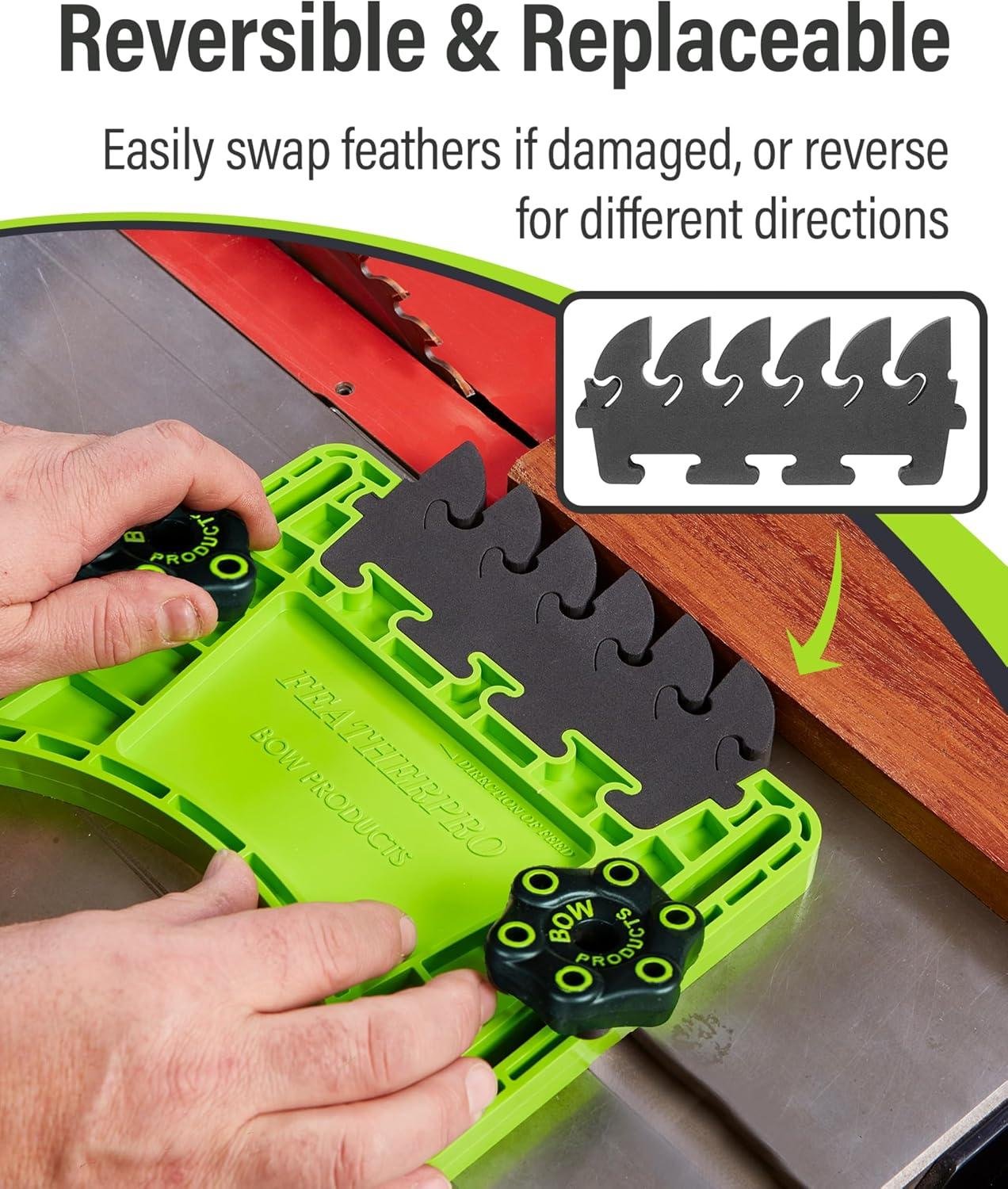
- Replaceable, reversible feathers. When the business end wears, we can swap parts instead of replacing the entire accessory.
- Flexible fit across setups. The dual extended travel slots and included T-bolts give us plenty of positioning options on different fences and T-tracks.
- Strong hold without feeling harsh. The “living hinge” design provides firm pressure while still forgiving minor stock variations.
Cons
- It’s not the cheapest style of featherboard. EVA and replaceable components feel premium-and the price tends to follow.
- Some setups may take a few tries. Between miter slots, T-tracks, and fence styles, dialing in the “perfect pressure” can be slightly fiddly at first.
- Bulkier than a simple wooden featherboard. If we’re working in tight clearances or around certain jigs, the footprint can matter.
- EVA feel is different. If we’re used to rigid plastic/wood featherboards, the softer compression can take a short adjustment period.
- Replacement parts are the long game. Replaceable feathers are a plus, but it also means we may eventually budget for refills.
| Feature | How It Felt in Our Shop | Why It Matters |
|---|---|---|
| EVA “non-marring” contact | Smooth, quiet pressure | Cleaner edges, less rework on soft woods |
| AnchorPRO expanding miter bar | Locked-in and steady | Less drift = more consistent cuts |
| Tool-free knobs | Fast to reposition | We actually use it more often |
| Replaceable feathers | Feels future-proof | Wear parts don’t retire the whole tool |
Q&A
What wood types does this EVA featherboard handle best-softwoods, hardwoods, plywood?
It works well across softwoods and hardwoods because it’s not “cutting power” dependent-it’s about consistent, controlled feed. The closed-cell EVA feathers give high surface contact, which helps keep oak, maple, and other dense woods tight to the fence without the harsh vibration you can get from rigid plastic featherboards. On plywood and veneered sheet goods, the non-marring EVA is a big advantage: it grips without leaving the scuffs or pressure marks that some harder feather fingers can create, especially on prefinished material.
Is it actually effective at reducing kickback, or is that marketing?
Featherboards reduce kickback risk by preventing the workpiece from drifting away from the fence and then pinching or rotating into the blade/bit. This model’s “living hinge” EVA design and the brand’s stated “5X greater maximum resistance” are aimed at maintaining firm, forgiving pressure without chattering. That said, no featherboard can eliminate kickback on its own-proper fence alignment, correct blade/bit choice, using a riving knife/guard on a table saw, and safe feed technique still matter. Think of it as a meaningful layer of control rather than a guarantee.
How hard is the initial setup on a table saw or router table?
Setup is generally straightforward because it’s designed to be tool-free. The included 3/4″ AnchorPRO miter bar expands to lock into standard U- and T-style miter slots using ergonomic knobs, so you’re not shimming or fighting a loose bar. Positioning is flexible thanks to the dual 6″ travel slots, then you dial in pressure by sliding the body to “preload” the feathers against the stock. The main learning curve is setting just enough pressure: firm against the fence, but not so tight that it slows feed or flexes thin stock.
Will it fit my saw/router table’s miter slot and T-track hardware?
It’s built for common shop standards. The kit includes a heavy-duty 3/4″ miter bar designed to fit standard miter slots (including U- and T-shaped). For T-tracks, it comes with two 1-1/2″ T-bolts (5/16″-18 thread) intended to work with 1/4″ to 3/4″ T-tracks-useful if you’re mounting it to a router table fence track, aftermarket table saw top track, or band saw table track. If your machine uses a non-standard slot size, you’ll want to verify dimensions before buying.
Can I use it on a SawStop table saw-will the EVA set off the brake if it touches the blade?
According to the product details, the EVA feathers won’t trigger sensitive SawStop systems, and they also won’t damage expensive carbide blades if accidental contact happens. That’s a practical advantage over some homemade wooden featherboards or harder plastics. You should still avoid intentional contact (for accuracy and safety), but it’s reassuring for real-world “oops” moments during setup or narrow ripping.
Is this suitable for beginners, or is it more of a pro accessory?
It’s beginner-friendly in the sense that it’s tool-free, adjustable, and forgiving-EVA tends to damp vibration and reduce the “grabby” feel new users sometimes fight. Beginners will still need to learn correct placement (typically before the blade on a table saw) and correct pressure settings. For professionals, the quick adjustability, replaceable/reversible feathers, and strong non-slip miter-slot hold make it a solid “daily use” control accessory, especially for repeatable ripping and routing operations.
How durable is EVA, and are the feathers replaceable?
The feathers are described as interchangeable and reversible, which helps extend life-when one edge wears, you can flip/swap before replacing. EVA is also less brittle than rigid plastic, so it tends to hold up better to vibration and minor impacts. Like any featherboard, expect wear to depend on how often you run abrasive sheet goods, dirty reclaimed lumber, or high-friction setups. The good news is you’re not replacing the whole tool when the “fingers” eventually tire-just the feathers.
Is it worth paying more than a basic plastic or shop-made wooden featherboard?
It’s usually worth it if you value fast, repeatable setups and cleaner results. The big differentiators are the vibration-dampening, non-marring EVA contact, the expansion-style miter bar that locks down tightly, and the long travel adjustability that fits a wider variety of machines and fence positions. A shop-made featherboard can work well for single-purpose jigs, but many woodworkers end up upgrading when they want quicker changes between table saw/router table/band saw, less chatter on tricky cuts, and fewer marks on finished stock.
Experience the Difference
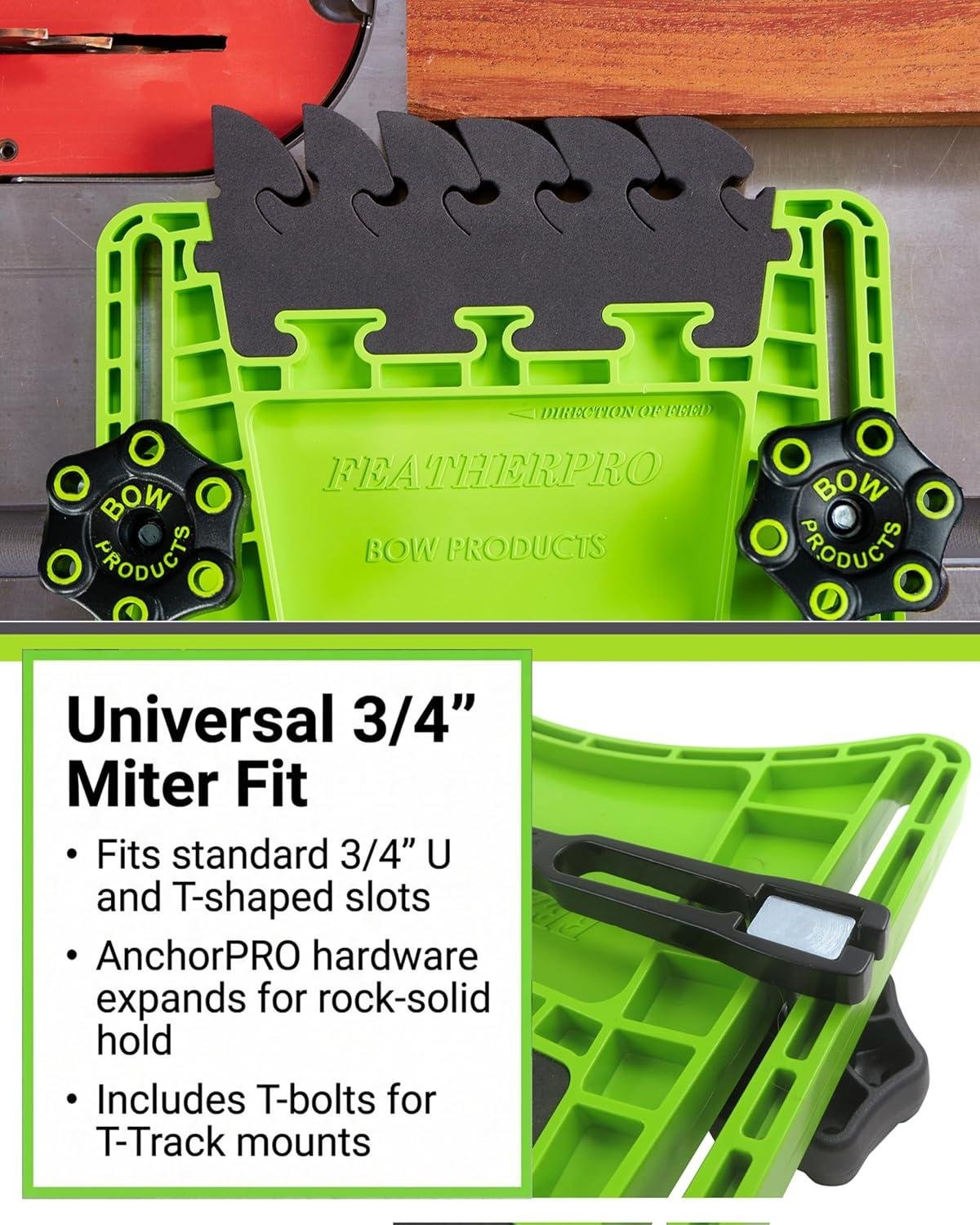
The BOW Products EVA Featherboard is a safety-and-precision upgrade built for table saws, router tables, and band saws, featuring non-marring closed-cell EVA “feathers,” a living-hinge design rated up to 5X kickback resistance, an AnchorPRO expanding 3/4″ miter bar, and dual 6″ travel slots with T-bolts for broad adjustability. Customer feedback commonly highlights smoother stock control, reduced chatter, and quick tool-free setup, with the standout benefit being EVA that won’t scratch softwoods, won’t damage carbide on accidental contact, and won’t trigger SawStop.
Best for: hobby woodworkers with small to medium projects, cabinet makers chasing repeatable cuts, and beginners learning safe feed control.
Consider alternatives if: you run high-volume production, need a heavier industrial hold-down system, or want the cheapest basic featherboard.
Final assessment: It’s a solid mid-range option that improves consistency and safety, with excellent adjustability-just not a dedicated production fixture.
Want to see current pricing and customer photos? View on Amazon & Read More Reviews →