

Blog
WORKPRO 20V Mini Circular Saw Review: Right for Us?


Ever tried breaking down plywood in a cramped garage shop, only to fight a full-size circular saw that feels overkill—and still leaves you second-guessing your cut line? When accuracy matters, space is tight, and we’re balancing budget against build quality, a compact saw with smart guides can sound like the perfect compromise… or a shortcut to frustration.
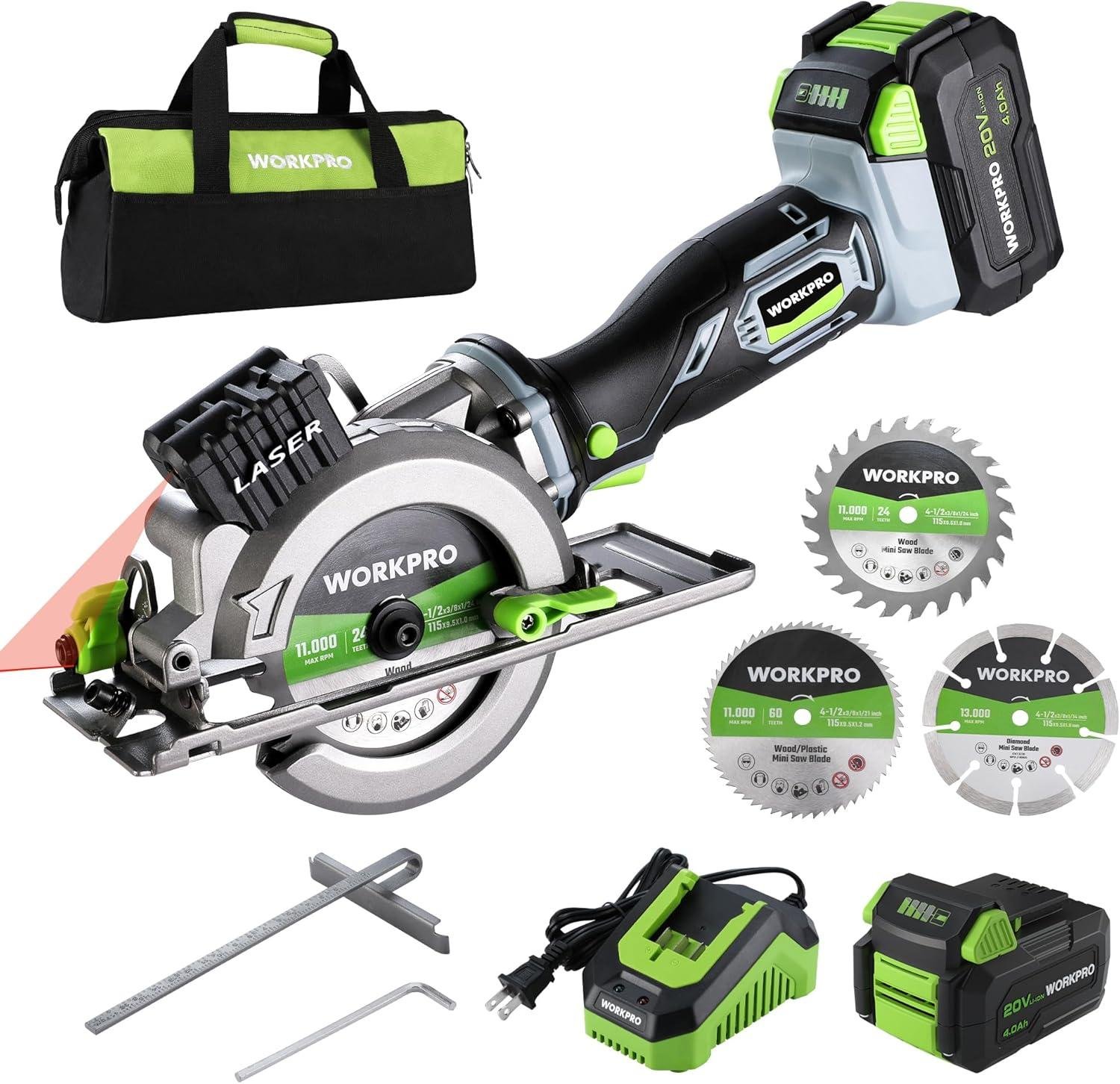
That’s where the WORKPRO 20V Cordless Mini Circular Saw (4-1/2″) comes in. It’s a lightweight,cordless option (listed at 4.36 lbs) built for grab-and-go cutting, with a 4500 RPM no-load speed, laser guide, and parallel guide aimed at improving precision. Cutting capacity is rated at 1-11/16″ at 90° and 1-1/8″ at 45°, and the kit includes a 4.0Ah battery, 2.4A fast charger (about 2 hours), dust hose, and three blades for wood, wood/plastic, and tile.
In this review,we’ll look at the feature set,usability for different skill levels,durability cues,and what customers commonly report about control,cut quality,and the learning curve. We’re approaching this as fellow woodworkers who’ve learned that the “right” saw is the one that fits our projects, our space, and our expectations.
Tool Overview and Build Quality
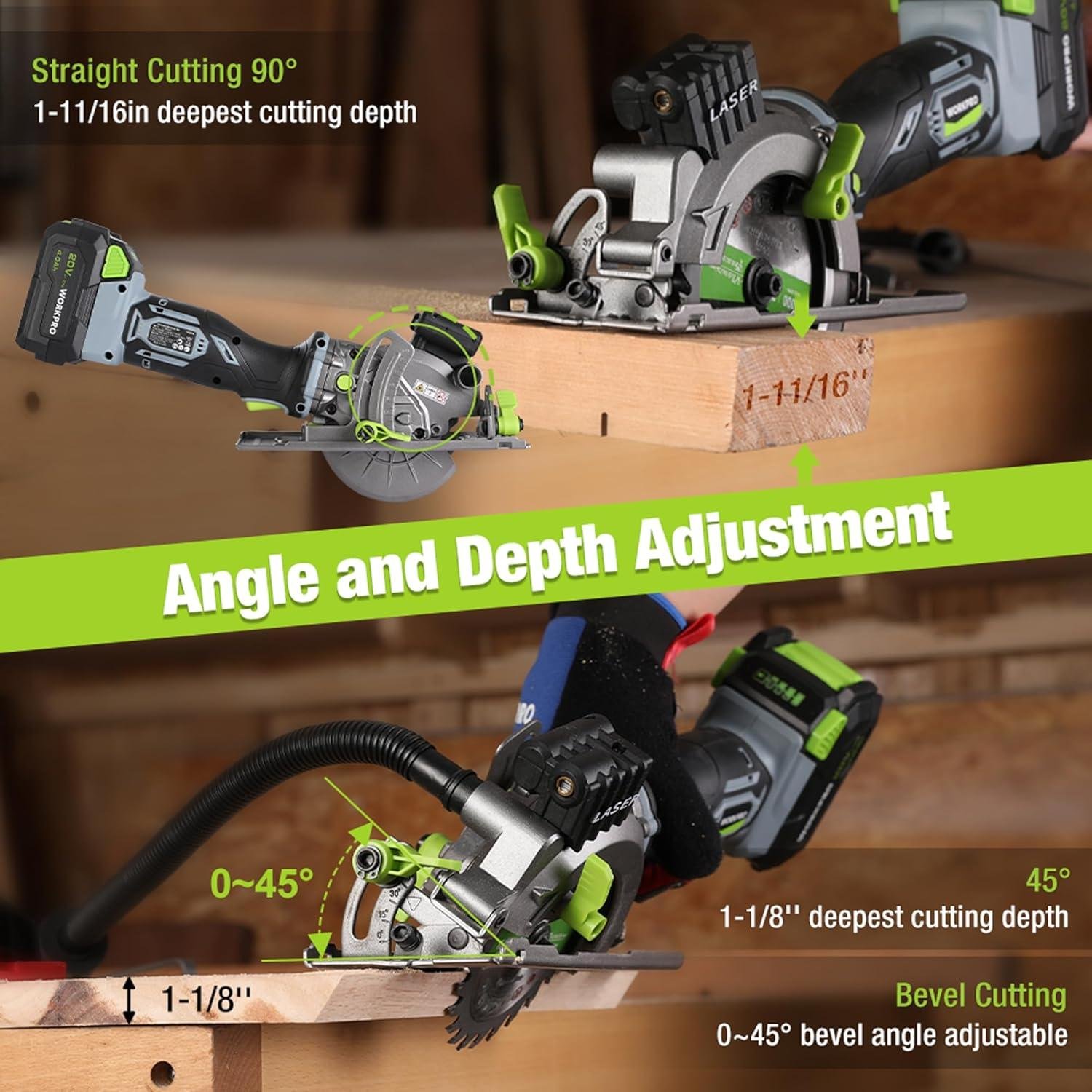
In our shop, we think of the WORKPRO 20V Cordless Mini Circular Saw as a “grab-and-go” cutter built for swift breakdown work, trim sizing, and on-site tweaks rather than a full-size 7-1/4″ framing saw replacement. The headline spec is its 4500 RPM no-load speed, which is plenty for clean, controlled cuts when we match the blade to the material and keep feed pressure steady. Its 4.36 lb compact form factor and one-handed rubberized handle make it feel more like a finishing/utility saw—ideal when we’re cutting narrow stock on a bench, trimming sheet goods to manageable sizes, or making short bevels without hauling out heavier tools. The bevel range is practical for woodworking at 0°–45°, with a stated maximum cutting depth of 1-11/16″ at 90° and 1-1/8″ at 45°; translating that to real shop decisions, it means this tool is happiest in 1x material, plywood, panel products, and trimming edges, while thicker hardwood is where we’d slow down and plan multiple passes (safer and typically cleaner).
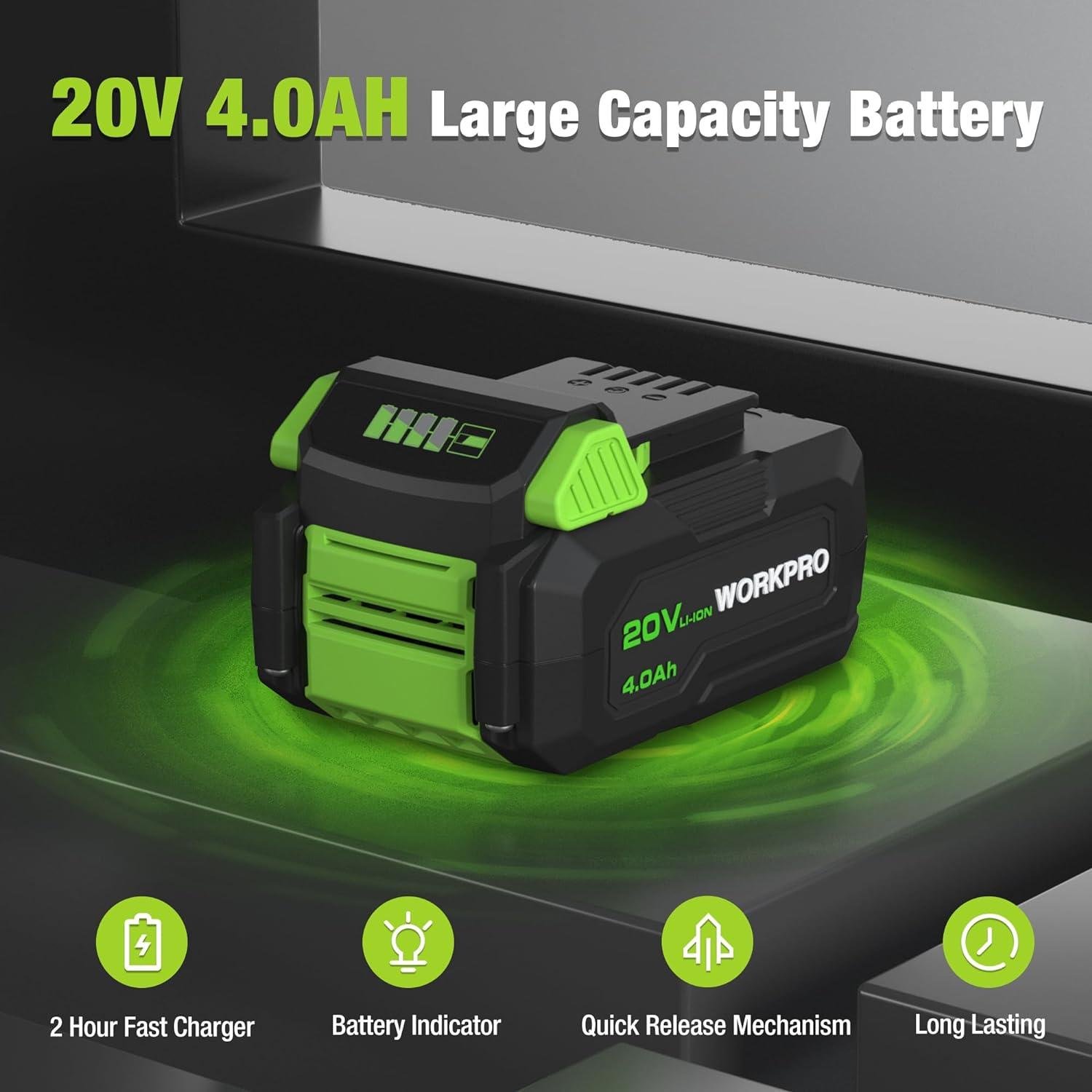
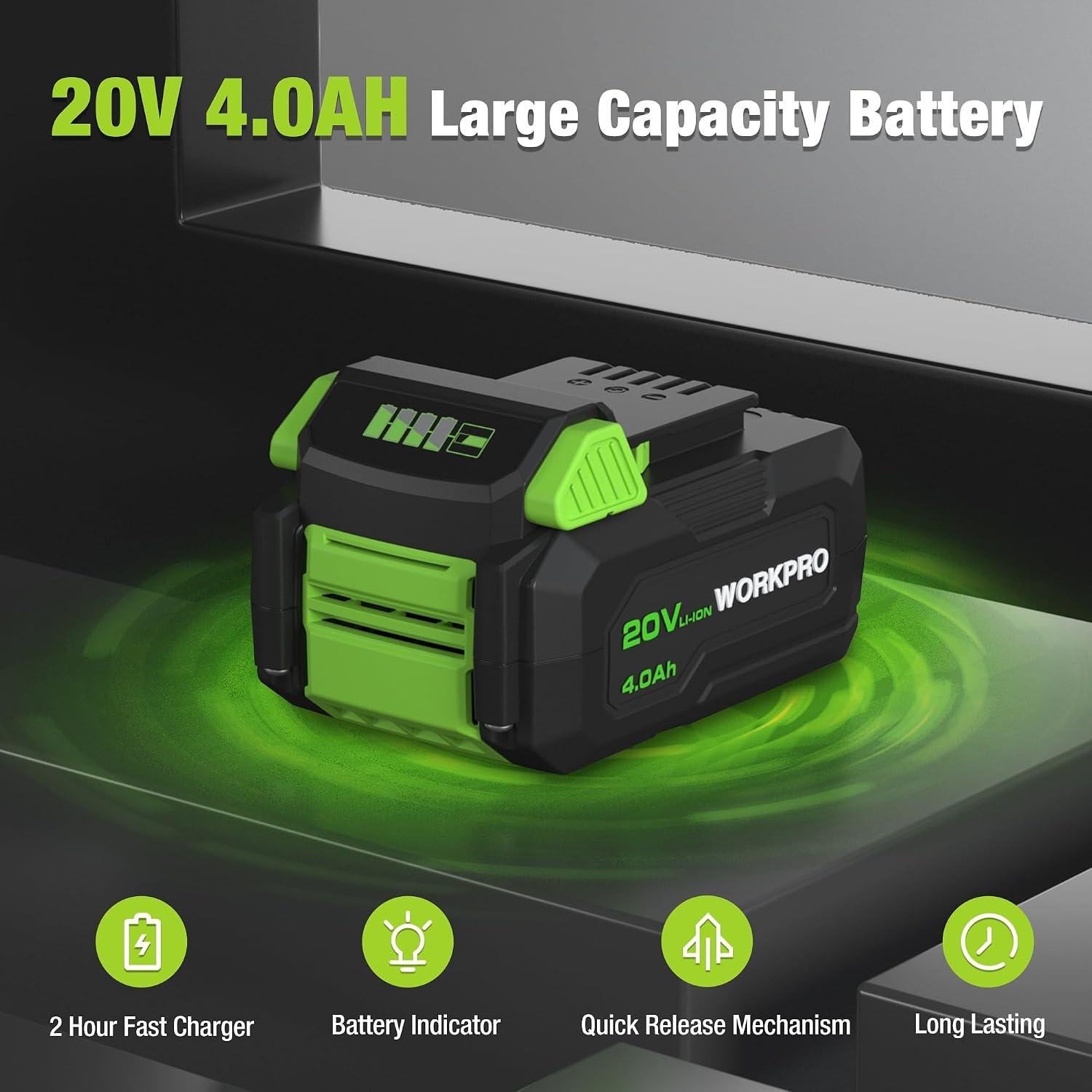
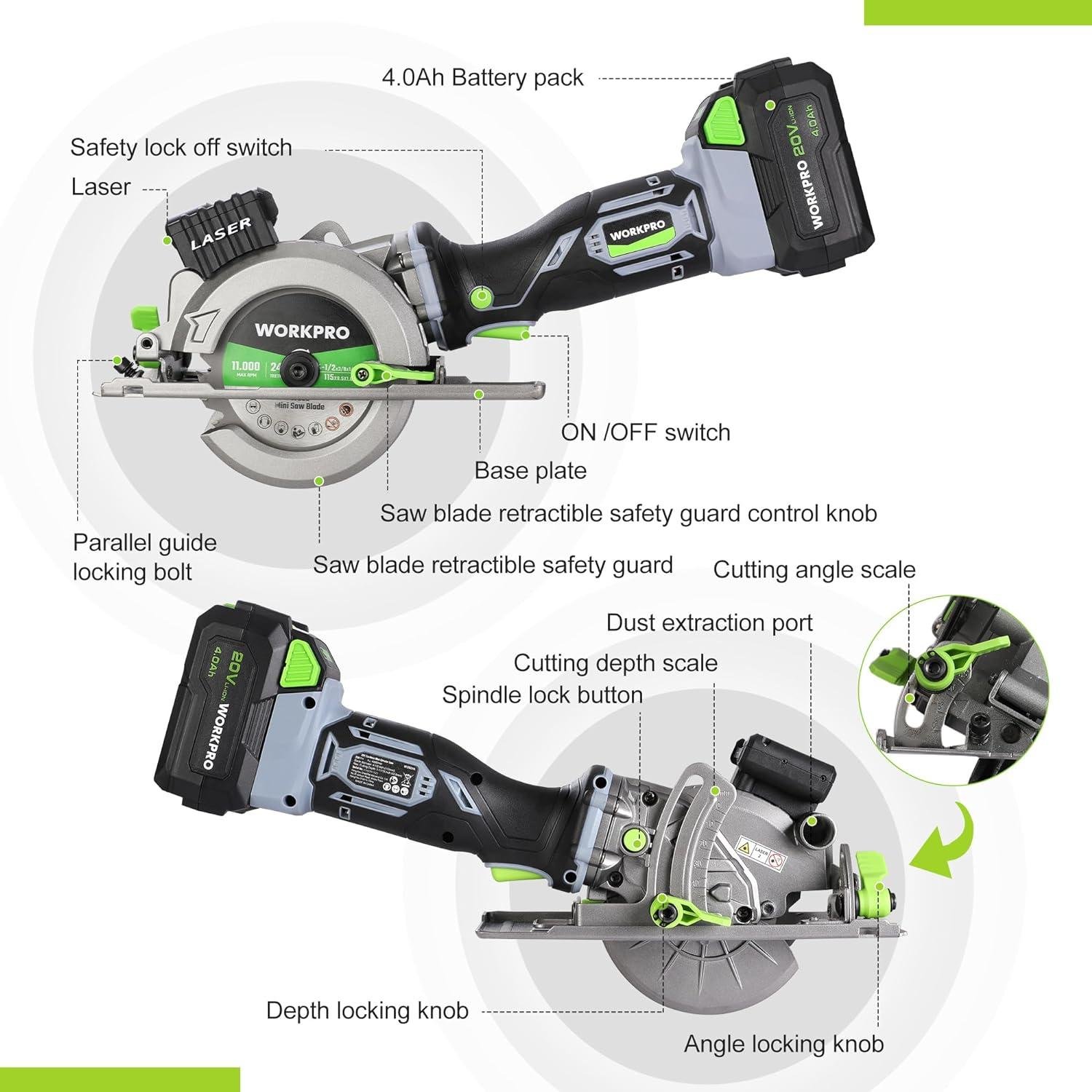
Build-wise, WORKPRO includes a few smart “jobsite convenience” touches that matter to woodworkers: a laser guide plus parallel guide for repeatable rips, a switch lock to reduce accidental start-ups, and a dust extraction tube that can be adapted to a vacuum to keep the cut line visible (and keep fine dust off our benches). The kit’s power system is also geared toward interrupted, real-world workflow—there’s a 20V 4.0Ah (4000mAh) battery and a 2.4A fast charger rated to recharge in about 2 hours, which fits the pace of most DIY-to-intermediate shop sessions. Customer review themes commonly highlight easy setup (blade changes with the included hex key) and that it’s lightweight and handy for small projects; reviewers also often mention it’s best when we treat it like a compact precision saw—use the right blade, support the workpiece close to the cut, and let the saw do the work—rather than forcing it through thicker stock. For newer woodworkers, our best educational takeaway is to “spec your cut”: choose the 24T blade for faster rough wood cuts, the 60T for cleaner cuts in plywood/laminate and plastics, and reserve the diamond blade for tile—not wood—so you get safer handling and better surface quality.
- 20V cordless mini circular saw
- 4.0Ah battery pack
- 2.4A fast charger (about 2 hours recharge)
- 24T alloy blade (wood)
- 60T blade (wood & plastic)
- Diamond blade (tile)
- Parallel guide
- Dust extraction tube + vacuum adapter
- Hex key
- Storage bag + user manual
- 4-1/2″ replacement circular saw blades (match arbor size per manual)
- Edge guide/straightedge clamps (to improve rip accuracy vs. freehand)
- Shop vacuum (for use with the included dust port/adapter)
- sawhorses or a cutting table (better support for sheet goods)
- Plywood breakdown into smaller panels
- Trim and edge cutting on installed work
- 1x stock crosscuts and light ripping with a guide
- Bevel cuts up to 45° for basic joinery/layout tasks
- Plywood (common praise for convenience)
- Softwood boards (pine/fir-type material is frequently mentioned)
- Plastics/PVC (with the appropriate blade)
| Category | WORKPRO 20V Mini Circular Saw (This Kit) | What It Means in the Shop |
|---|---|---|
| Blade size | 4-1/2″ | Compact handling; smaller max depth than standard circular saws |
| No-load speed | 4500 RPM | Good for clean cuts when feed rate is controlled |
| Max depth @ 90° | 1-11/16″ | Agreeable for 1x material and panels; thicker stock may need multiple passes |
| Max depth @ 45° | 1-1/8″ | Realistic for bevels in plywood/1x; plan clamps/support for accuracy |
| Bevel range | 0°–45° | Covers most common carpentry/woodworking bevel needs |
| Weight | 4.36 lb | Easier one-handed positioning; less fatigue for quick cuts |
| Battery/charging | 4.0Ah + 2.4A fast charger (~2 hrs) | Suited to intermittent cutting tasks and mobile work |
| Accessory Type | Included | Notes / Compatibility Reminder |
|---|---|---|
| wood cutting blade | 24T | Faster cutting, rougher finish |
| Fine-cut/wood-plastic blade | 60T | Cleaner edges in plywood/plastics; slower feed |
| Tile blade | Diamond | For tile only; not for woodworking cuts |
| Guides | Laser + parallel guide | Helps line-following; a clamped straightedge can be even more accurate |
| Dust collection | Dust tube + adapter | Connect to a vacuum for clearer sightline and cleaner bench |
| Capacity / Use Case | Recommended (Realistic) | Actual Rated Spec |
|---|---|---|
| 90° cutting thickness | up to ~1x material in one pass; thicker stock in multiple passes | 1-11/16″ |
| 45° bevel thickness | panels and 1x bevels for trim and fit-up | 1-1/8″ |
| Precision ripping | Short rips with a clamped guide | Parallel guide + laser included |
Check Current Price & Reviews on Amazon
Real World Performance in Plywood and Dimensional Lumber
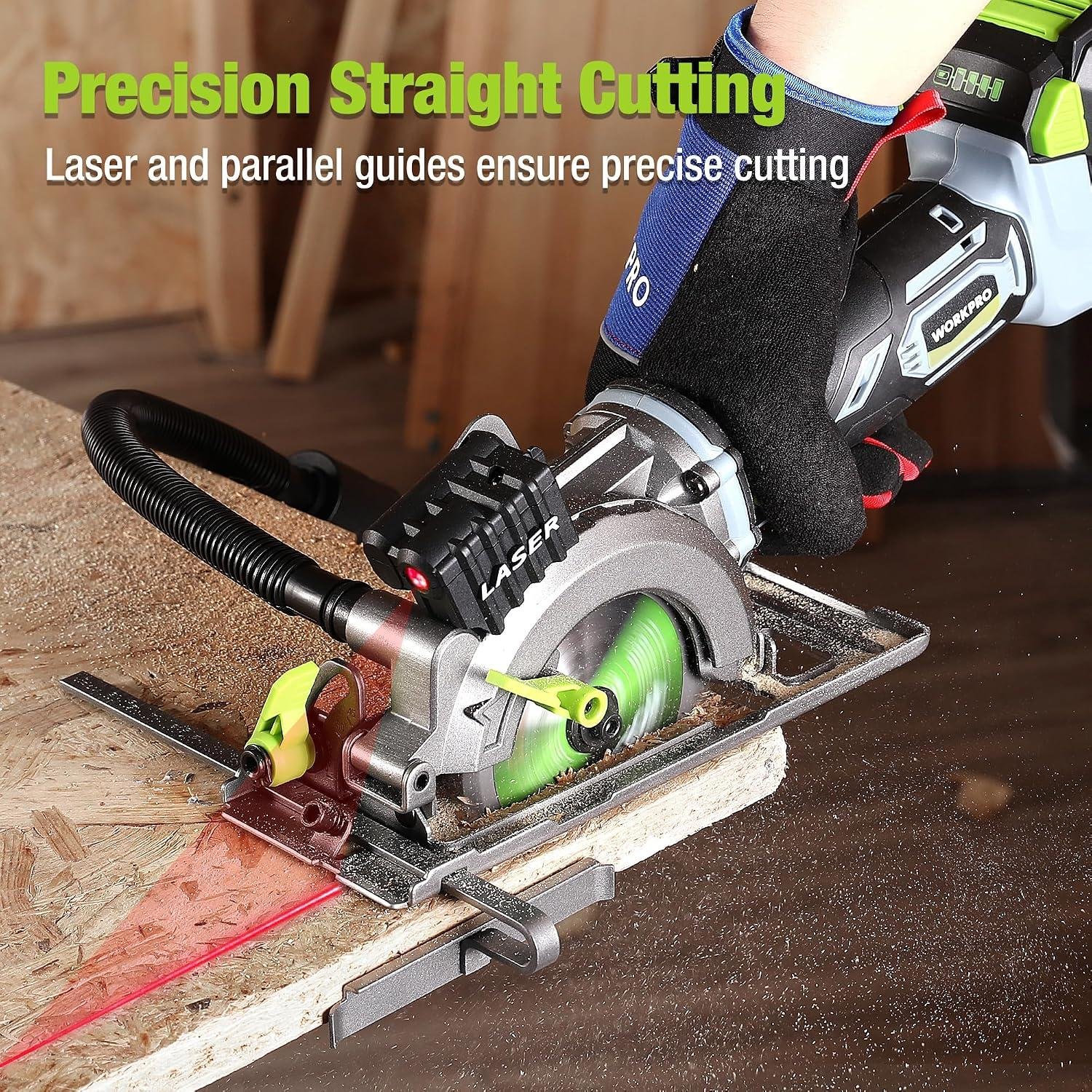
In plywood, this WORKPRO mini saw behaves like a purpose-built “breakdown” tool more than a replacement for a full-size circular saw. With a 4500 RPM no-load speed and a compact 4.36 lb body, we can guide it one-handed for short rips and crosscuts when we’re trimming panels at the bench, fitting cabinet backs, or sneaking up on scribe lines. The included 60T blade (wood/plastic) is the one we’d reach for when we want cleaner edges on veneered plywood or melamine-faced sheet goods, while the 24T alloy blade (wood) makes faster work of rough sizing. The built-in laser guide and included parallel guide are genuinely helpful for repeatable straight cuts—as many customer review themes tend to note, setup is straightforward and the tool feels “easy to handle,” though reviewers also commonly caution that lasers need checking and shouldn’t replace a marked line and a steady reference edge. For best results, we’d still recommend blue tape on the cut line (especially on tear-out-prone plywood), scoring the top veneer when appearance matters, and supporting the offcut so the kerf doesn’t pinch.
Dimensional lumber is where the saw’s compact size and depth limits define the workflow. The max cutting depth is 1-11/16″ at 90° and 1-1/8″ at 45°, so we can comfortably crosscut 1x stock and most trim, but we shouldn’t expect a single-pass cut through a true 2x (1-1/2″) in every situation—especially once we factor in blade kerf, twist in the board, and the need to keep the base flat. in real shop terms, we’d treat it as a capable tool for studs, furring strips, decking boards, and quick miters on thinner material, while using a full-size saw when we’re doing repeated framing cuts or deeper bevels. Customer review patterns frequently mention the 4.0Ah battery offering “decent runtime” and the 2.4A fast charger being convenient (rated to charge in ~2 hours), along with comments about “less fatigue” thanks to the lighter weight—balanced by occasional notes that cordless mini saws can bog if we force the feed rate. Our best technique tip: let the 4500 RPM do the work, keep the shoe planted, and use the supplied dust extraction tube connected to a vac when possible to maintain visibility and reduce hot-chip buildup around the guard.
- Included accessories
- 20V cordless mini circular saw
- 4.0Ah (4000mAh) Li-ion battery
- 2.4A fast charger
- 24T alloy blade (wood)
- 60T blade (wood & plastic)
- Diamond blade (tile)
- Hex key
- Parallel guide
- Dust extraction tube
- Storage bag
- User instruction
- Compatible attachments/accessories
- Replacement 4-1/2″ circular saw blades (match arbor/specs per manual)
- Shop vacuum + adapter (use the included dust hose)
- Clamps and a straightedge/track guide (for cleaner plywood rips)
- Painter’s tape and a zero-clearance backing board (tear-out control)
- Ideal project types
- Breaking down plywood for cabinet backs, drawer parts, and shop jigs
- Trim fitting, shelving, and quick crosscuts on 1x boards
- Small outdoor repairs (fence pickets, deck boards, non-structural cuts)
- Bevel/edge trimming up to 45° within depth limits
- Wood types tested by customers (as commonly referenced in reviews)
- Plywood and OSB
- Pine construction lumber (1x/2x)
- Hardwood offcuts (results depend on feed rate and blade choice)
| Spec | WORKPRO 20V Mini Circular Saw | what it means in the shop |
|---|---|---|
| no-load speed | 4500 RPM | Faster cutting in thin stock; avoid forcing the feed to prevent bogging/burning. |
| Max depth @ 90° | 1-11/16″ | Good for 1x and many sheet-goods cuts; deeper stock may need a second pass. |
| Max depth @ 45° | 1-1/8″ | Bevel cuts are more limited—plan for thinner material or multiple passes. |
| Bevel range | 0°–45° | Useful for edge bevels and simple miters; verify angle accuracy with a square. |
| Weight | 4.36 lb | easier one-handed control—helpful for quick trimming and overhead/awkward cuts. |
| Battery / Charger | 20V 4.0Ah / 2.4A (≈2 hr) | Convenient cordless workflow; keep a blade sharp to maximize runtime. |
| Recommended use case | Rated capacity (spec) | Practical expectation |
|---|---|---|
| Plywood / panels | Up to 1-11/16″ depth @ 90° | Excellent for sizing and trimming; use straightedge support for cabinet-grade cuts. |
| 1x dimensional lumber | within 1-11/16″ @ 90° | Comfortable single-pass crosscuts and short rips. |
| 2x dimensional lumber | Depth allows it on paper, depending on the board | May require slower feed, careful shoe contact, or a second pass—plan accordingly. |
| 45° bevels (trim/edges) | 1-1/8″ depth @ 45° | Best for thinner stock; deeper bevels risk incomplete cuts. |
| Blade / Accessory | Included? | Best for |
|---|---|---|
| 24T alloy blade (wood) | yes | Faster rough cuts in framing lumber and general shop cutting. |
| 60T blade (wood & plastic) | Yes | Cleaner cuts in plywood, laminates, and plastics (slower feed). |
| Diamond blade (tile) | Yes | non-wood materials; not a woodworking blade. |
| Parallel guide | Yes | Repeatable narrow rips; still benefits from clamping and double-checking measurements. |
| Dust extraction tube | Yes | Cleaner sightline and less mess when connected to a vacuum. |
See Full Specifications & Customer Photos
Key Features Woodworkers Will Appreciate
In the shop, we appreciate mini circular saws most when they’re truly usable one-handed and predictable on the cut line, and this WORKPRO delivers on the core specs that matter for trim work and breakdown cuts. The motor is rated for 4500 RPM (no‑load), which is plenty for cleanly slicing plywood, MDF, and softwoods when we match the blade to the material and keep feed pressure steady.For woodworking, the big win is adjustability: the base lets us dial in bevels from 0°–45°, with a max depth of 1‑11/16″ at 90° and 1‑1/8″ at 45°. That’s not “framing-saw deep,” but it’s legitimately useful for cabinet back panels, shelving, flooring underlayment, and trimming down 1x stock. The saw’s 4.36 lb lightweight build and rubberized handle also matter—especially when we’re working overhead, inside cabinets, or making repeated short cuts where a full-size circular saw feels clumsy.Customer review themes commonly mention the tool being easy to set up and comfortable to control for smaller jobs, which aligns with how compact saws typically shine in real workshop workflows.
We also like that WORKPRO includes features that support accuracy without adding setup friction. The laser guide and parallel guide can help us stay consistent on rip cuts and repeated trims, though we’ll still treat them as “assist tools” and verify with a knife line or pencil mark—especially if we’re cutting face-grade plywood.Dust management is another practical plus: the included dust extraction tube can be adapted to a shop vac so we’re not burying layout lines in chips (and we’re not sweeping constantly). The kit is workshop-ready out of the bag, with a 20V 4.0Ah battery and a 2.4A fast charger that’s rated to recharge in about 2 hours—reviewers frequently praise the convenience of being cordless for quick cuts and small projects. Educational tip: for the cleanest edges, we’ll use the 60T blade for plywood/plastics, the 24T blade for faster rough cutting in solid wood, and we’ll support the workpiece fully to reduce tear-out and binding (a compact saw is still a circular saw—kickback rules apply).
- Included accessories
- 20V mini circular saw (4-1/2″)
- 4.0Ah (4000mAh) Li-ion battery
- 2.4A fast charger
- 24T alloy blade (wood)
- 60T blade (wood & plastic)
- Diamond blade (tile)
- Hex key
- Parallel guide
- Dust extraction tube
- Storage bag + user manual
- Compatible attachments/accessories
- 4-1/2″ replacement blades (wood fine-cut, framing/rough-cut, plastic-cut)
- Shop vacuum (via the included dust hose/adapter setup)
- Clamps + straightedge guide (for more cabinet-grade accuracy than a laser alone)
- Ideal project types
- Breaking down plywood panels into manageable sizes
- Shelving, closet parts, and cabinet back panels
- Trimming 1x material and small bevel/edge cuts
- flooring underlayment and quick on-site adjustments
- Wood types tested by customers (as commonly mentioned in review themes)
- Plywood
- Softwoods (e.g.,pine-type boards)
- Composite sheet goods (e.g., MDF-type panels)
| Feature | WORKPRO Mini Circular Saw (Spec) | What It Means in the Shop |
|---|---|---|
| Speed | 4500 RPM (no-load) | Good general-purpose cutting speed; blade choice drives cut quality. |
| Max depth @ 90° | 1-11/16″ | Works for sheet goods and most 1x stock; not for thick framing cuts. |
| Max depth @ 45° | 1-1/8″ | Useful for bevels on thinner stock and panels. |
| Bevel range | 0°–45° | Covers common chamfers/bevels for trim and light cabinetry. |
| Weight | 4.36 lb | Easier one-handed control; less fatigue for repetitive cuts. |
| Battery + charge | 20V 4.0Ah + 2.4A charger (~2 hours) | Practical for grab-and-go tasks; fast turnaround between sessions. |
| Accessory/Blade | Included | Best Use |
|---|---|---|
| 24T alloy blade | Yes | Faster cuts in solid wood where finish quality is secondary. |
| 60T blade | Yes | Cleaner cuts in plywood and plastics; better for visible edges. |
| Diamond blade | Yes | tile cutting (not a woodworking task, but useful for mixed projects). |
| Parallel guide | Yes | Repeated rips; we still recommend a straightedge for precision work. |
| dust extraction tube | Yes | Connect to a vacuum to improve visibility and reduce shop cleanup. |
| Task/Capacity | Recommended (Practical) | Actual Spec Limit |
|---|---|---|
| Crosscut/rip sheet goods | Great fit | 1-11/16″ @ 90° depth capacity |
| bevel cuts on panels | Good fit | 45° bevel,1-1/8″ @ 45° depth |
| Thick framing lumber (2x+) | Not ideal as a primary saw | Depth may require multiple passes |
See Full Specifications & Customer Photos
Ease of Use for Beginners and Precision Seekers

For beginners, the WORKPRO 20V mini circular saw feels like a “pick it up and start cutting” kind of tool—without being so bare-bones that it teaches bad habits. The saw’s compact format and 4.36 lb weight make it easier for us to control one-handed on small parts,and the switch lock helps prevent those accidental trigger bumps that can happen when we’re repositioning a cut. Setup is straightforward: the kit includes a hex key for blade swaps and a parallel guide for repeatable rip cuts, and customer review themes commonly mention it being “easy to set up” and “simple to use” for DIY and workshop tasks. The 4.0Ah (4000mAh) battery paired with the 2.4A fast charger (~2 hours stated) also supports a beginner workflow—fewer interruptions mid-task, and less temptation to rush cuts as the battery is fading.
For precision seekers, the big story is guidance and adjustability rather than raw depth capacity. The 4500 RPM no-load speed is plenty for clean crosscuts in plywood and solid wood when we match the blade to the material and keep the shoe flat, and the saw’s 0°–45° bevel range plus max depth 1-11/16″ (90°) / 1-1/8″ (45°) suits trim-down work, panel sizing, and shallow joinery-related cuts (think backer boards, drawer bottoms, and shelving—not thick slab ripping). The laser guide and parallel guide can definitely help us stay consistent, and review themes frequently enough highlight “straight cuts” and “surprisingly accurate for a small saw,” though we still treat the laser as a reference—our best results come from marking with a knife or sharp pencil, setting the blade just proud of the material, and making a calm, steady feed. For dust control and visibility, the included dust extraction tube is worth using with a shop vac; clean sightlines are a real accuracy upgrade, especially on dark grain or tight bevels.
- Included accessories: 20V mini circular saw, 4.0Ah battery, fast charger (2.4A), 24T alloy blade (wood), 60T blade (wood & plastic), diamond blade (tile), hex key, parallel guide, dust extraction tube, storage bag, manual
- Compatible attachments/accessories: 4-1/2″ blades with appropriate arbor fit (verify arbor size before buying), shop vac via the included dust hose/adapter, clamp-on straightedge/track substitute for cleaner panel cuts
- Ideal project types: breaking down plywood panels, trimming shelving, fitting cabinet backs, cutting laminate and PVC, quick bevels on thin stock, jobsite touch-ups where a full-size saw is overkill
- Wood types tested by customers (per common review themes): plywood, softwood boards (pine/fir), and general “lumber” for DIY builds
| beginner-Kind Feature | Spec / What It Means in the Shop |
|---|---|
| Lightweight handling | 4.36 lbs helps reduce fatigue and makes short, controlled cuts easier |
| Battery + charge time | 20V 4.0Ah with 2.4A charger (~2 hours stated) supports longer sessions with fewer pauses |
| Guides for straightness | Laser guide + parallel guide help repeatable layout and beginner consistency |
| Safer start | Switch lock reduces accidental activation during repositioning |
| Accessory Type | What to Look For | Why It Helps Precision |
|---|---|---|
| Fine-tooth wood blade | 4-1/2″ diameter, higher tooth count (like the included 60T), correct arbor | Cleaner crosscuts in plywood/veneers with less tear-out |
| Rip/fast cut blade | 24T style (included), correct arbor | Quicker cuts in thicker softwood where finish quality is secondary |
| Dust extraction | Shop vac connection via dust tube/adapter | Better cutline visibility and more consistent tracking |
| Straightedge guide | Clamp-on guide/level/rail | More reliable than “freehand + laser” for long cuts |
| Cut Setting | Recommended Practical Capacity | Rated Maximum Capacity |
|---|---|---|
| 90° | Best for stock up to about 1-1/2″ when accuracy matters (leave margin for blade exposure and warps) | 1-11/16″ |
| 45° | Best for thin bevel work and panel edges where steady tracking is critical | 1-1/8″ |
See Full Specifications & Customer photos
Customer Reviews analysis

What Woodworkers Are Saying (Review Analysis)
1. Overall sentiment from woodworking customers
sentiment trends positive among woodworking and DIY users who want a compact, cordless saw for light-to-medium cutting. Multiple reviews highlight that it delivers surprisingly capable performance for its size,especially for shop tasks where a full-size 7-1/4″ circular saw feels like overkill. That said, some users reported challenges when expecting it to replace a larger saw for thicker stock or long, perfectly straight rip cuts.
2. performance feedback (accuracy, power, results)
Common praise includes strong speed and clean cuts in typical DIY lumber and sheet goods. Several woodworkers mentioned the saw feels fast and controllable, with the 4500 RPM helping reduce tear-out when paired with the right blade.
- Cut quality: Reviewers frequently describe cuts as clean (especially in plywood and trim) and “smooth enough” for many tasks with minimal follow-up sanding, depending on blade choice.
- Power under load: Multiple reviews highlight good power for a compact saw, but some users reported challenges when pushing through thicker material near its max depth or when feeding too quickly.
- Laser guide / accuracy support: Several woodworkers mentioned the laser guide is helpful for quick alignment, particularly for short crosscuts. However, experienced users often note that lasers can be less trustworthy than a fence/track/marked line, and consistency depends on setup and technique.
- Bevel cutting: Some DIYers reported good results at 45°, while others noted that bevel work requires more careful setup to keep the cut true.
Sparse excerpt style seen in reviews: users describe it as “handy for small cuts” and “surprisingly capable,” but “not a replacement for a full-size circular saw.”
3. Build quality and durability observations
Several reviewers commented positively on the saw’s overall feel, describing it as solid for the price and liking the convenience of the included battery/charger kit.
- Materials & fit: Common praise includes a sturdy enough housing and parts that assemble/adjust without feeling overly flimsy.
- Blade and guard behavior: Some users paid attention to the guard action and base stability; when those are smooth and stable, reviewers report more confidence in accuracy. A few reviews suggest checking fasteners and alignment periodically (typical advice for compact saws that see frequent transport).
- Long-term durability: Reviewers tend to discuss performance after initial projects more than multi-year longevity, but multiple reviews highlight that it holds up well under typical homeowner/DIY use. Heavy daily jobsite use is less commonly represented in feedback.
4. Ease of use for different skill levels
Beginners appreciated the compact format and cordless convenience, especially for learning basic crosscuts without wrestling a larger tool. Many users say it feels lighter and less intimidating, which reduces fatigue and improves control.
- Beginner-friendly: Several woodworkers mentioned the saw is easy to pick up and start using, with convenient portability and quick setup.
- Experienced users: More experienced reviewers often treat it as a specialty/secondary saw—useful for quick cuts, punch-list work, or tight spaces—while relying on track saws or larger circular saws for precision ripping.
- Learning curve notes: Some users reported challenges with getting perfectly straight results without a guide, and a few mention that adjustments/alignment take a bit of patience (common with mini circular saw formats).
5. Common project types and success stories
customers successfully used this for smaller-scale woodworking and household projects where portability and convenience matter most.
Several reviewers mentioned using it for:
- Plywood and panel cuts (quick breakdown cuts, small sheet goods trimming)
- Trim and molding work (short, controlled cuts)
- 2x lumber for basic framing-style DIY tasks (within depth limits and with realistic expectations)
- Workbench, shelving, and storage builds where compact maneuvering helps
Woodworkers often describe it as a tool that shines for “grab-and-go” cuts, quick modifications, and projects where setting up a bigger saw feels slow.
6. Issues or limitations reported
A few consistent limitations show up across mixed reviews—mostly tied to the realities of a 4‑1/2″ mini circular saw.
- Depth and capacity: Some users reported challenges cutting thicker stock in a single pass. The stated max depth (about 1‑11/16″ at 90°) means thicker lumber may require multiple passes or different tools.
- Not ideal for long rips: Multiple reviews highlight that long, furniture-grade straight cuts are harder without a straightedge/guide; it’s not a track saw replacement.
- Laser expectations: Some users reported challenges relying on the laser for precision joinery-level work; it’s frequently enough viewed as a rough alignment aid, not a guarantee.
- Blade preference: Several woodworkers mention better results after switching blades depending on material (fine-tooth for plywood/finish work, framing-style for faster rough cuts).
- Power limits when rushed: A few reviewers note that forcing feed rate can lead to slower cutting or rougher results—technique matters more with compact saws.
Quick Themes summary Table
| Aspect | Common Feedback |
|---|---|
| Overall Sentiment | Mostly positive for compact DIY/shop use; expectations matter versus full-size saws |
| Performance | Praised for fast, clean cuts in plywood/trim; can bog if pushed hard in thicker stock |
| Precision | Laser helps with quick alignment; straight cuts improve significantly with a guide |
| Durability | Generally “solid for the price”; long-term heavy-duty feedback is limited |
| Ease of Use | Beginner-friendly handling; some adjustments and technique learning required |
| Versatility/Projects | Great for small panels, trim, quick modifications, light framing cuts within depth limits |
| Limitations | Cut depth constraints; not ideal for long precision rips; laser not a precision substitute |
If you want, I can rewrite this section in a tighter “product page” voice, or tailor it toward a specific audience (beginners, apartment woodworkers, or trim/cabinet DIYers).
Pros & Cons
Pros & Cons
| At a Glance | What It Means for Us |
|---|---|
| 4500 RPM + 20V cordless | Quick, confident cuts without chasing an outlet around the workspace. |
| Max depth: 1-11/16″ (90°) | Solid for plywood, trim, and many 2x cuts—within limits. |
| 4.0Ah battery + ~2 hr fast charge | Less “battery anxiety” during weekend projects; recharge is predictable. |
| Includes 3 blades | We can bounce between wood/plastic and tile without buying extras immediately. |
Pros
- Compact and genuinely manageable. At about 4.36 lbs, it feels more “grab-and-go” than “haul-and-hope,” especially for quick cuts and tight spaces.
- Versatile kit right out of the bag. We get a wood blade (24T), a finer wood/plastic blade (60T), and a diamond blade for tile—plus a storage bag to keep the chaos contained.
- Adjustable bevel and depth (0°–45°). The bevel range and depth settings make it flexible for edging, framing touch-ups, and bevel cuts when we don’t want to set up a bigger saw.
- Laser guide + parallel guide help with consistency. For repetitive rip-style cuts, the guides can make our lines feel less like “best guess” and more like “planned.”
- Battery life is aimed at real projects. The included 20V 4.0Ah battery is the kind of capacity that can finish a task without immediately tapping out.
- Safety and comfort details are thoughtful. The lock-off switch helps prevent accidental starts, and the rubberized grip supports one-handed control and reduces fatigue.
- Dust extraction option is included. The dust hose and vacuum adapter give us a path toward cleaner cuts (and fewer post-project cleanups).
Cons
- Cut depth is still “mini saw” territory. 1-11/16″ at 90° and 1-1/8″ at 45° covers a lot, but it won’t replace a full-size circular saw for thicker stock and deep bevel work.
- A laser guide isn’t magic. We may still need to verify alignment and rely on a marked line—especially if we’re chasing ultra-precise joinery.
- One battery can be a bottleneck. A ~2-hour charge is reasonable, but if we’re cutting heavily all day, a second battery would keep momentum up.
- Small blade means more passes on bigger material. For wide,thick,or demanding cuts,we may end up working slower or doing multiple passes compared to a larger saw.
- Material “range” depends on blade choice and patience. It’s rated for wood, tile, plastics, PVC, and soft metals, but performance will hinge on the right blade and realistic expectations for speed and finish.
- Dust control varies by setup. The hose is helpful,but without a good vacuum (and a solid connection),dust collection can still be a “nice idea” rather than a clean reality.
Q&A
what wood types and sheet goods can this mini circular saw handle well?
With a 20V cordless motor rated at 4500 RPM (no-load) and a 4-1/2″ blade size, this saw is best suited for common woodworking cuts in pine, fir, poplar, MDF, OSB, and plywood. It’s also well-matched for trimming down cabinet parts, cutting down panels, and jobsite breakdown work where portability matters. For clean results on plywood/veneers, use the included 60T blade, support the sheet close to the cut line, and score your line first (or use painter’s tape) to reduce splintering.
Is it powerful enough for hardwoods like oak or maple?
It can cut hardwoods, but it’s not a full-size 7-1/4″ framing saw replacement. Oak/maple cuts are realistic when you use a sharp blade, take a steady feed rate, and avoid forcing the tool—especially near the max depth. The saw’s compact size and 4-1/2″ blade meen less torque and less “mass” than larger saws, so hardwood is more “controlled, slower cuts” than “fast ripping all day.” For best results in dense stock, reduce cut depth to just clear the material and make sure the work is well supported to prevent binding.
What’s the real cutting capacity—can it cut 2x material in one pass?
Maximum cutting depth is 1-11/16″ at 90° and 1-1/8″ at 45° (per specs). That means it can handle many 1x boards and a lot of sheet-good work in a single pass. For typical 2x lumber (about 1-1/2″ actual thickness), it can usually make a full-depth crosscut at 90°—but you don’t have a lot of margin, so keeping the shoe flat and the blade sharp matters. If your material is slightly thicker or cupped, you may need to finish the last fraction with a second pass or flip-cut.
How tough is initial setup, and what adjustments can I make?
Setup is straightforward: charge the 4.0Ah battery (the 2.4A fast charger is listed at as little as ~2 hours), install the blade, then set depth and bevel. Adjustments include bevel angle from 0° to 45° and cutting depth up to the listed maximums. It also includes a laser guide and a parallel (rip) guide—helpful for repeatable straight cuts—though many woodworkers still prefer to register the saw against a clamp-on straightedge for highest accuracy.
How easy are blade changes, and does it use standard 4-1/2″ accessories?
Blade changes are designed to be DIY-friendly: the kit includes a hex key and three blades (24T wood, 60T wood/plastic, and a diamond blade for tile). In general, 4-1/2″ mini saws frequently enough use a specific arbor size, so it’s smart to confirm the arbor measurement before buying aftermarket blades. If you stick to blades made for 4-1/2″ mini circular saws (not angle-grinder discs), you’ll get safer, more stable cutting and better cut quality.
How does dust collection work in a small workshop?
This kit includes a dust extraction tube/hose and an adapter intended to connect to a vacuum,which is a big plus for indoor woodworking.It won’t replace a full shroud + high-CFM system like you’d use on a track saw, but it can significantly reduce the mess when paired with a shop vac. For best results, keep the hose routing from tugging the saw, and use a short, smooth hose if possible to maintain airflow.
Is this beginner-friendly, and what safety features does it have?
Yes—many beginners like mini circular saws because they’re lightweight (listed at 4.36 lb) and easier to control one-handed than larger saws. The rubberized handle helps reduce fatigue, and the switch-lock mechanism helps prevent accidental starts. Having mentioned that, beginners should still practice on scrap stock first: set shallow depth, keep two hands on the tool whenever possible, and focus on preventing binding by fully supporting the offcut.
Is it suitable for production work, or more for hobby and install tasks?
This saw is positioned more as a portable, do-it-all cutter for DIY, workshop, outdoor, and home use rather than a production rip machine. The 20V cordless setup with a 4.0Ah battery is great for convenience, punch-list work, and projects where you’re making intermittent cuts. For all-day cabinet shop production (especially heavy hardwood ripping), most pros will still reach for a full-size corded/cordless 6-1/2″ or 7-1/4″ saw or a track saw for speed, repeatability, and deeper capacity—while keeping a mini saw like this as a handy secondary tool.
Embody excellence
The WORKPRO 20V Cordless Mini Circular Saw (4-1/2″) packs a fast 4500 RPM motor into a lightweight 4.36 lb body, backed by a 4.0Ah battery and 2.4A fast charger (about 2 hours per charge). It offers 0°–45° bevel adjustments with a max cut of 1-11/16″ at 90° and 1-1/8″ at 45°, plus a laser guide, parallel guide, lock-off safety switch, and dust port. Customer feedback commonly highlights the convenient cordless handling and useful guides for cleaner lines, while noting the obvious limitation: this is a mini saw with limited depth for thicker stock.
best for: hobby woodworkers with small to medium projects, beginners learning fundamentals, and cabinet/trim work where control matters more than depth.
Consider alternatives if: you regularly cut thick hardwoods or need daily, production-level durability.
it’s a solid mid-range option for accurate, portable cuts—just match it to the material thickness you actually use.
Want to see current pricing and customer photos? View on Amazon & Read More Reviews →