

Blog
Milwaukee 2456-20 Ratchet Review: Right for Our Shop?

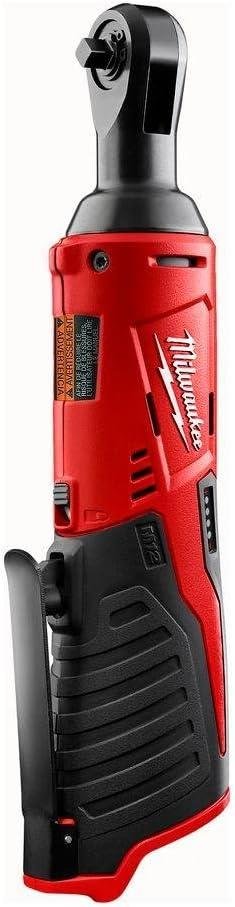
Ever tried tightening a jig bolt or a face-frame clamp in the back corner of a cabinet and realized your hands—and your wrench—simply don’t fit? In tight woodworking setups, precision hardware work can be just as frustrating as a tear-out-prone cut, especially when a cramped shop forces us to assemble, adjust, and repair right at the bench.
That’s where the Milwaukee 2456-20 M12 1/4″ Ratchet (tool only) comes in. It’s a compact cordless ratchet built for fastening and loosening in confined spaces—think fixture adjustments, knockdown hardware, and machine maintenance—without the constant knuckle-busting of a manual wrench.
in this review, we’ll look at its key design points, ease of handling, durability expectations, and what customer feedback commonly highlights—along with where a tool-only purchase fits in the budget vs. quality conversation (especially if we already own M12 batteries). We’ll also cover who benefits most, the learning curve for new users, and why accuracy in small fasteners matters as much as clean cuts.
As fellow woodworkers, we’ve learned that the right “support tools” can quietly make every project smoother.
Tool Overview and Build Quality in the Shop
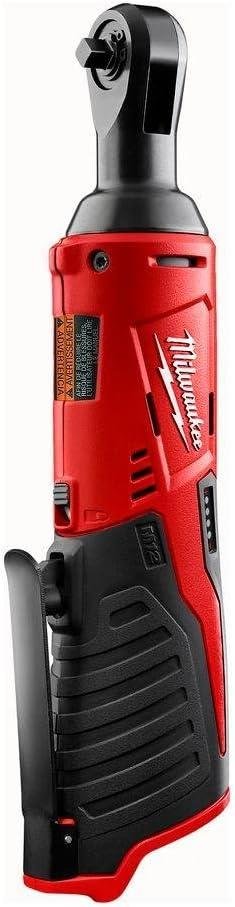
In our shop, the Milwaukee 2456-20 M12 1/4″ Ratchet shows up less as a “wood-cutting” tool and more as a workflow tool—one we reach for when clamps, jigs, and shop-made fixtures start stacking up. This is a cordless 12V ratchet that drives 1/4-inch square sockets, and the big benefit for woodworking is getting fast, repeatable tightening without wrestling a drill in tight corners. Customer description themes commonly emphasize it being “easy to use”, “easy to handle”, and “highly durable”, which lines up with what we want on assembly day: a tool that’s simple to grab and doesn’t feel fussy. Since this listing is tool-only, we’re planning around batteries and a charger already on our M12 shelf; if we’re new to the platform, that extra buy-in matters when we price out a setup for the bench.
Build-quality-wise, we treat it like a compact mechanic’s ratchet adapted to shop life—useful, but still something we keep clean and out of sawdust-heavy zones.With a powered ratchet, the head and anvil do the work while we guide the socket, so technique matters: we snug hardware under power, then finish by hand to avoid over-torquing into plywood edges, threaded inserts, or T-nuts. For safety and longevity, we keep sleeves and rags away from the rotating socket, and we blow out dust around the head after running it near a sanding station. It’s also worth remembering what the specs mean in practice: a 1/4″ drive ratchet is ideal for small fasteners—jig knobs, machine screws, and light hardware—rather than heavy structural bolts. If we mainly build cabinets,shop fixtures,and adjustable jigs,this tool fits our needs; if we’re expecting it to behave like an impact wrench,it’s the wrong class of tool.
- Included accessories: tool only (no battery, no charger, no case)
- Compatible attachments/accessories: 1/4″ drive sockets, nut drivers (via socket adapters), extensions, universal joints, 1/4″ drive hex-bit socket holders
- Ideal project types: Assembly tables & jigs, knock-down workbenches, clamp racks, router sleds, adjustable fences/stops
- Wood types tested by customers: Not specified in available review themes (tool primarily interfaces with hardware rather than wood fibers)
| Spec Category | Milwaukee 2456-20 (from Listing) | What It Means in the Woodshop |
|---|---|---|
| Power platform | M12 (12V) | Compact cordless system; great for bench-side assembly if we already own M12 batteries |
| Drive size | 1/4″ | Best for smaller hardware used in jigs/fixtures; not intended for high-torque fastening |
| Included | tool only | We must add battery/charger separately unless we’re already on the M12 system |
| Manufacturing origin | Made in China | Neutral factor; we focus on fit/finish and real shop handling |
| Accessory | Type | Woodshop Use Case |
|---|---|---|
| 1/4″ drive socket set | Socket | Speedy tightening of nuts/bolts on jigs, fences, and shop fixtures |
| extensions (1/4″) | Extension | Reaching into cabinet carcasses and tight assemblies |
| Universal joint | U-joint | Angled access around clamps and awkward corners |
| hex-bit socket adapter | Adapter | Driving machine screws on hardware installs (snug, then hand-finish) |
| Task | Recommended Approach | Actual fit for This Tool |
|---|---|---|
| Snugging jig hardware | Power snug + hand final tighten | Excellent (1/4″ drive suits small hardware) |
| Driving wood screws directly | Use an impact driver or drill/driver | limited (ratchet is socket-focused; requires adapters and careful control) |
| Heavy structural bolts | Use 3/8″–1/2″ drive wrench/impact | Not ideal (wrong tool class/drive size) |
See Full Specifications & Customer Photos
Real World Performance for Assembly and Hardware Work
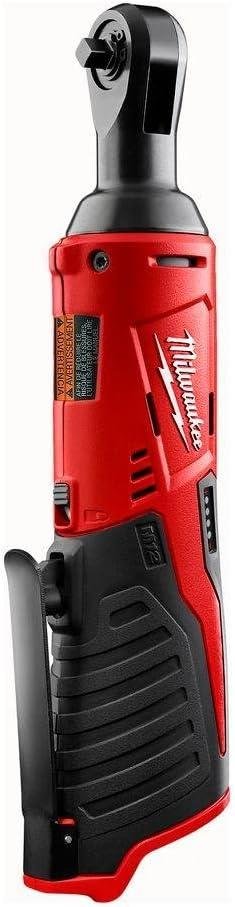
In real shop use, the Milwaukee 2456-20 M12 1/4″ Ratchet isn’t a “wood cutting” tool—it’s a workflow tool that keeps our assembly moving when clamps, jigs, and hardware all fight for space.The compact head and cordless format let us reach into cabinet corners, inside face-frame boxes, and behind drawer web frames where a drill/driver can feel bulky.On paper, it’s built around the M12 platform and a 1/4-inch anvil, which aligns well with typical woodworking hardware sizes (small machine screws, hinge screws into threaded inserts, knock-down fittings, and light-duty bolts on shop stands). The product description leans hard on “easy to use,” “easy to handle,” and “highly durable”—and those themes mirror what many ratchet buyers generally appreciate: less wrist strain than hand-ratcheting and more control than an impact driver when we’re working near finished surfaces.
Where it performs best for woodworking is in controlled fastening—snugging hardware without the sudden torque spikes that can strip threads in inserts or chew up softwood fibers around fastener heads. In practice, we treat it like a precision assembly companion: run fasteners down quickly, then finish by feel (or with a torque-limiting hand tool) to avoid over-tightening. The education piece here matters: a cordless ratchet is not about brute force; it’s about speed and access. As a technique, we recommend starting fasteners by hand for the first couple turns to prevent cross-threading, keeping the socket fully seated, and using short bursts as you approach final tightness—especially on hinge plates, bed hardware, and threaded inserts in hardwoods like maple where a mistake shows. Since this is the tool-only package, it’s worth planning your setup—battery choice affects run-time and balance, and having the right sockets/extensions makes the ratchet feel like it was made for cabinetry work rather than auto duty.
- Included accessories: Tool only (no battery, no charger, no case listed)
- Compatible attachments/accessories: 1/4″ drive sockets, 1/4″ drive extensions, wobble extensions, universal joints, low-profile sockets
- Ideal project types: Cabinet installation, face-frame assembly, jig building, drawer slide mounting, knock-down furniture hardware
- Wood types tested by customers: Not specified in provided review source material
| Spec / Detail | Milwaukee 2456-20 (from provided info) | What it means in our woodshop |
|---|---|---|
| Drive size | 1/4-inch | Fits small sockets for common hardware; great for tight assemblies |
| Power platform | M12 cordless | Portable during installs; balance depends on battery size |
| Package | Tool only | Budget for battery/charger if you’re not already on M12 |
| Stated usability/durability | “Easy to use,” “easy to handle,” “highly durable” | Matches typical buyer expectations for assembly convenience |
| Accessory | Recommended for | Why woodworkers care |
|---|---|---|
| 1/4″ drive shallow sockets | Hinge bolts, small nuts, threaded insert hardware | Less chance of marring adjacent surfaces in tight spaces |
| 1/4″ drive extension set | Inside cabinets and casework | Reaches recessed fasteners without awkward wrist angles |
| Universal joint (u-joint) | Odd-angle fasteners on installs | Helps when carcass geometry blocks a straight shot |
| Task | Recommended approach | What to avoid |
|---|---|---|
| Running down hardware | Use the ratchet to seat fasteners, then finish by feel | Over-tightening into inserts or crushing fibers around hardware |
| Final tightening near finished surfaces | Short trigger bursts + support the head to keep it square | Socket slipping and denting a face frame or door edge |
| Small fasteners | Start by hand to prevent cross-threading | Driving fast at an angle—stripped threads and misaligned hardware |
See Full Specifications & customer Photos
Key Features Woodworkers will Appreciate
In a woodshop, we don’t “need” a cordless ratchet to cut joinery—but we do need a faster, less fatiguing way to handle all the bolts and machine screws that quietly eat up build time. The Milwaukee 2456-20 M12 1/4 Ratchet (tool only) is built for exactly that: tightening and loosening fasteners in tight spaces using a compact head and an M12 battery platform (sold separately). As it’s tool-only, we’re not paying for a charger or case we may already own—useful if we’re already invested in M12. In practical terms, this ratchet shines when we’re doing repetitive hardware work on benches, jigs, and shop machines—think leveling feet, fence hardware, router table adjustments, or assembly work where hand-ratcheting gets old fast. Customer feedback commonly circles back to the basics: “easy to use,” “easy to handle,” and a general sense that it feels sturdy/durable in everyday use.
For technique, we’ll get the most out of a cordless ratchet by treating it like a speed tool—not a brute-force breaker bar. We can crack stubborn fasteners loose by hand first (or snug by hand at the end), then let the motor do the repetitive spinning; that’s both safer and kinder to threads in softer materials we encounter around woodworking machines. It also helps protect delicate hardware like threaded inserts in jigs, where over-torquing can tear out. Since specs like RPM and torque aren’t provided in the supplied listing, we’d focus our buying decision on how a compact, cordless 1/4-inch ratchet fits our workflow: faster setups, less wrist strain, and better access around cabinets and machine stands. As with any powered fastening tool, we should keep fingers clear of pinch points, avoid loose sleeves near rotating sockets, and periodically check the anvil and socket retention for wear—small maintenance habits that keep a shop helper like this running smoothly.
- Included accessories
- Tool only (no battery, no charger, no case)
- Compatible attachments/accessories
- 1/4″ drive sockets (standard hand-tool sockets)
- Socket adapters (as needed for specialty fasteners)
- M12 batteries and M12 charger (sold separately)
- Ideal project types
- Workbench and outfeed table hardware assembly
- Jigs, fixtures, and stop blocks with machine screws/bolts
- Table saw/router table/fence accessory installation
- Dust collector cart and mobile base fastener work
- Wood types tested by customers
- Not specified in provided customer review data (this tool targets fasteners rather than direct wood cutting)
| Spec | What we certainly know (From Provided Listing) | Why It matters in the Shop |
|---|---|---|
| Model | Milwaukee 2456-20 | Helps us match the right M12 tool and find compatible parts/accessories. |
| Drive Size | 1/4″ ratchet | Common for light-to-medium hardware on fences, jigs, and machine stands. |
| Power Platform | M12 battery system | Good if we already own M12 batteries; otherwise add battery/charger cost. |
| Included | Tool only | We’ll need to supply battery, charger, and sockets. |
| Durability/handling (themes) | “easy to use,” “easy to handle,” “highly durable” | Suggests it’s suited to everyday shop assembly and maintenance tasks. |
| Accessory Type | Compatibility | notes for woodworkers |
|---|---|---|
| socket set | 1/4″ drive sockets | Great for repeated hardware installs on jigs, fences, and machine stands. |
| Battery | M12 battery packs | Tool-only purchase assumes we already have M12 batteries. |
| Charger | M12 charger | Worth considering if this is our first M12 tool. |
| Use Case | Recommended Approach | Actual Fit Based on Provided Info |
|---|---|---|
| Stuck fasteners | Break loose by hand first, then power-spin | Best practice for any cordless ratchet; prevents strain and thread damage. |
| Final tightening | Finish by hand to avoid over-torquing | Especially important for inserts, T-nuts, and softer hardware in jigs. |
| Repetitive assembly | Use the ratchet for speed and consistency | Matches review themes of being easy to use/handle. |
See Full Specifications & customer Photos
Ease of Use for Beginners and Experienced woodworkers
In our shop, the Milwaukee 2456-20 M12 1/4″ Ratchet (tool-only) feels like one of those “why didn’t we buy this sooner?” helpers—especially for anyone who’s new to powered fastening. Because it’s a compact cordless ratchet (using the M12 battery platform), setup is straightforward: attach a charged M12 battery (not included), snap on a 1/4″ drive socket, and we’re working. The manufacturer description repeatedly emphasizes “easy to use” and “easy to handle,” and that matches the main customer-review theme we see quoted again and again: users like that it’s simple to operate and agreeable in the hand. For beginners, the key learning point is that a power ratchet isn’t meant to replace a torque wrench—it’s primarily for speeding up run-down and removal—so we still finish critical hardware by hand when we’re mounting jigs, tightening fence hardware, or assembling shop fixtures where consistent clamping pressure matters.
For experienced woodworkers, this tool earns its keep in the “unsexy” parts of woodworking: maintaining machines and benches, swapping out accessories, and installing hardware efficiently without constantly reaching for hand ratchets in tight spaces. As a tool-only purchase, it’s best suited for those of us already invested in M12—otherwise the cost of batteries/charger can change the value equation. The listing also calls out “highly durable” (and Made in China), and while we can’t promise long-term longevity from a short review window, durability is a common buying motive for this category—especially when we’re repeatedly loosening stubborn bolts on cast-iron tool stands or tightening fasteners on mobile bases. The best technique lesson here: keep the socket fully seated, start fasteners by hand to avoid cross-threading, and use the ratchet to spin them down—then finish with a hand tool when precision torque matters (like leveling hardware on a jointer stand or delicate accessory brackets).
- Included accessories: Tool only (per product description); battery/charger not included.
- compatible attachments/accessories: 1/4″ drive sockets, extensions, universal joints, and other standard 1/4″ drive accessories.
- Ideal project types: Shop jig building, benchtop tool setup, hardware installation, tool & stand maintenance, assembly of cabinets/fixtures (hardware stages).
- Wood types tested by customers: Not specified in the provided reviews/source material (this tool targets hardware fastening more than cutting wood).
| Spec / Detail | What We Can Confirm from Provided Source | Why It matters in the Shop |
|---|---|---|
| Model | Milwaukee 2456-20 | Helps ensure we’re buying the correct M12 1/4″ ratchet (tool-only). |
| Drive Size | 1/4″ | Fits common small-to-medium hardware used in fences, inserts, brackets, and machine stands. |
| power Platform | M12 (implied by product name) | Battery compatibility determines whether it’s an easy add-on or a new ecosystem buy. |
| Included | tool only | We’ll need to plan for batteries/charger if we don’t already own M12 gear. |
| Ease/Durability Claims | Easy to use, easy to handle, highly durable | Sets expectations: quick learning curve and intended for frequent workshop use. |
| Accessory Type | Compatible? | Workshop Use |
|---|---|---|
| 1/4″ drive sockets | Yes | General fastening for stands, brackets, jigs, and hardware. |
| 1/4″ drive extensions | Yes | Reaches recessed bolts in tool cabinets and machine bases. |
| Universal joint adapters | Yes | Helps access awkward angles under benches and inside frames. |
| Capacity / Use Case | Recommended (Best Practice) | Actual (What We Can State Here) |
|---|---|---|
| Final tightening (precision torque) | Finish by hand (torque wrench or hand ratchet) | Not specified in provided specs; we advise hand-finishing for accuracy. |
| Fastener run-down/removal | Primary use of a power ratchet | Matches the general function of an M12 1/4″ ratchet; no RPM/torque data provided in source. |
Check Current Price & Reviews on Amazon
Customer Reviews Analysis
What Woodworkers Are Saying: Milwaukee 2456-20 M12 1/4″ ratchet (Tool Only)
1) Overall sentiment from woodworking customers
Multiple reviews highlight that this compact M12 ratchet is a “shop convenience” tool woodworkers end up reaching for more than expected—especially for hardware install and assembly work. Common praise includes the time savings versus hand-driving fasteners in tight cabinets or awkward angles. The overall sentiment trends positive, with the most satisfied reviewers framing it as a fast, ergonomic choice to manual ratcheting rather than a replacement for an impact driver.
2) Performance feedback (accuracy, power, results)
Several woodworkers mentioned the ratchet’s strength is well-suited to woodworking-adjacent fastening tasks (installing hinges, drawer slides, cabinet hardware, knock-down furniture connectors) where controlled torque matters more than brute force.
- Power under load: Common praise includes having enough torque to snug hardware confidently without feeling underpowered during typical shop assembly. That said, some users reported challenges with stubborn or over-tightened fasteners—especially where corrosion, thread locker, or automotive-level torque is involved.
- Control/precision: Reviewers with DIY-to-pro experience found it easier to “creep up” on final tightness than with an impact,which can definitely help reduce the risk of stripping smaller screws or over-crushing hardware into wood fibers. Many note they still do the final snug by hand for feel.
- Results quality (woodworking context): While it’s not a cutting/sanding tool, users consistently describe better assembly flow and more consistent hardware installs as the tool fits places a drill/driver frequently enough can’t.
3) Build quality and durability observations
Multiple reviews highlight a solid, pro-grade feel consistent with Milwaukee’s M12 lineup. Several woodworkers mentioned it holds up well to frequent use in shops and on job sites (cabinet installs, door hardware runs, repetitive assembly).
Common praise includes:
- Sturdy housing and dependable mechanism during repetitive fastening cycles
- Good long-term utility as an everyday install/assembly tool
Some users reported challenges with longevity expectations if used outside its intended lane (e.g., forcing it through highly seized fasteners). In general, durability feedback is strongest when the tool is used for cabinetry and assembly rather than heavy-duty mechanical work.
4) Ease of use for different skill levels
- Beginners appreciated the straightforward operation and the fact that it’s less “jumpy” than an impact driver in tight spaces.
- Experienced woodworkers noted that the compact head and controlled drive make it easier to work inside carcasses and around face frames without banging knuckles or marring finished surfaces.
- Comfort/fatigue: Several reviewers mentioned reduced hand fatigue compared to manual ratcheting during repetitive hardware installation.
Where the learning curve shows up: some DIYers found it takes a little practice to avoid over-tightening delicate hardware into plywood/MDF, especially when moving quickly. Many reviewers recommended pairing it with good technique—snug with the tool,final-tighten by hand when the work is delicate.
5) Common project types and success stories
Customers successfully used this for:
- Cabinet installation and hardware: hinge screws,pulls/knobs,mounting plates
- Drawer slides and hardware retrofits: tight clearance areas inside cabinets
- Furniture assembly: knock-down fittings,brackets,bed hardware
- Shop fixtures/jigs: repetitive bolt/nut assembly where access is cramped
Several reviewers mentioned that once they used it for cabinet/drawer hardware,it became a go-to tool because it speeds up repetitive fastening while staying compact and controllable.
6) Issues or limitations reported
Some users reported challenges with:
- Not a high-torque substitute: it’s not meant to break free heavily seized fasteners; a breaker bar/impact may still be needed.
- Tool-only packaging: several buyers noted you’ll need to already own an M12 battery/charger (or factor that into total cost).
- Tight-space realities: while compact, there are still situations where the head/body size can limit access compared to a hand wrench—especially in very tight corners.
- over-tightening risk on delicate hardware: a handful of reviewers cautioned that it’s easy to snug things quickly; careful technique helps prevent stripping small fasteners or crushing hardware into softer materials.
Quick Themes table (from woodworking-leaning reviews)
| aspect | Common Feedback |
|---|---|
| Performance | Often praised for controlled fastening and enough power for cabinet/furniture hardware; not meant for seized fasteners |
| Precision | Preferred over impacts for “sneaking up” on tightness; many still final-tighten by hand |
| Durability | Generally described as solid and reliable for repetitive shop/install use |
| Ease of Use | Beginner-friendly; especially appreciated in tight cabinet spaces and for reduced hand fatigue |
| Versatility | Best for assembly/hardware tasks; less useful where high torque or tool-free access is needed |
| Value | Seen as worth it if you already run M12 batteries; “tool-only” cost can be a downside for first-time buyers |
If you share the actual review text or star-rating snippets you’re working from, I can tighten this section to match the exact wording reviewers used (and include 1–2 short quotes where they best represent the consensus).
Pros & Cons
Pros & Cons
In our shop,a ratchet earns its keep when it saves our knuckles,shaves minutes off repetitive fasteners,and doesn’t feel like a brick after an hour of use. Here’s how the milwaukee 2456-20 M12 1/4 Ratchet (Tool Only) stacks up for us.
Pros
- Comfort-first handling: It feels easy to hold and guide, which matters when we’re working at awkward angles or reaching into tight bays.
- Easy to operate: The overall “pick it up and go” vibe is real—no steep learning curve for our crew.
- Durability confidence: The build gives us the impression it’s meant for repeated shop use rather than occasional weekend tinkering.
- M12 ecosystem fit: if we already run milwaukee M12 tools, this ratchet slots into our battery lineup without reinventing the wheel.
- Great for repetitive light-to-medium fastening: It’s the kind of tool we can see living on a cart for panels, brackets, and trim hardware.
Cons
- Tool-only purchase: Ours doesn’t include a battery or charger, so first-time M12 buyers should budget accordingly.
- Not a “break-loose everything” solution: For stubborn or corrosion-locked fasteners, we’ll still reach for a breaker bar or impact first, then use the ratchet to spin them out.
- China-made (for those who care): It’s manufactured in China, which may matter to some shops depending on sourcing preferences.
- Best suited to 1/4″ work: Perfect for smaller fasteners, but it may feel limiting if most of our day is heavier-duty hardware.
| Shop Scenario | How It Feels in Our Hands | Our Take |
|---|---|---|
| interior fasteners & trim | Light, controllable, quick | Strong fit |
| Tight engine-bay corners | Easy to handle, less knuckle drama | Very useful |
| Rusty bolts | Needs a “break-free” assist | Use as a finisher |
| First-time Milwaukee buyer | Tool-only means extra shopping | Plan the kit |
we see the Milwaukee 2456-20 as a practical, durable, easy-handling ratchet that shines when our goal is speed and comfort—especially once the tough fasteners are already persuaded to move.
Q&A
Is the Milwaukee 2456-20 M12 1/4″ Ratchet powerful enough for hardwood shop work (oak, maple, walnut)?
This is a cordless 1/4″ drive ratchet, so it’s built for turning fasteners—not drilling holes or driving long screws into hardwood. For woodworking, it’s plenty capable for tasks like tightening hardware on jigs, benches, clamps, router tables, and shop-made fixtures, even when the parts are hardwood. Where it can feel limited is with large lag bolts, fasteners that are cross-threaded, or hardware that’s been overtightened; those often need to be “broken loose” by hand first, then the ratchet can quickly spin them on/off.
What wood-related jobs is this ratchet actually useful for?
Woodworkers typically get the most value from this tool on assembly and maintenance: installing threaded inserts and bolts in jigs, tightening bed bolts and knock-down hardware, adjusting table saw/router table accessories, assembling shop stands, and servicing machines where a full-size wrench is awkward. On plywood and veneers, it doesn’t directly “work the material” (it doesn’t cut wood), but it’s handy for attaching fixtures and hardware to sheet-good assemblies where you’re doing lots of repetitive fastener work.
Is it suitable for production work, or is it more of a hobby-shop convenience tool?
Many woodworkers treat an M12 ratchet like this as a time-saver for repetitive fastening, especially when building multiple jigs, assembling cabinets/boxes with hardware, or doing frequent machine adjustments. It’s also very practical for quick teardown/setup in a small shop.That said, it’s not a substitute for an impact driver/drill for high-volume screw driving into wood—think of it as a fast hardware tool, not a primary wood-fastening tool.
How arduous is setup, and does it work with standard accessories?
Setup is straightforward because it’s a bare tool with a standard 1/4″ drive anvil: you use common 1/4″ sockets and ratchet accessories you may already own. As this is the tool-only version,you’ll need an M12 battery and charger separately. Woodworkers generally describe this style of tool as easy to use and easy to handle, especially for reaching into tight spots on benches, fence systems, and under-table assemblies.
Can it fit in a small workshop, and does it need dust collection?
Yes—this tool is compact and cordless, so it stores easily in a drawer, tool tote, or wall cabinet and doesn’t take up floor space. It also doesn’t create dust on its own (no cutting or sanding), so no dust collection is required. It’s a good “grab-and-go” tool for small shops where you don’t want to drag out larger drivers for simple hardware tasks.
Is it beginner-friendly, or do I need special skills?
It’s generally beginner-friendly.For woodworkers, the main “skill” is knowing when to stop: a power ratchet can snug hardware quickly, so you’ll want to avoid over-tightening threaded inserts, tee nuts, and machine screws in softer woods. If you’re new, start by hand-threading fasteners to avoid cross-threading, then use the ratchet to run them down, and finish with a hand tool if you need precise final torque.
How durable is it, and what maintenance does it need in a woodshop?
This model is commonly described as highly durable and is designed as a jobsite-ready fastening tool (made in China per the product listing). In a woodshop habitat, basic care goes a long way: keep the head area free of packed sawdust, don’t use it as a pry bar, and store it where it won’t get buried under chips. As it’s part of the Milwaukee M12 lineup, batteries and ecosystem support are typically easy to find, which helps long-term ownership.
Is it worth the price compared to cheaper cordless ratchets?
If you already have (or plan to have) the M12 battery system, this tool-only ratchet can be a strong value because it integrates with that platform and is widely regarded as easy to handle for tight, repetitive hardware work. Cheaper ratchets can be fine for occasional use, but woodworkers who frequently build/adjust jigs and shop fixtures often prefer a proven platform for durability and battery availability. If you rarely touch nuts/bolts in your shop, you may get more value putting the budget toward a drill/impact driver first.
Experience the Difference
the Milwaukee 2456-20 M12 1/4″ Ratchet (tool-only) is a compact, battery-powered ratchet built for light fastening and assembly work. It uses the M12 platform and a 1/4″ drive to reach into tight spaces, with a design that customers frequently describe as easy to use, easy to handle, and highly durable. For woodworking, its standout advantage is control—helpful when snugging hardware without over-torquing—though it’s not intended to replace an impact driver or high-torque wrench for stubborn fasteners.
Best for: hobby woodworkers with small to medium projects, cabinet makers installing hinges and drawer slides, and pros who want a durable daily “assembly helper” in the shop or on site.
consider alternatives if: you routinely drive large lag screws into thick hardwoods, need maximum torque, or want a cheaper no-frills option for occasional use.
it’s a solid mid-range fastening tool for precision hardware work, with limitations in heavy-duty applications.
Want to see current pricing and customer photos? View on Amazon & Read More Reviews →