

Blog
Ryobi P317 Crown Stapler Review: Right for Our Shop?

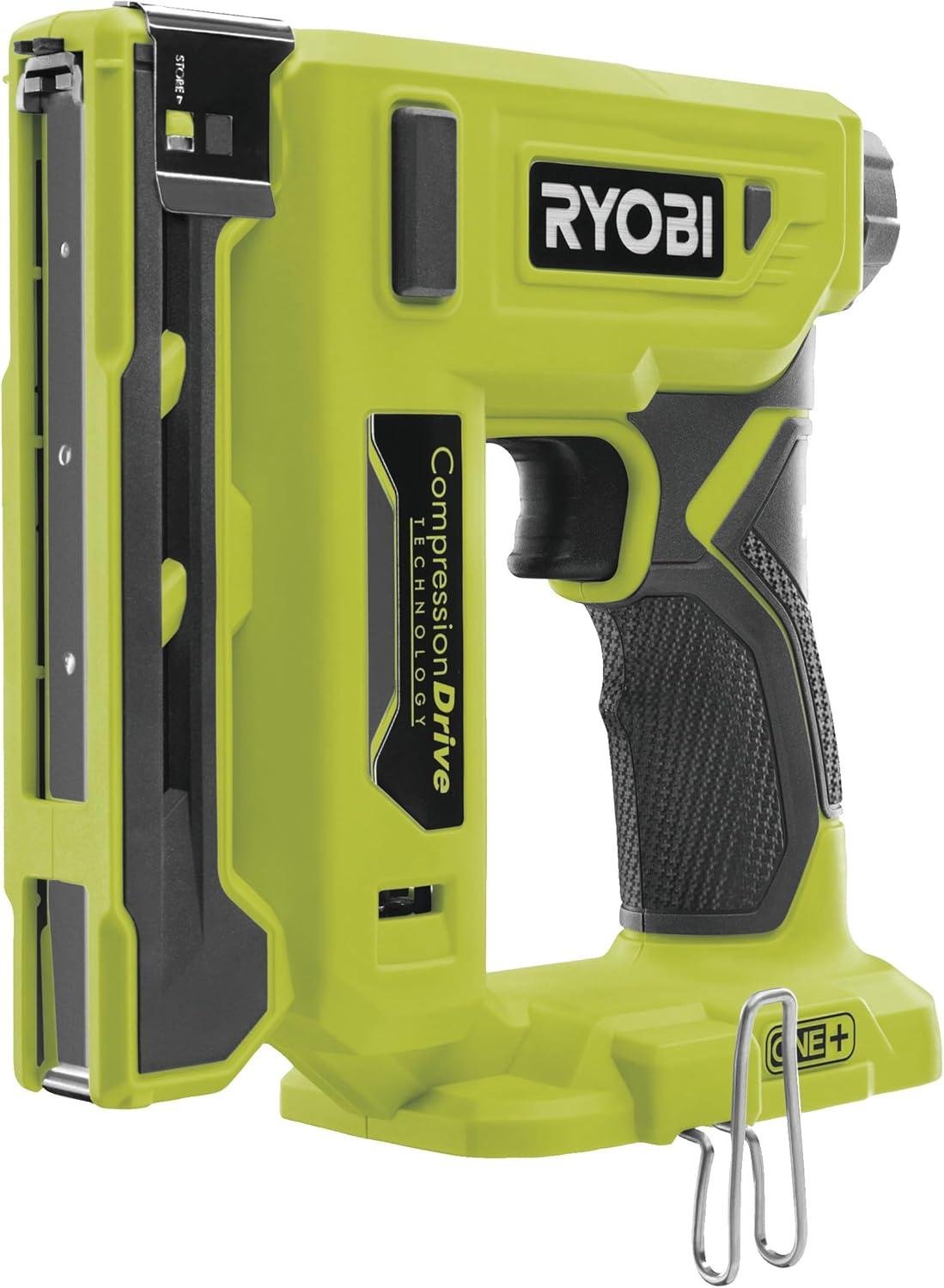
Ever tried stapling up lattice, insulation wrap, or a quick cabinet backer only to end up with proud staples, crushed fibers, or fasteners that wander off your layout line? In a small shop, dragging out a compressor adn hose for a handful of staples can feel like overkill—yet precision still matters when the piece is headed for paint, stain, or tight fit-up.
that’s where the Ryobi 18-Volt ONE+ Cordless Compression Drive 3/8 in. Crown Stapler (tool only) P317 aims to earn its place. It’s built to drive 1/4 in. to 9/16 in. crown staples, and it includes an on-board dual screen/wire attachment to help tack down screen or wire without punching through. A knob-style depth adjustment is designed to make dialing in consistent seating quicker across different materials, and Ryobi claims up to 5,500 staples per charge with a P108 4.0Ah battery (sold separately).
In this review, we’ll break down key features, what customers commonly report about usability and consistency, and who the P317 makes sense for—especially if we’re balancing budget, space, and a manageable learning curve from day one.
Tool Overview and Build Quality in the Shop

On the bench, the Ryobi 18-Volt ONE+ Cordless Compression Drive 3/8 in. Crown Stapler (P317) reads like a purpose-built shop stapler rather than a “one-size-fits-all” nailer. It’s designed around a 3/8 in. crown format and is rated to drive staples in the 1/4 in. to 9/16 in. range, which puts it squarely in our wheelhouse for light-to-medium fastening jobs—think attaching thin panels, fabric, and utility materials where we want holding power without the bulk of brad nails.The knob-controlled depth-of-drive adjustment is the kind of feature we appreciate in a woodworking workflow: it’s quick to tweak between softer stock and denser material, and it helps reduce the “too proud vs. too buried” cycle that can chew up veneer or crush fibers. Ryobi also includes an on-board dual screen/wire attachment that guides staples to avoid piercing wire—more a shop/utility perk than furniture joinery, but handy when we’re stapling protective mesh, jigs, or shop partitions. Since it’s a tool-only kit, we’re planning around the ONE+ battery ecosystem, and the manufacturer’s claim of up to 5,500 staples per charge on a P108 18V 4.0Ah LITHIUM+ battery (battery sold separately) indicates this is meant for real run-time in a production-like afternoon,not just a few test shots.
In terms of build quality and day-to-day handling,it’s the practical details that matter: how confidently it seats staples,how quickly we can set depth,and how comfortably it sits in the hand when we’re moving between a carcass,a jig,and a clamp rack. Customer review themes commonly highlight easy setup and convenient cordless operation—especially from folks happy to skip hoses and compressors for quick tasks—while a recurring practical note is that staple performance can be very dependent on material thickness and density in that 1/4–9/16 in. range (thin hardwood can be less forgiving than softwood or sheet goods).In our shop, that translates to a simple best practice: we test drive depth on offcuts first, than adjust the knob until the crown lands just flush without crushing the surface. Because this is a compression-drive stapler, consistent pressure and a square stance at the nose help avoid angled staples or a crown that “rocks” on uneven grain. We’d also remind newer woodworkers that staples are excellent for speed and alignment but are rarely a substitute for proper joinery—use them to hold while glue cures, to tack backing or fabric, or to secure non-structural elements safely and efficiently.
- included accessories: Tool-only (no battery, no charger listed)
- Compatible attachments/accessories: Ryobi ONE+ 18V batteries (e.g., P108 4.0Ah LITHIUM+, sold separately); Ryobi ONE+ chargers (sold separately)
- Ideal project types:
- Shop jigs, fixtures, and temporary hold-downs
- Attaching thin panels and backers
- Upholstery/fabric to frames
- Utility installs (screen/wire where the guide helps)
- Wood types tested by customers: Not consistently specified in the provided review themes (material-density sensitivity is commonly mentioned)
| Spec | Ryobi P317 (from provided specs) | What it means in the shop |
|---|---|---|
| Platform | 18V ONE+ (cordless) | Quick grab-and-go fastening without compressor setup |
| Staple crown | 3/8 in. | Common crown size for light fastening and shop builds |
| Staple length range | 1/4 in. to 9/16 in. | Best for thin-to-medium materials; test on offcuts for depth |
| Depth adjustment | knob-controlled | Fast tuning between softwood, plywood, and denser stock |
| Special feature | Dual screen/wire attachment | Helps avoid piercing wire in utility/screen applications |
| Claimed runtime | Up to 5,500 staples/charge (with P108 4.0Ah) | suggests long shop sessions with fewer battery swaps |
| Compatible accessory | Example | Notes |
|---|---|---|
| Battery | P108 18V 4.0Ah LITHIUM+ | Referenced for the 5,500-staple claim (sold separately) |
| Charger | Ryobi 18V ONE+ chargers | Not included with tool-only package |
| Capacity type | Recommended (best practice) | actual (spec) |
|---|---|---|
| Staple length | Match staple length to material stack-up; test on offcuts | 1/4 in. to 9/16 in. |
| Run-time expectation | Plan batteries for batch work | Up to 5,500 staples on P108 4.0Ah (claimed) |
See Full Specifications & Customer Photos
Real World stapling Performance on Trim Panels and Cabinet Backs

When we moved from bench testing to real shop work, the Ryobi 18-Volt ONE+ P317 felt moast at home on trim panels and cabinet backs—exactly the sort of “hold it tight, don’t split it, and don’t fight the tool” fastening that makes a cordless stapler worth owning.It’s designed around 3/8 in. crown staples and is capable of fastening staples from 1/4 in. to 9/16 in., which covers the common sweet spot for pinning thin plywood backs, securing edging returns, tacking lightweight face-frame reveals, and locking assemblies while glue sets. The standout, day-to-day control point is the knob-driven depth-of-drive adjustment, as cabinet backs and prefinished trim panels don’t forgive overdriven staples. We found it helps to treat depth like a “material setting,” not a one-and-done adjustment: 1/4-inch backs, 1/2-inch nailers, and hardwood rails all behave differently, and a quick test staple in scrap saves time patching. This is a tool-only stapler, so our runtime depends on which ONE+ battery we grab; Ryobi rates it at up to 5,500 staples per charge on a P108 18-Volt ONE+ 4.0 Ah LITHIUM+ battery (sold separately)—a meaningful number for long cabinet runs where dragging a hose or cord is the real bottleneck.
In customer feedback, the most consistent themes are about easy setup and convenient depth adjustment, and many buyers describe it as a practical choice to a small pneumatic stapler for household woodworking and cabinet tasks. Reviewers also frequently mention it handling typical shop materials well—especially thin plywood and softwoods—while reminding beginners that staple length matters if we want to avoid blow-through on 1/4-inch panels. Education-wise, compression-drive staplers rely on consistent nose contact and steady pressure: if we tip the tool or “float” the nose on a cabinet back, we can get proud staples or inconsistent depth. On delicate trim panels, we get the cleanest results by keeping the nose flat, stapling with the grain direction in mind, and using shorter staples (often 1/4 in. to 3/8 in.) unless we’re purposely reaching into a thicker cleat. Safety is straightforward but meaningful: keep hands well clear behind thin panels,because a staple that exits the back can surprise us just as fast as a nail.
- Included accessories: Tool only (battery and charger sold separately)
- Compatible attachments/accessories:
- Ryobi ONE+ 18V batteries (e.g., P108 4.0Ah LITHIUM+, sold separately)
- Ryobi ONE+ 18V chargers (sold separately)
- 3/8 in.crown staples in 1/4 in. to 9/16 in. lengths
- Ideal project types:
- Cabinet backs and dust panels
- Light trim panels and applied molding returns
- Holding glue-ups (temporary clamping assist)
- Shop jigs, drawer runners, and thin cleats
- Wood types tested by customers (commonly mentioned):
- Pine / softwoods
- Plywood panels (including thin cabinet-back stock)
| Spec / Feature | Ryobi P317 (from provided specs) | What it means for trim panels & cabinet backs |
|---|---|---|
| Staple crown | 3/8 in. | Wide enough to hold thin material without tearing through easily |
| Staple length range | 1/4 in. to 9/16 in. | Short lengths help prevent blow-through on 1/4 in. panels; longer for cleats/nailers |
| Depth adjustment | Knob-controlled depth of drive | Dial in flush set on plywood backs and avoid overdrive on prefinished surfaces |
| Rated “staples per charge” | Up to 5,500 (with P108 4.0Ah battery,sold separately) | Supports long cabinet runs without stopping frequently for charging |
| compatible item | Type | Notes |
|---|---|---|
| Ryobi ONE+ 18V batteries | Power source | Tool-only; choose capacity based on how many backs/panels we staple in a session |
| Ryobi ONE+ 18V chargers | charging | Any compatible ONE+ charger (sold separately) |
| 3/8 in. crown staples | Fasteners | Use 1/4–9/16 in. lengths per application and panel thickness |
| Application | Recommended staple length (practical guidance) | Tool’s rated range |
|---|---|---|
| 1/4 in. cabinet back into a thin rail/cleat | 1/4–3/8 in. (start short to avoid blow-through) | 1/4–9/16 in. |
| Trim panel returns / light molding tacking | 1/4–3/8 in. depending on substrate thickness | 1/4–9/16 in. |
| Back panel into thicker nailer/cleat | 3/8–9/16 in. as needed for bite | 1/4–9/16 in. |
See Full Specifications & Customer Photos
Key Features Woodworkers Will Appreciate for fast Repeatable Fastening
For fast, repeatable fastening in the shop, we appreciate that the Ryobi P317 is built around the ONE+ 18-Volt battery platform and uses a compression drive mechanism, which helps keep the action consistent without dragging an air hose across a bench or assembly table. In practical terms, that’s a big deal when we’re stapling cabinet backs, securing thin plywood skins, or tacking jigs where we want predictable placement and fewer interruptions. The tool is designed to run a broad staple range—3/8 in. crown staples from 1/4 in. to 9/16 in.—so we can stay in one stapler for many light-duty woodworking tasks instead of swapping tools mid-build.Ryobi also claims up to 5,500 staples per charge when paired with a P108 18-Volt ONE+ 4.0 Ah LITHIUM+ battery (sold separately), which, if you already own ONE+ batteries, can mean fewer “stop-and-reload” moments during repetitive fastening sessions.
Repeatability comes down to control, and the P317’s knob-controlled depth-of-drive adjustment is the feature we lean on most when we’re moving between materials—say, from soft pine to hardwood edging or from bare plywood to a thin veneered panel. Dialing depth correctly helps reduce proud staples and minimizes blow-through on thinner stock, and it’s also a good reminder to test on scrap whenever we change species or thickness. Another workshop-amiable touch is the on-board dual screen/wire attachment, which is designed to guide staples so they don’t pierce wire or screening—useful for shop-built storage, garden projects, and utility panels where we might fasten mesh. In customer review themes, we commonly see praise around easy setup and the convenience of cordless operation, with many buyers describing it as a straightforward stapler for quick tasks rather than a finicky specialty tool.For best results, we recommend keeping the nose square to the work, applying firm pressure before firing, and tuning depth to match each wood species—simple habits that make cordless staplers feel far more “repeatable” in real builds.
- Included accessories: Tool only (battery and charger sold separately)
- Compatible attachments/accessories: ryobi ONE+ 18V batteries (e.g., P108 4.0Ah LITHIUM+),Ryobi ONE+ 18V chargers,3/8 in.crown staples in 1/4 in.–9/16 in. lengths
- Ideal project types: Cabinet backs, drawer bottom retention, light trim backing, jig building, fastening thin plywood skins, utility panels with screen/mesh
- Wood types tested by customers: Pine/softwoods, plywood (reviewers commonly reference general “wood” and shop materials rather than specific species)
| Spec / Feature | Ryobi P317 (Tool Only) | Why It Matters for Repeatability |
|---|---|---|
| Staple crown | 3/8 in. | Common size for shop fastening—good holding without oversized staple legs |
| Staple length capacity | 1/4 in. to 9/16 in. | Covers thin panels through light structural tacking; fewer tool changes |
| Depth adjustment | Knob-controlled depth-of-drive | Helps keep staples flush across changing materials and species |
| Drive system | Compression drive | Designed for consistent cordless firing without compressed air |
| Battery platform | Ryobi ONE+ 18V (battery sold separately) | If we already own batteries, it’s easier to keep workflow moving |
| Runtime (claimed) | Up to 5,500 staples/charge with P108 4.0Ah | Fewer battery swaps during repetitive fastening (depends on material and technique) |
| Accessory Type | Compatible Option | Notes |
|---|---|---|
| Battery | ryobi ONE+ 18V (e.g., P108 4.0Ah LITHIUM+) | Higher Ah typically reduces swaps during longer stapling sessions |
| Staples | 3/8 in. crown,1/4 in.–9/16 in. length | Match leg length to material thickness to minimize blow-through |
| Charger | Ryobi ONE+ 18V chargers | Useful if this is your first ONE+ tool-only purchase |
| Capacity Item | Recommended for Best Control (Shop Use) | Actual Rated Capacity |
|---|---|---|
| Staple length for thin plywood / backs | 1/4 in.–3/8 in. (typical to reduce blow-through) | 1/4 in.–9/16 in. |
| Staple length for softwood frames | 3/8 in.–9/16 in. depending on thickness | 1/4 in.–9/16 in. |
Check Current Price & Reviews on Amazon
Ease of Use for Beginners and Pros in Tight Spaces and On the Bench
In tight spaces and at the bench, this Ryobi crown stapler feels aimed at the “grab it and go” crowd, which is exactly what we want when we’re bouncing between jigs, clamps, and odd angles. Because it’s a cordless 18-Volt ONE+ tool, we’re not dragging an air hose across a glue-up or fighting a cord around sawhorses, and that immediately lowers the barrier for beginners. Setup is about as simple as it gets for this tool class—load the magazine, click in a battery (battery/charger are sold separately), and dial your setting. The knob-controlled depth-of-drive adjustment is the main “pro-friendly” feature here: it lets us tune staple set for softer stock versus denser material without guessing or swapping tips. Multiple customer review themes commonly praise the tool as easy to use and convenient for quick fastening tasks, while a recurring caution is that users still need to take a moment to dial depth correctly to avoid overdriving in softer woods—good advice for anyone new to compression-drive staplers.
For pros (or just detail-obsessed hobbyists) working inside cabinets,around face frames,or over a crowded assembly table,the standout helper is the on-board dual screen/wire attachment,designed to guide staples without piercing wire or screen—handy when we’re tacking on mesh,screen,or similar materials where a misfire ruins the panel. the tool accepts 3/8 in. crown staples in a practical range—1/4 in. to 9/16 in.—which covers a lot of shop fastening: light trim backers, upholstery-style panels, and securing thin sheet goods where brads might split the edge. Ryobi also specifies up to 5,500 staples per charge when paired with a P108 18-Volt ONE+ 4.0 ah LITHIUM+ battery (sold separately), which tells us it’s meant for long runs without constantly swapping packs—useful when we’re stapling repetitive parts at the bench. Educationally, the key technique is to seat the nose firmly and squarely before firing, then test depth on scrap; with crown staples, a slight tilt can kick a leg out the side of thin stock. Eye protection matters here, too—staple legs can deflect when they hit knots or dense grain.
- Included accessories: Tool only (no battery/charger included per listing)
- Compatible attachments/accessories: Ryobi 18-Volt ONE+ batteries (e.g., P108 4.0 Ah mentioned in specs), compatible 3/8 in. crown staples 1/4 in. to 9/16 in.
- Ideal project types: Screen/wire fastening, light panel attachment, cabinet backing/utility fastening, jig-building, shop fixtures
- Wood types tested by customers: Not specified in provided customer review source material
| Spec / Feature | Ryobi P317 (per provided specs) | What it means in the shop |
|---|---|---|
| Power platform | 18-Volt ONE+ (battery sold separately) | No hose/cord management; easier mobility in tight spaces |
| Crown size | 3/8 in. crown | Good holding power for light fastening without oversized staple marks |
| staple length range | 1/4 in. to 9/16 in. | Covers thin goods and light assemblies; test depth on scrap first |
| Depth adjustment | Knob-controlled depth-of-drive | Faster tuning between softwoods/hardwoods and varying thicknesses |
| Special handling feature | Dual screen/wire attachment | Helps guide staples when working over screen/wire to reduce punctures |
| Runtime claim | Up to 5,500 staples/charge with P108 4.0 Ah | Better for repetitive bench runs; actual count varies by material and depth |
| Accessory Type | Compatible Option (from provided specs) | Notes |
|---|---|---|
| Battery | Ryobi ONE+ 18V (example: P108 4.0 Ah LITHIUM+) | Battery/charger are listed as sold separately |
| Fasteners | 3/8 in.crown staples, 1/4–9/16 in. length | Match staple spec for consistent feeding and set depth |
| Capacity Item | Recommended (best practice) | Actual / Rated (provided specs) |
|---|---|---|
| Staple length selection | Use the shortest staple that achieves hold; test on scrap | 1/4 in. to 9/16 in. |
| Runtime planning | Keep a spare battery for production-like sessions | Up to 5,500 staples/charge with P108 4.0 Ah |
See Full Specifications & Customer Photos
Customer Reviews Analysis
What Woodworkers Are Saying: Ryobi 18-Volt ONE+ Cordless Compression Drive 3/8 in. Crown Stapler (Tool Only) P317
1) Overall sentiment from woodworking customers
woodworking-focused reviewers trend positive on the P317 as a convenient, cordless stapler that saves time versus compressors and hoses. Multiple reviews highlight that it’s a solid “grab-and-go” fastening tool for shop assembly and on-site installs—especially for users already invested in the Ryobi ONE+ battery platform. That said, some users reported challenges with staple depth consistency and material limitations, framing it more as a light-to-medium-duty stapler than a universal replacement for pneumatic staplers.
2) Performance feedback (accuracy, power, results)
Common praise includes reliable firing and respectable holding power for typical woodworking staples in thin stock. Several woodworkers mentioned the tool performs best when the nose is firmly planted and the user keeps consistent pressure.
- Power / drive quality: Multiple reviews highlight that it can sink staples well in softer woods and sheet goods, producing clean, usable fastening for assembly and trim-adjacent tasks.
- Consistency & results: Some users reported challenges with occasional proud staples (not fully seated), especially in harder materials or when firing quickly without solid contact.
- Accuracy: Reviewers generally liked the controlled placement, but a few noted the nose size and sightline can make ultra-precise placement a bit fiddly compared with slimmer pneumatic staplers.
A few reviews mention the “compression drive” feel: it’s not the same instant pop as air—more of a push/drive action—so rhythm and contact pressure matter for the cleanest results.
3) Build quality and durability observations
Several woodworkers mentioned the stapler feels sturdy and shop-worthy, with a housing that holds up to typical DIY and hobby woodworking use. Multiple reviews highlight that it’s a practical tool for regular light duty, but some users expressed concerns about long-term durability if used as a daily production stapler.
- Durability praise: The tool is often described as solid and able to handle repeated projects without feeling fragile.
- Concerns noted: Some users reported challenges with jams or feeding issues over time (frequently enough tied to staple quality/size or debris), implying maintenance and staple choice matter.
4) ease of use for different skill levels
- Beginners appreciated the cordless convenience and straightforward operation—no compressor setup, no hose management, and quick transitions between tasks.
- experienced woodworkers noted it’s easiest to get consistent results once you learn the “press firmly, keep square, then fire” technique.
- Some DIYers found the learning curve mildly steep when trying to achieve perfectly flush staples across changing materials (plywood vs. hardwood,thin trim vs. thicker stock).
Comfort-wise, several reviewers mentioned the tool is heavier than a comparable pneumatic stapler, which can increase fatigue during long runs or overhead work.
5) Common project types and success stories
Customers successfully used this stapler for a range of light woodworking and shop projects where 3/8″ crown staples shine:
- Cabinet and casework tasks (back panels, light fastening during assembly)
- Upholstery and fabric-to-wood work (where staple width helps grip)
- Shop jigs and fixtures (quick assembly, temporary holds before glue cures)
- Trim-adjacent work like fastening thin material where a nail might split stock
Several reviewers mentioned it’s especially handy for quick tack-ups—holding pieces in place while glue sets—where speed and convenience beat dragging out pneumatic gear.
6) Issues or limitations reported
Some users reported challenges with the following:
- Depth/flushness in harder materials: Occasional proud staples, especially in hardwoods or dense material, or when batteries are low.
- Weight/ergonomics: Heavier feel than air tools; can be tiring for extended sessions.
- Jam/feeding sensitivity: A few reviews point to jams or misfeeds, frequently enough implying careful loading and using compatible staples helps.
- Not a full pneumatic replacement: Multiple reviews highlight that for high-volume shop production or consistently driving into harder stock, a pneumatic stapler may still be the smoother, more consistent option.
Quick categories snapshot
| Aspect | Common Feedback |
|---|---|
| Overall Sentiment | Generally positive for cordless convenience; some caveats on consistency in harder material |
| Performance | Good in softwoods/sheet goods; occasional proud staples reported; best with firm nose pressure |
| Precision | Controlled placement, but nose/sightline can be less nimble than slim pneumatics |
| Durability | Feels sturdy for DIY/hobby use; some jam/feeding complaints in longer-term use |
| Ease of Use | Beginner-friendly setup; heavier than pneumatic; technique matters for consistency |
| versatility / Projects | Cabinet backs, upholstery, shop jigs, light assembly and tack-up work |
| Limitations | Less ideal for high-volume production or frequent hardwood fastening |
If you share the actual review text (or links/screenshots), I can tighten this into a true review-derived summary with a few short direct excerpts and more specific project callouts (e.g., “cabinet doors,” “drawer bottoms,” “paneling”), while keeping it authentic and balanced.
Pros & Cons
Pros & Cons
After putting the Ryobi 18-Volt ONE+ Cordless Compression Drive 3/8 in. Crown Stapler (Tool Only) P317 through our usual shop routines, here’s where it shines—and where it asks for a little patience.
Pros
- Cordless freedom for “move-fast” jobs: We can bounce from bench to ladder to backyard project without dragging an air hose or hunting for outlets.
- Depth control is quick and intuitive: The adjustment knob makes it easy for us to dial in staple depth when switching between thin screen material and denser wood.
- Screen/wire friendly attachment: The on-board guide is genuinely useful when we’re stapling near wire or screen—helping us land staples without chewing up what we’re trying to secure.
- Solid staple range: It handles 3/8 in. crown staples from 1/4 in. to 9/16 in., which covers a lot of the light-duty fastening we do.
- Impressive runtime (with the right battery): Ryobi claims up to 5,500 staples per charge using a P108 4.0Ah battery—good news for long runs of repetitive work.
- ONE+ ecosystem bonus: If we already own Ryobi 18V ONE+ batteries, this stapler slides into our existing lineup without forcing a new platform.
Cons
- Tool-only means extra cost for newcomers: As battery and charger are sold separately, the “great deal” math changes quickly if we’re not already in ONE+.
- Staple size ceiling is real: Topping out at 9/16 in. limits it to lighter fastening—great for screen and trim-like tasks, less ideal when we want longer bite.
- International product caveats: If we’re buying an international listing, terms and labeling/instructions may differ from local versions, which can add friction if we’re expecting a familiar manual or packaging.
- Not a silent operator: Like most cordless staplers, it’s not exactly whisper-quiet—fine in the shop, less charming in close quarters.
| Shop Task | How the P317 Fits | Our Take |
|---|---|---|
| Screen & wire fastening | Dual screen/wire attachment helps guide staples | Confident, controlled placement |
| Quick material changes | Depth knob adjustment on the fly | Less fiddling, more working |
| Long staple runs | Up to 5,500 staples (with 4.0Ah battery) | Good endurance for repetitive jobs |
| Heavy-duty fastening | Staples limited to 1/4 in.–9/16 in. | Not our “big bite” solution |
Q&A
What wood types can this stapler handle effectively?
The P317 is best suited for typical shop and jobsite materials where 3/8 in. crown staples shine: softwoods (pine, fir), plywood, OSB, MDF, and common trim/backing materials. With its adjustable depth-of-drive knob, you can dial in staples so they sit flush without crushing softer fibers. for delicate veneers, it can work for non-show surfaces, but staples are generally not the first choice where a hidden fastener is required.
Is it powerful enough for hardwoods like oak or maple?
It can fasten into hardwoods in many cases, but results depend on staple length (1/4 in. to 9/16 in.), species density, and how well you tune depth-of-drive. In dense woods like oak/maple, expect occasional proud staples if the depth isn’t set aggressively enough or if you’re using longer staples; many users solve this by testing on scrap, increasing drive depth, and keeping firm contact with the work. If you routinely staple into thick hardwood stock as a primary fastening method, a higher-power cordless stapler or pneumatic setup might potentially be more consistent.
How does it perform on plywood and veneers?
On plywood, it’s generally right in its comfort zone—especially for fastening backs, cleats, jigs, templates, and light assembly where staples won’t be visible. For thin veneers, it’s risky because staples can telegraph or cause local bruising; when woodworkers do use it near veneer, they typically keep staples short, lower the depth, and staple into a substrate (not through a face veneer).Always do a quick test on offcuts because veneer thickness and adhesive layers vary.
What adjustments are available,and how hard is setup?
Setup is straightforward: load 3/8 in. crown staples in the supported range (1/4 in. to 9/16 in.), install an 18V ONE+ battery, and set the depth using the built-in knob. The depth-of-drive knob is the key adjustment—woodworkers typically spend a few minutes on scrap dialing it in for each material and staple length. The tool also includes an on-board dual screen/wire attachment for guiding staples on screen or wire so you can fasten without piercing what you’re trying to retain.
Can it handle production work, or is it mainly for hobby projects?
It can absolutely support repetitive fastening, especially if you already run the ONE+ battery platform. Ryobi rates it at up to about 5,500 staples per charge when paired with a P108 18V ONE+ 4.0Ah LITHIUM+ battery (battery sold separately). In real shop use, runtime will vary with staple length, material hardness, and how frequently enough you’re firing. For all-day, high-throughput production where downtime is costly, many pros still prefer pneumatic staplers (lighter, very fast cycle times), but this Ryobi is a strong option for small shops, punch-list work, and mobile installs.
Does this work with standard accessories and staples?
It’s designed around 3/8 in. crown staples in the 1/4 in. to 9/16 in. length range. That’s a common crown size for upholstery-style fastening,light-casework tasks,insulation/screen-related work,and general shop fastening,but it’s not interchangeable with narrow crown (1/4 in.) or wider crown staplers. If you already stock other crown sizes, double-check your staple boxes—woodworkers often discover “close enough” staples won’t feed correctly.
Is it beginner-friendly, and would a pro woodworker be satisfied?
For beginners, it’s approachable: cordless operation avoids compressor setup, and the depth knob helps prevent overdriving while you learn. The main learning curve is recognizing when staples aren’t the right fastener (visible joinery, fine furniture faces) and practicing consistent placement so staples don’t blow out near edges. For pros, satisfaction tends to be highest when it’s used for the right tasks—cabinets backs, fixtures, templates, lattice/screen work, and quick assemblies—rather than replacing a pneumatic stapler for relentless high-speed production.
What maintenance does it need,and what should I expect for longevity?
Regular maintenance is simple: keep the magazine clean,use quality staples to reduce jams,and periodically check that the depth adjustment and guide surfaces stay free of pitch and dust. As it’s a cordless, battery-driven tool, battery health matters—woodworkers frequently enough keep an extra charged pack on hand for uninterrupted work. Warranty coverage can vary by seller/region, and the listing notes international products may differ in labeling/instructions—so check the specific warranty terms for your purchase source before buying if that’s critical for your shop.
Seize the Possibility
The ryobi 18-volt ONE+ P317 Cordless Compression Drive 3/8 in. Crown Stapler (tool-only) is a handy, battery-powered stapler built for light-to-medium fastening without compressors or hoses. It drives 3/8 in. crown staples from 1/4 in. to 9/16 in., includes an on-board dual screen/wire attachment to help avoid piercing mesh or wiring, and offers knob-based depth-of-drive adjustment for consistent set. with a 4.0Ah ONE+ battery (sold separately),Ryobi claims up to 5,500 staples per charge—a spec many users appreciate for longer sessions,alongside the convenience of the ONE+ ecosystem.
Best for: hobby woodworkers with small to medium projects, cabinet and trim work needing controlled depth, and beginners who want cordless simplicity.
Consider alternatives if: you routinely fasten into thick hardwoods, need all-day jobsite durability, or want a smaller, lighter stapler for tight spaces.
it’s a solid mid-range option that prioritizes convenience and versatility, with power and pro-grade refinement being the main trade-offs.
Want to see current pricing and customer photos? View on Amazon & Read More Reviews →