

Blog
HARDELL Mini Rotary Sander Review: Right for Our Shop?

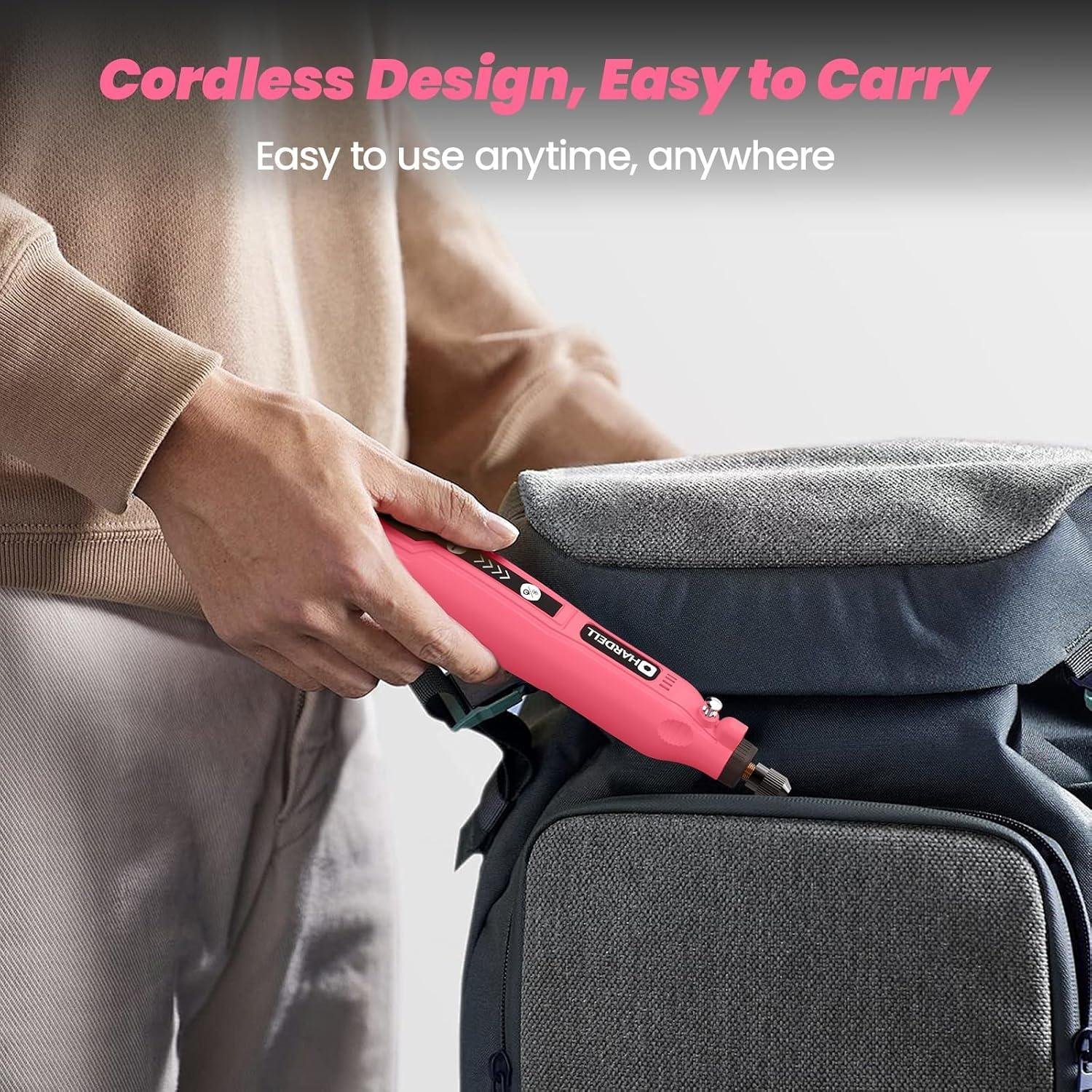
Ever tried easing a sharp edge inside a cabinet, sanding a tiny plug flush, or engraving a hinge mortise mark—only to find your full-size tools are too bulky and your sandpaper-wrapped finger isn’t precise enough? In small-detail woodworking, control matters as much as power, and cramped benches don’t leave room for yet another corded machine.
That’s where the HARDELL Mini Cordless Rotary Tool (Pink, 69 pcs) comes in: a pen-like, 3.7V rechargeable rotary tool with 5 speeds (5,000–18,000 RPM), USB charging, an onboard LED work light, and a kit of 69 accessories aimed at sanding, polishing, drilling, and engraving—especially in tight spaces.
In this review, we’ll look at the design and specs, bit changes and learning curve, precision for fine wood tasks, and whether the build quality matches the price. We’ll also weigh customer feedback—manny reviewers praise the easy handling, value, and decent battery life, while durability and power for tougher work get mixed reports.
As woodworkers, we’ve learned that the “right” tool is the one that fits the job—and the shop you actually have.
Tool Overview and First Impressions for small Shop Tasks
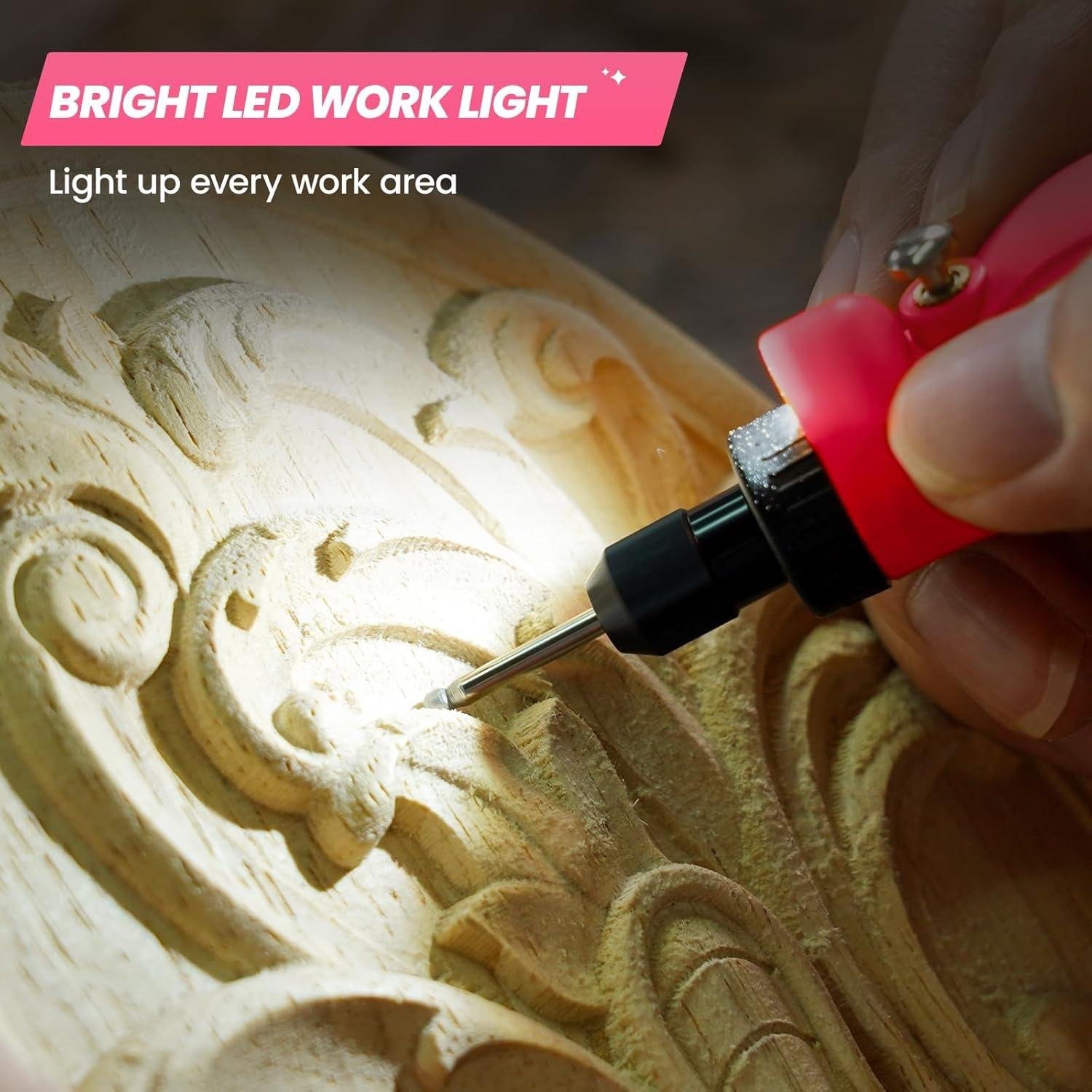
In our small shop, the HARDELL Mini Cordless Rotary Tool comes across as a “detail work” companion rather than a do-everything motor on a stick.It runs a 3.7V rechargeable platform with 5 speed settings—5,000 / 8,000 / 11,000 / 14,000 / 18,000 RPM—which is a useful range for woodworking touch-ups like easing sharp edges, cleaning up glue squeeze-out in corners (after it’s cured), or lightly sanding inside a scrollwork cutout where bigger sanders can’t reach. The pen-like, compact form factor matters here: we can steer it more like a marking pencil than a grinder, which helps with control on small parts and minimizes “whoops” moments. The built-in LED work light is a genuinely workshop-pleasant feature for peering into cabinet corners or under a shelf lip where overhead lighting leaves shadows, and the USB charging is convenient—though reviews note no charging cube included, so we’re planning on using a standard USB adapter at the bench.
First impressions from customer feedback line up with what we’d expect of a mini cordless rotary tool: easy to hold, low noise for many users, and a surprisingly capable kit for light-duty tasks—but with clear limits. Multiple reviewers say it “works well for crafts and small projects,” appreciate the good battery life,and call it a great value; at the same time,durability and power are mixed,with some reporting it broke within weeks or that attachments won’t tighten and can “slide around.” We also see frequent mentions that the collet/chuck setup isn’t totally intuitive at first—some folks “had to read the instructions” before they could insert accessories correctly—so in a woodworking context we’d treat this as a careful, light-pressure tool. Educationally, the big takeaway is that high RPM doesn’t automatically equal high torque: on hardwoods (oak, maple) we’ll want to use sharp bits, let the tool spin rather than push, and make multiple light passes to avoid stalling or scorching; on softwoods (pine, cedar) we can stay on the lower speeds for sanding to reduce fuzzing and keep profiles crisp.
- Included accessories: 69-piece accessory set (multi-purpose bits for sanding/polishing/drilling/engraving per kit concept)
- Compatible attachments/accessories: small rotary sanding drums, small engraving bits, small twist drill bits (use light pressure; verify shank size matches included collet/chuck)
- Ideal project types: hinge-mortise touch-ups, inlay recess cleanup, craft-scale parts, toy/scroll-saw edge refinement, small signage engraving
- Wood types tested by customers: not consistently specified in reviews (most mentions focus on crafts/resin/acrylic), so we reccommend starting on pine/poplar scrap before moving to hardwood
| Spec / feature | HARDELL Mini Cordless Rotary Tool (Pink) | What It Means in a Wood Shop |
|---|---|---|
| Speed range | 5,000–18,000 RPM (5 steps) | Good for sanding/engraving; use lower speeds for controlled sanding and to reduce heat |
| Power | 3.7V rechargeable | Best for light-duty detailing—not bulk stock removal or extended heavy grinding |
| Battery | 2000 mAh (claimed “more than 200 minutes” charge/discharge) | Portable bench-to-assembly use; real runtime varies with load and speed |
| Lighting | Built-in LED | Makes precision work in shadows easier (inside boxes, under lips, tight corners) |
| Charging | USB (reviews note no cube included) | Easy to keep topped up at the bench; plan your charging setup |
| Accessory Type | Typical Use | Woodworking Tip |
|---|---|---|
| Sanding bits/drums | Edge easing, small contours, inside curves | Keep it moving to avoid flat spots; step through grits like hand sanding |
| Engraving bits | Lettering, layout line tracing, small details | Use a light touch and make multiple passes; practice on scrap first |
| Small drill bits | Pilot holes in small parts, peg holes, ornament work | back up thin stock and clear chips often to reduce wandering and heat |
| Polishing accessories | Buff small hardware, polish resin/finish touch-ups | Avoid contaminating raw wood with polishing compound before finishing |
| Task | Recommended Use (Expectation) | What Reviews Suggest (Reality Check) |
|---|---|---|
| Detail sanding | Light shaping and smoothing in tight areas | Often praised for steady spin and easy handling; avoid heavy pressure |
| Drilling tiny holes | Hobby-scale pilot holes and small parts | Frequently praised as precise/easy; bit loading can be confusing at first |
| Extended heavy grinding/cutting | Not recommended for production removal | Mixed: some note it’s “powerful,” others say “not strong enough,” and a few mention overheating |
See Full Specifications & customer Photos
Real World Performance on sanding Polishing and Detail Engraving in Wood
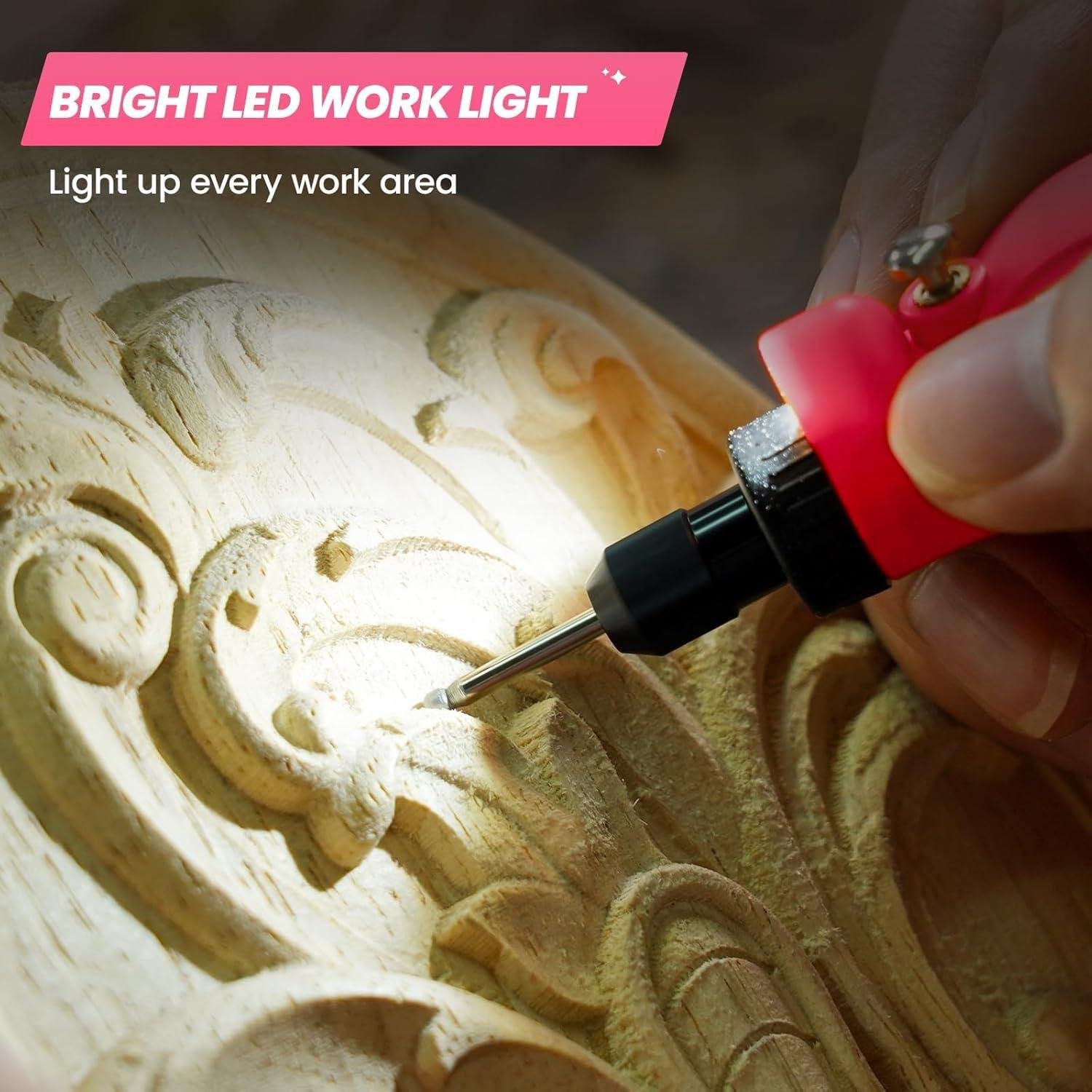
In real shop use, the HARDELL mini rotary tool behaves more like a “finishing pencil” than a brute-force grinder—which is exactly what we want for careful sanding and polishing in tight spots. with its 5-speed range (5,000 / 8,000 / 11,000 / 14,000 / 18,000 RPM) on a 3.7V rechargeable platform, we found the low-to-mid speeds are the sweet spot for wood: they let us feather an edge, soften sharp corners, and clean up fuzz in routed profiles without instantly burning the surface. The built-in LED work light is surprisingly useful when we’re sanding inside a drilled recess or along a carved groove where overhead shop lighting tends to cast shadows. Customer review themes line up with that experience—many describe it as “lightweight and easy to hold,” “good steady spin,” and “works well for crafts and small projects,” while also warning it’s not meant for heavy-duty work. Practically, that means we’d reach for it to refine details after the sander and chisel work are done, not to flatten tabletops or hog off material—especially since some reviewers say it can stall if you lean on it and others mention overheating during tougher tasks.
For detail engraving and fine cleanup, this kit’s main advantage is control: the body is small enough to hold “pen-style,” which helps us follow grain lines and avoid the chattery, overcut look that larger rotary tools can cause in softwoods. The educational takeaway is to let RPM and bit geometry do the work—start at 5,000–8,000 RPM for softer species (pine, cedar, poplar) and bump up toward 11,000–18,000 RPM only when the cut is clean and we’re not scorching (especially on resinous woods). We also recommend taking multiple light passes and bracing our hands; a mini rotary tool is easy to steer, but it’s also easy to “dig in” if the bit catches earlywood. Reviewers commonly mention the wide assortment of tips and that it “charges quickly,” but also note a learning curve: several said they had to read the instructions to figure out bit insertion,and durability feedback is mixed (some report it “holds up well,” others report bits loosening or the tool failing within weeks). For woodworkers, that translates to: use it for controlled detailing, keep pressure light, periodically check collet tightness, and treat it as a light-duty specialist rather than a daily production workhorse.
- Included accessories (69 pcs): sanding drums/bands, grinding stones, polishing wheels, drill/engraving-style bits, mandrels, and related small rotary consumables (varies by kit packaging).
- Compatible attachments/accessories: standard small rotary tool consumables in the same size class (sanding bands,felt polishers,small burrs/engraving bits) that match the included mandrels/collet system.
- Ideal project types:
- Cleaning up carvings, letters, and sign work
- Sanding inside small cutouts, dowel holes, and mortise corners
- Polishing small wooden parts (buttons, pulls, inlays)
- Light drilling for craft-scale components and jigs
- Wood types tested by customers (as reported):
- Not consistently specified in reviews; most feedback references “craft wood/small projects” rather than named species.
| Spec / Feature | HARDELL Mini Cordless Rotary Tool (Pink, 69pcs) | What it means for woodworking |
|---|---|---|
| Speed | 5,000–18,000 RPM (5 steps) | Lower speeds help prevent burning and keep control on softwoods; higher speeds suit light polishing and careful engraving. |
| Power system | 3.7V rechargeable, USB charging | Convenient for bench detailing and rapid touch-ups; not a substitute for corded power when removing lots of material. |
| Runtime claim | Up to 200+ minutes (per manufacturer statement) | Real runtime varies with speed and pressure; reviewers are mixed but many call battery life “good.” |
| Lighting | LED near the tip | Helps with inside corners, grooves, and engraving lines where shadows hide tear-out. |
| Accessory / Bit Type | Use in wood | best practice |
|---|---|---|
| Sanding bands/drums | Shaping small edges, easing corners, smoothing inside cutouts | Use light pressure; keep moving to avoid heat checks and dips. |
| Felt/polishing wheels | Buffing small parts and finish polishing | Stay at mid RPM; avoid catching edges that can fling small workpieces. |
| Engraving bits/burrs | Lettering, line work, texture, inlay recess cleanup | Make multiple shallow passes; climb with the grain when possible to reduce chatter. |
| small drill bits | pilot holes for hardware on miniatures/jigs, craft drilling | Back up the work to reduce blowout; start slow and keep the bit straight. |
| Task | Recommended (realistic) capacity | What happens if we push past it |
|---|---|---|
| Sanding | Detail sanding, edge breaking, small contours | Can stall or leave divots if we apply high pressure; heat marks on resinous woods. |
| Polishing | Small parts, spot-buffing | Too much speed/pressure can burnish unevenly or snag edges. |
| Engraving | Fine lines, shallow relief, touch-up carving | Deep hogging can cause bit wandering and chatter; some reviewers mention power limits for tougher work. |
See Full Specifications & Customer Photos
Key Features Woodworkers Will Appreciate from Speed Control to Accessory Range
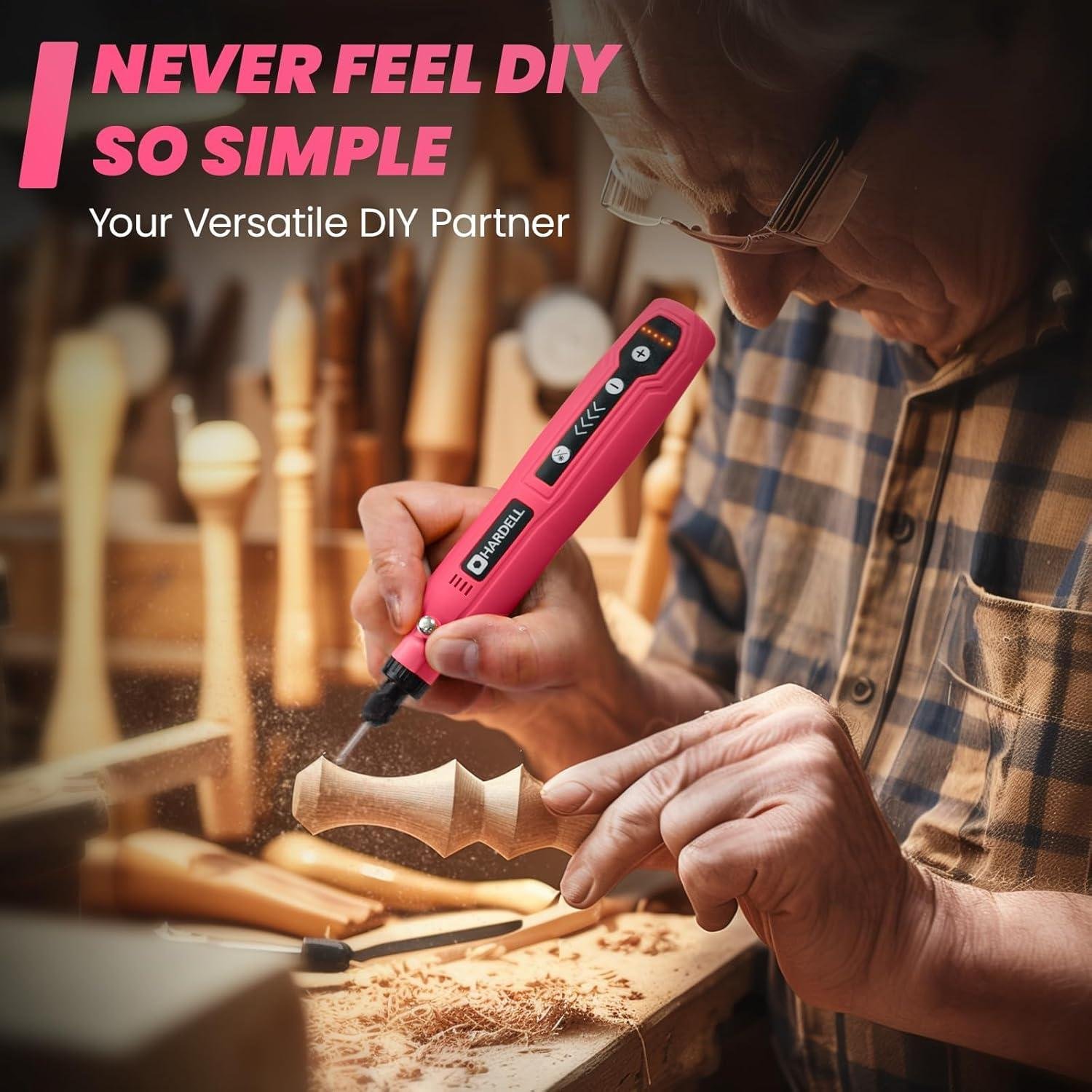
In the shop,what we appreciate most about the HARDELL mini rotary tool is how its 5-speed range (5,000 / 8,000 / 11,000 / 14,000 / 18,000 RPM) helps us match the cut to the task instead of scorching edges or tearing fibers. On softer woods like pine or poplar, we’d typically start low for sanding or light engraving to avoid heat buildup and “fuzzing,” then step up for faster stock removal with a small drum sander—always using a gentle touch becuase this is a 3.7V cordless tool built for fine work, not forcing. the built-in LED work light is a legitimately useful feature for close-in woodworking: it helps us see layout lines while carving a small chamfer,cleaning up squeeze-out in a corner,or touching up inside a hinge mortise. Customer review themes line up with these use cases—many call it “lightweight,” “easy to hold,” and note the variable speed makes it “perfect for a multitude of applications,” while others caution it’s “not meant for heavy-duty work” and can bog down if pushed. A few reviews also mention it can be “a little hard to change out the bits” at first, so we’d plan on reading the instructions onc, then keeping pressure light to prevent collet slippage and bit walk.
Accessory-wise, the appeal for woodworkers is that this kit doesn’t force us to buy add-ons just to get started: it ships as a 69-piece set aimed at sanding, polishing, drilling, and engraving—the exact “cleanup and detail” jobs we run into between larger machine steps. reviewers repeatedly praise the “wide assortment of tips” and value, and we agree the range is convenient for small, careful work like easing sharp edges on a toy part, sanding inside a carved letter, or drilling tiny pilot holes for hardware in thin stock. Having mentioned that, durability feedback is mixed—some users say it “holds up well,” while others report issues like attachments not tightening or parts failing—so we’d treat it as a handy bench-side detail tool rather than our only rotary tool for daily production use. Also note: it’s USB rechargeable and the listing notes a 2000 mAh battery with “more than 200 minutes” of charge/discharge time, and customers often mention quick charging and decent runtime, but a few report the battery “dies quickly,” which makes it smart to keep a charger nearby if we’re doing extended sanding.
- 69 accessories (per kit) for sanding, polishing, drilling, and engraving tasks
- USB charging cable/USB interface (some reviewers note no charging cube included)
- LED tip light for improved visibility in close detail work
- Compatible accessory types (tool-class): small sanding drums, polishing bits, engraving points, small drill bits (fits depends on shank/collet size)
- Workshop add-ons we’d pair with it: small bench vise, carving cradle, dust mask, eye protection, and a shop vac nozzle held close (no onboard dust collection)
- Ideal project types: inlay recess touch-ups, sign lettering cleanup, model parts, small toy edges, hinge-mortise corner cleanout, light hardware pilot holes
- Wood types customers explicitly report: not specified in the provided reviews
| Spec / Feature | HARDELL Mini Cordless Rotary Tool (Pink) | What it means in a woodworking shop |
|---|---|---|
| Speed settings | 5 (5,000–18,000 RPM) | lower speeds help avoid burning; higher speeds help small sanding/polishing go faster. |
| Power | 3.7V rechargeable | Best for detail and light material removal—avoid heavy pressure that can stall the tool. |
| Battery capacity | 2000 mAh (listed) | Convenient cordless touch-ups; some reviewers love runtime, others report quicker drain. |
| Lighting | LED near tip | More control when engraving/sanding in corners or along layout lines. |
| Accessories | 69 pcs | Good starter spread for sanding/polishing/drilling; treat consumables as replaceable. |
| Accessory / Attachment Type | Use in woodworking | Notes |
|---|---|---|
| Sanding bits/drums | Ease edges,clean inside curves,level small filler spots | Use light pressure and move constantly to avoid heat marks. |
| Engraving points | Sign lettering touch-ups, marking jigs, detailing | Let RPM do the work—forcing increases chatter and tear-out. |
| Small drill bits | Pilot holes in thin stock, ornaments, dowel indicators | Back up the workpiece to reduce blowout; clear chips frequently enough. |
| Polishing bits | Buff small metal hardware, polish resin/epoxy fills | Keep compounds off raw wood unless you plan for finishing compatibility. |
| Task | Recommended expectation | What reviews suggest in real use |
|---|---|---|
| Detail sanding & cleanup | Light sanding, edge breaking, small areas | Often praised as “works well” and “easy to hold,” with steady spin for light/medium duty. |
| Material removal / heavy grinding | Not ideal—avoid leaning on it | Mixed “power” feedback; some say powerful, others say it stops if pressed. |
| Long sessions | Short bursts with breaks | Battery life commonly praised, but overheating is mentioned by at least one reviewer. |
see full Specifications & Customer Photos
Ease of use for Beginners and Experienced Makers in Tight Spaces
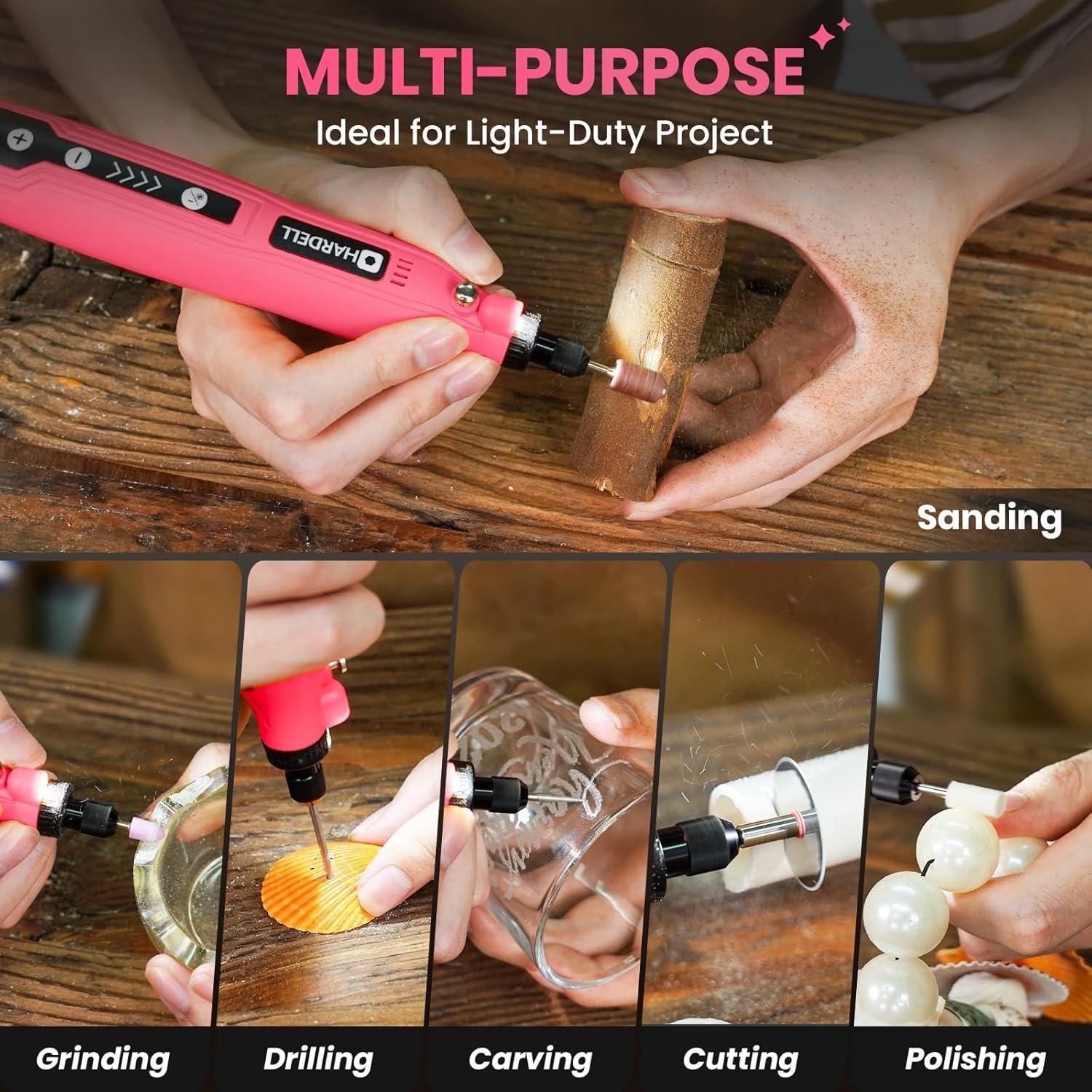
In a tight shop—or when we’re doing detail work right at the bench—the HARDELL mini rotary tool feels more like a marking pen than a power tool,and that’s the point. The 3.7V cordless design keeps cords off our workpiece and out of the way around clamps, and the five speed steps (5,000 / 8,000 / 11,000 / 14,000 / 18,000 RPM) give us a simple, beginner-friendly ladder: we can start slow for controlled sanding on an inside curve, then step up for quicker polishing passes. Reviews repeatedly echo that it’s “lightweight,” “easy to hold,” and even good for smaller hands—useful when we’re carving out a hinge mortise corner, breaking edges on a small part, or cleaning fuzz off end grain without dragging the whole piece to a larger sander. The built-in LED near the tip is a practical win in cramped spaces (under-cabinet work, inside boxes, or shadowy corners on a jig), and several customers call out that the light “helps visibility a lot” for precision tasks.
Having mentioned that, ease of use isn’t only about comfort—it’s also about setup and expectations. A common review theme is that the tool works great once we figure out how to insert/tighten the accessories; at least one customer said it “wasn’t super intuitive” and required reading the instructions. For beginners, we’d treat this like a lesson in rotary-tool basics: seat the bit fully, tighten the collet/chuck firmly, and do a quick test spin before touching wood. For experienced makers, the HARDELL is best viewed as a nimble detail tool rather than a brute—customers are split on power, with some calling it “powerful” and others saying it’s “not strong enough” or that it can stall if pushed. In woodworking terms, we’ll get the cleanest results by using light pressure, letting the RPM do the work, and choosing the right speed: lower for delicate sanding/engraving to avoid burning, higher for polishing and quick touch-ups.Also note: it’s marketed as “Not for Heavy-duty projects”, and a few reviewers mention overheating or durability issues (e.g., breaking within weeks or attachments not staying tight), so in a small-space shop we’d keep it in the lane of trimming, sanding, polishing, and tiny drilling—not extended hogging or aggressive grinding in hardwood.
See Full Specifications & Customer Photos
Customer reviews Analysis

What Woodworkers Are Saying (Review Analysis)
1. Overall sentiment from woodworking customers
Overall sentiment skews positive for light-duty woodworking and detail work, with multiple reviews framing it as a solid, budget-friendly alternative to a name-brand Dremel. Several woodworkers and DIYers mentioned it’s a “powerful little thing” for its size, especially for sanding, light grinding, and small drilling—while repeatedly noting it’s not intended for heavy-duty shop use.
2. performance feedback (accuracy, power, results)
Common praise includes steady operation, useful speed control, and clean results on smaller tasks.
- power under load: Multiple reviews highlight that it’s more powerful than expected for a mini 3.7V tool, but some users reported challenges with heavier work, describing it as “isn’t the most high-powered” and better suited to “light to medium duty.”
- Sanding/finish results: reviewers noted the grinding/sanding action is smooth and consistent, with one user reporting tips “didn’t leave any gouging”—a key point for woodworkers trying to avoid divots during detail sanding.
- Accuracy/precision: Several reviewers mentioned precision drilling (often in resin, but the same benefit translates to pilot holes in small wood parts). The built-in light near the tip was repeatedly called out as helping control and visibility for detail work.
- Versatility: Multiple reviews highlight it can “cut wood… grinds and sands as well as drilling holes,” suggesting it’s best viewed as a multi-purpose detail tool rather than a replacement for full-sized cutting/sanding equipment.
3. Build quality and durability observations
Feedback is mixed: accessories and general feel are often praised, but a few durability concerns show up.
- Accessories: Multiple reviews highlight the included bits/tips as “sturdy and well made,” and users appreciated the large set of accessories for experimenting across tasks without extra purchases.
- Tool durability: Some users reported problems after extended use—specifically buttons deforming/damage. One reviewer mentioned the “minus button is damaged,” and another wrote that “one of the button deformed after prolong usage,” raising concerns for long-term shop reliability if used frequently.
- Heat management: At least one reviewer reported it overheated quite a bit during a tougher drilling task, which aligns with the “mini tool” positioning.
4. Ease of use for different skill levels
Most feedback points to a beginner-friendly tool with one small learning hurdle.
- Beginners appreciated the lightweight body, comfortable grip, and the ability to start slow with the 5-speed settings. One buyer described it as easy to hold and not tiring—useful for longer sanding or engraving sessions.
- Learning curve: Some DIYers found the setup just slightly non-intuitive at first. One reviewer said they “had to read the instructions to figure out how to load tips,” but once learned, changes were easy.
- Handling and fatigue: Multiple reviews highlight the tool being lightweight and less awkward than heavier rotary tools, which is a practical plus for detail work on small wooden parts.
5. Common project types and success stories
Woodworking-specific mentions are limited, but several projects translate well to wood-shop tasks.
- Customers successfully used this for light cutting/sanding/holes in wood (as one reviewer stated it “cuts wood… sands… drilling holes”).
- Small drilling success: Reviews describing drilling tiny holes (in resin) suggest strong performance for small pilot holes, hardware fitting, or precise craft-style wood components.
- Light DIY repairs: One user drilled out a stuck part (“hose bib drilled out”) and said it “worked perfectly”—a proof point for occasional shop problem-solving, though accompanied by overheating notes.
6. Issues or limitations reported
Several consistent limitations show up across reviews:
- Not for heavy-duty woodworking: Multiple reviews explicitly caution it may not be ideal for “more heavy projects.” Expect limitations on hardwood removal rate, aggressive sanding, or long continuous sessions.
- Overheating under tougher loads: At least one reviewer reported notable overheating during a more demanding drilling job.
- Control/button durability concerns: Some users reported damaged or deformed buttons after prolonged use, which could impact longevity for frequent woodshop use.
- Packaging/accessory storage varies: One review complained there was no carrying case for their color/version, which matters if you want to keep bits organized at the bench.
| Aspect | Common Feedback |
|---|---|
| Performance | Steady spin and good results for light sanding/drilling; not high-powered for heavy woodworking |
| Precision | Frequently praised for small, controlled work; built-in light improves visibility |
| Durability | Accessories seen as sturdy, but some reports of button damage/deformation and overheating under load |
| Ease of Use | beginner-friendly grip and 5 speeds; bit loading can be confusing at first |
| Versatility/Value | Often described as cheaper than Dremel with lots of accessories; best for hobby/light-duty use |
If you want, I can rewrite this section in a more “woodshop voice” (bench-tested tone) or tailor it to a specific audience (beginner carvers, model makers, furniture refinishers, etc.).
Pros & Cons
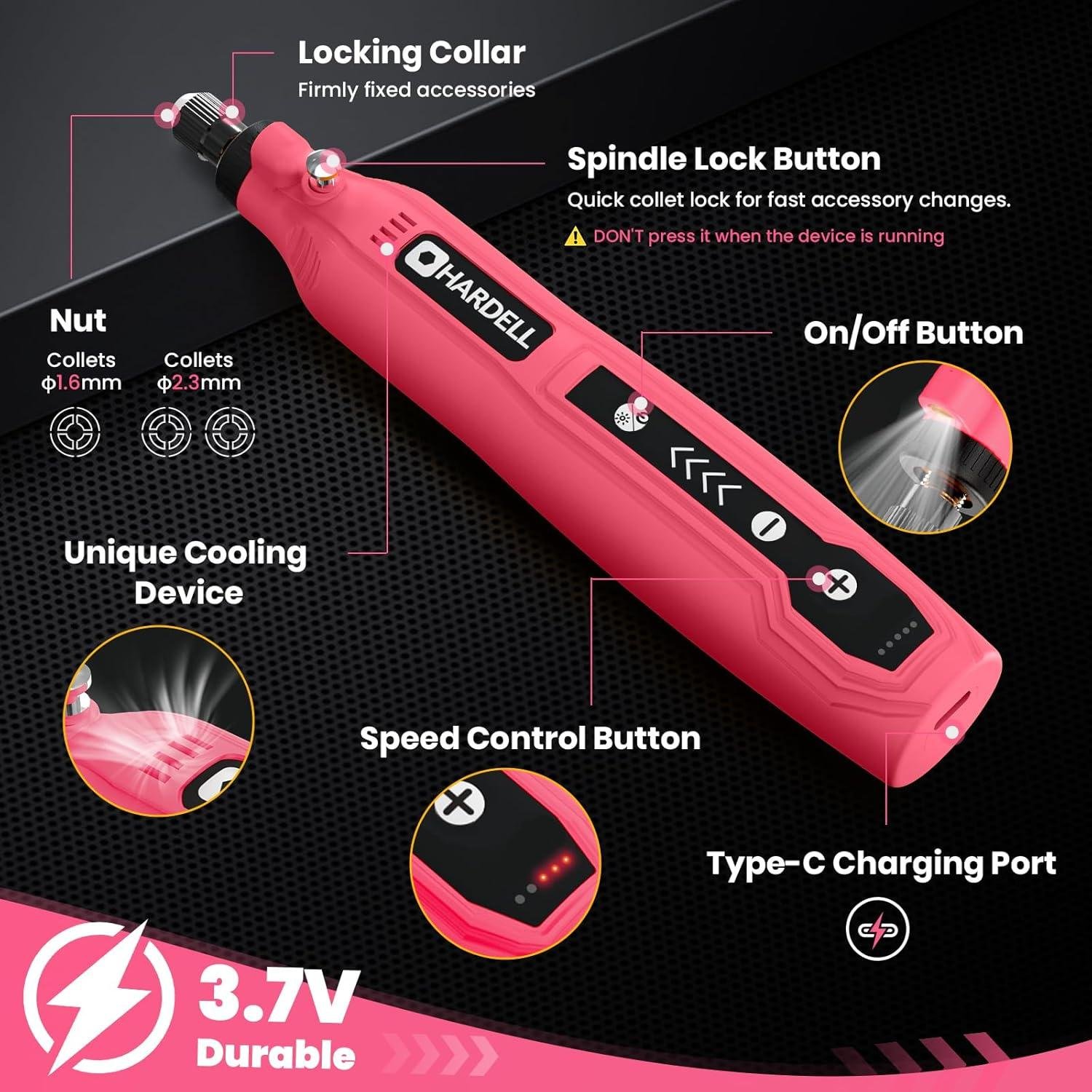
Pros & Cons: HARDELL mini Rotary Sander in Our Shop
In our hands, the HARDELL Mini Cordless Rotary Tool feels less like a “power tool” and more like a powered pencil—great for detail work, quick touch-ups, and the kinds of small-shop tasks that pile up when we’re sanding, polishing, drilling tiny holes, or cleaning an edge.
Pros
- Comfortable, pen-like grip for precision: We can control it easily for small sanding and engraving without the wrist fatigue we get from bulkier rotary tools.
- 5 speed settings (up to 18,000 RPM): We like having low speeds for delicate materials (resin, soft plastics) and higher speeds for quick buffing and light grinding.
- LED tip light actually helps: In our shop lighting, the little LED reduces shadows right where the bit meets the work—surprisingly useful for tiny holes and cleanup work.
- Cordless + USB charging convenience: We can grab it for quick jobs without untangling cords, and USB charging keeps it simple (bench, power bank, laptop, etc.).
- Accessory bundle is hobby-friendly: the 69-piece kit covers the basics for sanding, polishing, and light drilling—enough variety for crafts, models, and small DIY tasks.
- Good value for light-duty use: For the price, we feel it’s a solid “starter” rotary tool for our lighter shop needs and detail work.
- Low-noise, lower intimidation factor: It’s not as aggressive as full-size tools, which makes it easier for newer hands in our shop to use confidently.
Cons
- Not a heavy-duty workhorse: For tougher materials or sustained load, we can feel the limits—this is better for light sanding, polishing, and small drilling than serious grinding/cutting.
- Durability seems inconsistent: Based on customer experiences, some units hold up well while others fail early—something we’d keep in mind if we needed daily, professional-grade reliability.
- Power can feel “just enough” (or not enough): Some tasks require a gentle touch; pushing too hard can stall performance and reduce results.
- bit/collet learning curve: We found it’s not 100% intuitive at first—expect a quick read of the instructions before you’re swapping accessories smoothly.
- Charging expectations: USB is convenient,but depending on what you have on hand,you may need your own charging brick (often not included with USB tools).
- Accessory fit/hold can be finicky for some: A common complaint is bits loosening or not tightening as expected—fine for careful work,frustrating for higher-pressure use.
- Can warm up on demanding jobs: For longer bursts or harder drilling, heat buildup can happen—this tool prefers shorter sessions with breaks.
Our Quick “Use It For / Skip It For” Snapshot
| Best for in our shop | We’d skip it for |
|---|---|
| Resin jewelry drilling, model detailing, light sanding & polishing | Heavy grinding, thick metal work, all-day continuous use |
| Quick edge cleanup, small craft and cosplay/EVA foam touch-ups | Jobs that need maximum torque and “push hard” pressure |
| Beginner-friendly rotary tool tasks (controlled, small-scale) | Where failure/downsizing risk is unacceptable (pro duty cycles) |
Bottom line for our shop: We see this HARDELL as a handy, lightweight detail tool—excellent for small projects and quick finishing passes—so long as we treat it like a mini rotary tool, not a full-size Dremel replacement.
Q&A
What wood types can this handle effectively?
This HARDELL mini rotary tool is best on softwoods (pine, cedar, fir), craft woods (basswood), and small-detail work on most species. with 5 speeds (5,000–18,000 RPM) and a small 3.7V cordless motor, it’s well-suited for sanding tight spots, easing sharp edges, light engraving, and drilling small pilot holes. Customer feedback commonly mentions it working well for “small projects” and detail-oriented tasks,but it’s not intended for heavy stock removal or long grinding sessions.
Is this powerful enough for hardwoods like oak or maple?
For hardwoods, think “light-duty detailing,” not aggressive cutting.It can do small engraving, edge breaking, and careful sanding on oak/maple if you use higher RPM with very light pressure and let the abrasive do the work. Reviews are mixed on power—some users call it “powerful,” while others say it can bog down if pushed. If your plan is carving deep, running large burrs, or sanding large hardwood surfaces, a higher-voltage rotary tool or a corded model will be more appropriate.
How does this perform on plywood and veneers (tear-out or burning concerns)?
It can work well on plywood and veneer for fine trimming/sanding and tiny holes, but you’ll want to be gentle.Veneers can burn or fuzz if you linger at high speed in one spot—start at a lower speed (5,000–8,000 RPM), keep the bit moving, and use light pressure. Many customers praise the steady spin and controllability for craft-level sanding/polishing, which translates well to careful work on ply edges and veneer patches.
Can this handle production work or is it just for hobby projects?
It’s primarily a hobby/light DIY tool. The product description itself notes “Not for Heavy-duty Projects,” and reviews mention mixed durability (some units hold up well; others stop working within weeks or develop issues like buttons deforming or accessories loosening). For occasional shop use—cleanup on joinery, inlay touch-ups, small drilled holes—it can be a handy grab-and-go tool. For daily/professional production use, expect to outgrow it.
How challenging is the initial setup, and how easy are bit changes?
Setup is generally simple, but first-time users frequently enough need the instructions to understand how accessories insert and tighten. Multiple reviewers mentioned the loading process wasn’t intuitive at first, but became easy once learned. Bit changes are quick for small rotary accessories—however, some negative feedback mentions attachments not tightening well over time or bits slipping/loosening, so it’s worth checking the collet/chuck tightness before each use, especially for sanding drums and small drill bits.
Does it work with standard rotary tool accessories?
It includes a 69-piece accessory kit aimed at common rotary tasks (sanding, polishing, drilling, engraving). In practice, it’s most reliable with the included small accessories and typical light-duty rotary bits. If you plan to use third-party “standard” accessories, confirm shank size compatibility before buying extras—mini rotary tools sometimes differ from full-size Dremel-style setups. Several customers are happy with the included assortment for small jobs and didn’t need to buy more right away.
How does this fit into a small workshop—dust collection, power needs, mounting?
This tool is very small and pen-like, so it’s easy to store and use at the bench without dedicating space. It’s USB rechargeable (no special outlet required), and some users note you can use it while it charges. It doesn’t require dedicated dust collection, but sanding wood creates fine dust—woodworkers will still want a shop vac nearby or at minimum a mask and a small bench-top vacuum. It’s designed as a handheld tool rather than a bench-mounted rotary system, so mounting isn’t the typical use case.
Is it beginner-friendly, and would it satisfy a professional woodworker?
For beginners, it’s a strong fit: lightweight, easy to hold, 5 speed steps, and an LED near the tip that reviewers say helps visibility and control. The learning curve is mostly about accessory installation and choosing the right speed/pressure.For professionals, it’s better viewed as a secondary detail tool (quick touch-ups, sanding in corners, small pilot holes) rather than a primary rotary tool—pros doing hardwood work all day will likely want more power, more robust durability, and more consistent accessory holding.
Elevate Your Lifestyle
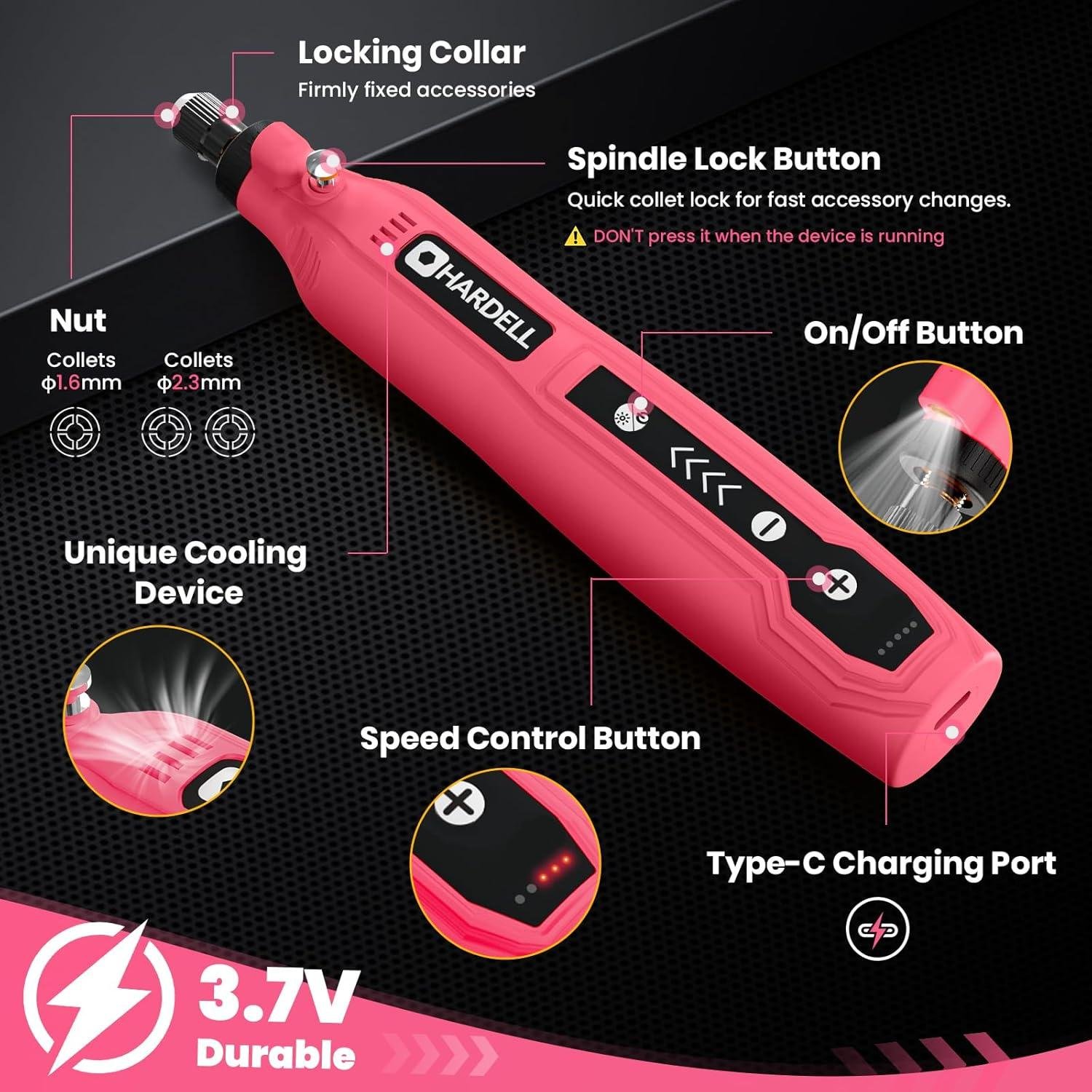
The HARDELL Mini Cordless Rotary Tool (Pink, 69pcs) is a pen-style, 3.7V rechargeable rotary tool with 5 speeds (5,000–18,000 RPM), USB charging, an onboard LED work light, and 69 accessories for sanding, polishing, light drilling, and engraving. Customer feedback most frequently enough praises its easy handling, good value, and battery life, while durability and power are mixed—some report it holds up well, others mention loosening parts or early failure under heavier use.
Best for: hobby woodworkers with small to medium projects,beginners learning fundamentals,and cabinet makers or trim-focused DIYers needing precision sanding,touch-ups,and small pilot holes.
Consider alternatives if: you primarily work with thick hardwoods, need aggressive material removal, or expect daily jobsite durability—a higher-voltage, heavier-duty rotary tool will be a better fit.
Final assessment: A solid light-duty option with standout ergonomics and visibility, but not a production-grade workhorse.
Want to see current pricing and customer photos? View on Amazon & Read More Reviews →