

Blog
Evolution R185SMS+ Miter Saw Review: Our Shop Fit?

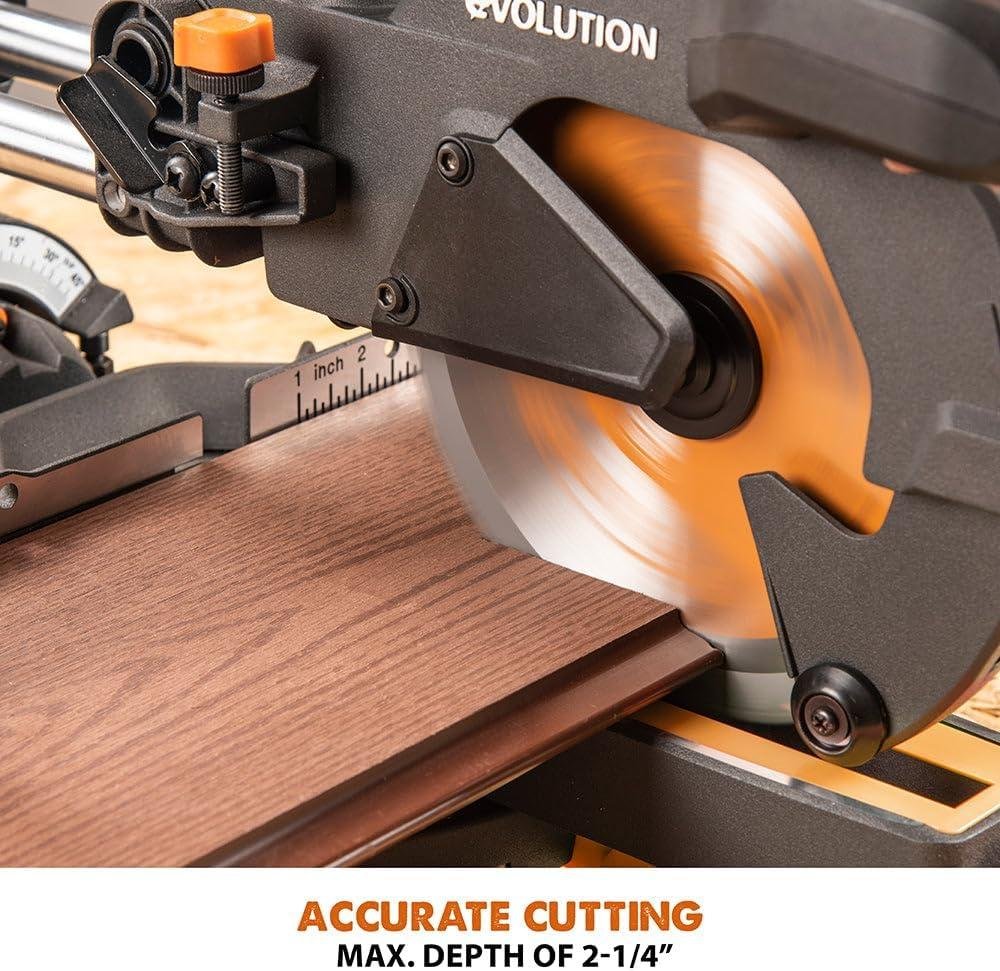
Ever found yourself bouncing between tools just to get clean cuts—one saw for trim, another for plastics, adn then a entirely different setup when a project calls for aluminum angle or steel hardware? In a small shop, that juggling act eats time, chews up bench space, and can still leave us second-guessing accuracy when miters don’t close tight.
That’s the promise behind the Evolution Power Tools R185SMS+ Sliding Miter saw: a compact 7-1/4″ slider built for multi-material cutting. On paper, it brings a 0–45° bevel, 50° left/right miter, 210 mm slide, a 1500W optimized gearbox, and includes a TCT blade, laser guide, carry handle, 3-piece clamp, and dust bag, backed by a 3-year warranty.
In this review, we’ll break down the features that matter for real shop decisions—precision, build quality, ease of setup, and who this saw fits best—while noting what customers report, including praise for clean cuts and value, plus a few durability and calibration complaints.
we’re woodworkers who’ve learned the hard way that specs, space, and budget all have to line up.
Tool Overview and First Impressions of the evolution R185SMS Plus
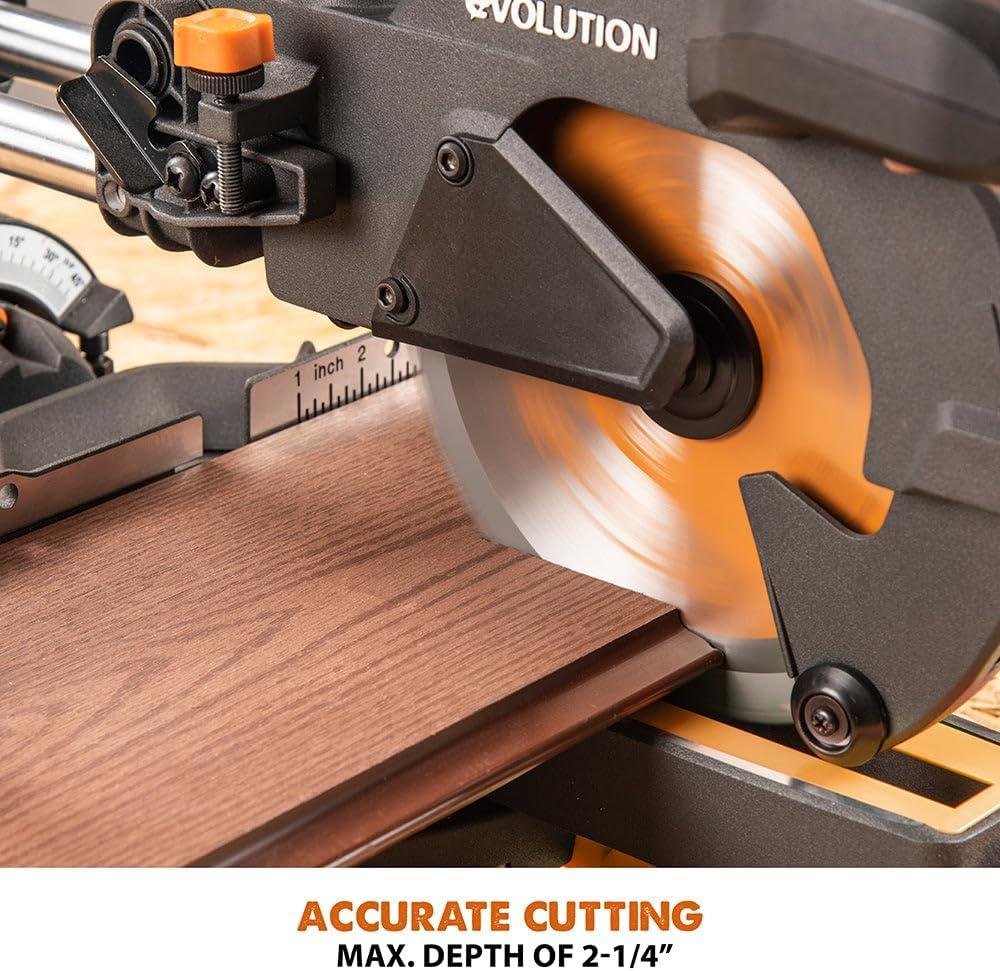
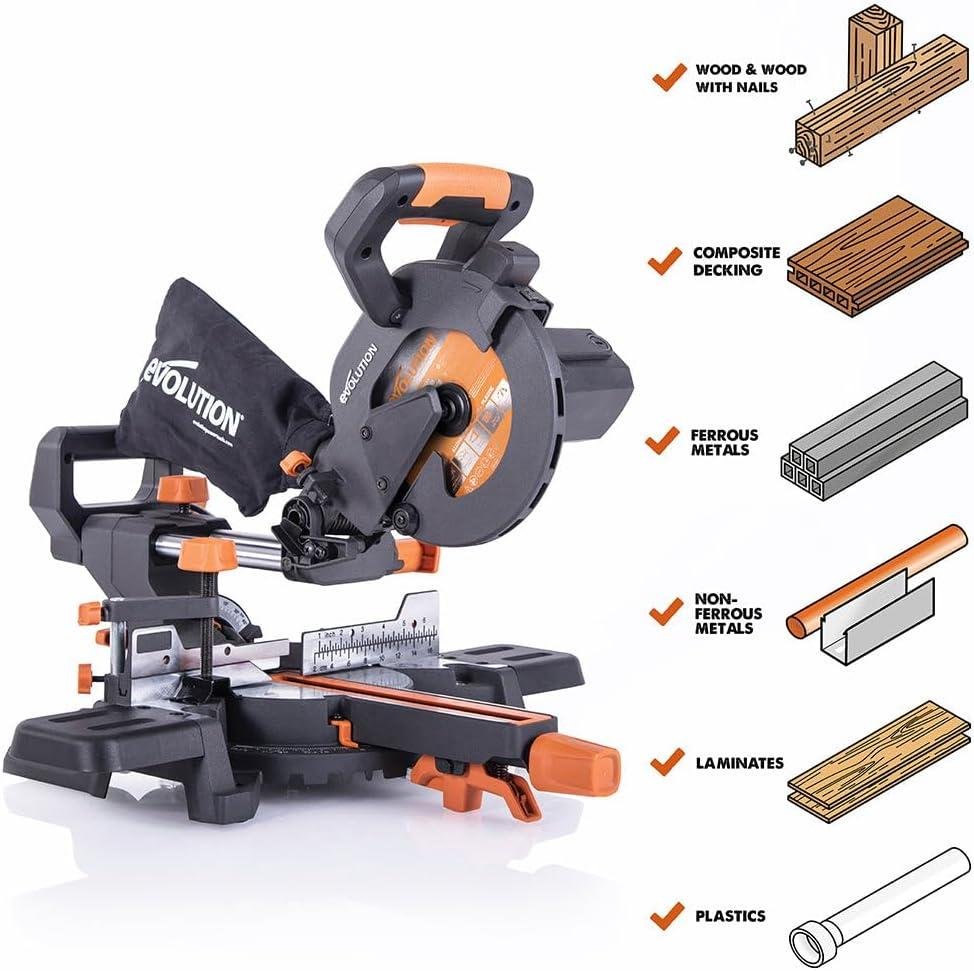
On the bench, the Evolution Power Tools R185SMS plus feels like a purpose-built “small-shop problem solver” rather then a jobsite brute. It’s a 7-1/4″ sliding miter saw built around Evolution’s multi-material approach, pairing a 1500W (about 12.5A) motor with an optimized gearbox and a TCT blade system designed to cut wood, plastic, aluminum, and mild steel. The headline adjustments are practical for everyday trim and joinery: 0–45° bevel and 50° left / 50° right miter, plus a 210mm slide to extend crosscut capacity beyond what a fixed 7-1/4″ saw woudl normally handle.In our kind of workshop workflow—breaking down small stock for face frames, cutting repeated miters for trim, and occasionally dealing with reclaimed boards—this “one-saw-for-mixed-materials” spec sheet is appealing, especially as it’s positioned by many buyers as a compact, portable tool rather than a dedicated framing saw.
First impressions from customers line up with what we look for when a tool has to earn a spot in tight shop space: multiple reviewers call it lightweight, easy to assemble, and a strong value for money, with recurring praise that it “cuts steel and wood cleanly” and is versatile for DIY projects. Several note the slides feel smooth (ball-bearing) and the saw has a corded laser guide (no batteries), but accuracy feedback is mixed—some say the miter is true and the laser is “on target,” while others report the laser can be off (one mentioned roughly 1/8″) or that the bevel doesn’t reach a true 45°. That’s a useful reality check: in woodworking, we still need to verify squareness and angles with a reliable square and do a quick calibration before cutting actual parts, especially if we’re fitting miters or making repeatable trim cuts. Dust control also comes up as “typical miter saw”—the included bag helps but many users say it still leaves dust behind—so pairing it with a shop vac (and keeping hands clear with proper clamping) is the practical way to run it day-to-day.
See Full Specifications & Customer Photos
Cut Quality and Real World Performance on trim Framing and Sheet Goods
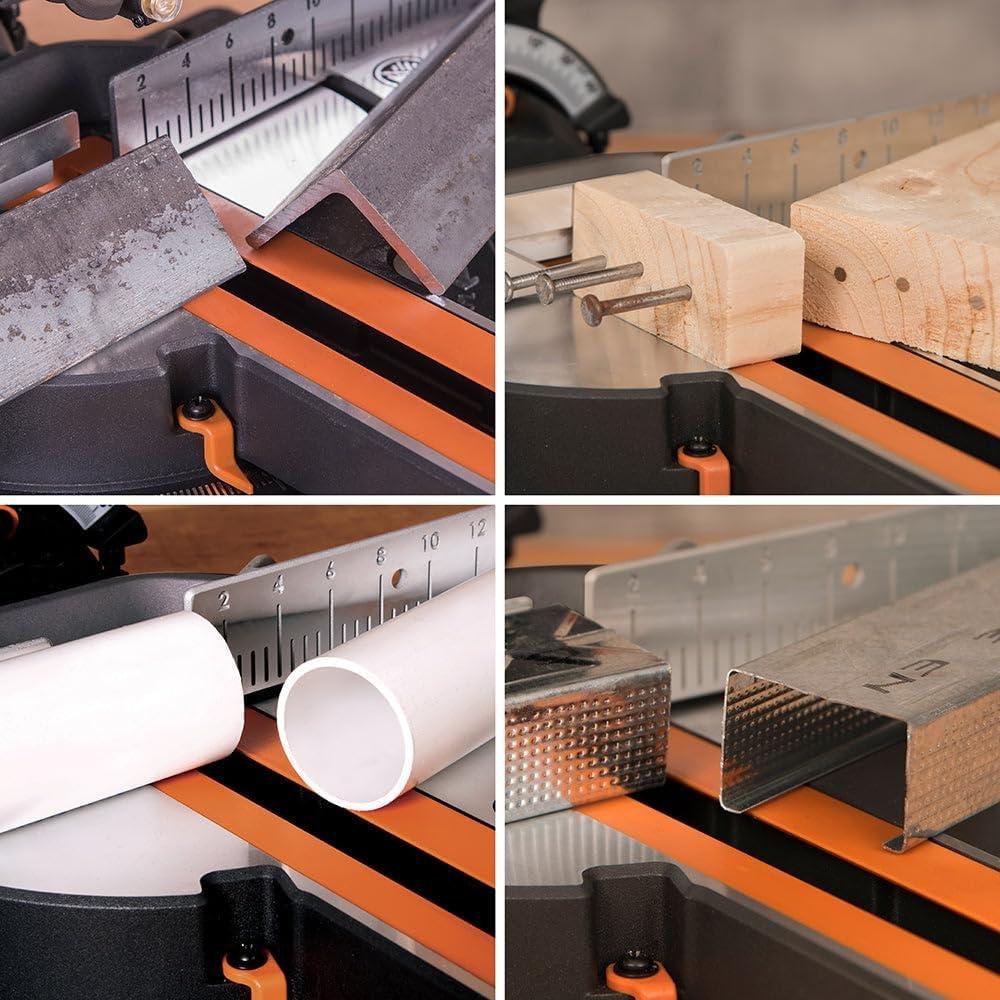
On trim work, the Evolution R185SMS+ behaves like what it is: a compact, multi-material slider built around a 7-1/4″ (185mm) TCT blade, a 210mm slide, and a 0–45° bevel paired with a 50° left / 50° right miter range. In our shop mindset,that spec mix points it squarely at casing,base,small crown,and repeated angle cuts rather than heavy framing—and customer feedback echoes that theme with comments like “for gentle work,finish work… not framing” and “miter is true,minimal blade wandering”. multiple reviewers also call out the laser guide as useful (including that it’s powered by the cord so there are no batteries), but we’d still treat the laser as a reference, not a substitute for calibration—especially since at least one reviewer reported the cut could be about 1/8″ off from the laser. For better trim results, the most educational takeaway is simple: verify the saw’s detents and fence-to-blade squareness with a reliable square, then make test cuts in your actual stock before committing to a room’s worth of miters.When we shift from trim to sheet-good support tasks (think breaking down narrower strips, crosscutting shelving parts, or squaring panel offcuts), the R185SMS+ can be handy—but we need to work within the reality of a 7-1/4″ blade diameter and the smaller platform typical of this class. Reviewers are split on size, with some praising it as “small, light weight, and portable” and others simply calling it “small”, which matters when we’re trying to keep wider panels flat and stable. The good news is that the slide action is regularly described as smooth (including ball-bearing slides), which helps cut quality; the bigger variable is blade choice. Several buyers note it ships with a 20-tooth blade, and at least one reviewer recommends ordering a higher-tooth-count blade for finer woodworking cuts—advice we agree with in principle, because tooth count and grind have a bigger impact on plywood edge quality than motor marketing. On dust, expectations should be modest: a number of customers say the dust bag doesn’t capture much, so for sheet goods and MDF in particular we’d plan on connecting extraction if possible and wearing respiratory protection when the material demands it.
- Included accessories
- 7-1/4″ (185mm) multi-material TCT blade (commonly cited as 20T in reviews)
- Laser cutting guide (cord-powered)
- Dust collection bag
- 3-piece clamp
- Carry handle
- Compatible attachments/accessories
- higher-tooth-count 7-1/4″ blade for cleaner trim/plywood cuts (reviewers explicitly recommend this)
- Workpiece support stands / wings to stabilize longer trim and panel strips
- Aftermarket clamp options (customers mention contacting Evolution to purchase a fence-clamping style accessory)
- Shop vac / dust extractor hookup (to outperform the included bag)
- Ideal project types
- Baseboard, casing, and small trim packages
- Picture frames and craft cuts
- Shelving parts and short crosscuts from sheet goods
- DIY mixed-material jobs where wood may include fasteners
- Wood types tested by customers (as reported in reviews)
- General “wood” trim stock (multiple mentions of clean cutting and low tear-out)
- Wood with embedded nails (supported by the saw’s multi-material positioning and customer use cases)
| Spec / Feature | Evolution R185SMS+ | What it means for trim & sheet goods |
|---|---|---|
| Blade size | 7-1/4″ (185mm) | Great for portability and small trim; more limited crosscut envelope than 10″–12″ saws. |
| Slide travel | 210mm | Helps with wider trim and shelf parts; still plan supports for panel work. |
| Bevel range | 0–45° | covers most trim bevel needs; one review theme says bevel may not hit a perfect 45° without tuning. |
| Miter range | 50° left / 50° right | Pleasant for common inside/outside corners and slightly odd angles. |
| Dust collection | Bag included | Reviews often say capture is weak—better with extraction, especially on MDF/ply. |
| Accessory | Why woodworkers add it | Notes from review themes |
|---|---|---|
| 60T (or higher) 7-1/4″ wood blade | Cleaner miters and less tear-out on trim and plywood veneers | Customers explicitly recommend more teeth than the included blade. |
| Material support stands/wings | Stabilizes long casing/base and sheet-good strips | Helpful given the saw’s compact size (mixed feedback). |
| Vacuum/dust extraction | Keeps cutline visible and reduces airborne dust | many say the dust bag isn’t very effective. |
| Task | Recommended “fit” | Real-world caveat from reviews/specs |
|---|---|---|
| Trim framing (casing/base/corners) | Recommended | users report true miter and smooth cutting; confirm laser alignment and tune bevel stops if needed. |
| sheet goods crosscuts (narrow parts) | Works well with support | smaller saw footprint means you’ll want stands/wings for stable, accurate panel handling. |
| Rough framing lumber production | Not ideal | Reviewers directly caution: “Not framing.” |
See Full Specifications & Customer Photos
Key Features Woodworkers Will Appreciate from Sliding capacity to multi Material Cutting
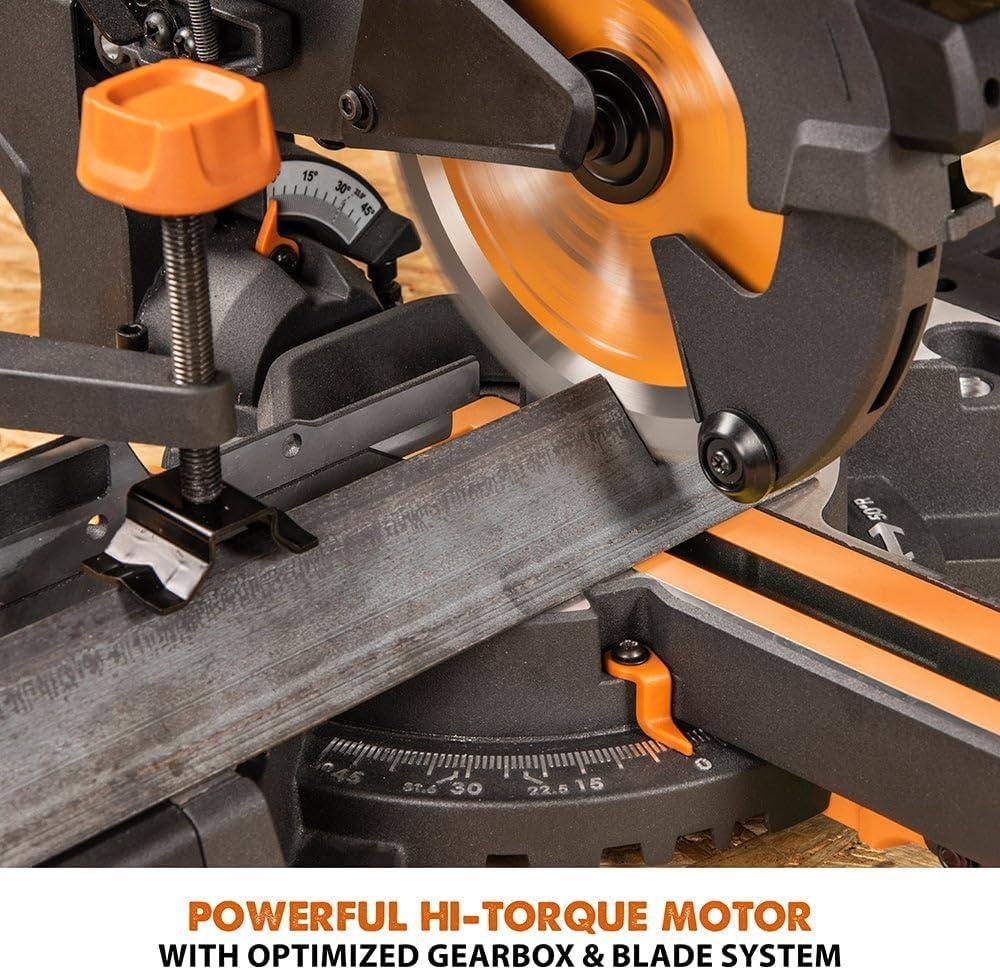
In our shop, the standout “woodworker” feature is the combination of a compact 7-1/4″ platform with true sliding reach: the 210 mm slide and 50° miter left / 50° miter right give us the kind of crosscut flexibility we normally reserve for a larger saw, while the 0–45° bevel covers the bread-and-butter bevel work for casing, baseboard returns, and quick furniture parts. Evolution rates the drive at a 1500 W motor/gearbox system (one reviewer notes it “pulls about 760 watts” in use),and customers repeatedly describe it as lightweight and “easy to assemble,” which matters when we’re setting up on a bench,a mobile cart,or moving room-to-room for trim. Review themes also mention ball-bearing slides and a “smooth starting motor,” and several users praise the corded laser guide (no batteries) as being visible even in daylight. That said, we want to use the laser like we use any guide—helpful for rough alignment, but we still verify with a knife line or mark-and-test cuts—because a few reviews note the laser can be off (one mentions about 1/8″), and there are also reports that bevel calibration may not land perfectly at 45° on every unit without tuning.
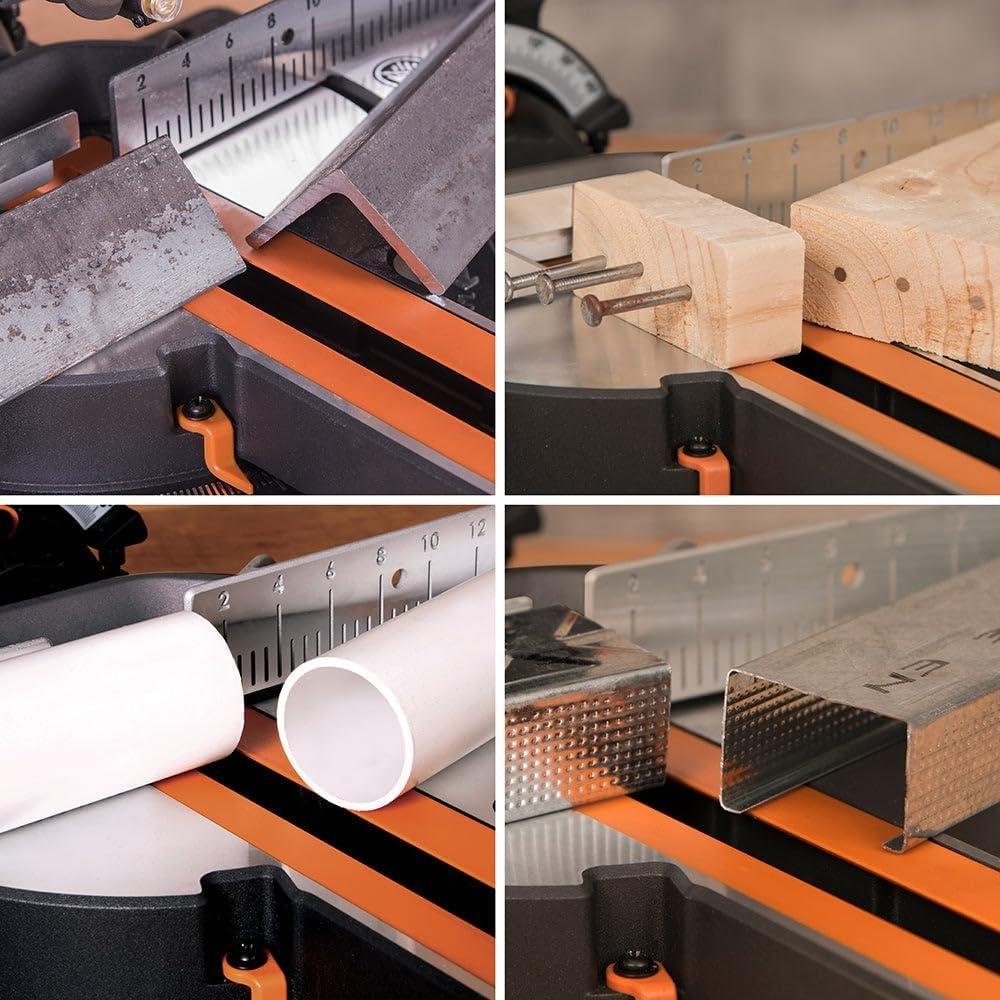
Where the R185SMS+ really differentiates itself is the multi-material promise that can actually be useful to woodworkers who build jigs, shop furniture, or mixed-media pieces. The included TCT blade is designed to cut wood, plastic, aluminum, and mild steel, and customer feedback strongly supports that “it cuts steel and wood cleanly,” including mentions of cutting 1/4″ bar and angle iron with “no issues,” often with minimal sparks/heat/burrs. In practical terms, that lets us break down metal angle for a miter-saw stand, chop threaded rod for jigs, or trim PVC for dust collection adapters without swapping tools—just remember that technique changes by material: we clamp firmly, let the saw reach full RPM before contacting the work, feed steadily (don’t force), and wear appropriate PPE. We also plan around two recurring review notes: dust collection is “like most miter saws” and can leave debris behind even with the dust bag, and at least one customer reported a safety shroud breaking during setup—so we assemble carefully, avoid forcing guards, and keep an eye on those plastic parts. If our work is primarily fine trim and occasional mixed-material fabrication (not heavy framing or rough carpentry), the feature set lines up well with what reviewers call a “great little saw” and “good value for the price.”
See Full Specifications & Customer Photos
Ease of Use Setup and Storage for Beginners and Experienced Woodworkers
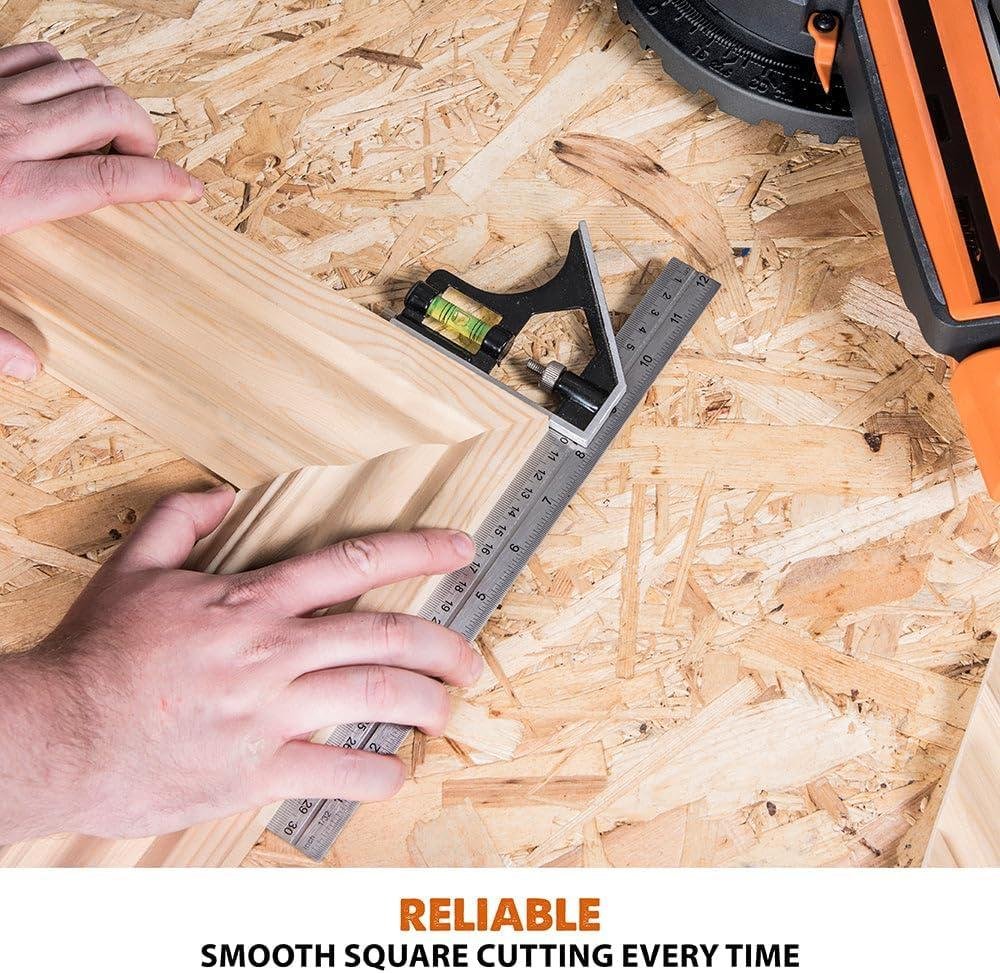
For setup,the Evolution R185SMS+ feels aimed at getting us cutting quickly without a “shop class prerequisite.” It ships in a compact, partly disassembled layout (base, power head, and slider tubes), and multiple customer review themes repeatedly call out easy assembly and well-designed instructions—one reviewer even described it as the “most straightforward assembly” they’d had on a complex tool. Once it’s together, we’re working with a 1500W corded motor (one reviewer measured it around ~760 watts draw in use), a 7-1/4″ blade, 210 mm slide, and angle ranges of 0–45° bevel and 50° left / 50° right miter. For beginners, these ranges cover most trim and small furniture angles, and the included cord-powered laser guide can speed up repeatability—though reviews also show real-world variance, with at least one user noting the laser can be off by about 1/8″, so we still recommend doing the classic “test cut + verify with a square” before committing to a finished piece.
In day-to-day use, the R185SMS+ is easy to live with in a small shop because it’s frequently described as lightweight, compact, and simple to move and stow (helped by the carry handle). That said, storage isn’t just about footprint—it’s also about keeping it calibrated and protected. Reviewers praise the smooth ball-bearing slide and “smooth starting” feel, but some also mention durability quirks (for example, an isolated report of a safety shroud breaking during setup), which is a reminder for us to avoid forcing guards or yanking the head through its travel. For dust management, the included dust bag is convenient for quick cuts, yet customer feedback mirrors what we’ve seen on many compact miter saws: dust collection is only so-so, so pairing it with a vacuum (or at least positioning a shop fan strategically) helps keep the bench and sliders cleaner. For experienced woodworkers,the biggest “ease-of-use” tip is to treat this as a finish/DIY-capable saw rather than a framing brute—keep the rails clean,verify bevel stops (one reviewer felt the bevel didn’t reach a true 45°),and choose the right blade for the task since the included blade is often cited as a 20-tooth option,which is fine for fast cuts but not always our first choice for clean crosscuts in hardwood.
- Included accessories
- Premium TCT multi-material blade (manufacturer states included; reviews commonly identify it as 20T)
- Laser cutting guide (cord-powered)
- Dust collection bag
- Premium 3-piece clamp
- Carry handle
- Compatible attachments/accessories
- Higher-tooth-count 7-1/4″ blades for finer wood cuts (common upgrade mentioned in reviews)
- Aftermarket/workholding clamp options (some customers report ordering specialty clamps through Evolution support)
- Shop vacuum adapter solutions (often needed to improve real dust capture vs. bag-only)
- Ideal project types
- Trim work and small molding jobs
- DIY shelving and basic box builds
- Small furniture parts and repeated crosscuts
- Mixed-material shop tasks (wood/plastic/metal cuts where appropriate blade choice and clamping are used)
- Wood types tested by customers
- Pine / common softwood trim (general review theme: clean cuts, minimal tear-out with the right blade)
- Wood with embedded nails (manufacturer claims multi-material capability; reviews commonly praise versatility)
| Spec / Feature | What It Means for Setup & Storage | Beginner Fit |
|---|---|---|
| 1500W corded motor | No batteries to store/charge; ensure a stable outlet and cord management | Good |
| 210 mm slide | More reach than a non-slider; keep rails clean for smooth travel during storage | Good (with basic maintenance) |
| 0–45° bevel | Common bevel range; verify stops with a square before precision work | Good (learn calibration) |
| 50°/50° miter | Wide miter range without re-positioning material as often | Good |
| Dust bag included | Easy to store and use quickly, but reviews often say collection is limited | Okay (vacuum recommended) |
| Accessory | Why We’d Add It | When It Matters Most |
|---|---|---|
| 7-1/4″ 60T–80T wood blade | Cleaner crosscuts and less tear-out than a coarse blade | Trim, hardwood edging, visible parts |
| Workpiece clamp upgrade | Faster, safer repeat cuts; steadier cuts in metal/plastic | Short parts, angled cuts, multi-material |
| Shop vac hookup | Improves cleanup and keeps rails less dusty | Indoor shop use, MDF, repetitive cutting |
| Capacity / Range | Rated (Specs) | What We Should Expect in Practice |
|---|---|---|
| Bevel range | 0–45° | Most units should hit common angles, but reviews suggest we should verify true 45° before critical joinery |
| Miter range | 50° left / 50° right | Plenty for trim and general woodworking; lock it down and test-cut for repeatability |
| Laser accuracy | Laser guide included | Helpful for rough alignment, but some users report an offset—use it as a guide, not a guarantee |
Check Current Price & Read All Woodworker Reviews
Customer Reviews Analysis
What Woodworkers Are Saying (Evolution Power Tools R185SMS+ 7-1/4″ Sliding Miter Saw)
1. Overall sentiment from woodworking customers
sentiment trends positive.Several woodworkers mentioned being impressed by how smooth, capable, and good-value the R185SMS+ feels for a compact sliding miter saw—especially considering it’s designed for multi-material cutting. Common praise includes easy setup, portability, and “worth every penny” value. That said, some users reported limitations around accuracy expectations, dust collection, and jobsite-tough durability.
2. Performance feedback (accuracy, power, results)
Multiple reviews highlight strong cutting performance for its size. Customers frequently described the saw as powerful under load, with a smooth-starting motor and smooth ball-bearing slide action. A recurring theme is how well it handles metal (steel, angle iron, tube), with users noting cleaner cuts than expected—one reviewer said it cuts “thick metal smoother than anything else.”
Woodworking-focused feedback also points to solid finish-work capability: one user noted the miter is true with minimal blade wandering, and another called it “compact yet powerful” with good versatility across wood, plastic, and metal.
Accuracy is more mixed.Some users found the saw precise enough for trim/finish tasks, while at least one reported the cut being about 1/8″ off from the laser, suggesting you may need to verify and calibrate rather than rely on the laser out of the box.
sparse excerpt: “Miter is true, minimal blade wandering. Laser is on target.”
Sparse excerpt: “Cut is about an eighth of an inch off from the laser.”
Blade feedback: Several reviewers mentioned upgrading the included blade (noting it ships with a 20-tooth blade) and getting better results with a higher-tooth-count blade (e.g., 60T) for smoother cuts, especially on wood.
3. Build quality and durability observations
Build quality impressions depend on the use case. Several woodworkers described it as robust, “well-thought-out,” and “built to last” for its intended role. However, one experienced-sounding reviewer framed it as a finish/gentle-work saw rather than a framing or rough-carpentry tool, warning it may not hold up if treated like a heavy-duty jobsite saw.
Othre noted observations included a small cord gauge and no ground plug (as reported by one reviewer), which influenced how “jobsite-ready” it feels to some buyers. Still, the same reviewer called it a “good value” for what it’s designed to do.
4. Ease of use for different skill levels
Beginners and DIYers appreciated the straightforward assembly and clear instructions—multiple reviews specifically called out the assembly process as unusually easy for a complex tool.Users also described it as lightweight and easy to move, which reduces friction for casual/home users.
Experienced users seemed to treat it like a tool that benefits from a proper setup: some users reported challenges with laser behavior (e.g.,“never turns off”) and laser calibration being finicky. One reviewer also mentioned clamp placement being awkward on one side due to clearance with the motor during a cut.
5. Common project types and success stories
While many reviews emphasize multi-material capability more than traditional cabinetry, customers successfully used this saw for:
- Cutting steel and thick metal (including angle iron like “2x2x1/4 angle”)
- Cutting metal tubing with a “fine cut” and minimal burrs (per one detailed review)
- Home/handyman finish work, where portability and miter accuracy matter more than framing-speed abuse
- General DIY tasks involving wood/plastic/metal, with several users emphasizing its versatility
A common success pattern: users pair the saw with the right blade for the material, and report standout results—especially on metal where they expected sparks/heat/burrs but instead got cleaner cuts.
6.Issues or limitations reported
Several reviewers mentioned drawbacks that potential buyers should plan around:
- Laser / accuracy mismatch: Some users reported the cut line being off relative to the laser (e.g., ~1/8″). Others found the laser accurate—so calibration/individual unit variance may be a factor.
- Dust collection: one reviewer said the sawdust collection “doesn’t work” and that dust disperses widely.
- Not a framing saw: At least one review emphasized it’s not built for rough carpentry abuse; more suited to finish/controlled work.
- Included blade is basic for wood finishing: The included 20T blade may be fine for rougher cutting, but several users recommend a higher-tooth blade for cleaner woodworking results.
- clamp/fixture ergonomics: A few usability notes around clamp placement/clearance and needing to source certain accessories separately.
- Laser always on (reported): One detailed review claimed the laser never shuts off except by unplugging (or the user couldn’t find the switch).
Summary Table (common themes)
| Aspect | Common Feedback |
|---|---|
| Overall | Generally positive; praised as smooth, capable, and strong value for a compact multi-material slider |
| Performance | Multiple reviews highlight smooth slides and strong power—especially impressive on steel and tubing |
| Precision | Mixed: some say miter is true and laser is on; others report laser-to-cut offset and recommend calibration |
| Build Quality | Seen as robust for finish/DIY work; at least one reviewer cautions it’s not for rough framing-duty use |
| Ease of Use | Assembly widely praised as exceptionally easy; some frustration with laser behavior/calibration and clamp clearance |
| Versatility | Customers successfully used it on wood, plastic, and metal; blade choice strongly influences results |
| Limitations | Dust collection criticized; included blade is basic (20T); some laser/accuracy complaints |
If you want, I can rewrite this section in a tighter “product page” voice (shorter paragraphs, more scannable bullets) or tailor it specifically to wood-only use cases rather than multi-material.
Pros & Cons
Pros & Cons: Evolution R185SMS+ (Is It Our Shop fit?)
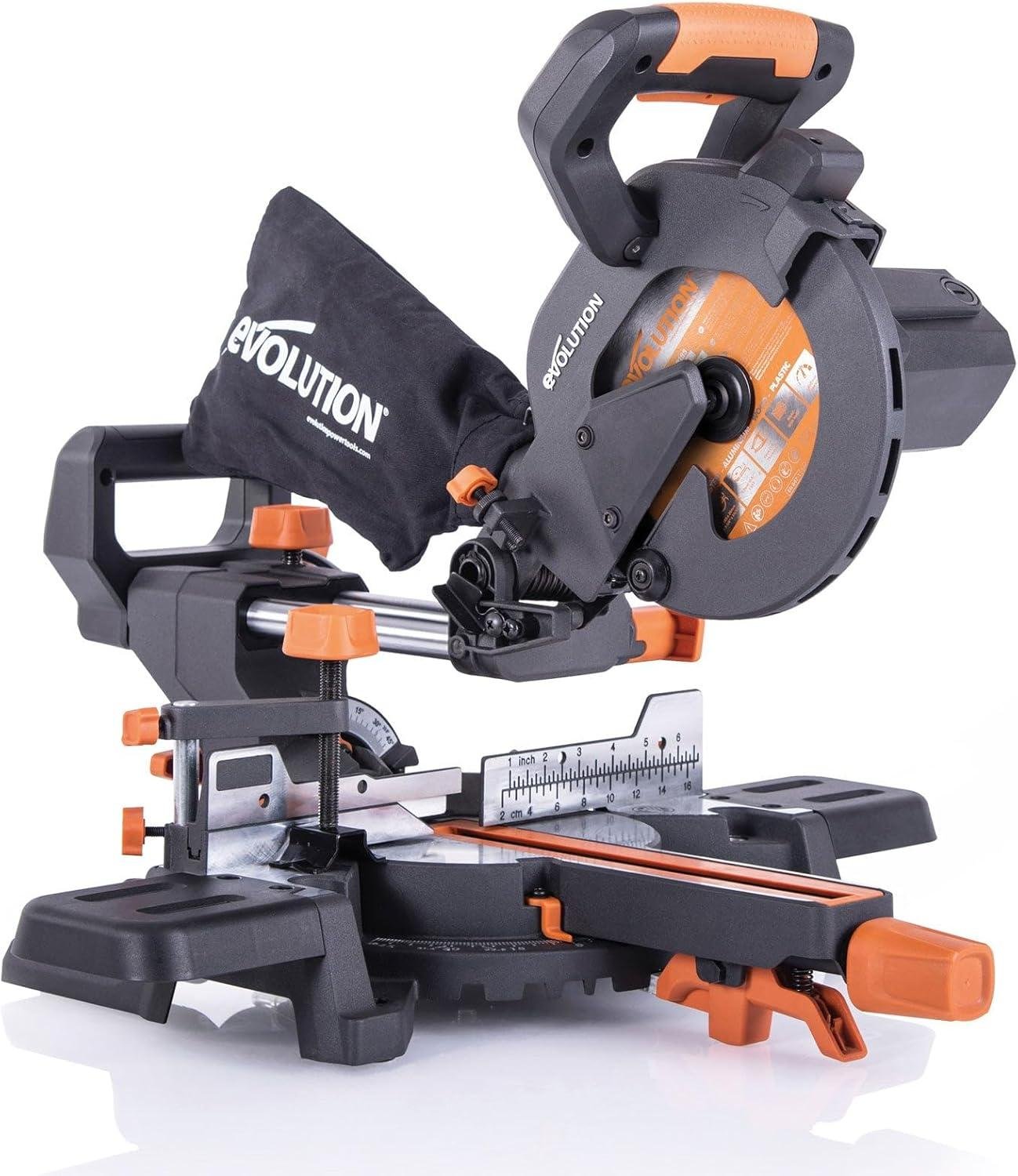
After looking at what this saw promises (and what real users keep repeating), we’d describe the Evolution R185SMS+ as a compact “do-a-lot” slider—built for the grab-and-go corner of our shop, not the brute-force framing lane.
| Quick Take | What It Means in Our Shop |
|---|---|
| Multi-material personality | We can bounce between wood, plastic, and mild steel without swapping tools constantly. |
| Compact 7-1/4″ slider | We get slide capacity without dedicating half a bench to a big 10″/12″ saw. |
| Value-first build | We save budget, but we treat it like a precision tool—not a demolition tool. |
Pros
- Clean, confident cutting across materials. We keep seeing praise for how it slices through wood and steel with surprisingly tidy results—often with minimal burrs and drama.
- Legit versatility for DIY and finish work. Between the 0–45° bevel and 50° left / 50° right miter, we can cover most real-world angles without doing angle-math gymnastics.
- Lightweight and portable. If our work moves from bench to driveway or upstairs to a remodel corner, the carry-pleasant size is a real advantage.
- Slider adds flexibility. The 210 mm slide gives us more reach than a non-slider in this footprint—handy for trim, small panels, and repeatable cuts.
- Good “out-of-the-box” value. The included blade, laser guide, clamp, and dust bag make it feel like a complete kit rather than a “buy the basics separately” situation.
- Customer support reputation looks strong. Multiple owners mention fast parts help and responsive service—always nice when we’re betting on a tool for regular use.
Cons
- Not a framing beast. We wouldn’t label this a jobsite bruiser; several users frame it as more “finish/DIY” than “rough carpentry abuse-proof.”
- Bevel accuracy may need checking. At least one report suggests the bevel may not hit a true 45° out of the box. In our shop,that means we’d plan to verify and calibrate before trusting critical miters.
- Laser expectations vary. Some feedback points to the laser not perfectly matching the cut line (or being finicky). We’d treat it as a setup aid, not gospel.
- Dust collection sounds “standard miter saw mediocre.” The dust bag is included, but expectations should be realistic—most small saws still leave a confetti trail behind.
- Mixed feelings on size. Some of us will love the compact footprint; others may find it “small” if we’re used to bigger saw capacity and workholding space.
- Durability anecdotes aren’t perfect. While many call it sturdy, there are reports of a safety shroud issue during setup—enough for us to handle assembly carefully and inspect parts early.
Our bottom-line takeaway: the R185SMS+ reads like a smart pick for versatile, portable cutting—especially if our projects jump from trim to DIY fabrication. If our daily work is heavy framing or we demand dead-perfect bevels without calibration, we may want to step up a tier (or at least plan a careful tune-up).
Q&A
Is this powerful enough for hardwoods like oak or maple?
For a compact 7-1/4″ slider, it has strong real-world power. The specs list a 1500W motor/gearbox system, and multiple reviewers describe it as “powerful” and “smooth,” even when crosscutting dense materials. For hardwoods (oak/maple), expect best results with a sharp blade, steady feed rate (don’t force it), and solid workholding—especially on wider cuts when using the 210 mm slide.
How dose it do on plywood, veneers, and trim—does it tear out?
it can do clean finish work, but the included multi-material TCT blade is a lower-tooth-count “do-it-all” style (one reviewer noted it ships with a 20T blade). That’s great for speed and multi-material versatility, but it’s not ideal for ultra-clean plywood/veneer edges. Several owners recommend swapping to a higher-tooth-count wood blade (e.g., 60T+) for trim, plywood, and veneered panels. Using a sacrificial backer board and ensuring the work is tight to the fence also helps reduce tear-out.
Can I use this for production work, or is it more of a DIY/finish saw?
Most customer feedback frames it as excellent for DIY, household projects, trim, and “smaller jobs,” with smooth sliding action and accurate miters for typical carpentry tasks. One detailed review specifically cautions it’s “not a framing saw” and suggests the build is better suited to gentler finish work than rough daily jobsite abuse. Simply put: great for hobbyists, installers, and mixed-material work; for all-day production framing, many pros will prefer a larger/heavier-duty 10″ or 12″ jobsite miter saw.
How difficult is the initial setup, and what should I check before my first “real” cut?
Setup is widely praised as straightforward. Reviews mention the saw arrives in a few main assemblies and the instructions are “easy to follow” with clearly identified parts. After assembly, plan to verify calibration like you would on any miter saw: check 90° to the fence, confirm the miter detents, and test the bevel stops. A few users report needing minor tuning (and one mentioned a bevel max that didn’t reach a perfect 45° on thier unit), so it’s worth doing test cuts and adjusting before precision work.
Is the laser guide accurate—and can it be adjusted?
Many reviewers say the laser is “on target” and visible even in daylight, and a nice perk is that it’s cord-powered (no batteries). That said, not everyone experiences perfect alignment—one review noted their cut was about 1/8″ off from the laser. Treat the laser as a reference, not a substitute for test cuts, and if your line is off, plan on calibrating it (some users describe laser calibration as finicky). For fine woodworking, always confirm with a scrap piece and mark-to-kerf technique.
Will it fit in a small workshop, and can it be mounted to a bench or miter station?
Yes—this model is consistently described as compact and lightweight, which helps in tight garages and small shops. The sliding travel is 210 mm, so it needs less rear clearance than many larger sliders (still leave room for the rails to move freely). like most miter saws, it can be bolted down to a bench or miter station for repeatable accuracy; many users also appreciate it as a portable saw for on-site trim and small installs.
How good is the dust collection, and do I need a special dust extractor?
Dust collection is a weak point for many owners. Several reviews say the included dust bag doesn’t capture much (which is common for miter saws in general,but it’s mentioned frequently here). You don’t need a “special” system, but you’ll get better results attaching a shop vac/extractor if your setup allows it, and adding a hood/box behind the saw in a miter station can dramatically reduce stray dust.
How durable is it, are parts available, and what warranty comes with it?
Evolution includes a 3-year manufacturer’s warranty, which is a strong value feature. Durability feedback is mostly positive, but there are a few notable negatives—one customer reported the safety shroud breaking during setup, and another mentioned a small pin/rod issue. The encouraging part is that multiple reviews praise Evolution’s support: owners report fast responses and replacement parts shipped quickly, and one user said a replacement arrived in about 3 days after contacting customer service.
Discover the Power
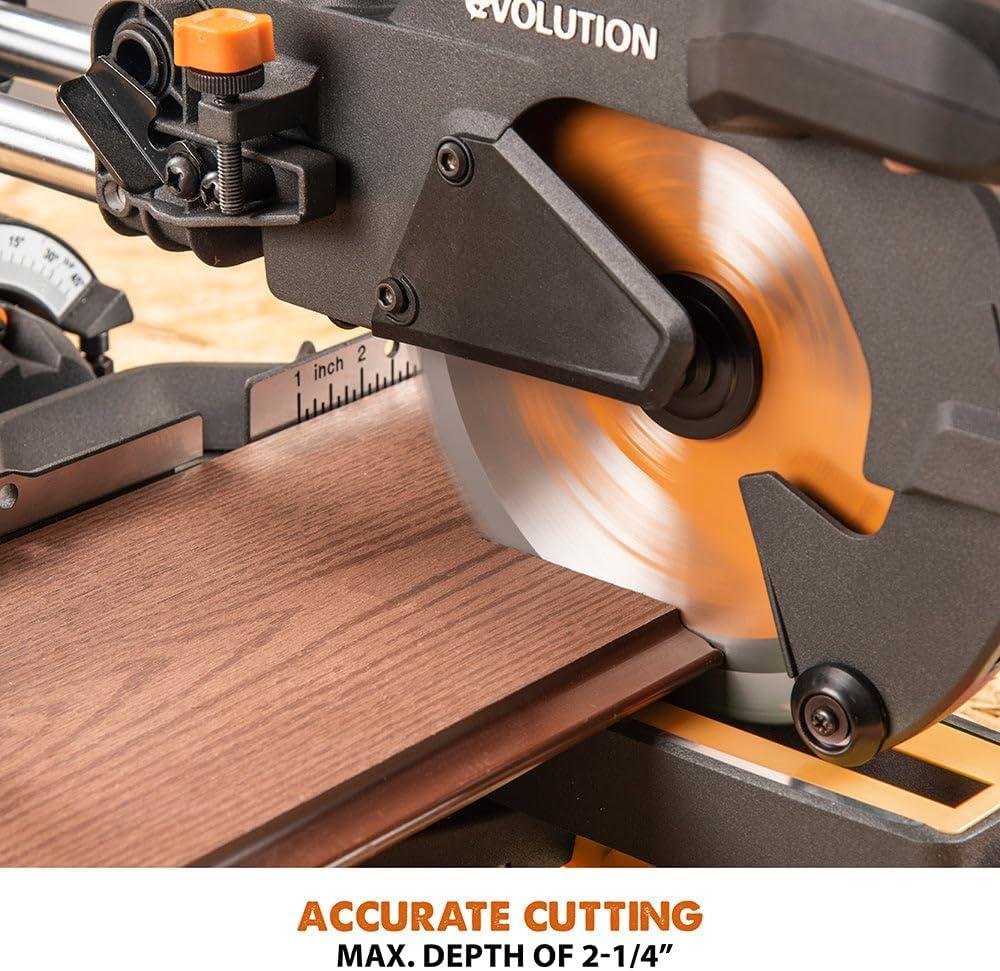
the Evolution Power Tools R185SMS+ is a compact 7-1/4″ sliding miter saw built around a 1500W motor, 210mm slide, 0–45° bevel, and 50° miter range. Its standout is evolution’s multi-material system: the included TCT blade is designed to cut wood, plastic, and even mild steel with minimal sparks, heat, or burrs. customer feedback consistently highlights clean, fast cuts, smooth sliding action, easy assembly, light weight, and strong value—along with mixed notes on size, dust collection effectiveness, and occasional durability quirks (like a shroud issue) or laser/cut accuracy needing setup.
Best for hobby woodworkers and DIYers tackling small-to-medium projects, trim, cabinetry parts, and occasional metal work where portability matters.
Consider alternatives if you routinely cut thick hardwoods, need framing/production durability, or demand high-end out-of-box precision and dust control.
the R185SMS+ is a solid mid-range option for versatile, space-saving crosscuts—just calibrate it and match the blade to the finish you want.
Want to see current pricing and customer photos? View on Amazon & Read More Reviews →