

Blog
Woodpeckers Baltic Birch Laser Cutter Wood: Worth It?

Frustrated with plywood that won’t stay flat on the laser bed, chips out on a scroll saw, or turns into a fuzzy mess the moment you start sanding? When we’re building small boxes, templates, inlays, or burn-ready craft blanks, precision matters—especially in tight shops where a full sheet and a track saw setup just aren’t practical.
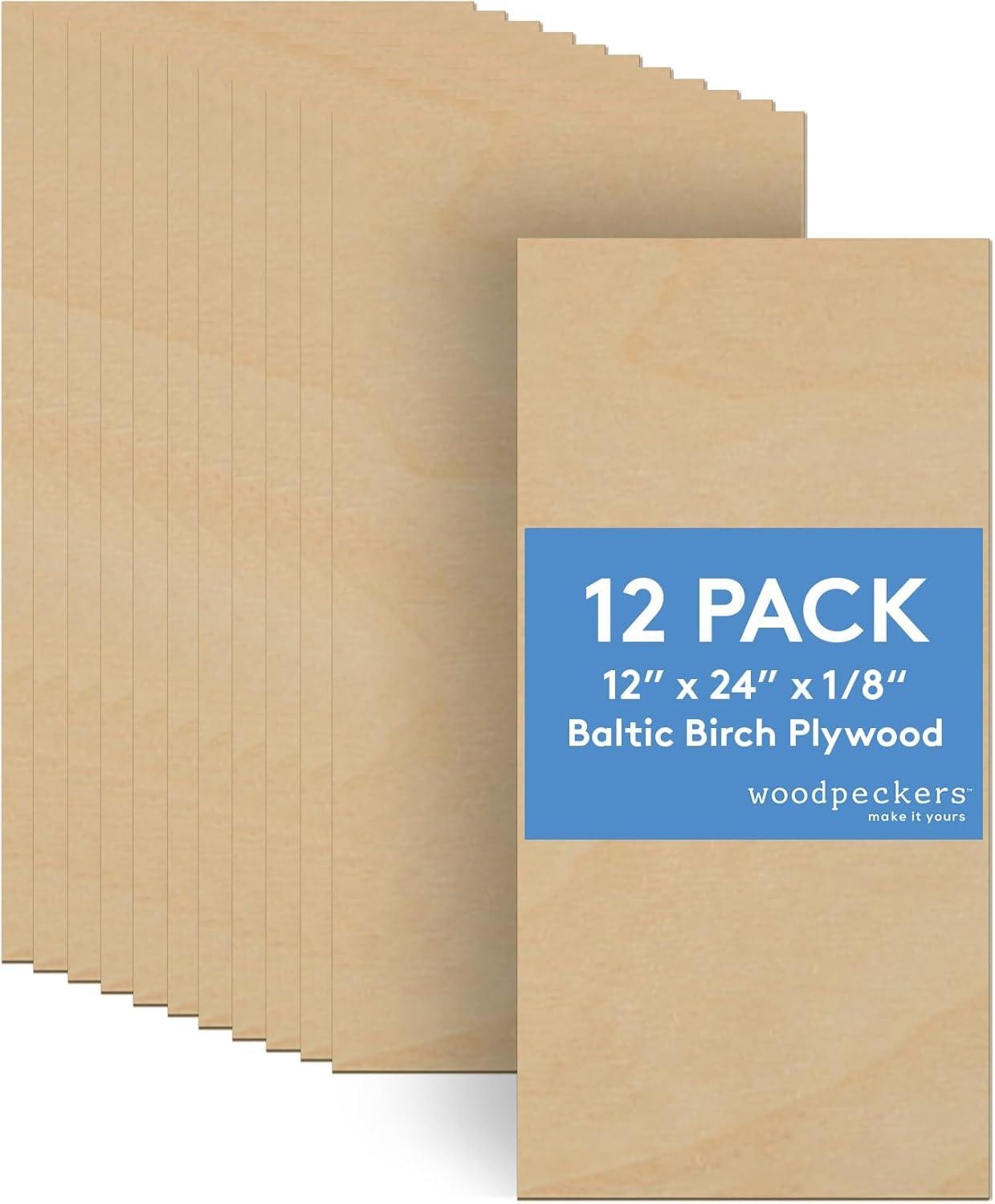
That’s where Woodpeckers’ Baltic Birch Plywood sheets come in: a box of 12 thin, 3 mm (1/8″) panels in B/BB grade, cut to a true size of 11-7/8″ x 23-7/8″. They’re marketed for laser and CNC cutting, engraving, and wood burning, with a smooth face veneer and a back veneer that may include a couple of small, color-matched patches.
In this review, we’ll dig into what those specs mean for accuracy, surface quality, and day-to-day usability—plus the tradeoffs buyers mention most. Many reviewers praise the clean, uniform cuts and overall value, while others report serious warping and mixed glue-core consistency. We’re approaching this as woodworkers who’ve learned (sometimes the hard way) that “good plywood” isn’t just about price—it’s about reliability.
tool Overview and Sheet Quality Out of the Box

When we look at the Woodpeckers Baltic birch as a “tool” in the shop, what we’re really reviewing is how reliably it behaves once it hits our bench and machines. This set comes as a box of 12 sheets in 3 mm (1/8″) thickness, listed as B/BB grade, and cut to a “true size” of 11-7/8″ x 23-7/8″ (not a full nominal 12″ x 24″, which matters if our CNC or laser files assume exact dimensions). Out of the box,the best sheets in customer feedback are described as smooth,uniformly cut,and defect-free,with several reviewers calling out that it cuts clean and takes stain well. For our practical workflow, that’s exactly what we want from thin ply: predictable faces for engraving/finishing and consistent edges for swift jigs, templates, and small parts—especially when we’re feeding it into a laser, scroll saw, or CNC where setup time is often more expensive than the material itself.
Sheet quality is also where the reviews split, and we need to treat that seriously if flatness is mission-critical. multiple customers report significant warping—some saying every piece was severely warped or that several sheets were unusable for laser beds—while others report the stack lays perfectly flat. That inconsistency means we should plan a quick intake routine: check each panel on a known flat surface, mark crown direction, and reserve any bowed sheets for smaller cut-down parts where the warp can be trimmed away. Educationally, it’s also worth noting what B/BB really implies: the B face is typically cleaner and more uniform, while the BB back may include small, color-matched patches; a few reviews also mention mixed glue strength and occasional glue fills/knots that can affect laser cut-thru on normal settings. Simply put, this plywood can be a strong fit for hobby-to-small-production craft work, but for precision laser/CNC runs we’ll want to inspect for warp and internal glue spots before committing a whole batch of parts.
- Included accessories
- 12 sheets of Baltic birch plywood
- B/BB grade faces (B face + BB back)
- Compatible attachments/accessories
- Laser cutter hold-downs (pins, magnets, or honeycomb + weights)
- Painter’s tape/masking for cleaner laser engraving and reduced smoke staining
- CA glue/wood glue for laminations and quick jigs
- Scroll saw blades / CNC spoilboard workholding (clamps or vacuum where available)
- Ideal project types
- Laser-cut craft parts (ornaments, tags, earring displays)
- Templates and routing patterns
- Model-making (including model ships)
- Thin backers, drawer bottoms for small boxes, and lightweight panels
- Wood types tested by customers
- Baltic birch plywood (3 mm / 1/8″) (this product)
| Spec | What Woodpeckers Lists | What It Means in the Shop |
|---|---|---|
| Thickness | 3 mm (1/8″) | Good for laser/CNC craft work, templates, light panels; can show warp more than thicker ply |
| Sheet size | 11-7/8″ x 23-7/8″ (“true size”) | Adjust your cut files and fences—don’t assume a full 12″ x 24″ |
| grade | B/BB | Cleaner face veneer on the “B” side; expect patches on the “BB” back |
| Quantity | Box of 12 | Enough for batching small parts; inspect each sheet before production runs |
| Accessory | Compatible? | Why We’d Use It |
|---|---|---|
| Laser masking tape | yes | Helps reduce smoke staining and speeds cleanup after engraving |
| Workholding weights/pins | Yes | Helps manage mild warp so the sheet stays in focus and cuts consistently |
| Sanding block / fine abrasives | yes | Quick edge clean-up after laser/CNC; useful if char needs a light pass |
| Use Case | Recommended Capacity (Best Practice) | Real-World Notes from Reviews |
|---|---|---|
| Laser cutting | Flat sheets only; verify cut-through test strip first | Many report it works perfect and cuts clean; others report severe warping that makes sheets hard to use |
| CNC engraving/routing | Use spoilboard + strong hold-down; avoid void/glue-fill zones | Mixed notes on glue strength and occasional hard spots that can affect machining/lasers |
| Glued assemblies | Light clamping pressure with cauls to prevent telegraphing warp | Some reviewers say it holds strong with wood glue; others mention filler/glue issues |
See Full Specifications & Customer Photos
Real World Performance for Laser Cutting CNC Routing and Wood Burning

In real shop use, these Woodpeckers Baltic birch sheets are sized for maker workflows: 3 mm (1/8″) thick and a true, machine-amiable footprint of 11-7/8″ x 23-7/8″ (sold as 12″ x 24″) in a box of 12. On laser cutters, that consistent thickness is what keeps focus height and kerf predictable, and multiple customers echo that it “works perfect with my 1/8″ laser cutter” and is a “perfect size for our Glowforge.” We also like that B/BB face: the smoother, light uniform face veneer tends to engrave cleanly and mask well, and reviewers frequently mention good quality, uniformly cut edges, and that it “cuts clean and is easy to sand or mask.” The biggest practical caution for lasers is flatness—reviews are split,with a noticeable theme of warping (“not one sheet was flat,” “severely warped”),which can throw off autofocus,increase flare-ups,or cause incomplete cuts. If we’re running production or large parts,we’d plan to check each sheet with a straightedge,store them weighted and stickered,and reserve any bowed panels for smaller components where we can cut around the distortion.
For CNC routing and wood burning, the same core traits matter but show up differently. Baltic birch generally routs crisply as the veneers support the cut, and customers report “lovely grain patterns” and “minimal planer marks,” which helps when we’re carving shallow detail or doing V-bit lettering—less surface prep before finishing. That said, several reviewers note mixed glue/void behavior; one calls out “hard glue fill… your laser won’t be able to cut thru,” and those glue pockets can also chip with small end mills or leave a dark, glassy spot that doesn’t burn evenly with a pyrography pen. educationally, this is where feed/speed and bit choice save projects: for CNC, a sharp downcut spiral helps keep the top veneer clean, while a light finishing pass can reduce edge fuzz; for wood burning, sanding to a consistent grit and testing burn temperature on the back (the BB side may have small patched areas) keeps shading predictable. when the sheets arrive flat, this is a very workable 3 mm B/BB craft plywood for lasers, CNC engraving, and burning—but the review history tells us to treat flatness as the make-or-break QC checkpoint before committing to precision jobs.
- Included accessories: None (material only; 12 sheets per box)
- Compatible attachments/accessories: Honeycomb/pin beds, hold-down pins or tape, masking paper/transfer tape, spoilboard + clamps, vacuum table, downcut/upcut spiral bits, V-bits, laser air assist, wood-burning pen tips
- Ideal project types: Laser-cut earrings/displays, practice design panels, engraved signs, inlays, model parts (including model ship work), scroll-saw cutouts, small jig parts, craft backers/mounting boards
- Wood types tested by customers (as reported): Baltic birch plywood (this product); reviewers compare results against “cheaper woods” and other suppliers’ “B/BB” sheets
| Spec / Shop-Relevant Detail | What It Means at the Machine |
|---|---|
| thickness: 3 mm (1/8″) | Common setting baseline for lasers; good for light CNC relief/carving; can be sensitive to hold-down/warp |
| Sheet size (true size): 11-7/8″ x 23-7/8″ | More accurate nesting and bed fit than nominal 12″ x 24″; helps with jigs and repeatability |
| Grade: B/BB | Smoother face for engraving/finishing; back may show small patches—plan orientation for show surfaces |
| Customer review theme: cut quality often praised | Many users report clean cuts/edges; good candidate for detailed laser/CNC work when flat |
| Customer review theme: warping frequently reported | Can cause focus issues on lasers and chatter/inconsistent depth on CNC; inspect and reserve warped sheets for small parts |
| Accessory / Cutter | Best Use with 3 mm Baltic Birch |
|---|---|
| Downcut spiral end mill (1/16″–1/8″) | Cleaner top veneer on CNC profiles and pockets |
| V-bit (30°/60°) | Lettering and shallow engraving; take light passes to avoid veneer tear-out |
| Masking paper/transfer tape | Reduces laser smoke staining and speeds cleanup |
| Pin/crumb tray or honeycomb bed | improves laser cut-through and reduces back-side scorching |
| Capability Check | Recommended Expectation | What Reviews Suggest in Practice |
|---|---|---|
| Laser cutting full-sheet parts | Sheet should be flat to avoid focus/cut failures | Mixed: many success reports, but repeated complaints of severely warped sheets |
| CNC precision engraving | Stable hold-down and consistent thickness | Generally good faces reported; occasional mention of glue fill/voids that can interrupt fine detail |
| Wood burning (pyrography) | Even grain + sanded surface for consistent shading | Good face veneer noted; patched areas/glue spots may burn differently—test on the back first |
See Full Specifications & Customer Photos
Key Features Woodworkers Will Appreciate in B BB Grade Baltic Birch

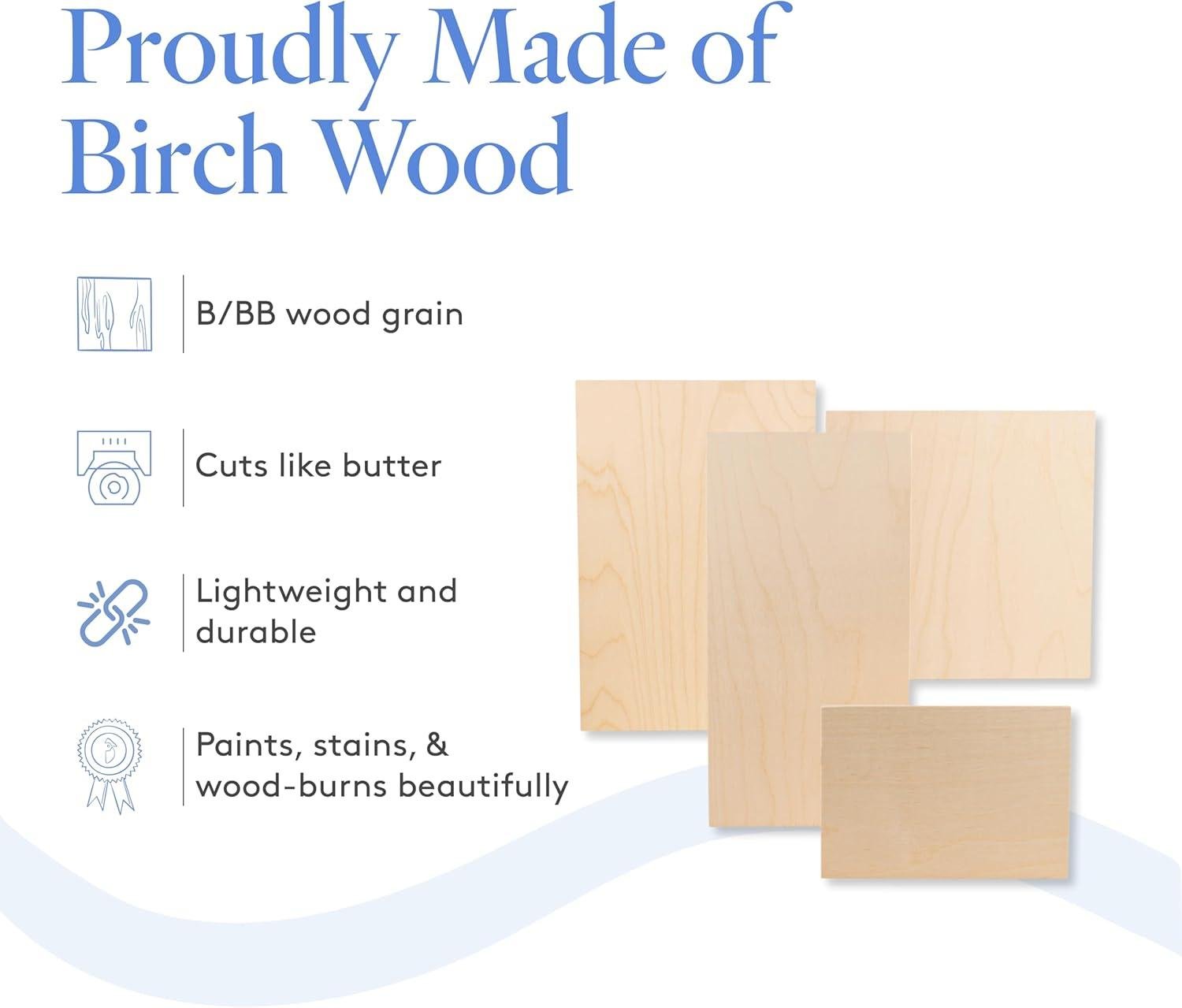
What we appreciate most about this Woodpeckers pack is how workshop-friendly the sizing and face quality are when we’re doing repeatable, small-part work. Each sheet is 3 mm (1/8″) thick and arrives in a consistent craft format of 12″ x 24″ (with a listed true size of 11-7/8″ x 23-7/8″), which matters when we’re setting up jigs, laser/CNC workholding, or designing files that need reliable margins. As B/BB grade Baltic birch, we get a single-piece face veneer intended to be smooth and light in color, while the back typically shows 1–2 small, color-matched patches—a normal tradeoff that’s easy to plan around by putting the “BB” side inward on a box lid, drawer bottom, or sign backing. Reviewers repeatedly echo that the sheets are “smooth and uniformly cut,” have “beautiful grain patterns,” and take stain well, which lines up with why we reach for Baltic birch for crisp engraving and predictable finishing. For technique, we like to lightly scuff-sand with a flat block before paint or clear coat, and for laser work we’ll mask the face to reduce smoke staining—thin birch can show discoloration fast if we don’t.
Where we have to be clear-eyed is flatness and core expectations—two things woodworkers notice instantly at the bench. Multiple customers report significant warping (some saying “every piece was severely warped” or “not one sheet was flat”), while others say their stacks “lay perfectly flat”—so consistency seems batch-dependent. In practical terms,that means we should be ready with a plan: sticker and acclimate the pile,or press lightly bowed sheets on a flat surface before precision cutting. Warped stock is especially frustrating on a laser bed or CNC spoilboard because it changes focus height and can lead to incomplete cuts; a few reviewers mention pinning/taping, but it’s not always enough for larger parts.Glue and core also get mixed feedback: some users report the sheets hold strong with wood glue, while others mention hard glue/filler spots that can resist normal laser settings. One reviewer notes these are only 3 plies (outer plies around 0.8 mm,inner around 1.4 mm and a different wood),which is fine for signs,templates,and craft panels—but if our project depends on uniform inner plies for exposed edges or tight-radius scroll work,we’ll want to test-cut first.
- Included accessories: None (this is a box of 12 sheets).
- Compatible attachments/accessories: Laser bed hold-down pins/magnets, masking tape/transfer paper, CNC clamps, spoilboard tape, scroll saw blades, fine-tooth plywood blades, sanding blocks.
- Ideal project types: Laser/CNC cut ornaments and signage, earring/display boards, model parts, templates/patterns, box skins and panels, craft backers and mounting boards.
- Wood types tested by customers (as used/reported): Baltic birch plywood (this product); reviewers compare it to other “cheaper woods” and other birch suppliers.
| Spec / Feature | What We Get Here | Why Woodworkers Care |
|---|---|---|
| Thickness | 3 mm (1/8″) | Matches common laser/CNC profiles and many craft hardware setups; thin enough for engraving, but can be warp-prone. |
| Sheet size | 12″ x 24″ (true size 11-7/8″ x 23-7/8″) | Predictable layout for batch work; true size helps us avoid file overhang and edge clipping. |
| Grade | B/BB | Cleaner “show” face for finished sides; patched back is normal and easy to orient. |
| Pack quantity | Box of 12 sheets | Convenient for production runs and keeping material consistent across a project. |
| Recommended Use | What This Material Usually Handles | Real-World Notes From Reviews |
|---|---|---|
| Laser / CNC cutting | Should cut cleanly at 3 mm when flat and consistent | Many report clean cuts and smooth faces; others hit warp or occasional hard glue/filler spots. |
| Glue-ups & finishing | Birch faces generally accept stain and clear coats well | Feedback is mixed on glue strength; several note it takes stain well. |
| accessory / Workholding Option | Best for | Fit Notes (3 mm Baltic Birch) |
|---|---|---|
| Masking/transfer tape | Cleaner laser faces, reduced smoke staining | Highly practical on light birch veneers; peel carefully to avoid lifting fibers. |
| Pins/magnets/clamps | Flattening for laser/CNC | helpful if sheets arrive bowed; severe warp may still be unusable for precision cuts. |
| fine-tooth plywood blade / scroll saw | Manual cutting with minimal tear-out | Support the sheet fully; thin stock benefits from a backer board. |
See Full Specifications & Customer photos
Ease of Use for Beginners and Pros in Layout Cutting and Finishing
For layout work, we like that Woodpeckers sells this Baltic birch in a truly manageable craft format—3 mm (1/8″) thick sheets that are a true 11-7/8″ x 23-7/8″ (not a full 12″ x 24″), bundled as a box of 12 in B/BB grade. That near-12×24 footprint is beginner-friendly as we can mark out parts with a square and a straightedge without wrestling a 4×8 panel, and it drops right onto many hobby benches, scroll saw tables, and laser/CNC beds. Customer review themes line up with what we want in easy layout stock: many mention “smooth and uniformly cut” faces/edges and “good quality… reasonably priced”, and several report it “cuts clean” and “takes stain well”. For us, that means less time fighting tearout at the line and more time dialing in fit—especially on small parts like drawer dividers, templates, ornaments, inlay pockets, and shop jigs where consistent thickness matters.
In cutting and finishing,this plywood can be very approachable,but it’s not foolproof—multiple reviewers flag warping as the biggest ease-of-use risk,with some saying “not one sheet was flat” or “every piece was severely warped”,while others report sheets that “lay perfectly flat”.For beginners, we’d treat flatness as step one: sight down each sheet before committing a laser/CNC job, and for hand-work, keep a sacrificial backer and light clamping pressure to avoid chattering and splintering. Pros will appreciate the B/BB face/back expectations—a cleaner face and a back that may have 1–2 small color-matched patches—but should also note the occasional reviewer complaint about glue fill/voids and even spots a laser “wouldn’t cut through” without adjusting settings. On the finishing side, thin birch benefits from gentle prep: we sand lightly (think fine grits and a flat block), ease edges to reduce veneer chip-out, and test stain/clear coat on an offcut first as 3 mm stock can telegraph glue lines or patches faster than thicker panels.
See Full Specifications & Customer Photos
Customer Reviews Analysis

What Woodworkers Are Saying (Based on Customer Reviews)
1. Overall sentiment from woodworking customers
Overall sentiment is mixed but leaning positive. Several woodworkers described the sheets as “top notch”, smooth, and higher quality than cheaper plywood, especially for laser work. At the same time, warping/flatness consistency is a recurring dividing line—some reviewers received perfectly flat sheets, while others reported significant bowing/twisting that made the plywood difficult or impossible to use for laser cutting.
2. Performance feedback (accuracy, power, results)
Cutting / laser performance
- Multiple reviews highlight clean laser cuts and better results than bargain alternatives, with one Glowforge user noting there “isn’t a heavy glue film” like on cheaper sheets and that it produces “higher quality cut[s] than most.”
- Some users reported small knots in places; one reviewer said these areas didn’t burn/cut as easily and required touch-up (e.g., X-Acto knife cleanup).
Dimensional accuracy
- Several woodworkers mentioned the sheets were “exactly as advertised,” “uniformly cut,” and cut square, which matters for repeatable CNC/laser jigs and batching projects.
3. Build quality and durability observations
Surface and veneer quality
- Common praise includes smooth faces, nice grain, and minimal defects on the outer plies.
- One highly experienced buyer (ordering Baltic birch from many suppliers) called Woodpeckers’ sheets “exceptional” with minimal planer marks and no large glue voids, which is a major durability/finish advantage for engraved or visible-face projects.
Core construction notes
- One reviewer provided a detailed construction observation: outer plies ~0.8 mm, while the inner ply (~1.4 mm) is a different wood. They noted it may be perfectly acceptable depending on the project, but could be a drawback if you need uniform birch throughout for edge appearance, strength characteristics, or specialty joinery.
Strength in use
- despite being thin, one reviewer said the panels did not break when screwed onto beams (within their use case), suggesting decent integrity for light-duty mounting/backing tasks.
4. Ease of use for different skill levels
- Crafters/DIYers frequently found it approachable—comments describe it as “perfect for the crafter [and] DIYer” and easy to work with.
- Laser users (Glowforge) emphasized that ease of use depends heavily on flatness: if the sheet arrives flat, it’s straightforward; if it arrives warped, it becomes a handling/setup problem (pinning down, taping, or pre-flattening).
- A few users noted it’s easy to cut, making it friendly for beginners using basic tools, and also for experienced makers batching laser jobs.
5. Common project types and success stories
Customers successfully used this plywood for a range of small-shop and craft applications, including:
- Glowforge laser cutting / laser-engraved products
- Earring displays (tabletop or hangable), including packing multiple displays for travel
- Mounting boards for gluing and sewing projects
- Kids/school projects, including a school board for a child
- Decor and art, including mid-century replica artwork
- Backing material, such as firm backing for a backsplash
- Model ship building
These examples suggest it’s popular for detailed, lightweight work where surface quality and predictable cutting matter.
6. Issues or limitations reported
Warping / twisting (most repeated complaint)
- Some users reported every sheet showed warping,and a few described severe warp/twist: “not one of the sheets was flat,” and “the entire stack had a twist… unusable in my laser.”
- several reviewers noted warp is especially problematic for laser cutters,where focus height and bed contact affect cut quality and safety. Some were able to salvage sheets by cutting them down, but others said certain panels were not usable at all.
Shipping/packaging variability
- Feedback is mixed: some said the sheets were packaged well, while another reviewer said the product was placed in a larger box with no fill, making the trip look rough (though their corners arrived intact). Packaging inconsistency may contribute to flatness problems, but reviewers didn’t universally link the two.
Material/core expectations
- The note about inner ply being different wood is significant for woodworkers who care about edge appearance, consistent engraving behavior, or structural predictability in fine work.
| Aspect | common Feedback |
|---|---|
| Performance | Clean laser cuts and smooth faces; occasional knots can affect burn/cut consistency |
| Precision | Often reported as uniformly cut and square; flatness varies by batch |
| Build Quality | Outer plies praised; one review notes inner ply is different wood and thicker |
| Ease of Use | easy to cut and craft with, but warped sheets can be frustrating—especially for lasers |
| project Results | Strong outcomes for laser products, displays, mounting boards, kids projects, model-making |
| Limitations | Warping/twisting is the most common negative; packaging protection reported inconsistently |
Pros & Cons

Pros & Cons
when we think of 3mm Baltic birch as “laser cutter wood,” we expect a tidy stack of flat sheets that cut like butter and finish like furniture.
with the Woodpeckers 12-pack (B/BB grade, nominal 1/8″, true size about 11-7/8″ x 23-7/8″), we get a lot of that… with a few recurring plot twists.
Pros
- Clean, craft-ready faces: The “B” face tends to be smooth and presentable, which is exactly what we want for engraving, staining, and painted projects.
- Consistent sizing for jigs and templates: The near-12″ x 24″ footprint (true size slightly under) makes it easy for us to standardize designs across Glowforge/laser beds, CNC fixtures, and scroll saw patterns.
- edges frequently enough arrive uniformly cut: Many buyers call out nice,square cuts—useful when we’re trying to minimize prep time and get straight into production.
- Good value when the batch is flat: When the sheets behave, the box format is convenient and cost-effective for prototyping, small product runs, and classroom-style making.
- Finishes nicely: Baltic birch’s grain can look surprisingly “premium” once we add clear coat or stain—great for signs, ornaments, and display pieces.
Cons
- Warping can be a dealbreaker: Multiple reviews report severe bowing/twisting across many sheets.For laser cutting, a warped board can mean uneven focus, incomplete cuts, or safety concerns.
- Glue/void surprises show up: Some users mention glue fills, patches, or dense spots that resist cutting on “normal” laser settings—forcing us to slow down, increase power, or re-run passes.
- Functionality varies by project: some batches work perfectly; others feel “unusable.” That inconsistency matters if we’re on deadlines.
- Inner ply may not match expectations: At 3mm, we’re often dealing with a thin, limited-ply construction; if we need uniform inner layers for edge aesthetics or specialty builds, this may not be our favorite.
- may require flattening prep: If the sheets arrive with a curve, we might need weights/clamps/time—extra steps that reduce the “ready out of the box” appeal.
Our quick Takeaway
When we get a flat, clean batch, this Woodpeckers Baltic birch feels like exactly what we want for laser engraving, CNC cutting, and wood burning.
The biggest “but” is warp risk—if our workflow depends on perfectly flat stock, that single variable can overshadow all the good stuff.
| What We Care About | How This Box Typically Performs | Why It matters to Us |
|---|---|---|
| Surface smoothness | Strong | Cleaner engraving + less sanding before finishing |
| Flatness | Mixed | Warp can cause failed cuts and wasted time |
| Laser cut consistency | Mixed | Glue/patches can force extra passes |
| Value per sheet | Good (when usable) | Great for prototyping if the stack is flat |
Q&A
Is this plywood truly 1/8″ (3mm), and will it fit my laser/CNC bed?
It’s marketed as 3mm (1/8″), but the listed “true size” is 11-7/8″ x 23-7/8″ (not a full 12″ x 24″).That slightly undersized footprint is common for pre-cut craft panels and can actually help the sheets fit more easily in popular desktop lasers. If your jigs or hold-downs expect a full 12×24, plan for that 1/8″ reduction in both directions.
How dose it perform for laser cutting and engraving (Glowforge-style projects)?
Many customers report clean cuts and good engraving results, calling it smooth and consistent for hobby laser work. Having mentioned that,reviews also mention occasional hard glue spots/patches or small knots that may not cut through on normal settings—especially on intricate designs. Practical tip: run a small test cut on each sheet (or on a corner) before committing, and keep a hobby knife handy for the rare stubborn spot.
Is it flat enough for lasers, CNC work, and accurate joinery?
Flatness is the most common complaint. Multiple reviewers report that some or even most sheets arrived warped, and a few called the warping severe enough to be unusable on a laser bed. Others received stacks that laid flat and were well packaged. If your machine is sensitive to focal height (lasers) or you’re doing tight-tolerance CNC work, be prepared to either clamp/pin the sheet down, pre-flatten with weighted storage, or sort the stack and reserve the flattest sheets for precision work.
What does B/BB grade mean in real shop terms?
B/BB typically means a nicer “B” face with a “BB” back that can have small,color-matched patches. That matches the product description and aligns with many customer comments about attractive grain and generally clean faces. For display work, put the B face outward. For painted projects or parts that won’t be seen, the BB side is usually fine—but expect a few patched spots.
How many plies is this 3mm plywood, and does the core matter?
At least one experienced reviewer noted it as 3-ply, with outer veneers around 0.8mm and an inner ply about 1.4mm that may be a different wood. For most crafting, scroll-saw, and laser projects, that’s perfectly workable. If you need “all-birch” construction throughout for edge appearance, ultra-fine CNC details, or predictable bending/lamination behavior, this may not be the best choice—test first.
Does it glue well, and can I stain/finish it nicely?
Glue performance is mixed in reviews. Several users say it holds strong with wood glue and accepts paints/clear coats well, while others mention glue voids or filler in spots. Finishing feedback is generally positive—customers mention it takes stain well and sands cleanly.Best practice: lightly scuff sand, wipe clean, and for staining consider a conditioner to keep the birch face even.
Is this suitable for production work or better for hobby and small-batch projects?
It can work for small-batch production—some repeat buyers specifically praised consistency compared to other suppliers. But as warping and occasional glue/patch inconsistencies are reported, it’s not “guaranteed production-ready” in every box. If you sell laser/CNC items, plan on normal QC: inspect each sheet on arrival, reserve any imperfect boards for smaller parts, and keep a buffer of extra sheets for time-sensitive orders.
Is it worth the price compared to cheaper craft plywood?
Many customers call it a good value for the quality of the faces and the clean, uniformly cut edges—especially compared to bargain plywood that leaves heavy glue film or has rough veneers. The main counterpoint is that if you receive a warped batch, the value drops fast. If you’re optimizing for reliable flatness above all else, you may want to buy a smaller quantity first or compare with a local supplier where you can pick flatter sheets in person.
Elevate Your Lifestyle

Woodpeckers’ Baltic Birch Plywood pack includes 12 B/BB-grade sheets at 3 mm (1/8″) thickness, cut to a true 11-7/8″ x 23-7/8″ size (nominally 12″ x 24″). The faces are generally smooth and stain-friendly, and many customers praise the uniform edges and clean cutting for lasers, CNC, scroll saw work, and pyrography. Having mentioned that, feedback repeatedly flags a potential downside: some batches arrive noticeably warped, and reviews are mixed on inner-ply consistency and glue/filler spots that can affect laser settings.
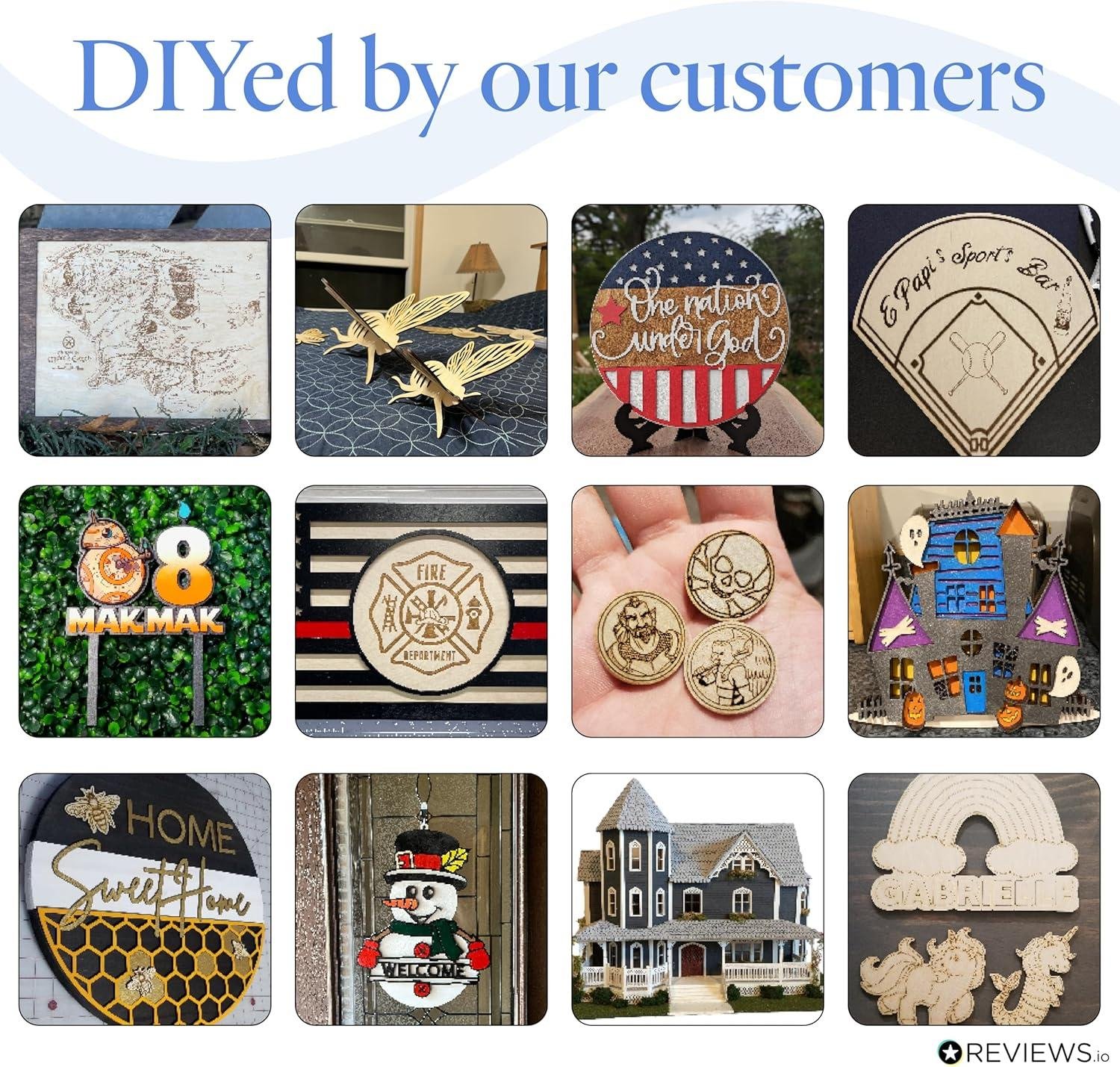
Best for hobby woodworkers and makers doing small to medium craft runs—signage, ornaments, jigs, earring displays, model parts, and practice cuts where a smooth face matters.
Consider alternatives if your laser requires perfectly flat stock every time, you need more plies/consistent core veneers, or you’re doing production work where waste from warping is costly.
it’s a solid mid-range option with great surface quality when flat, but flatness variability is the key risk to weigh.
Want to see current pricing and customer photos? View on Amazon & Read More Reviews →