

Blog
THYOI Deck Tile Kit Review: Right for Our Shop?

Ever finished a clean outdoor build—only to set it on a wavy, damp patio surface that robs the project of precision and makes everything feel “off”? When our work depends on flat, stable footing, the platform matters almost as much as the joinery—especially in tight workshop or balcony spaces where we can’t justify a full deck rebuild.
That’s where the THYOI 10 Pcs Deck tiles, Patio Flooring come in. These are interlocking, waterproof acacia wood tiles (dark brown crossed pattern) designed for all-weather indoor/outdoor use, covering about 10 square feet. The snap-lock design and slat spacing are meant to improve drainage, while grooved surfaces aim to reduce slipping—practical features when moisture and sawdust are part of daily life.
In this review, we’ll look at materials and build quality (100% acacia wood with a PPC base), installation ease (no complex tools), cut-to-fit flexibility, and weather the price aligns with what customers report in 4.5-star feedback (800+ reviews).
We’ve spent years around wood—building, fixing, and finishing—so we’ll focus on what matters: durability, clean fit, and real-world usability without overpromising results.
Tool Overview and First Impressions of the Acacia Deck Tiles
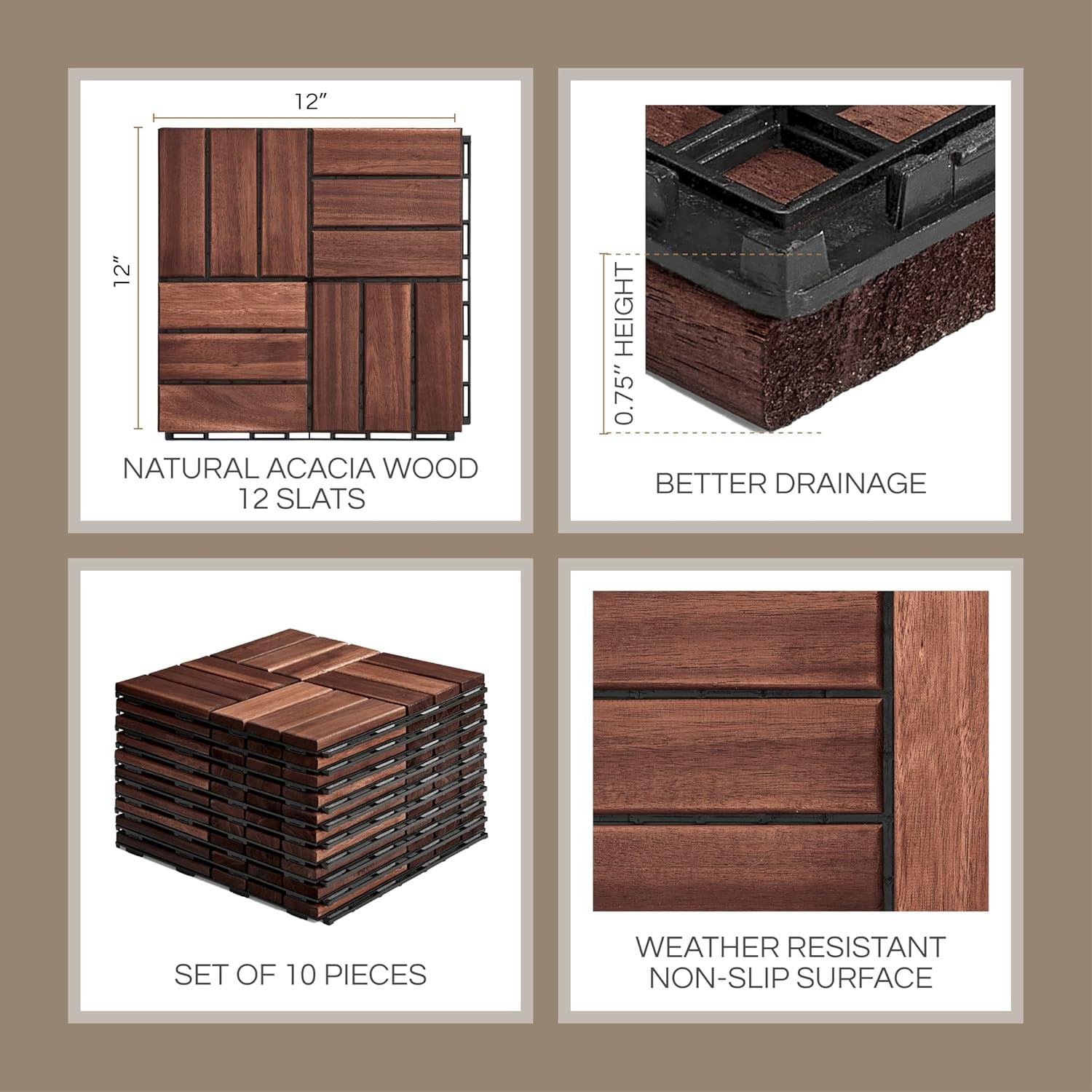
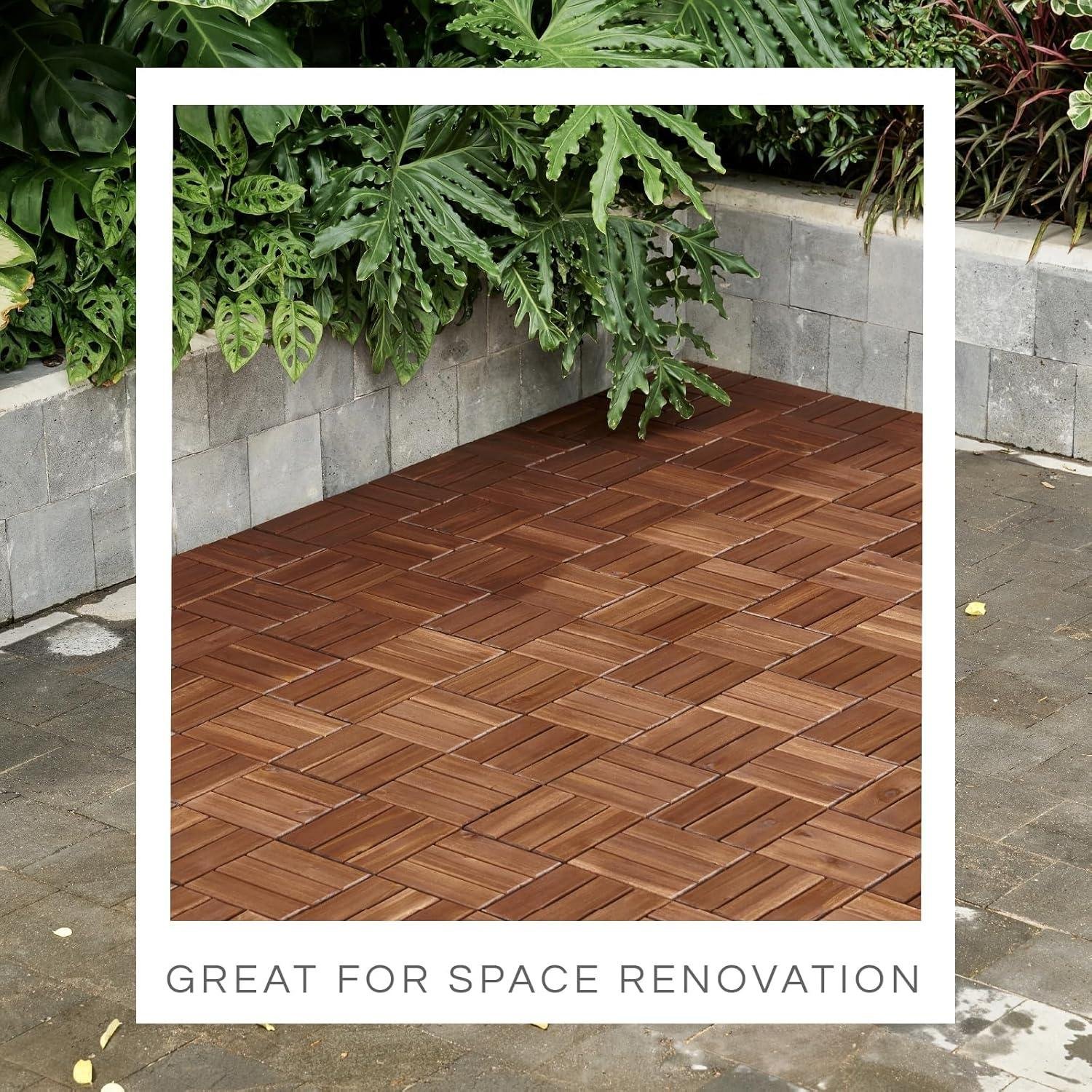
In our shop, the THYOI 10 Pcs Acacia Deck Tiles land in a gray area between “material” and “tool”—they’re a pre-finished modular wood surface that can save us time when a client needs a fast, reversible floor upgrade for a balcony, patio, or indoor nook.Out of the box,the first impression is all about predictable layout: 10 tiles covering about 10 sq ft,each tile measuring roughly 13.58″ D x 13.27″ W,in a Dark Brown crossed/striped pattern over a plastic base designed for drainage. As woodworkers, we instantly notice the practical promise: no milling, no finishing schedule, and no waiting on cure times—just a click-together field of acacia that can function as a temporary “flooring panel system” for staging outdoor builds, photo setups, or customer mockups. Acacia is a dense hardwood with natural oils, and reviewers echo that it feels “smooth, sturdy,” “solid,” and comfortable underfoot; that tracks with what we expect from the species, especially when it’s used for weather-facing products.
What stands out in early handling is the snap-lock/interlocking approach and the intentional spacing for speedy drainage—conceptually similar to building a raised panel that can shed water rather than trapping it.Multiple customers describe installation as “no tools needed,” “snapped together securely in minutes,” with one reporting a ~20-minute balcony install and another calling it the “easiest flooring” they’ve ever done. From a woodworking education angle, that matters because it changes our “tool list”: layout becomes the main skill (keep pattern direction consistent, square up the first row, and work off a straight reference), and cutting becomes occasional rather than central. Reviews also flag real-world wood variation—some mention knots and color variation that can create a “zebra look”, and one notes the links can be “a bit brittle” when taking tiles apart again, which tells us to treat the connector grid like joinery: align before forcing, support the tile when disengaging, and avoid twisting the lugs. For shop use, these are best thought of as a fast-finish surface with decent forgiveness—customers even report they stay snapped together on uneven sections—but still worth handling like hardwood parts attached to a plastic framework.
- Included accessories: 10 interlocking acacia deck tiles (covers ~10 sq ft)
- Compatible attachments/accessories: flush-cut saw or fine-tooth handsaw for edge trimming; oscillating multi-tool for notches; straightedge/square for layout; exterior-safe cleaner/brush for maintenance
- Ideal project types: balcony floor upgrades; patio refreshes; indoor/outdoor event flooring; pool surround walk paths; temporary shop “presentation platform” for outdoor furniture
- Wood types tested by customers: Acacia (Vietnam acacia wood, per listing)
| Spec | What We Noted (From Listing) | Why It Matters in a Wood Shop |
|---|---|---|
| Set coverage | 10 pcs / ~10 sq ft | Helps us estimate quantity quickly for mockups and small landings. |
| Tile size | ~13.58″ D x 13.27″ W | Determines layout math, cut list for borders, and pattern planning. |
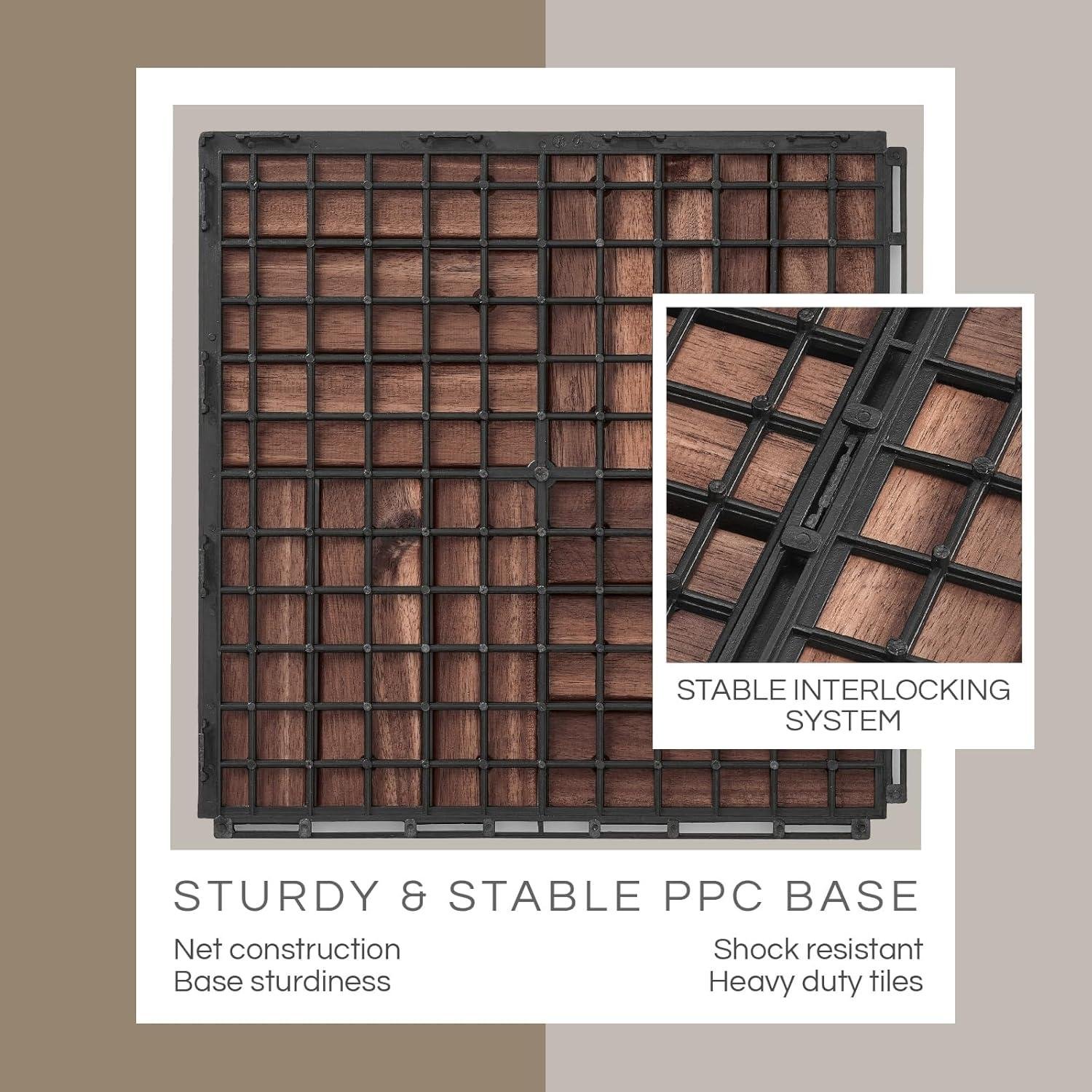
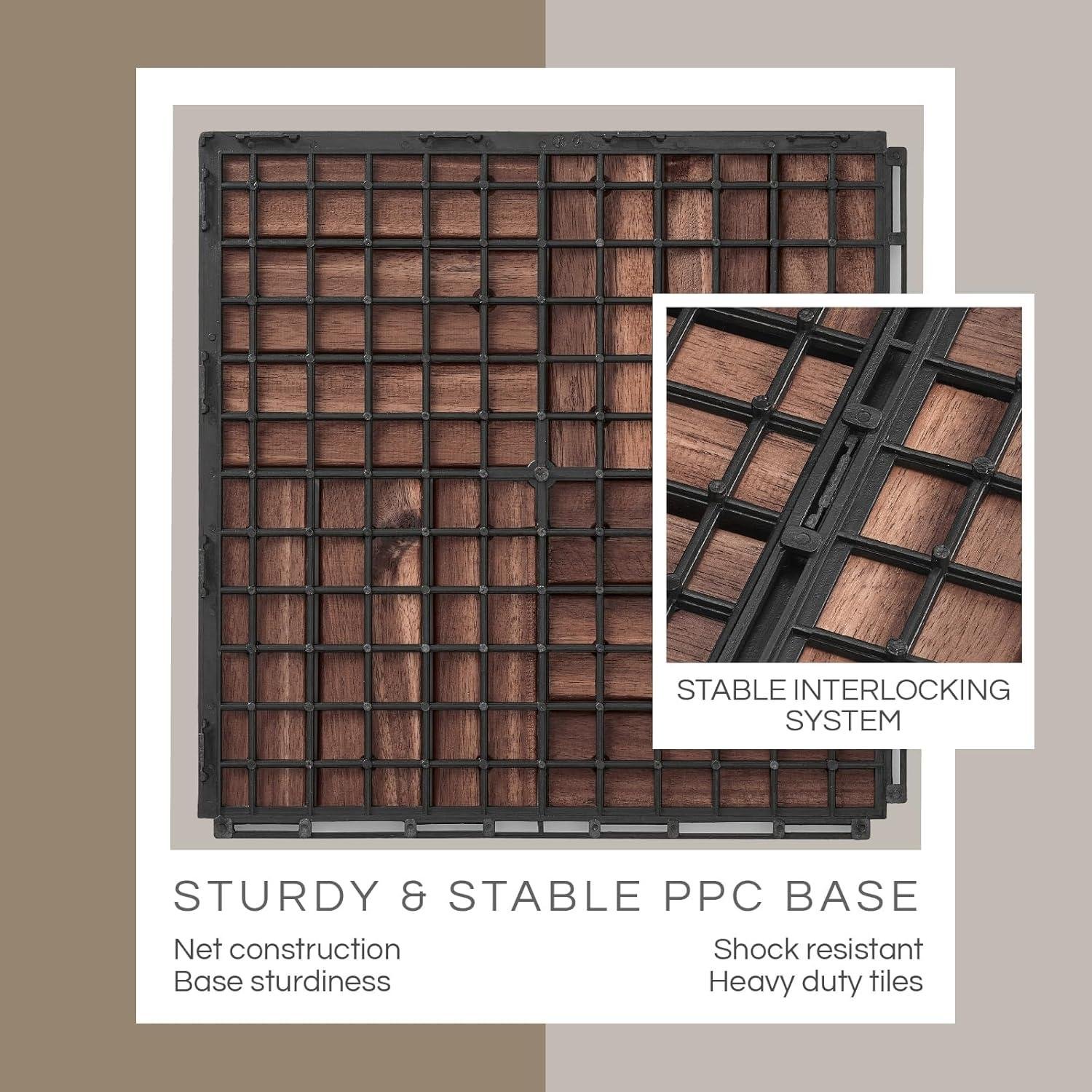
| Material | Vietnam acacia wood + PPC base | Acacia’s density/oils suit moisture exposure; base enables drainage and snap-locking. |
| Surface/traction | Grooved, “non-slippery” design | Relevant for outdoor walk surfaces and wet transitions. |
| Accessory | Compatible? | Notes for Woodworkers |
|---|---|---|
| Oscillating multi-tool (flush-cut blade) | Yes | Good for clean notches around posts/rail bases without splitting connectors. |
| Fine-tooth handsaw / pull saw | Yes | Controlled edge trimming; back up the underside to reduce chatter on the base. |
| Miter saw | Sometimes | Possible for straight cuts if fully supported; mind the plastic base and clamp securely. |
| Capacity Topic | Recommended Approach | What Reviews Suggest in Practice |
|---|---|---|
| surface prep | Start from a flat, square corner; verify drainage path. | Customers report tiles can stay connected even on uneven areas, but leveling still improves fit and feel. |
| Disassembly/rework | Lift and disengage gently; avoid twisting the joints. | One theme: connectors can be “brittle at the links” when taking apart. |
| appearance consistency | dry-lay and sort tiles for color match before locking. | Some customers note knots and color variation (“zebra look”). |
See Full Specifications & Customer Photos
Key Features Woodworkers Will Appreciate in the Interlocking Tile Design
As woodworkers, we tend to judge “interlocking” systems the way we judge joinery: the fit has to be predictable, repeatable, and forgiving. This set covers 10 sq ft with 10 tiles (roughly one square foot per tile), and the click-lock/snap-lock base makes layout feel more like dry-fitting casework than committing to fasteners. Multiple customer reviews echo that it’s “no tools needed” and goes together in “minutes”—one balcony installer even described a ~20-minute installation after choosing grain/line direction. In a shop context, that kind of speed matters when we’re building a temporary floor for a photo corner, a pop-up finishing area, or a cleaner walkway to the lumber rack without dragging adhesives into the mix. We also appreciate that these are Vietnam acacia wood on a PPC base, aimed at indoor & outdoor use, so they’re a realistic candidate for utility spaces where humidity swings and wet boots are part of daily life.
The other “woodworker-friendly” feature is how the design anticipates moisture and foot traffic. The tiles have spacing between slats for quick drainage plus grooves for a non-slip surface—practical if we’re stepping outside with finish samples, or setting up an outdoor sanding station where dust and dew can turn slick surfaces into hazards. Review themes back this up: users repeatedly mention the tiles feel “smooth, sturdy” and “solid and durable,” with several reporting they’ve “held up well in different weather conditions” and even stayed snapped together over uneven ground. The one caution we see in the feedback is consistency: some buyers note knots and color variation (expect a bit of a “zebra look”), and at least one mentions the links can be “a bit brittle” when taking the tiles back apart. If we do need to scribe around posts or odd corners, we should treat them like a pre-finished panel: measure carefully, support the cut, and use a fine-tooth blade (or a sharp handsaw) to reduce tear-out and avoid stressing the locking tabs.
- Included accessories: 10 interlocking acacia deck tiles (covers 10 sq ft)
- Compatible attachments/accessories: fine-tooth jigsaw blade, miter saw with fine crosscut blade, oscillating multi-tool plunge-cut blade, straightedge/speed square, rubber mallet (light taps only), knee pads
- Ideal project types: temporary shop walkway, balcony/patio surface refresh, outdoor kitchen mat area, poolside step-out zone, pop-up event flooring, indoor utility/bathroom floor covering
- Wood types tested by customers: acacia hardwood (vietnam acacia, per product listing and reviews)
| Feature | What It Means in the Shop | Spec / Theme Cited |
|---|---|---|
| interlocking click-lock base | Fast dry-fit installation; easy to reconfigure layouts | Snap-lock/click-lock; reviews: “no tools needed,” “snapped together securely” |
| Drainage gaps between slats | Less pooling if used near doors, finishing areas, or wet zones | Quick drainage capability |
| Grooved, non-slip surface | More traction under dusty shoes or damp conditions | Non-slippery surface (grooves increase friction) |
| Acacia wood on PPC base | Hardwood wear surface with a stable plastic base for outdoor use | Vietnam acacia wood; waterproof; indoor/outdoor application |
| Coverage per box | Helps estimate how many sets to buy for a shop corner or balcony | 10 pcs = 10 sq ft |
| Accessory / Tool | Use Case | Notes for Protecting the Locking Tabs |
|---|---|---|
| Fine-tooth jigsaw blade | Curves/irregular cutouts around posts | Cut slow; support the tile; avoid flexing the connector edge |
| Miter saw (fine crosscut blade) | Fast straight trimming for edges | Use a sacrificial backer to reduce splintering on the top face |
| Oscillating multi-tool | Notches and flush trimming in tight corners | Minimize heat buildup; test on an offcut if possible |
| Planning Metric | Recommended (Planning) | Actual (Product Spec) |
|---|---|---|
| Coverage | Buy 5–10% extra for cuts and odd edges | 10 sq ft per 10 tiles |
| Substrate flatness | Flatter is better for a tighter, quieter feel underfoot | Reviews mention staying together even on uneven sections, but results vary |
See Full Specifications & Customer Photos
Real World Performance in Wet Weather Foot Traffic and seasonal Movement
In wet-weather foot traffic, these THYOI deck tiles behave more like a well-designed shop platform than a slick finished porch: the slat spacing and underside structure are clearly meant to move water out from under your feet. Each tile is roughly 13.58″ D x 13.27″ W, and this box covers 10 sq ft with a dark brown crossed pattern over a PPC base paired with Vietnam acacia wood.From a woodworker’s standpoint, acacia’s natural density and oils often make it a practical outdoor species, and that lines up with customer themes—people in humid climates mention the tiles “held up…to heat, sunshine, and humidity,” and several call them “solid and durable” under changing weather. The manufacturer claims quick drainage and a non-slippery grooved surface, and reviewers commonly echo that they feel “smooth, sturdy” underfoot with “just enough texture,” plus one specifically describing the finish as flat/matte and “semi anti skid.” In a workshop context, we see these as useful for reducing puddling and slippery spots at an exterior threshold, spray-finish staging area, or any covered-but-damp entry where boots track water in.
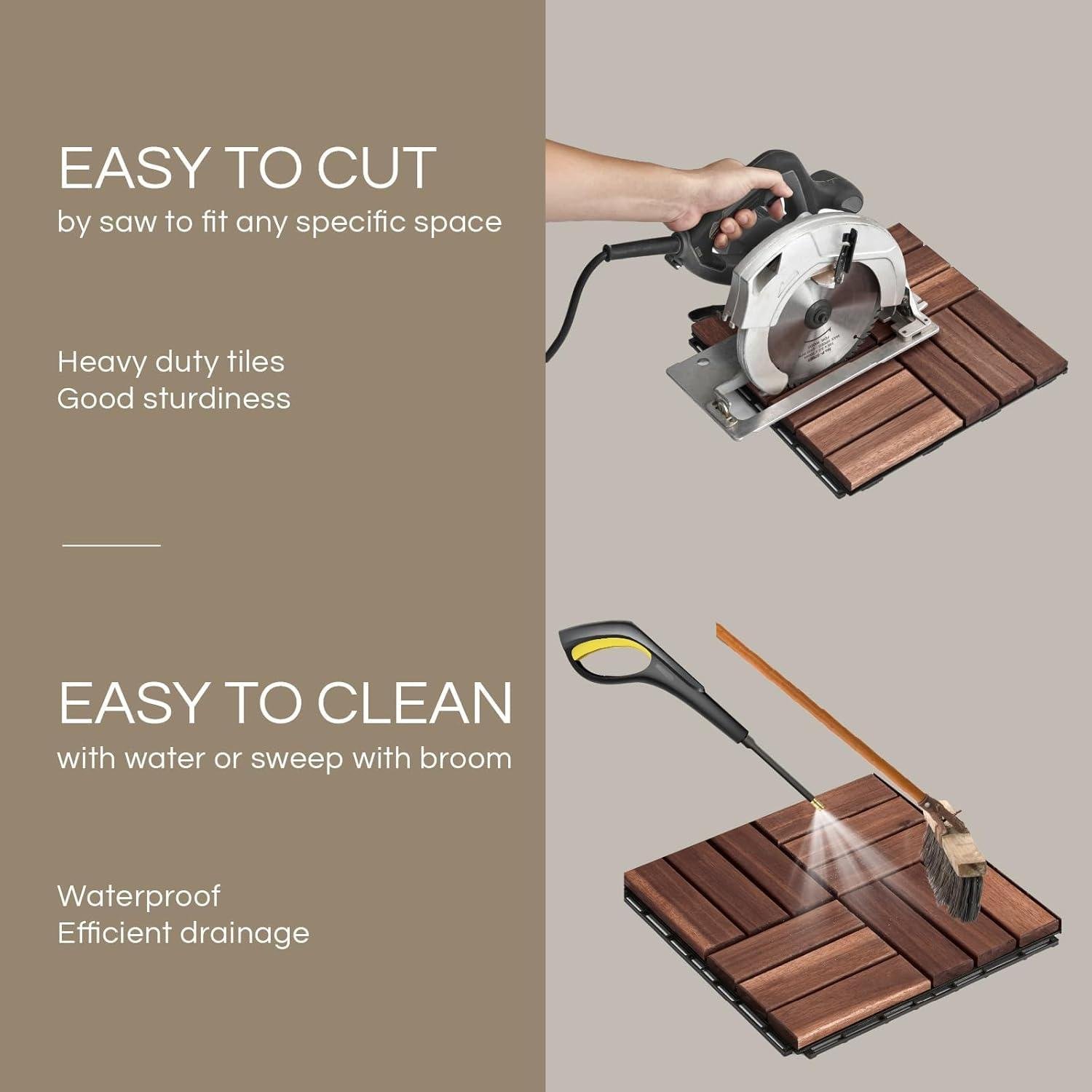
Seasonal movement is where woodworkers should pay attention: real wood slats will expand/contract across the grain as humidity swings, even on “waterproof” systems, so we’re looking at how the interlocking snap-lock grid manages that movement. The review pattern is consistent: setup is repeatedly described as no tools needed, “snapped together securely in minutes,” and stable even when the substrate isn’t perfect—one customer even noted they stayed together on “wildly uneven sections.” That’s a good sign for seasonal shifts, because a floating, modular floor typically tolerates minor expansion better than tightly fastened decking. Still, customers also warn that the links can be the weak point: a recurring theme is “a bit brittle at the links when taking apart”, which matters if we plan to pull tiles up every winter or for deep cleaning. If we need to trim for a doorway or post,we’d treat these like cutting hardwood tiles: support the work,use a fine-tooth blade (miter saw or track saw),and deburr edges so the plastic/PPC base doesn’t catch—several reviewers mention they were “easy to cut to fit”,but we’d cut slowly and test-fit often to avoid stressing the snap features.
See Full Specifications & Customer Photos
Ease of Use for Beginners and pros during Layout Cutting and Installation
For layout and cutting, these THYOI deck tiles are friendly to beginners because the system doesn’t demand fine joinery—each set covers 10 sq ft and the individual tiles measure about 13.58″ D x 13.27″ W. In our shop mindset, that means we can treat them like repeatable modules: dry-lay a row, mark perimeter cuts, then sneak up on the fit. The tiles are Vietnam acacia wood on a PPC base, so we’d approach trimming like an outdoor laminate: blue tape on the cut line to reduce splintering, a sharp fine-tooth blade (or a fresh utility blade for shallow plastic only), and a quick chamfer/sand on raw edges before installation.Reviews consistently echo that it’s “no tools needed” for most installs and that the click-lock pattern goes down fast—several customers mention ~20 minutes for a small balcony and even that a kid could help snapping pieces together. The biggest “layout” decision is purely visual: choosing which direction to run the dark brown crossed/striped pattern before you lock in the first row.
For pros (or any of us who obsess over clean margins), the ease comes from predictable indexing: the tiles “snapped together securely” and “stay snapped” even when surfaces aren’t perfect—though we’d still recommend a quick check for high spots and rocking so the locks aren’t stressed. Having mentioned that, customer feedback flags a couple real-world considerations: some boxes show knots and color variation (one reviewer described a “zebra look”), and a few note the links can feel brittle when taking apart, so we’d plan the layout carefully, avoid repeated disassembly, and lift panels evenly rather of peeling from one corner. Installation itself is straightforward—lay flat, align edges, and step or press to engage—while the spacing between slats supports quick drainage and the grooved faces add non-slip traction, which matters when we’re advising clients about pool surrounds or humid climates. If we’re budgeting time, this product behaves less like a “flooring build” and more like a “precision layout + a few smart cuts” job—ideal when we want a fast, clean upgrade without pulling out the full flooring tool kit.
See Full Specifications & Customer Photos
Customer Reviews Analysis
What Woodworkers Are saying
1. Overall sentiment from woodworking customers
Overall feedback trends strongly positive. Several woodworkers and DIYers mentioned these acacia tiles deliver an immediate “finished” look with minimal effort—frequently enough describing the result as high-end and warm.Common praise includes the rich dark-brown color, visible grain, and the way the pattern upgrades patios and balconies quickly. A smaller set of reviews notes natural wood variation and a few durability quirks at the connectors.
2. Performance feedback (accuracy, power, results)
Because these are interlocking tiles (not a powered tool), reviewers focused on fit, alignment, and the final surface rather than “power.”
- Precision / fit: Multiple reviews highlight the click-lock system snapping together securely with tight alignment, producing a clean grid with consistent spacing. People repeatedly mention “snapped together in minutes” and “fit and functionality are perfect.”
- Results / finish quality: Customers consistently reported a smooth, comfortable walking surface—one noted it felt great barefoot, “smooth, sturdy, and…not being rough.”
- On-site adaptability: Some users reported they stayed together even over less-than-perfect surfaces; one reviewer said the tiles remained locked “even in wildly uneven sections,” which points to forgiving real-world performance.
3. Build quality and durability observations
Durability comments mostly center on outdoor exposure and connector strength.
- Weather resistance: Several woodworkers mentioned the acacia held up well in harsh climates—sun, heat, and humidity (notably Southwest Florida). Reviewers described the wood as “sturdy and resilient…designed for outdoor life.”
- Surface and coating: One review called out a flat matte finish with “semi anti skid,” implying a practical outdoor surface rather than a glossy furniture-like topcoat.
- Connector durability: Some users reported challenges with brittleness at the links when taking the floor apart again (“a bit brittle at the links when taking apart”). This suggests the system is happiest when installed and left in place, and that repeated disassembly may stress clips.
- Natural wood character: A negative note surfaced around appearance consistency—“knots and color variations” and an expected “zebra look.” That’s not necessarily poor quality, but it is a durability/grade expectation issue for buyers wanting uniformity.
4. Ease of use for different skill levels
Ease of use is one of the most consistent positives.
- Beginners appreciated that installation requires no tools and no carpentry background—“just lay one tile…step to snap, and repeat.”
- Family/DIY friendly: One reviewer said even an 8-year-old could help, reinforcing the low learning curve.
- More advanced DIY notes: A few users mentioned cutting to fit; one said it “was easy to cut to fit perfectly,” though most didn’t detail what tools/blades were used.
5. Common project types and success stories
Customers successfully used this for:
- Balcony flooring upgrades (a common theme),including a 5×7 ft balcony that needed two sets and was installed in ~20 minutes.
- Patio refresh / outdoor living makeover, frequently enough paired with décor elements (one reviewer paired with faux grass border for contrast).
- Extending patio area / covering bare patches in a yard. One user used the tiles to cover grassless spots and extend usable space; reported strong performance even with pets.
- Pet-friendly outdoor surfaces: A notable success story included durability under four dogs—tiles stayed locked and held up to running/sliding.
6.Issues or limitations reported
balanced takeaways from the critical notes:
- Color/board variation: Some users reported challenges with visible knots and inconsistent tone, creating a “zebra” appearance. if you’re expecting furniture-grade uniformity, plan for natural variation—or consider ordering extra to “cull” boards you don’t want in prominent areas.
- connector fragility during removal: The interlocking links might potentially be prone to snapping if you frequently disassemble and reassemble the tiles.
- Minor scuffs / open-box realities: One buyer of a return/open-box set mentioned minor scuffing but considered it a non-issue.
| Aspect | Common Feedback |
|---|---|
| Performance (Fit/Results) | Snaps together tightly; fast layout; creates a clean, finished surface that feels smooth underfoot |
| Durability | Holds up well to sun/heat/humidity; some reports of brittle connectors if you take tiles apart repeatedly |
| Ease of Use | No tools for assembly; beginner-friendly; cutting for edges reported as doable when needed |
| Appearance | Rich dark tone and attractive pattern; some variation/knots can create a “zebra” look |
| Value | Frequently described as a quick, cost-effective upgrade that looks high-end |
Pros & Cons
Pros & Cons
| What We Liked | What We’d Watch |
|---|---|
| warm, real-wood look (acacia) that instantly “finishes” a space | 10 sq ft per box is a small footprint—larger areas will need multiple sets |
| Interlocking design feels approachable for quick shop upgrades | Edges and odd corners may require cutting and extra patience |
| Drainage gaps help water move through instead of puddling on top | Gaps can also collect debris (leaves, metal shavings, grit) and need occasional clearing |
| Grooved, non-slip slats add confidence for wet or humid conditions | “Non-slip” isn’t “no-slip”—we’d still be cautious around oils/soaps/pool moisture |
| Works indoors and outdoors, so we can test layouts before committing | Dark brown color can show dust and pollen depending on the setting |
Pros
- Instant visual upgrade for our shop or patio. The dark brown crossed pattern reads like a “designed” surface rather than a temporary fix, which helps when we want a cleaner, more intentional look.
- acacia wood brings real texture. Compared to flat plastic mats, these tiles add warmth and a tactile, natural grain that can make break areas, entryways, or display corners feel more inviting.
- Interlocking system keeps installs low-drama. We like that it’s essentially snap-together flooring—no complicated tools, no major downtime, and easy to reconfigure if we move equipment around.
- Waterproof + drainage-friendly design. The slat spacing and raised base are built for wet weather, which matters if we’re using them on a balcony, near a hose station, or in rainy seasons.
- Improved traction in damp conditions. The groove pattern is a practical detail—especially if we’re stepping out with wet shoes or tracking in moisture.
- Flexible for weird spaces. Because tiles can be cut down for irregular edges,we can fit around posts,thresholds,or awkward corners without redesigning the entire area.
- Easy day-to-day cleanup. Wipe or rinse is our kind of maintenance—ideal for spaces that pick up dust, pollen, or routine foot traffic.
cons
- coverage is limited per kit. At 10 square feet, this set is great for a test zone or small balcony, but our larger shop needs would add up quickly in box count and cost.
- Cutting for perfect edges is likely. The ability to customize is a plus, but it also means we may need the right cutting approach for a clean perimeter—especially around door frames or curved borders.
- Debris can hide in the gaps. Drainage channels are useful, but they can also trap leaves, grit, and small scraps—so we’d plan for occasional lift-and-sweep maintenance.
- Dark finish may show “shop life.” Depending on our environment, dust, sawdust, or light-colored debris could be more visible on the dark brown tone.
- Wood still means wood. even with waterproof claims, outdoor wood typically benefits from basic care over time (keeping it clean, avoiding constant standing moisture, and monitoring wear in high-traffic zones).
our takeaway: These tiles look like a fast,good-looking way for us to upgrade a small area—especially where we want drainage and a more finished feel. For bigger shop plans, we’d treat this 10-piece set as a “starter section” and budget accordingly if we decide to tile out an entire zone.
Q&A
What “wood type” are these tiles, and is it actually suitable for outdoor use?
These are made from 100% natural Vietnam acacia wood with a PPC (plastic) base. Acacia is a true hardwood with natural oils, and that combination is why it’s commonly used for outdoor decking/furniture.In the listing and reviews, users report the tiles holding up well in sun, heat, humidity, and rain (including harsh climates like Southwest Florida). Like any real wood outdoors, long-term color stability still depends on exposure and maintenance.
Can I cut these to fit around posts, railings, or weird corners—and what tools work best?
Yes. The product description specifically notes they can be cut into smaller pieces for irregular areas. For clean results, woodworkers typically use a miter saw or circular saw with a fine-tooth blade for straight cuts. For notches/curves around posts, a jigsaw works well. Practical tip: as these are wood slats on a plastic interlocking base, you’ll usually want to support the tile fully during the cut and consider cutting from the underside to reduce splintering on the visible face.
How hard is the initial setup—do I need a level subfloor like I would for real decking?
Setup is about as DIY-friendly as it gets: they use a snap/click interlocking design and multiple reviews mention installs in ~20 minutes with no tools. That said, you’ll get the most “pro” look if the base surface is reasonably flat. One reviewer even installed over uneven ground and said the tiles stayed locked, but for best long-term results (and to avoid rocking corners), level the area when you can—especially on soil, grass, or pavers with dips.
Do these work with “standard accessories” like underlayment, edging, or transitions?
They don’t require special accessories to function—each tile interlocks to the next—so you’re not locked into a proprietary tool system. Many users pair similar tiles with outdoor rugs, artificial turf borders, or simple edge trim for a finished look. If you’re adding edging or transitions, pick materials that tolerate moisture and UV. Also, plan your layout so your cut edges land where they’ll be least noticeable (against a wall/rail), since these tiles are designed to look best with the factory edges showing.
How does drainage and slip resistance compare to a conventional deck surface?
These are designed for wet environments: there’s spacing between slats and a base that promotes quick drainage, which helps prevent pooling. The surface also has grooves for added friction, and the listing calls them “non-slippery.” Realistically, any wet wood can get slick if algae/soap/dirt builds up, so occasional rinsing is still crucial—especially around pools or shaded areas.
Is this beginner-friendly, or does it take “carpentry skill” to get it right?
This is very beginner-friendly. Multiple customers specifically mention no tools and no carpentry skills needed—one even noted an 8-year-old could help snap them together. The only part that feels “woodworker-level” is if you’re doing lots of custom cuts for borders and obstructions; even then, it’s straightforward layout-and-trim work rather than joinery.
What maintenance should I expect—do I need to oil/seal them like other hardwood outdoor projects?
Day-to-day maintenance is simple: the description says wipe or rinse with water. For long-term appearance, treat them like any outdoor acacia/teak-style product: periodic cleaning to prevent grime, and consider a UV-protective outdoor wood oil if you want to slow fading or drying from sun exposure. If you prefer the weathered look, you can do less—just keep the drainage paths clear so water doesn’t sit where it shouldn’t.
Are they durable enough to take abuse (pets, moving chairs), and can they be taken apart/reused?
Reviews suggest they’re sturdy underfoot and hold up well to outdoor conditions; one pet owner with multiple dogs said they remained solid even with rough play. The main limitation noted in feedback: the interlocking links can be a bit brittle when taking them apart. In other words, they’re great for semi-permanent flooring and occasional reconfiguration, but if you plan to repeatedly assemble/disassemble (event flooring every weekend), be gentle at the connectors and lift evenly to avoid stressing the snap points.
Elevate Your Lifestyle
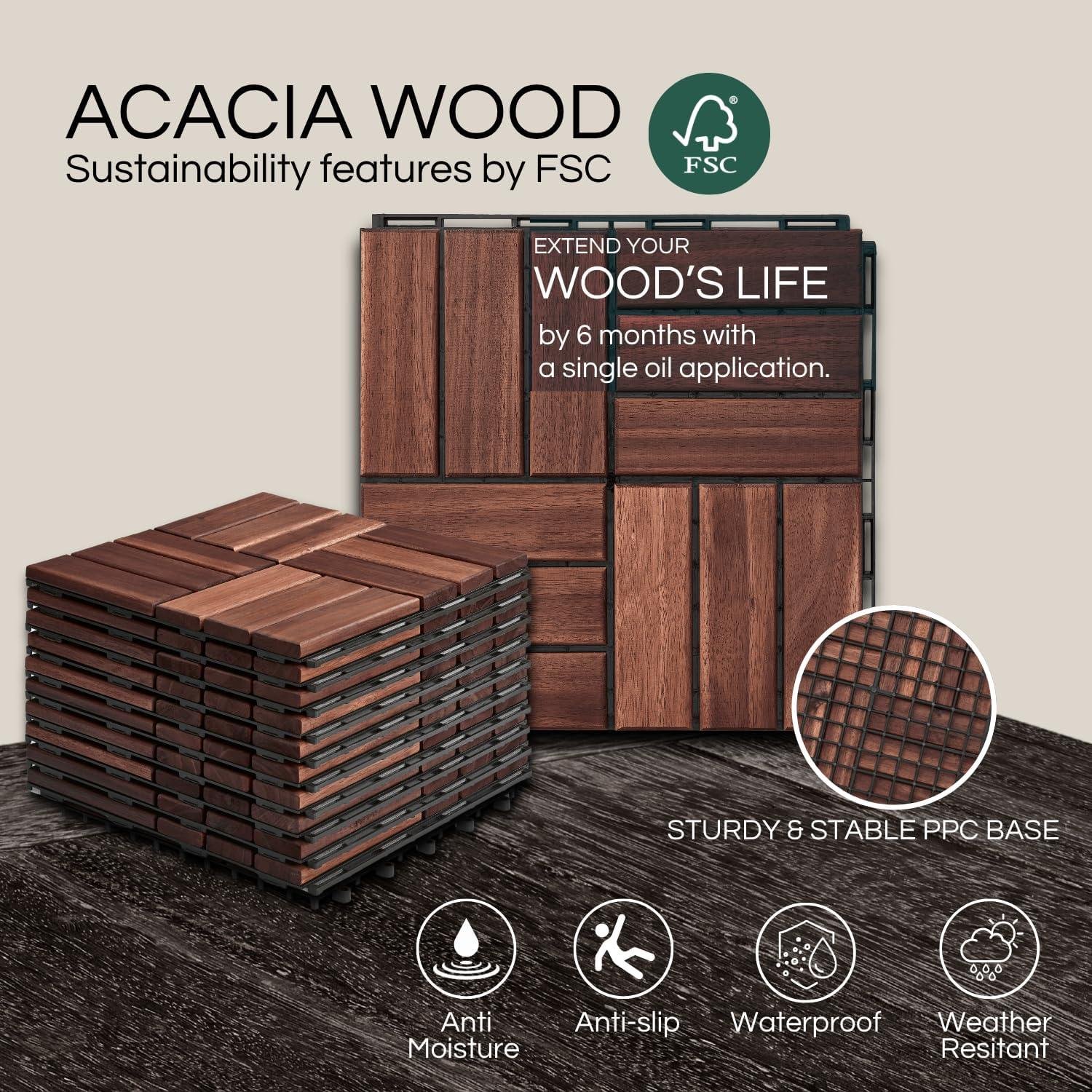
The THYOI 10 Pcs Deck Tiles (Dark Brown Crossed Pattern) deliver 10 sq ft of modular patio flooring using 100% natural acacia wood over a waterproof PPC base. Each tile uses a snap-lock interlocking system, with slat spacing for fast drainage and grooved, non-slip surfaces for safer footing in wet weather.Customer feedback consistently highlights the quick, tool-free install, high-end look, and solid feel underfoot, with notes that natural knots/color variation can create a “zebra” look and that the clips can be brittle if you frequently take them apart.
Best for: hobby woodworkers and DIYers upgrading balconies, small patios, shop entryways, or outdoor kitchen zones without committing to permanent decking.
Consider alternatives if: you need perfect color uniformity, plan repeated removal/reinstall, or need heavy-duty commercial traffic durability.
Final assessment: a practical, good-looking acacia tile system that excels at fast upgrades, with natural-wood variability as the tradeoff.
Want to see current pricing and customer photos? View on Amazon & Read More Reviews →